Categories
Buildings Companies

That ‘German’ company’: The rise and fall of Wilson Peck

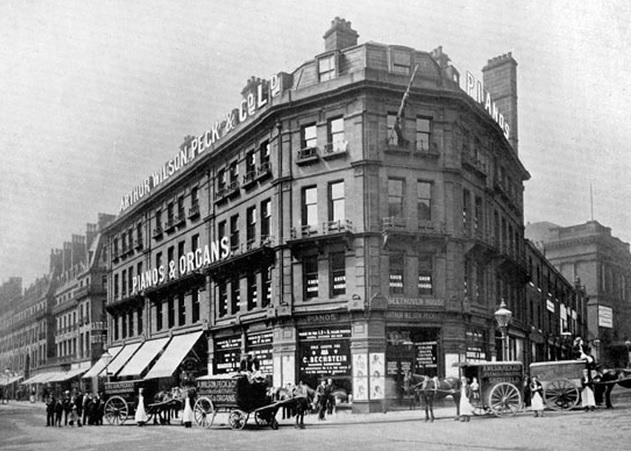
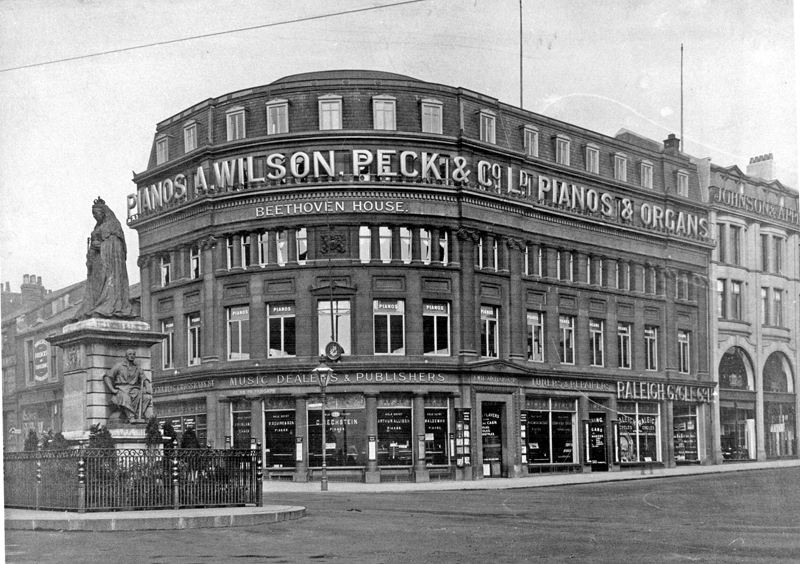
Wilson Peck Ltd., Beethoven House, Music Warehouse, Nos, 66, 68 and 70, Leopold Street, from Town Hall Square. Image: Picture Sheffield

The year is 1917 and Maximilian Lindlar is feeling annoyed. He had decided to sue Herbert Sinclair, editor of The Piano Maker, and its printers, King and Jarrott, for damages for an alleged libel contained in an issue of the paper.

Lindlar, born in Dusseldorf, left Germany at an early age, and had lived in Britain for forty years. A naturalised Englishman, denaturalised in Germany, he was a freeman of the City of London and between 1884 and 1912 he had been in the service of Edwin Bechstein, of Johanns Strasse, piano makers of Berlin.

The Bechstein business was founded in Berlin in 1853, developing a full range of pianos that met the requirements of professional pianists, musical institutions, and private music lovers alike. In London, its distribution was centred at Bechstein Hall in Wigmore Street, with upwards of one thousand grand and upright pianos displayed in different showrooms, with over one hundred musicians engaged for teaching purposes, and over four hundred concerts held every year.

While under the employment of Bechstein, Lindlar became involved with two British companies, Arthur Wilson and Peck Ltd of Sheffield, and Hopkinson Successors Ltd of Leeds, two retailers with monopolies for selling pianos in their respective cities.

In 1915, the total capital of Arthur Wilson and Peck was £20,000; Edwin Bechstein holding £10,250 of shares and Max Lindlar possessing £1,500. Lindlar’s brother, William Ludwig, a director, was the second highest shareholder with £2,562.

When war against Germany broke out in 1914, Bechstein’s holdings had allegedly been transferred to British shareholders, but this turned out not to be the case.

Lindlar had taken offence that Sinclair had published a scathing article and had dragged up comments made by him in preceding years.

“It is a national impossibility for an Englishman to produce a piano with each note perfectly balanced in tone. He has no true ear. His piano sounds all right to him, he does not know.”

Sinclair also published comments that Lindlar had made about the war.

“I do not think that England will be able to hold out financially to the end as Germany is very strong and well organised.”

What irked Lindlar most was a story in a newspaper that claimed he was attempting to drive British officers out of London’s German Athenaeum Club.

Such was the controversy over Arthur Wilson Peck and Co’s German influence that it was discussed in Parliament and subject to investigation by the Board of Trade in 1916.

Lindlar won his case and was awarded one farthing in damages, but Arthur Wilson Peck and Co suffered, its name  ‘MUD in large letters’ according to one journal while others continued to call it a ‘German’ company. Soon afterwards, Edwin Bechstein’s shares were sold to a British businessman and the Lindlar brothers held a dinner at Sheffield’s Grand Hotel to announce that their interests had also been sold and were retiring from the business.

Afterwards, it was business as usual for Arthur Wilson and Peck Ltd, a Sheffield company that grew out of Victorian enthusiasm for the piano.
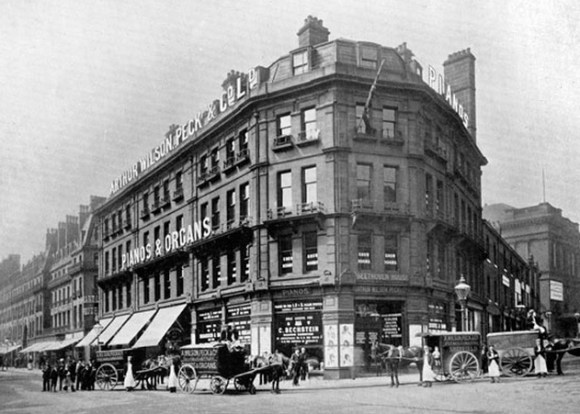
The first shop. Arthur Wilson, Peck and Co., Ltd., pianoforte, organ, and musical instrument dealers, Beethoven House, Pinstone Street. 1897. Image: Picture Sheffield

The company was created after Max Lindlar had masterminded the merger of two successful Sheffield piano sellers, Arthur Wilson, and John Peck, in 1892.

Arthur Wilson had started out as a piano shop at the corner of York Street before moving to Fargate and West Street, while John Peck, a piano tuner, had a business at the County Piano Saloon on Church Street (situated in the Gladstone Building).

The story behind Arthur Wilson is a strange one because the name was a pseudonym created to disguise the identity of the shop’s real owner.

He was Henry Charles Brooklyn Mushet (1845-1923) from Belgrove House, Cheltenham, the son of Robert Forester Mushet, the inventor of ‘Mushet’ steel, a self-hardening steel, who came to Sheffield with his brother Edward in 1871 to supervise the manufacture of ‘Mushet’ steel at Samuel Osborne and Co, Clyde Steel Works, on The Wicker. A music lover, he set up Arthur Wilson as a side line in 1878 and became an agency for Bechstein Pianos, where he met Max Lindlar.

John Peck (1841-1922) was born in Blyth, near Worksop, and was also regarded as the “father of the city’s fiddlers,’ his skills as a violinist surpassing those of the ‘stars’ who visited Sheffield and a man who went on to become a successful conductor.

With Max Lindlar’s connection to Bechstein Pianos it was decided to form Arthur Wilson, Peck and Co Ltd in 1892. With capital worth £20,000, Lindlar became chairman and John Peck joined as a director, but Mushet decided to step down from the business. Other notable appointments were William Cole, another piano dealer, who served as Managing Director for the first year and C.D. Leng, son of newspaper publisher William Christopher Leng, and a partner in the Sheffield Telegraph.

The first task for the new company was to close its three shops on West Street, Fargate, and Church Street, and consolidate its business in premises vacated by Hepworth Tailor’s at the corner of Pinstone Street and Barker’s Pool. It had cost £470 to set up the company and convert the building into ‘Beethoven House’.
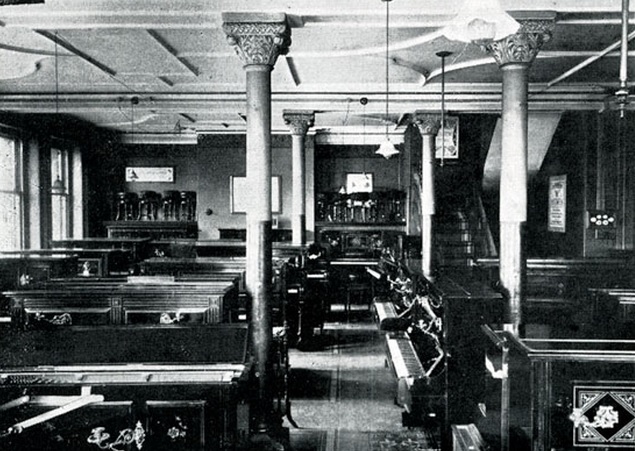
Arthur Wilson, Peck and Co., Ltd., pianoforte, organ and musical instrument dealers, Beethoven House, Pinstone Street – 1897. Portion of Show-Room for High-class Upright Grands. Image: Picture Sheffield
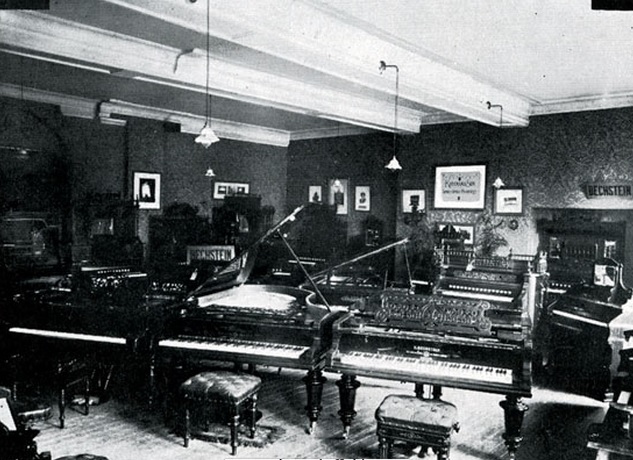
Arthur Wilson, Peck and Co., Ltd., pianoforte, organ and musical instrument dealers, Beethoven House, Pinstone Street – 1897. A Corner of the Show-Room for Grands. Image: Picture Sheffield
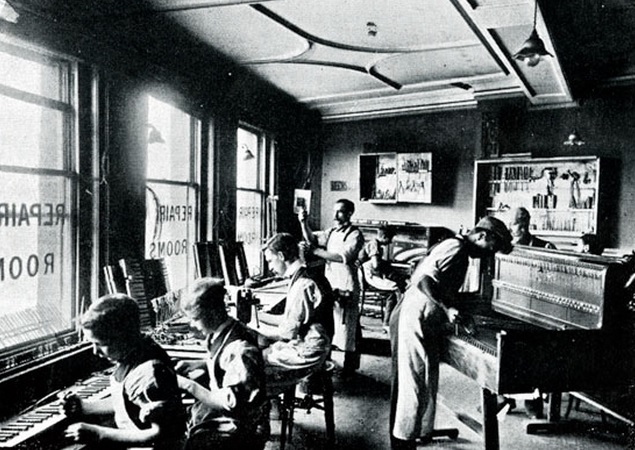
Arthur Wilson, Peck and Co., Ltd., pianoforte, organ and musical instrument dealers, Beethoven House, Pinstone Street – 1897. Repairing Room No.14. Image: Picture Sheffield
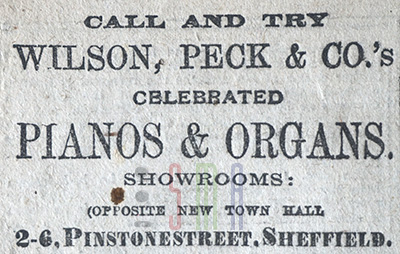
Newspaper advertisement. 1890s. Image: British Newspaper Archive

Within months, Max had been joined by his brother, William Ludwig Lindlar, who had intended to follow in the footsteps of their father, the landscape painter J.W. Lindlar. Instead, he assumed musical and commercial work, and would eventually become vice-president of the Music Trades Association of Great Britain. He became managing director in 1894 and was responsible for organising important concerts in Sheffield and Nottingham, where the company had established a second store.

They were described as pianoforte, harmonium and American organ merchants, tuners, and repairers, as well as sole agents for Bechstein pianos. Within the Pinstone Street building it also had a concert hall used for concerts and recitals.

In 1905, Wilson Peck moved to the opposite corner of Barker’s Pool in the former premises of Appleyards and Johnson, cabinet makers. It was described as ‘the best equipped premises outside London’ and the replacement Beethoven House is the building that most of us still remember.

Wilson Peck were famous for selling musical instruments, sheet music, hosting concerts, and selling ‘new’ phonographic records. On its upper floors it had rooms that could be used for tutors to teach music. In later years it developed a thriving business selling concert tickets for the City Hall and other venues across the country. Wilson Peck ended up with Sheffield’s oldest record department (memorable for its soundproofed listening booths) with sales of records accounting for a sizeable proportion of its business.

Shares in the business changed hands following the departure of the Lindlar brothers and at one stage its chairman was B. J. Readman, who also happened to be chairman of John Brinsmead & Sons, one of England’s premier piano makers. Additional branches soon followed on London Road and Ecclesall Road.

A 1956 advert claims the shop to be ‘the place to go for everything musical: Pianos, Television, Radio, Radiograms, Records, Concert Tickets, etc.’

Wilson Peck was held in high esteem, and it is hard to determine when its decline began. Two World Wars didn’t help a niche market, and the Victorian ideal of making music at home, when pianos were a common sight, had disappeared by the early twentieth century, having a devastating effect on sales of musical instruments and sheet music.

By the 1970s, the directors at Wilson Peck had diversified into property investment culminating in several subsidiary companies and ownership of buildings across the UK. Originally known as the Wilson Peck Group, it changed its name in the 1980s to Sheafbank Properrty Trust, subsequently becoming UK Estates.
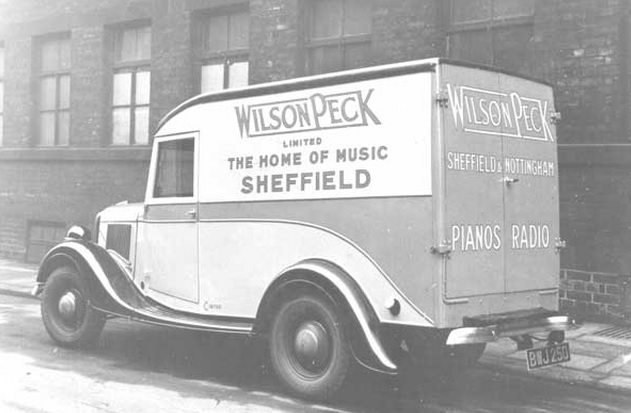
Delivery van, Wilson Peck Ltd. Image: Picture Sheffield

The retailing demise came in the 1980s when Sheffield City Hall decided to take its ticket sales in-house, and the emergence of national record chains (HMV, Virgin Records, Our Price etc.) eroded into Wilson Peck’s earnings.

In 1988, the company vacated Beethoven House, and H.L. Brown, jewellers, moved in. Wilson and Peck downsized to premises on Rockingham Gate but that proved short lived. I’m led to believe that Wilson Peck ended up in ‘an end-of-terrace’ corner shop on Abbeydale Road that closed in 2001.
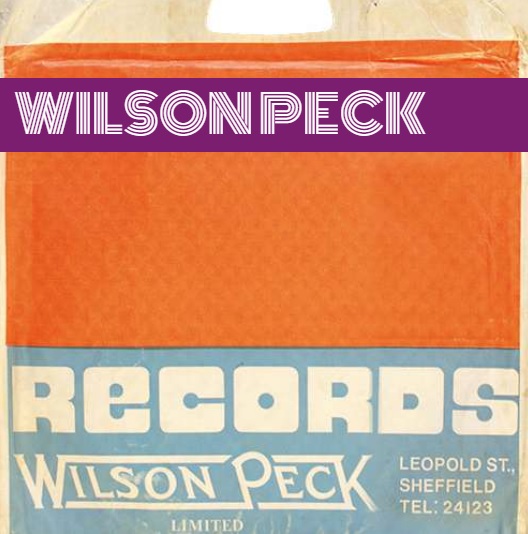
Retro bag for Wilson Peck. Image: British Record Shop Archive

NOTE: –
During the Parliamentary discussion about Arthur Wilson, Peck and Co in 1916, it was said that they also owned a business called Hilton and Company. There is no trace of this business, not helped because Wilson and Peck didn’t retain its archives.

However, there is a post from 2015 on the UK Piano Page whereby somebody said that they had bought an old upright piano: –

“The piano has ‘Hilton & Co’ written in gold writing in the centre of the key cover, also it has ‘Wilson Peck, Fargate, Sheffield’ written on it on the right hand side of the key cover.”

There was a Yorkshire piano company called Hilton and Hilton, but this piano appears not to have been manufactured by them.

Was Hilton and Co a brief attempt by Arthur Wilson, Peck and Co to sell its own manufactured pianos? Somebody, somewhere, might have the answer.

© 2024 David Poole. All Rights Reserved.
Categories
Buildings

Town Hall Chambers: I bet you didn’t know what it was intended to be

This post was planned as a tribute to one of Sheffield’s most famous shops, Wilson Peck, but research into its origins have proved to be rather complex. That post is imminent, but during the investigation some fascinating facts emerged about one of the buildings that it once occupied.

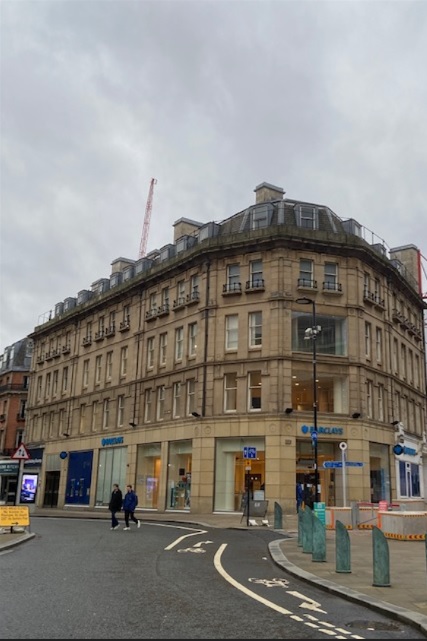
I’m talking about Town Hall Chambers that sits at the corner of Pinstone Street and Barker’s Pool, and now home to the city centre’s last surviving Barclays Bank.

According to Pevsner, it is a ‘worthy, but slightly dull five-storey block of shops and offices’, and like nearby Yorkshire House (another home of Wilson Peck), it has never been listed by Historic England.

The building was designed by Sheffield architect John Brightmore Mitchell-Withers in 1882-85 as part of the street improvement scheme that reinvented Pinstone Lane, a salubrious and narrow thoroughfare, into Pinstone Street, long recognised as one of the city’s most prominent streets.

The site had been an old hostelry called the Norfolk Hotel that was demolished in 1881 as part of the street widening programme. Evidence suggests that J.B. Mitchell-Withers bought the plot of land to build upon, and now I’ve discovered that it was built as a hotel.

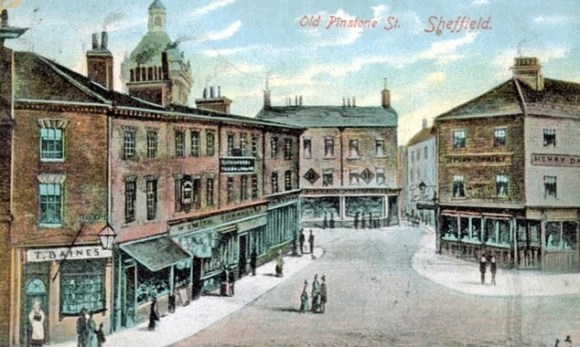
Pinstone Street from Orchard Street, No. 73 Fargate, T. Baines, hairdresser, left, No. 79 Barker’s Pool, Norfolk Hotel (landlord-Henry Darley), right, premises on Pinstone Street include No. 3 Wm Smith, hatter, Nos. 5 – 7 John Richardson, tailor. 1879. Image: Picture Sheffield

In 1884, newspapers advertised that the New Scarborough Hotel was available to let, containing a dining room, commercial room, smoke room, billiard room, refreshments bar and forty bedrooms. It also boasted the best modern appliances for cooking, hydraulic and other lifts, and electric bells.

The following year, it was announced that Lewis’s had ‘acquired the important block of buildings at the corner of Pinstone Street and Barker’s Pool, known as the Scarborough Hotel, and shops below,’ suggesting that the hotel never opened after failing to attract any interested parties.

The name of Lewis’s is famous in the history of UK department stores and the fact that it once had a branch in Sheffield comes as a bit of a surprise.

The first Lewis’s store was opened in 1856 in Liverpool by entrepreneur David Lewis, as a men’s and boys’ clothing store, mostly manufacturing his own stock. In 1864, Lewis’s branched out into women’s clothing, later expanding all its departments, and his motto was ‘Friends of the People’.

The first Lewis’s outside Liverpool opened in Manchester in 1877 followed by Birmingham in 1885. However, it was the Manchester store that it was best known for and later included a full scale ballroom on the fifth floor, which was also used for exhibitions. Its fourth store was in Sheffield, but with stiff local competition from John Atkinson and Cole Brothers, it proved unprofitable, and closed in 1888.

Negotiations quickly took place between the trustees of David Lewis and Joseph Hepworth and Son, a suit manufacturer that had rapidly expanded with over sixty shops across the country.

The premises underwent extensive alterations to accommodate its ready-made clothing, hats, and outfitting departments. The entire building was redecorated and lit with electric lamps, and when plans were submitted for Sheffield Town Hall in 1890, it was proudly referenced as the Hepworth’s Building.

Hepworth’s stay lasted four years, and in 1892 Arthur Wilson, Peck and Co, announced that they were vacating their three premises in Church Street, West Street, and Fargate, and consolidating business in the Hepworth’s Building.

It became known as Beethoven House and lasted until 1905 when it moved to the opposite corner in premises vacated by cabinet makers Appleyards and Johnson, and now known as Yorkshire House.

Arthur Wilson, Peck and Co., Ltd., pianoforte, organ, and musical instrument dealers, Beethoven House, Pinstone Street. 1897. Image: Picture Sheffield

At which point the building became known as Town Hall Chambers is uncertain, but by the 1930s, the ground floor had been subdivided into smaller shops, and the floors above converted into offices for numerous insurance companies.

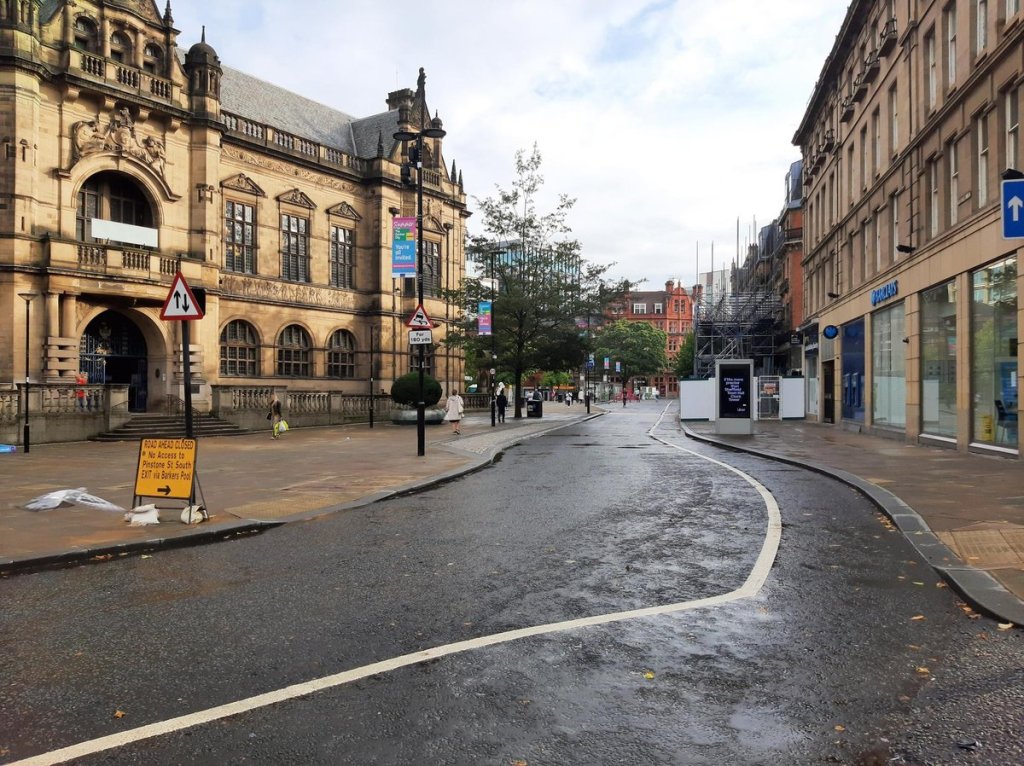
Our generations will remember it as a centrepiece shoe shop for Timpson’s and as a short-lived branch of Gap, before being reinvented as a futuristic Barclays Bank. I’d be grateful if anyone can name any other businesses that might have been located here.

And so, we’ve discovered that Town Hall Chambers started as an ill-fated hotel. The building itself survived two World Wars and managed to escape Heart of the City redevelopment, but the irony is that neighbouring Victorian buildings further along Pinstone Street, also built as part of the 1880s street widening scheme, will soon become the Radisson Blu Hotel.

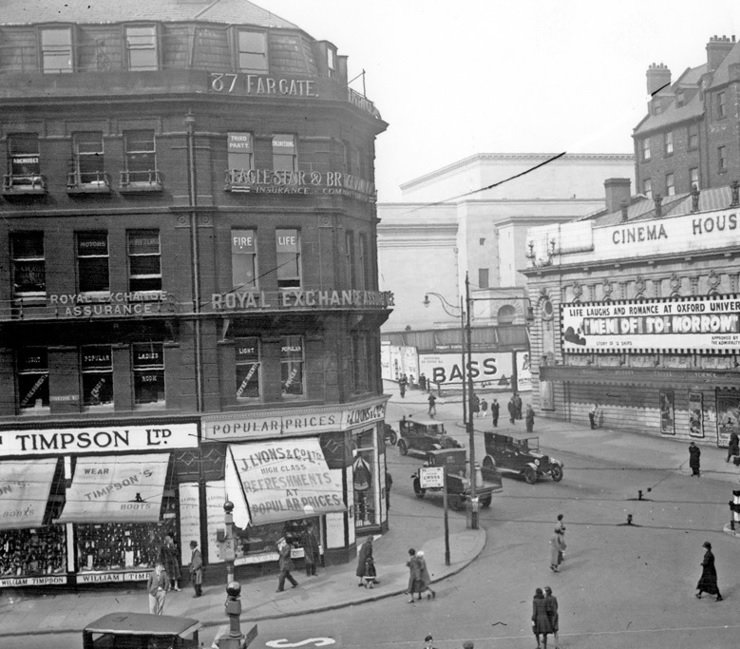
Town Hall Square and Barkers Pool, Town Hall Chambers, William Timpson Ltd., Shoe Shop and J. Lyons and Co. Ltd., Dining and Tea Rooms on left, Cinema House on right. 1935. Image: Picture Sheffield

© 2024 David Poole. All Rights Reserved.
Categories
Streets

“A favourite playground of the boys of those days and boasted the name of ‘Sow Mouth.”

Pinstone Street, Sheffield. Image/Sheffield Star

I walked through the city centre the other day and remembered an old newspaper article that spoke of Pinson Lane in 1736, and later became Pinstone Street.

The article from 1927 was written by Harold Rowley who suggested that Pinstone Street may have had some connection with Penistone, once a common surname in the district, but had once been called Pincher Croft, which hinted it may have had some connection with Barker’s Pool, being originally Pitcher Croft.

When I got home, I referred to Sidney Oldall Addy’s ‘The Hall of Waltheof’ or ‘The Early Condition and Settlement of Hallamshire’ from 1893.

“We have few ‘lanes’ in Sheffield now. The popular idea seems to be that there is something mean and insignificant in a lane, and hence Pinson Lane now bears the grander name of Pinstone Street.

Old inhabitants of Sheffield speak of Pinson Lane. Gosling writes it Pinson Lane in 1736, and I find a croft called Pincencroft Len in a document dated 1554. 

Pincen is probably the surname Pinson, so that Pincencroft is exactly analogous to Colson Crofts, Sims Croft, Scargill Croft, and Hawley Croft, which are derived from surnames.

The word ‘len’ in Pincencroft Len is not our ‘lane’ but the Old Norse lén, a. fief, or fee, a piece of freehold, or land held in fee simple. Thus, the meaning is Pinson Croft freehold. The croft acquired the name of the person or the family—the Pinsons—who once held it, and then it afterwards became known as the Pinsoncroft ‘len’ or fee.”

Mr Rowley also mentions that the old name for the Fargate end of Pinstone Street was once called Sowmouth, popularly explained because it tapered and grew narrower. However, he says, this was evidently wrong, because Sowmouth meant a door or opening.

I didn’t know this, but I referred to Robert Eadon Leader’s ‘Reminiscences of Old Sheffield: Its Streets and its people’ (1876) and found the following passage from Richard Leonard: –

“Forty years ago, there were one or two trees growing on the property of Mr Withers, in Pinstone Street. A passage leading from Fargate to New Church Street, was a favourite playground of the boys of those days and boasted the name of ‘Sow Mouth.’”

(New Church Street ran parallel to modern-day Surrey Street and was lost underneath the Town Hall when it was built in 1890-1897).

©2022 David Poole. All Rights Reserved.
Categories
Buildings

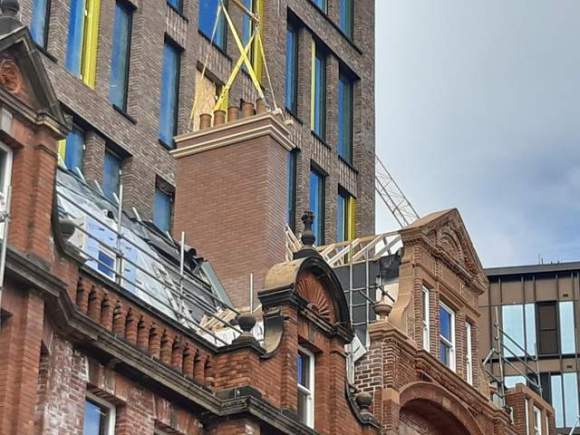
Replacement chimneys arrive at Pepper Pot building

A chimney stack is lowered into place. Image: Sheffield Star

The Sheffield Star has posted several photographs of ‘fake’ chimneys that are being installed on the Pepper Pot building.

Six historic chimneys were removed as part of Heart of the City reconstruction, with only the façade remaining.

The Pepper Pot building is in Block C, bound by Pinstone Street, Cambridge Street and Charles Street.

Developers had asked for permission to change its original plans, by reducing the number of chimneys – designed by architects Flockton and Gibbs – and replicating only one.

Sheffield City Council’s planning committee overwhelmingly rejected the bid against the advice of officers who warned that refusal would put economic, social and environmental benefits of the scheme on hold and may lead to other cost cutting.

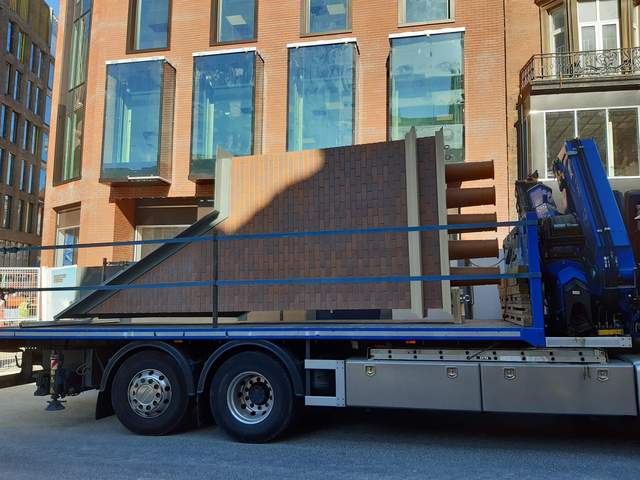
The replacement chimneys are two-tonne, 10ft ‘brick’ stacks, and thought to be made from glass reinforced concrete.

The pre-formed feature was seen on a lorry on PInstone Street ahead of being winched to the top of the Pepper Pot building. Image: Sheffield Star
A replacement a two-tonne, 10ft brick stack. A total of six were removed as part of a total revamp of the building. Image: Sheffield Star
Categories
Streets

“One side of the city centre to the other, and less than a mile. By car, I travelled 2.5 miles.”

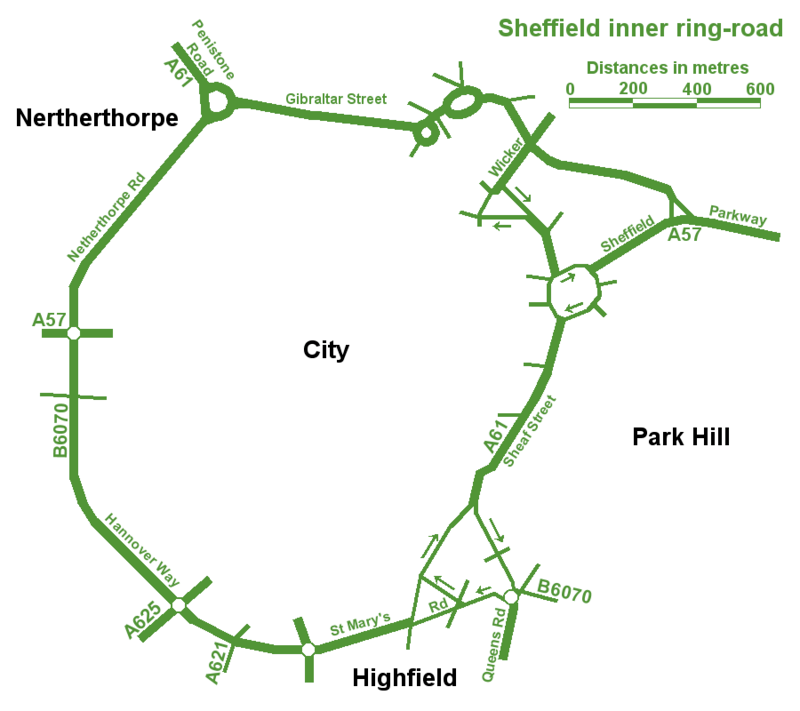
The best map of Sheffield’s Inner Ring Road, but spoilt by spelling mistakes.

An unusual post, in so much that we are looking at a road. In fact, a series of roads that form one big one – Sheffield Inner Ring Road.

We might live in Sheffield, but sometimes it’s difficult to see wood for the trees, and this is the case with the inner ring road, because you probably don’t realise its purpose and where it is.

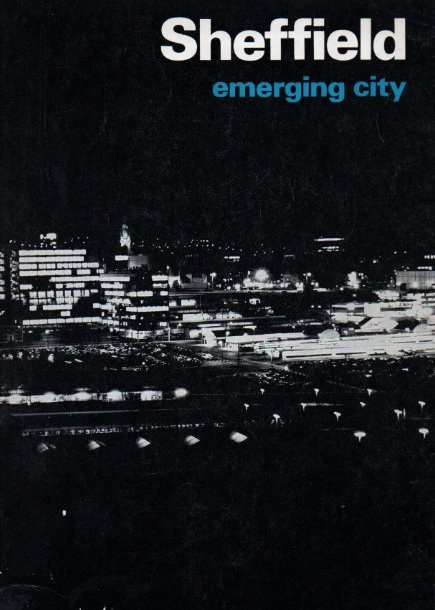
Let’s start in the 1930s when a route around the city centre was first proposed. Truth be known, World War Two stalled plans until the sixties, and in 1969 Sheffield Corporation published an impressive handbook called ‘Sheffield – Emerging City,’ in which plans for a detailed road system were revealed for the first time.

The council intended to pour £65m into the scheme which included bus lanes, pedestrian areas, as well as an urban motorway and motorway links with the M1.

Robert Waterhouse, writing in The Guardian in 1972, said that “Sheffield was as proud of its new roads as of its housing, its clean air, and its flourishing arts. They were all symbols of rebirth after years of stagnation among the ruins of the Industrial Revolution.”

The Guardian article, long forgotten, provides an interesting snapshot into the arguments that raged at the time.

It pointed out that after 1969, things had started to go wrong. In May 1971, a joint report by the city engineer, the city planning officer and architect, and the general manager of the transport department, had taken a gloomy view.

‘Although a large highway construction programme has been embarked upon,’ it said, ‘the growth of vehicular traffic is much greater than the growth of road capacity. The disparity has been obvious for many years and there seems negligible hope of it being ended in the foreseeable future.”

The report estimated that the proposed highway system, capable of carrying about 50 per cent of commuters to work by car, would cost ratepayers another 20p in the pound, which was probably acceptable, but that a system by which nearly everyone went by car could cost £300m, or another pound on the rates, clearly unacceptable. If the ‘compromise,’ £65m system was going to get clogged up anyway, was it worth building at all?

Arundel Gate in 1973 looking towards the Hole in the Road – new barriers erected in attempt to make pedestrians use the subways. Image: Sheffield Newspapers/Picture Sheffield

Waterhouse identified growing opposition within the council.

Sir Ron Ironmonger, Labour’s council leader, admitted that a growing number of councillors were against the scheme, and there had been public exchanges between the planning department and engineers.

The planners, headed by R. Adamson, felt that the engineers were going about the job the wrong way: instead of giving priority to the inner ring road, which everybody thought essential, construction had been advanced near the city centre. This meant that the civic circle – the inner ring road ultimately intended to carry only local shoppers and delivery vans – was being used as a throughway.

But the engineers, under K.D. Wiilliams,  replied that highways the size of the inner ring road – a six-lane urban motorway – didn’t happen overnight.

It seemed that Sheffield residents didn’t know what they were in for but would soon find out. The new interchange between the inner ring road and the Parkway was near completion at the bottom of Commercial Street. Sheffield Parkway was also being built and would be the main route into the city centre from the M1.

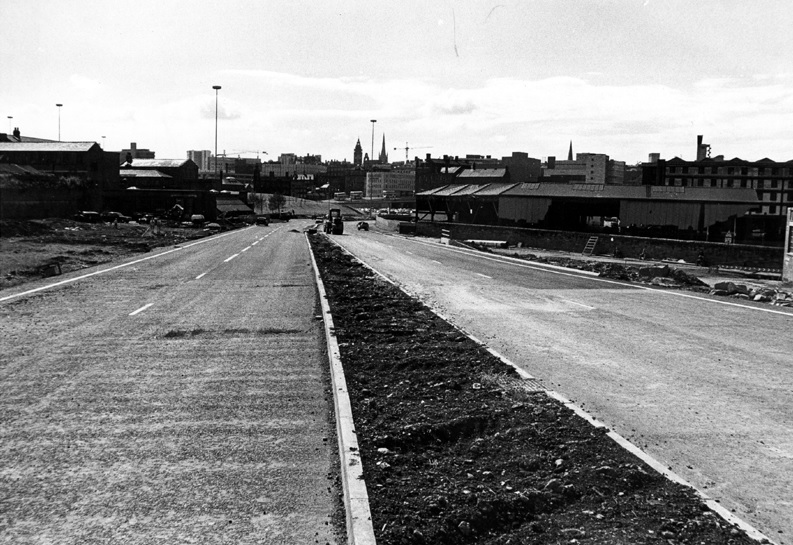
Construction of Sheffield Parkway in 1974 looking towards Park Square. Image: Sheffield Newspapers/Picture Sheffield
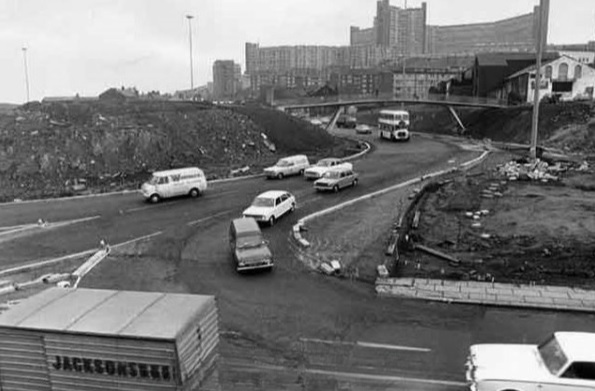
Sheaf Street/Commercial Street (latterly known as Park Square) roundabout under construction in 1973. Image: Sheffield Newspapers/Picture Sheffield

But the argument in 1971 was that traffic coming into the city centre was being diverted onto newly-constructed roads, because there was no proper inner ring road. And it was causing problems.

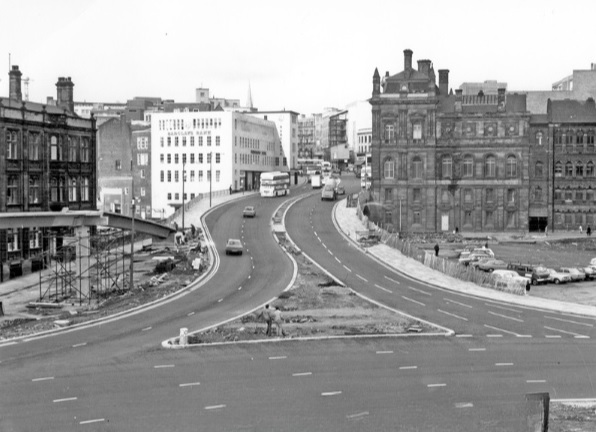
On Commercial Street itself, a bridge was being widened to take four lanes of traffic. It joined the civic circle at Castle Square, where traffic and pedestrians were already separated – cars at ground level, pedestrians underground. But before the road got there, it had to pass Fitzalan square, one of the principal routes for shoppers on foot. Everybody agreed this was a problem, but work on widening Commercial Street continued anyway, despite open criticism from Labour councillors.

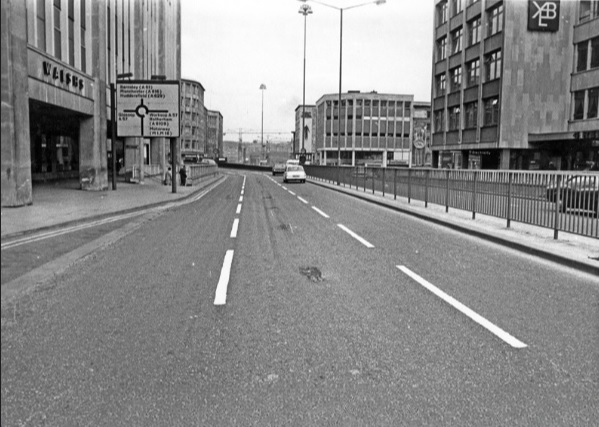
Widened Commercial Street in 1970s, looking towards the Gas Company Offices on right, Electricity Supply Offices and Barclay’s Bank on left. Shude Hill behind car park on right. Image: Picture Sheffield

There were others also opposed to the scheme. Dr Leonard Taitz, a young South African doctor, working in Sheffield, was convener of the Conservation Society’s national transportation working party. He had started a campaign to bring the road building programme to a halt while a new policy on integrated transportation was formulated.

New roads were being built within the city centre but there were design flaws.

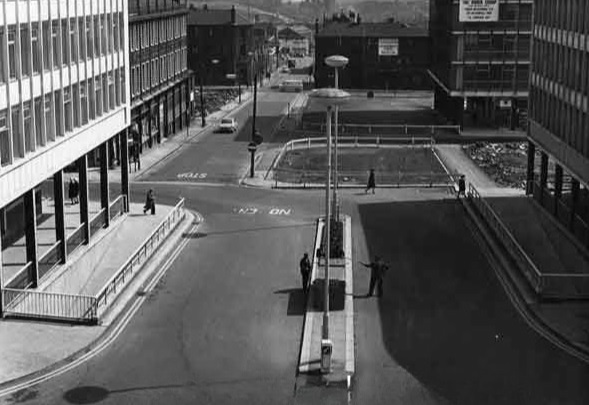
He cited the case of Furnival Gate, also a four-lane highway which, he suggested, was bound to be used by commuter traffic, but which divided The Moor and Pinstone Street, two proposed precinct streets. A subway to take people under the road had already been built, while Charter Row, another radial, had a barrier down its middle which cut a whole segment of the city from the centre.

Furnival Gate at the junction with The Moor showing (middle left) junction with Union Street in the 1960s. Image: Picture Sheffield

He argued that these roads were primarily being used by commuters cutting across town. But Mr K.D. Williams, head of technical design at the engineers, said this wasn’t the case, and that they were a necessary part of an integral system, that will one day be blocked off to prevent through traffic, and channel motorists to off-street car parks.

Whatever the interpretation, the roads were ‘not a pretty site.’ Certainly not ‘Sheffield’s Champs Elysees,’ as a councillor had called Arundel Gate.

Robert Waterhouse asked the important question? Would the new roads ever carry the massive traffic that Sheffield had come to expect? Would the inner ring road be built as a motorway, and would Sheffield get its two, or even three, motorway links with the M1?

Sir Ron Ironmonger pointed out that after 1974, highways would become the responsibility of the new South Yorkshire metropolitan authority and had no wish to make any drastic moves at such a late stage, and cited Nottingham which had done away with  a major part of its road programme. (Sir Ron later became leader of South Yorkshire Metropolitan County Council).

What did happen?

The 1970s proposal for the Inner Ring Road was abandoned because it would have destroyed important heritage assets like Kelham Island and the canal basin, and cash, as ever, was the stumbling block. But we did eventually get an Inner Ring Road, but it took a long time for it to be completed in its entirety. 

We can thank Duncan Froggatt, a Chartered Engineer, in his excellent book, ‘Sheffield – A Civilised Place’ (2018), for providing the timeline.

“The inner relief road had started in the 1960s starting with the dualling of Netherthorpe Road. But the later stages came much later with St Mary’s Gate and Hanover Way widened to dual carriageways in the 1980s.

“Sheaf Street was improved in the early 2000s leading to the improvement of Sheaf Square and subsequently links to St Mary’s Road up to 2009.

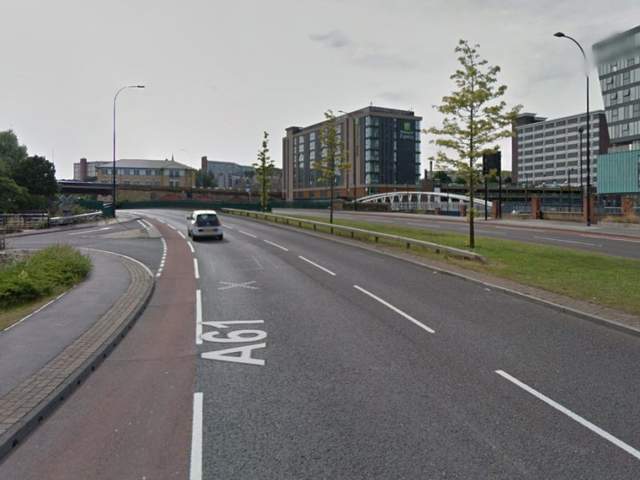
“The northern section from Sheffield Parkway to Penistone Road was built in two phases in the 1990s. The phase from the Parkway to The Wicker was completed in 2000, originally called Cutlers’ Gate, but later renamed Derek Dooley Way. The next stage, between the Wicker and Shalesmoor was finished in 2008.

“Once completed, it provided a continuous loop of dual carriageway, clockwise from Granville square in the southeast to Sheffield Parkway in the east, linking all main arterial routes in the city.”

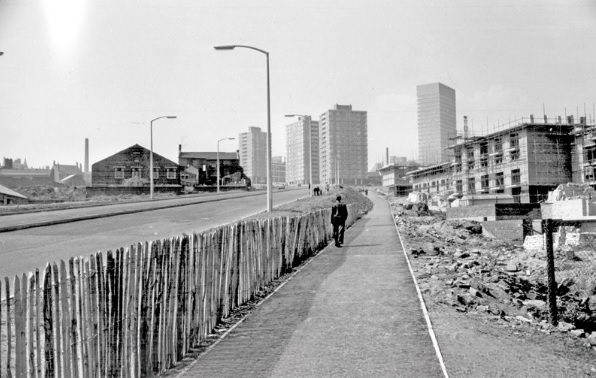
Netherthorpe Road with Netherthorpe Street Flats under construction in 1965, looking towards Netherthorpe High Rise Flats. Image: SCC/Picture Sheffield

All done and dusted, but these days it is what is  happening within the Inner Ring Road that creates the interest.

Mr Williams’ plan for streets to be blocked off to traffic within the city centre did and continues to happen. Fargate and The Moor were the first to be pedestrianised, Pinstone Street is in transition, and Arundel Gate will be downgraded.

But what nobody in the 1970s envisaged was something that had been around for centuries… and that was the bicycle. Cycle routes, and the eagerness to cut car emissions, while greening our urban spaces, means that Sheffield city centre will eventually change beyond recognition.

I leave you with a story. Last week, I had to travel by car from one side of the city centre to the other. By foot it was less than a mile. By car, I travelled 2.5 miles.

Derek Dooley Way. Image: Sheffield Star

“Driving into Sheffield, I was looking forward to my friend’s hen-do. We had booked a city centre apartment, a spa day and a restaurant. What could go wrong? Yet, an hour-and-a-half later, I was bellowing tearfully into my mobile at my boyfriend: “You came to university here. Where AM I?” What had caused this emotional meltdown? Certainly not a fall-out with my friends – I hadn’t even seen them yet. Instead, my fun-filled city break had been spent navigating a series of roundabouts on the city’s ring road which kept spitting me out with increasing ferocity. Sheffield’s inner ring road has been tormenting drivers since 1961. Like many of the nation’s worst ring roads, it twists you round its little finger only to catapult you into bus-only zones or roads that lead you off in the opposite direction to the one you need.” – Jenny Scott – BBC News – 2014

NOTE
Robert Waterhouse is a journalist. Starting on the Guardian in Manchester and London, he turned freelance and was launch editor of the daily North West Times. He is a co-editor of the review Mediterraneans. His books include The Other Fleet Street, a history of national newspaper publishing in Manchester.

©2022 David Poole. All Rights Reserved.
Categories
Late Night Tales

Late Night Tales #14

The old man with the pipe made another impromptu appearance. This time, outside the Town Hall. He looked sad as he rested underneath a lamppost. Good evening, I said. He didn’t answer straightaway. “Aye lad, it is a good evening.” He looked towards the Peace Gardens and sighed. “I must take leave of you lad. Tonight I’m meeting up with my family in the churchyard..” He walked away and I was distracted by the chimes of the Town Hall clock. When I looked back, the old man with the pipe faded in a light mist and was gone. Happy Easter everyone.

© 2022 David Poole. All Rights Reserved.
Categories
Buildings

A tale of two St Paul’s

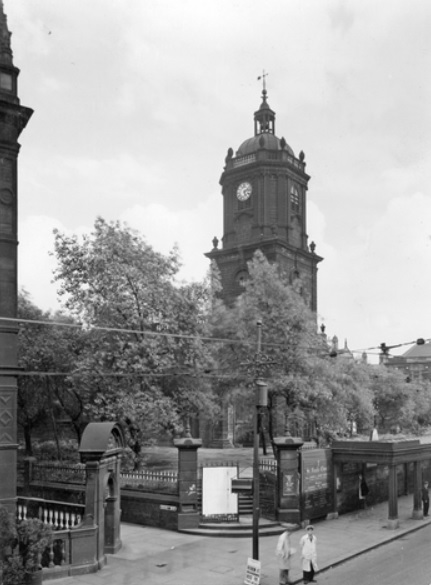
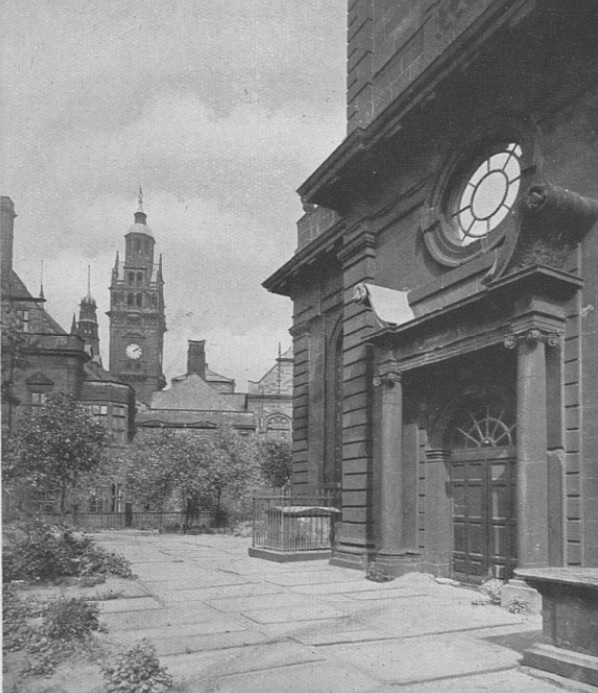
View of St. Paul’s Church from Pinstone Street showing the gateway to the Public Lavatories, Cheney Row and entrance to St. Paul’s Graveyard. Image: Picture Sheffield

It was only recently that I realised that I’d never posted about St Paul’s Church, a Sheffield landmark remembered now by only a few.

If you want to know where it once stood look no further than the Peace Gardens.

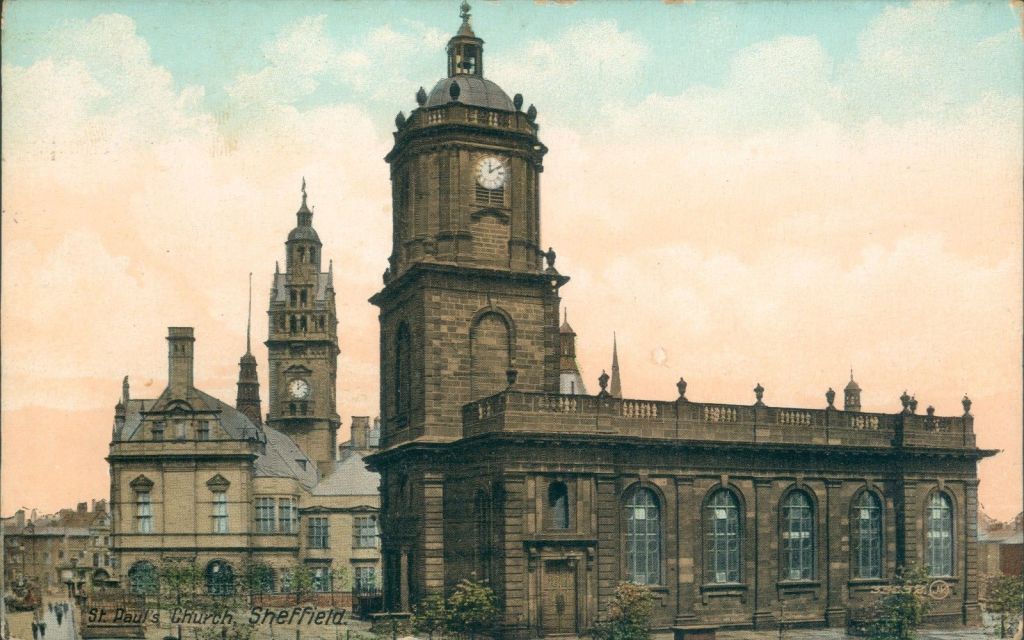
St Paul’s Church stood on the outskirts of Sheffield on land bordered by Pinson Lane (Pinstone Street) and Alsop Fields, called Shaw’s Close or Oxley Croft. Its foundation stone was laid in 1720, the result of public subscription for ‘the new church’.

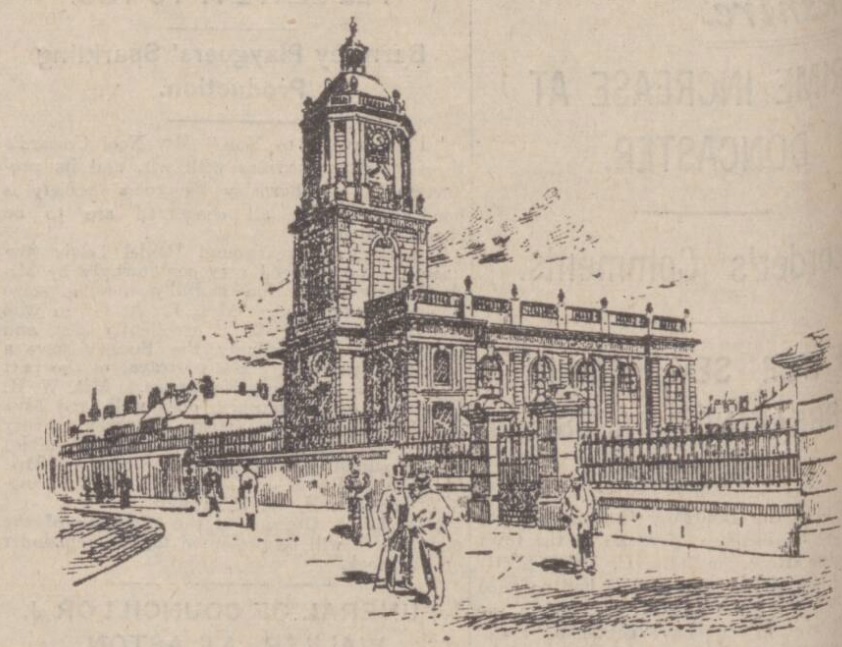
St Paul’s Church about 1890 and before the Town Hall was constructed. Image: British Newspaper Archive

It was designed by John Platt, architect, statuary mason, potter, and builder, who was active, particularly around Rotherham, in the mid-to-late 18th and early 19th centuries, and most famous for Wortley Hall. Construction was undertaken by John Wastenage of Handsworth.

The building, completed except for the dome, stood empty until 1739 after a dispute over patronage. A John Snetzler organ was installed in 1755 and the dome was added in 1769. Later, in 1824,  St Paul’s was placed in its own parish.

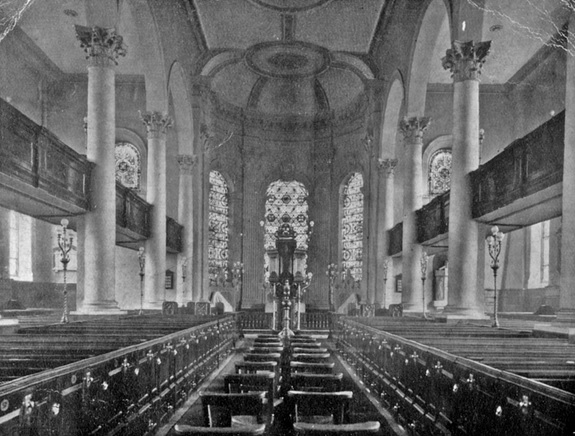
St. Paul’s Church, Pinstone Street, Interior view. Image: Picture Sheffield

The church prospered until the slum clearances of the 1930s in which a large proportion of sub-standard back-to-back houses in the city centre were swept away. The Ecclesiastical Commissioners decided that six city centre churches were surplus to requirement and intended replacing them with ones on the new housing estates. The congregation at St Paul’s had dwindled and was closed in 1937.

St Paul’s Church in 1921, with a glimpse of Sheffield Town Hall behind. Image: British Newspaper Archive

The Society for the Protection of Ancient Buildings (SPAB) took an interest in the rebuilding of the church on East Bank Road, at Arbourthorne.

And found amongst the archives is a letter from Mr John Betjeman, of Ufflington, Berkshire, (yes, THE John Betjeman)  who had visited.

“As a visitor to Sheffield and a student of architecture, I would like to express a hope that your most beautiful classical church of St Paul’s will be rebuilt exactly as it stands on its new site.

“It is appropriate that Sir William Milner, a Yorkshireman, is to save the work of a great Yorkshire architect John Platt II, who designed the tower of St Paul’s and whose father, John Platt I, probably designed the body of the church.”

Betjeman’s pleas were largely ignored.

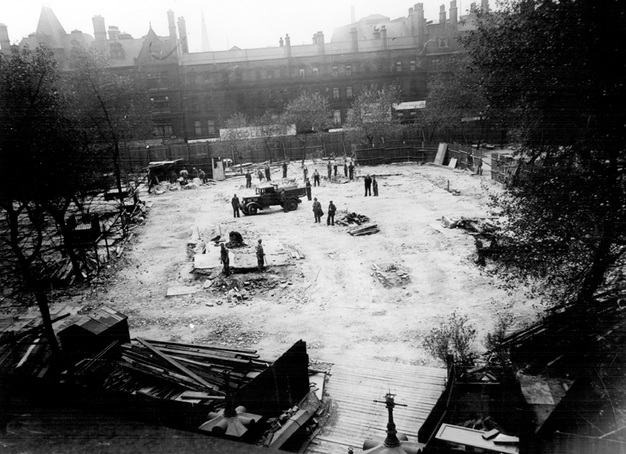
St Paul’s was demolished by Joseph Smith of Denby Street in 1938, the saddest sight being the three ton metal dome of the clock tower that was hoisted on its side before dropping to the ground and smashing into pieces.

“St Paul’s beauty did not save it, and all that can be said of those who pulled it down is that they beat the German bombers to the sordid task.”

Site of St. Paul’s Church and church yard following demolition. Image: Picture Sheffield

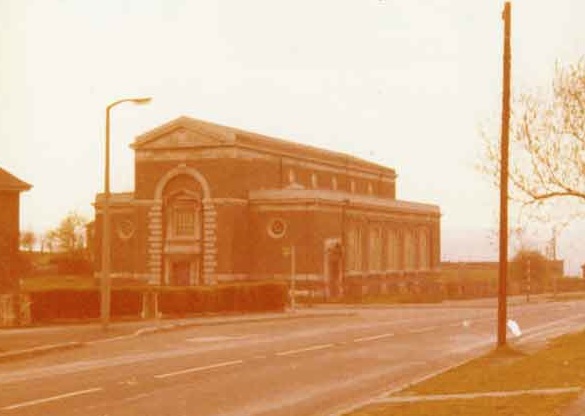
Work on the new church costing £20,000 at Arbourthorne started almost immediately and was completed by the end of 1939.

“The original idea, partly through sentiment, was to try and move the old church stone by stone and re-erect it, but this simply could not be done,” said the contractor. “To build an actual replica in stone like the original church would have been prohibitive. The cost would have been considerably more than the actual cost of the new building, and so the decision had to be made to build the new church in brick.”

It is thought that some of the stone was used instead to build houses at Bents Green.

Practically all the interior furnishings, including pews, alters, and plate, were transferred to the new church but missing was the organ which went to All Saints in Wingerworth and the Chantrey Memorial which went to Sheffield Cathedral. Missing also was the famous clock tower which, at £800, was thought too expensive. The contents of the former graveyard were transferred to Abbey Lane cemetery.

St.Paul’s C.of E. Church (now demolished), corner of East Bank Road and Berners Road. It was a large, austere, building that never did the original church justice. Remarkably, this appears to be the only surviving photograph. Image: Picture Sheffield

The vacant land in the city centre was intended to be used for extensions for the Town Hall, but public opinion swayed Sheffield Corporation to turn it into St. Paul’s Gardens, commonly referred to as the Peace Gardens.

And there was a sad end for the ‘new’ St. Paul’s Church. Dwindling congregations in a draughty big building played a part in its downfall and it was demolished by the end of the 1970s. In its place, a hostel for people with learning difficulties, and a house alongside called The Old Vicarage.

Questions remain unanswered about the original St Paul’s Church. The bell and clock were carefully removed during demolition but not used in the reconstruction at East Bank Road. Does anybody know where these might have ended up?

Former site of St Paul’s Church, Arbourthorne, at the corner of East Bank Road with Berners Road. Image: Google
Peace Gardens. The former site of the original St Paul’s Church. The area is now referred to as St Paul’s including the naming of buildings and a hotel.

© 2022 David Poole. All Rights Reserved.
Categories
Buildings

Berona House: It’s business as usual for this unpretentious building

Berona House. One of the survivors of Pinstone Street’s Victorian building boom. Similar properties have had their interiors removed as part of the Heart of the City II project. Photograph: DJP/2021

We all know it, we all pass it, and we tend to overlook it. This building has stood at the corner of Pinstone Street and Charles Street for generations, and while the shops have repeatedly changed hands, we know little about it.

Berona House, or to be more precise, 95-107 Pinstone Street/31-35 Charles Street, has worked hard to hide its history.

The appearance of the building has remained unchanged since it was built, including the rounded first-floor corner windows. Photograph: Google

In 1897 the last plot of vacant land on Pinstone Street was sold by Sheffield Corporation to a private company. Prior to this, the corporation had systematically bought old properties on narrow Pinstone Lane, demolished them, and created the Pinstone Street we know now.

The land, opposite the Empire Theatre, was used to build a block of shops and dwelling houses. With brick and stone dressings and distinct first-floor corner arched windows, it was designed by Sheffield architects Holmes & Watson and constructed by George Longden and Son.

Edward Holmes (1859-1921) was in partnership, 1893-1908, with Adam Francis Watson (1856-1932), and were responsible for the City (later Lyceum) Theatre, Leopold Chambers, Norfolk Market Hall, as well as being associated with the city’s improvement scheme as valuers and advisers.

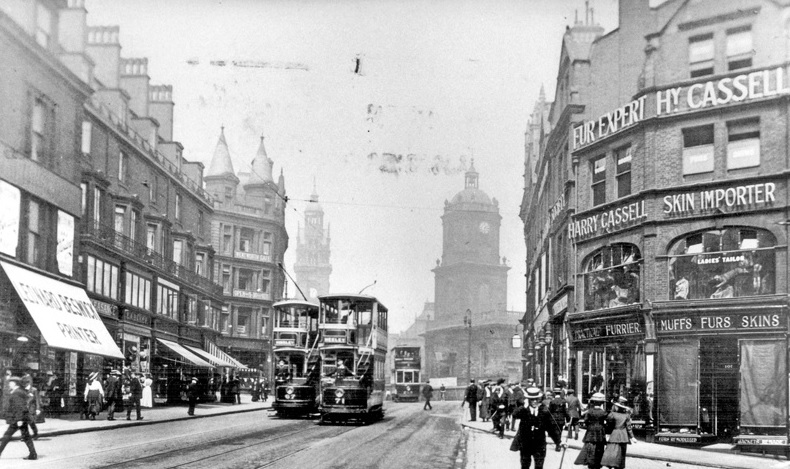
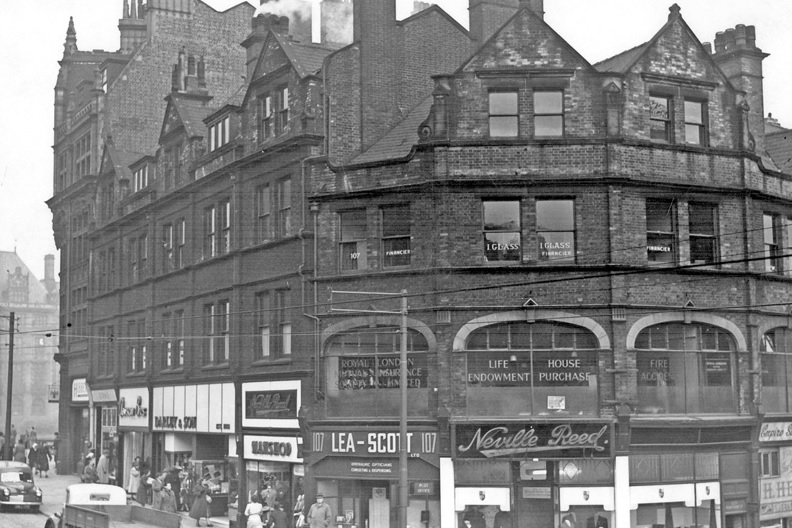
Harry Cassell, furriers, about 1910 (above) and (below) different names above the doors in the 1950s. Photographs: Picture Sheffield

The building was completed in September 1898 at a cost of £10,000 and consisted of seven shops and a restaurant – five shops on Pinstone Street, one at its corner with Charles Street, and one shop and the restaurant in Charles Street.

The list of shops that occupied ground floor premises is extensive, but one of its earliest occupants was Harry Cassell, furriers, which did a big trade in sealskin jackets. Later shops included Neville Reed, Lea-Scott opticians, Bradleys Records, and Colvin male outfitters.

It is perhaps fitting that the upper floor flats, later converted into offices, were adapted into apartments again in 2002-2003.

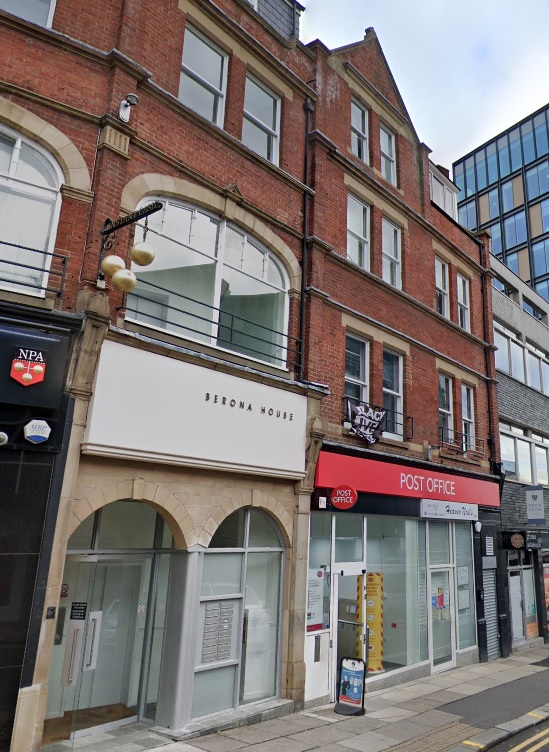
And maybe somebody might be able to explain the meaning behind its current name – Berona House.

Berona House, with the recent addition of a Post Office on Charles Street. Photograph: Google

© 2021 David Poole. All Rights Reserved

Categories
Buildings

The rise of facadism – new buildings with old fronts

Cambridge Street, Sheffield. Photograph: DJP/2021

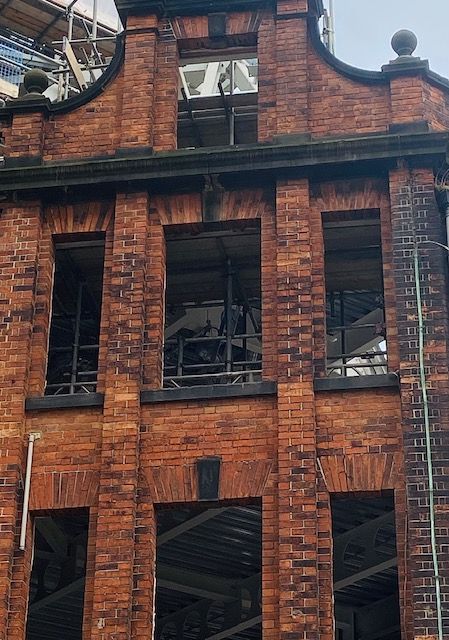
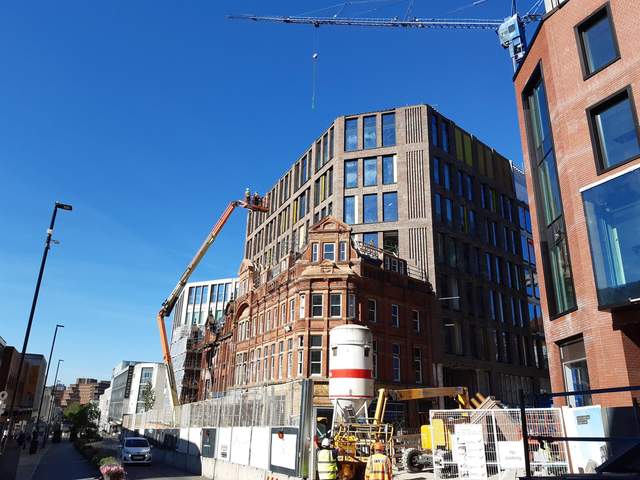
Whenever you see an old facade with a new structure behind it, this tells you that a building of distinction once stood there that simply could not be demolished, and the compromise which arose was to keep the front wall. The rise of facadism shows how far the power balance has shifted away from conservation towards redevelopment. Retaining the facade is an unwelcome condition of planning permission when their preference would probably have been complete demolition.

This building, at the bottom of Cambridge Street, Sheffield, shows that the facade is retained while its interior will be replaced with modern concrete and steel. This will apply to almost all the Victorian buildings being redeveloped on Pinstone Street, and planning permission has been granted to do the same to Chubby’s and the Tap and Tankard further up Cambridge Street.

© 2021 David Poole. All Rights Reserved.
Categories
Buildings

Coming down: the last days of Barker’s Pool House

Demolition underway at Barker’s Pool House on Burgess Street. Photograph: DJP/2021

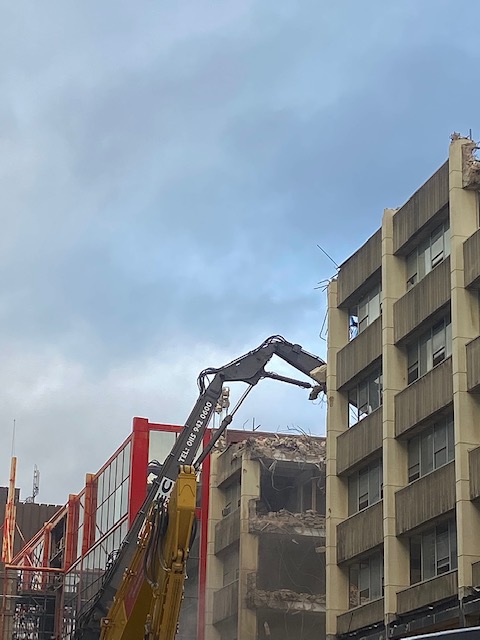
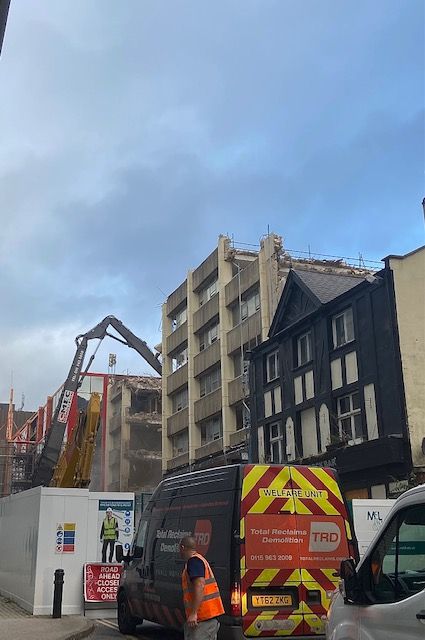
Sheffield city centre has never seen so much demolition and construction. The latest to fall is 1970s Barker’s Pool House, on Burgess Street, once linked to John Lewis by its high covered footbridge. The bridge has already gone, and now the bricks and mortar of the former office block will soon be no more. As part of the Heart of the City II development, it will be replaced by a stylish new Radisson Blu hotel, with its retained Victorian entrance on Pinstone Street. The William Mitchell ten-panel abstract reliefs, commissioned in 1972, were removed last year and will be resited in nearby Pound’s Park once completed.

The former Yorkshireman public house stands adjacent to Barker’s Pool House. Its own fate is uncertain. Photograph: DJP/2021

© 2021 David Poole. All Rights Reserved.