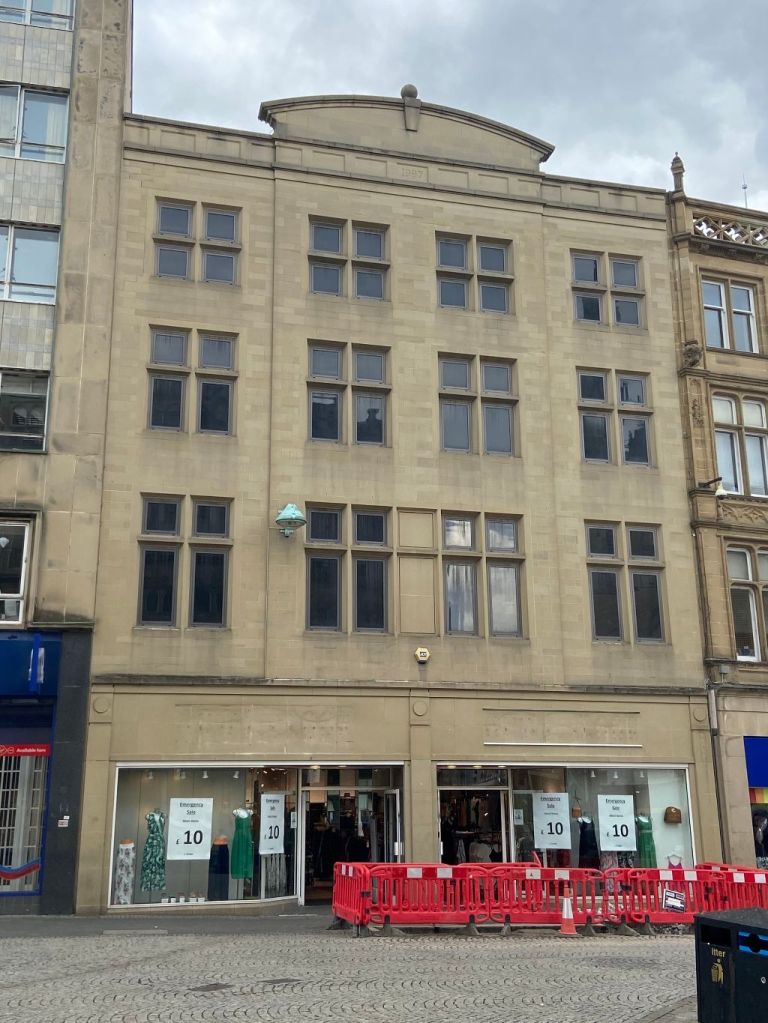
42-46 Fargate. The site of a new Tesco Express. Image: DJP/2022
We recently looked at 42-46 Fargate, an existing retail unit that was formerly used by New Look. The building has been demolished and redeveloped multiple times, with the present, existing building having been constructed in the 1990s.
This was once the site of the Green Dragon Hotel, built in 1884, with R. H. Ramsden shoe and hat shop occupying the ground floor retail unit. In 1922, it was adapted to become Winchester House, the former hotel rooms becoming offices and studios. During the 1950s and 1960s, Winchester House became offices for the Provincial Insurance Company. In the 1970s, the building was demolished and replaced with a standard 1970s design.
The demise of Fargate and its pending renaissance is well documented, but here comes news that Tesco Express is to occupy the building.
The retail giant has applied for planning permission for the installation of a new realigned shopfront and new aluminium automatic telescopic sliding door, as well as new signage and rooftop plant machinery.
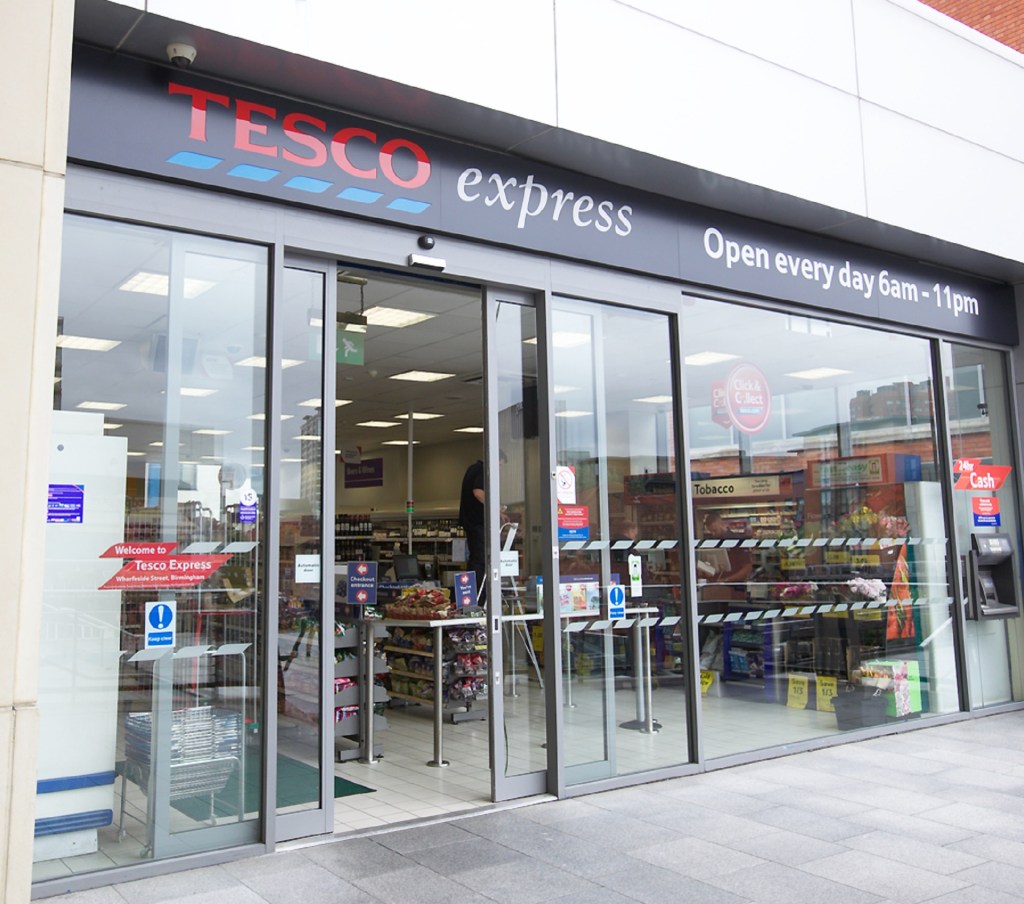
Tesco Express shops are convenience stores averaging 200 square metres (2,200 sq ft), stocking mainly food with an emphasis on higher-margin products, and the necessity to maximise revenue per square foot, alongside everyday essentials. They are in busy city-centre districts, small shopping precincts in residential areas, small towns and villages, and on Esso petrol station forecourts.
A typical Tesco Express store at the Mailbox, Birmingham.
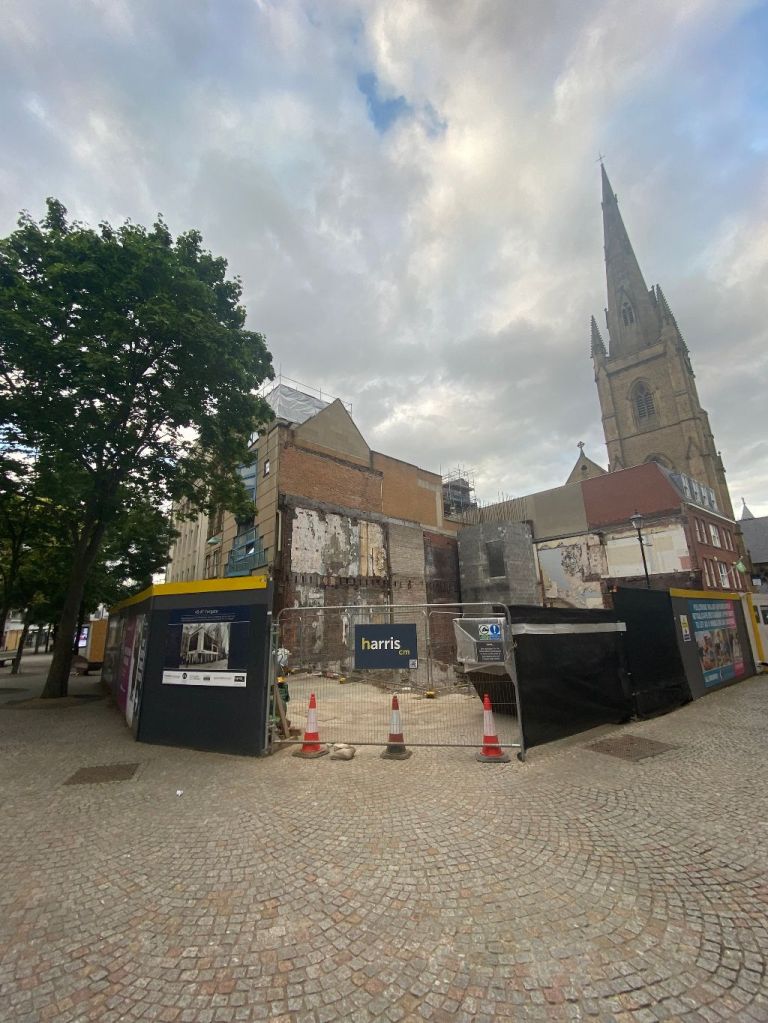
45-47 Fargate, Sheffield. The site of the Lord’s House. Image: DJP/2022
The year is 1815 and a big old town house on Fargate was demolished. It was replaced by a shop and in later years the site at its corner with Norfolk Row was occupied by Robert Hanbridge and Sons, hosier, hatters, and glovers, before becoming Hepworth tailors and finally a branch of Next.
The story of 45-47 Fargate has been covered here already, and the former Next building was recently demolished to reveal its underground secrets. But if we were able to dig even deeper there may be further treasures.
After Sheffield Castle was demolished in 1646, the Manor House remained, and the agent of the Duke of Norfolk, Lord of the Manor, resided here.
In 1706, however, the Manor House was dismantled, and a year later the Lord’s House was built in Fargate, of moderate size and pretensions, for the accommodation of the steward, and the occasional visits of the Lord of the Manor.
In the middle of the eighteenth century Henry Howard, then resident agent to the Duke of Norfolk lived here, and his son, Bernard Edward, who was born in the Lord’s House in 1765 eventually succeeded to the title on the death of his cousin, and became the 12th, Duke. But the Lord’s House was mostly occupied by his agents, the last one being Vincent Eyre.
In 1791, rioters had tried to burn it down in protest at the Enclosures Acts and were only prevented by the timely arrival of the military, which had been summoned from Nottingham the day before.
Towards the end of its life, the Lord’s House became a school where Samuel Scantlebury, the brewer, was a pupil.
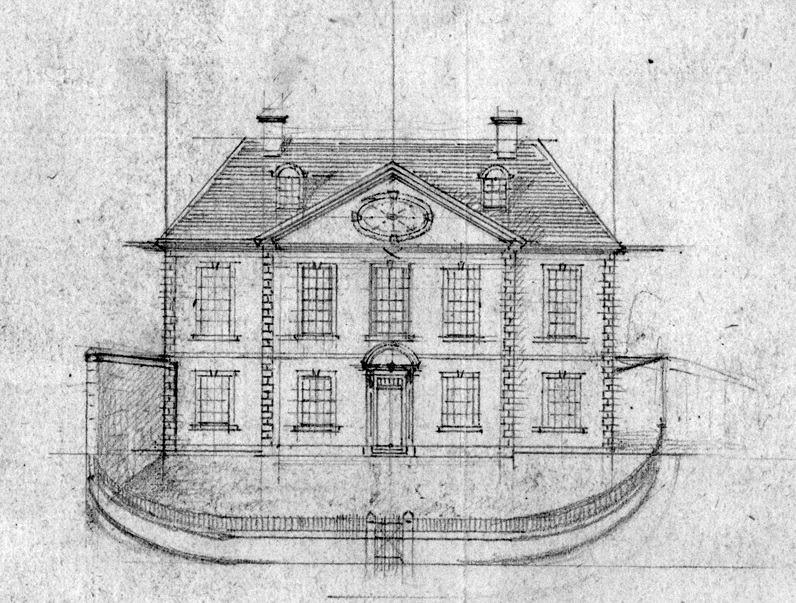
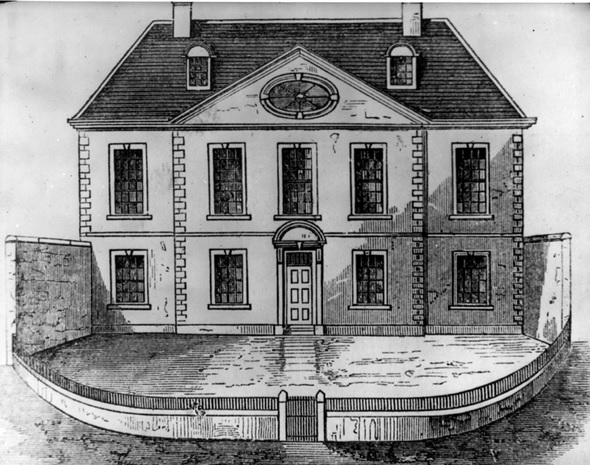
View of the Lord’s House, Fargate, demolished 1815. Taken from a pen drawing in the possession of Mr R. Drury (1867). Sketch made 31st October, 1867. Image: Picture Sheffield
The Lord’s House was built in 1707 for the Duke of Norfolk on his occasional visits to Sheffield. It was mostly occupied by his agents, the principal one being Vincent Eyre. It was situated in Fargate, at the corner of Norfolk Row. The house was demolished in 1814.Image: Picture Sheffield
“At the end of Norfolk Row was the building called the old Lord’s House,” said George Leighton in 1876. “It formed the corner of Fargate and Norfolk Row and stood where there are the shops so long occupied by Mr Holden, watchmaker (now Mr Rennie’s, hosier), and the adjacent ones, as far as the Old Red House.
“There was a double flight of steps leading to a balcony on the level of the first floor. Mr Rimmer, the catholic priest, had a small room in the house, used as a chapel. The entrance was from Norfolk Row side, and there were two or three steps up to the chapel.
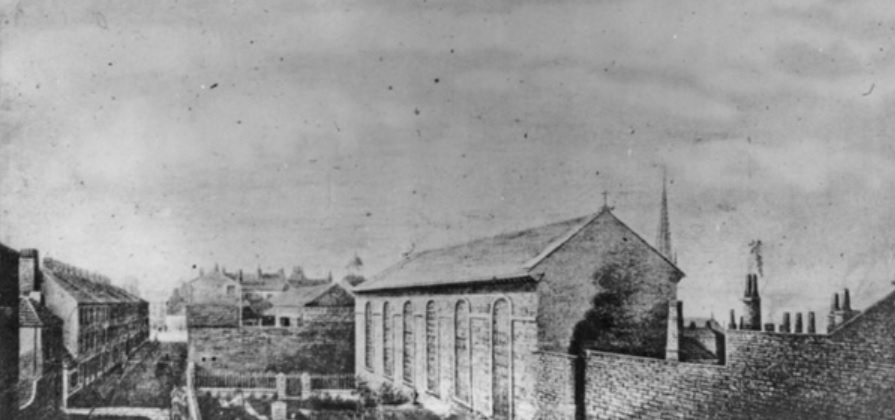
“About the time I am speaking of (1814-1815), the building was taken down, and the land was quite open from Fargate to the Assembly Rooms in Norfolk Street, and it continued open for years. Mr Rimmer got a chapel built upon the ground, right at the back (in 1816), and that continued to be the Roman Catholic place of worship until the present St Marie’s Church was built (1846-1850). We used to play on the ground, and ‘Old Rimmer’ did not like it, and drove us off. He was a nice old gentleman – a cheerful old chap. For a long time, the ground was unfenced, but ultimately a palisade was put up.”
The Lord’s House was sold in 1814 and dismantled in 1815, but the replacement chapel was short-lived. The palisade in the house’s former gardens was St. Marie’s Roman Catholic Church, better known today as the Cathedral Church of St Marie, Sheffield.
These days we have little visual evidence as to how the Lord’s House looked. However, within Sheffield Archives are two sketches, one of which is a pen drawing that was in the possession of Mr R. Drury in 1867.
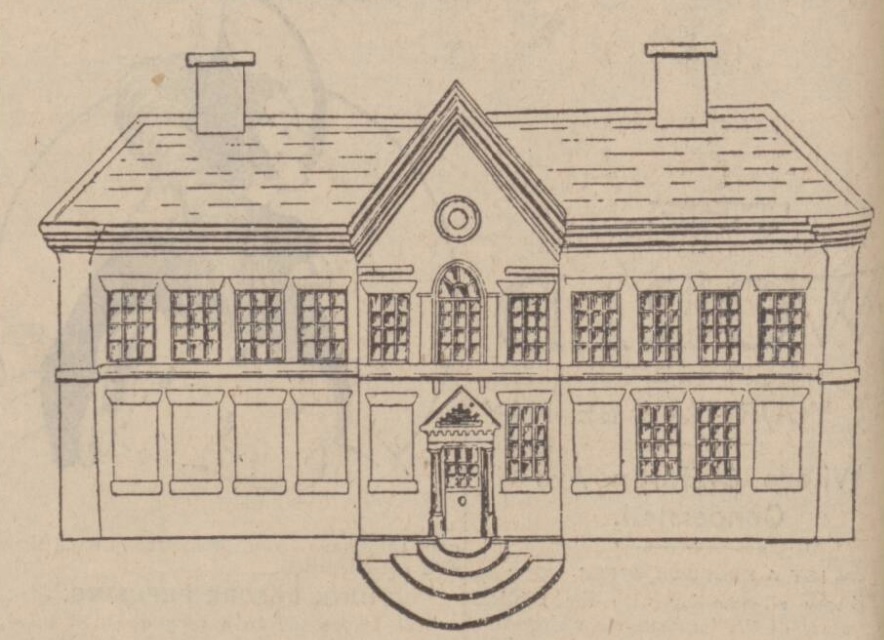
Both are remarkably similar, but in Charles Hadfield’s ‘History of St Marie’s,’ published in 1899, he provides another sketch that was taken from a porcelain model, the property of Arnold J. Ward. This model purported to represent the old mansion in Fargate. Mrs Fisher (widow of Henry Fisher, surgeon, Eyre Street) who died in 1881, stated that her father had purchased the model at a sale.
The Lord’s House. From Charles Hadfield’s ‘History of St Marie’s’ 1889. Image: British Newspaper Archive
That the model was a correct representation of the Lord’s House was testified by several residents including Septimus Clayton, John Kirk, George Thompson, James Brown, and William Clayton, well within the recollection of these old men.
In 1931, the Sheffield Daily Telegraph queried the whereabouts of the porcelain model and discovered that it had been presented to the Duke of Norfolk by Arnold J. Ward in 1897 who received an acknowledgement.
The newspaper contacted the ducal seat at Arundel Castle in Sussex and received the following response.
“We have a model in porcelain which might be described as follows: Circular front with door in centre, two round turret towers on either side with battlements around the top of each and with a square tower in centre of model which resembles an ordinary church. There is no record stating that this is the model asked about.”
The description suggests a different property to all the sketches, but there was consensus at the time that the model was the Lord’s House.
And we should also remember George Leighton’s recollections that ‘the Lord’s House had a double flight of steps, leading to a balcony on the first floor.’ Again, this contradicts all the sketches.
Somebody has suggested to me that the sketches might show the rear of the property, and one does show a retaining wall to the left hand side that might have been alongside Norfolk Row.
For now, I have submitted a request to Arundel Castle to determine whether the porcelain model still exists, and whether they have any more information on the Lord’s House.
Catholic Chapel, Norfolk Row (Original St. Marie’s). Norfolk Row to left. Fargate in background. Image: Picture Sheffield
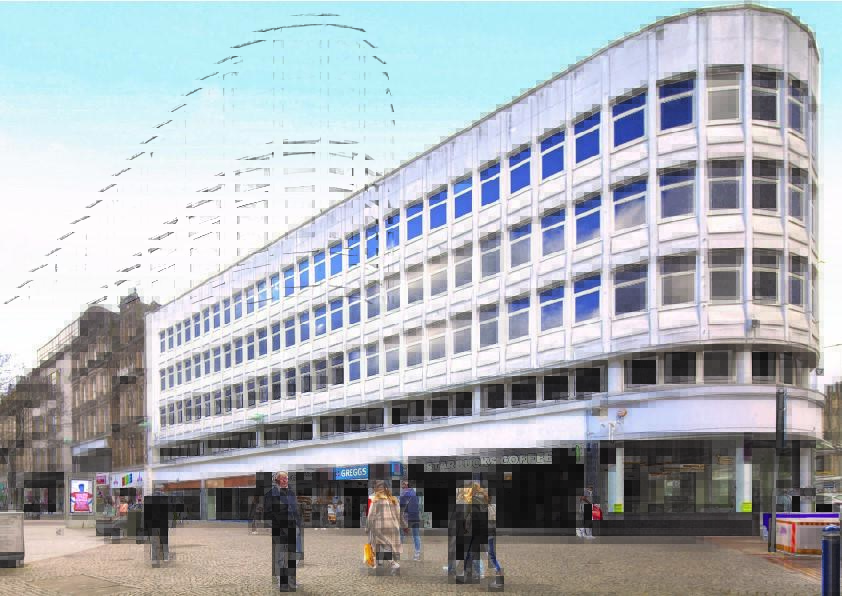
2-18 Fargate. “Given the huge housing shortage, plus the frequently reported difficulties faced by first-time buyers, the most obvious answer is to turn this unused office space into much-needed, quality apartments or student accommodation.” Arran Bailey. Image: GCW
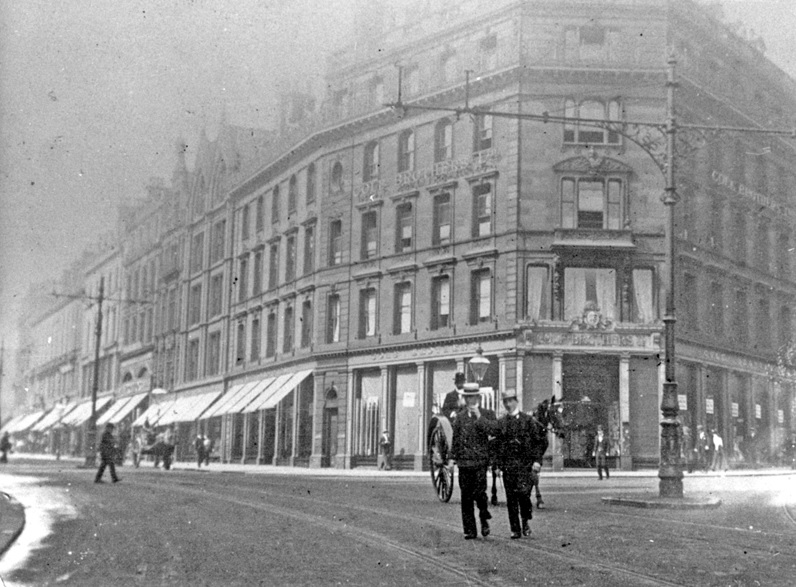
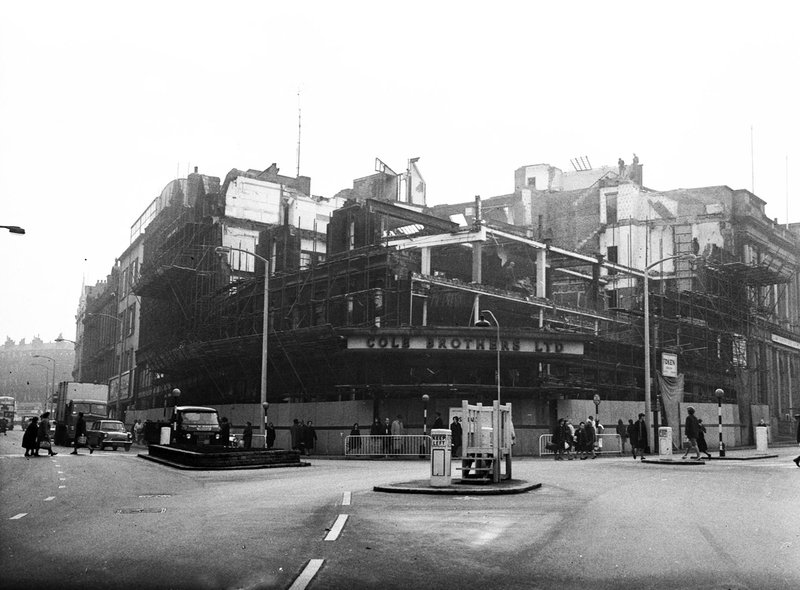
It dates to 1965-1966, and stands at Coles Corner, the iconic site of the Cole Brothers department store.
2-18 Fargate, at the corner with Church Street, has been acquired for an undisclosed sum by Nottingham property company ALB Group.
It already has Starbucks, Greggs and Hotel Chocolat on the ground floor, and plans are underway to convert the four upper floors of vacant office space into apartments.
The move follows a similar refurbishment model employed by ALB Group in other UK centres, including Stoke-on-Trent, Ipswich, Birkenhead, and Derby, which are already experiencing a turnaround in fortunes.
Group managing director Arran Bailey has long been committed to finding ways to reverse the trend of decay in UK town centres, particularly by encouraging local, independent entrepreneurs to launch new high street businesses, by offering lower rents with more flexible terms.
ALB is seeking to do the same with its vacant retail units in the Fargate building.
The demolition of the old Cole Brothers store in 1964. Photo: JPIMedia
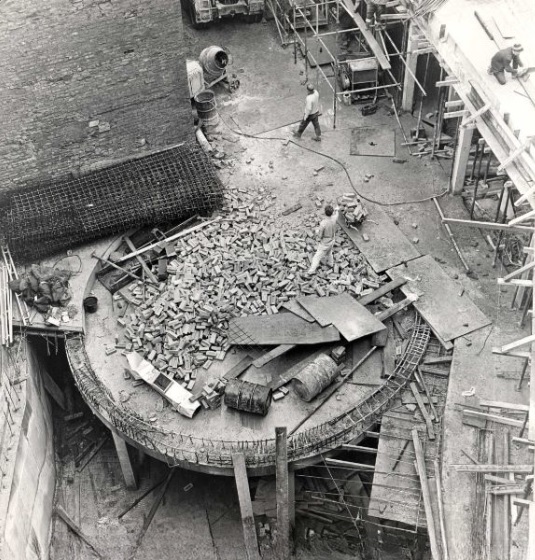
Construction on the old Cole Brothers site (Coles Corner), junction of Church Street and Fargate in 1965. Image: SCC Engineers and Surveyors/Picture Sheffield
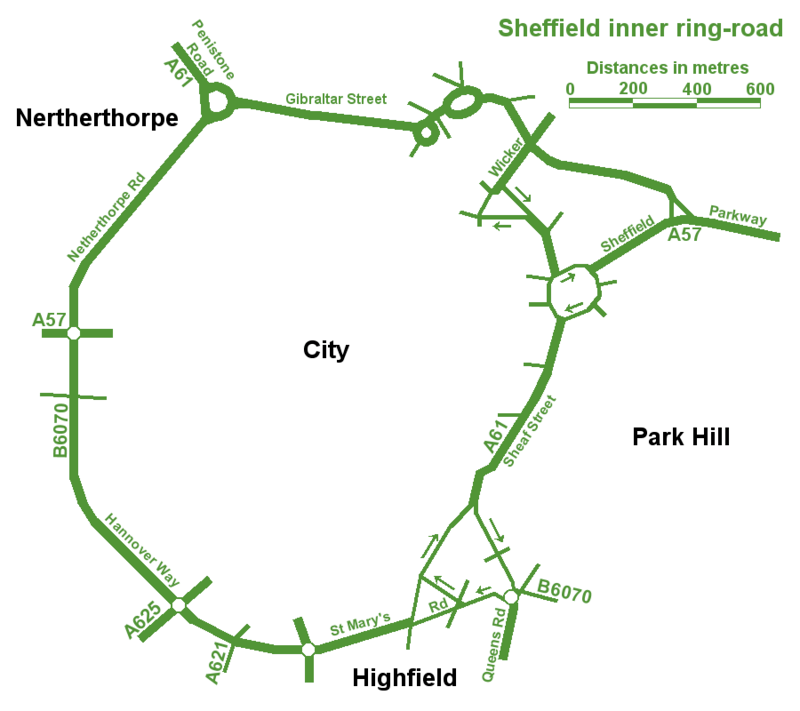
The best map of Sheffield’s Inner Ring Road, but spoilt by spelling mistakes.
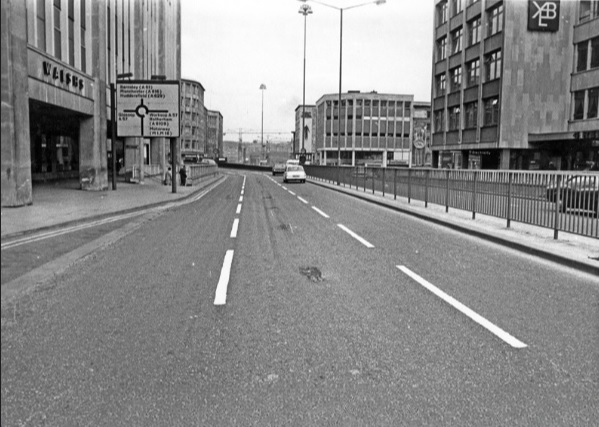
An unusual post, in so much that we are looking at a road. In fact, a series of roads that form one big one – Sheffield Inner Ring Road.
We might live in Sheffield, but sometimes it’s difficult to see wood for the trees, and this is the case with the inner ring road, because you probably don’t realise its purpose and where it is.
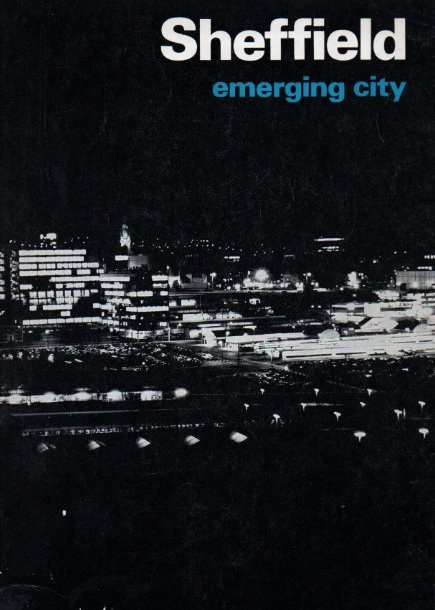
Let’s start in the 1930s when a route around the city centre was first proposed. Truth be known, World War Two stalled plans until the sixties, and in 1969 Sheffield Corporation published an impressive handbook called ‘Sheffield – Emerging City,’ in which plans for a detailed road system were revealed for the first time.
The council intended to pour £65m into the scheme which included bus lanes, pedestrian areas, as well as an urban motorway and motorway links with the M1.
Robert Waterhouse, writing in The Guardian in 1972, said that “Sheffield was as proud of its new roads as of its housing, its clean air, and its flourishing arts. They were all symbols of rebirth after years of stagnation among the ruins of the Industrial Revolution.”
The Guardian article, long forgotten, provides an interesting snapshot into the arguments that raged at the time.
It pointed out that after 1969, things had started to go wrong. In May 1971, a joint report by the city engineer, the city planning officer and architect, and the general manager of the transport department, had taken a gloomy view.
‘Although a large highway construction programme has been embarked upon,’ it said, ‘the growth of vehicular traffic is much greater than the growth of road capacity. The disparity has been obvious for many years and there seems negligible hope of it being ended in the foreseeable future.”
The report estimated that the proposed highway system, capable of carrying about 50 per cent of commuters to work by car, would cost ratepayers another 20p in the pound, which was probably acceptable, but that a system by which nearly everyone went by car could cost £300m, or another pound on the rates, clearly unacceptable. If the ‘compromise,’ £65m system was going to get clogged up anyway, was it worth building at all?
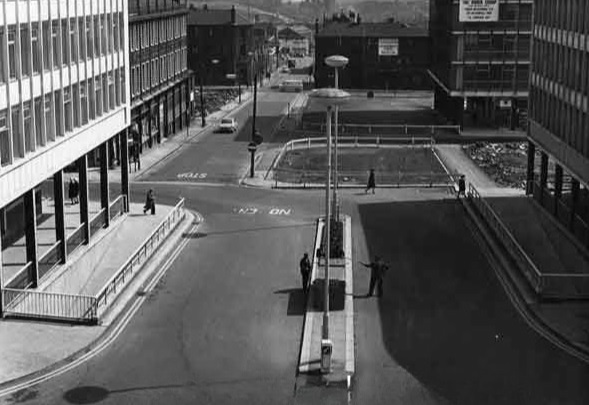
Arundel Gate in 1973 looking towards the Hole in the Road – new barriers erected in attempt to make pedestrians use the subways. Image: Sheffield Newspapers/Picture Sheffield
Waterhouse identified growing opposition within the council.
Sir Ron Ironmonger, Labour’s council leader, admitted that a growing number of councillors were against the scheme, and there had been public exchanges between the planning department and engineers.
The planners, headed by R. Adamson, felt that the engineers were going about the job the wrong way: instead of giving priority to the inner ring road, which everybody thought essential, construction had been advanced near the city centre. This meant that the civic circle – the inner ring road ultimately intended to carry only local shoppers and delivery vans – was being used as a throughway.
But the engineers, under K.D. Wiilliams, replied that highways the size of the inner ring road – a six-lane urban motorway – didn’t happen overnight.
It seemed that Sheffield residents didn’t know what they were in for but would soon find out. The new interchange between the inner ring road and the Parkway was near completion at the bottom of Commercial Street. Sheffield Parkway was also being built and would be the main route into the city centre from the M1.
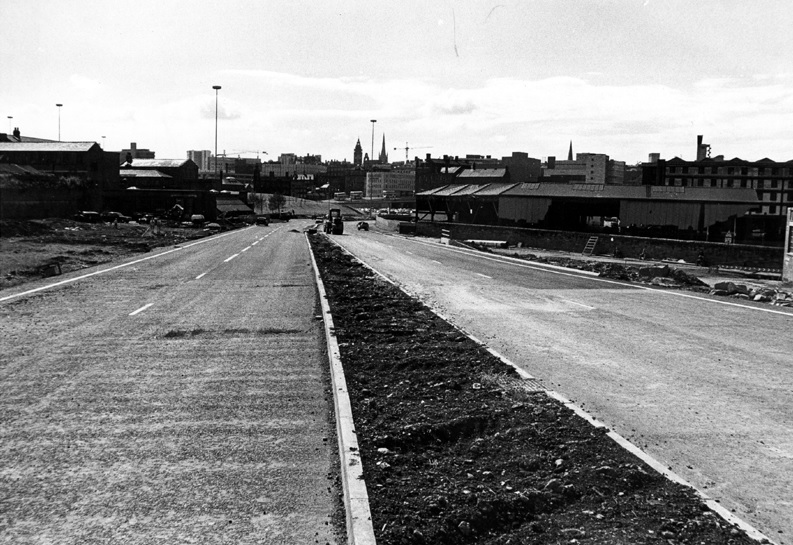
Construction of Sheffield Parkway in 1974 looking towards Park Square. Image: Sheffield Newspapers/Picture Sheffield
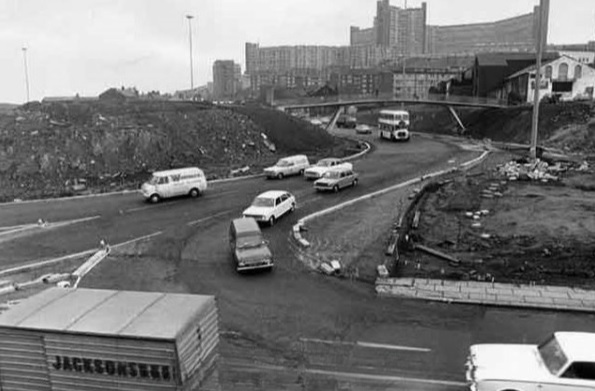
Sheaf Street/Commercial Street (latterly known as Park Square) roundabout under construction in 1973. Image: Sheffield Newspapers/Picture Sheffield
But the argument in 1971 was that traffic coming into the city centre was being diverted onto newly-constructed roads, because there was no proper inner ring road. And it was causing problems.
On Commercial Street itself, a bridge was being widened to take four lanes of traffic. It joined the civic circle at Castle Square, where traffic and pedestrians were already separated – cars at ground level, pedestrians underground. But before the road got there, it had to pass Fitzalan square, one of the principal routes for shoppers on foot. Everybody agreed this was a problem, but work on widening Commercial Street continued anyway, despite open criticism from Labour councillors.
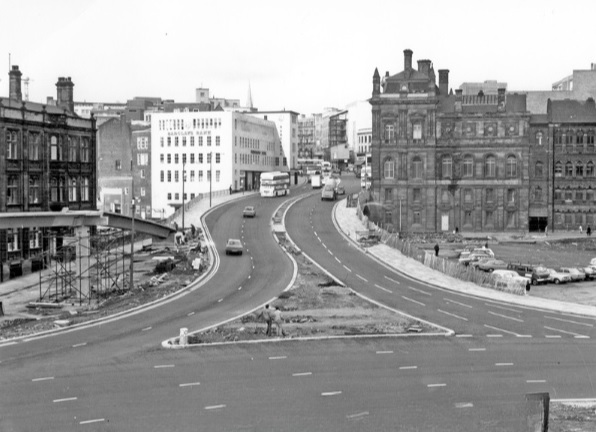
Widened Commercial Street in 1970s, looking towards the Gas Company Offices on right, Electricity Supply Offices and Barclay’s Bank on left. Shude Hill behind car park on right. Image: Picture Sheffield
There were others also opposed to the scheme. Dr Leonard Taitz, a young South African doctor, working in Sheffield, was convener of the Conservation Society’s national transportation working party. He had started a campaign to bring the road building programme to a halt while a new policy on integrated transportation was formulated.
New roads were being built within the city centre but there were design flaws.
He cited the case of Furnival Gate, also a four-lane highway which, he suggested, was bound to be used by commuter traffic, but which divided The Moor and Pinstone Street, two proposed precinct streets. A subway to take people under the road had already been built, while Charter Row, another radial, had a barrier down its middle which cut a whole segment of the city from the centre.
Furnival Gate at the junction with The Moor showing (middle left) junction with Union Street in the 1960s. Image: Picture Sheffield
He argued that these roads were primarily being used by commuters cutting across town. But Mr K.D. Williams, head of technical design at the engineers, said this wasn’t the case, and that they were a necessary part of an integral system, that will one day be blocked off to prevent through traffic, and channel motorists to off-street car parks.
Whatever the interpretation, the roads were ‘not a pretty site.’ Certainly not ‘Sheffield’s Champs Elysees,’ as a councillor had called Arundel Gate.
Robert Waterhouse asked the important question? Would the new roads ever carry the massive traffic that Sheffield had come to expect? Would the inner ring road be built as a motorway, and would Sheffield get its two, or even three, motorway links with the M1?
Sir Ron Ironmonger pointed out that after 1974, highways would become the responsibility of the new South Yorkshire metropolitan authority and had no wish to make any drastic moves at such a late stage, and cited Nottingham which had done away with a major part of its road programme. (Sir Ron later became leader of South Yorkshire Metropolitan County Council).
What did happen?
The 1970s proposal for the Inner Ring Road was abandoned because it would have destroyed important heritage assets like Kelham Island and the canal basin, and cash, as ever, was the stumbling block. But we did eventually get an Inner Ring Road, but it took a long time for it to be completed in its entirety.
We can thank Duncan Froggatt, a Chartered Engineer, in his excellent book, ‘Sheffield – A Civilised Place’ (2018), for providing the timeline.
“The inner relief road had started in the 1960s starting with the dualling of Netherthorpe Road. But the later stages came much later with St Mary’s Gate and Hanover Way widened to dual carriageways in the 1980s.
“Sheaf Street was improved in the early 2000s leading to the improvement of Sheaf Square and subsequently links to St Mary’s Road up to 2009.
“The northern section from Sheffield Parkway to Penistone Road was built in two phases in the 1990s. The phase from the Parkway to The Wicker was completed in 2000, originally called Cutlers’ Gate, but later renamed Derek Dooley Way. The next stage, between the Wicker and Shalesmoor was finished in 2008.
“Once completed, it provided a continuous loop of dual carriageway, clockwise from Granville square in the southeast to Sheffield Parkway in the east, linking all main arterial routes in the city.”
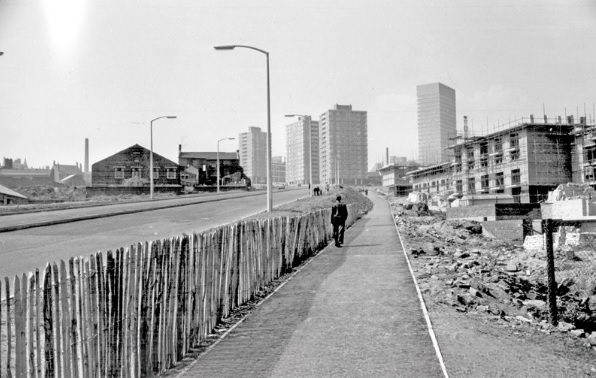
Netherthorpe Road with Netherthorpe Street Flats under construction in 1965, looking towards Netherthorpe High Rise Flats. Image: SCC/Picture Sheffield
All done and dusted, but these days it is what is happening within the Inner Ring Road that creates the interest.
Mr Williams’ plan for streets to be blocked off to traffic within the city centre did and continues to happen. Fargate and The Moor were the first to be pedestrianised, Pinstone Street is in transition, and Arundel Gate will be downgraded.
But what nobody in the 1970s envisaged was something that had been around for centuries… and that was the bicycle. Cycle routes, and the eagerness to cut car emissions, while greening our urban spaces, means that Sheffield city centre will eventually change beyond recognition.
I leave you with a story. Last week, I had to travel by car from one side of the city centre to the other. By foot it was less than a mile. By car, I travelled 2.5 miles.
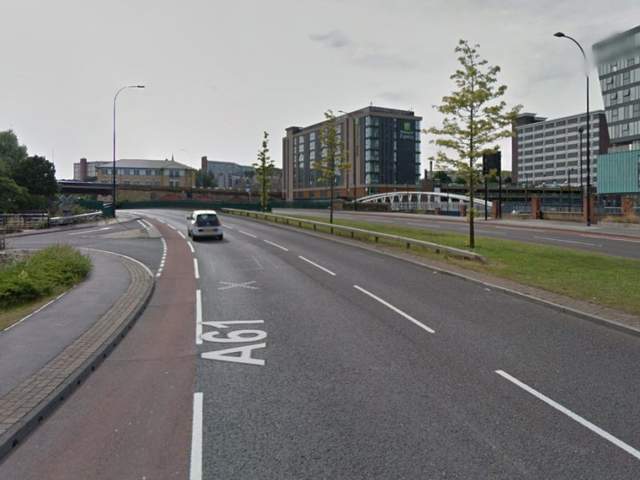
Derek Dooley Way. Image: Sheffield Star
“Driving into Sheffield, I was looking forward to my friend’s hen-do. We had booked a city centre apartment, a spa day and a restaurant. What could go wrong? Yet, an hour-and-a-half later, I was bellowing tearfully into my mobile at my boyfriend: “You came to university here. Where AM I?” What had caused this emotional meltdown? Certainly not a fall-out with my friends – I hadn’t even seen them yet. Instead, my fun-filled city break had been spent navigating a series of roundabouts on the city’s ring road which kept spitting me out with increasing ferocity. Sheffield’s inner ring road has been tormenting drivers since 1961. Like many of the nation’s worst ring roads, it twists you round its little finger only to catapult you into bus-only zones or roads that lead you off in the opposite direction to the one you need.” – Jenny Scott – BBC News – 2014
NOTE Robert Waterhouse is a journalist. Starting on the Guardian in Manchester and London, he turned freelance and was launch editor of the daily North West Times. He is a co-editor of the review Mediterraneans. His books include The Other Fleet Street, a history of national newspaper publishing in Manchester.
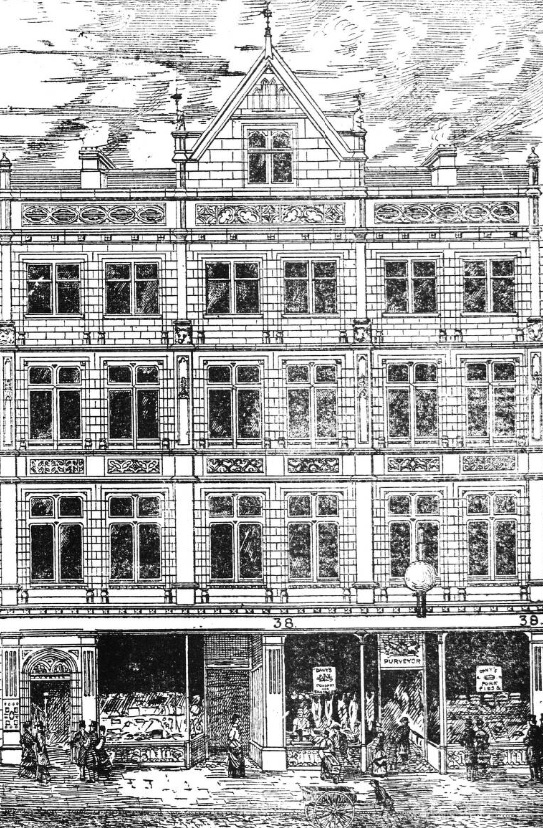
‘Fargate of the present’ declared the Sheffield and Rotherham Independent in 1884. It showed the recently constructed shop for Arthur Davy. Image: British Newspaper Archive.
We have covered this building before, but as always happens, new material surfaces.
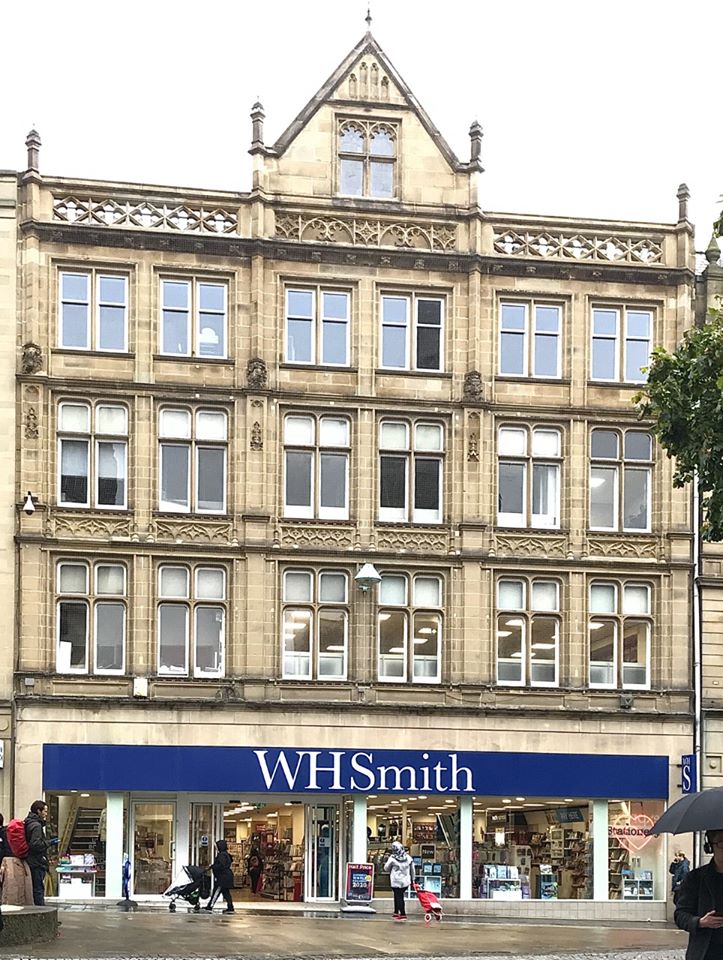
Take a close look at this sketch from 1884. It looks different these days but stands proudly as ever. This is 38-40 Fargate, erected in 1881-1882 for Arthur Davy, and described at the time as the largest retail provision store in Great Britain. Since the 1970s, it has been occupied by WH Smith.
It was erected because of Sheffield Corporation’s Street Widening Programme of the late 1800s that encompassed Pinstone Street, Fargate, and later, High Street. In modern terms, this might be considered to have been Sheffield’s original Heart of the City redevelopment.
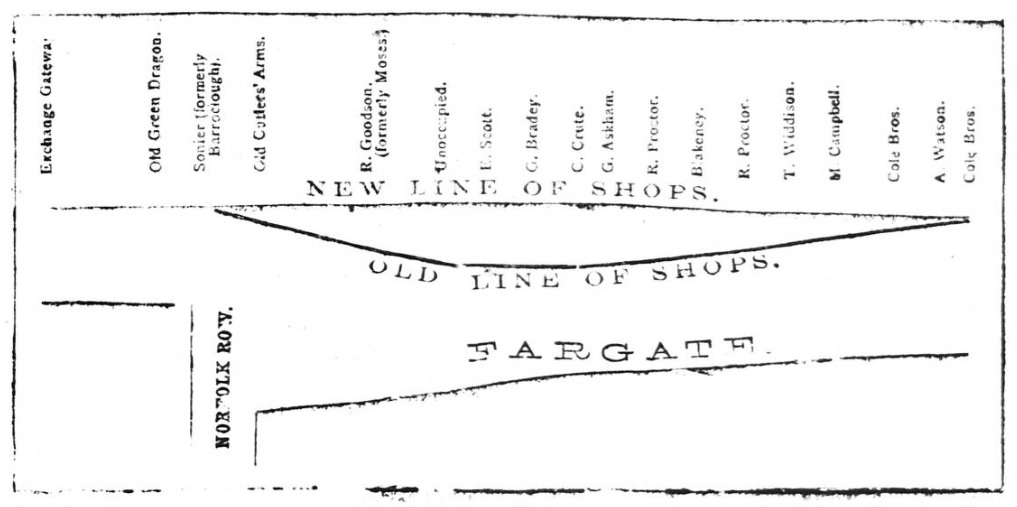
Before this, Fargate was much narrower, the street line on the north side extending much further forward into what is today’s pedestrian precinct. In fact, there was a ‘pinch-point’ in front of old shops that previously occupied the site. When these were demolished, Arthur Davy’s building was built much further back along a straight line of new buildings, most of which survive.
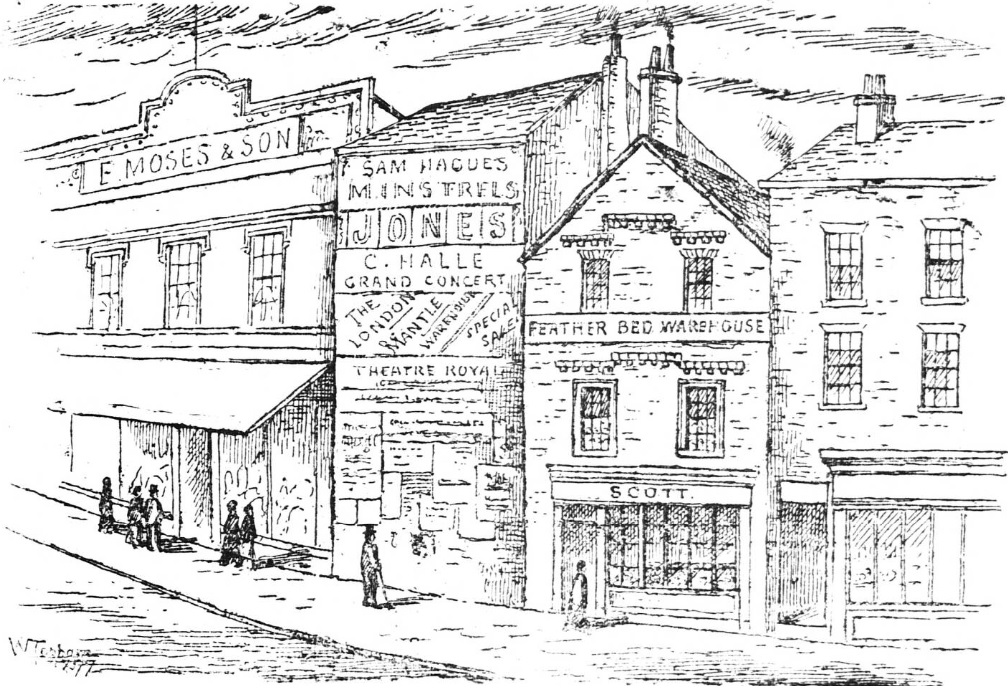
We also know which shops were demolished to make way for the new building. These were R. Goodson, a mantle shop (formerly E. Moses), a vacant unit (they even had empty shops then), E. Scott, feather bed warehouse, and George Bradley, watch and clockmaker.
Former buildings where 38-40 Fargate now stands. The old line of shops was demolished and the street made wider. Note the empty shop that was used for advertising purposes. Image: British Newspaper Archive
Pevsner describes John Dodsley Webster’s design for the new building as ‘economic handling of a late Gothic style, with carved animal heads advertising hams, potted meats and pork pies for which it was famous.’ Look carefully, these are still visible above WH Smith today.
Where stationary, magazines, and books, line the interior today, we must use our imagination as to what it used to look like.
The ground floor sales shop was 75ft long and 40ft wide, lined with Minton’s White Tiles. On the right was a counter for the sale of hams, bacon, butter, cheese, eggs, and tinned goods. On the left was the counter for pork, polonies, sausages, pork, veal and ham pies, brawn, pork, and lard. There was also a room in which to hang 50 pigs, 4000 hams, 2000 sides of bacon, besides a considerable number of polonies and sausages.
An entrance via Exchange Gateway (the small lane that exists to the left) led to a slaughterhouse, where Royal Pigs were killed, the carcases lowered through a trap door into a room below, where they were opened and dressed, and hung upon rails at the back of the shop.
Another room held the bakehouse where the crust for pork pies was made and baked in two Jennison Smokeless 2-Deckers, capable of baking 12cwt of pies per day.
It’s hard to believe, but where many of us remember WH Smith’s record department, this used to be where sausages and polonies were made, as well as the curing of ham and bacon. These were conveyed to the shop above by hydraulic lift.
In later years, the upper floors also became Davy’s Victoria Café, used for light refreshments, luncheons and afternoon teas.
Carved panels above the first-floor windows and open quatrefoils in the parapets either side of the central gable. Carved animal heads advertise hams, potted meats, and pork pies that Arthur Davy was famous for.
Sadly, Davy’s closed in 1972, and converted into WH Smith, complete with a flat canopy outside that has long-since been removed. In recent years, the shop had to close for a significant period, temporarily relocating to Pinstone Street, after roof supports failed and had to be replaced.
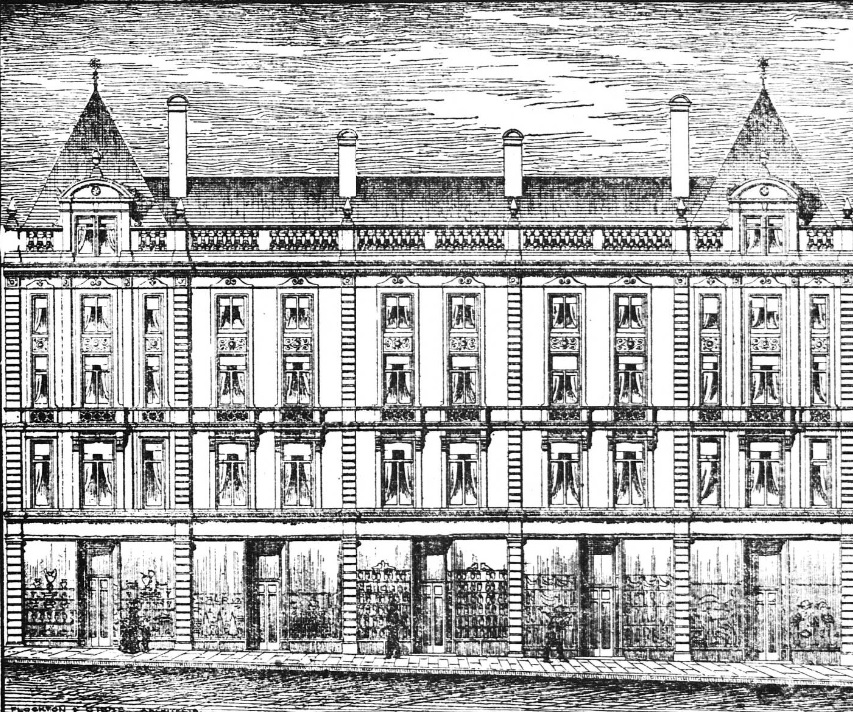
New shops erected in Fargate in 1884 for William Bissett. The architects were Flockton and Gibbs. The shops and offices still exist. See image at bottom of post. Image: British Newspaper Archive
When we look at Sheffield, the names of two construction firms – George Longden and Henry Boot – often appear. However, some of our well-known buildings were built by a company that has been erased from history. And perhaps for good reason.
William Bissett was a self-made man. Born in Pilsley, Derbyshire, he came to Sheffield and was apprenticed to Primrose and Company, where he acquired a practical knowledge of plumbing and glazing.
Afterwards, he set up on his own on West Street, adding further trades such as gas-fitting, painting, paperhanging, and general decorating. The success of the business allowed him to take on a partner, John Edwin Elliott, and move to more extensive premises on Devonshire Street, used as offices and showrooms, and workshops at Wilkinson Street, Pinfold Street, and Mary Street.
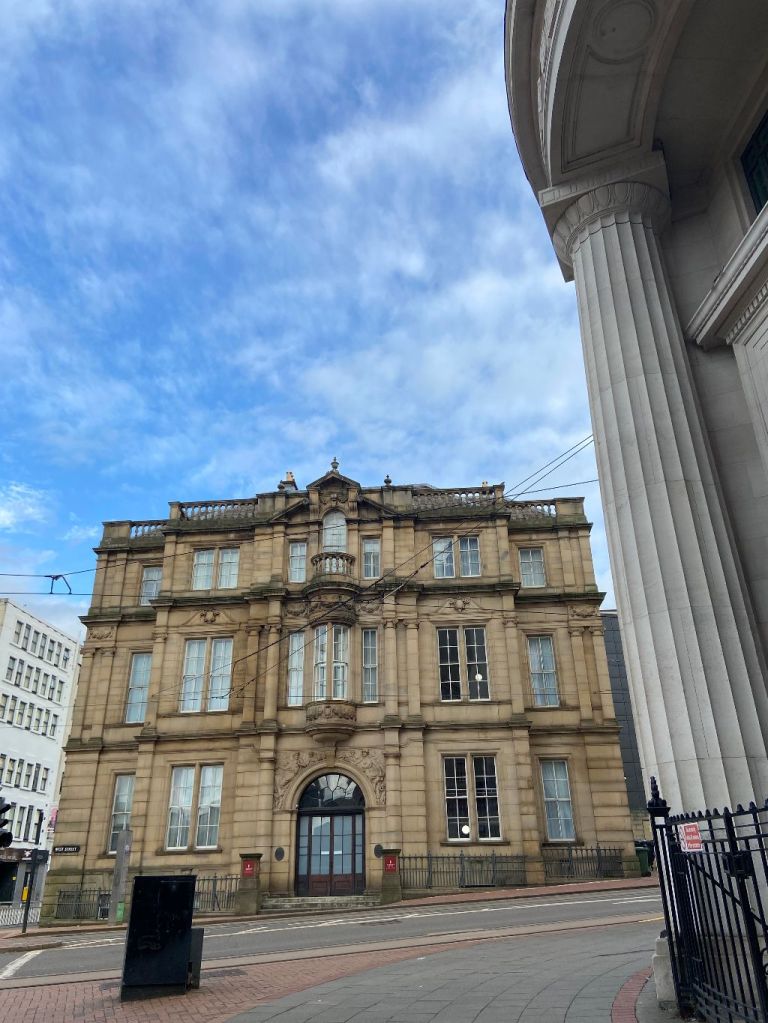
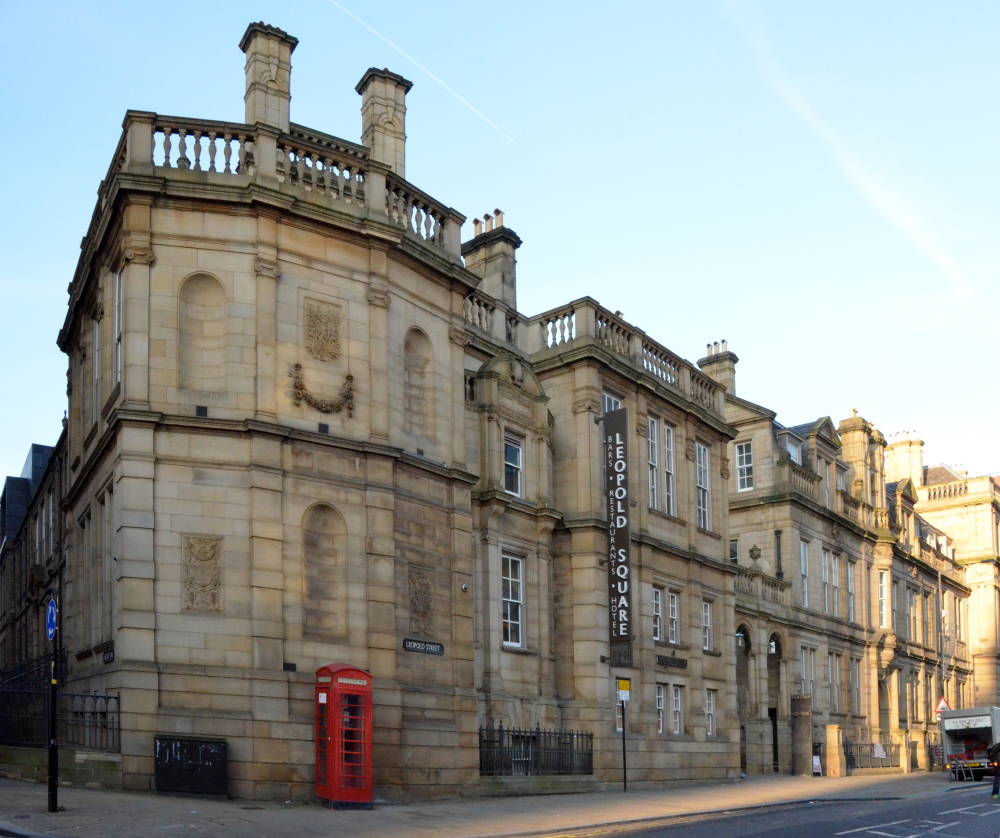
He launched as a general contractor and builder and managed to obtain important contracts in Sheffield and Birmingham. Amongst the earliest of his employers was Mark Firth, who entrusted him to enlarge his residence at Oakbrook, but this work was dwarfed by the magnitude of his public contracts, the most important of which was the Central Schools, School Board offices, and Firth College (now forming Leopold Square and Leopold Hotel).
Firth College. Now part of Leopold Hotel.Image: DJP/2022
When Sheffield Corporation started its Street Improvement Scheme in the 1870s, Bissett was extensively engaged in the erection of palatial; new business premises on Fargate and Pinstone Street, and himself acquired several valuable sites.
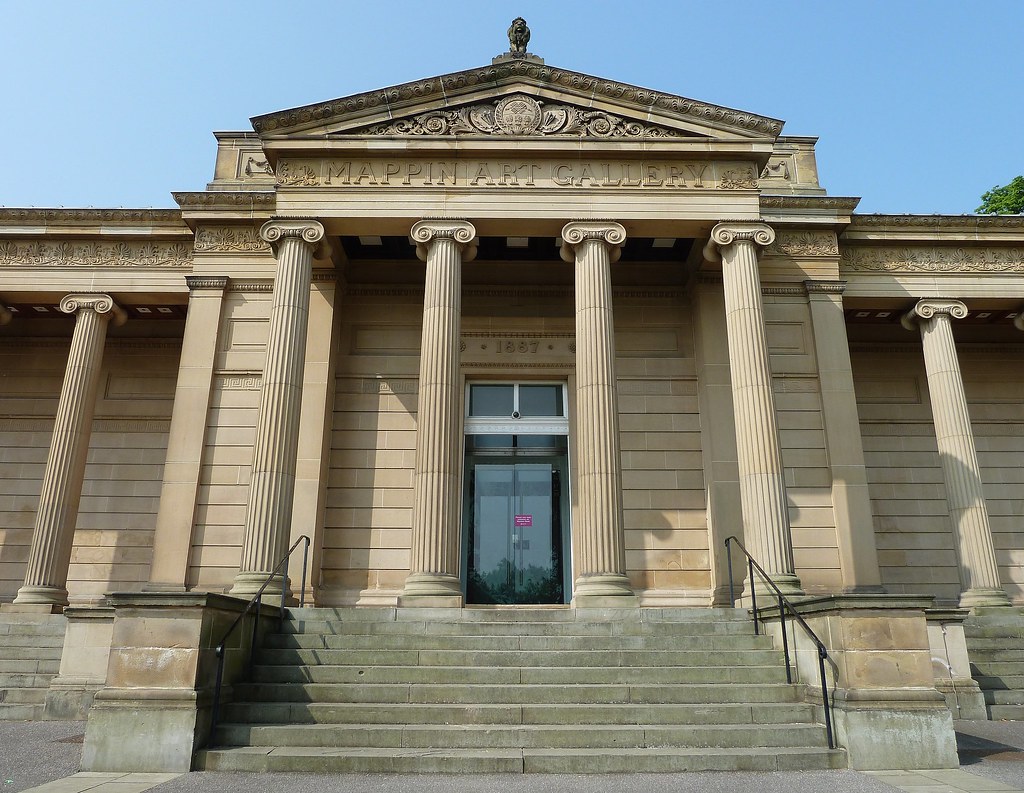
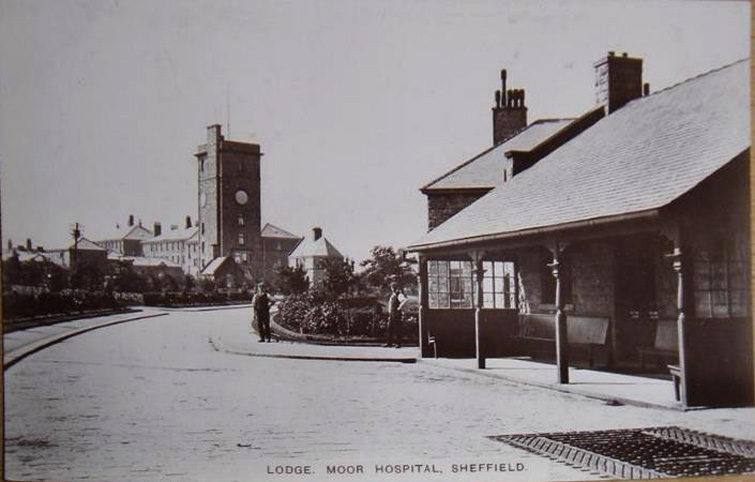
Other building work included Weston Park Museum, Mappin Art Gallery, Cockayne’s department store in Angel Street, and Lodge Moor Hospital.
Mappin Art Gallery
For some years, Bissett was a member of Sheffield Town Council for the Upper Hallam Ward, serving on the Buildings, General Purposes and Parks, and Highway Committees. Far from me to speculate that the success of his company might have been down to council connections, but these weren’t transparent days. However, he resigned in 1884 to allow his firm to undertake the Sewage Works at Blackburn Meadows.
Unfortunately, Bissett suffered a stroke in 1886, and died at Rock Mount, Ranmoor, in 1888. His partnership long dissolved, the business was split amongst three sons, but hereon, the affairs of William Bissett and Sons unravelled.
In 1889, whilst work was underway to build buildings for the YMCA (Carmel House), on Fargate, a petition was served against his three sons.
“The acts of bankruptcy alleged against the debtors respectively are that William Crellin Bissett and Lawrence Colgrave Bissett, did, on or about the 28th of November, 1889, with intent to defeat or delay their creditors, depart from their dwellings or otherwise absent themselves; and that the said James Francis Bissett did, on the 4th day of December, file in the Sheffield Court a declaration admitting his inability to pay his debts.”
It appeared that some of the contracts did not turn out very successful and the firm had lost considerably by them. A year before, a destructive fire at the Wilkinson Street premises had also caused considerable loss. Stories about the firm’s financial position had circulated for months and everything that could be offered as security, even their interest under their father’s will, had been mortgaged.
Former School Board Offices on Leopold Street.
But the situation took a grimmer turn.
Apparently, the state of affairs was only known to the brothers in Sheffield, William and Lawrence, while James, in Birmingham, had been kept ignorant. The first he knew about it was when he received a letter from them bearing a Paris postmark and informing him that they had absconded.
James immediately came to Sheffield and found that the firm was in a state of financial ruin. From inquiries he learned that both William and Lawrence had been about the business on the Thursday morning, and that early in the afternoon they had left for London. They travelled to either Dover of Folkstone the same evening and caught a boat to Paris. The assumption was that they had then gone to Spain.
Before they left, they had received a cheque for about £4,000 to which debt they obtained advances. They cashed the cheque, took the proceeds, and with them went the petty cash books and private ledgers. In the end, it was determined that the company owed creditors about £34,439 (about £4.7m today).
James, left to deal with his brothers’ dirty work, and the discovery that they been living way beyond their means, was absolved, and eventually released from bankruptcy.
However, the whereabouts of William and Lawrence remained a mystery and by all accounts never returned to England.
Until that is, a notice headed ‘Bissett v Bissett’ appeared in The Times in 1897, whereby Agnes Amy Bissett filed for divorce against her husband Lawrence, by reason of his adultery and desertion.
Lodge Moor Hospital was built by Bissett in 1888 as an isolation hospital.
On November 28, 1889, Lawrence had told her that he was going to London to see his solicitors about business, but he never returned, and the next she heard from him was through a letter he sent to her father from Paris, in which he said: –
“Will you please, on receipt of this, go to Amy at once. Our affairs have gone wrong, the bank having turned on us, and to save a little money from the wreck, I have left England for a time. I may have done wrong, if I have, God forgive me. I have no time for more, as the train goes.”
In a subsequent letter he wrote:-
“We had a certain overdraft from the bank, and all went well. They have suddenly shown us that they will not continue it, and nothing but bankruptcy, without a chance of saving anything, stared me in the face, so I thought it best, rightly or wrongly, to leave England with what money I could and try my fortune in another land.”
It was subsequently found that he had gone to San Antonio, Texas, and as a bankrupt, the Official Receiver had instructed the Post Office to send all letters to them.
In this way, another letter came to light from a young lady called Amy Sebright. This letter announced to him that she had given birth to a boy called Cyril Laurence Bissett. It transpired that the young lady had been engaged at the Theatre Royal during the pantomime season of 1888-1889, and that she had met Lawrence, and afterwards lived with him ‘maritalement’ at Manchester, Brighton, and elsewhere. When he was leaving England, he had asked her to accompany him, but she had declined to do so
His wife received another letter from him at the end of 1890 asking for her forgiveness, and acknowledging his guilt, but said nothing about returning.
The divorce was granted.
“Here the husband had left his wife with a falsehood on his lips, and there could be no doubt of his intention to desert her after what had transpired as to his relations with the actress from Sheffield.”
We do not know the end outcome for William or Lawrence (investigations for another day). Bad businessmen, rogues, and criminals. Only James came out of the story with his reputation intact. Remember this story the next time you visit Leopold Square or Weston Park Museum.
Modern day view of the shops that William Bissett built on Fargate. Most of the offices above are now empty. Image: DJP/2022
Once upon a time, this building was on the edge of town, but looked very different to what it does now. And it faced Fargate, not Norfolk Street, as it does now.
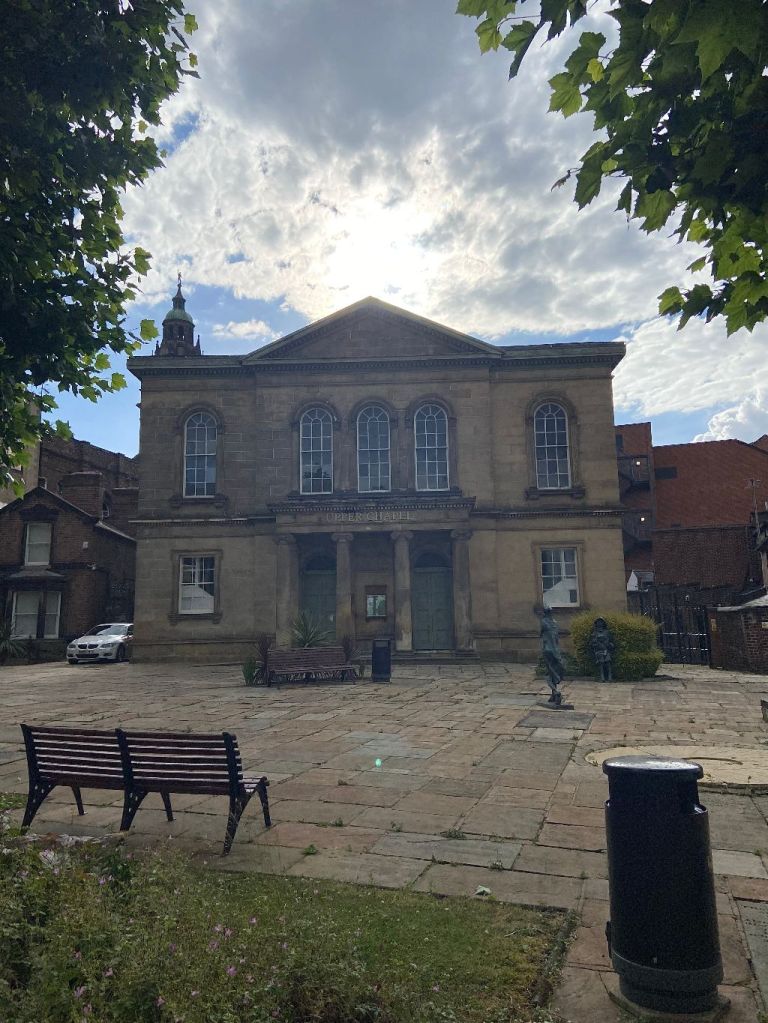
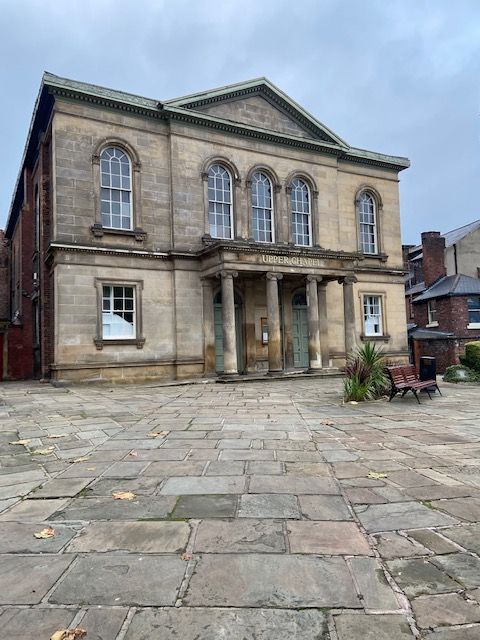
Upper Chapel is Sheffield’s oldest Nonconformist chapel. It was built in 1700 and the original brick wall sides still form part of the building.
The congregation was formed by followers of James Fisher, Vicar of Sheffield during the Commonwealth, after he was ejected in 1662 in the Great Ejection, during the restoration of the monarchy, for refusing to subscribe to the Act of Uniformity. Around a tenth of his parishioners followed him in becoming Dissenters, and several more splits ensued, but by the 1690s, the dominant group of non-conformists was led by Timothy Jollie.
Prior to this they probably met for worship in each other’s houses, and the worship grew to such an extent that the faithful few in Sheffield ventured to build a place of worship called New Hall (at the bottom of Snig Hill) – the first Dissenting meeting house in Sheffield.
The congregation grew to such an extent that a bigger chapel was built that faced ‘Farrgate’ and was called New Chapel, the back of it looking across Alsop Fields.
On the death of the Rev. Timothy Jollie in 1714, its members numbered 1,163, the largest group in Yorkshire, and the Trustees of New Chapel appointed the Arian John Wadsworth, causing some dissenters to breakaway and build a new chapel nearby. This was Nether Chapel that gave modern-day Chapel Walk its name.
With two chapels so close to each other, New Chapel became known as Upper Chapel, being farther up the hillside, and in its grounds was the tombstone of Timothy Jollie with the inscription, ‘an eloquent and Evangelical interpreter of the word of God, a man divinely gifted to preach the fundamentals of Christian doctrine.’ The grounds, which form the present day courtyard, were originally used as a burial ground until 1855, when a law was passed preventing further town centre burials.
By the 1840s, Upper Chapel was described as having ‘a dingy aspect externally, and peculiarly inconvenient in the arrangements of the interior.’
In 1847-8 it was completely rebuilt by Sheffield-architect John Frith, a member of the congregation, the style of architecture being ‘Italian, simple and plain in its detail.’
His biggest change was to extend the building to the east and reverse the building to face Norfolk Street.
The principal front, built of cleansed stone, was divided into three compartments, the centre one being composed of an Ionic portico of four columns, over which there were a group of circular-headed windows. It had a slight projection and was surmounted with a pediment. The flanks of the chapel were raised eight feet higher than the former building with architrave moulding, frieze, and cornice, that ran on one level around all the outer walls, with exception of the pediment in the principal front.
The body of the chapel was divided into three compartments by two aisles, commencing at the entrances and terminating on each side of the pulpit and communion table.
A three-sided oval gallery was introduced, the columns supporting it set five feet back from the line of the gallery front and allowing a view of the minister from every part of the chapel.
The interiors were enhanced by later additions and fittings, and according to Pevsner, included pews in1882, the vestry in 1900, and an organ console and central pulpit elevated on Doric columns in 1907, all by Edward Mitchell Gibbs.
From 1890 onwards, 16 stained glass windows were installed, including one re-installation in 2001 of a window found in storage under stairs. Nine of them, all on the ground floor, were designed by Henry Holiday. Further windows were added by Hugh Easton (Liberty and Truth), in 1948, installed either side of the pulpit as replacements for bomb damaged windows.
Upper Chapel is now a member of the General Assembly of Unitarian and Free Christian Churches, the umbrella organisation for British Unitarians. Its trustees still own many freehold properties in Sheffield, and the chapel is connected by staircase to Channing Hall on Surrey Street.
In the courtyard are three sculptures by George Fullard – ‘Running Woman,’ ‘Mother and Child,’ and ‘Angry Woman,’ all sited in 1985.
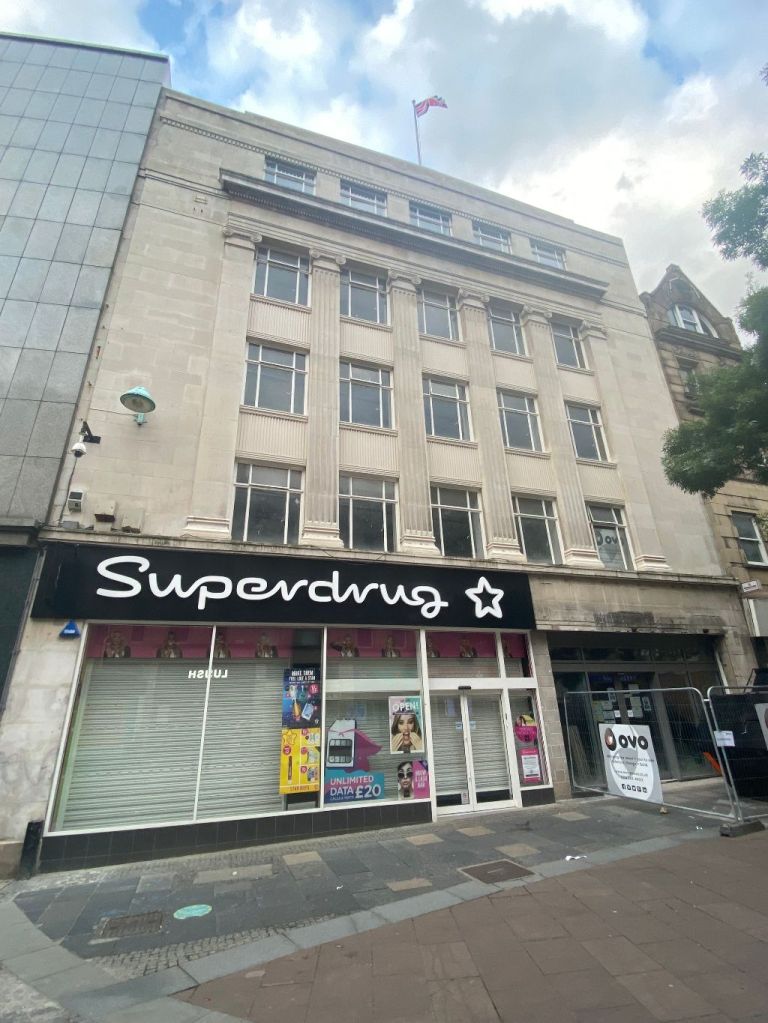
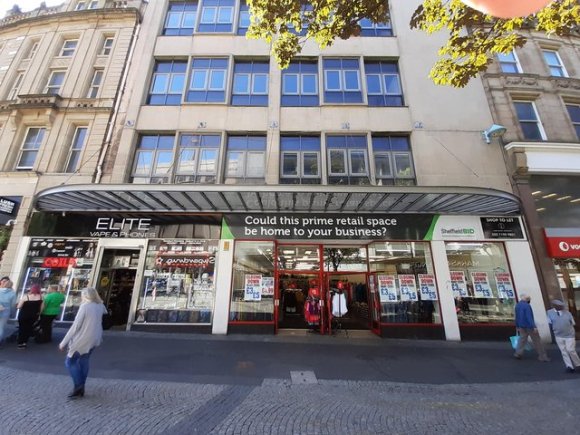
No. 33-35 Fargate. Now a branch of Superdrug, with the remaining four floors now being converted into premium office space called Ratoon. Image: DJP/2022
Yesterday’s post about the demolition of the former Next building on Fargate caused a bit of a hubbub. Redevelopment is also taking place nearby, at 33-35 Fargate, better known to us as the former Topshop/Topman building.
Part of the ground floor is now occupied by Superdrug, but you may have noticed building work going on in the rest of the property. This is going to be new office space called Ratoon – its name meaning a new shoot or sprout springing from the base of a plant, especially sugar cane, after being cut.
The main entrance, and former escalator access to Topman on the first floor, is being turned into a new opening for office space above, much of which has been empty for years.
The £6.5m project is being financed by fund manager Nuveen on behalf of Medical Research Council Pension Fund. Sheffield City Council has also provided a £900K grant as it seeks to reinvent Fargate and High Street.
Offices will be rented as a whole, or floor-by-floor basis, with a rooftop terrace garden with views over St Marie’s Cathedral and Fargate. A lightwell will be installed over the stairs and an orangery-style roof lantern will shed light directly onto the upper floors.
Newspaper advertisement from June 1937. Image: British Newspaper Archive
But more about the history of the site.
If we go back to the beginning of the twentieth century the site was occupied by J.B. Eaton, well-known drapers at No. 33, and a public house called Old Red House, at No. 35. The pub closed in 1903 and the whole site developed as a purpose-built shop for J.B. Eaton.
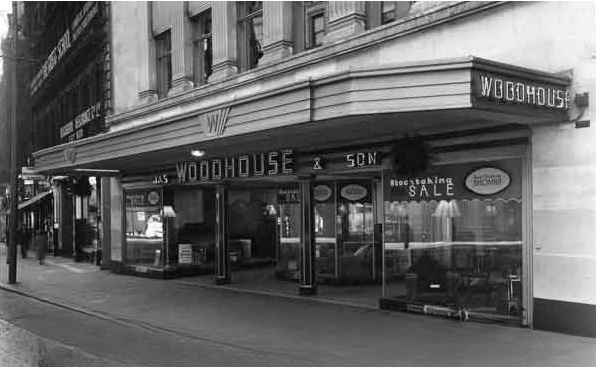
The draper closed in the early 1930s and the site was bought by the British and Colonial Furniture Company. It demolished the former shop and built a new property for James Woodhouse and Son, known for selling furniture of modern and attractive design, and opened in May 1937.
The new Woodhouse building had five floors of spacious and well-lit showrooms providing nearly 40,000 square feet of floor space.
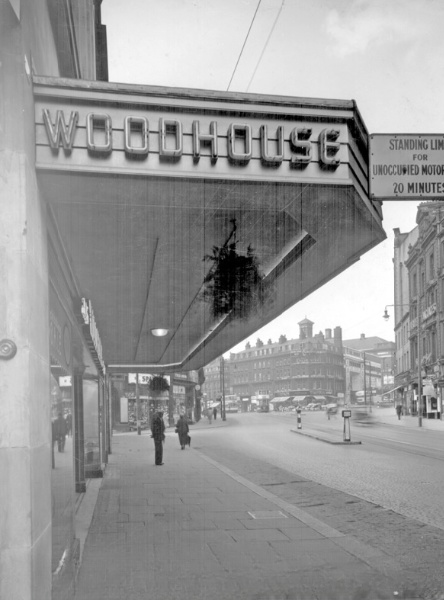
The shop fronts with large arcades, specially designed for the display of furniture, were of modern character, equivalent in size to a window nearly 200 feet long. A bronze and illuminated canopy protected shoppers and added to the dignity of the building.
The elevation, on classical lines, was constructed of Portland stone, with ornamental windows, and was floodlit at night.
Inside, staircases of polished oak were features of each floor, which were also served by express lifts.
The architect is unknown, but likely to have been the same one used to design many of James Woodhouse’ similar-looking stores.
Construction was by Sheffield-based George Longden and Son, who had also cleared the site, using materials of ‘British and Empire origin,’ and incorporating nearly 200 tons of British steelwork for the frame. Ornate plastering inside was completed by Hudson and Dore of Crookes.
James Woodhouse and Son, house furnishers, Nos. 33-35 Fargate. 1950-1955. Image: Picture Sheffield
British and Colonial was created after it bought James Woodhouse of Glasgow and Edinburgh, as well as furniture retailers in Newcastle, Middlesbrough, and Sunderland. James Woodhouse is recorded in the records of Gillows of Lancaster, and it is thought he carried out his apprenticeship here.
The company traded as James Woodhouse and Son and expanded throughout Great Britain, Toronto, Quebec, and in 1936 had opened a New York store on West 34th-Street, Fifth Avenue. Its success was due to selling modern furniture at the lowest price, and by providing convenient and economical means of payment.
In 1945, British and Colonial was bought by Great Universal Stores and Woodhouse lasted on Fargate until the late1970s/early 1980s. Its eventual closure, and that of its sister company Cavendish, was the result of GUS divesting much of its physical retail subsidiaries to concentrate on mail order, property, and finance. In 2006, it was split into two separate companies. Experian which continues to exist, and Home Retail Group which was bought by Sainsbury’s in 2016.
33-35 Fargate eventually became Topshop/Topman, and for a while had a branch of Dorothy Perkins. It closed in 2020, a few months before the collapse of Philip Green’s Arcadia Group.
And so, the next time you walk past, look at this old building, and remember its overlooked history.
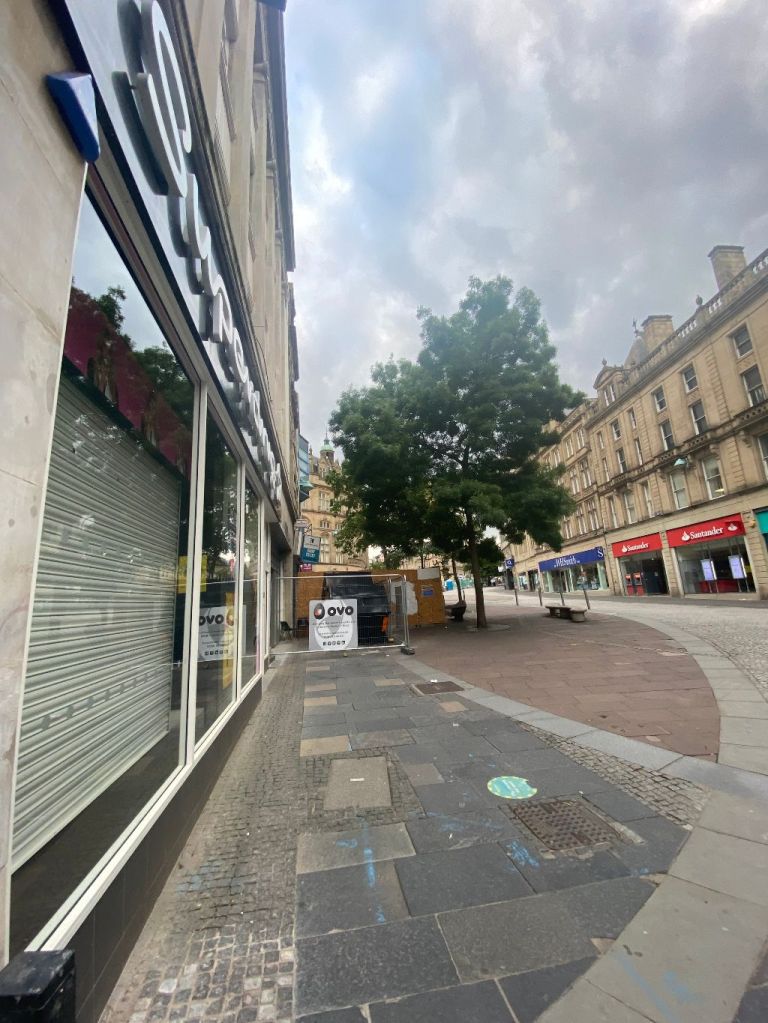
Fargate looking towards Town Hall Square from outside Nos 33/35, James Woodhouse and Son, House Furnishers, 1950-1955. Image: Picture Sheffield, and a similar view today. Image: DJP/2022
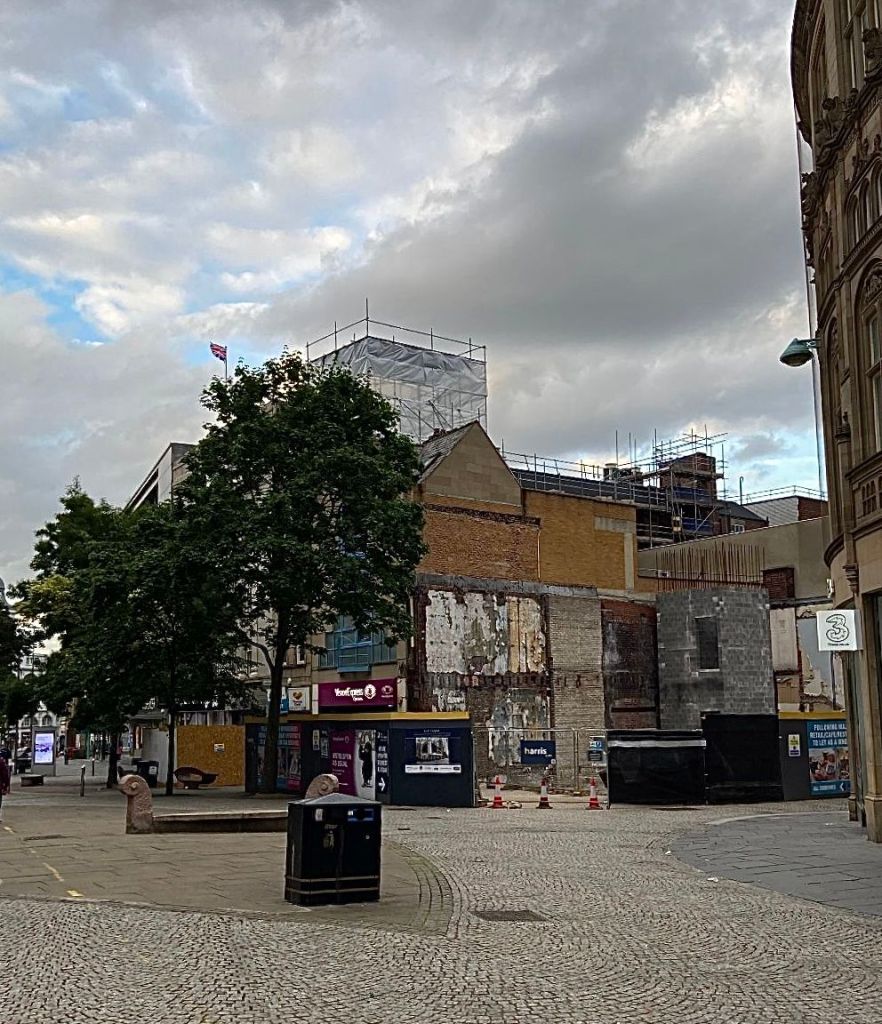
Site of 45-47 Fargate. The building has been completely demolished. Image: DJP/2022
It’s all gone wrong at 45-47 Fargate, better known as the former Next store.
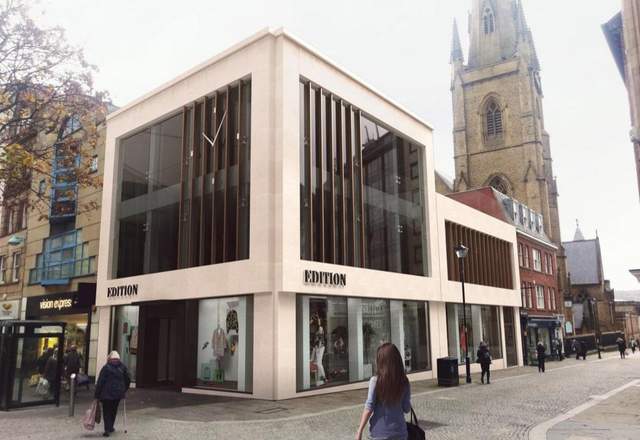
When the chain store relocated from the corner of Fargate and Norfok Row, the building was earmarked for a £1.5m makeover. It was to become a café/restaurant with external alterations including replacement facades, second floor extension and the formation of a roof terrace, with provision for a rooftop plant enclosure.
The application was made by Woodhead Investments and work started last year.
Architect design of proposed building. Image: Woodhead Investments
But in April, David Walsh, in The Star, showed photographs of the site, and the building had been demolished.
Owner David Woodhead of Woodhead Investments explained they had encountered structural problems. Original cast iron columns they hoped to reuse had proved too weak, forcing them to start from scratch.
However, the photographs revealed something interesting.
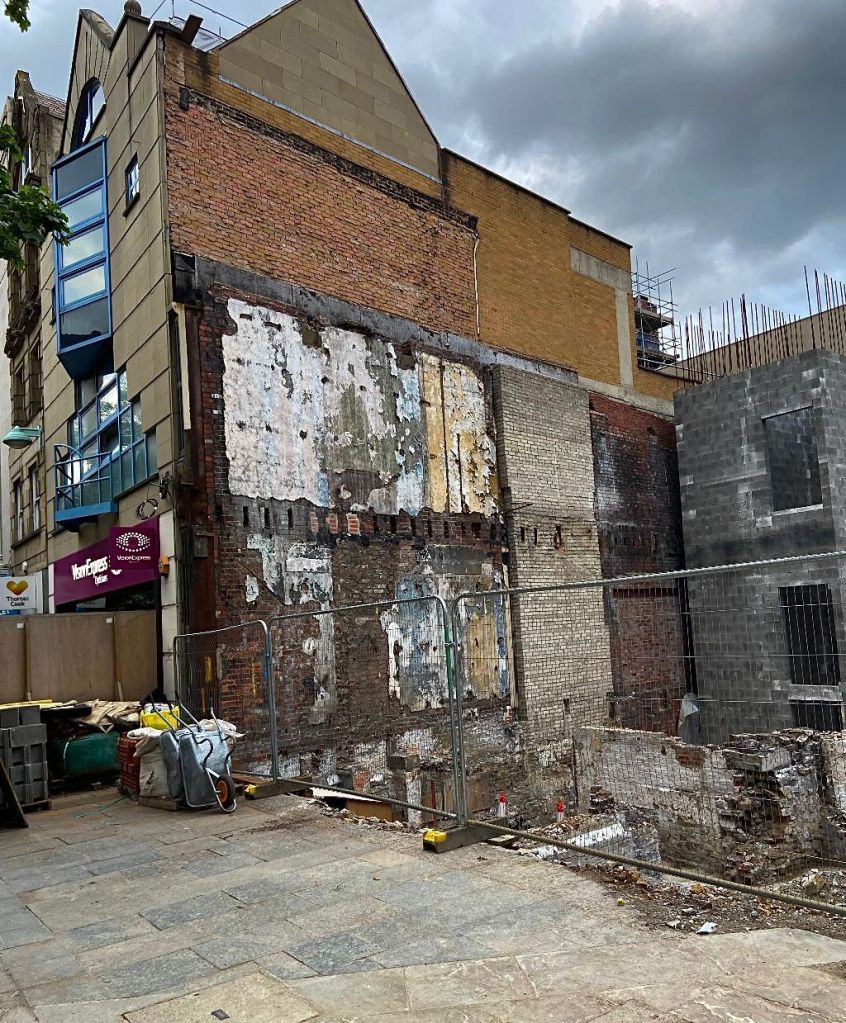
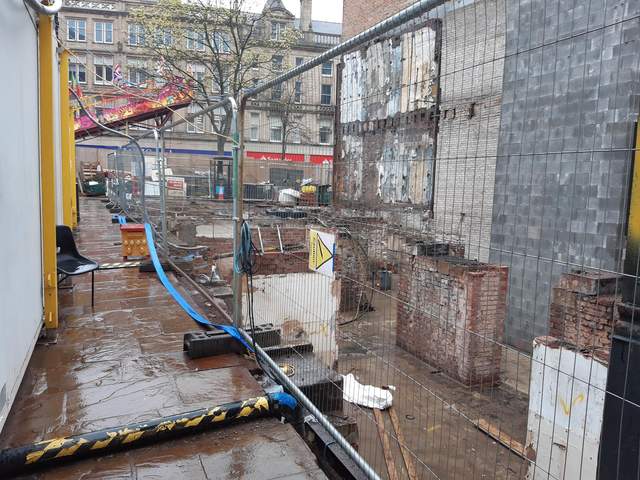
Demolition revealed old brickwork that didn’t fit in with what most of us thought to be a nineteen sixties construction. And the inclusion of cast iron columns certainly raised questions.
The site was once occupied by the “Lord’s House” which incorporated a Catholic Chapel. This was demolished in 1815 to make way for commercial buildings.
And digging deeper, we find that historical maps show an amalgamation of properties from the middle of the 19th Century onwards… and these formed the structure of the building recently demolished.
Demolition revealed brickwork that suggested the building was much older than appeared. Images: Top – DJP/2022, Bottom – Sheffield Star
According to the planning application, remnants of the original shops fronting Fargate were visible in the basement, where substantial stone walls were incorporated into the existing framed structure.
And we find that underneath the early 1960s façade was the framed structure of the original three-storey shop, although the pitched roofs had been replaced with a flat roof.
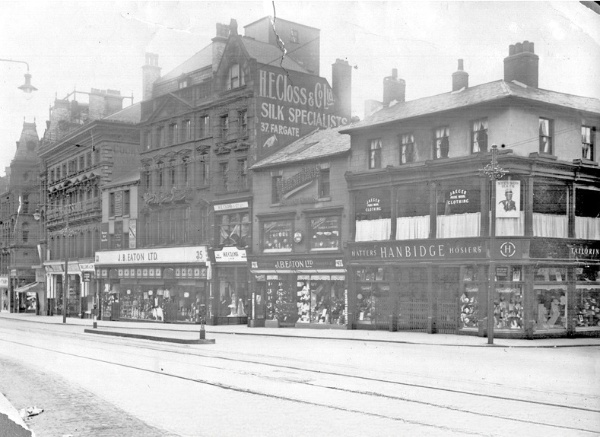
We must be grateful to Picture Sheffield because we can see what the building looked like. In a photograph, taken between 1915-1925, it was occupied by Robert Hanbridge and Sons, hosiers, hatters, and glovers.
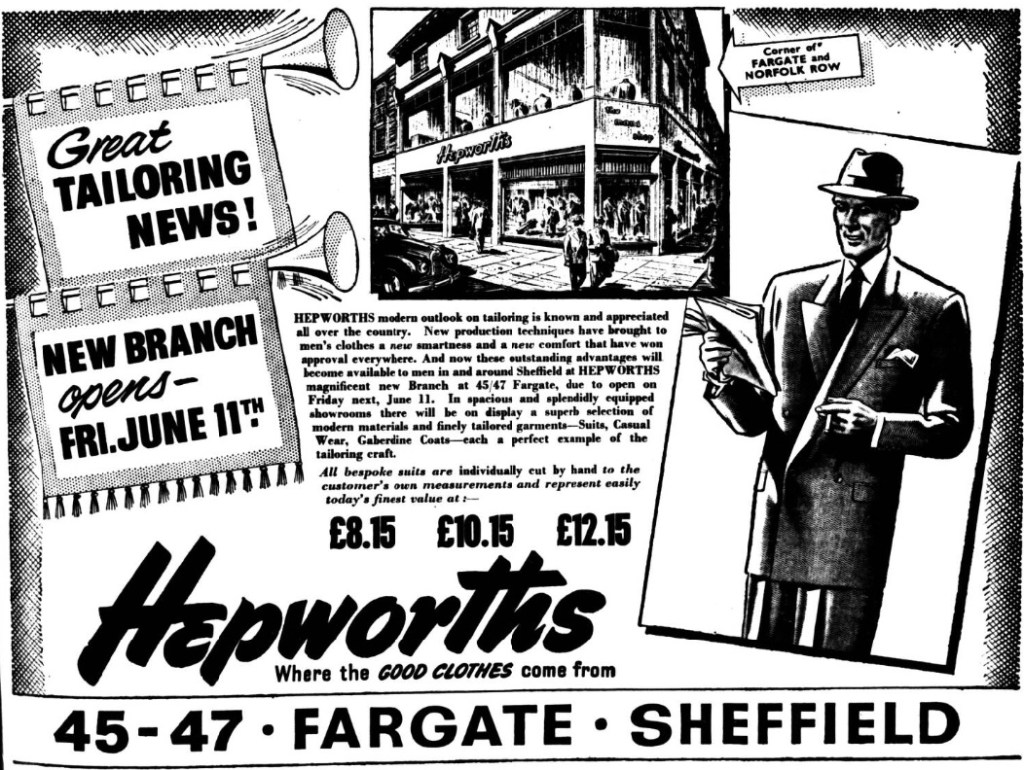
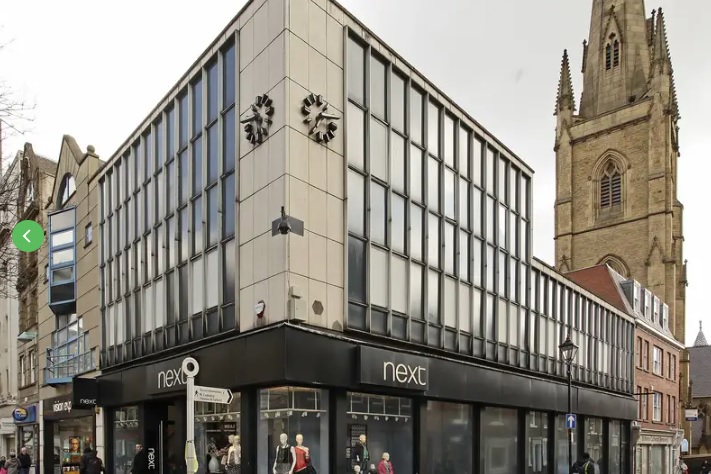
In 1953, it was purchased by Joseph Hepworth and Son, tailors, of Leeds, for £100,000, and after reconstruction and modernisation opened as a branch of Hepworths. The company rebranded to Next in the 1980s and stayed here until its closure in 2019.
The building was not deemed worthy of architectural interest and the sixties development destroyed much of its original character. However, we have lost another piece of Sheffield history, even if we didn’t know it still existed.
The building at the corner of Fargate and Norfolk Row was occupied by Robert Hanbidge and Sons Ltd., Hosiers and Glovers, in the early twentieth century. Image: Picture Sheffield
Opening advertisement for Hepworths in 1952 showing the original look of the building. Image: British Newspaper Archive
Hepworths was rebranded as Next in the 1980s and remained until 2019. Image: Realty
UPDATE – David Walsh, writing for The Star, said that construction of a new building was due to re-start in July 2022 after a four month delay. The project was held up due to the unexpected requirement for steel girders and soaring prices. Original columns they hoped to reuse turned out not to be steel but cast iron which was too weak, forcing them to start from scratch. It is hoped that the building might be completed in January 2023.
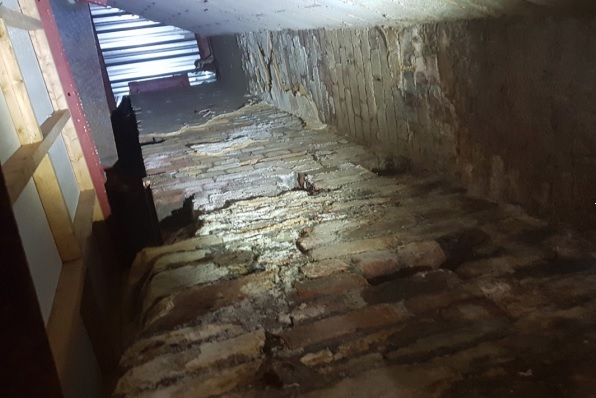
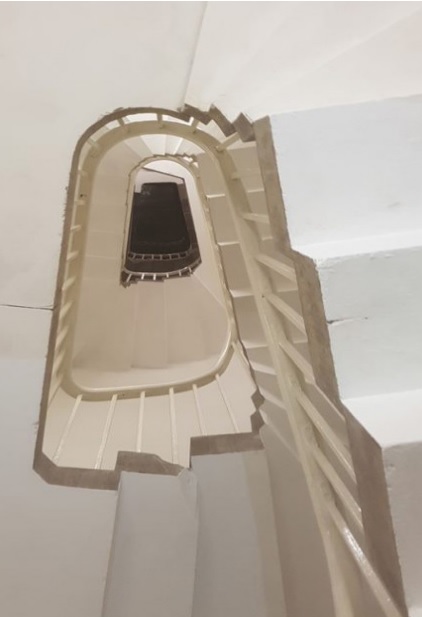
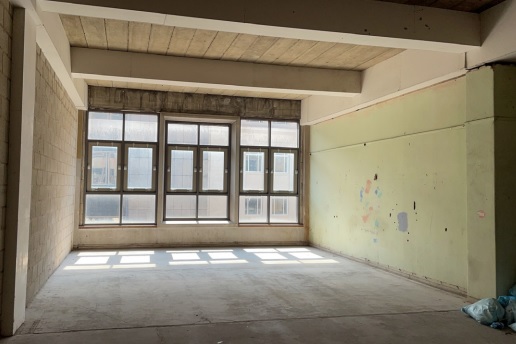
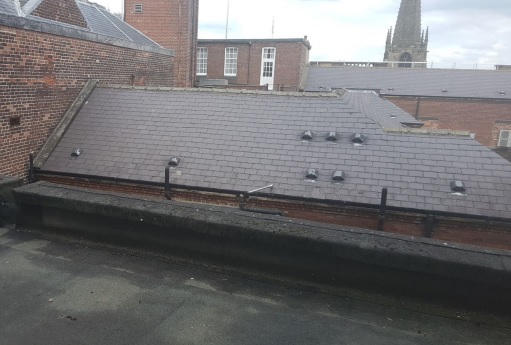
I’ve always said that what interests me most about old buildings is not what you get to see, but what you don’t. It’s about those hidden rooms, above and below, that get forgotten over time.
The next time you walk down Fargate, look up, and wonder what happened in those rooms above shops. What secrets do they hold?
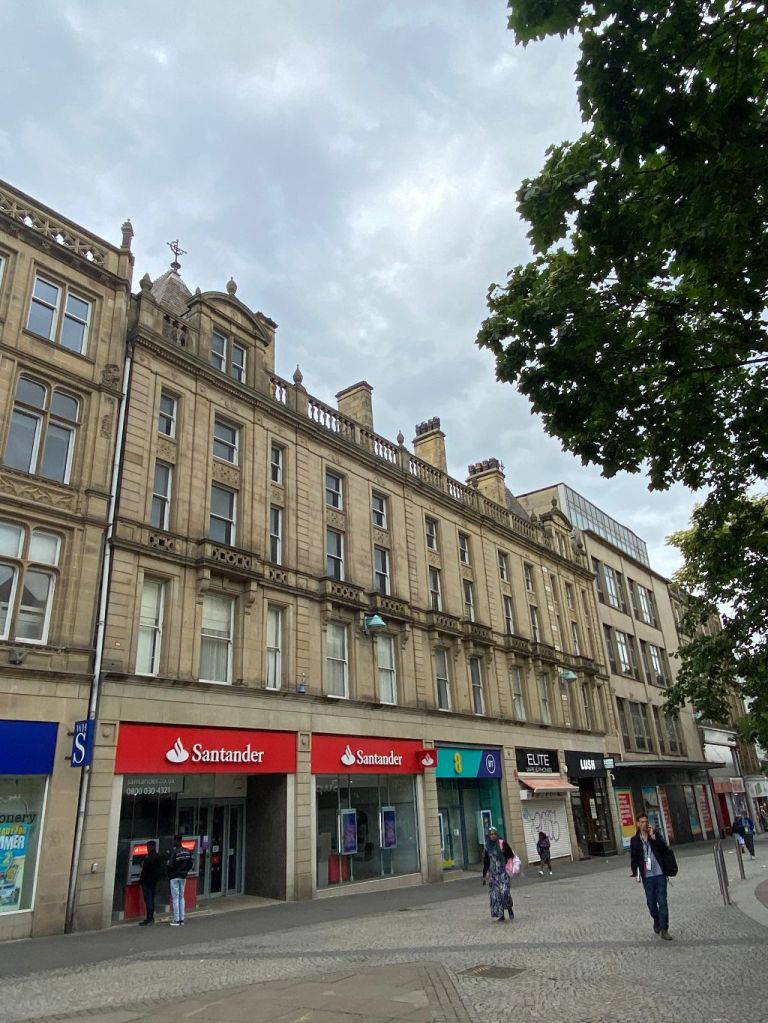
And so, I’m delighted that 20-26 Fargate, subject of an earlier post, has thrown up interesting photographs, including a disused lift shaft, going back to the Victorian times of Robert Foster and Sons, milliners and furniture sellers, and a quite unexpected staircase.

 sheffielder.net