Categories
People

“Sheffielders would rather be poisoned by a man with a beard than saved by a man without one.”

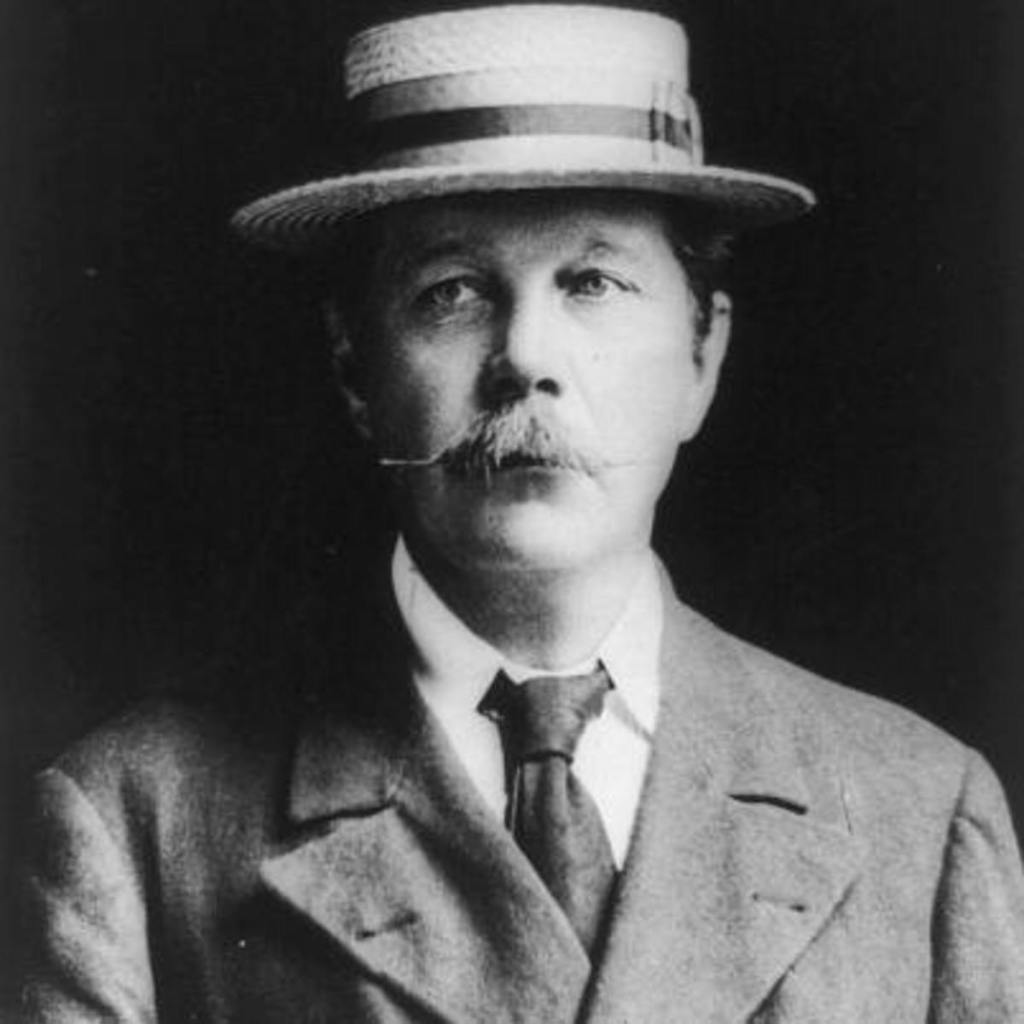
“I have had a life,” wrote Sir Arthur Conan Doyle, in the preface to his reminiscences, “which for variety and romance, could, I think, hardly be exceeded.”

Sherlock Holmes remains the most popular fictional detective in history. Sir Arthur Conan Doyle (1859-1930) is best known for the 60 stories he wrote about Sherlock Holmes, but he was also a physician and spiritualist.

In  November 1921, Conan Doyle gave a lecture at the Victoria Hall. It was arranged by the Sheffield Educational Settlement and the title was “Modern Psychic Thought.” He had arrived the day before and at once proceeded to the Sheffield Settlement’s premises, in Shipton Street, Upperthorpe, where an informal gathering had assembled, and where he spent the night.

The Sheffield Settlement had been founded by the YMCA in 1918, opening the following year under the wardenship of Arnold Freeman. Its mission was to create a better society. ‘That which described in three words is Beauty, Truth and Goodness, and described in one word is GOD.”
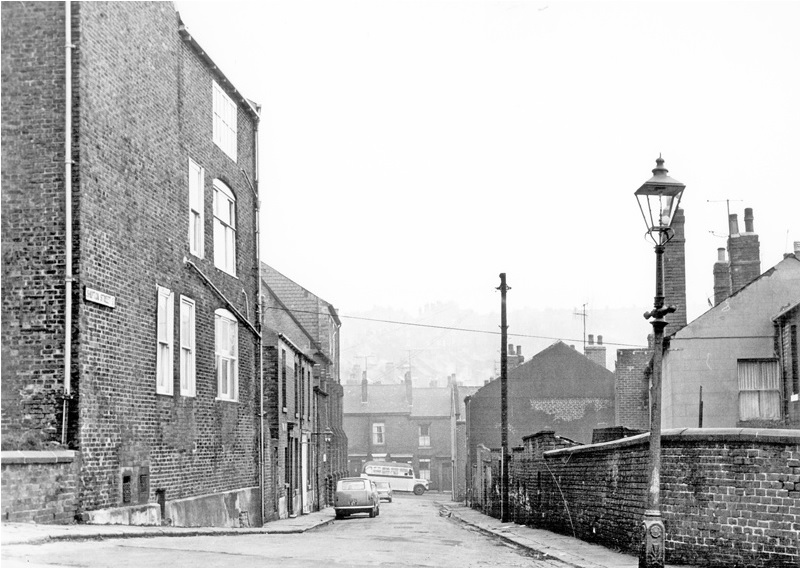
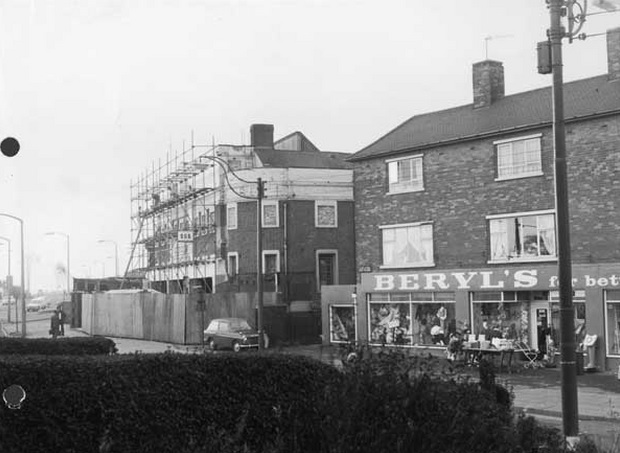
Shipton Street, Upperthorpe. Seen here in 1966, the road was once home to Sheffield Educational Settlement where Sir Arthur Conan Doyle spent the night in 1921. Photograph: Picture Sheffield.

Conan Doyle was accorded a hearty welcome, and in a brief response expressed his pleasure at seeing a “growing centre of activity.” He said he could imagine how beneficial it was to the city to have in the Settlement such a centre of art and culture of every kind.

Another comment made by Conan Doyle sparked the greatest interest.

“It is not generally known that I once lived in Sheffield. When I was a medical student, 17 or 18 years of age, I advertised my willingness to learn a little about medicine, and a Dr. Richardson, who lived in Spital Hill, was good enough to take me on. I had no salary, which was probably what I was worth, and it was just as well for the population of Sheffield that in a few weeks I got the order of the boot.” (Laughter.)

And it was true, Conan Doyle had come to Sheffield in 1878, working as an assistant to Dr Charles Sydney Richardson at Nelson Terrace, 80 Spital Hill. It was evidently not a happy experience.

“These Sheffielders would rather be poisoned by a man with a beard than saved by a man without one.”

Conan Doyle had, by this time, become an agnostic, and although he already had interest in psychic phenomena, his philosophy was still materialistic.

In 1878, this building on Spital Hill was briefly home to Sir Arthur Conan Doyle. His three week stay in Sheffield wasn’t a particularly happy one. Photograph: Google.

However, at the 1921 lecture the ‘world-famous’ novelist found the Victoria Hall only half full. He related to the ‘jury’, as he called them, that “The subject is by all odds the most important thing in the world. It is a thing which is going to influence and bear upon the future of every man and woman in the room. There is one alternative, and that is either this movement is the greatest delusion the human race has ever experienced, or else it is far the most important thing – the most important addition to our knowledge which has ever come from the centre of all knowledge.

“The afterlife,” he said, “is merely a waiting room where you are waiting, very likely in discomfort, until you are fit to go on.

“Everybody eventually gets to heaven, but these places of waiting – hospitals for the soul they might call them – are not pleasant places to wait in. One of the real punishments is in being earth-bound.”

Conan Doyle related séance experiences and told of a conversation he had with the spirit of James Johnson Morse, a ‘trance medium’ who had died in 1919. The departed leader claimed that their last meeting had been in a newspaper office. “No,” said Conan Doyle, “It had been at Sheffield, at a meeting at the Empire Theatre.” Afterwards, he was reminded by his wife that it had been in a newspaper office.

Almost as soon as the people had left the Victoria Hall, they were handed pamphlets bearing such phrases as ‘Spiritualism is to be avoided like the plague’.

Conan Doyle died nine years later, in July 1930, and a few weeks later the Sheffield Daily Telegraph was one of only a handful of newspapers that printed a ‘spirit’ photograph of him.

The image was vouched by the Rev. Charles Tweedale, Vicar of Weston, near Otley, a man Conan Doyle had known quite well, and who had been confident that the author would manifest himself after death.

In a series of sittings immediately after Conan Doyle’s death, Tweedale claimed to have had communication with him (“Well Tweedale, I have arrived here in Paradise. That is not heaven. Oh, no! But what we should call a dumping place, for we all come here as we pass on to rest.”)

Rev. Tweedale had then sat with the psychic, William Hope, of Crewe, and photographs taken of the séance. Afterwards, four plates were exposed, and two were “clearly recognisable pictures of Conan Doyle.”

The ‘spirit’ photographs of Conan Doyle, although still available if you know where to look, rarely surface these days. Perhaps not surprising considering that William Hope, who had become famous for dozens of other ‘ghost’ pictures, was later found to be a fraud, and had double-exposed his images.

In July 1921, the Sheffield Daily Telegraph published this ‘remarkable spirit’ photograph of Sir Arthur Conan Doyle who had died a few weeks before. It was later found to have been an elaborate fake. Photograph: British Newspaper Archive.

© 2021 David Poole. All Rights Reserved.
Categories
Buildings

Leader House: A survivor from days of fields and gardens


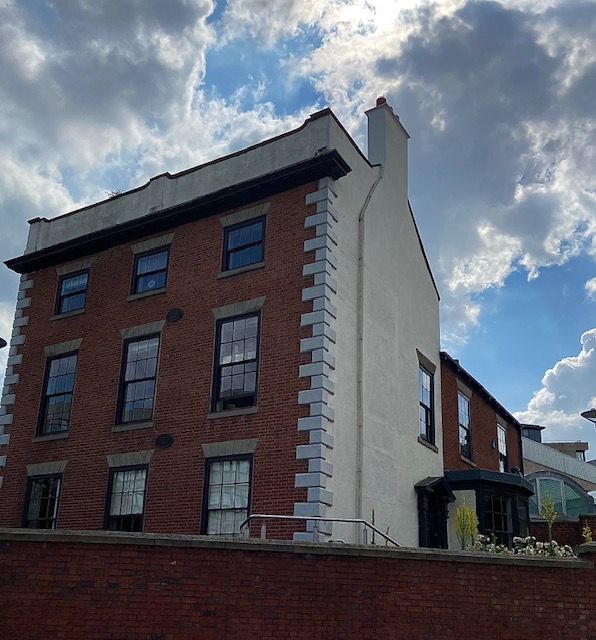
A rare survivor of Georgian Sheffield. Brick with pedimented Doric doorcase and a big-canted bay window, that was added in the early 19th century. Picture: DJP/2021

Realistically, Leader House, overlooking Arundel Gate, from Surrey Street, should not be here anymore. In 1938, Sheffield Corporation bought it with intention of demolition, using the site as part of an ambitious plan to build a new College of Arts and Crafts. The plans were postponed because of World War Two and the Georgian House survived.

A similar thing happened in the 1970s, when Leader House (along with the Lyceum Theatre, the Education Offices and Gladstone Buildings) all came under threat of demolition. In 1970, an application was made to the Minister of Housing for Listed Building Consent to replace it with a modern circular register office. After a public enquiry permission was refused, and the infamous ‘wedding cake’ was built elsewhere.

Leader House was built by the Duke of Norfolk in 1770 for his land agent, Vincent Eyre. The brick building, with slated roof, looked across Alsop Fields, amid sycamore trees, to the margin of the River Sheaf. About this time, the Duke commissioned designs from James Paine, and also from Thomas Atkinson, for laying out the fields with handsome squares and terraces. A start was made on building just before his death in 1777, but the scheme was abandoned, and we can speculate that Leader House was part of this grand plan.

In 1777, it was leased to Thomas Leader, a silversmith, from Broxted, Essex, who came to Sheffield to set up the firm of Tudor, Leader & Co in 1762 with Henry Tudor, who lived at nearby Tudor House.

The eminent Leader family remained until 1817, when it passed to the Pearson family until 1872. It was bought by Charles Wardlow, owner of Wardlow Steels Company on Carlisle Street, whose son, Marmaduke, later lived here spending large amounts of money renovating and improving the building.  

It was sold by the Wardlows in 1920 and had several occupants including the silversmith company, Thomas Bradbury, and Son, which had workshops in Arundel Street, and the accountants Joshua Wortley & Sons.

The lease was bought by Sheffield Corporation in 1938 with plans of demolition, but the advent of the Second World war meant it was used as a headquarters for the ARP. It has remained with the council ever since, except for a period when it was leased to Sheffield Polytechnic, and today is used as administrative offices for Sheffield Museums.

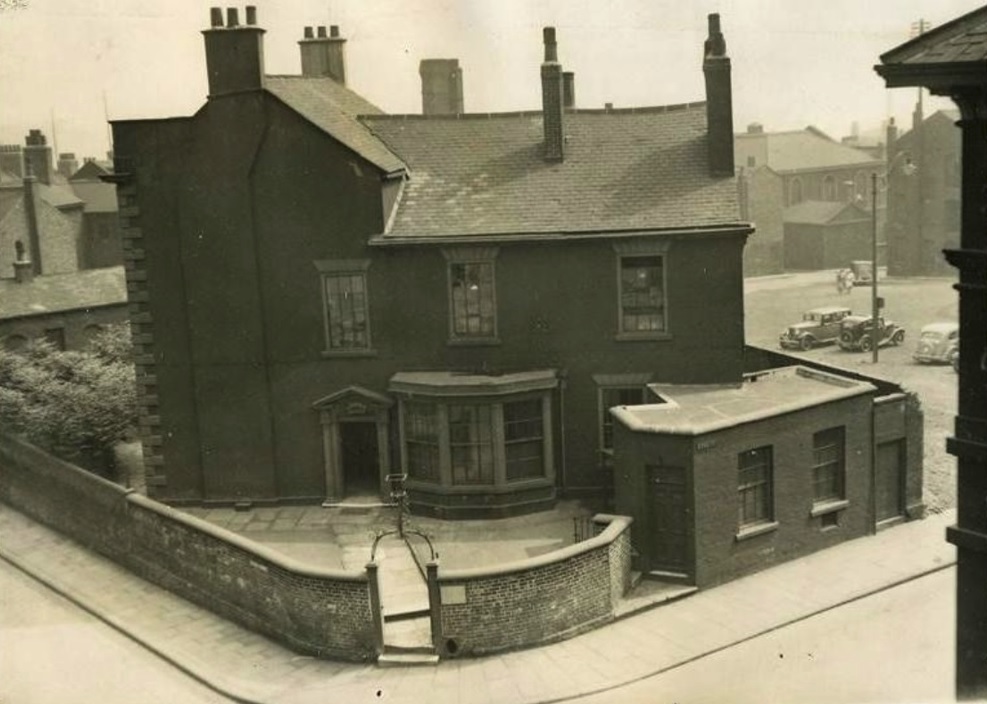
The late 1880s building at the rear is classed as a separate building, 2 Surrey Place, and later housed the Central Deaf Club, and The Source Skills Academy. This view is from July 1937. Image: Sheffield Museums.

© 2021 David Poole. All Rights Reserved.
Categories
Buildings

Manor Cinema: The rise and fall of a 1920s masterpiece

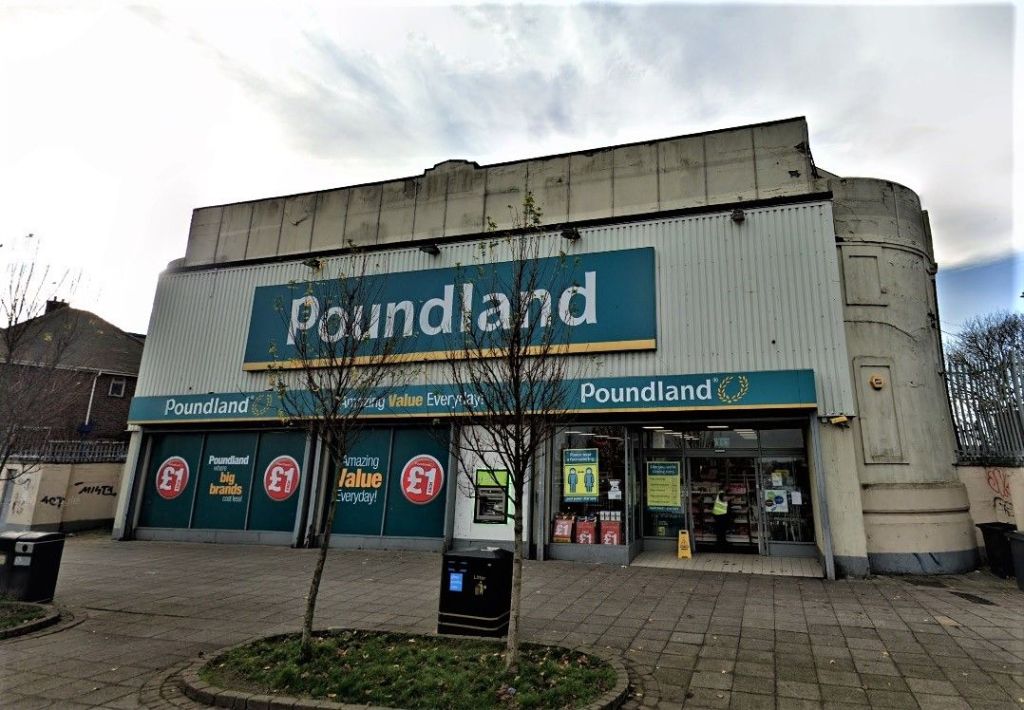
Perhaps the biggest Poundland sign in the country. This branch occupies a small space at the front of the former Manor Cinema. Picture: Google.

A few weeks ago, I was looking at some old documents and discovered that if this shabby building at Manor Top survives another six years, it will have reached its centenary. This is one of Sheffield’s last remaining suburban cinemas but hasn’t shown a film for 52 years. People in this part of the city will be more familiar with it as a supermarket (Challenge, Frank Dee, Gateway, Somerfield, Tesco) and now Poundland. In fact, it’s spent more time as a shop than it did as a cinema. Sadly, its condition is worsening, and one suspects that demolition will be the eventual outcome.

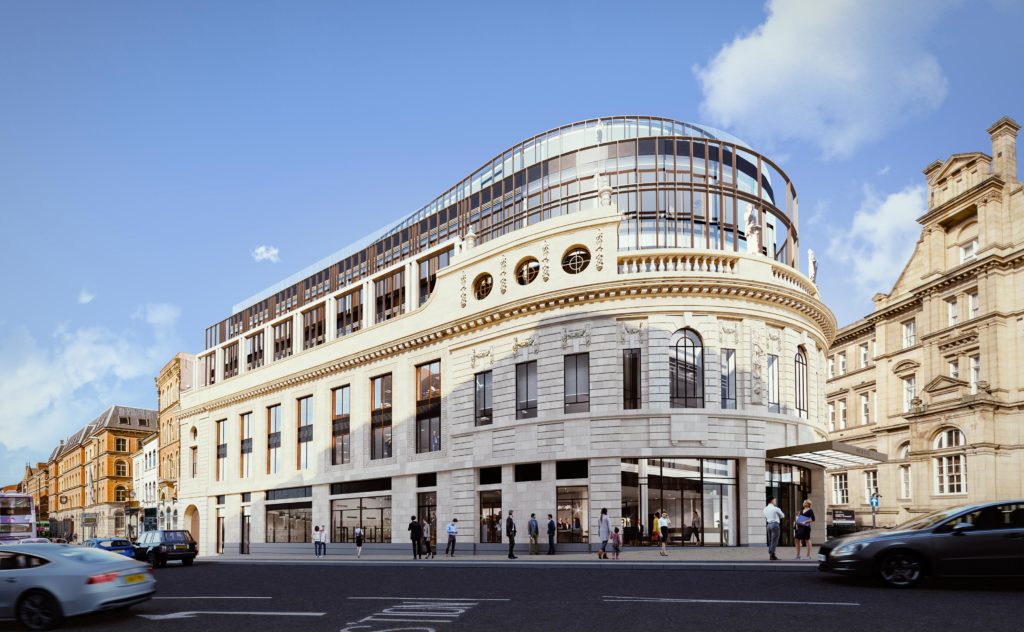
However, the former Manor Cinema has an interesting link with an important building in Leeds. It opened in December 1927 to the designs of Pascal J. Stienlet and Joseph C. Maxwell, of Newcastle-on-Tyne, the same architects who conceived the Majestic Cinema in Leeds city centre, which has recently been restored as the new headquarters for Channel 4.

The Majestic opened in 1922 and remains a distinguished building. The Manor Cinema opened five years later, cost much less to build, and was praised for its smart appearance at one of the highest points in the city.

It was the idea of Thomas Francis McDonald, one of cinema’s pioneers, who had been in business in the United States, and realising the future of the film industry, rushed back to Britain and built his first cinema at Wallsend-on-Tyne in 1904. Afterwards, he was owner or lessee of houses at Gateshead, Blaydon, Mexborough, Worksop, Edinburgh, Shirebrook, Ripley, Heanor, and Coalville. Until the intervention of World War One, he was in the film-renting business, under the title of Photoplays Ltd, based in Sheffield and South Shields, buying films from America, and renting them to cinemas.

In 1927, following expansion of housing estates in the Manor area, McDonald went into business with Michael Joseph Gleeson (the builder) and George W. Dawes (plumbing contractor) to form Manor Picture House Ltd. It acquired a site on sloping land at Manor Top to build a ‘super-cinema’, the largest in South Yorkshire, accommodating 1,700 people.

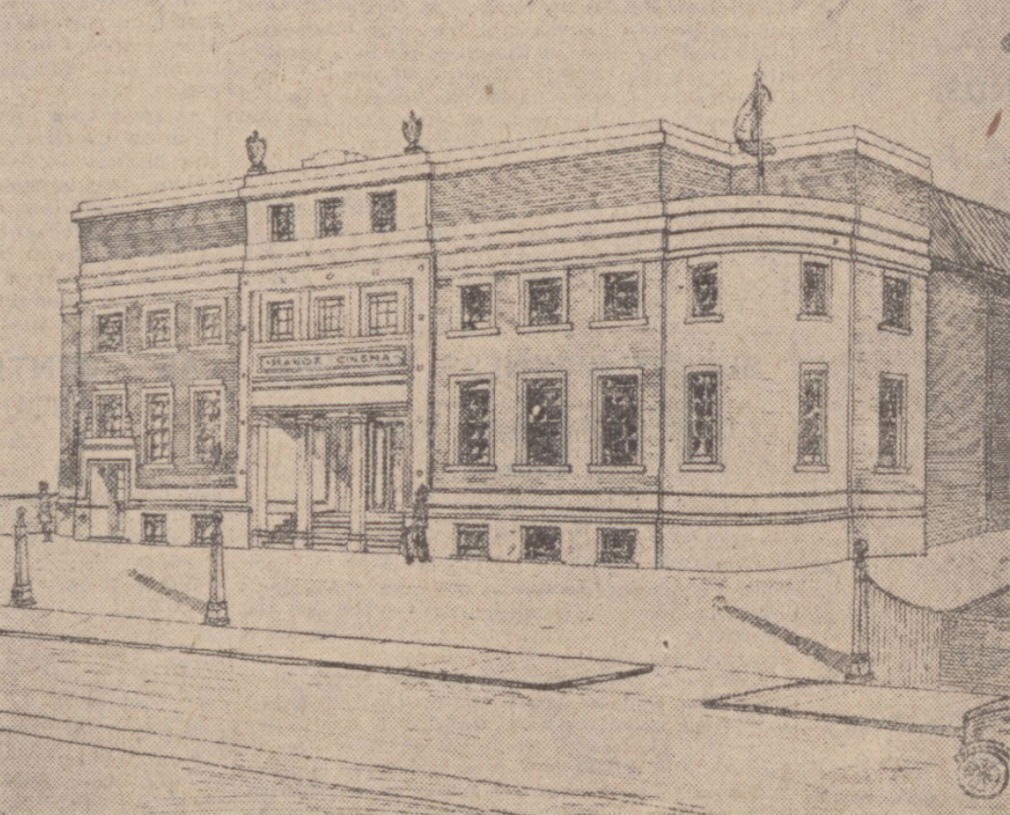
A sketch of the Manor Cinema that appeared in newspapers when it opened in December 1927. Picture: British Newspaper Archive.

M.J. Gleeson were responsible for main construction, including excavation reinforced concrete, brickwork, carpentering, joinery, and roofing.  

The façade of the cinema was faced with rustic brick and coloured cement rendered dressings with the ‘MANOR CINEMA’ name in the brick work above the entrance doors. Its exterior was lit by floodlights mounted on concrete pylons.

The entrance to the cinema was through an 18 foot wide vestibule into a spacious foyer housing the pay box. Because of the hillside, the circle, often referred to as the first balcony, was on the same level as the entrance. Stairways led down to the stalls and up a second balcony. The auditorium was decorated with fibrous plaster pilasters, coffered ceiling and beams with a proscenium opening of 23 feet. The decoration was by Frank Flint of London Road with a scheme of pastel shades, not too strongly contrasted, together with an original stipple effect on the wall panels.

The screen was hung in front of a curtain that covered the whole of the back of the stage. The projection room, with two Kalee projectors, was outside the building, at the back of the second balcony. In the basement, under the main entrance, was a 10-table billiard room, and three private rooms, the table supplied by Fitzpatrick & Longley, one of the country’s oldest and reputable manufacturers.

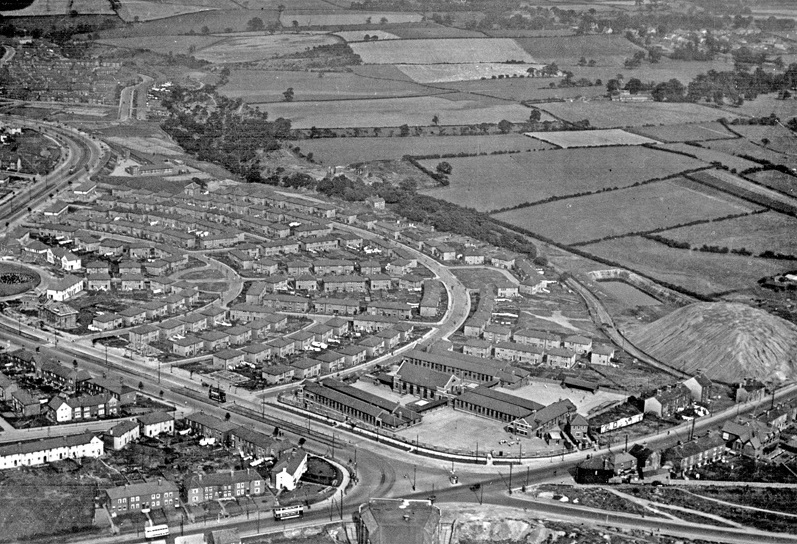
An aerial view of Manor Top taken between the wars. The Manor Cinema is at the bottom of the photograph. Photograph: Picture Sheffield.

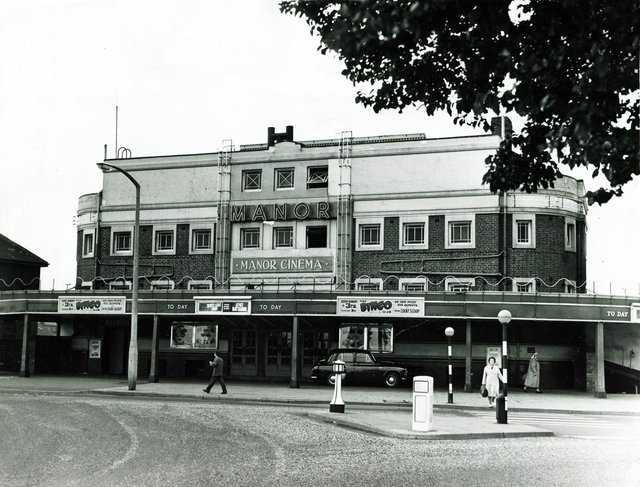
The Manor Cinema turned out to be one of Sheffield’s finest cinemas and was later joined by the Paragon at Shiregreen and the Ritz at Southey Green. Sound was introduced in the 1930s, and a canopy was erected on the outside, running the entire length of the façade.  Thomas McDonald died at Montgomery House, Sharrow Lane, in 1946, the business carried on by his two sons.

A canopy was added to the outside of the Manor Cinema in 1936. This image of the cinema was taken in 1963. Photograph: Picture Sheffield.

In 1950, a more modern style proscenium was fitted and in 1955 a new projection suite was fitted at the back of the stalls.

The Manor Cinema was sold to the Leeds based Star Cinema Circuit in 1958 who closed it to carry out further improvements including the installation of a new sound system. The reopening was celebrated in style with a grand fireworks display, when 120 rockets were set off, one for each of the cinemas on the Star Circuit.

It closed as a cinema in 1963, reopening three days later as the Manor Casino – Star Bingo Club. However, films returned on a part time basis along with some bingo sessions, but finally closed in 1969 after being sold to Challenge, a Sheffield-based supermarket group.

The Manor Cinema closed for good in 1969 and was sold to Sheffield-based supermarket group, Challenge, which removed the outside canopy and built a new ground-level floor above the former stalls. Photograph: Picture Sheffield.
It is hard to believe that the Majestic Cinema in Leeds was built a few years before the Manor Cinema. Both buildings were designed by Stienlet & Maxwell of Newcastle-on-Tyne. The Majestic is now Channel 4’s new HQ while the Manor Cinema is a pale shadow of its former self.

© 2021 David Poole. All Rights Reserved.
Categories
Streets

When the Victorians complained about our roads

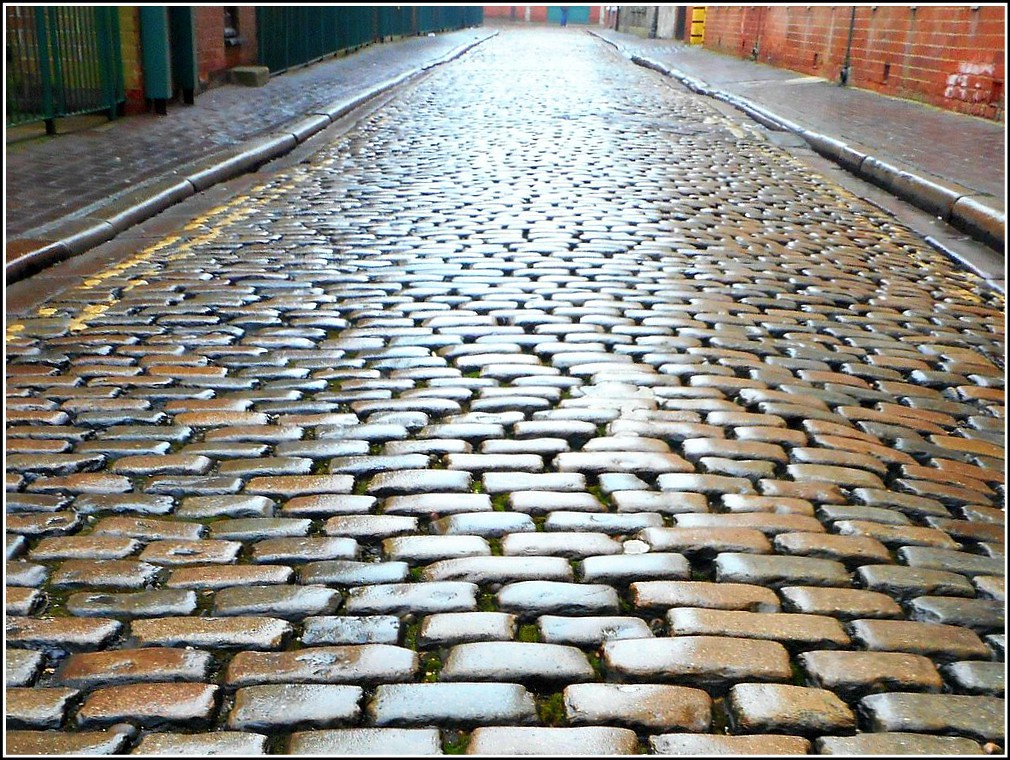
By the 1870s, many Sheffield roads had been laid with macadam but the corporation found it difficult to maintain and keep clean. As such, many roads were ripped up and replaced with granite setts.

Complaints about pot-holes always cause a stir. But you might be surprised to know that our roads have long been the subject of contention. The columns of local newspapers have been filled with grumbles going back to Victorian times.

The grievance was the type of material used to surface our streets. As Sheffield grew, the network of roads expanded, and many of the main streets were overlaid with cobbles (water-rounded stones collected from beaches and rivers), irregular flat-shaped stones, or more commonly, slag macadam.

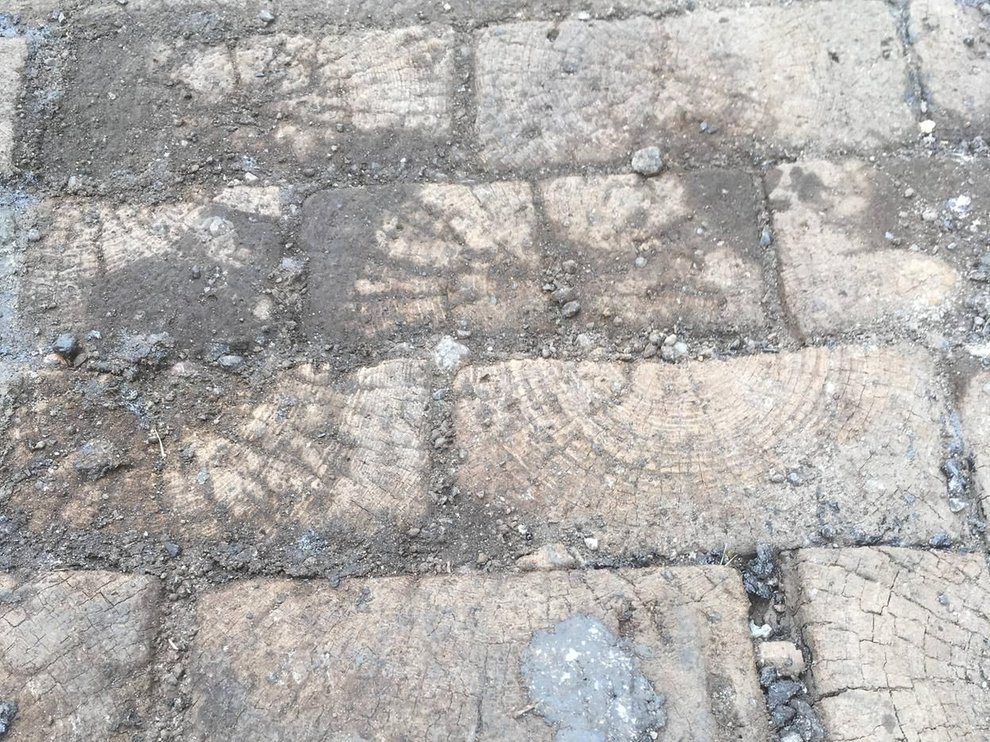
In the 19th century, cobbles were replaced with round or hexagonal wooden setts, probably creosoted Norway pine, that provided a safer surface for horses and wagons. They gave a better grip for horse-shoes and the iron rims on wheels, and reduced the noise of traffic.

Wooden cobbles unearthed on Hodgson Street. Picture: Nigel Humberstone

The wooden setts, although abundant in supply, proved expensive, and granite setts, squared off by hand, were brought to Sheffield from several locations, including Cornwall, the Channel Islands, and then increasingly from Aberdeen.

Once worked, granite setts were capable of much greater precision of laying and could help construct a far smoother street surface. They lasted for 30 years, hardwood for 15 years, and afterwards could be taken up and redressed.

However, the people of Sheffield objected to granite, complaining that noise generated by horse-drawn traffic was too loud. On West Street, wooden setts had been laid to make it quieter around the Royal Hospital, but ratepayers on the other side, on Division Street and Devonshire Street, protested that noise from granite was “nerve-racking,” “a distinct disgrace to the city,” and “enough to send people to the county asylum.”

There was a bigger drawback. Horses tended to slip on granite causing serious injury, sometimes death, to the animals. It was reason enough for Sir John Bingham, head of the firm of Walker and Hall, to campaign against their use in the 1890s.

Bingham had good reason to dislike granite setts. When driving a high dog cart, one of his horses had slipped and fallen, pitching him out onto his head. He started a crusade and gained support from Reuben Thompson and Joseph Tomlinson, proprietors of Sheffield’s two largest horse-drawn cab and omnibus firms.

“I, like many others, have been injured for life upon these granite setts, and I feel most strongly that where they are laid, they should be properly and regularly roughed. About a year ago, accidents happened on the same day to two of our leading steel manufacturers, Colonel Vickers, and Sir Alexander Wilson, one of them having his horse killed, the other being seriously injured, and will bear deep scars on his forehead so long as he lives, and says will never drive again in Sheffield.”

Bingham re-entered the council to enforce his views and was eventually able to stop granite setts being used on Sheffield’s main streets.

In 1895, he discovered that the stringy bark of a Tasmanian tree could be combined with granite to create a safer, quieter, and more durable road surface. He developed Bingham Patent Paving, first used on Norfolk Street, and then across many of the city’s main streets.

However, by the 1920s, the use of asphalt  meant that Sheffield Corporation hadn’t bought any wood or granite setts (or Bingham’s paving) for several years. Asphalt had been created by accident in Kent after tar barrels had fallen onto a road and broken. Ultimately, it was discovered the part of the road covered with tar was found the best, and afterwards the use of tar had spread all over the country.

It resulted in most of Sheffield’s cobbled streets being covered over, a practice that continues to this day using modern techniques.

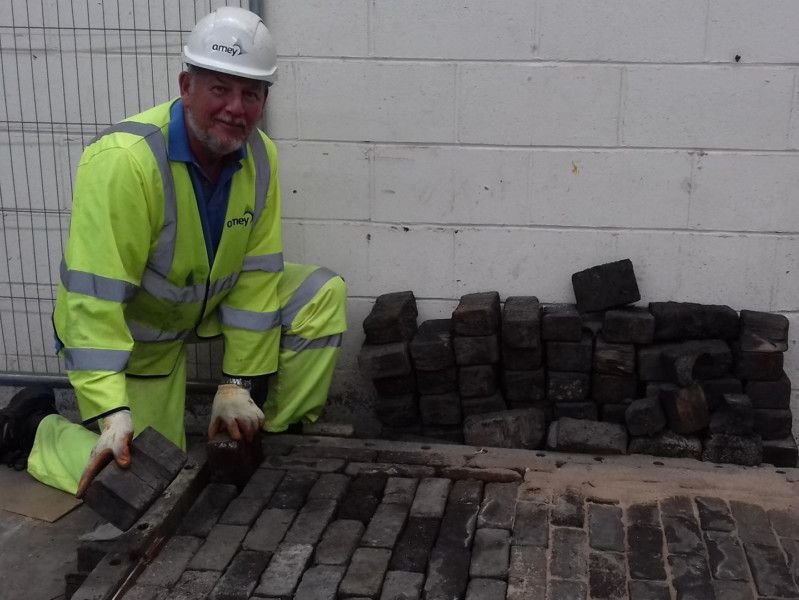
Thankfully, there are still plenty of granite setts in streets across Sheffield, and some of the wooden setts have even resurfaced in recent years, notably on Hodsgon Street, near the Moore Street roundabout, and on Sackville Road, at Crookes.

Highways supervisor Gary Booth examines some of the wooden blocks in 2018 at the Streets Ahead Olive Grove depot. Picture: Sheffield Star

© 2021 David Poole. All Rights Reserved.
Categories
Buildings

When Sheffield forced its way into Fleet Street’s golden age

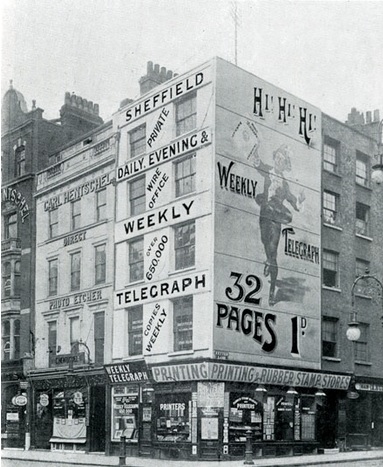
A sketch of the 1901 Sheffield Telegraph building in London’s Fleet Street. The entrance was at the corner of Fleet Street and Fetter Lane. (Picture Sheffield)

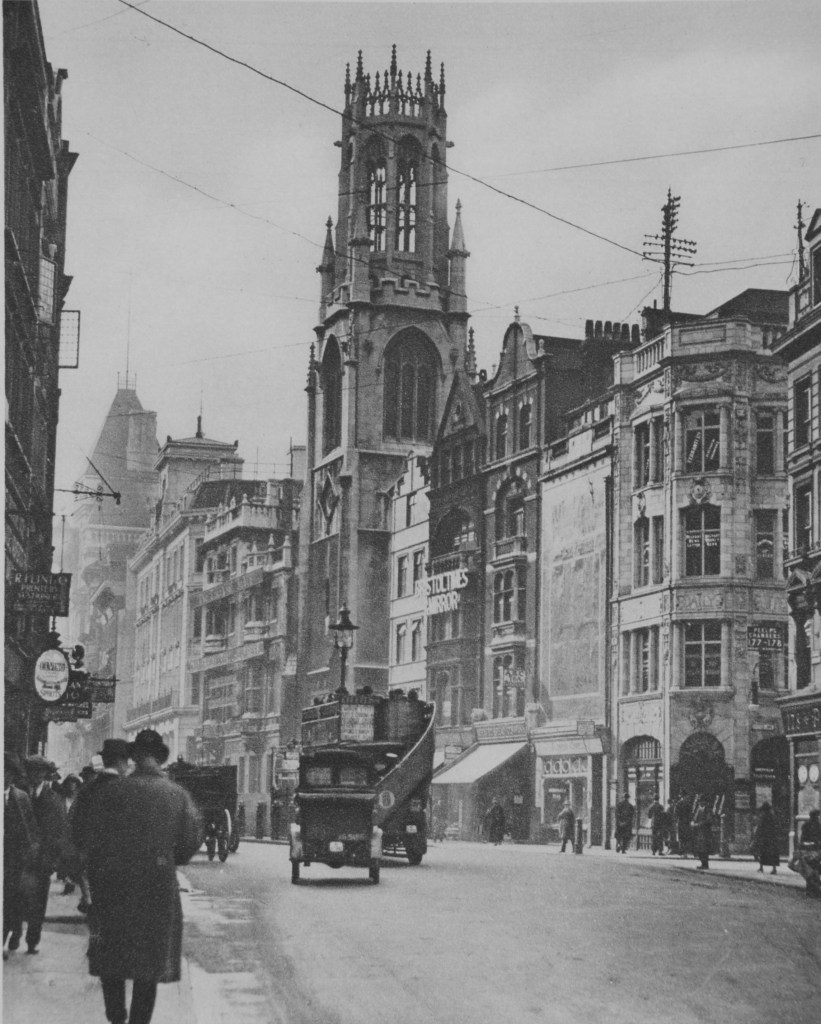
Set in the floor, at the entrance to a narrow covered alley on Fleet Street, in the City of London, is a forgotten reminder that the Sheffield Daily Telegraph was once one of Britain’s leading provincial newspapers.

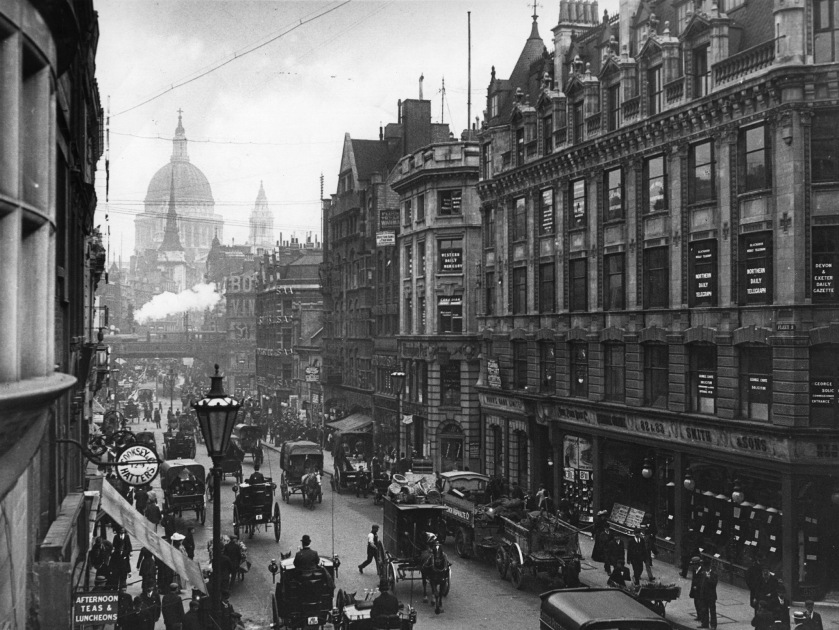
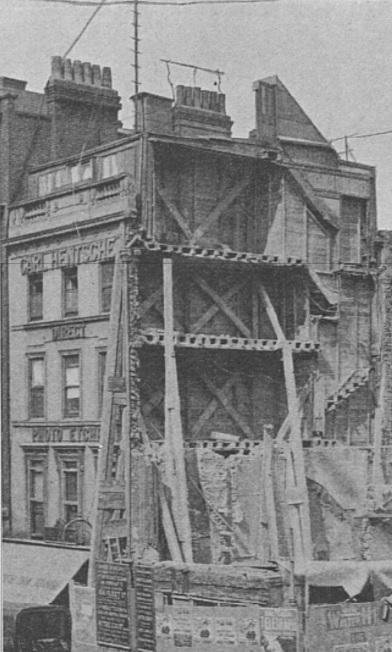
Fleet Street was the centre of Britain’s newspaper industry, and adjacent to Hen and Chicken Court, was the site of the Telegraph’s former London office. It moved here in the early 1890s, occupying a small building at its corner with Fetter Lane. However, in 1901, it was swept away by the Telegraph’s owners, W. C. Leng and Co, and replaced with a piece of Sheffield.

A busy newspaper street. 1906: Fleet Street looking towards Ludgate Hill and St. Paul’s Cathedral. (Photo by Rischgitz/Getty Images)

180-181 Fleet Street was designed by Sheffield architects Gibbs and Flockton, and used as offices for the Sheffield Daily Telegraph, the Weekly Telegraph, the Yorkshire Evening Star and Telegraph, the Sunday Telegraph, and other newspapers and publications belonging to the company.

The site was held on a long lease from the Drapers’ Company, with a 20ft frontage on Fleet Street, and 131ft in Fetter Lane.

The Sheffield Telegraph, 180-181 Fleet Street, London offices of the Sheffield Telegraph, in 1897. (Picture Sheffield)
May 1901. Demolition of the Sheffield Telegraph offices in Fleet Street to make way for the new Gibbs and Flockton building. (British Newspaper Archive)
A rare glimpse of the Sheffield Telegraph building on the right. Although the address was Fleet Street, it had six ground floor shops on Fetter Lane. The buildings to its left survive.

There were six floors, including the basement and roof storey, built with cast-iron standards and steel girders. The ground floor in Fetter Lane was divided into six sale shops, and each of the floors into thirteen offices. The front of the building was faced with creamy white Carrara faience, supplied by Doulton and Co.

It was here that the newspaper rented a private telegraph wire from the Post Office, the first provincial publication to do so. It connected Fleet Street with its head office in High Street allowing 400 words a minute to be transmitted. The wire ran underground to Birmingham then onwards to Sheffield using telegraph poles. It meant that Sheffield was only five minutes behind London when it came to getting the latest news stories.

In 1925, the newspapers were bought by Allied Newspapers, the building sold, and the offices relocated to 136 Fleet Street.

A floor plaque, at the entrance to Hen and Chicken Court, is the only reminder that the Sheffield Daily Telegraph once had adjacent offices.

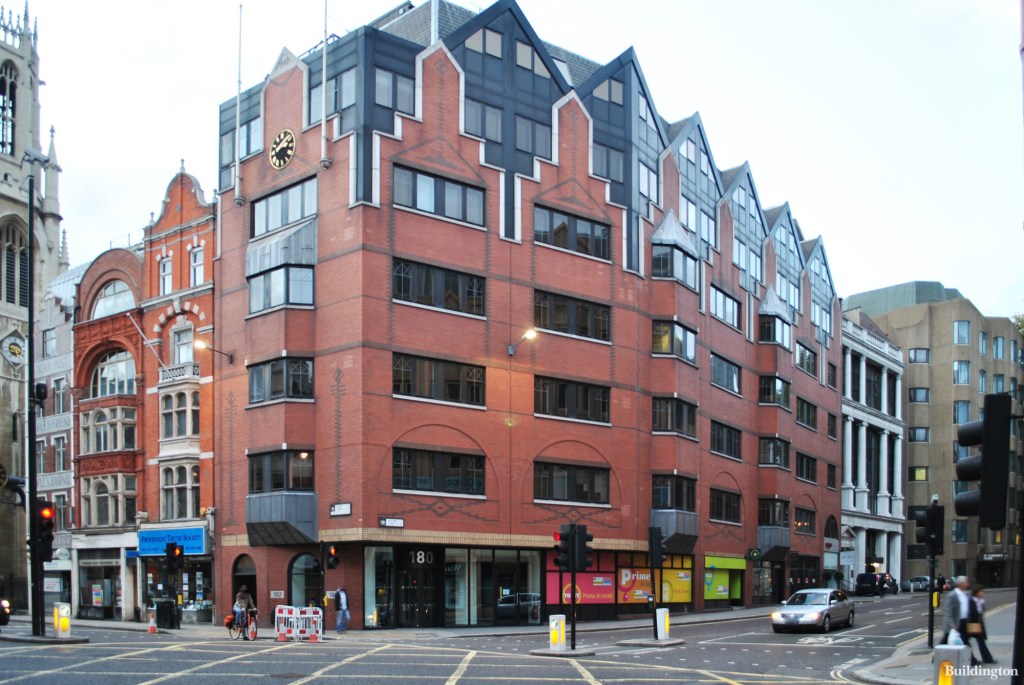
Surprisingly, very few photographs exist of the Gibbs and Flockton offices, and it was replaced by a modern office block in 1983.

Newspapers were once big business, but no more.

The building was replaced by this modern office block in 1983 and is still known as 180 Fleet Street. Note that old buildings survive to the left. (Buildington)

© 2021 David Poole. All Rights Reserved.
Categories
Buildings

Sheffield Hallam University

Block D will become a key anchor for Howard Street and
gateway building to the city and campus. This requires a
building facade that is both civic but restrained in its nature. (BDP)

News of a significant proposed development within Sheffield’s Cultural Industries Quarter Conservation Area.

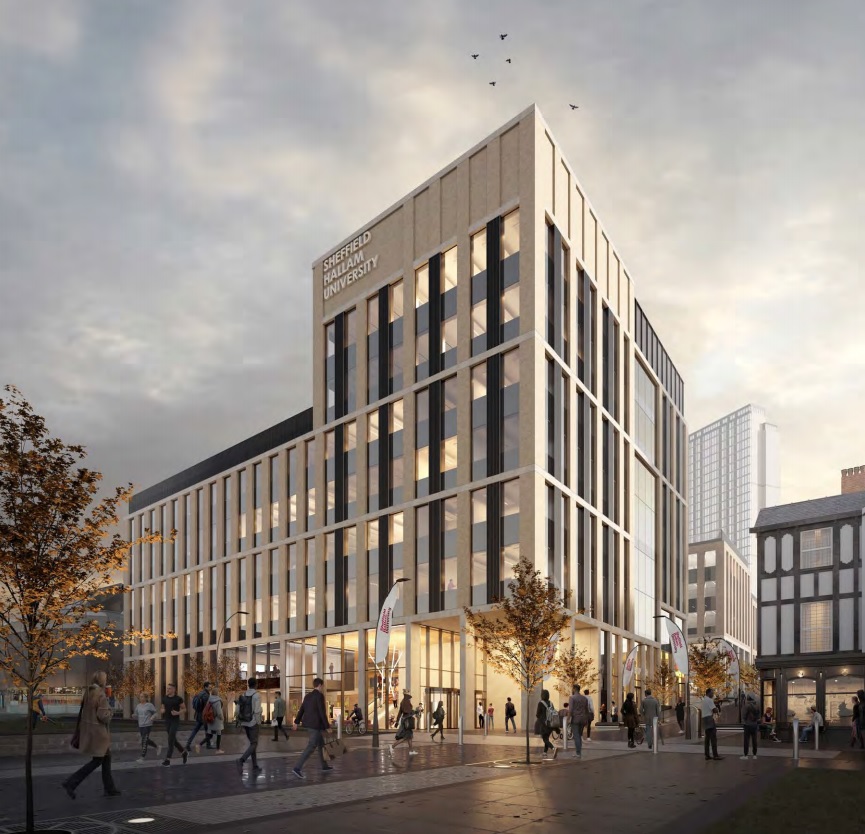
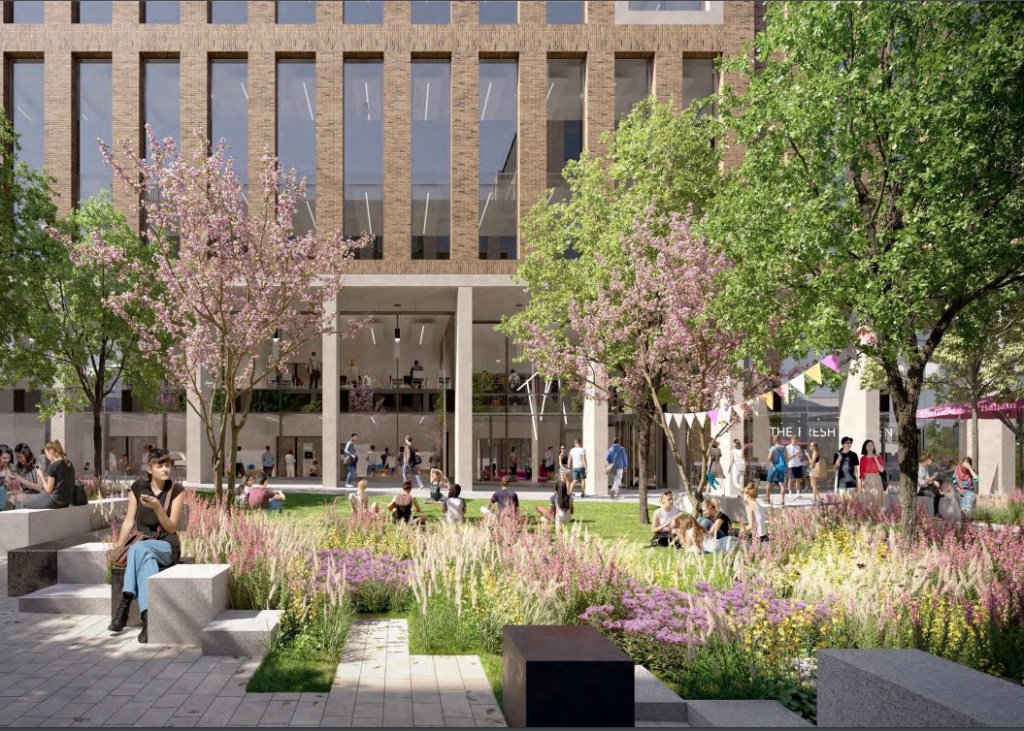
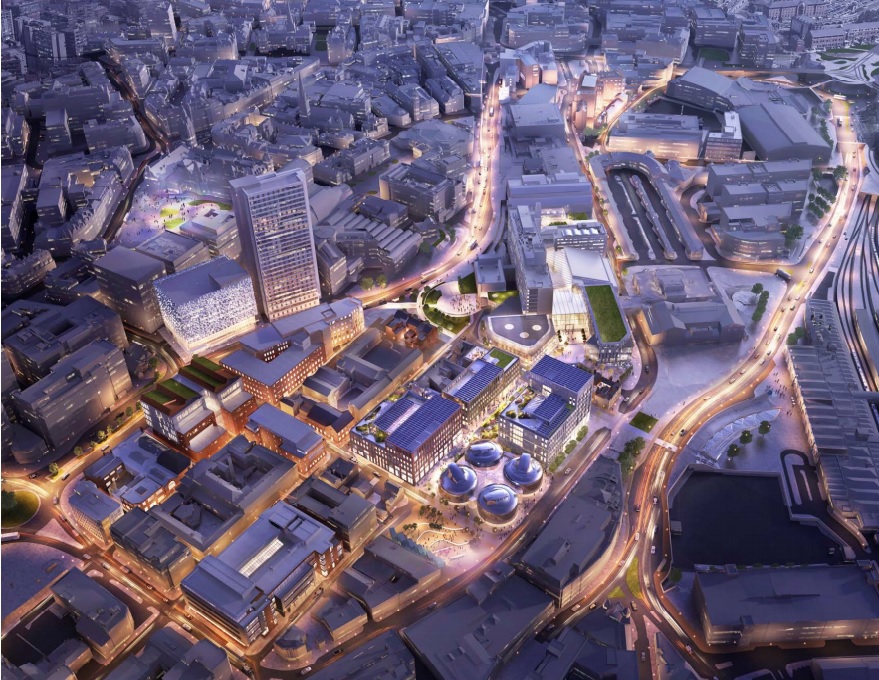
Sheffield Hallam University has submitted a planning application for the erection of three new higher education blocks within its city campus on the existing Science Park site and adjacent surface car park. Blocks A, BC and D are planned around a new public green space provisionally named University Green. It forms a revised Phase One of SHU’s campus masterplan, initiated in 2017/18, and considers changes to the workplace because of the pandemic.

The site covers an area bordered by Paternoster Row, Howard Street, Arundel Street and Charles Street, and is alongside the Hubs complex.

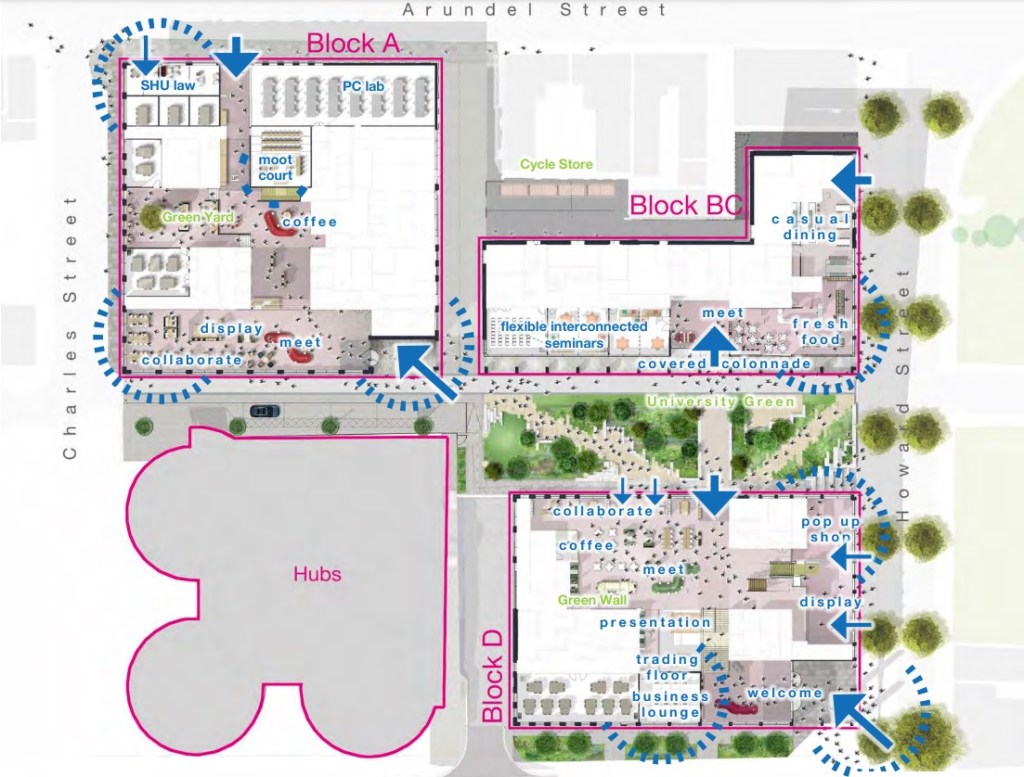
The ground floor plan illustrates public entrances,
key internal spaces, range of activities and location of key
green spaces (internal yards and University Green). (BDP)

Block D will become a key civic gateway building to the city and campus. In response to this, the tallest part of the development is located at the key junction between Howard Street and Paternoster Row to symbolise a new gateway and reference to the old clock tower of the Arthur Davy & Sons building that once stood on part of the site.

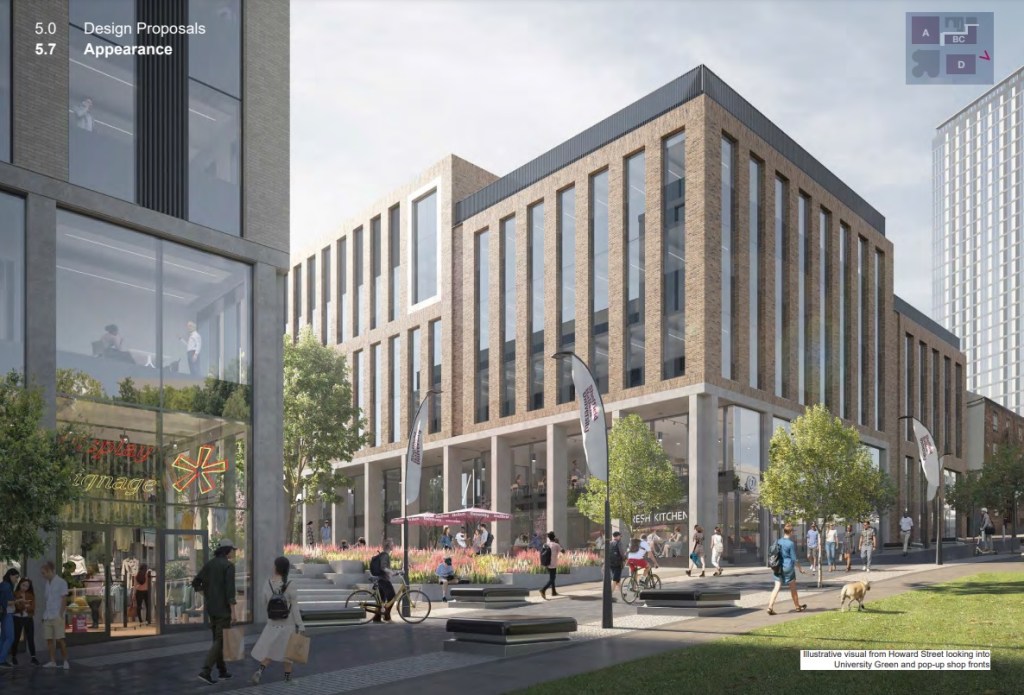
The architectural expression of Block BC is three simple
masses that step down from University Green towards the
Globe Pub.
(BDP)
Block A has showcase opportunities on Charles Street and
Arundel Street where applied learning functions such as SHU
Law may be showcased. (BDP)

This area was once known as Alsop Fields where ancient hunting rights were claimed. In the late 18th century, the Duke of Norfolk set about his ambitious and grand plan to develop the neighbourhood into a fashionable residential district in response to the growing wealth of manufacture. The masterplan was prepared by James Paine. He proposed a rigid grid framework incorporating a hierarchy of streets, with main streets and a pattern of smaller ones for each urban block, serving mews to the rear of the main houses.

In the 1780s, work on the Georgian estate grid commenced to the north of the site beginning with the parallel routes of Union Street, Eyre Street and Arundel Street from the town centre, extending to Matilda Street (formerly Duke Street). However, the masterplan didn’t transpire largely because Sheffield’s inhabitants didn’t want or couldn’t afford the properties as planned.

Despite the masterplan never being wholly built, the legacy of the Duke of Norfolk is retained in many of the streets being named after his family members.

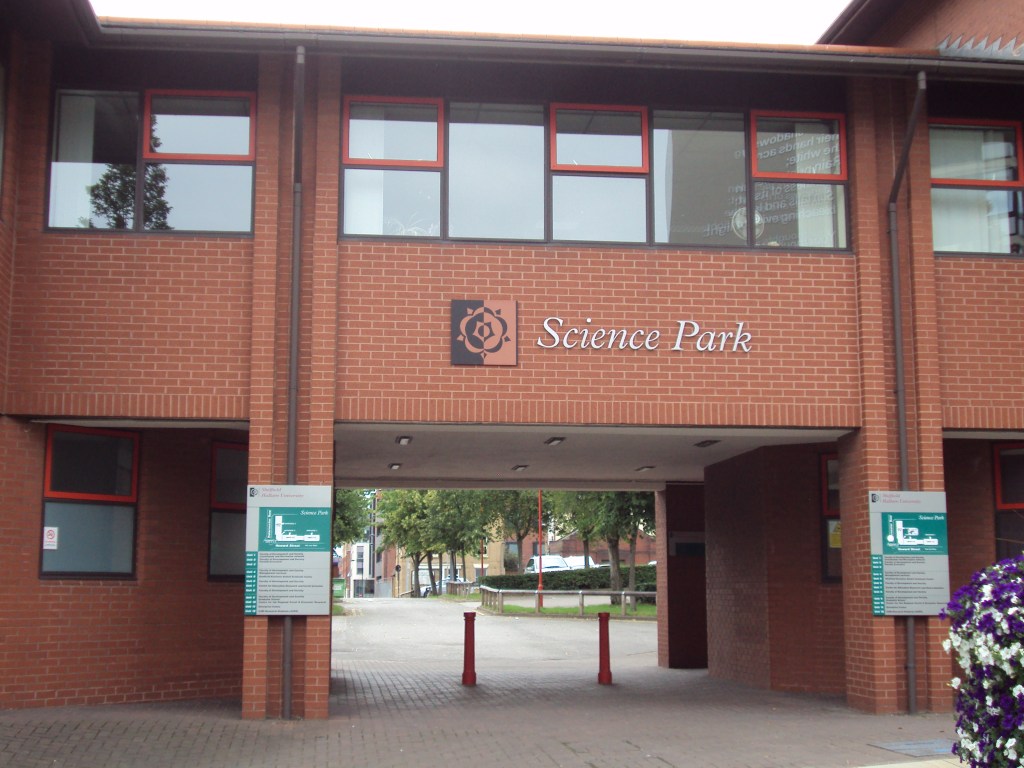
The site designated for redevelopment became a series of factories, workshops, small shops, as well as the site of the County Hotel. Much of the land was cleared during the 1980s, with the creation of Sheffield Hallam University’s Science Park (1996) in red brick by Hadfield Cawkwell Davidson. This will be swept away in the proposed development.

The Campus plan was developed around a number of
Campus plan Principles that are embedded in the design of
blocks A, BC, D and University Green. (BDP)
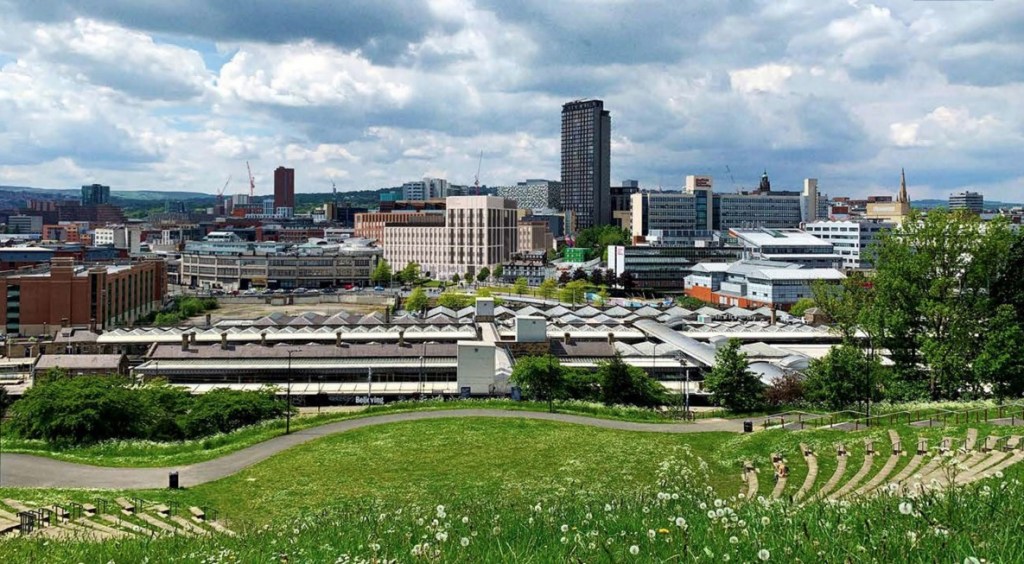
Illustrative photomontage view looking from Park Hill. (BDP)
Entrance to the Science Park on Howard Street. If planning permission is granted, the site will be cleared and replaced with the new development. (Wikimedia)

© 2021 David Poole. All Rights Reserved.
Categories
Buildings

St. John’s Buildings

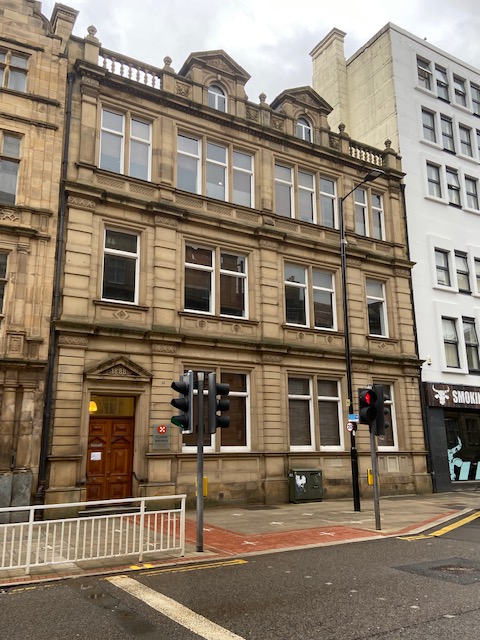
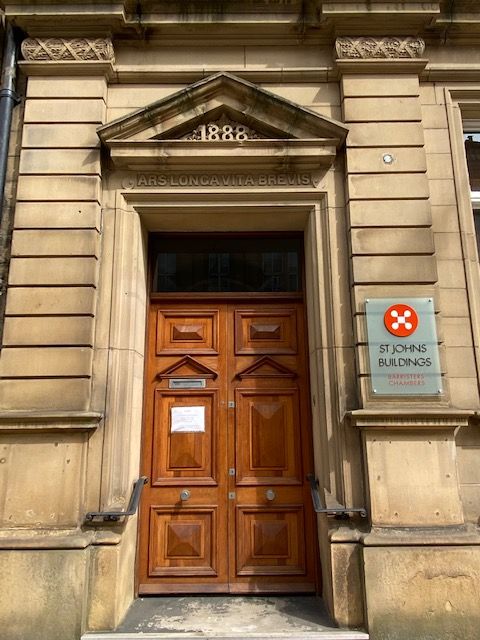
Sheffield Medical School (1888) by J. D. Webster. Northern Renaissance-style. The Institution was the third provincial medical school and could accommodate a hundred students. (DJP/2021)

Here’s a building on Leopold Street with a thought-provoking history. St. John’s Buildings are now used as barristers’ chambers, the interior changed from its former use as the Bank of Scotland. However, a stone inscription (Ars Longa Vita Brevis) above the main entrance provides a clue to its original use.

Somewhere within, lies a foundation stone, and within its cavity is a bottle, a time capsule, containing Sheffield’s morning papers from June 1887, a conjoint prospectus for 1886-1887 for Firth College, Technical School, and School of Medicine, an old photograph, and a parchment engrossed as follows : –

“The Sheffield School of Medicine was built in 1828, at the corner of Surrey Street and Arundel Street, the foundation stone having been laid by Sir A.J. Knight in July 1828. The building having become inadequate to the requirements of the day in 1883, a proposal was made to amalgamate with or become a department of Firth College, the councils of the school and Firth College having met and fully considered points of co-operation, unanimously agreed that the union was likely to be advantageous to both, but before complete incorporation took place a new medical school was necessary.”

The new medical school was this building, the foundation stone laid by Dr Mariano Alejo Martin de Bartolomé, using a specially inscribed silver trowel.

I declare this stone duly laid in the name of the Father, the Son, and the Holy Ghost. From this humble structure may we raise up a structure perfect in all its parts, and creditable to the builders.

“It will, in the course of time, grow as an oak did from the acorn, that it will spread its beneficial shadow over the whole of the town and neighbourhood, and communicate the blessings of true medica and surgical practice.”

Designed by architect John Dodsley Webster and built by W. and A. Forsdyke, of St. Mary’s Road, it was opened with an extravagant soiree, including a special address from Sir Andrew Clark, President of the Royal College of Physicians, in September 1888.

The sum required to build the school was £6,000, of which about £3,000 was raised before an appeal was made to the public. “We venture to ask the help of the people of Sheffield, on the ground that school of medicine is an advantage to them; because it stimulates the members of the medical profession to keep pace with the rapid progress of medicine and surgery.” (DJP/2021)

A site had originally been purchased from the Corporation in Pinfold Street; but at the request of the medical council the Corporation agreed to exchange the land for a plot in Leopold Street, opposite Firth College. The area contained about 550 yards and the price was £5 a yard. There was a frontage of about 50ft on Leopold Street, the main elevation being entirely of stone, and the treatment a sort of classic free renaissance, which caused the building to harmonise well with the surrounding property.

On the ground floor towards Leopold Street was a faculty room and library, a lecturers’ room, with porter’s room, lavatory, main staircase, and entrance hall. Also, on this floor, running towards Orchard Street, was an injection room and lumber room. A hoist connected the ground floor with the first floor.

On the first floor were two classrooms and at the back was a museum. The medical theatre was on the second floor, with circular seats in tiers, alongside a practical physiology and a dissecting room.

The School of Medicine was short-lived here, its entwined relationship with Firth College, and the Technical School, leading them to form University College, Sheffield, in 1897, and the eventual creation of the University of Sheffield in 1905, with the medical school moving to a new building at Western Bank (now Firth Court). In 1973, it moved again, and can still be found on Beech Hill Road.

After the school vacated, the building has been in almost continuous use. It will be recognised by those of a certain age as Sheffield Education Committee’s Central School Clinic, afterwards as a bank, and now St. John’s Buildings.

© 2021 David Poole. All Rights Reserved.
Categories
Buildings Streets

20-26 Fargate

The units are occupied by a mobile phone and vape shop and a discount fashion retailer – which already has a ‘closing down’ sign in the window. (Sheffield Star)

The subject of city development is emotive. People have different opinions. As someone who looks at historical detail, we’re no different to our ancestors.

In Victorian times, people agreed or disagreed about Sheffield’s redevelopment. Sheffield Corporation was always in the firing line. The difference now is that we’re able to make our views known on a much wider and accessible platform.

This piece of news will provoke the same split opinion.

The Sheffield Star has revealed that Sheffield City Council is about to complete the purchase of 20-26 Fargate, the former Clintons card shop opposite Marks and Spencer, to become ‘Event Central,’ a six-storey flagship for the city’s ‘burgeoning creative sector.’

The acquisition and revamp of the building will consume a ‘sizeable’ chunk of £15.8m the authority won from the Future High Streets Fund, a partnership with Sheffield University, to improve Fargate and High Street.

How it could look by March 2024. (Sheffield City Council)

Prof Vanessa Toulmin, of Sheffield University, who led the bid said she would like to see the top floor used for music gigs and practice sessions. Event Central could also host festival events, such as for DocFest, and acts displaced by the closure of venues. There will also be co-working space, exhibitions and a café. The operating model had not been finalised but was likely to be a commercial and public sector partnership.

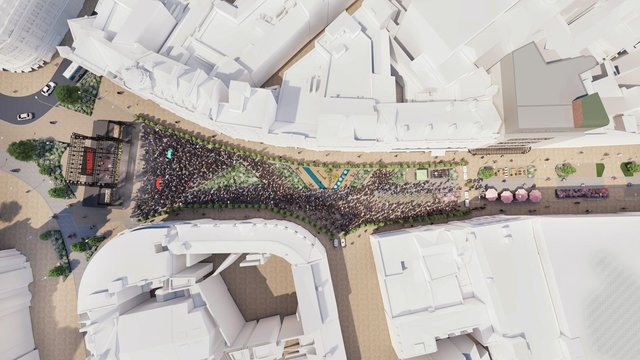
As part of the masterplan, the top of Fargate will be reconfigured to provide outdoor space for major events. The scheme is expected to attract 110,680 visitors annually. Meanwhile it is hoped that ‘Front Door Access’ to old offices above shops will spark investment in new flats.

The top of Fargate will be reconfigured to provide outdoor space for major events. (Sheffield City Council)

Categories
Buildings

Central Fire Station

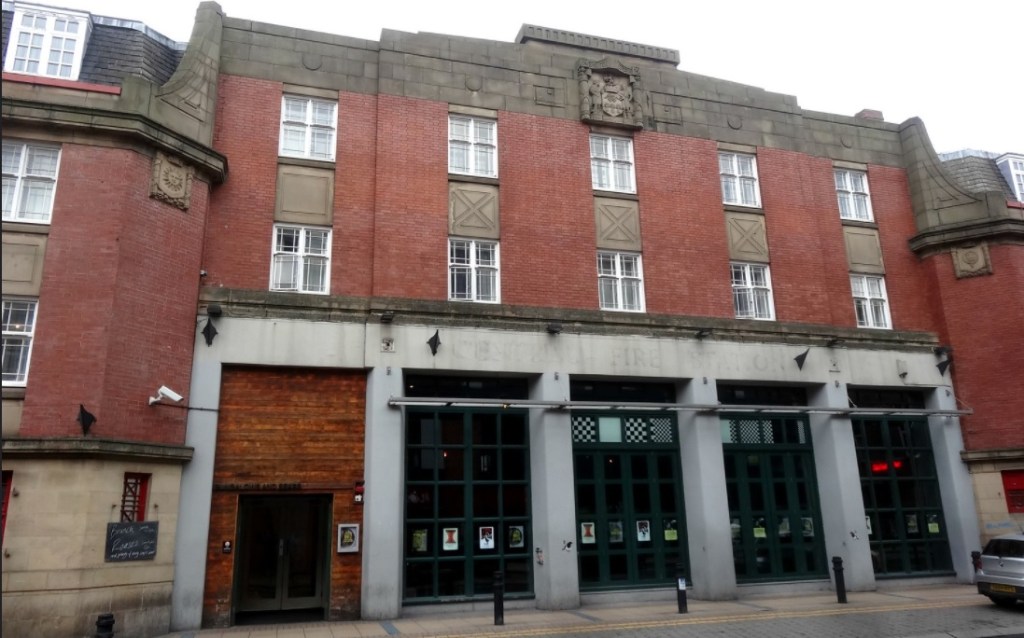
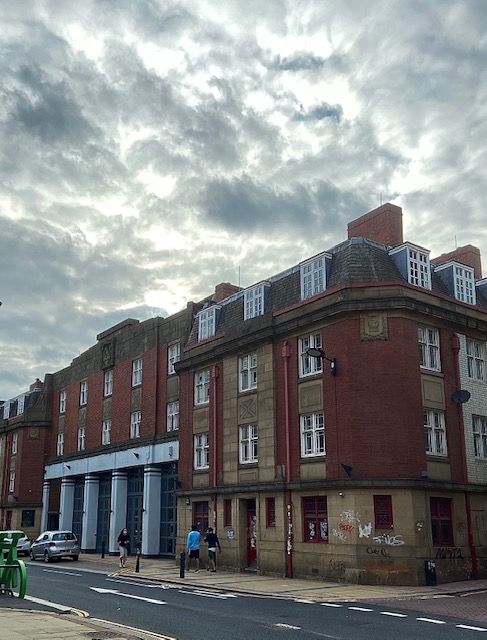
The former Central Fire Station, on Division Street, photographed in 2017. (Budby/Flickr)

This is Bungalows and Bears, on Division Street, a popular bar with students, but you might not be aware that in 2028 the building will celebrate its centenary. In Pevsner’s Architectural Guide to Sheffield, Harman and Minnis describe it as ‘bloodless, Neo-Georgian,’ typical of inter-war building. Sadly, it’s not looking its best these days.

This was the former Fire Brigade Headquarters, built in 1928 at a cost of £39,000, and opened by the Lord Mayor, Alderman H. Bolton in July 1929.

It would be interesting to know how much remains of its interior since its conversion to flats and ground-floor bar in the 1990s.  

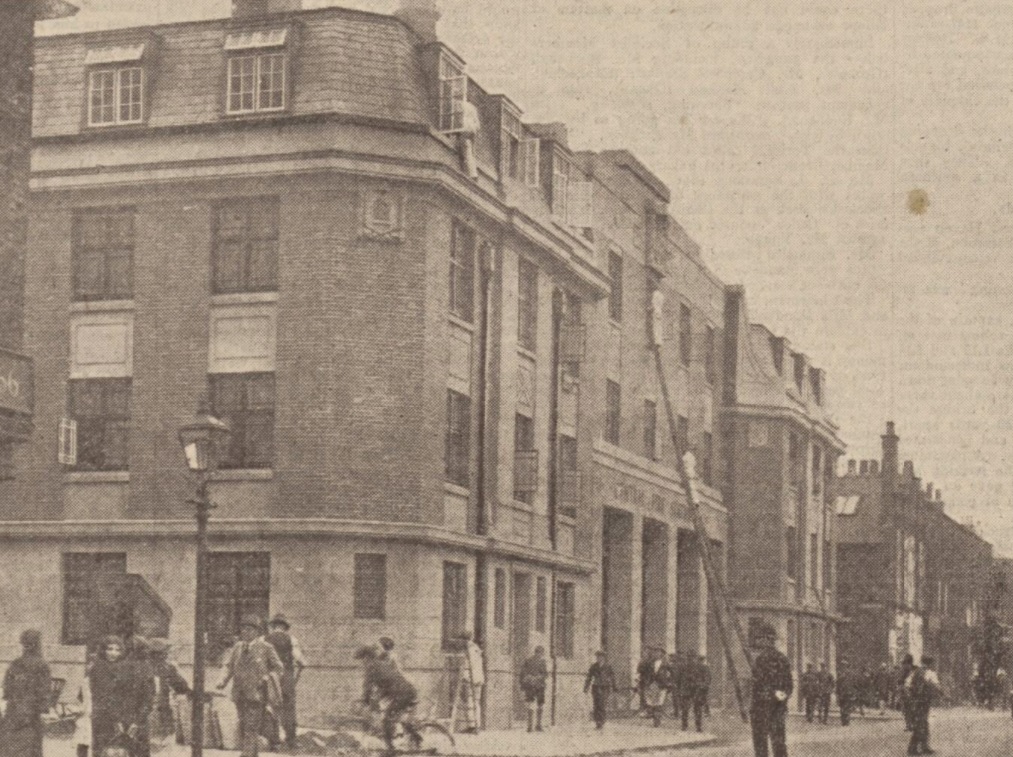
Finishing touches to Sheffield’s new fire station in July 1929. Painters can be seen in rather precarious positions. (The British Newspaper Archive)

The fire station was designed by the City Architect, W.G. Davies, and was intended as an extension to an adjacent station on Rockingham Street (1883-1884). A row of shops fronting Division Street from Rockingham Street to Rockingham Lane was purchased and demolished.

The new Division Street frontage was 155ft long, of which 60ft was occupied by the engine room, with accommodation for 10 engines. Inside, the engine room had white-tiled walls, tastefully picked out in blue, a floor of terrayo, and huge teak doors that opened onto the road.

Adjoining the engine room was the ‘watch room’ – a private telephone exchange and switchboard, with automatic fire bells for calling out the firemen.

On each side of the buildings were stairways and sliding poles of stainless steel fitted on each floor, enabling the men to reach the engine room from the first and second floor firemen’s quarters. There was a children’s playground at the rear of the first floor, while the third floor housed a recreation hall, gymnasium, and more firemen’s quarters.

Electric clocks were fitted throughout, as well as a lighting system controlled by the watch room that ensured that when an alarm sounded emergency lights were switched on automatically.

Outside the engine house, in Division Street, two solid bronze flamboyant torch-fitting electric lamps were fitted, each consisting of three torch-shaped, red-tinted electric lamps.

At the back was a courtyard with a 70ft high brick tower used for drill purposes with Pompier and hook ladders.

The building work was undertaken by Messrs. Abbott and Bannister, Ltd., general builders, and public works contractors, of Machon Bank, using Stairfoot Double Pressed Red Facing bricks, and stone supplied by Joseph Turner of Middlewood Quarries. A green Westmorland slate roof was installed by W.W. Fawcett of Hale Street.

The next time you go past, have a look for five different carvings on the building. They include the Sheffield Coat of Arms and representations of four of the old Fire Marks, all executed by Frank Tory and Sons, architectural sculptors, of Ecclesall Road.

The fire station survived until 1983 when a replacement building was opened on Wellington Street, subsequently demolished in 2010, with South Yorkshire Fire and Rescue moving to its current Eyre Street headquarters. Now used as a car park, the Wellington Street site is earmarked to become Pound’s Park, named after Sheffield’s first Fire Superintendent.

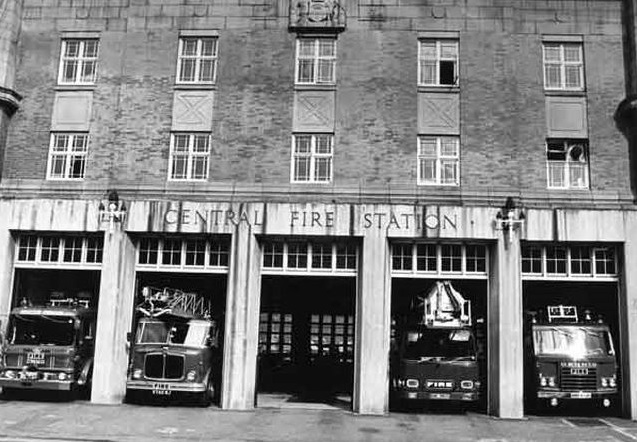
Central Fire Station in operational use in 1974. The engine house could house ten fire engines, but by the 1970s only four were housed here. (Picture Sheffield)
The former fire station now requires some restorative work. The upper floors are flats and the old engine house is used as a bar. (DJP/2021)

© 2021 David Poole. All Rights Reserved.
Categories
People Places Streets

Pound’s Park: a belated tribute to a fire chief

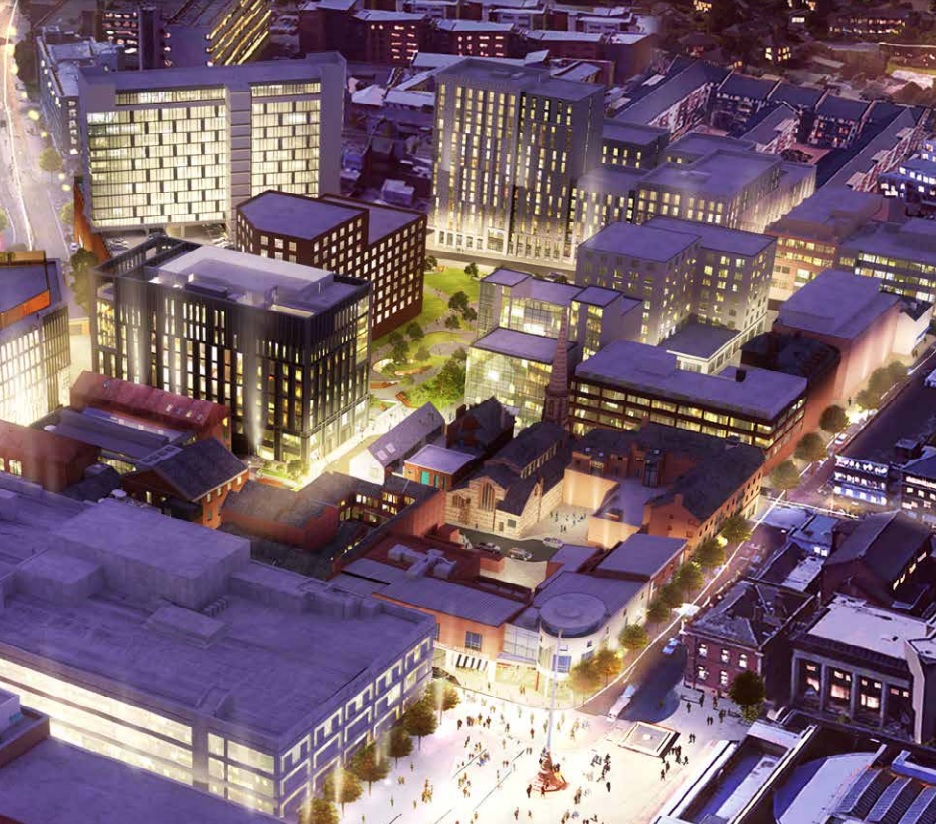
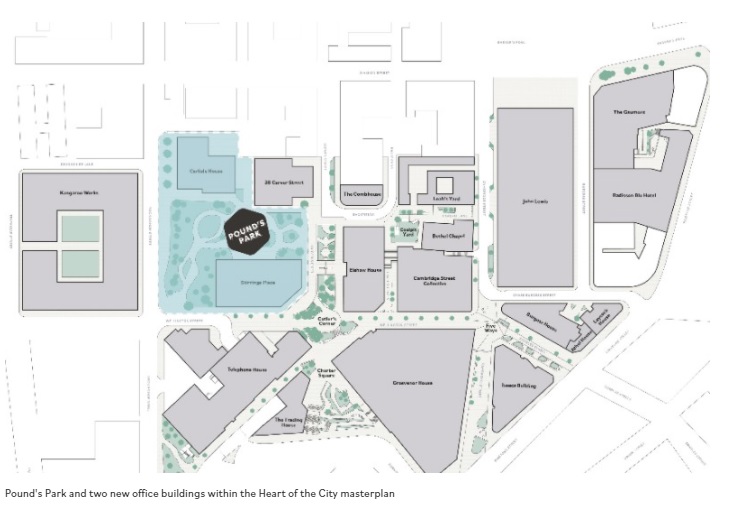
Pound’s Park, named after the man responsible for creating Sheffield’s first fire brigade. The former John Lewis store is seen at bottom-left. Cambridge Street is already being developed as a cultural centre. (Sheffield City Council)

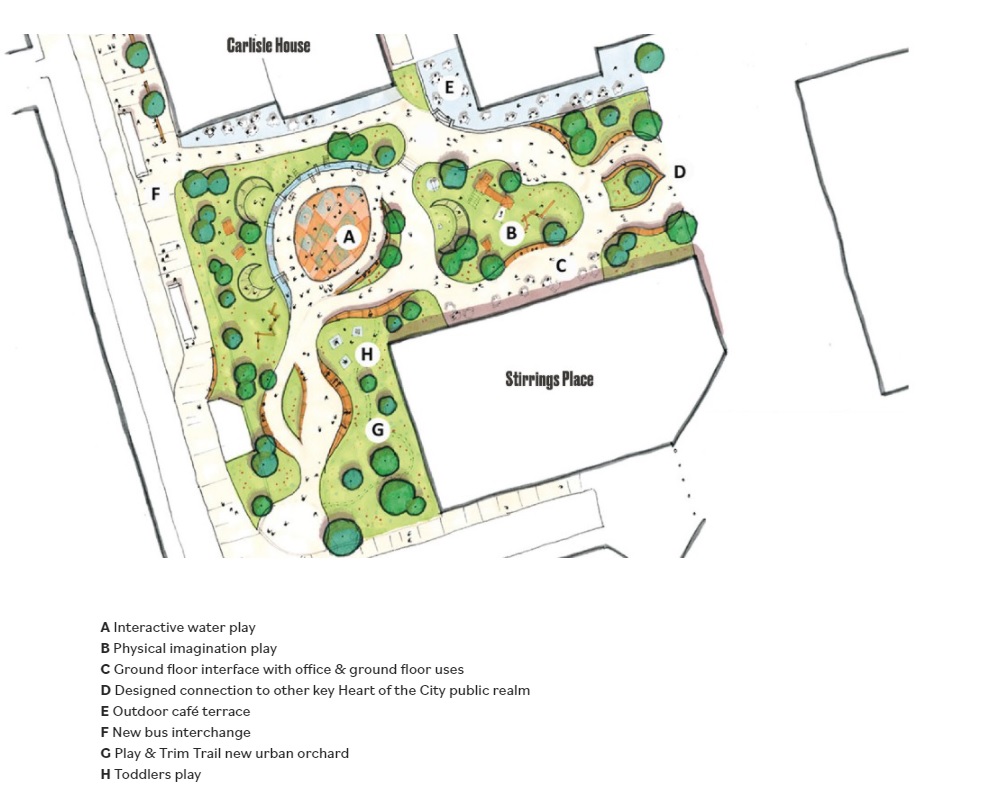
The Heart of the City II programme moves forward, and this artist impression shows Pound’s Park, a new public space that will be created on the site of the demolished Wellington Street fire station.

It will be on the western side of the Heart of the City masterplan, located between Rockingham Street, Wellington Street and Carver Street, and will create another green space in the city centre, as well as creating children’s’ play areas, water features, and a new bus interchange.

The Park will also provide an accessible new home for the William Mitchell frieze, which was removed from Barker’s Pool House a few months ago in preparation for the construction of the new Radisson Blu hotel on Pinstone Street.

A lot has been written about Pound’s Park, but I’d like to focus on the man it is named after.

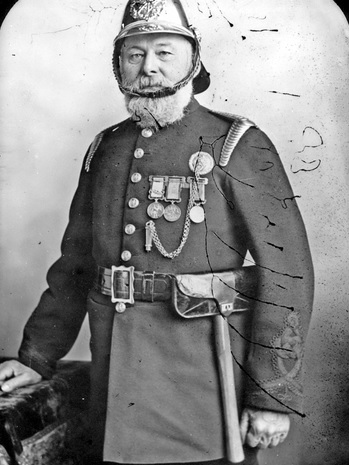
John Charles Pound (1834 -1918) was the city’s first Fire Superintendent, and responsible for laying the foundations of our modern fire service.

He was born at Sittingbourne in Kent and served for eight years  in the Navy and Mercantile Marine Service, and as a man-of-war took part in operations in the Crimea.

Leaving the sea, he joined the Metropolitan Fire Brigade in its earliest days. He was engaged at the memorable Tooley Street fire in 1861, where his chief, Captain Braidwood, was killed by a falling wall just minutes after Pound had been talking to him. (It was referred to as ‘the greatest fire since the Great Fire of London,’ and occurred at Cotton Wharf where many warehouses were situated. It attracted a crowd of more than 30,000 spectators).
“This was in the early days of fire brigade work, and long before the extinguishing of fires had been the object of practical and scientific studies. The Metropolitan firemen learnt engineering by travelling on locomotives and receiving instruction from engine drivers. The scheme had been adopted by Captain Braidwood, and John Pound was one of those who familiarised himself in engineering. When proficient he was appointed to a responsible position on one of the brigade’s river floats.”

He applied for a position at Nottingham and was appointed as engineer of the first steam fire engine, staying two years before coming to Sheffield in 1869 to form the Corporation’s first fire brigade. The decision of the Corporation to take over and run the Fire Brigade was brought to a head by a series of large fires between 1865 and 1869.

John Charles Pound (1834-1918). Sheffield Fire Superintendent between 1869 and 1895. (Picture Sheffield)

Pound established the fire brigade over 26 years, with trained firemen, and the introduction of the best firefighting appliances. His biggest fires included Portland Street Confectionery Works (George Bassett and Co) and at G. H. Hovey and Sons (drapers and house furnishers) in Angel Street in the winter of 1893 in which six large shops were destroyed.
Superintendent Pound was injured at the Park Club fire, on Bernard Street, in February 1895 when he fell against a kerbstone whilst handling a jet. His injuries were at first thought to be bruising of the ribs, but later he suffered difficulty in breathing. He retired from the Fire Brigade shortly afterwards.

“He may now begin to feel the need of rest and relief from being in a state of incessant preparedness, and the Micawbian attitude of ‘waiting for something to turn up,’ and the good wishes of the citizens will follow him in retirement.”

John Charles Pound died from influenza at his home on Tullibardine Road in 1918. His coffin was shrouded in the Union Jack and conveyed on a horse-drawn fire brigade tender, with Indian Mutiny veterans, firemen and police taking part in the cortege. He was buried at Sheffield General Cemetery.

A fitting tribute that Sheffield’s first fire officer should be honoured with a park, and on the site of a former fire station.

Pound’s Park will be the latest addition to Sheffield City Council’s plans to create green spaces in the city centre. (Sheffield City Council)

© 2021 David Poole. All Rights Reserved.