Categories
Buildings

No. 9 Fargate

No. 9 has stood at the end of Fargate all our lives. It is the tall, detached building standing between Chapel Walk and Black Swan Walk and is in a sorry state.

It is hard to imagine that this building was part of the Victorian renaissance of the old town centre, one that marked the widening of Fargate and set the building line for later High Street improvements.

Plans to widen Fargate were proposed in 1875, but it was not until the late 1880s that work started. Old buildings on the east side were flattened extending back from Fargate for distances varying from 60ft to 240ft.
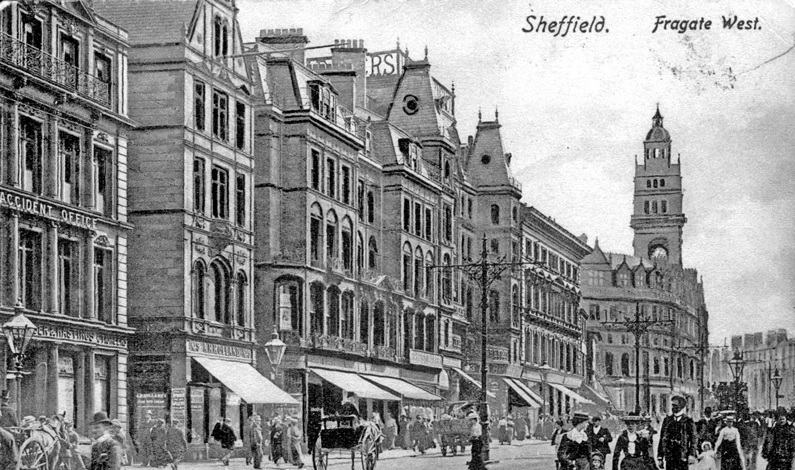
A glamorous view of the widened Fargate (not Fragate as the photograph says) with A.H. Holland on its single plot between Chapel Walk and Black Swan Walk. (Image: Picture Sheffield)

It would appear that Lot 4, a plot of land containing about 150 square yards on the north side of Chapel Walk and south of a foot road (Black Swan Walk), with a frontage of 19ft to Fargate and 72ft to Chapel Walk, had been the site of the Black Swan Public House.

In 1887, Sheffield Corporation paid William Davy, the licensee, £11,160 for the land and demolished the pub.

The freehold was bought in 1888 by A.H. Holland, Provisions Merchant, founded in 1844 by Alwin Hibbard Holland, whose previous shop had been at No. 3 Fargate, one of those flattened for street widening.

Alwin Hibbard Holland had died in 1883, the business continuing through his wife, Eliza, and youngest son, Alwyn Henry Holland. (His eldest son, Kilburn Alwyn Holland, also had a provisions business, but appeared to have played only a small part in the family business).

Eliza Holland played an important role in the success of A.H. Holland, but it was Alwyn (whose story will be covered in a future post) who established the business in new premises at No. 9 Fargate.

Alwyn had been educated at Brampton Schools, Wath upon Dearne, before becoming a pupil, and afterwards, assistant to Sheffield-architect John Dodsley Webster.

After his father’s death, he joined A.H. Holland which he ran with his co-executors, and co-designed the new premises along with Flockton, Gibbs and Flockton.

Thomas James Flockton had negotiated the purchase of the property and acted for Sheffield Corporation in the resale to Alwyn Holland, a fact that did not go unnoticed to sharp-eyed citizens.
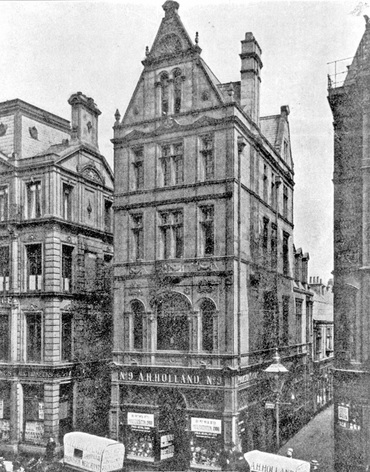
A.H. Holland fronted Fargate and stretched down Chapel Walk. (Image: Picture Sheffield)

Building work started in early 1889, with Sheffield-builder George Longden and Son chosen for the work, but progress was hampered when bricklayers and labourers went on strike demanding more money.

The new shop was eventually completed and opened to an expectant public on 9 November 1889 selling the ‘highest class goods at the lowest possible prices’. As well as the shopfront on Fargate, the premises extended down Chapel Walk occupying Nos. 1 to 15. The firm was awarded prize medals at the London International Exhibition and the International Dairy Show, sufficient for it to become sole agent for Lord Vernon’s Dairy (from Sudbury Hall in Derbyshire).

In 1891, the Rutland Institution occupied rooms overlooking Fargate above the shop. It was named after the Duchess of Rutland, who opened it, and was formed in connection with the Sheffield Gospel Temperance Union.
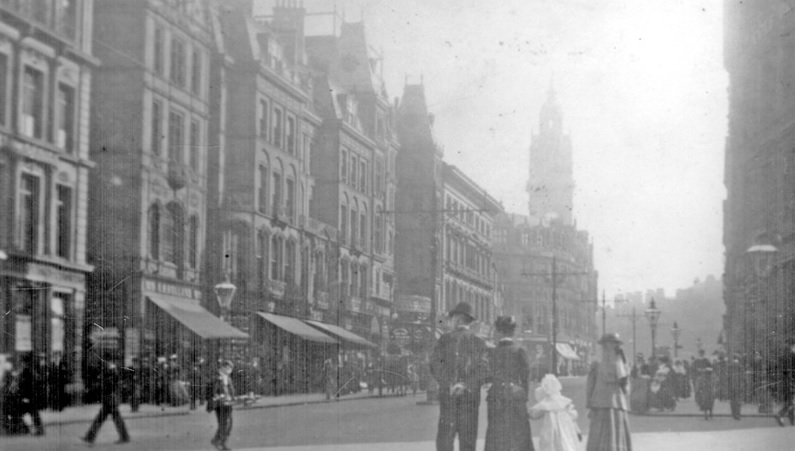
Busy days on Fargate with A.H. Holland’s awning stretching to the road. (Image: Picture Sheffield)

As well as being a shopkeeper, Alwyn Holland was a watercolour artist and his work was displayed inside the shop, ‘displaying marked originality both as an architect and an artist’.

It might have been Holland’s aspirations as an artist that ultimately led to the downfall of A.H. Holland.

With a sizeable income the firm built new property on adjoining Chapel Walk, renting out eight shops at ground level with a large suite of assembly rooms upstairs, including the Howard Gallery, for high-class art exhibitions, and Holland’s Restaurant.

The gallery opened in 1898 but proved a failure, closing its doors in 1904. By this time, the Rutland Institution had moved out, and the entire upper floor was extended into rooms above No. 9 Fargate and remodelled as tea rooms.
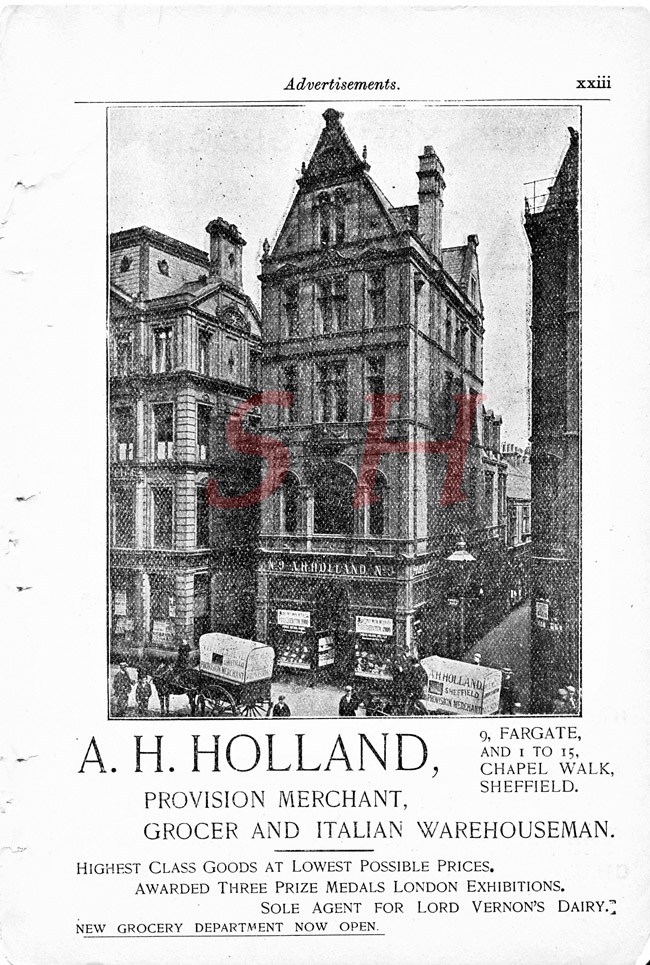
Advertisement for A.H. Holland – ‘The Provisions Store’ – on Fargate and Chapel Walk. (Image: Sheffield History)

In 1906, a new company was created, Hollands Ltd, to take over the business carried on by Eliza Holland and Alwyn Henry Holland at No. 9 Fargate and Nos. 1 to 15 Chapel Walk, as well as the restaurant business carried on by Alwyn at 17-23 Chapel Walk (and also at Sheffield University Rectory).

Joining Eliza and Alwyn as directors were Smith William Belton, a provisions merchant from Market Harborough, William Whiteley, a Sheffield scissor manufacturer, Richard P. Greenland, Liverpool soap manufacturer, Arthur Neal, Sheffield solicitor, and George Shuttleworth Greening, accountant.

A second grocery and provisions business were established on Whitham Road at Broomhilll, but despite new investment things did not go particularly well for A.H. Holland, and in 1909 the business slipped into voluntary liquidation.

Net losses since the formation of the new company amounted to £3,826 and directors attributed poor performance to deficient continuity of management, shortness of working capital, and consequent loss of business due to the depression in Sheffield.
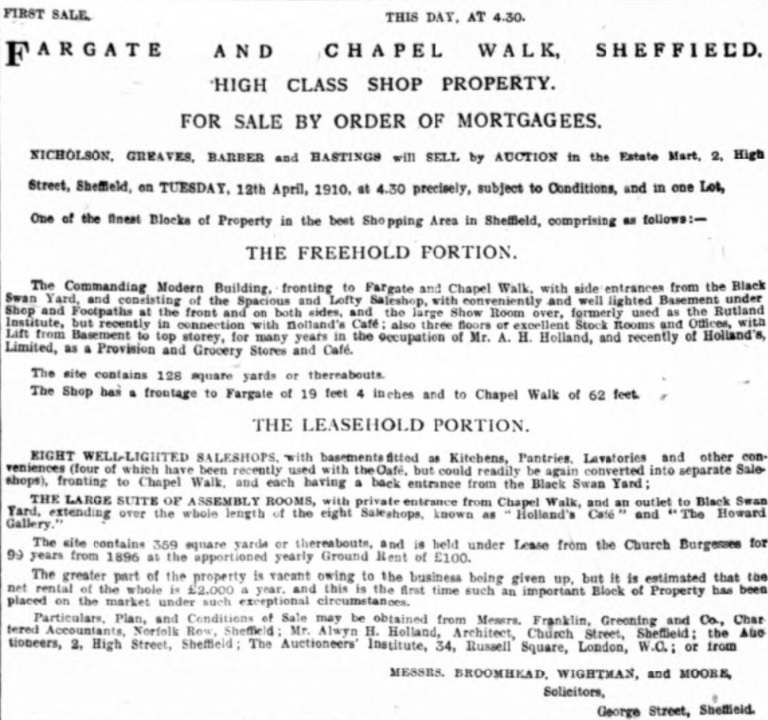
Sad times after the demise of A.H. Holland. No. 9 Fargate and properties on Chapel Walk were sold at auction. (Image: The British Newspaper Archive)

The following year the freehold of No. 9 Fargate was offered at auction, as was the leasehold portion on Chapel Walk, once home to the Howard Gallery and Holland’s Café.

By the end of the year, No. 9 Fargate was used as an auction house by Arnold, Prince, Bradshaw and Company, and the following year fell into the hands of Sykes and Rhodes, costumiers and furriers, which remained until 1924.
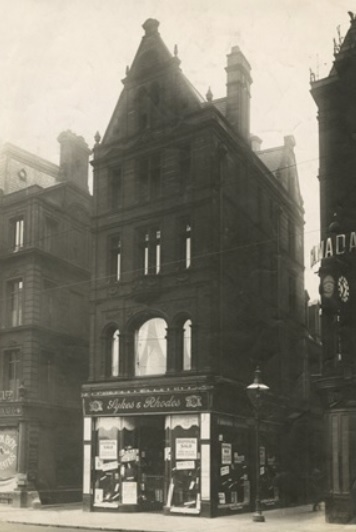
Sykes and Rhodes (Image: RIBA)

By this time, the building had suffered from Sheffield’s age-old problem of black soot, darkening the stone, making it rather ‘dull-looking’.

However, the building was about to be reinvented with the opening of a shop in Sheffield by one of Britain’s leading tailors.

“A cynic has remarked that one of the reasons why Austin Reed Ltd have opened a shop in Fargate is because the male members of the community in Sheffield need attention in sartorial details.”
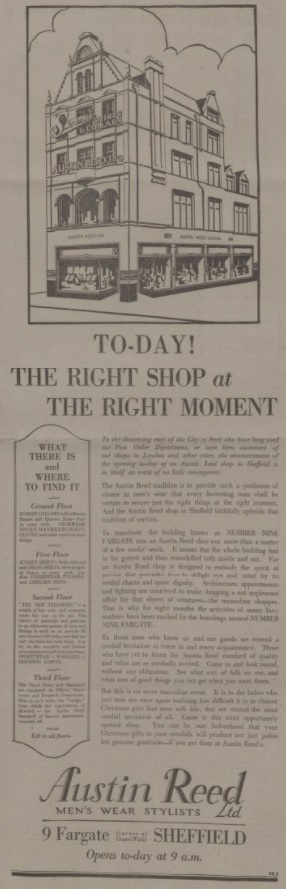
Austin Reed opened in Sheffield in 1924. (Image: The British Newspaper Archive)

The business had been founded by Austin Leonard Reed (great grandfather of Asos founder Nick Robertson) and claimed to be the first menswear store to bring made-to-measure quality to the ready-to-wear market. Its first store was in London’s Fenchurch Street and by 1924 had branches in all the most important towns and cities of England.

“Time is not so long distant when Sheffield relied on its old-established businesses, handed on from father to son, but, with the passing of the war, there came a change, and today, as quickly as premises can be acquired, firms with world-wide reputations are erecting palatial buildings, limited only by the space at their disposal.”
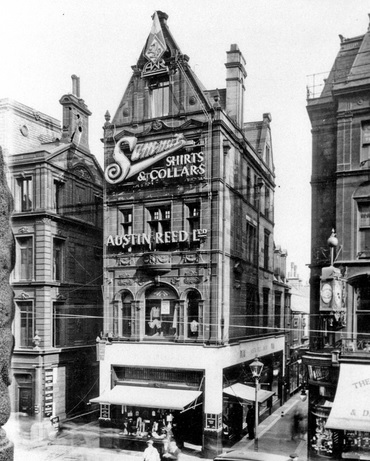
Austin Reed had illuminated signs fitted to the front of the building. (Image: Picture Sheffield)

The company spent a small fortune converting the building, the designs drawn up by P.J. Westwood and Emberton, of Adelphi, London, and involved the original builder, George Longden and Son.

Outside included a beautiful marble front erected by Fenning and Co., Hammersmith, made of Italian Bianco del Mare and Belgian Black Marble. The entrance lobbies contained lines of non-slip carborundum inserted into marble paving.

The building consisted of a basement, three sales floors, and an office situated at the top. They were linked by staircases and the lift, a survivor from A.H. Holland days.

The basement was used for dispatching, the ground floor for the tie, collar, and glove department, the first floor was for hats, shirts, and pyjamas, while the second floor formed the ‘new’ tailoring department.
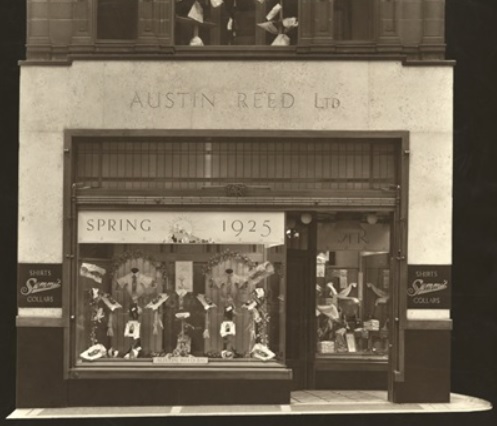
Austin Reed, Fargate, in 1925. (Image: RIBA)

“Inside, everything blends and tones; there is nothing garish to the eye. The ground-work is of oak panelling, staircase, and fittings. On the ground floor, the firm has arranged six windows nicely furnished with parquet beds, the door at the back being glazed with embossed glass to the architect’s design.

“The window lighting – admired by thousands – is worked with x-ray window reflectors, and each window has a special plug for ‘spotlights’ or experimental lighting effects.”

The front of the shop was also illuminated with a ‘Dayanite’ electric sign installed by the Standard Electric Sign Works. This, and the window lighting, was controlled by a revolutionary time switch that allowed them to be switched off on Sundays.
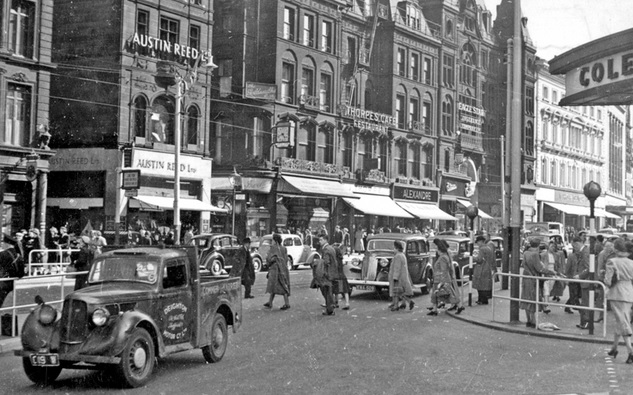
A remarkably different Fargate with Cole Brothers on the opposite corner. (Image: Picture Sheffield)

While the outside was impressive, the interior had the latest shop-fittings made of lightly fumed oak, with polished edged frameless mirrors, supplied by George Parnall of Bristol and London.

The coat cabinets worked on an American principle where doors opened and disappeared into the sides of the cabinet, and a large rack, laden with coats on pegs, was drawn out and slowly revolved.

The counters had small reflectors and low-voltage gas-filled lamps, manufactured by G.C. Cuthbert of London, that provided white light and gave a brilliant effect to the goods.

Another innovation was an electric hat cleaner whereby a visiting customer with a hard felt hat could have it cleaned and renovated in three minutes.
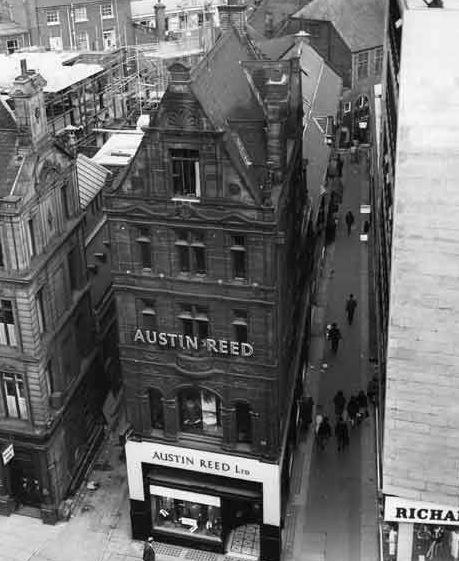
The narrow-gabled front reflects the width of plots preserved from much earlier development on Fargate. (Image: Picture Sheffield)

Customers were most impressed with Austin Reed’s new payment and receipt system.

When an item was purchased the assistant placed the money, bill and duplicate into a cartridge that was inserted into pneumatic tubes, similar to those used in newspaper offices, that within ‘three second’ had reached the top of the building. The office assistant then placed the receipt and change in the cartridge and the procedure reversed.
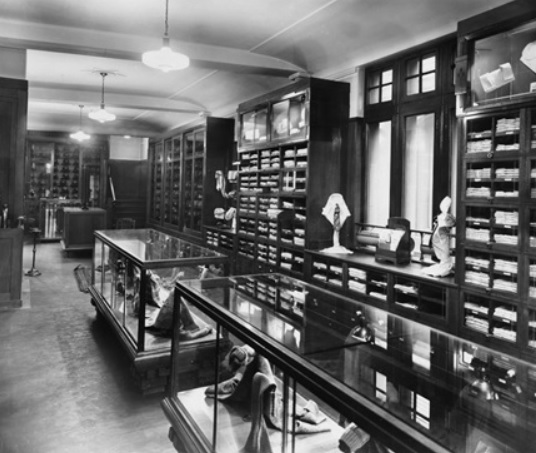
The smart oak interior with bespoke counters at Austin Reed in 1925. (Image: RIBA)

Austin Reed also used several local contractors.

Decoration was completed by F. Naylor, of Abbeydale Road, plumbing by George Simpson and Co., from Broomhall Street, electrics by Marsh Bros., of Fargate, and the structural engineers were W.H. Blake and Co., from Queen’s Road.

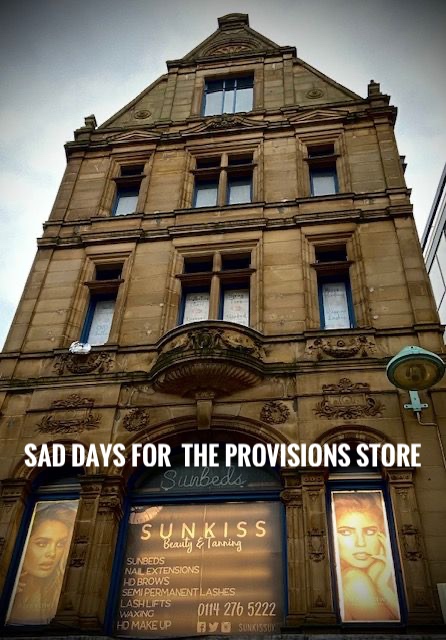
Austin Reed remained at No. 9 Fargate the 1970s, the building becoming a Salisburys bag shop and subsequently a victim of the relentless ‘chain store shuffle’, its last incumbent being Virgin Media.

As I write, it is a pop-up Christmas store, in darkness due to Covid-19 restrictions, with a sun-tanning parlour above.
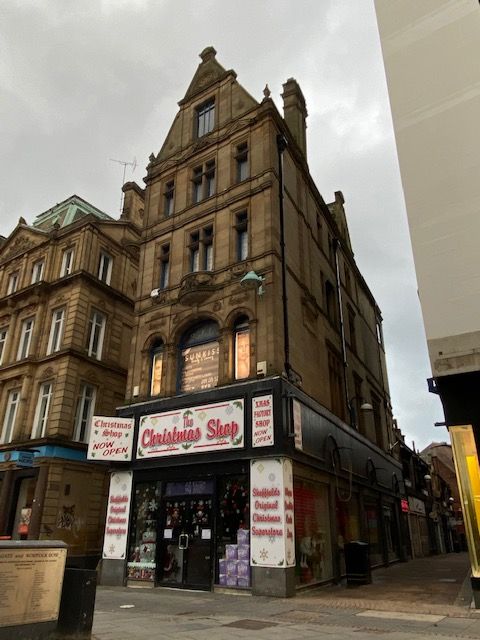
No. 9 Fargate. A pop-up Christmas shop in November 2020. Closed due to Government restrictions. (Image: David Poole)

© 2020 David Poole. All Rights Reserved.
Categories
Other Streets

Connecting Sheffield

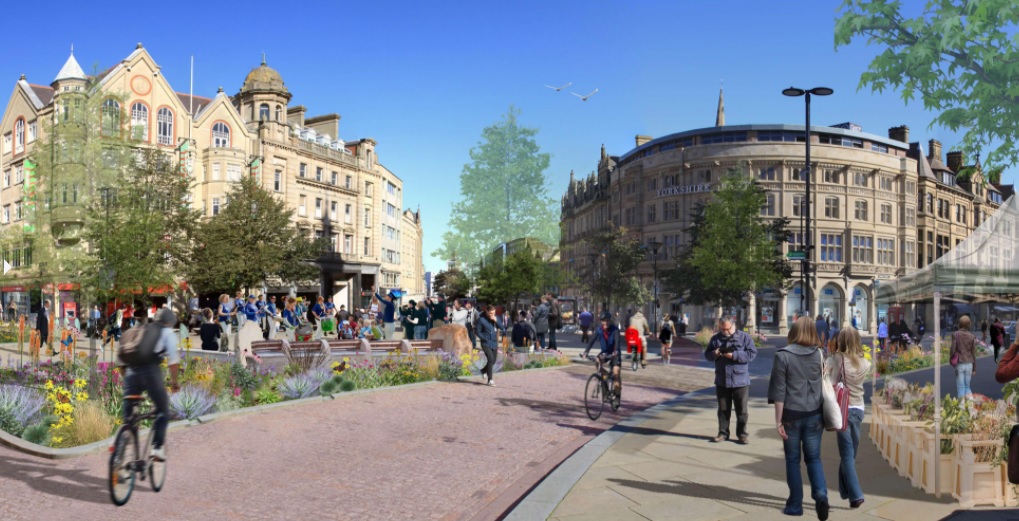
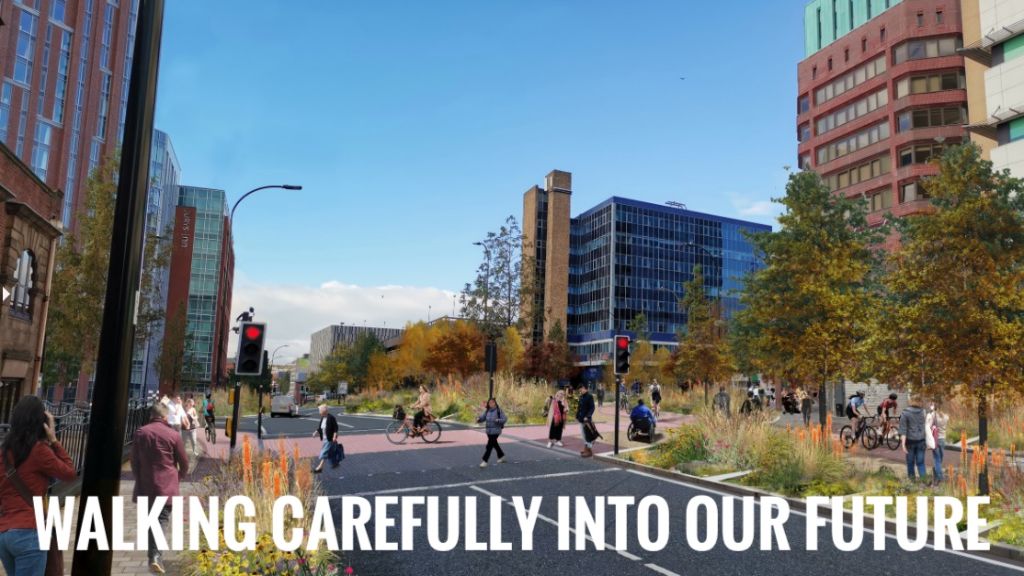
Our city centre may take on a new look if plans to pedestrianise large swathes of it get the go ahead. Sheffield City Council want to make foot and bicycle journeys easier and quicker, while streamlining public transport services.

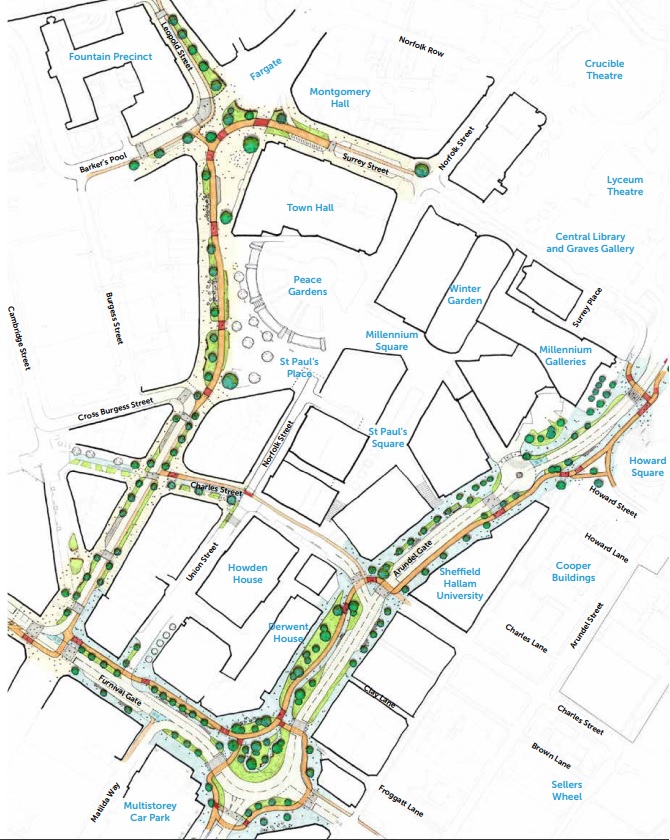
The proposals include pedestrianisation to Pinstone Street and Leopold Street, linking Fargate with the Peace Gardens, as well as Charles Street between Union Street and Pinstone Street. The pedestrianisation of Surrey Street would create a traffic-free Town Hall Square.

Work would include more greenery, replicating the ‘Grey-to-Green’ scheme already seen between Castlegate and West Bar.

Bus gates would be installed in both directions on Furnival Gate, and along Arundel Gate to Norfolk Street

Rockingham Street would get a new bus hub with improvements to pavements, green planting, a pocket park, and bus stops.

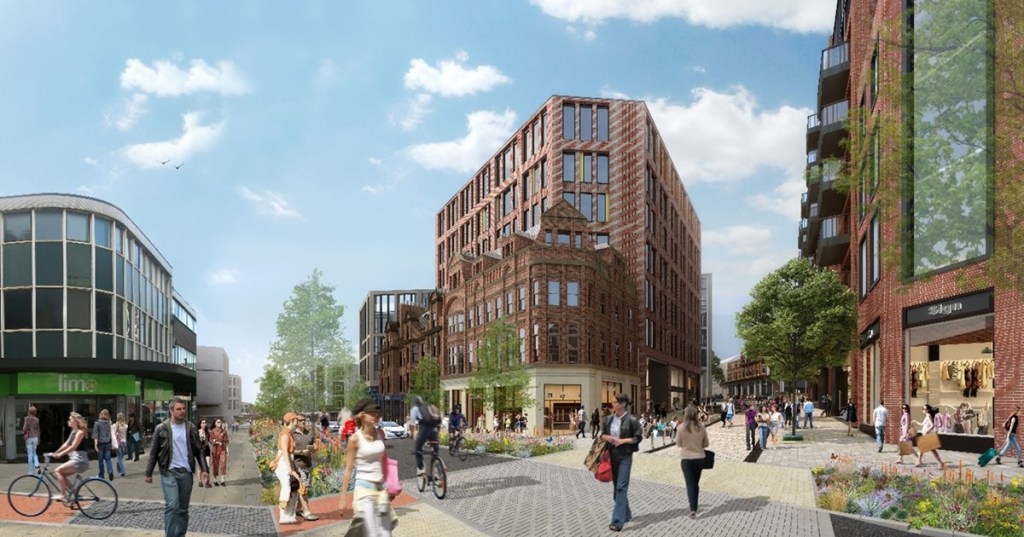
The future of our city? Pedestrianisation of Pinstone Street and Charles Street connects with Heart of the City II redevelopment, due for completion in 2021. (Image: Connecting Sheffield)

Of course, there are benefits to the scheme – improved air quality, better accessibility to shops and businesses, a more attractive city centre, and public spaces that create city uniqueness.

Artist impressions paint a bright picture, but there are notes of caution.

Sheffield city centre is at a midpoint in its regeneration, with the pandemic decimating footfall, and placing even more uncertainty on retail, hospitality, and office space requirements.

The city centre is a travesty of its former self, Covid-19 exposing retailers already reeling from Meadowhall and the internet. And, after restrictions are eventually lifted, how many pubs, bars, and restaurants, will have survived?   

Half-hearted attempts to open cycle lanes at the heart of the city, further reducing traffic flow, have met with lukewarm response. With respects to cyclists, our seven hills make four wheels the favoured choice in and out of the city.

The prospect of a Town Hall Square, with pedestrian access and cycle routes linking Fargate, Leopold Street, Surrey Street, and the Peace Gardens. (Image: Connecting Sheffield).

The key to any redevelopment must take into consideration transport links.

Cars are already deterred from entering due to over-complicated traffic flow and the extortionate cost of parking. Our buses remain empty, not least because nobody knows where they go, or where to catch them anymore. Our elderly citizens must walk a distance to catch a bus, and the question remains whether they will bother anymore?

We must tread carefully, mindful that change must happen if our city centre is to be revitalised.

Any changes must take place before 2023 to qualify for a Government grant, managed by Sheffield City Region, and must be subject of public consultation.  

An overview of the ‘Connecting Sheffield’ proposal, providing a green space around the city centre. (Image: Connecting Sheffield)

Connecting Sheffield

© 2020 David Poole. All Rights Reserved.
Categories
Buildings People

Foster’s Building

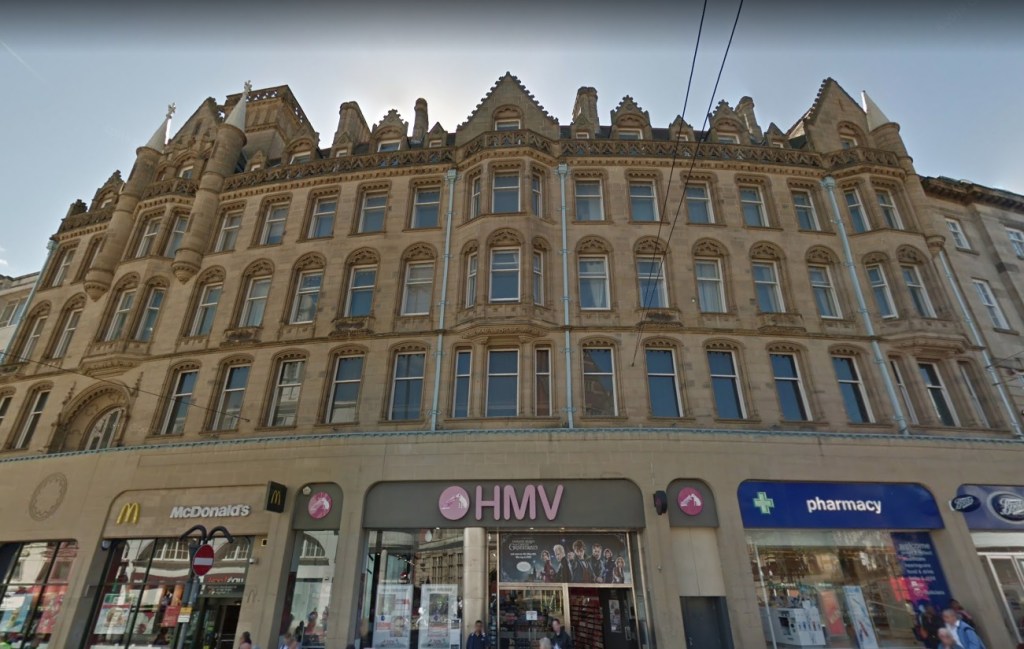
The next time you are able walk into McDonalds or HMV, on High Street, be aware that you are walking into history. Before you go inside, take a moment and look above, and you will find that these popular ground floor premises are part of an elaborate building.

This is the Foster’s Building, built in French domestic Gothic style by Sheffield architects Flockton and Gibbs in 1896.

The origin of the Foster’s Building goes back to the Anglo-French Wars of the sixteenth century, and the entrepreneurship of William Foster, draper, tailor and outfitter, who opened a shop on High Street in 1769.

At the time that William Foster opened his business, High Street was a narrow thoroughfare, described by some as resembling a village street.

When peace was concluded with France, the British Government advertised for sale a vast stock of old uniforms and equipment, which had been given up by troops on disbandment.

William Foster took a coach to London and bought up large quantities of soldiers’ jackets and belts. These were brought to Sheffield and stacked in large crates and baskets outside his shop.

It was said that there was hardly a grinder or cabman in Sheffield who did not buy one of the jackets, not particularly concerned about appearance, but appreciating something cheap.

Being extremely durable they were suited to both trades, and a credible record suggests that the old workshops looked as though a regiment of soldiers was at work, for every grinding wheel had a red-jacketed attendant.

The army belts were of excellent leather, so the record runs, and were largely used by craftsmen for buffing and similar purposes.

Foster was afflicted with an obscure disease, the chief symptom of which was that he frequently fell asleep.

“Mr Foster fell asleep while seated on the hampers of soldiers’ clothes. These used to stand on the edge of the pavement, and there Mr Foster sold the contents, so long as he could keep awake,” said an old humourist.

According to George Leighton in Reminiscences of Old Sheffield (1876) there were other amusing consequences of Foster’s illness.

“I went once to him, as a boy, to be measured for a jacket. Standing behind him, he made me hold my arm horizontally, with the elbow bent, and I thought he seemed a very long time in measuring it. A person on the other side of the street, at York Street corner, was watching the operation, and, seeing him laughing, I looked round, and found that the old man had fallen fast asleep.”

William Foster made a huge sum of money from the transaction and left his family very wealthy.

He was succeeded by his son, also William, who subsequently went into partnership with his own son, George Harvey Foster, in 1860, and renamed the business William Foster and Son, operating at 12-14 High Street.

It soon became necessary to enlarge the premises, and for this purpose, they acquired an adjoining public house, the Spread Eagle, and incorporated it into the original building.

And so, we come to the building that we see today.

When Sheffield grew in prosperity during the late 1800s, the council considered various schemes to improve the condition of its streets. The High Street improvement scheme finally concluded in 1895, resulting in one of the city’s biggest redevelopment projects, and doubling the width of the street.

However, to allow the road widening it meant the demolition of the old properties on the south side of High Street, including buildings owned by William Foster and Son.

George Harvey Foster sold 400 yards of freehold land in High Street for £34,000 in 1893. He took £24,000 in cash for the site of the tailor’s shop, and £10,000 for adjoining land that he owned, and needed by Sheffield Corporation.

Foster died in 1894, his will confirming that he had sold the frontage of the High Street property to Sheffield Corporation for road widening, and empowering his trustees to rebuild and rearrange replacement premises.

In 1895, the first plans for the new building were issued by the architects, Flockton and Gibbs, and convinced the public that this was an “ornament to the widened street.”

The chief architect for the building was Edward Mitchel Gibbs with construction work starting in 1895, undertaken by George Longden and Son, with ironwork supplied by Carter Brothers (surprisingly based in Rochdale).

The building stood on a new street line, set back about forty feet, that allowed existing shops to continue trading during construction, and be demolished afterwards.

When the Foster’s Building was completed in late 1896, it accommodated previous tenants from the old site , Foster and Son being the principal tenant, with other shops for J. Harrison, hosier, C. Tinker, boot and shoe manufacturer, E. Brown, goldsmith and Mr W. Lewis, tobacconist.

Foster and Son had two entrances, with four large windows. Their frontage was 86 feet long and 100 feet in depth and came with a large back yard, and within, contained all three of their departments – ready-made clothes, children’s and bespoke tailoring.

A balcony extended across the top of the building, while Gibbs set back the main wall of the frontage about two feet, so that the supports would not interfere with ground floor window space, and was described as being a “huge showcase”.

The Foster’s Building, on a slightly sloping site, was built in a curved line, leading towards the bottom of Fargate.

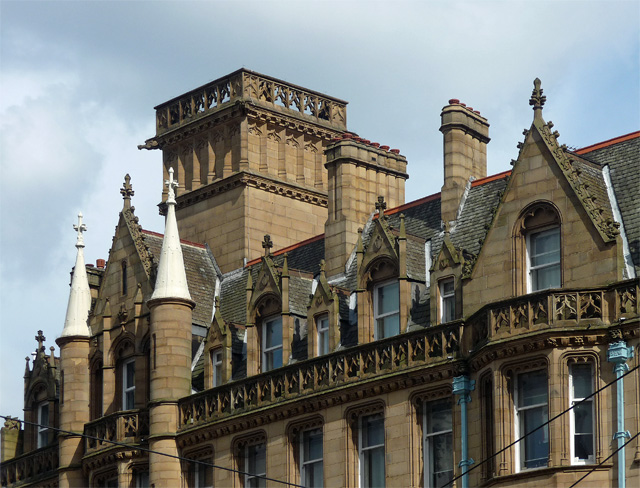
The front of the showrooms, above the shops, was ornamented with light wooden tracery, and the upper parts of the building (four floors) was of Huddersfield sandstone, richly moulded, and with a steep-pitched slate roof. It was relieved by oriel windows, ornamental gables and turrets, and dormer windows.

The whole of the upper floors was utilised as rented offices, varying in size, approached by a staircase, ten feet wide, leading from High Street, and by a passenger elevator (see note at end). Each office was fitted with “electric wiring, gas tubing and all modern conveniences.”

The corridors on each floor were eight feet wide, with mosaic-tiled floors and tiled walls up to the height of the door heads,  These were well lit by windows placed at the end of each corridor, and also borrowed light from the offices.

The office entrance was marked by a lofty arch, with oriel windows over it, surmounted by a gable, with turrets, and crowned with an ornamental tower, which was to have been the water tank for the elevator, had not “technology” quickly intervened.

Foster and Son remained in the High Street until 1931, by which time they had been here for over 160 years. It was the oldest tailoring firm in the city, with other premises at Waingate and Castle Hill, and had been run by the widow of William Joseph Foster, great-grandson of its founder, since 1905.

Foster and Son consolidated trade at its other shops, and while war had been instrumental in its initial success, it effectively led to its demise after the Waingate branch was destroyed during the Sheffield Blitz.

The Foster’s Building eventually succumbed to other retailers at street level and, for a time, was known as Norwich Union Buildings. It was refurbished during the late twentieth century, presumably with much period detail lost, and before it was Grade II-listed by English Heritage (now Historic England) in 1989.

NOTE: –
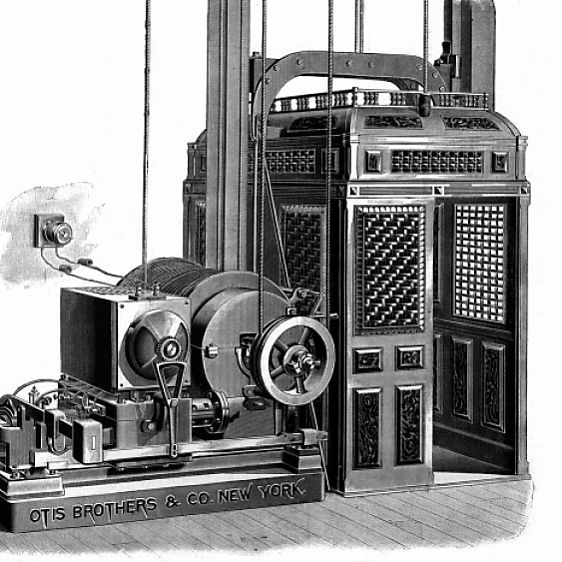
The Foster’s Building had the first American Elevator in Sheffield, built by the Otis Elevator Company, founded in Yonkers, New York in 1853 by Elisha Otis.

In 1890, Otis had entered the British market under the name of the American Elevator Company. Between 1870 and 1900, there had been a transition between hydraulic lifts to electric-powered elevators.

The Otis company advertised its new generation of elevators with the consideration that such an installation was no longer a complicated matter, and well-suited to places which could not have had one before.

The Foster’s Building had intended to have a hydraulic lift and Gibbs’ design included a small water tower on the roof for its elevator. After it was decided to install an electric-powered lift the tower remained, but instead used as a motor room for the American Elevator.

In 1897, a newspaper advertisement for potential occupiers of its offices described the lift as being able to “accomplish the journey from ground floor to fourth floor in THREE seconds.” Unlikely, even today.

Categories
Places

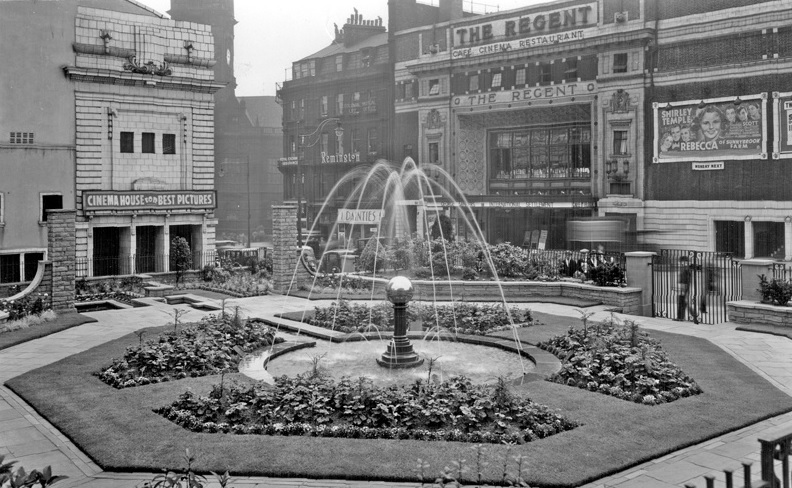
Barker’s Pool Garden

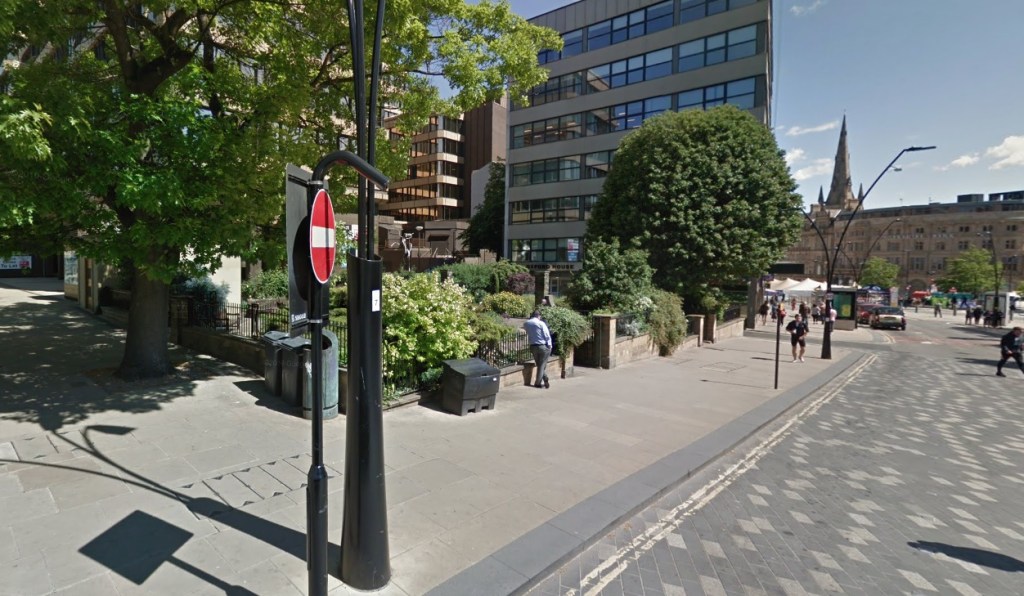
Photograph by Google

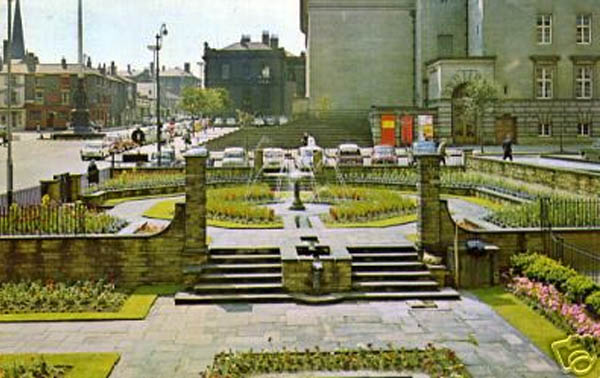
It is the “garden at the heart of the city”, and yet, the small plot at the corner of Barker’s Pool and Balm Green has never officially been named. It has been here since 1937, but these days most folk barely give it the time of day.

Barker’s Pool Garden, Balm Green Garden and Fountain Square are three of the names that have been attributed to it. However, when J.G. Graves, to whom Sheffield owes so much, attended the opening in 1937, he thought it unnecessary to give a name to the garden, but he had in mind its proximity to the City War Memorial.

“It will, I hope, provide a note of quiet sympathy which will be in harmony with the feelings of those who visit the War Memorial in the spirit of a visit to a sacred place.”

Photograph by Picture Sheffield

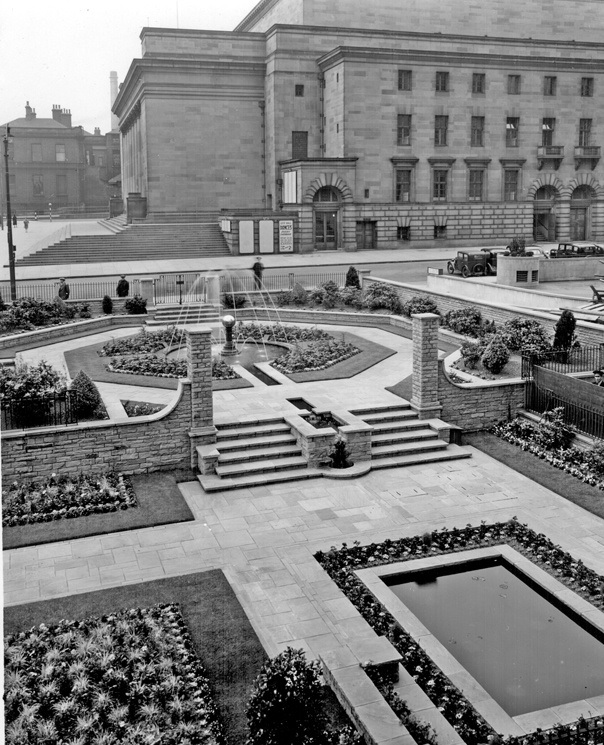
This garden, 400 square yards in size, would never have been created had it not been for the opening of the City Hall in 1932.

The land was owned by the adjacent Grand Hotel, the plot used as a car-park enclosed with advertising hoardings. But to J.G. Graves, it was an “eyesore”, obstructing the view of the splendid new City Hall from the Town Hall and the top of Fargate.

His solution was to negotiate the purchase of the land from the hotel. He paid £25 a square yard and outlined his plans in a letter to the Lord Mayor, Councillor Mrs A.E. Longden: –

“When planning the new City Hall, the architect, in order to give due importance and dignity to the elevation, placed the front of the building at some distance from the existing building line.

“This, of course, enhanced the architectural appearance of the Hall, but has had the incidental result of obstructing a view of the Hall from Fargate and the Town Hall corner, as is partially done now by the hoarding which surrounds the intervening plot of vacant land, and if in due course a tall building should be erected on the plot referred to, the possibility of a view of the City Hall from Fargate and the Town Hall would be completely lost.

“I feel it would be a misfortune if, through lack of action at the present time, building developments should proceed which would permanently deprive the city of an impressive architectural and street view at its very centre.

“With this in mind, I have arranged to buy the plot of land in question at its present day market value, with the intention of establishing thereon a formal garden, already designed by an eminent firm expert in this class of work.

“With this explanation I have the pleasure of offering the piece of land as a gift to the city, together with the garden which I propose to have established thereon at my own expense, and with the condition that the garden shall be maintained by the Corporation in as good a state as it will be when it is handed over on completion of the work.”

Photograph by Picture Sheffield

The gift was a personal one, not connected with the Graves Trust, and duly accepted by Sheffield Corporation.

In 1937, the Grand Hotel announced proposals for extensive alterations and to place their principal entrance on Balm Green. The whole of the corner was now thrown open and the new garden would later adjoin the forecourt to the Grand’s main entrance, running from Barker’s Pool to the building line of the hotel.

Photograph by Picture Sheffield

To complete the scheme the Grand Hotel management decided to reface the whole of the side of the hotel with a material approximate to the colour of the stone of the City Hall.

Photograph by Hazel Hickman

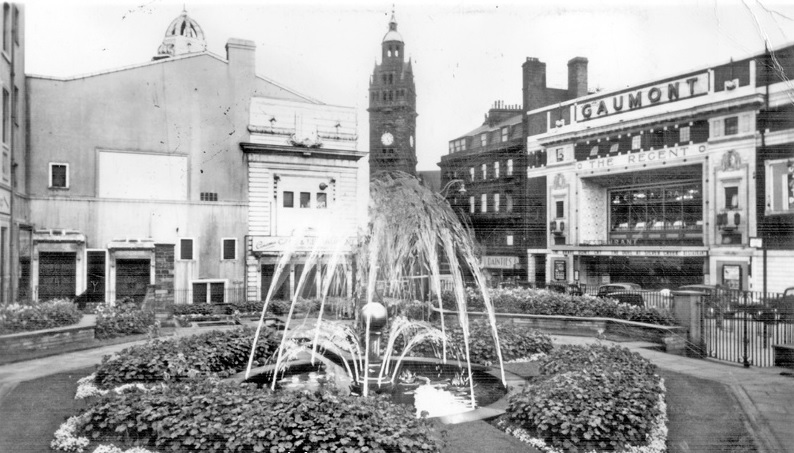
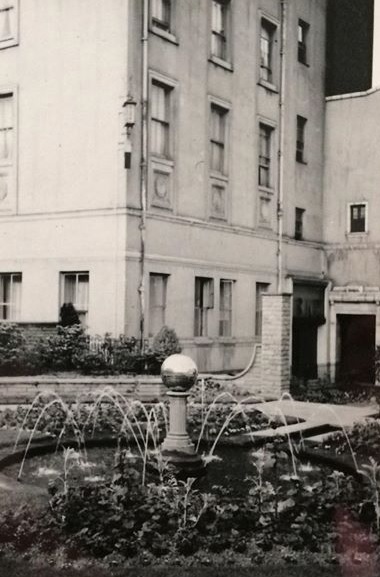
The garden had been laid out by “a famous firm of garden landscapers,” railed off from the footpath, with a border of shrubs, crazy paving, a fountain, and a water runway to a lily pond, and various flower beds.

Photograph by Picture Sheffield

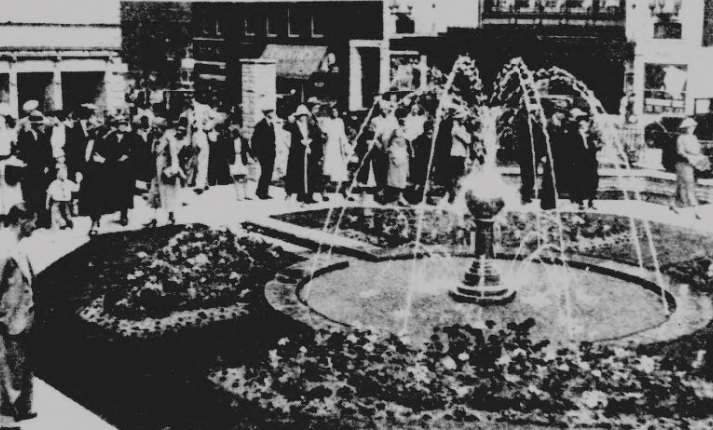
A huge crowd gathered for the official opening on August 3, 1937.

“We shall always be proud of this garden, because it is not only a gift for all time,” said the Lord Mayor. “I hope the garden will become a real garden of remembrance for the future generation, who could thank the beauty of mind and heart which prompted the gift.”

Of course, two years later, Britain went to war with Germany again, the symbolism of the garden perhaps lost on the despairing public. However, the garden has remained, although J.G. Graves’ conditions seem to have been forgotten by subsequent councils.

Photograph of the opening by The British Newspaper Archive

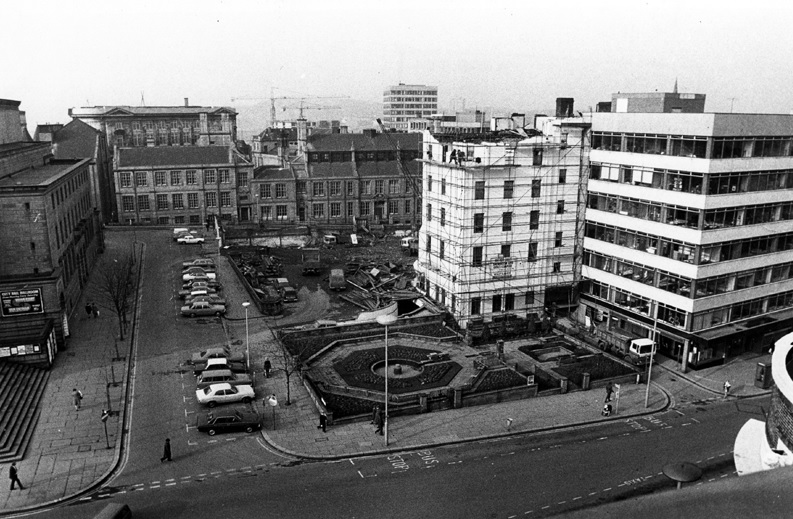
The fountain was eventually removed, the condition of the gardens fluctuating between mini-restorations, but its current state is a pale shadow of its original glory.

We might do well to remember the terms of J.G. Graves’ gift, although progress often comes into conflict with the past.

In 2019, initial plans were announced by Changing Sheffield action group (formerly Sheffield City Centre Residents Action Group) to create a unique space featuring ten large musical instruments and mini-trampolines, although the status of the application is unknown.

Photograph by Sheffield History

Categories
Buildings

Yorkshire Bank

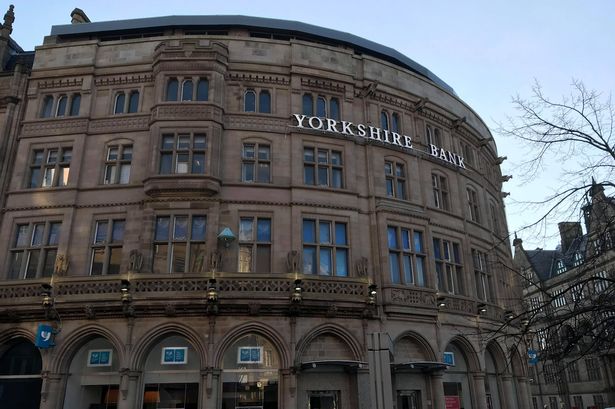
Photograph by Yorkshire Live

Every dark cloud has a silver lining and all that.

Virgin Money has halted plans to merge with Clydesdale and Yorkshire Bank due to coronavirus.

Some 52 branches were due to close – including the landmark Yorkshire Bank on Fargate in Sheffield city centre – under plans to rebrand the business to Virgin Money by October. Some 500 full time equivalent jobs were due to be axed.

Yorkshire Bank on Fargate stands opposite a Virgin Money Lounge. The bank was due to close in August under plans to ‘consolidate’ branches within half-a-mile of another by closing one.

Under the plans, Yorkshire Bank branches in Chapeltown and Wombwell, Barnsley, were due to close.

Clydesdale and Yorkshire Bank paid £1.7billion for Virgin Money in 2018. The deal completed in October last year and plans were announced to rename all branches nationally Virgin Money, which was deemed the stronger brand.

Yorkshire Bank, which traces its roots back to 1859, was set to disappear.
The Yorkshire Penny Bank (later Yorkshire Bank) has stood on the site since the corner stones were laid in 1888 by builders Armitage and Hodgson and completed in the summer of 1889. It was designed by Leeds-based architects Henry Perkin and George Bertram Bulmer.

The Albany Hotel once occupied floors above the bank.

Categories
Buildings People

Walter Gerard Buck

This influential character is relatively unknown in Sheffield’s history. A modest person, he was responsible for one of the city’s iconic landmarks.

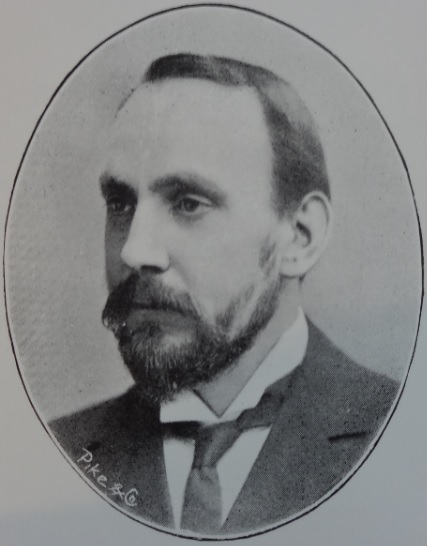
Walter Gerard Buck (1863-1934) was born in Beccles, Suffolk, the youngest son of Edward Buck. He was educated at the Albert Memorial College in Framlingham, and acquired an interest in architecture, joining the practice of Arthur Pells, a reputable Suffolk architect and surveyor, where he learned the techniques to design and build.

Walter Gerard Buck, architect and surveyor (1863-1934)

Walter, aged 21, realised there were limitations to this rural outpost and would need to improve his talent elsewhere. This opportunity arose in Manchester, the seat of the industrial revolution, where demand for new commercial buildings was great. It was here where he gained several years’ experience in large civil engineering and architectural works, including the building of the Exchange Station, Manchester, as well as the Exchange Station and Hotel in Liverpool.

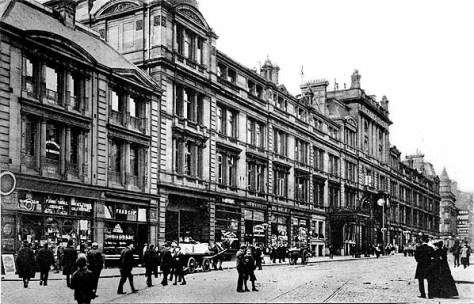
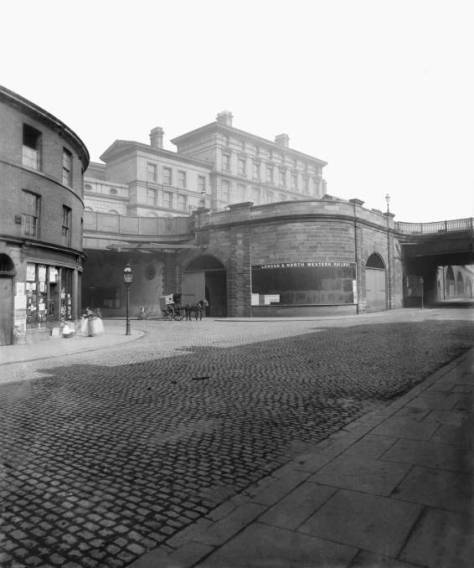
Liverpool Exchange Street Station and Hotel. The frontage remains and in the 1980s was incorporated into the Mercury Court office development. It has recently been converted into 21st century office space called ‘Exchange Station’. (Image: Alan Young)
Manchester Exchange Station was a railway station located in Salford, immediately to the north of Manchester city centre. It served the city between 1884 and 1969. The station was closed on 5 May 1969. (Image: National Railway Museum)

In 1890, his reputation growing, Walter made the move over the Pennines and into the practice of Mr Thomas Henry Jenkinson at 4 East Parade.

Jenkinson had been an architect in Sheffield for over forty years. He had been responsible for several buildings built in the city centre, taking advantage that Sheffield had been one of the last among the big towns to take in hand the improvement of its streets and their architecture.

Buck’s move to Sheffield proved advantageous. Jenkinson had become a partner at Frith Brothers and Jenkinson in 1862, which he continued until 1898, when he retired. He made Walter his chief assistant and allowed him to reorganise the business and control affairs for several years. During this period Walter carried out work on many commercial buildings and factories in Sheffield.

Initially, Walter boarded in lodgings at 307 Shoreham Street, close to the city centre. He married Louisa Moore Kittle in 1892 and, once his reputation had been established, was able to purchase his own house at 4 Ventnor Place in Nether Edge.

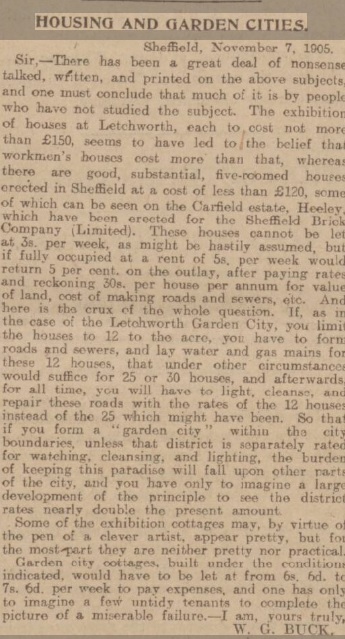
A letter from Walter to the Sheffield Daily Telegraph (8 Nov 1905)

Perhaps Walter Buck’s greatest work also proved to be his most short-lived.
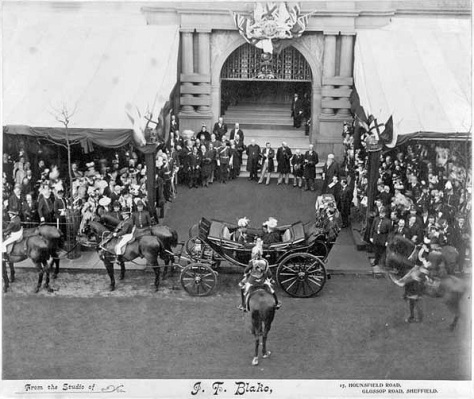
In May 1897, Queen Victoria made her last visit to Sheffield for the official opening of the Town Hall. It also coincided with the 60th year of her reign – Queen Victoria’s Diamond Jubilee Year.

The visit caused considerable excitement in Sheffield and preparations lasted for weeks. Shops and offices advertised rooms that commanded the best positions to see the Queen. Not surprisingly, these views were quickly occupied, but the closest view was promised in the Imperial Grandstand, specially designed for the occasion by Walter Gerard Buck.

Queen Victoria’s Diamond Jubilee visit to Sheffield in May 1897. The central interest was the newly-built Town Hall where ‘the gilded gates stood closed until her majesty touched the golden key and they flew open’.

This spectacle was built next to the newly-erected Town Hall, opposite Mappin and Webb, on Norfolk Street (in modern terms this would be where the Peace Gardens start at the bottom-end of Cheney Walk across towards Browns brasserie and bar). It was advertised as ‘absolutely the best and most convenient in the city’, with a frontage of nearly 200 feet and ‘beautifully roofed in’. The stand, decorated in an artistic manner by Piggott Brothers and Co, provided hundreds of seats, the first three rows being carpeted with back rests attached to the back. In addition, the stand provided a lavatory, refreshment stalls and even a left luggage office. It was from here that the people of Sheffield saw Queen Victoria as the Royal procession passed within a few feet of the stand along Norfolk Street to Charles Street.

The next day the Imperial Grandstand was dismantled.
The professional relationship between Walter Buck and Thomas Jenkinson matured into a close friendship.

When Jenkinson died in 1900, he left the business to Walter and made him one of his executors. His son, Edward Gerard Buck, eventually joined the business which became known as Buck, Lusby and Buck, moving to larger premises at 34 Campo Lane.

In 1906, Walter was elected to the Council of the Sheffield, South Yorkshire and District Society of Architects and Surveyors and was elected President in 1930. He was also a Fellow of the Royal Institute of British Architects (RIBA) and a member of the council of that body.

Walter also became a member of the council of the Sheffield Chamber of Commerce, a member of the Court of Governors of Sheffield University, a member and director of the Sheffield Athenaeum Club, a member of the Nether Edge Proprietary Bowling Club and vice-president of the Sheffield Rifle Club. It was this last role that he enjoyed best. Walter was a keen swimmer but his passion for rifle shooting kept him busy outside of work.

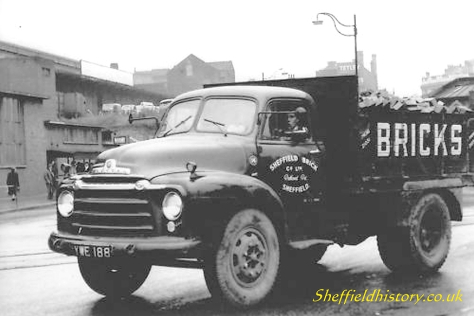
Apart from architectural work Walter held directorships with the Hepworth Iron Company and the Sheffield Brick Company. These astute positions allowed him to negotiate the best prices for the building materials needed to complete his projects.

A familiar site on Sheffield’s streets. The Sheffield Brick Company had brickyards situated at Neepsend, Grimesthorpe, Wincobank and Wadsley Bridge. Materials were used in many of the city’s buildings including Sheffield University, the Grand Hotel and the Town Hall. (Image: Sheffield History)

However, as the new century dawned, it was a role outside of architecture that occupied Walter’s time.

In 1892 the French Lumière brothers had devised an early motion-picture camera and projector called the Cinématographe. Their first show came to London in 1896 but the first moving pictures developed on celluloid film were made in Hyde Park in 1889 by William Friese Greene. The ‘new’ technology of silent movies exploded over the next few years and by 1906 the first ‘electric theatres’ had started to open. In London, there were six new cinemas, increasing to 133 by 1909.

Not surprisingly, this new sensation rippled across Britain and Sheffield was no exception. This had been pioneered by the Sheffield Photo Company, run by the Mottershaw family, who displayed films in local halls. They also pioneered the popular ‘chase’ genre in 1903 which proved significant for the British film industry. The Central Hall, in Norfolk Street, was effectively Sheffield’s first cinema opening in 1905, but the films were always supported with ‘tried and tested’ music hall acts. Several theatres started experimenting with silent movies, but it was the opening of the Sheffield Picture Palace in 1910, on Union Street, that caused the most excitement. This was the first purpose built cinema and others were looking on with interest.

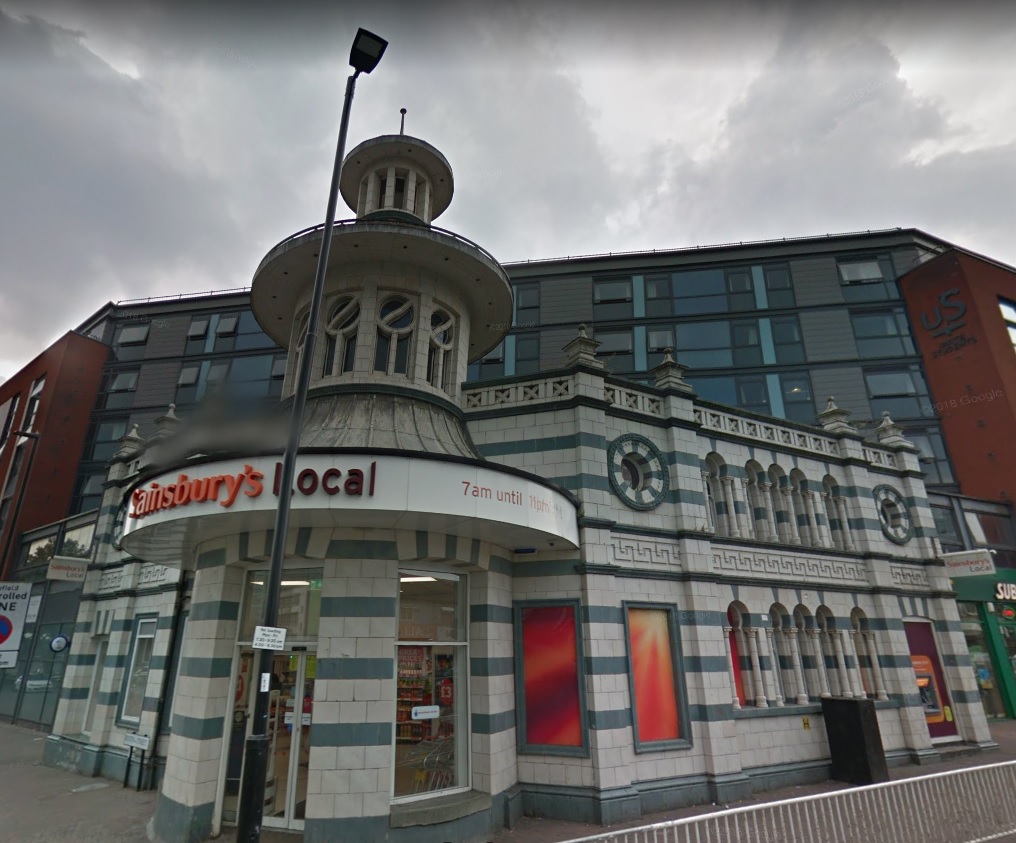
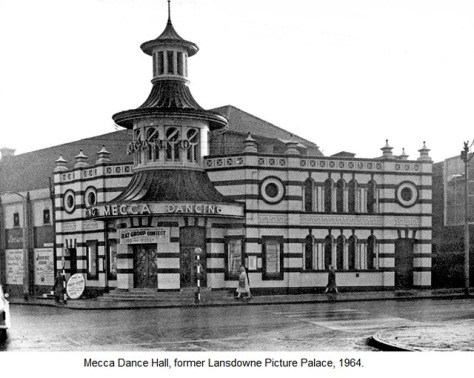
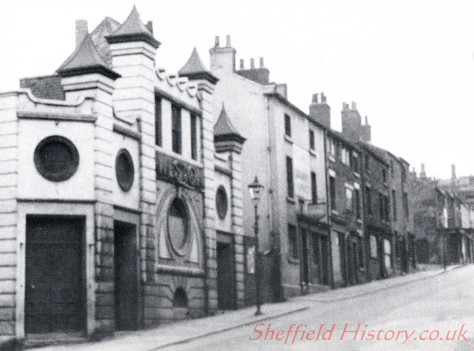
Walter Buck was one such person and saw the opportunity to increase business by designing these new purpose-built cinemas. One of his first commissions was for Lansdowne Pictures Ltd who had secured land on the corner of London Road and Boston Street. The Lansdowne Picture Palace opened in December 1914, built of brick with a marble terracotta façade in white and green, with a Chinese pagoda style entrance. It was a vast building seating 1,250 people. In the same year he designed the Western Picture Palace at Upperthorpe for the Western Picture Palace Ltd.
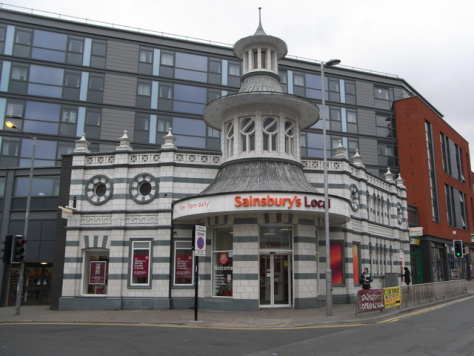
The Lansdowne Picture Palace was designed by architect Walter Gerard Buck of Campo Lane, Sheffield. It stands at the junction of London Road and Boston Street and opened on 18th December 1914.  In 1947 the cinema became a temporary store for Marks & Spencers. In the 1950’s it became a Mecca Dance Hall called the ‘Locarno’ later changing into ‘Tiffany’s Night Club’. It had several more reincarnations as a night club with different names and the frontage was painted black, its last name being ‘Bed’. (Image: Cinema Treasures)
The Weston Picture Palace, designed by Walter Gerard Buck in 1913-14. The cinema was on St Phillip’s Road and Mitchell Street and was demolished. (Image: Sheffield History)

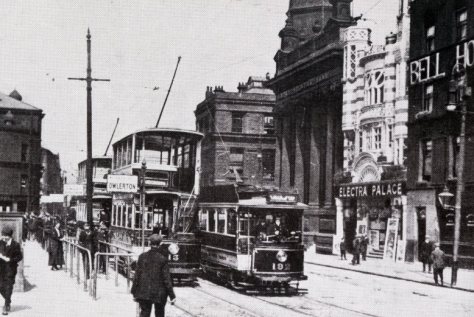
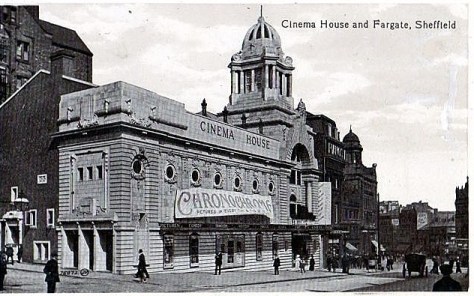
With the knowledge required to build cinemas it was unsurprising that Walter Buck was asked to join several companies as a director. One of these was Sheffield and District Cinematograph Theatres Ltd which was formed in 1910 for ‘the purpose of erecting and equipping in the busiest and most thickly populated parts of the City of Sheffield and district picture theatres on up-to-date lines’. Its first cinema was the Electra Palace Theatre in Fitzalan Square with a seating capacity upwards of 700 with daily continuous shows. Their second cinema was the Cinema House built adjoining the Grand Hotel and adjacent to Beethoven House (belonging to A Wilson & Peck and Co) on Fargate, this part later becoming Barker’s Pool. This was a much grander cinema with a seating capacity of 1,000 together with luxuriously furnished lounge and refreshment, writing and club rooms.

Ironically, Walter Buck did not design either of these picture houses. Instead, they were conceived by John Harry Hickton and Harry E. Farmer from Birmingham and Walsall, but the bricks were supplied by the Sheffield Brick Company, that lucrative business where Walter was a director. It should not go unnoticed that this highly profitable company probably made Walter a wealthy man. It had already supplied bricks for the Grand Hotel, Sheffield University and the Town Hall.

Opened as the Electra Palace on 10th February 1911. It was designed by J.H. Hickton & Harry E. Farmer of Birmingham & Walsall. Constructed by George Longden & Son Ltd. (who built several Sheffield cinemas), the proprietors being Sheffield & District Cinematograph Theatres Ltd. (Image: Sheffield History)
Opened in 1913, the Cinema House seated 800 and was one of the smaller city centre cinemas. Boasting a tea room, it had a narrow auditorium and patrons entered from the screen end of the hall. Being narrow, it’s Cinemascope image size was severely restricted. It closed in 1961 and was subsequently demolished. (Image: Cinema Treasures)

The cinema undertaking was not without risk and Cinema House, which opened six months before the start of World War One, always struggled to break even.

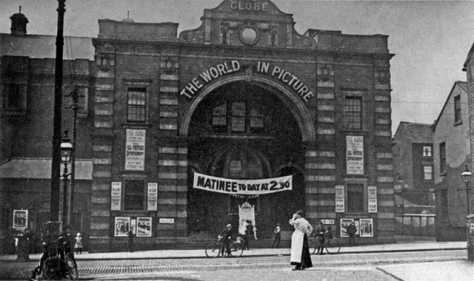
In 1920, far from building new cinemas right across the city, the company bought the Globe Picture House at Attercliffe. The following year they reported losses of £7,000 with Cinema House blamed for the poor performance.

At this stage, it is unclear as to what involvement Walter Buck had with Sheffield and District Cinematograph Theatres. He was also a director of Sunbeam Pictures Ltd, designing the Sunbeam Picture House at Fir Vale in 1922, and the Don Picture Palace at West Bar. He was most certainly a director of the Sheffield and District Cinematograph Company  by the late 1920s, and eventually became its chairman. In 1930, absurdly on hindsight, he was faced with a public backlash as the company made the transfer over to ‘talkie’ pictures.

“It was true that some people preferred the silent pictures, but the difficulty was that the Americans were producing very few silent films, or the directors might probably have kept some of the houses on silent films to see if they could hold their own with the talkie halls.”

Located on Attercliffe Common at the junction with Fell Road. The Globe Picture Hall was a venture of the Sheffield Picture Palace Co. Ltd. It opened on 10th February 1913 and was, at that time, one of the largest cinemas in Sheffield. The architects were Benton & Roberts. The owning company reformed on 21st March 1914 as the Sheffield & District Cinematograph Theatres Ltd. and remained owners until closure on 29th June 1959. (Image: Cinema Treasures)
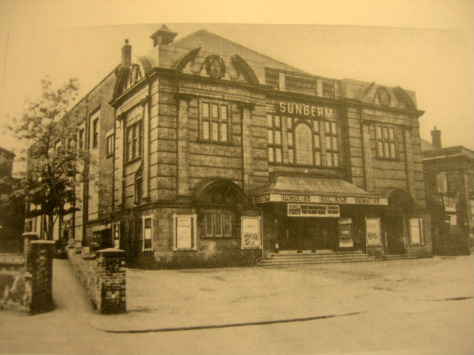
The Sunbeam Picture House was built on Barnsley Road at the junction of Skinnerthorpe Road in the Fir Vale district of Sheffield. The Sunbeam Picture House opened on Saturday 23rd December 1922. It was built set back from the road and was an imposing brick and stucco building, with a large embossed rising sun motif on the facade, set inside an ornamental parapet. A central entrance to the cinema was covered with a canopy. (Image: Sheffield History)
The Don Picture Palace opened on Monday 18th November 1912 with the films “Captain Starlight” and “Monarchs Of The Prairie”. The architect was Henry Patterson and it was situated in what was then one of the main entertainment areas of Sheffield with the old Grand Theatre of Varieties being close by. (Image: Sheffield History)

Walter Buck never retired but died at his home at 19, Montgomery Road, Nether Edge, aged 70, in September 1934. He left a widow, his second wife, Fanny Buck, and three sons – Edward Gerard Buck, William Gerard Buck, a poultry farmer, and Charles Gerard Buck, chartered accountant. Walter Gerard Buck was buried at Ecclesall Church.

It seems the only epitaph to Walter Buck is the Chinese pagoda style entrance of the Lansdowne Picture Palace. The auditorium was demolished to make way for student accommodation, but the frontage was retained for use as a Sainsbury’s ‘Local’ supermarket. Very little information exists about his other work in the city and further research is needed to determine which buildings he designed, and which remain. Any information would be most welcome.

All that remains of the former Lansdowne Picture Palace. The frontage and Chinese-style pagoda were retained for this Sainsbury’s Local supermarket, soon to become Budgens. (Image: Cinema Treasures)
Categories
Buildings

Yorkshire Bank

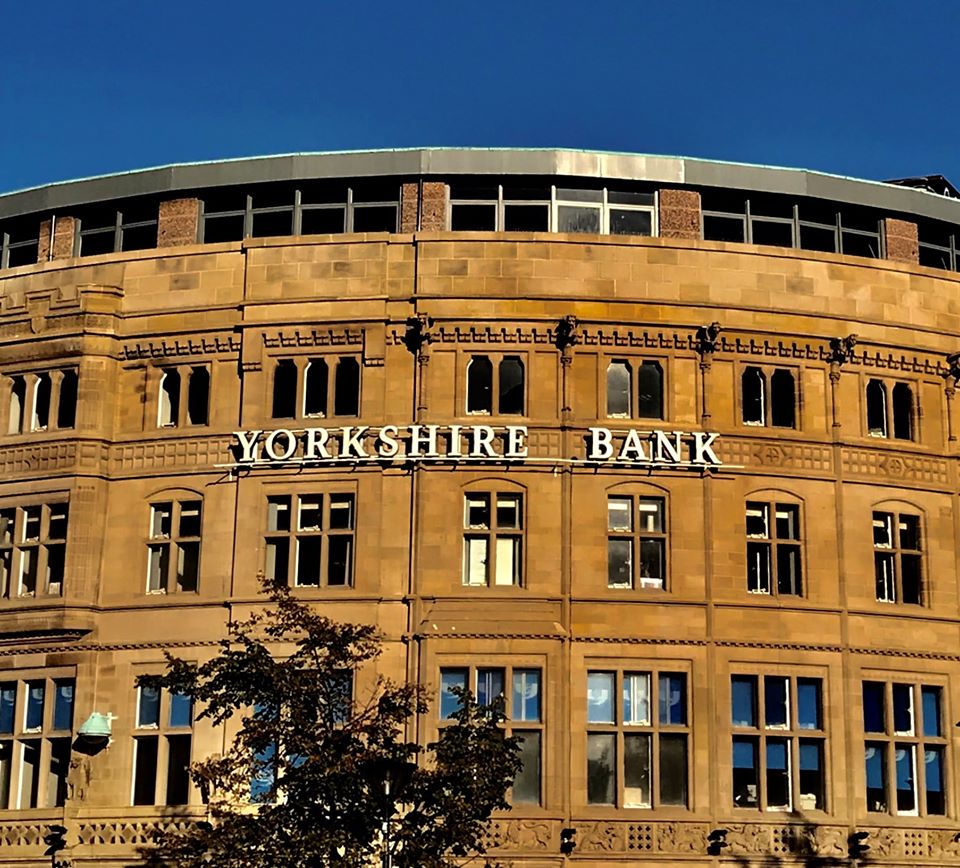
This is one of the most imposing buildings in Sheffield city centre. The Yorkshire Bank building, in late-Gothic design, with five-storeys and a long curved Holmfirth stone front, stands at the top of Fargate, nudging around the corner into Surrey Street.

With it comes a long history and a few surprises as to its former use.

In the 1880s, when a plot became available at the side of the Montgomery Hall on (New) Surrey Street, the directors of the Yorkshire Penny Savings Bank bought the land to erect a new bank.

It turned to Leeds-based architects Henry Perkin and George Bertram Bulmer who were asked to create a brilliant show of Victorian entrepreneurship.

The corner stones were laid on 18 January 1888 by builders Armitage and Hodgson of Leeds and was completed in the summer of 1889.

The Yorkshire Penny Savings Bank occupied two floors – at ground level was the large banking hall, fitted out in polished wainscot oak with a mosaic-tiled floor, the basement contained the strong-room.

Lord Lascelles, the president of the bank, officially opened it on 25 July 1889.

The remainder of the building was used as a restaurant and first-class hotel, leased by Sheffield Café Company, formed in 1877 as part of a growing movement of temperance houses throughout the country. No drink allowed here.

The Albany Hotel opened in September 1889 with electric light throughout, a restaurant, billiard room, coffee and smoking rooms, private dining rooms as well as 40 bedrooms above.

By the 1920s, the Sheffield Café Company, with multiple cafes and restaurants across the city, was struggling financially and ceased trading in 1922.

Their assets were bought by Sheffield Refreshment Houses, which operated the hotel until the 1950s.

With grander hotels nearby and with dated facilities the Albany Hotel closed in 1958.

The Yorkshire Penny Savings Bank became Yorkshire Bank in 1959 and the old hotel was converted into offices – known as Yorkshire Bank Chambers – after 1965.

The interiors have long altered but the external appearance remains much the same, with carved winged lions, medieval figures, shields and gargoyles on the outside of the building. Gabled dormers, lofty chimneys and a crenelated parapet were sacrificed during the 1960s.

Categories
Streets

Exchange Gateway

This is not the kind of street you might wander up after dark. Exchange Gateway, at the top of Fargate, is one of those forgotten parts of the city centre. Thousands pass its arched entrance every day, many of whom have never braved it up here. These days it acts as a service lane and fire escapes for properties backing onto Orchard Square and Fargate. Apart from its covered entrance there is little for the pedestrian to see. It is a dead end, and seemingly always has been, but its function has changed over the centuries.

At one time, this was a narrow street of multi-occupancy shops, houses, workshops and offices. A glance at an old directory shows that Exchange Gateway was home to small-scale tool manufacturers, cutlery producers, picture-framers and cabinet makers. This was also where the Sheffield Free Press newspaper was located, founded in 1850 – “a new impartial unsectarian journal” – but ending publication seven years later.

An 1867 newspaper tells us that “the buildings are old, four-storeys high of long range, and a considerable quantity of wood in their completion.” A fire had consumed the premises of Hobson and Wilson, brass-casters, and threatened to destroy the whole block. This was just one of many serious fires that occurred here, and no doubt contributed to its altered appearance.

For years, the street was unadopted by the council, its road surface out of character with the nearby thoroughfares. Its secluded location meant it was a haven for thieves, robbing people as they walked at night, and regularly breaking into properties. Its usefulness increased in the 1860s when the Cutler’s Hall, on Church Street, built a large extension at the rear, its approach being from Exchange Gateway.

The footprint of the street is virtually unaltered, but the greatest makeover was in the 1980s when Orchard Square shopping precinct was built, clearing old properties and replacing them with shops whose service doors lead out into Exchange Gateway. Nowadays the street is still out of sorts with its surroundings, a favourite for the homeless, drug-users and a sleeping place for the odd drunk.

Categories
Buildings

Davy’s Fargate

The next time you pop into WH Smith on Fargate, cast your eyes towards the third floor. High above you might just be able to make out the carved heads of a sheep, cow, pig and ox, all clues as to the former use for this building.

For generations, this has been WH Smith, but its history goes back to 1881-1882, designed by Sheffield architect John Dodsley Webster for Alfred Davy, provisions merchant. This was arguably the flagship store for Davy, renowned for his sausages, hams, potted meats and pork pies.

Alfred Davy (1838-1902) was the son of James Smith Davy, a well-known member of the Society of Friends, who had a shop in the fruit market, now Fitzalan Square. Educated at Ackworth, he opened a provisions shop on Castle Street about 1867, subsequently opening other shops at Broomhall and Rotherham High Street.

Davy was alert, enterprising and good-hearted. He was described as upright and straightforward in his trading, having a good word for everyone, and never taking advantage of humbler competitors.

Like many contemporaries, he was a Churchman, sometime warden of St. John’s Church at Ranmoor, and was largely responsible for the formation of the Sheffield branch for the Prevention of Cruelty to Children. His chief recreation was chess and became a prominent member of the Sheffield Athenaeum Club.

In the early 1880s, Davy found that the Castle Street branch had grown beyond all bounds, and there being no further room for expansion, found it necessary to secure additional accommodation.

His opportunity came when the west side of Fargate was being redeveloped as part of an improvement scheme. Alfred Davy bought Nos. 38 and 40, as well as premises at the rear, employing J.D. Webster to build his fourth shop.

We’ve seen before that the Victorians were shrewd businessmen when it came to property. Above the shop he asked Webster to create a suite of offices on the first and second floors, known as Exchange Chambers, suitable for renting, and accessed by a spacious Serpentine staircase. (In later years, the shop expanded upstairs, utilising the first floor as the Victoria Café).

When the store opened in December 1882 it was designated as one of the “ornaments of Fargate.” The business claimed to sell seven tons of sausages and poloney every week, inspiring Davy to place one of three Williams ‘Perfect Silent’ Meat Cutting Machines in the window. From here, customers were able to see the machine in action, capable of mincing and mixing 3cwt of meat each hour.

In the days before supermarkets, Davy’s was where all respectable citizens bought their food. He boasted selling 2-3 tons of Danish, Normandy and French butter every week, British and Continental cheeses, Wiltshire, Cumberland and Derbyshire bacon, as well as Irish, American and Canadian Hams. He was also a purveyor of tinned fish and meat, pure leaf lard and appears to have cornered the market with Scotch oatmeal.

A newspaper at the time raved that Davy had adopted electric lighting, then in its infancy, and installed by Tasker and Son. “The steadiness and brilliance of these little lamps in Mr Davy’s shop are like a new revelation, and show what rapid strides are being made in the application of electricity for illumination.”

In 1887, Alfred Davy opened a large factory in Paternoster Row, used to produce meat and baking products, and which later doubled-up as its Head Office.

Alfred Davy built a house called Hill Crest on Ranmoor Cliffe Road, originally called Upper Ranmoor Road, and it was here that he died of nerve paralysis in 1902.

His sons, Arthur Cedric Davy (died 1935) and Ernest Richard Davy (died 1951) took over running of the business and masterminded the company’s rapid expansion. By 1924, Davy’s had 16 shops and two cafes in Sheffield, but the business soon expanded across the north.

The Davy family sold the business to Associated British Foods in 1958, disposing of it completely in 1974, although some branches were retained as Sunblest shops.

Afterwards, the store was bought by WH Smith which has remained ever since. However, in recent years it temporarily relocated to allow for repairs on the old Victorian roof that had started to collapse. The store was refurbished and reopened earlier this year.

Categories
Streets

Pepper Alley

I bet most of you have never heard of the delightfully named Pepper Alley. This was once a thoroughfare passing from Fargate to Norfolk Street, quite close to the surviving Upper Chapel.

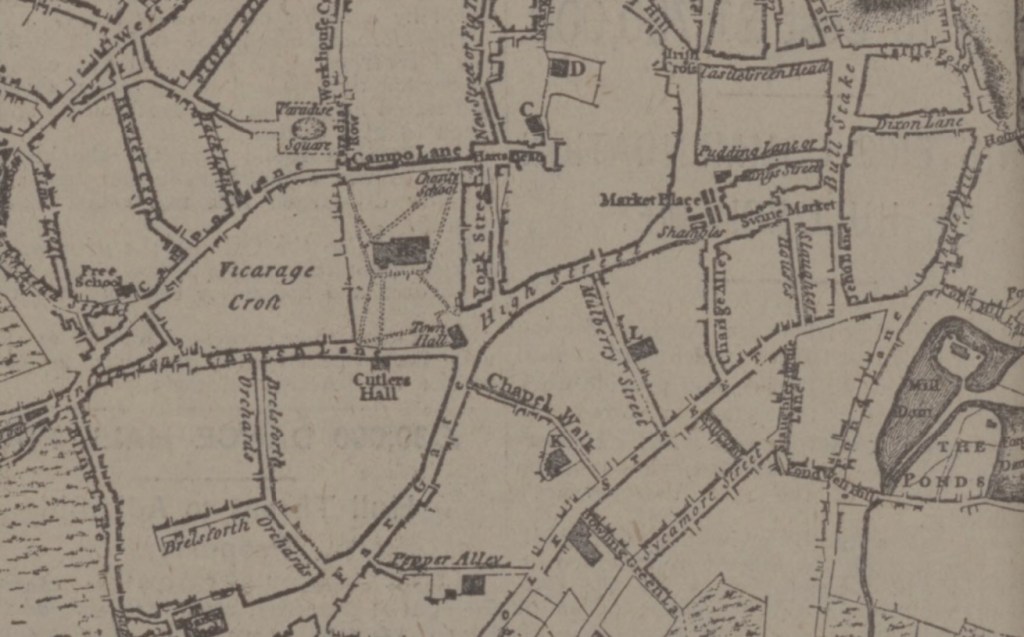
Its existence is shown on this map, taken from “A Correct Plan of the Town of Sheffield, in the County of York, drawn by William Fairbanks, 1771.”

You’ll notice that Norfolk Row, pictured, doesn’t appear on the map at all, only coming into existence about nine years later. However, Chapel Walk is shown.

A little bit of Pepper Alley (Pepper is a local surname) can still be seen today, leading into Upper Chapel Yard, behind the shops which form part of the former YMCA property, now named Carmel House, at the corner with Fargate.

If you study the map you’ll see that the Town Hall stood by the Church Gates (now the Cathedral), at the junction of High Street and Church Lane (now Church Street).

Other names to look for are Bullstake (now Haymarket), Pudding Lane (King Street), Castle Green Head (Castle Street), Irish Cross (Queen Street), and Pinstone Croft Lane (Pinstone Street)