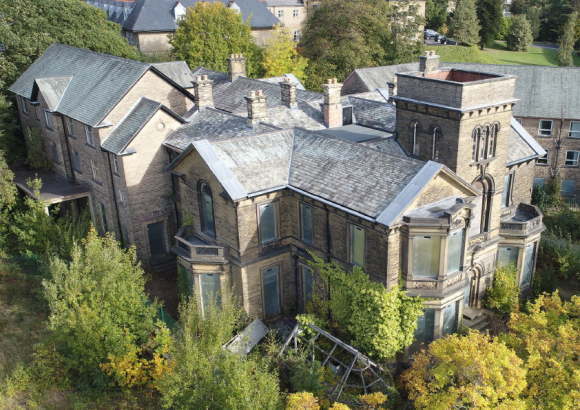
Some time ago, I wrote about Tapton Court, off Shore Lane, a big house that had fallen on hard times.
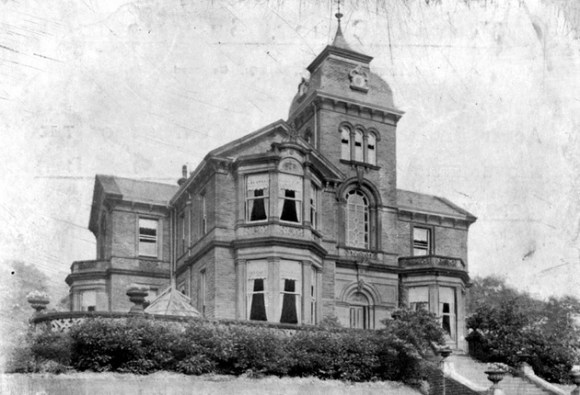
Tapton Court was built in 1868 as a residential villa before being converted into nurses’ accommodation in the 1930s. It was later taken over by the University of Sheffield and used as a hall of residence for student nurses.
Speaking at the opening of Tapton Court as a nurses’ home in 1934, J.G. Graves spoke of a Royal connection, seemingly forgotten today.
“Tapton Court is a historic house. It once belonged to Henry Steel, who was a friend of King Edward, and King Edward visited and probably stayed here.”
Those days of grandeur are long gone.
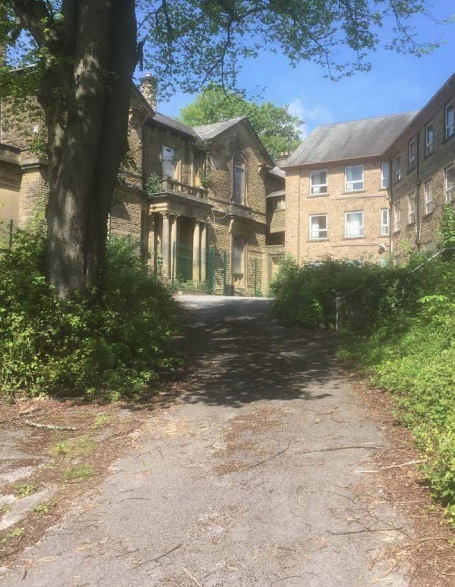
The approach to the Main House. (Image: PJ Livesey)
Today, Tapton Court lies empty, damaged by fire in 2010, and although the University of Sheffield carried out repairs, it is on Sheffield Council’s Buildings at Risk register and large sections of the site have been boarded up to prevent damage and vandalism.
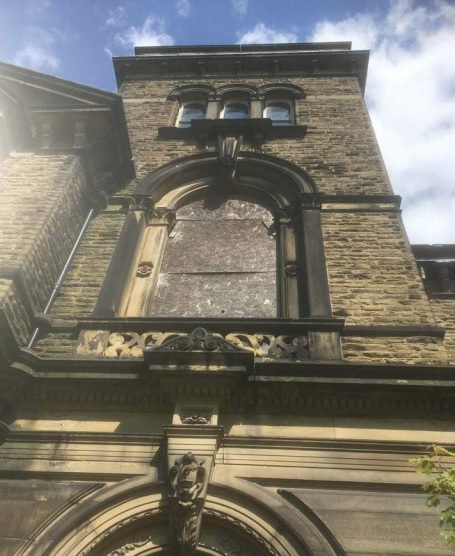
Main House tower and detail above southern entrance. (Image: PJ Livesey)
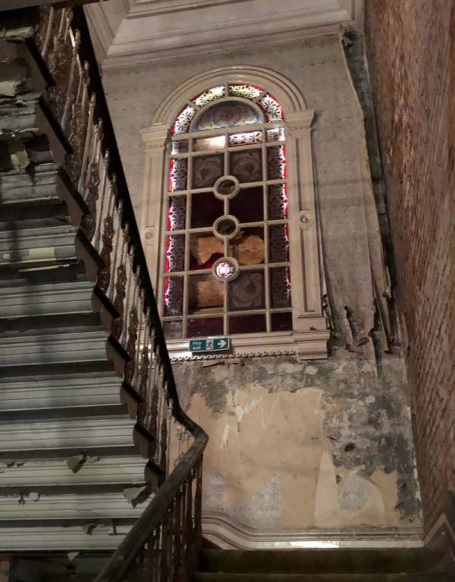
Main House feature window above the south entrance. (Image: PJ Livesey)
Now plans have been lodged for the redevelopment of the grade II-listed building to create new housing.
PJ Livesey Holdings, supported by Pegasus Group, has submitted full planning and listed building applications to Sheffield City Council for the change of use and conversion of the buildings for residential use.
The application site includes the main house and adjoining terrace wall and conservatory , as well as the Ranmoor House Annexe, former stables block and lodge building.
Tapton Court would be converted to create 14 apartments, with a further 18 in the Ranmoor House Annexe. The Stables and Lodge would be converted into individual residential units. Four new houses would also be built to the north-west of the main building.
Photograph of Tapton Court taken from the 1915 sales particulars. The house was built in 1868 for John Henry Andrew, a steel manufacturer. (Image: Picture Sheffield)
Admire this old building while you can… because its days are numbered.
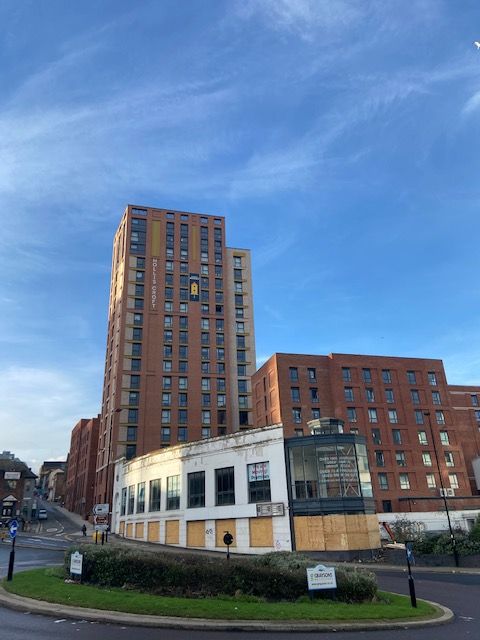
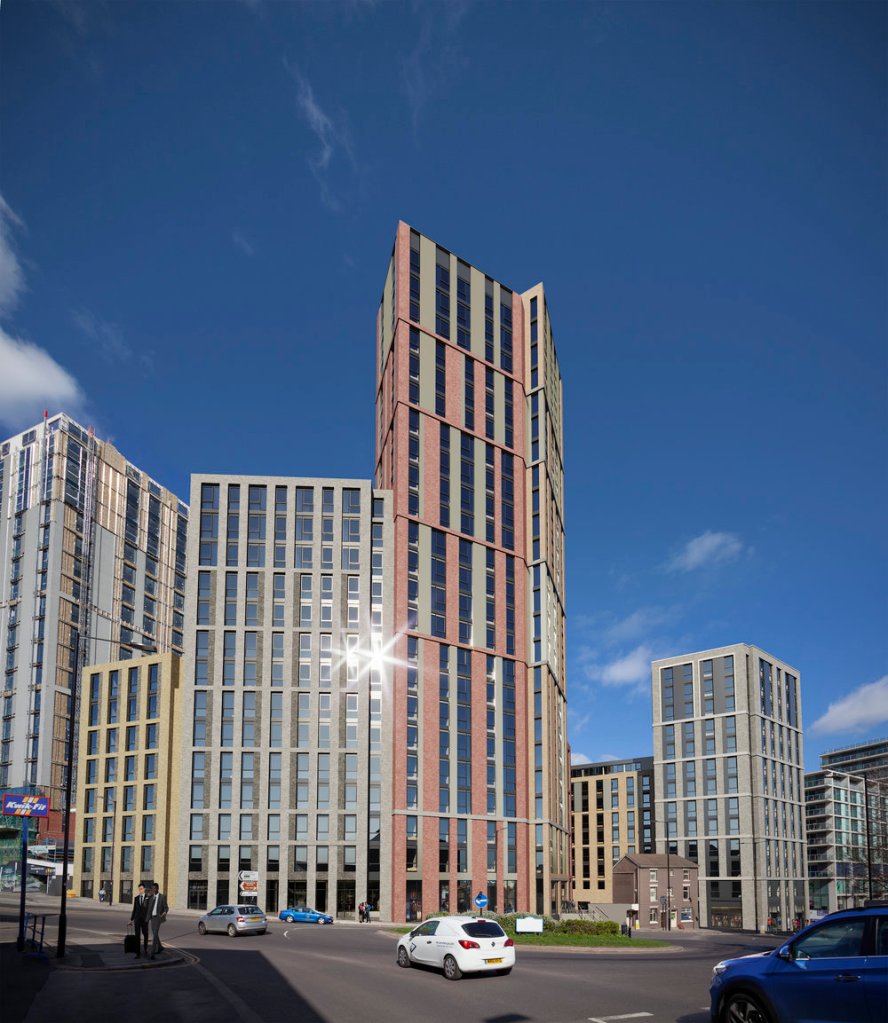
Down it will come, to be replaced with a 27-storey residential development that will provide accommodation for more than 500 students.
Niveda Realty has been granted planning permission for the Calico Sheffield development on the site bounded by Hollis Croft and Broad Lane in the city’s St Vincent’s Quarter.
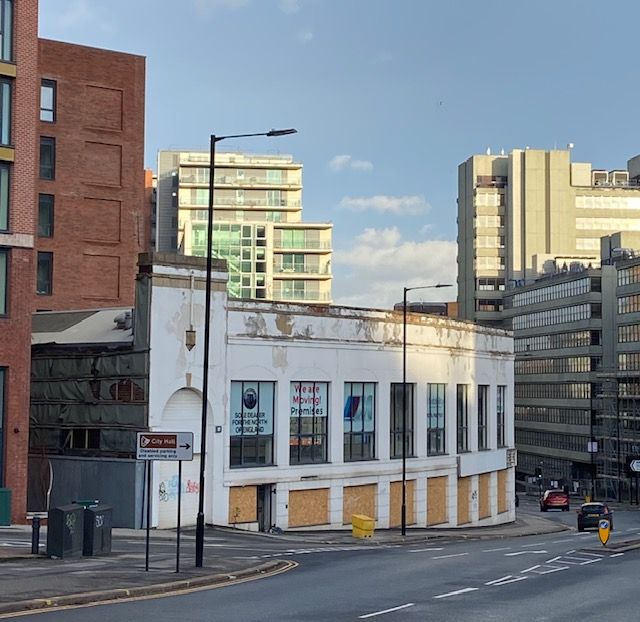
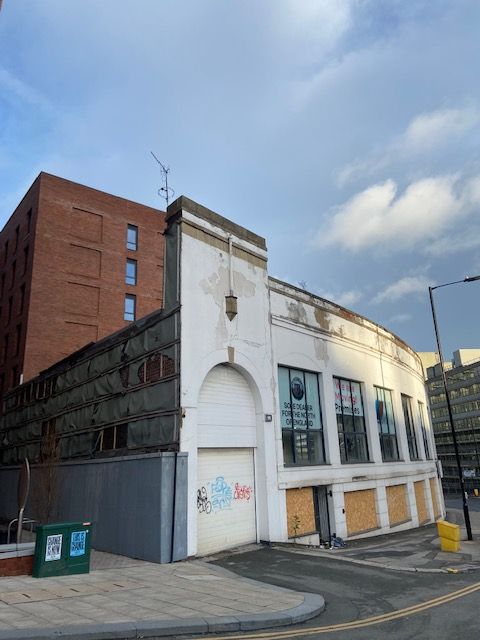
It will mean demolition for this 90-year-old building, originally constructed for the Hallamshire Tyre and Motor Company in 1930, and recently occupied by Sytner Sheffield.
The smell of oil, grease and petrol is a vague memory for the art-deco building, remarkable for the clever configuration of ground-floor windows that reduce in height with Broad Lane’s incline.
A familiar site for over 90 years (Image: David Poole)
This area was once considered a slum, with an outbreak of cholera in 1832 blamed on poor sanitation. This caused an exodus of the better-off and the area became the preserve of the working-class poor, with a large influx of Irish immigrants seeking work in the growing cutlery trade in the years following the potato famine.
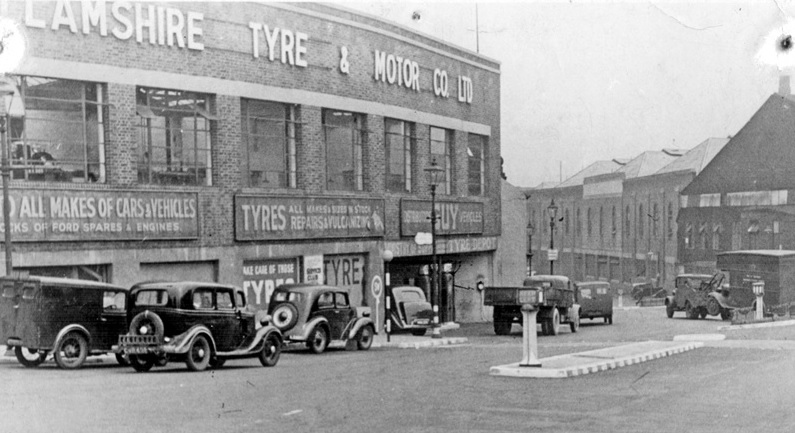
The site eventually became the Royal Oak public house, fronting Hollis Croft, with access to Court 2, Broad Lane, and a blacksmith. By 1928, they had been replaced with a large building for the Dunlop Rubber Company and shortly afterwards Nos. 2-4 Broad Lane were built alongside for the Hallamshire Tyre and Motor Company, tyre and tube repairers, petrol and oil dealers, motor-car, and electrical engineers.
It was owned and operated by Charles M. Walker, of Whirlowdale Road, and Maurice F. Parkes, of Hoober Road, who turned it into a limited company in 1932.
Hallamshire Tyre & Motor Co in 1939 (Image: Picture Sheffield)
The firm became the Hallamshire Motor Company, specialists in Standard, Triumph, Ford, and Vauxhall cars. It subsequently became an Austin-Rover dealer on a new site, on the opposite side of Hollis Croft, until the franchise was transferred to Kennings who built a showroom next door.
The Hallamshire Motor Company became the Sheffield dealer for BMW, modernising the old workshops to sell used cars, and in 1995 was acquired by Nottingham-based Sytner Group to become Sytner Sheffield.
Sytner transferred to purpose-built premises at Brightside Way in 2017 leaving the old site vacant for development.
Awaiting demolition. 2-4 Broad Lane. (Image: David Poole)
Had the building been anywhere else, it might have been suitable for use as an exhibition or art-space (reminiscent of the Kenning’s Building on Paternoster Row), but the area’s multiplying student accommodation meant the outcome was predictable.
The new development will replace the old garage. (Image: den architecture)
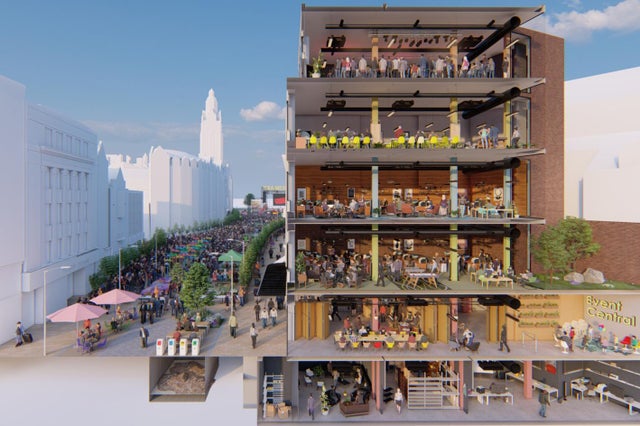
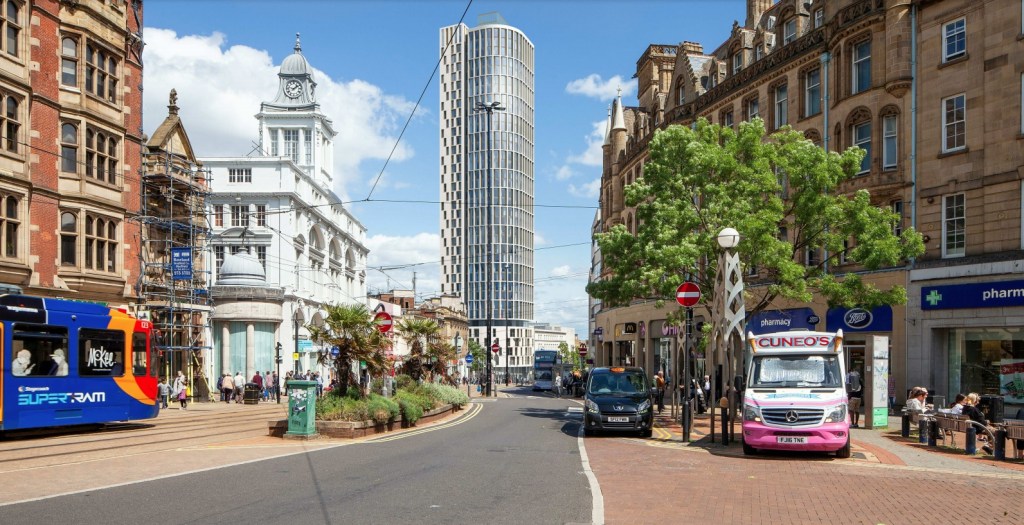
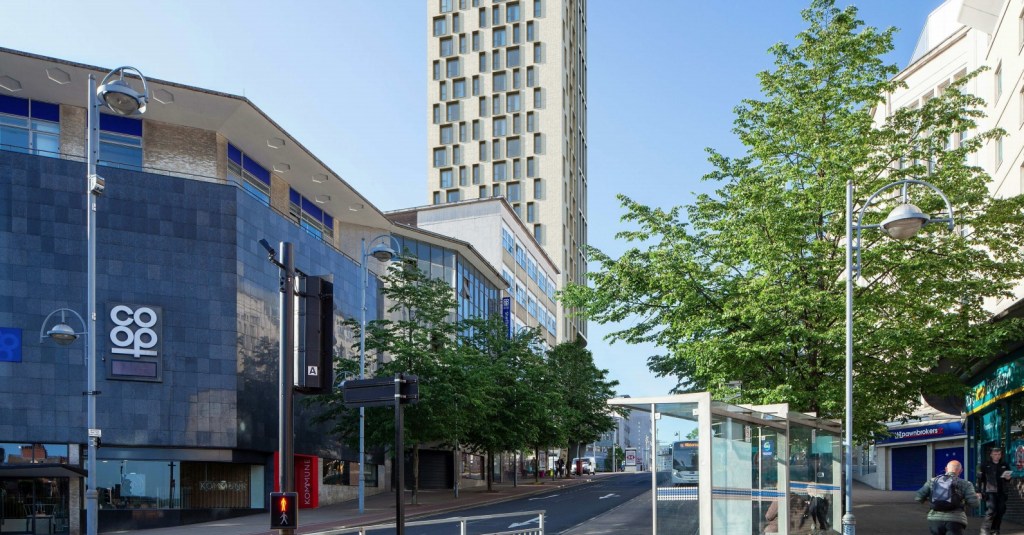
Looking up Fargate. An artist impression of the future.
Sheffield is one of 15 towns and cities to receive all the money they had bid for, in the Government’s Future High Streets Fund.
Sheffield will receive £15.8m in recognition of the ‘forward-thinking and innovative’ proposals to help progress plans to boost its reputation as an ‘Outdoor City’ with high quality public spaces for the community.
The historic streets of Fargate and High Street will become a high quality place to live, work, and socialise, in plans drawn up by Sheffield City Council and the University of Sheffield.
A radical programme of improvements and modern digital infrastructure will complement well-designed residential and workspace conversions, making the most of unused floorspace. Particular blocks will be redeveloped to increase density by adding height while opening up new green spaces and views.
This transformation will play a major role in completing plans for a ‘Steel Route’ through the city centre, turning a declining shopping area into a mixed-use link between the two distinct regeneration projects already underway in Heart of the City at one end and Castlegate at the other.
The funding has been awarded as part of the Government’s flagship £831 million Future High Streets Fund and will help areas to recover from the pandemic while also driving long term growth.
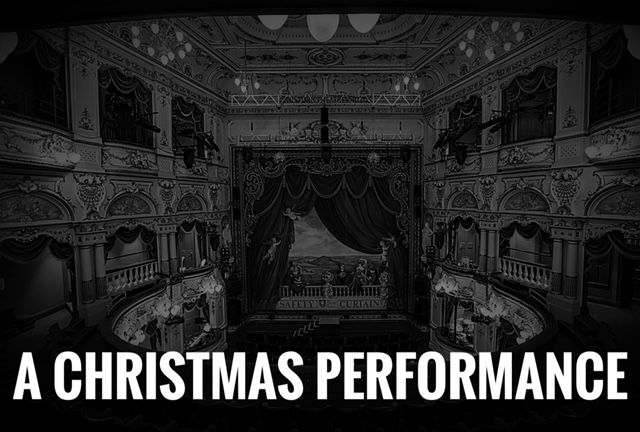
Every Christmas Eve, as the clock strikes midnight, a young boy materialises at the edge of the dark Lyceum Theatre stage. Ben, a lad of teenage years, glances into the auditorium to see if there is anybody he recognises. He runs barefoot into the centre of the stage, faces the audience, and takes a bow, the same as last year, and the year before that, and the same as he has done every year since 1893.
Ben is a good looking lad, with bright blue eyes, a mop of mousey hair, and the clothes of a horseman. He squints into the darkness and sees the shadows.
“Is that you Ben?” a woman’s voice calls from the circle.
He cups his eyes with his grubby right hand and looks upwards. His eyes adjust and he makes out his lady, standing in the same place as she did last Christmas Eve.
As always, the auditorium is soothed by pale light radiating from the old gas lamps.
And now, Ben can see her clearly.
The lady with beautiful hair, dazzling as ever, wearing the same long grey dress, and a single red rose pinned to her breast. She smiles and turns away, climbs a few steps, and then walks along a row of empty seats towards the other side.
“Aye, it’s me Estelle,” he replies. “Same as always.”
The lady stops at the end of the row and smiles.
“Merry Christmas Ben.”
“And to you Estelle, but tell me, what news?”
“Patience, my dear boy. We shall speak, but first I’d like to hear you sing.”
“I’m a horseman my lady, not meant to grace this fine stage.”
Ben looks around the auditorium and sees the others for the first time.
About a dozen people sit scattered across the stalls in various attire from different ages.
He grins and shows them his missing front tooth, lost when his favourite horse kicked him in the face.
“What news, ladies and gentlemen?”
“Sing Ben,” shouts an old lady. She raises her umbrella in greeting. “I like to hear you sing.”
“That’s reyt lad,” cries a flat-capped fellow a few rows behind. “A Christmas treat for us.”
“Who is this boy?” shouts a buxom woman at the back.
Ben stares at her, unaccustomed to her presence.
“I’m Ben Harker missus, a humble horse-boy, but I’ve never seen you here before.”
“I’m Mrs Edith Langford, and it’s been an awful week.”
“What news missus?”
The curvy woman fumbles in a handbag and finds a scrap of yellowing paper. She holds it up for all to see.
“I need to use this before it’s too late.”
There is a gasp from a whiskered fellow nearby.
“What do you have there missus?”
“My ticket. Aladdin. Tonight.”
“And you come alone missus?”
“My Albert is busy. He’s drinking with his pals at Marple’s. Same time every year… same as we both do… but this year…”
“But what, dear lady?” asks Estelle who floats gracefully from one side of the circle to the other.
“There were bombs,” says Edith Langford, “Lots of ‘em. They rained down on us. The cheek of it, just before Christmas as well! We all went down the cellar to drink, and then, as if by magic, it went quiet and the bombs went away… and now I want to see the pantomime”
There is a long silence.
“Would you like to hear me sing, missus?”
“Aye lad.”
And the same as it does every Christmas Eve, a lonesome spotlight picks out Ben on the stage.
“I’m a young boy, and have just come over, Over from the country where they do things big, And amongst the girls I’ve got a lover, And since I’ve got a lover, why I don’t care a fig.
“The girl I love is up in the gallery, The girl I love is looking now at me, There she is, can’t you see, waving her handkerchief, As merry as a robin that sings on a tree.”
Ben gives heart and soul and the small gathering sings along.
“The girl I love is up in the gallery, The girl I love is looking now at me, There she is, can’t you see, waving her handkerchief, As merry as a robin that sings on a tree.”
The song ends to enthusiastic claps and cheers that echo around the theatre.
“Lovely, Ben.”
“A fine voice, Ben.”
“Well done lad.”
The same voices. The same cries of encouragement every year.
Ben closes his eyes, captivated by his audience, and ticks off each customary plaudit.
“I love that song, Ben.”
“Sing it again, Ben.”
“A fine young lad.”
“Bravo, my boy. Bravo.”
Alas, the voices fade until only whispers of the dead can be heard. Quieter and quieter they get, until a stony silence remains.
Ben opens his eyes, and the auditorium is black except for the wonderful glow around Estelle.
She unpins the red rose and throws it to him. He holds out his hands to catch it, but once again the rose that never reaches him drops into the abyss.
And then, Estelle has also gone.
Ben is all alone, and with a teary eye he walks into the shadows from where he came, but not before he turns to the empty balcony and in his soft voice repeats the same words as last Christmas morning.
“Farewell Estelle. Merry Christmas. I’ll see you next year… what news?”
And, once again, he too disappears… until next Christmas Eve.
A few of us might argue that Sheffield has never been at the forefront of cultural excitement. This was never more apparent when, over a century ago, Alwyn Henry Holland put his money into the Howard Gallery.
His determination to give us an alternative exhibition space came at a cost and ended with the collapse of the family business.
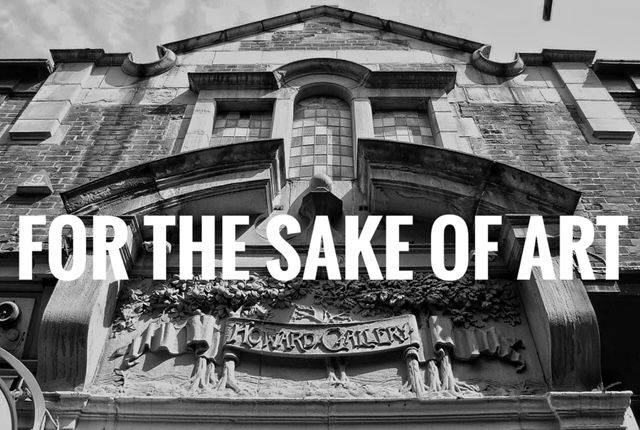
Holland’s far-sightedness didn’t resonate with the public, and the only reminder of his folly is a stone relief set in a small portico above a doorway on Chapel Walk.
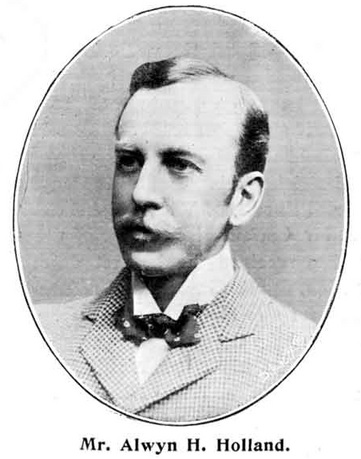
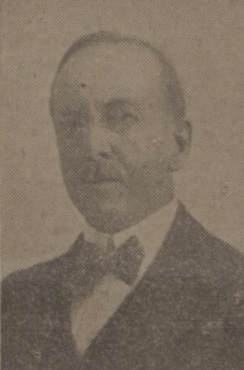
For many years, Alwyn Henry Holland (1862-1935), was the Hon. Sec. and member of the Council of the Sheffield Society of Artists, and probably the most enthusiastic artist in the city at the time. He was also a lay member of the Society of Architects, and Hon. Sec. and trustee of the Croft House Settlement.
He was born in Sheffield, the son of Alwin Hibbard Holland, provisions merchant, and was brought up as an architect.
(Image: Picture Sheffield)
The family home was at 11 Broomgrove Crescent, and he was educated principally at Brampton Schools, Wath. He then became a pupil, and afterwards assistant, with architect John Dodsley Webster.
On the death of his father in 1883, however, he succeeded to the business of A.H. Holland, at No. 9 Fargate.
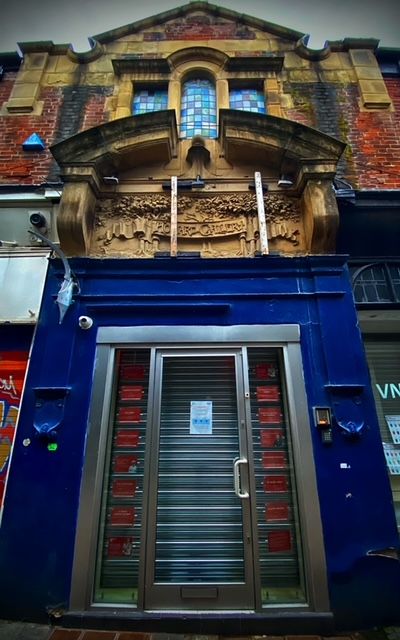
Shuttered up during this year’s pandemic. This was once the main entrance to the Howard Gallery, with the original stone relief above the door.
In its day, A.H. Holland, was one of Sheffield’s finest grocery stores, famous for its high-class goods at low prices, and awarded three prize medals at London exhibitions.
He ran the business with his mother, Eliza, and, with Thomas Flockton, designed new shop premises as part of the Fargate widening scheme in 1889.
Like many Victorian businessmen, Holland dipped into the property market, and when land became available adjacent to No. 9 Fargate, on Chapel Walk, he designed and built eight single shops in English Renaissance style.
At the time of construction in 1897, Henry Fitzalan Howard, 15th Duke of Norfolk, was Mayor, and later Lord Mayor, of Sheffield, and the inspiration for naming the new art gallery that Holland built above the shops.
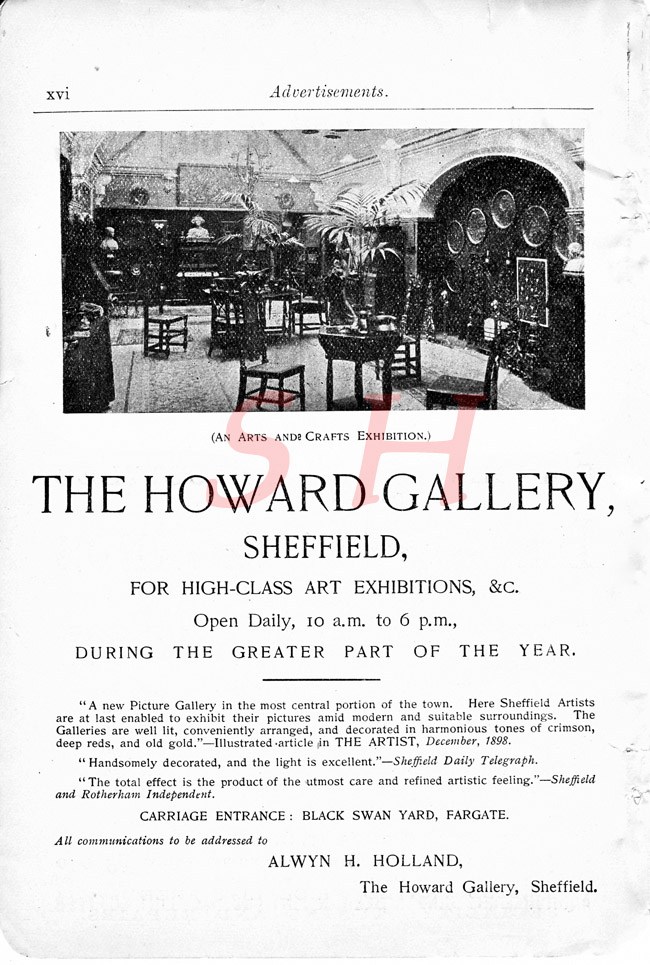
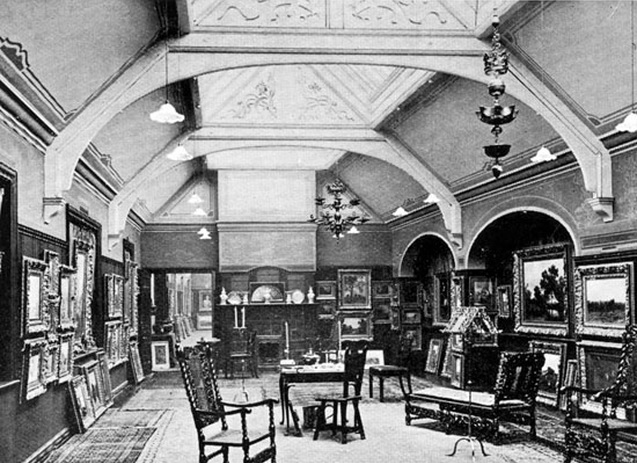
The gallery comprised two exhibition spaces, both 60ft in length, separated by a staircase, with light supplied by a lantern roof above. The main entrance was on Chapel Walk, with a separate carriage entrance around the back on Black Swan Walk.
The inclusion of the art gallery satisfied Holland’s notions as a watercolour painter, providing more suitable environs to display artwork, rather than on the walls of the shop that had previously been the case.
The Howard Gallery never intended to be a showcase for his own work but was to be used for rotating exhibitions of works by other artists.
Holland’s plans were extravagant, seeing it as a northern rival to the big London galleries. There were those who mocked his plans, but even the fiercest critics were astonished when the Howard Gallery announced its opening exhibition in April 1898.
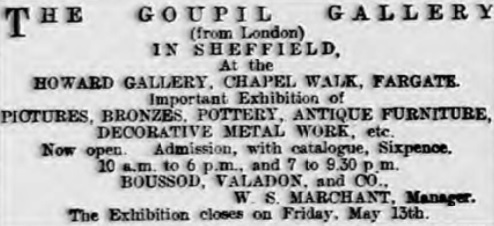
William Marchant, manager of the Goupil Gallery in Regent Street, was persuaded to bring a collection of pictures and drawings to Sheffield – and the samples of work seem inconceivable today.
“The exhibition contains examples of Gainsborough, Constable, David Cox, Turner, Landseer, Corot, Guardi, J. Maris, Mauve, Israels, Whistler, and J.M. Swan,” wrote the Sheffield Daily Telegraph.
The opening exhibition at the Howard Gallery. (Image: The British Newspaper Archive)
Public opinion was favourable, the critics silenced, but William Marchant struck a note of caution that pinpointed what lay ahead:
“I must say that when I decided to take this collection to Sheffield, I was fully aware of the fact that I was not catering for the popular taste, and I may add that several people who witnessed my preparations laughed and predicted total failure. I cannot say that much of Sheffield’s gold has found its way into our coffers, and the visitors have been, if select, very few, but I must own that I never expected to meet with so publicly expressed an appreciation.”
Opening advertisement for the Howard Gallery. (Image: Sheffield History)
Despite the lacklustre support the Goupil Exhibition was extended past its May closing date, with several works removed and replaced with new works by Peter Graham, John Syer, Henry Dawson, Niemann and E.M. Wimperis. Several local artists were also represented including Austin Winterbottom, James Moore, Frank Saltfleet, and Jean Mitchell.
In June 1898, Thomas Agnew and Sons, fine art dealers, brought an exhibition to Sheffield, including Gethsemane ‘Jesus In the Garden’, painted by Tom Mostyn, and the engravings from the canvases of Landseer, Peter Graham, and Rosa Bonheur.
The Howard Gallery hired glass cases for its next exhibition of artistic book-bindings, obtained on loan from the Ruskin Museum Library, and which had rarely been seen.
And so, there followed a cycle of short-lived seasonal exhibitions – Spring, Summer, Autumn, and Winter – all of which cost a lot of money and poor return.
The interior of the Howard Gallery. (Image: Picture Sheffield)
In June 1899, Holland closed the East Gallery claiming that previous exhibitions had been too large for art lovers to properly view, but finances were diminishing and, apart from the annual Sheffield Society of Artists’ Exhibition, the major showings dwindled away. But the local press remained optimistic:
“There had been sneers at the Howard Gallery as a mere commercial speculation, but they only exhibit a complete ignorance of the motives with which it was founded, and their absurdity is as patent as their injustice,” wrote ‘Le Flaneur’ in the Sheffield Independent.
Holland launched a Winter Exhibition in December 1901, using the West and East Gallery, which had been used as a restaurant, and showing nearly 250 oils and watercolours, but, apart from a Frank Saltfleet exhibition in January 1903, the galleries were advertised as being available to hire for dances and evening entertainments.
Music recitals became a mainstay of the gallery, a popular home for the Sheffield Chamber Music Society, as well as for meetings including those of the Alliance Francais.
The principal use, from 1903, was for the Sheffield Gentlemen’s Club during the rebuilding of their premises on Norfolk Street. It occurred to Holland that the comforts and conveniences of the club might be appreciated by the public, so, with necessary alterations and additions, the Howard Gallery, and adjoining Rutland Institute (above No.9 Fargate) were transformed into a café and restaurant.
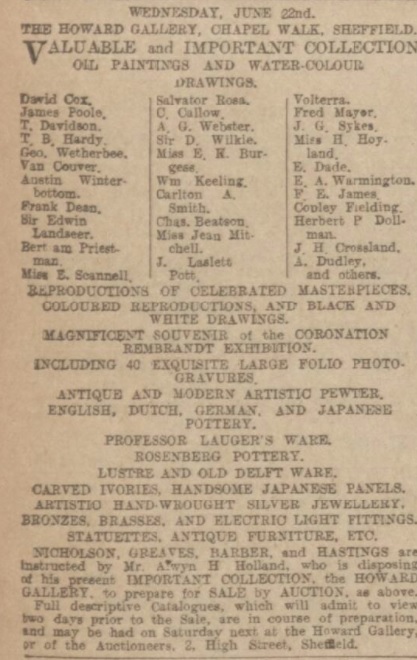
Holland auctioned his collection of paintings, pewter, and pottery, as well as fixtures and fittings, and the gallery became The Meerah Café in December 1904.
A list of contents sold by Alwyn Henry Holland following the closure of the Howard Gallery. (Image: The British Newspaper Archive)
Once again, the undertaking received support from the local press:
“Mr Holland is an architect of considerable repute, and in the extensive range of rooms has given free play to his artistic ideas. The place is full of artistic surprises. They seem to meet you at every turn. The old-fashioned windows he has so daintily worked into his scheme, the many snug retreats, the originality displayed in the lighting and the decorations, all breathe art. The very atmosphere seems artistic. Even the furniture has all been studied with an artist’s care. The late William Morris designed some of the most comfortable of the chairs which will be found in the gentlemen’s quarters; but Mr Holland has designed the remainder of the furniture. The tables of solid old oak, also breathe of art. The names of the rooms sound artistic. There are the York Room, the Howard Room, the Wharncliffe Room, and the Rutland Room. Music is provided by Charles Callum.”
The café and restaurant fared marginally better than the Howard Gallery, but the overindulgences of the exhibition space and subsequent conversion, played heavily on the finances of A.H. Holland.
Alwyn and Eliza invited shareholders into the business, and it became Hollands Ltd in 1906, but the company went into voluntary liquidation three years later.
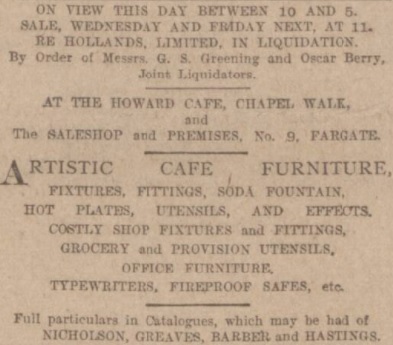
The shop and café were closed, and the contents auctioned to help pay off the creditors.
The contents of the cafe were auctioned after the company went into liquidation. (Image: The British Newspaper Archive)
The last hurrah appeared in the Sheffield Independent:
“’It is a tragedy, that is the only word for it,’ said an old customer. The Wharncliffe Room of Holland’s Café was half filled with buyers, and about a dozen men hung about waiting for jobs to remove the purchases. A couple of dogs, which had strayed into the room, surveyed the scene, and made a faint effort to wag their tails. The firm, business-like tones of the auctioneer rang out, and soon the artistic fittings, pictures, crockery, and cutlery, were auctioned off.
“Hollands was well known for the original designs of the interior of the premises, Mr Holland being quite ambitious in this direction. The shop was regarded as an example of the art doctrines of Ruskin and Morris. Indeed, Holland made a special effort to introduce art into ordinary matter-of-fact business. Unfortunately, the effort failed.”
Alwyn Henry Holland in 1925. (Image: The British Newspaper Archive)
Afterwards, Alwyn Henry Holland faded into obscurity, no doubt chastened by his experience, and spent time walking, playing tennis and golf, and sketching.
His legacy is forgotten, his work little-known.
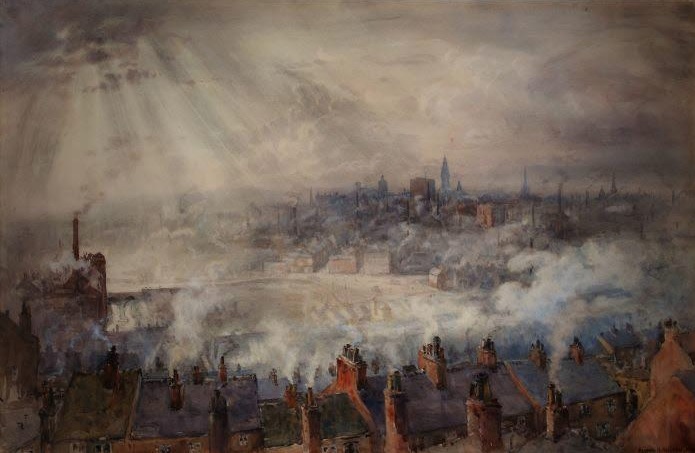
Some of his work hangs at the Cutlers’ Hall which had commissioned him to paint views of the banqueting halls as well as its exterior. Perhaps his most famous painting is Sheffield from above the Midland Station, included in the Sheffield Museum collection.
Sheffield from above the Midland Station by Alwyn Henry Holland (1909). (Image: Museum Sheffield)
Holland died in 1935 at Patrington, near Hull, aged 73.
The Howard Gallery returned in name only, used by British Westinghouse and the Metropolitan-Vickers Electrical Company as showrooms, and part of it used by Thomas Monkman and later H.C. Hibbert as a billiards hall.
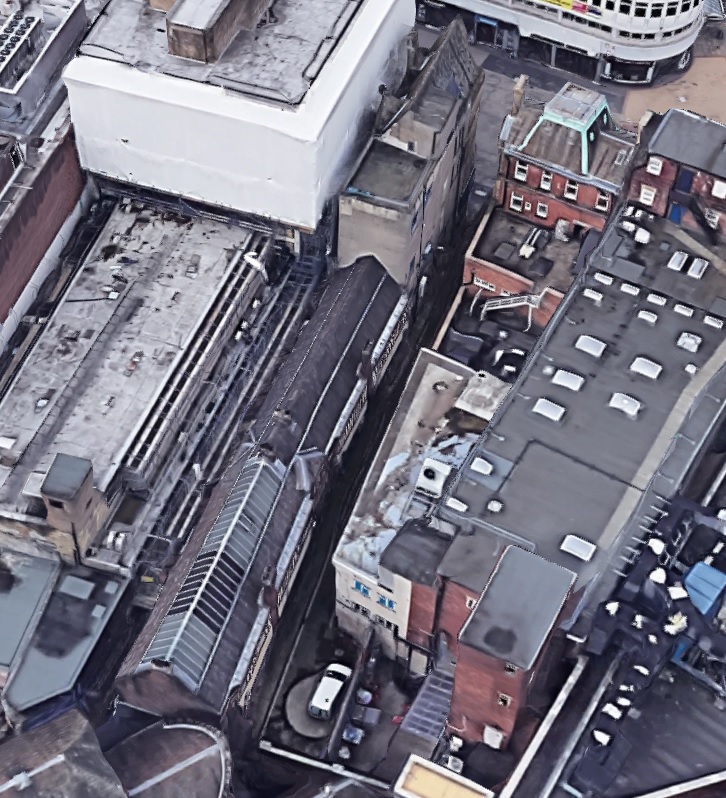
In the time since, the gallery space has been sub-divided, but the Howard Gallery carving remains, as does the long glass roof, visible only from above.
This aerial photograph shows the length of the two rooms at the Howard Gallery. Parts of the glass roof remain above one of the galleries. (Google)
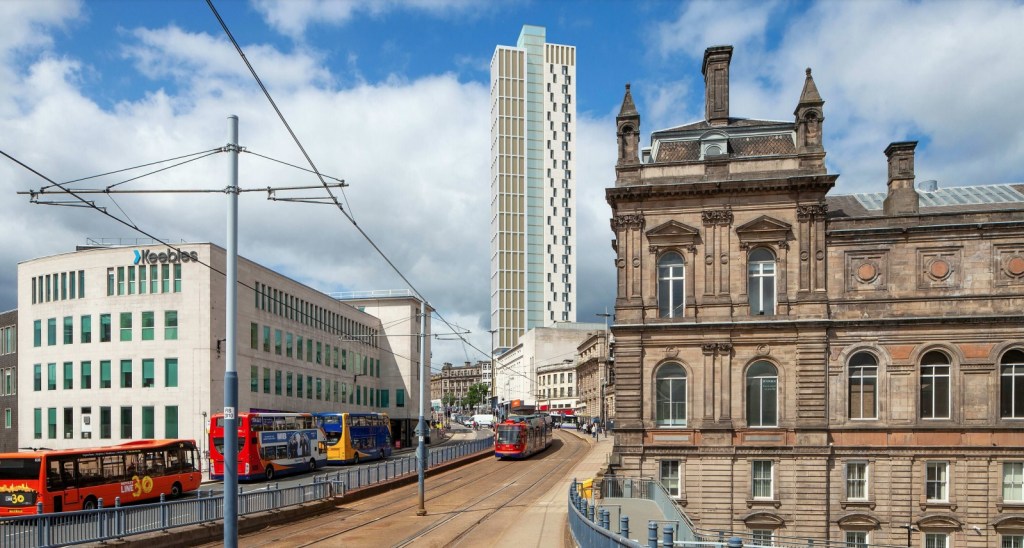
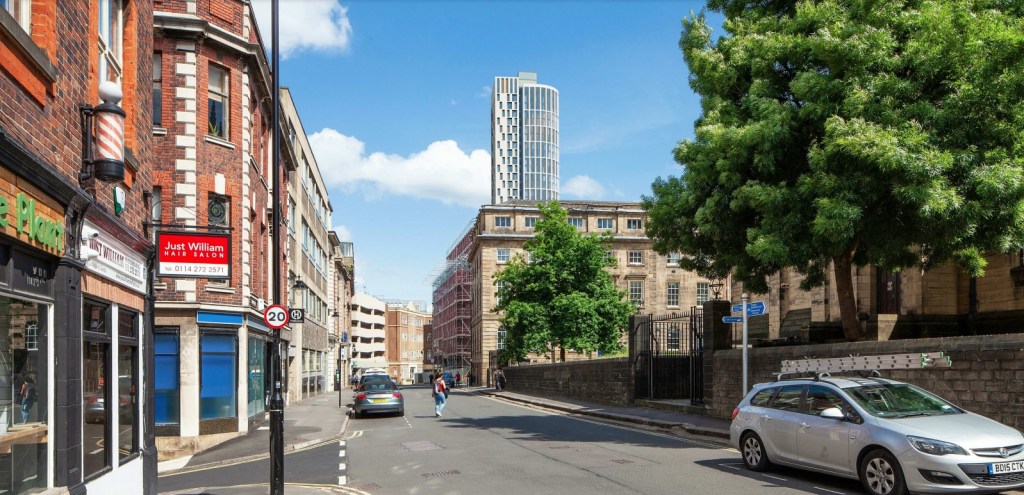
A dramatic change to the High Street. King’s Tower, a 39-storey tower block, that has been granted planning permission.
Prepare for a major new addition to the Sheffield skyline, and its location may come as a surprise.
King’s Tower, at 51-57 High Street, will be a 39-storey tower, comprising 206 apartments, with space for a ground floor commercial unit, drinking establishment or hot food takeaway.
It is probably the first regeneration step for one of the most unkempt parts of the city centre.
King’s Tower will be a significant change to the High Street.
The building will be on the site of what many of us know as the former Primark building, and even further back, the one-time Peter Robinson department store.
When the wrecking balls arrive, there will likely be cries of contempt, but in the eyes of planners, the existing building has no architectural value.
In fact, when researching this post, it was discovered that it was always meant to be a temporary structure, even though it’s lasted almost sixty years.
King’s Tower will be on the site of the ancient market adjacent to Sheffield Castle, first established as the result of a Royal Charter of 1296. The market stall and buildings that occupied the site were demolished in 1786 to make way for the construction of the Fitzalan Market (also known as ‘The Shambles’), which underwent improvement about 1855.
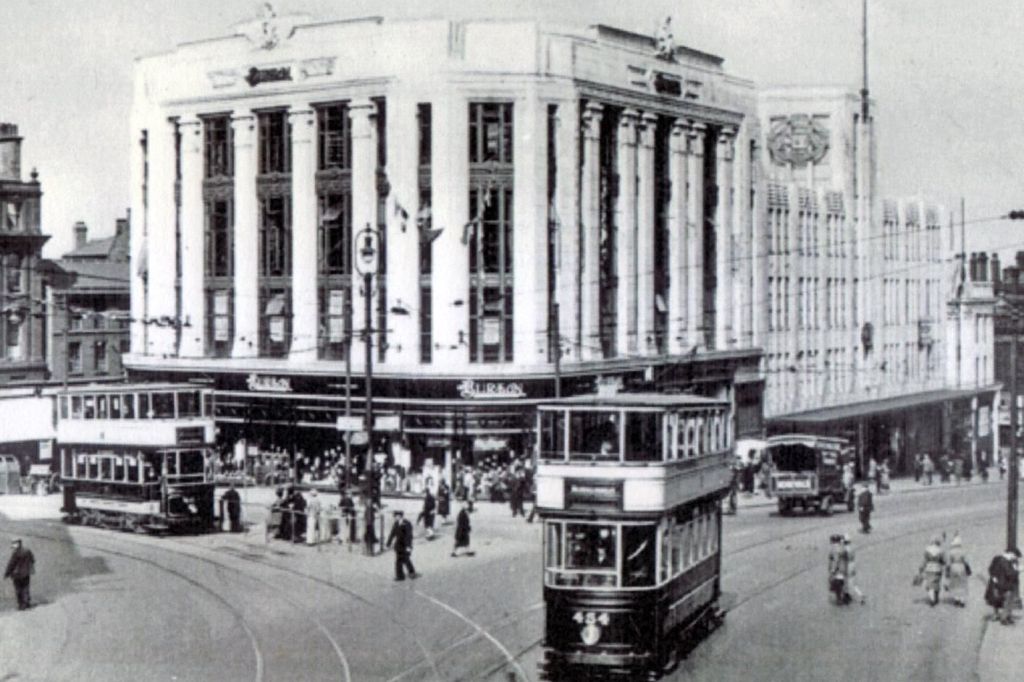
Fitzalan Market was demolished in 1930 when the new Castle Hill Market opened, and a new shop was constructed on the corner of Angel Street for Montague Burton, of Burton Menswear, in 1932. The shop occupied the lower floors while the upper tiers were home to the City Billiard Hall and ‘The City’ Roller Skating Rink.
The grand-looking Burton Building, built at the corner of High Street and Angel Street in 1932. A billiard hall and roller-skating rink occupied the upper floors. (Image: Sheffield Telegraph)
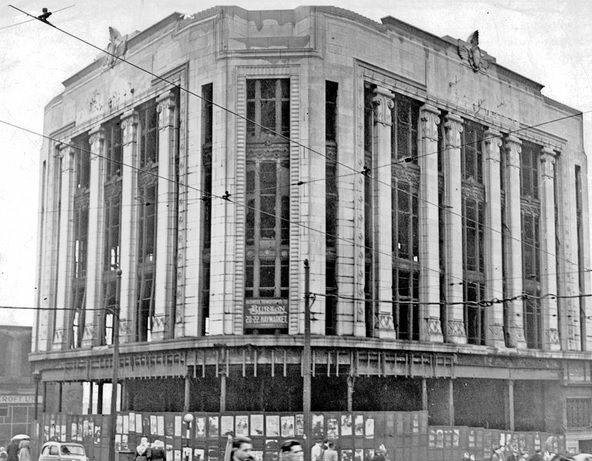
The Burton building was badly-damaged during the Sheffield Blitz of 1940, and stood as an empty shell for many years, its replacement held up by funding and lack of building materials. By the 1950s, Sheffield Corporation insisted that plans for an alternative building would only be granted if it were of ‘temporary character, and not as before,’ because it had plans for a new roundabout intersecting Angel Street, High Street and what would become Arundel Gate.
After being badly damaged by German bombs in 1940, the Burton Building remained empty for many years. (Image: Picture Sheffield)
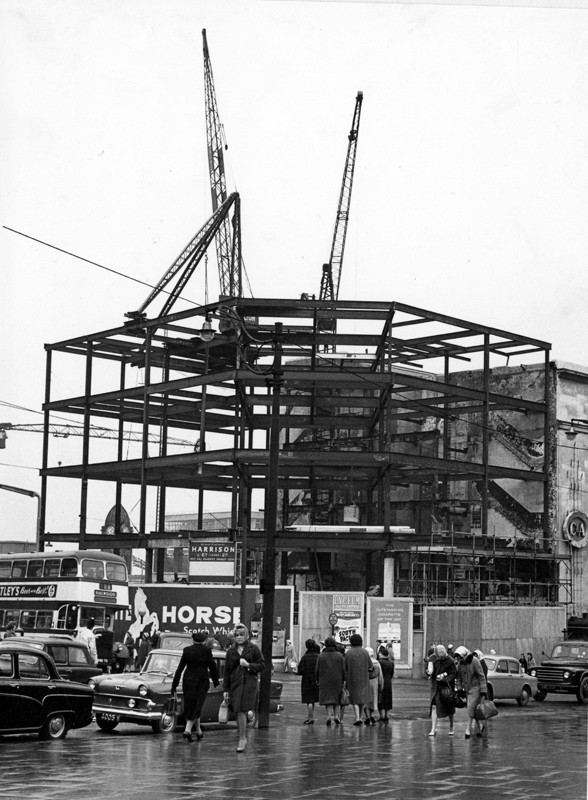
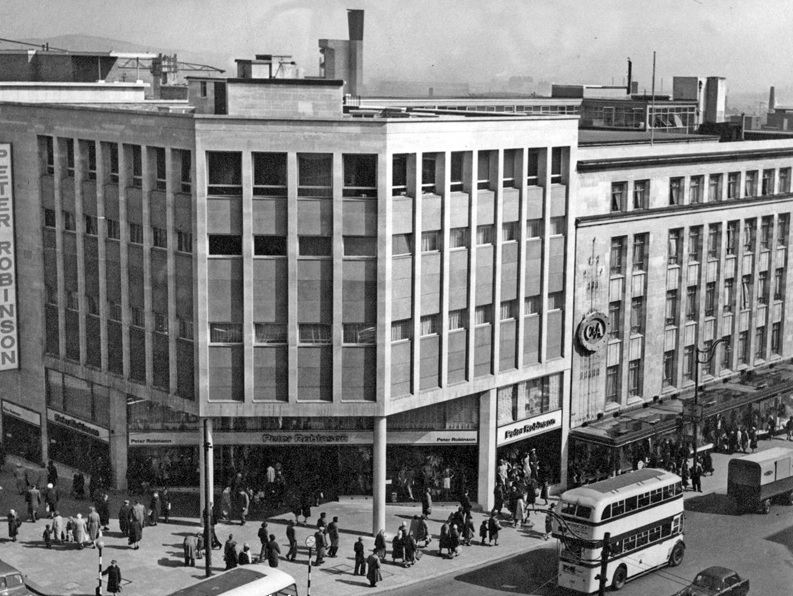
It was eventually demolished and replaced by a new steel-framed building, clad in concrete and tile panels, and opened in 1962 as a Peter Robinson department store. The chain store had been founded in 1833 as a drapery, soon expanding with a flagship store at Oxford Circus, London, and bought by Burton’s in 1946.
The shop in Sheffield was part of Peter Robinson’s nationwide expansion, at its height having 39 stores across Britain.
Whilst the building may not be considered of architectural importance, it most certainly played a part in shaping High Streets across the country.
It was here, in 1964, that a new department was launched on the third floor, Top Shop, a youth brand, selling fashion by young British designers such as Polly Peck, Mary Quant, Gerald McCann, Mark Russell and Stirling Cooper.
The Top Shop name was later used for a large standalone store on Oxford Street, London, and expanded into further Peter Robinson branches at Ealing, Norwich, and Bristol.
It was not until 1973 that Top Shop was split from Peter Robinson, the Top Shop (later Topshop) brand flourished, subsequently becoming part of Phillip Green’s Arcadia Group, whose demise dominates present-day headlines.
Alas, by the end of the 1970s, the Peter Robinson name had all but disappeared.
The steel-frame of the Peter Robinson department store during construction in the early 1960s. (Image: Picture Sheffield)
Completed. Peter Robinson dominated this High Street corner. In 1964, the first Top Shop was opened on the third floor. (Image: Picture Sheffield)
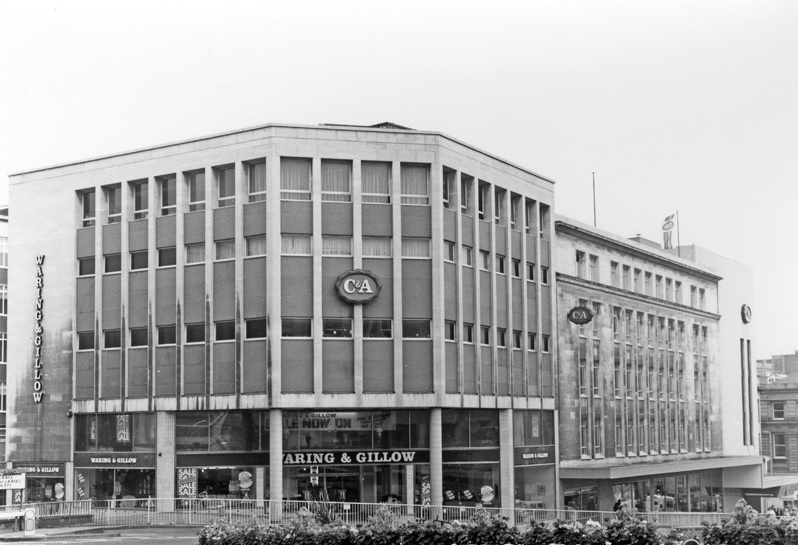
From 1974, the adjacent C&A store absorbed the upper floors of Peter Robinson, while furniture retailer Waring & Gillow occupied the ground floor.
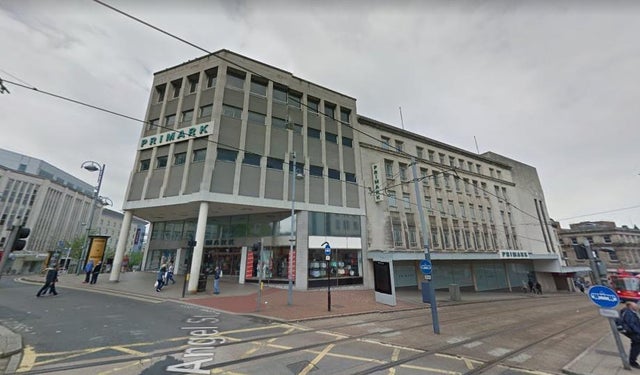
After C&A vacated in the 1990s, it became Primark until it relocated to The Moor in 2016, leaving the old department store empty.
During the 1970s C&A occupied the upper floors while Waring & Gillow sold furniture at ground level. (Image: Picture Sheffield)
Primark, originating from Dublin, took over the premises when C&A pulled out of the UK. (Image: Google)
On a final note, that proposed roundabout eventually became Castle Square, with the famous ‘Hole-in-the-Road’ linking into the building, filled in to accommodate Supertram in 1994.
As part of the works to build King’s Tower, King Street, to the rear, will be improved with the market retained and access for vehicles.
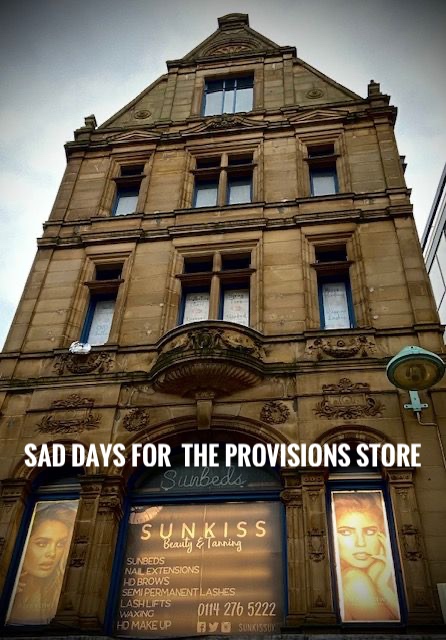
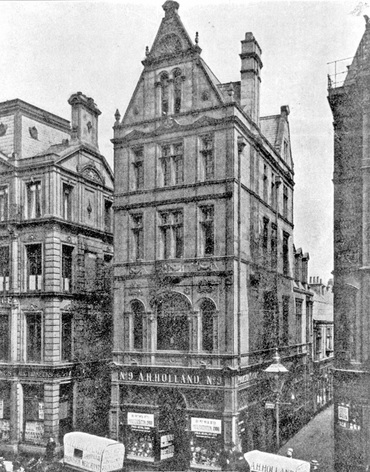
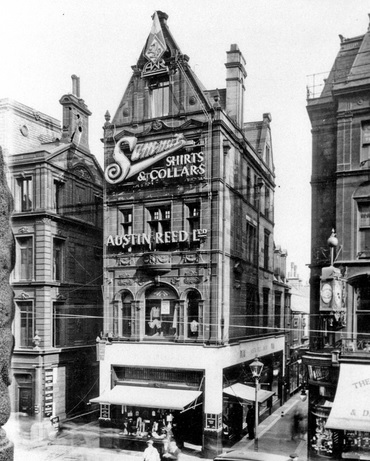
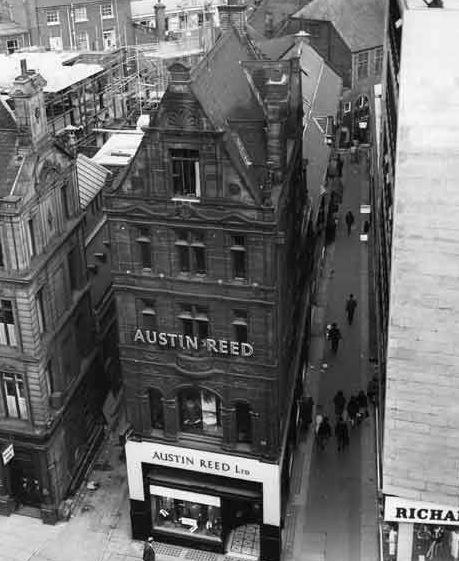
No. 9 has stood at the end of Fargate all our lives. It is the tall, detached building standing between Chapel Walk and Black Swan Walk and is in a sorry state.
It is hard to imagine that this building was part of the Victorian renaissance of the old town centre, one that marked the widening of Fargate and set the building line for later High Street improvements.
Plans to widen Fargate were proposed in 1875, but it was not until the late 1880s that work started. Old buildings on the east side were flattened extending back from Fargate for distances varying from 60ft to 240ft.
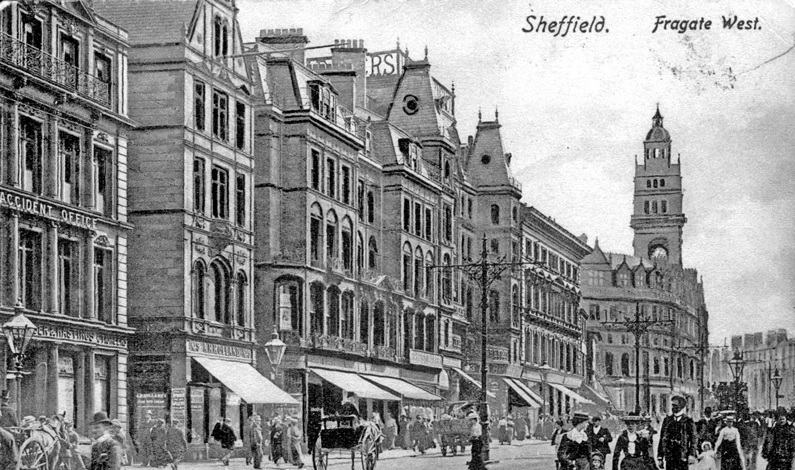
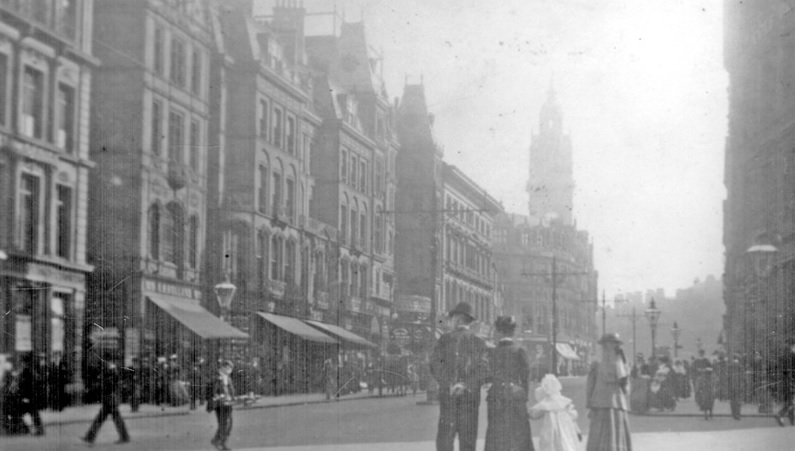
A glamorous view of the widened Fargate (not Fragate as the photograph says) with A.H. Holland on its single plot between Chapel Walk and Black Swan Walk. (Image: Picture Sheffield)
It would appear that Lot 4, a plot of land containing about 150 square yards on the north side of Chapel Walk and south of a foot road (Black Swan Walk), with a frontage of 19ft to Fargate and 72ft to Chapel Walk, had been the site of the Black Swan Public House.
In 1887, Sheffield Corporation paid William Davy, the licensee, £11,160 for the land and demolished the pub.
The freehold was bought in 1888 by A.H. Holland, Provisions Merchant, founded in 1844 by Alwin Hibbard Holland, whose previous shop had been at No. 3 Fargate, one of those flattened for street widening.
Alwin Hibbard Holland had died in 1883, the business continuing through his wife, Eliza, and youngest son, Alwyn Henry Holland. (His eldest son, Kilburn Alwyn Holland, also had a provisions business, but appeared to have played only a small part in the family business).
Eliza Holland played an important role in the success of A.H. Holland, but it was Alwyn (whose story will be covered in a future post) who established the business in new premises at No. 9 Fargate.
Alwyn had been educated at Brampton Schools, Wath upon Dearne, before becoming a pupil, and afterwards, assistant to Sheffield-architect John Dodsley Webster.
After his father’s death, he joined A.H. Holland which he ran with his co-executors, and co-designed the new premises along with Flockton, Gibbs and Flockton.
Thomas James Flockton had negotiated the purchase of the property and acted for Sheffield Corporation in the resale to Alwyn Holland, a fact that did not go unnoticed to sharp-eyed citizens.
A.H. Holland fronted Fargate and stretched down Chapel Walk. (Image: Picture Sheffield)
Building work started in early 1889, with Sheffield-builder George Longden and Son chosen for the work, but progress was hampered when bricklayers and labourers went on strike demanding more money.
The new shop was eventually completed and opened to an expectant public on 9 November 1889 selling the ‘highest class goods at the lowest possible prices’. As well as the shopfront on Fargate, the premises extended down Chapel Walk occupying Nos. 1 to 15. The firm was awarded prize medals at the London International Exhibition and the International Dairy Show, sufficient for it to become sole agent for Lord Vernon’s Dairy (from Sudbury Hall in Derbyshire).
In 1891, the Rutland Institution occupied rooms overlooking Fargate above the shop. It was named after the Duchess of Rutland, who opened it, and was formed in connection with the Sheffield Gospel Temperance Union.
Busy days on Fargate with A.H. Holland’s awning stretching to the road. (Image: Picture Sheffield)
As well as being a shopkeeper, Alwyn Holland was a watercolour artist and his work was displayed inside the shop, ‘displaying marked originality both as an architect and an artist’.
It might have been Holland’s aspirations as an artist that ultimately led to the downfall of A.H. Holland.
With a sizeable income the firm built new property on adjoining Chapel Walk, renting out eight shops at ground level with a large suite of assembly rooms upstairs, including the Howard Gallery, for high-class art exhibitions, and Holland’s Restaurant.
The gallery opened in 1898 but proved a failure, closing its doors in 1904. By this time, the Rutland Institution had moved out, and the entire upper floor was extended into rooms above No. 9 Fargate and remodelled as tea rooms.
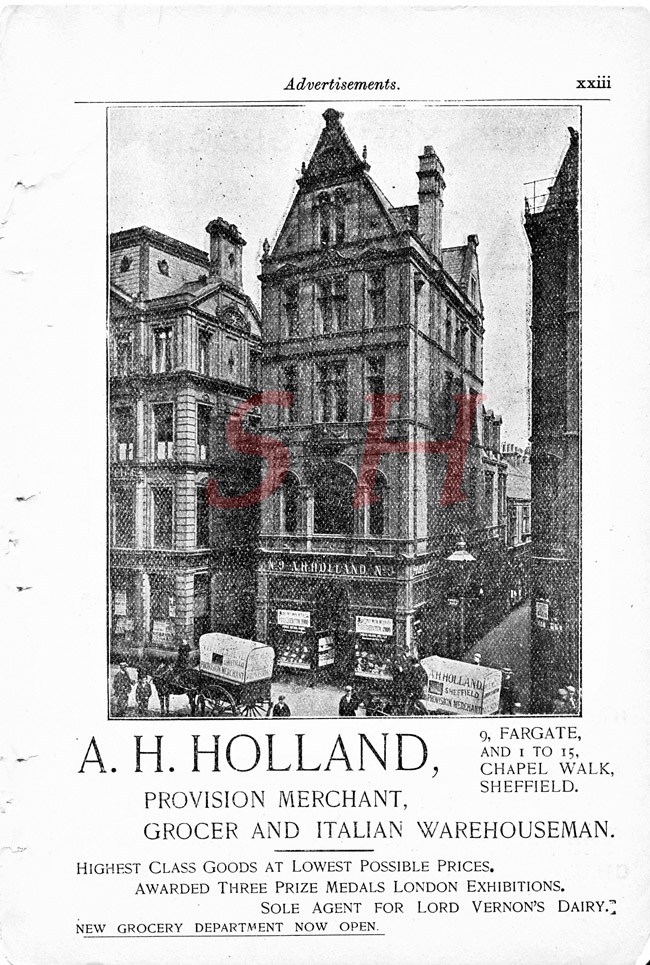
Advertisement for A.H. Holland – ‘The Provisions Store’ – on Fargate and Chapel Walk. (Image: Sheffield History)
In 1906, a new company was created, Hollands Ltd, to take over the business carried on by Eliza Holland and Alwyn Henry Holland at No. 9 Fargate and Nos. 1 to 15 Chapel Walk, as well as the restaurant business carried on by Alwyn at 17-23 Chapel Walk (and also at Sheffield University Rectory).
Joining Eliza and Alwyn as directors were Smith William Belton, a provisions merchant from Market Harborough, William Whiteley, a Sheffield scissor manufacturer, Richard P. Greenland, Liverpool soap manufacturer, Arthur Neal, Sheffield solicitor, and George Shuttleworth Greening, accountant.
A second grocery and provisions business were established on Whitham Road at Broomhilll, but despite new investment things did not go particularly well for A.H. Holland, and in 1909 the business slipped into voluntary liquidation.
Net losses since the formation of the new company amounted to £3,826 and directors attributed poor performance to deficient continuity of management, shortness of working capital, and consequent loss of business due to the depression in Sheffield.
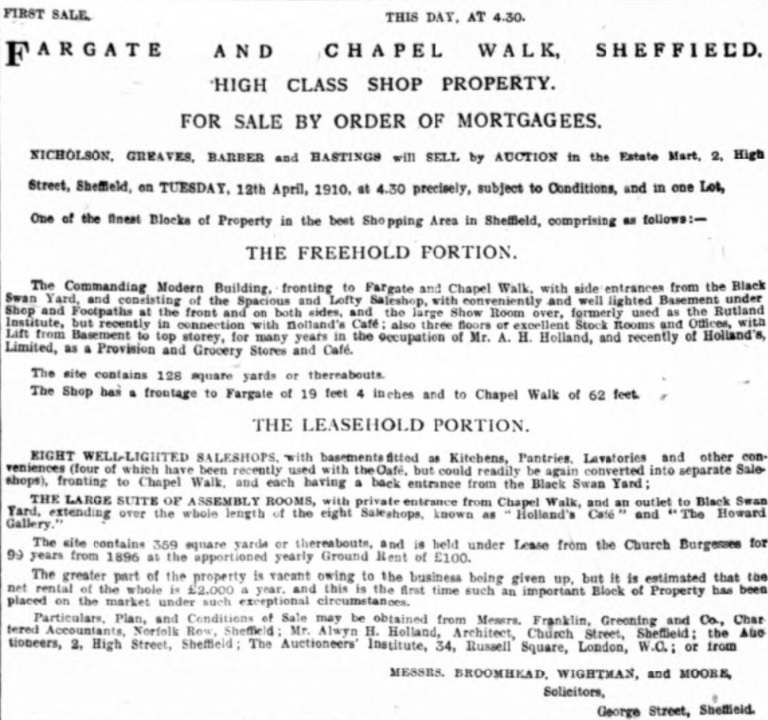
Sad times after the demise of A.H. Holland. No. 9 Fargate and properties on Chapel Walk were sold at auction. (Image: The British Newspaper Archive)
The following year the freehold of No. 9 Fargate was offered at auction, as was the leasehold portion on Chapel Walk, once home to the Howard Gallery and Holland’s Café.
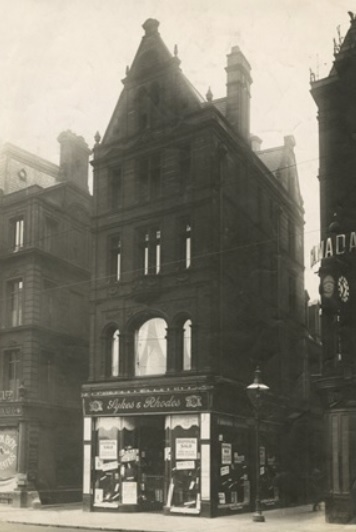
By the end of the year, No. 9 Fargate was used as an auction house by Arnold, Prince, Bradshaw and Company, and the following year fell into the hands of Sykes and Rhodes, costumiers and furriers, which remained until 1924.
Sykes and Rhodes (Image: RIBA)
By this time, the building had suffered from Sheffield’s age-old problem of black soot, darkening the stone, making it rather ‘dull-looking’.
However, the building was about to be reinvented with the opening of a shop in Sheffield by one of Britain’s leading tailors.
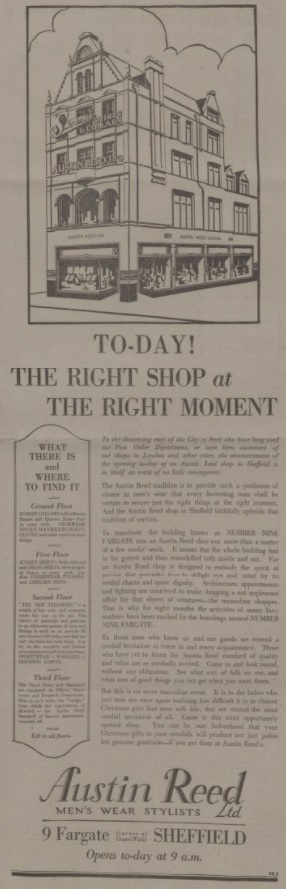
“A cynic has remarked that one of the reasons why Austin Reed Ltd have opened a shop in Fargate is because the male members of the community in Sheffield need attention in sartorial details.”
Austin Reed opened in Sheffield in 1924. (Image: The British Newspaper Archive)
The business had been founded by Austin Leonard Reed (great grandfather of Asos founder Nick Robertson) and claimed to be the first menswear store to bring made-to-measure quality to the ready-to-wear market. Its first store was in London’s Fenchurch Street and by 1924 had branches in all the most important towns and cities of England.
“Time is not so long distant when Sheffield relied on its old-established businesses, handed on from father to son, but, with the passing of the war, there came a change, and today, as quickly as premises can be acquired, firms with world-wide reputations are erecting palatial buildings, limited only by the space at their disposal.”
Austin Reed had illuminated signs fitted to the front of the building. (Image: Picture Sheffield)
The company spent a small fortune converting the building, the designs drawn up by P.J. Westwood and Emberton, of Adelphi, London, and involved the original builder, George Longden and Son.
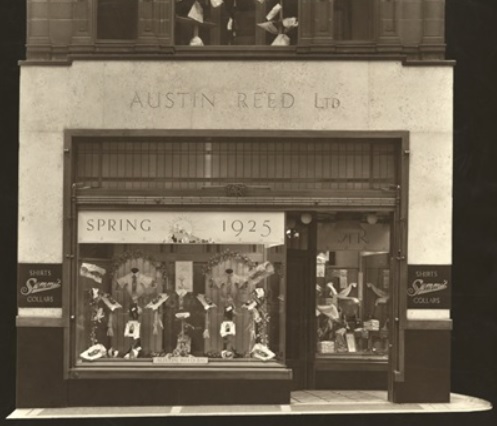
Outside included a beautiful marble front erected by Fenning and Co., Hammersmith, made of Italian Bianco del Mare and Belgian Black Marble. The entrance lobbies contained lines of non-slip carborundum inserted into marble paving.
The building consisted of a basement, three sales floors, and an office situated at the top. They were linked by staircases and the lift, a survivor from A.H. Holland days.
The basement was used for dispatching, the ground floor for the tie, collar, and glove department, the first floor was for hats, shirts, and pyjamas, while the second floor formed the ‘new’ tailoring department.
Austin Reed, Fargate, in 1925. (Image: RIBA)
“Inside, everything blends and tones; there is nothing garish to the eye. The ground-work is of oak panelling, staircase, and fittings. On the ground floor, the firm has arranged six windows nicely furnished with parquet beds, the door at the back being glazed with embossed glass to the architect’s design.
“The window lighting – admired by thousands – is worked with x-ray window reflectors, and each window has a special plug for ‘spotlights’ or experimental lighting effects.”
The front of the shop was also illuminated with a ‘Dayanite’ electric sign installed by the Standard Electric Sign Works. This, and the window lighting, was controlled by a revolutionary time switch that allowed them to be switched off on Sundays.
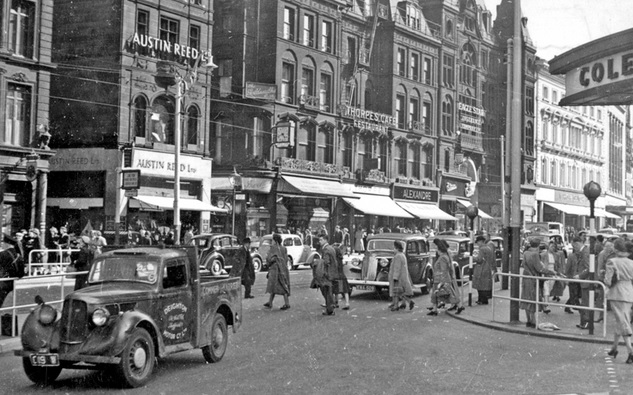
A remarkably different Fargate with Cole Brothers on the opposite corner. (Image: Picture Sheffield)
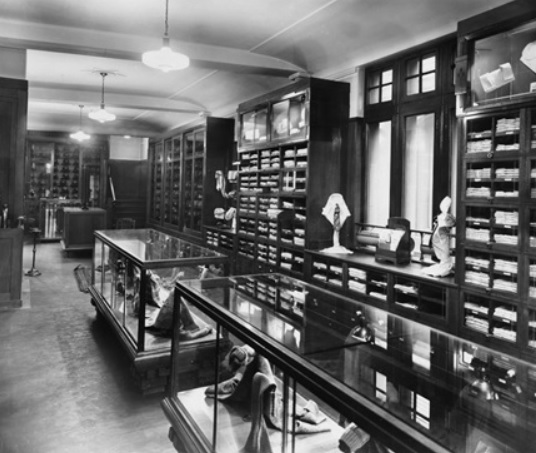
While the outside was impressive, the interior had the latest shop-fittings made of lightly fumed oak, with polished edged frameless mirrors, supplied by George Parnall of Bristol and London.
The coat cabinets worked on an American principle where doors opened and disappeared into the sides of the cabinet, and a large rack, laden with coats on pegs, was drawn out and slowly revolved.
The counters had small reflectors and low-voltage gas-filled lamps, manufactured by G.C. Cuthbert of London, that provided white light and gave a brilliant effect to the goods.
Another innovation was an electric hat cleaner whereby a visiting customer with a hard felt hat could have it cleaned and renovated in three minutes.
The narrow-gabled front reflects the width of plots preserved from much earlier development on Fargate. (Image: Picture Sheffield)
Customers were most impressed with Austin Reed’s new payment and receipt system.
When an item was purchased the assistant placed the money, bill and duplicate into a cartridge that was inserted into pneumatic tubes, similar to those used in newspaper offices, that within ‘three second’ had reached the top of the building. The office assistant then placed the receipt and change in the cartridge and the procedure reversed.
The smart oak interior with bespoke counters at Austin Reed in 1925. (Image: RIBA)
Austin Reed also used several local contractors.
Decoration was completed by F. Naylor, of Abbeydale Road, plumbing by George Simpson and Co., from Broomhall Street, electrics by Marsh Bros., of Fargate, and the structural engineers were W.H. Blake and Co., from Queen’s Road.
Austin Reed remained at No. 9 Fargate the 1970s, the building becoming a Salisburys bag shop and subsequently a victim of the relentless ‘chain store shuffle’, its last incumbent being Virgin Media.
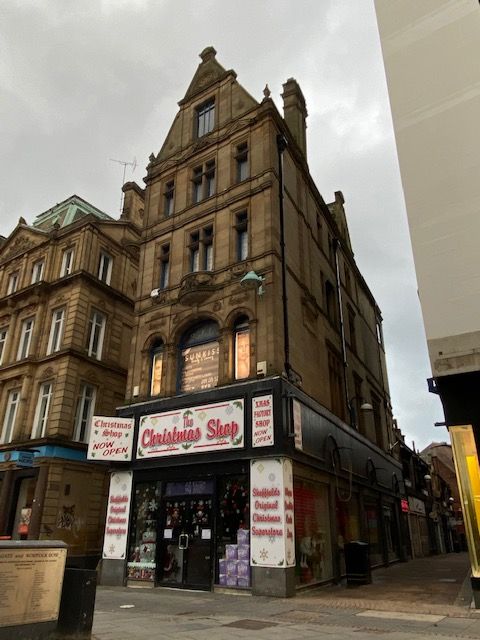
As I write, it is a pop-up Christmas store, in darkness due to Covid-19 restrictions, with a sun-tanning parlour above.
No. 9 Fargate. A pop-up Christmas shop in November 2020. Closed due to Government restrictions. (Image: David Poole)
Victoria Road, at Broomhall, is built on land that was once attached to the estate of Broom Hall, the manor house, and belonged to the de Ecclesall family, the Wickersleys, and the Jessops, until the death in 1734 of William, Lord Darcy, after which it passed down the female line to the Rev. Wilkinson, Vicar of Sheffield, in the late 18th century.
He died in 1805 and the Broom Hall estate passed to Philip Gell of Hopton, and from him to John Watson of Shirecliffe Hall, who farmed the land for 20 years, and from 1829 split and leased plots for development.
As Sheffield grew, there was an increasing demand for suburban villas to the west of the town where occupants included manufacturers of steel, cutlery, and edge tools.
Victoria Road, named in honour of our Queen, was laid out in 1855, the road curving from Broomhall Road to join Collegiate Crescent. It was a mix of detached and semi-detached properties, the larger houses built at the top end of the road, close to old Broom Hall, with smaller dwellings at the opposite end.
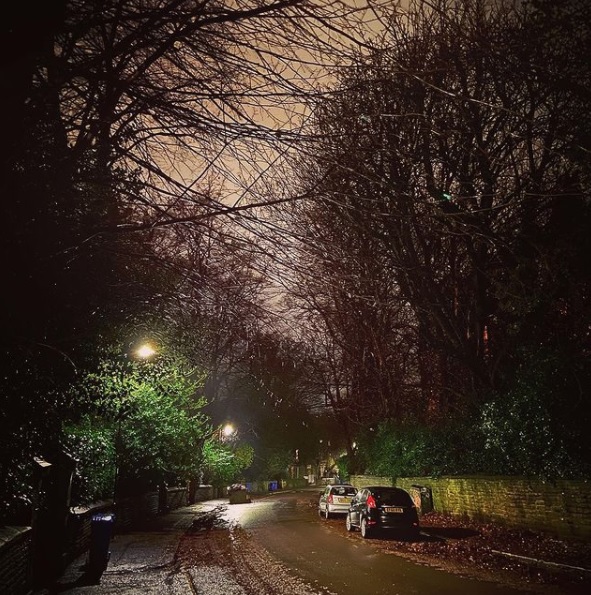
Little has changed since Victorian times, the houses are much the same, except the trees have grown much larger, and the stone walls at the front of each plot still hide what goes on behind.
Back then, this was a road of masters and servants, horse and carriages, gas lamps, grand staircases, busy kitchens, elaborate dining-rooms, lively drawing-rooms, large bedrooms, and fine furniture.
The likes of Daniel Doncaster, William Christopher Leng, and Miss Witham’s Boarding School moved on, to be replaced with new generations of professional people, who lost sons in World War One and witnessed the bombs of World War Two.
But Sheffield continued to grow, Broomhall was at the edge of the encroaching city centre, the affluent people moved farther away, and the area was blighted by nearby dereliction. Prostitutes moved into adjacent streets and the Yorkshire Ripper was caught just up the road.
Nevertheless, Victoria Road maintained its dignity.
And then it all changed for the better.
The Broomhall estate has become one of Sheffield’s hidden secrets, a leafy suburb, with new professionals, and students, and where it is a joy to walk through its streets and marvel at the architecture.
There must be somebody in Sheffield who can provide more information about one of our famous sons. This is a strange one, a man of mystery as far as his birth city is concerned, and worldwide success seems to have separated him from his roots.
Victor Burgin, born at Sheffield in 1941, a distinguished artist and theorist who has made his name with language and photography.
In the sixties he studied at the Royal College of Art and Yale University. While in America he discovered ‘minimal art’, at that time little known in Britain. This raised issues, not only about the form, but the nature of art, and Burgin was one of those artists on both sides of the Atlantic who developed ‘conceptual art’.
He has written numerous books and essays on art theory and criticism, and his chic photo pieces have been exhibited throughout the world.
“Art is not a spectator sport.”
Burgin taught at Trent Polytechnic, Nottingham, and the Polytechnic of Central London, before moving to San Francisco.
He was nominated for a Turner Prize in 1986, and is Professor Emeritus of History of Consciousness at the University of California, Santa Cruz; and Emeritus Millard Chair of Fine Art at Goldsmiths College, University of London. In 2015 Burgin was a Visiting Professor in the Department of Cinema and Media Studies at the University of Chicago, and in 2016 a Mellon Fellow at the University of Pennsylvania. He is also Professor of Visual Culture at Winchester School of Art.
He holds Honorary Degrees at Sheffield Hallam University, as well as the University of Liège.
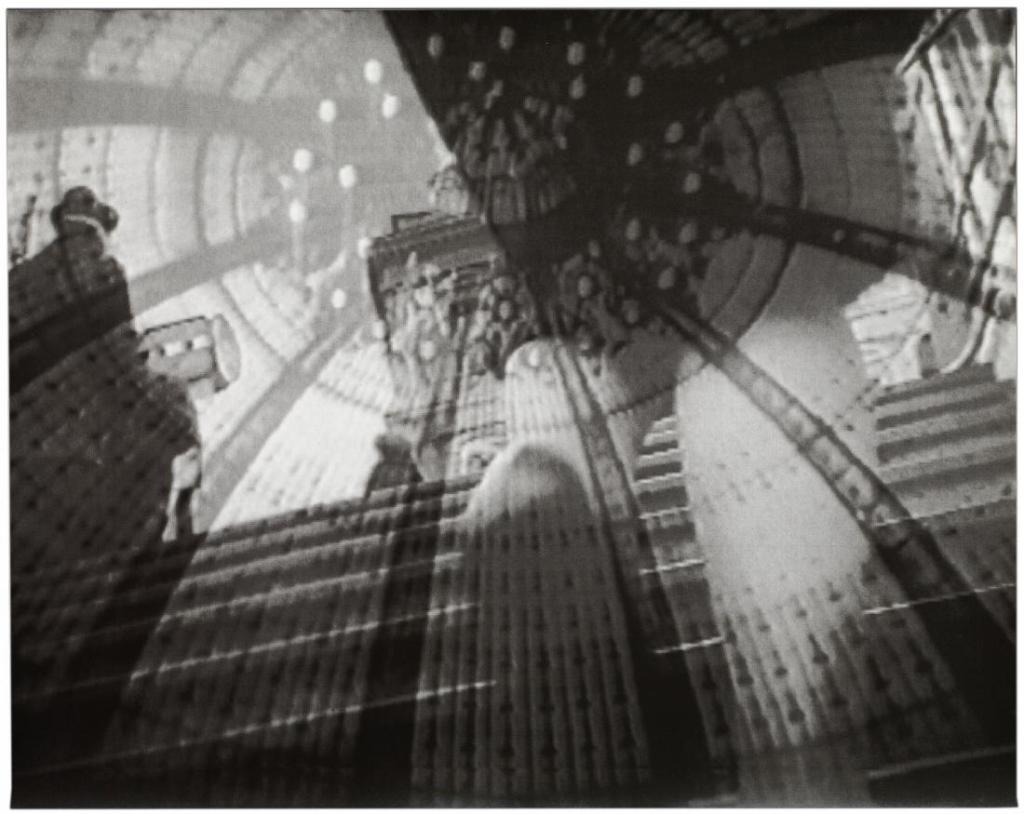
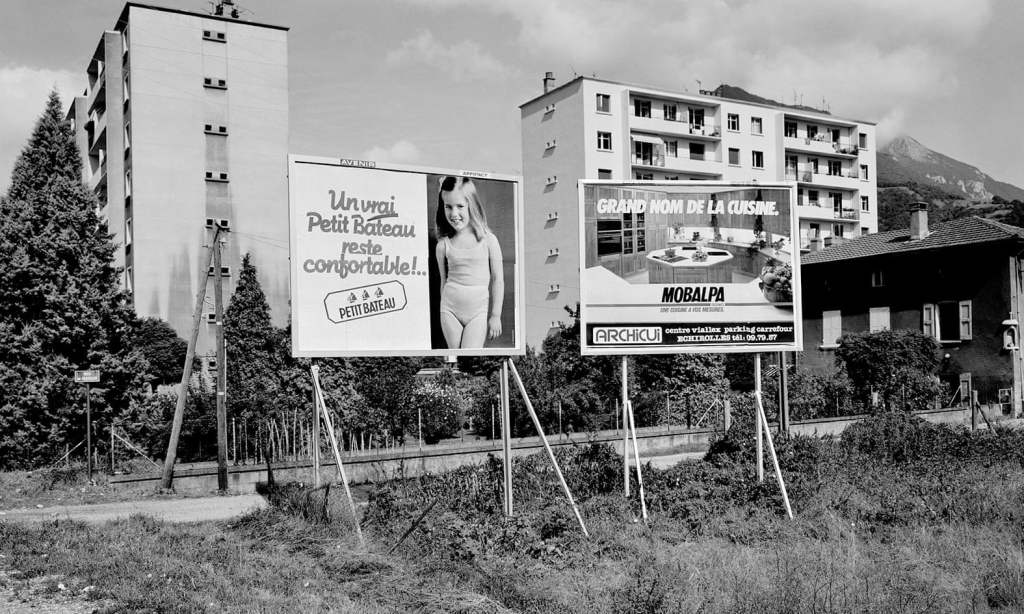
Victor Burgin. Fiction Film, 1991.
Burgin’s work is in public collections that include Los Angeles County Museum of Art, Walker Art Center, Minneapolis, Metropolitan Museum of Art and Museum of Modern Art, New York, the Victoria and Albert Museum and The Tate, London, Museum Ludwig, Cologne, and the Centre Pompidou, in Paris.
“I’ve made it from working class Sheffield to this middle class artistic milieu, and what the f**k am I doing here?”
These days, Burgin appears to split his time between homes in Somerset and Paris.
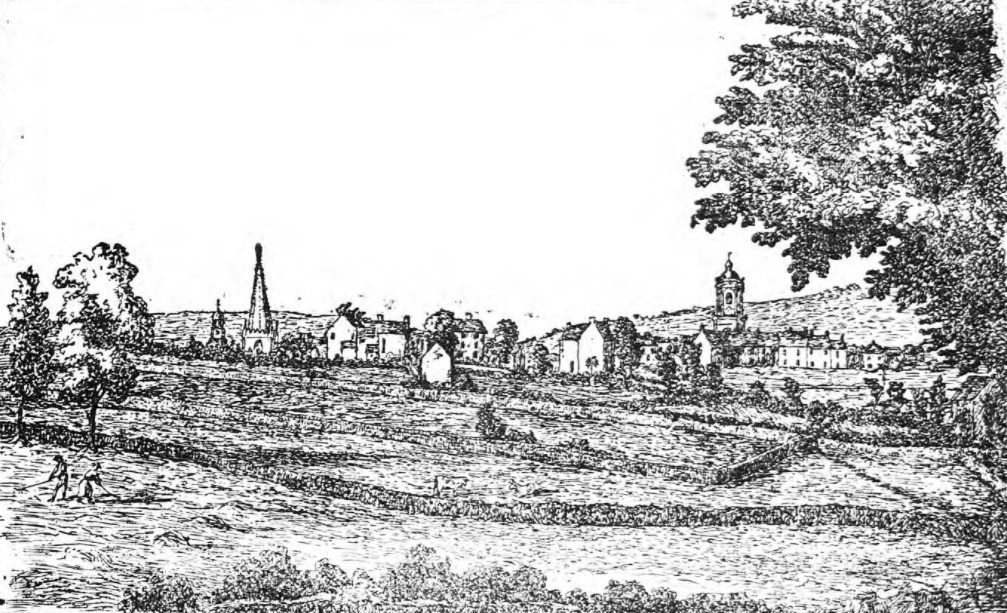
Sheffield in 1791. This reproduction was one of David Martin’s Series of Sheffield Sketches, showing what was the appearance of the town from the north side of Broomhall Spring.
The wood called Broomhall Spring extended to Broomhall Park, full of fine old oak trees, with very little underwood, and soft turf like that of a park. The wood was later cut down, the Government wanting oak timber for ship-building.
The spring itself was later referred to as Spring Garden Well, with the inscription “To the public use, by the Rev. James Wilkinson and Phillip Gell, Esq. Freely take – freely communicate. thank God.”
It was at what is now the corner of Gell Street and Conway Street, and it isn’t without coincidence that the names Broomspring Lane, Wilkinson Street and Gell Street emerged.
To the picture itself, and the fields between Broomhall Spring and the churches – the Parish Church, St. James’s and St. Paul’s – are known to us now as West Street, Division Street, and their adjacent thoroughfares.



 sheffielder.net