Categories
Buildings

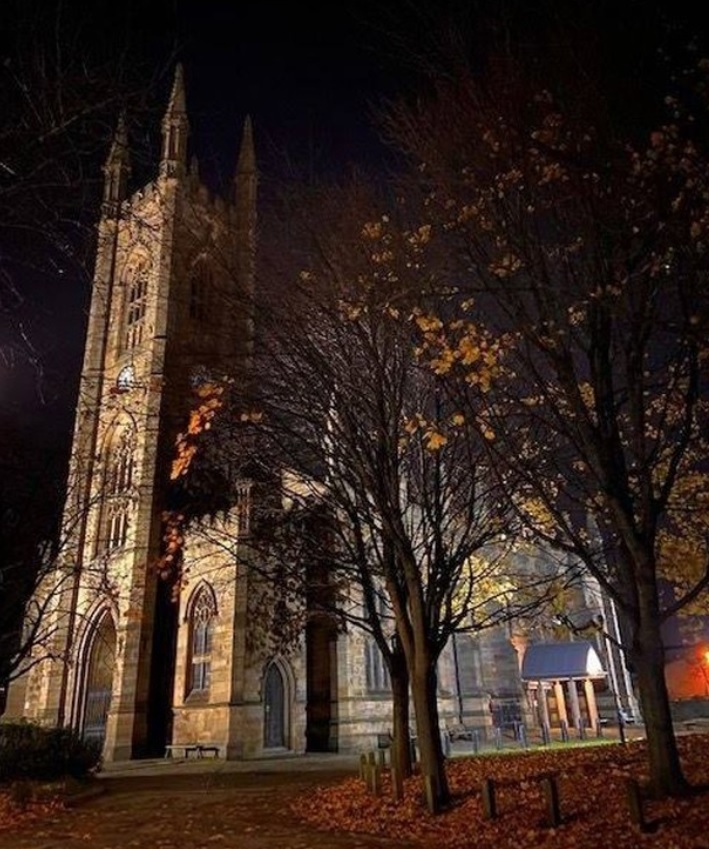
Autumn at St Mary’s Church

Autumn leaves are beautiful! God’s blessings are breath-taking! In the shadow of Bramall Lane.

It has seen joy, laughter, sadness, and tears. Life and death. And has witnessed murder more than once. There were those who tried to set it on fire, and German bombs virtually blew off its roof.

St Mary’s Church is one of three churches built in Sheffield under the Church Building Act 1818 (the other two being St George’s Church, Portobello and St Philip’s Church, Netherthorpe), and the only one still to be used as a church.

Built between 1826-1830 by Joseph Potter of Lichfield with the foundation stone laid by the Countess of Surrey. The construction was supervised by Robert Potter, his son, who resided in Sheffield during progress, and afterwards practised here as an architect for the rest of his days. It was consecrated on 21 July 1830 by the Archbishop of York.

© 2021 David Poole. All Rights Reserved

Categories
Buildings

John Lewis: Maybe we shouldn’t get excited just yet

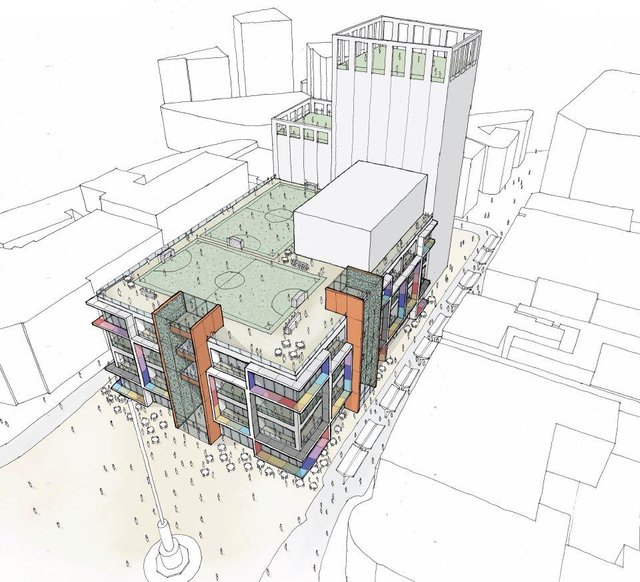
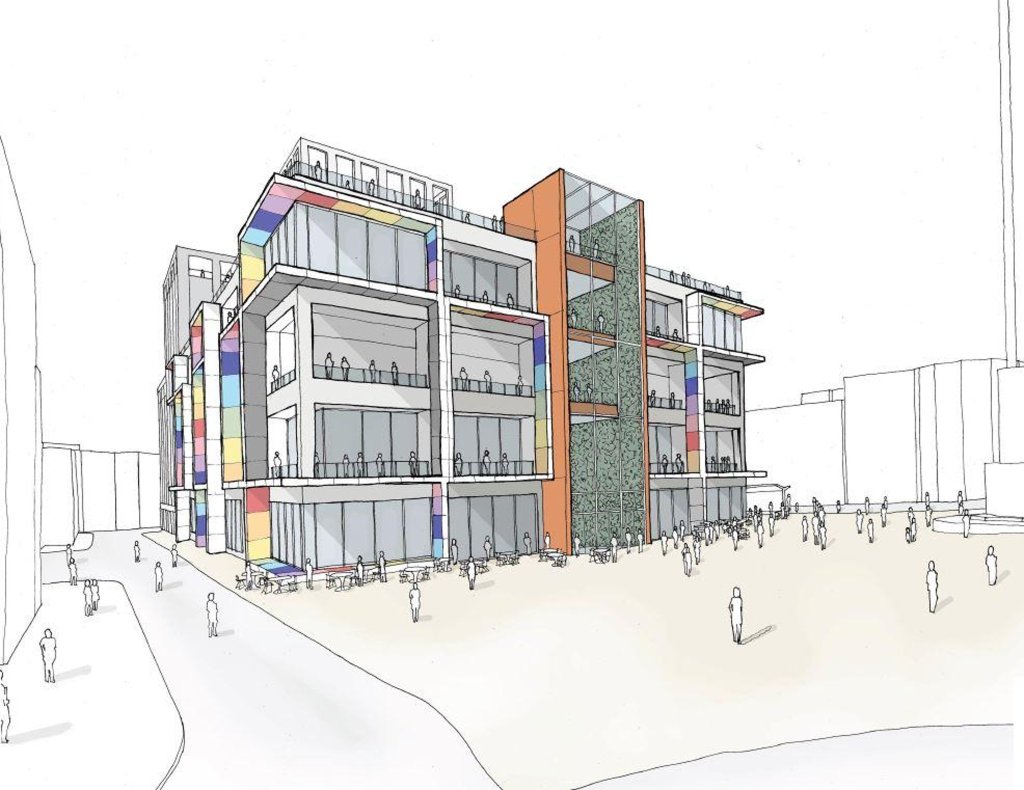
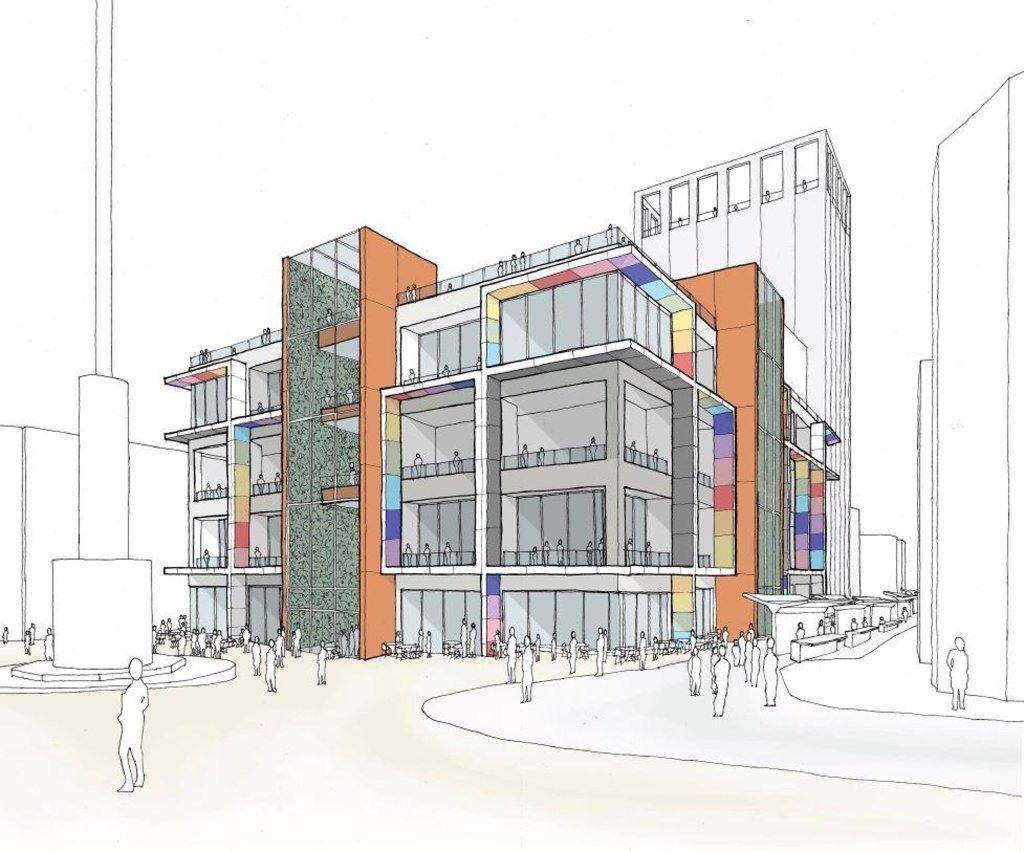
Last week, a top Sheffield businessman urged Sheffield City Council to work fast to secure a £100m proposal to convert the vacant John Lewis department store into ‘Sheffield Rules’ – a museum celebrating the city’s roles in the origin of the game, have-a-go football experiences with celebrities, community pitches on the roof, and bars and restaurants on the ground floor opening onto Barker’s Pool.

The building would be revamped with ‘football architecture’ including a central column to represent a halfway line and a tunnel leading to the roof. The proposal could also see the John Lewis car park replaced by a residential tower.

Patrick Abel, corporate finance partner, at Hart Shaw Chartered Accountants and Business Advisers, compared delaying the potential deal with failed plans by developer Hammerson to build Sevenstone shopping centre.

Unfortunately, there may be more questions to be asked rather than the simple decision-making process.

John Lewis announced it would not be reopening its Sheffield store in June, and with the lease due to revert to the council, it quickly appointed Fourth Street, a placemaking company which provides strategic and commercial advice to unique destinations and unusual property developments. The result of its work won’t be released until early next year, and the public will be consulted on plans.

The ‘Sheffield Rules’ plans, complete with artistic impressions of the development, have appeared barely five months after the announced closure and states that the company behind the scheme is a global sports brand. This might suggest that the idea was in place long before John Lewis announced it wouldn’t be opening its doors again.

Is the ‘Sheffield Rules’ proposal part of Fourth Street’s work to recreate the former department store? I think not. “The response (to Sheffield City Council) has been positive,” says the developer, “But they can’t commit because they are going through their own processes.”

Why hasn’t the global sports brand been named? The involvement of a credible sponsor would surely add weight to any development. Remember, there is already the National Football Museum in Manchester, and might we seriously expect tourists to choose between the two?

And, of course, there are problems that surround the empty shop. Rumours abound of its poor condition – lack of investment by John Lewis and the presence of asbestos – and without compensation agreed, any plans might be a while away yet.

Call me sceptical, but I think the announcement came too soon, and we need to know more about its integrity before we get too excited. The ‘Sheffield Rules’ idea is brilliant, I hope it comes to culmination, but we’ll have to wait until next year to find out.

© 2021 David Poole. All Rights Reserved

Categories
Buildings

The mystery of the Moorfoot building

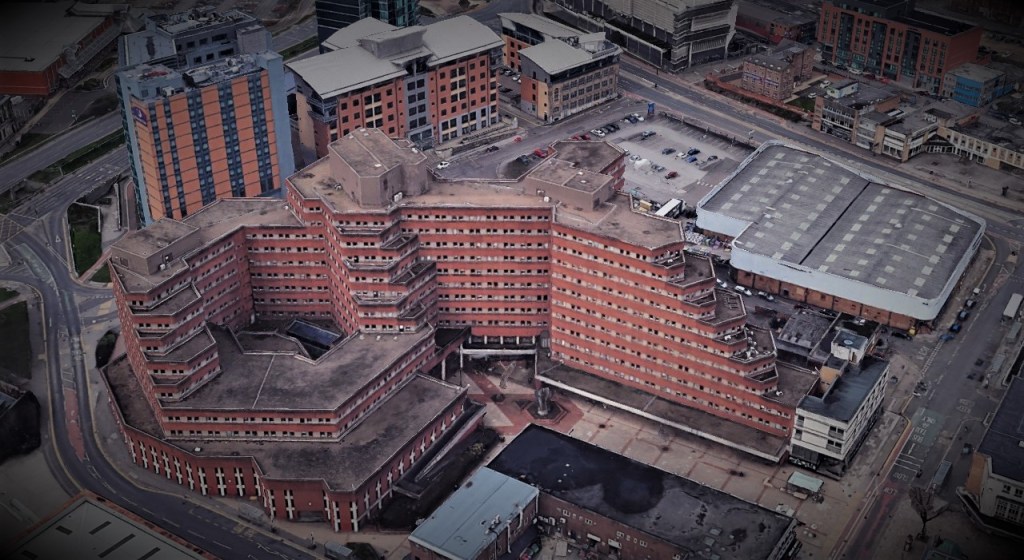
Moorfoot. A late seventies Government-built office complex that opened in 1981. Now home to Sheffield City Council. Photograph: Google

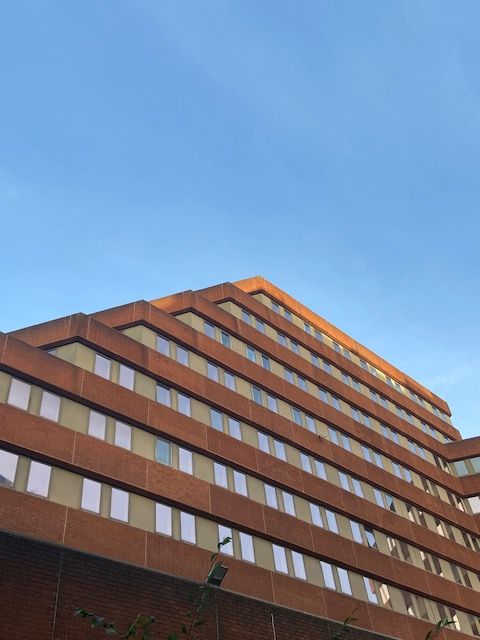
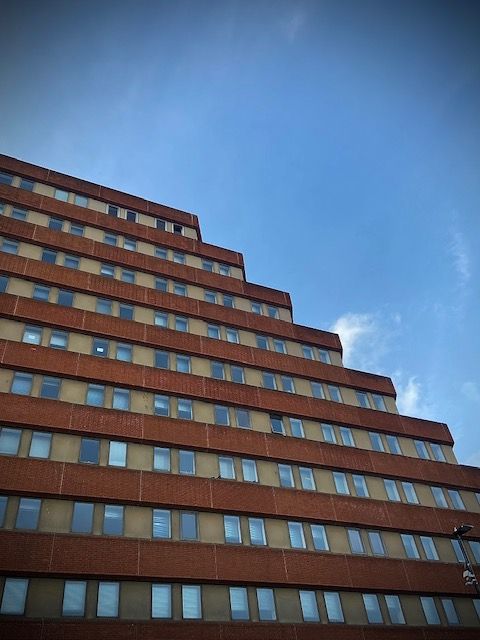
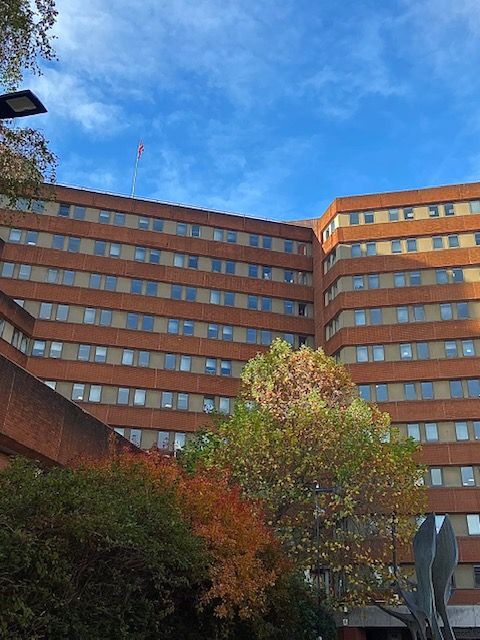
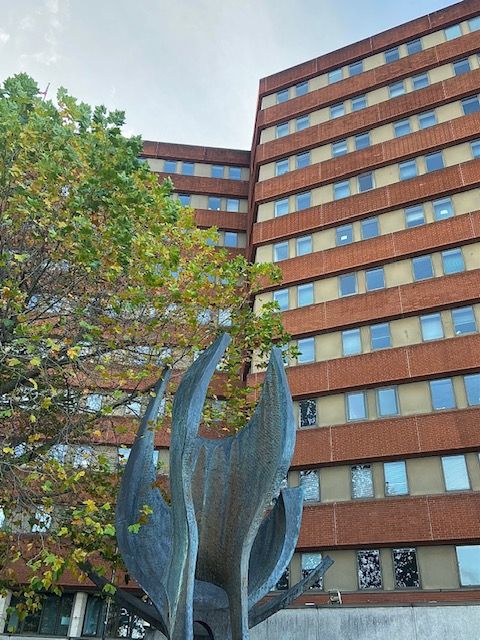
Moorfoot is a brute of a building, dominating the Sheffield skyline, and 40 years after it opened, remains one of the city’s most controversial structures.

Its origins are in 1973 when Edward Heath’s Conservative Government created the Manpower Services Commission (MSC), to co-ordinate employment and training services in the UK through a ten-member commission drawn from industry, trade unions, local authorities and education interests.

Pat Duffy, the Labour MP for Attercliffe, excited by the prospect of 2,000 jobs, campaigned for the new headquarters to be built in Sheffield. Two years later, Harold Walker, Under Secretary at the Employment Department, told the House of Commons, “The decision has been made to locate the headquarters in Sheffield.”

It was an accomplishment for a down-at-heel northern city, but the citizens of Sheffield weren’t prepared for what came next.

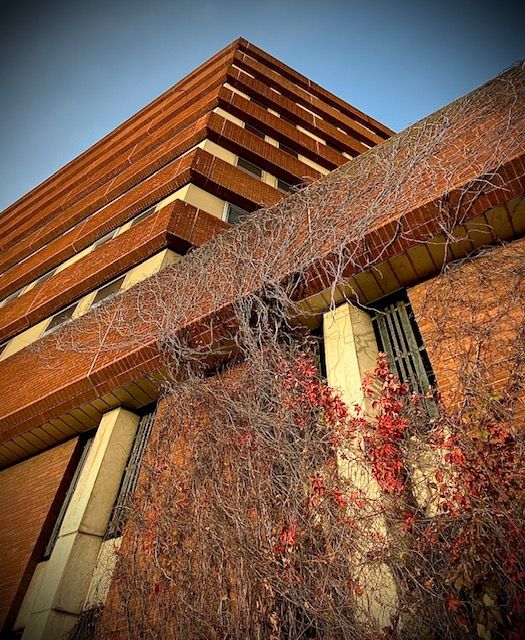
The futuristic new headquarters was designed by the Government’s Property Services Agency – “A truly monolithic brutalistic office building. Red brick bands between rows of windows separated by concrete panels.” – eleven storeys high, with stepped levels across east, west, and north wings. Something of a pyramid, it earned nicknames like the ‘Aztec Temple’ and ‘Dalek City.’

Photograph: DJP/2021

That it would be built on land at the bottom of The Moor was even more controversial, cutting off Sheffield’s main shopping street from busy London Road, and depriving road and pedestrian traffic of a popular and historic route.

To compensate, it was designed to allow pedestrian access through the building, starting with an elevated ramp near the corner of Young Street and South Lane, before proceeding via a tunnel through the building, exiting above the car park, and using ramps to ground level on The Moor.

The route never opened, allegedly because IRA activity posed a threat to a government building, and the upper parts of the elevated walkway were left suspended mid-air before eventual removal.

The MSC opened in 1981, and for such a high-profile building, it was shrouded in mystery. Apart from the cavernous office-space, restaurant, bar, and basement squash court, were there really underground nuclear bunkers and a luxury apartment for Government hierarchy? Even today, the amount of information available about the building is incomplete – no floor plans, no design architect, no history forthcoming.

If ever a building divides opinion. The Moorfoot Building will probably escape demolition, unlike many other Sheffield buildings built in the 1970s. Photographs: DJP/2021

The MSC building was famous for its management of the Youth Training Scheme and various other training programmes intended to help alleviate the high levels of unemployment in the 1980s, but after 1987 the MSC lost functions and was briefly re-branded the Training Agency (TA), before being replaced by a network of 72 training and enterprise councils.

The MSC Building gave way to other Government agencies, including the Department for Work and Pensions (DWP) and the Home Office. However, it was too big and expensive to maintain, with departments vacating over a twenty year period.

In the late 2000s, the MSC Building was bought by Sheffield City Council, and with demolition in mind, wanted to create a new financial services district in its place.

The timing could not have been worse, and the monetary crisis of 2007-2008 prompted a rethink, and the building was overhauled, renamed Moorfoot, with potential office space for 2,600 council employees, and consolidation of various departments from around the city centre.

As for the Moorfoot’s future, it is likely to stay, worthy of a facelift and a bit of greenery might not go amiss. The iron gates at ground level could be opened to allow public access between The Moor and London Road. And, as the aerial photograph shows, there is a chance to create a green square in front of its main entrance (demolition required).

Photograph: DJP/2021

See also Crucible Fountain and Judith Bluck

© 2021 David Poole. All Rights Reserved

Categories
Buildings

Rockingham House: from tax offices to studio apartments

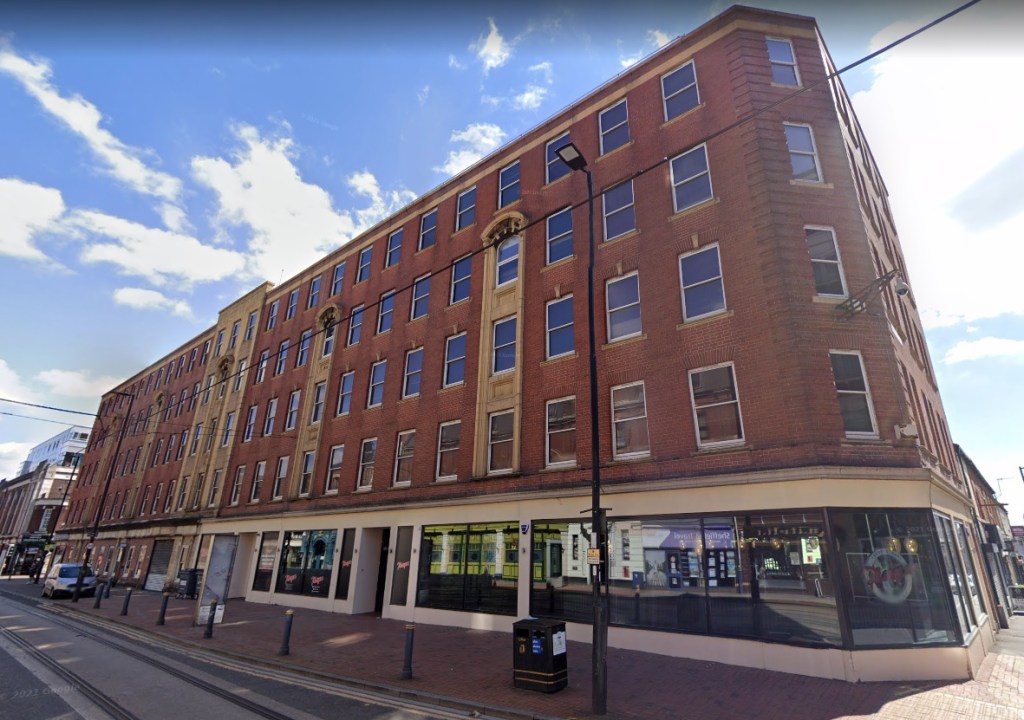
Rockingham House. Despite the modest 1930s design the building has aged well. The former Inland Revenue office is fronted by West Street and bordered either side by Rockingham Street and Westfield Terrace. Photograph: Google

This building on West Street is typical of inter-war buildings. Plain and simple. The excessive cost of construction materials during the 1930s meant structures had to be functional rather than decorative. The substantial use of red-brick was symbolic, and certainly conceived in the architects’ department at the Government’s Office of Works.

Revenue Buildings was built in 1937 for the Inland Revenue to replace nine district offices. In June of that year over 300,000 files of the District Valuer were moved here, as were something like 100,000 files of the Inland Revenue. Once completed, it housed all departments of the Board of Inland Revenue in Sheffield, including Tax Inspectors, Collectors, and Valuation.

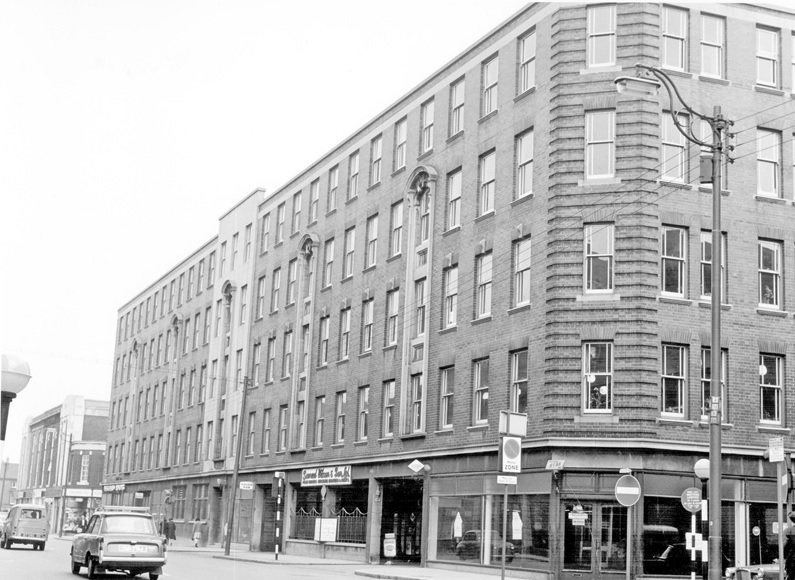
It occupied the four upper floors, and the west part of the ground floor was used as motor vehicle and tractor showrooms for Samuel Wilson & Son. Motor vehicle retail appears to have continued until recent times, although this part is now occupied by Players Bar.

Revenue Buildings. In 1964, part of the ground floor was still occupied by Samuel Wilson & Son. Photograph: Picture Sheffield

The Inland Revenue merged with HM Customs & Excise in 2005 and the site handed over to the Department for Work and Pensions. It later vacated the site (now known as Rockingham House) and most office space became vacant.

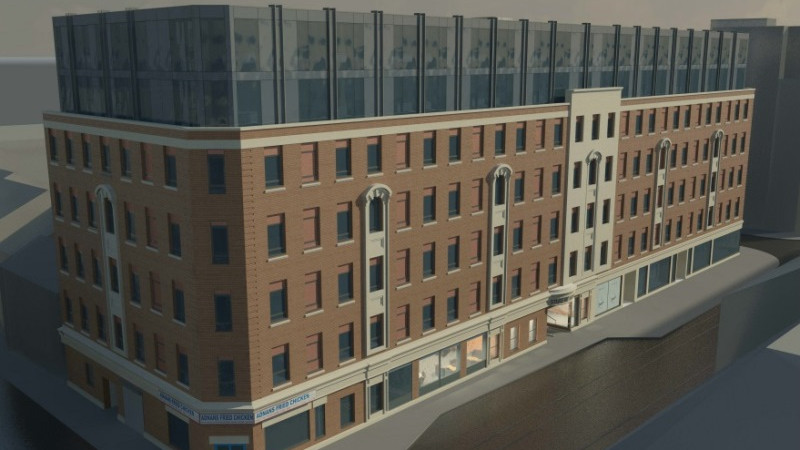
The block was sold in 2011 and the new owner granted planning permission in 2019 for conversion and extension of the building for student accommodation. This has been replaced with a new application to convert and extend the property into 162 build-to-rent studio apartments with a modern two-storey roof extension.

Oakstore, supported by Bond Bryan and Urbana Town Planning, has submitted an application to Sheffield City Council for the redevelopment of Rockingham House. Approval is sought for the reconfiguration of the existing buildings and a two-storey roof top extension to provide 162 build-to-rent studio apartments. Photograph: Insider Media

© 2021 David Poole. All Rights Reserved.
Categories
Buildings

The rise of facadism – new buildings with old fronts

Cambridge Street, Sheffield. Photograph: DJP/2021

Whenever you see an old facade with a new structure behind it, this tells you that a building of distinction once stood there that simply could not be demolished, and the compromise which arose was to keep the front wall. The rise of facadism shows how far the power balance has shifted away from conservation towards redevelopment. Retaining the facade is an unwelcome condition of planning permission when their preference would probably have been complete demolition.

This building, at the bottom of Cambridge Street, Sheffield, shows that the facade is retained while its interior will be replaced with modern concrete and steel. This will apply to almost all the Victorian buildings being redeveloped on Pinstone Street, and planning permission has been granted to do the same to Chubby’s and the Tap and Tankard further up Cambridge Street.

© 2021 David Poole. All Rights Reserved.
Categories
Buildings

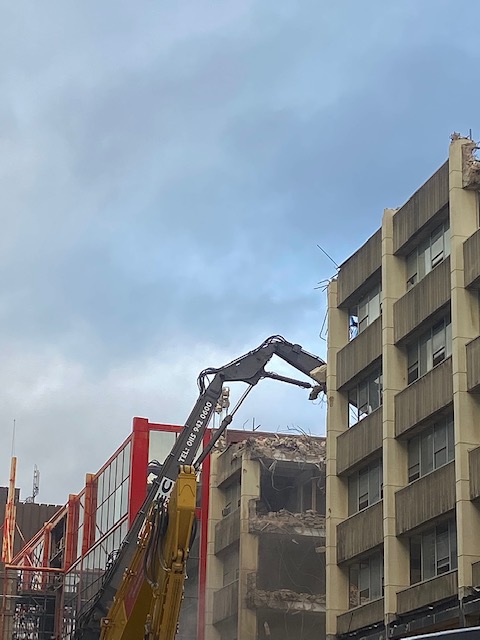
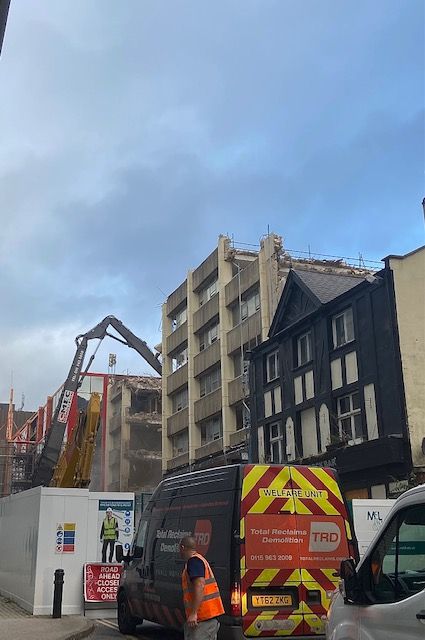
Coming down: the last days of Barker’s Pool House

Demolition underway at Barker’s Pool House on Burgess Street. Photograph: DJP/2021

Sheffield city centre has never seen so much demolition and construction. The latest to fall is 1970s Barker’s Pool House, on Burgess Street, once linked to John Lewis by its high covered footbridge. The bridge has already gone, and now the bricks and mortar of the former office block will soon be no more. As part of the Heart of the City II development, it will be replaced by a stylish new Radisson Blu hotel, with its retained Victorian entrance on Pinstone Street. The William Mitchell ten-panel abstract reliefs, commissioned in 1972, were removed last year and will be resited in nearby Pound’s Park once completed.

The former Yorkshireman public house stands adjacent to Barker’s Pool House. Its own fate is uncertain. Photograph: DJP/2021

© 2021 David Poole. All Rights Reserved.
Categories
Buildings

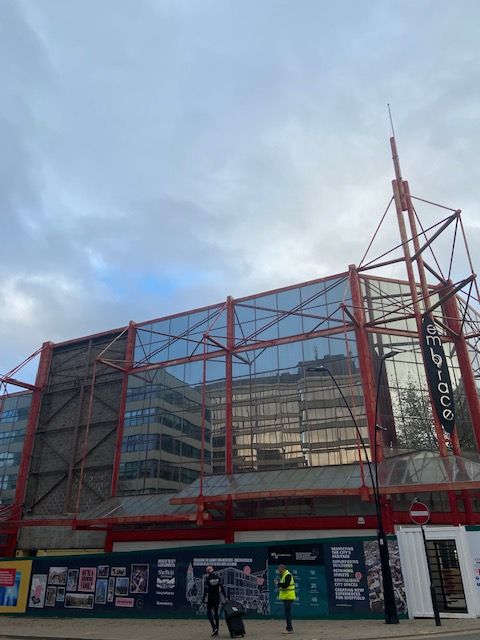
Revealing what’s hidden behind that glass facade

Photograph: DJP/2021

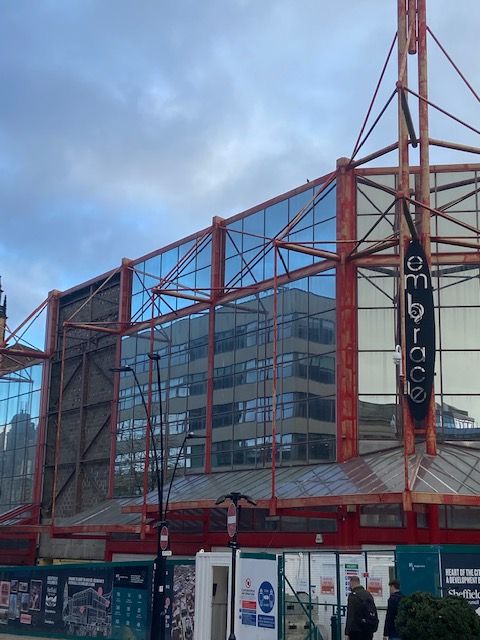
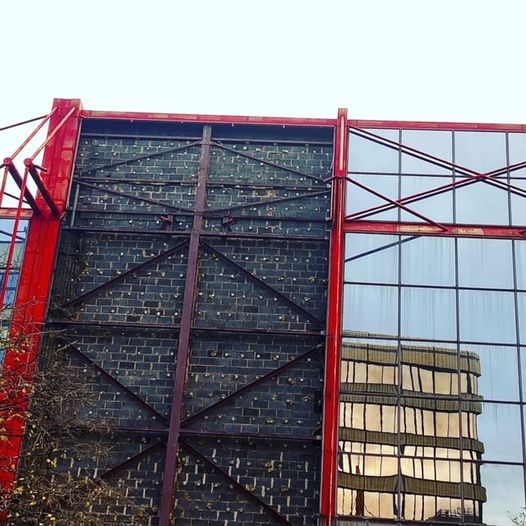
It seems that nobody liked the former Odeon in Barker’s Pool. The red steel and glass facade never caught the imagination of Sheffielders. If we hated the exterior, we won’t like what was behind – plain boring brickwork – revealed in latest Heart of the City II works.

Photograph: DJP/2021

The whole exterior will be refaced to become the Gaumont Building, supposedly taking inspiration from the previous building’s origins as the Regent Theatre, later the Gaumont Cinema. The new design is by Sheffield-based HLM Architects.

Built by the Rank Organisation in 1986-1987 as a replacement, bosses realised it wasn’t cost effective to run two Odeons in the city centre, and one had to go, closing in 1994, and later becoming a nightclub.

The final use for the building has yet to be confirmed.

Photograph: DJP/2021

© 2021 David Poole. All Rights Reserved.
Categories
Buildings

No buyer for Sheffield’s Old Town Hall

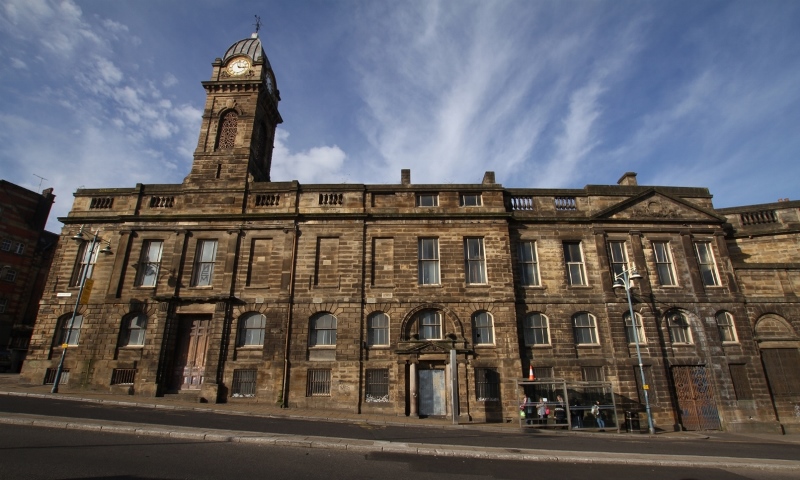
Sheffield’s former Town Hall and Crown Court on Waingate and Castle Street. Its condition is a cause for concern. Photograph: Insider Media

The Old Town Hall remains in predicament after failing to sell at auction. It was to be sold by Allsop auctioneers but attracted no bids – despite a sale figure of £750K, a big drop on the original asking price of £1.35m.

The Grade II listed building was put up for sale by receivers appointed after the collapse of Aestrom OTH Ltd, the company set up to restore the building.

The Old Town Hall was commissioned to replace the original one next to the Parish Church and designed by Charles Watson in 1807-1808. As well as housing the Town Trustees it also accommodated Petty and Quarter Sessions.

The building was extended in 1833 and again in 1866 to designs by William Flockton and his partner George Abbott, linking the courtrooms to the neighbouring Sheffield police offices by underground tunnels. When the current Town Hall was built in 1891-1897 it was extended by Flockton, Gibbs & Flockton to become Sheffield Crown and High Courts. New court buildings were built during the 1990s and the Old Town Hall has stood empty ever since.

The Old Town Hall is significant to Sheffield’s history and its demise has been shocking. The fabric of the building has rapidly worsened and water damage has caused considerable damage to its interiors. Restoration costs are likely to cost millions of pounds.

Its location next to the Castlegate development, recently awarded Government funding, might have made it an attractive acquisition, but developers are at a loss as to what function it might be used for. Until the Castlegate project gets underway the Old Town Hall will stand shrouded in misery.

There are now calls from heritage groups for Sheffield City Council to step in and make good the building, as well as seeking out partners to develop a practical and feasible solution.

© 2021 David Poole. All Rights Reserved.
Categories
Buildings

The Sheffield ‘Cheesegrater’

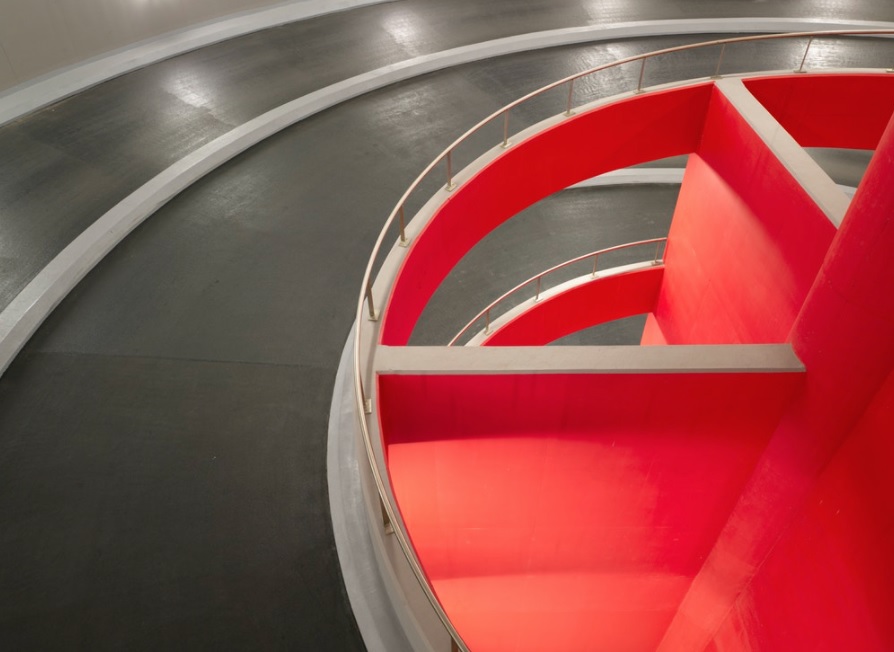
Q-Park Charles Street, with aluminium solar shading, was designed by Allies and Morrison, also responsible for building Nunnery Square – Phase 1. Photograph: mcmedia

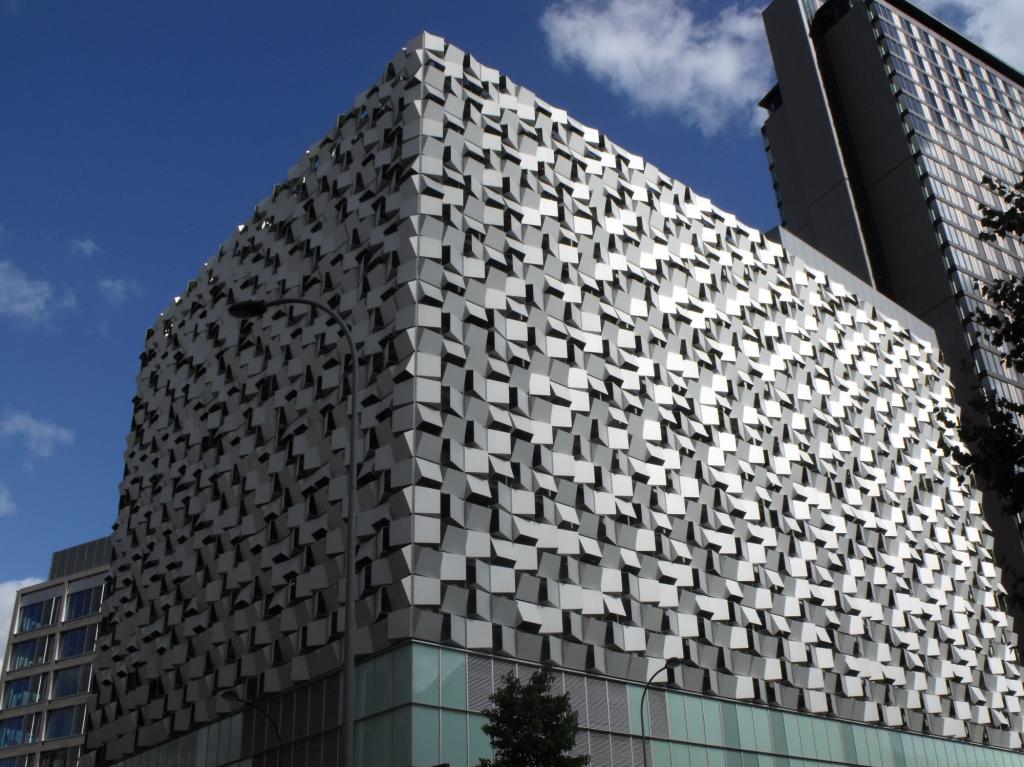
It is one of Sheffield’s oddest buildings, and probably one of the most photographed. Liked by many. Hated by many. The Q-Park, Charles Street, opened in 2008, and the extraordinary steel cladding merited the ‘Cheesegrater’ name.

The ten-storey car park was designed by architects Allies and Morrison, and constructed by Sheffield-based J.F. Finnegan  as part of the Heart of the City project, which also included the Peace Gardens, Winter Garden and Millennium Gallery.

The small parcel of land it sits on was once the site of the Yorkshire Grey, a public house dating to 1833, once known as the Minerva Tavern and later Bar Rio, and so there was understandable anger when it was demolished.

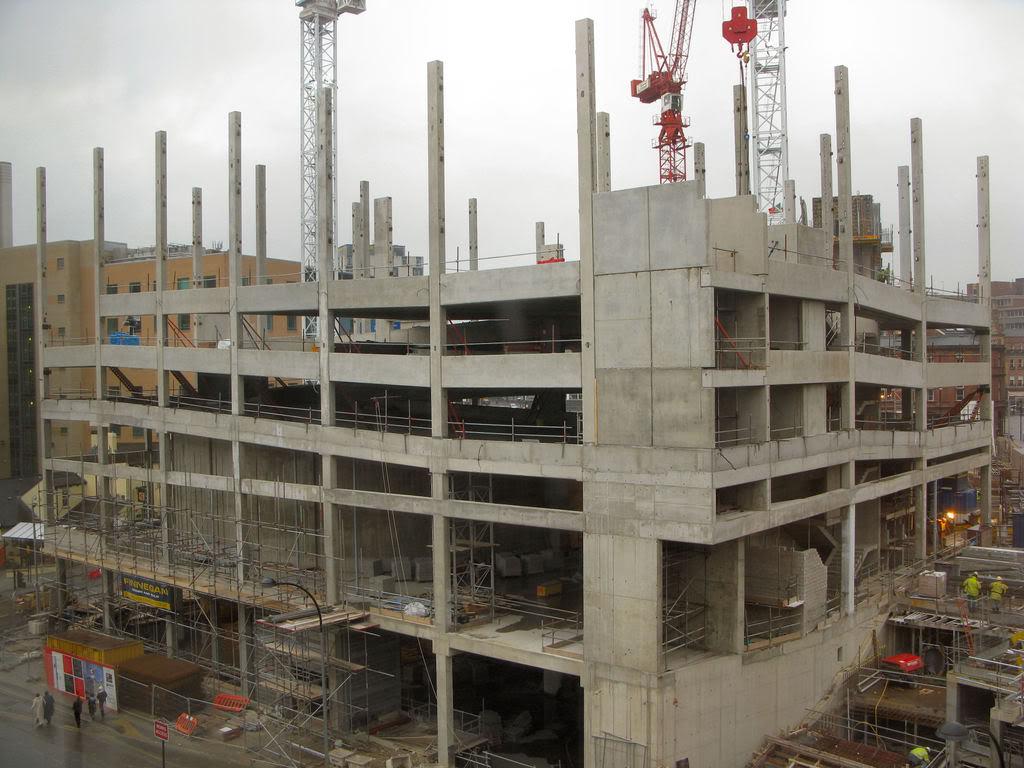
The frame is a precast concrete column and beam construction used to form the main car park deck. Photograph: SRC Ltd.

In its place rose this ultramodern structure with its nerve-jangling circular ramp leading to 520 parking spaces above. Car parks can be unattractive, and the precast concrete columns, walls, and floors, were hidden behind a screen of folded, anodised aluminium panels.

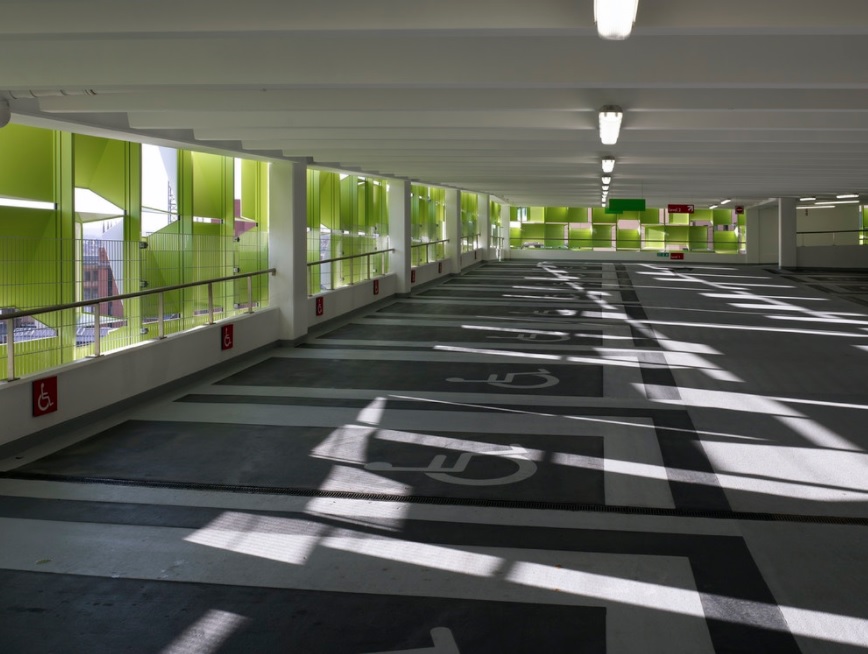
The external envelope, painted green on the inside, was each manufactured from a single sheet of folded aluminium, cut to an angle on two sides, and hung in four different orientations, providing natural ventilation.

“By day, a varied monochromatic pattern of light and dark is achieved over each of the elevations, with each panel giving a different light reflectance from its surface. The variety of open ends and tilted faces transform the surface as daylight fades. By night, the interior lighting bleeds between each panel and creates a non-uniform composition of light and dark across the surface.”

Photographs: Dennis Gilbert/VIEW
Photograph: mcmedia

Love it, loathe it, the car park has put Sheffield on the world map. A year after completion, it was named the ‘third coolest in the world’ by a car parking company and a design magazine. In 2019, it was voted the world’s most unusual quirky car park – beating off competition from Tokyo, Miami, and Australia, and was voted the most unusual car park in the UK in 2020.

There are even claims that Harvard University, in Cambridge, Massachusetts, built its new Science and Engineering Complex following the cheesegrater style.

Maintenance work to repair push fit friction fittings on the exterior cladding. Photograph: CAN Ltd UK

© 2021 David Poole. All Rights Reserved.
Categories
Short Stories

A Ghost Story: Inspector Woodhead meets Flash Billy

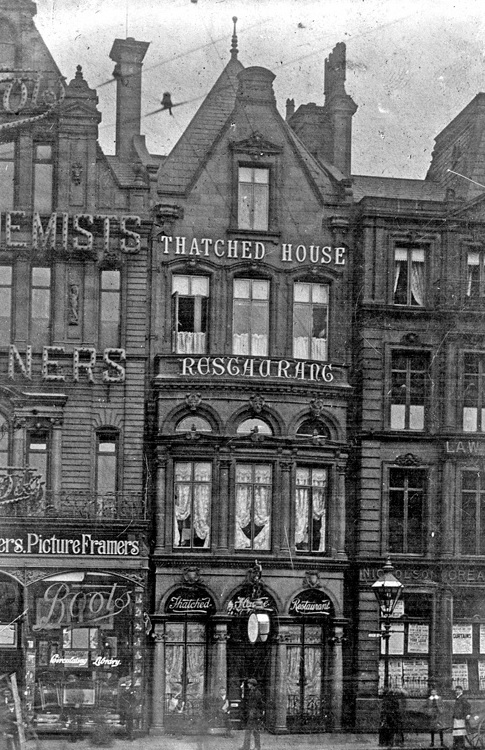
Inspector Woodhead stepped out of the hansom cab that had brought him from the Midland Station to the Thatched House Restaurant. It was a tall, four-storey building, sandwiched between Boots Cash Chemist and an auction house.

He placed his copy of The Times under his arm, doffed his hat at a passing lady, and stepped inside. It was surprisingly quiet for Friday afternoon, but he had no intention of eating. Instead, he made his way towards a staircase that disappeared into the basement.

At the bottom, he pushed open a glass door and walked into a small smoke-filled room. Behind the bar an elderly man stood anticipating his next customer, of which there were few.

Inspector Woodhead nodded to the barman and ordered a tankard of an unusual Sheffield brew. He looked around and found the person he was looking for. A strange young fellow sat at a corner table staring at the glass of whisky in front of him.

Woodhead grabbed his ale and walked over to join him. He sat down beside and carefully placed his hat, newspaper, and pipe, on the table. Then he took a swig of strong northern beer.

“It’s a miserable day,” Woodhead said to his neighbour.

“Do I know you?” scowled the young man.

Woodhead ignored the question. He filled his pipe with tobacco, lit it, and sat back.

“No, sir. You don’t know me, but you could say that I know you.” He puffed at his pipe. “I am Inspector Woodhead of Scotland Yard and I have been looking a long time for you”

“Looking for me? Whatever for?”

“Sir. All in good-time, but first let me get you another drink.”

The young man tugged nervously at the sleeve of his purple suit.

“You are William Burnand Davy, are you not? There are some in this city that call you the Second Marquis of Anglesey behind your back, and in the cafes the waitresses know you as ‘the millionaire.’ You are the grandson of the late William Davy, the well-known proprietor of the Black Swan Hotel and then the Thatched House, a public house that this restaurant is named after.”

“State your business, I cannot sit around all day,” Davy demanded.

“In 1893, your grandfather died leaving a windfall of twelve thousand pounds which came to you when you were 21 years of age.” Woodhead paused to drink. “That was two years ago.”

“Inspector, I cannot see why my financial situation is any concern of yours. What is it you want? Are you demanding money from me? If you are, I must tell you…”

Inspector Woodhead stopped him and smiled.

“You have been a very extravagant young man. You went down to London for a season, spent a good deal of the summer at Bridlington, stayed at the leading hotels in Sheffield, and spent seven months visiting Australia and Ceylon.”

“It was my money to do whatever I wished,” sneered Davy.

“You bought a motor car, and had a chauffeur attired in a striking uniform. The car and its driver were often seen attracting attention outside Sheffield’s hotels. You liked driving, but I understand that you had your licence endorsed in Bridlington for reckless driving.”

Davy swallowed his whisky and the barman brought him another.

“Your ties were the talk of all the ladies, your diamond rings were the price of a manufacturer’s ransom, and your scarf pins included some exquisite gems.” Woodhead paused. “Yes. All eyes were instinctively drawn to you… you were known as carefully-groomed Billy. Trousers that were not properly creased were never worn again, always turned up to show your delicately-coloured silk socks, and your fancy waistcoats and the cut and colour of your suits, might easily have been taken for an imitation of Vesta Tilley.”

“There is no need to be so rude.”

“Facts, my boy, facts,” said the Inspector. “One of your eccentricities was to buy costly presents for girls. Such folly, because after only a few hours acquaintance you’d take her to a jeweller’s shop.”

“My friends told me not  to waste money on them,” Davy conceded, “But I treated it as a joke.”

“Ah, yes. Your friends. Those who hung around you for hours and days and weeks. Do you remember the day you walked into the Ceylon Café and joined six of your fellows? You cried, ‘Let’s all go to London,’ and ‘I’ve plenty of money,’ you shouted, and pulled a handful of gold out of your pocket, and to London you all went.”

Woodhead sat back and puffed on his pipe.

“Inspector, you still haven’t told me the reason for your visit.”

“Ah yes,” Woodhead conceded. “About twelve months ago you met Irene Rose Key, a tall, good-looking girl, well known in West End establishments, and in the neighbourhood of Piccadilly. You became infatuated, and impressed her with stories of your fortune, and last May you persuaded her to marry you at Strand Registry Office.”

“Inspector, I think you have the wrong person, because I am not married.”

“Sir. I think you will find that I am correct. Queenie Key was popular in all the music halls and public houses of Leicester Square. And it might have been a happy marriage had it not been for one simple truth.”

“And what might that be?”

“Because at the time of your marriage your financial position became exceedingly embarrassed. Your money ran out.”

Davy laughed for the first time and shouted for another whisky.

“Inspector, this is a joke. I have all the money I need, and if you care to go outside you will see that I have a six-cylinder Belsize car waiting. And to prove there are no hard feelings, I have a sheaf of bank notes and we’ll share a bottle of champagne.”

“It is not a joke. You both came north, but your family refused to accept Queenie, so you returned to London and lived at hotels. Coming to the end of your resources, however, you separated, she returning to the West End and you wanting her back.”

“I have never been married.”

“And so, the purpose of my calling on you today is to discuss the events of eighteenth November 1908. You met your wife on Wednesday morning at a public house in the Haymarket. You both remained until the evening, dined together, and then took a taxi-cab for King’s Cross, your wife under the impression that she would leave you there, that you would return to Sheffield, and eventually leave the country.”

Davy lit a cigarette. “This is beginning to sound like a fantastic crime novel. What am I supposed to have done next?”

“Your wife was wrong. It was never your intention to leave her. You argued in the taxi-cab as it passed along Shaftsbury Avenue, Hart Street, and Bury Street, and into Montagu Street.” Woodhead puffed harder on his pipe. “And in Montagu Street you seized her by the neck, drew a revolver from your pocket and fired two or three shots at her head.”

“I did what?” Davy laughed. “I’m sure I would remember if I had killed somebody.”

Inspector Woodhead unfolded his newspaper to reveal the headline ‘TAXI-CAB TRAGEDY – MURDERER A SHEFFIELD MAN – FORTUNE INHERITED AND SQUANDERED.” He shifted in his seat and faced the young man.

“Sir, there is a simple reason for you not remembering. After you killed your wife, you turned the revolver against your own head and shot yourself.”

“I shot myself?”

“Yes, Mr Davy. You are quite dead.”

“Am I to suppose you have come to arrest a dead man?”

“No. That is not my style anymore. I simply came to make you aware of your crimes.”

“And I have heard enough.” Davy jumped up, gathered his straw boater, and looked down at Woodhead. “I shall leave now and hope to never see you again.”

“Sir. You will not hear from me again. You are free to go. And when you leave by that door, I shall not be able to follow you.”

“I have never heard such nonsense in my life. Good day, Inspector.”

Davy snatched his cane and strode towards the door. He hesitated before opening it and turned back to face the seated Inspector.

“A most grotesque story if ever I heard one. But I have one more question before I leave. If I shot a woman and then turned a gun upon myself, why am I stood here talking to you, and why won’t you arrest me? … No, Inspector. Please do not answer that. Fanciful rubbish. I am leaving.”

William Davy disappeared through the door, closed it behind him, and Inspector Woodhead looked long and hard at it. Then he folded up The Times, relit his pipe, and decided to finish his ale.

“Sir. You are dead,” he murmured. “You have been dead for many years. Only you had chosen not to remember and have sat by yourself in this little room ever since. It was time for you to face the consequences.”

Woodhead felt tired after his long journey and needed to sleep, but here would not do. He closed his eyes, resisted the urge to doze, and when he opened them, he was in an unfamiliar room.

“Time for me to go as well.”

The Inspector gathered his belongings, placed the hat on his head, and left through the same door he had entered. He climbed strange stairs into the dark restaurant and looked about him. How sad, he thought, that it was not a restaurant anymore. Out of the corner of his eye, he caught the shape of a restless black figure.

“Hello, Mr Davy. I see that you are still here. It must be well over a hundred years now.”

Inspector Woodhead stood up straight and disappeared through the glass window that had once been the entrance to the Thatched House Restaurant. Knocked down and rebuilt I should not wonder, he thought.

Outside, the Town Hall clock struck midnight, and Inspector Woodhead turned to look at the building he had just left. BOOTS – PHARMACY – BEAUTY. It was good to see that Boots the Cash Chemist still existed. And then he made his way across High Street, stepped over Supertram tracks, and completely disappeared, never to be seen again.

© 2021 David Poole. All Rights Reserved.