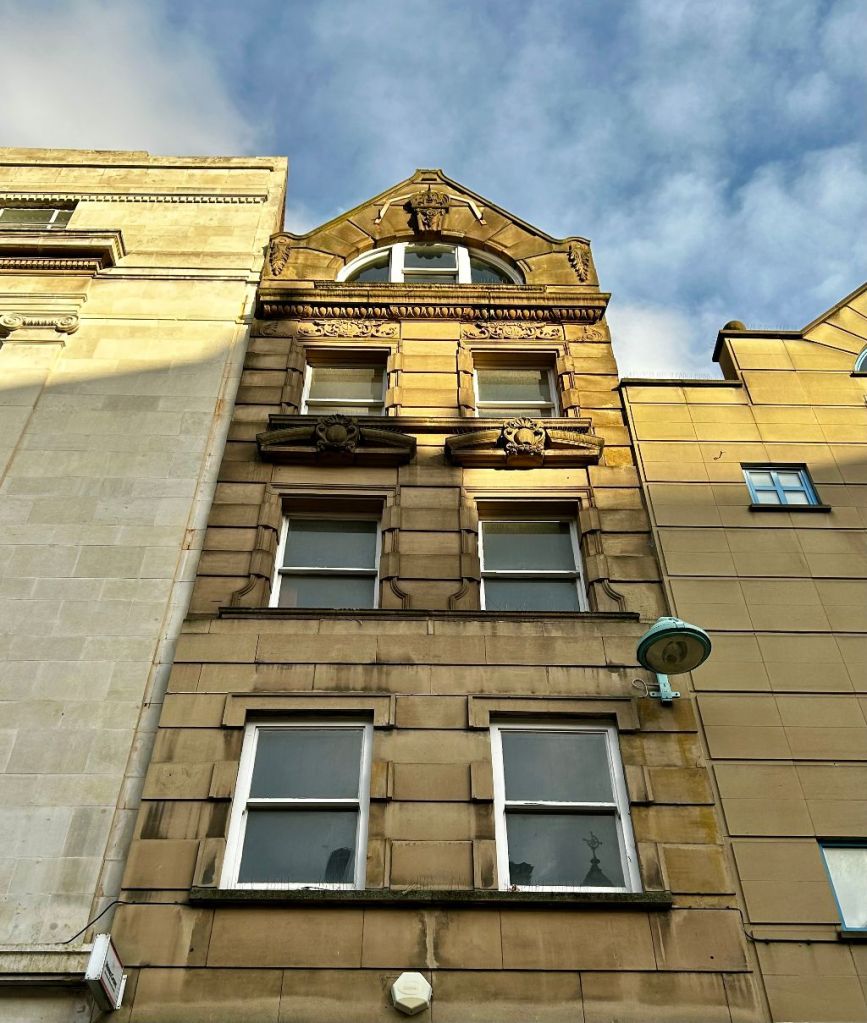
No.37 Fargate, a Victorian survivor. Image: DJP / 2025
If buildings could talk, they might be able to fill in the blanks. Like when this building was constructed, what the carvings on the outside mean, and might provide us with forgotten stories of the people who passed within its walls. It might also be dismayed to see Fargate as it is now.
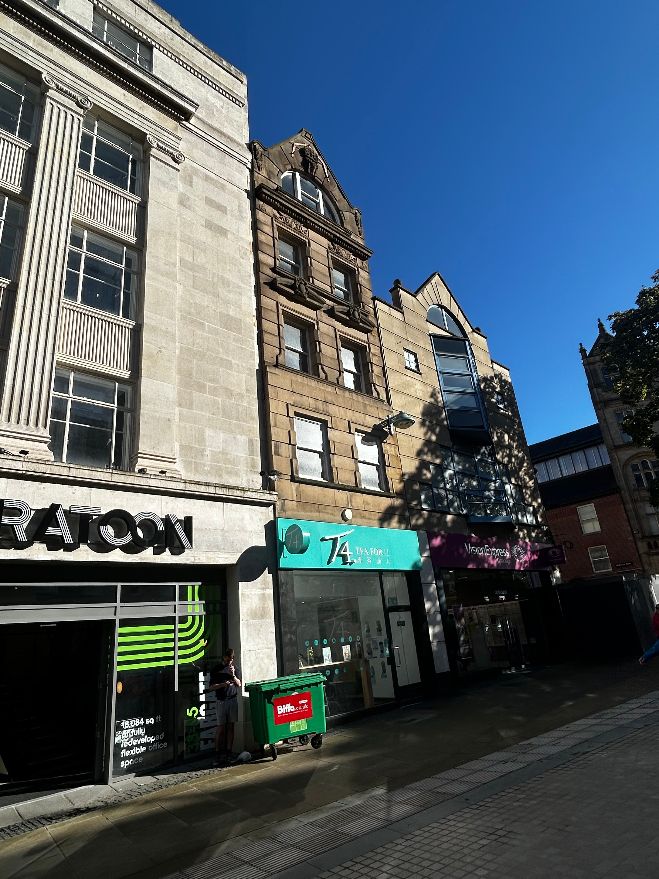
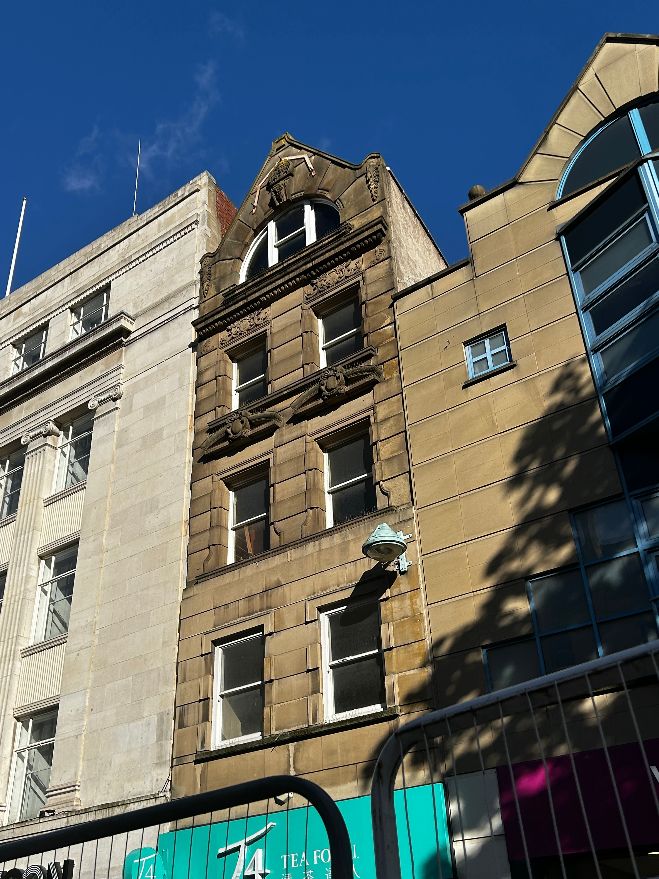
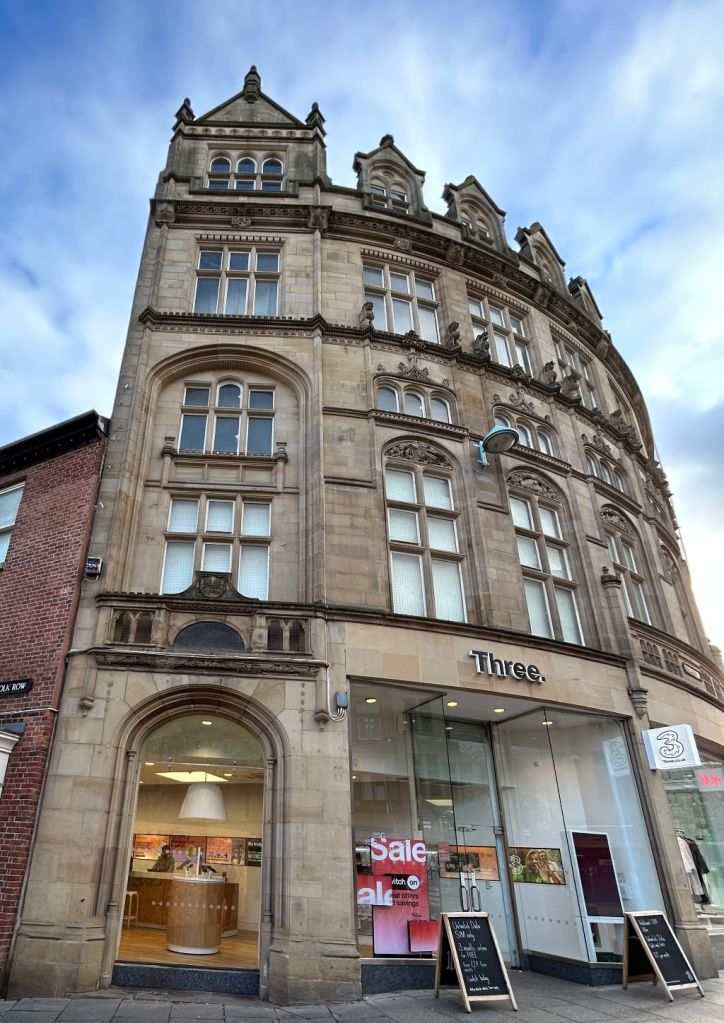
This is No. 37 Fargate, with its grand Victorian (or might that be Edwardian) facade, home to T4, a Taiwanese tea store, which opened earlier this year, and ended a few years of abandonment.
The interesting thing about the building is that it is sandwiched between two newer constructions, and the last in this block to survive street improvements from the 1890s onwards. Look up the next time you pass, and you’ll see what I mean.
The likelihood is that it was built for one of Sheffield’s wealthy entrepreneurs who snapped up this sliver of land as part of the street widening programme and enjoyed the rents that the ground floor shop provided.
The Victorians turned Fargate into a shopping street, and prior to this, the site had been home to businesses including the Misses Innocents’ hosiery and fancy goods store, Singer’s Sewing Machines, Bagshawe Bros, bicycle shop, and a brief spell as an auction house.
T4 – a Taiwanese tea shop that opened in 2024. Image: DJP / 2024
The property was likely built in 1903-04, and taken by Bonnet and Sons, who installed mahogany fittings, and turned two long rooms into a high-class cafe.
The business, founded in 1880 by Swiss chocolatier Louis Bonnet, had other concerns in Bath, Bristol, Scarborough, and Bradford, and specialised in freshly made chocolate and all kinds of French confectionery, catering for the ‘best class of people’ who were prepared to pay a moderate price for the delicacies.
“Bonnet and Sons are preparing special novelty boxes filled with these sweetmeats. The cases, attractive in character, have been brought from Paris and Vienna, but are filled in Sheffield immediately before their despatch to a customer, with the result that the chocolate and fondants are quite fresh. They are just the kind that go to ornament the supper table at a party or are delightful as a dessert. They are typically French. Two dozen of these petits gateaux are put in the boxes to retail at two shillings. The best way to obtain an opinion is to visit Bonnet and Sons’ Cafe where, together with a cup of delicious tea, coffee, or chocolate, the confectionery can be enjoyed.” – Sheffield Independent – November 1905.
The cafe closed in 1912, as eventually did the other branches, except for Scarborough, where astonishingly, the business survives under different ownership as Bonnets on Huntriss Row.
Between 1912 and 1922, the building was the Sheffield outpost for Van Ralty Studios, owned by Harry Wolff, a portrait photographer, with studios in Liverpool, Manchester, Nottingham, Oldham, and Bolton. Its work continues to be popular, the vintage postcards and photographs eagerly sought by collectors.
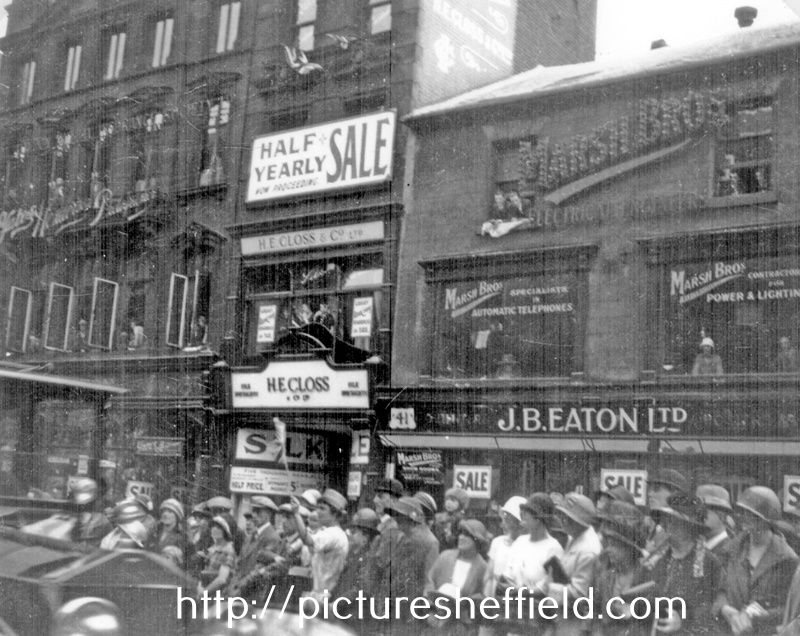
There are a couple of images in Picture Sheffield’s extensive collection that shows No. 37 Fargate belonging to H.E. Closs and Company, silk merchants. This was Harold Edward Closs’s first shop, but he quickly expanded with branches across the country. His buyers visited the Continent to choose the latest modes of colour and design, providing its shoppers with the latest silk fashions. It ceased trading in the 1930s, and Harold Closs set up a new business with Cyril Hamblin and still trades in the southeast as Closs & Hamblin (formerly C&H Fabric Specialists).
Unidentified royal visit passing Fargate, possibly Elizabeth, Queen Mother, 1934, shops include Nos. 41 – 43 J.B. Eaton Ltd., drapers and Marsh Brothers (Electricians) Ltd., No. 37 H.E. Closs and Co. Ltd., silk merchants, No. 35 Yates and Henderson. Image: Picture Sheffield
Next into No.37 was Thomas Cook, the travel agents, which turned out to be the building’s longest occupant, remaining here until its dramatic collapse in 2019. Although acquired by Hays Travel it closed soon afterwards.
Fargate always liked its eateries, but these gave way to shops during the latter part of the twentieth century, but, as one historian told me, history has a habit of repeating itself, with Fargate earmarked for leisure and hospitality.
No. 37 Fargate starts a new chapter as T4, its chrome and glass interior far removed from the days when Bonnet and Sons charmed the folk of Sheffield with fancy chocolates and cakes.
No.37 Fargate. With elaborate carvings at higher level. Image: DJP / 2025
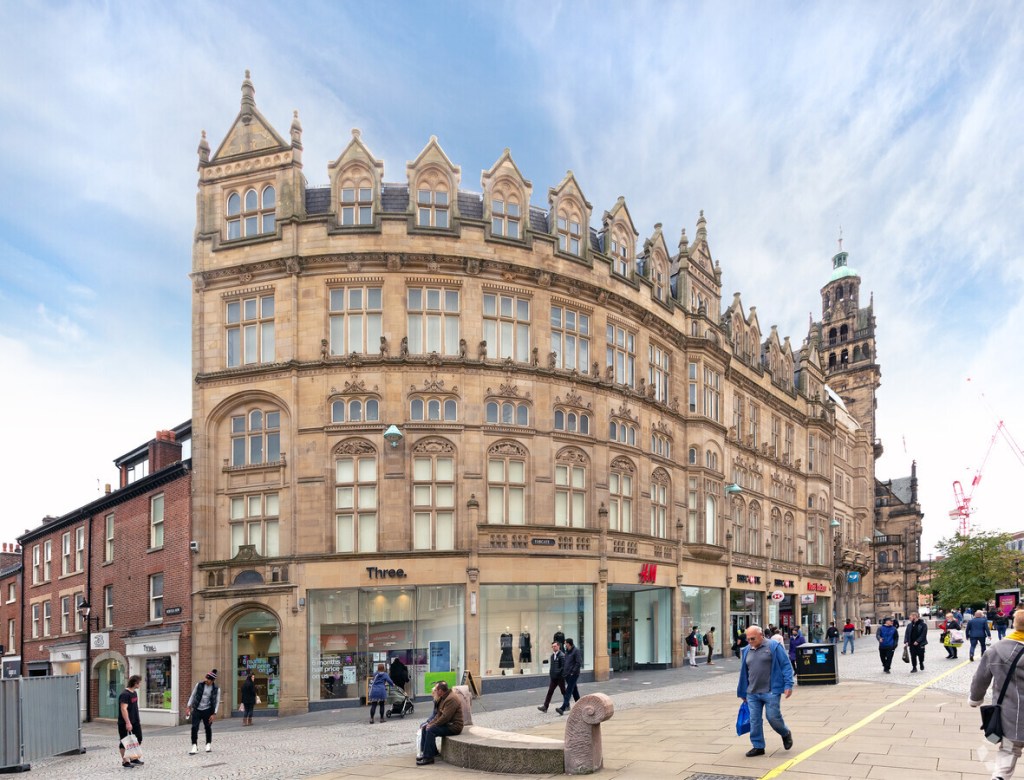
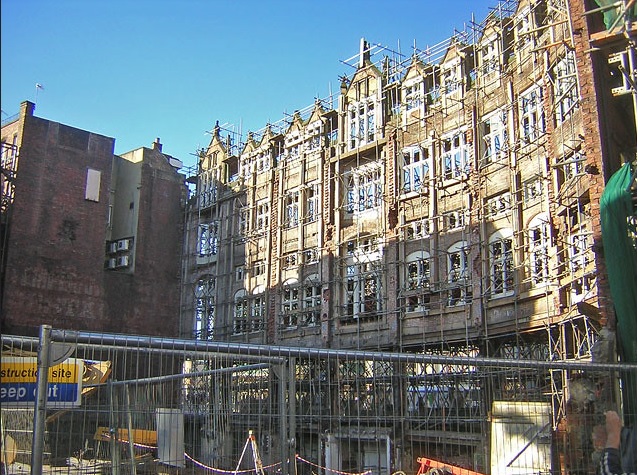
Carmel House, at the top of Fargate, is one of Sheffield’s finest buildings, an example of Victorian architecture that survived when much of it was lost. But appearances can be deceptive, and what is behind that elegant facade is entirely twenty-first century. In 2004, the guts of Carmel House were ripped out, replaced with a steel framework, and all that remains of this Grade II listed building is the frontage (like recent redevelopment works on Pinstone Street).
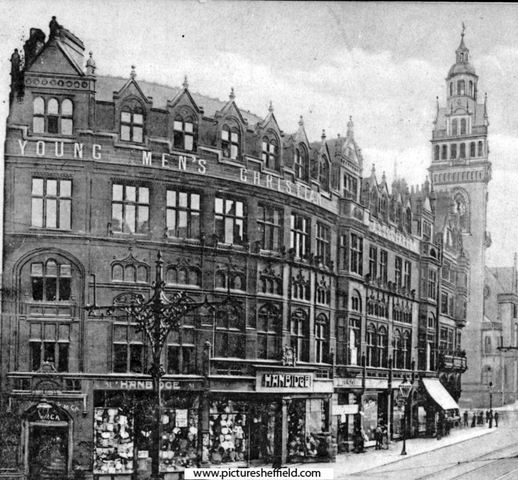
It was built in 1889-91 to designs by Sheffield architect Herbert Watson Lockwood, the subject of last week’s post. Younger readers might be surprised that this was built for the Young Men’s Christian Association, on two plots of land between the then ‘newly built’ Yorkshire Penny Bank, and the offices of Alfred Taylor, solicitor, on Norfolk Row.
Prior to this, the Sheffield YMCA had cramped rooms on Norfolk Street, but the membership had soared to above 300. It was fortunate to have as its president, Emerson Bainbridge, who wanted to build purpose built facilities. He battled with the Prudential Assurance Company to buy two plots of land, eventually securing the freehold of both in 1888 for £16,000 (including £7,000 out of his own finances), and forming the Association Buildings Company Ltd to raise capital for its construction. (The Prudential would eventually build its offices at the corner of Pinstone Street and St Paul’s Parade).
The building of the YMCA wasn’t without problems.
Work started in August 1889, delayed due to a dispute with Alfred Taylor who was paid compensation for his right to light. Then, while the site was being excavated, it caused subsidence to the adjacent Yorkshire Penny Bank. There was another blow in December 1889 with the failure of its builder, William Bissett and Sons, and work came to a halt. It was picked up in 1890 by Armitage and Hodgson, the Leeds-based builder of the Yorkshire Penny Bank next door.
It was finally completed in May 1891 and opened a month later.
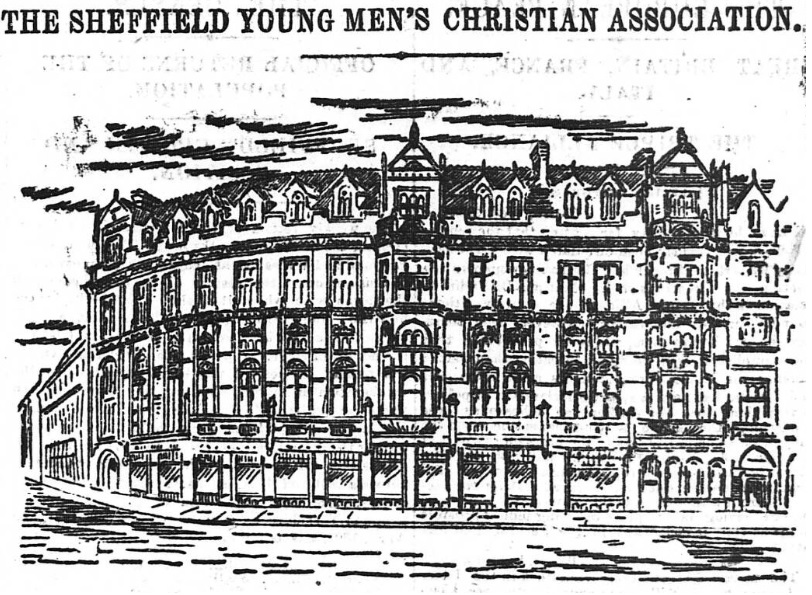
The YMCA had a frontage of 135 ft, and an average height of 54 ft, faced with Holmfirth Stoke Hall stone. It was hand finished with open arcading, above which were lofty gables, the style being late-Gothic, of a Flemish type, the straight portion of the front flanked by projecting oriel windows, carried up two storeys,
Sheffield Young Men’s Christian Association, Fargate, Sheffield, 1891.
The principal entrance was at the corner of Norfolk Row, with a wide arched doorway over which was a stone balcony, having in the centre a panel inscribed ‘One is your Master, even Christ, and all ye are brethren.’
“Symbols of the four evangelists are carved in the corbelling to the balcony over the entrance, six arched panels on the curved portion of the front depicting the six days of Creation and in four other panels the progress of Divine Law from its delivery on Sinai in the two tablets, its development as the scrolls of the law and its completion in the form of the Bible, finishing with a crowned shield bearing on its field the Star of Bethleham. The shields in the main cornice bear the arms or signs of the twelve Apostles. All is by Frank Tory.”
Over the entrance was a handsome projecting lamp carried on a bracketed and enriched wrought iron hoop.
The new premises had six shops on the ground floor, which brought in rental income of about £850 to £975 each year.
Let us now consider its original and lost interior.
From the entrance was a broad flight of stone steps leading to the entrance hall, which was lit from above by a rich stained glass ceiling light, made by Mansfield and Co, of Gresley, near Burton-on-Trent. The floor was laid out with mosaic to a sunflower design.
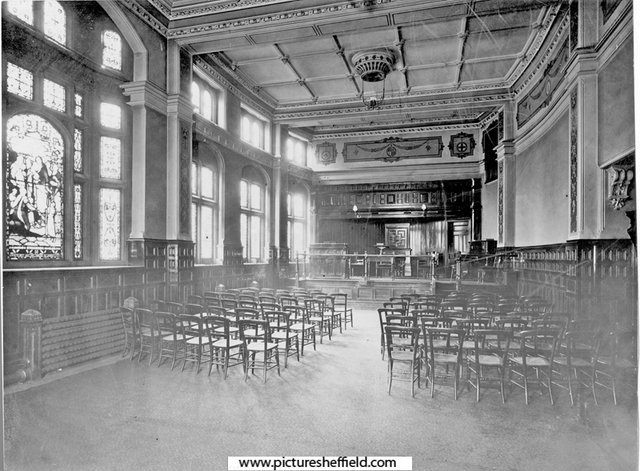
On the right was the secretary’s office, platform entrance to the hall, and a staircase leading to the assembly hall, a well-lit room about 60 ft long, 30ft wide, and 21 ft high, fronting to Fargate. At one end was the public gallery, with a curved front of pitched pine, relieved with arches and octagonal shafts. At the other end was the platform, and over it a private gallery, serving partly as a sounding board, and made of pitch pine and polished walnut.
In the centre, opposite the entrance, was a large bay filled in with a painted window, representing Christ blessing little children, and presented by Emerson Bainbridge. This, along with all the coloured windows had been manufactured by Lazenby Stained Glass Works at Leeds.
The hall seated 250 people, but held 300, exclusive of the two galleries that held 100 more.
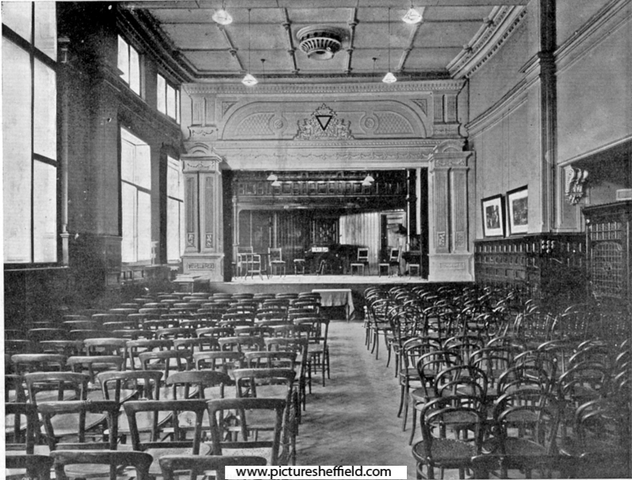
YMCA Assembly Hall, Carmel House, Fargate. Image: Picture Sheffield.YMCA Fargate, the Theatre. This is not mentioned in the original design notes. Possibly a later alteration. Image: Picture Sheffield.
To the left of the hall entrance was the corridor to the gymnasium, the principal staircase, and inquiry office. The gymnasium was 44ft long, 35 ft high, and was kitted up by George Heath of Goswell Road, London. At one end was a public gallery, behind which were the dressing rooms, lockers, and bathrooms. The whole of the floor was covered iron and concrete, covered with Lowe’s patent wood block flooring in pitched pine.
On the mezzanine floor were the honorary secretaries’ rooms and toilets. From this floor, a stone staircase, with covered ceiling, and lit by stained glass windows, rose to a second floor, on which, fronting Fargate, were the library and writing room, fitted with walnut bookcases, meeting room, reading room, annexe, parlour, and refreshment room. At the back were storerooms and caretaker’s house, each communicating with each floor by a hand powered lift.
On the top floor were rooms for the junior department, classrooms and bedrooms.
The dull polished dark oak furniture was supplied by Johnson and Appleyard and consisted of settees and easy chairs, covered in saddlebags, and chairs and curtains in the main rooms upholstered in crimson Utrecht velvet.
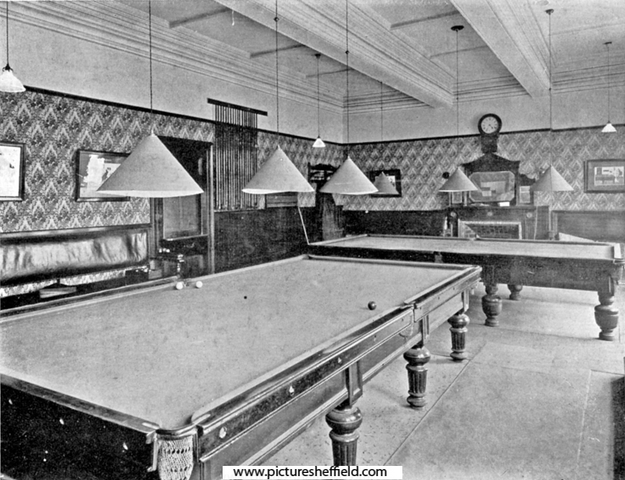
YMCA Fargate, Billiard Room. Possibly a later addition to its facilities. Image: Picture Sheffield.
The YMCA remained here until the late 1960s, by which time the building, in a prime city centre location, proved too big for its dwindling membership. It moved to smaller headquarters at Broomhill in 1970.
The building’s interior was probably gutted at this stage, redefined as offices, and I hope that somebody will confirm whether this is what happened.
At which point the building became known as Carmel House is uncertain, but the word ‘Carmel’ can be characterised by an awareness of God’s presence in a person’s heart, a sense of the sacred, and a desire for things divine.
As with most Victorian buildings, they can look incredibly attractive, but what lies behind is often unsuitable for twenty-first century use. In 2004, planning permission was granted for the complete redevelopment of the site, including demolition of everything behind the stone facade.
The following year, an important discovery was made during excavations for its new foundations. A medieval well was found on the site, as well as ancient pots and jugs, and possibly dug around the same time as Sheffield Castle was rebuilt in stone about 1270.
Sheffield District Y.M.C.A., Carmel House, Fargate, shops include Nos. 53 – 55 Robert Hanbidge, ladies outfitter. 1900-1919. Image: Picture Sheffield.Carmel House. November 2005. The facade of the former YMCA building is supported by scaffolding while its interior is reconstructed to modern designs. To the left is the former Yorkshire (Penny) Bank. Image: Flickr/SheffDaveGhost doorway. Former Norfolk Row entrance to the upper floors of the Young Men’s Christian Association building. Pictured here in 2022. Image: DJP / 2022.
Virgin Money has a lease with building owner Fargate Properties until 2035
Good news for the former Yorkshire Bank building at the top of Fargate. York-based Pivovar which has venues including Sheffield Tap at Sheffield railway station, has applied to open it as Fargate Tap, serving ‘late night refreshments’ until 1am Monday to Saturday.
It was originally built as the Yorkshire Penny Bank, with the Albany Hotel above, in 1889.
It operated as Yorkshire Bank until closure in 2020 as a result of its takeover of Virgin Money that already had a branch on the other side of Fargate. The bank has been empty ever since.
At the same time, the BBC reports that Sheffield City Council is saying that rising costs and delays are hampering the regeneration of Fargate, High Street and Castle Square.
The council successfully bid for £15.8m from the government’s Future High Streets Fund in April 2021. The original costs of work on Fargate, High Street and Castle Square were estimated to be £8.8m based on tender prices, but following detailed design, these costs rose to nearly £18m.
The Fargate works are estimated to cost £14.4m, the increase primarily due to inflation, and there have been delays with paving supplies, issues with ground conditions and technical approval of underground bins. South Yorkshire Mayoral Combined Authority (SYMCA) has provided an additional £4.6m of funding to ensure the work is completed.
The council says Fargate should be substantially completed’ before Christmas but it was not expected to be fully finished until early in 2025.
Construction on the Event Central cultural hub on Fargate will now fall into the 2025/26 financial year, and work on High Street and Castle Square has been paused while the council concentrates its budget on Fargate.
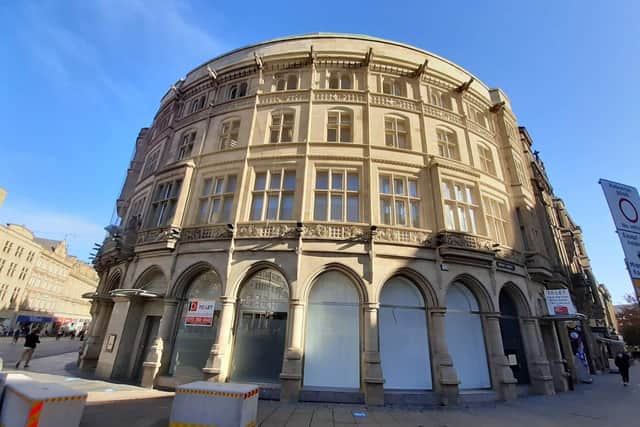
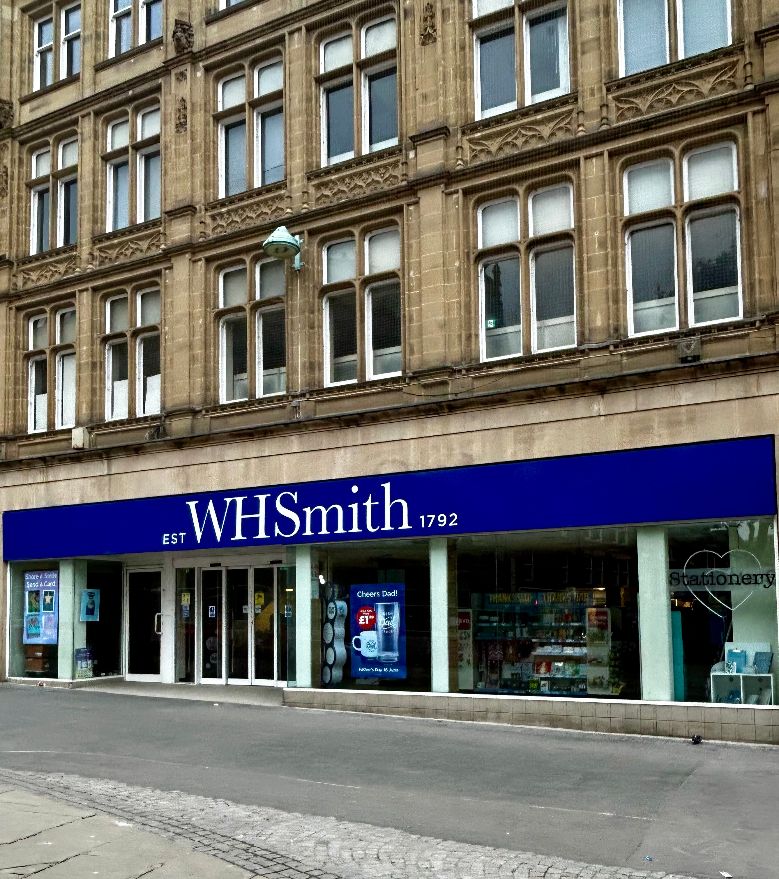
Fargate is in a bit of a mess as it moves away from traditional retail space towards a leisure and social hub. If we’re being honest, we all expect Marks & Spencer to announce the closure of its store at some stage, and what a devastating blow that will be. But there is another retailer that might have a wobbly time ahead. I’m referring to WH Smith whose city centre store opened in the 1970s and is only the second retailer to have occupied 38-40 Fargate. It was, of course, built for provisions merchant Alfred Davy in 1881-1882 by Sheffield architect John Dodsley Webster. Look closely at the exterior and you can still see the carved stone heads of a sheep, cow, pig, and ox.
All is not well at WH Smith, and its High Street stores are struggling to cope with life in the twenty first century. Last month, WH Smith reported another year-on-year dip in sales at its large stores. This contrasts with an eight per cent rise in revenue at its travel stores, those situated in airports and railway stations across the world. “The transformation of the business to a one-stop-shop for travel essentials is delivering strong results, increasing average transaction values and returns,” says the company.
It is a case of things going full circle as I shall explain in a moment, but the question remains. How long will it be before WH Smith calls time on its High Street operation? Sales of newspapers, magazines, books, and stationary, have been eroded by the internet, resulting in a watered-down offer. Instead, we’re left with too many phone chargers and fridges full of chilled drinks. The result is a store lacking atmosphere and too few staff to make the shops look as nice as they used to.
The WH Smith archive is held at the University of Reading but the exact date when it was founded is uncertain. The best guess is sometime between 1787 and 1792 but we do know that its roots were in the newspaper distribution business.
Records show that Henry Walton Smith (1738-1792) to be owner of a Mayfair ‘paper round’ in 1792, delivering expensive newspapers to rich London clients. This was also the year of his death, and the year of William Henry Smith’s birth. Anna Easthaugh, Henry Walton’s widow, ran the business until her death in 1816.
It was her second son, William Henry (1792-1865), who turned it into ‘a house… without its equal in the world’, as The Bookseller described it in its obituary. He had exploited the market for London papers that existed outside the capital, using the newly developed network of seven hundred daytime stagecoaches to get newspapers to the provinces many hours before traditional carriers, the night-time mail coaches. There was little profit in the operation, and it took him thirty years to realise that he needed help, and a successor.
His son, William Henry II (1825-1891), had wanted to be a clergyman, but his father demanded that he join the business instead. It was a shrewd move, because William Henry II capitalised on the new railway network as a speedier alternative to the coach, and then he started bookstalls, and developed the more familiar role that the company became famous for. By the end of the century, there was a WHS bookstall on almost every station (in 1902, there were 1,242 of them).
Writing about the history of WH Smith in 1985, Michael Pountney said that “expansion seemed unstoppable. Extension of the railway network meant more stations. Elimination of stamp duty on newspapers meant lower prices and more sales. Better education meant more readers. Unstoppable, but not inevitable: Smith’s got the business because they were better at it than their competitors, more reliable, more efficient, better able than their less scrupulous rivals to do good business without offending against the stern moral values of the age.”
Things were about to change.
Before the end of the nineteenth century, railway expansion slowed almost to a halt, the Victorian boom slowed, and William Henry had become an MP that took him away from the business. He died in 1891, leaving the business floundering.
The merger of two of the biggest railway companies, GWR and the LNWR, in 1905, resulted in WHS losing 250 bookstalls at its stations, but it responded by opening 144 shops in towns where they had lost a stall. The man credited for this entrepreneurial genius was CH St J Hornby, friend of WHS’s new proprietor, William Frederick Danvers Smith (later second Viscount Hambleden).
Opening shops was a retaliatory measure against the loss of the bookstall contracts, but its move onto the High Street was a success, with rapid extension across most of the country in the twentieth century, matched by a reduction in the importance of bookstalls. Only with the full development of the shops did the stationary, book and record departments come to rival the supremacy of news and periodicals.
WH Smith went public in 1949 but continued to be run by the Smith family until 1972 when David Smith stepped down as chairman, and then Julian Smith’s retirement in 1992 marked the end of family involvement in executive management.
In 1966, WH Smith created a standard book number consisting of a nine-digit code, which was adopted in 1970 as the international standard number and finally became the International Book Number (ISBN) in 1974.
Let us not forget the other enterprises that WH Smith were once involved with. WH Smith Travel operated from 1973 to 1991, and in 1979 it acquired the Do It All chain of DIY stores, later merging with Payless DIY (owned by Boots). It went on to purchase 75 per cent of share in Our Price music stores and even held a minority stake in ITV. Between 1989 to 1998, the company was a major stakeholder in the Waterstones bookshops, resulting in WHS own bookshop brand Sherratt and Hughes (which had already subsumed Bowes & Bowes) being merged into Waterstones. WHS eventually pulled out of all its external interests.
And so, we come that full circle. The High Street shops are struggling, victim of changing shopping trends, and the future of the company appears most likely to be catering to the needs of travellers, over 640 stores in thirty countries outside the UK, much like those Victorian bookstalls did.
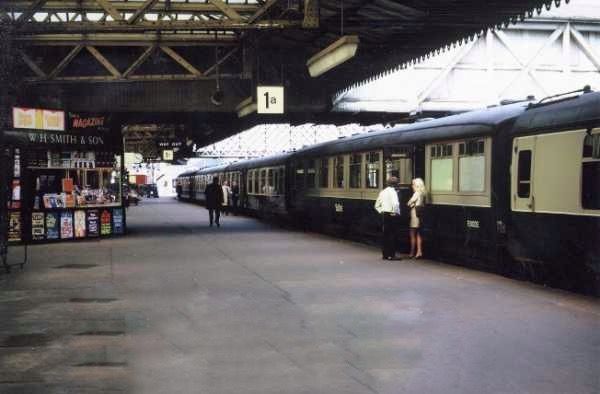
Platform 1, Sheffield Midland railway station showing (left) WH Smith and Son, newspaper stall. WH Smith also had a newspaper stall Sheffield’s Victoria Station. Image: Picture Sheffield
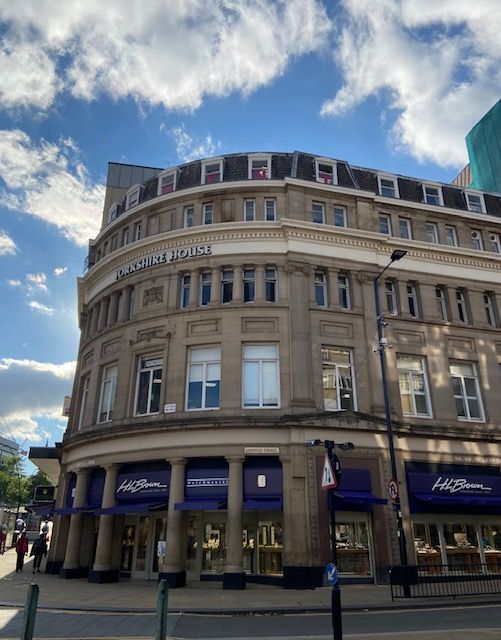
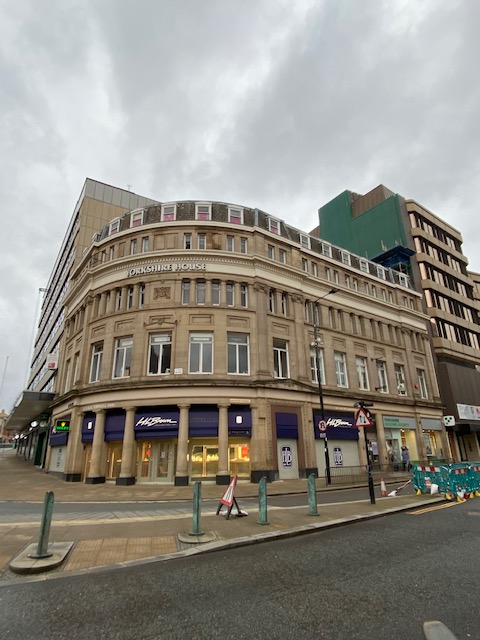
Yorkshire House, Leopold Street, Sheffield.The building has failed to get listing from Historic England. Much of the original interior has been lost in modern redevelopment.
This post is about Johnson and Appleyards, not many people will have heard of it, but that shouldn’t have been the case. Life is full of what ifs. What if things had been done differently? If they had been, then we might have been fondly remembering Johnson and Appleyards as we do Cole Brothers and Walsh’s.
Our story starts on 10 February 1909 when Councillor Walter Appleyard received a cable from Kobe in Japan. It was from his brother, Frank, and informed him that their older brother, Joseph, had died. The fact that it happened in a foreign country was no surprise because Joseph had travelled extensively to Australia, South Africa, and South America, and this latest excursion which started five months previous, had taken in Egypt, India, Burma , and China. The next stop would have been Canada before heading home.
The news might have suggested that this was the first stage of failure for Johnson and Appleyards, cabinet designers and manufacturers, upholsterers, decorators, undertakers, carpet warehousemen, colonial merchants, and exporters, but the decline had already begun, not that anybody had realised it.
Joseph Appleyard (1848-1909)
The three Appleyard brothers, Joseph, Walter, and Frank were the sons of Joseph Appleyard, a Conisborough cabinet maker, who had a business until 1872, when he established J. Appleyard and Sons at Westgate and Main Street in Rotherham which the brothers ran.
In 1879, the brothers took over the Sheffield furniture-making business of William Johnson & Sons, with premises on Fargate, and renamed it Johnson and Appleyards. It was a bold move, but within a few years the business needed bigger premises to display its furniture.
They chose a prime site at the corner of Fargate and Leopold Street and employed architects Flockton and Gibb to design an impressive showroom built in Huddersfield stone with a mixture of giant ionic and stubby doric pilasters on its first and second floors.
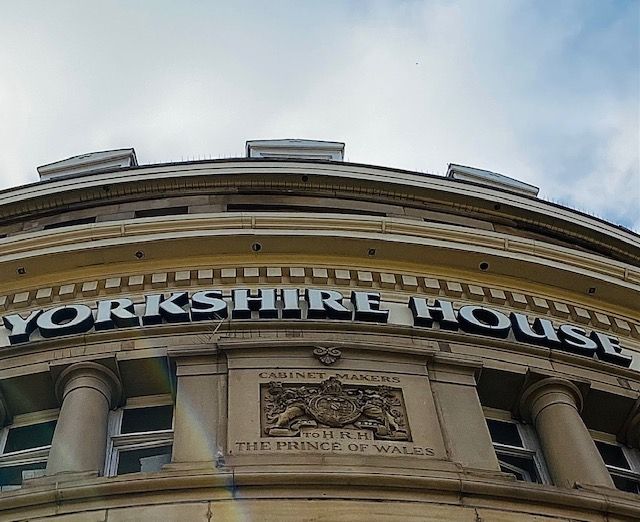
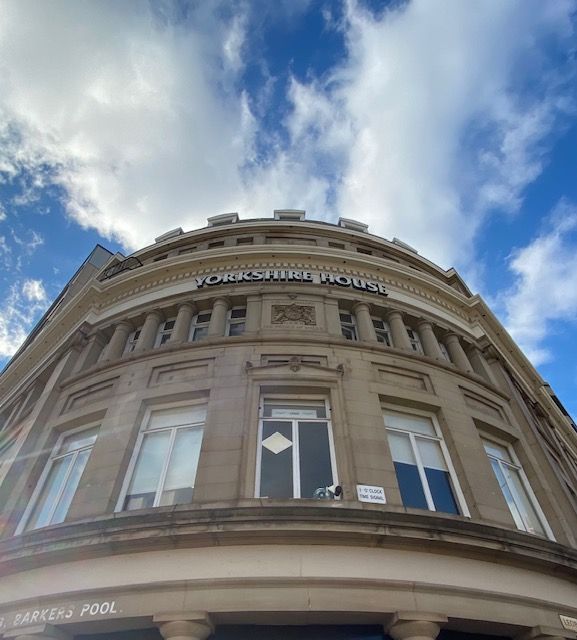
The building was completed in 1883 and survives as Yorkshire House, where Barker’s Pool (then an extension of Fargate) turns the corner into Leopold Street. The only remaining trace of Johnson and Appleyards is a stone plaque, high up, that states ‘Cabinet makers to HRH The Prince of Wales’. For some reason, the building has failed to get listing from Historic England, and we now know it as home to jewellers H.L. Brown.
The only remaining clue that the building was built for Johnson and Appleyards, cabinet makers, in 1883-84. Designed by Flockton & Gibb.
Johnson and Appleyards were the only firm to supply the complete range of domestic furnishings, selling their own furniture as well as famous names like Chippendale, Sheraton, Louis Quatorze, and Louis Quinze. In the basement, were showrooms for carpets, linoleum, bedlinen, and blankets. The ground floor held wallpapers together with general goods, along with the counting house, and stables and carriage/van sheds at the back. The first floor was dedicated to furniture with workshops behind, and on the second floor, further showrooms with draughtsmen’s offices and decorators’ shops to the rear. The third floor housed gilders’ workshops, polishers, upholsterers and bedding makers.
The purpose-built premises of Johnson & Appleyards, Sheffield, showing the additional story that was added in 1892
Johnson and Appleyards became a limited company in 1891, and the following year the building was extended, with an attic story and mansard roof built to create more retail and workshop space. At the same time, manufacturing was moved to a four-storey building on Sidney Street.
Johnson and Appleyards achieved national and international recognition with a ‘Prize medal awarded for Superiority of Design and Workmanship’ (York, 1879) and a gold medal award at the Paris Exhibition (1900).
There is a clue that business at Johnson and Appleyards had dwindled, because in 1906 the firm had moved to smaller premises next door on Leopold Street. While retaining ownership of the showcase corner property, it was leased at a handsome price to A. Wilson Peck & Co, wholesale and retail dealers of pianos, organs, and musical goods. (Wilson Peck – Beethoven House – another fascinating story for another day).
Joseph Appleyard (1848–1909), as senior partner, was the only brother to remain active in the firm, and although he remained a director, Walter had other business interests and would become Lord Mayor, while Frank had left by 1905.
Joseph’s marriage to Sarah Flint Stokes had given him eight children, none of whom had much interest in the business. Only two of his four sons, Joseph (1881-1902) and Harry (1876-1954) showed any enthusiasm. Joseph Jnr was employed by Wallis & Co, linen drapers, in Holborn, but drowned aged twenty-one in a boating accident on the Thames, while Harry, who had trained at Harrods in London and Maple & Co in Paris, joined the firm but left shortly after his father’s death. His other two sons joined the services, to avoid joining the firm and collaborating with their father.
A biography of Joseph Appleyard states that he was a strong conservative but had no desire to enter politics. He was a member of the King Street and Athenaeum Clubs, as well as being an affiliate at the Wentworth Lodge of Freemasons.
Julie Banham’s ‘Johnson & Appleyards Ltd of Sheffield: A Victorian family business’ (2001) hints that Joseph Appleyard was prone to violence and regularly beat his sons, while his wife turned to drink and became an alcoholic.
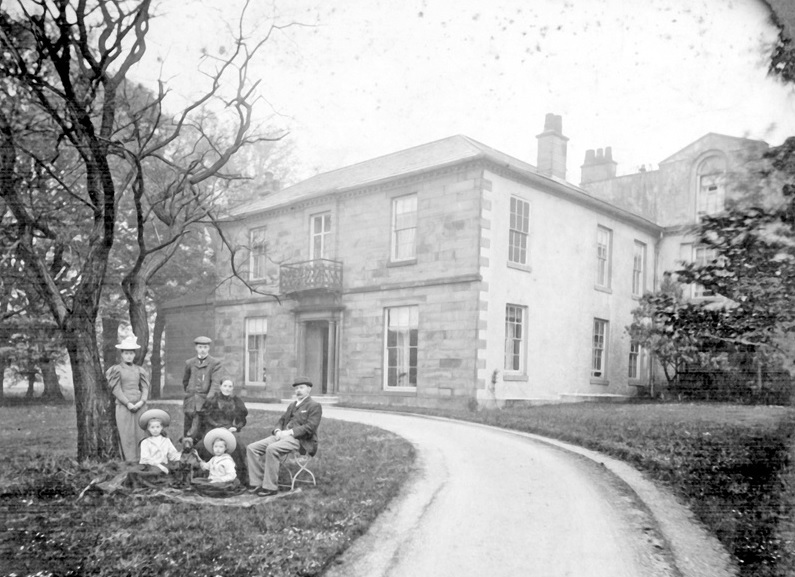
Mr and Mrs Joseph Appleyard (Managing Director of Johnson and Appleyards Ltd.) and children, in the grounds of The Beeches, Park Grange, off Park Grange Road, Norfolk Park (1899). Most historical records refer to the family living at Park Grange, a nearby house. Image: Picture Sheffield
The Drawing Room at The Beeches, home to Joseph Appleyard. Shortly before his death, the family moved to Broombank House, 7 Clarkehouse Road, Sheffield. Image: Picture Sheffield
All these years later, it is difficult to determine the type of person that Joseph might have been. At that time, newspapers filled columns with obituaries of local dignitaries, often shown in positive light, but Joseph’s death had little mention. Is this an indication that there weren’t any kind things to say about him? He was cremated in Japan and his ashes interned at Fulwood Church.
Johnson and Appleyards had built its reputation on Victorian tastes that lingered into the Edwardian period. But the new century meant styles had changed. On hindsight, the firm seemed reluctant to evolve with the times, and while sales dwindled, excessive capital was still taken out of the business to fund lavish lifestyles. After Joseph Appleyard’s death, the management team struggled to find a long-term strategy, and two world wars did nothing to improve its fortunes.
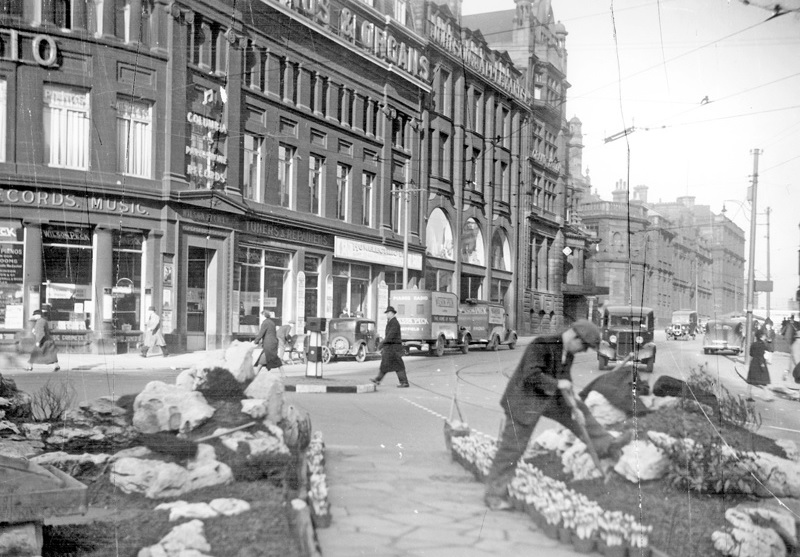
Town Hall Square Rockery and Leopold Street premises in 1938, including Grand Hotel, Johnson and Appleyards in their smaller premises, and Wilson Peck (left) that occupied the cabinet maker’s former premises. The building occupied by Johnson and Appleyards was later demolished and replaced with a new block. It stands approximately where the Bessemer bar is now. Image: Picture Sheffield
The end of Johnson and Appleyards was inadvertently caused by German bombs that rained on Sheffield during 1940. One of them destroyed John Atkinson’s store on The Moor and it was forced to seek alternative premises in the city centre. It bought all the shares in Johnson and Appleyards, if only to secure the Leopold Street building, and would remain until its replacement store was built on The Moor. The old Johnson and Appleyards shop would eventually be swept away, along with the Grand Hotel, to build Fountain Precinct in the 1970s.
Here’s the surprise. Did you know that Johnson and Appleyards still exists, if only in name? Its shares are registered to Atkinsons on The Moor.
First floor showroom at Johnson and Appleyards c.1900
Showroom of Drawing Room furniture c.1900
The Oak Showroom. Johnson and Appleyards c.1900. The company was responsible for furnishing many of Sheffield’s notable buildings, including the Town Hall and Cutlers’ Hall.
The evening gets off to a bad start. There have been no trams for a week because of a broken track at Manor Top. It sounds absurd in this modern age. Worse still, the bus I go to catch only runs every hour and doesn’t turn up. I run for the tram replacement bus service, and that doesn’t turn up on time either. By the time I get into the city centre, I’ve spent over an hour getting here when normally it would be a twenty minute journey.
High Street 8.00pm
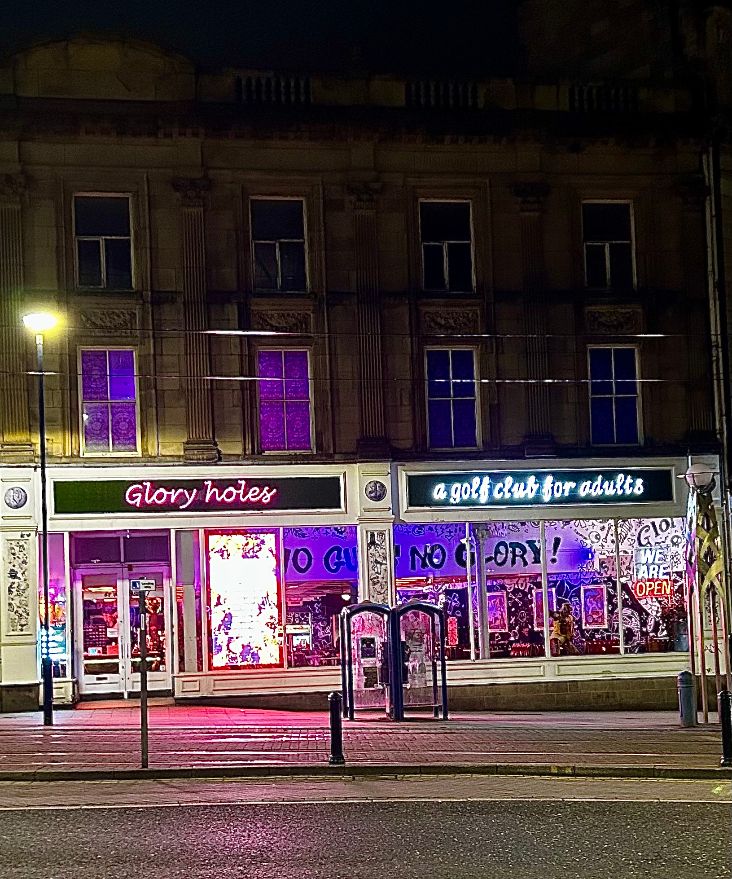
Next door to The Banker’s Draft, there is a handsome old building that houses an indoor golf centre called Glory Holes – a golf club for adults. It is one of four venues operating across the country and is brightly lit. I assume that councillors were blissfully unaware what a ‘glory hole’ was, because had they done so, they would have insisted that they choose another name.
I suspect that the price of its drinks will deter punters from The Banker’s Draft from entering its doors. There is a female sat on the pavement outside. She is probably a lot younger than she looks and is wrapped in a blanket. She looks sad and holds her hand out in the hope that I might give her money.
I cross the road and walk up High Street. I pass a bus shelter where a girl is crying, and a man holds her tightly. He tells her not to worry and looks woefully at a large group of people nearby. Each one of them is holding a bottle of cider or a can of beer, at least four of them have dogs, and they are all shouting words of advice. These people aren’t waiting for a bus because they don’t have anywhere to go. I wonder what the commotion is about and leave them to it.
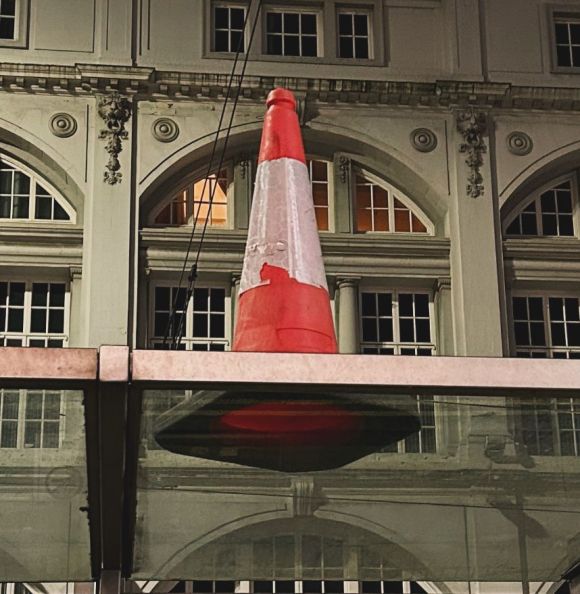
Perched on top of the next bus shelter is a traffic cone and the glass roof makes it look like it is floating in the air. I decide this is a good photo opportunity and take my phone out to snap it. The Telegraph Building forms a backdrop and I’m pleased with the result. Afterwards, a polite voice asks, “Am I okay to pass now?” and I thank him for his patience.
I look at the man as he walks ahead of me because I know what will come next.
He swings around. “I don’t suppose you’ve got any change?”
“I’m sorry,” I say, “all my money is on here now.” I wave my phone to show him that I use Apple Pay. He doesn’t reply and gives me a sour look.
On the ground floor of the old Telegraph Building is a Sainsbury’s Local that opens until eleven. It is next door to German Doner Kebab that is half empty, but the rest of the street is in darkness, including Cavell’s bar that might once have done brisk business on a Sunday night.
In the absence of trams, and the infrequency of buses, the High Street has a despondent look about it.
Gosling’s plan of 1736 is the chief authority for saying that High Street was formerly called Prior Gate; and it is probable that hereabouts was the Priory, and its existence can only be known from old deeds.
That was the general belief, but historians are sceptical that a priory ever existed at all, as they are about King John, who was supposed to have stayed at the White Horse Inn on Prior Gate while passing through Sheffield. I imagine an old Sheffielder telling a tall tale that became rooted in history.
The High Street we know today goes back to the street widening of the 1890s. Prior to this, it was much narrower with quaint and picturesque timbered gables, latticed windows and swinging signboards. Robert Eadon Leader told us that in the eighteenth century there were loads of hay that stuck fast, unable to pass the projecting upper story of Mr John Cooper’s confectionery shop.
The Sheffield Directory of 1787 mentions eight victuallers on this street, quite different from the present day. But it was always a shopping street, and all this was swept away so that the sites of its old buildings could not be located with certainty.
The High Street of the twentieth century was busy with elegant shops lining both sides. Most buildings survive but the lower end was obliterated during the Blitz of 1940.
By now, I’ve reached Wendy’s and McDonald’s, which are the busiest places tonight. People queue for takeaways and the tables are occupied by youngsters who see them as a place of refuge on a chilly night. Outside, where High Street meets Fargate, there are parked cars belonging to drivers collecting burgers and chips and then delivering them to the outreaches of the city centre.
Burger King has opened at the end of Fargate, the last of the big chains to get a foothold here. I’m meeting a friend, and he’s silhouetted against the takeaway’s cheerful interior. As I approach, he lights a cigarette and starts counting.
“One, two, three…”
He counts to seven before an unshaven male accosts him. The man is wearing an odd assortment of clothing, none of it designed for winter, and asks my friend for a ‘spare’ cigarette.
The irony is not lost on me.
This is where our ancestors used to meet for a night on the town. It was referred to as Cole’s Corner, a nod to Cole Brothers that once stood here, immortalised in a song by Sheffield’s Richard Hawley and one that has even found its way into Standing at the Sky’s Edge, the musical that recently moved to London’s West End.
Fargate 8.15pm
If High Street appears bleak, then Fargate surpasses it.
This was once the ‘far gate’ from the Parish Church and became Sheffield’s premier street. It was widened to accommodate traffic, its shoppers spilling from the narrow pavements as they jostled to get into the shops. There is a quote from a 1960s newspaper that called it the ‘Oxford Street of the north.’
Tonight, the scene on Fargate is anything but.
It was pedestrianised in the 1970s, and is now a building site, reinventing itself yet again, this time as a £15.8m social hub, to replace shops with event spaces, hospitality, and eating places. The paving is being changed and there will be flower beds promoting Sheffield’s ‘grey to green’ image.
For now, it is a maze of orange barriers, builders’ hoardings, and signs telling us how great it will be.
A busker plays La Bamba to no one outside Marks & Spencer and I wonder how he expects to earn a living. My friend suggests that he is doing it because he simply likes singing.
The shops are closed, but most are empty anyway. Gone are the big chain stores, replaced with vape stores and pop up shops. The last time that Google’s Streetview came here was in 2018 and it showed full occupancy. Since then, the decline has been rapid, and Fargate has become the classic tale of a street that lost its way.
People say that Meadowhall killed it, and while it didn’t help, we must remember that this was a quarter century ago.
I look at my iphone and realise that this is the reason we’ve fallen out of love with shops. Lockdown altered our habits, and retailers finally realised that we preferred to shop without physically shopping.
Tonight, some of the doorways are occupied by rough sleepers. They may or may not feel safe inside their sleeping bags but are far enough away from the party crowds of Carver Street and West Street to avoid being disturbed.
People walk past them, and I hear snatches of conversation, but cannot understand because they speak in different languages. The demographics say that Sheffield is 84% white, 8% Asian, and 4% Black. On Fargate, they are all speaking Eastern European. These are diligent people that will shape the city’s future, but I speculate as to what could entice them into the city centre tonight.
Towards the top end of Fargate is a recently opened Tesco Express that appears to be the liveliest place on the street. Along with other metros/express/locals opened by the big boys, this provides convenience shopping for daytime workers and shoppers, but on a Sunday, is more likely to service those mysterious folk who have moved into apartments.
A security guard stands in the doorway and keeps an eye on a group of kids riding bikes. They are masked like little ninjas and puffing on sweet-smelling vapes that look like fireworks in their hands. One of them asks me the time and I look at the Town Hall clock and tell him. I realise that they are up to no good but can’t quite determine what they are doing wrong.
At least they are riding proper bicycles, ones that take effort to ride, because every few minutes the silent killers on their electric bikes ride past. Somebody recently joked with me who might kill him first. Would it be Uber Eats or Deliveroo?
While we are walking, I remember an article that I read in Monocle magazine where an expert gave his views on the pedestrianisation of our cities.
“I have nothing against pedestrianisation, but if you’re going to do it, make sure there is something to encourage people to use it. Otherwise, life will be sucked out of the street.”
My friend says that Fargate will look nice when it is completed, and I must agree with him. But I am impatient, and it looks such a long way ahead.
We go to Benjamin Huntsman on Cambridge Street and start our Sunday Night Podcast, one that must never be heard by anybody else, because it is when we drink pints of Guinness, be politically incorrect, and put the world to right.
I walked through the city centre the other day and remembered an old newspaper article that spoke of Pinson Lane in 1736, and later became Pinstone Street.
The article from 1927 was written by Harold Rowley who suggested that Pinstone Street may have had some connection with Penistone, once a common surname in the district, but had once been called Pincher Croft, which hinted it may have had some connection with Barker’s Pool, being originally Pitcher Croft.
When I got home, I referred to Sidney Oldall Addy’s ‘The Hall of Waltheof’ or ‘The Early Condition and Settlement of Hallamshire’ from 1893.
“We have few ‘lanes’ in Sheffield now. The popular idea seems to be that there is something mean and insignificant in a lane, and hence Pinson Lane now bears the grander name of Pinstone Street.
Old inhabitants of Sheffield speak of Pinson Lane. Gosling writes it Pinson Lane in 1736, and I find a croft called Pincencroft Len in a document dated 1554.
Pincen is probably the surname Pinson, so that Pincencroft is exactly analogous to Colson Crofts, Sims Croft, Scargill Croft, and Hawley Croft, which are derived from surnames.
The word ‘len’ in Pincencroft Len is not our ‘lane’ but the Old Norse lén, a. fief, or fee, a piece of freehold, or land held in fee simple. Thus, the meaning is Pinson Croft freehold. The croft acquired the name of the person or the family—the Pinsons—who once held it, and then it afterwards became known as the Pinsoncroft ‘len’ or fee.”
Mr Rowley also mentions that the old name for the Fargate end of Pinstone Street was once called Sowmouth, popularly explained because it tapered and grew narrower. However, he says, this was evidently wrong, because Sowmouth meant a door or opening.
I didn’t know this, but I referred to Robert Eadon Leader’s ‘Reminiscences of Old Sheffield: Its Streets and its people’ (1876) and found the following passage from Richard Leonard: –
“Forty years ago, there were one or two trees growing on the property of Mr Withers, in Pinstone Street. A passage leading from Fargate to New Church Street, was a favourite playground of the boys of those days and boasted the name of ‘Sow Mouth.’”
(New Church Street ran parallel to modern-day Surrey Street and was lost underneath the Town Hall when it was built in 1890-1897).
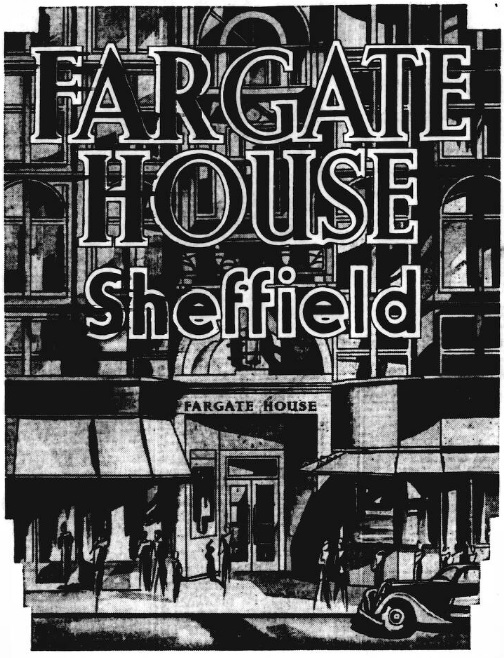
Fargate House. A sketch from 1938. Image: British Newspaper Archive
It was the 1960s, retail was in ascendancy, and Marks & Spencer, with a small shop on Fargate, wanted to build a new store and expand. To do so, it purchased an adjacent property called Fargate House, and Sheffield lost one of its finest buildings.
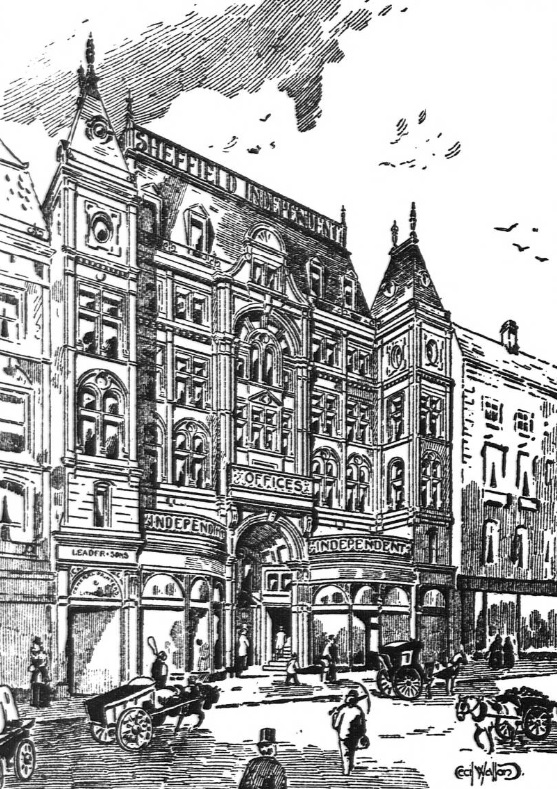
“As we drove along, we happened to pass a very splendid building. On looking up, I saw it was the new offices of the ‘Independent’ newspaper,” said the Archbishop of York in 1892, the year it had been built.
In the 1890s, there were two newspapers in Sheffield. W.C. Leng owned the Sheffield Daily Telegraph (forerunner to The Star), and the Leader family were proprietors of the Sheffield and Rotherham Independent. This was a time when newspapers sold thousands of copies daily, and the two were bitter rivals.
The Independent, founded in 1819, to secure ‘British independence, and an amelioration of the condition of the British people,’ had moved premises several times, and when Sheffield Corporation began widening Fargate, it purchased a plot of land.
The site nestled between Tuckwood’s Supply Store and the properties of George Shepley and T.R. Marsden. It was described as an inverted capital ‘T’, the top crossing Fargate and the tail pointing towards Norfolk Street behind. Much the same as Marks & Spencer today.
As were many Sheffield buildings of the day, the new Independent offices were designed by Flockton and Gibbs and constructed by William Ives of Shipley. The crosspiece on Fargate contained shops and commercial offices that were let, while the tail was occupied by the newspaper across six floors.
Once completed, the front of ‘Newspaper House’ was said to be the most imposing of numerous buildings erected in Fargate.
The architectural treatment was defined as ‘modern,’ the front too valuable to afford space for heavy piers and walls. The main arched entrance was set back from the building line, the wings on each side giving the shops on the ground floor a graceful curve to the front. The whole was covered with a steep picturesque roof, and surmounted with a sky sign, the letters of which were four feet high.
The style was said to be a development of early French Renaissance, more particularly the phase of it, which was seen in the Chateaux of the Valley of the Loire, of which the high pitched hipped roofs were an essential feature, but with ornament and mouldings more Greek than Roman.
The Sheffield Independent office – 1892. Image: British Newspaper Archive
Newspaper House was built with best Huddersfield stone, celebrated for its durability and its resistance in some measure, to the blackening influence of town atmosphere. On the last count, it failed, because within years it was as black as the rest of Sheffield’s buildings.
The arched recess entrance was placed at the centre, built of moulded stone; it embraced three entrances, leading respectively to the counting-house, a stone staircase, and an upholstered passenger lift to the offices.
The basement was occupied by the machine room with two Victory News machines capable of producing 16,000 copies per hour, and one of the latest forms of the famous Hoe printing machines. Two powerful steam-engines, manufactured by Shardlow of Attercliffe, stood at the far end.
Above was a bookbinding department, where account books, pamphlets and books were bound in all styles, as well as the paper warehouse.
The Counting House, with tesserae floor, and massive mahogany counter, was where the public placed advertisements and orders. The building also contained a library of Sheffield newspaper files dating back to 1787, all copies of the London Times, and an immense collection of Parliamentary records.
On the second floor, reporters were clustered around a central corridor which extended the length of the building.
A technical advance was the installation of two telephones – one in the commercial department for use by day, the other in the sub-editor’s room for use during the night.
Messengers raced between the office and Sheffield’s two railway stations bringing in packets dispatched by district correspondents, while every few hours a large bag of letters were brought from the Post Office.
The rest of the building housed the composing room, lithograph and letterpress departments, and rooms for photography and zincography, both in their infancy.
“The inconveniences of photography consequent upon the dull atmosphere of Sheffield will be entirely overcome by the adoption of electric light for photographic purposes.”
At the Norfolk Street end, newspapers were despatched overnight. Carts distributed parcels to local newsagents and railway stations, the aim being that readers had their morning paper on their breakfast tables.
In 1931, consolidation within the newspaper industry meant that the Sheffield Independent was taken over by Allied Newspapers, now owner of the Sheffield Telegraph, and Newspaper House was surplus to requirement.
By the time it merged with the Telegraph in 1938, the old building had been sold and completely refurbished by architect Victor Heal as offices. The building was gutted, the frontage retained, but the upholstered lift and stone staircase were replaced.
A new entrance was made from Hoptonwood stone and black marble, surmounted by a dome, with an artistic lantern, in green and cream, and an illuminated electric clock with the figures ‘No.21’. Beneath were green enamel letters that stated the building’s new name – Fargate House.
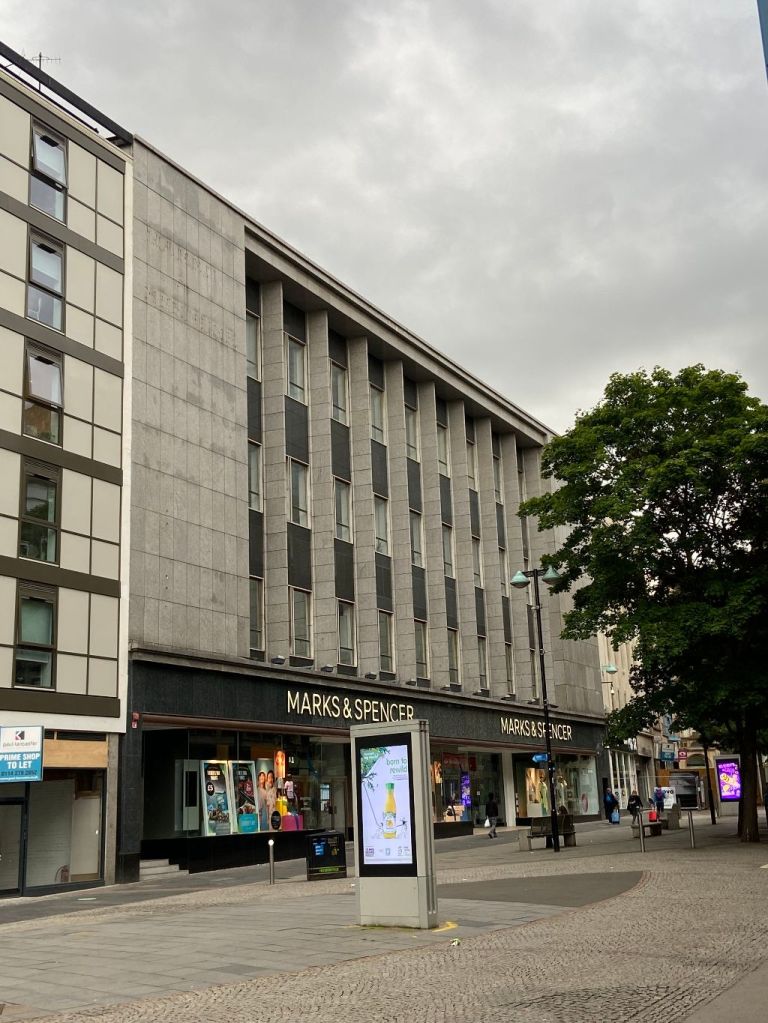
It lasted until the 1960s, but Fargate had become one of Sheffield’s premier shopping streets. It was demolished in 1965 and the stylish new Marks & Spencer store built in its place.
Marks & Spencer was built on the old newspaper site. Image: DJP/2022
H.L. Brown is situated in Yorkshire House at 2 Barker’s Pool. Sheffield. The time signal can be seen in the first floor central window. Image: DJP/2022
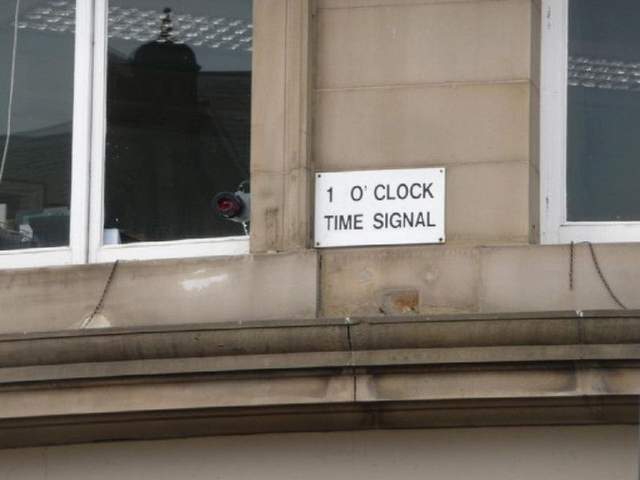
It confuses many people but is a reliable reminder to others. I’m referring to the one o’clock time signal that blasts out daily from above H.L. Brown at Barker’s Pool.
Today it’s a quirky tradition, and a reminder of a time when the concept of time was a bit fuzzier.
The origin of the time signal goes back to 1874, when in Angel Street, Harris Leon Brown fixed and maintained a ‘Greenwich time ball’ – that was placed on a flagstaff outside his premises, and which by an electric current fell at exactly 1p.m., Greenwich mean-time.
Back then, – different towns tended to keep different times, and thus Greenwich Mean Time was established.
Back in Sheffield, the 1 o’clock Time Signal became a handy way for city workers to mark the end of their lunch breaks, though its position above the watchmaker was used to ensure that his timepieces were accurate.
The equipment was admired for two years, but electric signals in the open air were affected by the weather and its failure to ‘drop’ on several occasions caused it to be removed.
In 1876, he entered into an agreement with the Government to supply him daily for three years with the correct time. A wire connected his shop in Angel Street with the Royal Observatory at Greenwich, and at one o’clock every day the ball dropped with remarkable precision as the sixtieth part of a second.
In his window, Harris Brown displayed several English keyless chronometer watches, especially adapted for pocket timekeepers. All of these were regulated by the time ball placed outside his shop door.
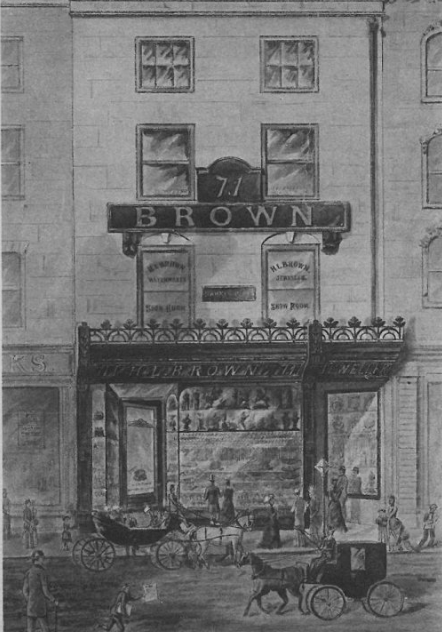
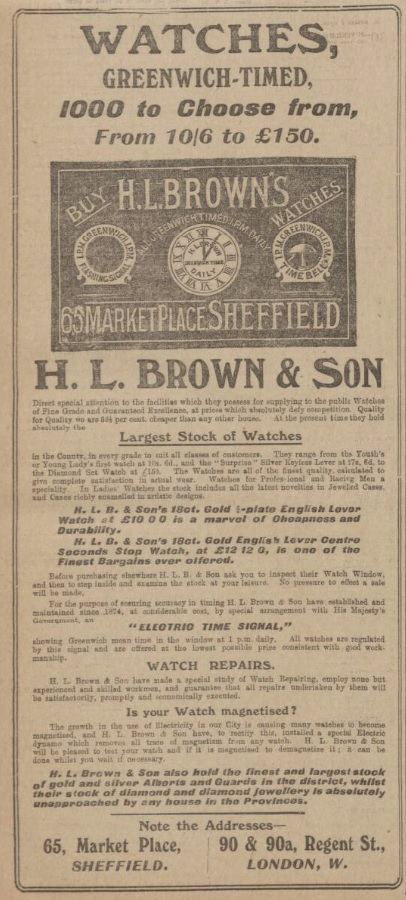
In 1891, a ‘Greenwich mean time flashing signal and time bell’ was installed in the window of H.L. Brown at new premises at 71 Market Place. It was a synchronised clock with flashing signal and bell, showing mean time daily at 1p.m. and was unaffected by rain or snow.
The clock was 14 inches in diameter, and on either side were two open circles, about half the size of the clock dial.
The one on the left contained a ‘flashing signal’ – a disc of metal painted red, and finely balanced on a pivot. Throughout the day this disc remained with its edge towards the front and was almost invisible. But precisely at one o’clock in the afternoon (GMT) the electric current arrived, giving the disc a quarter revolution, and causing it to reveal its full face, and fill up the open circle, remaining in that position for two seconds.
Simultaneously, the time bell fixed in the open dial to the right of the large clock was struck, so that the electric current made its arrival known both to sight and sound.
To obtain this equipment, H.L. Brown had to enter a five year agreement with the Post Office and pay a large yearly subscription. They were the only watch manufacturer to receive this direct signal. He stated that one of the reasons for installing the equipment was because he had sold many watches from the Government observatory at Kew, and which were guaranteed to keep exact time.
By visiting the Market Place any day at one o’clock, he said that users could ascertain if their watch was ‘on time’ as accurately as by a visit to London.
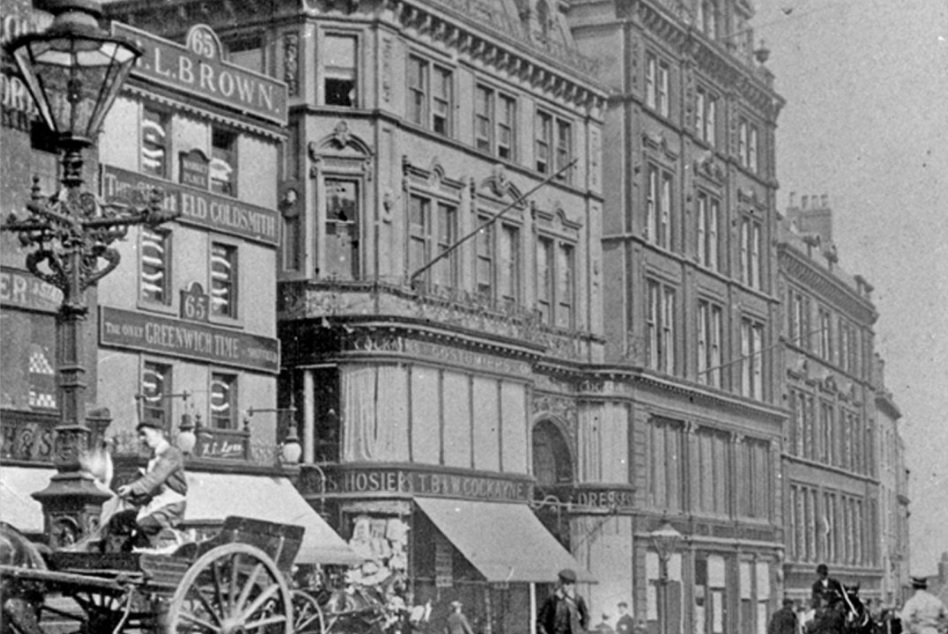
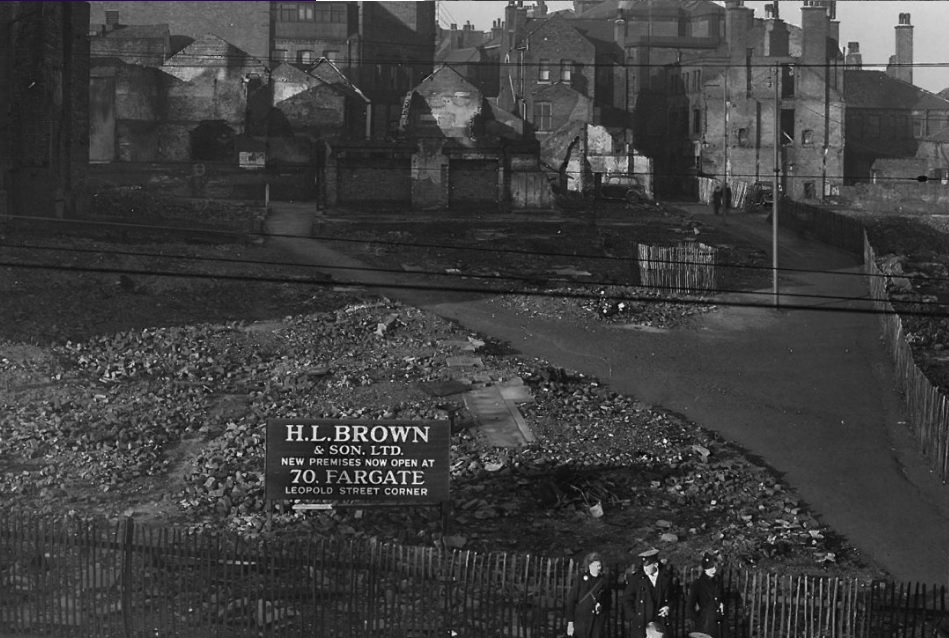
H.L. Brown later moved to 65 Market Place, and along with it went his equipment. It was bombed in 1940 and the shop moved to 70 Fargate at the corner with Leopold Street.
The time signal was subsequently replaced with a siren, and this was relocated to its current position at Barker’s Pool when H.L. Brown’s Fargate shop was demolished in 1986 for the construction of Orchard Square.
Above the entrance, there’s a small black and white sign proclaiming “1 o’clock time signal” and alongside it, the siren that you hear each and every day.Image: Sheffield Star
Harris Leon Brown came to England from Poland with an introduction to Alfred Beckett & Sons. He started by travelling around as a watch maker. Image: H.L. Brown
This is a story of an Eastern European fleeing from Russia, and the tale of a refugee who ended up in Sheffield.
Harris Leon Brown, jeweller, diamond merchant, and horologist, was born in Warsaw, Poland, in 1843, the son of a Russian government contractor, Baruch Brown.
He received his education at Warsaw Seminary Schools, and became an apprentice to Moses Neufeld, one of the largest firms in Warsaw engaged in the Sheffield trades.
When only 17, he was a revolutionary in Poland, one of the many who could not tolerate the oppression which Russia sought to impose upon his country. His part in the insurrection was of short duration, for he saw too many of his friends either shot by the military or hanged in the streets, so he determined to seek refuge in England. This was no easy task, for in those days the passage of Poles through Germany was fraught with the danger of being caught by the Germans with the inevitably painful process of being pushed back to Poland.
But sleeping during the day and the friendly conveyance of market carts during the night enabled him to make progress to Hamburg, then a ‘free’ port, where he took a boat to Hull.
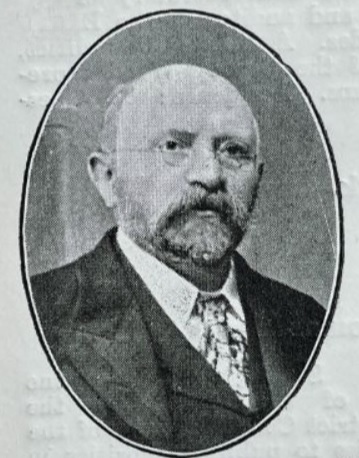
Harris Leon Brown (1843-1917), diamond merchant, jeweller and horologist of Poland and Sheffield. Image: Picture Sheffield
Sheffield was his destination, and with no money to his name, and a ‘stranger in a strange city’ he was introduced to Alfred Beckett and Sons (with whom Moses Neufeld did extensive business) and Burys Ltd. These firms, especially the former, treated him in a paternal manner, and through their guidance he remained in Sheffield.
With his instinct for trading, and by strictly honourable dealing, he founded a lucrative business in 1861 as a watchmaker; he began trading from 29 Gower Street in 1867; by 1876 H.L. Brown was situated at 24 Angel Street and in 1877 connected directly to Greenwich, with the introduction of the 1.00pm clock time signal.
H.L. Brown, 71 Market Place, Sheffield. Image: H.L. Brown
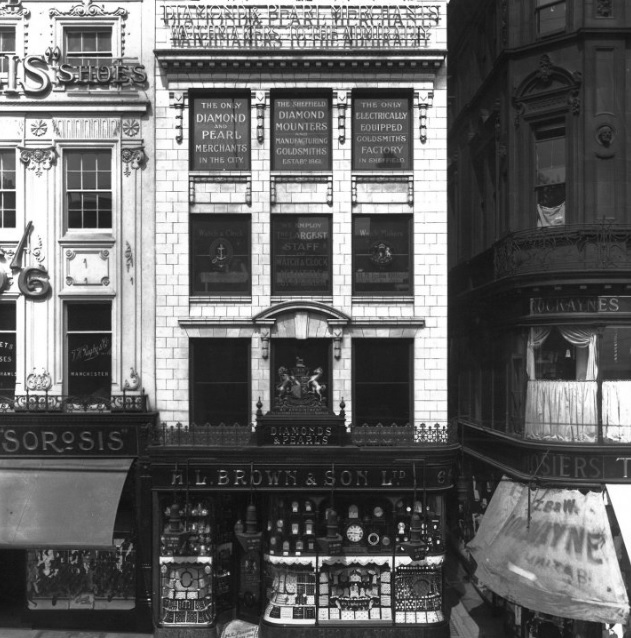
Around 1888, the firm moved to 71 Market Place (where the earliest known image of the premises exists).
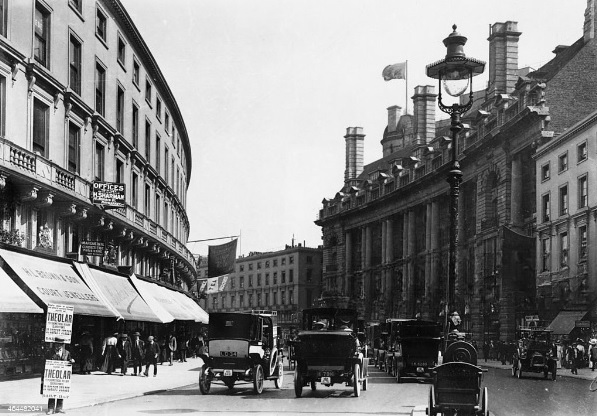
In 1896 the firm moved again to 65 Market Place and by 1906 he had opened a branch on Regent Street.
In 1896, H.L. Brown moved to 65 Market Place, Sheffield. Image: H.L. Brown
In the 1930s, H.L. Brown was modernised. Image: H.L. Brown
While searching for photographs of London’s Regent Street, this image from 1910 appeared and shows H.L. Brown at 90 and 90A. Image: Getty Images
Harris Brown married a Sheffield woman, Ann Kirby (daughter of Charles Kirby, Cutler) at St Mary’s Church, Bramall Lane, in 1865. Instead of giving a dinner for his golden wedding anniversary, he sent a cheque for £100 to the Lord Mayor to distribute among various war charities.
During his early years in Sheffield, unable to speak English, he saw a review of troops at Wardsend, and feeling grateful to his new homeland, joined the Hallamshire Rifles, and took pride in doing ambulance work with the local corps. It was characteristic of him that he presented to the St John Ambulance Association a silver shield for competition.
He became the oldest member of Sheffield’s Jewish community, and for many years was Chairman of the Sheffield Jewish Board of Guardians and served as President of the Sheffield Hebrew congregation. He was a prime mover in building a Synagogue in North Church Street, as well as a new place of worship at Lee Croft. He also helped secure a Hebrew burial ground at Ecclesfield. In 1910, he was elected a member of the Jewish Board of Deputies, the first occasion on which a Sheffield Jew had been so honoured.
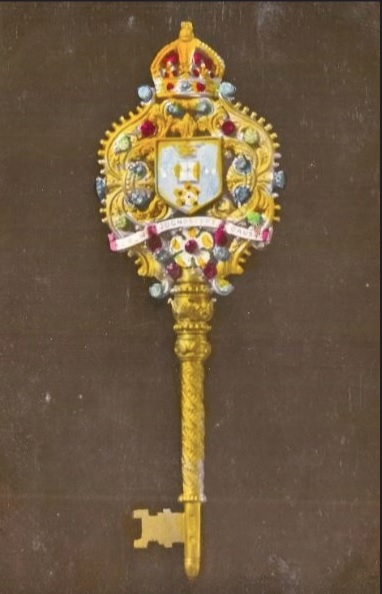
H.L. Brown and Son had contracts with the Government’s Admiralty and India offices for their watches, and had obtained, for excellence in workmanship, several Kew (Class A) certificates. In their goldsmith’s workshops they manufactured the jewelled key which was presented to King Edward when he opened the University of Sheffield in 1905.
The jewelled key presented to King Edward VII at the opening of the University of Sheffield. Image: Picture Sheffield
Newspaper advertisement from 1907. Image: British Newspaper Archive
In 1914, he was on holiday with his wife in Germany when war was declared. After eight nerve-racking days, they made their way home, avoiding the gauntlet of military patrols, before escaping back to England.
When in Sheffield, he resided at Kenyon House, 10 Brincliffe Crescent. He died, aged 74, following a seizure at his London residence, 23 Briardale Gardens, West Hampstead, in 1917. He was survived by his wife, three sons, and four daughters. One of his sons, Bernard Brown, succeeded him in the business.
At the time of his death, it was said that “he took pride in recognising all the obligations which the adoption of English nationality should entail.”
His interment was at the Jewish Cemetery, Edmonton, London. He had great aversion to any kind of display, and by his own expressed wish, the funeral ceremony was simple. No flowers were sent, the coffin was covered in plain black, and the obsequies were conducted with the strictly simple solemnities of the Jewish ritual. In accordance with the custom of that ritual, no ladies were present.
He left property of the value of £29,785 and gave £100 each to the Jewish congregation in North Church Street, the Central Synagogue, and the Talmud Terah School, as well as donations to the Sheffield Royal Infirmary, Sheffield Royal Hospital, Jessop Hospital for Women, and the Sheffield Hospital for Sick Children.
In the 1920s and 1930s, H.L. Brown opened branches in Doncaster and Derby, with Bell brothers of Doncaster joining the family business.
In 1940, the Sheffield shop was destroyed in the Blitz and business moved to 70 Fargate. Image: H.L. Brown
During the Sheffield Blitz (1940) H.L. Brown’s was bombed and business moved to 70 Fargate, at the corner with Leopold Street. The firm moved to its current location of 2 Barker’s Pool when Orchard Square was built in 1986. To this day, the 1,00pm time signal still sounds daily.
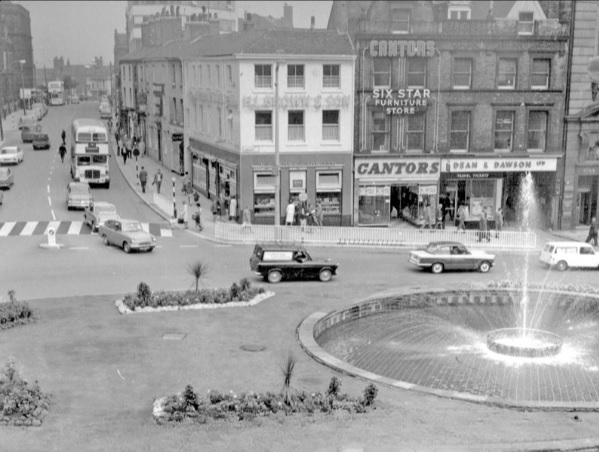
Town Hall Square in 1967 looking towards Fargate and Leopold Street, Goodwin Fountain, foreground, and No 70, H.L. Brown and Son Ltd. Image: Picture Sheffield
James Frampton (Harris Brown’s great great grandson) joined the business in 1989 after qualifying as a gemologist and training in the jewellery trade in Switzerland and London. He became MD from 2001 onwards.
In 2020, the store was modernised, and a Rolex showroom introduced.
Today, H.L. Brown operates in Sheffield and Doncaster (still using the Bell Brothers name), as well as Barbara Cattle (York), James Usher (Lincoln) and Bright and Sons (Scarborough).
H.L. Brown at 2 Barker’s Pool, Sheffield, in 2022. Image: DJP/2022




 sheffielder.net