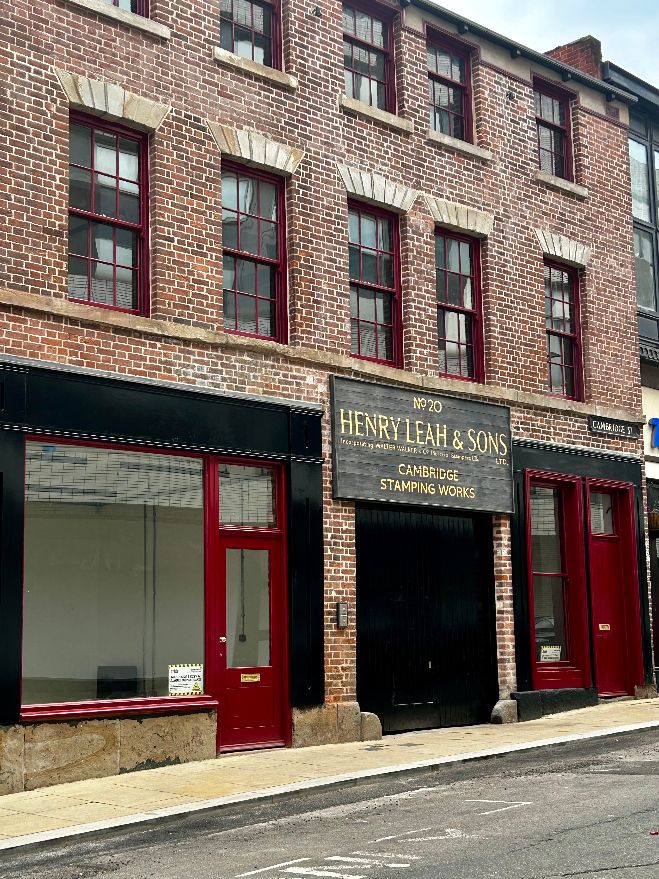
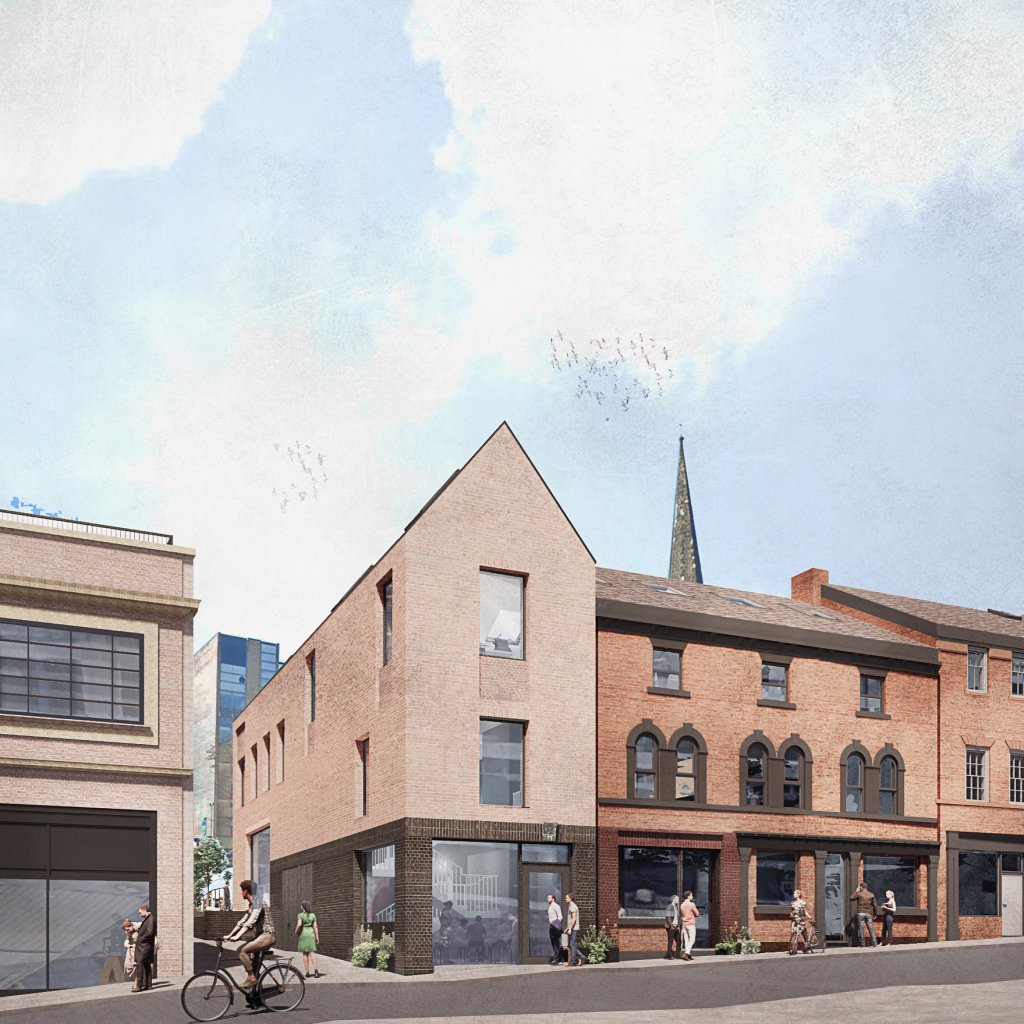
The ghosts of our ancestors, the ‘little mesters’ of yesteryear, are circling over Leah’s Yard, eager to see what has become of their old workshops. Soon, the gates be thrown open again, and, finally, this important part of Sheffield’s history, will have been reborn. The latest stage of the Heart of the City redevelopment is scheduled to open as a new creative and retail hub later this summer.
Gosling’s map of 1736 shows a rural scene, with Coalpit Lane, sometimes referred to as Cowpit Lane (later Cambridge Street), having views across open country to the east towards Alsop Fields and west over Sheffield Moor. Fifty years later, the land on the opposite side of the lane had been developed with the addition of Burgess Street and Cross Burgess Street.
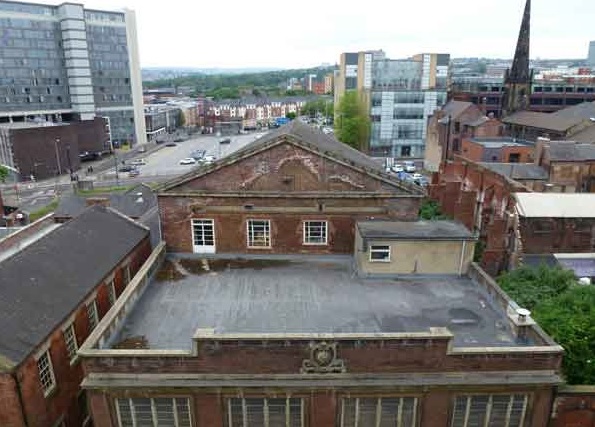
Industrial development gathered pace in the middle of the nineteenth century and was known for its traditional fine metal and cutlery making. The oldest buildings in Leah’s Yard date from the early part of that century when George Linley created a small shear and tool manufacturing workshop in 1825. The houses in front were converted to offices and shops, and the complex grew with piecemeal additions.
James Morton, a horn dealer, became the sole occupier about 1842, and later maps identify the site as the Coalpit Lane Horn Works. By 1890, the site had extended into an L-shape behind the Sportsman Inn.
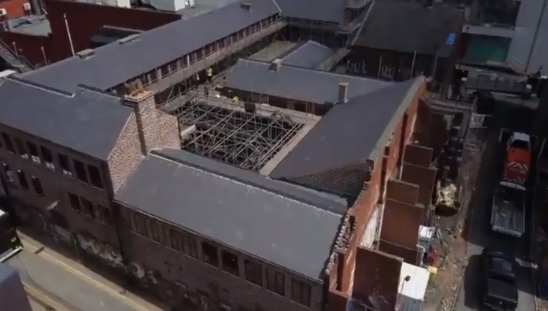
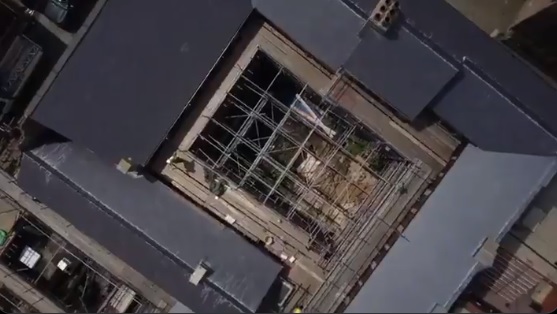
The arrangement of Leah’s Yard, with workshops around a central courtyard, was typical of the industry and in particular small craft workshops. The courtyard was accessed through a central cart entrance from the converted houses.
From the 1890s, the site was occupied by Henry Leah and Sons, a manufacturer of die stamps for silverware, later joined by other ‘little mesters’ all connected with the cutlery trade.
Henry Leah, originally from Chesterfield, died in April 1893, leaving the business to his two sons, Harry Wilson Leah (died 1939) and Louis Thomas Leah (died 1942). The Leah family remained in part of the complex until the 1970s when it was absorbed into Spear and Jackson and the site was sold in the 1990s.
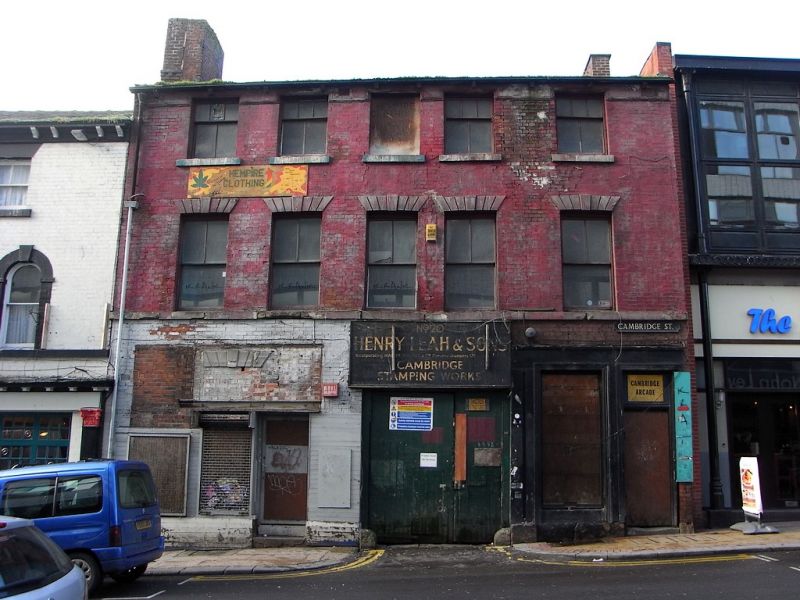
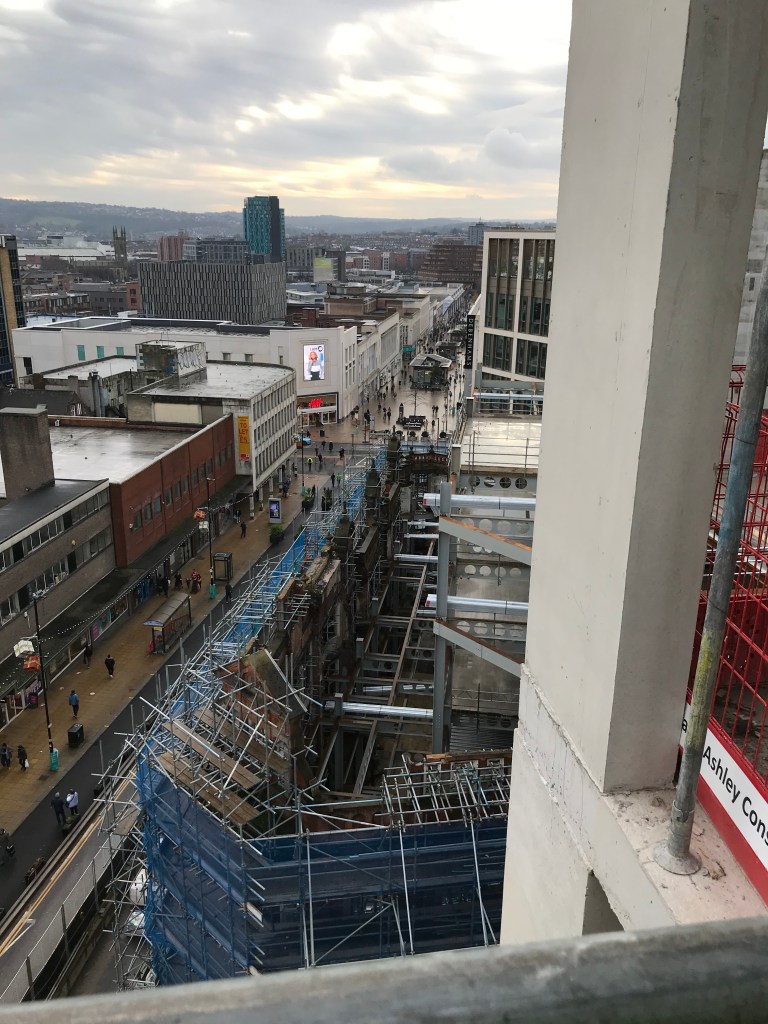
Although the frontage was occupied for a time by small shops, Leah’s Yard was abandoned and fell into disrepair, the frontage subsequently propped up by scaffolding for years and obliterating much of Cambridge Street.
It has been completely restored and a source tells me that most units have been taken up. Already confirmed are the artist, Pete McKee; Hop Hideout beer and tasting room; Gravel Pit plant, art, and gift shop; the Chocolate Bar café; Mesters’ Market, selling locally produced food and drink; The Yard Gallery, highlighting the city’s artistic talent; La Biblioteka book shop; Ferrio automation; and Sheffield Hospitals Charity.
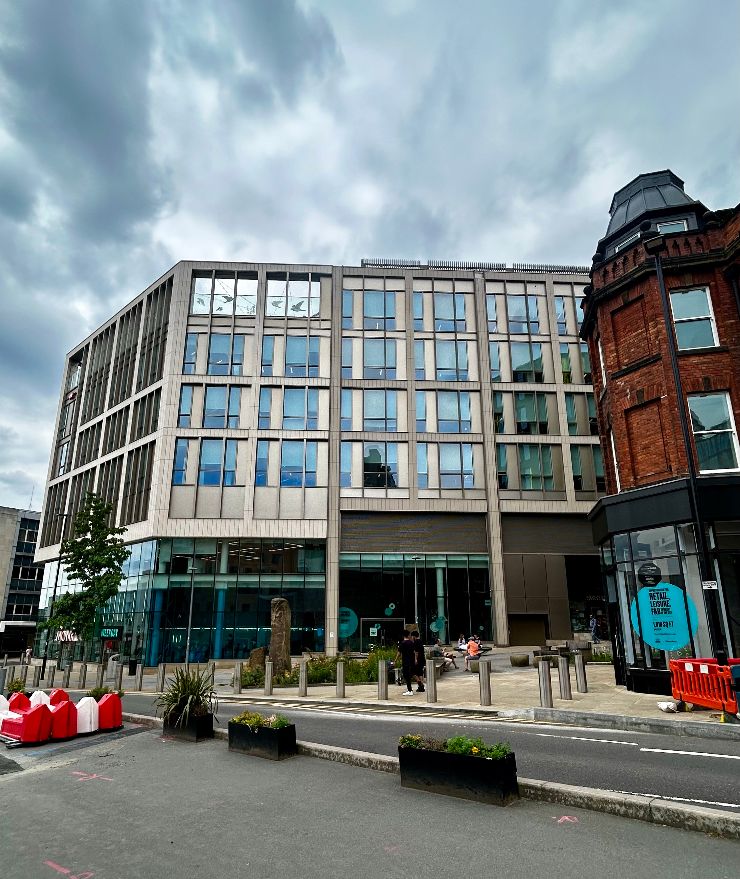
Grosvenor House, at the corner of Pinstone Street and the bottom of Cambridge Street, Sheffield. Image: DJP
Grosvenor House, home to HSBC, one of the first buildings to be completed in Sheffield’s Heart of the City 2 development. Prior to this, the site was occupied by a 1960s concrete block, topped by the Grosvenor House Hotel.
But let’s imagine that we can peel back time, to when this would have been wild moorland. The year was 1682 and a small house was built here. For whom, we shall never know, but it was extended over the next hundred years, and marked the edge of Sheffield town. Beyond the house was Sheffield Moor, a barren stretch of land, reputedly dangerous to cross, that stretched from the town boundary until it reached a small hamlet called Little Sheffield.
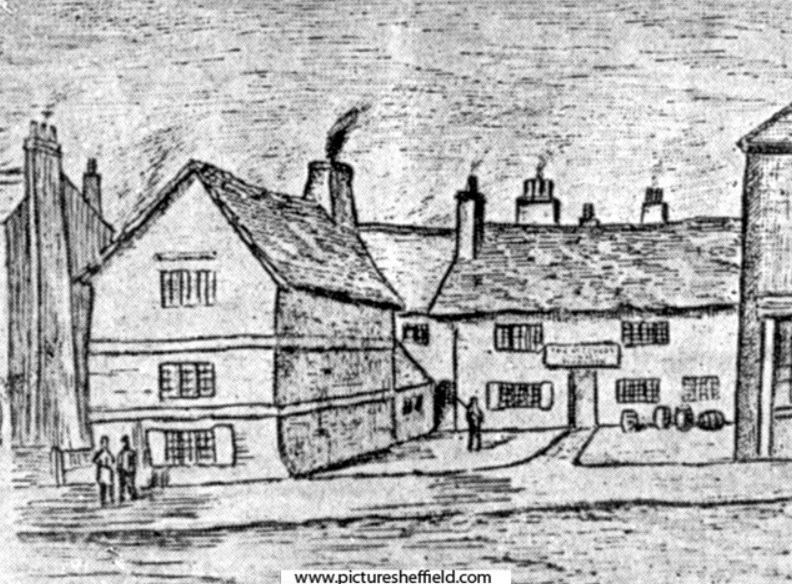
The likelihood is that somebody saw a business opportunity because by the early 1800s the house had been converted into an inn and stood on Coalpit Lane (renamed Cambridge Street in the 1860s).
“It was originally the last house in Sheffield, where the weary traveller, journeying between London and the immediate towns, could refresh themselves in the ‘qualifying flagon’ of home-brewed ale.”
In front of the inn stood two posts that held stocks in which evildoers were fastened and exposed to the jeers of passers-by. It was a frequent sentence inflicted on anyone found tippling during the hours of Divine service on Sundays or playing pitch-and-toss. The victims in the stocks were seated, and their ankles held fast.
Sheffield was well supplied with stocks. At one time, stocks and a pillory stood by the Town Hall which at that time was situated where the entrance to East Parade is now. There were also stocks at Attercliffe, Bridgehouses, and Fulwood.
It was a puzzle as to why there were stocks outside the Chequers Inn, especially as it was so close to the Sheffield stocks. This side of Coalpit Lane was actually outside the town boundary and the start of Ecclesall, and it was likely that the Sheffield constable (to save the rates) handed over a vagabond to the Ecclesall constable, and this was the ideal spot for him to be placed until released by the Ecclesall official and then he would be transferred from one place to another until his birthplace was found, and who would be compelled to keep him.
The Chequers Inn, also briefly known as the Old Cow, was in the Alsop and Barker family generation after generation, when it was purchased by James Padley, whose sons (one was the Borough Accountant) sold the property to Daniel Henry Quigley Coupe.
D.H. Coupe came from Worksop as a young man and had many ‘irons in the fire’, starting out as a labouring carter before buying the business of his employer Mr Milner. He grew the business until he owned 82 horses and carts before branching out into the coal trade at Midland Station. After he sold his coal business, he moved into the brewing industry and was sole partner in D.H. Coupe and Co, of the Albion Brewery, Ecclesall Road. He was the largest cottage property owner in Sheffield and paid more rates than any other man in the town.
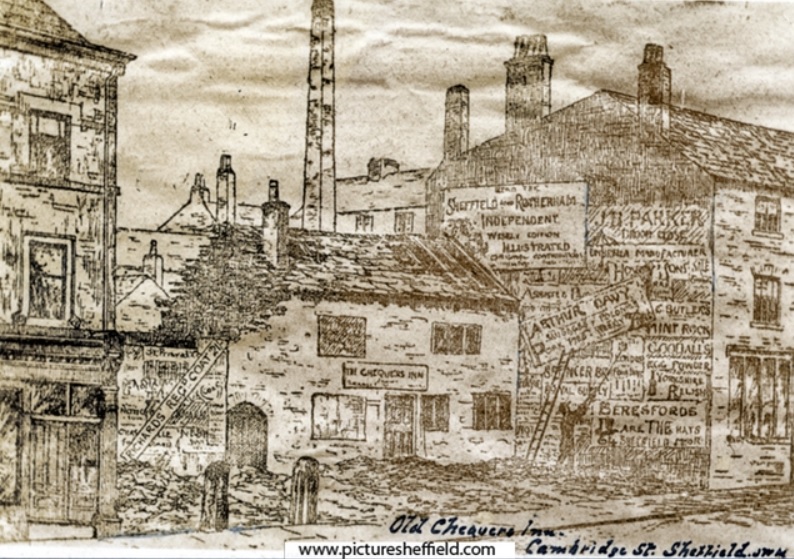
By the time he bought the Chequers Inn, Sheffield had rapidly expanded, and it no longer backed onto the countryside. Not only that, but the inn was in a poor state of repair. In 1860, slates and stone slabs had fallen off the roof, followed directly by the roof itself. Chequers Yard, behind the inn, was a coal yard, and contained notorious lodging houses, home to vagrants in a hopeless state of destitution and disease.
D. H. Coupe’s plans for the Chequers Inn was to demolish it and erect a new hotel on its site while retaining its old sign, one of its quarterings being the coat of arms of the old Lord of the Manor. However, he died in 1883 and the executors did not see their way to carry out the project, hence it remained in dilapidated condition.
Last days of the Chequers Inn, Cambridge Street. Image: Picture Sheffield
The area bordering old Sheffield Moor had become known as Moorhead, and when the town started its street improvements programme, the Chequers Inn owed its survival because it stood just above the point where New Pinstone Street cut through Coalpit Lane (Cambridge Street). The demolition of properties around it brought the Chequers into daylight again and a ‘somewhat out-at-elbows appearance’, and the inrush of light had proved so dazzling that the windows were boarded up and accentuated the poor condition of the public house. The uninhabited appearance meant that its days were numbered, and a report from this time stated that one of the old stock stones had fallen. It was a far cry from the days when writers had referred to the smart Chequers Inn with its grass plot facing the street, but in its last days that grassy plot had been used as a skittle alley.
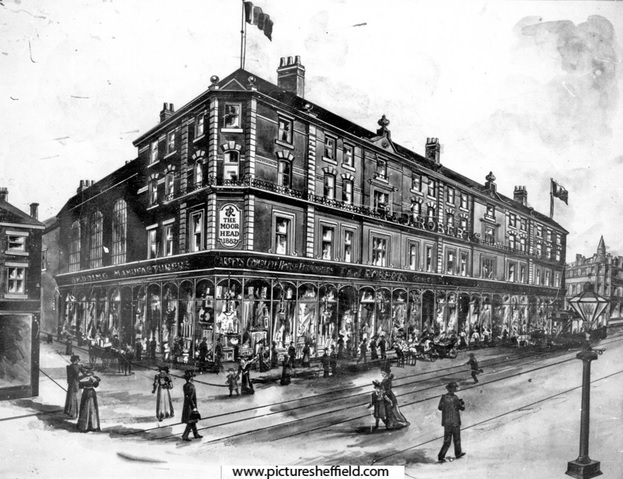
T and J Roberts, milliners, had built a grand new shop at the corner of Cambridge Street and New Pinstone Street in 1882 and they purchased the Chequers Inn to construct a Cambridge Street extension in 1888.
Workmen who demolished the Chequers Inn came upon a stone lintel which bore coloured checks – blue, red, etc. – bright as the day it was painted. The sign had been papered over and above the lintel was the name of ‘Alsop’. Other stones laid bare had the date ‘1682’ carved into them. There is some mystery as to what happened to the old stones that had supported the stocks. Charlesworth Brothers, who built Roberts extension, stated that they had been used intact in the foundations of it, but a letter to the Sheffield Daily Telegraph claimed that a passer-by had bought them with the intention of presenting them to Sheffield for display in one of its parks.
Alas, the Chequers Inn disappeared and was quickly forgotten. T and J Roberts closed its shop in 1937 and the building survived until replaced by the 1960s concrete construction that was in turn demolished as part of the recent Heart of the City redevelopment.
T and J Roberts, Moorhead, with Cambridge Street to the right. 1885. Image: Picture Sheffield
An operator is being sought for a new live entertainment venue as part of Sheffield’s Heart of the City scheme.
Sheffield City Council and its strategic development partner Queensberry are inviting interest from potential operators for Bethel Chapel.
Located on Cambridge Street, the Bethel Chapel building, which dates back to the 1830s, is currently being refurbished and will become the latest addition to the strong tradition of live music and performance spaces in Sheffield when it opens next year.
The venue represents a key component in Heart of the City’s ‘cultural and social’ focal point in the area, and is set to complement the Cambridge Street Collective food hall development, and the independent retail, studio and maker spaces in Leah’s Yard, which will also both open next in 2023.
The successful operator of Bethel Chapel will be responsible for curating all events and social activities – expected to be live music, comedy and other live arts.
Alongside the live entertainment space on the ground floor, there will be a bar and café area on the first floor and the top floor will also have an external roof terrace and balcony. A new outside space at the rear will have seating areas for Bethel Chapel and the adjoining Cambridge Street Collective.
The foundation stone for Bethel Chapel was laid in July 1835 and opened for services in June 1836. The Primitive Methodist Bethel Chapel existed for just over a century and its final service was on Sunday 20th September 1936.
It was briefly empty before George Binns, an outfitter at Moorhead, bought the old chapel to relocate its business. The small churchyard at the front was swept away, including iron railings and stone pillars, and probably a few gravestones. In 1938 a two-storey extension was added to the front of the chapel, with stone initials on its parapet showing ‘GB’ and the date ‘1868’, the year the business was founded.
By the 1960s the shop had transferred to Lawsons Outfitters and in 1977 it was acquired by Cole Brothers (later John Lewis) to alleviate pressure on its store across the road.
Bethel Chapel. The original chapel can be seen behind the 1930s extension. Image: Picture Sheffield
Backfields, looking from Division Street. Image: DJP/2022
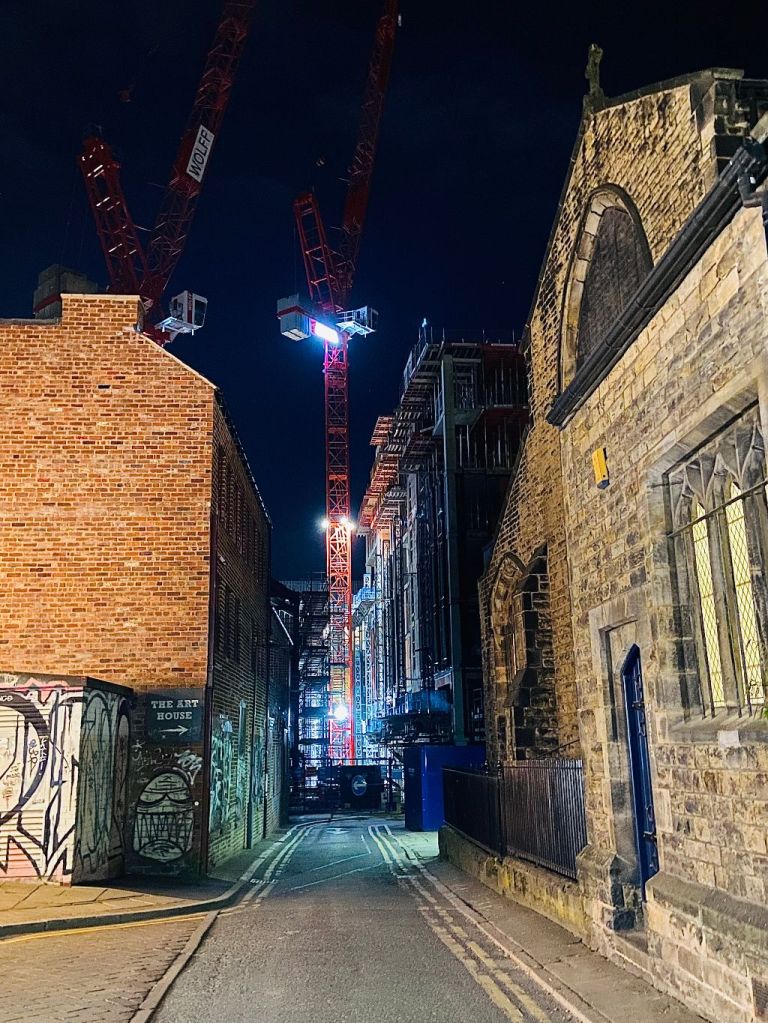
While you were sleeping last night. Backfields, 3am. A forgotten thoroughfare amid 21st century redevelopment. A street with an undesirable history. Our ancestors imperilled this narrow street to crime – stabbings, muggings, and death, and I doubt that Sheffield has another street which suffered so many devastating fires.
In 1872, a Dr Hime expressed his opinion that it was not surprising that there should be so much sickness in the town while there were such places as Backfields and the neighbourhood.
Backfields led from Division Street to Wellington Street, off which were alleys and passageways with access to Coal Pit Lane, and Carver Street. It was an area of dirty, dense, back-to-back housing, and small workshops.
It was a cess-pit of filth, but it hadn’t always been like this.
Once upon a time, Backfields was exactly that. The fields beyond Coal Pit Lane (now Cambridge Street), once the distant boundary of town, was where cows grazed, sheep gambolled, and children played in the meadows.
Cometh the Industrial Revolution, no trace of its rural past existed.
In the same year that Dr Hime pontificated about Backfields, the Sheffield Independent provided a unique account: –
“On the eastern side of a yard there is a privy that must do duty for a considerable number of houses, and it is scarcely equal to the duty. The ashpit is more than full – it is overflowing. It has made an encroachment almost into the middle of the yard, in front of the doors of some of the houses and extends about twenty feet until its further extension laterally is stopped by the water branch.
“It is the same in every yard. Near St. Matthew’s Church there is an ashpit adjoining the street, piled up high beyond the retaining walls, and the rubbish falls onto the footpath leading to the houses. The passages are worthy of exploration. A visit to them will show that the ashpit question, though a grave one, is not the only point affecting the sanitary position in Sheffield. Air, light, ventilation, and crowding have much to do with it, and many of these places ought to be improved off the face of the earth.
“There is a passage, the old entrance to which has been removed by the erection of a privy, and the actual passage left would scarcely admit the entrance to a turtle-fed alderman. But there are other privies, not only as bad, but worse. One could not be seen because the doors were closed. The other could not be seen because the doors could not be closed. But here, as in the other case, a solution has been found. Human necessity is strong in resources; and the depositions that should be made in the privies are made in or thrown into the passage. These premises are stuck over with notifications from the Health Committee enjoining cleanliness on the inhabitants, in circumstances and under conditions where it is impossible to be clean!
“Yet again, in these jennels and passages, there are active business proceedings carried on. In one of them, there is a bakery, where spicy-looking buns were being made for the delectation of young Sheffield, which may be very excellent in their way, though fastidious people would prefer that the materials of their food should not be exposed and manipulated in such unsavoury localities. In another passage, a large tray of pork pies was met ready for the oven. These ‘Melton Mowbrays’ may be all that could be desired; and the givers of picnics will perhaps feel obliged for hints as to the possible sources of their pies and buns, or other delectable confections manufactured over conditions of sweetness that may impart a flavour and improve the appetite.”
It took years for things to improve. A hundred years later, the houses had finally gone while recession claimed industry and commerce. St. Matthews is perhaps the only reminder of our inglorious past.
Sheffield did little to redevelop Backfields and it is only now, with the Heart of the City project, that the area has been embraced. Tower blocks are not long from completion, and people, maybe descendants of those who ate spicy-buns and pork pies, are returning.
But, as somebody recently pointed out to me, are we simply building the slums of the future?
Cambridge Street at 3am. The changing face of our city centre.
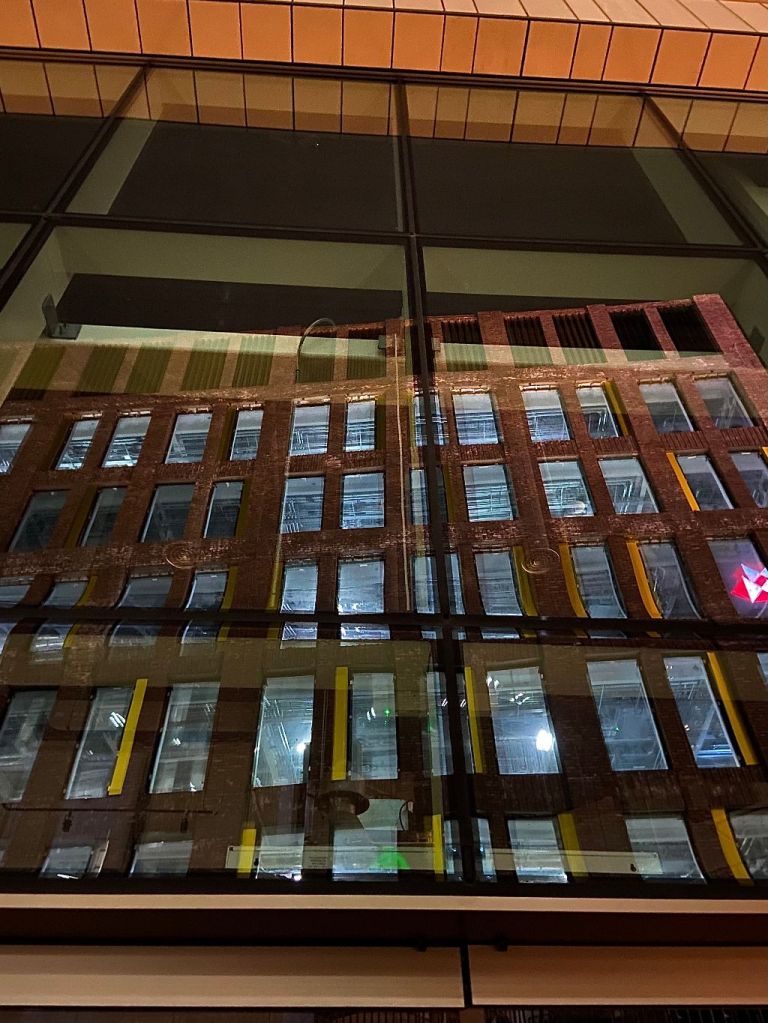
Grosvenor House, home to HSBC, with the reflection of the almost-complete Isaacs Building opposite. Both buildings form part of Sheffield’s Heart of the City development.
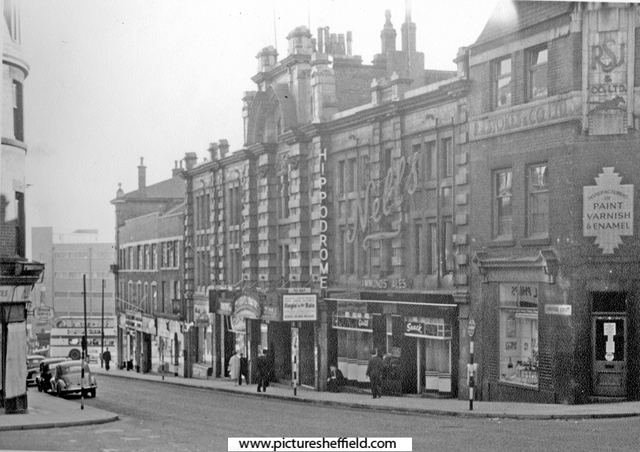
Once upon a time, this was the site of Barrasford’s Hippodrome presenting music hall acts and films projected from the Barrascope. It was soon renamed the Hippodrome Theatre of Varieties and was Sheffield’s largest theatre.
It eventually became the Hippodrome Cinema, demolished in 1963, and the Grosvenor House Hotel and retail outlets built in its place. History likes reinventing itself, and the hotel was itself demolished in 2016-2017.
Hippodrome Theatre opened 23 December 1907 as a Music Hall. Became a permanent cinema on 20 July 1931. In 1948, came under the management of The Tivoli (Sheffield) Ltd. Closed 2 March 1963 and demolished. Image: Maurice Parkin/Picture Sheffield
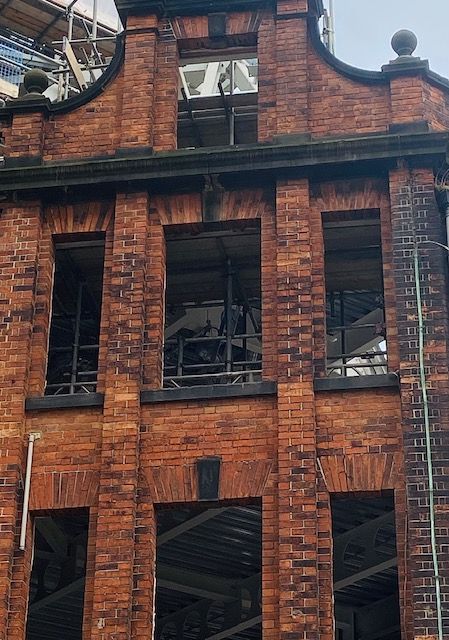
Whenever you see an old facade with a new structure behind it, this tells you that a building of distinction once stood there that simply could not be demolished, and the compromise which arose was to keep the front wall. The rise of facadism shows how far the power balance has shifted away from conservation towards redevelopment. Retaining the facade is an unwelcome condition of planning permission when their preference would probably have been complete demolition.
This building, at the bottom of Cambridge Street, Sheffield, shows that the facade is retained while its interior will be replaced with modern concrete and steel. This will apply to almost all the Victorian buildings being redeveloped on Pinstone Street, and planning permission has been granted to do the same to Chubby’s and the Tap and Tankard further up Cambridge Street.
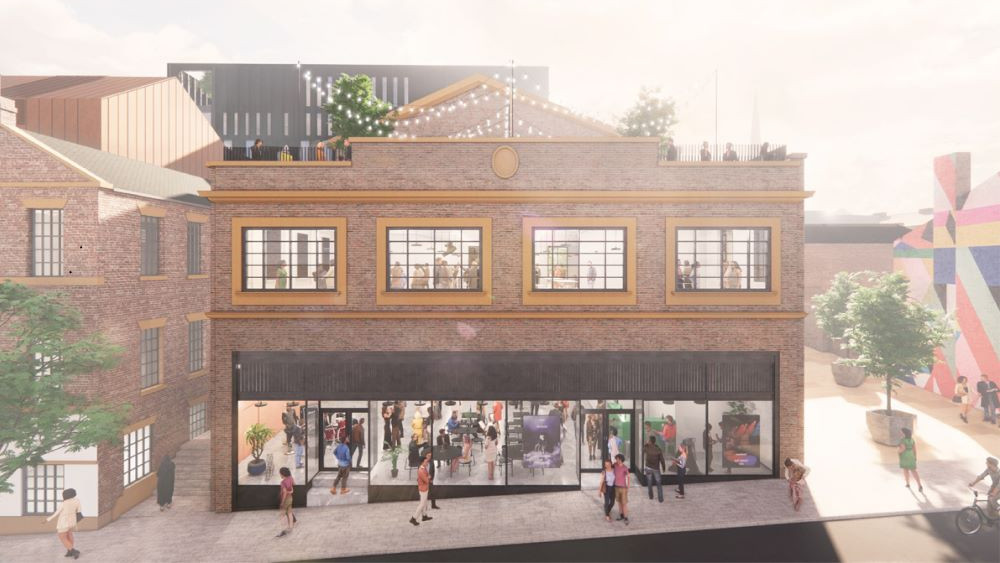
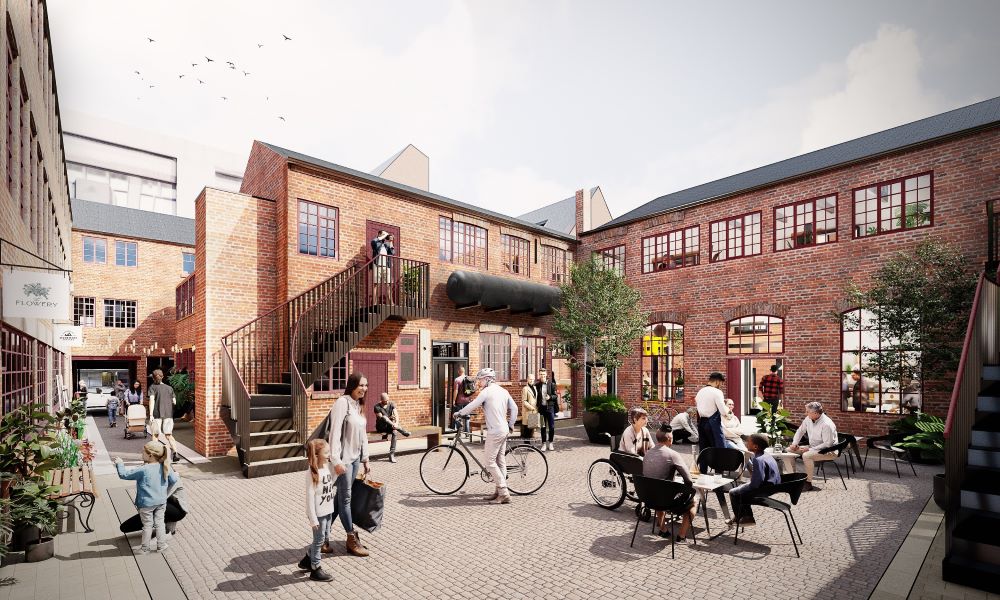
Planning permission has been submitted for Leah’s Yard on Cambridge Street to be transformed into a new creative hub for independent businesses, with a slew of independent stores set to surround a public courtyard.
The venue will be operated by Tom Wolfenden, CEO of SSPCo, and James O’Hara of the Rockingham Group, who were appointed to the project by Sheffield City Council.
If approved, Leah’s Yard will be refurbished true to its current form, with a courtyard surrounded by small boutique shops, with the first and second floors hosting approximately 20 independent working studios.
The oldest buildings on the Leah’s Yard site are the two former houses fronting Cambridge Street that date from the early nineteenth century. The industrial legacy of Leah’s Yard began with George Linley in 1825 as a small shear and tool manufacturing complex during the early nineteenth century. The houses fronting the street were later converted to offices and shops, and the complex as a whole is characterised by piecemeal additions and alterations dating from the nineteenth and twentieth century.
Cambridge Street was known for its horn works, and James Morton, a horn dealer, became the major sole occupier about 1842.
Leah’s Yard was occupied from about 1891-92 by Henry Leah and Sons, a manufacturer of die stamps for silverware. By 1911 there were 23 occupants (little mesters) on site producing slightly different goods, and undertaking different processes yet all contributing to the cutlery trade.
The site was predominantly used for production associated with the metal trades well into the mid to late twentieth century. The Leah family remained in part of the complex until the 1970s when they merged with Spear and Jackson; they sold the site in the 1990s. The Cambridge Street frontage of the complex had been used as shops in its last few years of occupation, and takes into account the former Sportsman public house and Chubby’s recently closed takeaway.
As part of Heart of the City II, Leah’s Yard will sit alongside the upcoming Cambridge Street Collective and Bethel Chapel developments – both currently under construction – that will feature a contemporary food hall, cookery school, fine dining experience and live entertainment spaces.
Who says that the Heart of the City II development is just about new buildings?
Leah’s Yard is currently undergoing a £6m renovation to breathe life back into the old buildings. Set to open in early 2023, Leah’s Yard will be a destination for independent retail, and showcasing traders, makers and creators from Sheffield.
Throughout the 19th century the yard was used by a horn dealer (who supplied the cutlery handle making trade), Sheffield platers, knife manufacturers and silver stampers. In the 1880s the building was known as the Cambridge Street Horn Works.
In 1892 Henry Leah took over the building as a producer of die stamps for silverware, giving the building the name that it is known by today. Sharing the building at that time was Walter Walker & Co Ltd, who were piercers and stampers; the building was alternatively known as the Cambridge Stamping Works.
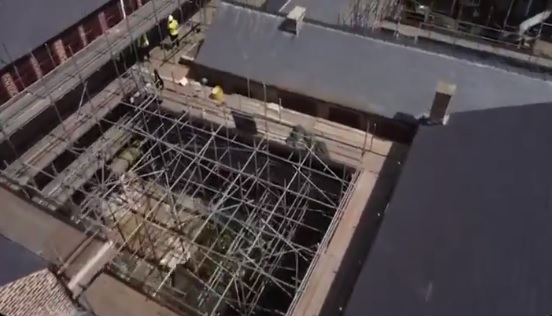
Behind the scaffolding, work is quietly progressing to restore what had become one of the city centre’s most endangered buildings.
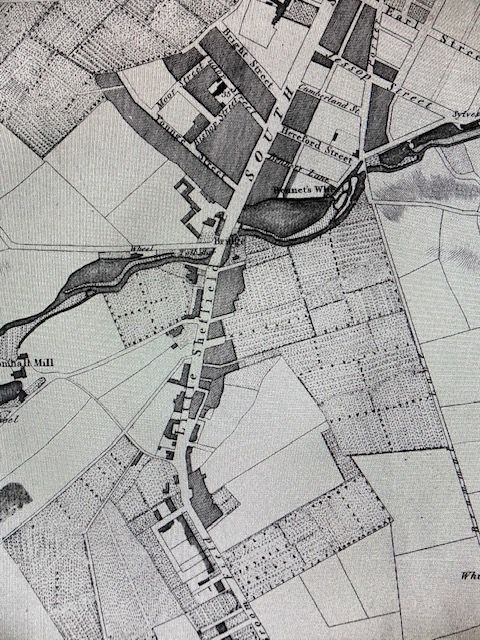
Fairbanks’ Map of Little Sheffield in 1808. South Street became The Moor. The road marked Little Sheffield is now London Road. There are some familiar road names in the top half of the map. (Image: Picture Sheffield)
Once upon a time there was a small hamlet near Sheffield town that went by the name of Little Sheffield.
During the early 1800s, Sheffield’s rapidly growing population needed to expand outside the historical boundaries, and Little Sheffield disappeared.
We know where Little Sheffield was, but its boundaries blurred over time, with experts long contesting where it started and finished. The area has never been clearly defined, like those forgotten places of Port Mahon and Hallamshire.
We must go back to olden days when Sheffield was a town surrounded by fields and countryside. It gradually expanded until its southern edges skirted a gorse-clad swampy common called Sheffield Moor.
Today, we know this marshy land as The Moor with its surrounding streets.
A path was made by throwing up two embankments, between which was a deep ditch, with only a footbridge over Porter Brook.
By the 1760s, travellers had to go down Coal Pit Lane (Cambridge Street) and Button Lane (long disappeared) to Little Sheffield – a group of poor and time-worn cottages. The road to it ran across Sheffield Moor, thence up a sharp rise to Highfield. The only house you came to after passing Moorhead was Mr Kirkby’s, standing on Button Lane (opposite where the ramp to Sainsbury’s car-park on Charter Row now stands). There was one other building nearby, with a bowling green attached to Sheffield Moor. Beyond was Little Sheffield, the outlying hamlet.
By the nineteenth century, the fields around Little Sheffield had been swallowed up for the working classes, a poor and densely populated area, its houses with roofs of stone slabs, low windows, and red brick walls.
Nowadays, we can define Little Sheffield’s northern boundary as being where the Moorfoot Building stands, taking in Young Street, South Lane, St Mary’s Gate, London Road, and surrounding streets like Hermitage Street, Sheldon Street, Hill Street, John Street, and Boston Street (once called George Street), up towards its southern boundary at Highfield.
Scaffolding and new steel work support retained Victorian fronts on Pinstone Street. (Image: Heart of the City II)
A photograph that tells a story. The remains of the Victorian facade at the lower end of Pinstone Street in Sheffield city centre. Everything behind has been demolished, and the famous old fronts preserved for posterity.
Block C of the Heart of the City II masterplan is located between Pinstone Street, Cambridge Street and Charles Street.
It incorporates two historic building blocks which form the southern end of the Pinstone streetscape.
The combined façade and its dramatic roofscape is an excellent example of Sheffield brick and terracotta architecture. It occupies a prominent position and is visible from the Peace Gardens through to The Moor.
Block C will be home to 39,000 sq ft of premium Grade A office space, serving 450 employees, plus six premium retail units comprising over 8,000 sq ft.
It will be known as the Isaacs Building, named after Edwardian-era paper-hangings merchant David Isaac, and is scheduled to be completed in 2021.
 sheffielder.net