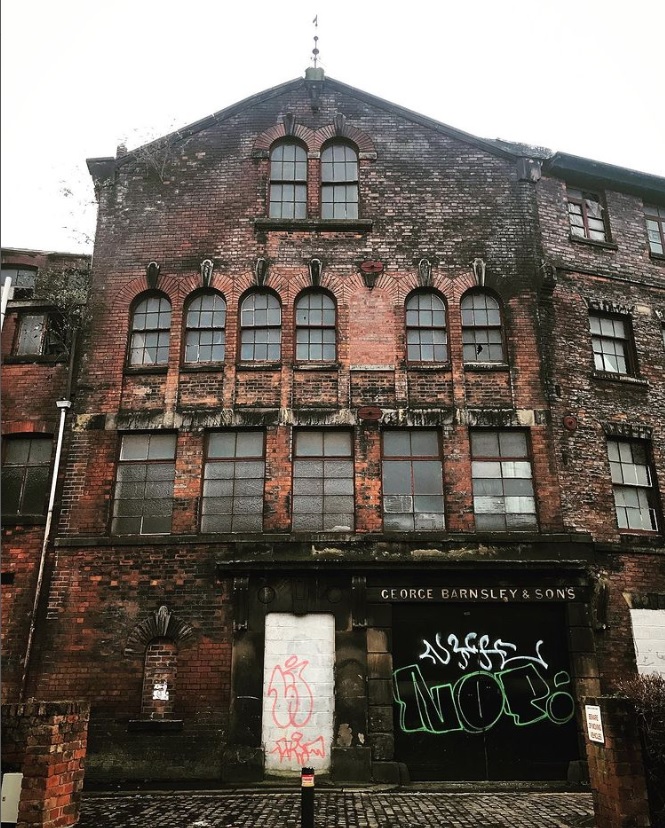
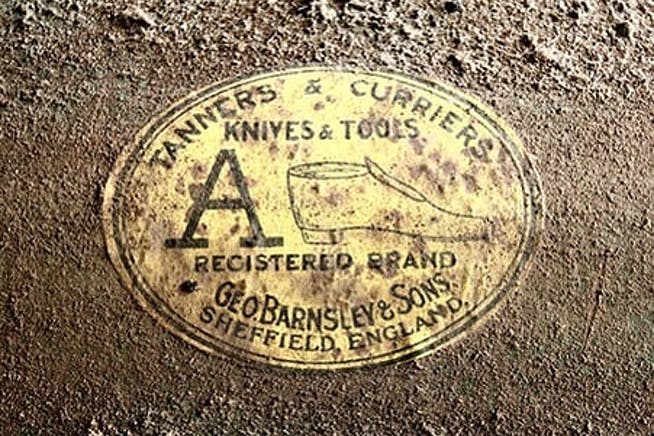
If I had a favourite building in Sheffield, this would be it. Cornish Works, abandoned, derelict, still charming, is one of the last substantial development opportunities at Kelham Island. This was once home to George Barnsley and Sons, specialists in files and cutting tools for leather workers and the shoe-making industry.
Unlike many famous Sheffield firms, its name lives on in premises at Mowbray Street. But for many years the business was located here, at Cornish Street, a narrow road, that is slowly readying itself for regeneration.
If I had made this year’s Sunday Times Rich List, then I might have considered paying the £1.65m being asked for it, and substantially more for it to be made good. Until somebody else does, the building falls into ruin.
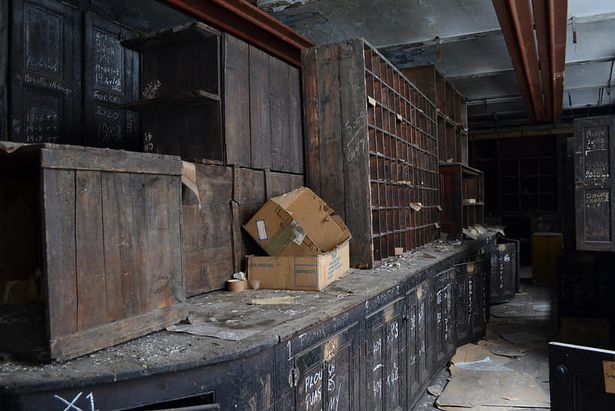
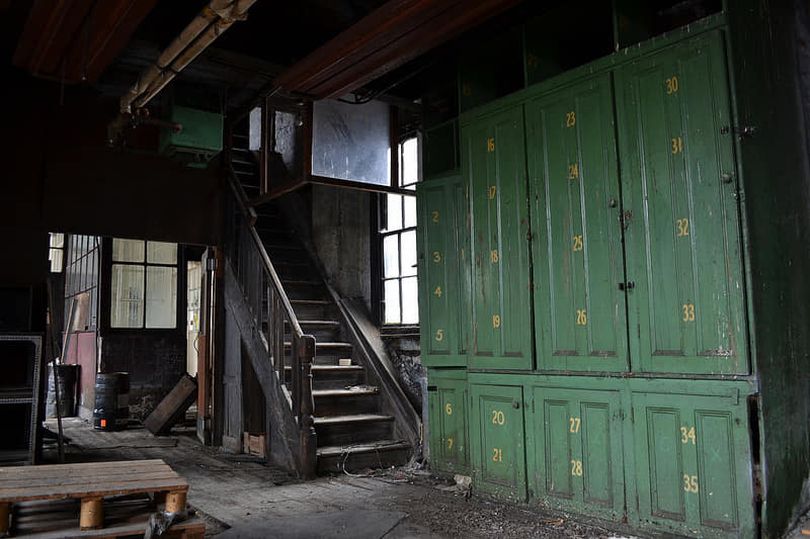
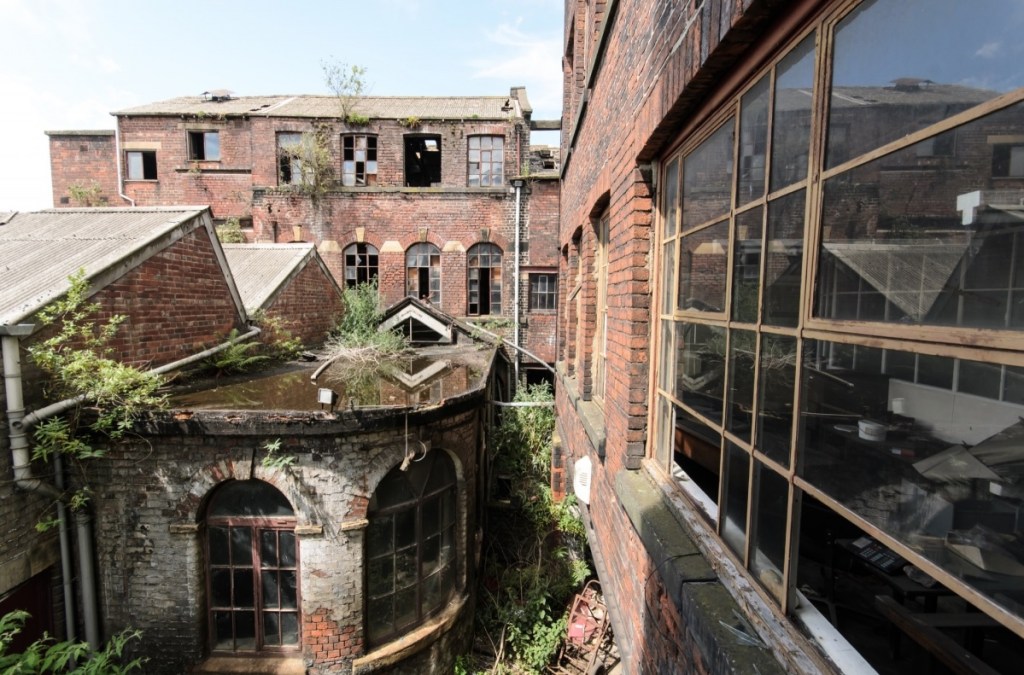
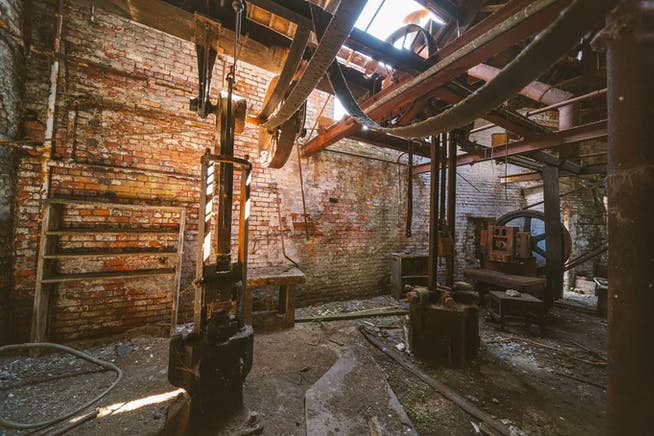
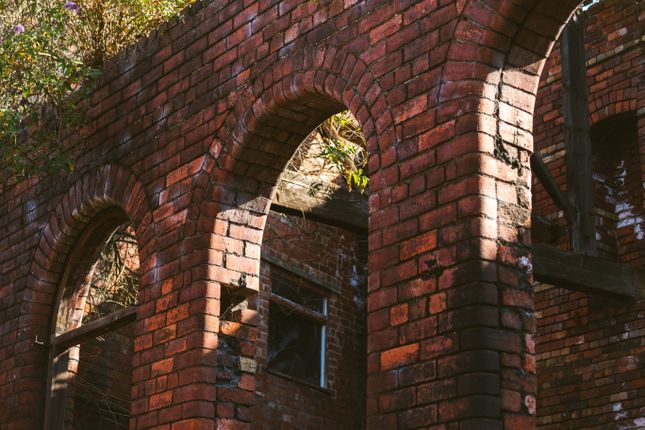
“It is an amazing labyrinth,” said a friend of mine. “Obsolete machinery has become museum pieces, old offices have finely crafted woodwork, and everywhere you look there’s evidence of Victorian and Edwardian history. But nature is taking over, with greenery covering old courtyards, the sides of buildings, and encroaching inside. Roofs have collapsed and birds have made home. It is an urban explorer’s paradise, most of whom show the respect it deserves, but the big worry is that one day somebody will set it on fire.”
Image: Leeds Explorer
Image: Leeds Explorer
Cornish Works is a collection of listed buildings, including crucible furnaces and a dwelling house, constructed about 1850, and extended in the later nineteenth century.
Image: The Time Chamber
George Barnsley was a manufacturer of files and other tools. He was born into humble surroundings in 1810 and educated at the Boys’ Charity School,
However, aged 26, he was clever enough to start a file making firm on Wheeldon Street and moved into the new Cornish Works in 1850, improving his product range to include shoes and butchers’ knives. He was a member of the Town Council for the St Philip’s Ward, and a member of the Cutlers’ Company.
Image: Colloco
Image: Colloco
His son, George Jnr, joined the company as a travelling salesman at 14 and was made a partner when he reached twenty-one. He took over the company on the death of his father in 1874.
Like George Snr, he became a Town Councillor, as well as becoming an alderman, J.P., and Master Cutler.
George Jnr died at Oakvale, Collegiate Crescent, in 1895, and the business passed to his son, Henry, who steered the business through the difficult times of the twentieth century.
But when he died in 1958, the number of employees had dwindled to around one hundred, and by the time the works closed in 2004 only a handful remained in this cavernous and dilapidated workspace.
The name eventually passed to the Mowbray Manufacturing Company of which it is now a wholly owned subsidiary.
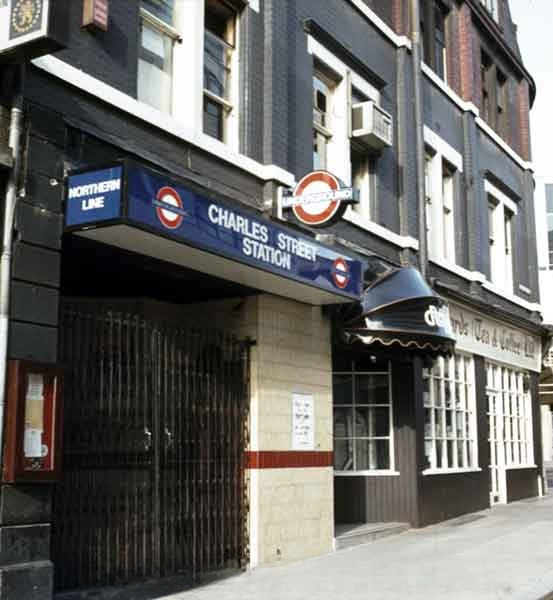
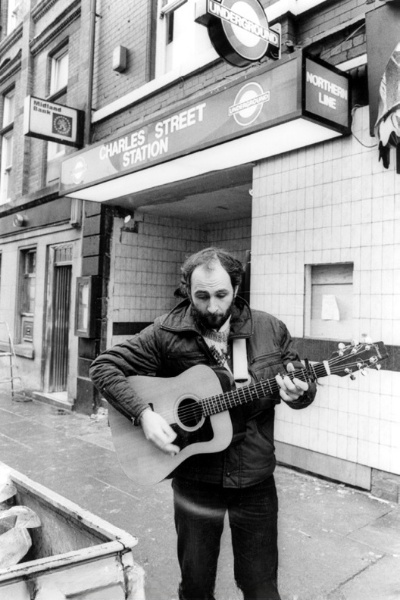
A photograph that will confuse younger generations. Doing an excellent job at imitating the London Underground, this was Charles Street Station, pictured in 1983. This was a theme bar, but such was the authenticity, that Omnia, the online cultural site, includes the image on its London Underground pages. It was incorporated within the Isaacs Building, built by David Isaacs, a wallpaper merchant, in 1905.
Isaacs Building was an example of Edwardian entrepreneurship, the ground floor containing seven shop units with an assembly hall above, its entrance being from Charles Street. The top floor of the building contained offices and several workshops, mostly rented by enterprising tailoring businesses.
The assembly hall was once the Sheffield Trades Club and in the 1970s was converted into a nightclub, its various incarnations being Faces, Raffles, Charlie Parker’s and Freedom. For a time, the old basement was used as Charles Street Station.
Stephen Shephard busking outside Charles Street Station in 1983. Image: Picture Sheffield/Sheffield Newspapers Ltd
The bar was short-lived, and the entire building was demolished in 2020 as part of the Heart of the City redevelopment. Its replacement, modern office-space, with ground-floor retail units, is nearing completion, and is also called Isaacs Building.
I’ve always said that what interests me most about old buildings is not what you get to see, but what you don’t. It’s about those hidden rooms, above and below, that get forgotten over time.
The next time you walk down Fargate, look up, and wonder what happened in those rooms above shops. What secrets do they hold?
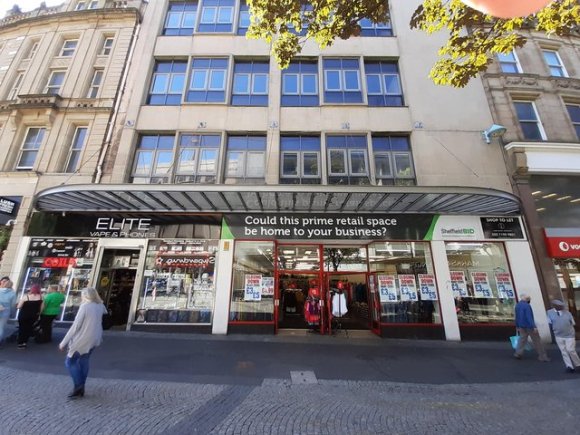
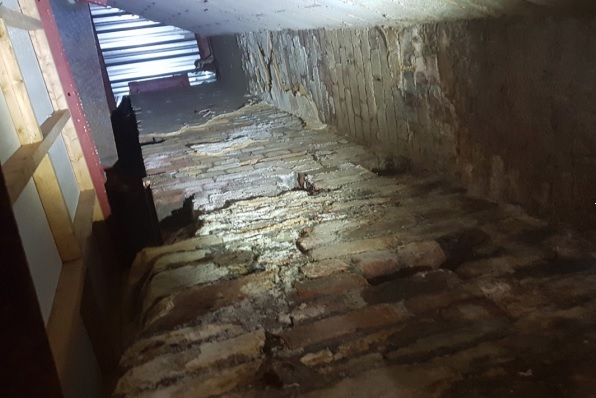
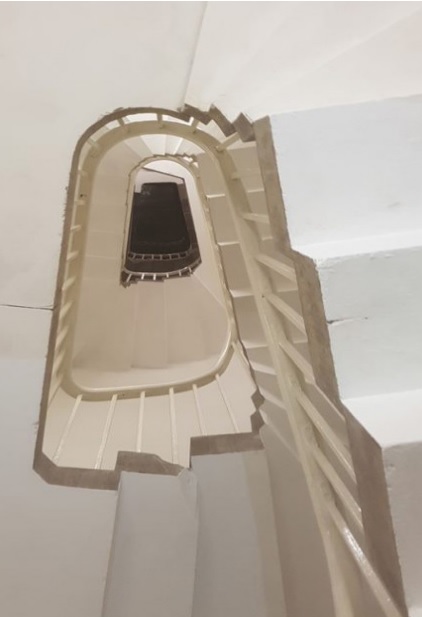
And so, I’m delighted that 20-26 Fargate, subject of an earlier post, has thrown up interesting photographs, including a disused lift shaft, going back to the Victorian times of Robert Foster and Sons, milliners and furniture sellers, and a quite unexpected staircase.
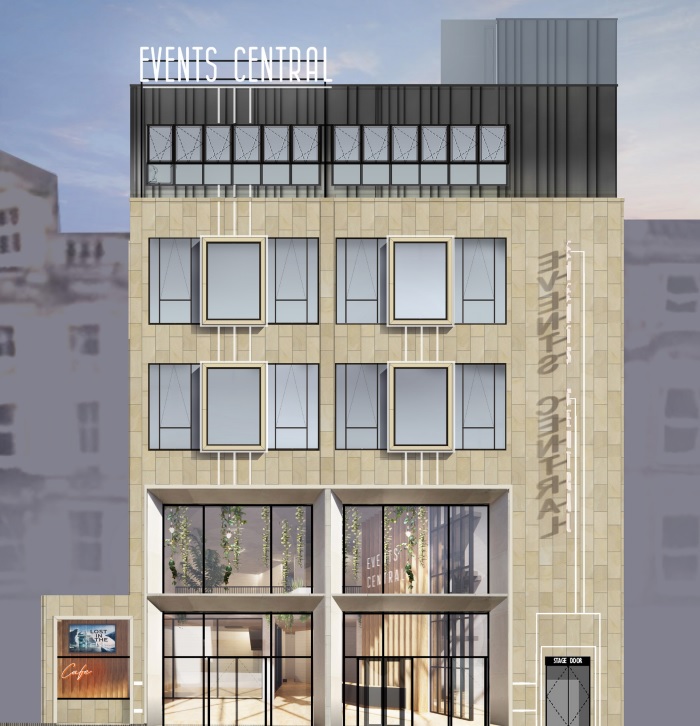
The proposed material palette has been developed to reflect the historical and cultural values of Fargate and the City Centre Conservation Area. The existing stonework will be retained where possible, with new stonework added at ground floor level adjacent to the new stage door entrance. A new stone surround is proposed to wrap around the new entrance and has been developed to respond to the Pre-Application feedback received. At fourth floor level it is proposed to re-clad the existing curtain walling in an anthracite coloured aluminium cladding system with vertical articulation to reflect the architectural language found in the existing building. Image: HLM Architects
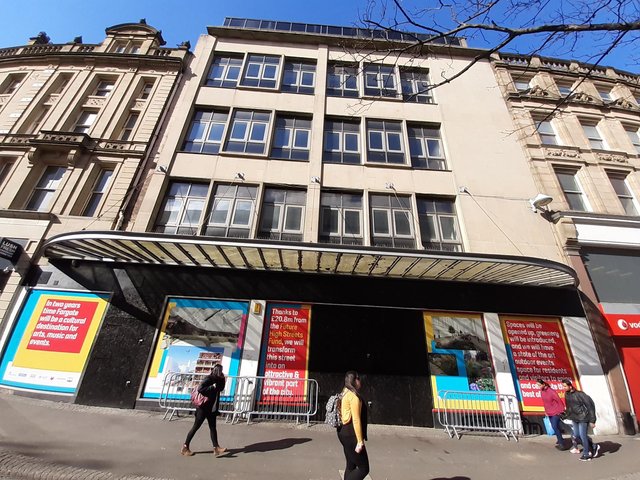
Sheffield City Council has submitted a planning application for proposed alterations to 20-26 Fargate. The council bought the building in 2021with the intention of turning it into a cultural hub which supports and offers additional opportunities to use external events space.
The intention is to provide a part community, part commercial offering, which will function as a blueprint and catalyst for further regeneration of Fargate.
The council intends to repair, refurbish, and re-clad the existing building, retaining the existing structure where possible, and ensuring that alterations are kept to a minimum.
20-26 Fargate is located on Fargate in Sheffield’s city centre and forms part of the City Centre Conservation Area. Image: Sheffield Star
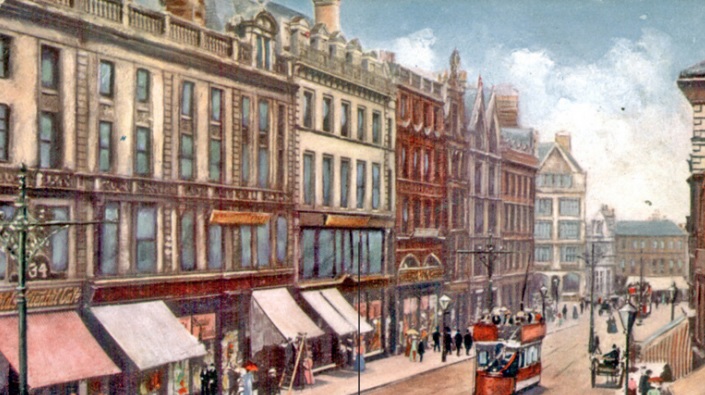
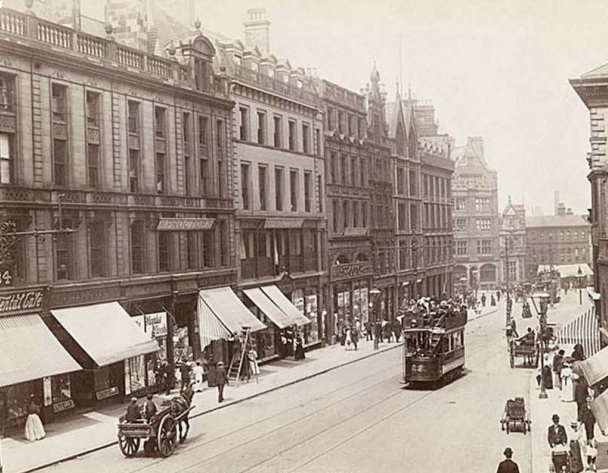
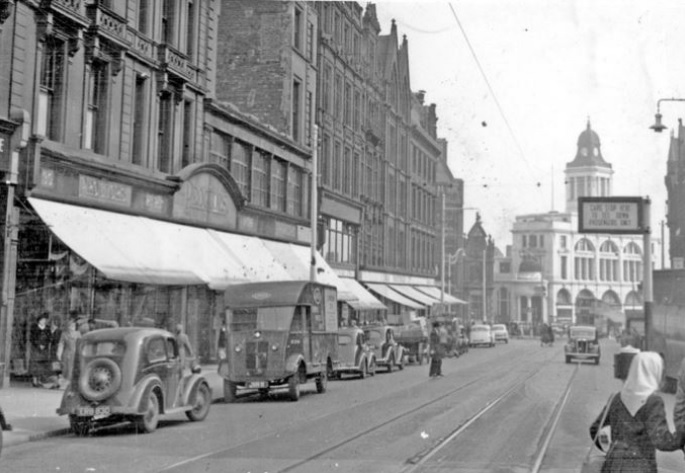
It was constructed in the late 1800s as Robert Proctor & Sons, a large drapery and furniture store running from 16-30 Fargate, adjacent to Coles Corner. It survived the 1940 Blitz, although suffered fire damage, and as a result was altered by the 1950s.
After Proctors left, the shop was used by various retailers including Chelsea Girl in the 1970s, and more recently Clinton Cards and KIKO (later Elite Vapes & Phones).
However, by the time the COVID pandemic hit in 2020 the building was standing empty.
Fargate in 1905 looking towards premises including No. 34 Richard Field and Son Ltd., tea merchants and Fields Continental Cafe, Nos. 16-30 Robert Proctor and Son, drapers. Image: Picture Sheffield
Fargate including No 34, Richard Field and Son Ltd., Tea Merchants and Fields Continental Cafe and No 16-30, Robert Proctor and Son, Drapers. Image: Picture Sheffield
Fargate in 1953, Nos 16-30, Robert Proctor and Son, Drapers and Cole Brothers Department Store. Image: Picture Sheffield
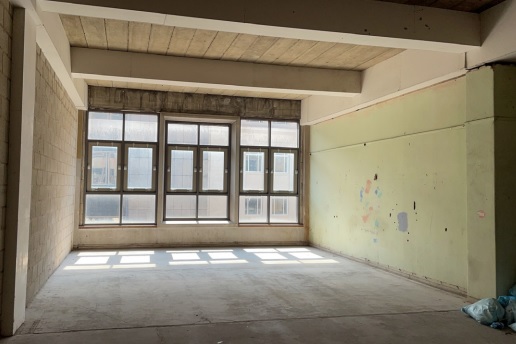
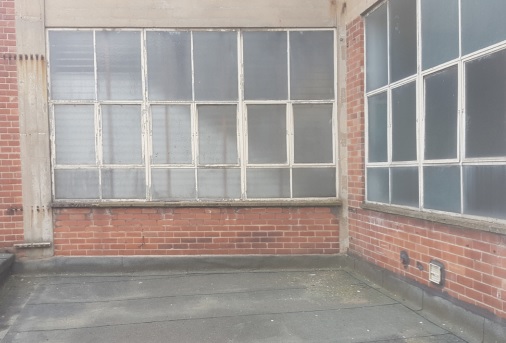
20-26 Fargate is a five storey building (6 including the basement level) with a deep footprint that extends back towards Cutlers Hall. It sits mid-way along Fargate and stands taller than its immediate neighbours and benefits from glazing to the rear (north) facade, providing additional daylighting to the floor plates on levels 3 and 4, as well as views across to the cathedral.
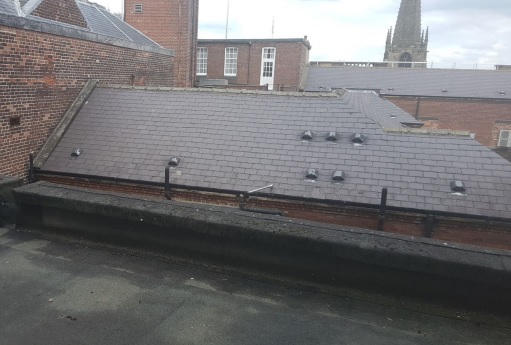
A flat roof area presents the potential to bring daylight to the rear of the second floor also using roof lights. The architecture is of a mid-19th century construction with a stone tiled facade above. The fourth storey is set back from the main facade and was constructed later. The building is currently in need of significant refurbishment, to meet current building regulation requirements.
The main architectural intervention has been to introduce a double height glass entrance to provide active frontage along Fargate and to increase visibility into the building.
A new stone feature surround is proposed at ground and first floor level to retain the impression of a single feature entrance and to acknowledge the original historic façade that was later damaged and subsequently remodelled.
Proposed entrance space. Thin lines of LED lights offer a sustainable way to breathe new life into the existing building with minimal environmental impact. Image: HLM Architects
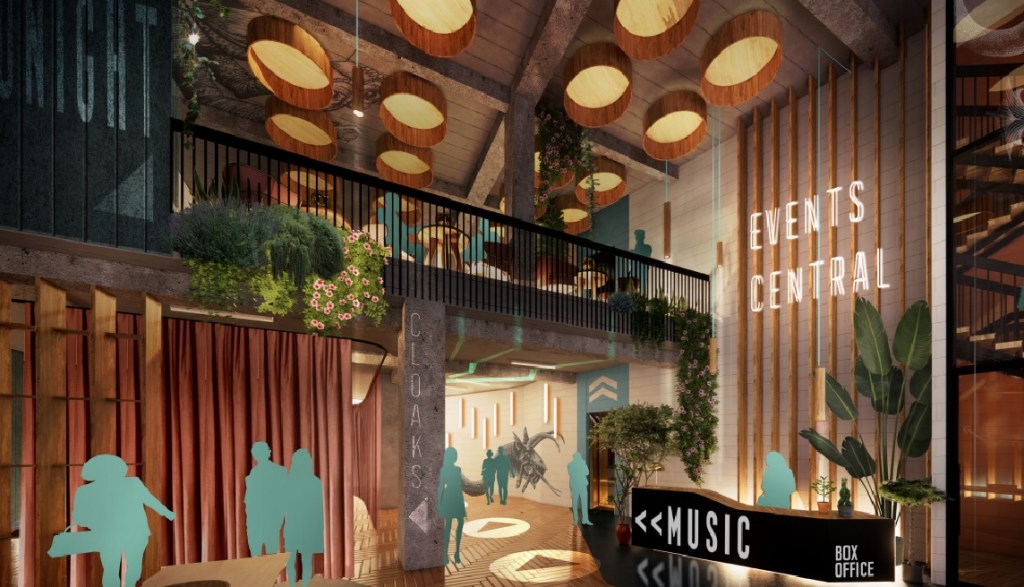
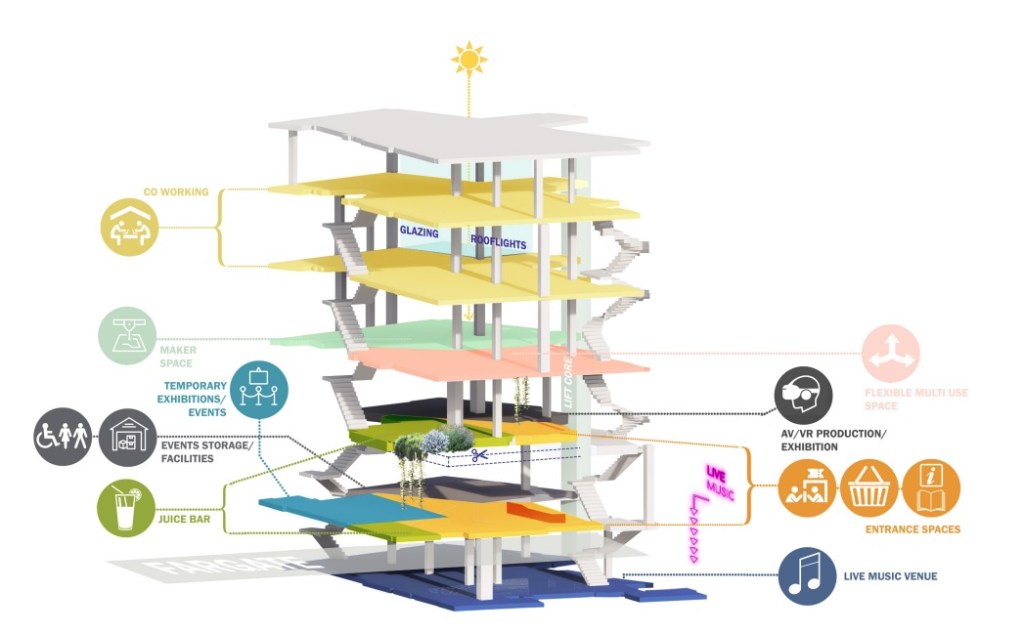
The proposal will include the renovation of the existing building with a glazed double height entrance space at the heart of the building that is formed of the reception area, temporary exhibition, bookshop and juice bar at ground floor level. The upper floor levels will house a makers space, flexible multi-use space and co-working space, while a new high-quality music venue is proposed at basement level. Image: HLM Architects
A few weeks ago, Sheffield councillor Chris Rosling-Josephs, called on developers to be ‘more creative’ and build a 50 storey tower block so the city can have taller buildings than Leeds.
This might well happen, but for the time being the tallest building in Yorkshire is Altus House in Leeds, at 374ft. Sheffield’s tallest building is City Lofts, or St Paul’s Tower, at 331ft.
But the tallest building crown will switch to Sheffield soon.
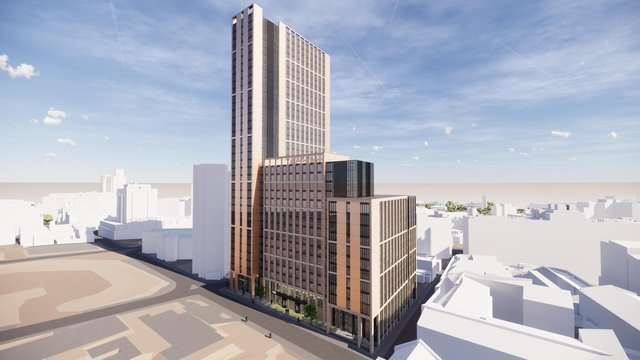
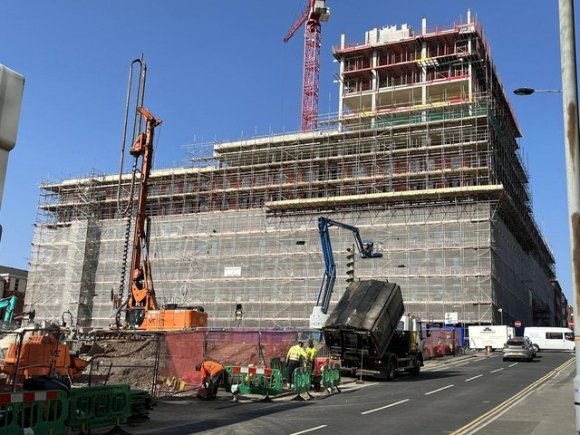
Work has started on Code Sheffield, three blocks of 12, 17 and 38 storeys costing £100m. Foundations are being dug on the site which borders Rockingham Street, Wellington Street, and Trafalgar Street, and adjacent to Kangaroo Works. Once completed it will be 383ft tall.
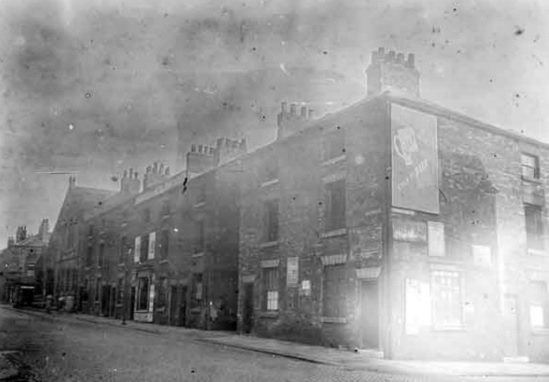
It is a significant change for this part of the city centre which was once developed with terraced back-to-back housing and small factories.
The site of Code Sheffield is no different, except that the eastern part of the site was once Mount Tabor Chapel, with a small steel works (Foundling Works or Samuel Buckley Styrian Steel Works) to the south-east along Rockingham Street.
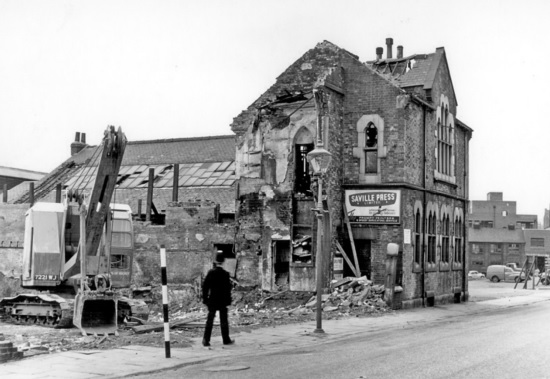
Rockingham Street, demolition of Saville Press Ltd., No 37, Wellington Street (former Mount Tabor Chapel, United Methodist Free Church). Image: Picture Sheffield
Same place as above. The site from the south-east, showing garage and Wellington House looking north
Same place as above. Recent photograph of excavations for Code Sheffield
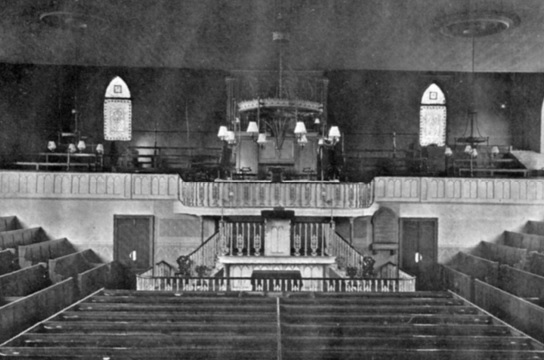
The Chapel was built in 1837-1838 for the Reverend Robert Aitken, a Wesleyan minister. The Wesleyan Reformers purchased the chapel in 1853 and redecorated it as the Mount Tabor Chapel but did not alter the layout. A Sunday School was later built on the land to the west. Both buildings are shown on 1923 and 1935 OS maps and there were plans to improve it in the 1940s, but by the 1950s it had been replaced by the Mount Tabor Printing Works.
Interior of Mount Tabor United Free Methodist Chapel, Wellington Street. Dated 1940-1959. Image: Picture Sheffield
Nos. 37 – 53 Wellington Street at junction with Trafalgar Street, looking towards Rockingham Street junction. Court 4 at rear of back to back properties in foreground. Mount Tabor United Free Methodist Church and Sunday School, in background. Dated 1938. Image: Picture Sheffield
The printing works were recorded in the trade directories of 1948 and 1957 as belonging to Saville Press Ltd and Greeting Card Ltd. This building was demolished in 1962-63.
Later buildings on the site included the telephone exchange, which replaced back to back housing, last occupied by the South Yorkshire Housing Association, and Wellington House, which contained Clark and Partners, providers of mobility aids and services.
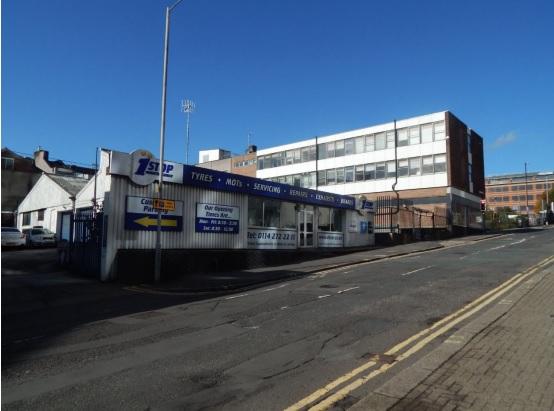
The One-Stop garage at 210 Rockingham Street was recorded as a garage in 1968 and later as motor radiator repair shop for W.H. Tyas, subsequently occupied by Marston Radiator Services.
All these buildings were cleared in advance of present building work.
However, there is a further twist as to which city will have the tallest building. Plans have already been approved for a 43-storey tower block in Leeds.
The site from the junction of Wellington Street and Rockingham Street
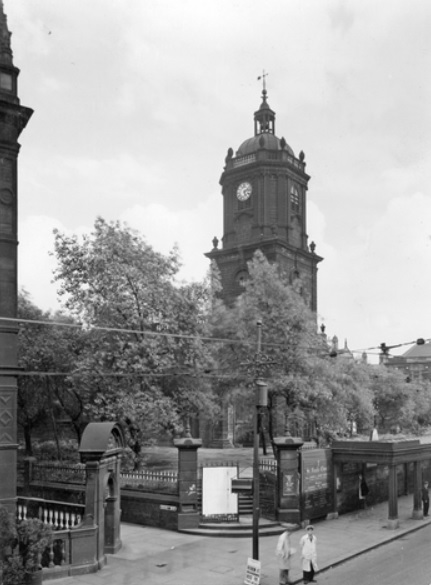
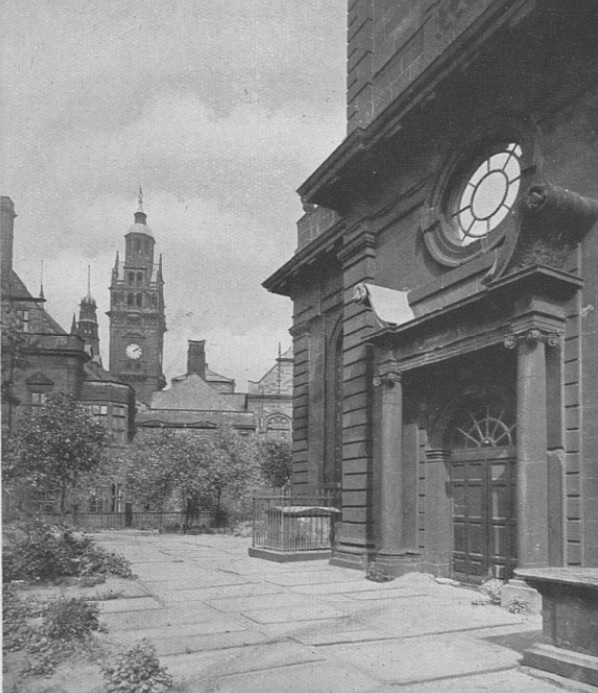
View of St. Paul’s Church from Pinstone Street showing the gateway to the Public Lavatories, Cheney Row and entrance to St. Paul’s Graveyard. Image: Picture Sheffield
It was only recently that I realised that I’d never posted about St Paul’s Church, a Sheffield landmark remembered now by only a few.
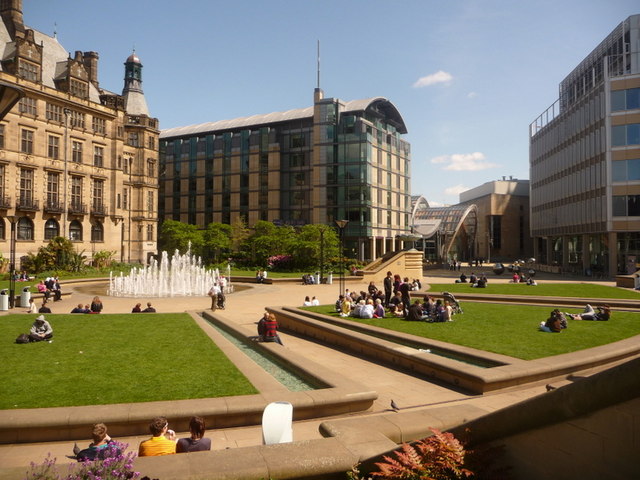
If you want to know where it once stood look no further than the Peace Gardens.
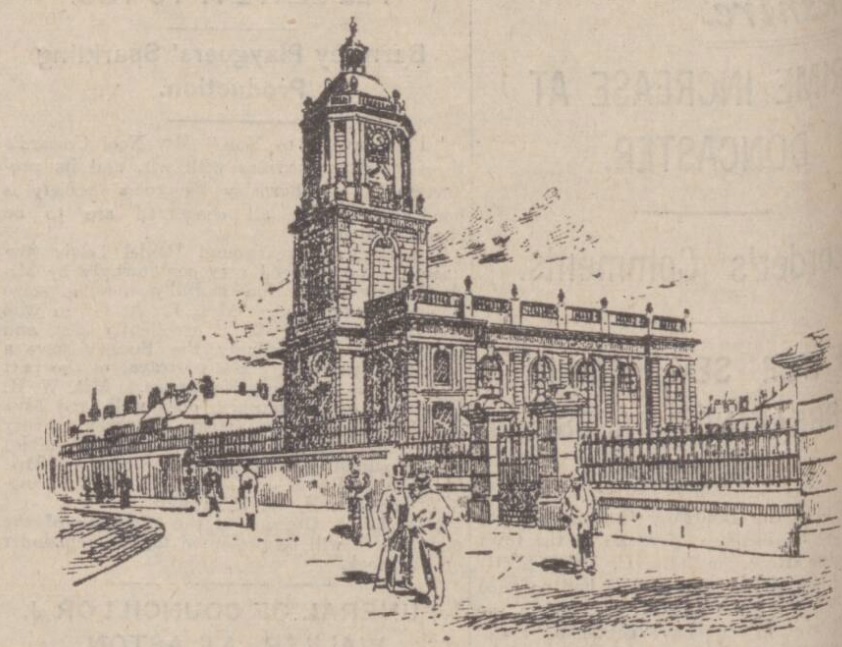
St Paul’s Church stood on the outskirts of Sheffield on land bordered by Pinson Lane (Pinstone Street) and Alsop Fields, called Shaw’s Close or Oxley Croft. Its foundation stone was laid in 1720, the result of public subscription for ‘the new church’.
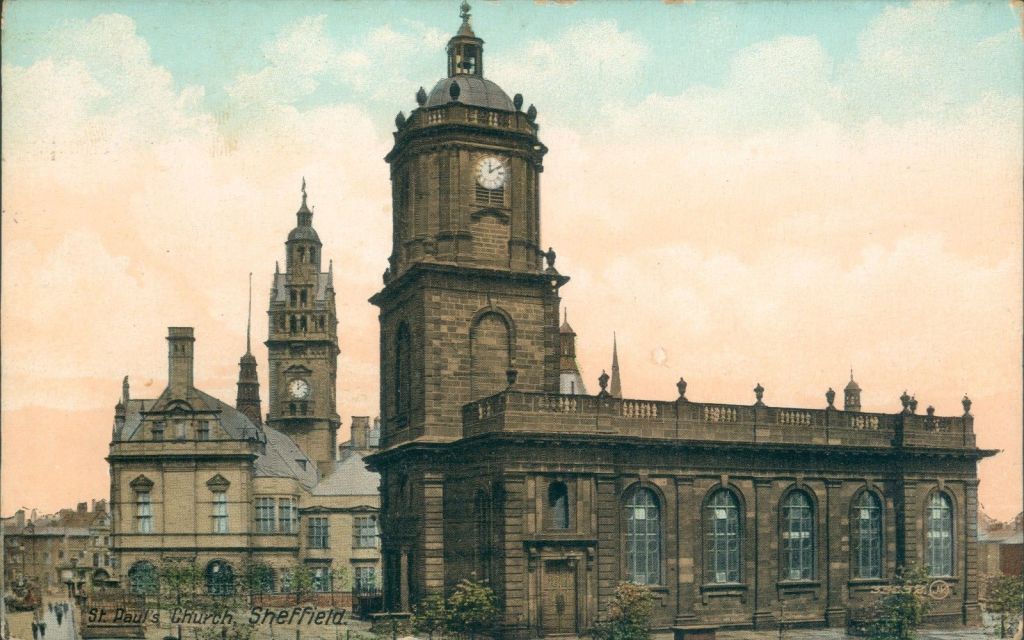
St Paul’s Church about 1890 and before the Town Hall was constructed. Image: British Newspaper Archive
It was designed by John Platt, architect, statuary mason, potter, and builder, who was active, particularly around Rotherham, in the mid-to-late 18th and early 19th centuries, and most famous for Wortley Hall. Construction was undertaken by John Wastenage of Handsworth.
The building, completed except for the dome, stood empty until 1739 after a dispute over patronage. A John Snetzler organ was installed in 1755 and the dome was added in 1769. Later, in 1824, St Paul’s was placed in its own parish.
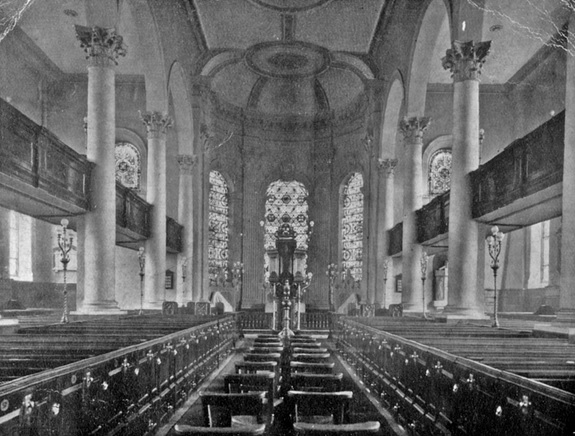
St. Paul’s Church, Pinstone Street, Interior view. Image: Picture Sheffield
The church prospered until the slum clearances of the 1930s in which a large proportion of sub-standard back-to-back houses in the city centre were swept away. The Ecclesiastical Commissioners decided that six city centre churches were surplus to requirement and intended replacing them with ones on the new housing estates. The congregation at St Paul’s had dwindled and was closed in 1937.
St Paul’s Church in 1921, with a glimpse of Sheffield Town Hall behind. Image: British Newspaper Archive
The Society for the Protection of Ancient Buildings (SPAB) took an interest in the rebuilding of the church on East Bank Road, at Arbourthorne.
And found amongst the archives is a letter from Mr John Betjeman, of Ufflington, Berkshire, (yes, THE John Betjeman) who had visited.
“As a visitor to Sheffield and a student of architecture, I would like to express a hope that your most beautiful classical church of St Paul’s will be rebuilt exactly as it stands on its new site.
“It is appropriate that Sir William Milner, a Yorkshireman, is to save the work of a great Yorkshire architect John Platt II, who designed the tower of St Paul’s and whose father, John Platt I, probably designed the body of the church.”
Betjeman’s pleas were largely ignored.
St Paul’s was demolished by Joseph Smith of Denby Street in 1938, the saddest sight being the three ton metal dome of the clock tower that was hoisted on its side before dropping to the ground and smashing into pieces.
“St Paul’s beauty did not save it, and all that can be said of those who pulled it down is that they beat the German bombers to the sordid task.”
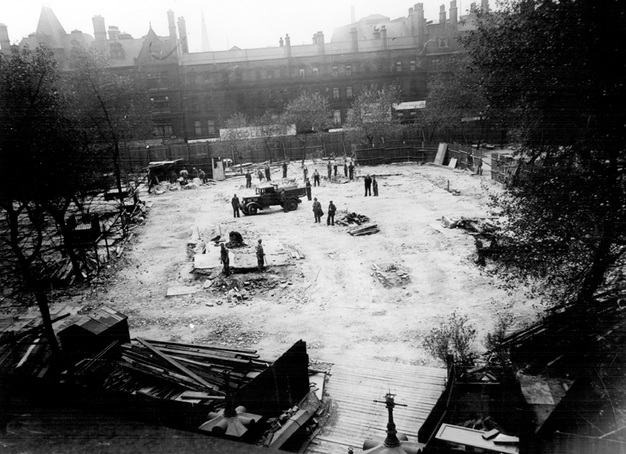
Site of St. Paul’s Church and church yard following demolition. Image: Picture Sheffield
Work on the new church costing £20,000 at Arbourthorne started almost immediately and was completed by the end of 1939.
“The original idea, partly through sentiment, was to try and move the old church stone by stone and re-erect it, but this simply could not be done,” said the contractor. “To build an actual replica in stone like the original church would have been prohibitive. The cost would have been considerably more than the actual cost of the new building, and so the decision had to be made to build the new church in brick.”
It is thought that some of the stone was used instead to build houses at Bents Green.
Practically all the interior furnishings, including pews, alters, and plate, were transferred to the new church but missing was the organ which went to All Saints in Wingerworth and the Chantrey Memorial which went to Sheffield Cathedral. Missing also was the famous clock tower which, at £800, was thought too expensive. The contents of the former graveyard were transferred to Abbey Lane cemetery.
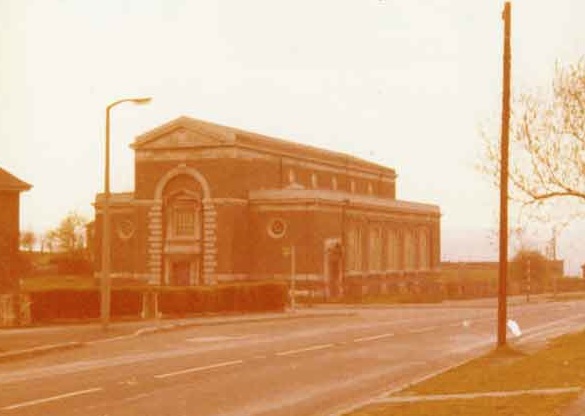
St.Paul’s C.of E. Church (now demolished), corner of East Bank Road and Berners Road. It was a large, austere, building that never did the original church justice. Remarkably, this appears to be the only surviving photograph. Image: Picture Sheffield
The vacant land in the city centre was intended to be used for extensions for the Town Hall, but public opinion swayed Sheffield Corporation to turn it into St. Paul’s Gardens, commonly referred to as the Peace Gardens.
And there was a sad end for the ‘new’ St. Paul’s Church. Dwindling congregations in a draughty big building played a part in its downfall and it was demolished by the end of the 1970s. In its place, a hostel for people with learning difficulties, and a house alongside called The Old Vicarage.
Questions remain unanswered about the original St Paul’s Church. The bell and clock were carefully removed during demolition but not used in the reconstruction at East Bank Road. Does anybody know where these might have ended up?
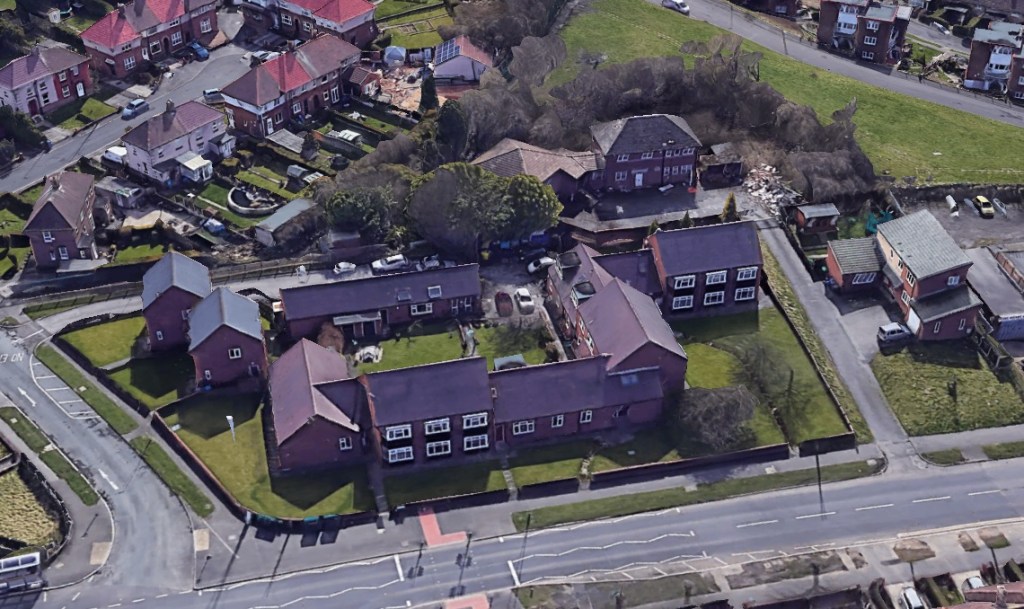
Former site of St Paul’s Church, Arbourthorne, at the corner of East Bank Road with Berners Road. Image: Google
Peace Gardens. The former site of the original St Paul’s Church. The area is now referred to as St Paul’s including the naming of buildings and a hotel.
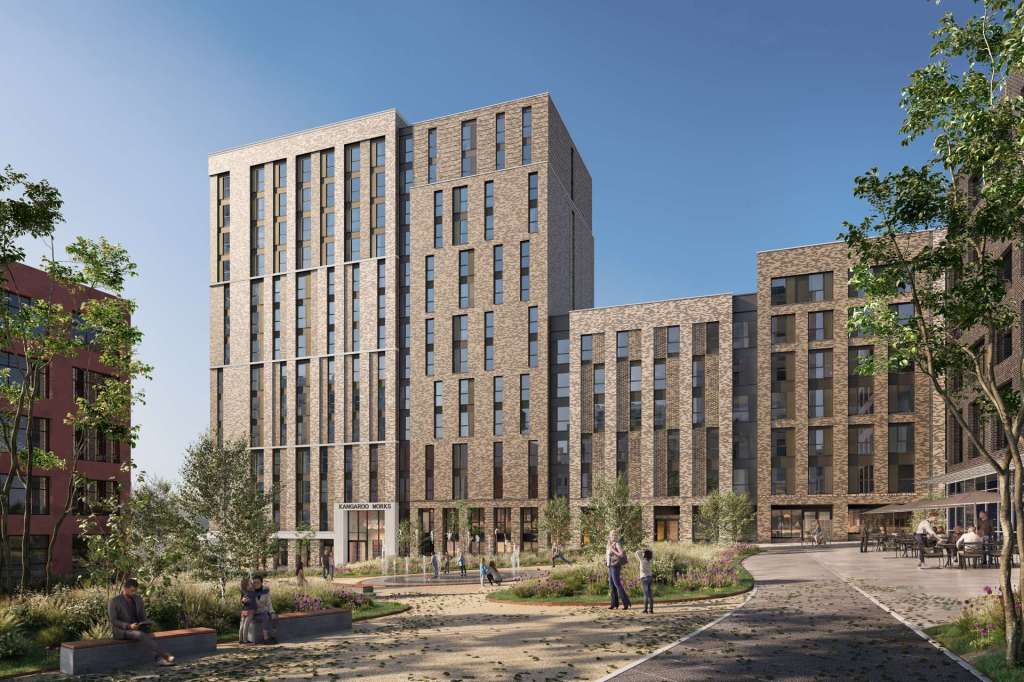
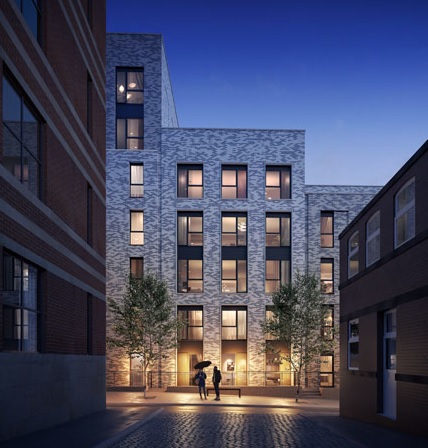
The scheme comprises 364 dwellings with a mix of 1, 2 and 3 bedroom apartments, which will be built and operated under the Build to Rent (BtR) Sector model. Commercial space will be provided at ground floor levels, providing active frontages to Rockingham and Wellington Streets. Image: Whittam Cox Architects
Next year, people will start moving into a new residential complex in Sheffield City Centre. When they do, the occupants of Kangaroo Works, a 364 apartment development, will have one of the oddest postal addresses in the city.
Designed by Whittam Cox Architects, with construction underway by Henry Boot, Kangaroo Works is the latest building in Sheffield’s Heart of the City II development. The building, with frontages to Rockingham and Wellington Streets, is designed around the vernacular Sheffield courtyard plan, and provides a stepped roofscape, responding to the sloping typology of the site and forming a transition between the formal city centre and more historic Devonshire Quarter.
The block has a peak of 14 storeys whilst a unique brick façade, taking inspiration from Sheffield’s urban heritage, supports the Masterplan palette and industrial heritage of the original Kangaroo Works site, which the development now stands on.
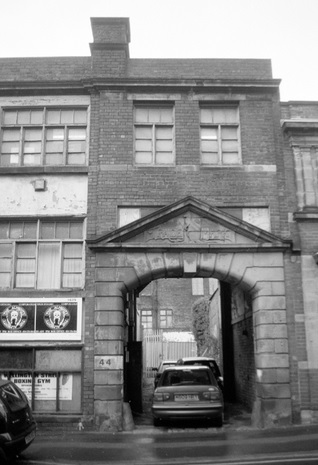
Kangaroo Works was home to Robert Sorby and Sons, makers of edge tools, later becoming a merchant and steel maker, that had set up on Union Street in 1828 and then moved to Carver Street in 1837.
About 1896 it moved a short distance to this site at the corner of Trafalgar and Wellington Streets.
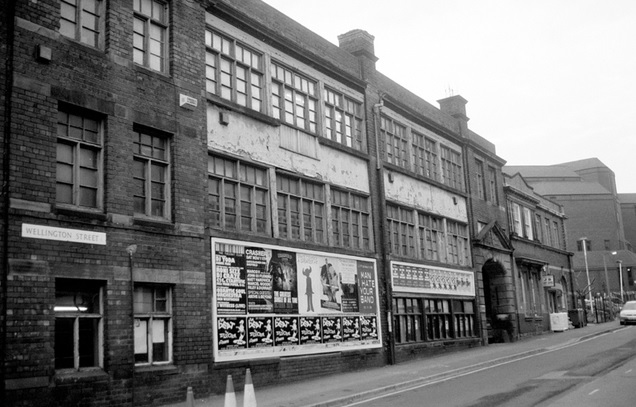
Former premises of Robert Sorby and Son Ltd, edge tool manufacturer, No. 44 Wellington Street, (his trade mark was a kangaroo so was referred to as the Kangaroo Works) with the Fire Station, Wellington Street in the background. Image from 2006 by David Bocking/SLAI/Picture Sheffield
Their products included adzes, axes, augers, edge tools, joiners’ tools, saws, scythes, hooks, sheep shears and crucible steel. The company sought markets worldwide, and the Kangaroo brand, which was used until the 1980s, was adopted to emphasise the company’s interest in Australia.
Former premises of Robert Sorby and Sons, edge tool manufacturer, No. 44 Wellington Street. Image from 2006 by David Bocking/SLAI/Picture Sheffield
Robert Sorby and Sons was acquired by Hattersley and Davidson in 1923, and vacated Kangaroo Works in 1934 to share a site on Chesterfield Road. It still survives in premises on Athol Road at Woodseats.
The former Kangaroo Works became dilapidated and converted for multi-use, and remained so until demolition in 2008, after which it was used as a car-park.
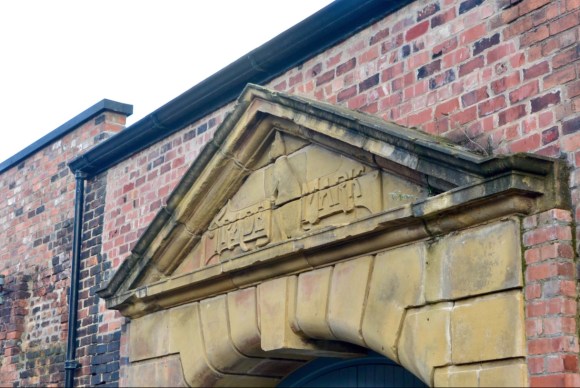
Former Kangaroo Works gateway. Image: The Glasgow Gallivanter
But what happened to the famous stone-carved Kangaroo trademark that once stood over the gateway on Wellington Street?
It was rescued and re-erected at Kelham Island Museum, slightly shorter in height so that it would fit into the restored Russell Works building that houses the Ken Hawley Collection of tools, cutlery and silversmithing made in Sheffield.
And so, the name lives on, and Kangaroo Works will occupy pride of place overlooking Pound’s Park, the new urban green space also under construction.
Located within close proximity to the Cambridge Street Collective and Elshaw House project, Kangaroo Works is a privately funded development forming part of the Heart of the City masterplan. Image: Whittam Cox Architects
“My great-grandfather used to go out and meet the carriages on The Moor when they arrived in the morning.” Nicholas Atkinson. Image: DJP/2022
In March 1929, John Atkinson, aged 84, took to his bed at No. 86, The Moor, and remained there for a week. He had been in ill-health and died a week later.
His death meant that Sheffield had lost a veteran businessman, who not only had built up a great establishment, but was largely responsible for the development of the principal shopping thoroughfare in the city.
While John Atkinson lay on his death-bed, would he have ever contemplated that his business would still exist 150 years later?
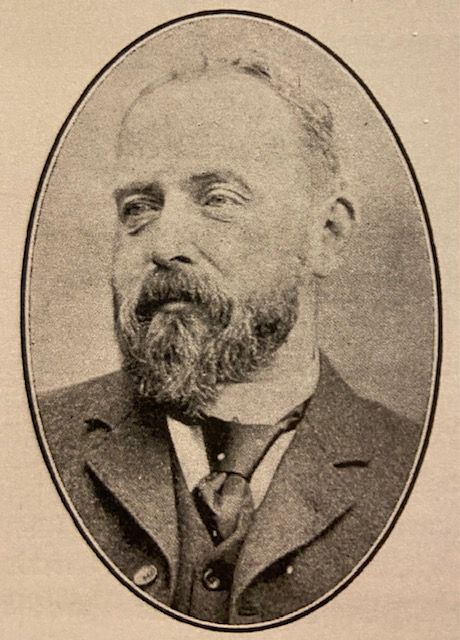
John Atkinson (1845-1929). Image: Neil Anderson
The Atkinson family came from Low Dunsworth, near Boroughbridge, and John, one of a family of nine, was determined to try his fortune away from his home surroundings.
His first venture was at York, where he became an assistant in a leading establishment of that city. But he was stirred with ambition, and he fixed his eye on Sheffield, a growing centre of commerce.
He came in 1865 and became acquainted with the Sheffield public by working at Cole Brothers, at their premises at the corner of Church Street.
Once settled in Sheffield, he looked for an opportunity, and in 1872 secured premises in South Street, on Sheffield Moor. No. 90 was a two-windowed shop and was opened by 26-year-old John in March of that year.
In those days the Moor was not the shopping centre that we are familiar with. It was on the fringe of the country and people used to ‘go to Sheffield’ to do their shopping when they really meant going to Fargate and High Street.
It was his mission to see that his windows were sufficiently attractive to draw the attention of those on their way to ‘shop in town’ and was one of the pioneers of the ‘Shop on the Moor’ movement and had the pride of seeing the completion of his commodious emporium that became his life work.
Atkinson worked hard for seven years and established gradual growth of regular customers. His business required expansion, and in 1879, a piece of land known as Holy Green became available. It adjoined his premises and two additional shops, Nos 86 and 88 were erected, the former leased to a trader. But trade and custom grew, and in 1884, No 86 was taken over by Atkinson and became the millinery department.
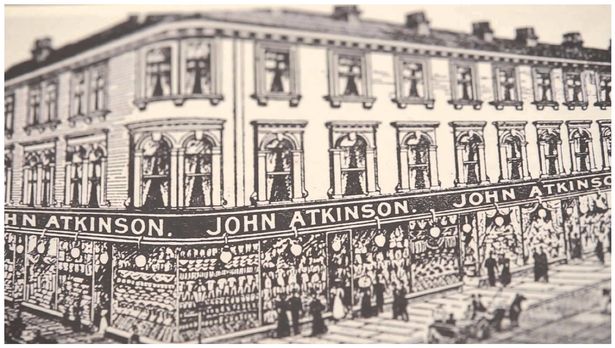
From 1900. John Atkinson, The Draper, 76, 80, 82, 86, 88 and 90, The Moor. Image: Picture Sheffield
Three years later, Nos. 2,4, and 6, Prince Street (a street that has disappeared) were added, and became the furniture department, and four years after that an extensive space at the back of the Prince Street premises was secured and covered for the development of the mantle and shawl trade of the day.
The business expanded, and a few years later brought another acquisition. In 1892, the shops, land, and works covering a large block of buildings as far back as Button Lane (another lost street), facing Eldon Street, were purchased, and in 1897 a new dress warehouse was built in another portion of Holy Green.
Atkinson’s love of beautiful architecture, and his ever expanding business, led him to demolish all his shops, ranging from Nos. 79 to 86, on the South Street site. The foundation stone was laid in 1901, and the new building was ready for occupation in 1902.
The store had a glass roof to let light down into the three floors which were decked with flowers and maintained by a gardener.
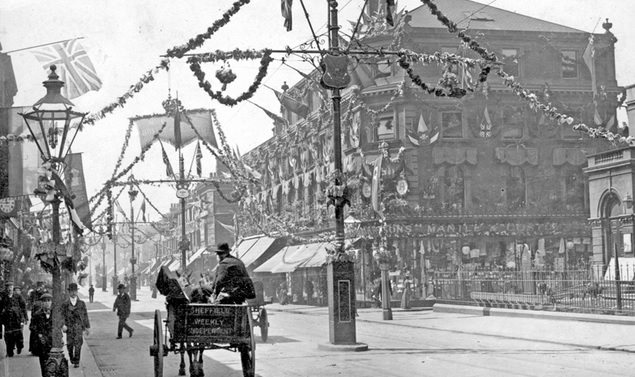
South Street, Moor, decorated for the Royal Visit of King Edward VII in 1905, Nos 76-90, John Atkinson, Draper. Image: Picture Sheffield
At the outbreak of World War One, the shop had empty warehouses, and these were utilised for war work, responsible for making hundreds of thousands of stamped parts for guns, shells, and tanks.
In 1918 two new wings were added, and in 1920 more of the Eldon Street block was brought into use.
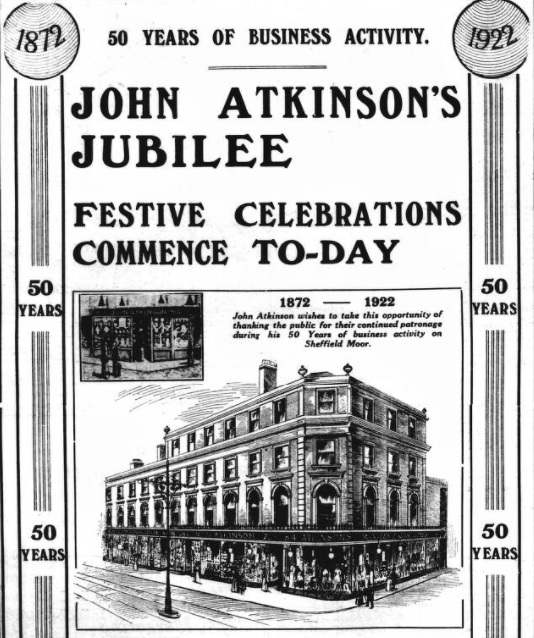
By the time of its fifty year centenary in 1922, Atkinson was assisted by his sons, Harold Thomas Atkinson, and John Walter Atkinson.
“There is an atmosphere of completeness about the store. It is not merely a draper’s store. It is a general outfitting establishment, with its well-cuisined restaurant, and its café; with its departments for gas-fitting, and electrical outfit; its men’s clothing department and its footgear stores; it has an ironmongery branch; as well as its branches for stationary, sweetmeats, and drugs and perfumes; for china and glass, as well as for bedding and bedsteads; while its fur department, its section for robes and gowns, costumes and skirts, wools, dress goods, piece silks, velveteens, Manchester goods, and millinery, gloves, and hosiery, and its cabinet and carpet and oilcloth departments, are just part of the wide-varied whole.”
Newspaper advertisement celebrating fifty years of John Atkinson in 1922. Image: British Newspaper Archive
A lot changed afterwards, the business flourished, but during the Second World War the store was destroyed in the Blitz of 1940, resulting in temporary shops for all its departments across the city.
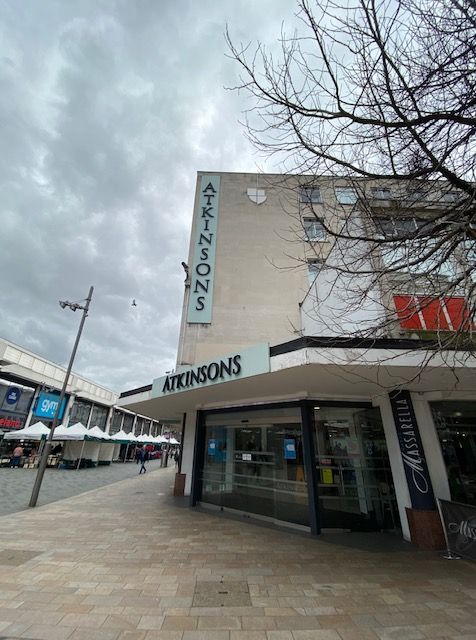
The business operated like this until 1960 when a new purpose built store opened on The Moor.
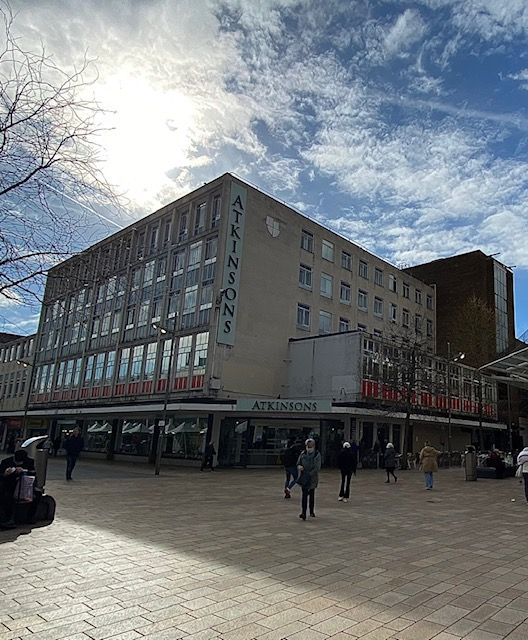
This year marks Atkinsons 150th anniversary and John Atkinson would have been shocked to find that his family-owned store is now the only department store left in Sheffield.
Atkinsons. The family-run business has seen wars, new out-of-town shopping developments and the coronavirus pandemic. Image: DJP/2022
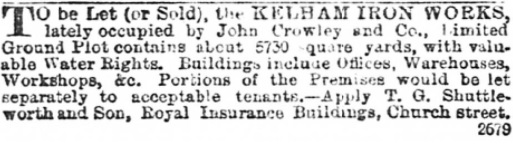
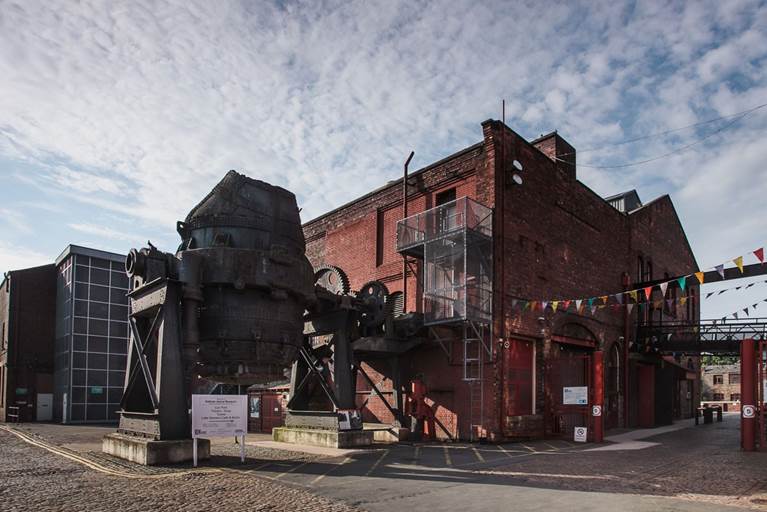
A small newspaper advertisement from July 1895. John Crowley and Co had left, and the Sheffield Tramways Committee bought the site for £7,575. It was cleared and rebuilt, and an order was placed with the British Thomson-Houston Company (a subsidiary of the General Electric Company) for eight engines and dynamos, and 12 boilers, to power Sheffield’s new electric tram network. It operated until the 1930s before being used for storage and workshops. And this building survives as Kelham Island Museum.
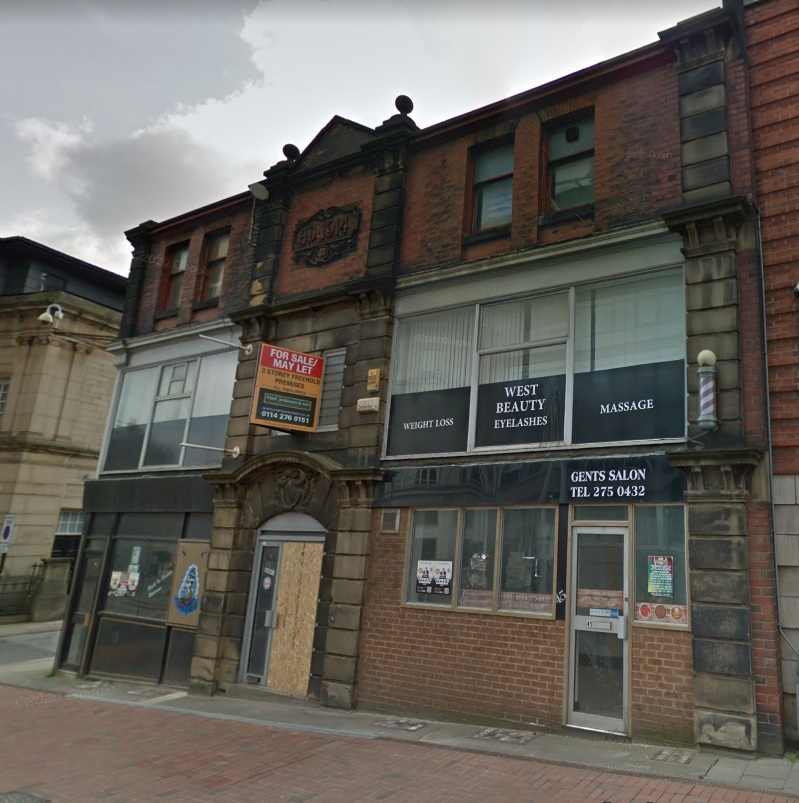
We wait with anticipation as to what happens to this redundant building at 43-45 West Street, at its corner with Holly Street. It was built in 1914, the year the First World War started, as shown by a carving in the Ashlar stone, and planning permission has been granted to turn it into a wine bar.
The property has most recently been used as a men’s’ hairdressers and salon and is now vacant.
The good news is that the exterior of the building will be sympathetically restored with the removal of ugly brick infills and floor-to-ceiling glazing at first-floor level.
The interior is remarkably narrow, with the back of the building mostly taken by the derelict former Old Red Lion public house.
 sheffielder.net