“If you lay out your money in improving your seat, lands, gardens, etc., you beautify the country and do the work ordered by God himself.” These were the words of the 1st Marquess of Rockingham in the letter of advice he left for his son, the future Prime Minister, shortly before his death in 1750.
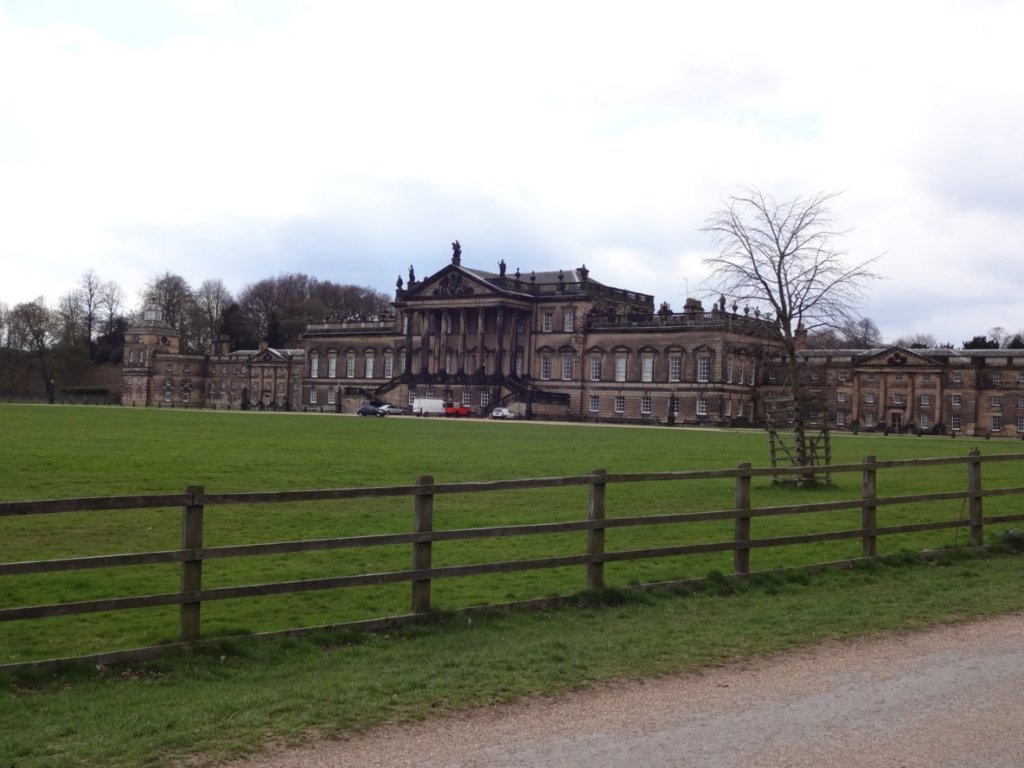
He had been good as his word, by his own reckoning he had spent £82,500 improving his house and grounds at Wentworth, providing it with one of the longest fronts of any English country house.
We are talking about Wentworth Woodhouse, situated within Rotherham borough, but within a stone throw of the Sheffield border, up the road from Chapeltown.
This remains one of South Yorkshire’s hidden secrets, only emerging from years of obscurity within the past few years.
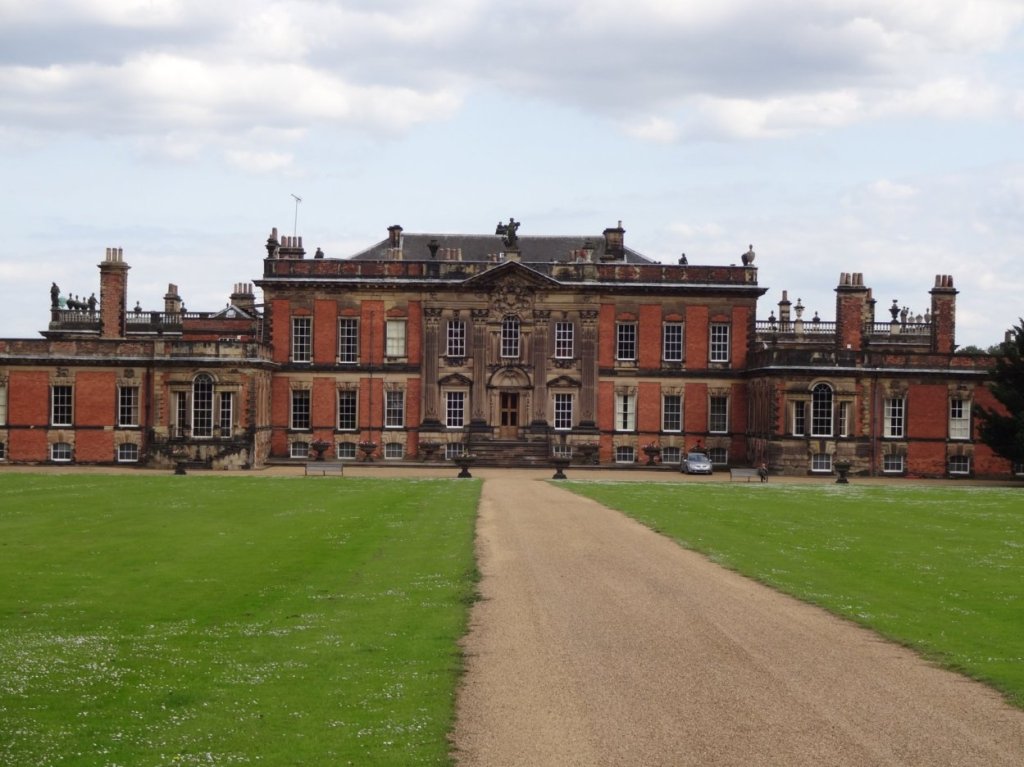
Few people realise that behind the 600ft Palladian front is a second house with a grand baroque front. The difference between the two houses is blatant, but they formed a single building programme between 1724 to 1749.
Photograph by Sheffielder
The family made their fortune from coal mining, and the Fitzwilliams, descended from the Rockinghams, became well-known in Sheffield circles.
However, the 20th century wasn’t kind to the family and certainly not to Wentworth Woodhouse.
After World War Two, Manny Shimwell, Minister of Fuel and Power, told Peter Fitzwilliam, “I am going to mine right up to your bloody front door.” And he did.
Years of open-cast mining devastated the gardens and parkland and did lasting damage to the old house itself.
Unable to be maintained properly, Wentworth Woodhouse survived due to the efforts of Lady Mabel Fitzwilliam, sister of the 7th Earl, who negotiated a deal with West Riding County Council in 1949 to use it as a training college for physical education teachers. The family retained the Baroque wing.
Lady Mabel College later merged with Sheffield Polytechnic (now Sheffield Hallam University) and remained at Wentworth Woodhouse until 1988.
The house was put up for sale and bought by Wensley Haydon-Baillie, a millionaire, who, after a bad business investment in 1998, admitted debts of £13million, and the property was repossessed by the bank.
Its saviour was Clifford Newbold, a London architect, who, far from being the recluse he was originally made out to be, did what he could to save Wentworth Woodhouse.
After his death in 2015, Wentworth Woodhouse was put on the market and eventually sold to Wentworth Woodhouse Preservation Trust for £7million in 2017.
This is undoubtedly the renaissance for Wentworth Woodhouse, with £7.2million of repairs to the roof almost complete.
Photograph by Sheffielder
In normal circumstances, the state rooms are open to the public, with plans to use parts of the house as a hotel and business centre.
Subsidence and age have contributed to its unstable condition, underlined by the recent discovery that Georgian cornices, 18 metres above the ground, were crumbling away.
The good news is that Historic England has stepped in with a grant of £224,000 to replace more than 90metres of the ornate sandstone and limestone cornice, which runs around the roofline of the mansion’s Palladian East front.
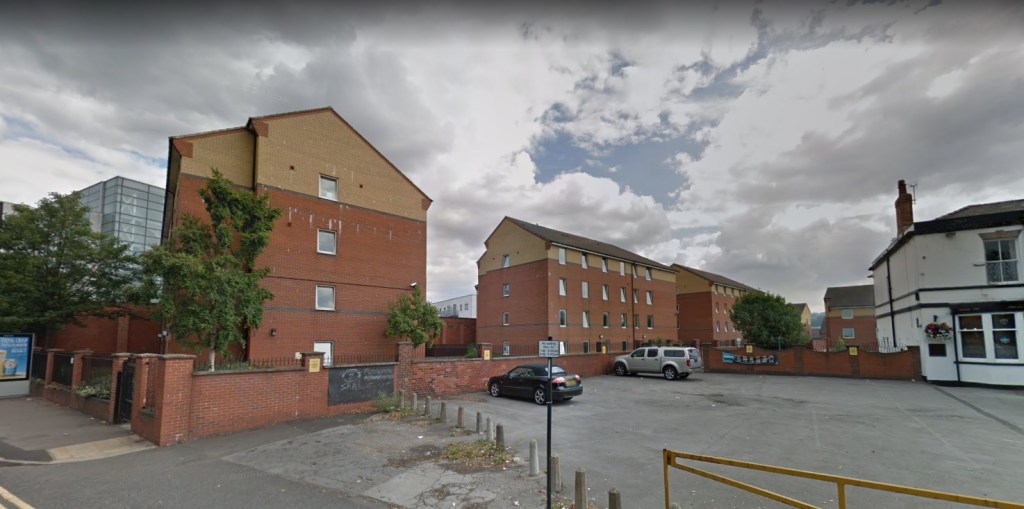
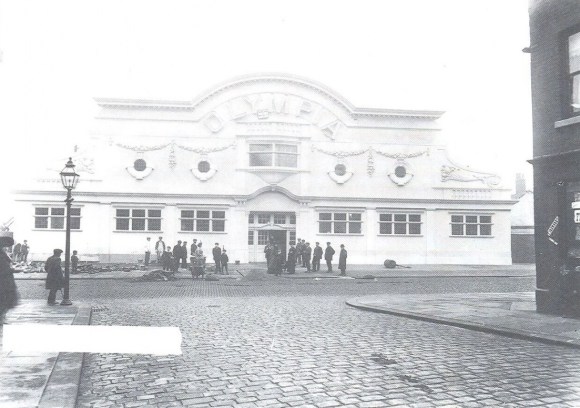
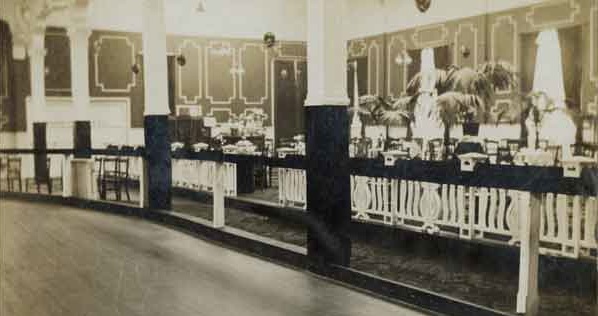
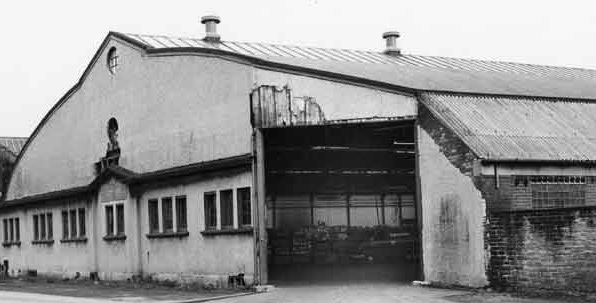
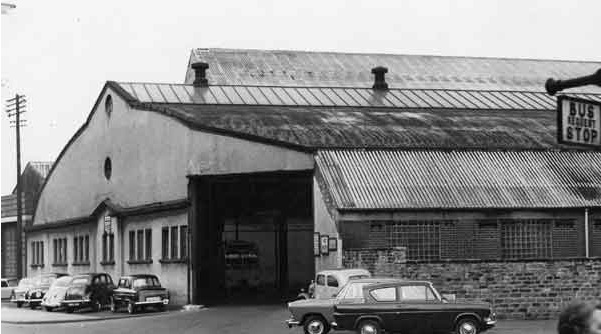
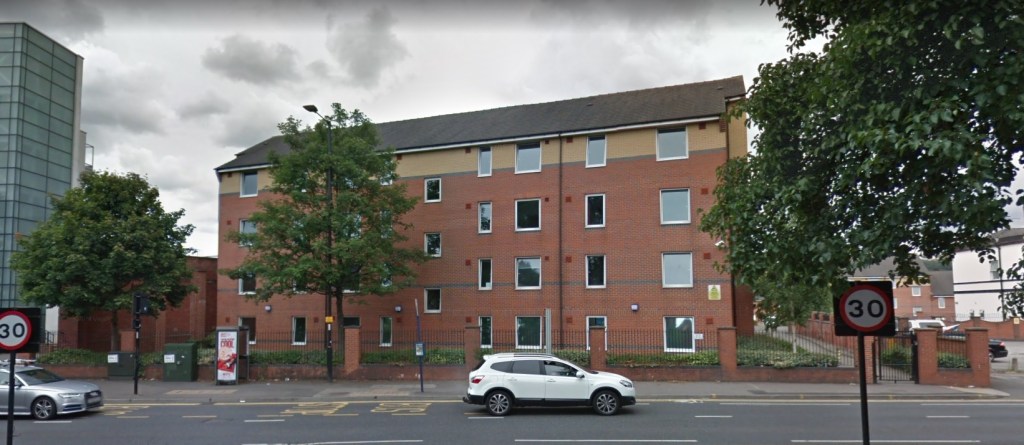
These ordinary looking student flats on Bramall Lane stand alongside the Sheaf House public house on a site that stretches towards Shoreham Street. It’s hard to imagine now, but the flats stand on the site of a remarkable building that was demolished in the 1990s.
Photograph by Picture Sheffield
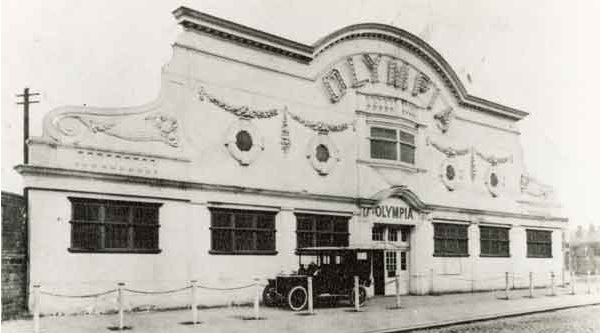
Photograph by Picture Sheffield
Our story begins with Sheaf House, an early 1800s private residence, probably built for John Younge – “a much-admired mansion, in a very beautiful country” – and converted into pleasure grounds and hotel in the late nineteenth century.
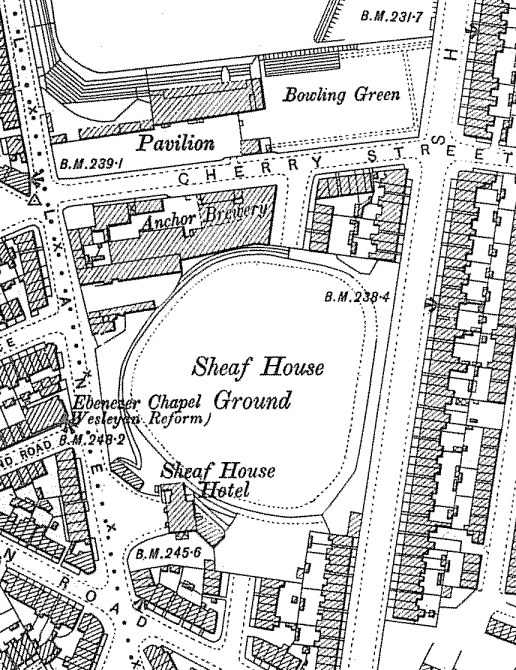
By the 1870s, a sports ground had been established in the former gardens, and this was where Sheffield Wednesday played some of their early games.
At the turn of the twentieth century it was better known as the Sheaf House Cricket Ground, home to Heeley Cricket Club, surrounded by an athletics track used by Sheffield United Harriers, as well as being home to many local sporting events.
In 1909, there was dismay when it was announced that the 3½-acre sports ground had been sold, the site used to construct a skating rink.
“The proved financial success and popularity of roller-skating are now beyond dispute. For the last six years almost every town of importance in America has had roller-skating rinks, which should be a guarantee that this fascinating and health-giving pastime is a permanent one and provides the means of sound investment.”
These words are taken from the prospectus of Sheffield Olympia and Provincial Rinks Ltd, a company established at 7 East Parade, with three directors – Albert Ball, JP, a Nottingham-based councillor and property developer, A.S. Fawcett, a solicitor on Queen Street and John Lancashire, Sheffield architect.
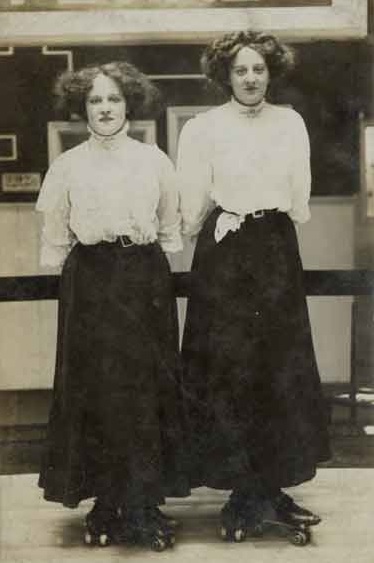
There were already roller-skating rinks in Sheffield, but the Olympia promised a better experience.
In England, the first rink to use maple-flooring and ball-bearing skates was opened in Liverpool in 1907. This was the model used for the Olympia (and other sites in Rotherham, Manchester and Nottingham).
The sports ground closed in August 1909, and almost immediately construction started on the Olympia.
It was designed by Thomas William Newbold, an architect who had spent 18 years with the Architectural Department of Sheffield Council. Newbold had gone into private practice in January 1909, probably annoyed at losing out as Sheffield City Architect a few months earlier.
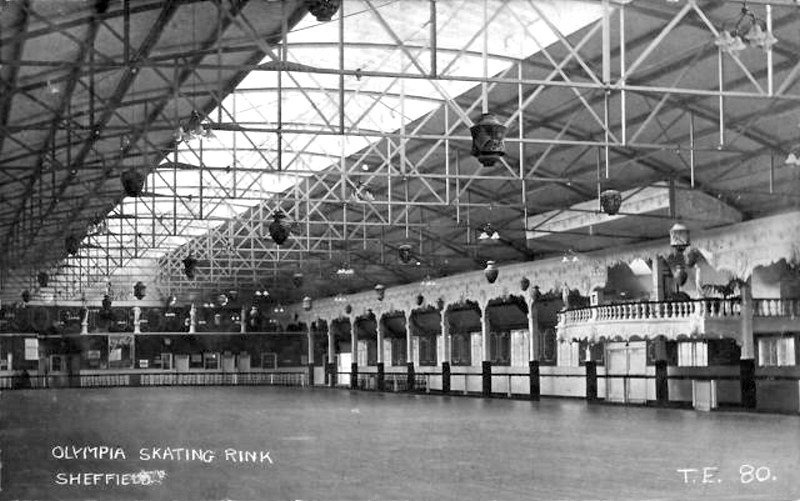
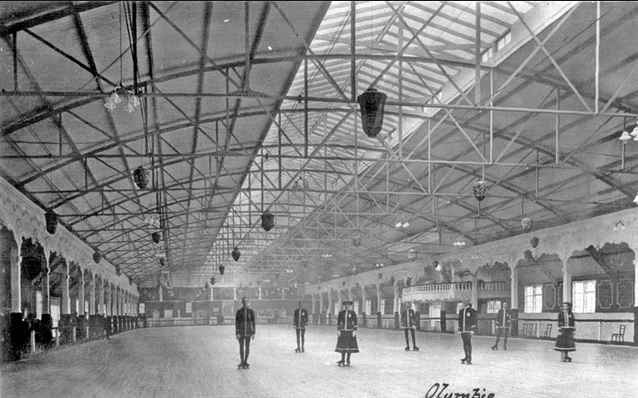
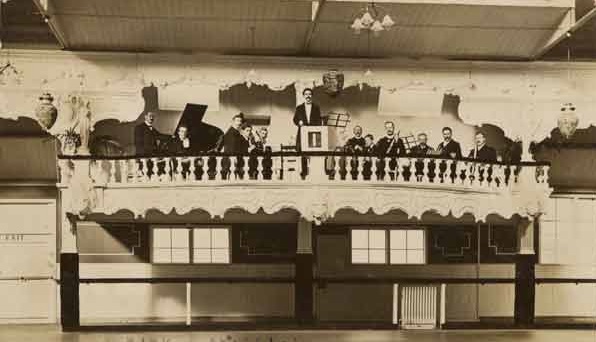
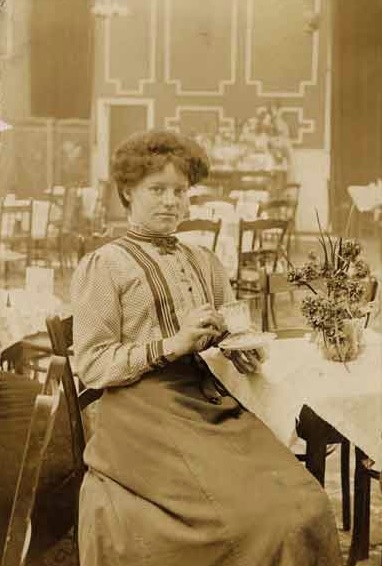
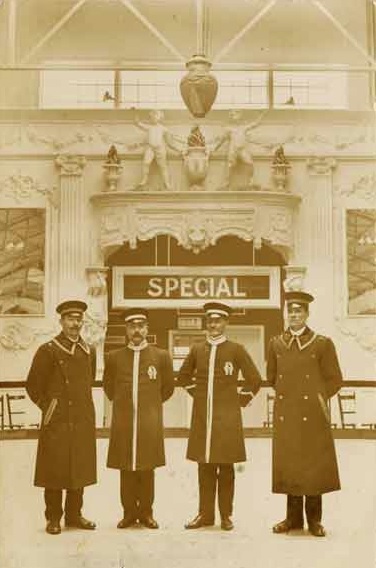
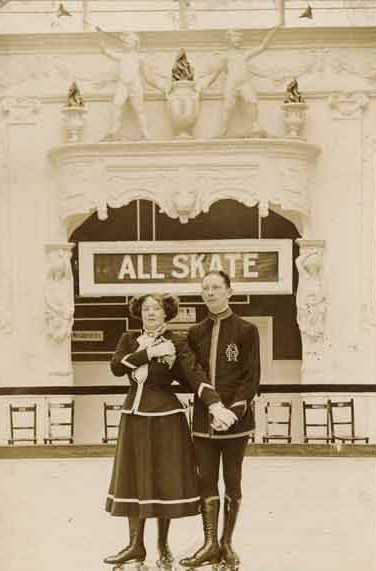
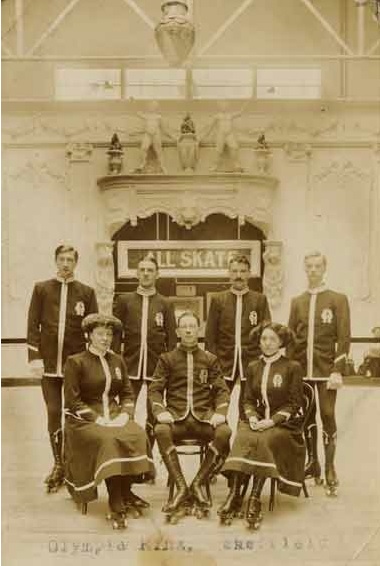
Building work was undertaken by Roper and Sons and took just eight weeks to build. It opened on 7 October 1909, with two entrances – on Bramall Lane and Shoreham Street, a “maple block soundless floor, semi-circular banked at each end, white and green decoration, statuary, palms, café and smoking lounge.” It was constructed so that in summer months the rink could be adapted for concerts, bazaars, cinematograph and other entertainments.
Photograph by Picture Sheffield
Photograph by Picture Sheffield
Photograph by Picture Sheffield
Photograph by Picture Sheffield
Photograph by Picture Sheffield
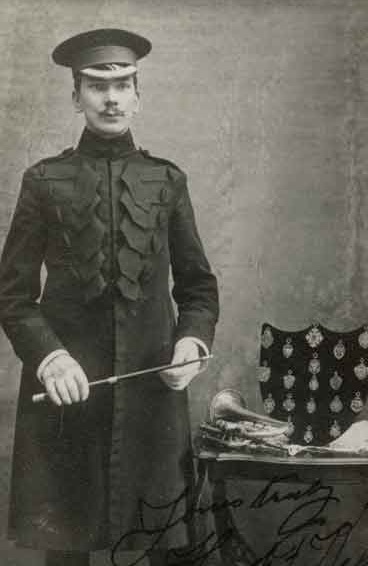
Soon after the doors opened about 1,200 people were skating, supervised by a staff of about thirty, including two lady instructors, and with “an especially good orchestra conducted by Herr S. Otto Mey.”
It is likely that the Olympia was rushed in construction to take advantage of the lucrative Christmas trade. In August 1910, just ten months after opening, the summer vacation was used to re-glaze the roof and redecorate the entire building. It also had a new manager, Mr Edgar K. Smith, who had moved from the American Rink on John Street, to replace R.W. Maude.
Photograph by Picture Sheffield
Photograph by Picture Sheffield
Photograph by Picture Sheffield
Photograph by Picture Sheffield
Photograph by Picture Sheffield
Newspaper reports from the time indicate that all was well with the Olympia, but in 1911 it was standing idle, re-opening in September as the Olympia Electric Palace Picture House, “the largest and most comfortable of its kind in Yorkshire.”
The cinema had nearly 2,000 seats, set on a sloping base that covered the centre of the hall, surrounded by a wide promenade.
The Olympia’s role was extremely short-lived, and according to the Cinema Treasures website lasted just three weeks before re-opening again as a roller-skating rink.
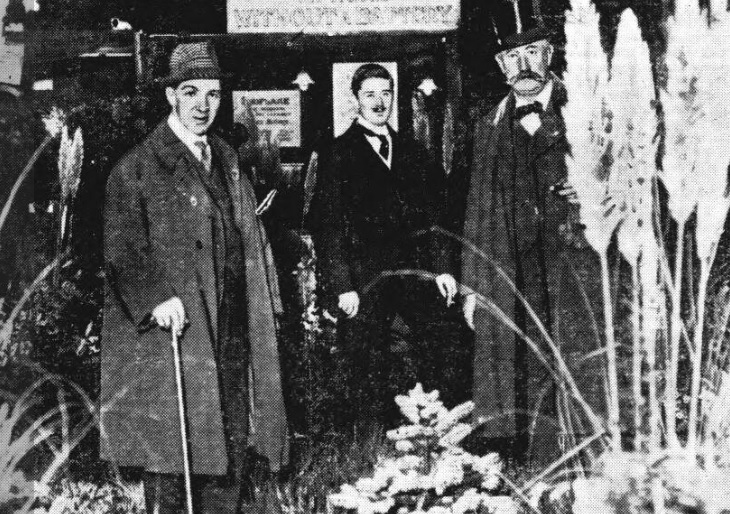
It was now Sheffield’s only place used exclusively for roller-skating, the bubble seemingly burst, and despite World War One, hosted the All-British Industrial Home Exhibition, organised by the Sheffield Independent in October 1915.
Photograph of Scottish singer and comedian Harry Lauder visiting the All-British Industrial Home Exhibition by The British Newspaper Archive.
Roller-skating continued, before the Olympia was secured by the Sheffield Volunteer Defence Corps (17th and 18th West Riding Volunteers) as their headquarters in September 1916. (Part of the building was also utilised by Royal Mail for parcel traffic during the busy Christmas period).
After the war, with no chance of it ever hosting roller-skating again, it stood empty but during King George V’s visit to Sheffield in May 1919, Olympia was used as the assembly point for a march past of troops through the city centre.
By July 1919, the maple floor had been ripped up and the building was occupied by W.E. Chivers and Sons, haulage contractors, which remained until the late 1920s.
In 1927, Arnold Laver and Company bought remaining sports ground land next door , and built the Olympia Sawing, Planing and Moulding Mills.
Olympia became a Sheffield Transport bus depot until 1963 and afterwards was used by the as workshops by Sheffield Council’s Public Works Department, also by Yorkshire Electricity Board.
Photograph by Picture Sheffield
Photograph by Picture Sheffield
By the time of its demolition in the 1990s, the former Olympia building looked less grand and curiously different to its roller-skating days. The reason for this might well date to the Sheffield Blitz of 1940. Sheffield United’s Bramall Lane ground was damaged by German bombs and Arnold Laver’s property was all-but destroyed, and it is very likely that Olympia suffered a similar fate and later rebuilt.
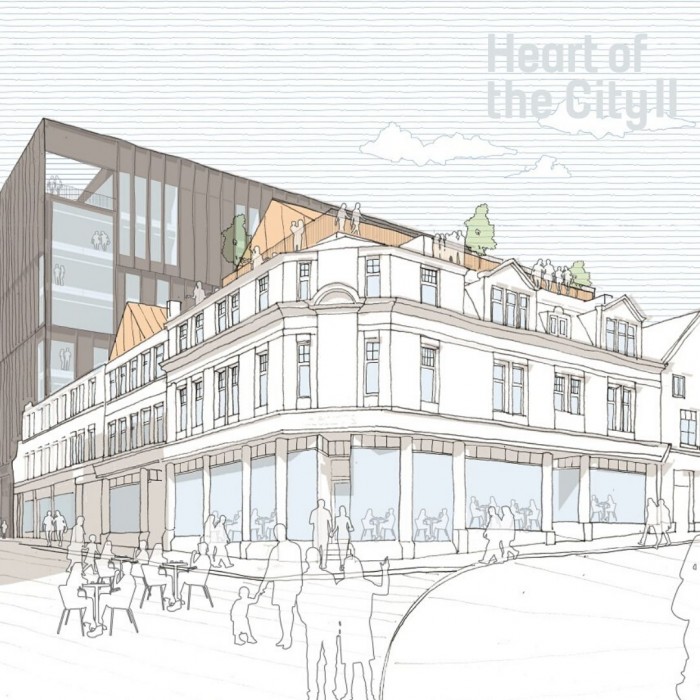
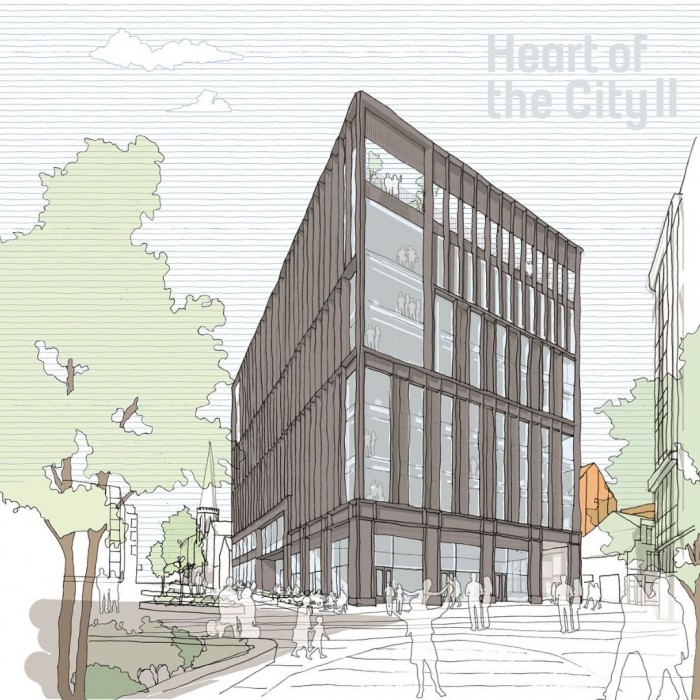
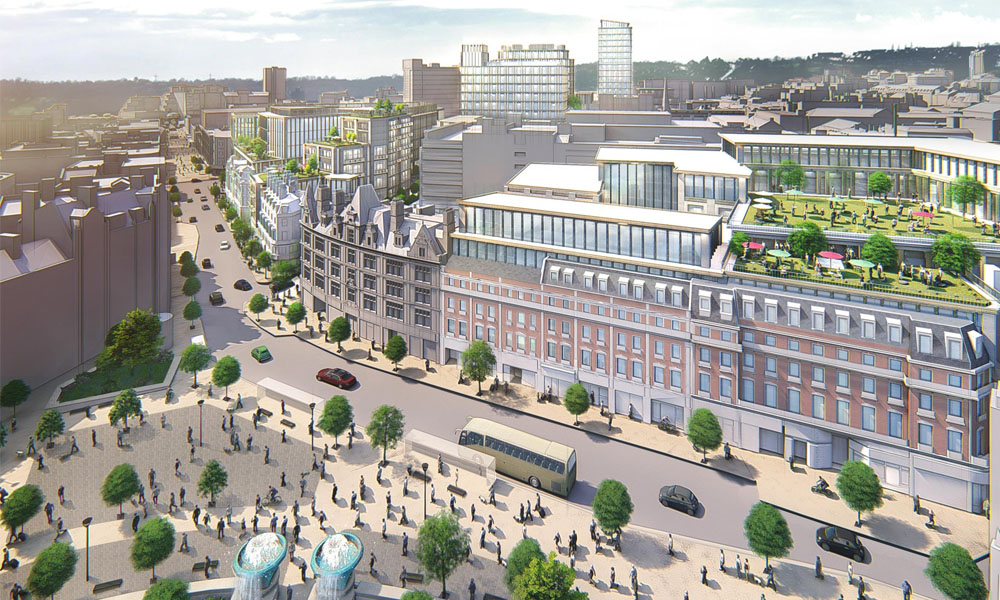
Sheffield City Council is inviting comments on proposals for the next phase of Heart of the City II, which includes (Block H: Cambridge Street and Carver Street).
The Council and Queensberry recognise that people will have questions about the next stage of the scheme. Prior to the submission of planning applications, it has published proposals and will allow people to contribute to the final plans.
A wide-ranging development is proposed for Block H of the Heart of the City II development, with three distinct elements (H1, H2 and H3).
H2 will be a new building comprising about 70,000 sq ft of grade A office space, split across seven upper floors. It will feature a south-facing roof terrace, with retail and food and beverage units on the ground floor.
Proposals for the H3 element, to be known as Cambridge Street Collective, aim to retain as much of the existing fabric and façades along Cambridge Street and Wellington Street as feasible.
Plans include a large, industrial-style space, suited to a food hall or similar sociable, communal offer. Complementary shops, a bar and restaurant, and an upper level leisure space would also be created. The existing Bethel Chapel building will also be renovated, with plans for this to become a live entertainment venue.
Photograph by Sheffield City Council
The Block H site also includes Leah’s Yard (H1), a Grade II*-listed building housing a collection of small former industrial workshops. This site is not included in the application, but plans are still at an early stage to convert the property into workshops for creative businesses. Listed building consent is being sought to undertake the structural works required to make the buildings secure.
The new plans for this block proposes retention of more original architecture than envisaged in a previous masterplan. They now include the preservation and sympathetic restoration of the fabric and façades along Cambridge Street and Wellington Street, including the listed Bethel Sunday School and Leah’s Yard, as well as the Bethel Chapel and the buildings that formerly housed Brewhouse and Henry’s Bar.
Good news for the Bainbridge Building on the corner of Norfolk Street and Surrey Street.
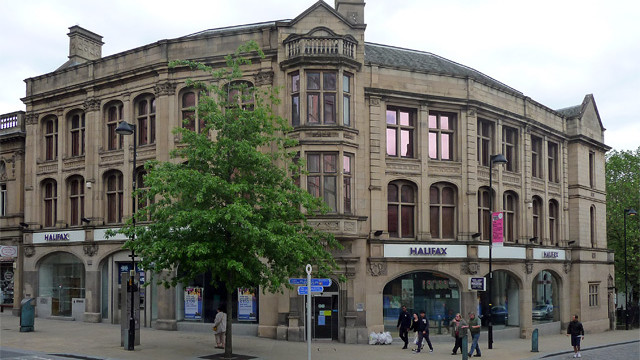
The proposed redevelopment of the former Halifax Bank to create a new hotel and restaurant has been given the go-ahead.
Mitchells & Butchers, supported by WYG and Design Coalition, submitted an application to Sheffield City Council at the end of 2019 for the former bank on Surrey Street.
The building, which is not listed, was originally constructed in 1893-1894, with the structure behind the façade rebuilt in 1977-1978. It has remained vacant following the closure of the Halifax Bank in August 2017.
The application covers the conversion of the property to create a restaurant at ground floor and basement levels and a hotel on the upper floors.
The restaurant is set to operate as a Miller & Carter Steakhouse and comprise 187 covers. It will be located within the former banking hall on the ground floor, with additional covers at basement level.
A total of 20 hotel rooms are set to be created on the upper floors, along with a reception area and a manager/night porter office.
It has been estimated that the development would create 62 jobs (29 full-time and 37 part-time positions). The £2.36m conversion and fit-out of the building is expected to support the creation of further roles.
The building was commissioned by Emerson Bainbridge, a mining engineer consultant and philanthropist, following the death of his wife, Jeffie. It was erected as a memorial to her and opened by the Duke and Duchess of Portland in 1894.
The first floor formed a shelter for waifs and strays, and a large suite of offices on the second floor were given to the local branch of The Society for the Prevention of Cruelty to Children, of which Bainbridge was a committee member.
The ground floor consisted of shops that were let out to tenants in order to raise revenue to support the rent-free premises above.
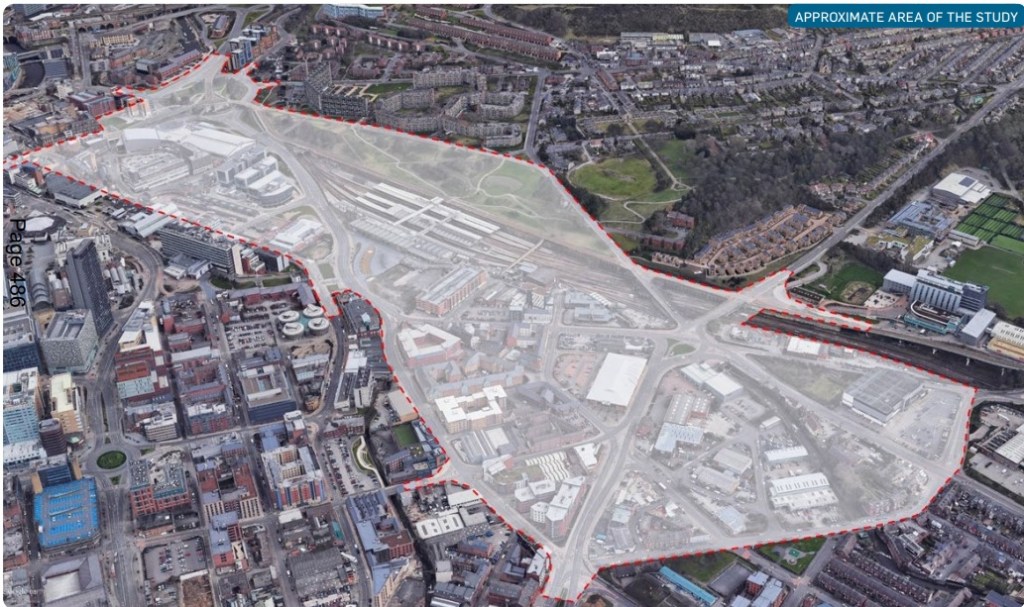
Photograph by Sheffield Midland Station and Sheaf Valley Development Framework.
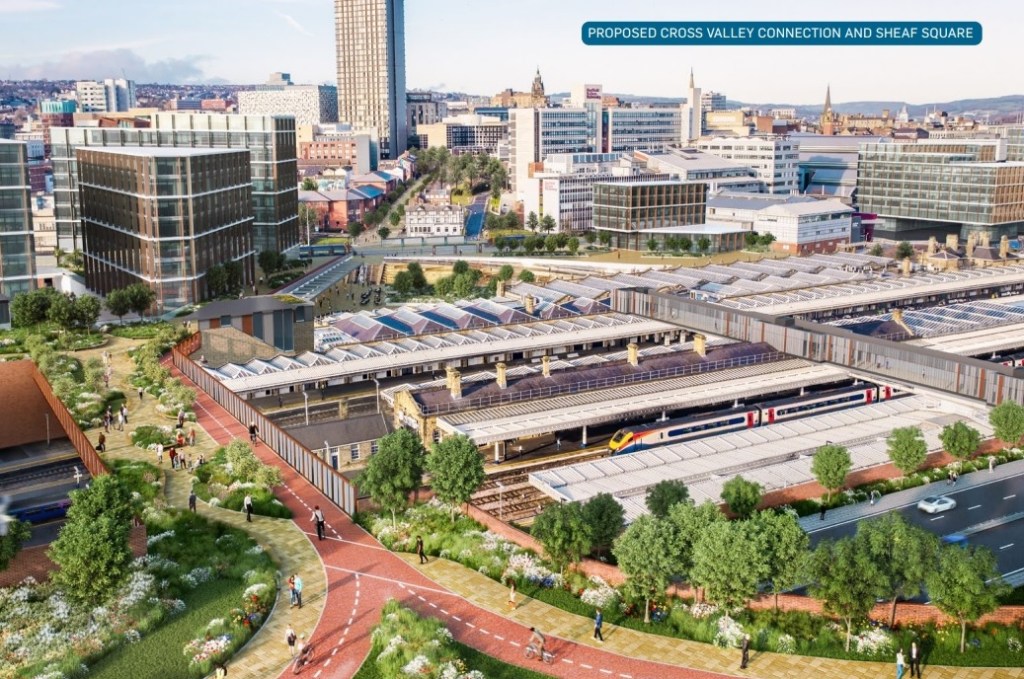
I don’t think anybody saw this coming. Sheffield’s biggest ever development project – a £1.5bn plan to develop the area around Sheffield Railway Station, dwarfing the £480m Heart of the City II scheme.
The plan is to maximise the economic potential of the area and make the most of HS2, and will now go out for public consultation.
The idea stems from plans for HS2 trains to stop at Sheffield Station on a loop off the mainline which were recently given the green light by the government.
Sheffield City Council would co-ordinate the project, with funding coming from several organisations including the city council, HS2, SYPTE, Transport for the North, Network Rail, Sheffield City Region and the Department for Transport. The bulk of the costs – up to £1bn – would be from the private sector, which would build offices, restaurants, bars and potentially a hotel.
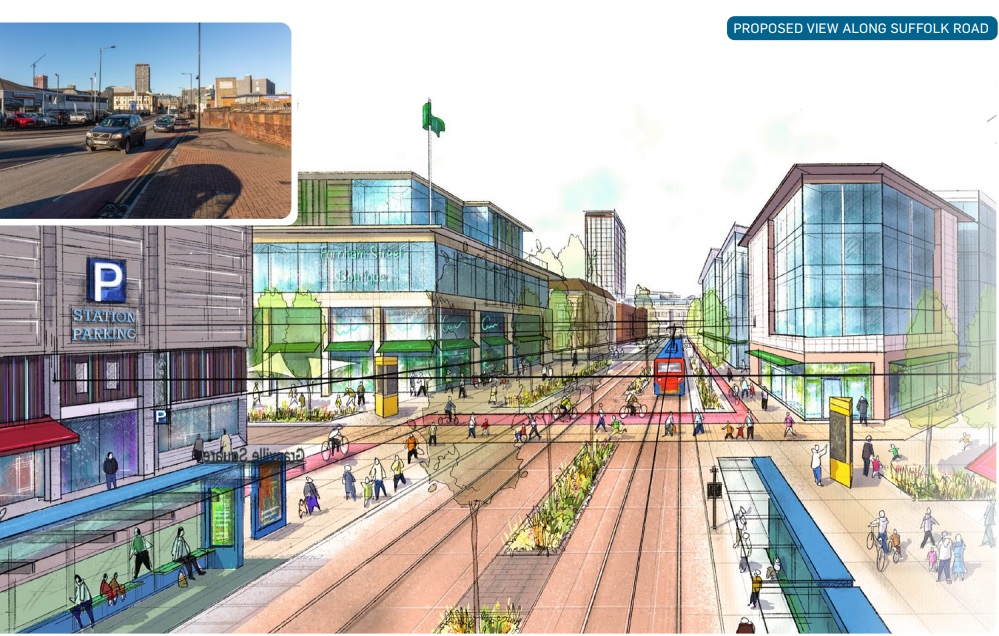
Photograph by Sheffield Midland Station and Sheaf Valley Development Framework.
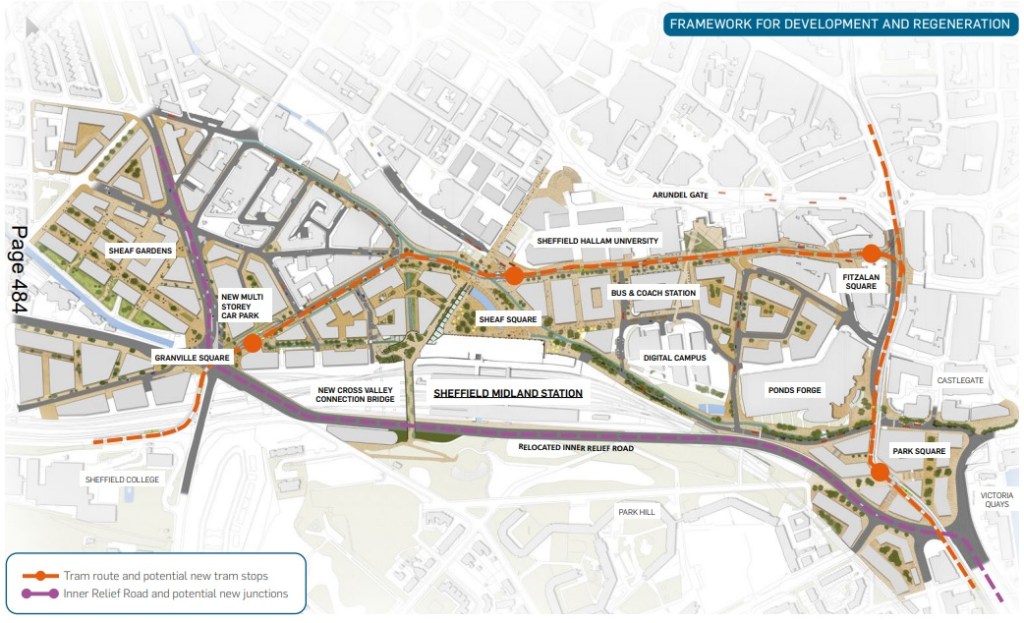
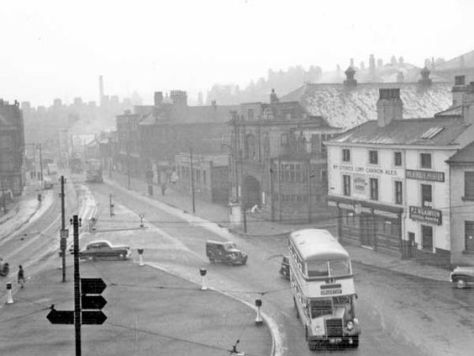
The project would see the closure of Park Square roundabout and Sheaf Street – the dual carriageway that runs in front of the station – would swap places with the tram route that runs behind.
A huge, landscaped pedestrian bridge would link Park Hill with Howard Street and the multi-storey car park on Turner Street would be demolished and moved further away.
It would be replaced by an office block – one of up to 12 planned in the ‘Sheffield Valley’ zone, including four outside the station, employing up to 3,000 people.
Up to 1,000 homes – flats and houses – could also be built.
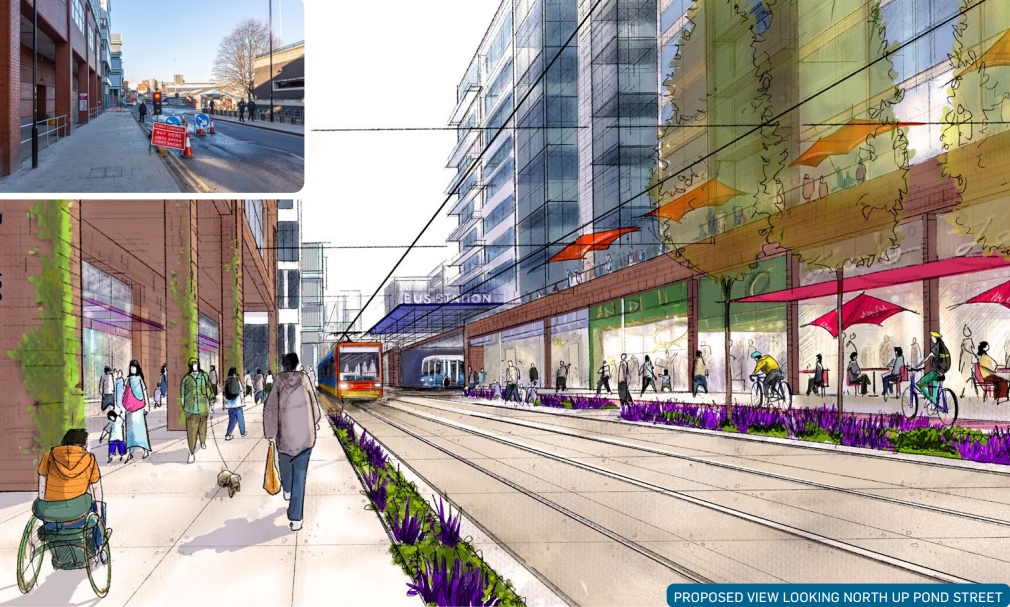
Photograph by Sheffield Midland Station and Sheaf Valley Development Framework.
The new tram route would run from Fitzalan Square, along Pond Street, stop outside the station and continue along Suffolk Road to Granville Square.
The bus station on Pond Street would be reduced in size to make room for the tram tracks and offices on stilts potentially built on top.
Photograph by Sheffield Midland Station and Sheaf Valley Development Framework.
Park Square roundabout and Sheaf Street would become a park and link into the Grey to Green scheme at Victoria Quays, Castlegate and West Bar.
Under the plans the ‘Q park’ would move to the Wren-DFS site on nearby St Mary’s Road.
There would be a new, sheltered, taxi rank next to the station, but the taxi ‘stacking’ area would be moved ‘slightly further out’ improving access for drop-offs and people with mobility needs.
The area between St Mary’s Road, Queens Road and Sheaf Gardens, currently home to businesses including a Pure Gym, would be a new residential centre for up to 700 homes, with a further 300 spread throughout the area.
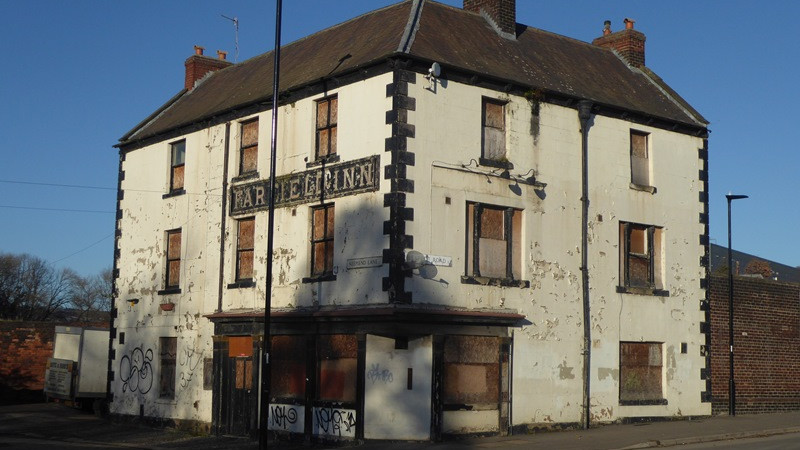
A Grade II-listed Sheffield pub dating back to 1752, which was damaged in the 2007 flood, is set to be refurbished, and new workshops created, under new plans.
ABA Architecture & Interiors, on behalf of TOC Holdings, has submitted full planning and listed building applications to Sheffield City Council for work on the Farfield Inn, Neepsend.
The Farfield Inn survived the Great Flood of 1864 but was gutted by the city’s 2007 flood and has been disused for years. In 2018, it was sold at auction for £250,000, two-and-a-half times its guide price.
Planning permission is sought for the refurbishment of the ground trading area and the creation of six flats on the first and second floors. The building’s period features are set to be retained.
The plans also include the construction of a new two-storey building that will house a pair of workshops for artisan craftsmen. The existing outbuilding on the site will also be refurbished to provide workshop space.
Here’s news of an important development in Sheffield’s Heart of the City II programme.
Radisson Blu has been selected by Sheffield City Council as the preferred hotel brand for its flagship Heart of the City II hotel on Pinstone Street, overlooking the Peace Gardens.
The hotel will anchor the new Heart of the City II scheme which is already home to global bank HSBC, and which will shortly welcome prominent international law firm, CMS, who are occupying 45,000 sq. ft of office space later in the year.
Part of Block A in Heart of the City II, the hotel will be housed in the striking Victorian architecture towards the top end of Pinstone Street, adjacent to the Barclays building on the corner. It is expected to feature over 150 rooms and will have a prominent location with views of the Peace Gardens.
Developed by Sheffield City Council and its strategic delivery partner, Queensberry, Block A sits between Pinstone Street, Burgess Street and Barker’s Pool. Providing a key gateway to the Heart of the City II district from the east, Block A will also feature premium retail units at street level and 45,000 sq. ft of office or residential space.
Radisson Blu is an international chain of 328 ‘upper upscale’ hotels operated by the Radisson Hotel Group. Its origins go back to 1960, with the opening of the SAS Royal Denmark Hotel in Copenhagen, the group rebranded from Radisson SAS in 2009.
At present, the nearest Radisson Blu hotels are in Derby, Leeds, Manchester, Nottingham and York.
This influential character is relatively unknown in Sheffield’s history. A modest person, he was responsible for one of the city’s iconic landmarks.
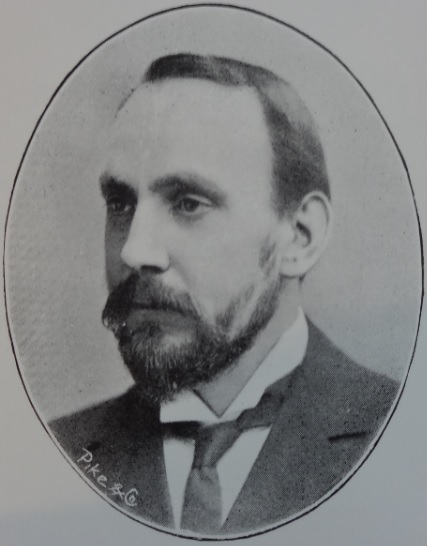
Walter Gerard Buck (1863-1934) was born in Beccles, Suffolk, the youngest son of Edward Buck. He was educated at the Albert Memorial College in Framlingham, and acquired an interest in architecture, joining the practice of Arthur Pells, a reputable Suffolk architect and surveyor, where he learned the techniques to design and build.
Walter Gerard Buck, architect and surveyor (1863-1934)
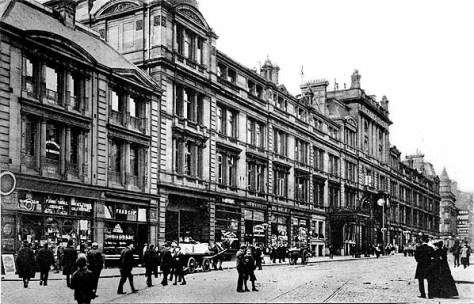
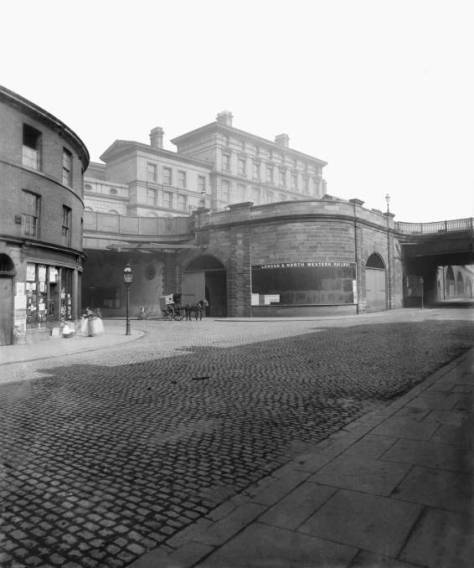
Walter, aged 21, realised there were limitations to this rural outpost and would need to improve his talent elsewhere. This opportunity arose in Manchester, the seat of the industrial revolution, where demand for new commercial buildings was great. It was here where he gained several years’ experience in large civil engineering and architectural works, including the building of the Exchange Station, Manchester, as well as the Exchange Station and Hotel in Liverpool.
Liverpool Exchange Street Station and Hotel. The frontage remains and in the 1980s was incorporated into the Mercury Court office development. It has recently been converted into 21st century office space called ‘Exchange Station’. (Image: Alan Young)
Manchester Exchange Station was a railway station located in Salford, immediately to the north of Manchester city centre. It served the city between 1884 and 1969. The station was closed on 5 May 1969. (Image: National Railway Museum)
In 1890, his reputation growing, Walter made the move over the Pennines and into the practice of Mr Thomas Henry Jenkinson at 4 East Parade.
Jenkinson had been an architect in Sheffield for over forty years. He had been responsible for several buildings built in the city centre, taking advantage that Sheffield had been one of the last among the big towns to take in hand the improvement of its streets and their architecture.
Buck’s move to Sheffield proved advantageous. Jenkinson had become a partner at Frith Brothers and Jenkinson in 1862, which he continued until 1898, when he retired. He made Walter his chief assistant and allowed him to reorganise the business and control affairs for several years. During this period Walter carried out work on many commercial buildings and factories in Sheffield.
Initially, Walter boarded in lodgings at 307 Shoreham Street, close to the city centre. He married Louisa Moore Kittle in 1892 and, once his reputation had been established, was able to purchase his own house at 4 Ventnor Place in Nether Edge.
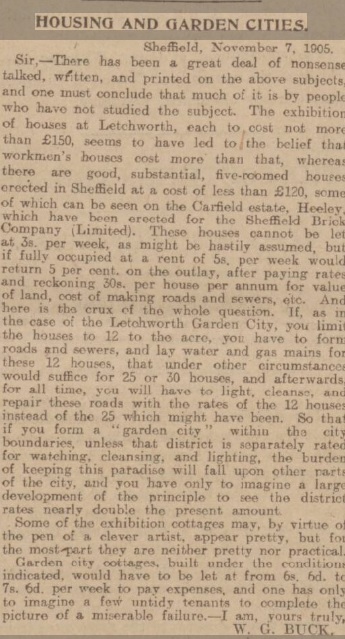
A letter from Walter to the Sheffield Daily Telegraph (8 Nov 1905)
Perhaps Walter Buck’s greatest work also proved to be his most short-lived.
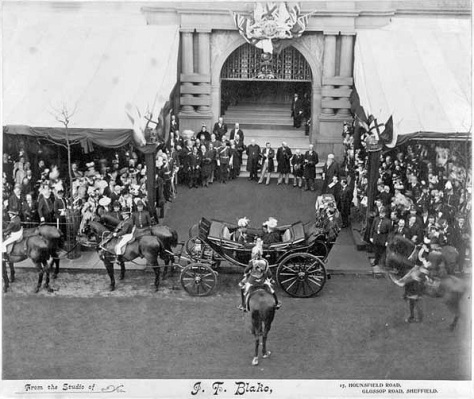
In May 1897, Queen Victoria made her last visit to Sheffield for the official opening of the Town Hall. It also coincided with the 60th year of her reign – Queen Victoria’s Diamond Jubilee Year.
The visit caused considerable excitement in Sheffield and preparations lasted for weeks. Shops and offices advertised rooms that commanded the best positions to see the Queen. Not surprisingly, these views were quickly occupied, but the closest view was promised in the Imperial Grandstand, specially designed for the occasion by Walter Gerard Buck.
Queen Victoria’s Diamond Jubilee visit to Sheffield in May 1897. The central interest was the newly-built Town Hall where ‘the gilded gates stood closed until her majesty touched the golden key and they flew open’.
This spectacle was built next to the newly-erected Town Hall, opposite Mappin and Webb, on Norfolk Street (in modern terms this would be where the Peace Gardens start at the bottom-end of Cheney Walk across towards Browns brasserie and bar). It was advertised as ‘absolutely the best and most convenient in the city’, with a frontage of nearly 200 feet and ‘beautifully roofed in’. The stand, decorated in an artistic manner by Piggott Brothers and Co, provided hundreds of seats, the first three rows being carpeted with back rests attached to the back. In addition, the stand provided a lavatory, refreshment stalls and even a left luggage office. It was from here that the people of Sheffield saw Queen Victoria as the Royal procession passed within a few feet of the stand along Norfolk Street to Charles Street.
The next day the Imperial Grandstand was dismantled.
The professional relationship between Walter Buck and Thomas Jenkinson matured into a close friendship.
When Jenkinson died in 1900, he left the business to Walter and made him one of his executors. His son, Edward Gerard Buck, eventually joined the business which became known as Buck, Lusby and Buck, moving to larger premises at 34 Campo Lane.
In 1906, Walter was elected to the Council of the Sheffield, South Yorkshire and District Society of Architects and Surveyors and was elected President in 1930. He was also a Fellow of the Royal Institute of British Architects (RIBA) and a member of the council of that body.
Walter also became a member of the council of the Sheffield Chamber of Commerce, a member of the Court of Governors of Sheffield University, a member and director of the Sheffield Athenaeum Club, a member of the Nether Edge Proprietary Bowling Club and vice-president of the Sheffield Rifle Club. It was this last role that he enjoyed best. Walter was a keen swimmer but his passion for rifle shooting kept him busy outside of work.
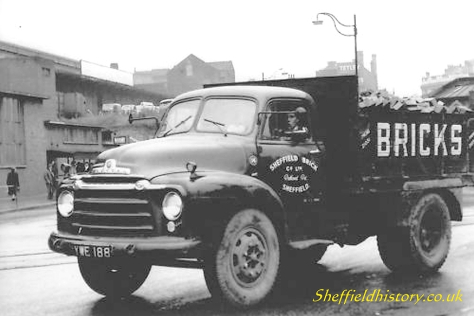
Apart from architectural work Walter held directorships with the Hepworth Iron Company and the Sheffield Brick Company. These astute positions allowed him to negotiate the best prices for the building materials needed to complete his projects.
A familiar site on Sheffield’s streets. The Sheffield Brick Company had brickyards situated at Neepsend, Grimesthorpe, Wincobank and Wadsley Bridge. Materials were used in many of the city’s buildings including Sheffield University, the Grand Hotel and the Town Hall. (Image: Sheffield History)
However, as the new century dawned, it was a role outside of architecture that occupied Walter’s time.
In 1892 the French Lumière brothers had devised an early motion-picture camera and projector called the Cinématographe. Their first show came to London in 1896 but the first moving pictures developed on celluloid film were made in Hyde Park in 1889 by William Friese Greene. The ‘new’ technology of silent movies exploded over the next few years and by 1906 the first ‘electric theatres’ had started to open. In London, there were six new cinemas, increasing to 133 by 1909.
Not surprisingly, this new sensation rippled across Britain and Sheffield was no exception. This had been pioneered by the Sheffield Photo Company, run by the Mottershaw family, who displayed films in local halls. They also pioneered the popular ‘chase’ genre in 1903 which proved significant for the British film industry. The Central Hall, in Norfolk Street, was effectively Sheffield’s first cinema opening in 1905, but the films were always supported with ‘tried and tested’ music hall acts. Several theatres started experimenting with silent movies, but it was the opening of the Sheffield Picture Palace in 1910, on Union Street, that caused the most excitement. This was the first purpose built cinema and others were looking on with interest.
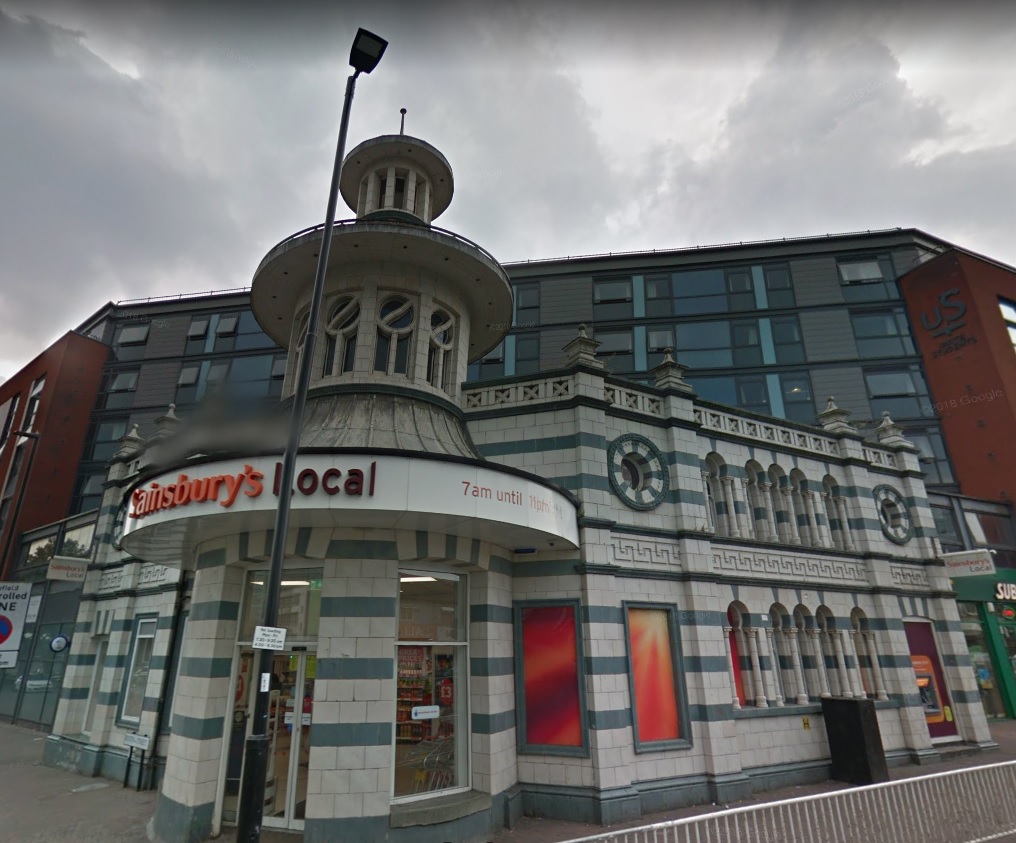
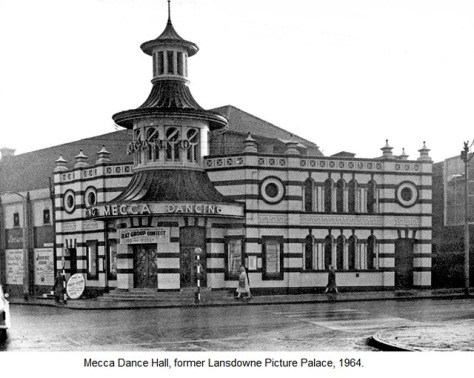
Walter Buck was one such person and saw the opportunity to increase business by designing these new purpose-built cinemas. One of his first commissions was for Lansdowne Pictures Ltd who had secured land on the corner of London Road and Boston Street. The Lansdowne Picture Palace opened in December 1914, built of brick with a marble terracotta façade in white and green, with a Chinese pagoda style entrance. It was a vast building seating 1,250 people. In the same year he designed the Western Picture Palace at Upperthorpe for the Western Picture Palace Ltd.
The Lansdowne Picture Palace was designed by architect Walter Gerard Buck of Campo Lane, Sheffield. It stands at the junction of London Road and Boston Street and opened on 18th December 1914. In 1947 the cinema became a temporary store for Marks & Spencers. In the 1950’s it became a Mecca Dance Hall called the ‘Locarno’ later changing into ‘Tiffany’s Night Club’. It had several more reincarnations as a night club with different names and the frontage was painted black, its last name being ‘Bed’. (Image: Cinema Treasures)
The Weston Picture Palace, designed by Walter Gerard Buck in 1913-14. The cinema was on St Phillip’s Road and Mitchell Street and was demolished. (Image: Sheffield History)
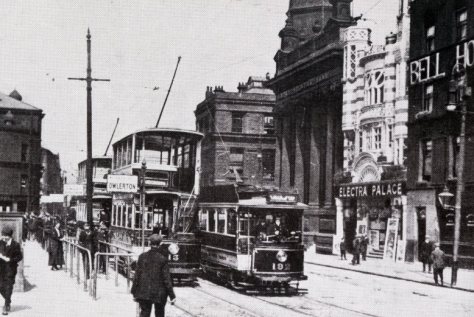
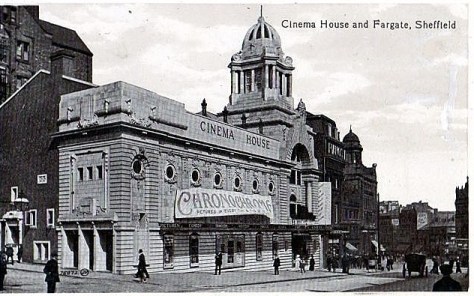
With the knowledge required to build cinemas it was unsurprising that Walter Buck was asked to join several companies as a director. One of these was Sheffield and District Cinematograph Theatres Ltd which was formed in 1910 for ‘the purpose of erecting and equipping in the busiest and most thickly populated parts of the City of Sheffield and district picture theatres on up-to-date lines’. Its first cinema was the Electra Palace Theatre in Fitzalan Square with a seating capacity upwards of 700 with daily continuous shows. Their second cinema was the Cinema House built adjoining the Grand Hotel and adjacent to Beethoven House (belonging to A Wilson & Peck and Co) on Fargate, this part later becoming Barker’s Pool. This was a much grander cinema with a seating capacity of 1,000 together with luxuriously furnished lounge and refreshment, writing and club rooms.
Ironically, Walter Buck did not design either of these picture houses. Instead, they were conceived by John Harry Hickton and Harry E. Farmer from Birmingham and Walsall, but the bricks were supplied by the Sheffield Brick Company, that lucrative business where Walter was a director. It should not go unnoticed that this highly profitable company probably made Walter a wealthy man. It had already supplied bricks for the Grand Hotel, Sheffield University and the Town Hall.
Opened as the Electra Palace on 10th February 1911. It was designed by J.H. Hickton & Harry E. Farmer of Birmingham & Walsall. Constructed by George Longden & Son Ltd. (who built several Sheffield cinemas), the proprietors being Sheffield & District Cinematograph Theatres Ltd. (Image: Sheffield History)
Opened in 1913, the Cinema House seated 800 and was one of the smaller city centre cinemas. Boasting a tea room, it had a narrow auditorium and patrons entered from the screen end of the hall. Being narrow, it’s Cinemascope image size was severely restricted. It closed in 1961 and was subsequently demolished. (Image: Cinema Treasures)
The cinema undertaking was not without risk and Cinema House, which opened six months before the start of World War One, always struggled to break even.
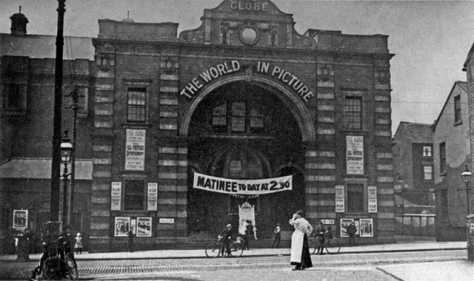
In 1920, far from building new cinemas right across the city, the company bought the Globe Picture House at Attercliffe. The following year they reported losses of £7,000 with Cinema House blamed for the poor performance.
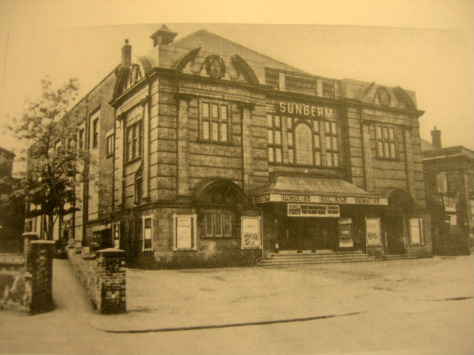
At this stage, it is unclear as to what involvement Walter Buck had with Sheffield and District Cinematograph Theatres. He was also a director of Sunbeam Pictures Ltd, designing the Sunbeam Picture House at Fir Vale in 1922, and the Don Picture Palace at West Bar. He was most certainly a director of the Sheffield and District Cinematograph Company by the late 1920s, and eventually became its chairman. In 1930, absurdly on hindsight, he was faced with a public backlash as the company made the transfer over to ‘talkie’ pictures.
“It was true that some people preferred the silent pictures, but the difficulty was that the Americans were producing very few silent films, or the directors might probably have kept some of the houses on silent films to see if they could hold their own with the talkie halls.”
Located on Attercliffe Common at the junction with Fell Road. The Globe Picture Hall was a venture of the Sheffield Picture Palace Co. Ltd. It opened on 10th February 1913 and was, at that time, one of the largest cinemas in Sheffield. The architects were Benton & Roberts. The owning company reformed on 21st March 1914 as the Sheffield & District Cinematograph Theatres Ltd. and remained owners until closure on 29th June 1959. (Image: Cinema Treasures)
The Sunbeam Picture House was built on Barnsley Road at the junction of Skinnerthorpe Road in the Fir Vale district of Sheffield. The Sunbeam Picture House opened on Saturday 23rd December 1922. It was built set back from the road and was an imposing brick and stucco building, with a large embossed rising sun motif on the facade, set inside an ornamental parapet. A central entrance to the cinema was covered with a canopy. (Image: Sheffield History)
The Don Picture Palace opened on Monday 18th November 1912 with the films “Captain Starlight” and “Monarchs Of The Prairie”. The architect was Henry Patterson and it was situated in what was then one of the main entertainment areas of Sheffield with the old Grand Theatre of Varieties being close by. (Image: Sheffield History)
Walter Buck never retired but died at his home at 19, Montgomery Road, Nether Edge, aged 70, in September 1934. He left a widow, his second wife, Fanny Buck, and three sons – Edward Gerard Buck, William Gerard Buck, a poultry farmer, and Charles Gerard Buck, chartered accountant. Walter Gerard Buck was buried at Ecclesall Church.
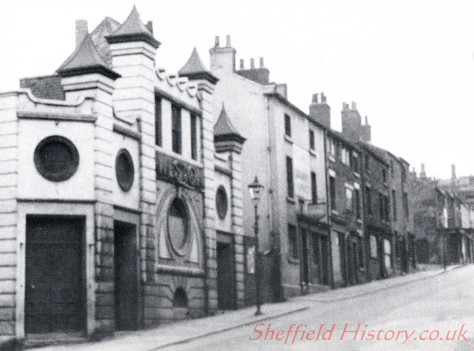
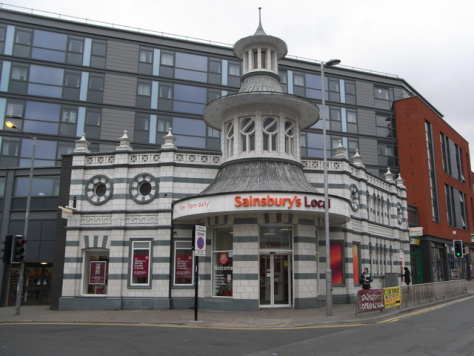
It seems the only epitaph to Walter Buck is the Chinese pagoda style entrance of the Lansdowne Picture Palace. The auditorium was demolished to make way for student accommodation, but the frontage was retained for use as a Sainsbury’s ‘Local’ supermarket. Very little information exists about his other work in the city and further research is needed to determine which buildings he designed, and which remain. Any information would be most welcome.
All that remains of the former Lansdowne Picture Palace. The frontage and Chinese-style pagoda were retained for this Sainsbury’s Local supermarket, soon to become Budgens. (Image: Cinema Treasures)
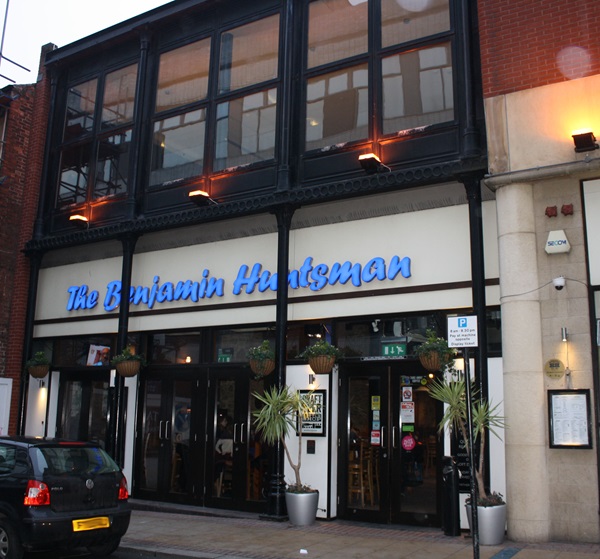
It’s hard to believe that the oldest part of The Benjamin Huntsman, on Cambridge Street, dates to 1879. Look closely, and you’ll notice that this is built with a cast iron frame, quite unique for its day, but responsible for saving the structure of the building on more than one occasion.
The Benjamin Huntsman has a lot of history, and had J.D. Wetherspoon not chosen to name it after one of Sheffield’s famous steel sons, there were plenty of other options available.
Strange as it might seem, very little has been written about the building, its past seemingly ignored.
It was originally built for William Wilson and Son, coachbuilders and harness makers, forced to move from its old premises at Moorhead due to road improvements. The golden age of the horse and carriage came to an end at the beginning of the twentieth century, and it was no surprise that the company soon turned its attention towards the motor car.
Image by The British Newspaper Archive
By the time it went into voluntary liquidation in 1924 the company was well-known in Sheffield as a car dealer and motor engineer.
It was next occupied by Quinton, Arthur and Co, ironmongers, trading from the ground floor with the Cambridge Billiard Club (proprietor Ernest Leonard Searle) opening on the floor above in 1925.
Image by The British Newspaper Archive
Quinton Arthur’s tenure was short-lived due to a serious fire in 1926, an event that caused its demise a few months later.
In 1927, the premises were rebuilt around the iron framework, advertised as a large sales shop and basement, including Cambridge Chambers, a suite of offices alongside the Cambridge Billiard Hall.
Image by The British Newspaper Archive
By 1929, the ground floor was occupied by R. Bamber and Company, a Southport-based firm of coachbuilders established in 1893, which had also started selling motor cars. Along with premises in Leeds, it moved into Cambridge Street selling “shop-soiled used cars,” and was soon advertising itself as the “Northern Motor Olympia.”
R. Bamber remained here until 1929 until handing over the premises to the Handsworth Motor Company, with a garage at the rear for forty cars.
Photograph by Picture Sheffield
It was a brief existence and very soon the building was purchased by J. Gilder, a company that came to prominence in Sheffield.
Jack Gilder’s grandfather began selling and servicing cars as far back as 1912, his grandson setting up a new company in 1938. Jack went off to fight in World War Two and it was while in Belgium that he came across a car which changed the company’s fortunes.
The business was relaunched with a Rootes franchise in 1946, but it was Jack’s obsession with the design and engineering of the Volkswagen Beetle that made him approach the German manufacturer with a view to selling them.
It was a courageous move for Jack to sell a German product so soon after the war, and it was from this building that J. Gilder sold the first ever Volkswagen Beetle in Britain and became VW’s first UK dealership.
Gilder’s remained on Cambridge Street before moving to Banner Cross in the 1960s, and is now part of JCT600, a West Yorkshire-based motor group.
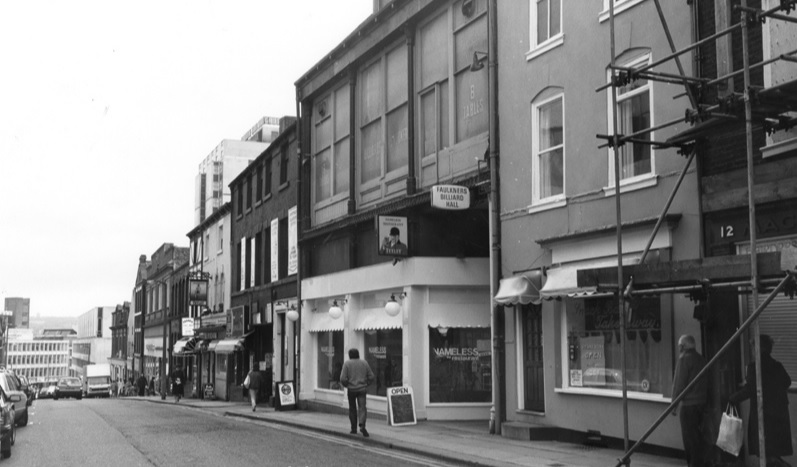
While changes went on below, it’s worth mentioning the Cambridge Billiard Hall that subsequently became Faulkeners and remained until the 1980s. By this time, it was long past its best, fondly remembered for its “bad flooring, rubbish on the floor, poor lighting, cigarette smoke and freezing cold temperatures.”
Photograph by Picture Sheffield
The former car showroom became the Nameless Restaurant between 1979-1985, before becoming a takeaway. In 1987, a fire in the restaurant destroyed the whole of the building, including the old billiard hall, paving the way for J.D. Wetherspoon to rebuild it, once again using the iron frame, incorporating The Benjamin Huntsman (opened 1999) with an adjacent new build.
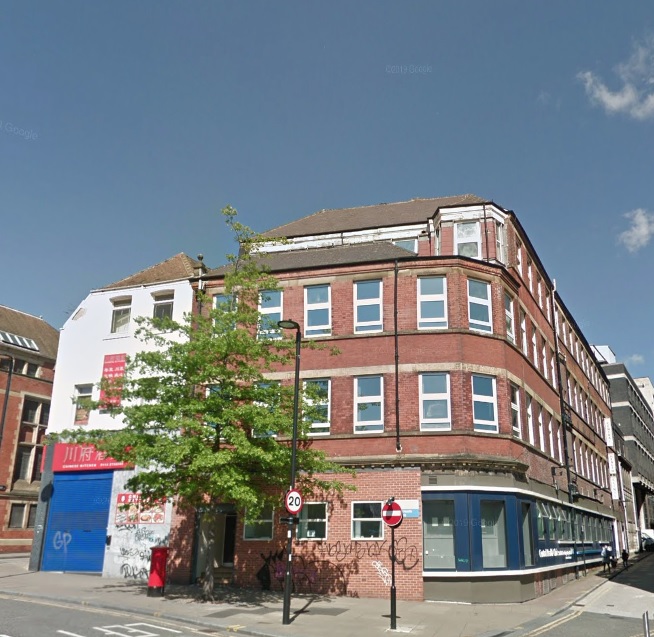
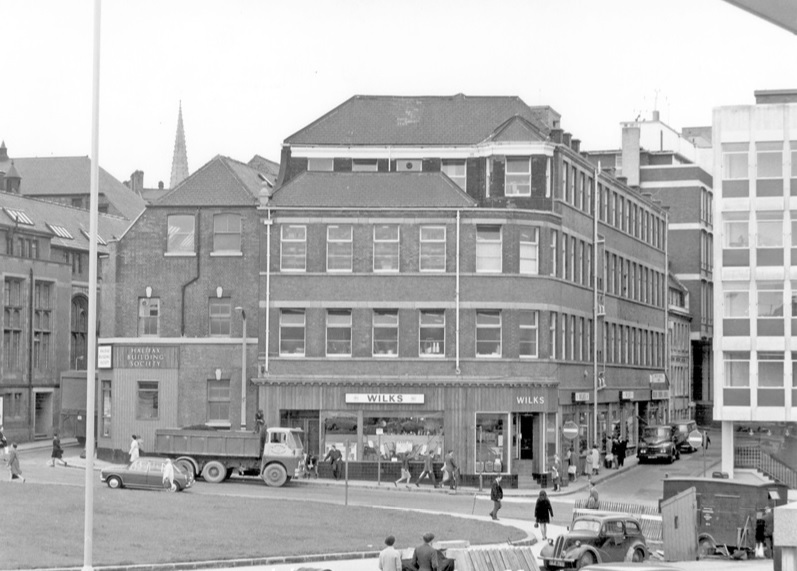
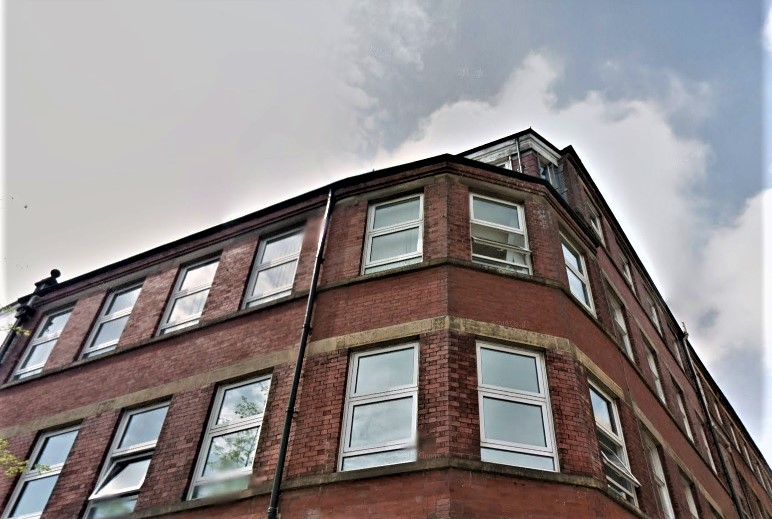
Here’s a building we regularly pass and never give it a second glance. This is the NHS Central Health Clinic at the corner of Norfolk Street and Mulberry Street, a structure that has seen better days.
However, most of us will be unaware that this building once had a very different function.
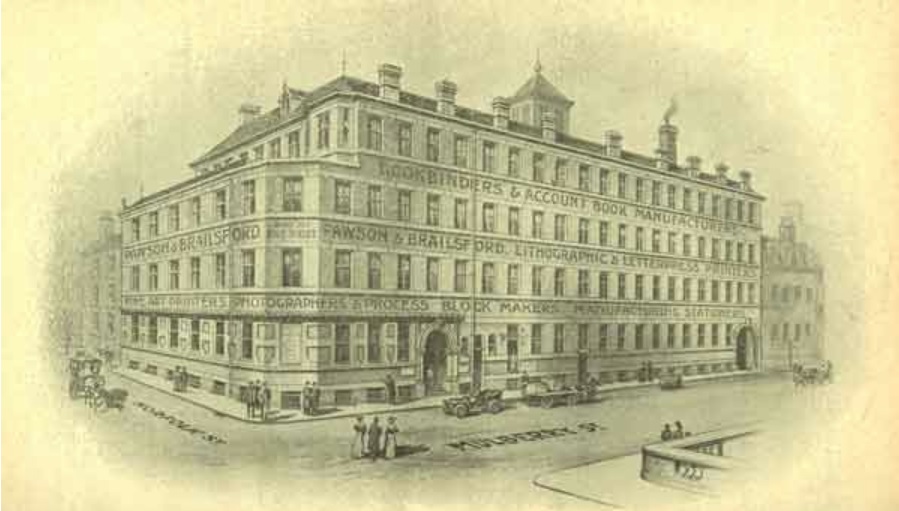
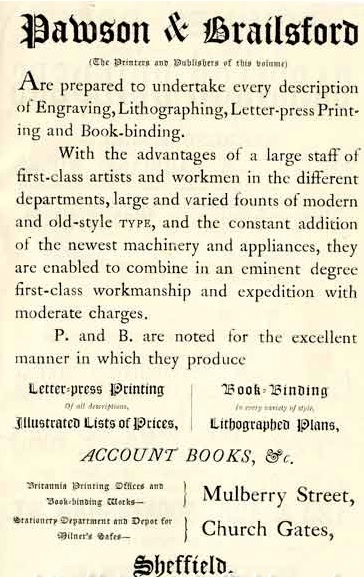
It was built in 1865 for Pawson and Brailsford, once a famous high-class printing firm in Sheffield.
We’ve featured Pawson and Brailsford before, in connection with Parade Chambers, built in 1883-1885 (and still standing) on High Street, near to the Church Gates (now Sheffield Cathedral).
The company was founded in 1855 by Henry Pawson and Joseph Brailsford, both former newspaper men. Pawson had joined the reporting staff of the Leeds Intelligencer, moving to the Sheffield Mercury and later becoming editor of the Sheffield Times. Brailsford had been associated with the Sheffield Independent.
The two opened their first printing and stationary shop at Britannia Printing Works on Castle Street, later moving to these new premises on Mulberry Street.
Also called Britannia Printing Works, the new manufacturing facility was designed by Frith Brothers and Jenkinson, architects, of East Parade.
However, the construction of the Britannia Printing Works wasn’t without its problems and subject of an interesting court case.
Photograph by Picture Sheffield
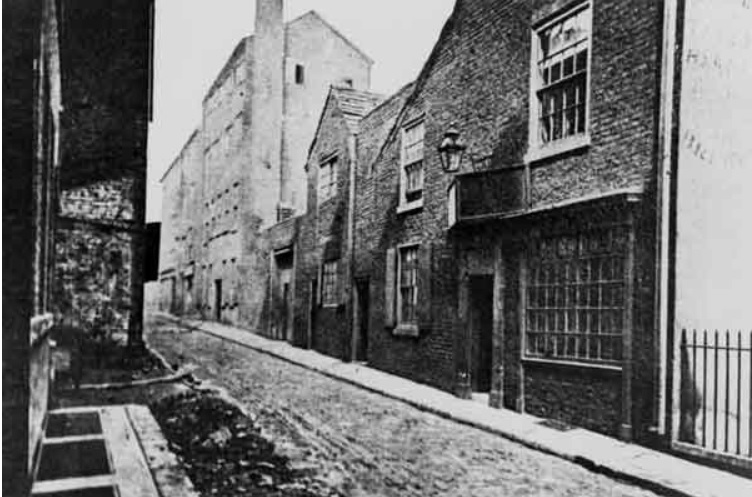
In March 1865, Pawson and Brailsford bought property in Mulberry Street, to the junction of Norfolk Street. Opposite were the new building of the Sheffield Club, and the Mulberry Tavern, an ancient public house. In July, the company proceeded to pull down part of the property, consisting of old workshops, about 24ft in height, occupied by Rhodes and Beardshaw, silver-platers, and a shop at the corner of Norfolk Street, occupied by Mr Shaw, tailor.
The new offices for Pawson and Brailsford extended to four-storeys high, about 50ft, and were set back 5ft, allowing for road widening at the Norfolk Street end of Mulberry Street.
Building work started in the first week of July and continued until 14 November when Pawson and Brailsford received a letter from Mr Unwin, a solicitor, threatening to apply for an injunction from the Court of Chancery to stop construction work.
The letter was sent on behalf of Mrs Senior, owner of the Mulberry Tavern, who claimed £500 in damages due to loss of light caused by the new building, and the devaluation of her property.
Failing to obtain a satisfactory response from the owners, the claim was filed on the 5 December, by which time the building had reached its full height, and before it went to a hearing on 21 December, the building was ready for its roof. The case wasn’t argued, but Pawson and Brailsford were ordered to progress carefully, with an intimation that if work proceeded it would be at their own risk.
Attempts were made to settle the case, but Mrs Senior adhered to her demands for £500, although at one stage had indicated she might be willing to settle for £250.
Pawson and Brailsford maintained that they hadn’t harmed the value of the Mulberry Tavern but had enhanced it instead. They offered to pay Mrs Senior £1,000 for the public house, a £200 profit on what her late husband had paid for it and offered to guarantee her possession by giving her a lease. However, she declined to sell for not less than £1,300.
Photograph by Picture Sheffield
The case stood over until November 1866 when it came up for hearing before Vice-Chancellor Sir Page Wood.
Mrs Senior claimed that she was compelled to light up the Mulberry Tavern with gas during the daytime, a claim refuted by Pawson and Brailsford. According to her testimony, the sunshine only came on her property ten minutes a day as against 7-8 hours before. She also provided several witnesses, including George Lawton, a corn miller, and Mr R. Bunby, corn dealer, both providing convincing evidence that it “was no longer possible to see samples of corn,” when conducting business inside the inn.
Mulberry Tavern. Demolished in the 1960s. Photograph by Picture Sheffield
In the end, Sir Page Wood said there was no answer to say, as the defendants did, that the plaintiff’s property was increased in value by their building, and that she was entitled to all the additional value given to her property by recent improvements in the town. It was clear from the evidence that she had suffered material damage from interference with the ancient light.
However, considering that Mrs Senior had been given notice in April of what Pawson and Brailsford intended, Sir Page pointed out that it had taken her until December, when the new building was nearly completed, to make a claim, and that there was no case for the building to be pulled down.
Sir Page ordered that Pawson and Brailsford pay compensation, decided by the Chief Clerk, and to pay costs of the suit and the inquiry.
Pawson and Brailsford, on finding that a decision wouldn’t be made straightaway, now offered to give Mrs Senior £1,300 for the Mulberry Tavern, the figure she had originally suggested, and a lease on the property. She now, however, refused to sell, and would accept no settlement except payment of damages.
The company offered Mrs Senior £250 in damages, and she demanded £300, but ultimately the settlement was made at £275.
Photograph by Picture Sheffield
With peace restored, Pawson and Brailsford completed the building and when business increased the property was considerably enlarged in 1870, taking the top stories of offices at the corner of Norfolk Street, together with rooms at the top of Alliance Chambers.
The ground floor was used as paper stores, warehouse, packing room and counting house. On the first floor, letterpress printing and wood engraving were undertaken, with lithographic printing and copper plate engraving carried out on the second floor. The top storey was used for book-binding and storage of completed work, with machinery used for rolling, cutting, paging, blocking and ruling.
The basement was occupied by Mr Favell, wine merchant, along with a portion containing steam engines and boilers to work the machinery throughout the building.
The Britannia Printing Works looks less grand than the day it was built, particularly the roof space, probably the result of a series of unfortunate fires.
Shortly after completion, a fire started when a workman thrust a lit pipe into a drawer to avoid being found smoking. And in 1881, a significant fire destroyed the upper floor, and caused considerable damage to floors below. Another blaze, in 1903, caused even greater destruction, once again obliterating the top floor, as well as destroying the roof.
Photograph by the British Newspaper Archive
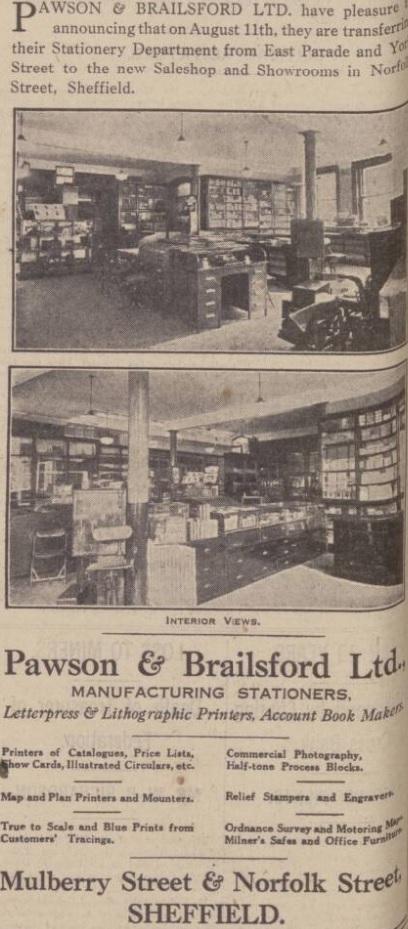
Rebuilt on each occasion, Pawson and Brailsford refurbished the building in 1930, transferring the stationary department from its High Street premises and creating “a new and commodious showroom and sales shop.”
The new shop had entrances from Norfolk Street and Mulberry Street, both allowing access into “beautifully fitted” departments.
“Since the days when a spike file and an old ledger, a stool and an old-fashioned desk were the principal furniture of a counting house, there has been a wonderful development in office equipment. Desks, filing and card index cabinets, steel furniture, loose-leaf and account books, ruled sheets and forms, safes, cash boxes, calculators, commercial, legal, technical and Government publications, form a few of the items stocked.”
Pawson and Brailsford also made a speciality of drawing office materials, and architects and surveyors were able to source all kinds of instruments, and the motorist wasn’t forgotten either, agents by special appointment for Government Ordnance Survey Maps.
Photograph by Picture Sheffield
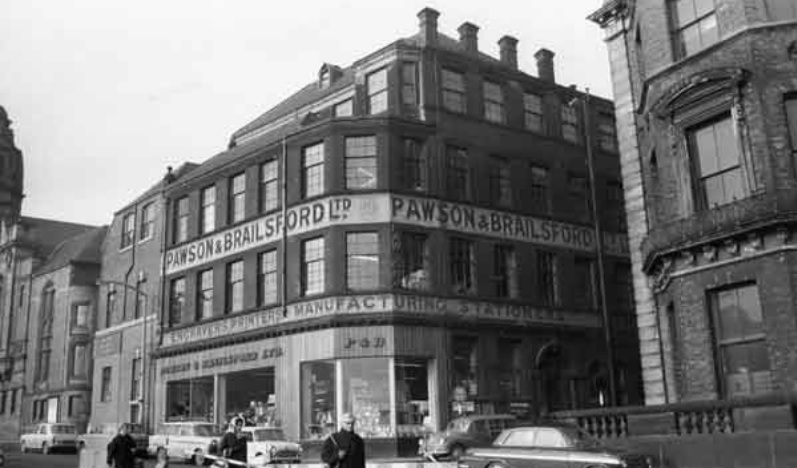
By the 1960s, the building had transferred to another Sheffield institution, Wilks Brothers and Company, ironmongers, founded in 1744, who remained until 1972.
In March 1974, approval was granted to the Maternity and Child Welfare Centre for the rental of the Wilks Building as replacement premises for ones at Orchard Place (now the site of Orchard Square).
The building was converted, including the removal of shop windows on Norfolk Street and obliterating all traces of its previous history.
The NHS facility opened in April 1974, known as the Central Health Clinic, offering advice on contraception, pregnancy, sexual health and sexuality. It is now used as a health centre.





 sheffielder.net