Categories
Buildings

Canada House – Thank you for the music

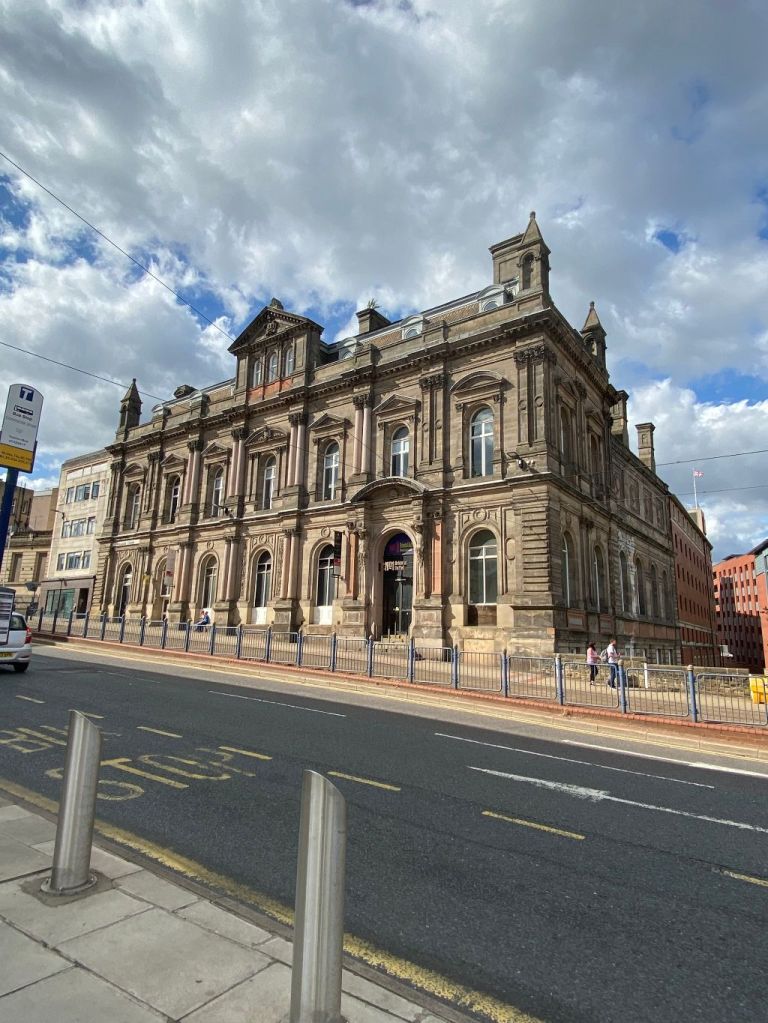
Canada House, Commercial Street, Sheffield. Image: DJP/2022

The year is 1874, and on a road, yet to be named, there is a conspicuous addition to Sheffield’s public buildings.

“Heavy? Well, a light and airy edifice would hardly bear the weight of the abominable clouds of smoke that smother the locality, and that make one shudder to see a handsome building exposed to their defilement,” said the Sheffield Independent.

“Externally the building is almost finished, and as nearly all the scaffolding has been removed, its architectural features are now fully revealed. Whether considered from an architectural point of view or simply as a business establishment, the building is undoubtedly the finest erection in town.”

People of my generation must hang our heads in shame because we have woefully neglected this building over the past fifty years, and it is in a sorry state.

It was completed in 1875 for the Sheffield United Gas Company, and after the expansion of works at Neepsend, and new works at Grimesthorpe, there was no longer any need for its original works at Shude Hill. It coincided with the town council’s ambitious road improvements programme and the creation of Midland Railway’s new station in the 1870s.

Four new approach roads were created to what is now Sheffield Station, including one from Haymarket down to Sheaf Street, and required the construction of a bridge over Shude Hill, and allowed construction of new offices and showrooms for the gas company.

When it was built, the new road still lacked a name causing the Independent’s ‘Spectator in Hallamshire’ to say, “What is the name of that street? I never know how to call it?”

It became Commercial Street, the history of which I’m currently preparing for the Sheffield Star, and so will avoid further comment here.

Gas Company Offices, now known as Canada House, Commercial Street, Sheffield. Image: Picture Sheffield

The building (without fittings) cost £25,000.

The architects (Hadfield and Son) adapted a style of architecture affected by old Venetian merchants; the general effect was bold and massive; the details, not without their elegances, were in perfect keeping, while the granite doorways and monolithic pillars – some 14 feet in height and of splendid Mull of Ross stone – were quite imposing. The carving on the front elevation was sculpted by Thomas Earp, who worked on many Gothic churches and is perhaps best known for his 1863 reproduction of the Eleanor Cross which stands at Charing Cross in London.

The interior of the building seemed admirably adapted for its purpose.

A few steps led into what was the general office, a magnificent room capable of accommodating fifty clerks. The ceiling was handsomely coved and surrounded by a spacious dome which was filled with glass, designed by John Francis Bentley, and brilliantly painted with heraldic designs. All the desk fittings were fine Spanish mahogany. To the left of the entrance was the show room, fifty feet in length.
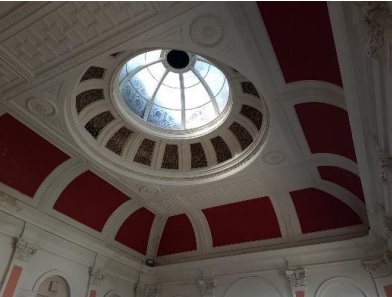
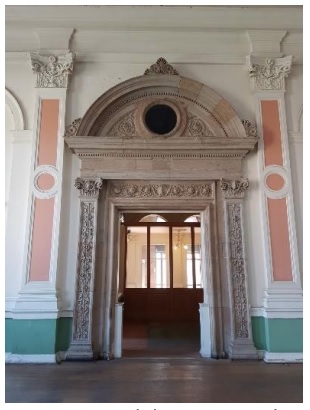
General office with restored glass dome, 2019. Image: Creative Heritage Consultants
Carved door case in the
General Office. Image: Creative Heritage Consultants
First floor staircase hall, and Ground floor hall looking east through entrance lobby, 2019. Image: Creative Heritage Consultants
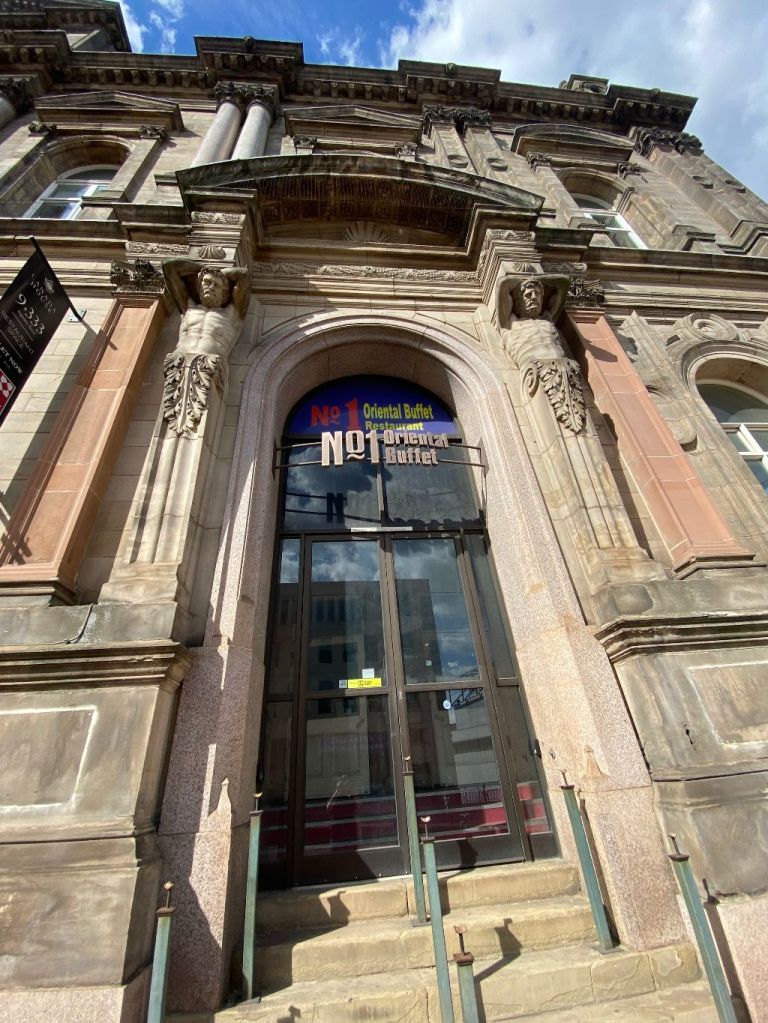
Main entrance. Image: DJP/2022

From the vestibule or entrance hall, was a handsome corridor, with finely coffered ceiling, leading to a grand staircase, the steps of which were Hopton Wood marble.

At the top of the stairs there was another hall, which communicated with the board room, with coved ceiling by Hugh Stannus, the engineers’ drawing office, and several other rooms, all of which could be thrown together ‘en suite’ if desired.
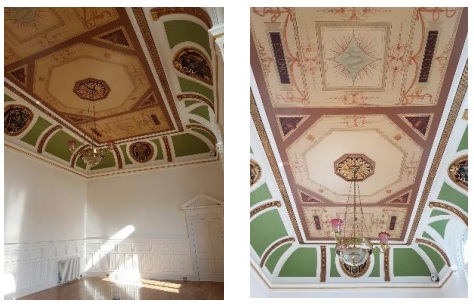
Board Room ceiling 2019. Images: Creative Heritage Consultants

The foundations were in Shude Hill, a great depth below the level of the new street; and the two storeys down there provided storage space.

Canada House: Shude Hill elevation. Image: DJP/2022

By 1890, the company had extended its premises northwards along Shude Hill, with a contrasting red-brick warehouse, and in 1938 a white Portland stone extension to the offices was built on the west side of the Commercial Street building. In the characteristic art deco style of the time, it has carvings by Philip Lindsey Clark, and is no longer connected to the original building.

The 1948 Gas Act brought together over one thousand privately owned and municipal gas companies and created twelve area gas Boards, and these offices and showroom were used by East Midlands Gas. It lasted until 1972 when the British Gas Corporation was created and moved elsewhere.

It attracted no buyers, was listed by English Heritage (now Historic England), but despite this, was identified for demolition. It survived a 1977 inquiry and was sold to a local businessman who had plans to convert it to a hotel and conference centre, which never materialised but in the 1980s, the ground floor was converted to ‘Turn Ups’ nightclub and ‘Bloomers’

The Shude Hill warehouse wing became Tower Cash & Carry. And in 1990 the building was acquired by Canadian Business Parks of Bedfordshire with plans for restoration.

The building adopted its new name, Canada House, but notwithstanding regeneration of the city, the company hit financial difficulties and the building was never developed.

Vacancy led to dereliction through rainwater ingress caused by the stripping of lead from the roof by vandals, and the theft of period fireplaces.

The council served an urgent works notice to effect repairs to the building’s owner in 1996, and ownership was subsequently secured by English Partnerships, the government’s regeneration agency.

It was most recently used as a head office by owner Panache Lingerie, with a Chinese buffet on the ground floor. It is now occupied by just one commercial tenant, who occupy the first floor of the Shude Hill wing only.

However, the future looks the brightest it’s been for many years because plans have been lodged to convert it into a new music hub.
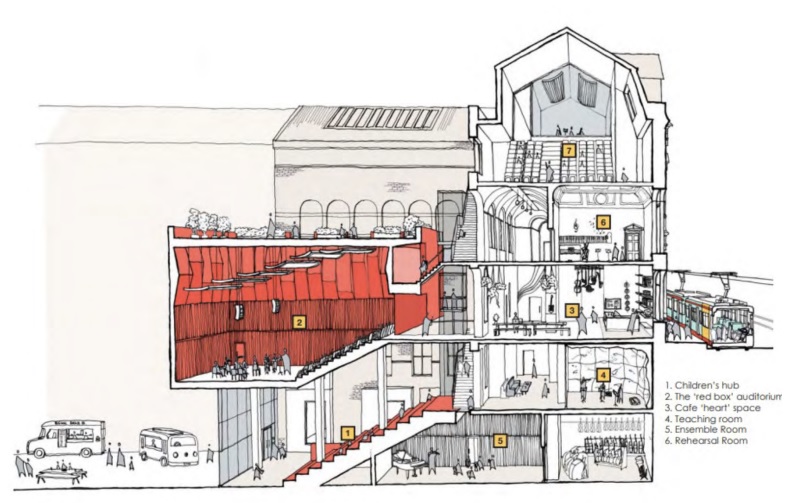
Section through Commercial Street block looking east, through new performance space building in the courtyard (Live Works, from early feasibility study). Image: Creative Heritage Consultants
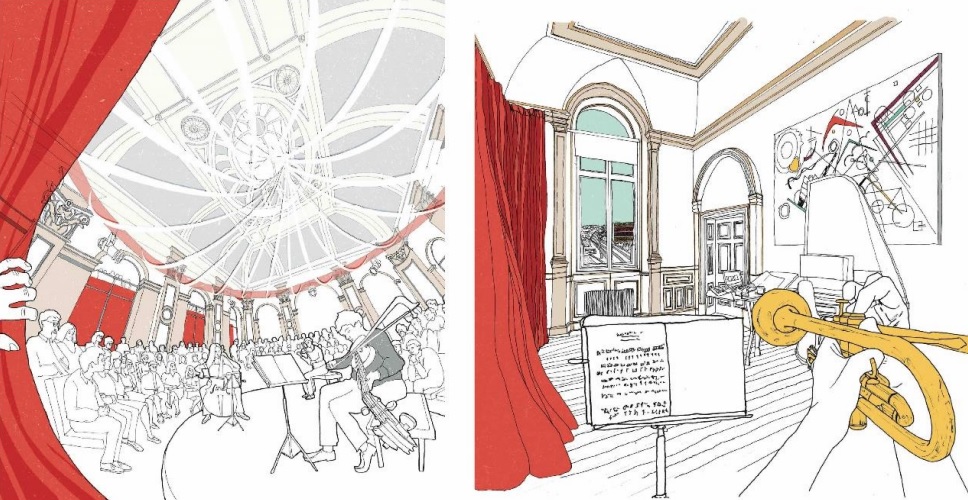
‘What if….’ Images from the Pre-Application document showing re-use of internal spaces. Image: Creative Heritage Consultants

The proposed ‘Harmony Works’ development, from Sheffield Music Academy and Sheffield Music Hub, aims to create a home for music education in the region.

Planning permission is sought for the refurbishment, change of use and extension of the Grade II* listed building.

The proposed development would include a performance space for an audience of 300, two rehearsal rooms accommodating 80 musicians, 15 smaller ensemble rehearsal rooms, 20 individual practice rooms and a substantial instrument store.

Plans also include office space, a café, breakout spaces and ancillary accommodation.
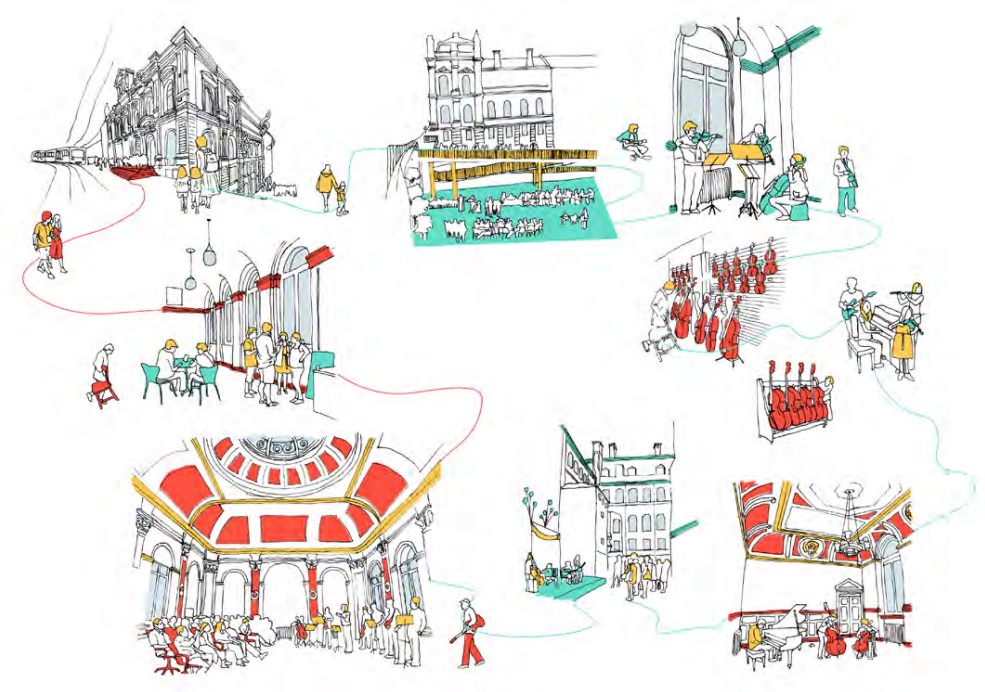
Initial concept sketches produced as part of the feasibility works carried out in 2017/2018. Image: Sheffield School of Architecture / Live works

©2022 David Poole. All Rights Reserved.
Categories
Buildings Streets

38-40 Fargate – Still here, 140 years after being built

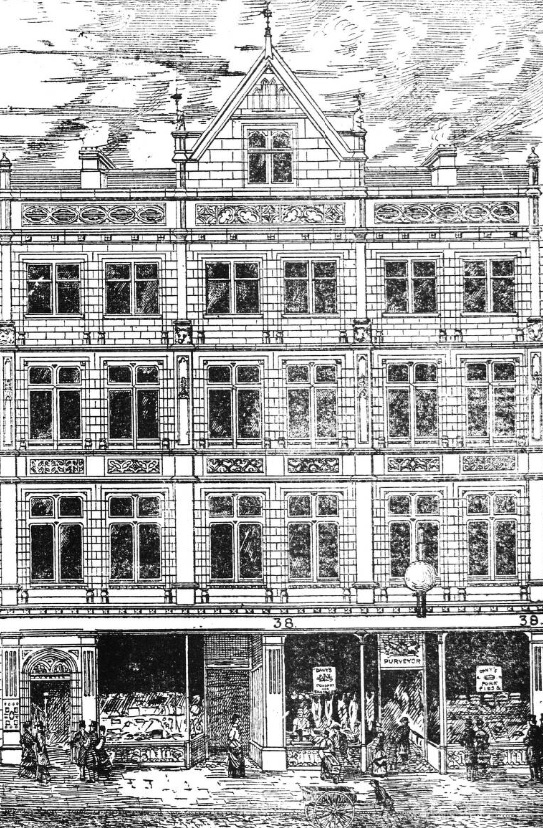
‘Fargate of the present’ declared the Sheffield and Rotherham Independent in 1884. It showed the recently constructed shop for Arthur Davy. Image: British Newspaper Archive.

We have covered this building before, but as always happens, new material surfaces.

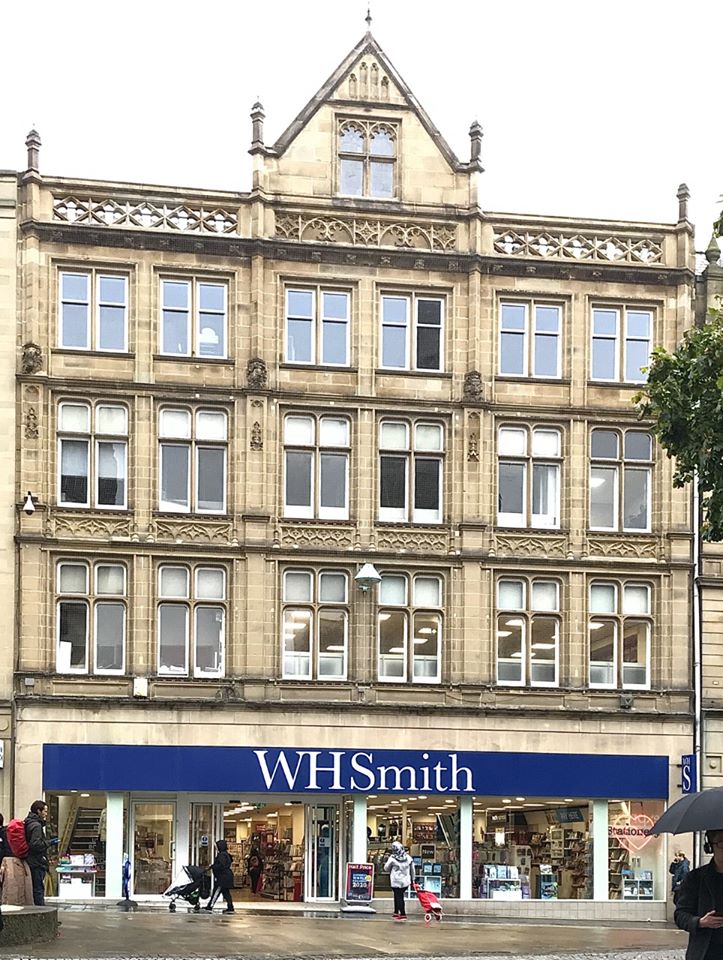
Take a close look at this sketch from 1884. It looks different these days but stands proudly as ever. This is 38-40 Fargate, erected in 1881-1882 for Arthur Davy, and described at the time as the largest retail provision store in Great Britain. Since the 1970s, it has been occupied by WH Smith.

It was erected because of Sheffield Corporation’s Street Widening Programme of the late 1800s that encompassed Pinstone Street, Fargate, and later, High Street. In modern terms, this might be considered to have been Sheffield’s original Heart of the City redevelopment.

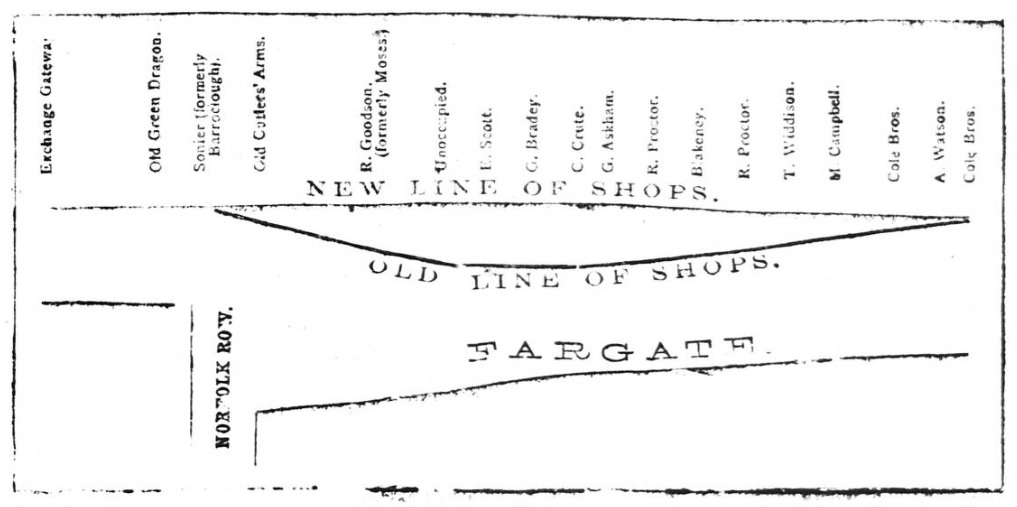
Before this, Fargate was much narrower, the street line on the north side extending much further forward into what is today’s pedestrian precinct.  In fact, there was a ‘pinch-point’ in front of old shops that previously occupied the site. When these were demolished, Arthur Davy’s building was built much further back along a straight line of new buildings, most of which survive.

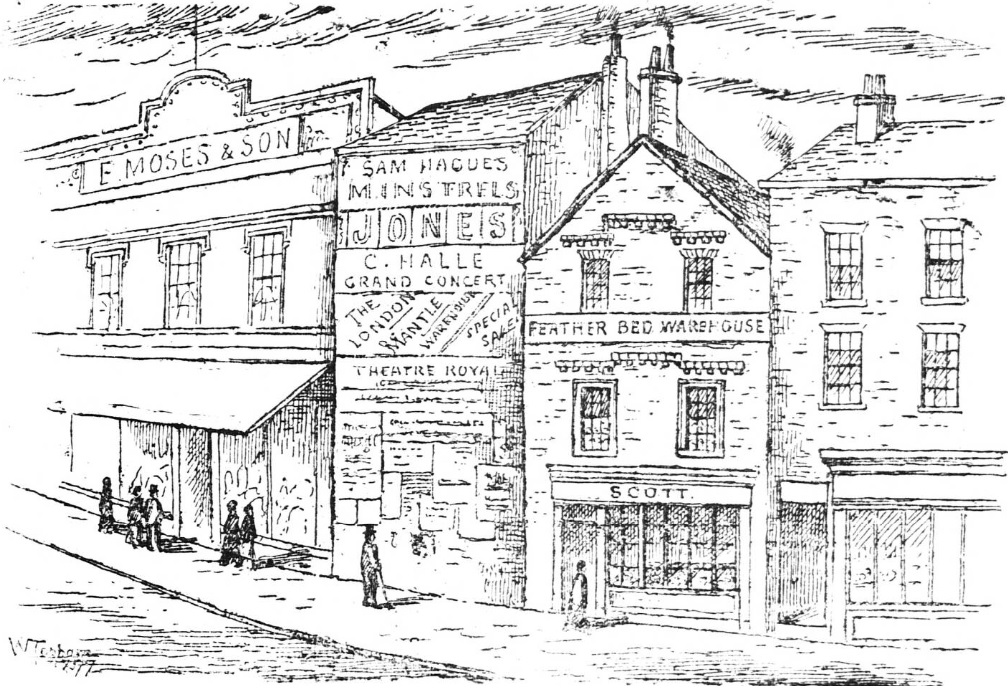
We also know which shops were demolished to make way for the new building. These were R. Goodson, a mantle shop (formerly E. Moses), a vacant unit (they even had empty shops then), E. Scott, feather bed warehouse, and George Bradley, watch and clockmaker.

Former buildings where 38-40 Fargate now stands. The old line of shops was demolished and the street made wider. Note the empty shop that was used for advertising purposes. Image: British Newspaper Archive

Pevsner describes John Dodsley Webster’s design for the new building as ‘economic handling of a late Gothic style, with carved animal heads advertising hams, potted meats and pork pies for which it was famous.’ Look carefully, these are still visible above WH Smith today.

Where stationary, magazines, and books, line the interior today, we must use our imagination as to what it used to look like.

The ground floor sales shop was 75ft long and 40ft wide, lined with Minton’s White Tiles. On the right was a counter for the sale of hams, bacon, butter, cheese, eggs, and tinned goods. On the left was the counter for pork, polonies, sausages, pork, veal and ham pies, brawn, pork, and lard. There was also a room in which to hang 50 pigs, 4000 hams, 2000 sides of bacon, besides a considerable number of polonies and sausages.

An entrance via Exchange Gateway (the small lane that exists to the left) led to a slaughterhouse, where Royal Pigs were killed, the carcases lowered through a trap door into a room below, where they were opened and dressed, and hung upon rails at the back of the shop.

Another room held the bakehouse where the crust for pork pies was made and baked in two Jennison Smokeless 2-Deckers, capable of baking 12cwt of pies per day.

It’s hard to believe, but where many of us remember WH Smith’s record department, this used to be where sausages and polonies were made, as well as the curing of ham and bacon. These were conveyed to the shop above by hydraulic lift.

In later years, the upper floors also became Davy’s Victoria Café, used for light refreshments, luncheons and afternoon teas.

Carved panels above the first-floor windows and open quatrefoils in the parapets either side of the central gable. Carved animal heads advertise hams, potted meats, and pork pies that Arthur Davy was famous for.

Sadly, Davy’s closed in 1972, and converted into WH Smith, complete with a flat canopy outside that has long-since been removed. In recent years, the shop had to close for a significant period, temporarily relocating to Pinstone Street, after roof supports failed and had to be replaced.

See the previous post about Arthur Davy here

©2022 David Poole. All Rights Reserved.
Categories
Buildings Companies

Bad businessmen, rogues, and criminals. The collapse of William Bissett and Sons

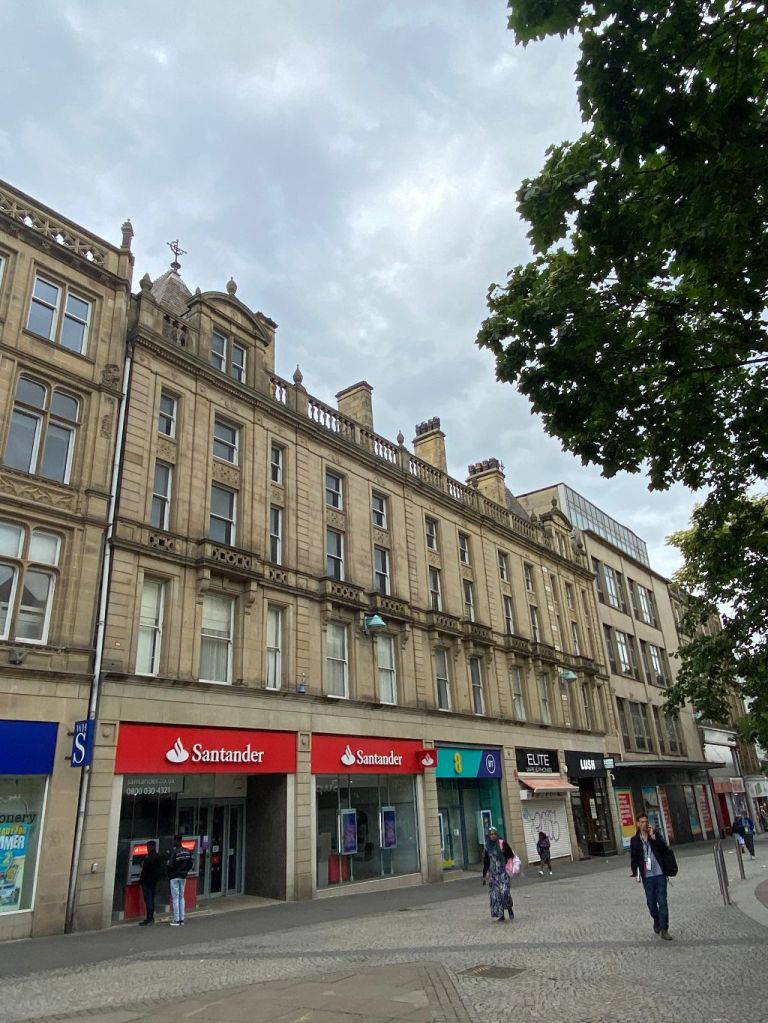
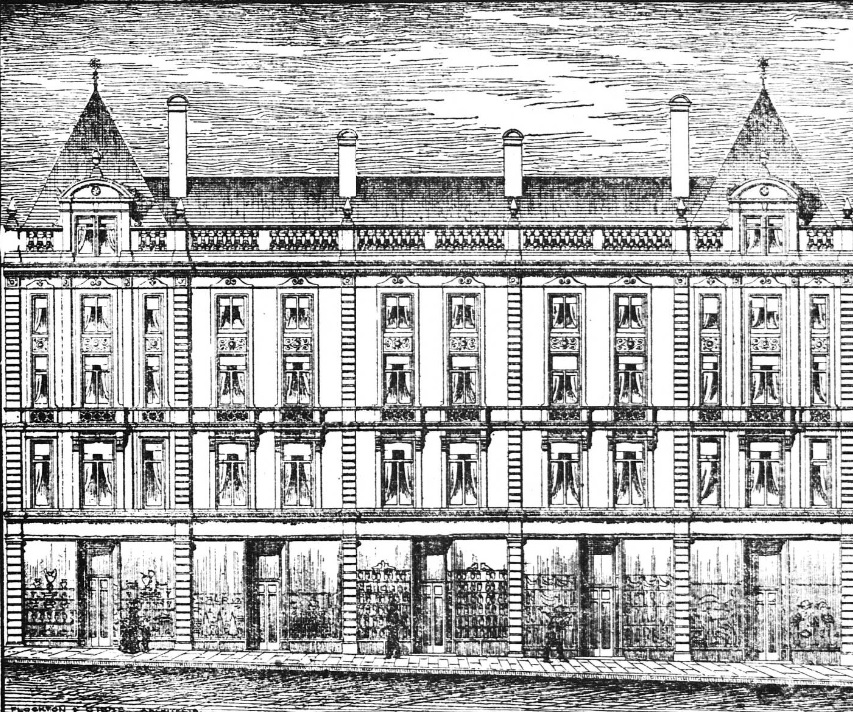
New shops erected in Fargate in 1884 for William Bissett. The architects were Flockton and Gibbs. The shops and offices still exist. See image at bottom of post. Image: British Newspaper Archive

When we look at Sheffield, the names of two construction firms – George Longden and Henry Boot – often appear. However, some of our well-known buildings were built by a company that has been erased from history. And perhaps for good reason.

William Bissett was a self-made man. Born in Pilsley, Derbyshire, he came to Sheffield and was apprenticed to Primrose and Company, where he acquired a practical knowledge of plumbing and glazing.

Afterwards, he set up on his own on West Street, adding further trades such as gas-fitting, painting, paperhanging, and general decorating. The success of the business allowed him to take on a partner, John Edwin Elliott, and move to more extensive premises on Devonshire Street, used as offices and showrooms, and workshops at Wilkinson Street, Pinfold Street, and Mary Street.

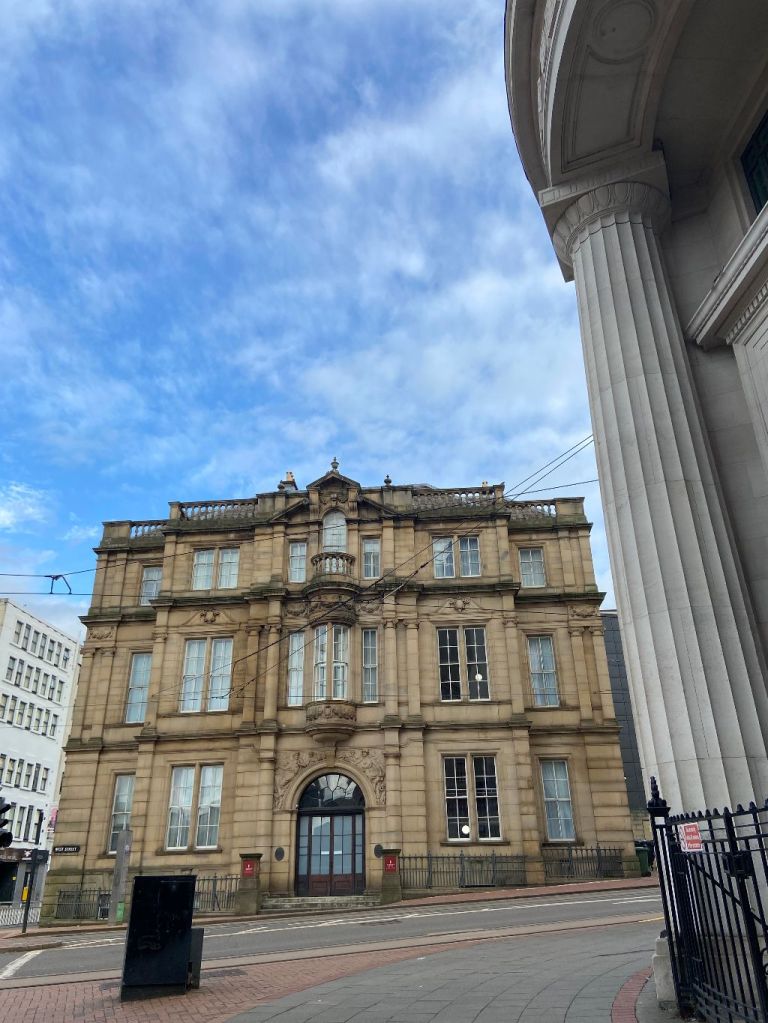
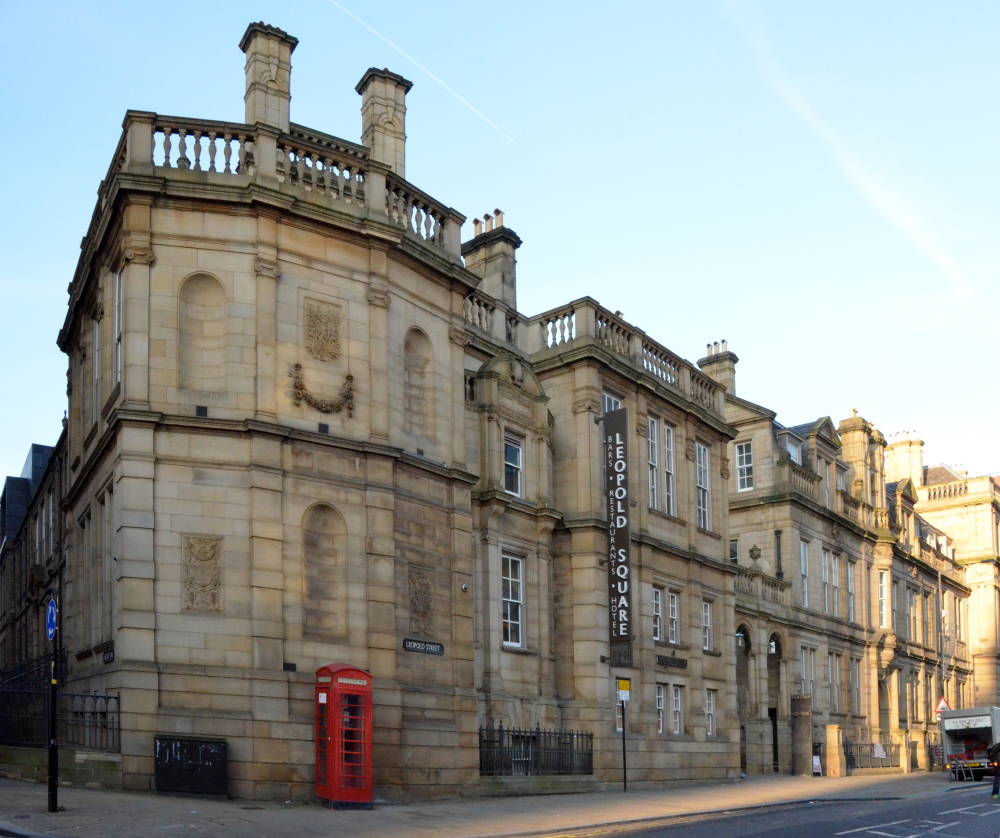
He launched as a general contractor and builder and managed to obtain important contracts in Sheffield and Birmingham. Amongst the earliest of his employers was Mark Firth, who entrusted him to enlarge his residence at Oakbrook, but this work was dwarfed by the magnitude of his public contracts, the most important of which was the Central Schools, School Board offices, and Firth College (now forming Leopold Square and Leopold Hotel).

Firth College. Now part of Leopold Hotel. Image: DJP/2022

When Sheffield Corporation started its Street Improvement Scheme in the 1870s, Bissett was extensively engaged in the erection of palatial; new business premises on Fargate and Pinstone Street, and himself acquired several valuable sites.

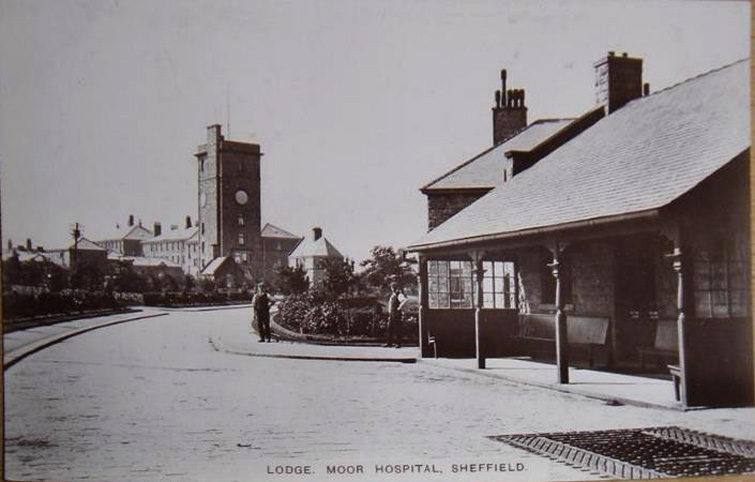
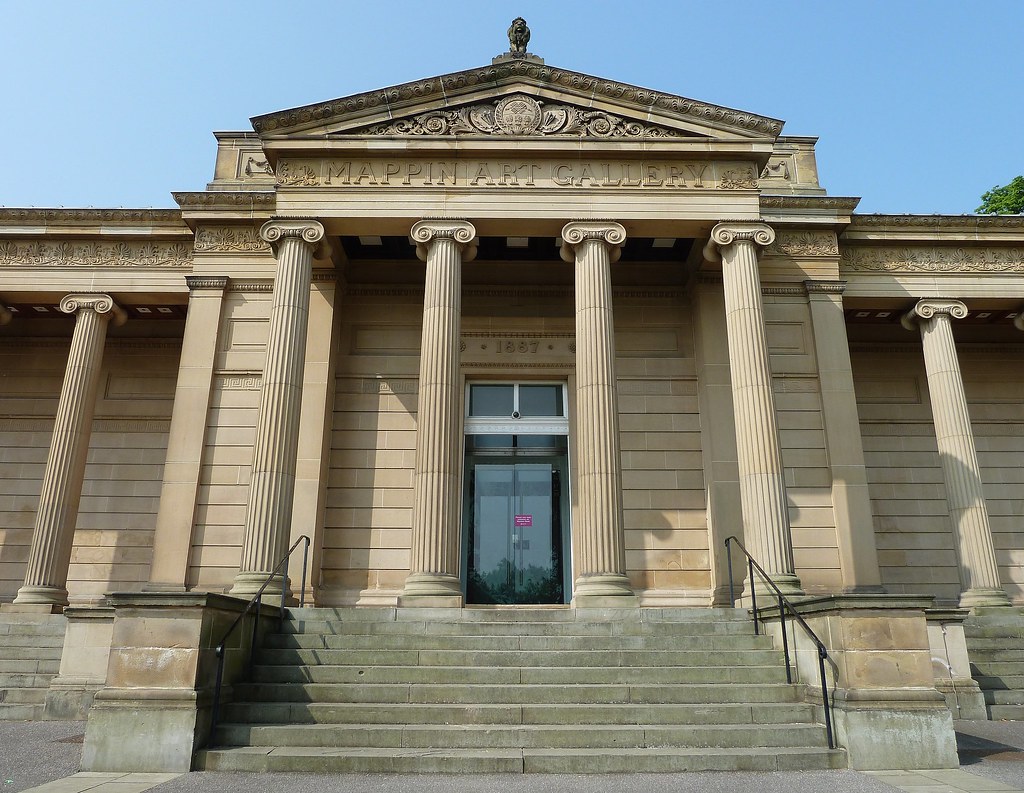
Other building work included Weston Park Museum, Mappin Art Gallery, Cockayne’s department store in Angel Street, and Lodge Moor Hospital.

Mappin Art Gallery

For some years, Bissett was a member of Sheffield Town Council for the Upper Hallam Ward, serving on the Buildings, General Purposes and Parks, and Highway Committees. Far from me to speculate that the success of his company might have been down to council connections, but these weren’t transparent days.  However, he resigned in 1884 to allow his firm to undertake the Sewage Works at Blackburn Meadows.

Unfortunately, Bissett suffered a stroke in 1886, and died at Rock Mount, Ranmoor, in 1888. His partnership long dissolved, the business was split amongst three sons, but hereon, the affairs of William Bissett and Sons unravelled.

In 1889, whilst work was underway to build buildings for the YMCA (Carmel House), on Fargate, a petition was served against his three sons.

“The acts of bankruptcy alleged against the debtors respectively are that William Crellin Bissett and Lawrence Colgrave Bissett, did, on or about the 28th of November, 1889, with intent to defeat or delay their creditors, depart from their dwellings or otherwise absent themselves; and that the said James Francis Bissett did, on the 4th day of December, file in the Sheffield Court a declaration admitting his inability to pay his debts.”

It appeared that some of the contracts did not turn out very successful and the firm had lost considerably by them. A year before, a destructive fire at the Wilkinson Street premises had also caused considerable loss. Stories about the firm’s financial position had circulated for months and everything that could be offered as security, even their interest under their father’s will, had been mortgaged.

Former School Board Offices on Leopold Street.

But the situation took a grimmer turn.

Apparently, the state of affairs was only known to the brothers in Sheffield, William and Lawrence, while James, in Birmingham, had been kept ignorant. The first he knew about it was when he received a letter from them bearing a Paris postmark and informing him that they had absconded.

James immediately came to Sheffield and found that the firm was in a state of financial ruin. From inquiries he learned that both William and Lawrence had been about the business on the Thursday morning, and that early in the afternoon they had left for London. They travelled to either Dover of Folkstone the same evening and caught a boat to Paris. The assumption was that they had then gone to Spain.

Before they left, they had received a cheque for about £4,000 to which debt they obtained advances. They cashed the cheque, took the proceeds, and with them went the petty cash books and private ledgers. In the end, it was determined that the company owed creditors about £34,439 (about £4.7m today).  

James, left to deal with his brothers’ dirty work, and the discovery that they been living way beyond their means, was absolved, and eventually released from bankruptcy.

However, the whereabouts of William and Lawrence remained a mystery and by all accounts never returned to England.

Until that is, a notice headed ‘Bissett v Bissett’ appeared in The Times in 1897, whereby Agnes Amy Bissett filed for divorce against her husband Lawrence, by reason of his adultery and desertion.

Lodge Moor Hospital was built by Bissett in 1888 as an isolation hospital.

On November 28, 1889, Lawrence had told her that he was going to London to see his solicitors about business, but he never returned, and the next she heard from him was through a letter he sent to her father from Paris, in which he said: –

“Will you please, on receipt of this, go to Amy at once. Our affairs have gone wrong, the bank having turned on us, and to save a little money from the wreck, I have left England for a time. I may have done wrong, if I have, God forgive me. I have no time for more, as the train goes.”

In a subsequent letter he wrote:-

“We had a certain overdraft from the bank, and all went well. They have suddenly shown us that they will not continue it, and nothing but bankruptcy, without a chance of saving anything, stared me in the face, so I thought it best, rightly or wrongly, to leave England with what money I could and try my fortune in another land.”

It was subsequently found that he had gone to San Antonio, Texas, and as a bankrupt, the Official Receiver had instructed the Post Office to send all letters to them.

In this way, another letter came to light from a young lady called Amy Sebright. This letter announced to him that she had given birth to a boy called Cyril Laurence Bissett. It transpired that the young lady had been engaged at the Theatre Royal during the pantomime season of 1888-1889, and that she had met Lawrence, and afterwards lived with him ‘maritalement’ at Manchester, Brighton, and elsewhere. When he was leaving England, he had asked her to accompany him, but she had declined to do so

His wife received another letter from him at the end of 1890 asking for her forgiveness, and acknowledging his guilt, but said nothing about returning.

The divorce was granted.

“Here the husband had left his wife with a falsehood on his lips, and there could be no doubt of his intention to desert her after what had transpired as to his relations with the actress from Sheffield.”

We do not know the end outcome for William or Lawrence (investigations for another day). Bad businessmen, rogues, and criminals. Only James came out of the story with his reputation intact. Remember this story the next time you visit Leopold Square or Weston Park Museum.

Modern day view of the shops that William Bissett built on Fargate. Most of the offices above are now empty. Image: DJP/2022

©2022 David Poole. All Rights Reserved.
Categories
Late Night Tales Streets

Charter Row – while you were sleeping last night

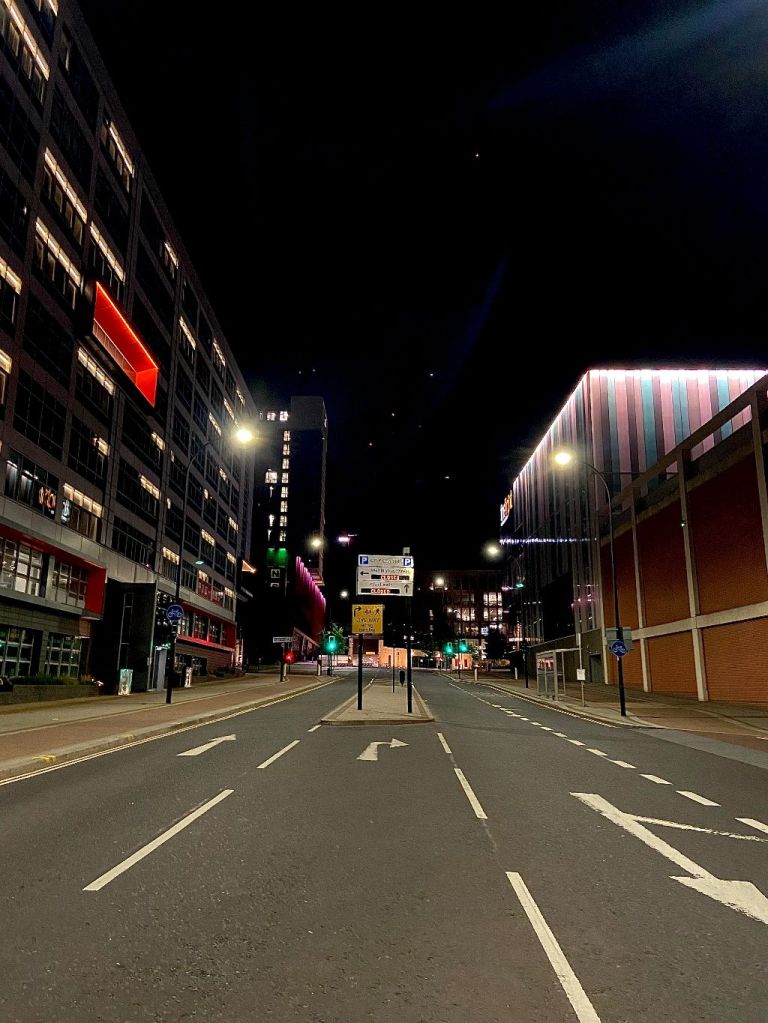
Charter Row, Sheffield. Image: DJP/2022

Charter Row, 3am. This is a relatively modern road, created in the 1960s when Sheffield, like other cities, tried to separate cars from pedestrians.

According to Harman and Minnis in Pevsner’s Architectural Guide, the inner ring road (a revival of the Civic Circle from 1945) was only partly completed, comprising Arundel Gate, Eyre Street, and Charter Row, while St. Mary’s Road and Hanover Street were upgraded to form an outer ring.

Charter Row runs roughly along the course of Button Lane that ran between Moorhead and the junction of Moore Street and Fitzwilliam Street. It was heavily bombed during the Blitz of 1940 and remaining slum housing and workshops demolished.

©2022 David Poole. All Rights Reserved.
Categories
Buildings

Two hundred years of history about to be replaced with apartments

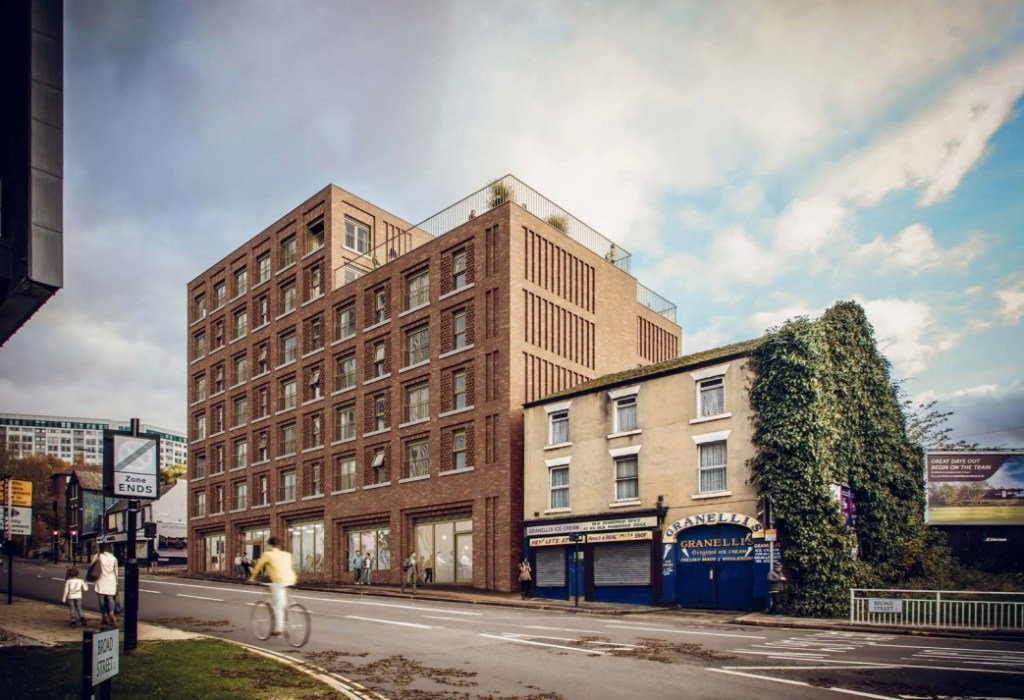
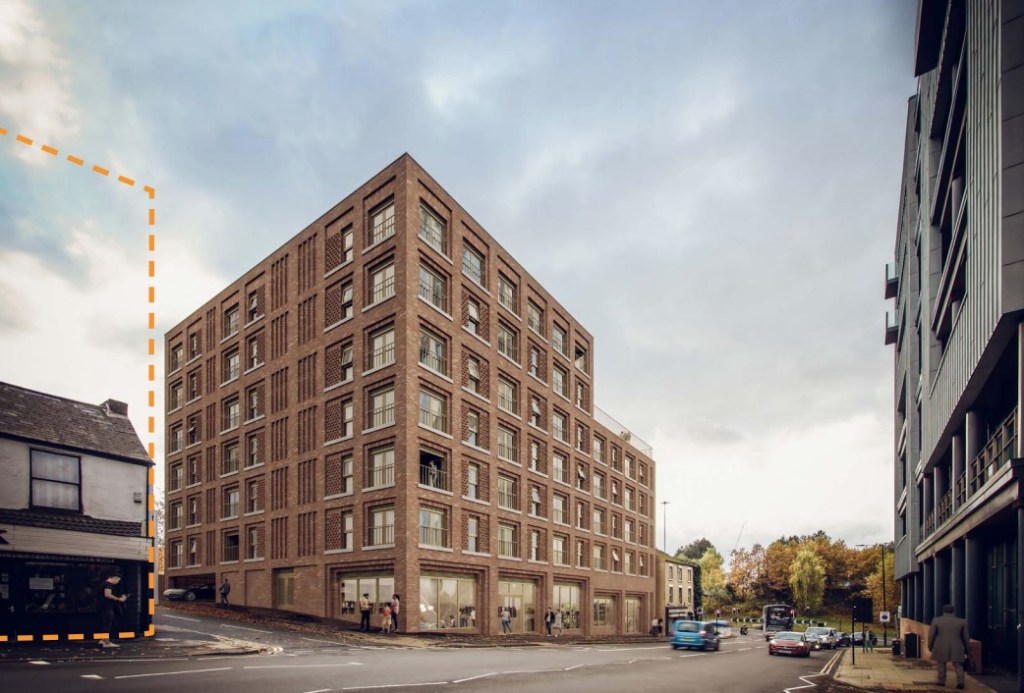
Broad Street proposal. Image: Falconer Chester Hall

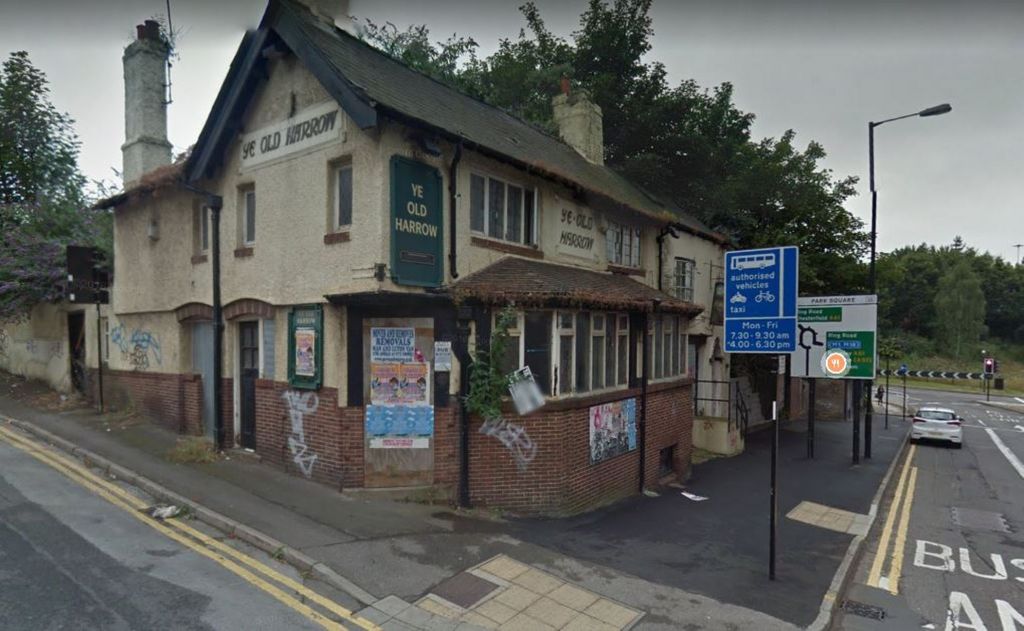
Once upon a time, in 1822, a public house opened on Broad Street, Park, called The Harrow, containing an adjacent cottage and workshops. It was held on lease under the Duke of Norfolk for ninety years. No doubt it was named after the heavy agricultural tool dragged over ploughed land to break up clods.

By the 1850s, it had been enlarged and stabling added, but the character of the pub had changed entirely. Now called ‘The Old Harrow,’ it briefly lost its licence in 1852 because of the misconduct of its tenant, James Potts.

The charm of the area was lost, with dense back-to-back housing spreading across the Park district, and providing a raft of thirsty drinkers for the pub, but still attractive enough to show the celebrated prize pig ‘Champion’ in 1858.

There were ups and downs at The Old Harrow: successes, failures, bankruptcies, deaths, burglaries, and numerous inquests held on persons who had died in the vicinity.

The slum housing was subsequently replaced with the sprawling Hyde Park and Park Hill flats, but to keep the allure of days past, the pub became known as Ye Old Harrow.

But customers eventually dried up, and the pub closed in 2008, falling into disrepair, and was victim of an arson attack in 2019.

Ye Old Harrow (just about) remained standing, gaining a reputation as Sheffield’s most haunted pub, and only entered by those with their wits about them – urban explorers who captured the blackened interiors on film.

Ye Old Harrow. This year marks two hundred years since it was built

A year ago, the pub and accompanying land was put up for auction with a guide price of £225,000, and its prime location near to Park Hill, Park Square, and the city centre, meant it was quickly snapped up.

Now, D&S Properties SPV has submitted a full planning application for the construction of a new building of up to seven storeys. It will mean the demolition of Ye Old Harrow and its replacement would comprise 55 one-bed and two two-bed private rented sector (PRS) apartments, together with an office and residential gym on the ground floor.

The good news is that Granelli’s ice cream and sweet shop, at the bottom of Broad Street, remains unaffected.

Broad Street proposal. Image: Falconer Chester Hall

©2022 David Poole. All Rights Reserved.
Categories
Streets

Snig Hill – the mystery in its name

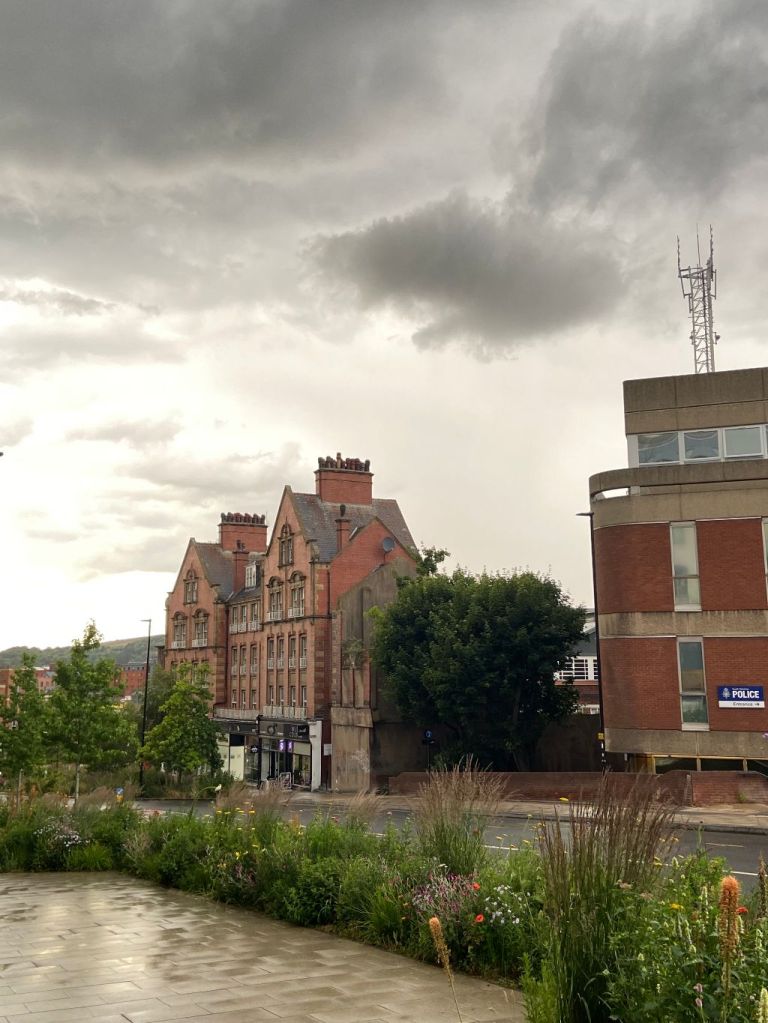
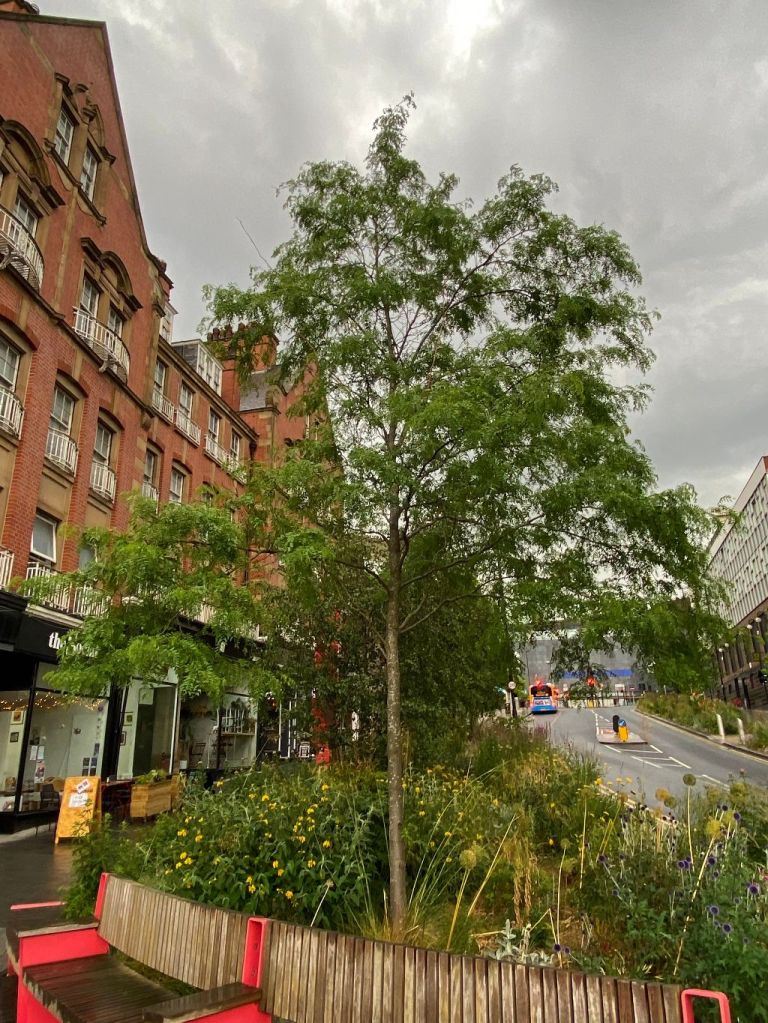
Snig Hill, looking down towards Bridge Street. Snig Hill Police Station can be seen on the right. Image: DJP/2022

Mention Snig Hill and most people will attach the name to the police station that has stood here since 1970. But Snig Hill refers to the sloping road between the bottom of Angel Street and West Bar. This was once a bustling thoroughfare but has been slowly downgraded because of traffic flow changes.

It is not an unpleasant place. The ‘grey-to-green’ project has seen the introduction of trees and wildflowers to re-connect the Castlegate area with the rest of the city centre and re-use redundant highway. And it soaks up rainwater that would have flowed into the nearby River Don, therefore reducing the risk of flooding.

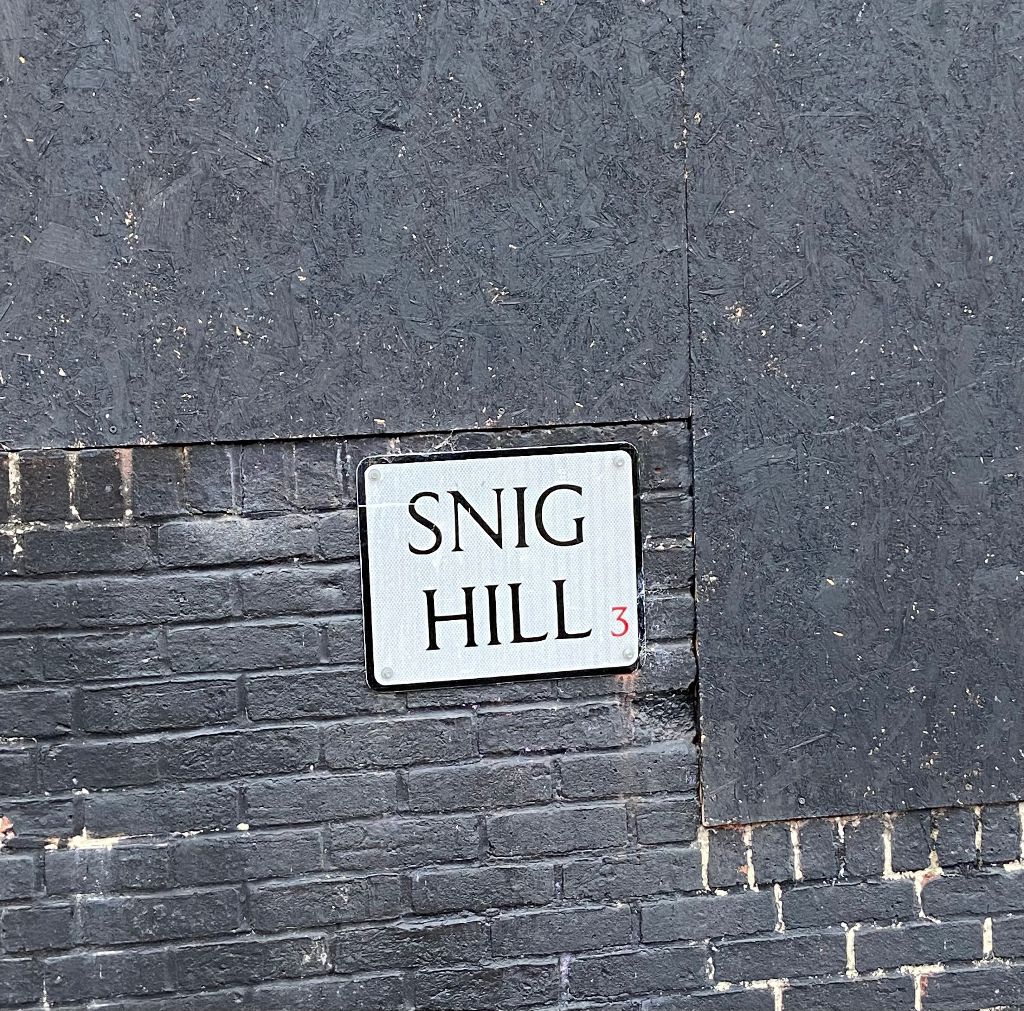
The mystery about Snig Hill is how it got its name. It has mystified Sheffielders for centuries and various suggestions have been put forward.

Snig Hill, street sign. Image: DJP/2022

Once upon a time, there was a corn mill at Millsands, next to the River Don, and to access this, people used a packhorse track running between high banks behind gardens of old houses that stood on what is now the right hand side of Snig Hill going down the hill.

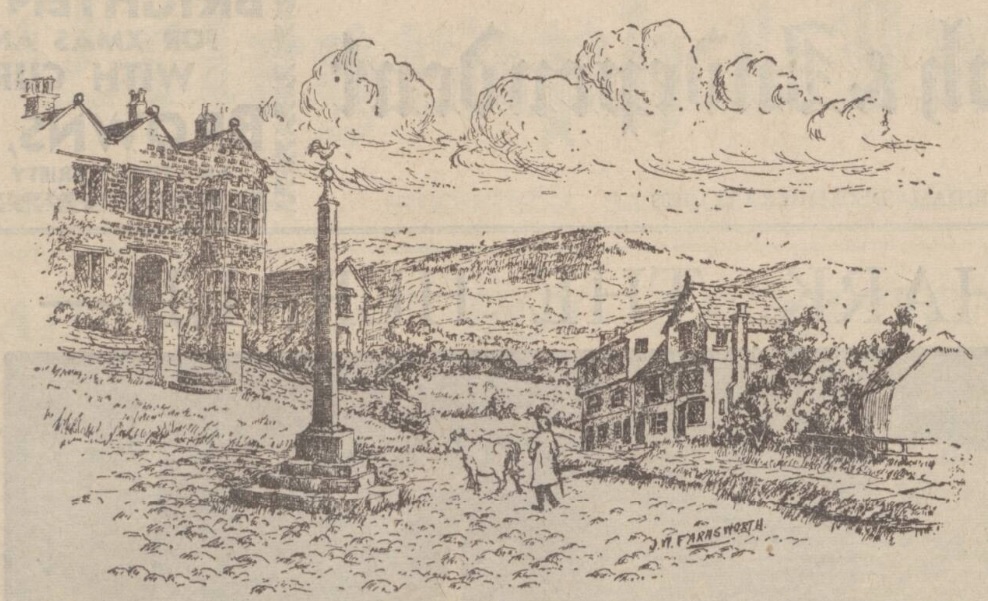
According to J.W. Farnsworth in 1939, this became so waterlogged in wet weather with rain and the sewage that drained from the Beast Market, that it earned itself the name of Water Lane (think, Hen & Chickens, now Castle Green).

When Snig Hill was made and cobbled, the ancient lane fell into disuse, and several townsmen built houses. On the opposite side, at what became the Black Swan Hotel, was Costnough Hall which stood just below the Irish Cross at the junction of Angel Street.

The hall disappeared, and Snig Hill became a narrow street, and the projecting upper stories of the houses gave an appearance of still greater narrowness.

J.W. Farnsworth’s sketch of old Snig Hill. Costnough Hall is seen on the left. Image: British Newspaper Archive

And so, to the name. In dialect English, of the word ‘snig’ there were five meanings: (1) To cut or chop; (2) to sneak off; (3) to drag over the ground; (4) close and private; (5) a small eel.

One suggestion was that ‘Snig Hill’ derived its name from the fact that it was the incline up which the ‘trees’ were ‘snigged’ from the lower area (the area down to the banks of the river, say) which no doubt was very well wooded at one time.

A ‘snig chain’ was also the chain used for hauling timber or attaching an extra horse to a wagon. At our Snig Hill, it was said that a horse was once kept to ‘snig’ up the hill any wagon that paid a small fee.

But Sidney Oldall Addy in ‘A Glossary of Words used in Sheffield,’ published in 1888, thought differently.

“To snig a load of anything up a hill is to take up the load in two or more instalments. For instance, a load of timber might be left at the bottom of the hill. Each portion brought up would be called a snig. The incline of the hill is not great, and the hill is small. Snig Hill thus appears to mean Little Hill. I think this is really the meaning, there being no proof that the timber was ever dragged up the hill in instalments.”

But he contradicted himself in ‘The Hall of Waltheof,’ published in 1893.

“The word snug, meaning lying close and warm is identical with the word snig used in this street name. It is not the hill in this case, which is snug, but the narrow old street, and had it been Snicket Hill, the meaning would have been clear.”

Others thought that it took its name from the practice of putting a ‘snig’ or length of wood through the back wheels of carts going down the hill to act as a brake.

Snig Hill, looking towards Angel Street. Image: DJP/2022

Willis Crookes, of Normandale, Loxley, said in 1930 that at the Bridge Street end  of Snig Hill, there was a depression in the road, where a pool once existed, and which was really a backwash of the River Don. He told of his boyhood (the 1870s), when he often talked to old men who told him that in their young days it swarmed with eels.

When anybody wanted a fish dinner they took a long stick with a cleft in it, pushed it into the mud of the pool, and dragged out an eel. This useful form of diversion was called ‘snigging.’

A far more likely explanation came about the same time from somebody who said that an old relative had been a stagecoach driver between Leeds and Sheffield. Among stories passed down in his family was one to the effect that the flour ground at Millsands was put into barrels and were ‘snigged up t’hill.’ He suggested that ‘to snig’ was to roll the barrel up the slope and put a under it.

However, it seems that the true meaning of ‘Snig Hill’ may never be known.

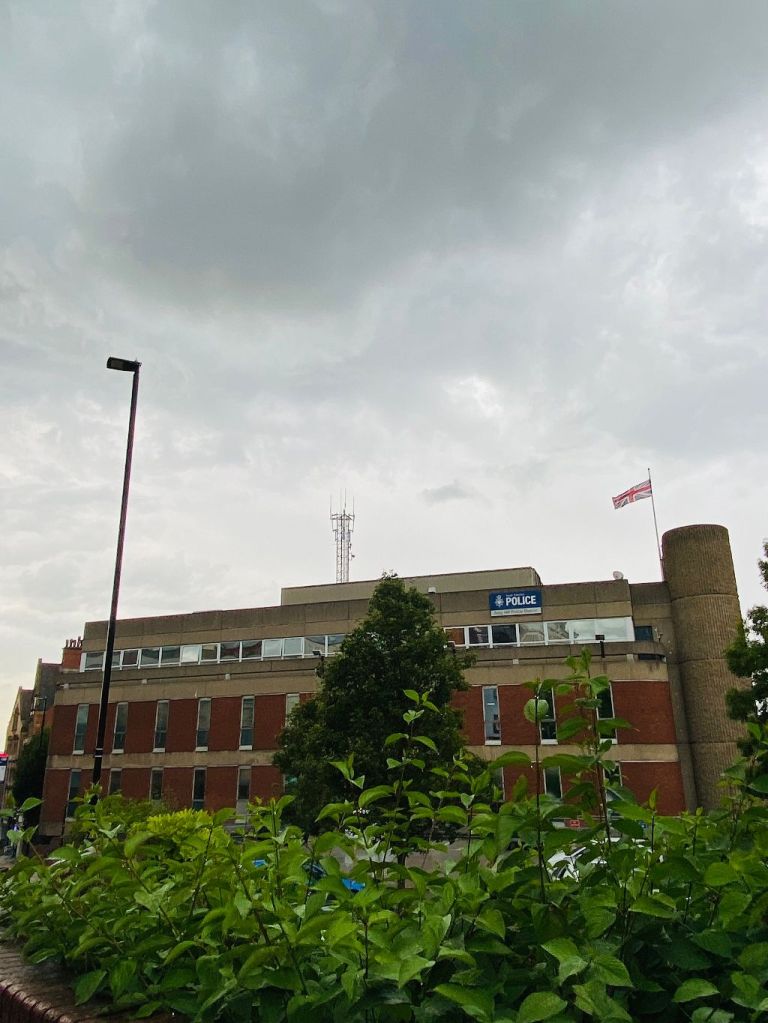
South Yorkshire Police at Snig Hill. It was originally built by B. Warren, Sheffield’s Planning Officer and Architect, as force headquarters for Sheffield and Rotherham Constabulary in 1970. It is now the police station covering Sheffield city centre. Image: DJP/2022

©2022 David Poole. All Rights Reserved.
Categories
Buildings

Upper Chapel – serenity in the city centre

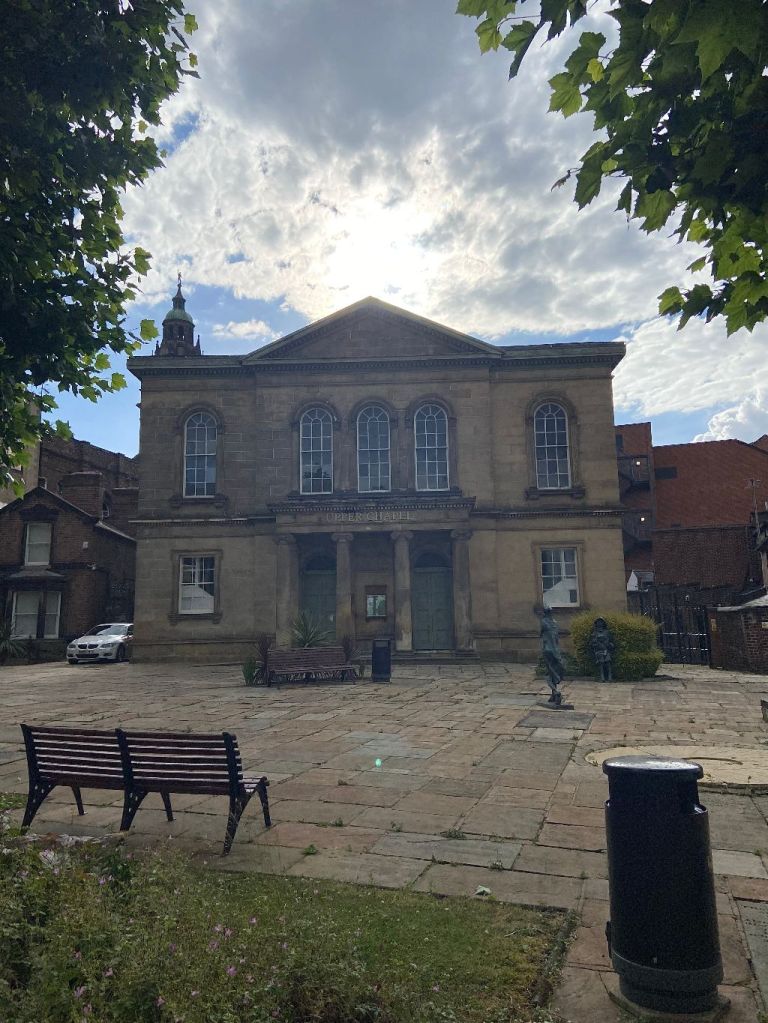
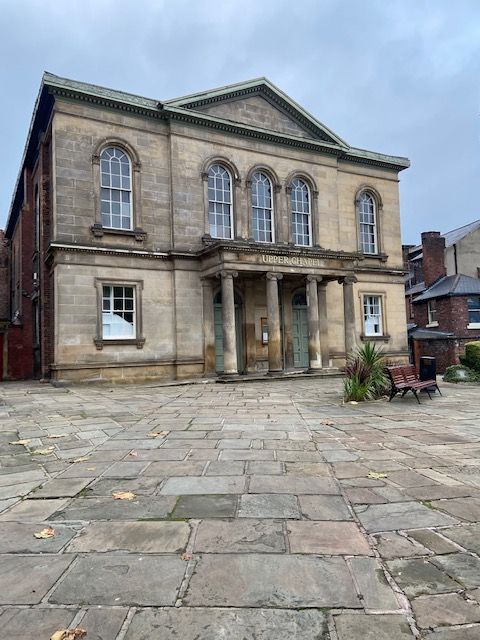
Upper Chapel, Norfolk Street, Sheffield. Image: DJP/2022

Once upon a time, this building was on the edge of town, but looked very different to what it does now. And it faced Fargate, not Norfolk Street, as it does now.

Upper Chapel is Sheffield’s oldest Nonconformist chapel. It was built in 1700 and the original brick wall sides still form part of the building.

The congregation was formed by followers of James Fisher, Vicar of Sheffield during the Commonwealth, after he was ejected in 1662 in the Great Ejection, during the restoration of the monarchy, for refusing to subscribe to the Act of Uniformity. Around a tenth of his parishioners followed him in becoming Dissenters, and several more splits ensued, but by the 1690s, the dominant group of non-conformists was led by Timothy Jollie.

Prior to this they probably met for worship in each other’s houses, and the worship grew to such an extent that the faithful few in Sheffield ventured to build a place of worship called New Hall (at the bottom of Snig Hill) – the first Dissenting meeting house in Sheffield.

The congregation grew to such an extent that a bigger chapel was built that faced ‘Farrgate’ and was called New Chapel, the back of it looking across Alsop Fields.

On the death of the Rev. Timothy Jollie in 1714, its members numbered 1,163, the largest group in Yorkshire, and the Trustees of New Chapel appointed the Arian John Wadsworth, causing some dissenters to breakaway and build a new chapel nearby. This was Nether Chapel that gave modern-day Chapel Walk its name.

With two chapels so close to each other, New Chapel became known as Upper Chapel, being farther up the hillside, and in its grounds was the tombstone of Timothy Jollie with the inscription, ‘an eloquent and Evangelical interpreter of the word of God, a man divinely gifted to preach the fundamentals of Christian doctrine.’ The grounds, which form the present day courtyard, were originally used as a burial ground until 1855, when a law was passed preventing further town centre burials.

By the 1840s, Upper Chapel was described as having ‘a dingy aspect externally, and peculiarly inconvenient in the arrangements of the interior.’

In 1847-8 it was completely rebuilt by Sheffield-architect John Frith, a member of the congregation, the style of architecture being ‘Italian, simple and plain in its detail.’

His biggest change was to extend the building to the east and reverse the building to face Norfolk Street.

The principal front, built of cleansed stone, was divided into three compartments, the centre one being composed of an Ionic portico of four columns, over which there were a group of circular-headed windows. It had a slight projection and was surmounted with a pediment. The flanks of the chapel were raised eight feet higher than the former building with architrave moulding, frieze, and cornice, that ran on one level around all the outer walls, with exception of the pediment in the principal front.

The body of the chapel was divided into three compartments by two aisles, commencing at the entrances and terminating on each side of the pulpit and communion table.

A three-sided oval gallery was introduced, the columns supporting it set five feet back from the line of the gallery front and allowing a view of the minister from every part of the chapel.

The interiors were enhanced by later additions and fittings, and according to Pevsner, included pews in1882, the vestry in 1900, and an organ console and central pulpit elevated on Doric columns in 1907, all by Edward Mitchell Gibbs.

From 1890 onwards, 16 stained glass windows were installed, including one re-installation in 2001 of a window found in storage under stairs. Nine of them, all on the ground floor, were designed by Henry Holiday. Further windows were added by Hugh Easton (Liberty and Truth), in 1948, installed either side of the pulpit as replacements for bomb damaged windows.  

Upper Chapel is now a member of the General Assembly of Unitarian and Free Christian Churches, the umbrella organisation for British Unitarians. Its trustees still own many freehold properties in Sheffield, and the chapel is connected by staircase to Channing Hall on Surrey Street.

In the courtyard are three sculptures by George Fullard – ‘Running Woman,’ ‘Mother and Child,’ and ‘Angry Woman,’ all sited in 1985.

Upper Chapel, Norfolk Street, Sheffield. Image: DJP/2022

©2022 David Poole. All Rights Reserved.
Categories
Steelopolis

“There is no building or civic space which can make the heart gasp or the spirit sing.”  

Fifty years may seem like ancient history to some. But to others, fifty years is well within living memory. In 1972, The Guardian published a special report on Sheffield.

A city on the brink of change,” was how city-based writer, G.R. Adams, described Sheffield, but has it really altered half a century later?

Let’s go back in time to see what the writer said: –

“Before this article was published, I was believed to be a true son of Sheffield. I could appear knowledgeable about goits, leats, ingots, and lady buffers. I would examine cutlery with discreet ostentation in foreign dining rooms. I had cultivated a modest paranoia about Leeds and took no interest in the affairs of Manchester or Birmingham. But now I must confess that I was not born in Sheffield, not even in Yorkshire, but in Sussex. I can therefore look at Sheffield with some detachment.

“The truth is that nothing very much has ever happened in this city. There have been no great confrontations between kings and princes, no epoch-making political drama; no great painting, literature, or music has ever been inspired in this neck of the woods. The city only rose to prominence during the Industrial Revolution of the nineteenth century. While great events were happening elsewhere, Sheffield was producing the iron and steel sinews which made those events possible – the expansion of railways, bridges, harbours, and industrial machinery. Two World Wars were fought with iron ships, steel tanks, and armaments. Statesmen who took part in the great debates of history looked over their shoulders to Sheffield for the means to carry out their grand designs.”

A fair assessment, but ‘great music’ did emerge from Sheffield. Off the back of Thatcher’s Britain, the 1980s created an explosion of talent – Cabaret Voltaire, Human League, ABC, Heaven 17, Deff Leppard – and the days of Jarvis Cocker, Pulp, and the Arctic Monkeys, came later. These musicians inspired a generation like me.

“The foundation of this fame lies in the industrial Don Valley,” wrote Adams. “Attercliffe is still an appalling place of mean-spirited houses of grey slate on blackened brick and open back yard privies. All are crowded around and overshadowed by the black hulks of dying industrial buildings. Many of the houses have been pulled down but enough remain to house many of the immigrant families and those below the poverty line. The road to Wigan Pier ran through these terrible streets. They are the conscience of the city and while one child lives in this wasteland, no councillor or citizen can sleep at peace.

“This is the spur of the great rehousing programmes that the city has undertaken. Between the wars, the extensive Manor, and Firth Park estates were built. At that time, they were sufficiently better than Attercliffe to be acceptable as an improvement, but now they are joyless graveyards of houses which will require replacement to higher standards.”

What can we say about Attercliffe? Since the article was written, the houses disappeared, and so did industry. The World Student Games in 1991 promised the great revival. Much was bulldozed, and Sheffield Arena and Don Valley Stadium were built, but even the latter wouldn’t survive. Ever since, Attercliffe has remained a lost cause, a sorry link between the city centre and Meadowhall, and a down-at-heel suburb that laments the golden days. And, while the people have returned to the city’s other old residential districts, it could be that after all this time, Attercliffe might finally become Sheffield’s next regeneration model.

In the interim, the Manor estate attracted unwanted publicity, the subject of a miserable TV documentary, but it eventually went the same way as Attercliffe. Widespread clearance and swathes of empty land appeared, but new builds have slowly brought the area back to life. Alas, Firth Park remained much the same, and is probably still suffering.

Back in 1972, Park Hill came under scrutiny, but even the writer could not have anticipated that the flats complex would be listed before suffering its unglamorous decline. Had it not been listed, it might not have risen, phoenix-like, into a citadel for young professionals, and still in the process of emerging from its slumber.

“Park Hill is a city within a city and dominates the Sheaf Valley like a castle above a moat. A second generation of families no longer remember the bitter controversy of its birth and the endless social surveys. Banks of trees and grass now cover the scars of the railway slopes and cuttings. Few grandparents now recall the previous squalor and degradation, where the Mooney gang dominated the sordid streets with razor and terror and Charlie Peace crept out at night.”

Those grandparents are long-dead, and their grandchildren are now grandparents themselves, and probably live in the suburbs watching the unrelenting spread of Sheffield’s two universities.

“On the hill, some of the best buildings in the city have been commissioned by the university. They still remain largely unrelated to each other, but the recently completed spacious underpass beneath a major road linking two parts of the campus is an imaginative solution.

“In the valley, the metamorphosis is taking the place of the Polytechnic from the chrysalis of the old Technical College. The span and complexity of its spreading wings are being watched with awe.”

The University of Sheffield advanced towards the city centre, absorbing houses, factories, churches, as well as the Jessops Hospital for Women, and almost the entire area around it. It grew to become one of Sheffield’s biggest employers, creating space-age buildings, and made the city appear incredibly cosmopolitan.

Now it is the turn of Sheffield Hallam University, the former Polytechnic, with aspirations to flatten and recreate former manufacturing areas and provide a welcoming gateway to the city.

“The new Crucible Theatre is an exciting building with its foyers painted so costly gay. It could be a place of real artistic achievement if the city will support it.”

The city didn’t support it, at least not in the beginning, but far from being the ‘white elephant,’ it was saved by snooker and then by the very thing it was built for – drama, musicals, shows, and pantomimes. The Crucible’s been joined by the Lyceum Theatre, empty and redundant in 1972, and is regarded by critics as the best producing-house outside London. Its foyers painted so costly ‘gay’ resonate with its recent multi-million pound success story – Everybody’s Talking About Jamie – doing good business in the West End and made into an Amazon film. Try explaining Amazon to our seventies’ forebears.

“There are many fine buildings of power and character in the city but few of real grace and elegance. There is no building or civic space which can make the heart gasp or the spirit sing.”  

And this has been the case ever since, but times are quickly changing, and nobody could ever have anticipated, nor waited for, the long-overdue Heart of the City redevelopment.

“But now the city is facing new challenge to its skills. There is no more land left within its past boundaries to meet the new housing, industrial, and social needs of a rising population. The major expansion of the city has been channelled into Mosborough to the south-east. Here it is planned to increase the local population by 50,000 within 15 years. It is a bold and ambitious plan, based on a series of townships of 5,000 each, linked by a grid network of roads fed from a new expressway to the heart of the city. The problems of implementing this explosive growth may have been underestimated by both the local authority and the private sector. There is concern that neither the ambitious programme nor the high environmental target standards may be reached.”

It was about this time that my parents considered buying a new house at Mosborough. I was young and the thought of moving miles away from the city sent a shiver through me. But Mosborough wasn’t that far away, and the move never happened, at least not until the 1980s. By this time, previously unknown names emerged, and wrapped themselves into city history – Owlthorpe, Waterthorpe, Westfield, Holbrook, and Sothall – becoming extensions to existing suburbs like Hackenthorpe, Beighton and Halfway. And along came Crystal Peaks, Drakehouse, and, of course, Supertram.

G.R. Adams failed to mention in 1972 that there was a flaw to this masterplan. Much of this district was farmland, the border between the West Riding of Yorkshire and Derbyshire, to the south of Hackenthorpe, where most of the townships were planned. All was not lost, because those parts of Derbyshire soon found themselves in a new county.

“Local government reform will create a new South Yorkshire metropolitan county with four constituent districts of Barnsley, Doncaster, Rotherham, and Sheffield. Each of these proud cities (sic) faces similar problems of industrial waste and neglect, substandard housing, and declining industry. Sheffield as the largest centre will have considerable influence. Yet while preoccupied with Mosborough to the south-east, it must offer cooperation and coordination to the north and may have to divert resources.

“The whole of South Yorkshire is increasingly dominant by the large, nationalised undertakings for coal, steel, rail, gas, and electricity, and larger but fewer organisations concerned with major heavy engineering. The power of decision is moving away from South Yorkshire and the control of its destiny is slipping into other hands.

“While there are great financial advantages in the whole area being designated an intermediate area, it is a blow to the independent spirit of Sheffield that it can no longer stand alone upon its own excellence.

“Perhaps the most difficult task for the city is to avoid being misled by its own pride and to recognise its own deficiencies. It must create a major change in its industrial future and encourage a rich creative diversity in its life and leisure.”

And while there will be critics of Sheffield’s progress over fifty years, it could be said that the city did re-invent itself. With little heavy industry remaining, the emphasis has switched towards leisure, service industries, and something that could never have been envisaged, a digital future.

As we reflect on our city of long ago, we must touch on the astonishing decline of the city centre.

Nobody anticipated that Sheffield, with a city centre full of shops and people, would fall victim to Meadowhall and the internet. Who could have anticipated a city without Cole Brothers, Walsh’s, Cockayne’s, and Paulden’s (which would become Debenhams a year later)?

Sheffield is still changing, perhaps quicker than most other cities, and the two stages of the Heart of the City redevelopment, might be the much-needed catalyst to reinvent the city centre’s future.

Categories
Buildings

42-46 Fargate – where a Green Dragon once stood

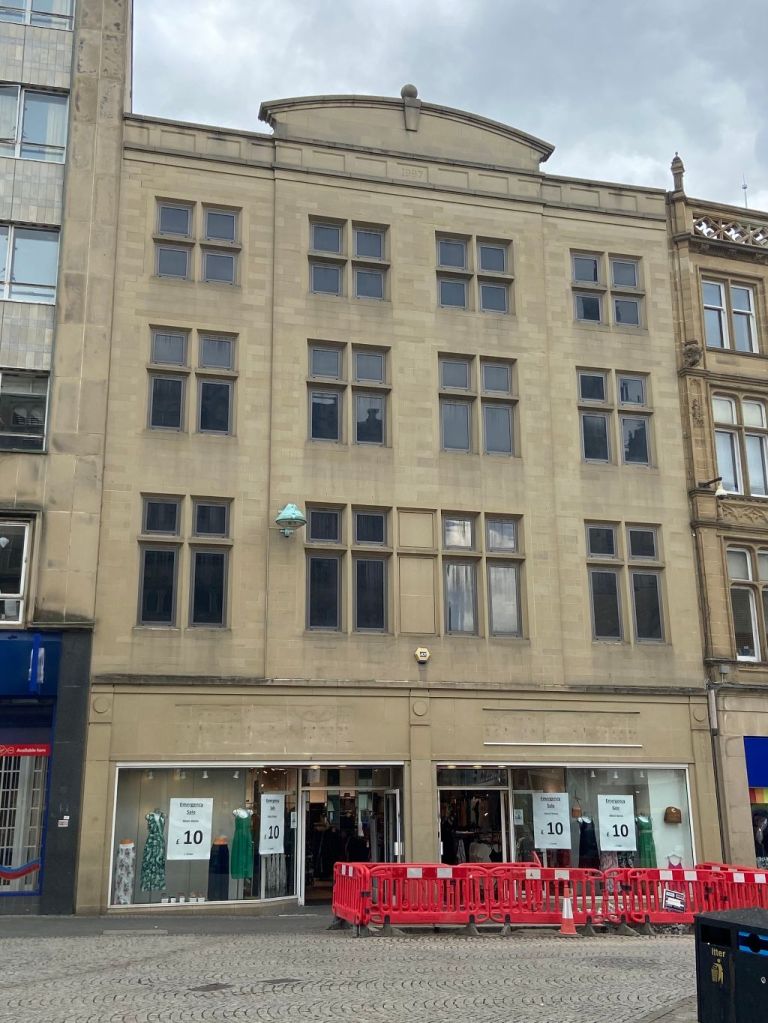
42-46 Fargate. Image: DJP/2022

I have a memory from the 1970s of an old building on Fargate being demolished, and seeing a huge gap, and then the construction of a new one. When looking at 42-46 Fargate, I found I was correct. But the memory also plays tricks. Because I have no recollection of the replacement building also being demolished in the 1990s and substituted with what we see today.

This story starts in 1868 when Robert Henry Ramsden opened a shop in Barker’s Pool as a hat and cap dealer. He had no business experience but established himself  with a reputation for the quality of his goods, and the reasonable prices at which he sold them.

He only allowed cash transactions, and avoided bookkeeping , and by not incurring loss by bad debts, he could afford to sell his goods at a lower rate of profit. He styled himself as ‘The Reasonable Hatter’ and later his advertisements declared that ‘Cash is King.’

He became very successful and opened other shops across Sheffield and Rotherham, and added boots and shoes, and other goods, to his stock.

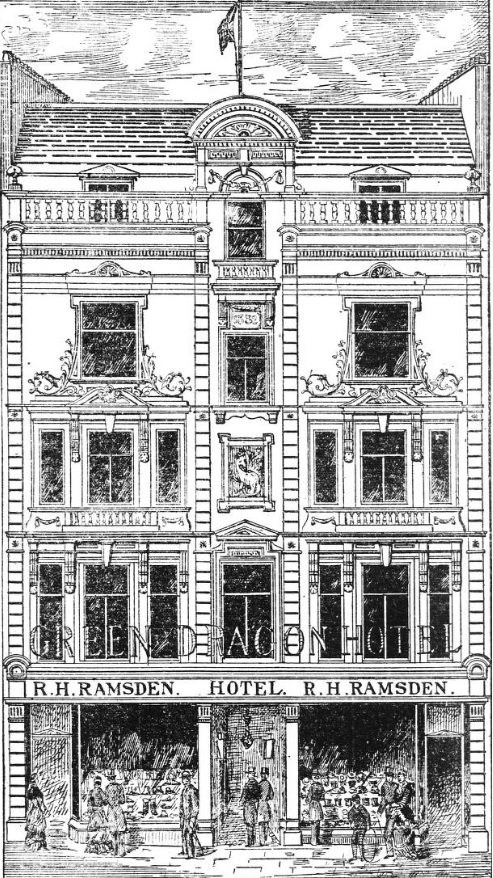
When important improvements were taking place on Fargate, he purchased a large plot of land, on which was a portion of the old Green Dragon Hotel. Here, he built new shops in which to carry on a portion of his business with a ‘Grand and Sumptuous Hotel.’

The new Green Dragon Hotel was built in 1884, from designs by Thomas Jenkinson, architect, East Parade. Ramsden held the hotel in his name, but it was managed by his son Samuel.

Green Dragon Hotel. Drawing from 1884. Image: BNA

Mr Ramsden’s hat shop was to the right, and the boot and shoe shop to the left, the windows of which extended some way down the passage in the centre, which led to the hotel.

All the floors were laid with encaustic tiles, at the entrance to the hotel being a dragon rampant, with the words ‘Green Dragon Hotel’ beneath. To the right in the passage was the luncheon bar, and to the left a second-class bar, at the end being the smoke room.

The walls and panelled ceilings of these rooms, as well as the passages, were covered with Lincrusta Waltona, with painted decorations. Around the rooms, mirrors were arranged, the seating being upholstered in maroon velvet and lit with massive brass gas chandeliers and brackets manufactured by John Horton and Sons, Sheffield.

The bar was to the right of the smoke room, and the kitchens beyond.

The billiard room, on the first floor, contained two Cox and Yeaman’s tables. A corridor on each side contained a cloakroom, as well as other rooms, leading to the grand dining hall which was 40ft long and 18ft wide, capable of serving 80 people. It was also lined with Lincrusta Waltona, of a handsome figured design with bronze enrichments, the panelled ceiling being painted and gilded. The fittings were mahogany, ebony, and gold, and the mirrors were lit with two massive 6-light brass chandeliers.

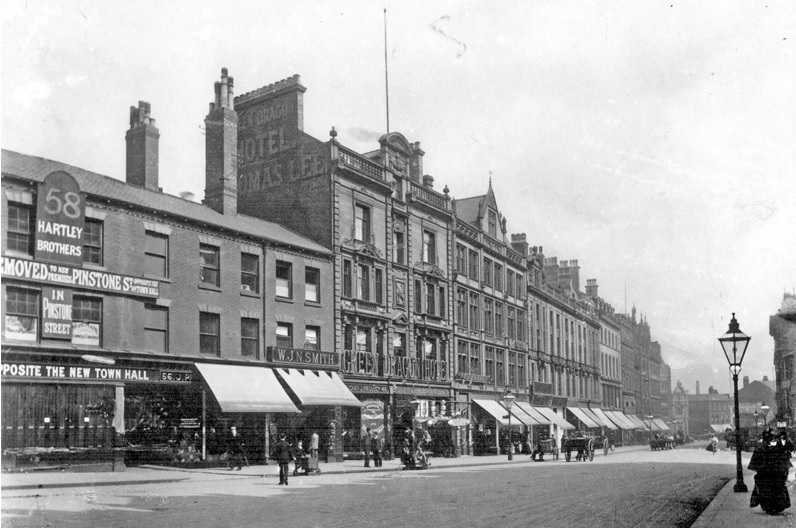
Fargate including No 58, former premises of Hartley Brothers, Exchange Gateway, No 56, J. Preston, Nos 54-46, William John N. Smith, Milliner, No 44, Green Dragon Hotel (later became Winchester House), No 40, Davy’s Buildings. Image: Picture Sheffield

On the floor above were club rooms, sitting rooms, bedrooms, store rooms, bathroom, housemaids’ rooms, and lavatories. In the basement were extensive cellars for the storage of wine and beer. A lift ran from the cellar to the top floor, and each room was equipped with electric bells and speaking tubes.

The walls of the hotel were such a thickness that air shafts ran from top to bottom, allowing ventilation for each room, and to conduct bad air into the drains, instead of being carried from the base of the building to the premises above.

All doors to the principal rooms were panelled with elegant cut plate glass with a dragon rampant device.

The hotel aimed to provide the public with refreshments of every description, from a 3d. sandwich or pie, to an elaborate eight or ten-course dinner; and from a glass of beer or bottle of mineral water, to the most costly wines of the best vintages.

Ramsden adopted the same business principle as his other businesses. This was the cash system, allowing him to offer the best at the lowest possible prices.

He died in 1922, aged 82, at 8 Herbert Road, Nether Edge, but his trustees relinquished the licence, and the building and contents of the hotel were auctioned in July 1925.

It was adapted to become Winchester House, the former hotel rooms becoming offices and studios.

The Winchester Restaurant was operated by the Little Tea Shop Company but failed in 1928. And there were several important names that had offices within, including John J. Jubb, accountants, and the Sheffield College of Voice Training.

They were joined in the 1930s by Yates and Henderson (Photographers), the Christadelphian Room, the Sheffield School of Operatic, Classical, and Ballroom Dancing, but its largest tenant became the Berlitz School of Languages, with its name displayed across the front of the building.

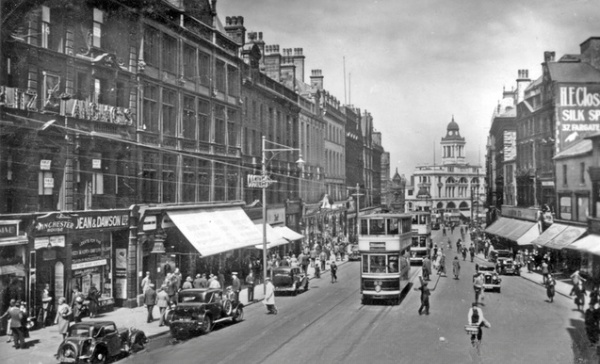
Fargate looking towards High Street and Kemsley House in 1937. Fargate including No 42/46, Winchester House and No 38/40, Arthur Davy and Sons, Provision Dealers, Davy’s Building (now WH Smith), left. Image: Picture Sheffield

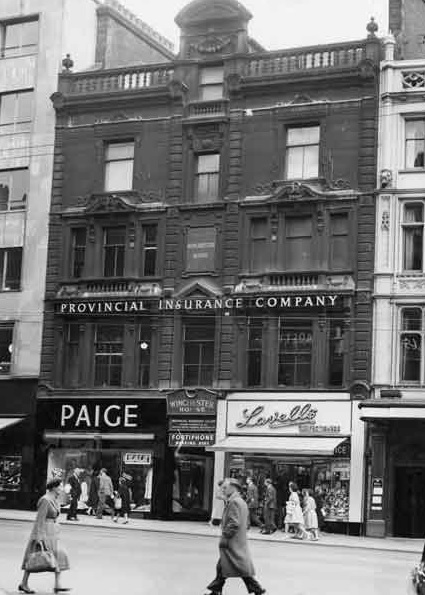
During the 1950s and 1960s, Winchester House became offices for the Provincial Insurance Company, founded by Sir James Scott in Manchester in 1903.

Provincial Insurance Company, Winchester House. c1960. Image: Picture Sheffield

The two shops at the front changed hands several times and some are worth mentioning, including Maison Sonia at No. 46 in the 1930s, later becoming Paige Gowns and Lovell’s Confectioners at No.48.

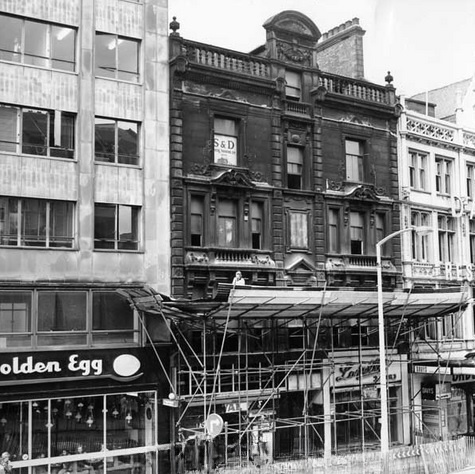
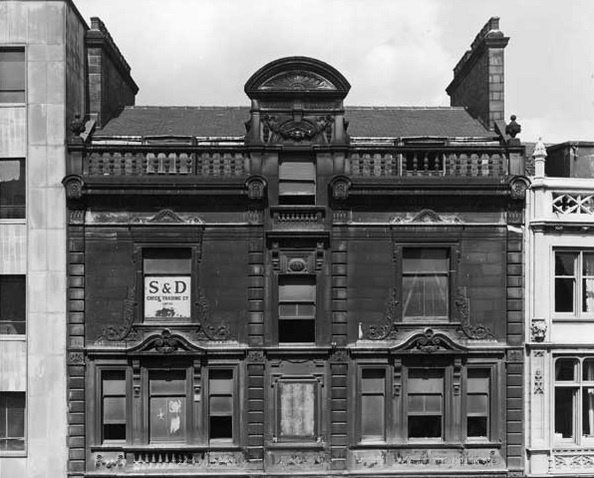
However, by the 1960s the building was in serious decline. Most of the offices were empty, with no inclination to find new tenants. Worst of all, the building had become dangerous, with masonry crumbling from above, and it was boarded up at ground level to prevent serious injury to passers-by.

Fargate, the scaffolding on Winchester House being due to masonry falling off the building. Next door is the Golden Egg cafe and coffee shop, May 1971. Image: Picture Sheffield
Upper levels of Winchester House, 1971. Image: Picture Sheffield

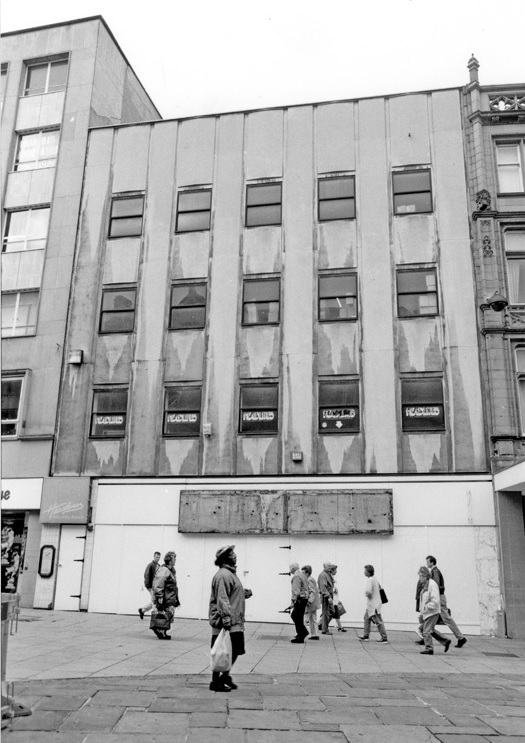
Inevitably, it was demolished and replaced with a standard 1970s design. It contained a large shop at ground level, occupied by Dolcis, with modern offices above.

It never fitted in with adjacent Victorian architecture, and was itself demolished in 1996-97, replaced with the present building, and occupied by New Look until its closure.

Now, like the rest of Fargate, it is in limbo, occupied by a short-term let, but its offices are empty. It is for sale with an asking price of around £800K, with potential to extend the upper parts.

But while it waits the renaissance of Fargate, remember the site’s rich history, and of what came before.

No. 42 Fargate, formerly Dolcis shoe shop awaiting demolition in 1996. Image: Picture Sheffield

©2022 David Poole. All Rights Reserved.
Categories
Buildings

33-35 Fargate – this 1937 building is being converted into offices

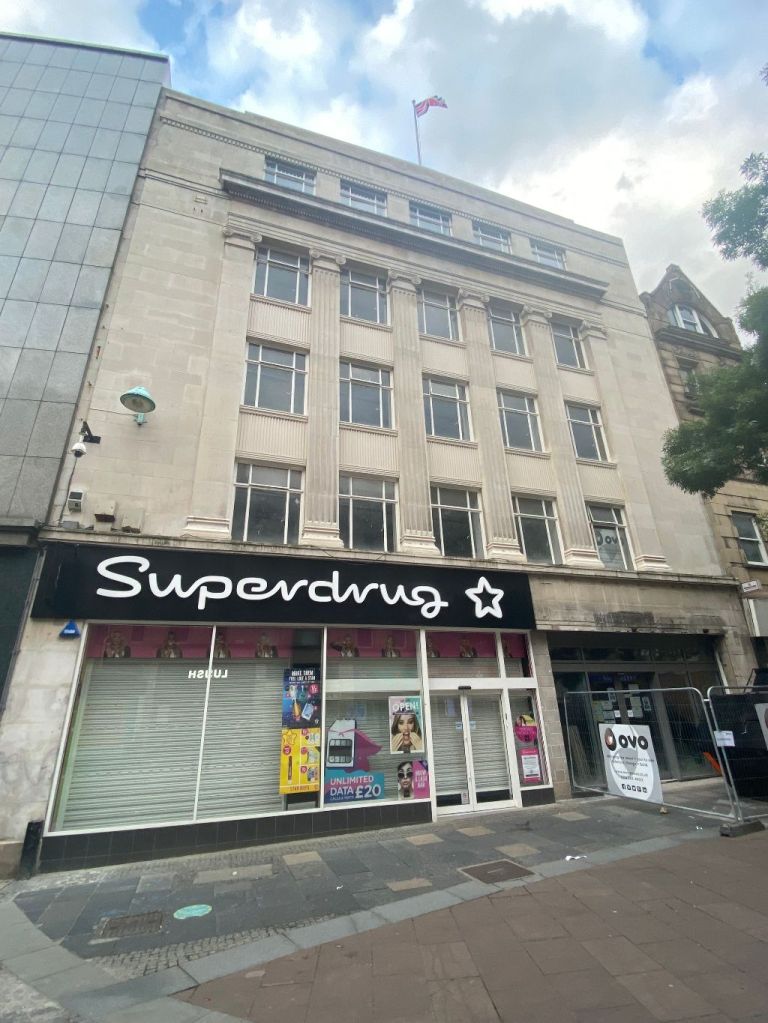
No. 33-35 Fargate. Now a branch of Superdrug, with the remaining four floors now being converted into premium office space called Ratoon. Image: DJP/2022

Yesterday’s post about the demolition of the former Next building on Fargate caused a bit of a hubbub. Redevelopment is also taking place nearby, at 33-35 Fargate, better known to us as the former Topshop/Topman building.

Part of the ground floor is now occupied by Superdrug, but you may have noticed building work going on in the rest of the property. This is going to be new office space called Ratoon – its name meaning a new shoot or sprout springing from the base of a plant, especially sugar cane, after being cut.

The main entrance, and former escalator access to Topman on the first floor, is being turned into a new opening for office space above, much of which has been empty for years.

The £6.5m project is being financed by fund manager Nuveen on behalf of Medical Research Council Pension Fund. Sheffield City Council has also provided a £900K grant as it seeks to reinvent Fargate and High Street.
Offices will be rented as a whole, or floor-by-floor basis, with a rooftop terrace garden with views over St Marie’s Cathedral and Fargate. A lightwell will be installed over the stairs and an orangery-style roof lantern will shed light directly onto the upper floors.

Newspaper advertisement from June 1937. Image: British Newspaper Archive

But more about the history of the site.

If we go back to the beginning of the twentieth century the site was occupied by J.B. Eaton, well-known drapers at No. 33, and a public house called Old Red House, at No. 35. The pub closed in 1903 and the whole site developed as a purpose-built shop for J.B. Eaton.

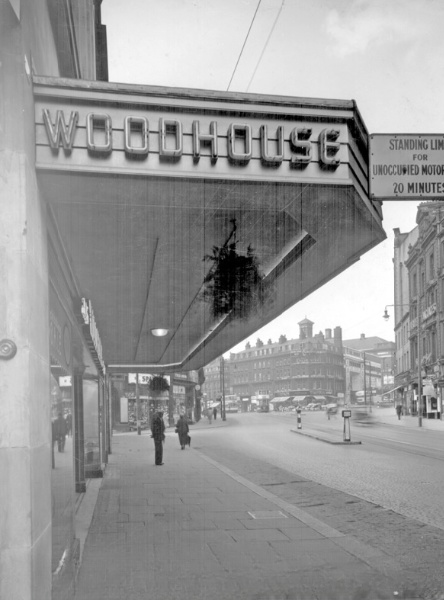
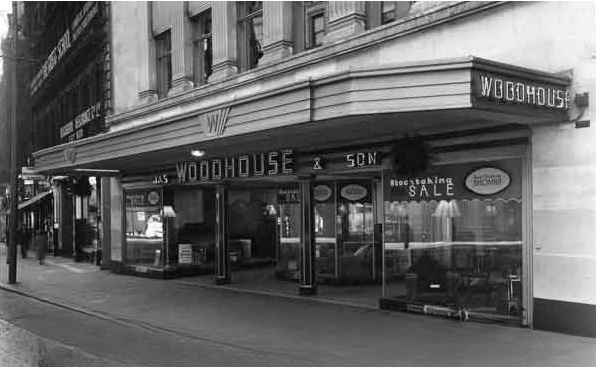
The draper closed in the early 1930s and the site was bought by the British and Colonial Furniture Company. It demolished the former shop and built a new property for James Woodhouse and Son, known for selling furniture of modern and attractive design, and opened in May 1937.

The new Woodhouse building had five floors of spacious and well-lit showrooms providing nearly 40,000 square feet of floor space.

The shop fronts with large arcades, specially designed for the display of furniture, were of modern character, equivalent in size to a window nearly 200 feet long.  A bronze and illuminated canopy protected shoppers and added to the dignity of the building.

The elevation, on classical lines, was constructed of Portland stone, with ornamental windows, and was floodlit at night.

Inside, staircases of polished oak were features of each floor, which were also served by express lifts.

The architect is unknown, but likely to have been the same one used to design many of James Woodhouse’ similar-looking stores.

Construction was by Sheffield-based George Longden and Son, who had also cleared the site, using materials of ‘British and Empire origin,’ and incorporating nearly 200 tons of British steelwork for the frame. Ornate plastering inside was completed by Hudson and Dore of Crookes.

James Woodhouse and Son, house furnishers, Nos. 33-35 Fargate. 1950-1955. Image: Picture Sheffield

British and Colonial was created after it bought James Woodhouse of Glasgow and Edinburgh, as well as furniture retailers in Newcastle, Middlesbrough, and Sunderland. James Woodhouse is recorded in the records of Gillows of Lancaster, and it is thought he carried out his apprenticeship here.

The company traded as James Woodhouse and Son and expanded throughout Great Britain, Toronto, Quebec, and in 1936 had opened a New York  store on West 34th-Street, Fifth Avenue. Its success was due to selling modern furniture at the lowest price, and by providing convenient and economical means of payment.

In 1945, British and Colonial was bought by Great Universal Stores and Woodhouse lasted on Fargate until the late1970s/early 1980s. Its eventual closure, and that of its sister company Cavendish, was the result of GUS divesting much of its physical retail subsidiaries to concentrate on mail order, property, and finance. In 2006, it was split into two separate companies. Experian which continues to exist, and Home Retail Group which was bought by Sainsbury’s in 2016.

33-35 Fargate eventually became Topshop/Topman, and for a while had a branch of Dorothy Perkins. It closed in 2020, a few months before the collapse of Philip Green’s Arcadia Group.

And so, the next time you walk past, look at this old building, and remember its overlooked history.

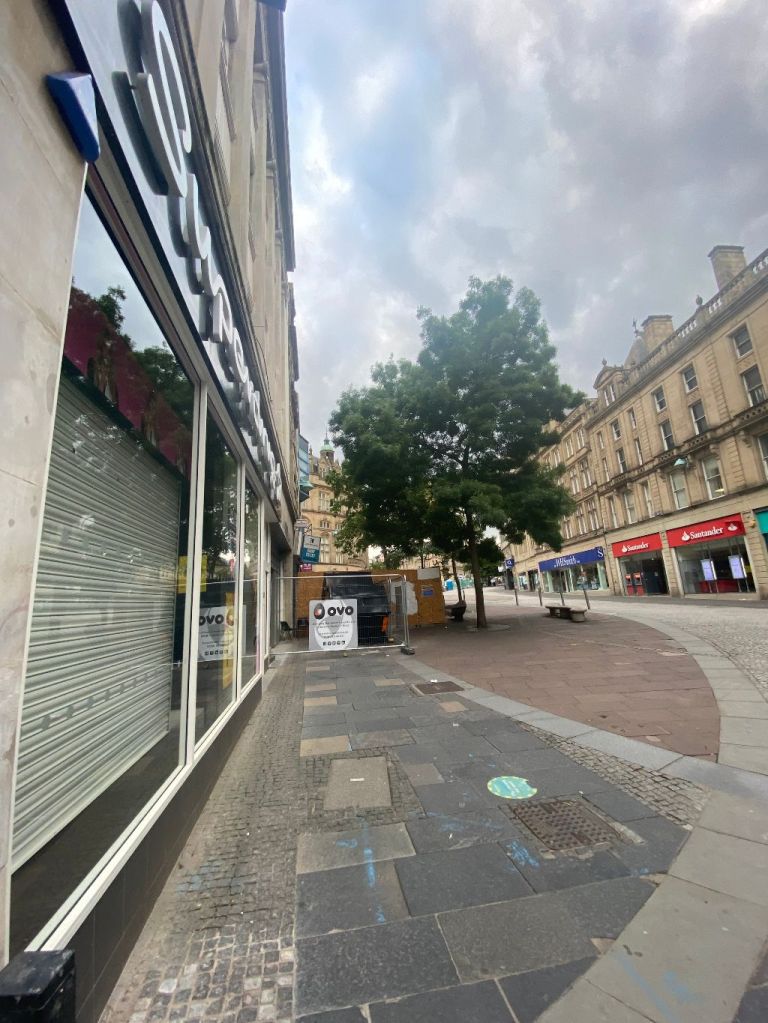
Fargate looking towards Town Hall Square from outside Nos 33/35, James Woodhouse and Son, House Furnishers, 1950-1955. Image: Picture Sheffield, and a similar view today. Image: DJP/2022

©2022 David Poole. All Rights Reserved.