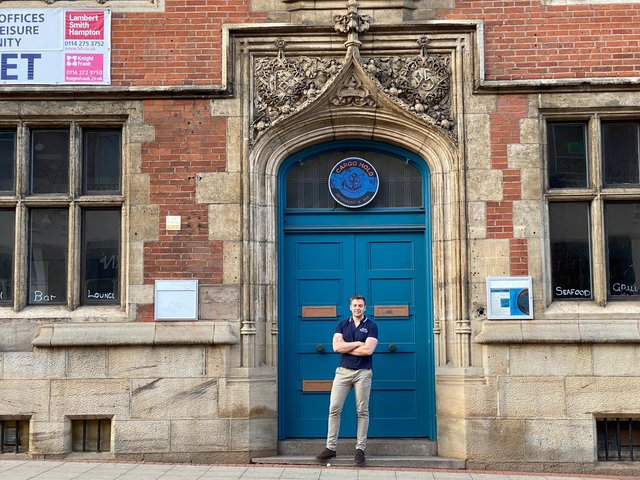
Damon Wiseman pictured outside Cairn’s Chambers on Church Street in Sheffield city centre, which he is planning to turn into luxury apartments with a new restaurant on the ground floor. Photograph: Sheffield Star
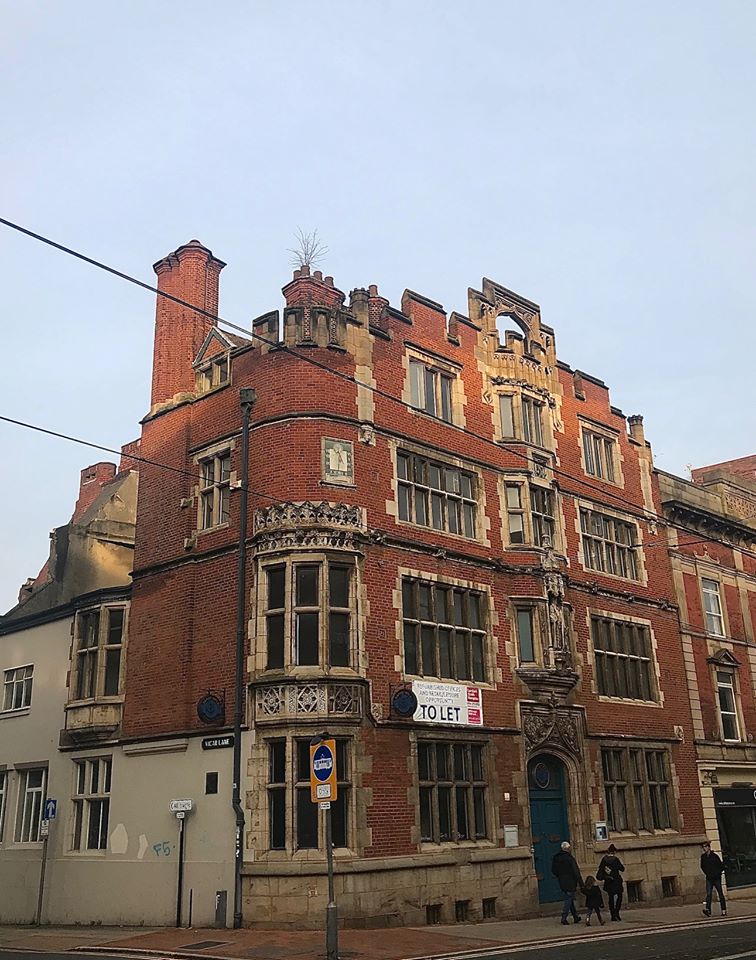
Cairn’s Chambers on Church Street, a building slowly deteriorating these past twenty years or so, has had an offer accepted, and subject to planning permission, will turn it into a restaurant, with up to a dozen luxury apartments on the first, second, and third floor which will be available to rent.
The man behind the scheme is Damon Wiseman who came to the UK in 2016 from Zimbabwe to study real estate and later ended up working for a Russian goldmine company. He lives in Sheffield and has successfully invested in rental properties in Burnley and Manchester.
Wiseman’s offer of £800,000 has been accepted and is understood to have the backing of wealthy overseas investors. He estimates that once completed, the scheme will have cost a total of £1.5m.
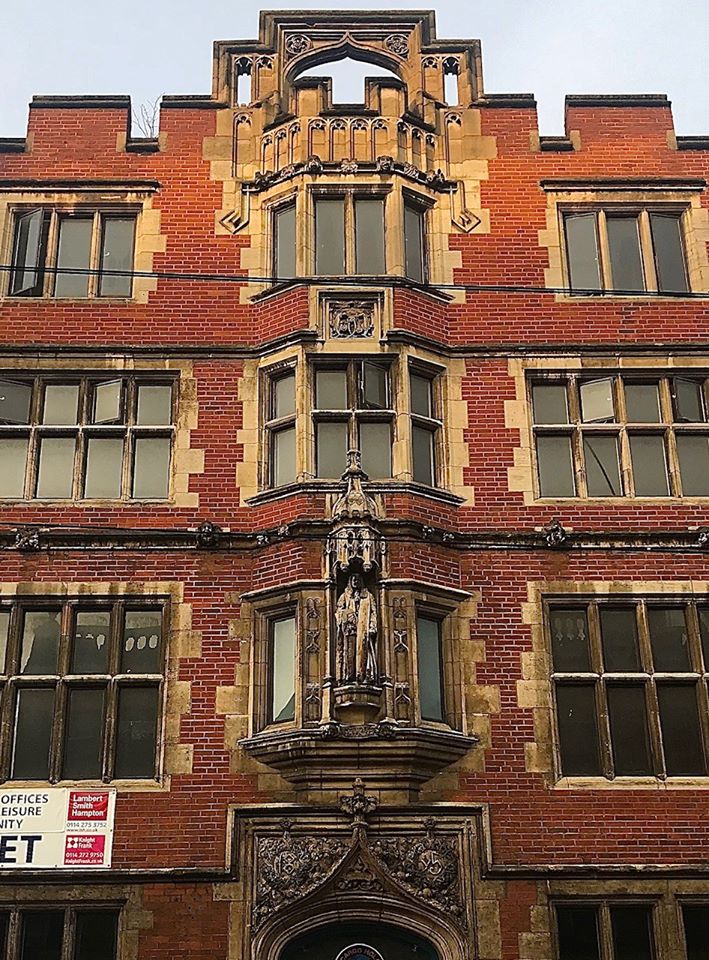
Grade II listed Cairn’s Chambers was built between 1894-1896 by Charles Hadfield, of M.E. Hadfield, Son and Garland, for Henry and Alfred Maxfield, solicitors. It was built in scholarly Tudor-style, a favourite of Hadfield’s, featuring decorative stonework by Frank Tory Sr.
The sad decline of Cairn’s Chambers is highlighted by the small tree growing out of a chimney-pot. Image DJP/2020
Henry and Alfred Maxfield occupied a large suite of offices, but it was also built to accommodate other businesses, a common trait of Victorian entrepreneurship.
The offices were used for almost 40 years by Charles Hadfield’s own company, C & C.M. Hadfield, architects, and later by Hadfield and Cawkwell. It was also where John Dodsley Webster, another Sheffield architect, had his office with an entrance at the back, on St James’s Street.
The Hadfield company remained until World War Two, leaving after the building was damaged by a German bomb in 1940. The rear of the property was almost destroyed, but the decorative front survived.
Afterwards, Cairn’s Chambers became a branch of the District Bank, subsequently becoming NatWest until its closure.
Most recently, the ground floor was occupied by Cargo Hold, a seafood restaurant.
The crowning glory of Cairn’s Chambers was the statue of Hugh McCalmont Cairns (1819-1885), 1st Earl Cairns, an Irish statesman, and Lord Chancellor of Great Britain. Photograph: DJP/2021
We’ve waited long enough to hear good news about Castlegate, and more importantly the site of old Sheffield Castle.
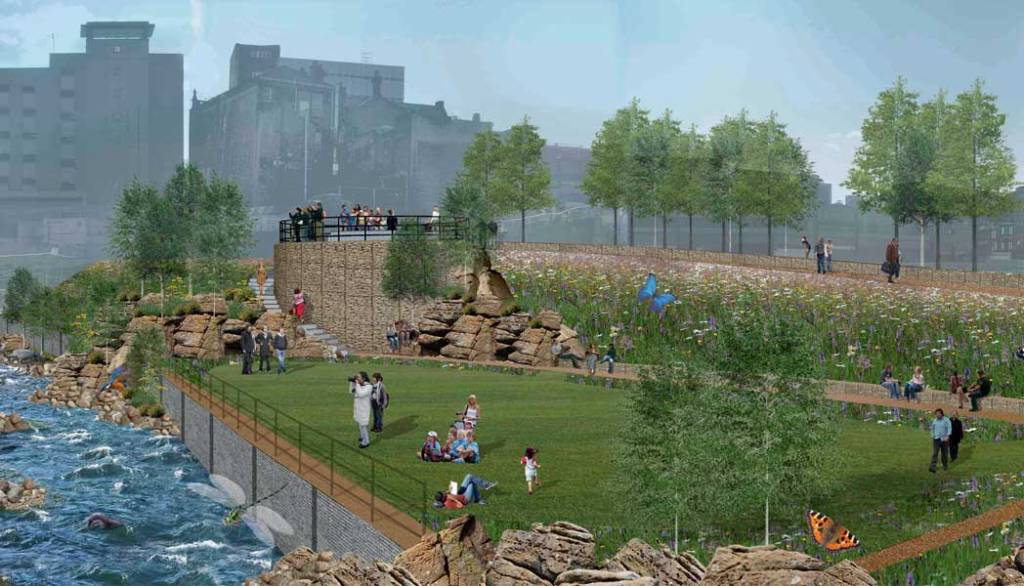
Sheffield has been successful in its bid to secure £20m of funding for Castlegate through the Government Levelling Up fund.
£15m of this will go towards further archaeological investigation and interpretation of the historic Castle remains for the public to view, quality open space, de-culverting of the River Sheaf and route-ways through the site. Targeted plots on the outer edges of the site will be made ‘developer ready’.
The remaining funding will go towards two other projects – Park Hill Art Space and Harmony Works.
Park Hill Art Space will deliver an arts, cultural and heritage destination at the Park Hill estate and it will aim to be one of the largest contemporary art galleries in the North, complemented by creative workspace and learning facilities, within a six-acre sculpture park.
Harmony Works is a partnership between Sheffield Music Academy and Sheffield Music Hub to create a new fit-for-purpose music academy by refurbishing Grade II listed Canada House on Commercial Street.
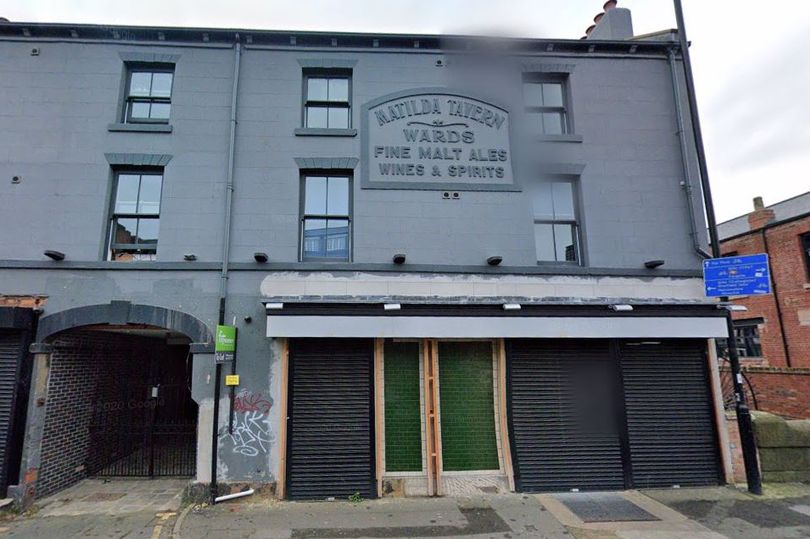
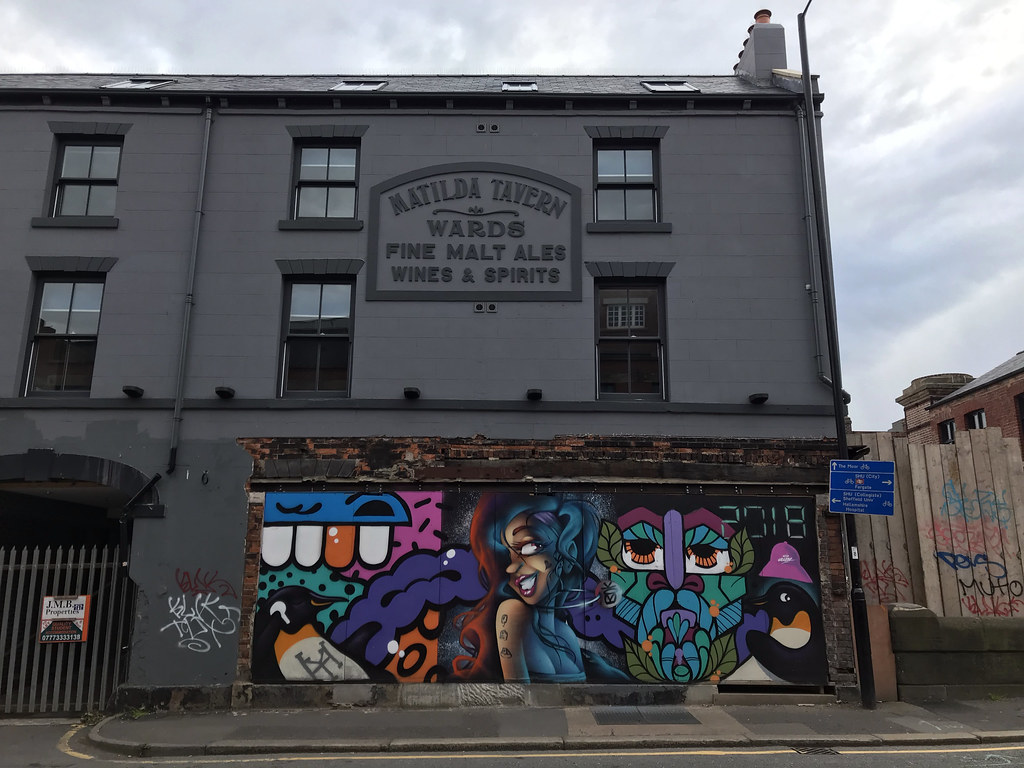
Recent image of the Matilda Tavern. Photograph: Sheffield Star
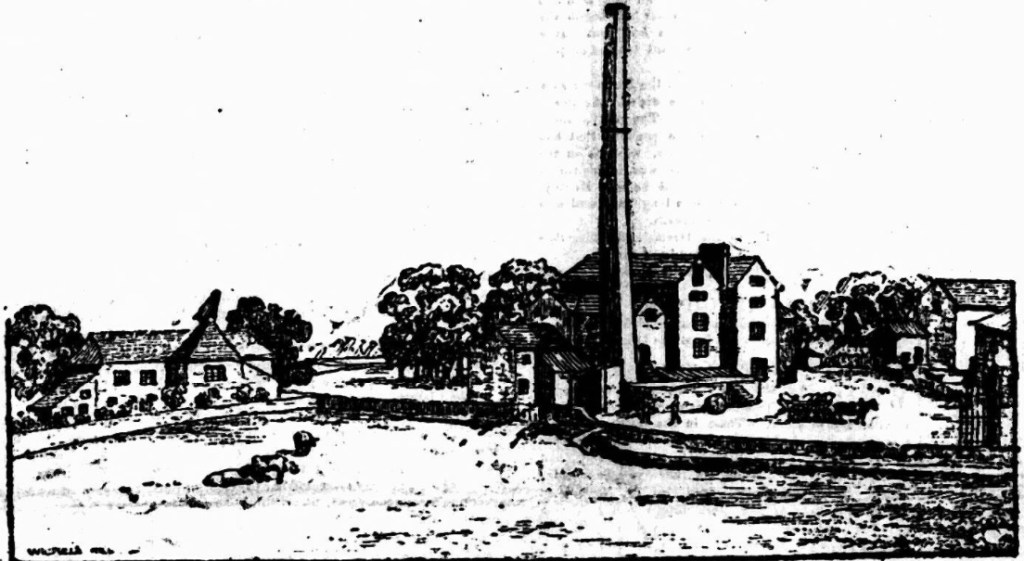
Once upon a time there was a mill called Cinder Hill Mill, the property of the Wigfull family, powered by water from Porter Brook that flowed into a dam. In 1780, Joshua Wigfull rebuilt Wigfull’s Mill, and it was later enlarged, with a steam engine fixed for driving six pairs of French stones, one pair of grey stones, and a shelling mill.
Most of the flour made at these mills went to Stockport and taken by wagons and pack-saddle to Middleton. There they were met by a team of relay teams and vehicles and carried forward. The mill was demolished in 1862 and stood in or near the present Leadmill Road.
At the side of the mill were fields rented by a Doctor Brown from the Duke of Norfolk, and the district became known as Doctor’s Fields.
In the late 18th century, the Duke of Norfolk set about his ambitious plan to develop this neighbourhood, alongside Alsop Fields, into a fashionable residential district. James Paine drew up a masterplan with a proposed gridwork of streets, the key ones being Union Street, Norfolk Street, Eyre Street, Arundel Street, Howard Street, Charles Street, Furnival Street, and Duke Street.
Duke Street stretched between Union Street and Porter Brook, and when it was extended towards Doctor’s Fields the new portion from Arundel Street onwards became known as Matilda Street, named after William the Conqueror’s wife, Queen Matilda of Flanders.
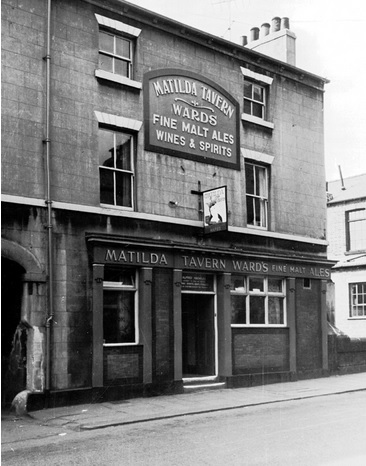
By 1838 nine newly-erected houses had been constructed, one of them a large public-house, a coaching inn beside Porter Brook, with an archway that led to a stable yard behind, and this was called the Matilda Tavern.
The masterplan faltered, and instead of posh houses for the wealthy, the area was instead utilised for industry. By the 1870s, the upper portion of the road, Duke Street, was also renamed Matilda Street to avoid confusion with the street of the same name at Park.
The Matilda Tavern thrived and apart from serving ale, it was a place where Thomas Badger, coroner for the Upper Division of the Wapentake of Strafforth and Tickhill, held inquests on dead bodies, many of whom had drowned in Porter Brook or in the unprotected portion of the Wigfull Mill dam.
And so, the Matilda Tavern thrived, and when coach and horses disappeared, it served the hundreds of thousands of workers that worked in nearby factories. Eventually, industry disappeared, and its fortunes waned.
In 1999, its exterior was used in an ITV series called Four Fathers, starring Tony Doyle and Neil Dudgeon, its north of England setting somewhat gloomy, but its characters gainfully employed with humour amid the drama.
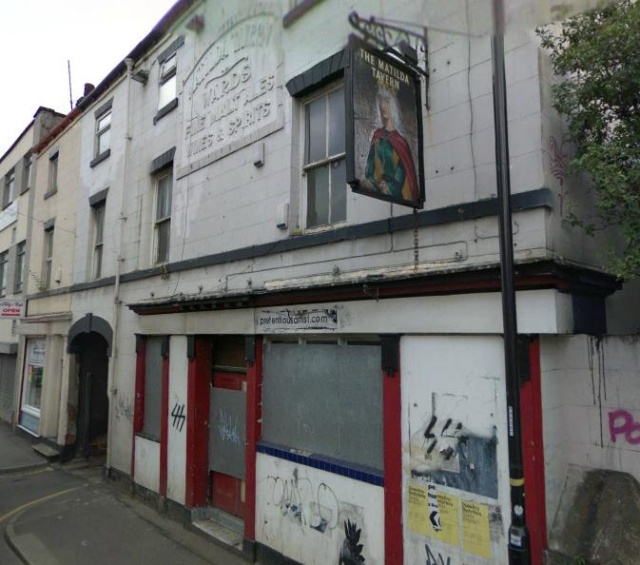
However, six years later, in 2005, the Matilda Tavern closed for good, its windows boarded-up, and the interiors left to rot.
Several new residential developments in the area, notably the apartments on the corner of Matilda Street and Arundel Street, and the apartments along Fornham Street, have brought students to the area.
In 2007, developers were given permission to alter and extend the old pub and erect a new building behind for student accommodation and ground floor business space. All these years later, conversion of the upper floors have been completed and work on the new student accommodation is under way and due to be finished in spring 2022.
However, in a new planning application, architects Wireframe Studio, says “The proposal is to now change the ground floor and basement of the building from business use back to its original use as a drinking establishment with the paved area along the river as an external terrace.”
The golden days might have disappeared, its smoky rooms and beer-stained carpets likely replaced with modern interiors, but at least the Matilda Tavern may live-on.
The Germans made a mess of High Street during World War Two, we made a mess of it afterwards, and there is an irony that the first seeds of future regeneration might be coming in the shape of a German doner kebab.
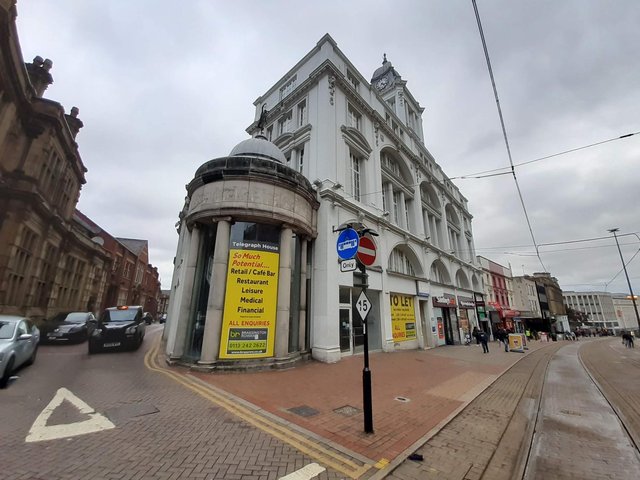
The upmarket German Doner Kebab is opening at Telegraph House in space previously occupied by Santander. The former headquarters of the Telegraph and Star were built between 1913 and 1916 by Sheffield architects Gibbs, Flockton & Teather, and constructed by George Longden & Son.
Photograph: Sheffield Star
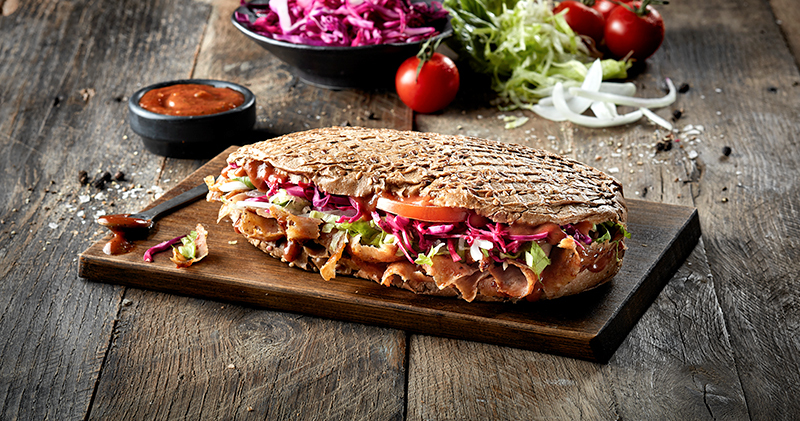
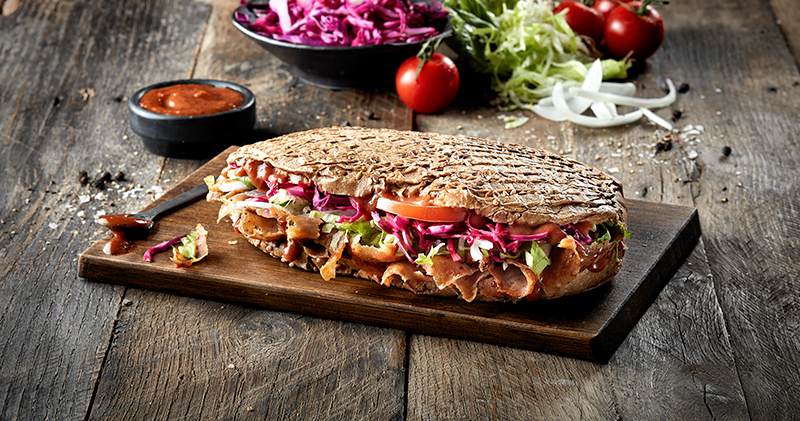
German Doner Kebab opened its first store in Berlin in 1989, and while we might turn our noses up at a cheap takeaway favourite, these promise to be different. According to its website, the kebabs use beef and meats imported from Germany, enhancing them with ‘secret sauces’ and locally-produced vegetables in a special bread.
The doner kebab was a Turkish creation, but its popularity came from Germany. More than 17 million are now sold throughout the country. In Berlin, there are over 1,000 kebab eateries and they even outsell the city’s most famous snack, the Currywurst.
In the late 1950s, thousands of Turkish workers made their way to West Germany to support a depleted workforce. As the country’s economic fortunes changed in the 1960s, many Turks sought alternative employment in hospitality.
Three of these Turkish workers would have their names intrinsically linked with the introduction of the Döner Kebab.Kadir Nurman opened a small eatery at the Zoologischer Garten train station, Mehmet Aygün claims to have introduced the kebab at his parents Turkish restaurant in 1971, while Nevzat Salim opened a snack stand in Reutlingen – near Stuttgart – back in 1969.
As with any culinary creation, sourcing its actual origin is always problematic – like most things, food and recipes evolve, but now the German doner will finally find its way to Sheffield.
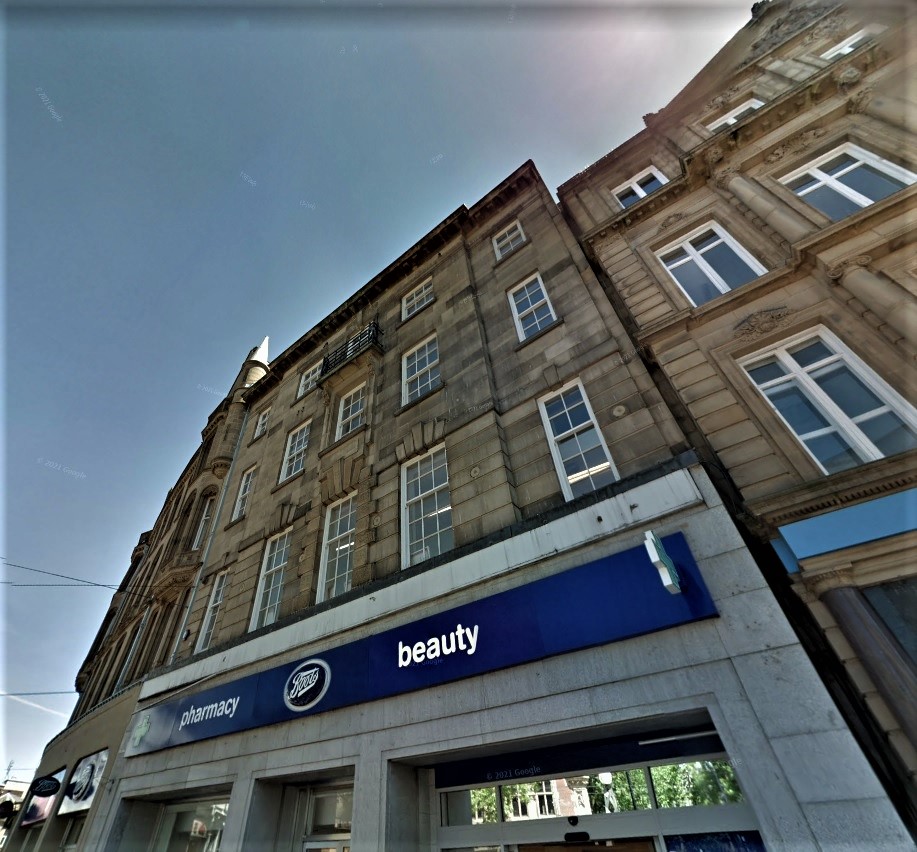
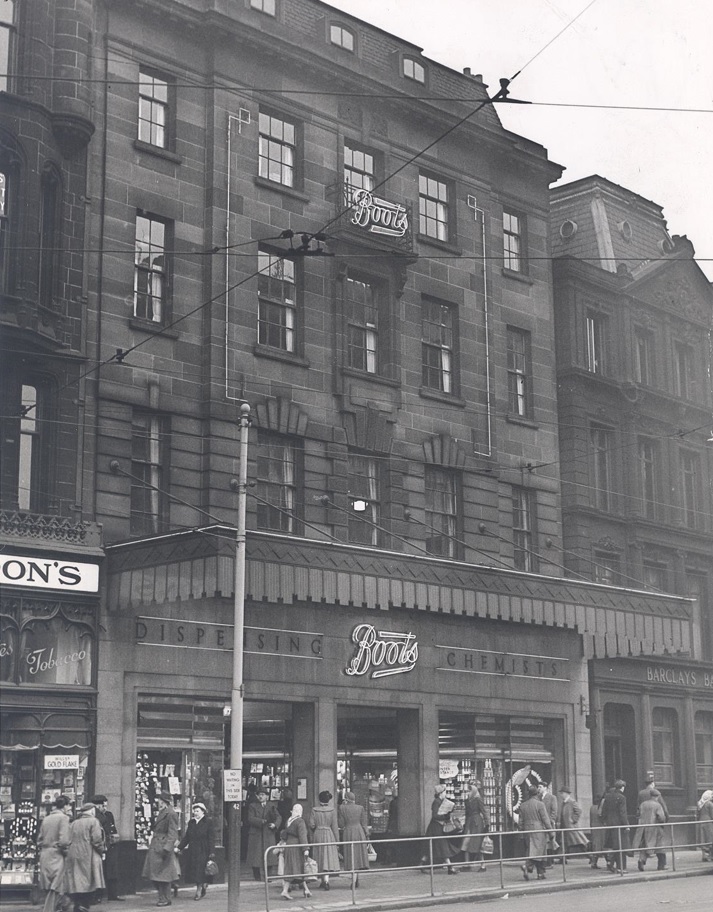
A modern-day view of Boots on High Street, Sheffield
Boots might be a Nottingham company, but Sheffield has played an important part in its long history. Established in 1849 by John Boot, it was his son Jesse who built the company into a household name with stores all over the world. Its first chemist branch outside Nottingham was at 17 Spital Hill, in 1884, followed by branches at Snig Hill, West Street, South Street (The Moor), Attercliffe, London Road, Netherthorpe, Abbeydale, and Shalesmoor.
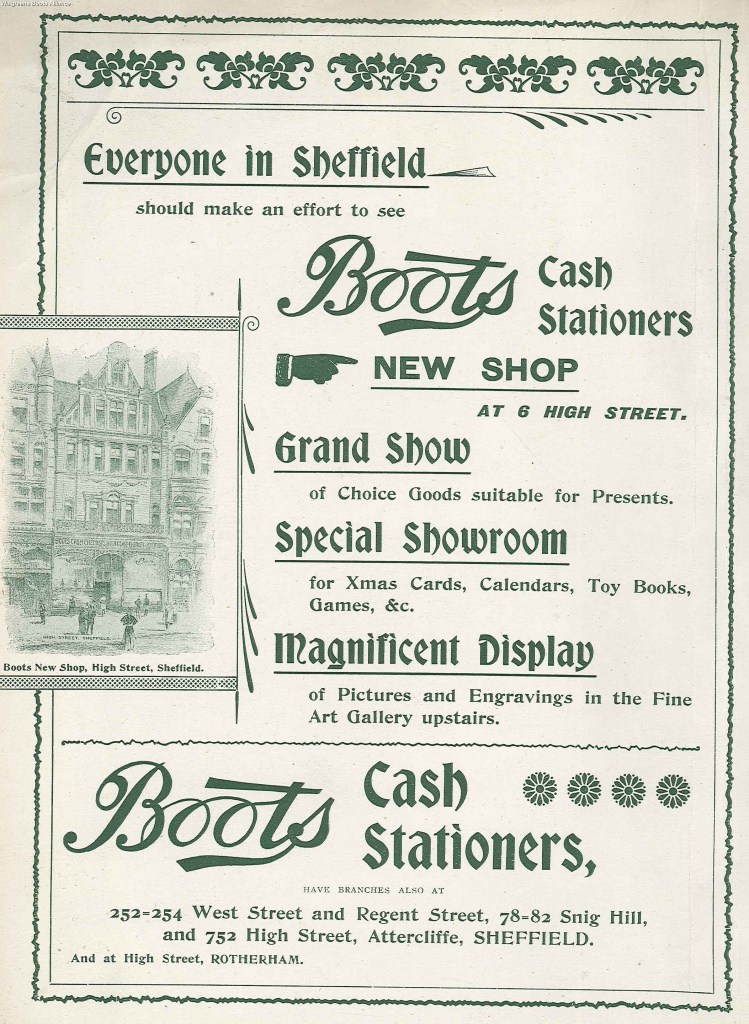
Sheffield was firmly in Jesse Boots’ sights and for a brief time, in the early 1890s, he lived here with his wife Florence. Its most prominent branch opened in May 1898 at 6 High Street, on land owned by John Walsh (of department store fame) between the Fosters Building (erected 1896) and the auctioneers Nicholson, Greaves, Barber and Hastings (now Café Nero). All were constructed as part of High Street widening plans.
The High Street branch opened in 1898 and the illustration shows what the original building looked like. Photograph: British Newspaper Archive
Boots opened its narrow shop alongside the Thatched House Restaurant, taking advantage of heavy footfall between High Street and Fargate. On 8 October 1918, a Government Information Bureau opened in-store. The Bureaux had been established by the government earlier in the year to provide information to the public on matters relating to the First World War; national war aims, national services, war savings, food, labour, and so on. This was one of just twenty such bureau, each located in a prime Boots store, and it required only two square yards of space for its small, pre-fabricated stand.
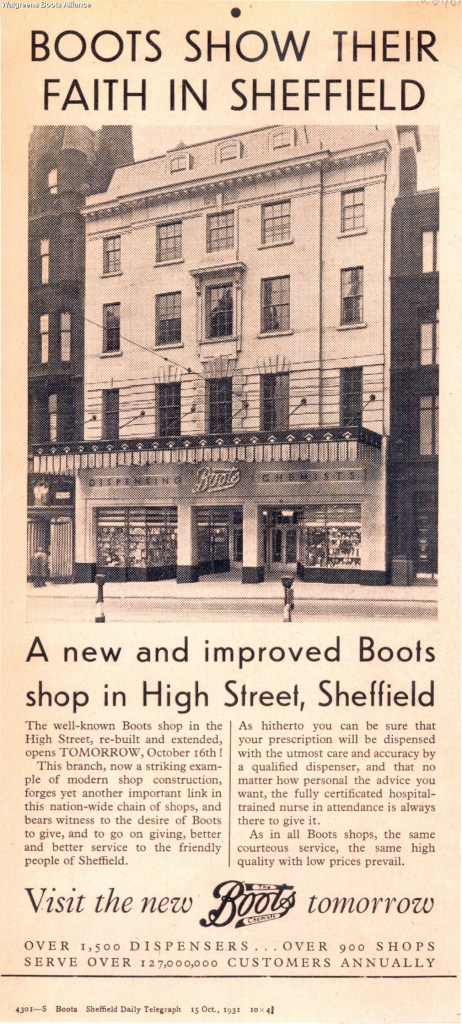
Boots refitted its store in 1922, but when the Thatched House Restaurant came on the market in 1929 it bought the property and announced plans to extend next door. The plans were radical and involved demolition of both properties, only 33 years after they had been constructed.
The new enlarged building was designed by Percy J. Bartlett, the Boots’ architect, and was constructed by Thomas Wilkinson and Sons, Olive Grove Works, Sheffield.
“Cheap drugs would be dear if they were cheap and nasty. Nasty to the palate many drugs are bound to be; but worse is the nastiness of bad quality.” – Jesse Boot
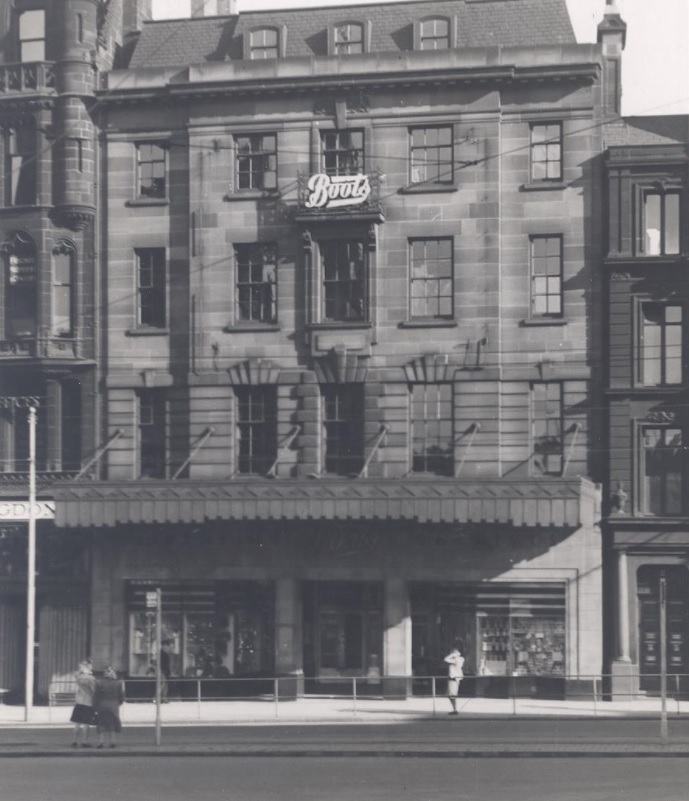
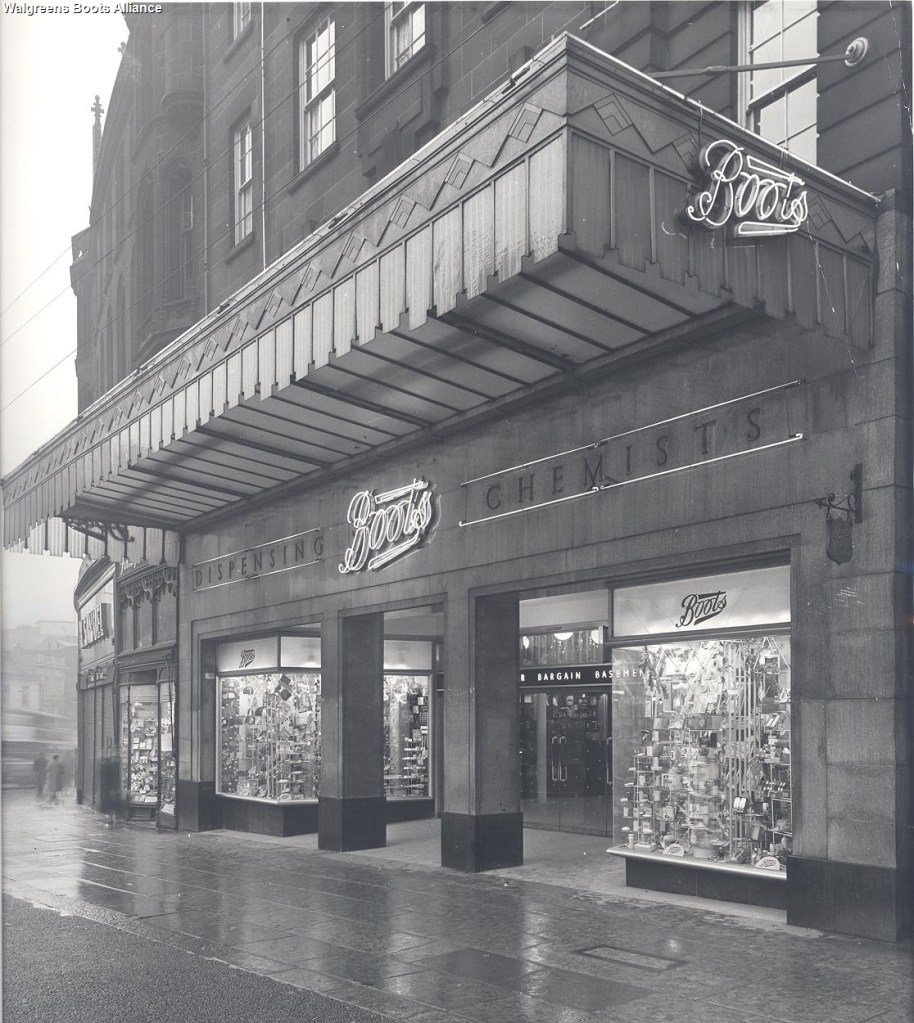
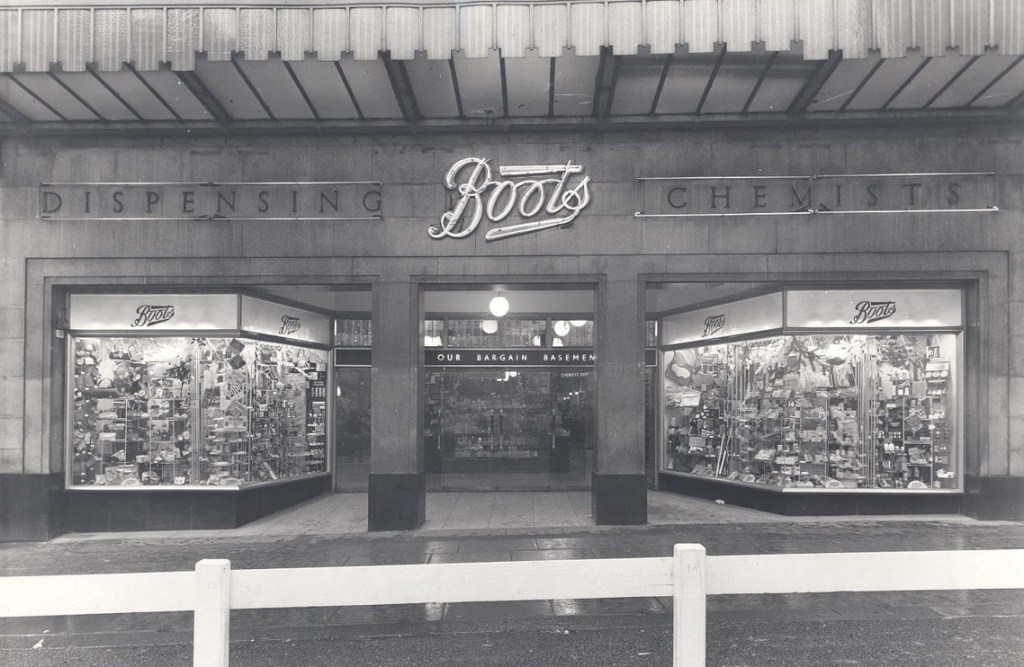
The handsome elevation was based on the Renaissance style, the modern shop front, the black and silver canopy, the green slates surmounting the lower story, and the blue-green of the windows above, formed a modern building combined with traditional beauty.
It was constructed in Stoke Hall stone, provided by Percy J. Turner from their own quarries at Grindleford. Warm yellow in colour, it claimed to be impervious to the effects of acids in smoke-laden atmospheres.
The shop front was a tribute to Sheffield’s staple industry, completed in Firth Brown ‘Staybrite’ steel, which was as much attractive to the eye as the deeply recessed entrance, and non-slip paving. The steel was used for framing the windows and main entrance doors, and the Boots sign was cast in Staybrite and mounted with neon lights.
The glass and iron canopy decorated in black and silver was capable of illumination at night, and replaced old-fashioned shop blinds, to provide permanent protection against rain.
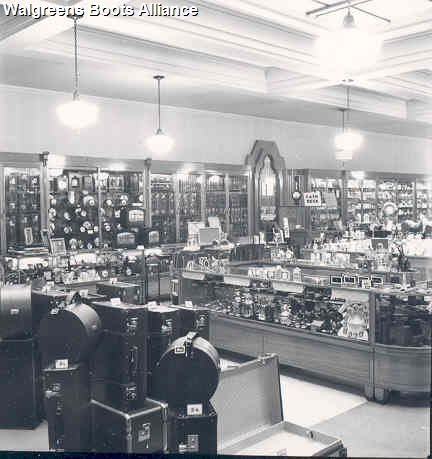
Photographs: Walgreens Boots Alliance
The interior fittings were chiefly light mahogany, the floors laid in ceramic mosaic on top of ‘bison’ concrete flooring, and heating was generated by rooftop pipes to provide even temperature throughout its three sales floors.
The ground floor was set aside for the principal business of chemist and toiletries. A surgical department, staffed by fully trained nurses, provided a private fitting room and a dispensary.
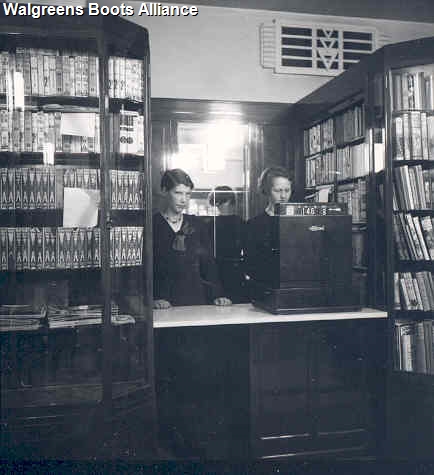
Photograph: Walgreens Boots Alliance
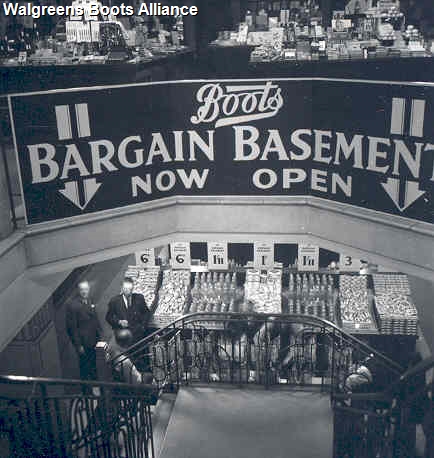
A staircase in the centre of the showroom led to the basement, where travelling goods, stationary, books, pictures and artists’ materials were displayed. The first floor contained the ‘Booklovers’ Library’ decorated in blue and green, and a fascinating exhibition of artistic gifts, silver, and fancy merchandise. All three floors were served by a staircase and two lifts.
Electric lighting in the store was designed by Harcourts, of Birmingham, based on original suggestions of Percy J. Bartlett. The fittings were arranged to take four one hundred watt Cosmos lamps, with a combination of four crystal etched glass cylinders.
Photograph: Walgreens Boots Alliance
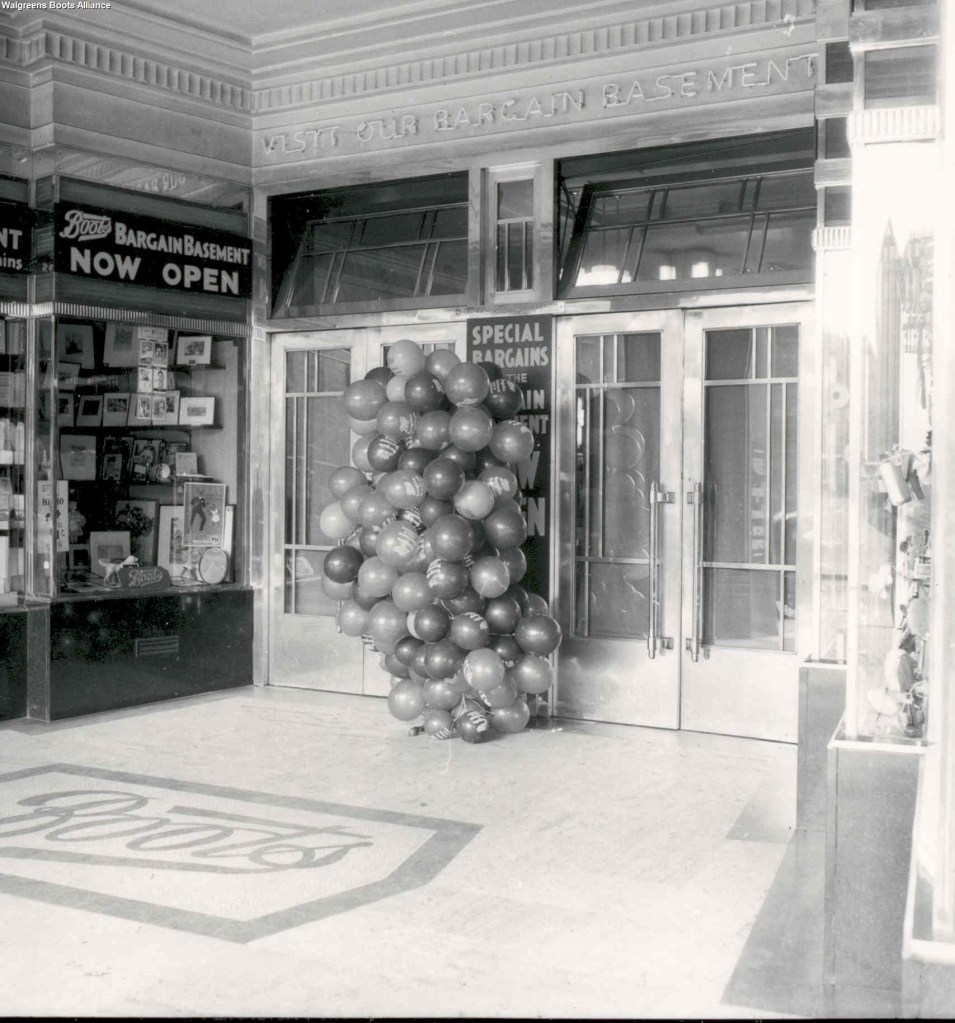
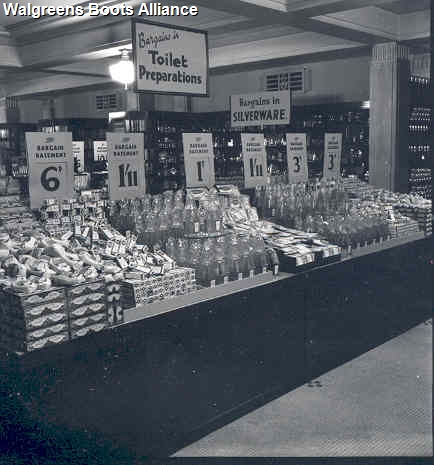
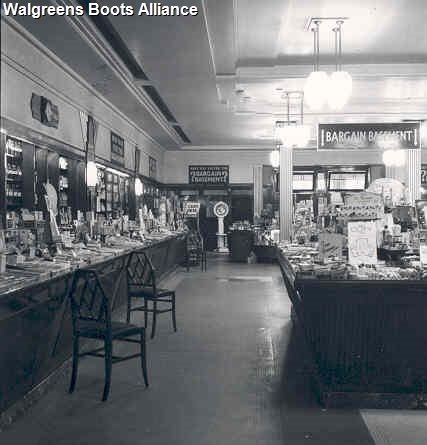
It opened in October 1931, and the address became 4-6 High Street. Two years later a Bargain Basement opened, bringing a modern style of retailing to the store. Further alterations were made in 1936 and it was later extended into the adjacent Foster’s Building.
Photographs: Walgreens Boots Alliance
Those of a certain generation will remember that the basement eventually opened out into a subway that stretched across High Street, and which was eventually lost when Supertram works started.
Sadly, the frontage we see today is the result of the generic modernisation of the retail sector, but remember it only disguises the past.
Boots is now part of the Retail Pharmacy International Division of Walgreens Boots Alliance, Inc.
Percy J. Bartlett, the Boots’ architect, on his retirement. Photograph: Walgreens Boots Alliance
Shop windows as they used to be. Photograph: Walgreens Boots Alliance
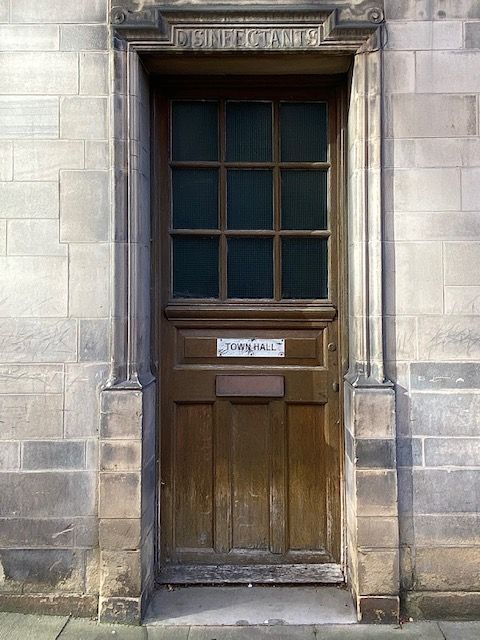
Behind the Town Hall, on Norfolk Street, is a single doorway with the words ‘Disinfectants’ carved into the lintel above. It appears to originate from 1897, the year that Sheffield’s new Town Hall opened, and where ratepayers were able to buy disinfectant for their homes.
Disease was a worry for our Victorian ancestors and the city was still recovering from outbreaks of smallpox, scarlet fever, measles, whooping cough, and puerperal fever. In 1896, Sheffield’s population was 347,278 and quickly expanding into Walkley, Attercliffe and Heeley. In that year, 6,732 people died, many from disease, although the trend was decreasing. Astonishingly, 392 people had died from diarrhoea.
Medical science was concerned with tracking disease to its source with a view to prevention and was no longer content to repair the ravages of disease which might have been prevented.
In a time when preventative vaccines were still in their infancy, disinfectant was used to spearhead the fight against zymotic diseases. Where disease was evident in the home it was the use of carbolic acid powder and chloride of lime that allowed walls to be washed while articles were removed and burned.
One of the concerns was that if people were ill with infection, to make sure that they didn’t pass it on, cleaning and disinfecting, both where they lived, and the things that they owned and had contact with, was a way of eradicating germs
Sheffield had a disinfecting station at Plum Lane where infected people and their possessions would enter the station from one side, move through the process of steam disinfection and exit out the other side. There were also metal hoppers in which people would have placed their infested clothes before taking a sulphur bath to treat their condition.
These sorts of places were common across the country and were a very important part of how Victorian and Edwardian local authorities responded to outbreaks. And when outbreaks did occur, high-occupancy slum housing meant it spread quickly. In 1899, a typhoid outbreak at Brightside speedily infected over 100 people within a half mile radius.
Carbolic acid remained one of the most popular disinfectants, sold in liquid and powdered form at pharmacist’s shops, but also pre-mixed with soap. But there was also a leading brand of disinfectant, made right here in Sheffield, and this was Izal, a supplier to the British army, and the only liquid disinfectant used on troops in the Boer War. It was thought to have been beneficial for the treatment of typhoid and diarrhoea when administered internally.
In the 1930s, as infectious diseases became less virulent and more treatable thanks to a combination of vaccines and antibiotics, the use of disinfectants declined, but manufacturing processes made it more widely available to the population.
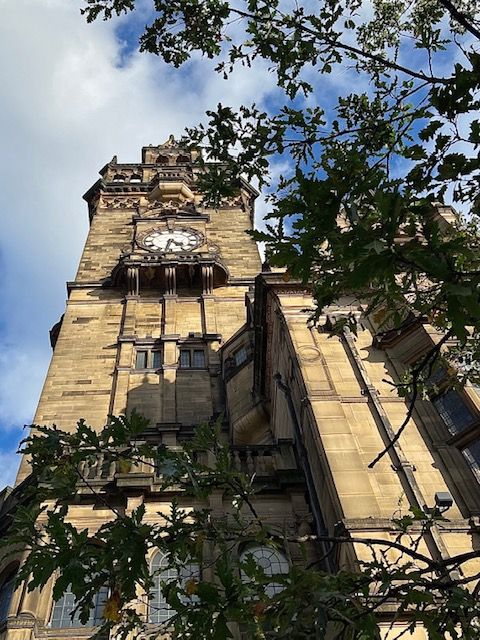
Restoration work this century revealed that stone for the Town Hall clock tower came from a long-disused quarry at Walkley. Photograph: DJP/2021
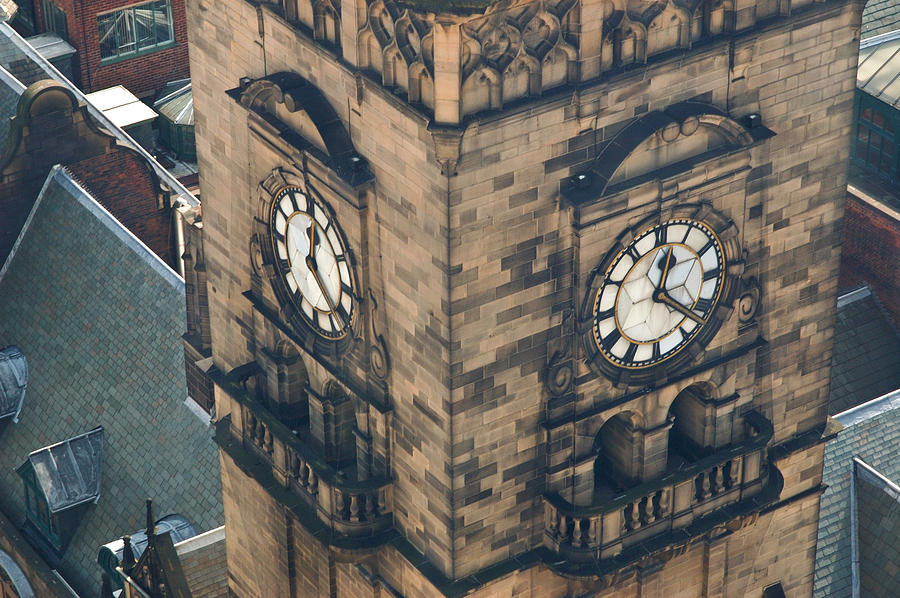
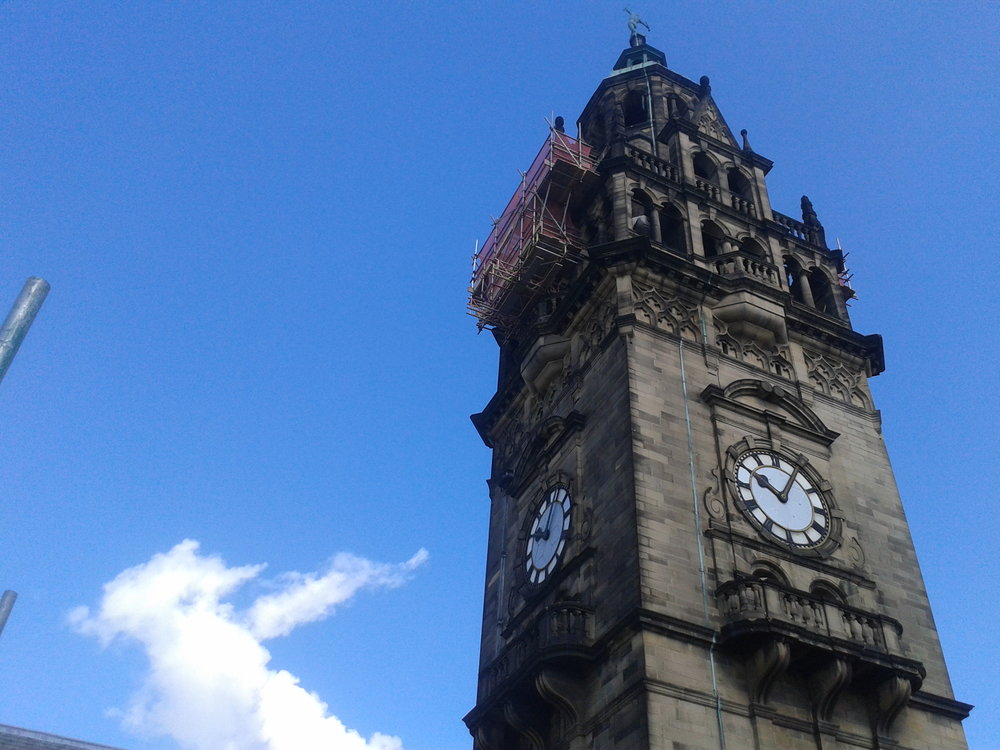
Sheffield’s third Town Hall was designed by Edward William Mountford, a London architect, and opened in 1897. Its clock and tower, the face of our city, stands at the north-east corner, over 100ft high and topped with a statue of Vulcan, the Roman god of fire and metalworking.
The tower is built on a bed of concrete, 30ft square, and 25ft thick; the concrete itself resting on solid rock. At ground level the walls are about five feet thick, and when it was built the strong room for the City Accountant was located here. The dome and spire at the top of the tower are covered with copper.
It was always thought that the tower was made of ‘Stoke’ stone from Stoke Hall Quarry, near Grindleford, but restoration work in 2017 revealed that it was from a long-disused quarry at Walkley.
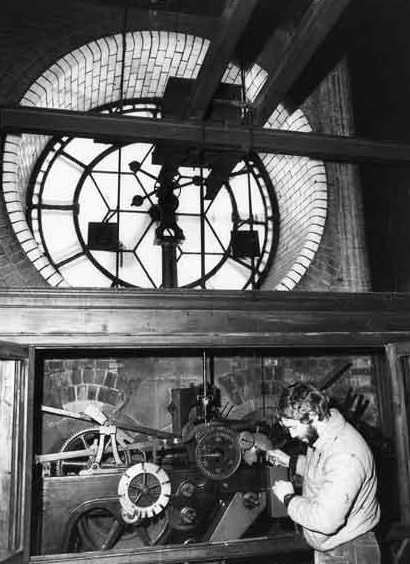
The Town Hall clock was the work of William Potts and Sons, Leeds, clock makers to Queen Victoria, and was constructed to strike the quarters and hours on heavy bells. However, Sheffield Corporation waited for somebody to show their public spirit and provide the bells – something that never happened – and without it the striking parts of the clock were useless.
The frame of the clock was in one solid casing, planed perfectly flat on the top and bottom surfaces. It rested upon iron girders, supported by stone corbels built into the tower wall, and provided a rigid foundation for good time-keeping.
The large main wheels for the hour and quarter parts were 22 inches and 20 inches in diameter, respectively. The hour main wheel had ten steel cams attached for lifting the hammer to strike the large bell, with the quarter wheel having suitable cams in readiness for the ‘phantom’ bells. The large gong wheel was 20 inches in diameter.
The workings of the Town Hall clock. Seen here in the 1980s. Photograph: Picture Sheffield
There was special arrangement for accurately discharging both the hour and quarter parts, with set dials showing both seconds and minutes, and was known as the double three-legged gravity, the invention of Edmund Beckett, 1st Baron Grimthorpe, the man behind Big Ben’s clock, with the two seconds pendulum compensated for differences of temperature and heavy cylindrical bob.
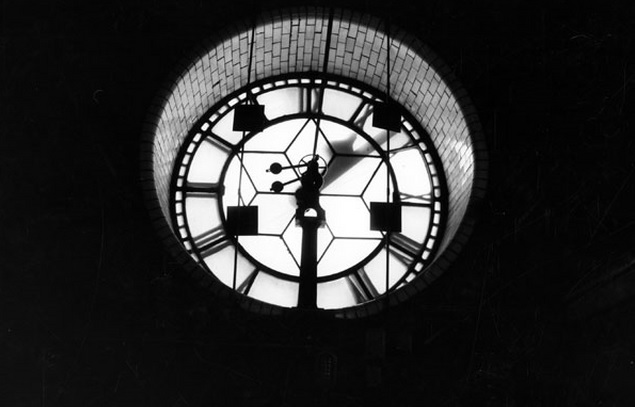
There were four dials, each 8ft, 6 inches in diameter, formed of skeleton iron castings filled in with opal glass, originally illuminated at night by gas, with suitable reflectors behind. The hands were made of stout copper, counterpoised inside, and the motion wheels were made of hard brass, the teeth cut out of it. The bevel work was carried by light iron girders placed across the clock room, and the whole clock was enclosed in a neat wooden case to keep it clean.
The four faces of Sheffield Town Hall’s clocks. Work started in 1890 and wasn’t completed until 1897. Photograph: Rob Huntley
It was not until 2002 that the Town Hall got bells – but nothing as elaborate as once intended. The chimes that now ring out across the city centre comes from an electronic sound-system providing hourly strikes and Westminster-style quarter chimes.
The clock tower was exposed to Sheffield’s pollution and weather for well over a hundred years and had to be restored at a cost of £86,000 in 2017. The original ironwork which had corroded within the structure was exposed and treated and indent repairs were conducted to the ornate carved capitals. Other masonry was repaired and repointed, as necessary. In addition, new rainwater pipes, asphalt floors and gutters were installed. Suitable fine sandstone providing a good match with the original stone was sourced from local suppliers based in Chesterfield.
The clock tower stands at the north corner of the Town Hall, set back slightly in deference to the main façade. This photograph from contractor Maysand shows restoration work in 2017
Sheffield Corporation could not decide whether or not to install a four-ton bell at a cost of £400 before the building of the tower was completed. It was said that if the bell were not put in, but it was decided to put it in later, a great deal money would have to be spent and serious damage done to the tower.Photograph: Picture Sheffield
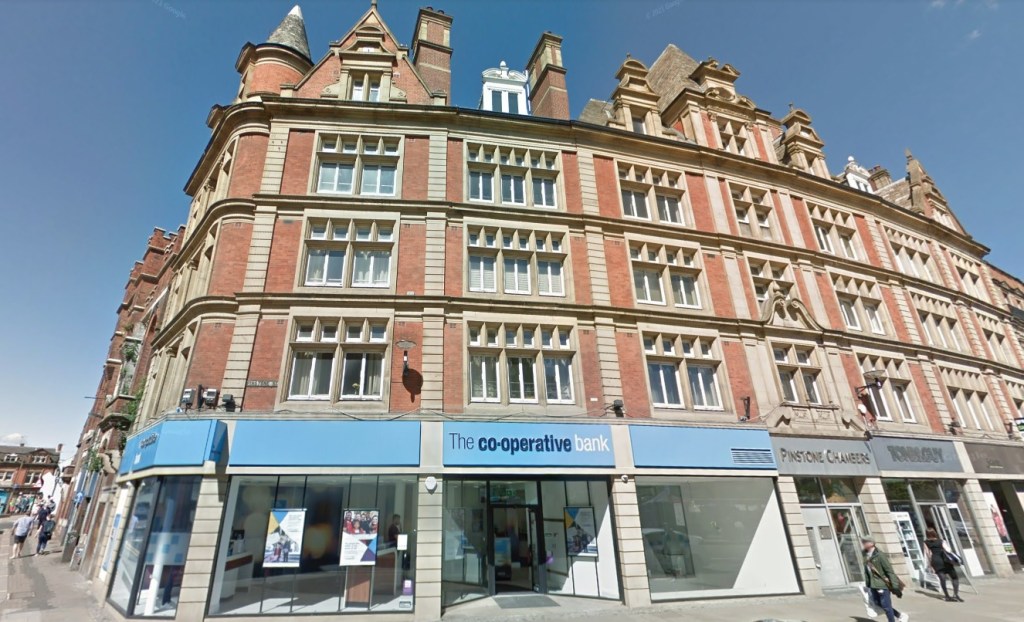
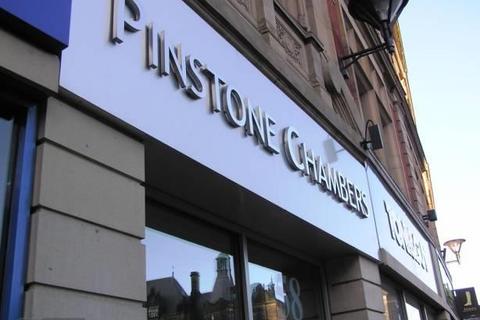
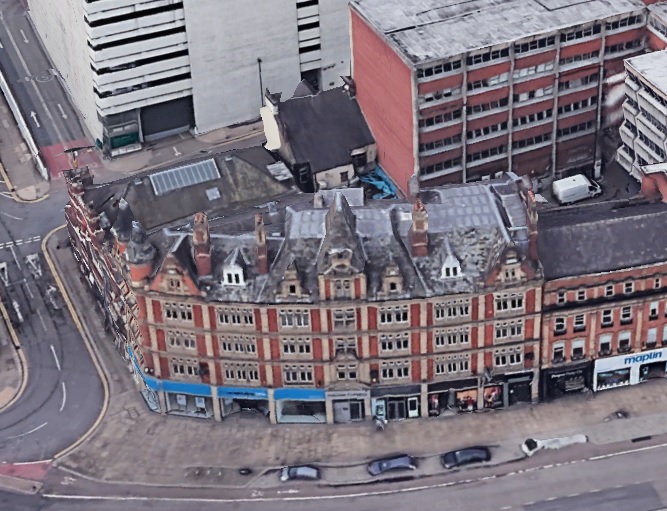
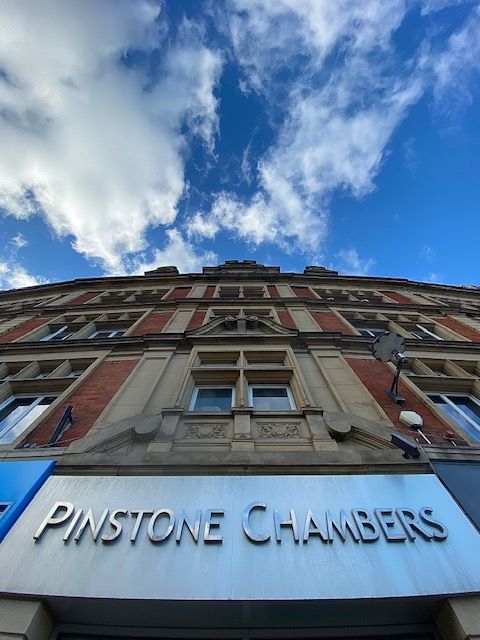
Pinstone Chambers. Elegant, its exterior untouched, and one of the few buildings that doesn’t form part of the Heart of the City II development. Photograph: Google.
Heart of the City II is altering the way our city centre looks. We must go back to Victorian times to see anything resembling the magnitude of this change. Before then, the area around Pinstone Street was a region of dirty, narrow, streets and alleys that led to nowhere. The poor were abundant, and then the jennel known as Pinstone Street was replaced by a broad thoroughfare, and the people who lived under the shadow of St. Paul’s dome (now Peace Gardens) migrated southward. With it came shops and offices that are no longer suitable for the 21st century… and now we are preserving the look, but removing the myriad of old corridors, staircases, and rooms behind.
Once completed, almost the whole of the west side of Pinstone Street will have been touched by redevelopment… and that is quite a remarkable achievement.
One building will remain, oblivious to the change around it, and one that rarely gets a mention.
Few people realise that the entrance to Pinstone Chambers once led to the remarkable building behind.
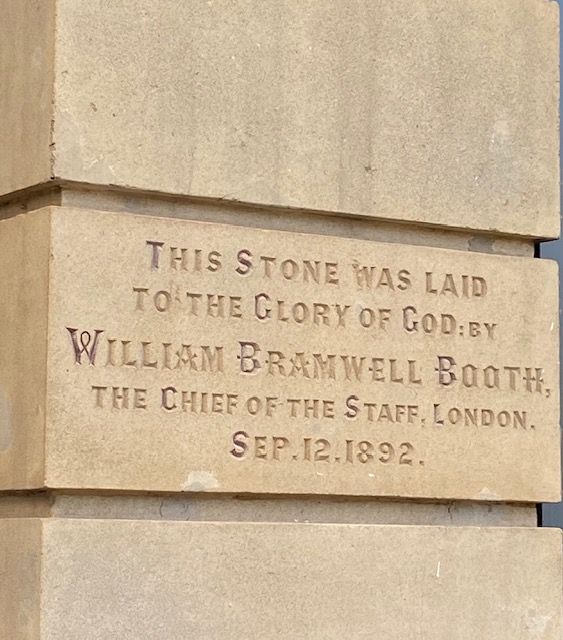
For all to see. This stone was laid by William Bramwell Booth, the Salvation Army’s Chief of Staff. It can be seen to the right of the modern-day entrance. Photograph: DJP/2021
We can trace Pinstone Chambers (Nos. 44-62 Pinstone Street), at its corner with Cross Burgess Street, back to 1891, when the Salvation Army ‘planted the flag’ on a piece of land bought from Sheffield Corporation. A year later, a ceremony took place to turn the first sod. ‘The waste piece of ground has been as free of turf as a billiard ball is of hair, it was hard to see where the sod would be found.’
The foundation stones were laid in September 1892, and formed part of an inner wall, the inscriptions on them visible in the entrance hall by which the Sheffield Citadel behind was approached from Pinstone Street. By this, we know that this building was steadfastly linked with the Salvation Army’s place of worship, one that survives in disgraceful neglect, and awaits its own course of redevelopment.
The architect was William Gillbee Scott (1857-1930), who designed the Gower Street Memorial Chapel (now the Chinese Church in London), and the London and Provincial Bank in Enfield.
The building is curved on plan, has five storeys, and has seven bays at the east return and one along Cross Burgess Street to the south. The building is Classical in style and has red brick elevations with contrasting sandstone dressings. Architectural features include ground floor shopfronts, mullioned fenestrations, casement windows and rusticated pilasters between bays.
The building was erected by Messrs. Thomas Fish and Son, Nottingham, and comprised accommodation on the top floor, offices beneath, and six large shops on Pinstone Street. Painting and decoration were by Thomas Toon, of Nottingham.
The land cost £7,812, and the building work over £16,000, the shops and offices used to bring in considerable income for the Salvation Army.
It was opened by Commissioner Thomas Henry Howard, on 27 January 1894.
This photograph in the Picture Sheffield collection shows the construction of the Citadel Building between 1892-1894. St. Paul’s Church, on the right, stood where the Peace Gardens are now. Photograph: Picture Sheffield.
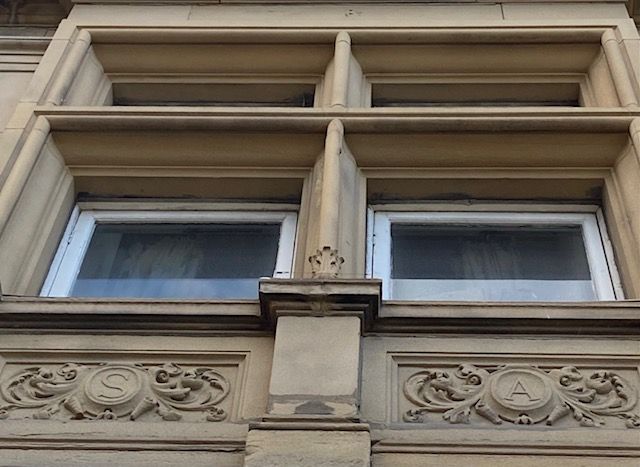
The carved initials of the Salvation Army above the main entrance. Photograph: DJP/2021
The main entrance to the Citadel was from Pinstone Street, flanked by the row of shops. The visitor passed along a vestibule lit by gas in ruby globes. The walls were decorated in green sage, with a deep maroon dado, and the floor was paved in mosaic style. Inserted into the wall on the right were the dozen stones, laid when the building commenced, with the names of those who undertook that duty.
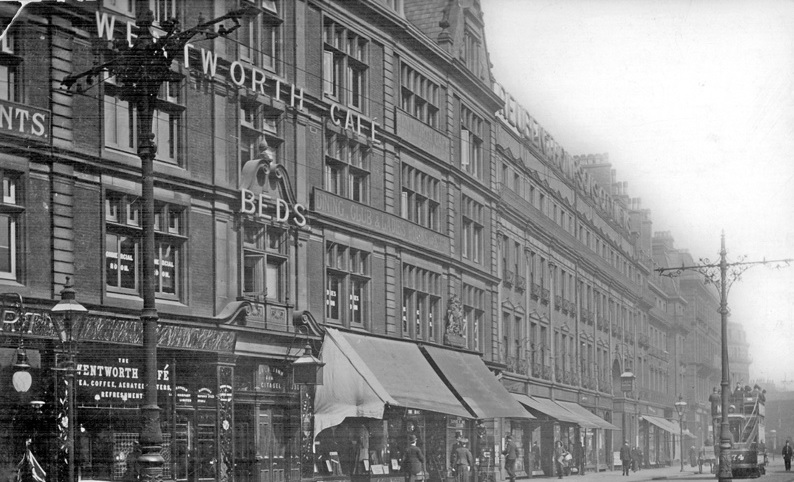
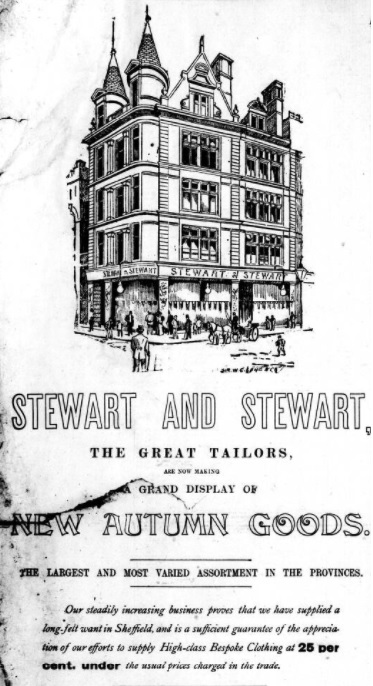
While the temperance rooms at the Citadel are decisively linked with the Salvation Army, the Citadel Building (as it became known) was better known for its commercial activities. Soon after it opened it was occupied by the Wentworth Café and Hotel, moving here from Holly Street, a socialist meeting place famously linked with Edward Carpenter. That association ended in 1922 when the whole of the premises was leased by Stewart and Stewart, the well-known tailors, who extended from next door.
The Wentworth Cafe and Hotel occupied most of the building from about 1898 to 1922. The entrance to the Salvation Army Citadel can be seen centre-left. Photograph: Picture Sheffield.
One of the original occupants. This newspaper advertisement from 1898 is for Stewart and Stewart who later leased the whole of the ground floor. Photograph: British Newspaper Archive.
The Sheffield Citadel was built at the same time as Pinstone Chambers. Despite the contrasting styles, the two buildings were connected by a corridor leading from its main entrace on Pinstone Street. Photograph: Sheffield Star.
Afterwards, while shops frequently changed hands, the upper floors were used as offices until the interiors of Pinstone Chambers were completely remodelled for city living accommodation.
The Salvation Army moved out of the Citadel in 1999, the crumbling shell still attached to Pinstone Chambers, but the old main entrance and corridor to it long since blocked-off.
Is the ‘foundation stone’ wall still visible in the old vestibule? What survives of the Victorian floor mosaic? Is there any evidence of the sage green and deep maroon decoration?
Probably not.
With its curved Queen Anne facade, Pinstone Chambers remains one of Sheffield’s most attractive buildings. Photograph: Google.
Pinstone Chambers. The National Market Traders Federation was founded at the Wentworth Café in 1899. Photograph: DJP/2021)
Pinstone Chambers. The carved initials of the Salvation Army can be seen above the entrance. Photograph: DJP/2021
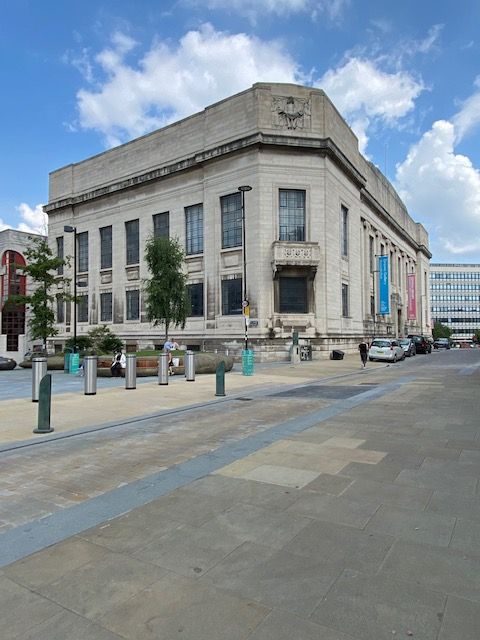
Sheffield Central Library on Surrey Street is also home to Graves Art Gallery. Photograph: DJP/2021.
You’ve probably seen the Bowmer & Kirkland signs on hoardings and cranes around Sheffield. The Derbyshire-based construction and development company is responsible for Moor Market, No.3 St. Paul’s Place, St. Vincent’s Place, New Era Square, and is backing the developer behind the West Bar scheme.
The company was established in 1923 as a partnership between joiner Alfred Bowmer and bricklayer Robert William Kirkland. The current chairman is Jack Kirkland, businessman, art collector and philanthropist.
Bowmer & Kirkland was founded in 1923 and is based at Heage, near Belper, Derbyshire. Photograph: Bowmer & Kirkland.
Kirkland first started buying art around 20 years ago, purchasing a work by the US conceptual sculptor Tom Friedman. While big on American modernism and Latin American contemporary art, his collection also includes Hellenistic bronzes, a Carracci portrait, and an Egyptian faience baboon.
His sizeable collection of interwar European photography is promised to the Tate, where he is Co-Chair of its Photography Acquisitions Committee. He is also the chairman of Nottingham Contemporary and a trustee of the Bridget Riley Art Foundation.
Kirkland is also chairman and settlor of The Ampersand Foundation, a UK-awarding charity that supports the visual arts, exhibitions, projects, and supporting public collections, provided they are free to the public at least one day per week.
Jack Kirkland’s art collection has been loaned for international exhibitions, and some of the works have been previously shown at Graves Gallery in Sheffield. Photograph: Apollo Magazine.
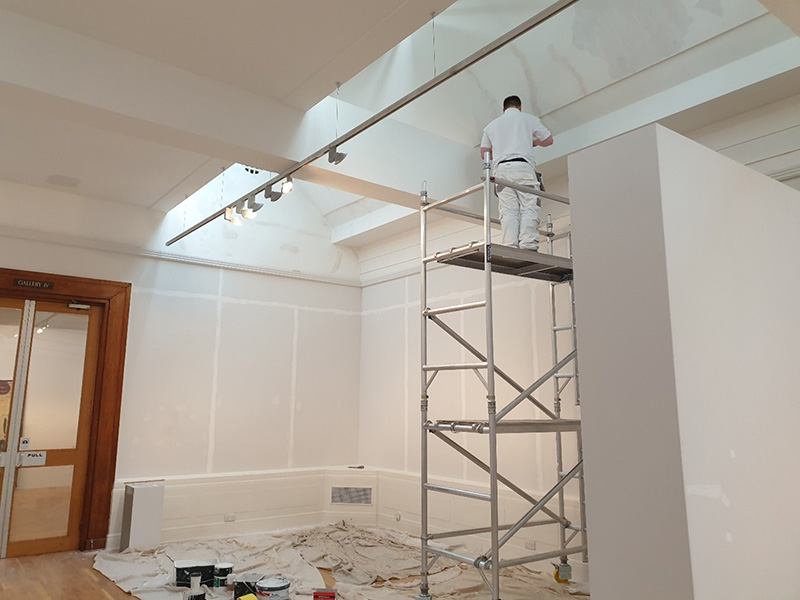
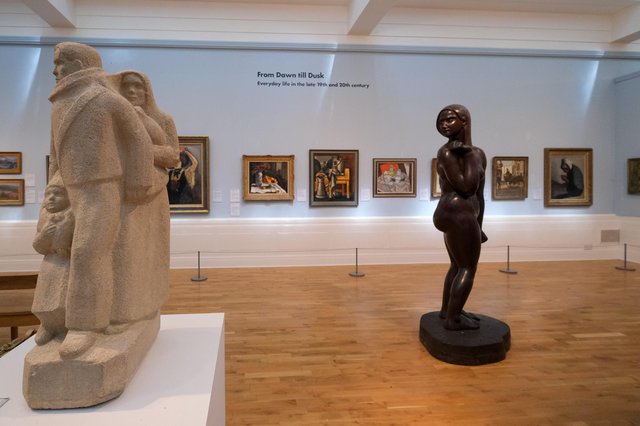
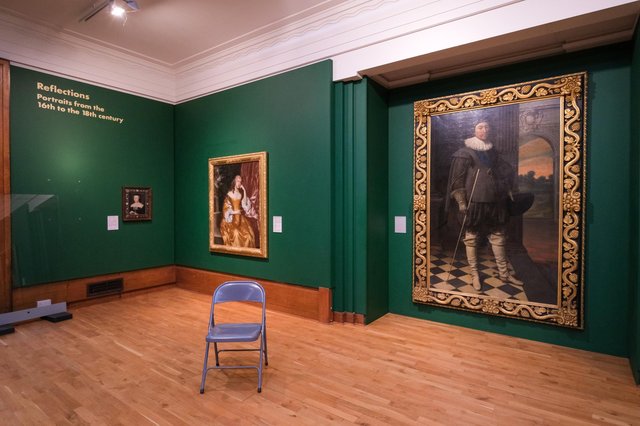
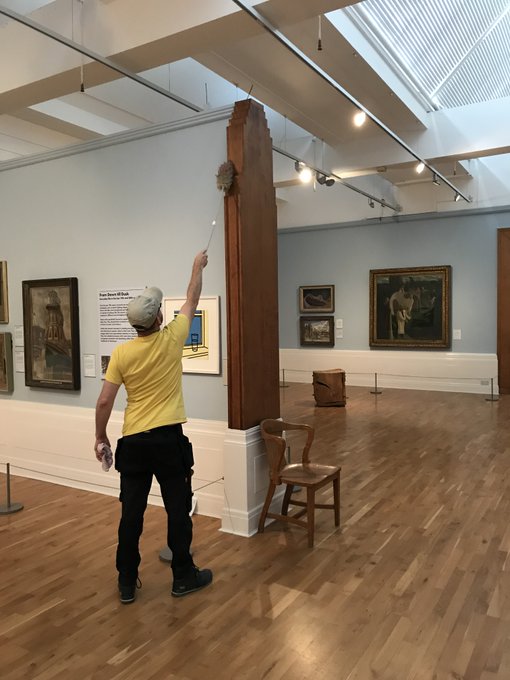
Last Friday (3 Sep 2021), the Graves Art Gallery in Sheffield reopened after six months of renovation work to redecorate, re-clad the walls in galleries largely untouched since 1934, bring many artworks out of storage for new displays, and to showcase work with a fresh perspective on classic art.
It has all been possible after a grant of £455,000 from the Ampersand Foundation, a long-time backer of Sheffield Museums, and the largest single amount ever awarded by the charity.
The grant echoes the day when Sheffield Central Library and Graves Art Gallery were opened by the Duchess of York (Queen Mother to our younger readers) in July 1934.
The newly reclad and redecorated temporary exhibition space, galleries 2 and 3, will reopen with an exhibition celebrating the work of sculptor Mark Firth, great, great grandson of steel magnate and philanthropist Mark Firth. Photograph: Sheffield Museums.
The total cost of the building was estimated at £141,700, of which £114,700 represented the structure, and £27,000 the furnishing. Alderman John George Graves contributed £30,000 and gave the gallery’s director, Dr J.M. Rothenstein, unrestricted choice from his own art collection, with power to borrow whatever was needed.
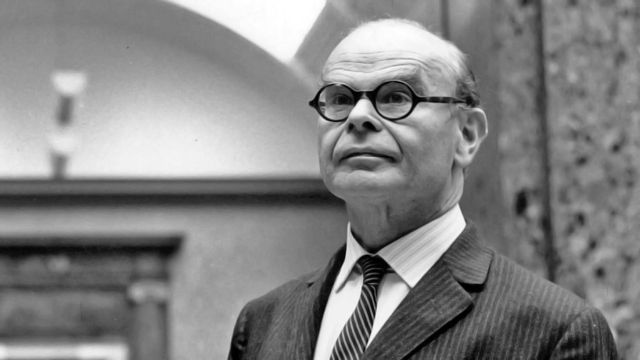
John Rothenstein was born in London in 1901, the son of Sir William Rothenstein, whose family was connected to the Bloomsbury Set. Photograph: Geni.
Sir John Knewstub Maurice Rothenstein CBE (1901–1992) had served as Director of Leeds City Art Gallery, and was appointed Director of Sheffield City Art Galleries (1932-38) where he oversaw the establishment and opening of the Graves Art Gallery. From 1938–64 Rothenstein was Director of the Tate Gallery in London.
Rothenstein carefully planned the interior which was of dark blue rough-textured paper, to take advantage of each collection in its eight galleries.
It’s been a long road since, overshadowed by recent events in which the Central Library and Graves Art Gallery were almost sold to become a five-star hotel, and the fact that it needs about £30m investment in maintenance.
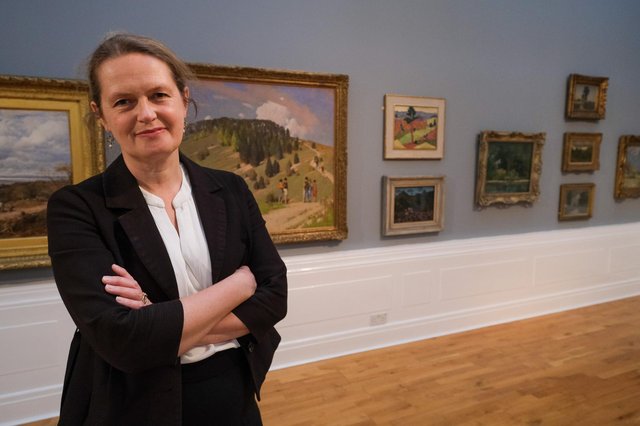
Kim Streets was appointed to the role of CEO of Museums Sheffield (now Sheffield Museums)in 2012. She is seen here at Graves Art Gallery before the reopening to the public. Photograph: Sheffield Telegraph.
The gallery has not had a major redisplay and some of the spaces were in desperate need of a refresh.
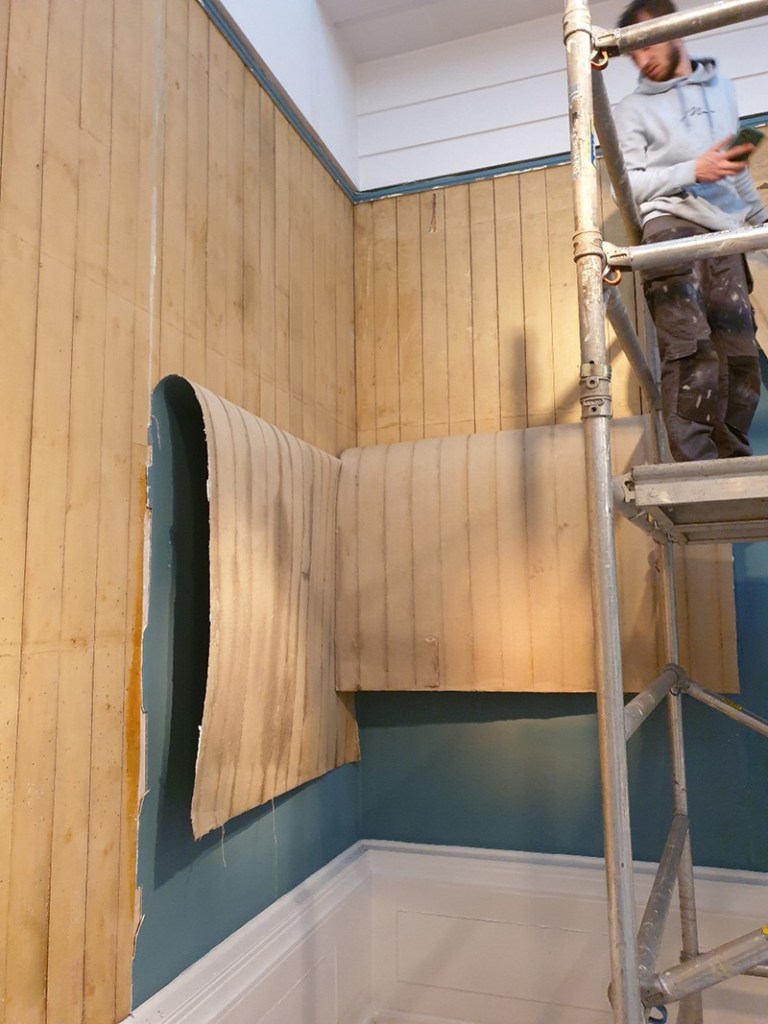
The project began back in the winter with the removal of the artworks from the gallery walls, allowing skilled contractors to re-clad galleries 2, 3 and 6. The contractors removed the existing wall cladding before fixing new sheets of MDF to create smooth walls – a first in decades for these galleries.
The final phase of the improvements was the installation of new MDF walls and woodwork, that were then painted and finished ready for the new displays.
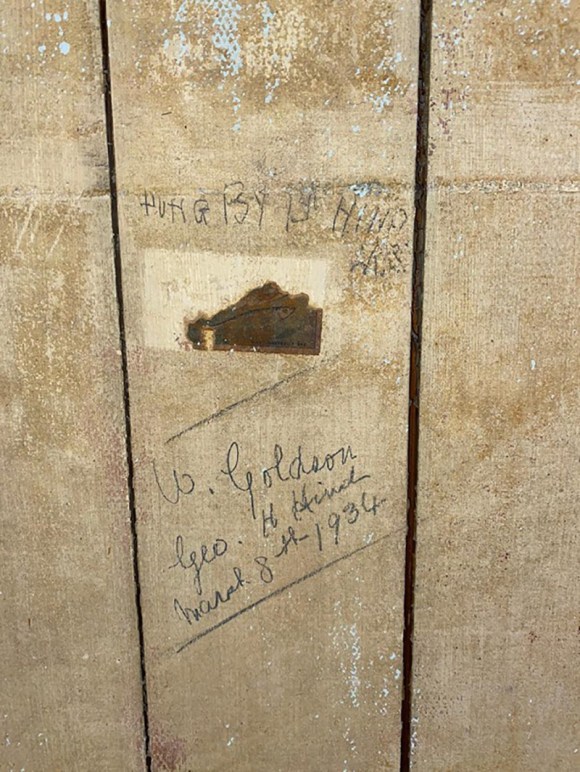
Top layer of the walls coming away to reveal vertical wooden planks. These planks had been covered in hessian many decades ago and the hessian had then been covered with layers and layers of paint over the years. Photograph: Sheffield Museums.A set of signatures by the original builders of the Central Library and Graves Art Gallery, which opened in 1934. Photograph: Sheffield Museums.Refurbishment and re-hanging nears completion as Graves Art Gallery gets ready to reopen to the public. Photograph: Sheffield Telegraph.
It is understood that the Ampersand Foundation will be supporting the Graves Art Gallery with further redisplays, conservation of the city’s art collection, work with schools and artists, and more over the next four years,
Jack Kirkland, the charity’s chairman, says Sheffield Museums is “using the money as it was intended to be used: that is for the benefit of all Sheffield residents and visitors, and in particular children and young people”.
I might suggest that J.G. Graves would have approved.
A fresh new look for Graves Art Gallery. Photograph: Sheffield Telegraph.
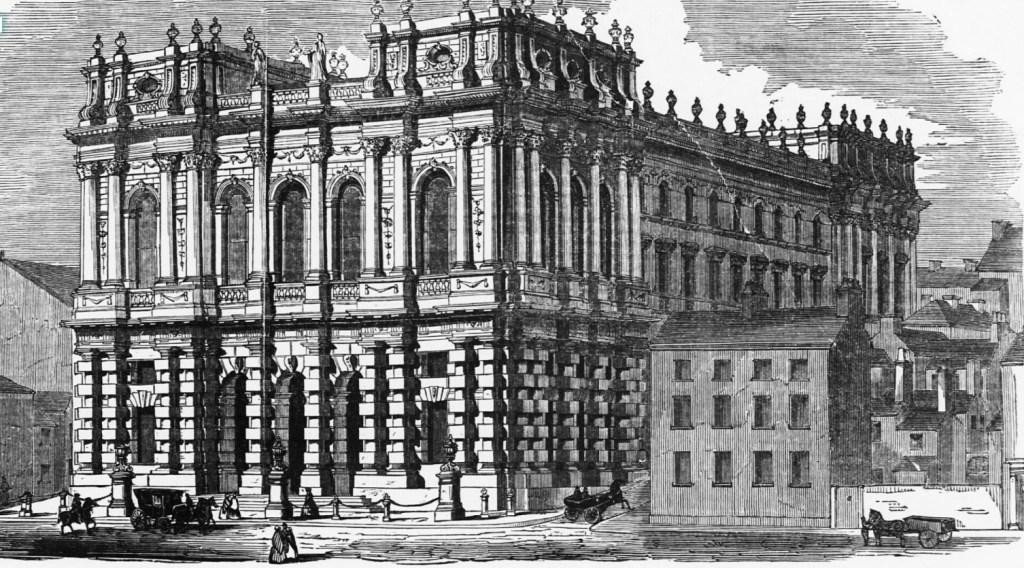
“The architects have embodied and concentrated, in an excellent manner, the scattered ideas that were floating in the minds of many.” – Sheffield and Rotherham Independent (1847). Photograph: British Newspaper Archive.
From the archives. The year is 1847, and there was talk of a new public building in Sheffield. People were excited. The town was without a public building worthy of its name and enviously looked to Liverpool with St. George’s Hall, and Birmingham with its noble Town Hall.
Unexpectedly, the architects, Flockton, Lee, and Flockton, off its own back, came up with a design, and presented it to the Town Council. This would have been an ample hall for public meetings, a large room for public dinners or lectures, permanent places for the Town Council, the Bankruptcy Court, the Small Debts Court, the School of Design, and a large Museum.
The Town Council was shocked, flinched at the cost to build it, and dismissed the proposal.
However, the Sheffield and Rotherham Independent, a supporter of the scheme, had other ideas. The newspaper published a detailed sketch of the building, along with floor plans, and advocated that it should be built.
The public was divided. Some said it had to be done, others said they would like to see it built because Sheffield would then have had a building unequalled by other towns, but the general feeling was that times were hard, and that it could not be allowed to continue.
It wasn’t built, and if it had been, we can only speculate as to what its future fate might have been. Would it still be standing? What condition would it be in? Might it have been destroyed by German bombers?
Most of us will be surprised as to where it was intended to be.
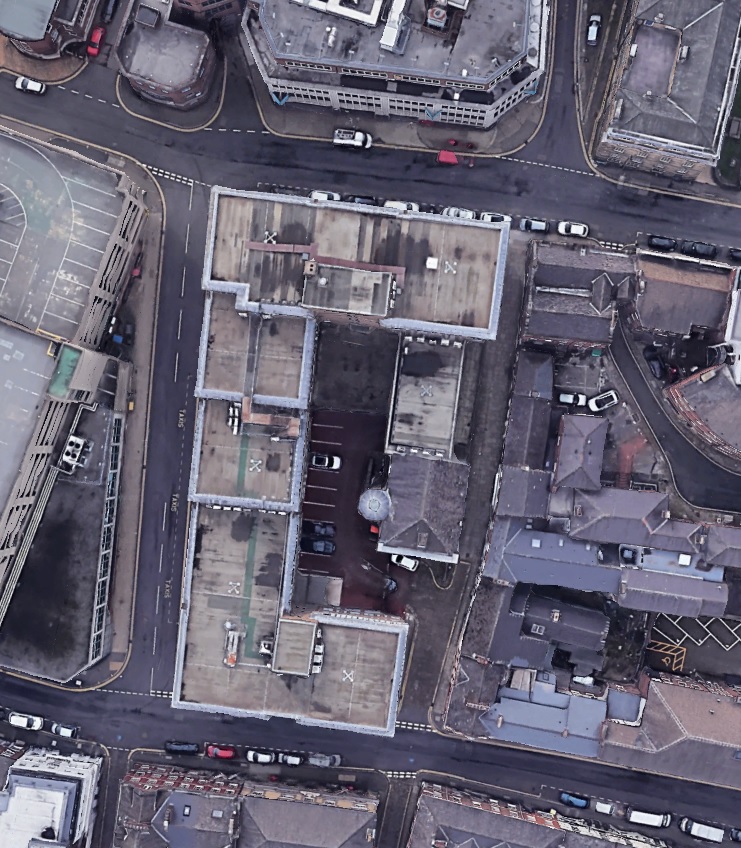
The proposed site comprised nearly 3000 square yards, in an oblong shape, stretching from Bank Street (bottom) to Hartshead (top). “It was occupied by buildings which are of small value.” Photograph: Google.
The site was a plot of sloping land bounded on the north by Bank Street, on the south by Hartshead, on the east by Meetinghouse Lane, and on the west by Figtree Lane. Today, it might seem to have been absurdly in the wrong place, but in the 1840s the area was close to where Sheffield began.
Bank Street wasn’t created until 1792, and was intended to be called Shore Street, named after John Shore, a banker, and this was the name used on leases granted when he cut up his land for building purposes.
In 1793, we find reference to a “new” street in Sheffield called Bank Street, indicating that Shore had just built the town’s first bank here. In effect, the area was a developing financial district, and a public building might not have been so preposterous after all.
“Is the town prepared for so large an undertaking?” asked the Sheffield and Rotherham Independent. “Perhaps not, just now; but there are several considerations that may tend to prepare it.
“In the first place, if the town is to build, as build it must ere many years have elapsed, it must look beyond the present. A public building is not made like a coat, to fit exactly when made, and be soon worn out. It should be built for two centuries, or more.
“The question should not be how little will it serve now? But how can we adequately provide for the present and future, combining at once magnitude of conception, liberality of spirit, and wise economy?
“The expense could not fail to be considerable, but spread over thirty or forty years, it would never be felt as a very heavy burden. This is a wide policy of the Wesleyan body, who, when they build a chapel for the next generation as well as for the present, conceive that the payment should be by those who are to enjoy it hereafter, as well as by themselves.”
What would our ancestors have got for their money?
The descent from Hartshead to Bank Street was about 30ft, allowing for two frontages – one to Bank Street, and the other to Hartshead.
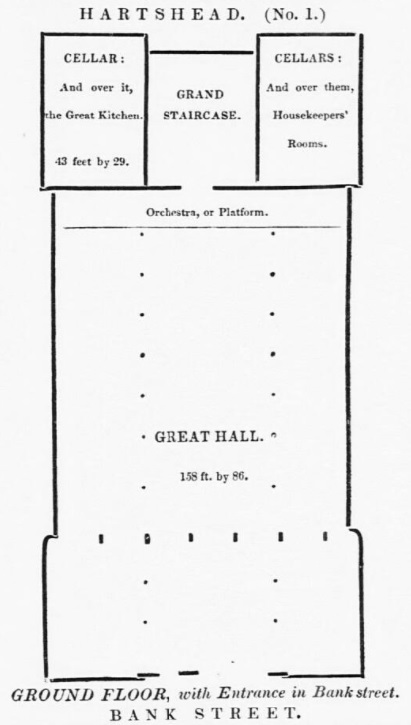
It was proposed to make the Bank Street entrance into a large hall for public meetings, affording standing room for 9000, or sitting room for 3000 persons. This hall would have occupied the whole base of the building with a grand staircase leading up to Hartshead.
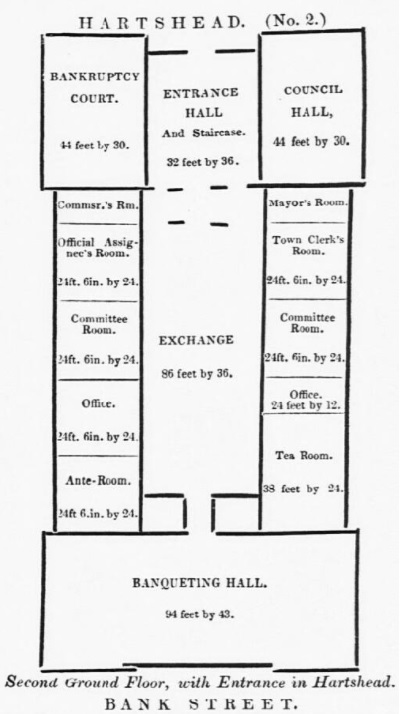
The entrance hall at Hartshead would have led to a Bankruptcy Court on one side, and a Council Hall on the other. To these rooms would have been private apartments for the Mayor and the Bankruptcy Commissioner. The entrance hall would have led into an Exchange, covered by a glass dome 50ft above. Alongside would have been offices and committee rooms, with a Banqueting Hall at the Bank Street end.
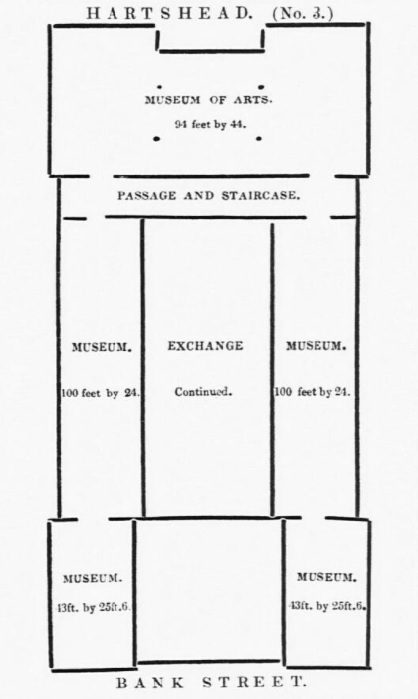
The topmost story would have extended the whole of the building, excepting the Exchange, and would have provided a Museum of Arts, as well as four additional museum spaces.
Simple plans were prepared by the Sheffield and Rotherham Independent that showed the three-floor layout of the public building. Photograph: British Newspaper Archive.
In connection with the plan, it was intended to open a new street from Hartshead to High Street (along the line of what became Aldine Court) and opening the end of Watson’s Walk into Angel Street. Figtree Lane and Meetinghouse Lane would have been made wide enough for carriages.
“We do not suppose that the Town Council will embark hastily in this measure. They will listen for the public voice.”
The newspaper was correct because it was never built, and had it been so, we might not have had a need for Sheffield Town Hall or City Hall.
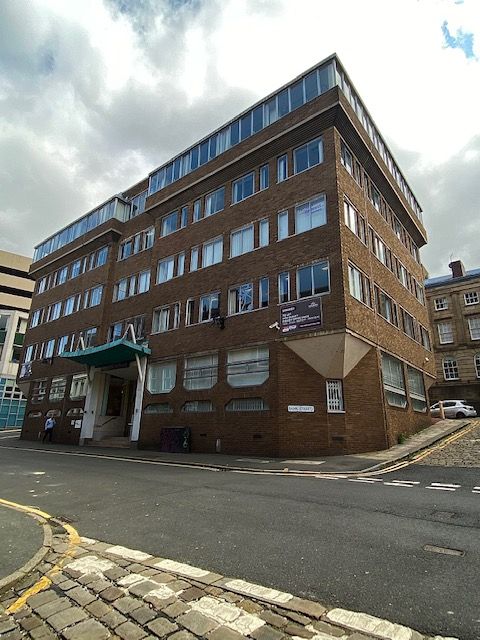
The building that never came to be. This modern-day image shows where the Bank Street entrance would have been had it been built. Photograph: DJP/2021.




 sheffielder.net