There will be angry cries. There will be tears. People will call out to protect the trees.
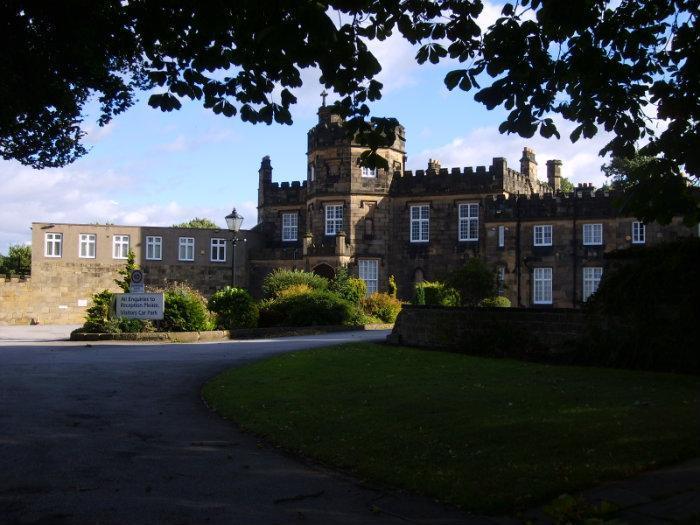
Banner Cross Hall once stood in rural idyll. Then Sheffield grew and surrounded it. In the 1930s, the fate of the old mansion was precarious. It was on the market and people feared that it would be demolished, and the beautiful trees would be lost. Many already had, but for 90 years since, it has been the company headquarters of Henry Boot and some of the surrounding habitat survived.
However, faced with enormous costs to modernise it, and make it environmentally friendly, Henry Boot is reconsidering its future at the Grade II listed mansion.
If it chooses to vacate, the likelihood is that Banner Cross Hall will be converted into luxury apartments with possible development in its grounds.
If this happens, prepare for objections, just like there were almost a century ago.
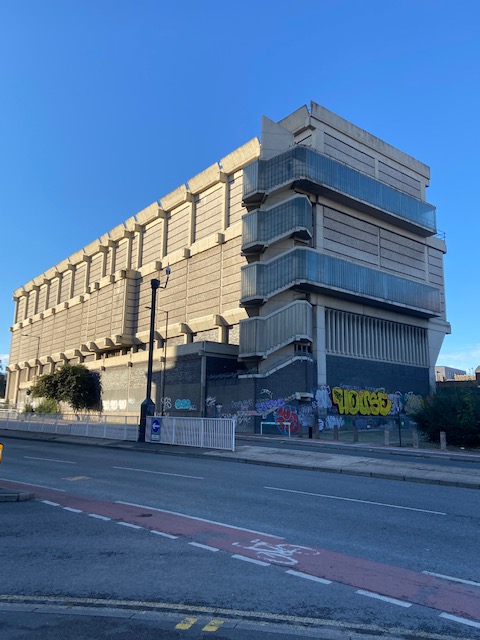
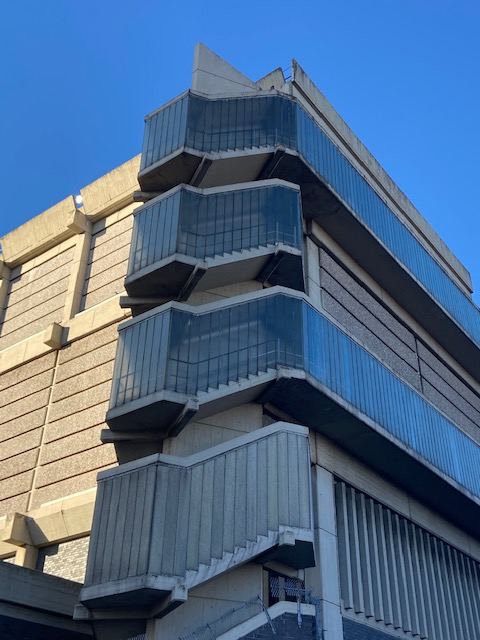
Electricity Substation, at the junction of Moore Street and Hanover Way. Built 1968. Photograph: DJP/2021
Here’s a building that attracts attention from all over the world. Strangely enough, it is a building that frightened me as a child. The cold, harsh, concrete structure overpowers one of the main gateways into Sheffield city centre.
Do we like it?
It seems that disapproval of Sheffield’s Brutalist architecture is reserved for Park Hill flats, and the Electricity Substation, on Moore Street and Hanover Way, seemingly escapes most criticism. And since October 2010, the building has been floodlit with coloured lighting at night-time creating a dramatic artistic focal point on Sheffield’s ring road.
Its history goes back to the early 1960s when electricity distribution in the city called for the use of a 275 kilovolt cable ring around the city centre with transformer and switching substations needed on the ring.
A substation was needed near the junction of The Moor and Ecclesall Road. Back then, this was an area largely occupied by substandard back-to-back housing and small cutlery works and was identified for redevelopment.
The original plan was square in detail, but this was rejected because it would have forced the closure of several small factories. Instead, an L-shaped plan, occupied by back-to-back properties, was devised by the Central Electricity Generating Board (CEGB) to be built in two phases.
The chosen site needed an architectural statement and the CEGB appointed Jefferson, Sheard and Partners of Sheffield and London, led by Bryan Jefferson, as architects to work with the board’s own civil engineer.
The result was this concrete building that housed transformers, switchgears, and busbars on separate floors. Phase 2, forming the other leg of the substation was never built because anticipated demand never materialised.
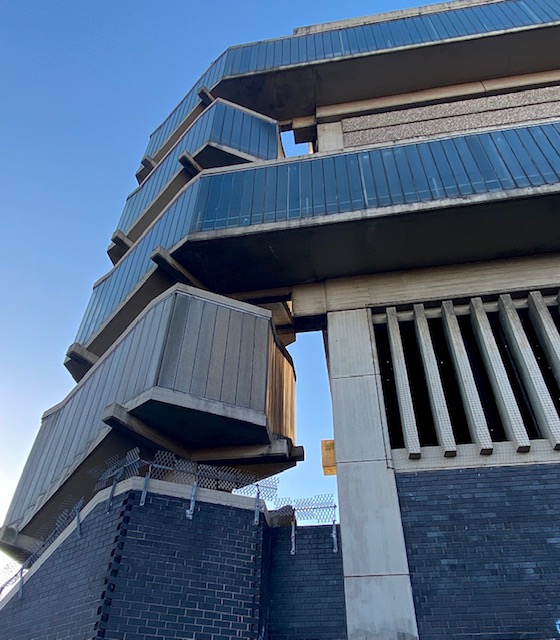
Vertical circulation is via an external staircase with covered walkway. Photograph: DJP/2021
The Electricity Substation was built by Longden & Sons and completed in 1968. In the same year, it was commended in the Financial Times Industrial Architecture Awards.
Constructed with a reinforced concrete frame with concrete floor slabs, blue engineering facing bricks, and cladding panels of Cornish granite aggregate, it was completed by Longden & Sons in 1968. In the same year, the building was commended in the Financial Times Industrial Architecture Awards.
The ground floor houses two transformers, with switch gear occupying the floor above. It was Grade II listed in 2013, considered to be of special interest, and is still in use, although advanced technology means the second floor is redundant.
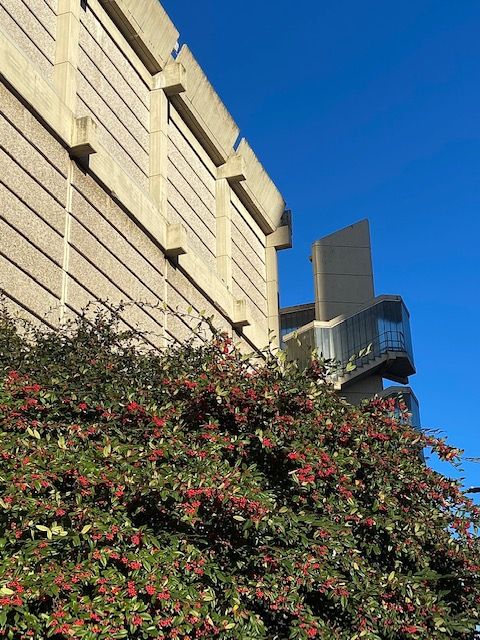
Exposed concrete panels are on the upper levels and are illuminated at night.Photograph: DJP/2021
Note: – Bryan Jefferson founded his practice with Garry Sheard in 1958, and the architects were also responsible for the Cinema and Entertainment complex in Pond Street, now occupied by Odeon Luxe, Tank Nightclub, and the O2 Academy.
The substation is highly unusual for its date as due to its prominent urban position in a post-war redevelopment area the transformers and switchgear are enclosed within an architect-designed building, rather than being located in an open-air site surrounded by security fencing as was the usual form for substations of this period. Photograph: DJP/2021
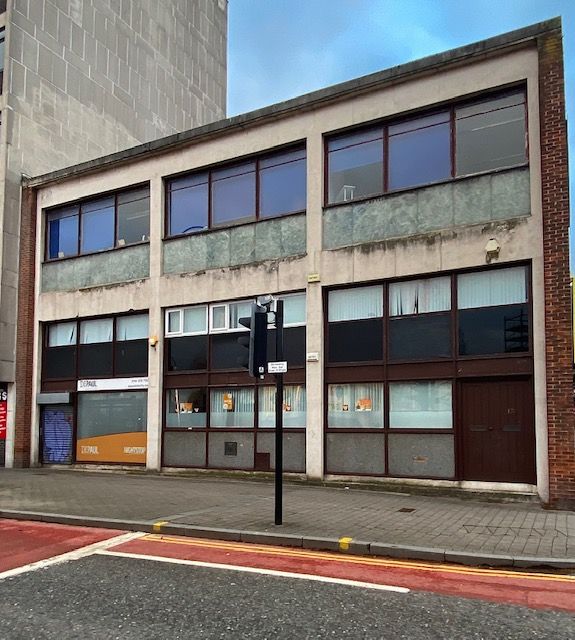
Former Martins Bank, now listed as Cumberland House, on Eyre Street, Sheffield. Photograph: DJP/2021
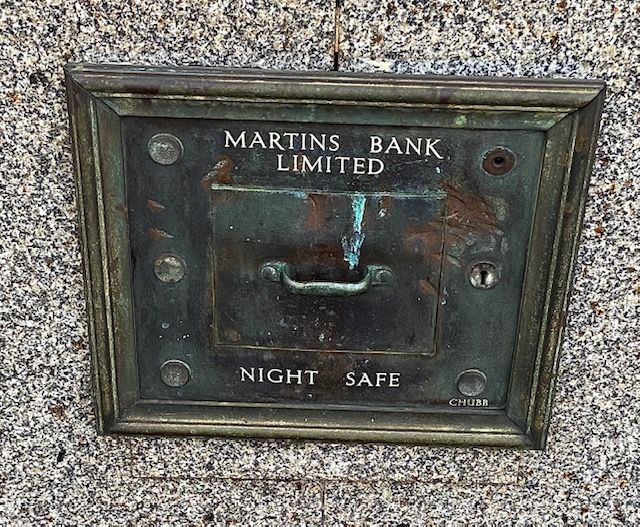
History is all around us. Keep your eyes open and sometimes you will see something that reveals something of our past. At the corner of Eyre Street and Cumberland Street, set in the wall of a building, is an old night safe. Unused for forty-eight years, it is marked ‘Martins Bank Limited’.
It is an obvious clue as to the origins of this rather run-down looking 1960s building, and tells us that once-smart buildings can become eyesores if we don’t look after them.
A clue at the building’s former use. Night safes were built on the outside of banks, allowing money to be deposited into the bank’s safe outside of bank opening hours. Photograph: DJP/2021
Martin’s Bank was a London private bank that could trace its origins back to the London goldsmiths. Martin’s agreed to its acquisition by the Bank of Liverpool in 1918, which wanted a London presence and a seat on the London Bankers’ Clearing House; the Martin’s name was retained in the title of the enlarged bank which was known as The Bank of Liverpool and Martin’s Limited. The title was shortened to Martins Bank Limited (without an apostrophe) in 1928.
The bank had a presence in Sheffield from 1927 when the Equitable Bank, at 64 Leopold Street, merged with the Bank of Liverpool and Martins. It outgrew the premises and opened a new branch in the Telephone Buildings at the bottom of West Street in 1930. It wasn’t until 1960 that a Sheffield University branch was opened, quickly followed by this purpose-built bank – Sheffield Moor – on Eyre Street. (Another, on Bank Street, came later).
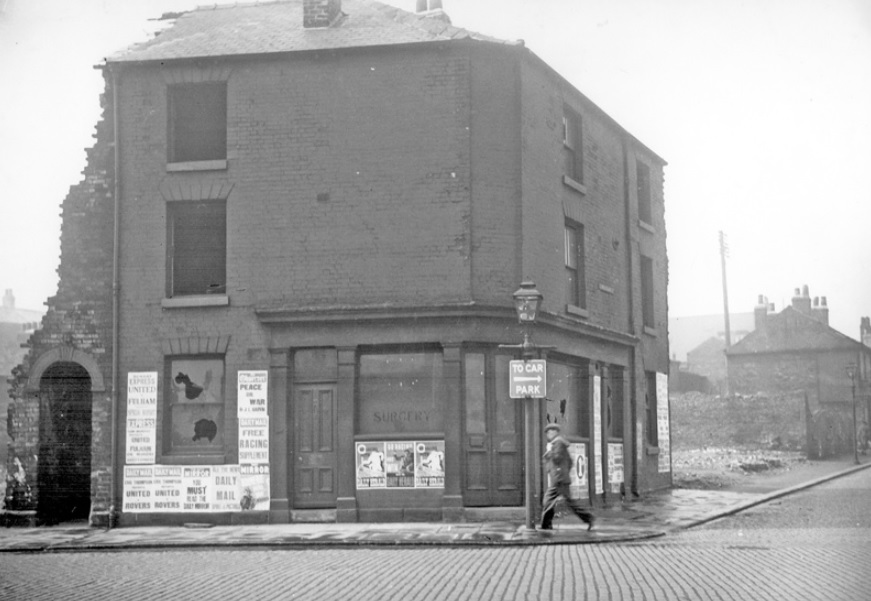
This branch opened in 1961 on land that had once been the site of Greer and Rigby, Surgeons, and land left vacant after the bombings of World War Two.
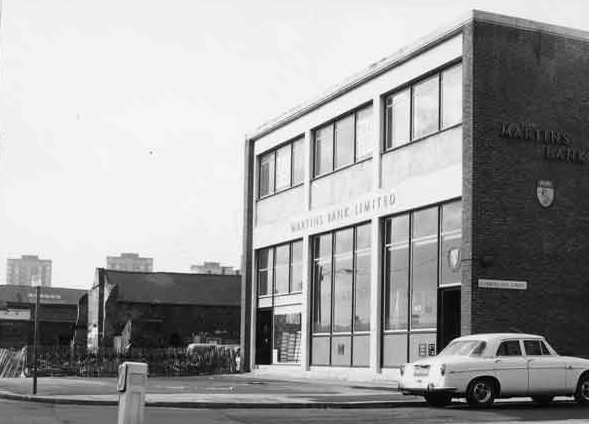
Junction of Porter Street and Cumberland Street (in background). No 118, Porter Street, former premises of Greer and Rigby, Surgeons. Former entrance to Court No. 10 on left. Porter Street later became part of Eyre Street. Photograph: Picture Sheffield
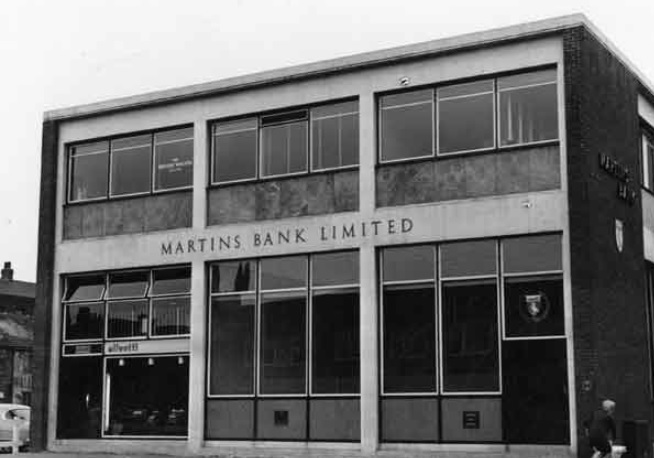
Martins Bank in 1963. It did not occupy all the building, following the Victorian tradition of creating shop and office rental space to generate additional income. Photograph: Picture Sheffield
Martins Bank in 1970. The old buildings adjacent were demolished to make way for Deacon House. Photograph: Picture Sheffield
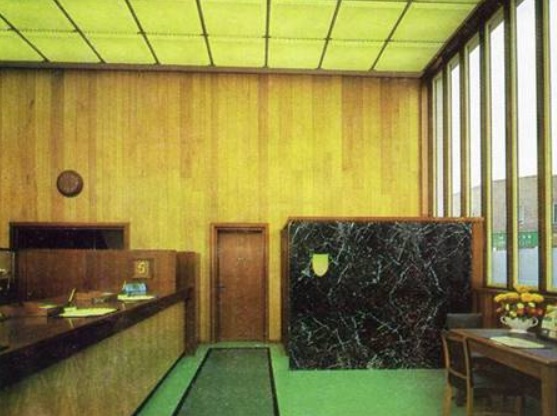
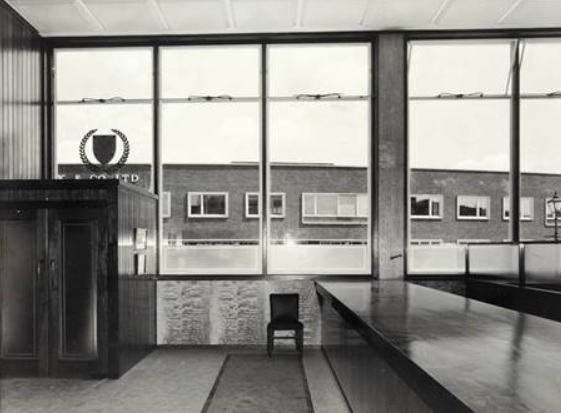
According to archives, this part of Sheffield was too far from the old commercial quarter to be effectively served by the West Street branch. “A beautiful modern building with interior décor which responds to the full blaze of sunshine most cheerfully, or, on a dark day when the illuminatedceiling has to be switched on, creates an oasis of light, warmth and welcome which makes it a pleasure to step inside.”
The ground floor was shared with Olivetti, typewriters, and office machine dealers, while the British Wagon Company occupied part of the first floor.
Martins Bank was bought by Barclays in 1968 and five years later the Sheffield Moor branch was closed – its existence as a bank lasting only twelve years.
The building itself was used for a variety of purposes, even a gym, and is now sub-divided as office space.
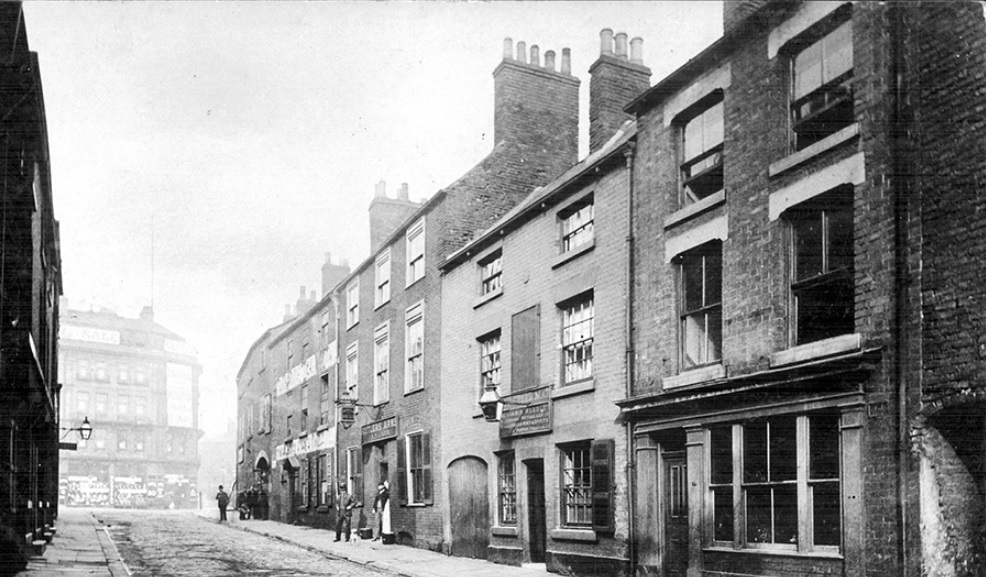
New Church Street, looking towards Pinstone Street, now the site of Sheffield Town Hall, No 7, Cutlers’ Arms P.H., No 9, Old Green Man, No 11, Henry Bocking, Beer Retailer. Late 1800s. Photograph: Picture Sheffield
Do council officials, working late at Sheffield Town Hall, ever hear strange noises in the stilly night?
Do they listen with bated breath to the sound of prancing horses and the ghostly cries of coachmen?
Or, when all is quiet, does a rich melodious voice, declaiming in grand style, passages from Shakespeare, ever strike their astonished ears?
Or, do council officials ever work late? Or do they work from home now?
If there is any such things as ghosts, Sheffield Town Hall must be peopled with a vast multitude of them.
New Church Street (not to be confused with Church Street, near the cathedral) was demolished about 1890 to provide room for the Town Hall. It lay almost through the middle of the site of the Town Hall, from what is now the (padlocked) main front entrance, to a point in the west wall opposite the Mercure Hotel.
The Cutlers’ Arms can be seen almost in the centre of the picture, with three people near the doorway, and was the terminus for all the Derbyshire coaches.
“It was a great sight to see them coming in from Tideswell, Castleton, Baslow, Bakewell, and other places. Each coach had its name; the only ones I can remember are the ‘Lady Peel’ and the ‘Surprise,’ both of Castleton,” said Ambrose J. Wallis, who owned the photograph in 1931.
“Next to the Cutlers’ Arms were the Old Green Man and the Grapes – three public houses in a row.
“Almost opposite the Cutlers’ Arms was the house of a man who used to engrave memorial plates, one of which was in York Minster.
“His wife kept a theatrical boarding house, where a number of famous actors stayed. The most famous of all was the great Shakespearean actor, Henry Irving.”
At another house, higher up New Church Street, Mr Wallis said, there lived a man called Dunkerley, who was one of the survivors of the Charge of the Light Brigade.
Castle House designed by George S Hay, Chief Architect for CWS, with interior design by Stanley Layland, interior designer for CWS. Reinforced concrete with Blue Pearl granite tiles and veneers, grey granite tiles and veneers, buff granite blocks, glass, and brick. Photograph: DJP/2019
Ever wondered who creates the subtitles for Hollywood movies from the likes of Disney, HBO, Paramount, Warner Brothers, Sony Pictures, Viacom, and Netflix?
Look no further than Sheffield company, Zoo Digital, established in 2001 by Stuart Green and Ian Stewart of Gremlin Interactive. In 2003 it had a worldwide smash with the first interactive DVD game, Who Wants to Be A Millionaire? Afterwards, it developed new tech and started subtitling, dubbing, cloud operations and streaming.
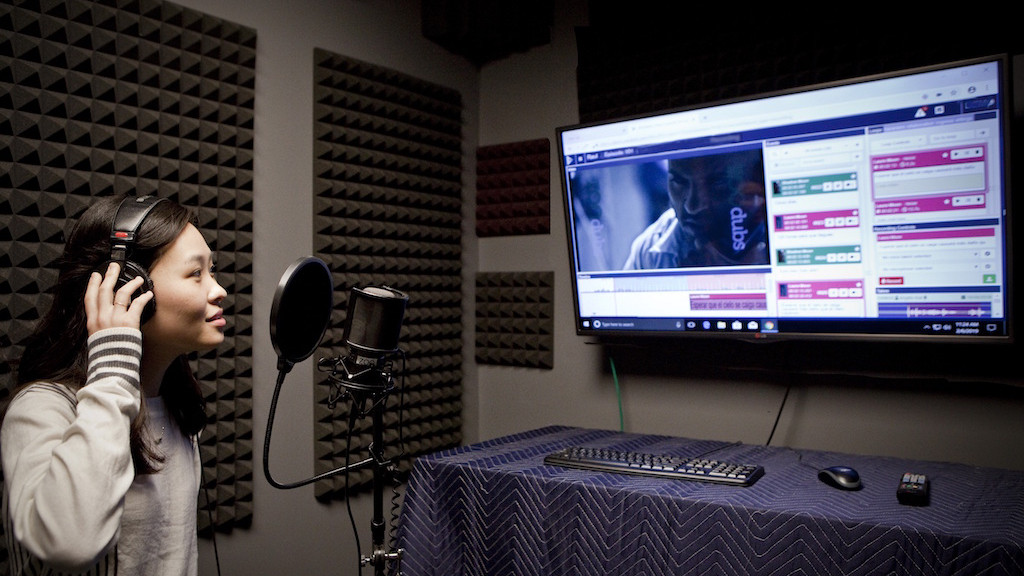
Zoo Digital creates subtitles and dubbing voiceovers in 80 languages for Hollywood films shown around the world. But unlike rivals based in studios shuttered by the pandemic, its cloud-based tech can be used anywhere. The firm has 7,000 freelance voice artists and translators who mostly work from home. It also has offices in London, Dubai, and Hollywood, with total global staffing at more than 270.
Recently, it completed a strategic investment in Istanbul-based media company ARES Media to grow ZOO’s services for Turkish content.
Zoo Digital posted posted a 64% increase in revenue for the six months ended 30th September 2021. Photograph: Insider Media
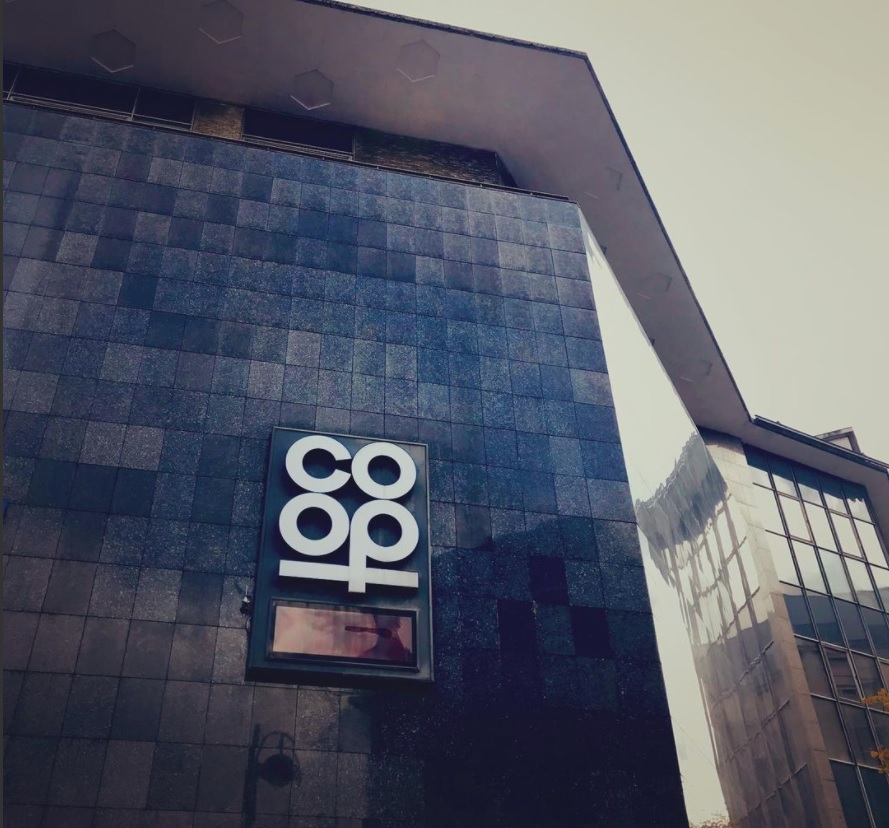
Based on St Mary’s Gate, it’s now moving all its 160 Sheffield-based workers into the former Co-op department store on Angel Street. It joins another top city tech firm, WANdisco, which made the building home in October 2019. Castle House is also home to popular food hall Kommune and a Barclays tech accelerator.
Grade II listed Castle House was designed by George S. Hay, chief architect for the Co-operative Wholesale Society, for the Brightside & Carbrook. It was built between 1959 and 1964 before closing in 2007.
ZOO operates from production facilities in the key entertainment hubs of Los Angeles, London, Turkey and UAE and has a development and production centre in Sheffield. Photograph: Netflix
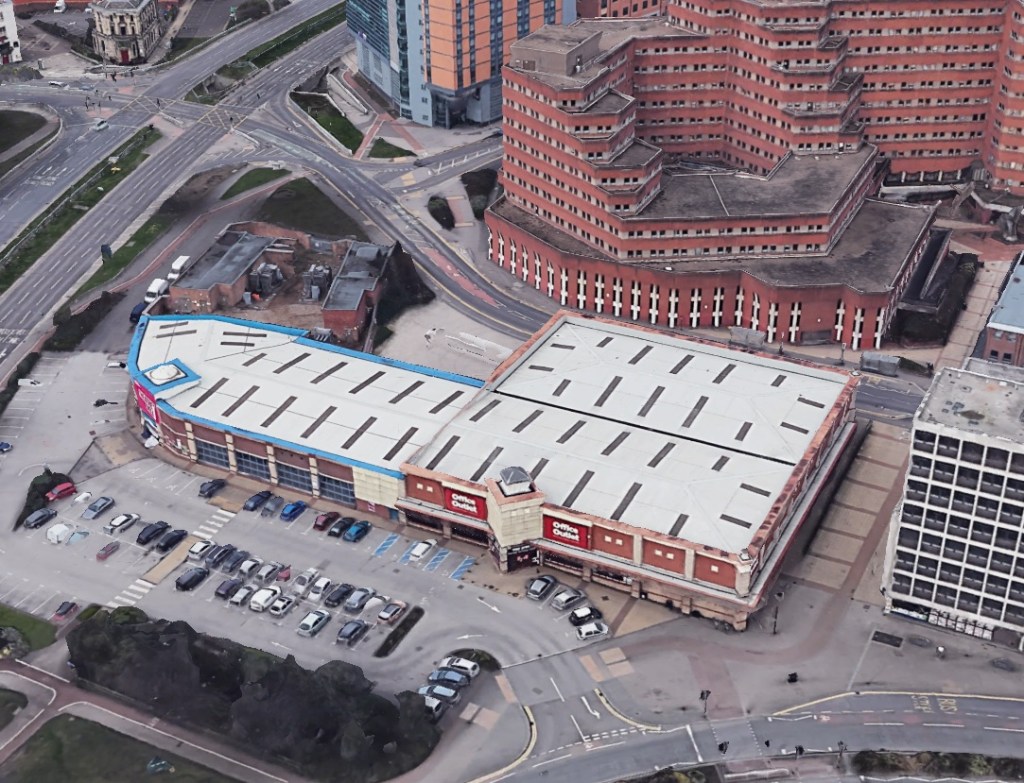
Ellin Street can be seen in this satellite image. The road starts at the entrance to the retail park and follows the line in front of the building. Photograph: Google Earth
Is an outlying part of Sheffield city centre about to be redeveloped?
Theatre Delicatessen and the Forces Support charity shop have been served notice to vacate their premises on Eyre Street by January 2022. Both units were once branches of Mothercare and Staples (later Office Outlet).
It is understood that both properties are owned by NewRiver and Bravo Strategies, which bought The Moor, the adjacent 28 acre estate for £41m.
The former retail park will almost certainly be demolished and there is speculation that it will be replaced with a new Lidl supermarket. Any redevelopment will be subject to planning permission.
Earlier this year, the discounter urged landowners to come forward with the focus on ‘town centre, edge of centre, retail park and metropolitan locations’ which are prominent, easily accessible and have a ‘strong pedestrian or traffic flow’.
Areas of interest included Beauchief, Broomhill, Burngreave, Chapeltown, city centre, Crystal Peaks, Ecclesall, Ecclesfield, Fir Vale, Fulwood, Gleadless, Handsworth, Hillsborough, Holbrook/Mosborough, Meadowhall, Norton and not surprisingly, St Mary’s Gate.
The site was once Ellin Street (still listed on maps) and edges Porter Brook. It was named after Thomas Ellin who had used water power from the Porter where it widened into Bennett’s Dam. Here he founded Vulcan Works with cutlery shops and a steel furnace. The dam, roughly where St Mary’s roundabout is now, was later covered over and the Porter culverted to Leadmill Road.
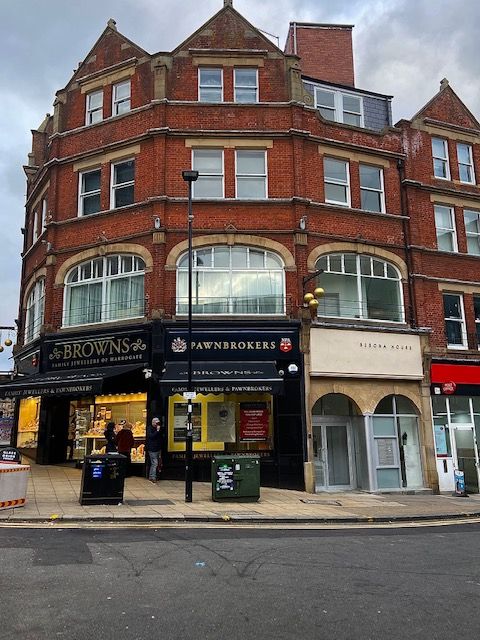
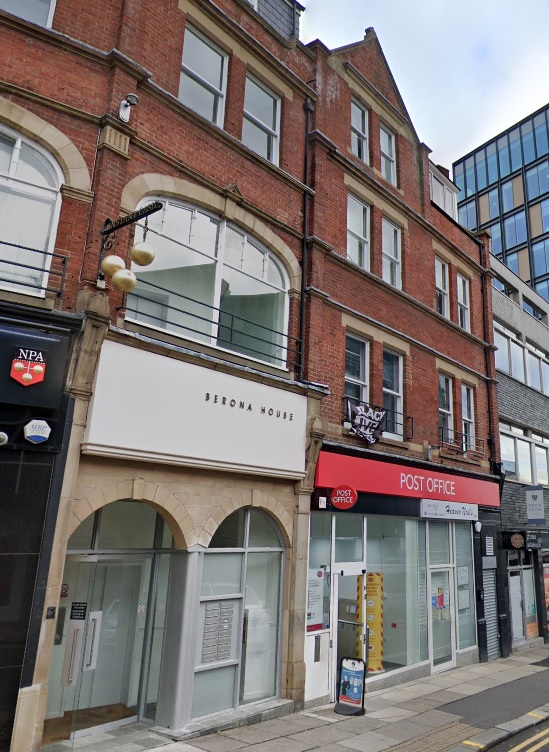
Berona House. One of the survivors of Pinstone Street’s Victorian building boom. Similar properties have had their interiors removed as part of the Heart of the City II project. Photograph: DJP/2021
We all know it, we all pass it, and we tend to overlook it. This building has stood at the corner of Pinstone Street and Charles Street for generations, and while the shops have repeatedly changed hands, we know little about it.
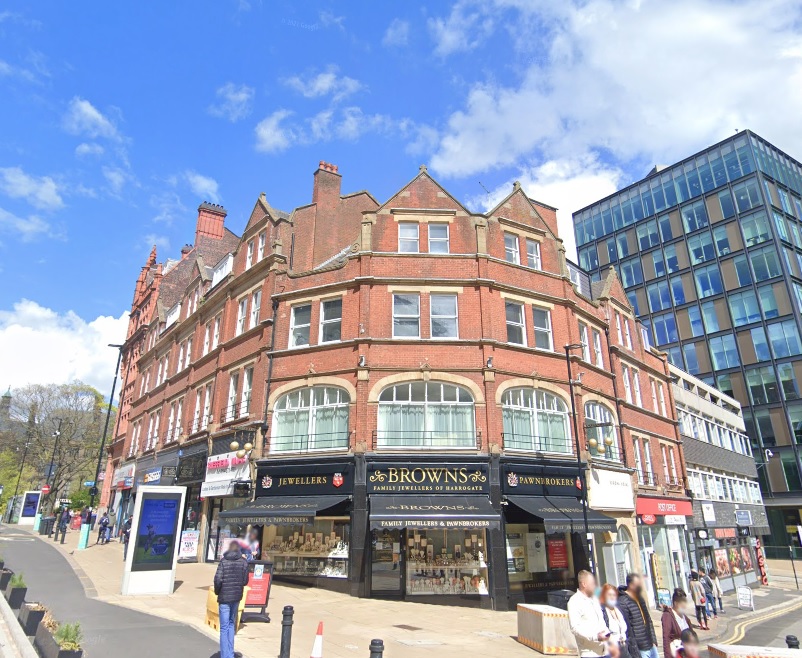
Berona House, or to be more precise, 95-107 Pinstone Street/31-35 Charles Street, has worked hard to hide its history.
The appearance of the building has remained unchanged since it was built, including the rounded first-floor corner windows. Photograph: Google
In 1897 the last plot of vacant land on Pinstone Street was sold by Sheffield Corporation to a private company. Prior to this, the corporation had systematically bought old properties on narrow Pinstone Lane, demolished them, and created the Pinstone Street we know now.
The land, opposite the Empire Theatre, was used to build a block of shops and dwelling houses. With brick and stone dressings and distinct first-floor corner arched windows, it was designed by Sheffield architects Holmes & Watson and constructed by George Longden and Son.
Edward Holmes (1859-1921) was in partnership, 1893-1908, with Adam Francis Watson (1856-1932), and were responsible for the City (later Lyceum) Theatre, Leopold Chambers, Norfolk Market Hall, as well as being associated with the city’s improvement scheme as valuers and advisers.
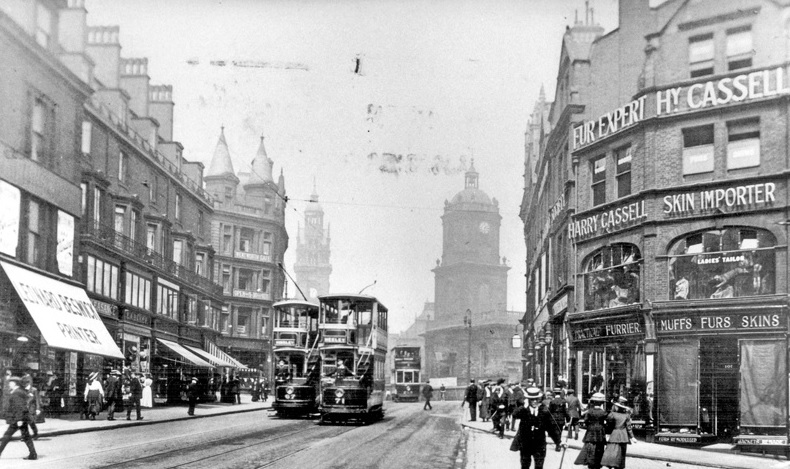
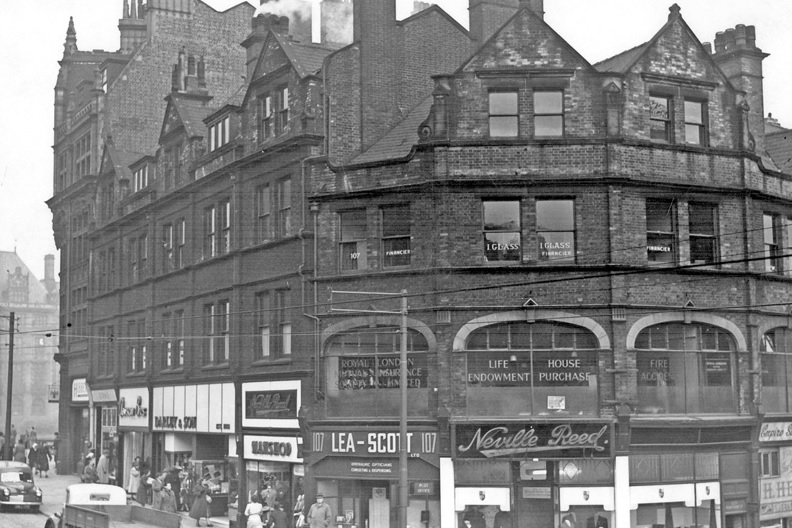
Harry Cassell, furriers, about 1910 (above) and (below) different names above the doors in the 1950s. Photographs: Picture Sheffield
The building was completed in September 1898 at a cost of £10,000 and consisted of seven shops and a restaurant – five shops on Pinstone Street, one at its corner with Charles Street, and one shop and the restaurant in Charles Street.
The list of shops that occupied ground floor premises is extensive, but one of its earliest occupants was Harry Cassell, furriers, which did a big trade in sealskin jackets. Later shops included Neville Reed, Lea-Scott opticians, Bradleys Records, and Colvin male outfitters.
It is perhaps fitting that the upper floor flats, later converted into offices, were adapted into apartments again in 2002-2003.
And maybe somebody might be able to explain the meaning behind its current name – Berona House.
Berona House, with the recent addition of a Post Office on Charles Street. Photograph: Google
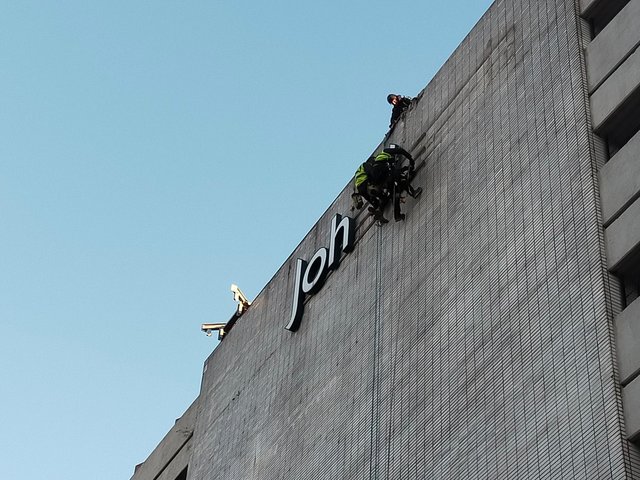
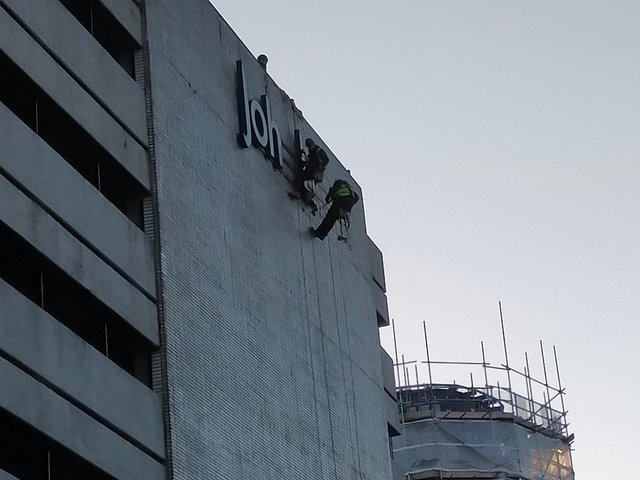
Workcrews abseiled off of the roof of the store in Barkers Pool to remove the last letters of the John Lewis sign from Sheffield’s skyline. Photograph: Sheffield Star
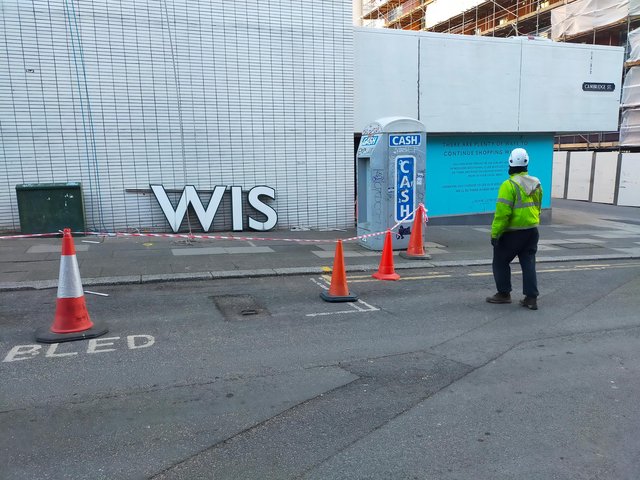
The last call for John Lewis in Sheffield. The signs are down and its association with the city since the 1940s has been obliterated. It was one of eight stores axed nationally and brought to an end the history of Cole Brothers, the beginning of which went back to 1847, when John Cole, silk mercer and hosier, opened a shop at No.4 Fargate. He was later joined by his brothers, Thomas and Skelton Cole. Their Fargate store was taken over by Selfridge Provincial Stores in 1919, before being sold to the John Lewis Partnership. Cole Brothers moved to its purpose-built department store in 1963, and was renamed John Lewis in 2002. It never reopened after the lockdown and confirmation of its closure came in June.
The signs were lowered to ground level before carried away by work crews. Photograph: Sheffield Star
The John Lewis store by Barkers Pool closed down permanently in August after the decision was reportedly taken at the start of the third national lockdown. Photograph: Sheffield Star
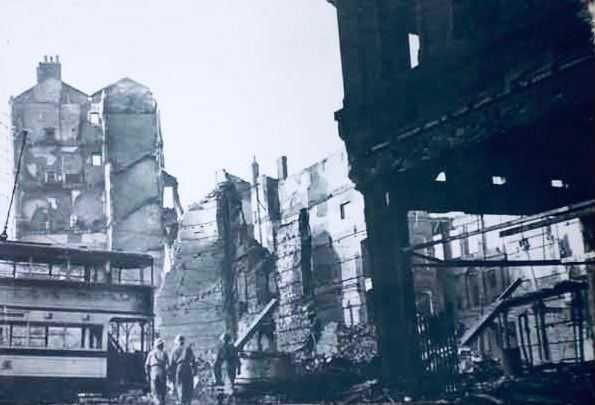
“We have indeed seen Sheffield burn. Many parts of our city have been destroyed; our peacetime occupations have been replaced by a complete conversion to wartime conditions. We must rebuild, reorganise, and reabsorb the men who are now away fighting. What a task! It will not be done by talking. It can only be achieved by enterprise, organisation, and very hard work. Also, we shall need good fortune and that which happens elsewhere will determine in large measure our own opportunities. If this war has taught us one thing, it is that our city is simply a cog in the wheel which is our country, and that our country is a part, and no mean part, of the mechanism of the civilised world.” – Dr W.H. Hatfield, Sheffield, 1943.
I know somebody who once walked into the Cannon public house on Castle Street and was smashed in the face with a baseball bat. It was a case of mistaken identity, but he never went back.
When the police shut it down in the mid-2000s it said: “The Cannon pub has for many years now attracted shoplifters, people who take drugs and drug dealers. It smells of cannabis as you walk past. In short, it is a den of iniquity.”
Sadly, this was the end of a drinking establishment that could be traced back to 1774, when Castle Street was called Truelove’s Gutter (more about in a future post).
It eventually became Castle Street and the Castle Wine Vaults survived until the early 1900s when Sheffield Corporation decided to widen the narrow street. It purchased ninety-three square yards of freehold land from William Stones, the brewer, and the old drinking house was demolished.
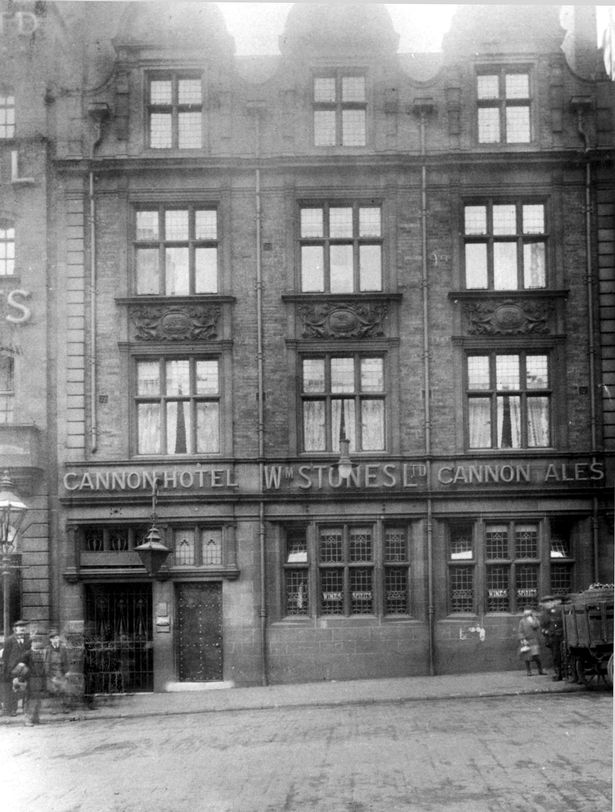
Permission was granted for the building of a new hotel to replace the one which had come down, and construction started in 1902-1903. It was designed by James Ragg Wigfull (1864-1936), once articled to Flockton and Gibbs, who had set up his own architectural practise in 1892.
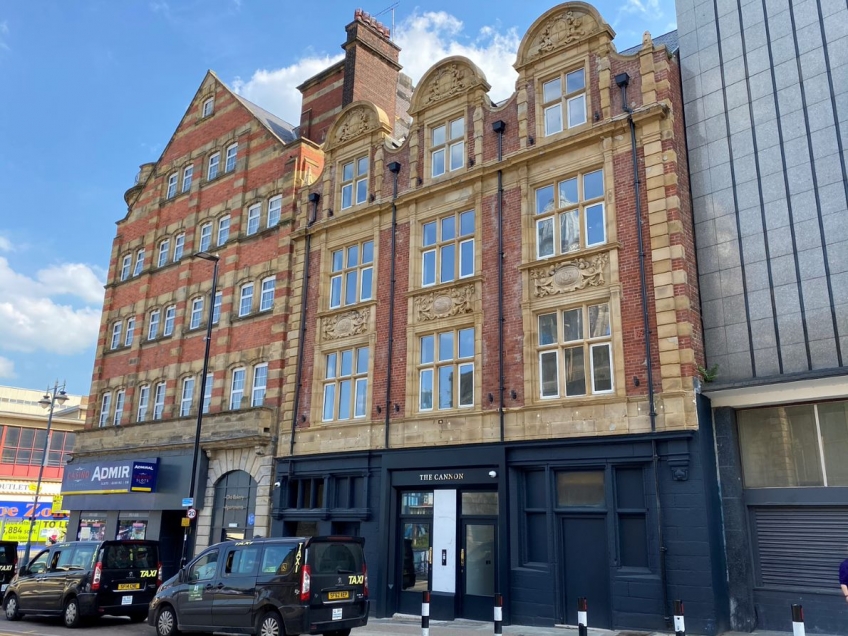
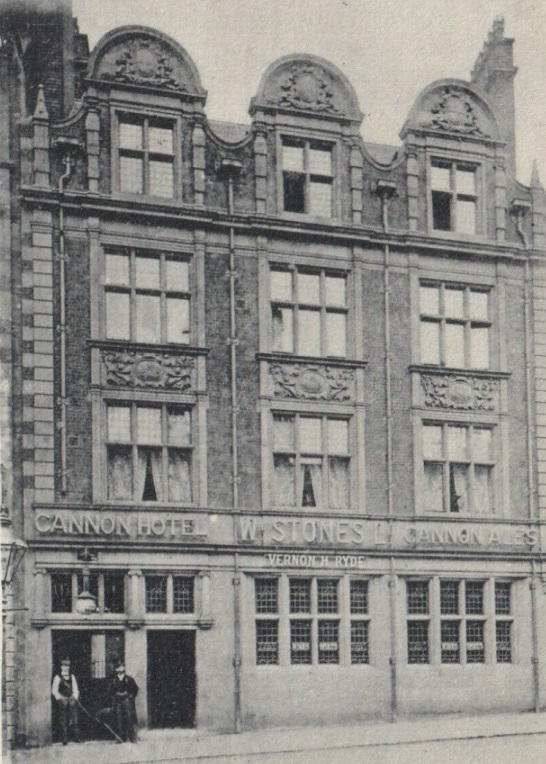
Built in Tudor Renaissance style, with three big dormers, the windows were flanked by tapered pilasters and topped by segmental pediments. There were also ornate stone panels including one of the brewery’s cannon emblems, and the company initials.
The ‘up-to-date popular professional lounge’ had two bars, one on the ground floor and another upstairs, as well as hotel accommodation above.
The Cannon Hotel did not get off to the best start.
On Christmas Eve, 1903, days before it was due to open, it suffered a gas explosion. A barman, plumber and painter entered a small store room with a light. Gas ignited and there was a flash accompanied by a loud bang. The barman, Ernest Emmerton, received the full force of the flame and severely burnt his face, head, arms, and neck. Fortunately, there was no damage to the building.
The likelihood is that the top-hatted gentleman is Vernon H. Ryde, the first landlord of the Cannon Hotel on Castle Street.
The first landlord was Vernon H. Ryde, a theatrical man, who had managed the Empire Theatre, Oldham, and Empire Palace, Holloway, and had arrived in Sheffield to manage the Theatre Royal in 1899.
In December 1903, Ryde ended his forty year association with the stage and accepted managership at the Cannon Hotel.
From heights of respectability, the Cannon Hotel’s fortunes steadily declined, and despite its proximity to the police station and law courts it was the domain for villains and thieves.
Stones Brewery (William Stones Ltd) was founded in Sheffield in 1868. Photograph: Picture Sheffield
When the closed pub changed hands a ‘restrictive covenant’ was placed on it. The restriction stated that the owner was: “Not to use the property, or any part of the property, as a public house, or bar, or off-licence, or for the manufacture of alcoholic beverages or for the sale of alcoholic beverages.”
It was bought for £245,000 in 2018 by a company called Aestrom Limited (the same developer that bought the Old Town Hall) but it collapsed because of the pandemic.
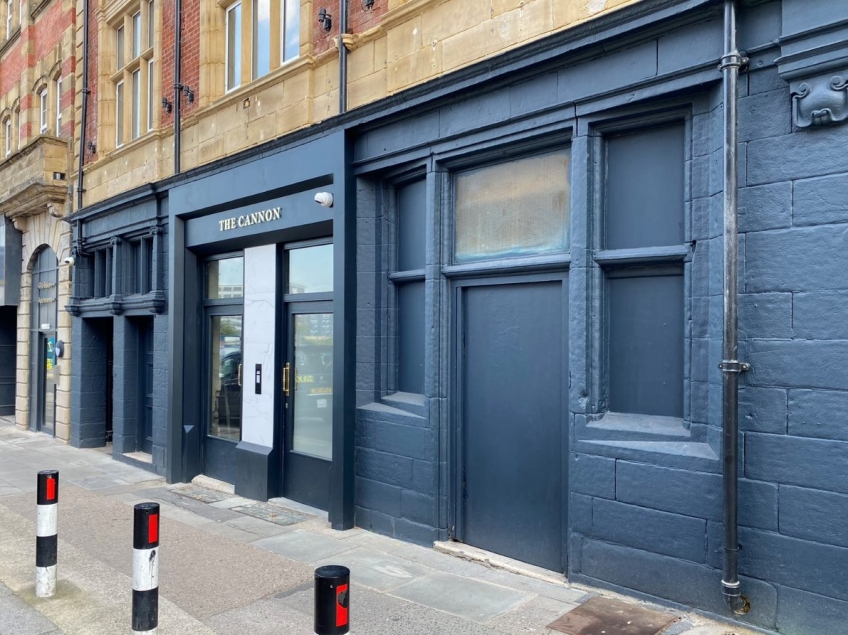
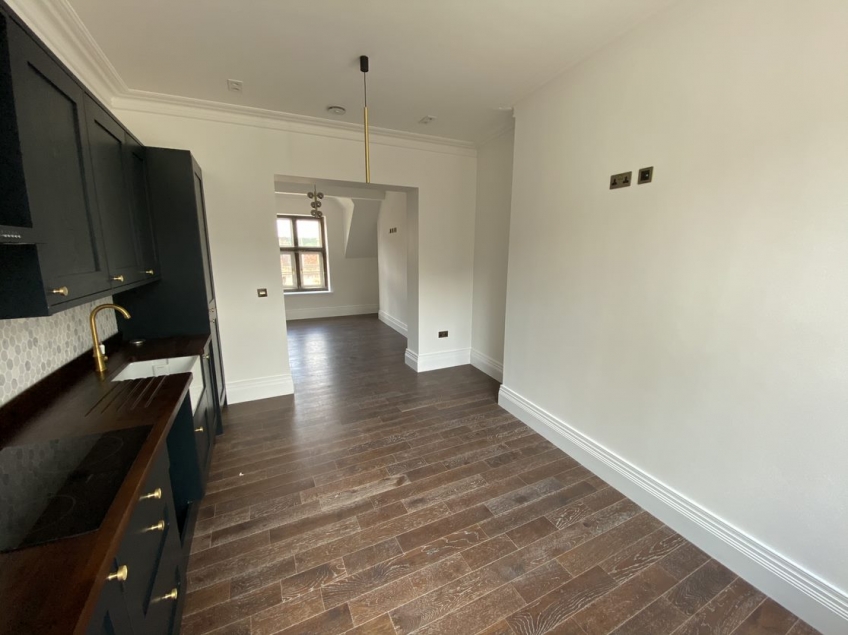
It has now been converted into luxury flats upstairs with space for two shops on the ground floor. The building, renamed The Cannon, will go to auction next month with a guide price of £575,000.



 sheffielder.net