March 1927, and Sheffield’s first Sun-Ray Centre opened at the Imperial Rooms, on Pinstone Street, used for the treatment of nerve disorders, rheumatism, rheumatoid arthritis, neuritis, sciatica, lumbago, neurasthenia, insomnia and anaemia.
It might seem strange in this day of sun-bed shops and tanning parlours that such excitement was created by the opening of Dr Mark Turner’s Sun-Ray Centre.
But the difference between sun-ray treatment and modern-day sunbeds is completely different.
Sun-ray treatment was seen as a cure for ailments, with Sir George Newman, Chief Medical Officer at the Ministry of Health, proclaiming it “as one of the five great discoveries in medicine in the last two generations.”
Bodies consumed therapeutic light in one of two ways: outdoors in the natural sunshine, or indoors with artificial, electrical substitutes, known variously as phototherapy, artificial sunlight therapy, ray therapy, or actinotherapy. The latter method commonly used carbon arc, tungsten arc, or mercury vapour lamps, which produced different outputs of infrared, visible, and ultraviolet rays. Most prized among these was the ultraviolet. Referred to as ‘chemical’ or ‘actinic’ rays – notably for their use in photography – the ultraviolet rays were understood to disinfect and heal lesions and wounds by virtue of being bactericidal; to regenerate blood by increasing phosphorus, calcium, and haemoglobin levels; and to stimulate the production of vitamin D, the ‘sunshine vitamin’.
Niels Finsen, a Faroese-Danish physician who had grown up in the dim light of the North Atlantic, was fascinated by the link between sun exposure and health. He noticed that ultraviolet light could apparently kill bacteria. In the 1890s he designed the Finsen Light, a powerful electric lamp which proved effective in treating lupus vulgaris, a skin disease caused by tuberculosis bacteria.
Hearing of his work, Queen Alexandra, a fellow Dane, provided “the first Finsen lamp in Great Britain” to a hospital.
In 1903, Finsen was awarded the Nobel Prize in medicine and physiology for his work on phototherapy.
Dr Mark Turner arrived in Sheffield after setting up similar establishments at Nottingham, Lincoln and Derby. And with him came plaudits and recommendations from former patients:
“Dear Mr Turner. You will be pleased to know that I walked up and down the dining room without the aid of sticks yesterday, this after only six treatments.”
“I’m much better, so much better after suffering from Rheumatoid Arthritis, I can’t tell you what I feel like, but just watch me walk.”
“Well, it does one good to see what a wonderful improvement there is in us all; no wonder we look so bright and happy.”
Sheffield newspapers were full of stories from grateful patients, but one suspects the column inches were paid for by Dr Turner.
A month later, the Sheffield Daily Telegraph reported:
“A sensation awaited those who watched the arrival of Mrs Hannah Lindsay, of Wolseley Road, at the Sun-Ray Centre for Private Patients in Pinstone Street.
“Mrs Lindsay electrified the onlookers by walking from her car to the Treatment Rooms, instead of being carried in the hospital chair as formerly.
“A murmur of applause greeted her arrival, some of the bystanders had had the opportunity of witnessing her former visits and were enthusiastic at what they saw.
For sixteen years she had suffered from Rheumatoid Arthritis so severely as to make walking impossible, now she is really walking.”
The promotion of actinotherapy received its greatest boost in December 1928, when it was used on King George V, who was ill with pneumonia: “the ray therapy treatment would be used as a new method of attack in the difficult struggle which the doctors are waging . . . The new treatment may act as a tonic and increase the bacterial power of the blood.”
By 1928, light therapy had reached its zenith in popularity, both among the public and the medical profession. Although almost 200 clinics existed in England at this time, it was unregulated and incredibly expensive.
And, some medical professionals continued to have reservations about the treatments. A 1930 meeting at the British Medical Council discussed experiments by the Medical Research Council which found ultraviolet rays “to be no more effective than a mustard plaster”.
Despite the accolades, Dr Turner’s Sun-Ray Centre appears to have been short-lived and within a couple of years had disappeared.
For much of the first half of the twentieth century, phototherapy or “sun ray” therapy was prescribed by hospitals for children for a wide range of maladies, from chest infections to anaemia. At the same time, concerns mounted over the link between exposure to ultraviolet light and skin cancer.
By the 1960s, antibiotics and alternative treatments rendered sun ray therapy obsolete for most purposes. Targeted ultraviolet light is still used today for some skin disorders, and other types of non-ultraviolet light treatments are used to treat mood and sleep disorders.
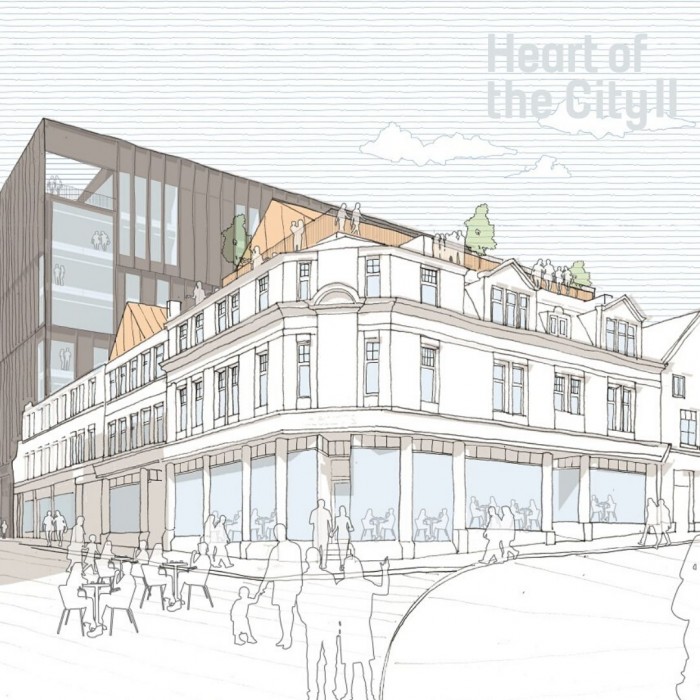
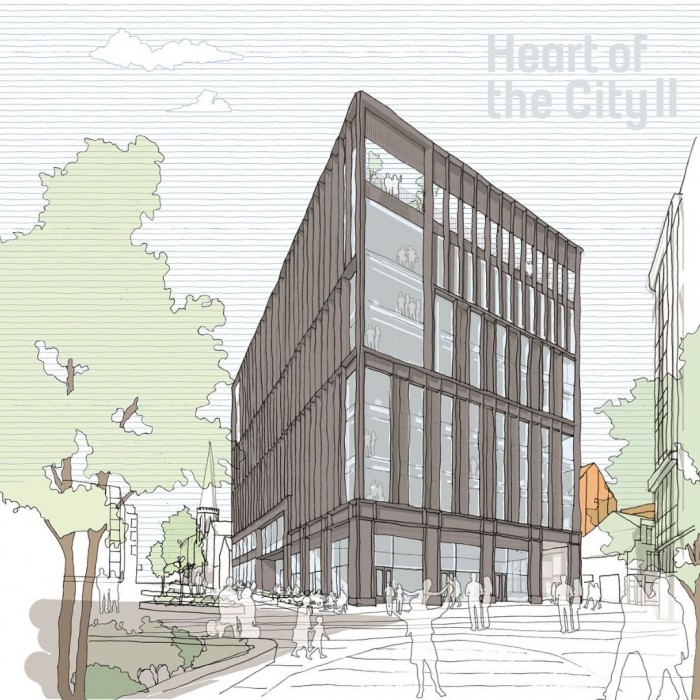
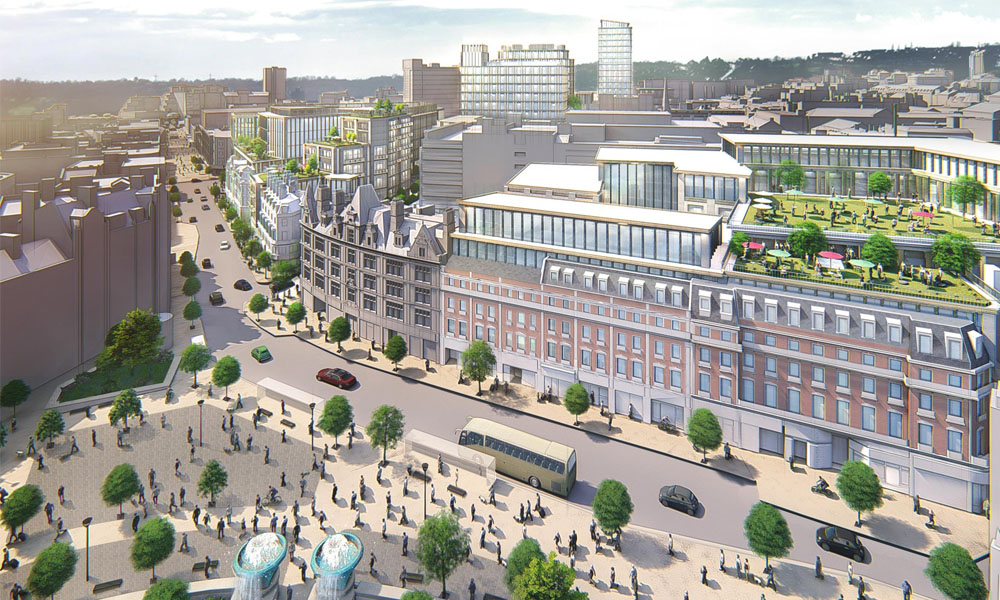
Sheffield City Council is inviting comments on proposals for the next phase of Heart of the City II, which includes (Block H: Cambridge Street and Carver Street).
The Council and Queensberry recognise that people will have questions about the next stage of the scheme. Prior to the submission of planning applications, it has published proposals and will allow people to contribute to the final plans.
A wide-ranging development is proposed for Block H of the Heart of the City II development, with three distinct elements (H1, H2 and H3).
H2 will be a new building comprising about 70,000 sq ft of grade A office space, split across seven upper floors. It will feature a south-facing roof terrace, with retail and food and beverage units on the ground floor.
Proposals for the H3 element, to be known as Cambridge Street Collective, aim to retain as much of the existing fabric and façades along Cambridge Street and Wellington Street as feasible.
Plans include a large, industrial-style space, suited to a food hall or similar sociable, communal offer. Complementary shops, a bar and restaurant, and an upper level leisure space would also be created. The existing Bethel Chapel building will also be renovated, with plans for this to become a live entertainment venue.
Photograph by Sheffield City Council
The Block H site also includes Leah’s Yard (H1), a Grade II*-listed building housing a collection of small former industrial workshops. This site is not included in the application, but plans are still at an early stage to convert the property into workshops for creative businesses. Listed building consent is being sought to undertake the structural works required to make the buildings secure.
The new plans for this block proposes retention of more original architecture than envisaged in a previous masterplan. They now include the preservation and sympathetic restoration of the fabric and façades along Cambridge Street and Wellington Street, including the listed Bethel Sunday School and Leah’s Yard, as well as the Bethel Chapel and the buildings that formerly housed Brewhouse and Henry’s Bar.
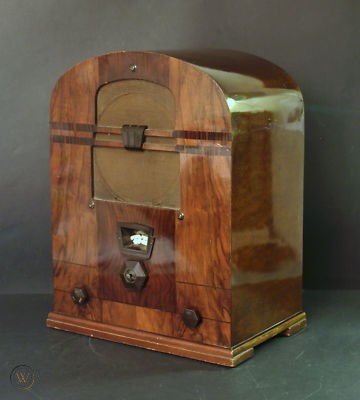
In February 1932, the advances made in wireless radio reception was demonstrated, when Stainless Stephen, a well-known Sheffield comedian and broadcast artist, opened at the Imperial Rooms, on Pinstone Street, an exhibition of Marconiphone Magic Radio Stagecraft.
Marconiphone was an English manufacturer of domestic receiving equipment, notably radio receivers and later reel-to-reel tape machines. In 1922, Marconi had set up the Marconiphone department to design, manufacture and sell domestic receiving equipment. It complied with Post Office specifications and tests, and was therefore awarded the BBC authorisation stamp.
The company was sold to the Gramophone Company in 1931, which became Electric and Musical Industries (EMI) and produced domestic radio receivers using the Marconiphone trademark until 1956.
At the event, Stainless Stephen said that in the early days of broadcasting, reception was so poor that it was difficult for listeners to tell the difference between his voice and that of a famous tenor.
A demonstration of effective radio magic followed, and similar performances were given five times daily.
The audience was introduced to the performers – standard Marconiphone models – by a young lady who apparently was able to carry on conversation with the individual models. Indeed, the models sang together the well-known chorus of Uncle Tom Cobley, chiming in with precision and great effect.
Then they combined to present various items in an amusing village concert, and there was an admirable climax introducing a soldier on sentry duty, the ghosts of his former comrades, and a swinging marching song.
Another instance of radio magic was the introduction of the various sections of an orchestra, music being played by the strings, the bass instruments, the drums etc., apparently from different parts of a stage, and precisely when requested by the main receiving set visible to the audience.
Here’s a Sheffield worthy that I bet you’ve never heard of.
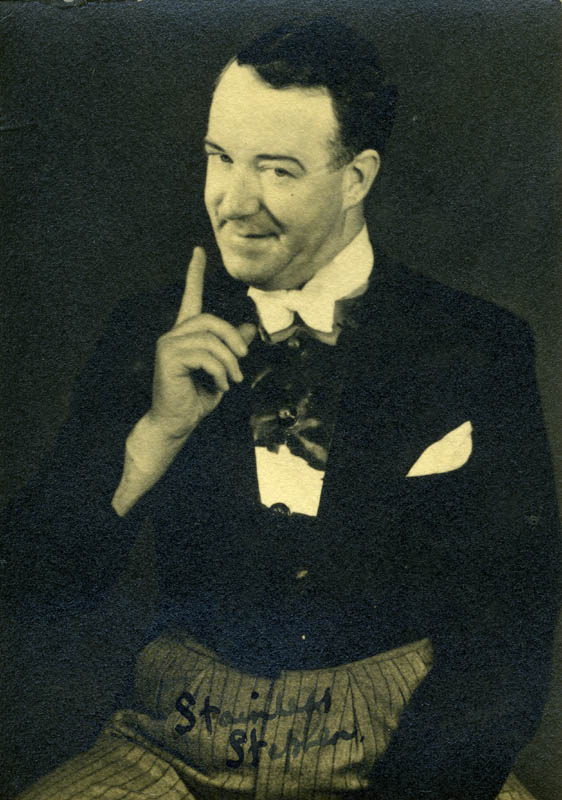
Arthur Clifford Baynes (1892-1971) was a comedian from Sheffield, who performed under the stage name of Stainless Stephen, making his debut at the Palace, Luton, in 1921.
His London debut was at the Victoria Palace in 1930.
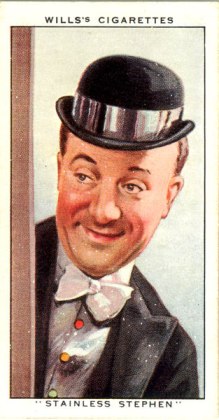
You would be forgiven for not knowing his name, for Stainless Stephen never quite made it as a top music hall comedian. He appeared on stage dressed in a smart tuxedo, a bowler hat with a steel band around it, a rotating bow tie, and a stainless steel vest, made in his home city.
He never gave up his day job, as an English teacher at Crookes Endowed School which he joined in 1922 after demobilisation from the Sheffield City Battalion, which he served during World War One, and wounded twice. His job meant he could only appear on stage at weekends and during school holidays.
Legend has it that Stainless’ lessons on Friday were always a bit light on the ground, as he spent most of the time leaving his classes to it whilst he wrote his radio material for the weekend! It was said that he based his routine on a radio course he took while on military service.
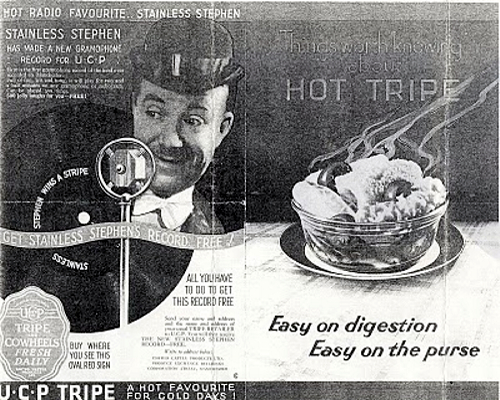
Stainless Stephen with a microphone and a record and a bowl of Hot Tripe. A special comedy record produced for United Cattle Products. Photograph by Gavin/Arkhonia
His speciality was that during his deadpan monologue, he would interrupt the flow by supplying punctuation, thus:
“Somebody once said, inverted commas, comedians are born not made, full stop. Well, slight pause to heighten dramatic effect, let me tell my dense public innuendo that I was born of honest but disappointed parents in anno domini eighteen ninety something, full stop. Owing to my female fan following, the final two digits must be left to the imagination, end of paragraph and fresh line.”
And.
“What a wonderful year 1930 was, semi-colon, said Stainless Stephen, semi-conscious. Thousands of new motorists took to the road, comma, and as a result thousands of pedestrians took to the pavements.”
As well as.
“This is Stainless aimless brainless Stephen, semi-colon, broadcasting semi-conscious at the microphone semi-frantic.”
Closing a broadcast in March 1941, he said:
“And so, countrymen, semi-colon, all shoulders to the wheel, semi-quaver, we’ll carry on till we get the Axis semi-circle, and Hitler asks us for a full stop!”
Photograph by HistoryForSale
In 1932, he was voted the most popular radio artist in a newspaper poll, appeared in the all-star extravaganza, Radio Parade (1933), a film of music hall acts, and supported Will Hay at the Victoria Palace in 1944. Throughout World War Two he toured Europe and the Far East and appeared at the London Palladium’s Royal Command Performance in 1945.
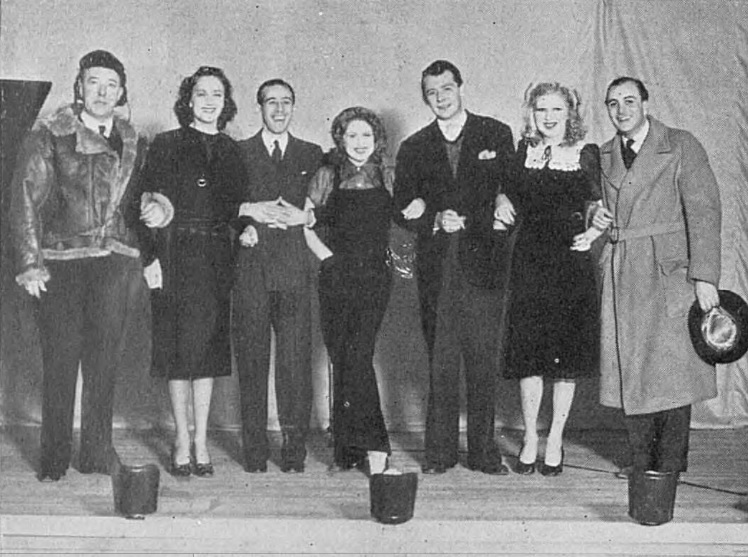
Famous radio stars entertain the RAF during World War Two. From left to right are: Stainless Stephen, Eve Beck, Eddie Pola, Renee Houston, Donald Stuart, Shirley Houston, and Frank Baron.
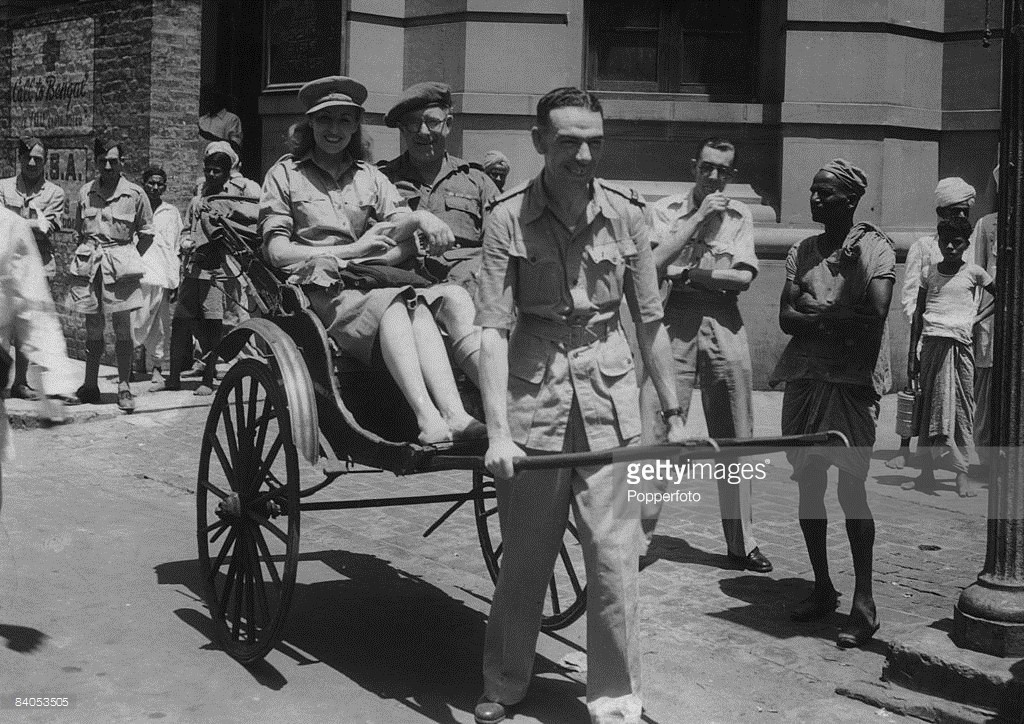
Vera Lynn and comedian Stainless Stephen riding in a rickshaw pulled by Lynn’s pianist Len Edwards, during an ENSA tour of India to entertain British troops, Calcutta, India, 1944. Photograph by Getty Images.
Stainless Stephen also appeared as a guest on This Is Your Life, celebrating the life of broadcaster Stuart Hibberd, in 1957, and in Frost on Saturday in 1969, an edition dedicated to the history of British broadcasting to mark the first evening of colour transmissions on ITV.
Stainless Stephen retired in 1952 describing himself as “stainless, painless, brainless, shameless, aimless, semi-conscious and approaching semi dotage.” He ran a 125-acre farm with his son, Ian, at Chiddingstone Causeway, Kent, where he died in 1971.
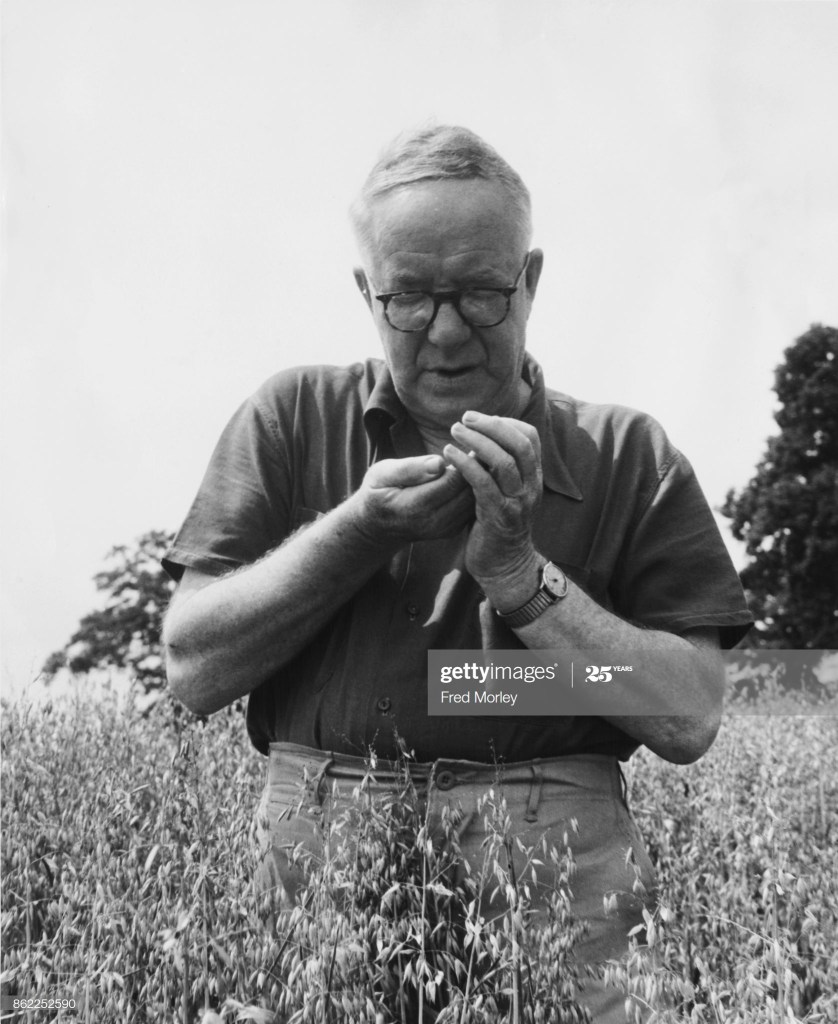
Arthur Clifford Baynes, who gained fame as comedian Stainless Stephen, inspects a crop of winter oats at his farm in Chiddingstone, Kent, in 1957. Photograph by Fred Morley/Fox Photos/Hulton Archive/Getty Images
Good news for the Bainbridge Building on the corner of Norfolk Street and Surrey Street.
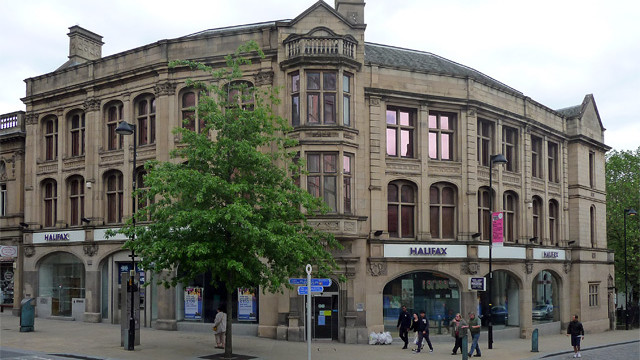
The proposed redevelopment of the former Halifax Bank to create a new hotel and restaurant has been given the go-ahead.
Mitchells & Butchers, supported by WYG and Design Coalition, submitted an application to Sheffield City Council at the end of 2019 for the former bank on Surrey Street.
The building, which is not listed, was originally constructed in 1893-1894, with the structure behind the façade rebuilt in 1977-1978. It has remained vacant following the closure of the Halifax Bank in August 2017.
The application covers the conversion of the property to create a restaurant at ground floor and basement levels and a hotel on the upper floors.
The restaurant is set to operate as a Miller & Carter Steakhouse and comprise 187 covers. It will be located within the former banking hall on the ground floor, with additional covers at basement level.
A total of 20 hotel rooms are set to be created on the upper floors, along with a reception area and a manager/night porter office.
It has been estimated that the development would create 62 jobs (29 full-time and 37 part-time positions). The £2.36m conversion and fit-out of the building is expected to support the creation of further roles.
The building was commissioned by Emerson Bainbridge, a mining engineer consultant and philanthropist, following the death of his wife, Jeffie. It was erected as a memorial to her and opened by the Duke and Duchess of Portland in 1894.
The first floor formed a shelter for waifs and strays, and a large suite of offices on the second floor were given to the local branch of The Society for the Prevention of Cruelty to Children, of which Bainbridge was a committee member.
The ground floor consisted of shops that were let out to tenants in order to raise revenue to support the rent-free premises above.
Photograph by Sheffield Midland Station and Sheaf Valley Development Framework.
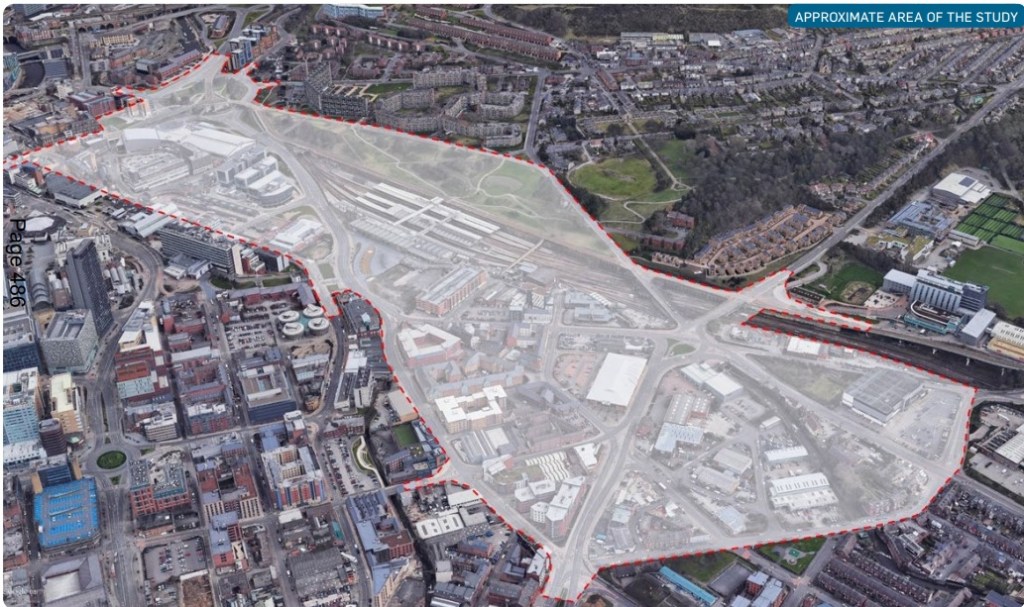
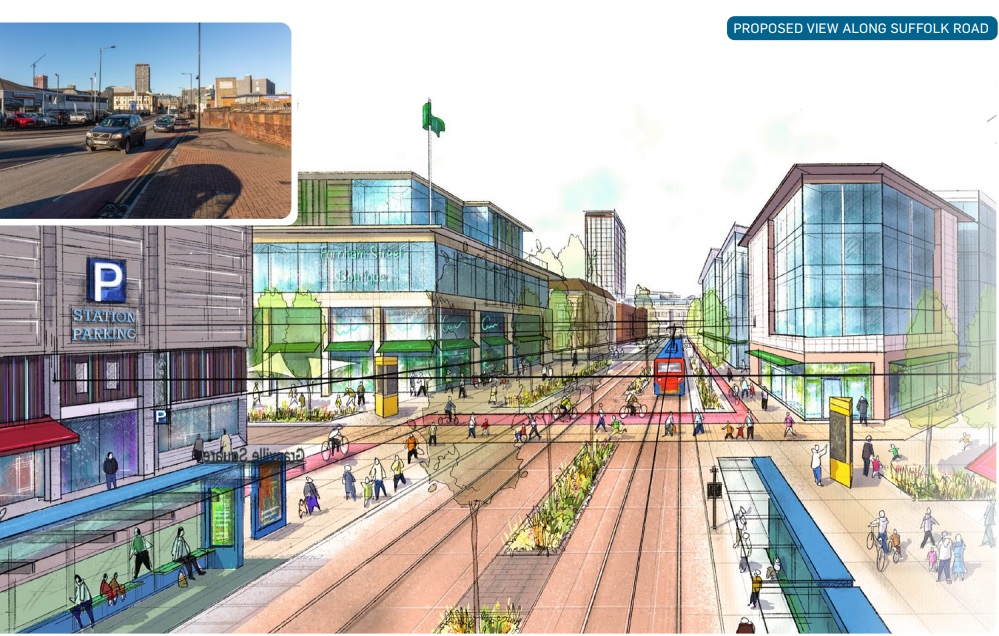
I don’t think anybody saw this coming. Sheffield’s biggest ever development project – a £1.5bn plan to develop the area around Sheffield Railway Station, dwarfing the £480m Heart of the City II scheme.
The plan is to maximise the economic potential of the area and make the most of HS2, and will now go out for public consultation.
The idea stems from plans for HS2 trains to stop at Sheffield Station on a loop off the mainline which were recently given the green light by the government.
Sheffield City Council would co-ordinate the project, with funding coming from several organisations including the city council, HS2, SYPTE, Transport for the North, Network Rail, Sheffield City Region and the Department for Transport. The bulk of the costs – up to £1bn – would be from the private sector, which would build offices, restaurants, bars and potentially a hotel.
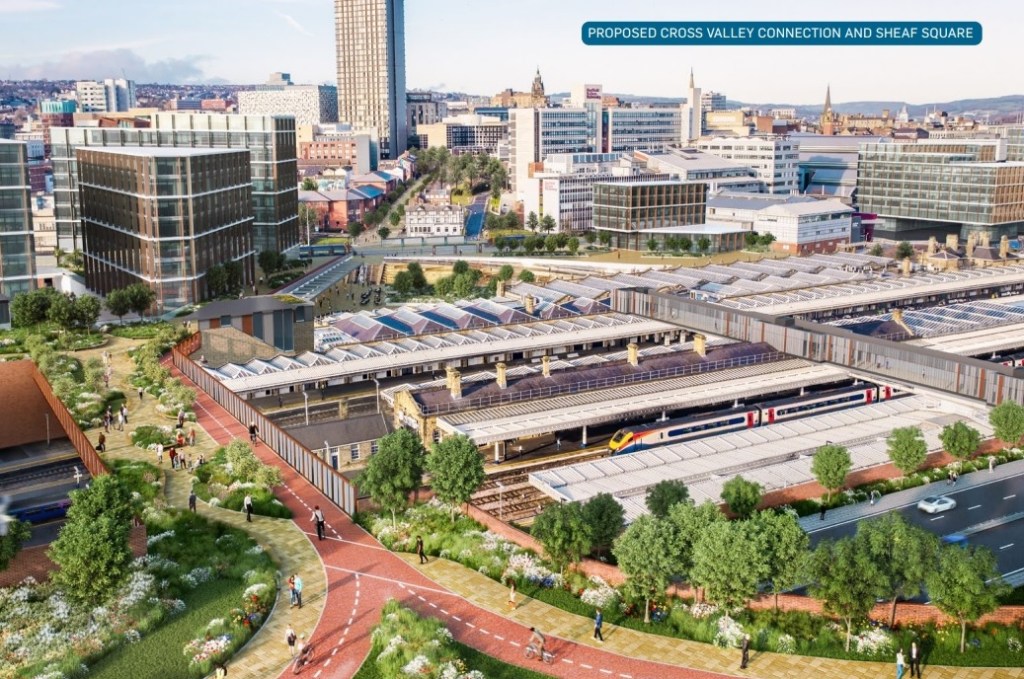
Photograph by Sheffield Midland Station and Sheaf Valley Development Framework.
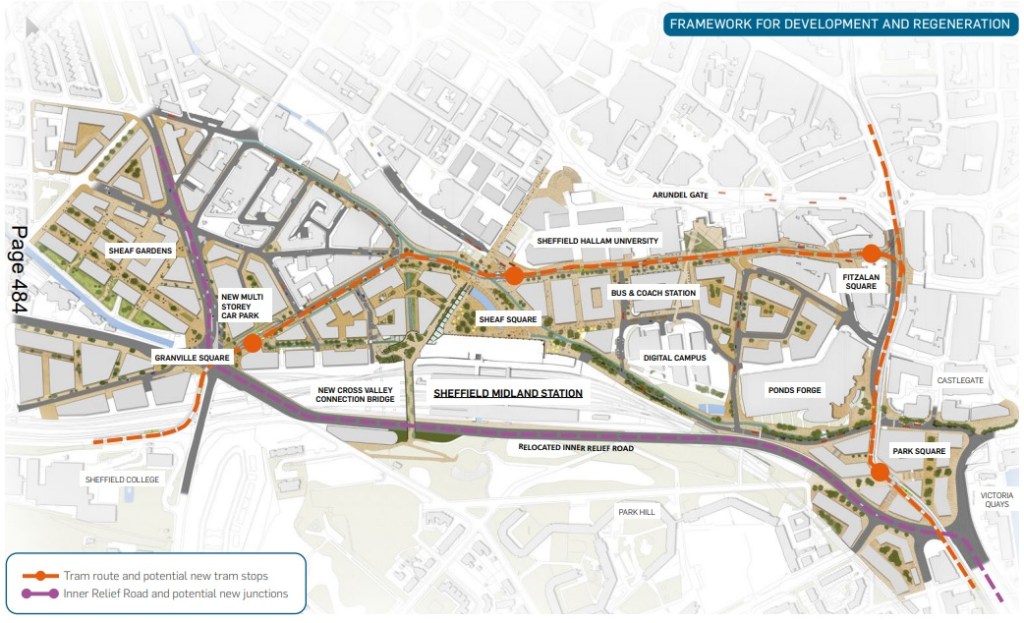
The project would see the closure of Park Square roundabout and Sheaf Street – the dual carriageway that runs in front of the station – would swap places with the tram route that runs behind.
A huge, landscaped pedestrian bridge would link Park Hill with Howard Street and the multi-storey car park on Turner Street would be demolished and moved further away.
It would be replaced by an office block – one of up to 12 planned in the ‘Sheffield Valley’ zone, including four outside the station, employing up to 3,000 people.
Up to 1,000 homes – flats and houses – could also be built.
Photograph by Sheffield Midland Station and Sheaf Valley Development Framework.
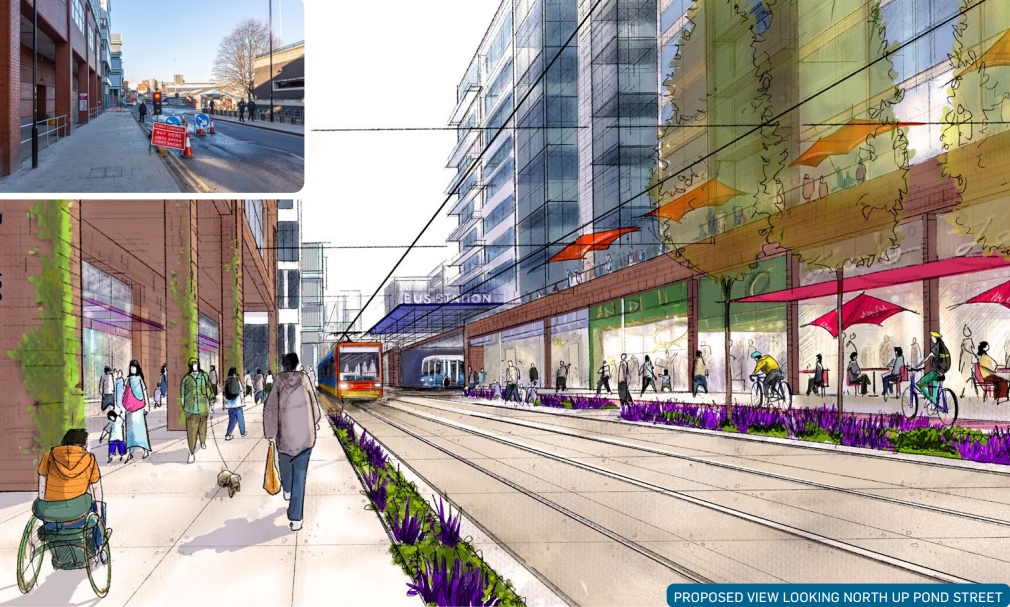
The new tram route would run from Fitzalan Square, along Pond Street, stop outside the station and continue along Suffolk Road to Granville Square.
The bus station on Pond Street would be reduced in size to make room for the tram tracks and offices on stilts potentially built on top.
Photograph by Sheffield Midland Station and Sheaf Valley Development Framework.
Park Square roundabout and Sheaf Street would become a park and link into the Grey to Green scheme at Victoria Quays, Castlegate and West Bar.
Under the plans the ‘Q park’ would move to the Wren-DFS site on nearby St Mary’s Road.
There would be a new, sheltered, taxi rank next to the station, but the taxi ‘stacking’ area would be moved ‘slightly further out’ improving access for drop-offs and people with mobility needs.
The area between St Mary’s Road, Queens Road and Sheaf Gardens, currently home to businesses including a Pure Gym, would be a new residential centre for up to 700 homes, with a further 300 spread throughout the area.
There was a time when Sheffield became a trendsetter in public transport.
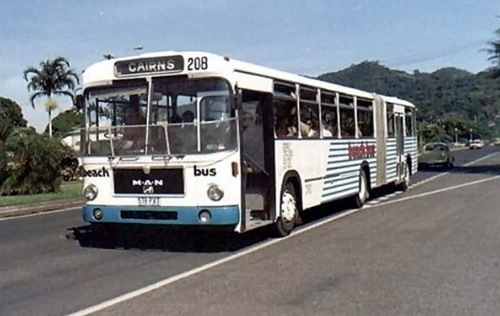
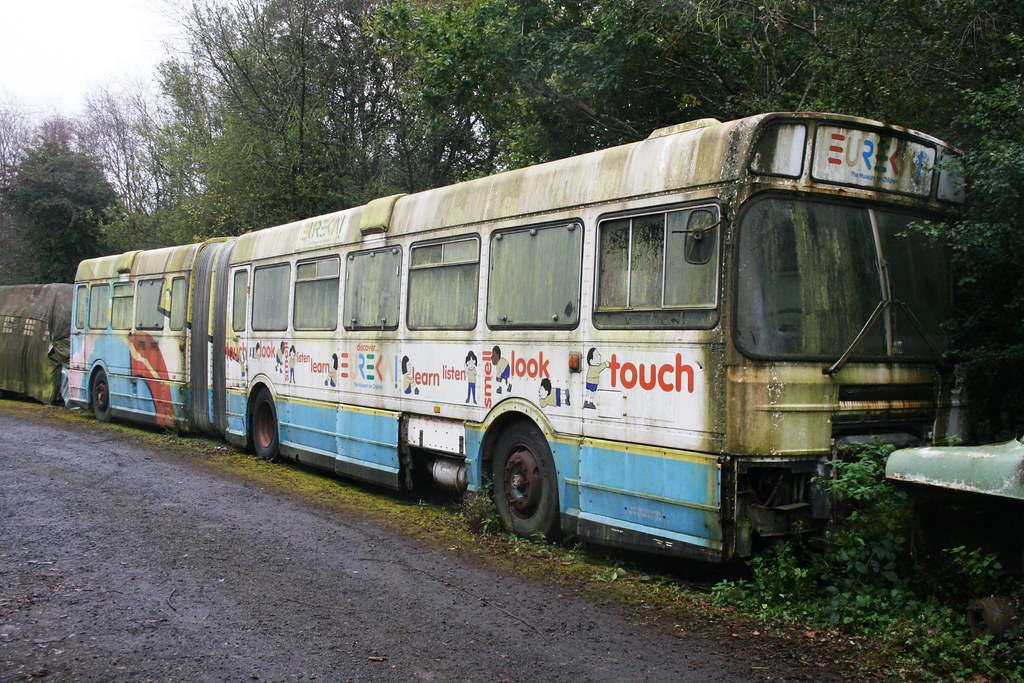
Back in 1979, South Yorkshire Passenger Transport Executive (SYPTE) took delivery of five MAN bendy-buses, to be used on trial. This was a time when it was illegal to operate articulated buses on British roads, and SYPTE manoeuvred around this by carrying passengers around the city centre for free on the City Clipper route.
For younger readers, think of the Sheffield Supertram on wheels, basically two rigid sections of bus, linked by a pivoting joint, enclosed by protective bellows inside and out, allowing a longer length of bus and higher passenger capacity.
Photograph by Travel South Yorkshire
In 1980, the MAN bendy-buses were joined by four Leyland-DAB models, manufactured as a British-Danish joint venture.
The success of the bendy-bus trial led to a change in the law, and the introduction of them to other cities, but the Sheffield buses didn’t last much longer.
After being replaced by the Leyland DABS, the five MANs were loaned to the National Bus Company, originally used in Oxford, then to Midland Red at Redditch, and finally to Midland Red North, based at Cannock. Four of these were later sold and exported, used by Martin Coast Tours at Cairns in Queensland, Australia.
Photograph by Travel South Yorkshire
By 1983, the Leylands had been withdrawn and sold to McGill of Barrhead, which used them in service on its route to Glasgow. Subsequently, they saw further life with Hampshire Bus in Winchester.
Ironically, SYPTE bought fourteen brand new Leyland DAB bendy-buses in 1985, pressed into service with the newly formed South Yorkshire Transport (later Mainline) on the City Clipper route, and later as the Fastline route to Meadowhall.
Photograph by Travel South Yorkshire
The bendy-buses lasted until 1999, not replaced by First Bus which had taken over Mainline in 1998, although it did consider reintroducing them at one stage.
While bendy-buses have seen the light of day across the country (Leeds, Manchester, York, Southampton and Nottingham included) they have never been popular with the public.
A significant number were used in London, blighted by newly delivered Mercedes-Benz Citaros in 2003-2004 that tended to catch fire, and were nicknamed ‘chariots of fire’, later withdrawn in 2011.
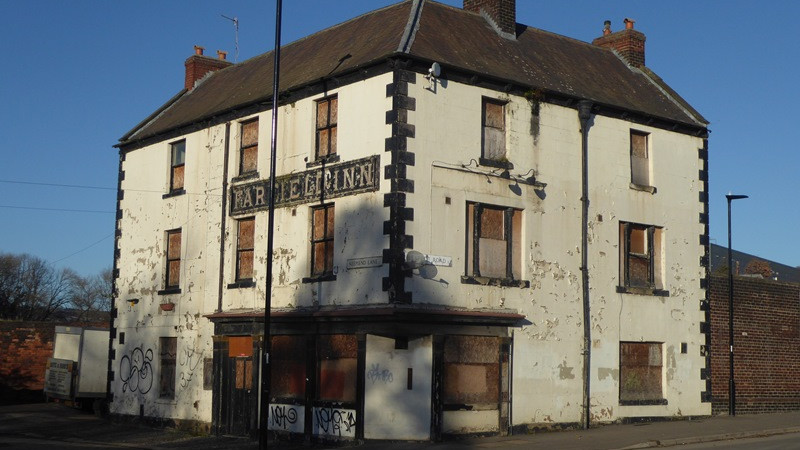
A Grade II-listed Sheffield pub dating back to 1752, which was damaged in the 2007 flood, is set to be refurbished, and new workshops created, under new plans.
ABA Architecture & Interiors, on behalf of TOC Holdings, has submitted full planning and listed building applications to Sheffield City Council for work on the Farfield Inn, Neepsend.
The Farfield Inn survived the Great Flood of 1864 but was gutted by the city’s 2007 flood and has been disused for years. In 2018, it was sold at auction for £250,000, two-and-a-half times its guide price.
Planning permission is sought for the refurbishment of the ground trading area and the creation of six flats on the first and second floors. The building’s period features are set to be retained.
The plans also include the construction of a new two-storey building that will house a pair of workshops for artisan craftsmen. The existing outbuilding on the site will also be refurbished to provide workshop space.
Here’s news of an important development in Sheffield’s Heart of the City II programme.
Radisson Blu has been selected by Sheffield City Council as the preferred hotel brand for its flagship Heart of the City II hotel on Pinstone Street, overlooking the Peace Gardens.
The hotel will anchor the new Heart of the City II scheme which is already home to global bank HSBC, and which will shortly welcome prominent international law firm, CMS, who are occupying 45,000 sq. ft of office space later in the year.
Part of Block A in Heart of the City II, the hotel will be housed in the striking Victorian architecture towards the top end of Pinstone Street, adjacent to the Barclays building on the corner. It is expected to feature over 150 rooms and will have a prominent location with views of the Peace Gardens.
Developed by Sheffield City Council and its strategic delivery partner, Queensberry, Block A sits between Pinstone Street, Burgess Street and Barker’s Pool. Providing a key gateway to the Heart of the City II district from the east, Block A will also feature premium retail units at street level and 45,000 sq. ft of office or residential space.
Radisson Blu is an international chain of 328 ‘upper upscale’ hotels operated by the Radisson Hotel Group. Its origins go back to 1960, with the opening of the SAS Royal Denmark Hotel in Copenhagen, the group rebranded from Radisson SAS in 2009.
At present, the nearest Radisson Blu hotels are in Derby, Leeds, Manchester, Nottingham and York.
This influential character is relatively unknown in Sheffield’s history. A modest person, he was responsible for one of the city’s iconic landmarks.
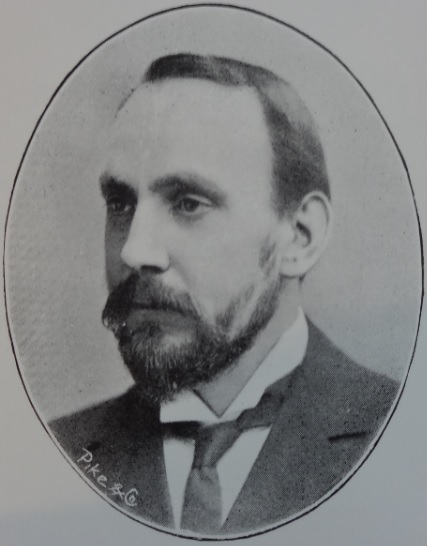
Walter Gerard Buck (1863-1934) was born in Beccles, Suffolk, the youngest son of Edward Buck. He was educated at the Albert Memorial College in Framlingham, and acquired an interest in architecture, joining the practice of Arthur Pells, a reputable Suffolk architect and surveyor, where he learned the techniques to design and build.
Walter Gerard Buck, architect and surveyor (1863-1934)
Walter, aged 21, realised there were limitations to this rural outpost and would need to improve his talent elsewhere. This opportunity arose in Manchester, the seat of the industrial revolution, where demand for new commercial buildings was great. It was here where he gained several years’ experience in large civil engineering and architectural works, including the building of the Exchange Station, Manchester, as well as the Exchange Station and Hotel in Liverpool.
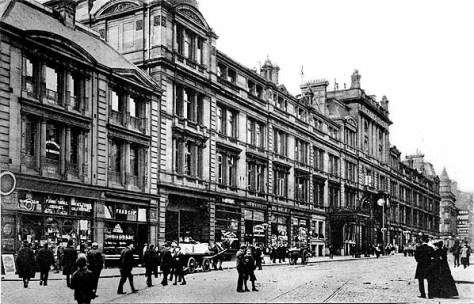
Liverpool Exchange Street Station and Hotel. The frontage remains and in the 1980s was incorporated into the Mercury Court office development. It has recently been converted into 21st century office space called ‘Exchange Station’. (Image: Alan Young)
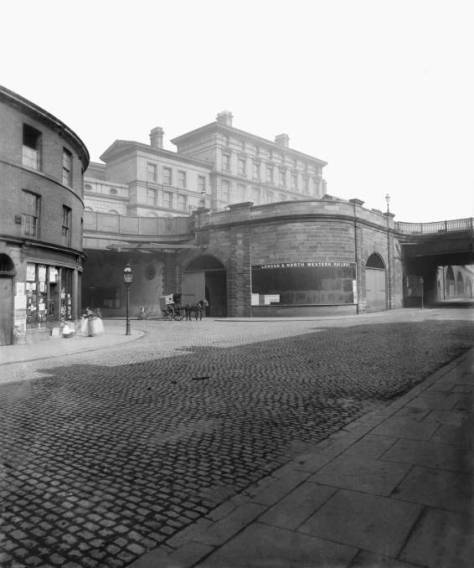
Manchester Exchange Station was a railway station located in Salford, immediately to the north of Manchester city centre. It served the city between 1884 and 1969. The station was closed on 5 May 1969. (Image: National Railway Museum)
In 1890, his reputation growing, Walter made the move over the Pennines and into the practice of Mr Thomas Henry Jenkinson at 4 East Parade.
Jenkinson had been an architect in Sheffield for over forty years. He had been responsible for several buildings built in the city centre, taking advantage that Sheffield had been one of the last among the big towns to take in hand the improvement of its streets and their architecture.
Buck’s move to Sheffield proved advantageous. Jenkinson had become a partner at Frith Brothers and Jenkinson in 1862, which he continued until 1898, when he retired. He made Walter his chief assistant and allowed him to reorganise the business and control affairs for several years. During this period Walter carried out work on many commercial buildings and factories in Sheffield.
Initially, Walter boarded in lodgings at 307 Shoreham Street, close to the city centre. He married Louisa Moore Kittle in 1892 and, once his reputation had been established, was able to purchase his own house at 4 Ventnor Place in Nether Edge.
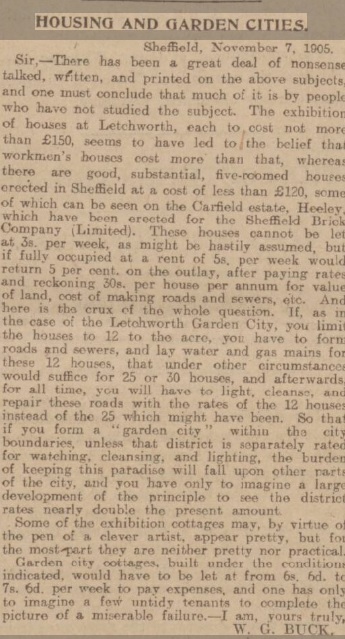
A letter from Walter to the Sheffield Daily Telegraph (8 Nov 1905)
Perhaps Walter Buck’s greatest work also proved to be his most short-lived.
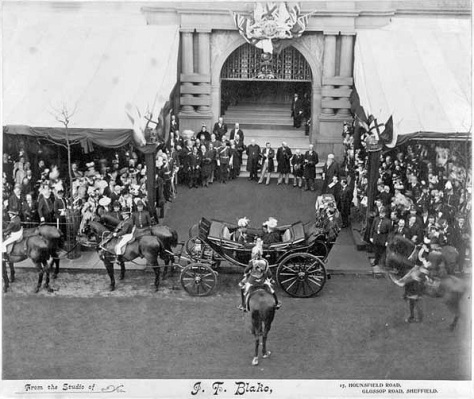
In May 1897, Queen Victoria made her last visit to Sheffield for the official opening of the Town Hall. It also coincided with the 60th year of her reign – Queen Victoria’s Diamond Jubilee Year.
The visit caused considerable excitement in Sheffield and preparations lasted for weeks. Shops and offices advertised rooms that commanded the best positions to see the Queen. Not surprisingly, these views were quickly occupied, but the closest view was promised in the Imperial Grandstand, specially designed for the occasion by Walter Gerard Buck.
Queen Victoria’s Diamond Jubilee visit to Sheffield in May 1897. The central interest was the newly-built Town Hall where ‘the gilded gates stood closed until her majesty touched the golden key and they flew open’.
This spectacle was built next to the newly-erected Town Hall, opposite Mappin and Webb, on Norfolk Street (in modern terms this would be where the Peace Gardens start at the bottom-end of Cheney Walk across towards Browns brasserie and bar). It was advertised as ‘absolutely the best and most convenient in the city’, with a frontage of nearly 200 feet and ‘beautifully roofed in’. The stand, decorated in an artistic manner by Piggott Brothers and Co, provided hundreds of seats, the first three rows being carpeted with back rests attached to the back. In addition, the stand provided a lavatory, refreshment stalls and even a left luggage office. It was from here that the people of Sheffield saw Queen Victoria as the Royal procession passed within a few feet of the stand along Norfolk Street to Charles Street.
The next day the Imperial Grandstand was dismantled.
The professional relationship between Walter Buck and Thomas Jenkinson matured into a close friendship.
When Jenkinson died in 1900, he left the business to Walter and made him one of his executors. His son, Edward Gerard Buck, eventually joined the business which became known as Buck, Lusby and Buck, moving to larger premises at 34 Campo Lane.
In 1906, Walter was elected to the Council of the Sheffield, South Yorkshire and District Society of Architects and Surveyors and was elected President in 1930. He was also a Fellow of the Royal Institute of British Architects (RIBA) and a member of the council of that body.
Walter also became a member of the council of the Sheffield Chamber of Commerce, a member of the Court of Governors of Sheffield University, a member and director of the Sheffield Athenaeum Club, a member of the Nether Edge Proprietary Bowling Club and vice-president of the Sheffield Rifle Club. It was this last role that he enjoyed best. Walter was a keen swimmer but his passion for rifle shooting kept him busy outside of work.
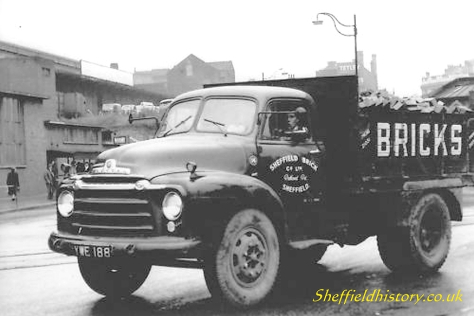
Apart from architectural work Walter held directorships with the Hepworth Iron Company and the Sheffield Brick Company. These astute positions allowed him to negotiate the best prices for the building materials needed to complete his projects.
A familiar site on Sheffield’s streets. The Sheffield Brick Company had brickyards situated at Neepsend, Grimesthorpe, Wincobank and Wadsley Bridge. Materials were used in many of the city’s buildings including Sheffield University, the Grand Hotel and the Town Hall. (Image: Sheffield History)
However, as the new century dawned, it was a role outside of architecture that occupied Walter’s time.
In 1892 the French Lumière brothers had devised an early motion-picture camera and projector called the Cinématographe. Their first show came to London in 1896 but the first moving pictures developed on celluloid film were made in Hyde Park in 1889 by William Friese Greene. The ‘new’ technology of silent movies exploded over the next few years and by 1906 the first ‘electric theatres’ had started to open. In London, there were six new cinemas, increasing to 133 by 1909.
Not surprisingly, this new sensation rippled across Britain and Sheffield was no exception. This had been pioneered by the Sheffield Photo Company, run by the Mottershaw family, who displayed films in local halls. They also pioneered the popular ‘chase’ genre in 1903 which proved significant for the British film industry. The Central Hall, in Norfolk Street, was effectively Sheffield’s first cinema opening in 1905, but the films were always supported with ‘tried and tested’ music hall acts. Several theatres started experimenting with silent movies, but it was the opening of the Sheffield Picture Palace in 1910, on Union Street, that caused the most excitement. This was the first purpose built cinema and others were looking on with interest.
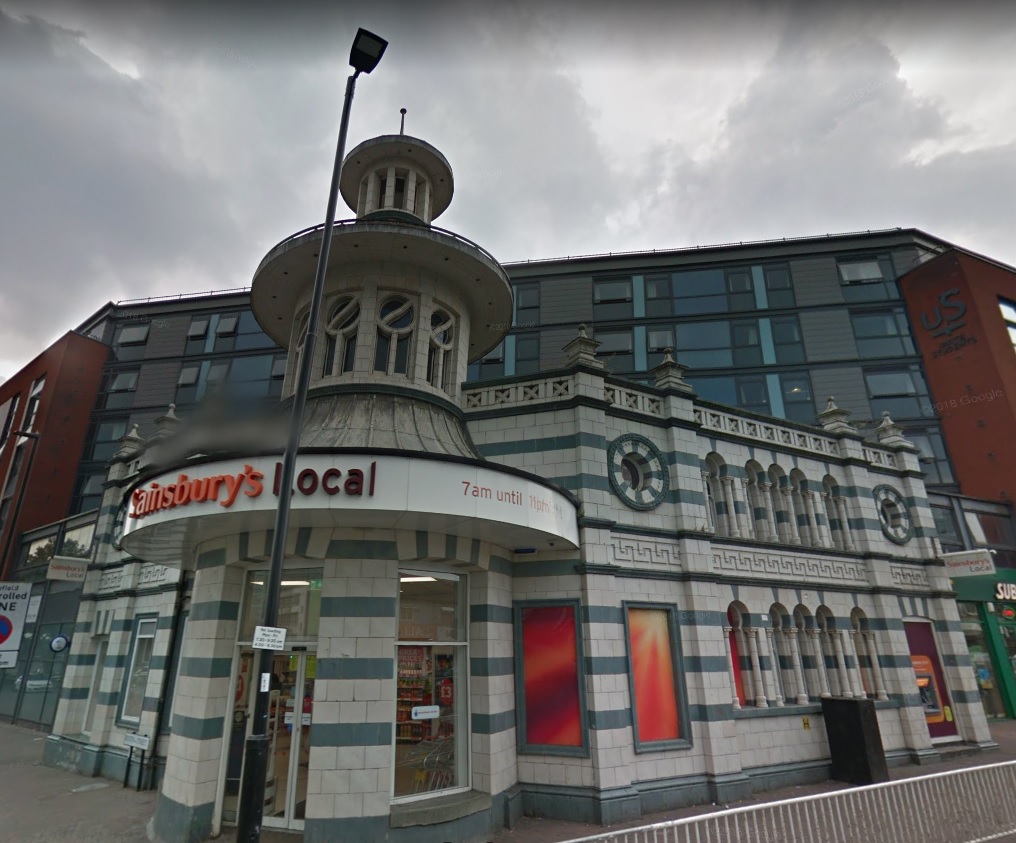
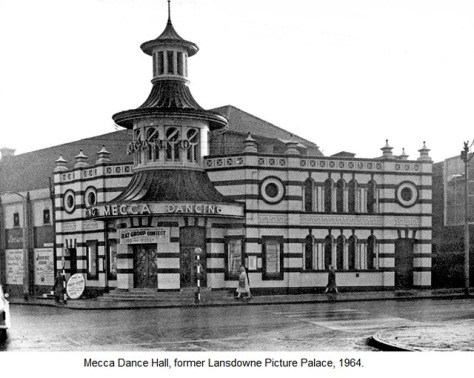
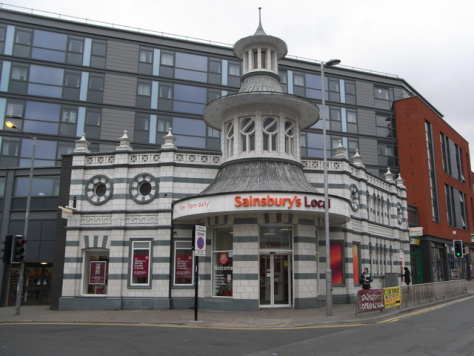
Walter Buck was one such person and saw the opportunity to increase business by designing these new purpose-built cinemas. One of his first commissions was for Lansdowne Pictures Ltd who had secured land on the corner of London Road and Boston Street. The Lansdowne Picture Palace opened in December 1914, built of brick with a marble terracotta façade in white and green, with a Chinese pagoda style entrance. It was a vast building seating 1,250 people. In the same year he designed the Western Picture Palace at Upperthorpe for the Western Picture Palace Ltd.
The Lansdowne Picture Palace was designed by architect Walter Gerard Buck of Campo Lane, Sheffield. It stands at the junction of London Road and Boston Street and opened on 18th December 1914. In 1947 the cinema became a temporary store for Marks & Spencers. In the 1950’s it became a Mecca Dance Hall called the ‘Locarno’ later changing into ‘Tiffany’s Night Club’. It had several more reincarnations as a night club with different names and the frontage was painted black, its last name being ‘Bed’. (Image: Cinema Treasures)
The Weston Picture Palace, designed by Walter Gerard Buck in 1913-14. The cinema was on St Phillip’s Road and Mitchell Street and was demolished. (Image: Sheffield History)
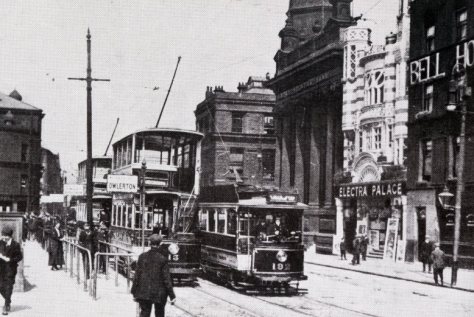
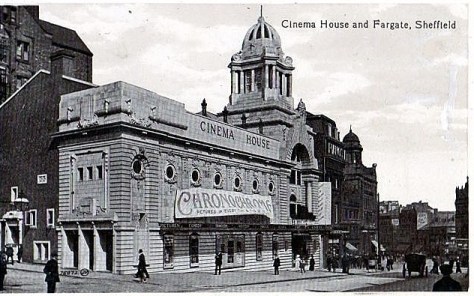
With the knowledge required to build cinemas it was unsurprising that Walter Buck was asked to join several companies as a director. One of these was Sheffield and District Cinematograph Theatres Ltd which was formed in 1910 for ‘the purpose of erecting and equipping in the busiest and most thickly populated parts of the City of Sheffield and district picture theatres on up-to-date lines’. Its first cinema was the Electra Palace Theatre in Fitzalan Square with a seating capacity upwards of 700 with daily continuous shows. Their second cinema was the Cinema House built adjoining the Grand Hotel and adjacent to Beethoven House (belonging to A Wilson & Peck and Co) on Fargate, this part later becoming Barker’s Pool. This was a much grander cinema with a seating capacity of 1,000 together with luxuriously furnished lounge and refreshment, writing and club rooms.
Ironically, Walter Buck did not design either of these picture houses. Instead, they were conceived by John Harry Hickton and Harry E. Farmer from Birmingham and Walsall, but the bricks were supplied by the Sheffield Brick Company, that lucrative business where Walter was a director. It should not go unnoticed that this highly profitable company probably made Walter a wealthy man. It had already supplied bricks for the Grand Hotel, Sheffield University and the Town Hall.
Opened as the Electra Palace on 10th February 1911. It was designed by J.H. Hickton & Harry E. Farmer of Birmingham & Walsall. Constructed by George Longden & Son Ltd. (who built several Sheffield cinemas), the proprietors being Sheffield & District Cinematograph Theatres Ltd. (Image: Sheffield History)
Opened in 1913, the Cinema House seated 800 and was one of the smaller city centre cinemas. Boasting a tea room, it had a narrow auditorium and patrons entered from the screen end of the hall. Being narrow, it’s Cinemascope image size was severely restricted. It closed in 1961 and was subsequently demolished. (Image: Cinema Treasures)
The cinema undertaking was not without risk and Cinema House, which opened six months before the start of World War One, always struggled to break even.
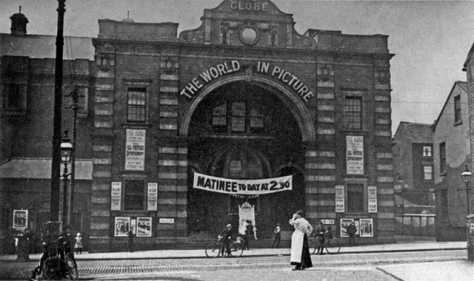
In 1920, far from building new cinemas right across the city, the company bought the Globe Picture House at Attercliffe. The following year they reported losses of £7,000 with Cinema House blamed for the poor performance.
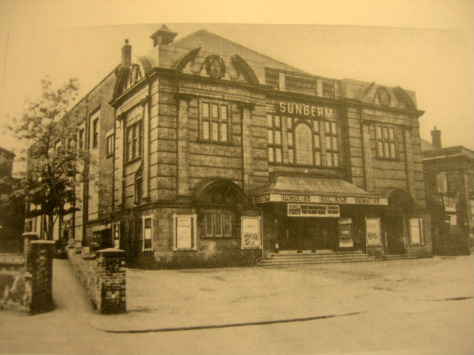
At this stage, it is unclear as to what involvement Walter Buck had with Sheffield and District Cinematograph Theatres. He was also a director of Sunbeam Pictures Ltd, designing the Sunbeam Picture House at Fir Vale in 1922, and the Don Picture Palace at West Bar. He was most certainly a director of the Sheffield and District Cinematograph Company by the late 1920s, and eventually became its chairman. In 1930, absurdly on hindsight, he was faced with a public backlash as the company made the transfer over to ‘talkie’ pictures.
“It was true that some people preferred the silent pictures, but the difficulty was that the Americans were producing very few silent films, or the directors might probably have kept some of the houses on silent films to see if they could hold their own with the talkie halls.”
Located on Attercliffe Common at the junction with Fell Road. The Globe Picture Hall was a venture of the Sheffield Picture Palace Co. Ltd. It opened on 10th February 1913 and was, at that time, one of the largest cinemas in Sheffield. The architects were Benton & Roberts. The owning company reformed on 21st March 1914 as the Sheffield & District Cinematograph Theatres Ltd. and remained owners until closure on 29th June 1959. (Image: Cinema Treasures)
The Sunbeam Picture House was built on Barnsley Road at the junction of Skinnerthorpe Road in the Fir Vale district of Sheffield. The Sunbeam Picture House opened on Saturday 23rd December 1922. It was built set back from the road and was an imposing brick and stucco building, with a large embossed rising sun motif on the facade, set inside an ornamental parapet. A central entrance to the cinema was covered with a canopy. (Image: Sheffield History)
The Don Picture Palace opened on Monday 18th November 1912 with the films “Captain Starlight” and “Monarchs Of The Prairie”. The architect was Henry Patterson and it was situated in what was then one of the main entertainment areas of Sheffield with the old Grand Theatre of Varieties being close by. (Image: Sheffield History)
Walter Buck never retired but died at his home at 19, Montgomery Road, Nether Edge, aged 70, in September 1934. He left a widow, his second wife, Fanny Buck, and three sons – Edward Gerard Buck, William Gerard Buck, a poultry farmer, and Charles Gerard Buck, chartered accountant. Walter Gerard Buck was buried at Ecclesall Church.
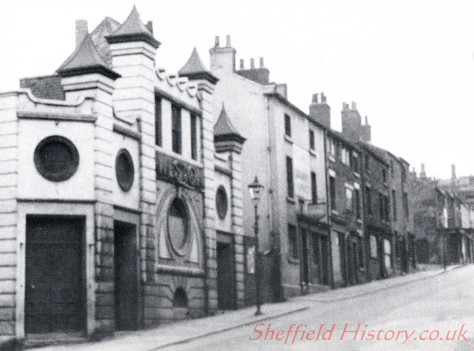
It seems the only epitaph to Walter Buck is the Chinese pagoda style entrance of the Lansdowne Picture Palace. The auditorium was demolished to make way for student accommodation, but the frontage was retained for use as a Sainsbury’s ‘Local’ supermarket. Very little information exists about his other work in the city and further research is needed to determine which buildings he designed, and which remain. Any information would be most welcome.
All that remains of the former Lansdowne Picture Palace. The frontage and Chinese-style pagoda were retained for this Sainsbury’s Local supermarket, soon to become Budgens. (Image: Cinema Treasures)






 sheffielder.net