Categories
Places

Hallamshire

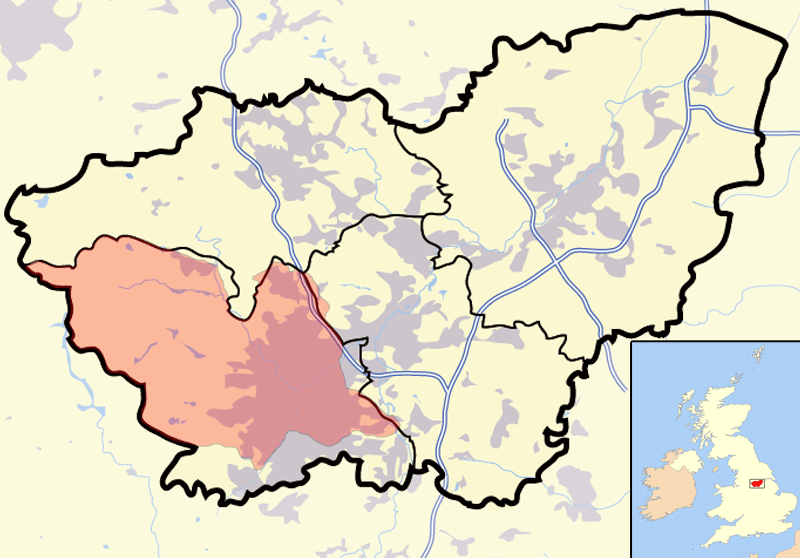
The map shows the approximate area of Hallamshire as described in the 14th century (red shaded area) overlaid on a map of the modern ceremonial county of South Yorkshire.

Hallamshire is an ancient name for Sheffield and the villages, hamlets and farmsteads in the surrounding countryside. It is a name that everyone knows, but very few know what it means, and where it was.

Let’s go back to the days before the County of York existed.

Hallamshire is first recorded by its full name in a charter of 1161, although it is thought to be much older. The Domesday Book of 1086 used the shortened version, though it was transcribed as Hallun.

The name Hallam is peculiar; it looks to have had a Frisian origin; and probably was derived from the great tribe of the Halling or Halsing. The lordship belonged to the Waltheof family for a considerable time before the Norman conquest; passed to a female heiress of that family in 1075; passed afterwards to the Earls of Northampton; had a seneschal in the time of Edward I; and then parts of it belonged to the Duke of Norfolk.

The English Place-Name Society describe Hallam originating from a formation meaning “on the rocks”.

Alternative theories are that it is derived from halgh meaning an area of land at a border, Old Norse hallr meaning a slope or hill, or Old English heall meaning a hall or mansion.

Hallamshire was the most southerly of the Northumbrian shires, for it shared a border with the kingdom of Mercia.

The extent of its boundary is unclear, but it would seem to have constituted the Saxon manor of Hallam, included the parish of Sheffield, together with the parish of Bradfield and the smaller Saxon manor of Attercliffe.

In later chronicles, Sheffield, Bradfield, Ecclesfield and Handsworth are included under the term.

In broader terms, Hallamshire probably covered much of the same area as does present day Sheffield.

Its legacy is still with us, with various uses of the name evident – Royal Hallamshire Hospital, Sheffield Hallam University, Hallam FM, Diocese of Hallam, Company of Cutlers in Hallamshire, Hallam F.C., Hallamshire Golf Club and Hallamshire Harriers, to name just a few.

Categories
People Places

An American tale

Photograph by The Telegraph

They say that American schoolchildren know more about Wentworth Woodhouse than their British counterparts. More astonishingly, there are far more people in Sheffield who have probably never heard of it.

Wentworth Woodhouse, just over the Sheffield border with Rotherham, is the result of building work carried out by Thomas Watson-Wentworth, 1st Marquess of Rockingham (1693-1750), who built it between 1724 to 1749. It is remarkable for consisting of two houses built as one. The famous Palladian east front hides the grand Baroque west-wing behind.

His son, Charles Watson-Wentworth, 2nd Marquess of Rockingham (1730-1782), was a committed Whig and became Prime Minister of Great Britain on two occasions – between 1765-1766 and in 1782.

He spent most of his political career in opposition to George III’s Government, but Wentworth Woodhouse became a seat of political activity, where ‘The Rockingham Whigs’ including Edmund Burke, Charles James Fox and the Duke of Portland met to draft policies.

He argued consistently with reconciliation with America at a time when thirteen colonies were becoming increasingly at odds with Great Britain. However, he failed to convince most of the House of Commons and as a result there was the long and bloody American War of Independence (1775-1783).

When he took office again in 1782 it was on condition that George III recognise American Independence, but Wentworth died before terms of peace could be negotiated. As one historian says, he was “a champion of a lost cause.”

But don’t think that he was a radical, initially believing that America shouldn’t be given independence. “Our object has always been to try to preserve a friendly union between the colonies and the Mother Country.”

The American War of Independence ended a year later, marking the end of British rule and the formation of the United States of America.

Categories
Places

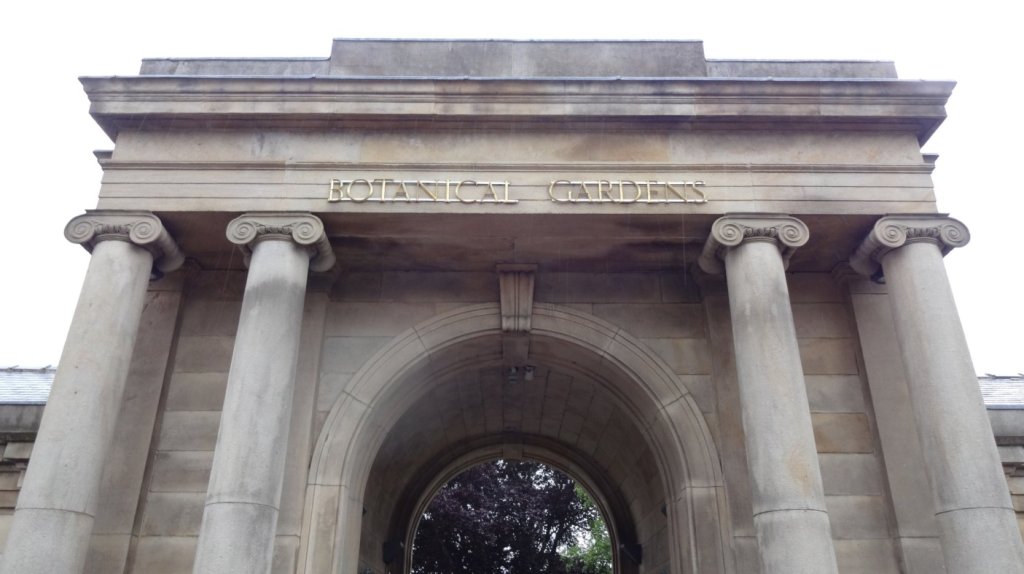
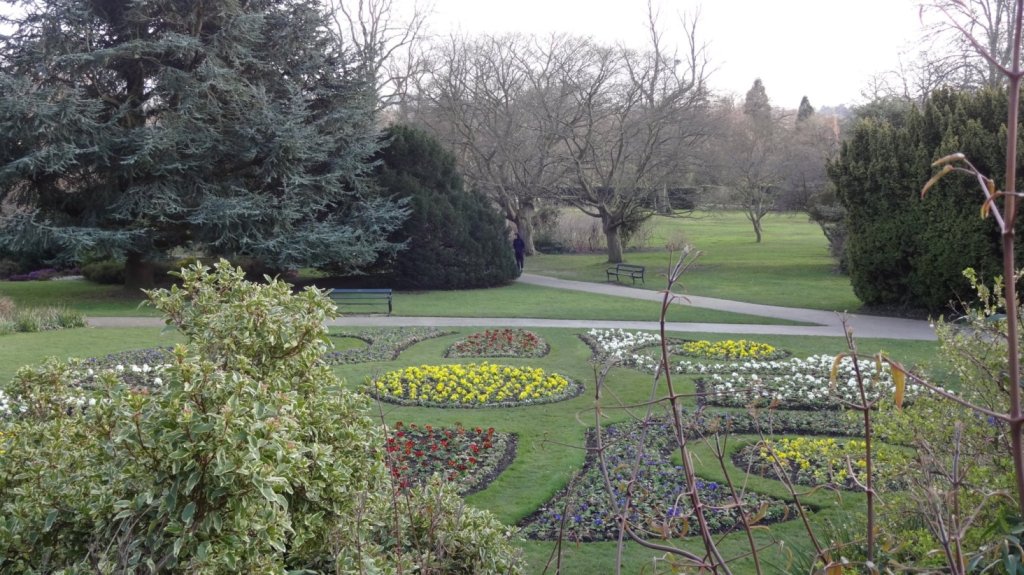
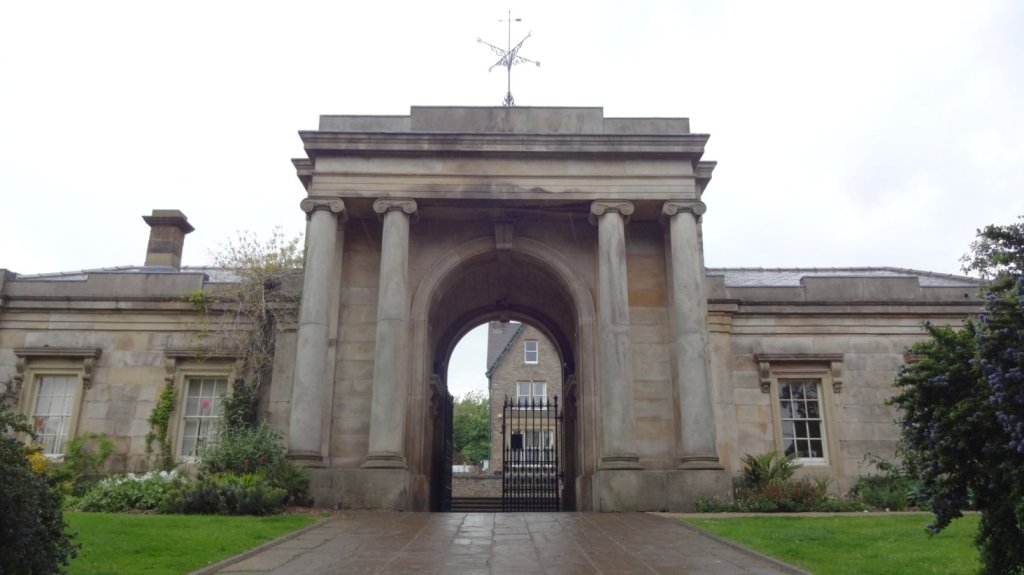
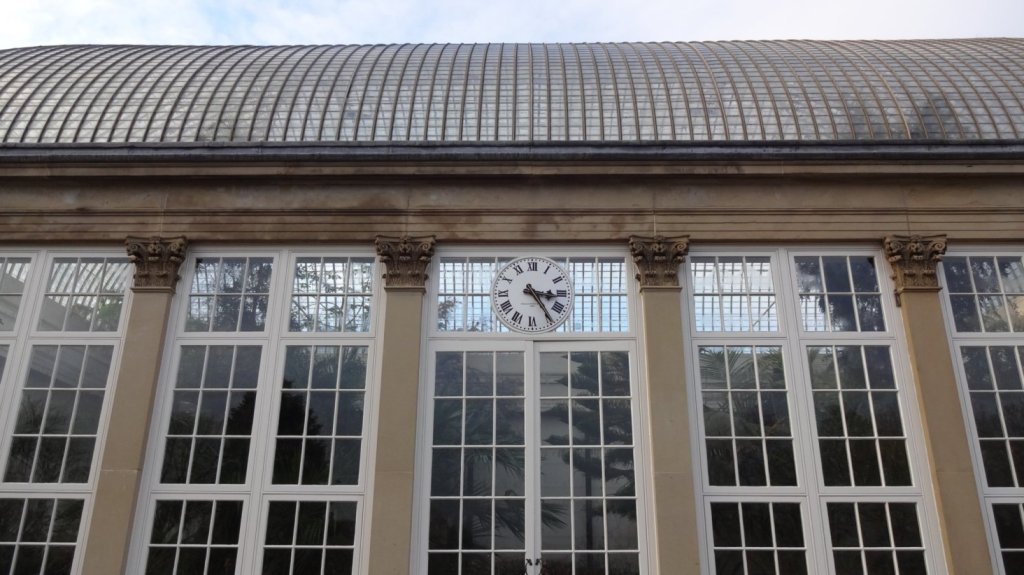
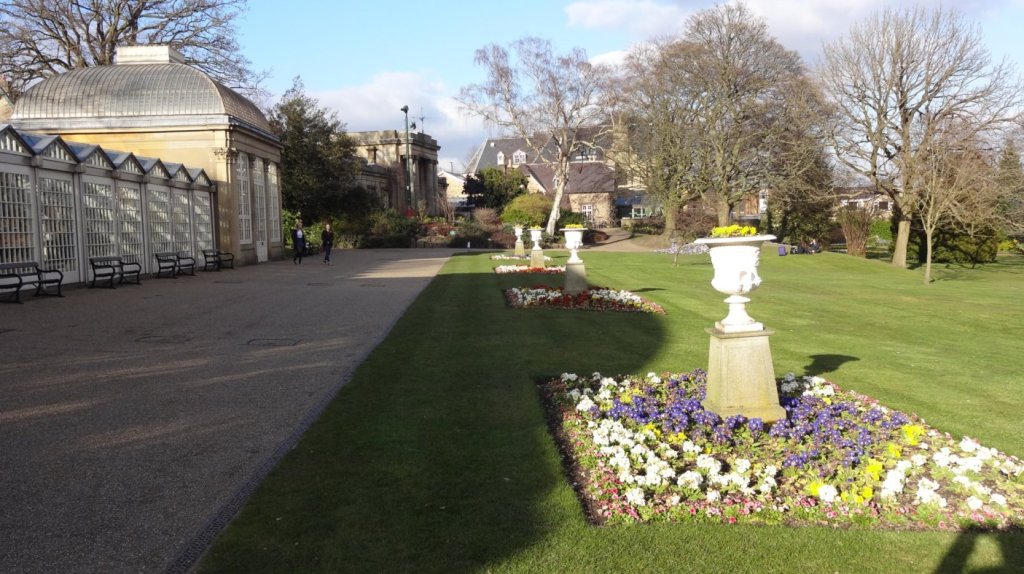
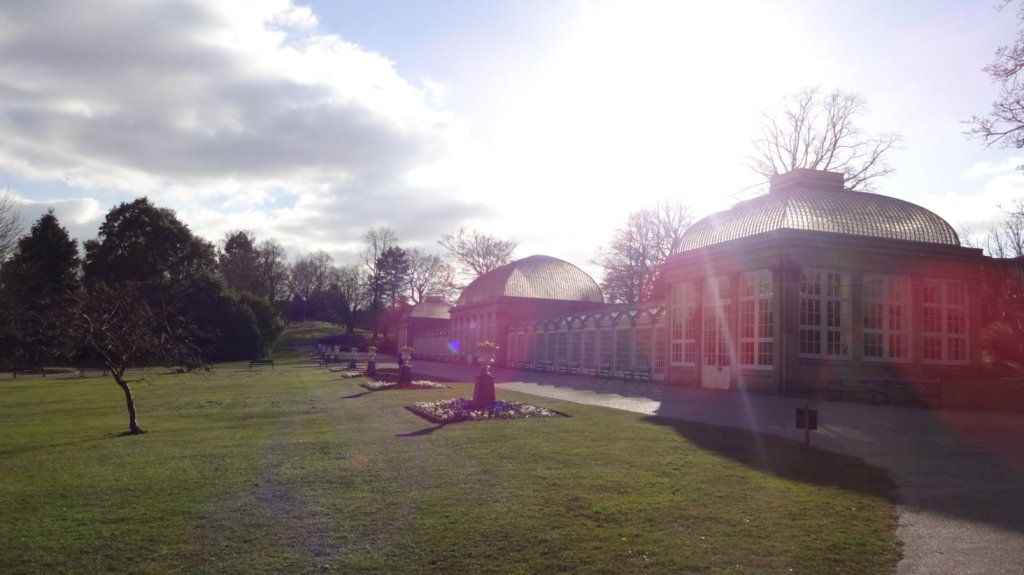
Sheffield Botanical Gardens

Photograph by Sheffielder

It’s a Sheffield park that we take for granted, but the story behind the Botanical Gardens is not as straightforward as we might believe. The next time you visit, spare a thought for our ancestors who probably didn’t have the opportunity.

It is Sheffield’s oldest park, with origins going back to 1833 when Thomas Dunn, the Master Cutler, called a public meeting following a petition signed by 85 local residents concerned about the lack of public open spaces and facilities to promote both healthy recreation and self-education in Sheffield. It was resolved, at the meeting, to develop a Botanical Garden.

Photograph by Sheffielder

By 1834 the Society had raised £7,500 through shares, and, having taken practical advice from Joseph Paxton of Chatsworth and Joseph Harrison of Wortley Hall, they purchased 18 acres of south facing farmland at Clark House from Joseph Wilson, head of the family of snuff makers.

“The roads to it were good, the land itself lay very well to the south, it was well sheltered and very fertile.”

Photograph by Sheffielder

The laying out of the grounds was determined through a competition, the winner chosen from a panel of judges made up of experienced gardeners –  Joseph Paxton (Chatsworth), Joseph Cooper (Wentworth), Joseph Walker (Banner Cross) and John Wilson (Worksop Manor).

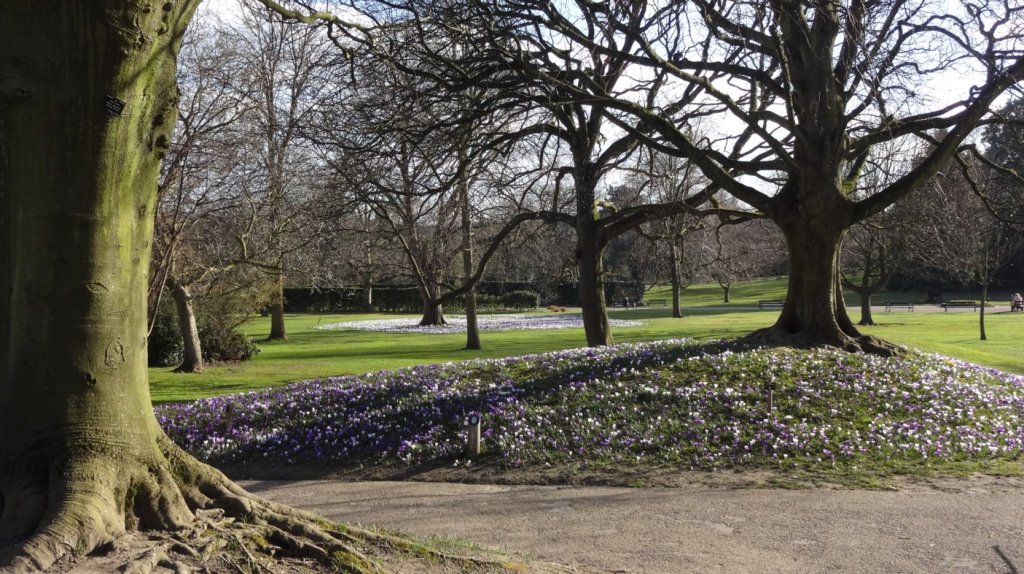
A design submitted by Robert Marnock, former Head Gardener at Bretton Hall, was chosen for the new Botanical Gardens – . “He laid out the Gardens in the then highly fashionable Gardenesque style, the main characteristic being that all the trees, shrubs and plants were positioned in such a way that each plant can be displayed to its full potential in scattered planting.  The approach involved the creation of small-scale landscapes, winding paths, expanses of grass and tree-planted mounds.”

Photograph by Sheffielder

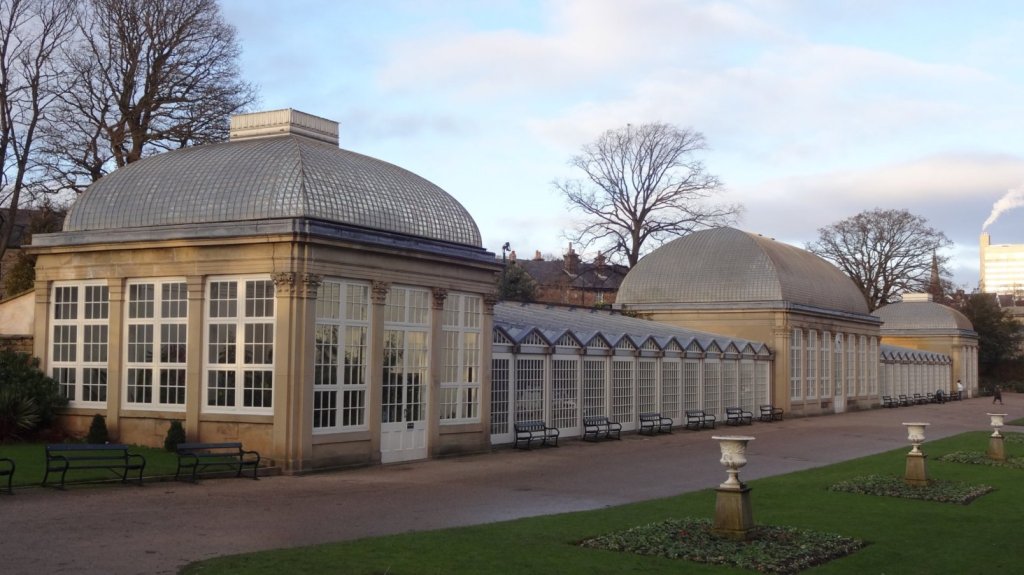
The runner-up in the competition, Benjamin Broomhead Taylor, was appointed as the architect for the buildings. The pavilions became known as Paxton’s Pavilions, hinting that these were designed by Joseph Paxton, but it is more likely that he merely offered advice in their design.

The Botanical Gardens were finally opened on the 29th July 1836, under the patronage of the Duke of Norfolk, Duke of Devonshire, Earl Fitzwilliam, Lord Wharncliffe, the Earl of Surrey and John Stuart Wortley.

“Two excellent bands of music were stationed in the grounds, and refreshments of various kinds offered. The buildings, consisting of a lodge or grand entrance, on the left of which are the conservatories, and the residence of Robert Marnock, the Curator, are erected in a very tasteful style of architecture, which reflects the skill of Mr Benjamin Broomhead Taylor.

“The walks assume all the intricacy and mystery of a labyrinth maze, while the monkey cages, the bear’s den, the eagles’ habitation, water-works etc., give a variety to the whole.

“The gardens command a view of many miles of rural scenery, with the grand imposing appearance of the New Cemetery (General Cemetery) in front, seeming, as it were, to form a portion of the grounds.”

Photograph by Sheffielder

A few things to note here. One, is that the Botanical Gardens were built in what was then open countryside. Second, the Gardens were only open to the general public on about four gala days each year; otherwise admission was limited to shareholders and annual subscribers.

In 1839, The Gardeners’ Magazine reported that the attempt to combine a zoological garden had not succeeded. “In fact, the filth, stench, roaring, howling, and other annoyances incident to carnivorous animals, are altogether inconsistent with the repose which is essentially a botanic garden.”

Photograph by Sheffielder

Robert Marnock left the Botanical Gardens in 1840 and moved to Hackney in London. Soon afterwards, the Council of the Royal Botanic Society appointed him Curator and to lay out the grounds in Regent’s Park.

In 1844, financial problems led to the failure of the first society, but the Gardens were rescued with the formation of a second society (also known as the Sheffield Botanical and Horticultural Society) which purchased the land from the former society for £9,000. The conservatories were extended, a tea pavilion and the present Curator’s House were constructed within the succeeding decade. A period of steady development and growing international renown followed for the next 30 years.

Photograph by Sheffielder

In 1897, falling income, competition from the new free city parks and residential development in the area meant that the Gardens were in danger again. It was decided that the proprietors could not make them pay and were disinclined to maintain them. It was suggested that several of the shareholders would give their shares, and others would sell theirs, for £5 each, if the Sheffield Town Trust (dating back to 1297) would purchase the Gardens and maintain them for the benefit of the people of Sheffield.

In 1898 the Sheffield Town Trust paid £5,445 for the value of the shares, becoming owners and managers of the Gardens for the first half of the 20th Century. The Gardens were reopened without fuss on Thursday 20th August 1899, and it was then that free admission was introduced and continues today. Demolition of unsafe buildings was necessary and only the conservatory domes were repaired. The Gardens thrived until World War II, when extensive damage left the Sheffield Town Trust unable to afford the repairs and restoration required.

Photograph by Sheffielder

In 1951, a Special Committee decided that they could lease the Botanical Gardens at a nominal rent; the maintenance of the Gardens as a Botanic Garden; that no organised games or sports other than a children’s corner be permitted; that the staff of the Gardens be taken over by Sheffield Corporation.

Sheffield Corporation accepted the offer and the management of the Gardens passed to them on a 99-year lease for a peppercorn rent of one shilling per year raised to 5p a quarter in 1971. The Town Trust remains the owners of the Gardens.

With the aid of a grant from the War Damage Commission, the Council was able to instigate repairs to the domes, creating an Aviary and an Aquarium, and restoring Sheffield Botanical Gardens to their former glory. However, a downturn in the economy during the 1980s meant a severe reduction in funding and once again the Gardens were on their way to dereliction.

Photograph by Sheffielder

In 1984, the Friends of the Botanical Gardens, Sheffield (FOBS) was established as a group providing education for the public and supporting the Gardens. Practical volunteer work to help staff maintain the Gardens started in 1993.

The Friends managed to arrest the decline in many parts of the Gardens but not the listed structures, even the Paxton’s pavilions were derelict and in danger of collapse.

In 1996 the Friends set up the Sheffield Botanical Gardens Trust with the aim of applying for grants to restore the Gardens.

Photograph by Sheffielder

The Heritage Lottery Fund announced its Urban Parks Programme in January 1996. Soon afterwards, an organisation known as the Sheffield Botanical Gardens Partnership was formed to produce a bid for the Gardens. Its membership was Sheffield Botanical Gardens Trust, Friends of the Botanical Gardens, Sheffield Town Trust, the City Council and the Landscape Department of Sheffield University.

The Gardens were awarded a grand of £5.06 million, which was to be matched by £1.22 million in funds and £0.41 million in work in kind.

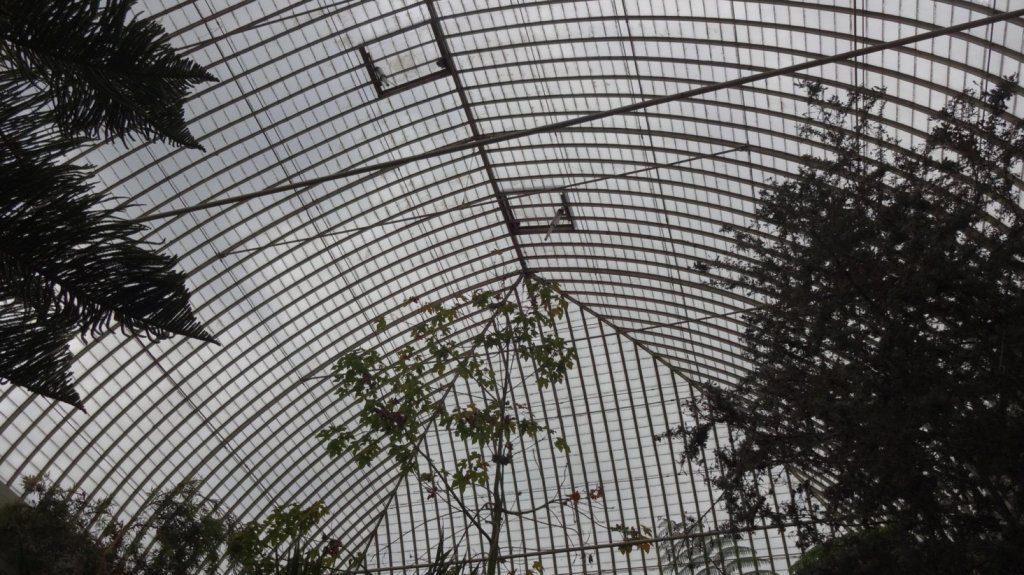
The project was designed to restore the Gardens, all the buildings and features to their 19th century condition whilst adapting to modern requirements. This included the full reinstatement of the Paxton’s pavilions to become a splendid home for frost sensitive plants from around the world.

The restored Gardens were officially opened in June 2007 at a cost of approximately £6.69 million.

(Information for this post was provided by Sheffield Botanical Gardens, Sheffield Town Trust and ‘Sheffield Botanical Gardens – People, Plants and Pavilions’ by R. Alison Hunter).

Photograph by Sheffielder
Categories
Buildings Other Places Streets

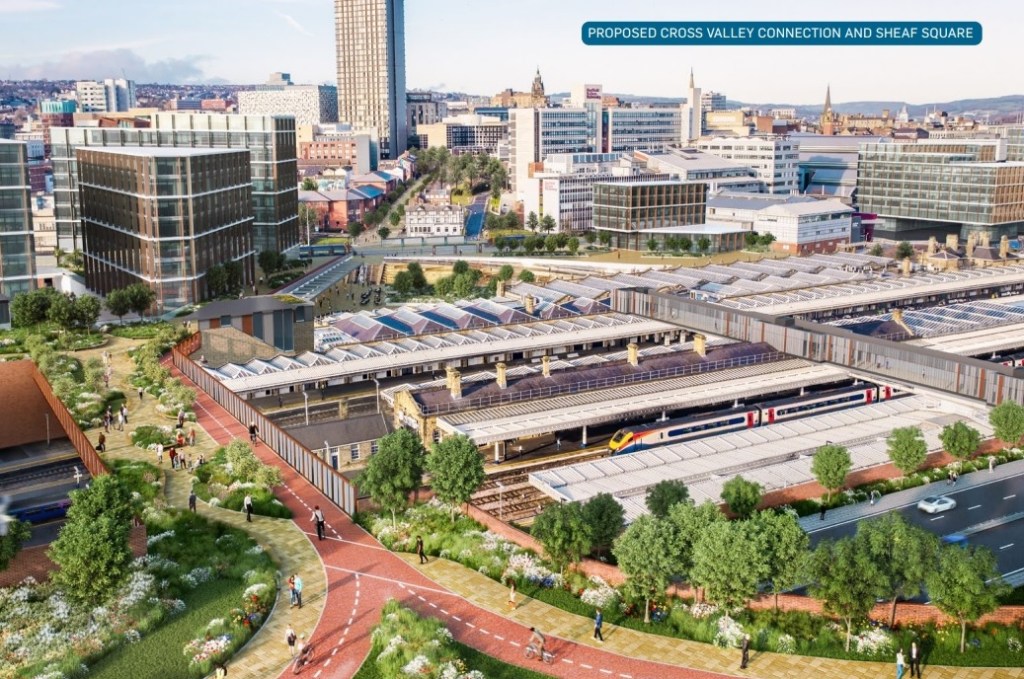
Sheffield Midland Station and Sheaf Valley Development Framework

Photograph by Sheffield Midland Station and Sheaf Valley Development Framework.

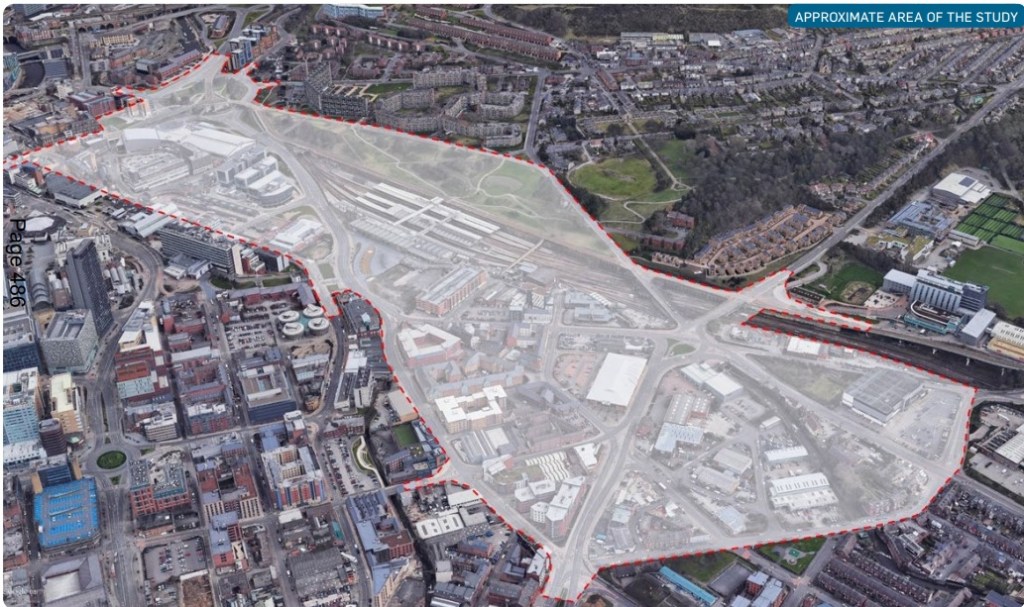
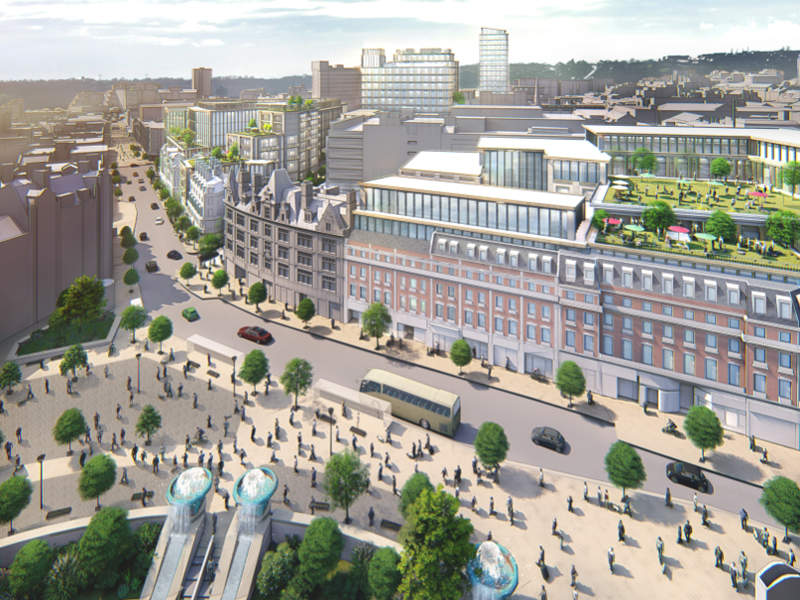
I don’t think anybody saw this coming. Sheffield’s biggest ever development project – a £1.5bn plan to develop the area around Sheffield Railway Station, dwarfing the £480m Heart of the City II scheme.

The plan is to maximise the economic potential of the area and make the most of HS2, and will now go out for public consultation.

The idea stems from plans for HS2 trains to stop at Sheffield Station on a loop off the mainline which were recently given the green light by the government.

Sheffield City Council would co-ordinate the project, with funding coming from several organisations including the city council, HS2, SYPTE, Transport for the North, Network Rail, Sheffield City Region and the Department for Transport. The bulk of the costs – up to £1bn – would be from the private sector, which would build offices, restaurants, bars and potentially a hotel.

Photograph by Sheffield Midland Station and Sheaf Valley Development Framework.

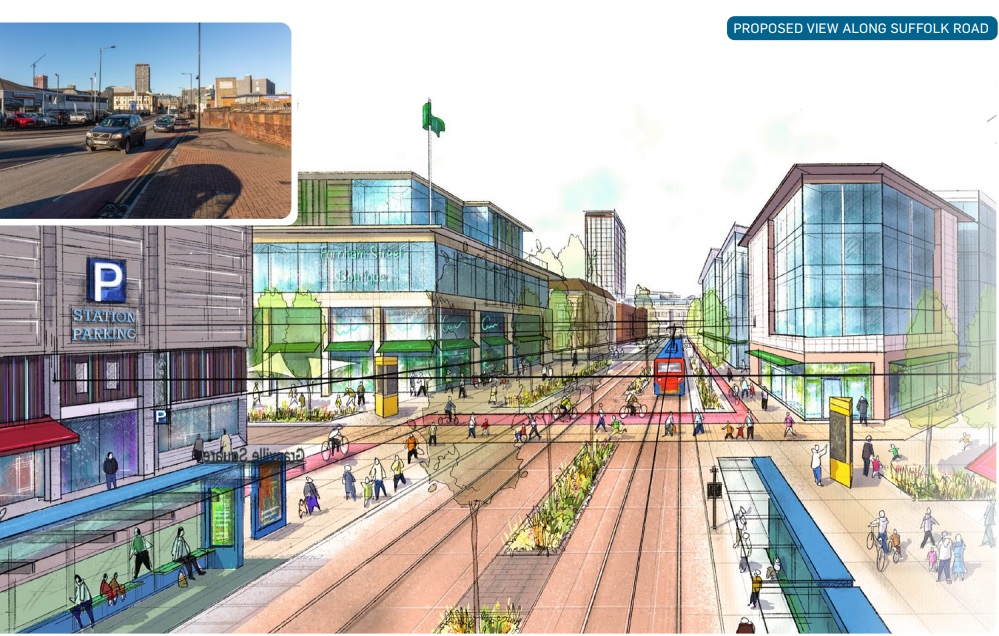
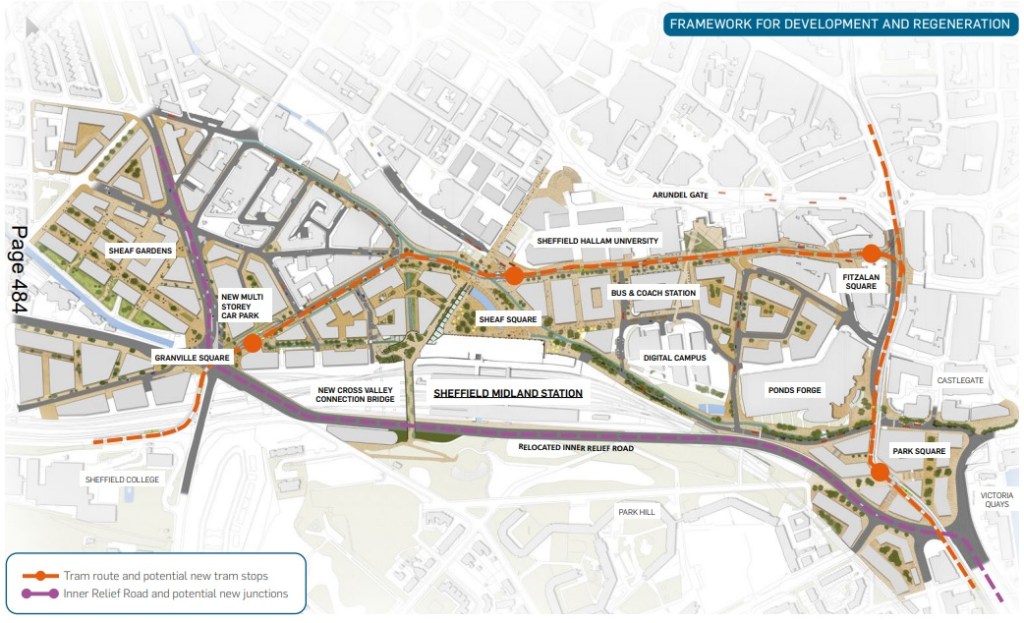
The project would see the closure of Park Square roundabout and Sheaf Street – the dual carriageway that runs in front of the station – would swap places with the tram route that runs behind.

A huge, landscaped pedestrian bridge would link Park Hill with Howard Street and the multi-storey car park on Turner Street would be demolished and moved further away.

It would be replaced by an office block – one of up to 12 planned in the ‘Sheffield Valley’ zone, including four outside the station, employing up to 3,000 people.

Up to 1,000 homes – flats and houses – could also be built.

Photograph by Sheffield Midland Station and Sheaf Valley Development Framework.

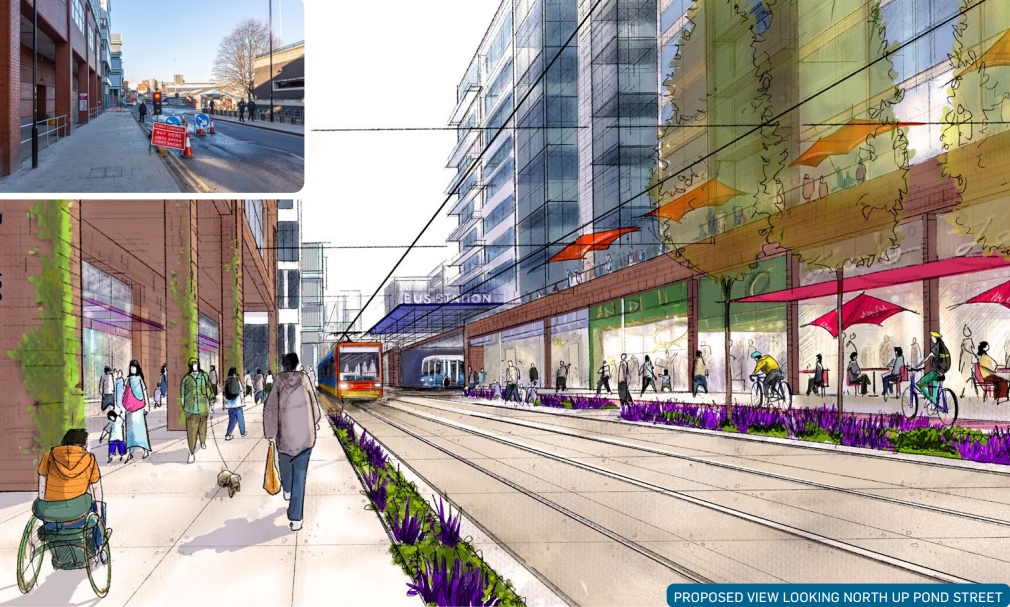
The new tram route would run from Fitzalan Square, along Pond Street, stop outside the station and continue along Suffolk Road to Granville Square.

The bus station on Pond Street would be reduced in size to make room for the tram tracks and offices on stilts potentially built on top.

Photograph by Sheffield Midland Station and Sheaf Valley Development Framework.

Park Square roundabout and Sheaf Street would become a park and link into the Grey to Green scheme at Victoria Quays, Castlegate and West Bar.

Under the plans the ‘Q park’ would move to the Wren-DFS site on nearby St Mary’s Road.

There would be a new, sheltered, taxi rank next to the station, but the taxi ‘stacking’ area would be moved ‘slightly further out’ improving access for drop-offs and people with mobility needs.

The area between St Mary’s Road, Queens Road and Sheaf Gardens, currently home to businesses including a Pure Gym, would be a new residential centre for up to 700 homes, with a further 300 spread throughout the area.

The Masterplan

Photograph by Sheffield Midland Station and Sheaf Valley Development Framework.
Categories
Places

Heart of the City II

One thing is certain, Sheffield City Council will always attract criticism for its attitude towards old buildings. Local forums are full of scathing comments about its past performance, often unwarranted, but it has certainly made a few controversial and unpopular decisions over the years.

However, the Heart of the City II scheme looks on course with the makeover of Charter Square and the new £90million HSBC building already delivered.

The scheme is the inspiration of Sheffield City Council, along with its strategic development partner, Queensbury.

Demolition work is underway on Pinstone Street, Charles Street, Cambridge Street and Cross Burgess Street, with new buildings destined to rise behind existing Victorian facades.

The phased project will cost about £469million, funded with taxpayers’ money, and makes use of existing streets, with emphasis on extra office and residential space, and less on retail, reflecting the consumer switch to internet shopping. The few shops created will be used to attract premium retail brands. In addition, there will be restaurants, cafes, a food hall and two high-end hotels.

Heart of the City II essentially replaced the ill-fated Sheffield Retail Quarter, a scheme which would have involved moving the John Lewis department store and the demolition of several historic buildings.

For those not convinced, take a look at the original Heart of the City programme, initiated in 1994 to regenerate the city centre with new and improved public spaces, new public buildings and the redevelopment of the site of the Town Hall extension, known as the ‘egg box.’

It was managed by Urban One, an urban regeneration company set up by the government in February 2000, to facilitate development.

At the time, funding was provided by a £20.5million grant from the Millennium Commission and over £100million from the private sector and other sources.

The result was the transformation of the Peace Gardens, the construction of the Winter Garden, Millennium Gallery and the Mercure Hotel, as well as St. Paul’s Tower, ‘cheesegrater’ car-park and various new office blocks.

The development was completed in 2016, successful in attracting residents and visitors alike, and is arguably one of the most successful regeneration schemes ever seen in Sheffield.

Categories
Places

Peace Gardens

The biggest surprise is that it wasn’t until 1985 that the Peace Gardens were formally named. Created in 1938, originally called St. Paul’s Garden, the name was at first suggested, then adopted by the people of Sheffield. It appears that nobody was in any hurry to suggest anything different.

But it wasn’t the case in the beginning.

The gardens stand on the site of St. Paul’s Church, demolished in 1938, when inner city slum clearance resulted in falling attendances. Quickly swept away, Sheffield Council laid out pathways, flower beds and grassed areas within the old churchyard walls.

It was a short-term solution, the council buying the land for £130,000, and designating it for a proposed Town Hall extension.

The name, Peace Garden, was proposed in response to the Munich Agreement.

This was a treaty, concluded at Munich on 30 September 1938, by Nazi Germany, the United Kingdom, France and Italy, that allowed Germany to claim the “Sudeten German territory” of Czechoslovakia. Most of Europe celebrated the agreement, because it prevented the war threatened by Adolf Hitler, who had announced it was his last territorial claim in Europe, the choice seemingly between war and appeasement.

The country thought that war had been averted, a pretence, because hostilities started a year later.

The name was suggested at a formal dinner by Alderman Ernest Rowlinson, the proposal immediately mocked by Mr Slater Willis, who thought it would be taken by many to mean the commemoration of Charles Peace, the Sheffield-born burglar and murderer.

There were critics of the garden scheme, Herbert Oliver, standing as Progressive candidate for Crookesmoor said, “I would rather we built 5,000 homes for old age pensioners than use the money making a garden on St. Paul’s site.”

An offer had already been made that the grounds of Brincliffe Towers at Nether Edge, a gift to the city by Dr Roger Styring, should be used as a Peace Garden instead.

The Sheffield Evening Telegraph was also cynical, writing that, “As for peace, this has never, since the Great War, been in graver danger.” It also suggested a better name – “the Appeasement Garden.”

But the Peace Garden name stuck, and after completion there were congratulatory comments in local newspapers.

“There isn’t much to be proud of in the centre of the city so far, which will render this garden the more surprising and impressive to strangers,” said one correspondent.

Bob Green said that, “The Peace Garden is a boon to old age and workers of the city at dinner hours. I’ve been informed that the garden is only temporary. But I hope the garden will continue and not be built on. I say, ‘Long Live the Peace Garden’.”

Another said, “May I suggest that the garden is illuminated or floodlit at night, also a drinking fountain, and a few more seats would be welcome.”

A year later, the city’s residents seemed satisfied with the Peace Garden, and even the Sheffield Evening Telegraph had changed its tune.

“The suggestion that it should be called the Peace Garden was received with ribald mirth. Whatever its official title may be, it is undoubtedly a delightful and peaceful spot, rich with flowers.”

But there were worrying developments that would blight it for decades to come.

“This morning at 8 o’clock it looked like a battlefield. Seats were overturned and the whole place a disgrace. Last week the gardener put in some thousand bulbs and the next morning most of the beds had been trampled on.”

Another correspondent also expressed concern. “I have occasion to come through this morning before the cleaning process begins and it is not a pretty sight – cigarette ends, empty cigarette boxes, matches, and matchboxes, waste-paper round each seat, and a lot of it blown to the grass.”

And there were still critics of the scheme.

“It may surprise a good many to know that the garden is going to cost this generation, and the next, just about £6,000 a year, quite apart, or rather in addition to upkeep, gardeners’ wages, renewals and the like. That is £16 a day in order that a few people may sit there for about seven or eight weeks in the year.”

The Second World War curtailed any plans for Town Hall expansion, although the ‘Egg Box’ extension appeared nearby in the 1970s.

The Peace Garden, or Peace Gardens as they became, survived the war and became subject of civic pride, all-year round planting schemes, grass to lay on and a place to sit and talk.

However, the garden also attracted undesirable characters – the homeless, drunkards and unruly gangs.

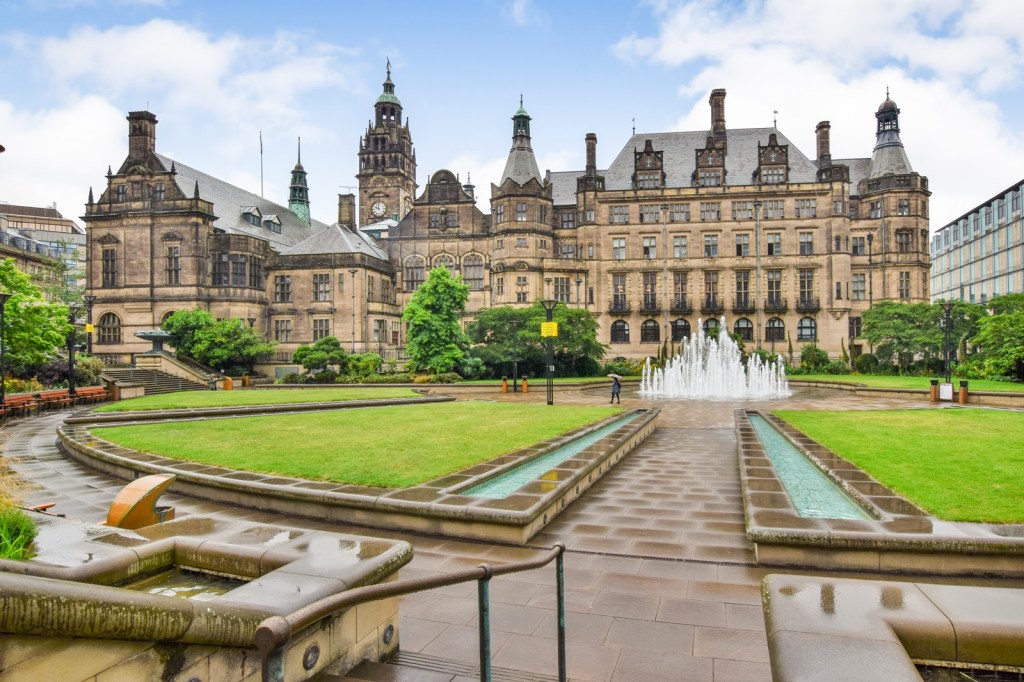
When the Heart of the City project came about during the 1990s the Peace Gardens were at the centre of the scheme. In 1997-1998, they were redesigned by the council’s Design and Property Services, a series of water features, pathways, balustrades and artworks, built in Stoke Hall sandstone, the same material used in the Town Hall.

The new garden, without traditional flower beds and less maintenance, were slightly sunk to mask the noise of buses from Pinstone Street.

Its centrepiece is the Goodwin Fountain, 89 individual jets of water, dedicated to Sir Stuart and Lady Goodwin, and the Holberry Cascades, named after Chartist leader Samuel Holberry, including eight large water features located on either side of the four main entrances.

Categories
Places

River Don

It is the lifeblood of our city, the reason Sheffield’s industrial status grew, but what do you know about the powerful River Don?

The source of the River Don is high up on the Peak District Moors, on Great Grains Moss, near Holme, West Yorkshire, a trickle of a stream that grows as it flows through a series of reservoirs that supply water to the Calder Valley.

From here, it flows near to the Woodhead Tunnel, through Dunford Bridge and onto Penistone, where it is joined by Scout Dyke. Onwards it flows towards Deepcar, where the Little Don River (or River Porter, not to be confused with Porter Brook) spills into it.

Ewden Beck joins near Wharncliffe Side, and by the time it flows past Sheffield Wednesday’s Hillsborough stadium, it is a force to be reckoned with.

The River Loxley flows into it near Penistone Road, before widening and flowing towards Neepsend, Kelham Island, Lady’s Bridge, joined by the Porter Brook and the River Sheaf, onwards to The Wicker, Norfolk Bridge, Attercliffe, Meadowhall and Tinsley.

After Sheffield, the River Don continues through Rotherham, Mexborough, Conisbrough, Doncaster and Stainforth, eventually joining the River Ouse at Goole. This wasn’t always the case, because it originally joined the River Trent, and was re-engineered by Cornelius Vermyden as the Dutch River in the 1620s.

During the Industrial Revolution, mighty industries used the River Don, building a series of weirs used to power mills, hammers and grinding wheels.

But industry was also its downfall.

By the late 1800s, the councils of Sheffield, Rotherham and Doncaster were concerned at the amount of pollution being deposited into the Don. They talked about the problem but were powerless at stopping the river choking to death.

In 1920, a correspondent to the Sheffield Telegraph said the river had only one redeeming feature.

“No person, temporarily or permanently insane, would ever commit suicide in it. Here, perhaps a century ago, was a smiling, healthy valley, and now look at it. And they call this kind of thing progress?”

In May 1937, Alfred Short, the Doncaster Labour MP, said that when he was a boy in Sheffield, he had often heard the older citizens describe the beauty of the River Don when salmon and trout were to be caught. But he lamented on the state of the river.

“From Penistone until it finally emptied into the sea it was a veritable cesspool. A few weeks ago, I went to Sheffield, and it seemed to me that the river was flowing out in agony.”

And still little was done to help the river.

In the 1970s, the Sheffield Star printed a photograph of the River Don, riddled with pollution, with flames coming off the surface of the water.

But times have changed.

The decline of heritage industries and greater concern for the environment has seen the River Don steadily coming back to life, with the first spawning salmon heading back upriver, and migratory fish being seen for the first time in centuries.

Alas, whilst we love the River Don, it is quick to remind us who is the boss.

Over the years, the river has claimed thousands of lives, not least the Sheffield Flood of 1864, following the collapse of the Dale Dyke Dam on a tributary of the River Loxley, sending millions of gallons of water into the Don, and claiming 270 lives.

And don’t think that the floods of 2007, when the river burst its banks, flooding areas of Sheffield from the Wicker to Meadowhall, was anything new.

The River Don has repeatedly flooded over centuries , and despite millions of pounds being spent on flood defences, will inevitably claim the streets again in years to come.

Categories
Places

The fig trees of the River Don

When our industrial ancestors enjoyed eating fig biscuits, they didn’t realise that they would leave a legacy for us.

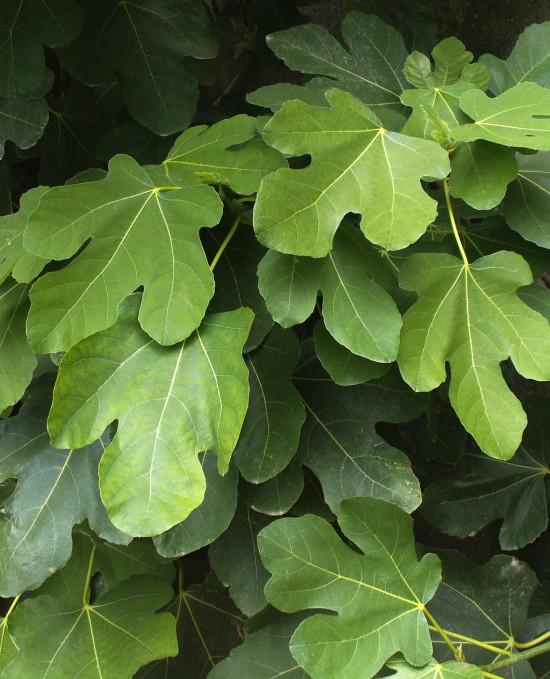
Alongside the banks of Sheffield’s River Don, towards Meadowhall, are about 30 mature fig trees, some about 70-years-old, which owe their existence to a combination of human appetite, imperfect sewage and the steel industry.

Fig biscuits were popular amongst steel workers. The fig seeds passed through their digestive system, and each time there was a heavy storm a proportion of sewage overflowed into the river.

At the turn of the 20th century, because of industry alongside the River Don, the waters of the east end were at a constant twenty degrees creating perfect conditions for the fig seeds to germinate and grow.

And they’re not just confined to the Don, with fig trees also found on Porter Brook and the River Sheaf.

Categories
Places

Secret tunnels of Sheffield (1)

One day soon, Sheffield Castle might give up some of its secrets. The castle was one of the grandest and most powerful in the north of England before it was demolished by the parliamentarians in 1648.

The site of the castle was built over several times, the remains discovered in the 1920s, and covered over once again. And then Castle Market was built over it in the 1960s.

It might come as a surprise now, but during the 18th and 19th centuries there was doubt as to where Sheffield Castle had stood.

Most historians guessed correctly, and from here on, Victorians liked the romantic notion of secret tunnels running underneath the town, supposedly relics from the old castle.

Different generations handed stories down, with tales of hidden tunnels running from Sheffield Castle towards Manor Lodge, the Old Queen’s Head at Pond Hill, and towards Sheffield Cathedral.

We’re no closer to the truth now, but evidence has been uncovered over the years to suggest there might have been some legitimacy to the stories.

In 1896, during excavations for Cockayne’s new shop on Angel Street, a subterranean passage was discovered, arousing the interest of archaeologists and antiquarians.

However, it wasn’t enough to excite local journalists who were invited to accompany an exploring party up the passage.

Said one. “The expedition sounded attractive, but when I found that to gain admission it was necessary to crawl through a particularly small entrance, and that on the other side the passage had a covering of a foot of water, my exploring enthusiasm was dampened.”

He took consolation with the foreman’s claims that it was merely an “unromantic sewer,” his view confirmed by the explorers.

Alas, the march of progress ended any further exploration, and the passage was duly blocked up.

And there was another story from the same year, but one that didn’t emerge until 1920, when a retired reporter sent a letter to the Sheffield Daily Telegraph.

“At the bottom of High Street, at the curve which leads off towards Bank Street, some excavations were made in connection with drainage works, and at a depth of several yards, the opening in the ground cut right through an ancient subterranean way.

“I undertook an investigation with the view of establishing the correctness or incorrectness of the generally accepted theory. The foreman of the works was good enough to detail one of his men to be my guide, and with a lighted candle we began to walk along the passage towards the church. The opening in the direction of the river had been so badly disturbed during the excavations that the ingress on that side was out of the question.

“It was quite plain to see, as we advanced, that the passage had been cut through stone – it was not hard rock, but a rather soft and friable substratum. It was three feet wide, and at first, we could walk upright, but its height diminished a little, and twenty yards or so from the opening where we entered, we had to stoop to make our way along.

“At length we emerged into a dark cellar, with thralls all around it. The roof was of stone, but without ornamentation of any kind, and, altogether, it had the appearance of one of those underground caverns – crypts, they are commonly, but wrongly, called – in which a business had been carried on hundreds of years previously, and which was, in the first instance, reached by steps from without.

“These steps had disappeared however, and my guide brought me to daylight again up ordinary inside cellar steps, and we emerged into a dilapidated building.

“Pursuing my enquiries, I gathered that the premises beneath which the cellar lay had been for many years, at a remote period, the business place of a wine merchant, And the explanation of the passage was that it was, in all likelihood, a drain to conduct water from the cellar to the river.

“It was objected at the time that the cost of such a drain was altogether against the correctness of this theory; but, on the other hand, it is an established fact that drains of this character were common in medieval times. The residents in a locality would combine to bear the cost and to reap the advantage of such a construction, and, doubtless, if my guide and I had a better light, or if we had been more careful in traversing the passage, we might have seen junctions with the drain coming from the other premises.”

It was a disappointment to those who thought that this was part of a tunnel running from Sheffield Castle to the Parish Church, but the so-called secret passages which ran underground in most towns were either sewers or watercourses.

The story was forgotten, only to emerge again in the 1930s, and subject of another post.

Categories
Places

Secret tunnels of Sheffield (2)

For hundreds of years there have been rumours of secret tunnels that existed between Sheffield Castle, going towards the Parish Church (now Sheffield Cathedral), and heading out to Manor Lodge and the Old Queen’s Head at Pond Hill.

After an underground tunnel was found underneath Angel Street in the 1890s, dismissed as an old sewer, interest in the stories waned.

However, excitement resurfaced in 1920, when discoveries were made at Skye Edge as a result of a coal strike.

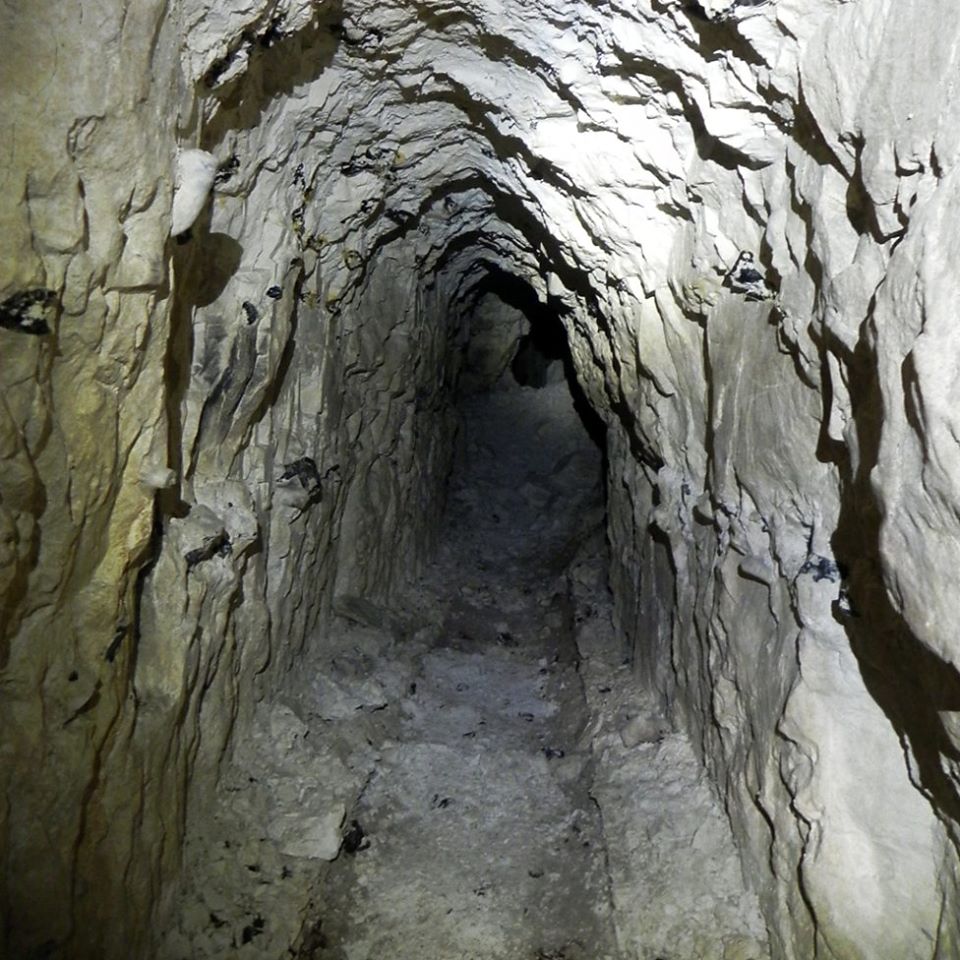
In order to keep engines running in a nearby brickworks, several men were digging coal from an outcrop on Sky Edge quarry, when they unearthed what appeared to be a subterranean passage cut out of the solid ironstone.

Sky Edge was amid many historical associations – the old Manor Lodge to which Mary Queen of Scots was held captive – was less than a mile away.

It was possible to penetrate for about 100 yards with a naked light, but further on the tunnel appeared to show signs of caving in, and the presence of foul gases made it unwise for the men to carry on.

The main passage had an arched roof, 6ft high, and the floor was on a seam of coal, 3ft thick.

In the light of similar discoveries made at the time, in River Lane, near Pond Street, and at High Street, the discovery raised the possibility that the tunnel at Sky Edge was part of a subterranean passageway which at one time connected Sheffield Castle at Waingate (where the unfortunate Queen was also imprisoned).

Four years later, Sheffield Corporation workmen laying sewers near Manor Lodge unearthed another tunnel, at a depth of nearly 10ft deep, although it ended in a heap of dirt and stones.

The tunnel ran across the road towards Manor Woods. Explorations revealed that in the direction of the Castle the passage was only about ten yards long, apparently demolished at an earlier stage. But in the opposite direction it was possible to walk about 50 yards.

At the time, it was thought that it had some connection with a tunnel found at Handsworth two years previous.

In some places the roof of the tunnel had shifted slightly, thought to have been caused by ploughing operations above, where coping stones had previously been unearthed.

A reporter from the Sheffield Daily Telegraph was invited into the tunnel.

“All sounds from the outside world are cut off, and the thought that people long since dead had trodden the same path was decidedly eerie. The floor, walls, and roof are all made of stone, some of the blocks on the floor being of quite considerable size and thickness.”

An old man at the time, told the same newspaper that he knew of the passage, as it had been opened for the Duke of Norfolk about fifty years previous.

“The tunnel was opened out in the field, and one day, I, in the company of other lads, went on a tour of exploration. We took our lamps with us and were able to walk for quite a considerable distance in the direction of the castle. At last, however, our progress was arrested by a heap of stones and earth and we were compelled to return. I remember the incident well enough because we all got a “belting” when we returned.”

Another claimed that he knew where the tunnel came out of Manor Lodge.

“One had to go down a number of steps into a cellar and from there it was possible to walk some distance along a corridor until a heap of rubbish was encountered. The cellar was within a few yards of the road, being near the large ruined tower,”

The secret tunnel to Sheffield Castle is said to have been through a small opening which was situated in a wall dividing the Lodge from the grounds of the Turret House. This had been boarded up at the time, but rusty staples suggested the fact that years before a strong door was fitted to the passage.

The secret way possibly served two ends. It could either have been used as a means of escape when the Lodge was surrounded, or to assist in the hunting of deer which once abounded in the vicinity.

The legend that Manor Lodge was connected by a subterranean passage to the Castle, the two homes of the Shrewsbury’s, was an old one. But one that suggested that Manor Lodge was connected to the Old Queen’s Head Hotel in Pond Hill had only surfaced later.

There was evidence from a few years before in Thomas Winder’s British Association Handbook and Guide to Sheffield (1910):

“We know that there was a chapel in the Manor House, from the account of the funeral of the 5th Earl, but its position is unknown. The corpse was secretly brought from the said Manor to the Castle.”

Some years before, an underground passage had been discovered, about 4ft high, during drainage excavations under Castle Hill, a passage that was never explored further.

According to that writer, the secret passage from the Manor might have ended near Castle Hill, and not the Old Queen’s Head. Furthermore, the height of the Castle Hill passage corresponded with that of the Manor – about 4ft – whilst the supposed entrance at the Old Queen’s Head was said to be half as high again.

Drainage excavations, which led to the discovery of traces of a passage were referred to in “Rambles Round Sheffield (1915). The writer mentions the Lodge-end of the supposed passage.

“The old lady (custodian at Manor Lodge) will point to the entrance to the subterranean passage which is said to have connected the Lodge with the Castle. During drainage excavations at the castle years ago, traces of a passage were found, but the workmen smashed them in before attention was directed to them. Perhaps some day efforts will be made to trace the passage.”

It was possible that there were two passages, one going from the Castle to the Manor, and the other from the Castle to the gabled structure in Pond Hill (now the Old Queen’s Head), but supposed to have been the laundry of the Castle.

With regards the Old Queen’s Head, a reporter from the Sheffield Daily Telegraph visited in March 1925 and spoke with the landlord, Mr Ellis.

“Yes, there is an old tunnel here,” he said, “which is supposed to go to the Manor Castle, but it is all stoned up, although the entrance can plainly be seen.”

Proceeding into one of the cellars, the reporter was shown the entrance which faced in the direction of Midland Railway Station and was about six feet high. It was impossible to go in, as within two feet of the wall a strong stone barricade had been erected.

“I feel quite sure that this goes to the Manor,” said Mr Ellis, “as since the work commenced up there (Manor Lodge), we have been ‘swarmed’ with rats, and, possibly, they have been driven down here.”

And finally, there was the story of a worker at Steer and Webster, cutlery manufacturers, on Castle Hill, who told his fellows in the late 1800s about the works yard where a shaft or dry well was being used to deposit rubbish, and at some distance down the shaft, on the Manor side, there was an opening, apparently a doorway, which he declared was the entrance to the secret passage to the Manor.