Sheffield City Council have rejected plans to turn a Grade II-listed building into apartments, but only on the basis that they would not provide enough affordable housing.
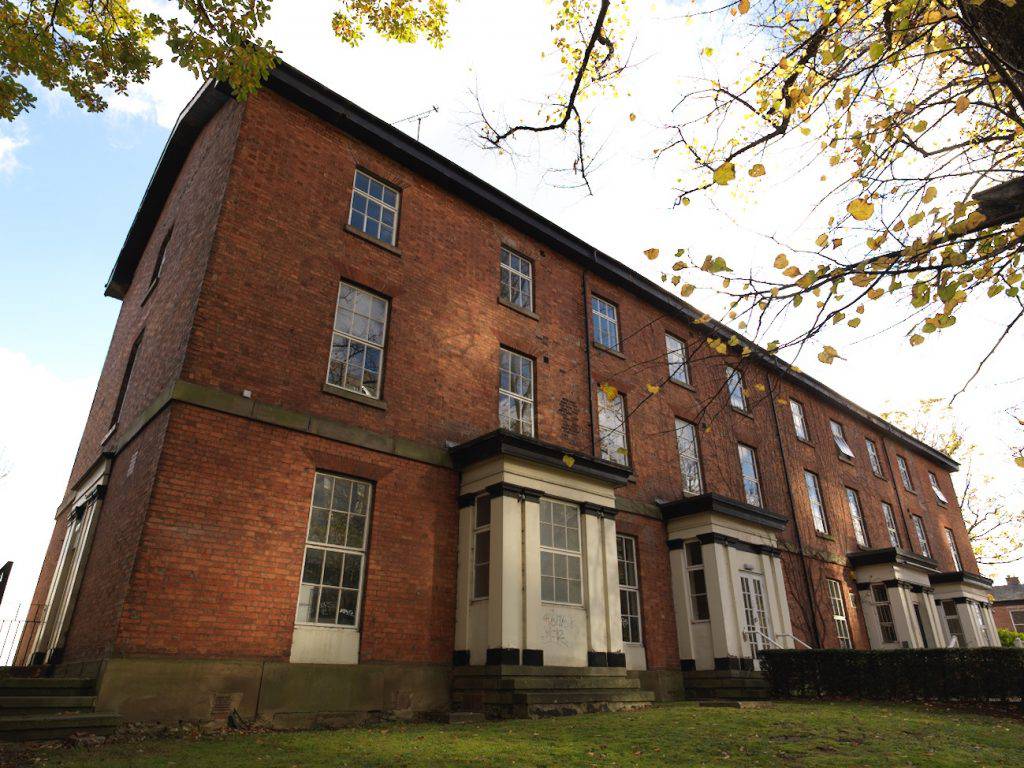
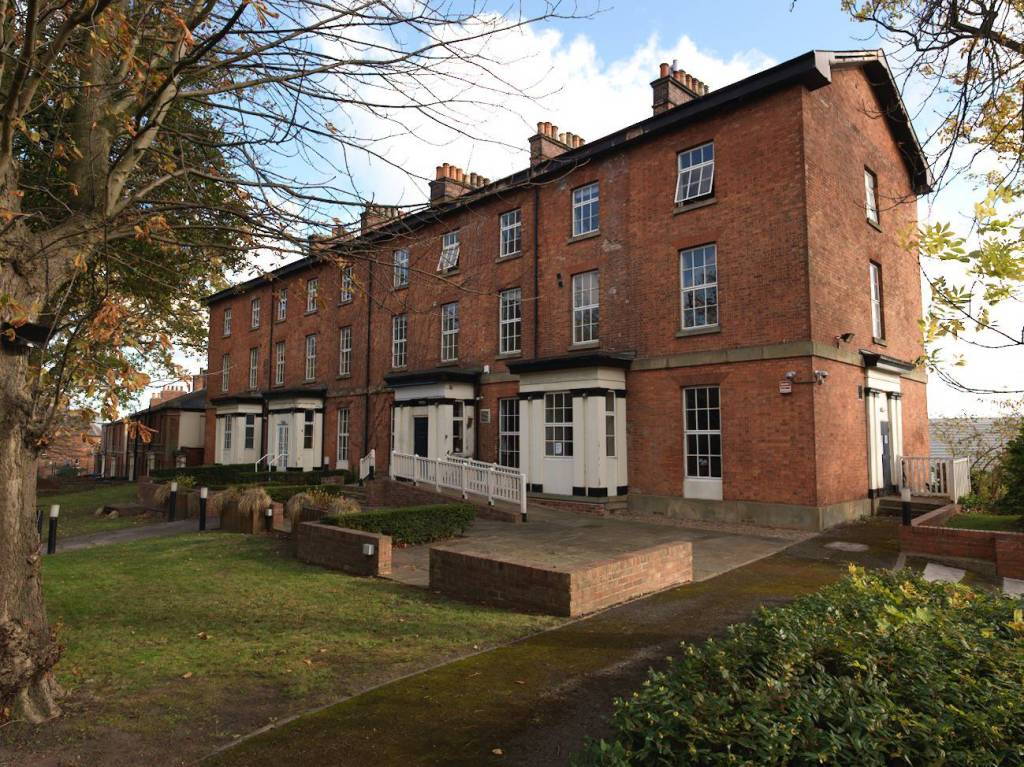
The planning application refers to 375-385 Glossop Road, a red-brick building built in the 1840s as a terrace of six town houses, three-storeys high, with a basement.
For younger people, the building was better known as Hanrahan’s, an American-style bar, and more recently as Loch Fyne Restaurant.
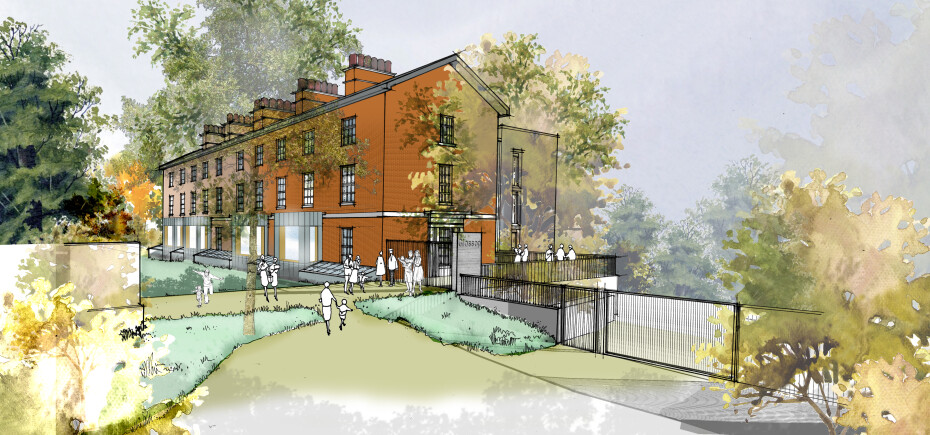
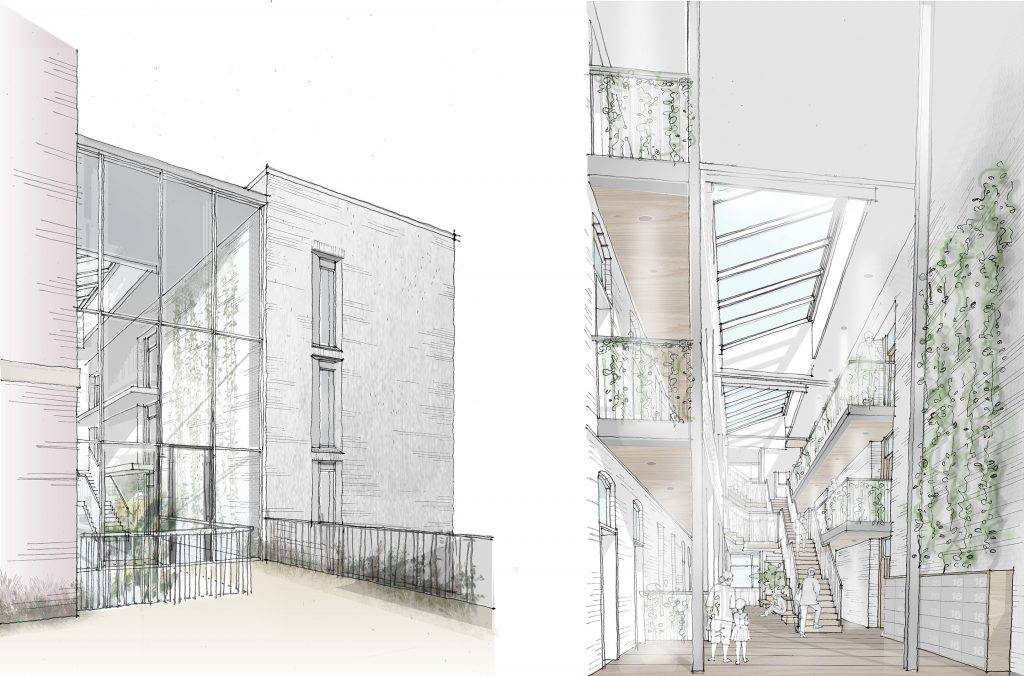
Sheffield developer Primesite UK, working closely with architects Cartwright Pickard and CODA, wanted to invest £4million in transforming the building into 27 one, two and three-bed apartments. A three storey rear extension would also have been created with a glass link atrium connecting a brick residential block to the rear of the building.
Photograph by Primesite
However, Conservation groups were concerned. The Georgian Group said that “This scheme had the potential to rob this terrace of much of its surviving architectural and historic interest and to cause harm to the surrounding conservation area.”
The Conservation Advisory Group called it a “gross overdevelopment” and said the 1840s character at the front, particularly the door surrounds, would have been harmed.
And the Hallamshire Historic Buildings group said: “Proposed aluminium cladding is a hideous disfigurement of the splendid Glossop Road elevation.”
The University of Sheffield was also concerned about the impact on activities at Sheffield Institute for Translational Neuroscience and Barber House, which has delicate microscopy and imaging equipment, and also said that neighbouring properties on Glossop Road and Ruth Square would have been overshadowed.
Subject to planning consent, the conversion was due to start this year, but councillors refused the plans because the scheme did not provide enough affordable housing.
Photograph by Primesite
Back in the 1790s, this area was open fields, later owned by Phillip Gell who inherited the Broomhill estate in 1805 as a descendant of the Jessop family. He wanted to remain at Hopton, Derbyshire, and sold the land which was divided into building plots.
The land was bought by Peter Spurr who leased large parts of the estate for building, with this property constructed in the 1840s, and becoming home to several doctors, nurses, dentists, solicitors and teachers as well as those people associated with Sheffield’s trades. In 1899, part of the building became a private school operated by Eliza Depledge, the Sheffield Thorough Grounding School.
By 1951, the houses had been converted into flats, with three flats in each apartment, but the property fell into decline through the sixties and seventies.
In the early 1980s, the building was converted into a restaurant, knocked through to make one large ground floor and first floor, and opening as Hanrahan’s in 1984. It underwent several refurbishments in 1992, 1998-1999 (costing £500,000) and again in 2001.
It eventually closed and reopened as Casa before reverting to Hanrahan’s again in 2004. The Loch Fyne Restaurant opened in 2008 and closed in February 2016, after which the building has stood empty.
The Hanrahan’s site is just one of three prominent Sheffield sites being developed by Primesite.
The company is also redeveloping the former Wake Smith offices on Clarkehouse Road and the former Gilders VW car showroom at the junction of Ecclesall Road, Ecclesall Road South and Psalter Lane.
Together, the three projects have a development value of £12million.
There might be a brighter future for Leah’s Yard, on Cambridge Street. For many years the former Little Mesters’ workshops have been cloaked with scaffolding, a desperate attempt to stop the Victorian frontage falling down.
But now, Sheffield City Council, and its development partner for the Heart of the City II project, Queensbury, have submitted a planning application for Leah’s Yard.
The council bought the building in 2015, almost ten years after the site had been sold to a development company (presumably as part of the ill-fated Sevenstone project), and over thirty years since it had last been used.
This latest planning application seeks permission to undertake fundamental construction works to make the building structurally sound and bring it back into usable condition. It includes the installation of one replacement shop front and another new one.
Photograph by David Poole
The project team has also revealed that it will be inviting bids from interested organisations wishing to occupy and manage the spaces towards the end of March.
Despite its Grade II*-listing, Leah’s Yard has been on Historic England’s Heritage at Risk Register, slowly decaying and crying out for development.
Leah’s Yard fronts onto Cambridge Street, a carriage archway leads into a small courtyard surrounded by two and three-storey brick workshops.
Barely one room deep, the workshops have external wooden staircases to give access to the upper floors with its casement windows, needed to provide natural light to the workbenches behind.
It’s hard to believe that many of these former workshops still contain traces of past existence, including some of the old workbenches.
Cambridge Street, once known as Coal Pit Lane, was traditionally one of the centres of the bone and horn-working trades in Sheffield.
Photograph by Picture Sheffield
Leah’s Yard dates between 1850-1890, once home to six companies, including four cutlers, a horn and bone merchant and a silver-plater.
Henry Hobson later traded on the site, and in the 1890s it was solely occupied by Henry Leah, a manufacturer of die stamps for silverware, and for which the site gets its name.
By 1922, eighteen companies were working from Leah’s Yard, with Henry Leah eventually merging with Spear & Jackson in 1976.
Its last occupant was a shop on the front lower floor, and when this closed the site fell into gradual degeneration, and subject to fire damage.
The Heart of the City II team wants Leah’s Yard to become ‘a cultural heart and social anchor’ to the £470million scheme.
In 1964, the Belfast Telegraph reported on a proposed new housing development at Cullingtree Road in the Northern Ireland city. The multi-storey flats were going to be based on Park Hill in Sheffield, a radical ‘streets in the sky’ development, completed in 1961.
The newspaper sent a reporter to Sheffield and was invited to look inside several flats. His observations make fascinating reading now, presenting a time when people were adjusting to dwellings far removed from the slum housing they’d left behind.
What soon became clear, was that people living at Park Hill were living a simple existence.
“Free from the ‘lure’ of consumer goods, the older people in these flats seem to have disposed of most of their surplus possessions before moving in; the younger ones have not yet started seriously collecting them.
“There were few books or magazines in the living rooms, and I can’t remember seeing a single piece of hi-fi equipment.”
However, the reporter had an eye on the future and forecast that younger residents would soon fill up the flats.
“They will soon need record players, tape recorders, cine cameras, sports equipment, and their own books, records, musical instruments, typewriters and transistor radios.”
And the reporter lamented a lack of storage space.
“Half a century ago, cleaning was done with a dust-pan and brush. Today, 76 per cent of all households uses a vacuum cleaner, and this needs special storage.”
The arrangement of the living areas struck a curious mind.
“Who, fifty years ago, would have forecast that by 1964 practically every household in the country would have a television set? It alters the arrangement of most living rooms – competing with the fireplace as the focus of interest.
“It might be reasonable to suppose that by 1984 the traditional type of house or flat with box-like rooms will be completely inadequate to the needs of the average household.
“By then, it is likely that many flats will be built as shells containing the floors and staircases with traditional internal walls around the bathroom and WC only. The remaining area, which will be used for the kitchen, sitting and living areas and bedrooms, will be left clear to be divided by the occupier.”
Finally, the reporter noted rows of parked cars outside.
“When the flats were designed and built nobody imagined a time when people who lived in them would own one, or even two cars. Consequently, no garages were built.”
In the end, financial concerns meant the proposed model in Belfast didn’t proceed with only a fraction being built.
Constructed in the mid-sixties, the Divis Complex, consisted of Divis Tower and 12 eight-storey terraces and flats, all named after the nearby Divis Mountain.
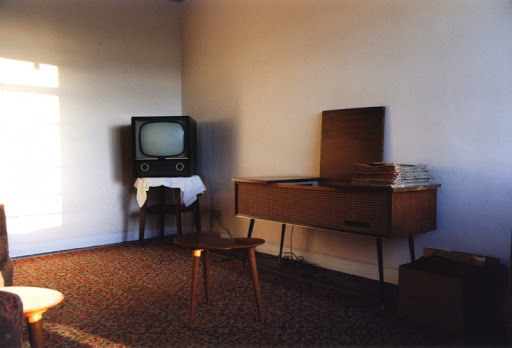
The photograph is by Live Projects, a pioneering educational initiative introduced by the School of Architecture at the University of Sheffield, which in 1999 restored a flat on Gilbert Row, at Park Hill, installing retro fittings and furniture.
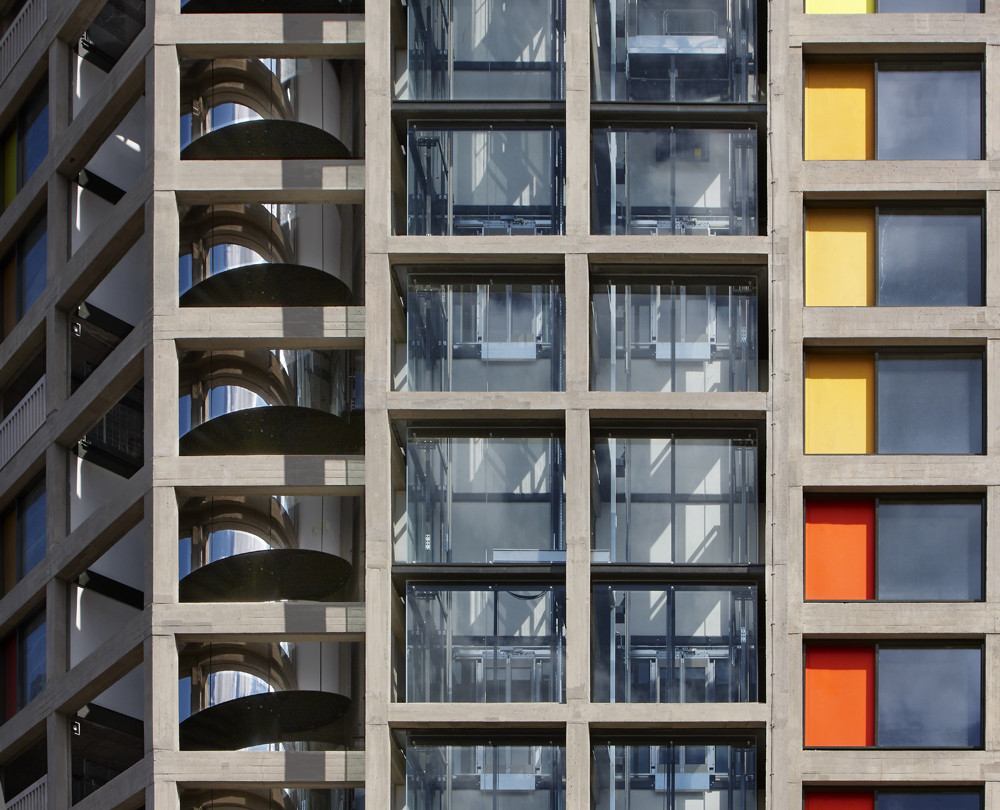
Almost £20million in funding has been secured to bring forward the latest phase of the redevelopment of Sheffield’s Park Hill Estate.
Joint venture (JV) partners Urban Splash and Places for People have agreed a £19.9million, two-year funding deal with Lloyds Bank Commercial Banking Real Estate and Housing.
The development finance agreement will support Phase 2 of the development, which is set to come to market in the spring.
This phase will comprise 195 homes, including one-, two- and tree-bedroom flats and two-bedroom townhouses retaining the duplex and double aspect layout with balconies. It will also feature 20,000s sq ft of mixed-use commercial space with the potential for offices and workspaces, as well as a new café or restaurant and terrace.
Contractors are currently on site with completion of the project due in 2021.
Photograph by archdaily
Work on Phase 3 of the Park Hill development is also underway. A 356-bed student accommodation building is being developed by Alumno Developments and is due to be occupied in September 2020.
Phase 4, comprising a new S1Artspace alongside further residential units, has also been approved.
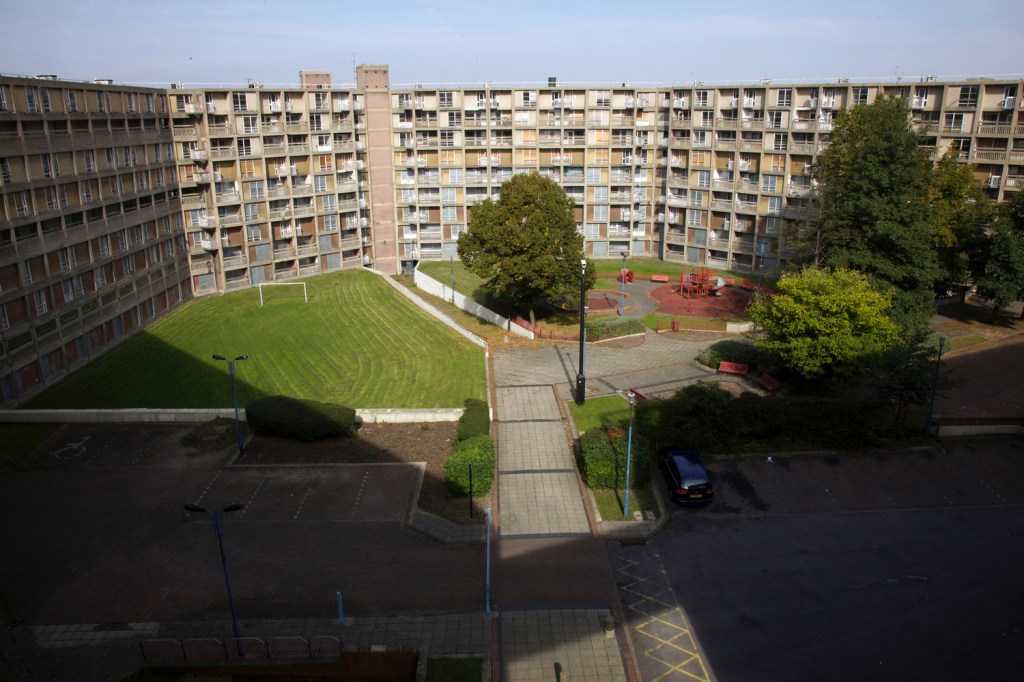
Park Hill, located on a hill above the city’s railway station, is one of the Sheffield’s best-known landmarks.
The property was built in 1961 and was one of the first Brutalist buildings in the UK. It was awarded Grade II*-listed status in 1998.
The estate has been the subject of several TV documentaries and a musical, Standing at the Sky’s Edge.
Next year marks the sixtieth anniversary of Park Hill flats, a remarkable milestone for a series of buildings that people in Sheffield either love or hate. The fact that Park Hill is still standing is perhaps even more significant.
Visitors to Sheffield cannot fail to notice them, a massive cliff which rises steep and high to the east behind Sheffield Railway Station.
Sheffield had wanted to extend its boundaries in 1951 and was unable to do so. To continue slum clearance, and unable to extend spreading suburban estates, the council looked at flats on restricted sites near the city centre.
Park Hill was the idea of John Lewis Womersley (1909-1989), the City Architect between 1953 and 1964. He looked at the Park district, once nicknamed “Little Chicago” during the gang wars of the twenties, where swathes of housing had been demolished in the 1930s.
Photograph by Paul Dobraszczyk
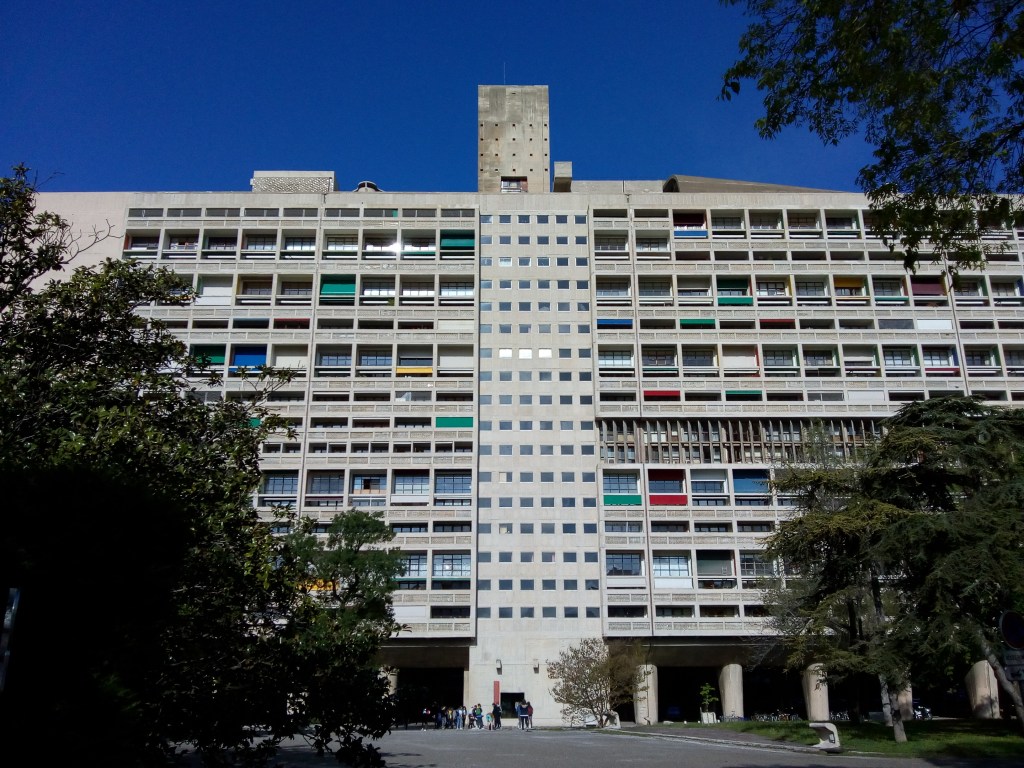
Womersley engaged Jack Lynn and Ivor Smith, two young architects who’d met in London, both exploring the concepts of long slabs, inspired by Le Corbusier’s Unité d’habitation in Marseilles in 1951.
Initially recruited to begin a scheme at Norfolk Park, Womersley gave them Park Hill and Hyde Park to work on instead, assisted by Frederick Nicklin.
Unité d’habitation, Marseilles
The go ahead was given in 1955, work commencing in 1957 and completed in 1961. The result was four blocks, varying in height from four storeys at the south, and to fourteen at the north, the slope allowing the roof-line to remain level.
Park Hill’s architecture was defined as “Brutalist,” an expression created in Sweden in 1950 by Hans Asplund, son of the architect Gunnar Asplund, after which the idea was taken up fervently by a generation of architects and critics, the most vociferous being Peter and Alison Smithson and Raynor Banham, and adopted by the likes of young Lynn and Smith.
Photograph by Paul Dobraszczyk
“The moral crusade of Brutalism for a better habitat through built environment probably reaches its culmination at Park Hill,” said Banham.
The layout was designed with fragmentary polygons, linked by bridges of 135 and 112 degrees, to enable the 10ft wide access decks on every third floor to shift from side to side so each got the sun. The blocks were arranged to create courts within which a primary and nursery school were eventually built, together with playgrounds. These were originally furnished with furniture by abstract sculptor, John Forrester, who also advised on the modelling and colouring of the facades on the blocks, street lighting and footpaths.
In total, there were 994 dwellings for 3,448 persons (high density housing at 193 persons per acre), in a mixture of one-two bedroom flats and two-four bedroom maisonettes. Each flat was initially provided with a Garchey waste system, with units below the kitchen sink, at the time a new idea only seen at Quarry Hill in Leeds and Spa Green at Clerkenwell.
Park Hill was officially opened by Hugh Gaitskell, leader of the Labour Party, a not unsurprising choice considering that Sheffield’s Labour council had been an advocate of Womersley’s radical vision of a “new” city. After all, when it was built there were 13,000 families on the council waiting list and 10,000 condemned properties waiting to be demolished.
Almost immediately, Park Hill flats were greeted as “a Modernist icon.”
Photograph by Paul Dobraszczyk
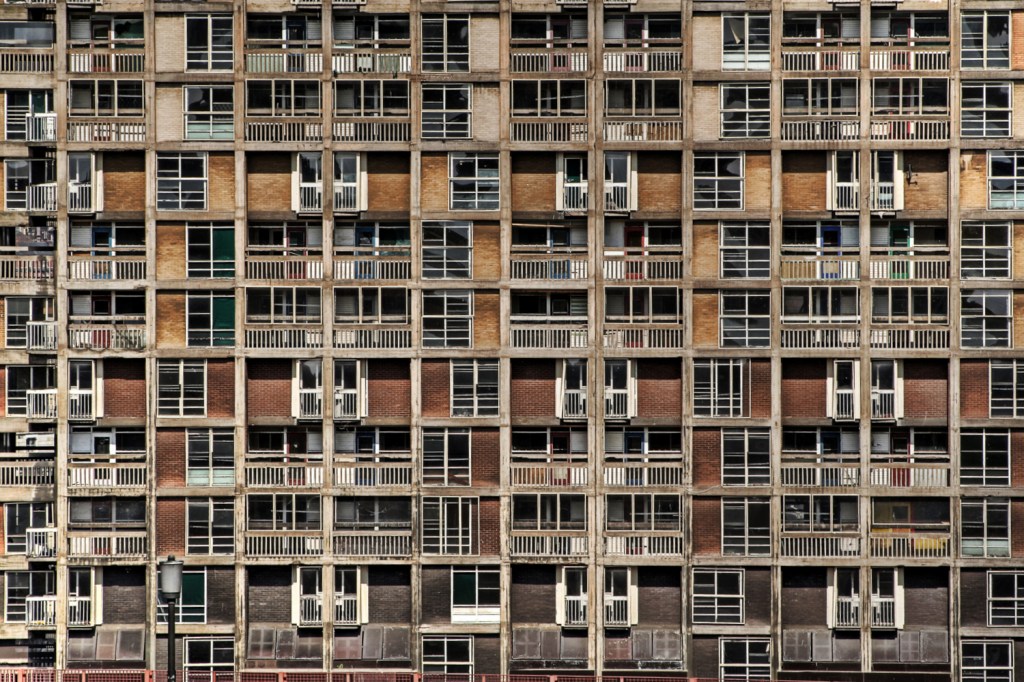
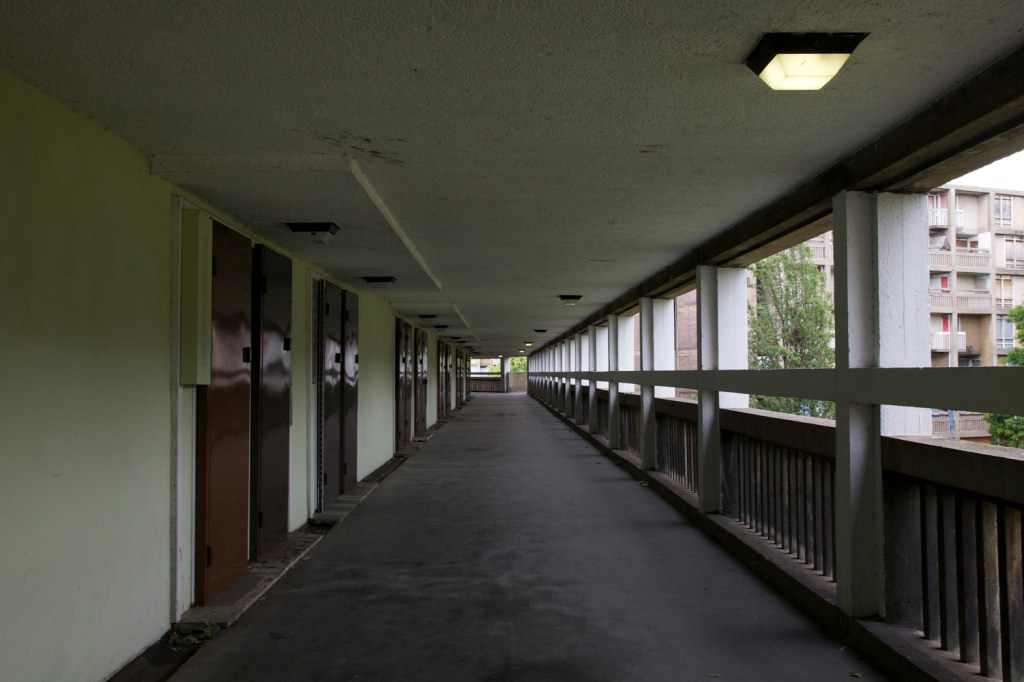
Keen to retain the community feeling of these old streets, Park Hill’s interlinking corridors was the answer to those people who felt isolated in an ordinary multi-storey block, every front door creating an illusion of stepping out into the street.
In “Ten Years of Housing in Sheffield,” published by Sheffield Corporation’s housing development committee, the intention at Park Hill was explained: –
“At Park Hill, in place of the 4ft wide balconies serving each floor, promenade decks 10ft wide and open to the air, are provided in every third floor within the main building mass. As the buildings are in a continuous ‘slab’ form there is thus a complete system of circulation around the whole site, the highest deck being on the storey below the top.
“The front doors to the dwellings open from the decks… which… fulfil the function of ‘Streets’ within the building, along which prams can be pushed, and milk trolleys driven.
“Being covered from the weather and free from normal vehicular traffic, they form ideal places for daily social contact. The decks are, in fact, extensions of the dwellings so far as both children and adults are concerned. The child’s earliest play needs are in general catered for inside the flat… later, the decks extend his range on a level with his front door. Later still, he can use the various play areas at ground level.”
Photograph by Paul Dobraszczyk
It was a romantic dream.
“When they were first built the environment was beautiful and there was a great community spirit because so many of the people on the old Park estate came back to live in the flats,” said resident Harold Fairbrother, in 1989.
But, Nikolaus Pevsner, the architectural historian, had early reservations.
“There can alas be no doubt that such a vast scheme of closely-set high blocks of flats will be a slum in half or century or less.”
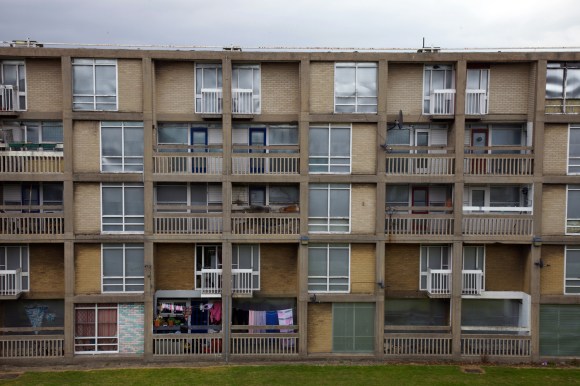
Pevsner’s prophecy turned out to be accurate and by the 1980s the vision had turned sour.
Photograph by Paul Dobraszczyk
Roy Hattersley had been chairman of Sheffield City Council’s public works committee when Park Hill was built. When the flats were first considered for listing by English Heritage in 1996, he was thoughtful with his comments.
“Living cheek by jowl was not the risk as it is today. Aerosol sprays had barely been invented and there was little graffiti on the walls. Packs of youths did not stalk the galleries late at night. The occasional drunk urinated in the lift, but they were not systematically vandalised out of operation.
“Park Hill was built to meet the needs of the people. If it no longer achieves that aim, it should be demolished.”
As it happens, Park Hill was given a Grade II* listing in 1998, effectively eradicating talk of demolition, and making it Britain’s largest listed building until superseded by The Barbican in London.
A caretaker at Park Hill summed up the state of affairs in a television documentary at the time. “She is an old lady fallen on hard times.”
Photograph by Paul Dobraszczyk
In 2004, Urban Splash won the contract to revive the decayed estate, turning the flats into upmarket apartments, business units and social housing. Two blocks (including the North Block, the tallest part of the buildings) were initially cleared, leaving only their concrete shell. Due to start in 2007, Phase 1 was put on hold due to the recession, eventually starting in 2009 and open to residents in 2010-2011.
With over £100million spent so far, Phases 2 and 3 are now underway, with Phase 4, comprising a new S1Artspace alongside further residential units, already approved.
Standing majestically on the High Street for over one hundred years, the history of this building is lost to many.
This is the former headquarters of the Sheffield Telegraph and Star, built between 1913 and 1916, as a new front to the extensive old buildings of the editorial and printing departments behind.
Built in English Renaissance-style, it was designed by Edward Mitchel Gibbs (1847-1935), of the Sheffield architects, Gibbs, Flockton & Teather, and was constructed by George Longden and Son.
During the demolition of old shops to make way for the building, a hoard of gold and silver coins, dating between 1547 and 1625, was found behind a cellar wall.
The offices had a faience front, now painted, with a high-tower and clockface on each side.
A lot of thought had to be given to the design.
The portico, sitting on the corner of High Street and York Street, is on the axial line of Fargate, with Sheffield Town Hall standing at the other end.
When built it had to conform to the control of heights to which buildings were permitted, and the ancient rights of light afforded to properties opposite. Hence the broken skyline, the setting back of the upper storeys and the pyramidal form of the building. Even the tower had to be kept with an angle of 45 degrees.
In 1943 it became Kemsley House, named after Gomer Berry, 1st Viscount Kemsley (1883-1968), owner of the newspaper until he sold it in 1959.
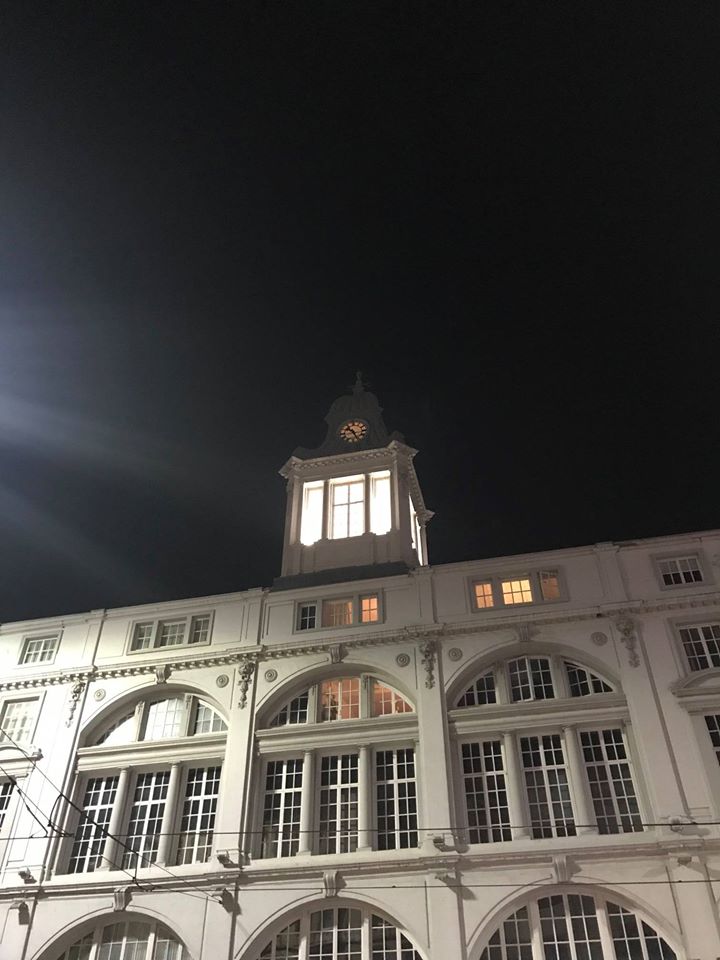
In later years it was abandoned when new offices were built on York Street. Restored in 1985 as offices and shops, it now contains apartments as well, seen here with the lights on.
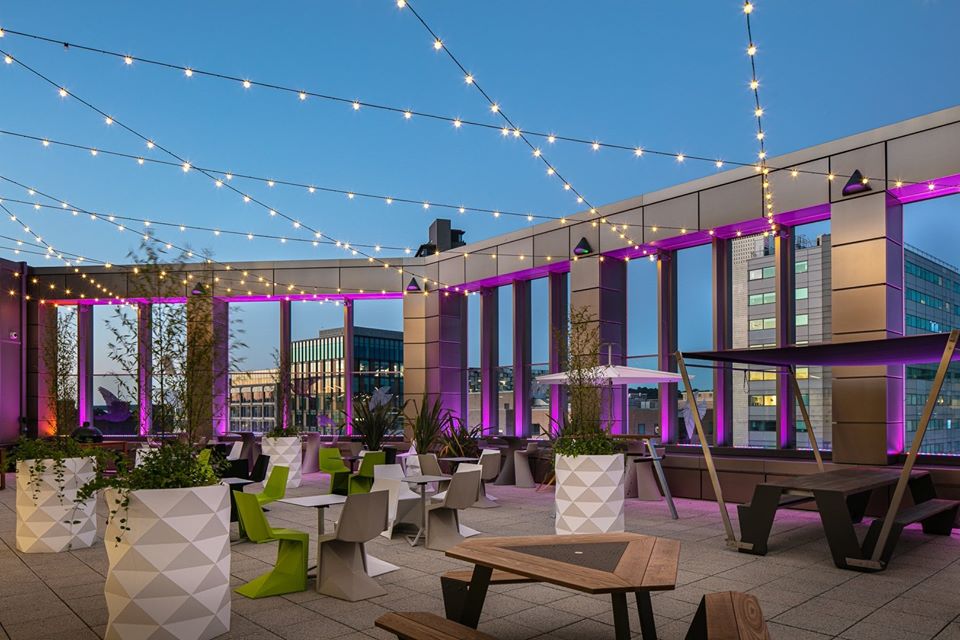
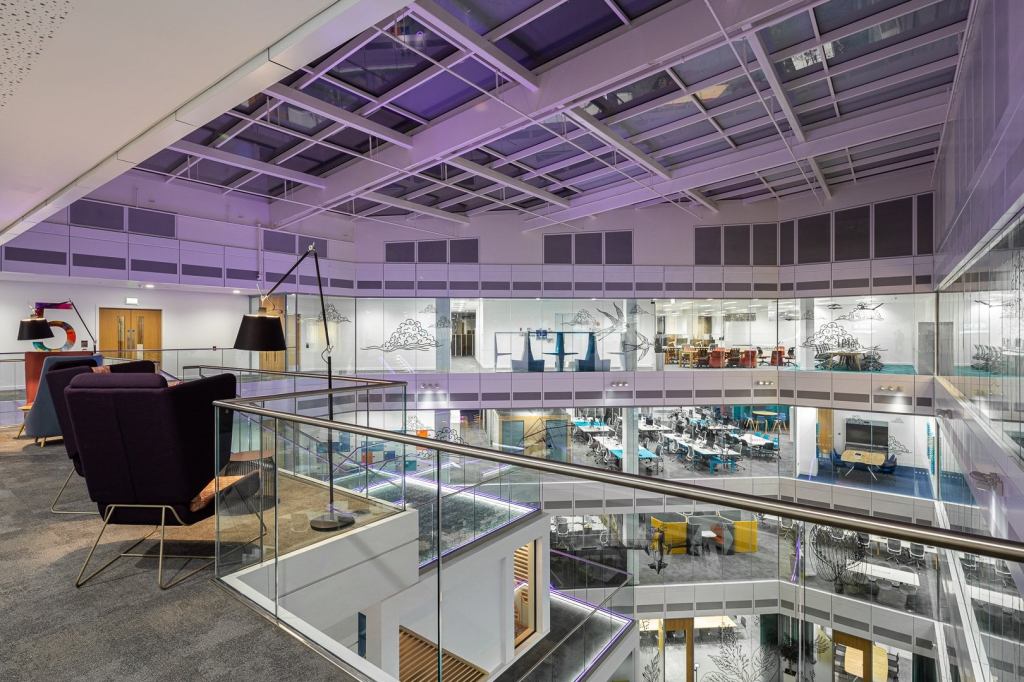
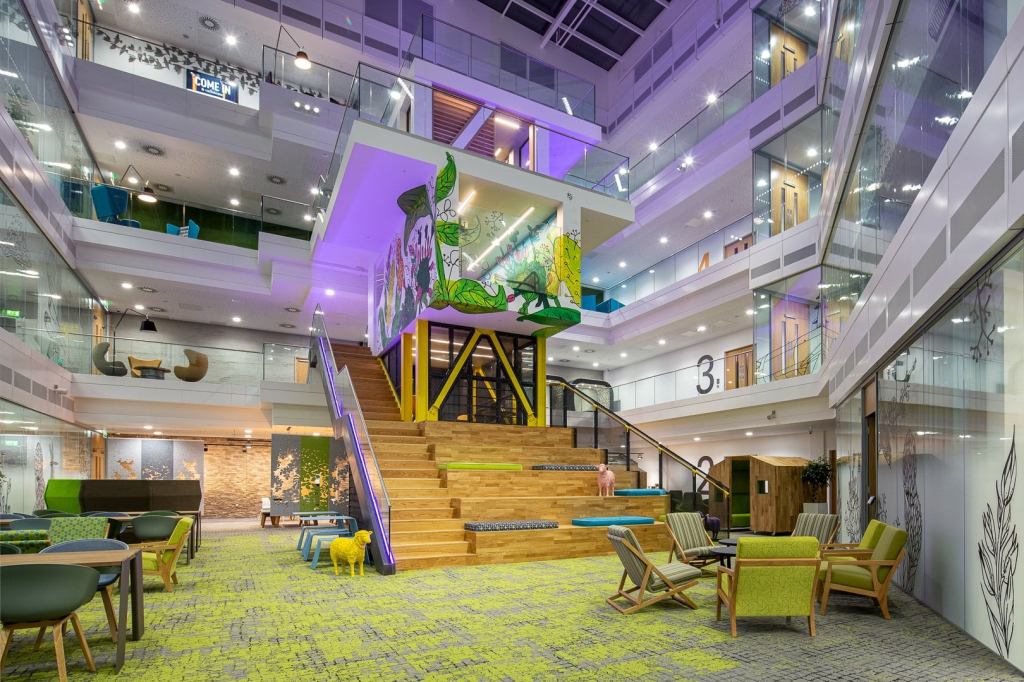
Making use of the rooftop terrace. Not bad at all. Grosvenor House, the name chosen by HSBC employees, and paying homage to the hotel that stood here before. The main office entrance is located on the corner of Wellington Street and Cambridge Street, and another entrance faces onto a new area of public realm at Charter Square. The building will also include retail space and shop fronts will be primarily located on Cambridge Street and also the important corner where Pinstone Street meets Furnival Gate. HSBC employees in Sheffield are being relocated from their current office space at Griffin House after the banking giant signed as the anchor tenant on a 15-year lease, committing them to Sheffield city centre.
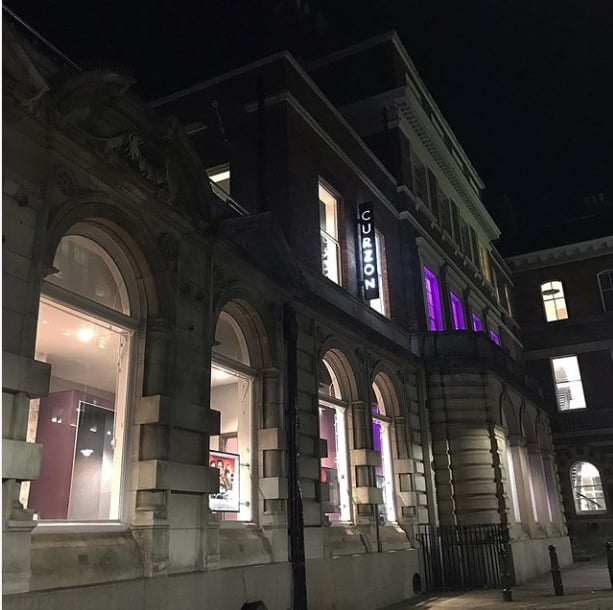
One of the newest additions to Sheffield’s cinema scene is Curzon on George Street, a quiet thoroughfare with several hidden secrets. The history of this building goes back to January 9, 1794, when John Hardcastle opened it as a ‘conservative’ coffeehouse. A large room on the ground floor was used for George’s Coffeehouse, and over the fireplace was the motto ‘King, Lords and Commons’ with the warning ‘No Jacobins Admitted’. Accommodation was available above for ‘a fine gentleman’. Three years later it was in the possession of James Healey, but evidence suggests the coffeehouse wasn’t the success it had set out to be. English coffeehouses had been public social places where men could meet for conversation and commerce, but towards the end of the 18th century had almost completely disappeared from the popular social scene.
By 1799, the Institution of the School of Industry, a Quaker driven girls’ school for reading, knitting and sewing, had taken a room here. In 1818, a portion of the old coffeehouse was taken by the fledgling Sheffield Library. ‘The library room is spacious and lofty and is well filled with a collection of the most popular works in the English language. Adjoining the library is a comfortable reading room, in which are deposited those publications which are not to be taken out.’ The library’s stay was brief, and soon removed to the Old Music Hall on Surrey Street, leaving the ground floor occupied by Harwood and Thomas, merchants, and the first floor being used as an auction room.
Most people are aware that this was once an old bank, but it wasn’t until 1831 that the Sheffield Banking Company moved in. The newly-formed bank had looked at five properties but settled on 13 George Street spending £2,200 for the whole property. As well as the old coffeehouse it included adjoining offices and three dwelling houses. Changes were made to the building by architects Woodhead & Hurst of Doncaster, turning it into ‘an exceedingly commodious place of business, as well as for the customers as for the directors and officers.’ The Directors occupied what had been the old library as the board room.
A left extension was built in 1906 by architects Matthew Ellison Hadfield and his son Charles and can be traced in the brickwork outside. The interior decorations, appropriately emblematic, were carried out by Hugh Hutton Stannus, a Sheffield-born architect who had originally trained in casting brass, copper and bronze. In 1919, the Sheffield Banking Company amalgamated with the National Provincial and Union Bank (later becoming the National Westminster). The George Street branch’s busiest time was in the 1960s with 120 staff based here. However, it later relocated to newer premises on High Street and the building remained empty for years.
The Curzon opened in January 2015, adapting the Grade II listed building for cinema use while taking into consideration the pilastered walls, Doric arcades and granite columns inside.
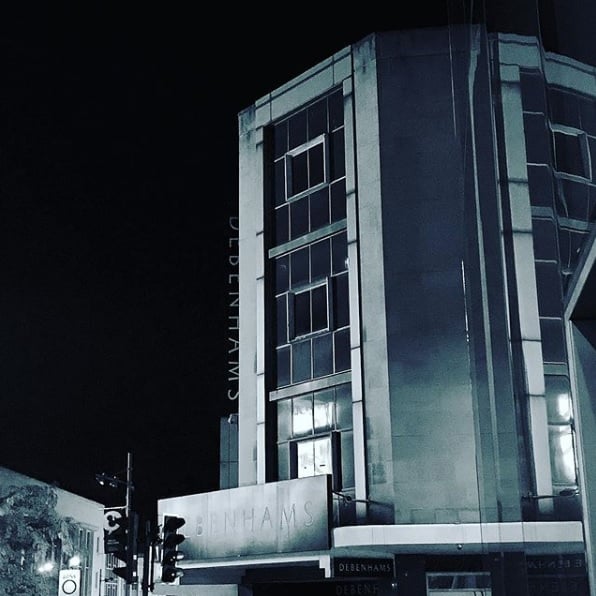
Times have been hard for Debenhams, not least for the one on The Moor which is beginning to look extremely shabby alongside modern new developments nearby.
However, it hasn’t always been this way.
This shop was once considered to be a flagship store, until eclipsed by a brand new Debenhams at Meadowhall in 1990.
It seems like the store has been here forever – fifty-four years to be precise. For a new generation, this branch wasn’t always called Debenhams, and can trace its origins to the other side of the Pennines.
In 1865, William Paulden, aged 24, opened a carpet and soft furnishings store in Stretford Road, Manchester. He was the son of a Cheshire farmer, educated at Knutsford Grammar School, and died at Green Hall, Wilmslow, Cheshire, in 1930.
The business expanded to become a department store and in 1928 was taken over by the Drapery Trust, a conglomerate of retailers, owned by London-based Debenhams.
The store continued to trade as Pauldens and added a second store at Newcastle-under-Lyme, Staffordshire, in 1946. A third store opened in Sheffield in 1965, a modern multi-level steel frame and concrete structure, bordering The Moor and Charter Row.
It traded as Pauldens of Sheffield, but in 1973, all the Drapery Trust businesses were either closed or rebranded as Debenhams, including the Sheffield store.
We now wait to see what will happen to this landmark as a result of the company’s turbulent restructuring.
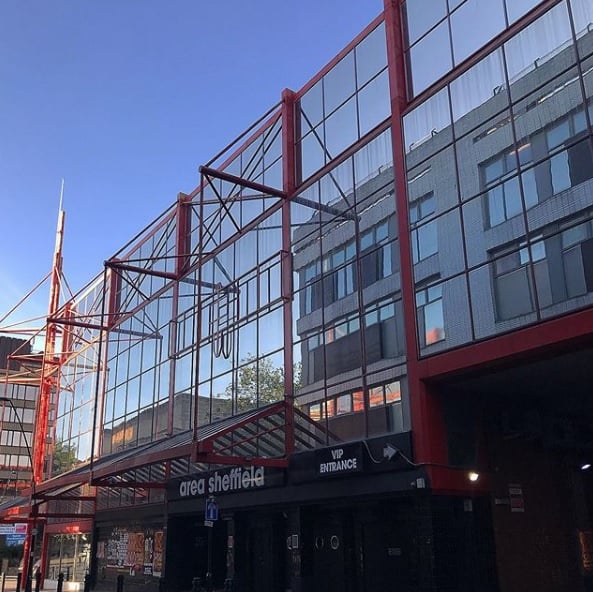
To our kids, this mirrored glass and garish red steelwork building on Burgess Street is just another nightclub. This is what it’s been on-and-off for twenty-five years, much longer than the function it was originally built for.
It was constructed by the Rank Organisation in 1986-1987 as a brand new Odeon Cinema, a replacement for the outdated, but much loved Gaumont Cinema (originally the Regent Theatre) demolished in 1985.
The Odeon opened in August 1987 with two auditoriums seating 500 and 324 people apiece.
Making use of the Gaumont’s footprint, the entrance on Burgess Street was approximately where the old Gaumont stage once stood, allowing the space in Barker’s Pool to be used for retail units.
The building itself was hated by locals, its only saving grace being a giant mural on the main staircase, painted by local artist Joe Scarborough depicting the history of Sheffield.
However, its days were numbered when a seven-screen Odeon opened at the redundant Fiesta nightclub on Arundel Gate in 1992. The bosses at Rank quickly realised it wasn’t cost effective to run two cinemas in the city centre, and one had to go.
The Burgess Street premises were closed in 1994.
But what happened to Joe Scarborough’s mural?
After standing empty, it was later converted into Kingdom nightclub, later known as Embrace, now Area. And locals still detest the building.







 sheffielder.net