Categories
People

The Crucible Theatre at 50: Peter James

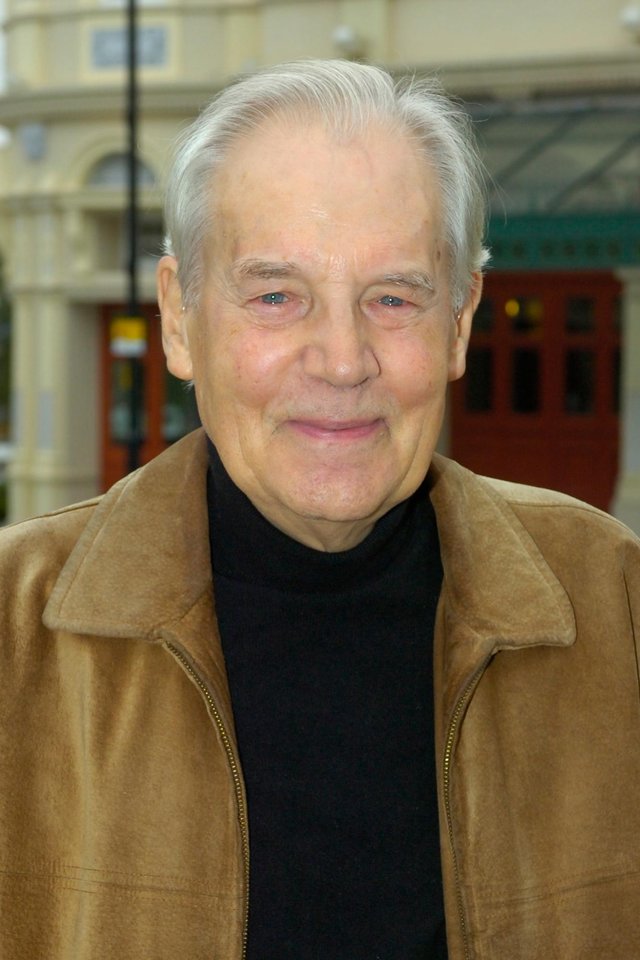
The long-flowing hair might have gone, but at 81, Peter James remains one of the country’s leading theatre directors and teachers.

His early career was shaped in 1964 when he was one of the three founders of Everyman Theatre, Liverpool, and assumed full directorship in 1966.

He went on to the Royal National Theatre in 1971 at the Young Vic, working as Associate Director alongside Laurence Olivier and Peter Hall, and directed for the RSC and the National Theatre’s Mobile Company.

James was strongly associated with the Arts Council Drama Panel, and was chairman of its Young People’s Theatre Committee, as well as president of the International Theatre Institute’s Theatre and Youth Committee, directing in the USA, Australia, and Israel.

During the seventies he directed Twelfth Night at the Sovremennik Theatre, Moscow, becoming the first British person to lead a Russian company since 1905.

He became Artistic Director at the Crucible Theatre in 1974 – “The highlight of my career” – and put it on the map as the place that could do musicals – Chicago, The Wiz, Cabaret – but only after a long fight to get people into the theatre.

This was the happiest time of my life. The trouble was I couldn’t get people through the doors. My answer to that was snooker. I’d tried boxing, but then I was handed a newspaper cutting about an attempt to take the world championships to the Guthrie Theatre in Canada, which was perfect for snooker. I wrote to the organisers and told them, ‘We have a similar theatre here’. The money we made from that first tournament paid for a production.”

He left in 1981 to become Director of Lyric Theatre Hammersmith until 1992, but later admitted that he didn’t enjoy it as much as Sheffield.

He left live theatre and championed young talent, becoming principal of LAMDA between 1994 – 2010, and was awarded a CBE for his contribution to arts in 2011.

James is now Head of Theatre Directing at Mountview Academy of Theatre Arts in London.

Categories
People

The Crucible Theatre at 50: Colin George

Colin George, the actor and theatrical visionary who was the founding Artistic Director of the Crucible Theatre in Sheffield, which opened in 1971 with its radical ‘thrust stage’.

He was one of the post-war generation of British directors who moved theatre on from fortnightly rep in “the provinces” to more adventurous productions that could compete with television drama and the West End stage.

George took over from Geoffrey Ost as Artistic Director of Sheffield Playhouse in 1965, and much to his astonishment, a year later, the city’s Labour council asked George where he wanted his new theatre. His meeting with Tyrone Guthrie, the American director, convinced him to make the Crucible as it is today.

George worked in turn at the State Theatre Company of South Australia and then the Hong Kong Academy for Performing Arts. In Australia, he gave Mel Gibson and Judy Davis their first stage roles as the leads in Romeo and Juliet.

Returning to Britain he devised his own one-man-show in the person of Shakespeare’s father and in 1994 joined the Royal Shakespeare Company. In the company was Daniel Evans, who later became Artistic Director of the Crucible. In 2011, in the theatre’s 40th anniversary production of Othello with Dominic West and Clarke Peters, Evans invited George back to play Desdemona’s aged father.

It was George’s last role, and in the theatre he loved. He died in 2016.

A new book, ‘Stirring Up Sheffield,’ written by Colin George, and his son, Tedd George, is published by Wordville Press this week.

Categories
Buildings

The Crucible Theatre at 50

Today, the Crucible Theatre celebrates its fiftieth birthday.

The Crucible was designed by Renton Howard Wood Associates, the project architects being Nicholas Thompson and Robin Beynon. Construction started in October 1969, the work undertaken by Gleesons, and was completed in November 1971 at a cost of £1m.

It is perhaps Sheffield’s most famous concrete building.The Crucible Theatre opened on November 9, 1971, with Fanfare, a production devised in three parts. The first was ‘Children’s Theatre’ in which 34 children were involved. The centre piece was Ian McKellen playing the Old Actor in Chekhov’s Swan Song and the last part was rumbustious Music Hall.

And so, the futuristic theatre with its twinkly ceiling lights, orange auditorium seats and gaudy foyer carpets, started its journey.

We all have memories of the Crucible – plays, musicals, concerts, pantomimes, and, of course, the snooker. The list of famous people who have graced the thrust stage is impressive and the envy of other theatres.

My favourite must be the British premiere of The Wiz, the all-black Broadway musical adaptation of The Wizard of Oz, performed in 1980. It pushed all technical boundaries, including a house blown away in a whirlwind and a flying helicopter.

Categories
Buildings

The Sheffield ‘Cheesegrater’

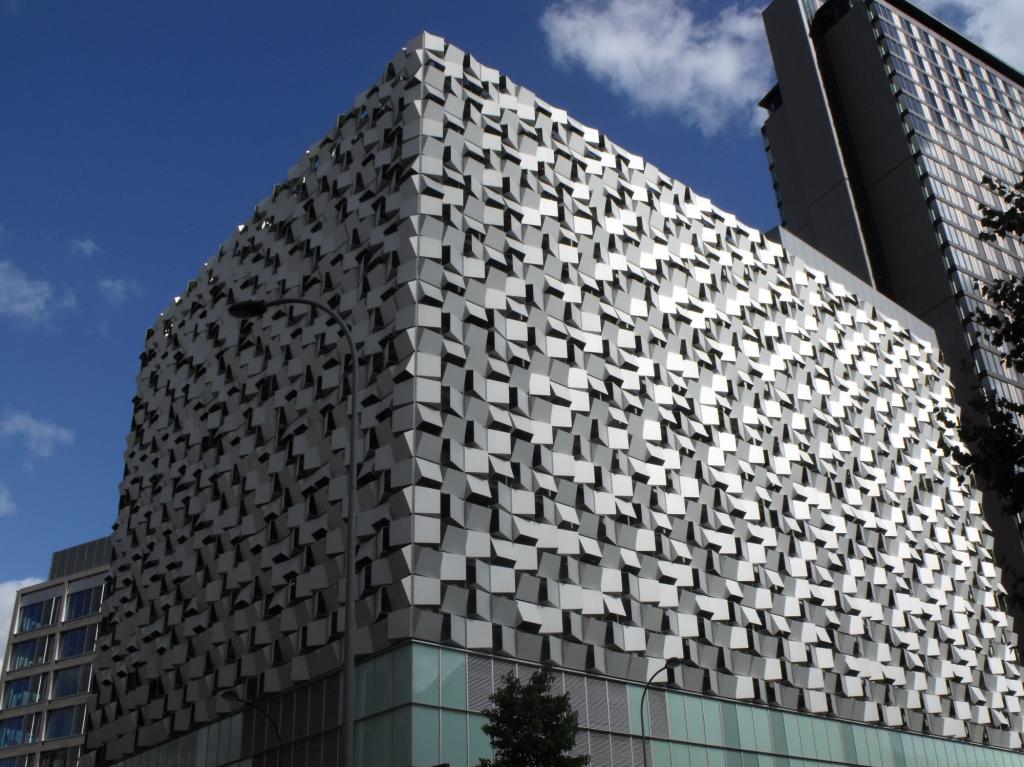
Q-Park Charles Street, with aluminium solar shading, was designed by Allies and Morrison, also responsible for building Nunnery Square – Phase 1. Photograph: mcmedia

It is one of Sheffield’s oddest buildings, and probably one of the most photographed. Liked by many. Hated by many. The Q-Park, Charles Street, opened in 2008, and the extraordinary steel cladding merited the ‘Cheesegrater’ name.

The ten-storey car park was designed by architects Allies and Morrison, and constructed by Sheffield-based J.F. Finnegan  as part of the Heart of the City project, which also included the Peace Gardens, Winter Garden and Millennium Gallery.

The small parcel of land it sits on was once the site of the Yorkshire Grey, a public house dating to 1833, once known as the Minerva Tavern and later Bar Rio, and so there was understandable anger when it was demolished.

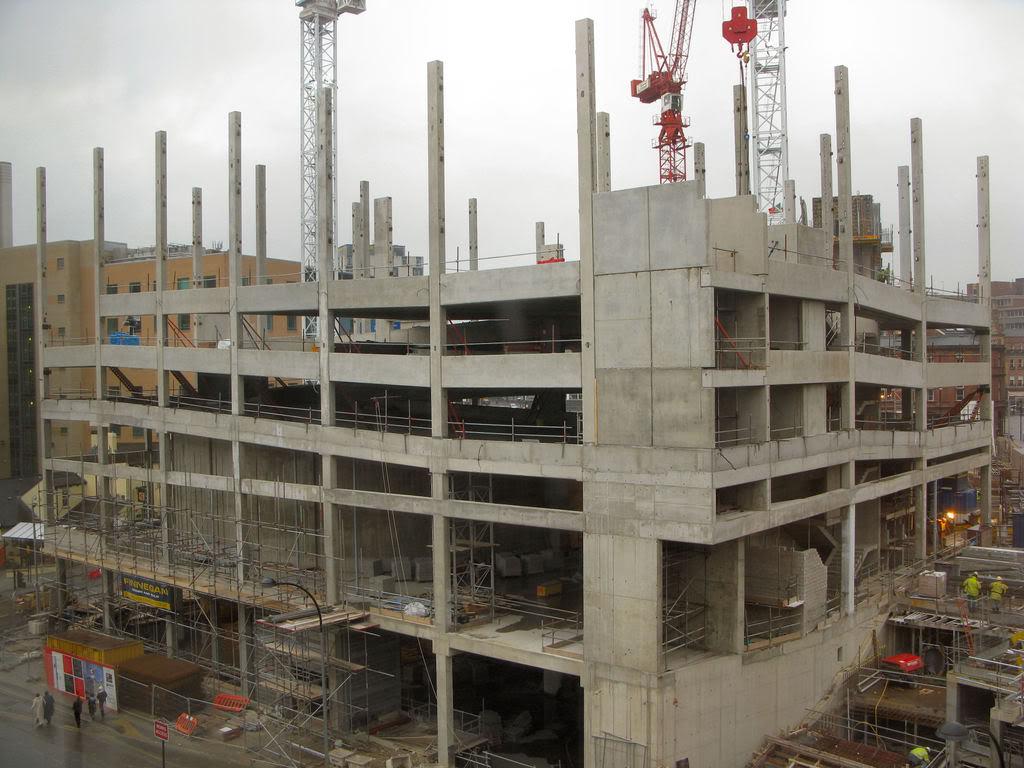
The frame is a precast concrete column and beam construction used to form the main car park deck. Photograph: SRC Ltd.

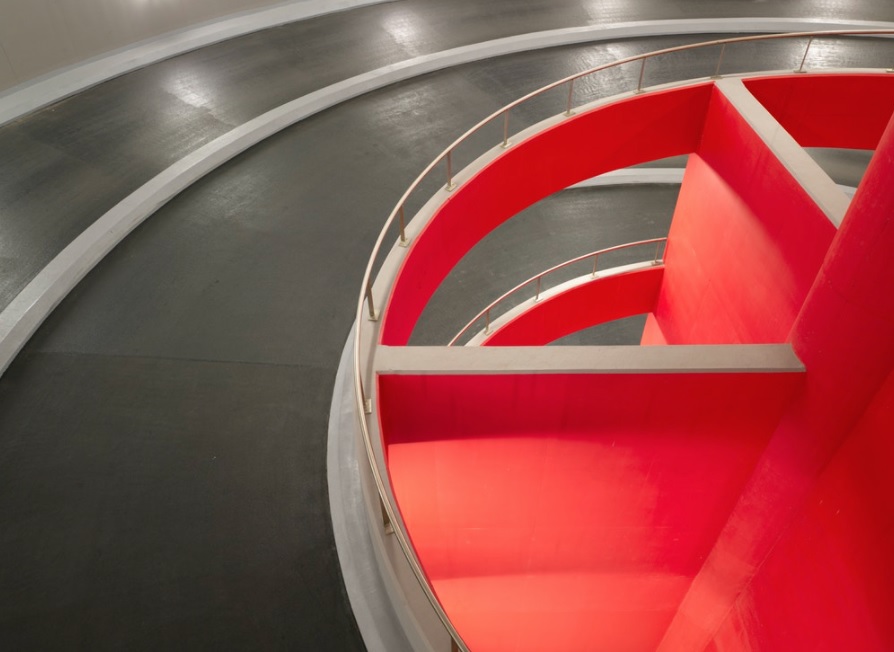
In its place rose this ultramodern structure with its nerve-jangling circular ramp leading to 520 parking spaces above. Car parks can be unattractive, and the precast concrete columns, walls, and floors, were hidden behind a screen of folded, anodised aluminium panels.

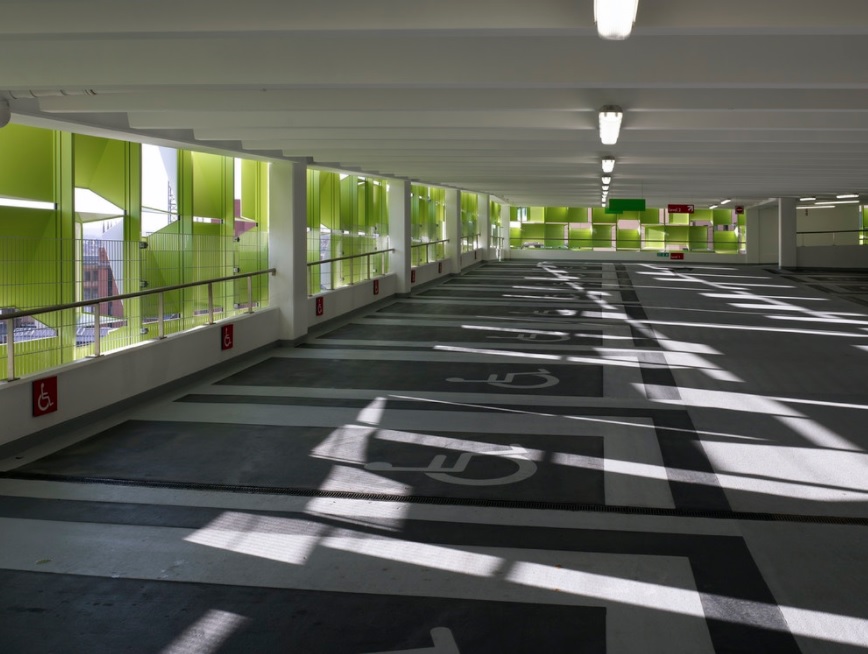
The external envelope, painted green on the inside, was each manufactured from a single sheet of folded aluminium, cut to an angle on two sides, and hung in four different orientations, providing natural ventilation.

“By day, a varied monochromatic pattern of light and dark is achieved over each of the elevations, with each panel giving a different light reflectance from its surface. The variety of open ends and tilted faces transform the surface as daylight fades. By night, the interior lighting bleeds between each panel and creates a non-uniform composition of light and dark across the surface.”

Photographs: Dennis Gilbert/VIEW
Photograph: mcmedia

Love it, loathe it, the car park has put Sheffield on the world map. A year after completion, it was named the ‘third coolest in the world’ by a car parking company and a design magazine. In 2019, it was voted the world’s most unusual quirky car park – beating off competition from Tokyo, Miami, and Australia, and was voted the most unusual car park in the UK in 2020.

There are even claims that Harvard University, in Cambridge, Massachusetts, built its new Science and Engineering Complex following the cheesegrater style.

Maintenance work to repair push fit friction fittings on the exterior cladding. Photograph: CAN Ltd UK

© 2021 David Poole. All Rights Reserved.

Categories
People

Sheffield Town Trust: our oldest institution

I am certain that most Sheffielders have never heard of Sheffield Town Trust. But it is the oldest institution in the city, and one of the oldest institutions in Britain, dating to 1297, when Thomas de Furnival, Lord of the Manor of Hallam, granted it a charter.

Lord de Furnival, who married a niece of Simon de Montford, held his lands direct from the Crown. In those days it was custom for the body of tenants to have common lands reserved for their use, for which they paid rent in hard-cash.

In return, for this sum Lord de Furnival undertook that the lands should be freehold, that he would provide a court of justice every three weeks, that fines and punishments should be proportionate to the offence, that there should be trial by jury, and that the tenants had the right to move freely without toll or hindrance, throughout the whole of Hallamshire.

The original Charter is still in existence, luckily as it happens. Once it was lent for an exhibition, and, afterwards, when the stalls were being cleared, it got swept away with lots of brown paper. Fortunately, one of the cleaners, feeling something hard in the waste-paper, pulled it out and found that it was the Charter with the Seal attached.

The Town Trust should be recognised as the body that made Sheffield, not incorporated until 1843 (by which time it had a considerable population), so it was evident that somebody must have done something during the centuries from 1297 to develop it and keep it habitable. This work was done principally by the Town Trust, acting first under the Charter of 1297, then under decree of the Commission of Charitable Uses (1681) and finally under the Sheffield Town Trust Act of 1873.

In return for a considerable amount of independence from manorial control, the Sheffield Town Trust was given responsibility for maintaining the town’s water supply and the roads and bridges. The early accounts of the Trust reveal regular payments for repairs to the town’s wells and bridges, particularly the large well known as Barker’s Pool and to the Lady’s Bridge. They also paid for a ‘scavenger’ to keep the roads clear of manure and other rubbish.

As the town grew, the Town Trust invested in companies that piped water in from the surrounding countryside; that built and maintained the major roads in and out of the town, including the Snake Pass; and in the company that made the River Don navigable so that goods could be brought in and out of the town by river.

The first Town Hall was built by the Trust, and so was the second in 1808, and when the present Town Hall was built it became known as the Court House, let to the city by the Trust, and now famous for its dilapidated state.

Many of the streets in Sheffield, West Bar Green, for example, were given to the city by the Trust, which also helped in the building and widening of many other thoroughfares, such as Leopold Street. The Trust also paid for the lighting of Sheffield streets by oil lamps in 1734, when most of the streets of the towns of Britain were still unlit.

Naturally, when Sheffield was incorporated, the Corporation took over the main activities of the Trust, and this enabled the funds to be used for other purposes. The decree of 1681 laid down as one of the objects of the Trust as being ‘charitable and public uses for the benefit of Sheffield as a whole and its inhabitants.’ It is on this that the Trust now concentrates.

In 1898, the Trust purchased the Botanical Gardens saving them from closure (the Gardens are now leased to Sheffield City Council) and, in 1927, they contributed to the purchase of Ecclesall Woods by the Council.

In the twentieth century it gave vast amounts of money to Sheffield University, local hospitals, and many thousands of pounds to boys’ and girls’ clubs. Many scholarships and fellowships were founded, a large contribution was made to the cost of the City Hall, and many famous pictures were bought and loaned to Sheffield’s art galleries.

Sheffield Town Trust started with an income of less than £10 a year. The value of the original land, assisted by wise road development, increased enormously, and there was capital appreciation in other ways, due to far-seeing and wise management. The Trust also received many generous legacies and properties from Sheffielders. Yet none of this could have amounted for much had it not been for the wisdom of its Trustees over the centuries.

It has been fortunate in having many benefactors and now uses the income from a portfolio of property and investments to support on average 140 local charities, groups, and organisations each year, either on an annual basis or with a one-off grant. 

We know the names of every Town Trustee since 1681, and they include lawyers, merchants, doctors, bankers, shop keepers, inn keepers, accountants, and, unsurprisingly, silversmiths, cutlers and tool and steel manufacturers. Today, it has thirteen Trustees headed by the Town Collector, the historical name for its Chairman, with the administration being overseen by the Law Clerk. 

Over seven centuries, the Town Trust has, of course, evolved – if it had not done so, it would not have survived. But from a body whose principal responsibility was the maintenance of the town’s water supply and roads to one that now distributes charitable donations in excess of £250,000 a year, it has always striven to improve the lives of the people of Sheffield – and it will continue to do so for centuries to come.

Categories
Short Stories

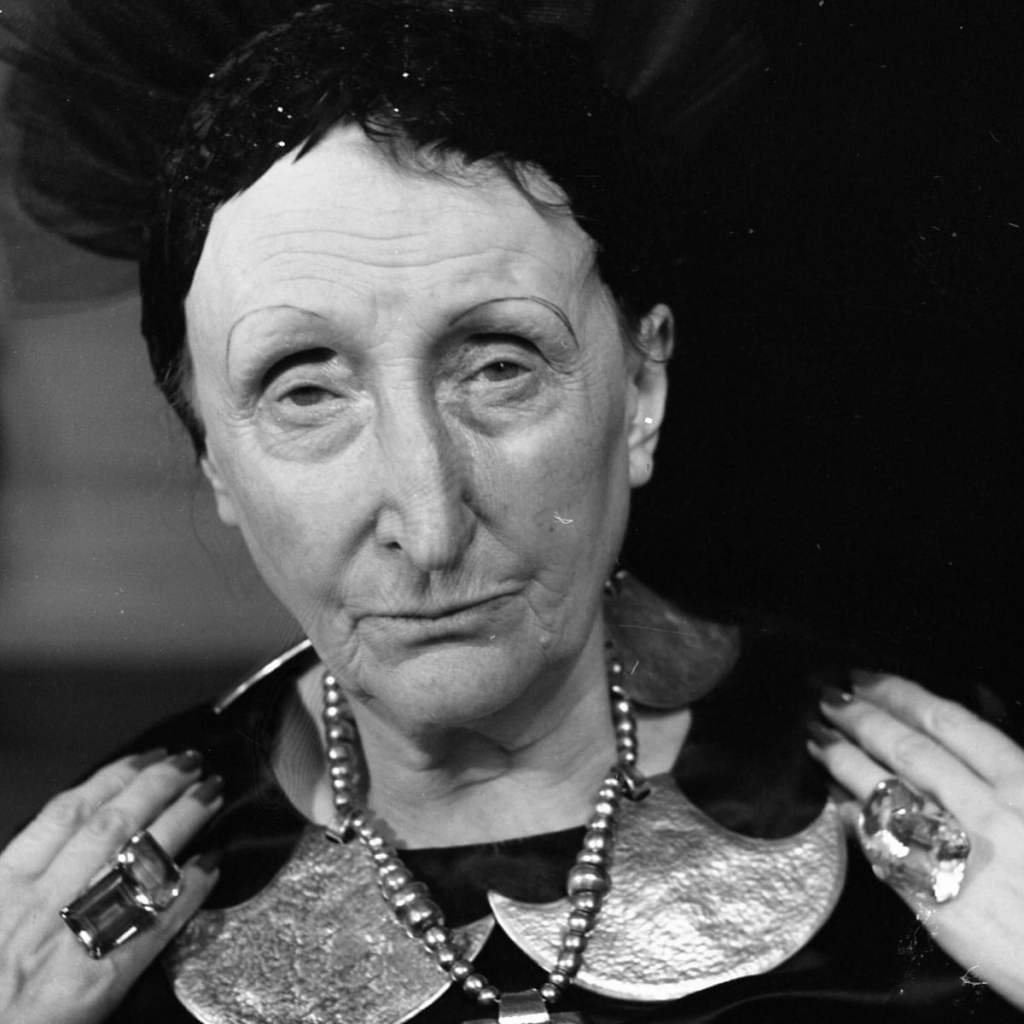
I have grown up believing that I once met Edith Sitwell

I have grown up believing that I once met Edith Sitwell.

It was at a nursing home, in a big old house, and I was a little boy. I wandered into a room and found an old lady in a wheelchair gazing out of the Victorian window. She looked sad and frail, wrinkles lined a painfully thin face, and a pointed nose protruded from it. She smelt of soap and disinfectant. She was very frightening.

She looked at me, held out a hand, and beckoned me to her. I nervously approached and held a skeleton hand and she obliged with a dog-tired smile. And we both looked out of the window in silence. And then a nun, wearing  a terrifying cornette, came in and told me to leave. I let go of her hand and left, but not before looking back, and seeing that the strictest face offered kindness. And so, I smiled back at her.

I have grown up believing that I once met Edith Sitwell.

That old nursing home was a large house on Sandygate Road that became Claremont Hospital, set up by the Sisters of the Institute of Our Lady of Mercy. According to The Inventory of the Edith Sitwell Collection, she spent three weeks here in August 1960.

I have grown up believing that I once met Edith Sitwell.

Except it was an impossibility. Because I was not around in 1960, and she died four years later, and I was only eight-months-old. But my mother said she took me with her to visit a sick old friend at Claremont when I was a little boy, and that I wandered off and was found in an empty room by one of the nuns.

And there, I believe, I once met Edith Sitwell.

© 2021 David Poole. All Rights Reserved.

Categories
Short Stories

A Ghost Story: Inspector Woodhead meets Flash Billy

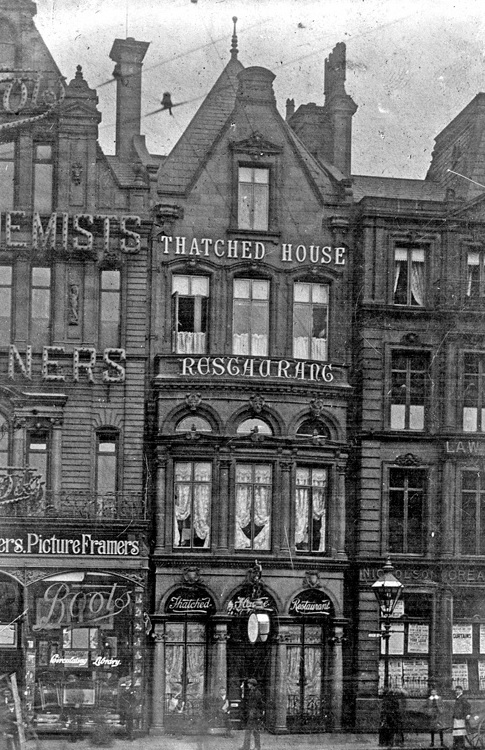
Inspector Woodhead stepped out of the hansom cab that had brought him from the Midland Station to the Thatched House Restaurant. It was a tall, four-storey building, sandwiched between Boots Cash Chemist and an auction house.

He placed his copy of The Times under his arm, doffed his hat at a passing lady, and stepped inside. It was surprisingly quiet for Friday afternoon, but he had no intention of eating. Instead, he made his way towards a staircase that disappeared into the basement.

At the bottom, he pushed open a glass door and walked into a small smoke-filled room. Behind the bar an elderly man stood anticipating his next customer, of which there were few.

Inspector Woodhead nodded to the barman and ordered a tankard of an unusual Sheffield brew. He looked around and found the person he was looking for. A strange young fellow sat at a corner table staring at the glass of whisky in front of him.

Woodhead grabbed his ale and walked over to join him. He sat down beside and carefully placed his hat, newspaper, and pipe, on the table. Then he took a swig of strong northern beer.

“It’s a miserable day,” Woodhead said to his neighbour.

“Do I know you?” scowled the young man.

Woodhead ignored the question. He filled his pipe with tobacco, lit it, and sat back.

“No, sir. You don’t know me, but you could say that I know you.” He puffed at his pipe. “I am Inspector Woodhead of Scotland Yard and I have been looking a long time for you”

“Looking for me? Whatever for?”

“Sir. All in good-time, but first let me get you another drink.”

The young man tugged nervously at the sleeve of his purple suit.

“You are William Burnand Davy, are you not? There are some in this city that call you the Second Marquis of Anglesey behind your back, and in the cafes the waitresses know you as ‘the millionaire.’ You are the grandson of the late William Davy, the well-known proprietor of the Black Swan Hotel and then the Thatched House, a public house that this restaurant is named after.”

“State your business, I cannot sit around all day,” Davy demanded.

“In 1893, your grandfather died leaving a windfall of twelve thousand pounds which came to you when you were 21 years of age.” Woodhead paused to drink. “That was two years ago.”

“Inspector, I cannot see why my financial situation is any concern of yours. What is it you want? Are you demanding money from me? If you are, I must tell you…”

Inspector Woodhead stopped him and smiled.

“You have been a very extravagant young man. You went down to London for a season, spent a good deal of the summer at Bridlington, stayed at the leading hotels in Sheffield, and spent seven months visiting Australia and Ceylon.”

“It was my money to do whatever I wished,” sneered Davy.

“You bought a motor car, and had a chauffeur attired in a striking uniform. The car and its driver were often seen attracting attention outside Sheffield’s hotels. You liked driving, but I understand that you had your licence endorsed in Bridlington for reckless driving.”

Davy swallowed his whisky and the barman brought him another.

“Your ties were the talk of all the ladies, your diamond rings were the price of a manufacturer’s ransom, and your scarf pins included some exquisite gems.” Woodhead paused. “Yes. All eyes were instinctively drawn to you… you were known as carefully-groomed Billy. Trousers that were not properly creased were never worn again, always turned up to show your delicately-coloured silk socks, and your fancy waistcoats and the cut and colour of your suits, might easily have been taken for an imitation of Vesta Tilley.”

“There is no need to be so rude.”

“Facts, my boy, facts,” said the Inspector. “One of your eccentricities was to buy costly presents for girls. Such folly, because after only a few hours acquaintance you’d take her to a jeweller’s shop.”

“My friends told me not  to waste money on them,” Davy conceded, “But I treated it as a joke.”

“Ah, yes. Your friends. Those who hung around you for hours and days and weeks. Do you remember the day you walked into the Ceylon Café and joined six of your fellows? You cried, ‘Let’s all go to London,’ and ‘I’ve plenty of money,’ you shouted, and pulled a handful of gold out of your pocket, and to London you all went.”

Woodhead sat back and puffed on his pipe.

“Inspector, you still haven’t told me the reason for your visit.”

“Ah yes,” Woodhead conceded. “About twelve months ago you met Irene Rose Key, a tall, good-looking girl, well known in West End establishments, and in the neighbourhood of Piccadilly. You became infatuated, and impressed her with stories of your fortune, and last May you persuaded her to marry you at Strand Registry Office.”

“Inspector, I think you have the wrong person, because I am not married.”

“Sir. I think you will find that I am correct. Queenie Key was popular in all the music halls and public houses of Leicester Square. And it might have been a happy marriage had it not been for one simple truth.”

“And what might that be?”

“Because at the time of your marriage your financial position became exceedingly embarrassed. Your money ran out.”

Davy laughed for the first time and shouted for another whisky.

“Inspector, this is a joke. I have all the money I need, and if you care to go outside you will see that I have a six-cylinder Belsize car waiting. And to prove there are no hard feelings, I have a sheaf of bank notes and we’ll share a bottle of champagne.”

“It is not a joke. You both came north, but your family refused to accept Queenie, so you returned to London and lived at hotels. Coming to the end of your resources, however, you separated, she returning to the West End and you wanting her back.”

“I have never been married.”

“And so, the purpose of my calling on you today is to discuss the events of eighteenth November 1908. You met your wife on Wednesday morning at a public house in the Haymarket. You both remained until the evening, dined together, and then took a taxi-cab for King’s Cross, your wife under the impression that she would leave you there, that you would return to Sheffield, and eventually leave the country.”

Davy lit a cigarette. “This is beginning to sound like a fantastic crime novel. What am I supposed to have done next?”

“Your wife was wrong. It was never your intention to leave her. You argued in the taxi-cab as it passed along Shaftsbury Avenue, Hart Street, and Bury Street, and into Montagu Street.” Woodhead puffed harder on his pipe. “And in Montagu Street you seized her by the neck, drew a revolver from your pocket and fired two or three shots at her head.”

“I did what?” Davy laughed. “I’m sure I would remember if I had killed somebody.”

Inspector Woodhead unfolded his newspaper to reveal the headline ‘TAXI-CAB TRAGEDY – MURDERER A SHEFFIELD MAN – FORTUNE INHERITED AND SQUANDERED.” He shifted in his seat and faced the young man.

“Sir, there is a simple reason for you not remembering. After you killed your wife, you turned the revolver against your own head and shot yourself.”

“I shot myself?”

“Yes, Mr Davy. You are quite dead.”

“Am I to suppose you have come to arrest a dead man?”

“No. That is not my style anymore. I simply came to make you aware of your crimes.”

“And I have heard enough.” Davy jumped up, gathered his straw boater, and looked down at Woodhead. “I shall leave now and hope to never see you again.”

“Sir. You will not hear from me again. You are free to go. And when you leave by that door, I shall not be able to follow you.”

“I have never heard such nonsense in my life. Good day, Inspector.”

Davy snatched his cane and strode towards the door. He hesitated before opening it and turned back to face the seated Inspector.

“A most grotesque story if ever I heard one. But I have one more question before I leave. If I shot a woman and then turned a gun upon myself, why am I stood here talking to you, and why won’t you arrest me? … No, Inspector. Please do not answer that. Fanciful rubbish. I am leaving.”

William Davy disappeared through the door, closed it behind him, and Inspector Woodhead looked long and hard at it. Then he folded up The Times, relit his pipe, and decided to finish his ale.

“Sir. You are dead,” he murmured. “You have been dead for many years. Only you had chosen not to remember and have sat by yourself in this little room ever since. It was time for you to face the consequences.”

Woodhead felt tired after his long journey and needed to sleep, but here would not do. He closed his eyes, resisted the urge to doze, and when he opened them, he was in an unfamiliar room.

“Time for me to go as well.”

The Inspector gathered his belongings, placed the hat on his head, and left through the same door he had entered. He climbed strange stairs into the dark restaurant and looked about him. How sad, he thought, that it was not a restaurant anymore. Out of the corner of his eye, he caught the shape of a restless black figure.

“Hello, Mr Davy. I see that you are still here. It must be well over a hundred years now.”

Inspector Woodhead stood up straight and disappeared through the glass window that had once been the entrance to the Thatched House Restaurant. Knocked down and rebuilt I should not wonder, he thought.

Outside, the Town Hall clock struck midnight, and Inspector Woodhead turned to look at the building he had just left. BOOTS – PHARMACY – BEAUTY. It was good to see that Boots the Cash Chemist still existed. And then he made his way across High Street, stepped over Supertram tracks, and completely disappeared, never to be seen again.

© 2021 David Poole. All Rights Reserved.
Categories
Buildings

Cairn’s Chambers: the renaissance of a forgotten building

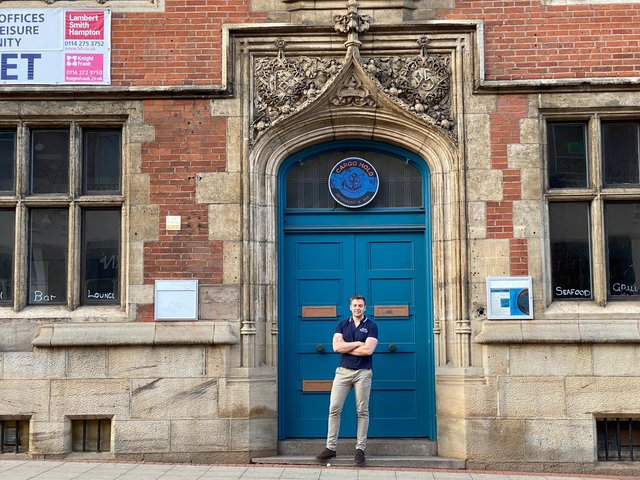
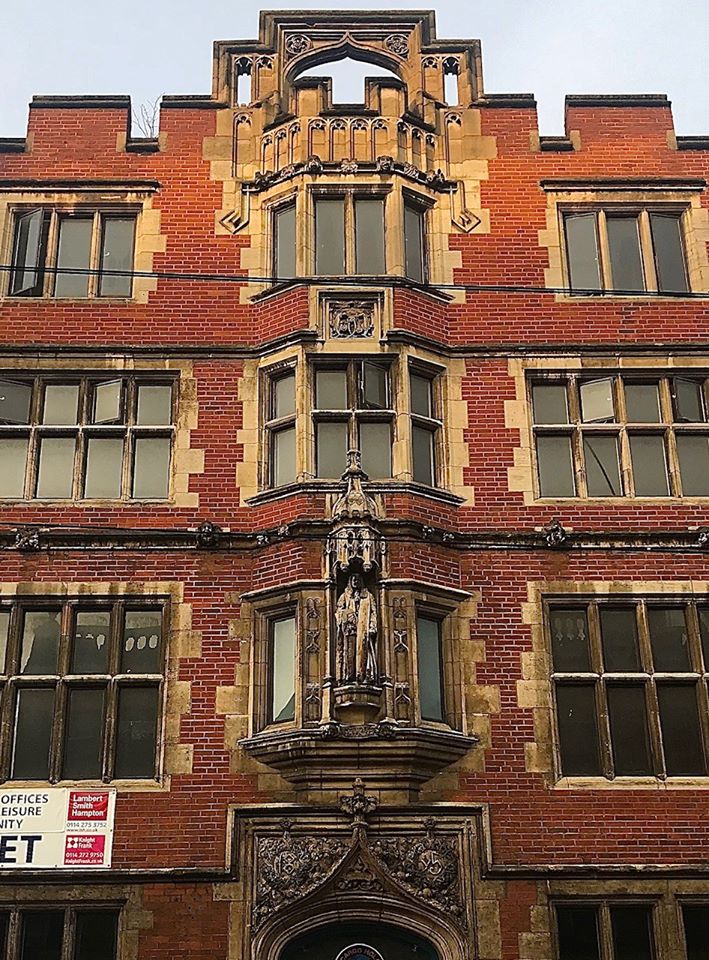
Damon Wiseman pictured outside Cairn’s Chambers on Church Street in Sheffield city centre, which he is planning to turn into luxury apartments with a new restaurant on the ground floor. Photograph: Sheffield Star

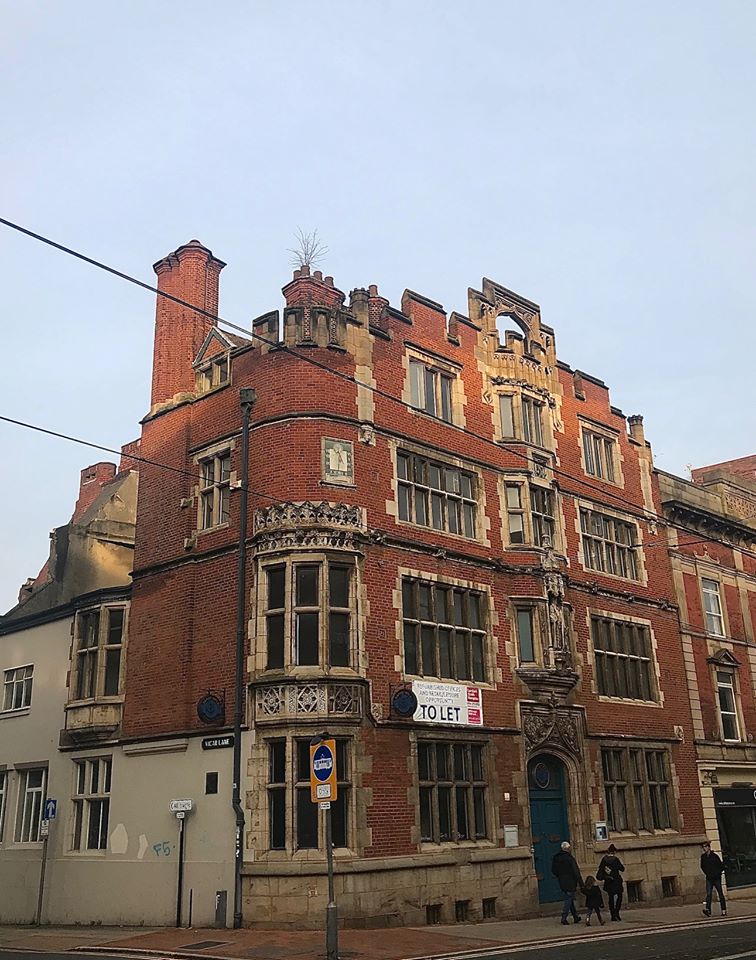
Cairn’s Chambers on Church Street, a building slowly deteriorating these past twenty years or so, has had an offer accepted, and subject to planning permission, will turn it into a restaurant, with up to a dozen luxury apartments on the first, second, and third floor which will be available to rent.

The man behind the scheme is Damon Wiseman who came to the UK in 2016 from Zimbabwe to study real estate and later ended up working for a Russian goldmine company. He lives in Sheffield and has successfully invested in rental properties in Burnley and Manchester.

Wiseman’s offer of £800,000 has been accepted and is understood to have the backing of wealthy overseas investors. He estimates that once completed, the scheme will have cost a total of £1.5m.

Grade II listed Cairn’s Chambers was built between 1894-1896 by Charles Hadfield, of M.E. Hadfield, Son and Garland, for Henry and Alfred Maxfield, solicitors. It was built in scholarly Tudor-style, a favourite of Hadfield’s, featuring decorative stonework by Frank Tory Sr.

The sad decline of Cairn’s Chambers is highlighted by the small tree growing out of a chimney-pot. Image DJP/2020

Henry and Alfred Maxfield occupied a large suite of offices, but it was also built to accommodate other businesses, a common trait of Victorian entrepreneurship.

The offices were used for almost 40 years by Charles Hadfield’s own company, C & C.M. Hadfield, architects, and later by Hadfield and Cawkwell. It was also where John Dodsley Webster, another Sheffield architect, had his office with an entrance at the back, on St James’s Street.

The Hadfield company remained until World War Two, leaving after the building was damaged by a German bomb in 1940. The rear of the property was almost destroyed, but the decorative front survived.

Afterwards, Cairn’s Chambers became a branch of the District Bank, subsequently becoming NatWest until its closure.

Most recently, the ground floor was occupied by Cargo Hold, a seafood restaurant.

The crowning glory of Cairn’s Chambers was the statue of Hugh McCalmont Cairns (1819-1885), 1st Earl Cairns, an Irish statesman, and Lord Chancellor of Great Britain. Photograph: DJP/2021

© 2021 David Poole. All Rights Reserved.
Categories
Places

Castlegate vision may soon be reality

We’ve waited long enough to hear good news about Castlegate, and more importantly the site of old Sheffield Castle.

Sheffield has been successful in its bid to secure £20m of funding for Castlegate through the Government Levelling Up fund.

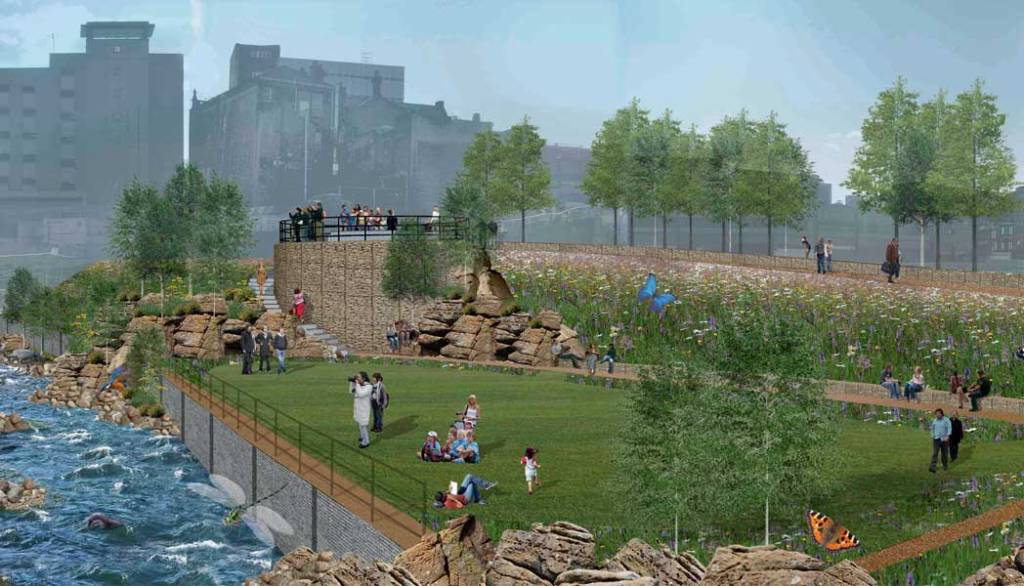
£15m of this will go towards further archaeological investigation and interpretation of the historic Castle remains for the public to view, quality open space, de-culverting of the River Sheaf and route-ways through the site. Targeted plots on the outer edges of the site will be made ‘developer ready’.

The remaining funding will go towards two other projects – Park Hill Art Space and Harmony Works.

Park Hill Art Space will deliver an arts, cultural and heritage destination at the Park Hill estate and it will aim to be one of the largest contemporary art galleries in the North, complemented by creative workspace and learning facilities, within a six-acre sculpture park.

Harmony Works is a partnership between Sheffield Music Academy and Sheffield Music Hub to create a new fit-for-purpose music academy by refurbishing Grade II listed Canada House on Commercial Street.

Categories
Buildings

Matilda Tavern: the life and times of a coaching inn

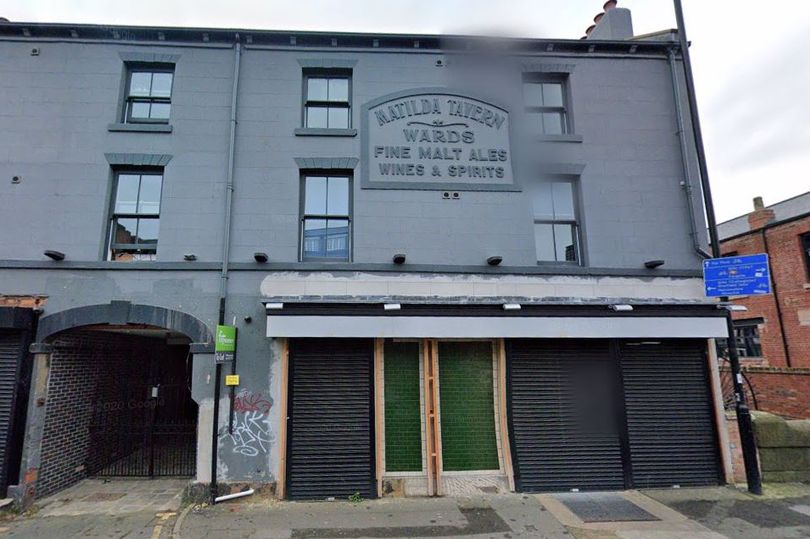
Recent image of the Matilda Tavern. Photograph: Sheffield Star

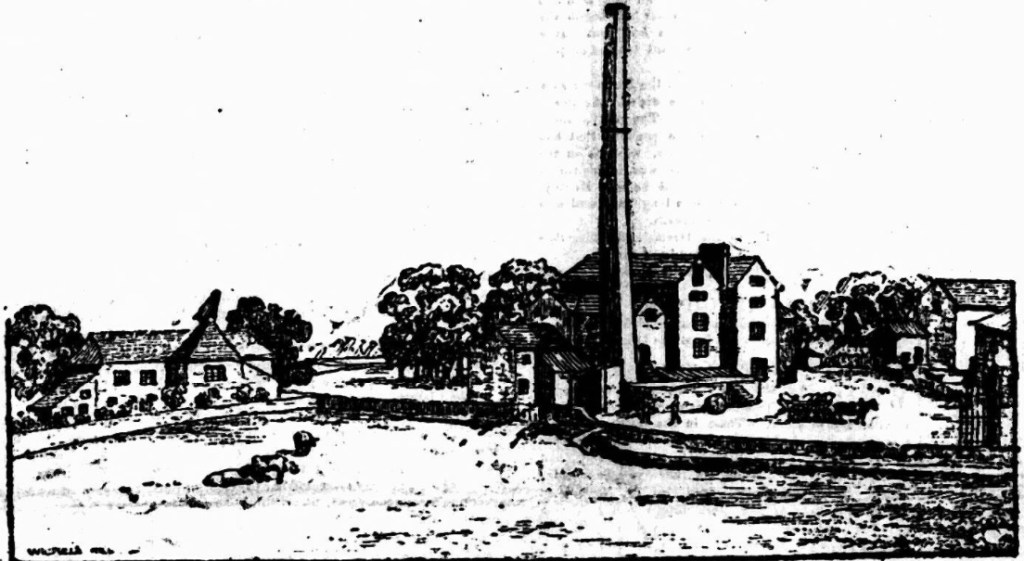
Once upon a time there was a mill called Cinder Hill Mill, the property of the Wigfull family, powered by water from Porter Brook that flowed into a dam. In 1780, Joshua Wigfull rebuilt Wigfull’s Mill, and it was later enlarged, with a steam engine fixed for driving six pairs of French stones, one pair of grey stones, and a shelling mill.

Most of the flour made at these mills went to Stockport and taken by wagons and pack-saddle to Middleton. There they were met by a team of relay teams and vehicles and carried forward. The mill was demolished in 1862 and stood in or near the present Leadmill Road.

At the side of the mill were fields rented by a Doctor Brown from the Duke of Norfolk, and the district became known as Doctor’s Fields.

Wigfull’s Mill. Photograph: British Newspaper Archive

In the late 18th century, the Duke of Norfolk set about his ambitious plan to develop this neighbourhood, alongside Alsop Fields, into a fashionable residential district. James Paine drew up a masterplan with a proposed gridwork of streets, the key ones being Union Street, Norfolk Street, Eyre Street, Arundel Street, Howard Street, Charles Street, Furnival Street, and Duke Street.

Duke Street stretched between Union Street and Porter Brook, and when it was extended towards Doctor’s Fields the new portion from Arundel Street onwards became known as Matilda Street, named after William the Conqueror’s wife, Queen Matilda of Flanders.

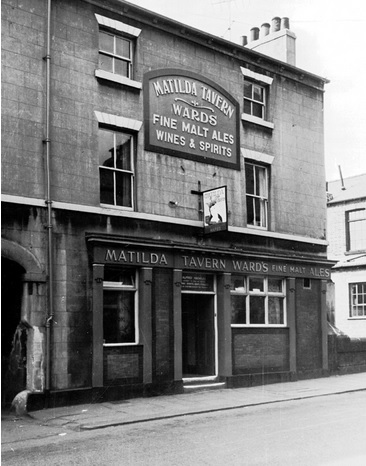
By 1838 nine newly-erected houses had been constructed, one of them a large public-house, a coaching inn beside Porter Brook, with an archway that led to a stable yard behind, and this was called the Matilda Tavern.

The masterplan faltered, and instead of posh houses for the wealthy, the area was instead utilised for industry. By the 1870s, the upper portion of the road, Duke Street, was also renamed Matilda Street to avoid confusion with the street of the same name at Park.

The Matilda Tavern thrived and apart from serving ale, it was a place where Thomas Badger, coroner for the Upper Division of the Wapentake of Strafforth and Tickhill, held inquests on dead bodies, many of whom had drowned in Porter Brook or in the unprotected portion of the Wigfull Mill dam.

Photograph: Picture Sheffield

And so, the Matilda Tavern thrived, and when coach and horses disappeared, it served the hundreds of thousands of workers that worked in nearby factories. Eventually, industry disappeared, and its fortunes waned.

In 1999, its exterior was used in an ITV series called Four Fathers, starring Tony Doyle and Neil Dudgeon, its north of England setting somewhat gloomy, but its characters gainfully employed with humour amid the drama.

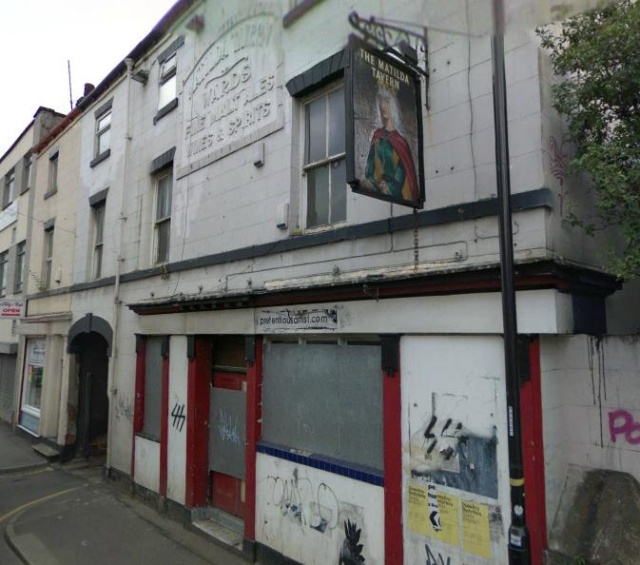
However, six years later, in 2005, the Matilda Tavern closed for good, its windows boarded-up, and the interiors left to rot.

Photograph: Closed Pubs

Several new residential developments in the area, notably the apartments on the corner of Matilda Street and Arundel Street, and the apartments along Fornham Street, have brought students to the area.

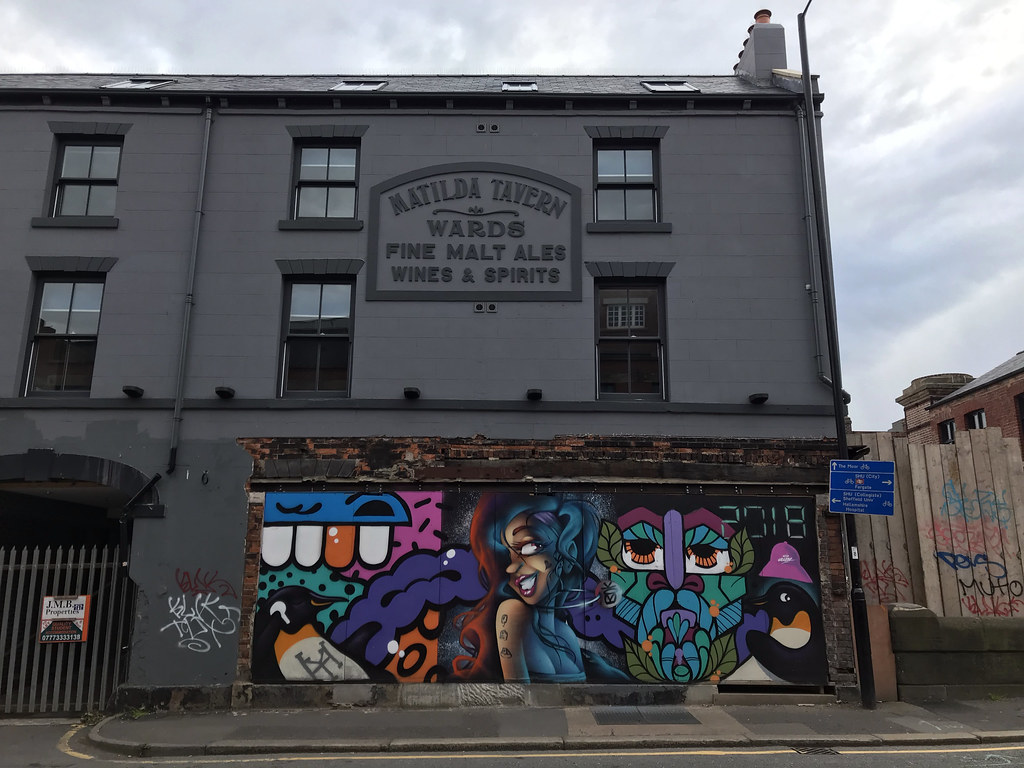
In 2007, developers were given permission to alter and extend the old pub and erect a new building behind for student accommodation and ground floor business space. All these years later, conversion of the upper floors have been completed and work on the new student accommodation is under way and due to be finished in spring 2022.

However, in a new planning application, architects Wireframe Studio, says “The proposal is to now change the ground floor and basement of the building from business use back to its original use as a drinking establishment with the paved area along the river as an external terrace.”

The golden days might have disappeared, its smoky rooms and beer-stained carpets likely replaced with modern interiors, but at least the Matilda Tavern may live-on.

Photograph: David Johnson

© 2021 David Poole. All Rights Reserved.