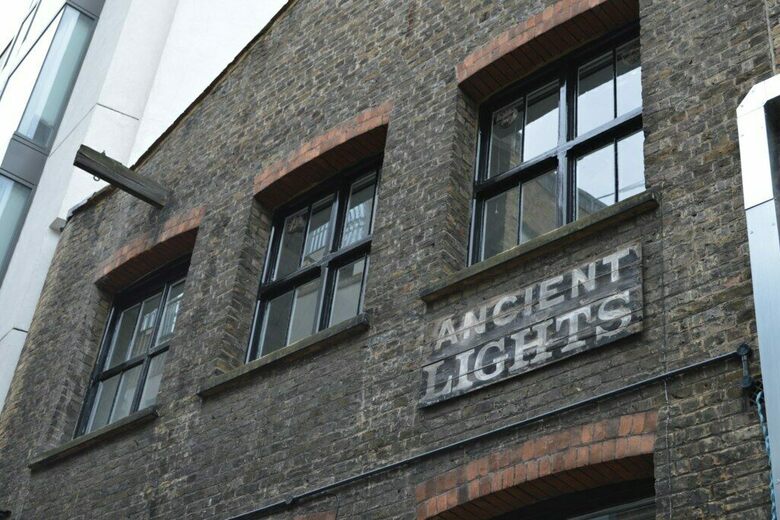
A person was historically entitled to ‘ancient lights’ if natural light and air had passed freely through their windows for a certain amount of time. Newman Passage, London. These old signs can still be found around the country, although seemingly not in Sheffield. Photograph: Matt Brown.
You might not be aware of an ancient piece of legislation that affected the way many of Sheffield’s old buildings, and new ones for that matter, were built. The Ancient Lights Law was the right of a building or house owner to the light received from and through his windows. Windows used for light by an owner for 20 years or more could not be obstructed by the erection of another building. This rule of law originated in England in 1663, although was superseded by the 1832 Prescription Act.
If a neighbour attempted to infringe upon this by building a structure or planting trees, the owner had the power to sue them for ‘nuisance’.
The law led to the placement of ‘Ancient Light’ signs under windows that were protected by the ordinance, and today some of these signs can still be found on buildings around London, although I’m not aware of any in Sheffield.
In the 1920s, an Ancient Lights expert, Percy Waldram, proposed a method that would, ideally, standardise, the amount of light people could claim. He suggested that ‘ordinary people’ required one-foot candle (a measure of light intensity) for reading and other work.
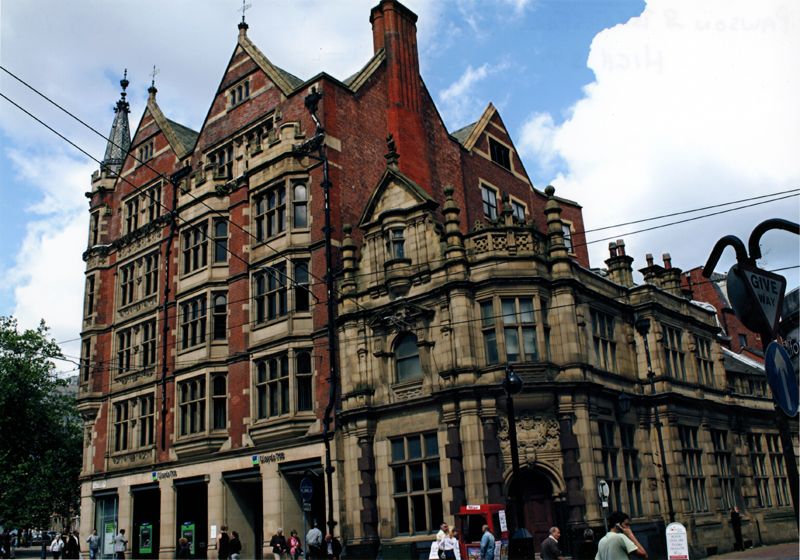
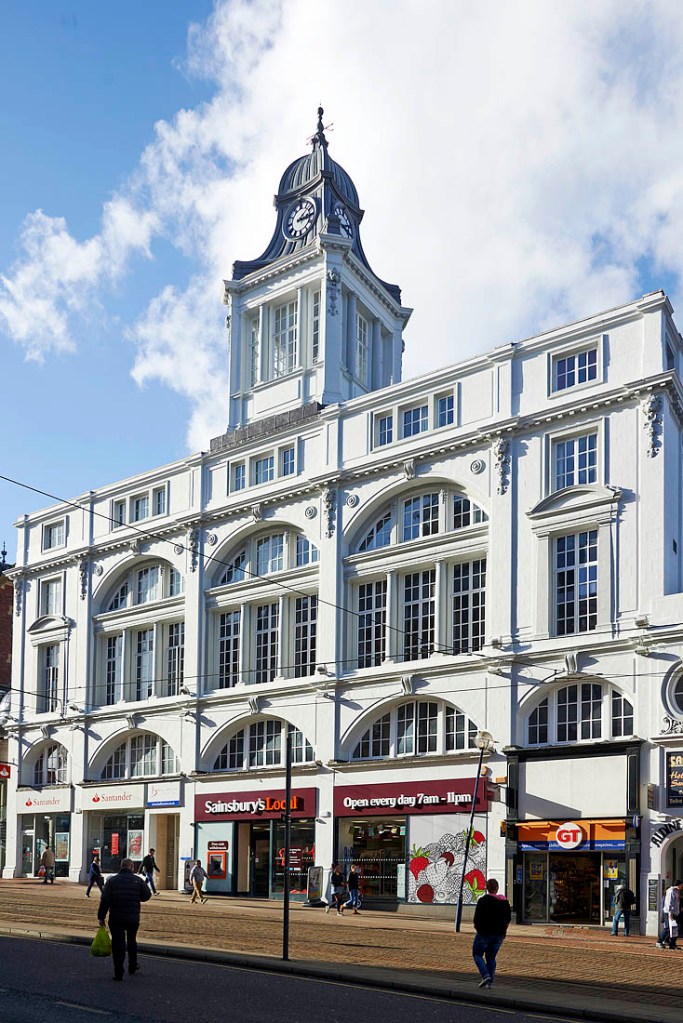
The London & Midland Bank (now part of Lloyds Bank), on High Street, Sheffield, was built in 1895 taking into account the ‘ancient lights’ of older properties on the other side of York Street. The opposite corner was later redeveloped with the Telegraph Building which had to reciprocate the ‘right to light’ of the bank. When built, the Telegraph Building had to conform to the control of heights to which buildings were permitted, and the ancient rights of light afforded to properties opposite and adjacent. Hence the broken skyline, the setting back of the upper storeys and the pyramidal form of the building. Even the tower had to be kept with an angle of 45 degrees.
In Sheffield, the design and construction of many of our old buildings was dictated by rights to light. One such, the Telegraph Building, on High Street, had to be built in such a way as not to affect light to properties on the other side of the street.
We’ve also covered the old Mulberry Tavern, on Mulberry Street, which took the owners of the ‘new’ Victoria Hall to court because its construction had affected light inside the pub.
And there have been other cases.
In 1900, Mappin and Webb objected to the building of a property on the other side of Norfolk Street because it would have affected light coming into its ground-floor showroom.
The Sheffield Cathedral extension in the 1930s prompted discourse from occupiers on St. James’ Row, as did the building of Central Library from the Lyceum Theatre and Masonic Hall.
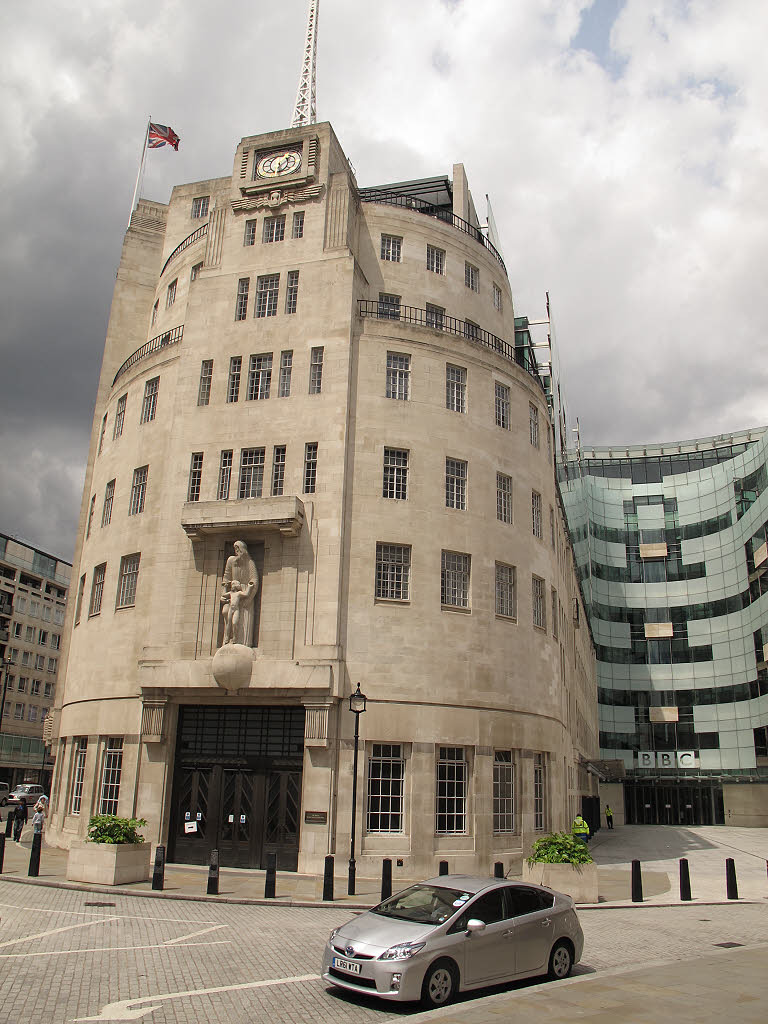
Broadcasting House, the BBC’s London headquarters, owes its peculiar shape to Ancient Lights claims made by residents of since-demolished nearby homes – the slanting of the east side of the building was a concession to those people’s light-rights.Photograph: Shortlist.
The power that property owners have, to demand ample daylight, is still a relevant debate. However, modern planning laws usually prevent disputes afterwards.
Interestingly, the Ancient Lights doctrine never caught on in the United States where it was deemed restrictive of new commercial and residential developments and thus limiting urban growth.
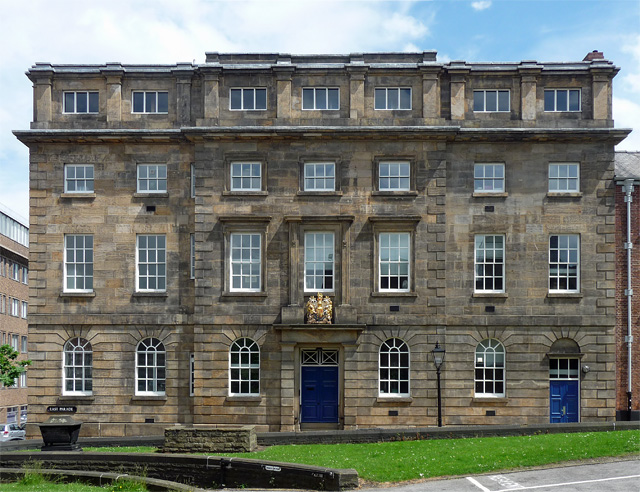
Grade II-listed, No. 14 East Parade. Its front faces Sheffield Cathedral, with a side elevation on Campo Lane, and the rear on York Street. Note the former playground on the roof. Photograph: Google.
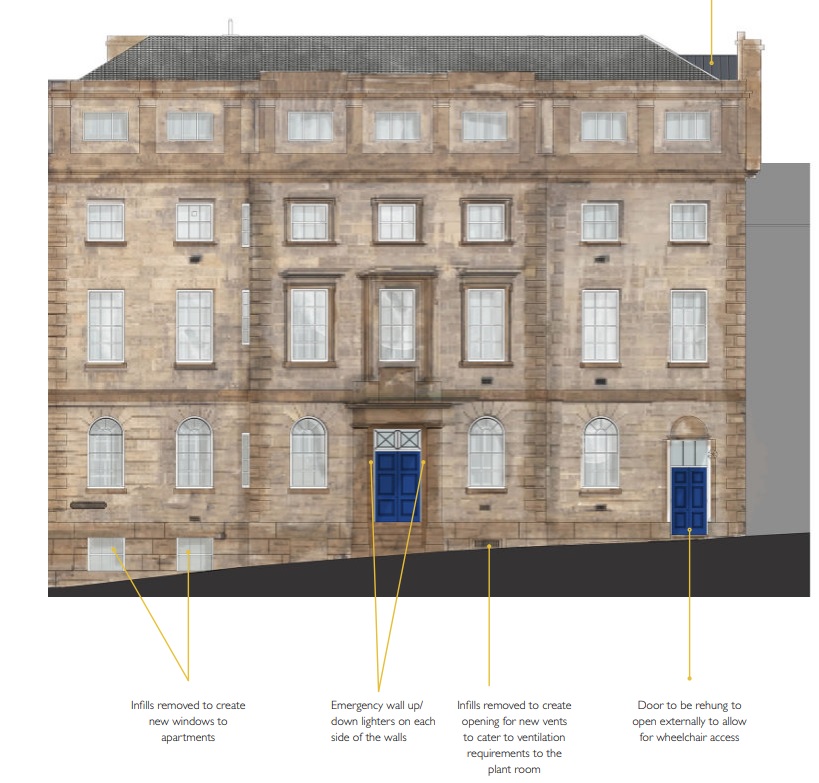
A Planned and Listed Building Consent application for 17 shorthold tenancy apartments has been submitted by Pinebridge estates for No. 14 East Parade. It was built in 1825 as the Boys’ Charity School and has been empty for several years.
The actual date of the Boys’ Charity School (or ‘Bluecoats’ School) was in 1706, and for some time the boys were taught in a room at the Earl of Shrewsbury’s Hospital. But in 1710, premises were built at the north-east corner of the Parish churchyard, and these were rebuilt in 1825, and enlarged in 1889. The school was a home for orphan boys. They were lodged, fed, and educated free of charge, partly out of income from endowments and partly out of subscriptions and donations.
“Who has not seen those neat boys whose conduct is in every way a credit to their master, dressed in their old-fashioned blue cloth coat, buttoning up in front and cut away into tails behind with yellow braid and brass buttons, green corduroy trousers, white bands, and a blue ‘muffin’ cap?” (Sheffield Daily Telegraph – 1911)
Six of the boys were maintained out of the charity of Thomas Hanbey (founder of the Hanbey Charity) and wore the complete dress of a Christ’s Hospital boy. Ten other boys wore the letter ‘W’ on their arm, signifying that they were appointed by the heirs of Thomas Watson, who gave £3,000 to the school. There were a hundred boys altogether.
Both the original school and the larger replacement appear to have been formed from a donation in the will of Thomas Hanbey in 1782. It was built to the designs of Woodhead & Hurst who were a Doncaster-based architectural practice, also responsible for St George’s Church, the Music Hall on Surrey Street, the Grammar School on Charlotte Street, Shrewsbury Almshouses on Norfolk Road, and the enlargement of the Town Hall.
Up until 1830, the boys played in the adjacent churchyard, but after being turned-out, they played cricket and football on the third floor, and in a small open playground on the concreted roof of the building (now described as a roof terrace), both made possible by the generosity of Samuel Roberts, the cutler, and supporter of benevolent causes.
The land on which it stood had been leased to the trustees by Joseph Banks of Sefton, for 999 years, at a rental of 20s. a year, but in 1911, the school transferred to new buildings on Psalter Lane, and it was sold for £7,000 to the Government to be converted into a Central Labour Exchange.
It was later used by the Ministry of Pensions and National Insurance, and in recent years was used as an Industrial Tribunals Court.
The planning application is for 17 apartments, and as part of the conversion it is proposed to create additional accommodation on the former rooftop playground.
The building was separated into various office units and used by several Government departments. Photograph: Picture Sheffield.
The Grade II-listed building originally comprised two wings with a central linking range where the main entrance was along East Parade and also a rear cour tyard enclosed to York Street with a wall. This open space was presumably a playground for the pupils. By 1855 this courtyard had been infilled with a new central block of the building creating its current planform.Photograph: Stephen Richards.
Proposed East Parade design. Photograph: Pinebridge Estates.
Proposed Campo Lane design. Pinebridge Estates.
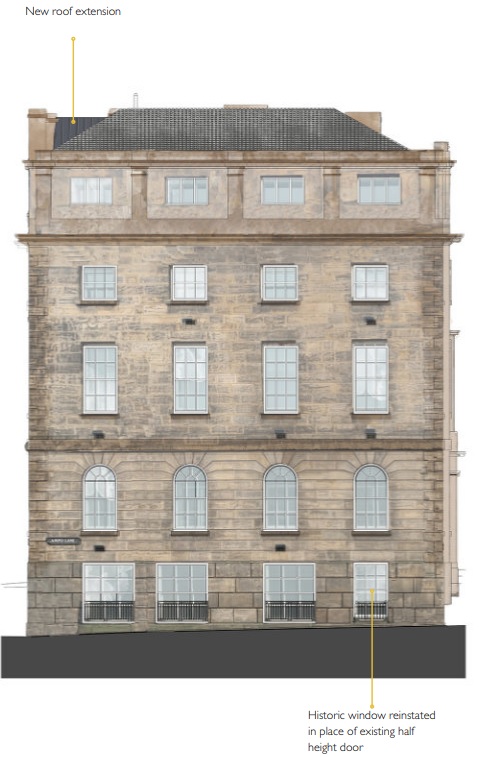
Proposed York Street elevation, with roof extension. Pinebridge Estates.
The proposals do not result in any change to the scale of the existing building, as no extensions or demolitions to the building are required.Photograph: Sheffield Star.
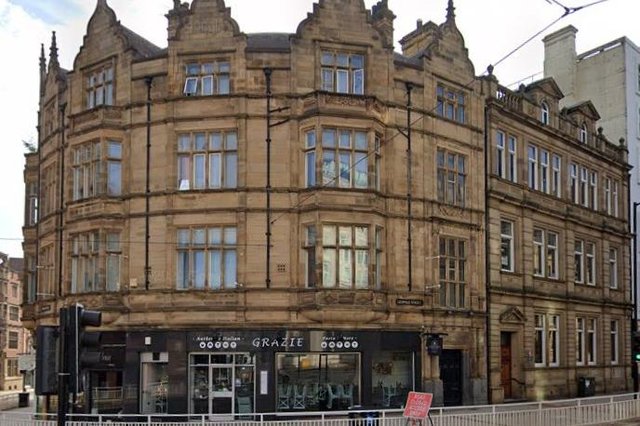
I recall visiting a sunbed salon at Leopold Chambers in the 1980s and climbing the huge Victorian staircase. I couldn’t help thinking that the old building was past its best. That was 37 years ago, and a lot has changed. The curved four storey building on the corner of Leopold Street and Church Street is home to a cafe, letting agent and tanning and beauty salon at ground floor level, with student accommodation occupying the floors above.
We looked at Leopold Chambers several weeks ago, built in 1893-1894 as new offices for Webster and Styring, an established firm of solicitors set up by George Edward Webster and Dr Robert Styring.
It was designed by Andrew Francis Watson (1856-1932), designer of many well-known buildings in Sheffield, including the Norfolk Market Hall, the old Fitzwilliam Market, Westminster Bank, High Street, showrooms for Mappin and Webb, and the offices of Messrs Vickers and William Jessops on Brightside Lane.
There are now plans by Ashgate Property Developments to convert the first, second and third floors into two studios, three one-bed and three two-bed apartments.
The plans involve reconfiguring the current units with no external works to the ornate Grade II listed facade and the ground floor retail units are unaffected.
“The building was constructed during the Victorian period and has seen various internal and external alterations and modifications over the years to the present day.
“The building has undergone extensive refurbishment and remodelling since its construction and little or no original features can be found other than the staircase which will remain.”
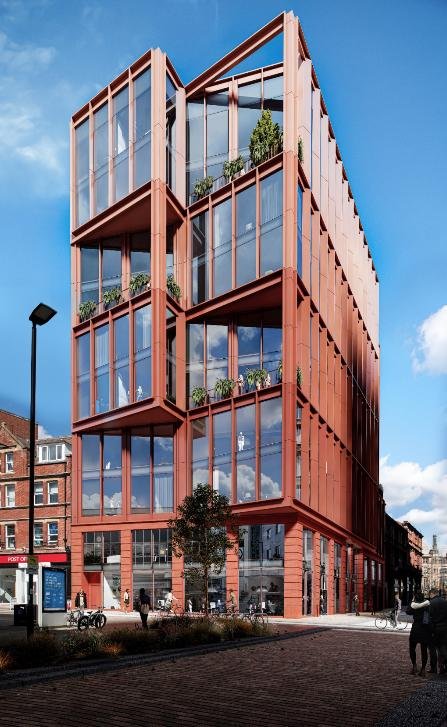
The CN-Tower from Norfolk Street. Image: Grantside.
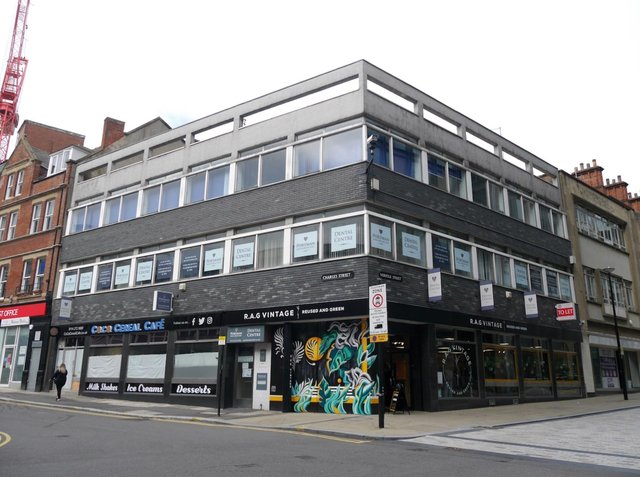
A developer has responded after one of its project on the corner of Charles Street and Norfolk Street attracted 127 objections.
Grantside applied for planning permission to Sheffield City Council for a 10-storey office block, called C-N Tower, to replace two 1960s buildings.
Residents complained it would block natural light, destroy privacy and damage businesses, and Historic England is concerned about the height of the tower and its effect on existing heritage buildings.
Grantside chief executive Steve Davis said: “According to Sheffield City Council there is a ‘chronic shortage’ of high-quality, Grade ‘A’ office space in the city centre. This is hugely detrimental to Sheffield’s future economic growth both in the short term and the long-term, as potential occupiers may be forced to look elsewhere.“
One of the buildings that will be demolished at the corner of Charles Street and Norfolk Street. Photograph: Sheffield Star.
The area around Norfolk Street and Pinstone Street was drastically redesigned in the late 1800s, widening and realigning Pinstone Street which involved the demolition of many buildings including some on this site.
The first building to be built on the site within the new road layout was the Three Horseshoes Hotel Public House in the 1890s. In the early 1900s buildings were built either side of the pub including the existing building St. Paul’s Chambers which originally housed the New Central Hall, cited as one of Sheffield’s first picture houses. This building also took up a section of the proposed site and became the Tivoli Cinema in 1914.
On 12th December 1940 Sheffield City Centre suffered extreme bomb damage during an intensive air raid. This included a direct strike outside the site where the Three Horseshoes Hotel and partof the Tivoli Cinema were gutted by the blast and subsequent fires.
The cinema never reopened but the Central Hall entrance signage can still be seen on the building today.
The site was eventually cleared of rubble and sat as an empty plot, used for parking during the 1950s. In the 1960s the current buildings on site were constructed and provided new offices above ground floor retail space. Over the following decades the buildings were occupied by many differing uses including BBC Radio Sheffield and a branch of The Post Office.
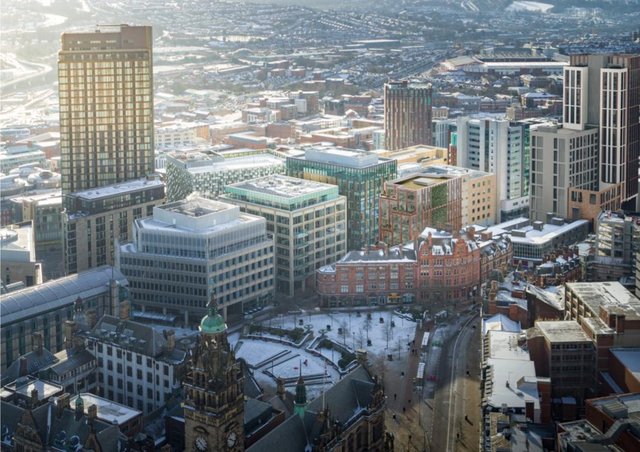
The C-N Tower is shown as an artist impression behind St Paul’s Building and the Prudential Assurance Building. Photograph: Grantside.
Denounced by theatrical knight Bernard Miles, by councillors at public meetings and in the media, Colin George carried the day to build the Crucible Theatre, inspired by the legendary director Tyrone Guthrie, who died before he could direct the Crucible’s first play, Ibsen’s rarely-produced epic Peer Gynt.Photograph: Tenby Observer.
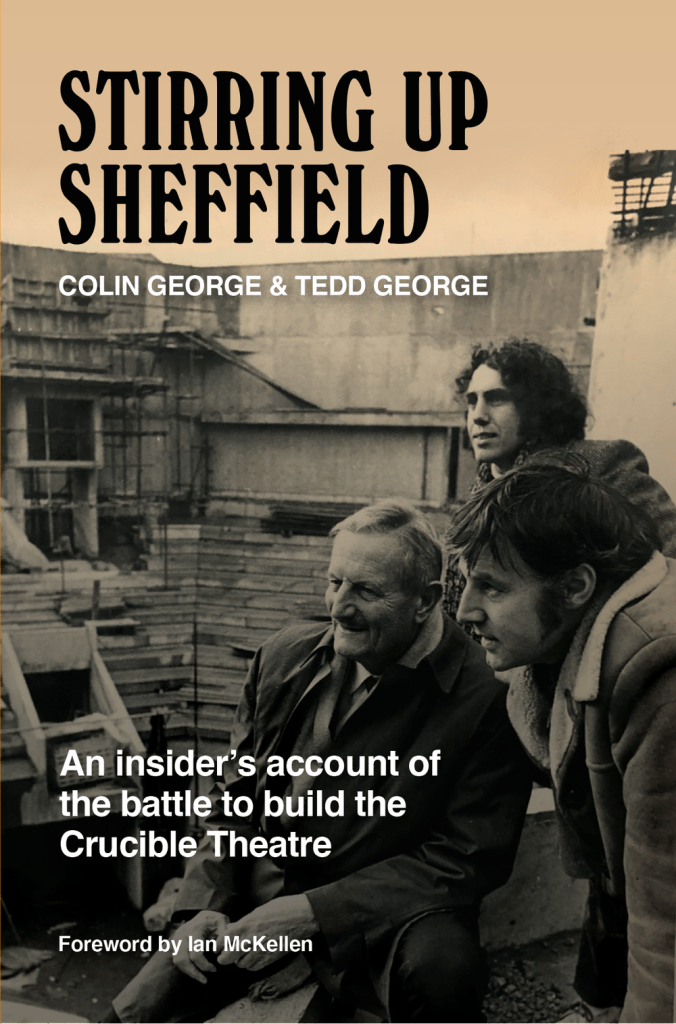
Here’s a book that will become a collectors item, and a must for those who appreciate Sheffield’s recent history. ‘Stirring Up Sheffield,’ a substantial book, is written by the Crucible Theatre’s first Artistic Director, Colin George, and his son, Tedd George, and will be published by Wordville Press on 9 November 2021.
This is the extraordinary story of a group of visionaries who came together to build the revolutionary thrust stage theatre. The radical design they proposed for the auditorium—which redefined the actor/audience relationship—aroused fierce opposition from Sheffield’s conservative quarters and several of the era’s theatrical luminaries. But it also galvanised a new generation of Britain’s actors, directors, designers and playwrights who launched a passionate defence of the thrust stage and its theatrical potential.
Colin George was the founding Artistic Director of the Crucible Theatre. Born in Pembroke Dock, Wales, in 1929, Colin read English at University College, Oxford, and was a founding member of the Oxford and Cambridge Players. After acting in the repertory companies of Coventry and Birmingham, Colin joined the Nottingham Playhouse in 1958 as Assistant Director to Val May. In 1962, he was appointed as Assistant Director at the Sheffield Playhouse, becoming Artistic Director in 1965. Colin played a leading role in the creation of the Crucible Theatre, which opened in November 1971, and was the Crucible’s Artistic Director from 1971 to 1974.
“My father was Artistic Director of the Playhouse and the previous year Sheffield City Council had agreed that the Playhouse should have a new theatre. Discussions on its design were already advanced, but my father was unhappy with the proposed stage and wanted to break free from the ‘picture box’ proscenium arch and bring the actors closer to the audience.” – Tedd George. Photograph: Wordville Press.
During his tenure Colin also established Sheffield Theatre Vanguard. This innovative scheme took theatre out of the Crucible to engage with the wider Sheffield community. Sheffield Theatres continues to build on his legacy with Sheffield People’s Theatre, a cross-generational community company which trains and nurtures the aspirations and skills of local people through special one-off projects and collaborations.
He later worked as Artistic Director of the Adelaide State Theatre Company (1976-1980), as Artistic Director of the Anglo-Chinese Chung Ying Theatre Company (1983-1985) and as Head of Drama at the Hong Kong Academy for Performing Arts (1985-1992). Colin joined the Royal Shakespeare Company as an actor (1994-96 & 1997-99).
The Crucible Theatre is today one of Britain’s major touring venues and a Producing House in its own right, and is also famous for being the home of the World Snooker Championship, screened on TVs all over the world every year. Image: Sheffield Theatres.
In 2011 Colin was invited by the Crucible’s Artistic Director, Daniel Evans, to join the Company for the 40th anniversary production of Othello. This was to be his last theatrical performance and, fittingly, it took place on the thrust stage he had created. Following Othello, Colin produced the first draft of this book, before his death in October 2016.
The introduction is by Sir Ian McKellen:
“Adventures need heroes and here its principal one is Colin George, the first artistic director of The Crucible Theatre, who in this memoir recalls in fascinating detail how, aided by others locally and internationally, a dream came true. Here, too, there are troublesome villains, who failed to share our hero’s imagination and determination.”
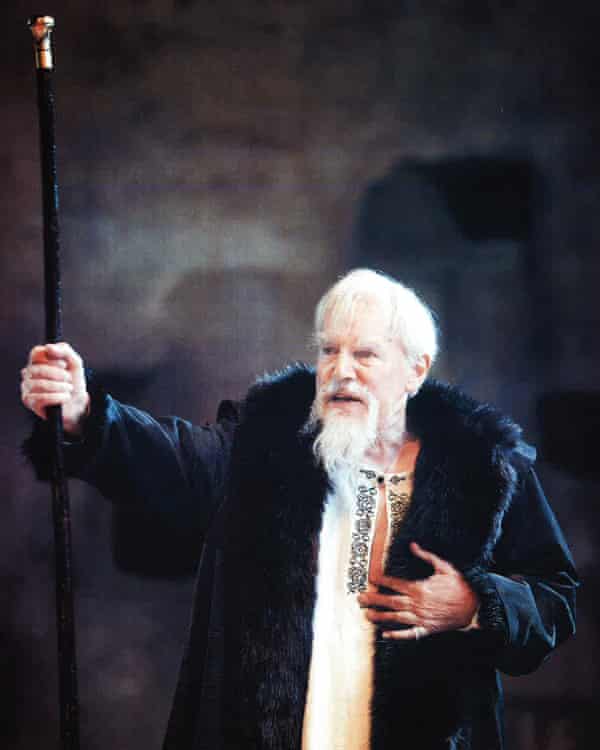
In 2011, in the theatre’s 40th anniversary production of Othello with Dominic West and Clarke Peters, Daniel Evans invited George back to play Desdemona’s aged father. It was George’s last role, in a theatre he loved and which was now garlanded with awards. And it was a full house. Photograph: The Guardian.
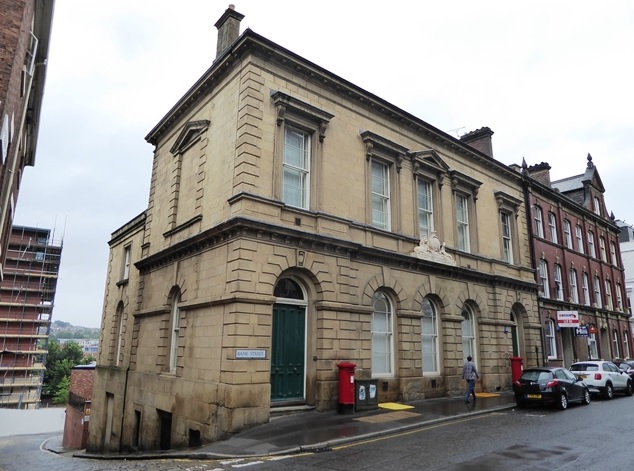
Old County Court, Bank Street, Sheffield. Many people have now forgotten what it was originally used for.Photograph: Crosthwaite Commercial.
To Bank Street, and a forgotten Grade II listed building, that was almost lost before it had even been completed.
This is the Old County Court, built in 1854, to replace court sessions that had previously been held at the Old Town Hall on Castle Street.
It was designed by Charles Reeves (1815-1866), an architect and surveyor to the Metropolitan Police from 1843, and from 1847 architect to the County Courts in England and Wales, designing 64 new courts across the country.
County Courts, as now, dealt with civil cases, including those about personal debt. They were not there to decide whether someone was ‘innocent’ or ‘guilty, did not issue fines, and neither did it imprison anyone in debt.
Work started on the new County Court in early 1854 and was due to be completed by October. However, one night in September, just as it was nearing completion, a serious fire broke out.
A young man called Henry Bradshaw noticed smoke coming out of one of the windows and climbed over the builders’ hoardings to investigate.
In one of the back offices, he found wood shavings on fire in several places. He tried to stamp the fires out but scorched his feet. The fire spread to stacks of wooden floorboards and Bradshaw was forced to raise the alarm at the offices of the Sheffield and North of England Insurance Companies.
The fire engines arrived within five minutes, but until a supply of water could be obtained from the main, the small engines were worked with water brought in buckets from adjoining houses.
The fire quickly spread, and the back suite of rooms became one mass of blaze.
Floorboards on the upper rooms had not been laid and this hampered efforts to fight the fire, with several firemen injured by falling between joists. The heat became so intense that roof lead melted, and with no floor intervening, it fell onto firemen below who were severely burned.
However, the blaze was prevented from reaching the front of the building, but the whole of the woodwork of the back rooms and the roof of that portion were destroyed.
It was suspected that a group of boys had broken into the building, setting fire to wood shavings by lighting matches.
The damage amounted to between £300 and £400 (about £35K-£45K today)- the cost falling on the contractor, Miles Barber, who was not insured. (Barber was later responsible for the widening of Lady’s Bridge in 1866).
The opening was delayed until 1855 and the property rebuilt.
The last County Court sitting at the Old Town Hall was on 12 July 1855 and the first session in the new building, presided by Judge Walker, was on the 18 July.
The building was in Italian style, with two entrances in Bank Street – one a private entrance for the judge, etc, and the other entrance for the public.
On the ground floor were offices for the high bailiff and clerks’ rooms for the entering of plaints and the payment of money, and a strong room for storing books and records, fitted with slate shelves, and iron fireproof doors with Chubb patent locks.
On the basement floor were water closets, etc, and four rooms for the office keeper.
The court room was on the second storey (revolutionary for its time) – 43ft long by 27 wide, and 22 feet high. On the same floor was a private room for the Judge, barristers and attorneys’ consultation room, jury room, and a large entrance hall or waiting room for parties attending the court.
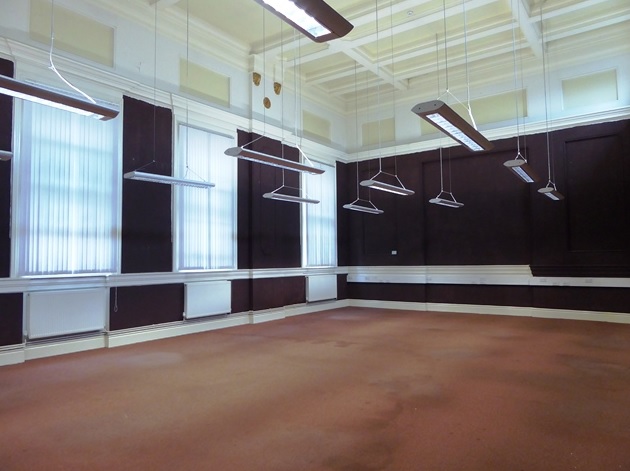
The former main courtroom. Photograph: Crosthwaite Commercial.
While Sheffielders considered this a ‘fine’ building, it seems not to have been popular with those who worked there.
In 1901, Judge Waddy K.C. criticised the acoustic properties of the County Court. “The building was erected under exceptional circumstances, which I do not want to go into because the people are dead; but the result of it is, that a very considerable amount of money was spent, and I think not wisely.”
When it was built, Bank Street had been a quiet street, but by now had become a regular thoroughfare, so full of noise and disturbance, that it was impossible sometimes for them to get on with their work.
The stench from the main court by the middle of the day was said to be “perfectly shocking,” while the sanitary arrangements were “not fit to be used by considerable bodies of people.”
Poor acoustics were also mentioned in 1923 when Judge Lias and officials complained of difficulty in hearing evidence and suggested that the front of the Judge’s desk should be lowered.
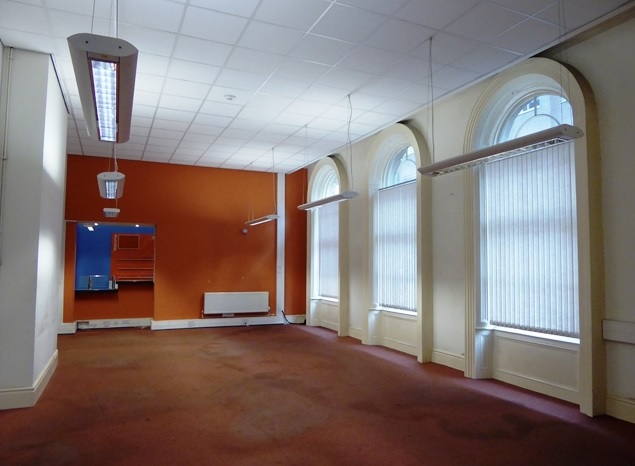
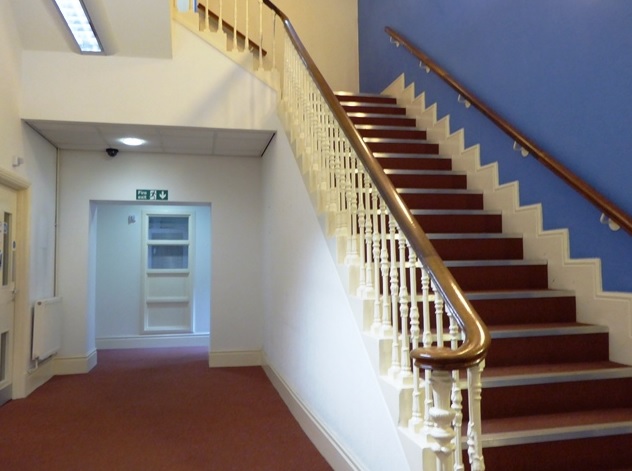
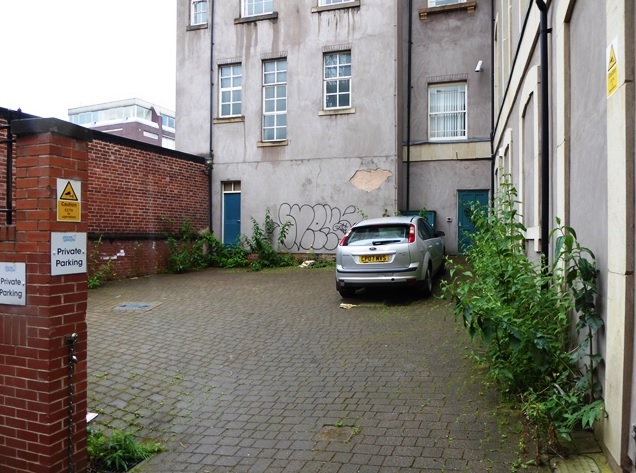
Alterations to the court were eventually completed, including an annexe at the rear, and it functioned as the County Court until 1996 when it moved to new Law Courts at West Bar. The building was sold, and its interiors converted into offices, the configuration altered, but the stone cantilevered staircase survived.
When the building was put up for sale it had been used as office space.Photographs: Crosthwaite Commercial.
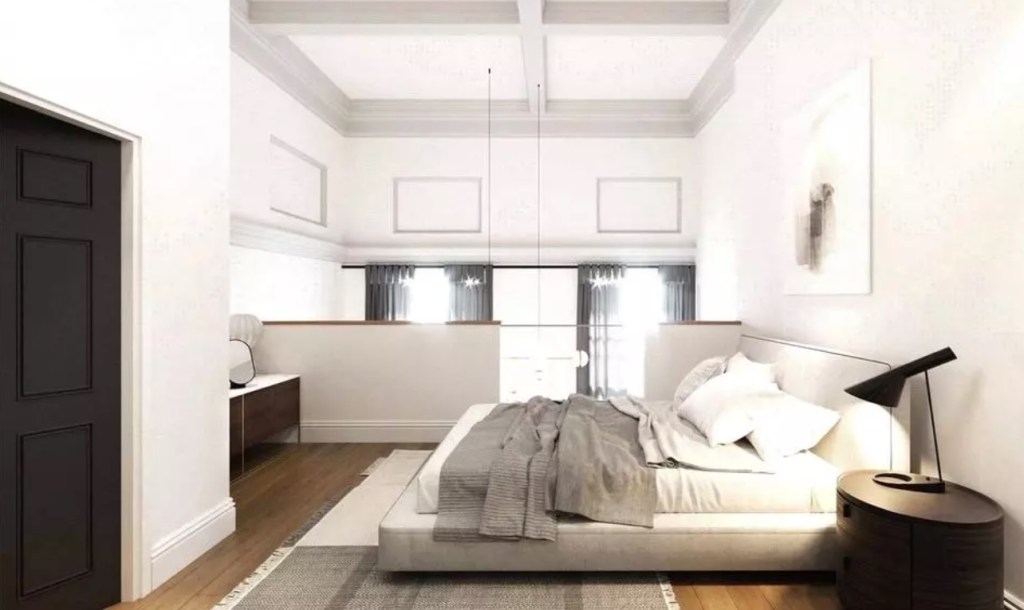
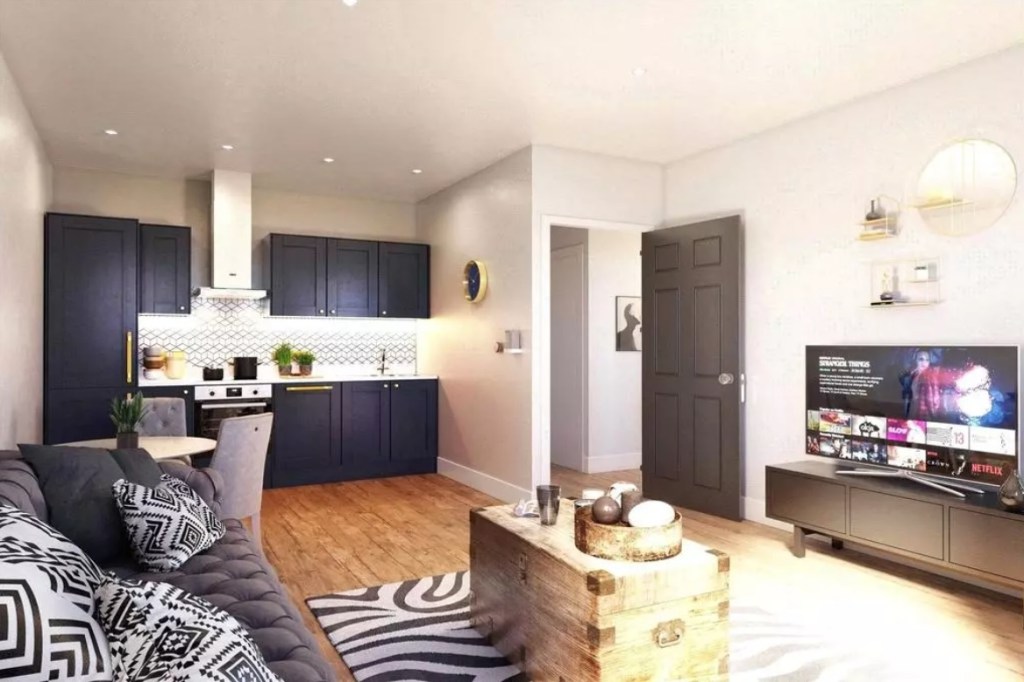
It was acquired by One Heritage Group in January 2021 for conversion into 22 one- and two-bedroom single storey and duplex apartments that will be split over four floors. The developer says these are carefully designed to showcase the building’s inherent Grade II listed features such as high ceilings, deep skirtings, and original architraves. Planning permission was granted in August 2021.
Proposed restorations and new apartments at the Old County Court.Photographs: One Heritage Group.
“When built, The Meridian will become a welcome focal point for residents and visitors to Sheffield, realising the council’s ambitions for the city.” – Ketan Patel, senior development manager at Godwin Developments. Photograph: Godwin Developments.
Sheffield City Council has granted planning permission for a 23-storey apartment block on the edge of the city centre, and it will change the appearance of what was once known as Granville Square.
The 336-apartment build-to-rent development – known as The Meridian – will be built on the site of the British Rail Club Sports Ground, on a triangular parcel of land bound by Farm Road and Queens Road, next to Grosvenor Casino.
It will include one, two and three-bedroom modern open-plan apartments, 94 of which will have private balconies. There will also be a concierge reception, co-working spaces, residents’ only lounge and gym, a landscaped roof garden and plaza, 358 cycle storage spaces and 29 car parking spaces.
An 1824 map shows the site within open countryside, with the boundaries of Queens Road and Farm Road already established routes at this time. Small settlements began to grow to the west, with the east defined by a large house known as ‘The Farm,’ giving origin to the road name (demolished in 1967, and now the site of Sheffield College).
By 1921 the site was surrounded by urban buildings to the west and the introduction of the railway defined the boundary to the east.
The site is an open space derived from its historic use as a bowling green and historic maps indicate that no buildings have existed within the site boundary.
Farm Road seen in the 1940s/50s. The site of The Meridian is to the right on land that has never been built upon. It was most recently used as a bowling green. McDonalds now occupies the site to the left. Photograph: Picture Sheffield.
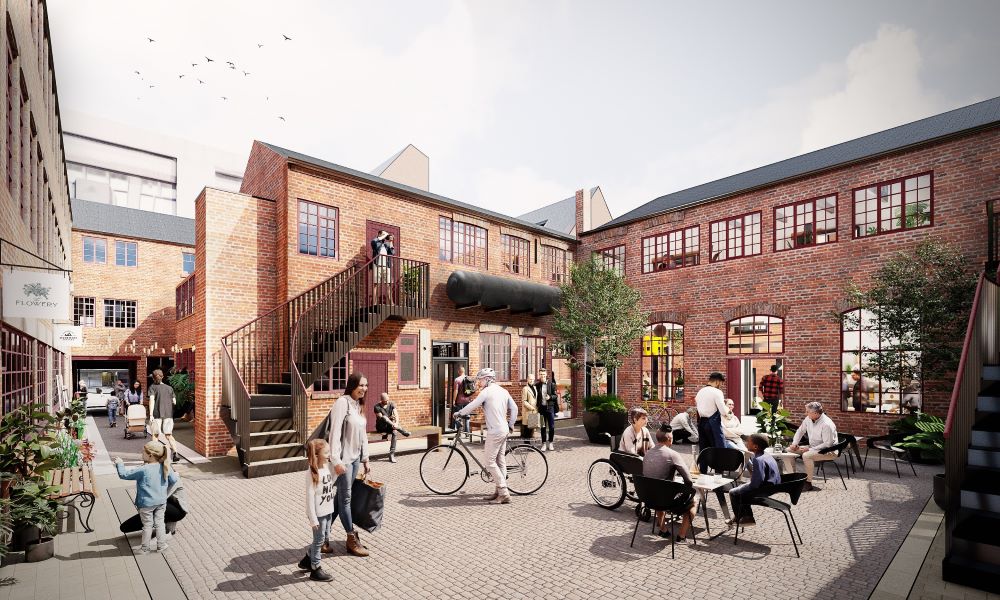
Planning permission has been submitted for Leah’s Yard on Cambridge Street to be transformed into a new creative hub for independent businesses, with a slew of independent stores set to surround a public courtyard.
The venue will be operated by Tom Wolfenden, CEO of SSPCo, and James O’Hara of the Rockingham Group, who were appointed to the project by Sheffield City Council.
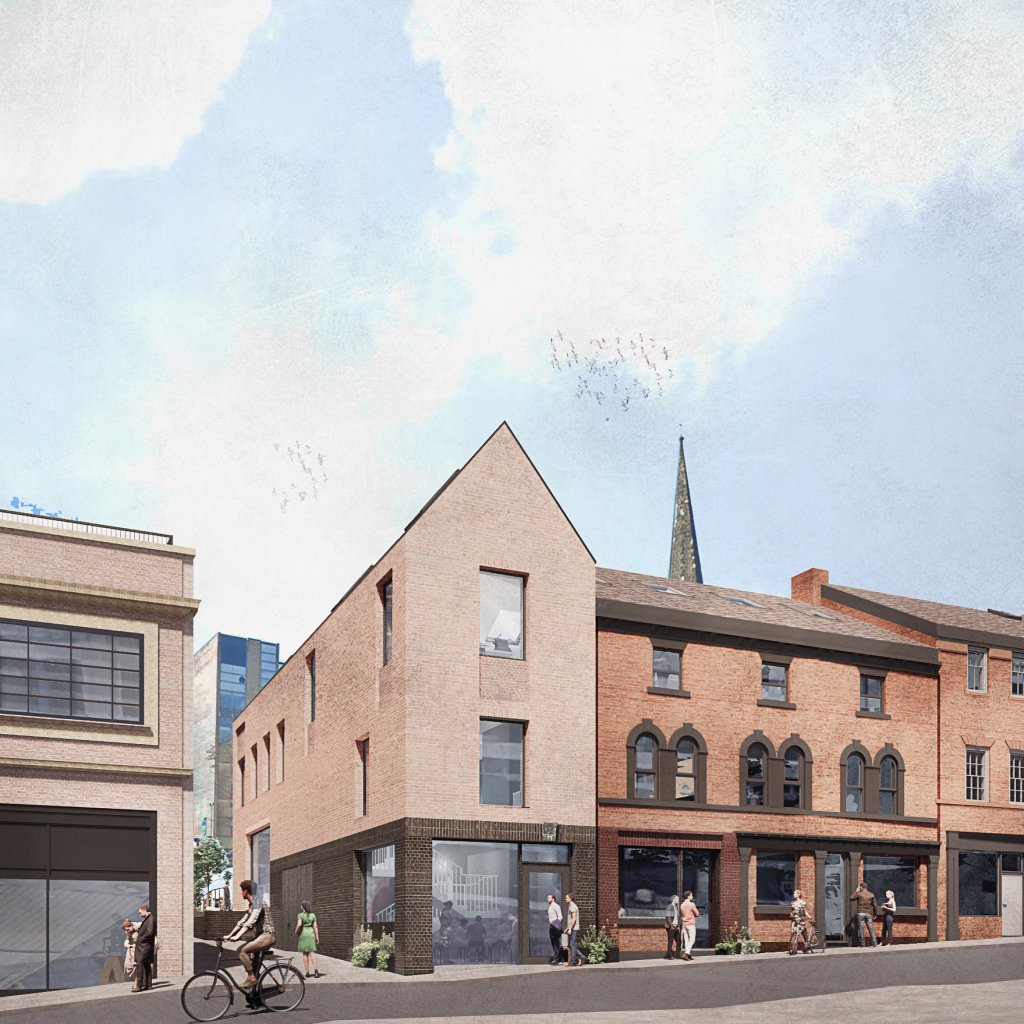
If approved, Leah’s Yard will be refurbished true to its current form, with a courtyard surrounded by small boutique shops, with the first and second floors hosting approximately 20 independent working studios.
The oldest buildings on the Leah’s Yard site are the two former houses fronting Cambridge Street that date from the early nineteenth century. The industrial legacy of Leah’s Yard began with George Linley in 1825 as a small shear and tool manufacturing complex during the early nineteenth century. The houses fronting the street were later converted to offices and shops, and the complex as a whole is characterised by piecemeal additions and alterations dating from the nineteenth and twentieth century.
Cambridge Street was known for its horn works, and James Morton, a horn dealer, became the major sole occupier about 1842.
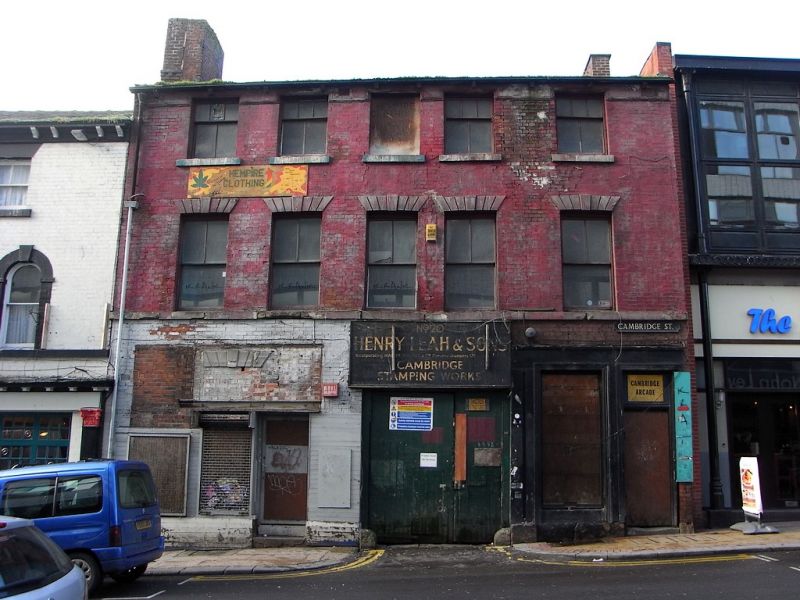
Leah’s Yard was occupied from about 1891-92 by Henry Leah and Sons, a manufacturer of die stamps for silverware. By 1911 there were 23 occupants (little mesters) on site producing slightly different goods, and undertaking different processes yet all contributing to the cutlery trade.
The site was predominantly used for production associated with the metal trades well into the mid to late twentieth century. The Leah family remained in part of the complex until the 1970s when they merged with Spear and Jackson; they sold the site in the 1990s. The Cambridge Street frontage of the complex had been used as shops in its last few years of occupation, and takes into account the former Sportsman public house and Chubby’s recently closed takeaway.
As part of Heart of the City II, Leah’s Yard will sit alongside the upcoming Cambridge Street Collective and Bethel Chapel developments – both currently under construction – that will feature a contemporary food hall, cookery school, fine dining experience and live entertainment spaces.
Who says that the Heart of the City II development is just about new buildings?
Leah’s Yard is currently undergoing a £6m renovation to breathe life back into the old buildings. Set to open in early 2023, Leah’s Yard will be a destination for independent retail, and showcasing traders, makers and creators from Sheffield.
Throughout the 19th century the yard was used by a horn dealer (who supplied the cutlery handle making trade), Sheffield platers, knife manufacturers and silver stampers. In the 1880s the building was known as the Cambridge Street Horn Works.
In 1892 Henry Leah took over the building as a producer of die stamps for silverware, giving the building the name that it is known by today. Sharing the building at that time was Walter Walker & Co Ltd, who were piercers and stampers; the building was alternatively known as the Cambridge Stamping Works.
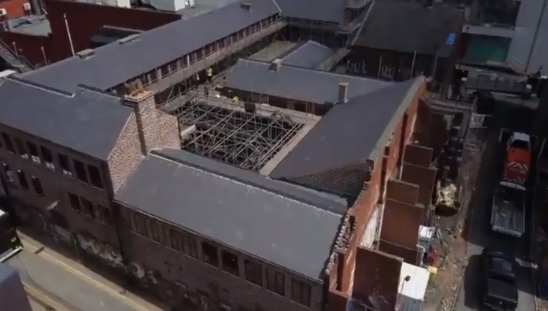
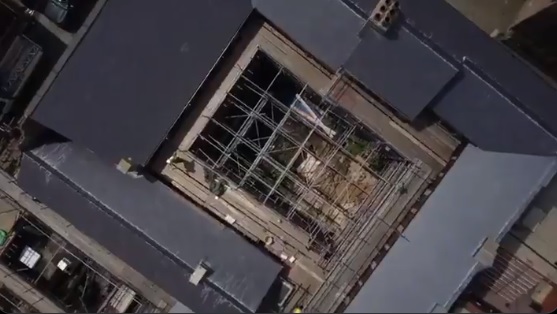
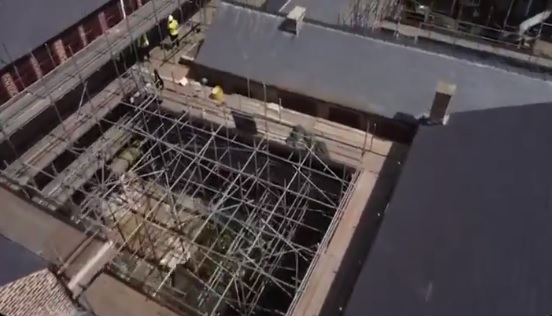
Behind the scaffolding, work is quietly progressing to restore what had become one of the city centre’s most endangered buildings.
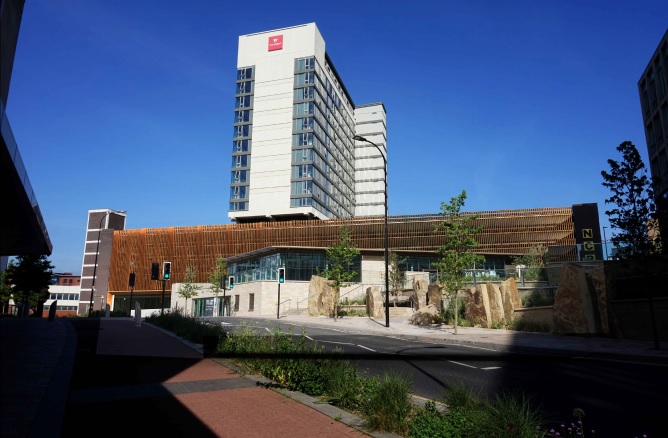
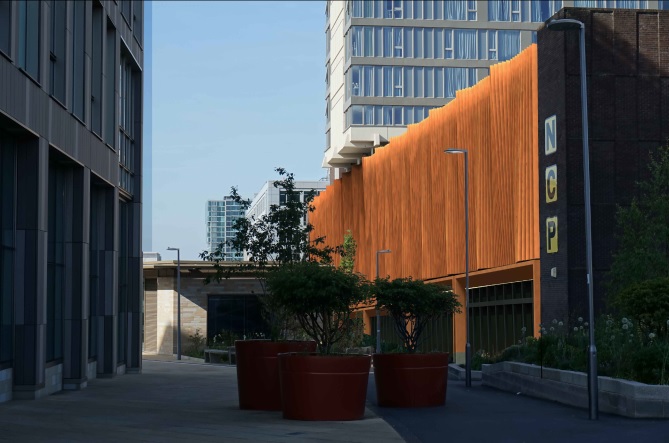
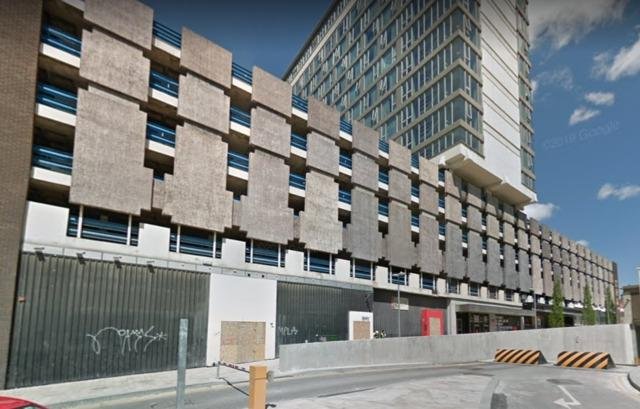
With work progressing on the Heart of the City II development, it’s time to spruce up some our existing buildings. One already completed is the Telephone House NCP car park in Charter Row, achieved by recladding the facade in Corten coloured wave feature cladding and “goal post” feature frames to the ground floor retail units. These improvements addressed issues with the poor appearance of the existing concrete building (see photo) within the context of the new Charter Square development and assist in the future letting of ground floor retail units.
The former British Telecom tower, which is located above the carpark, was recently refurbished by Vita Student in 2016 to provide upmarket student accommodation.
A planning application has now been submitted to erect a new shop frontage to four existing retail units consisting of new aluminium curtain wall façade within existing feature goal post surrounds.









 sheffielder.net