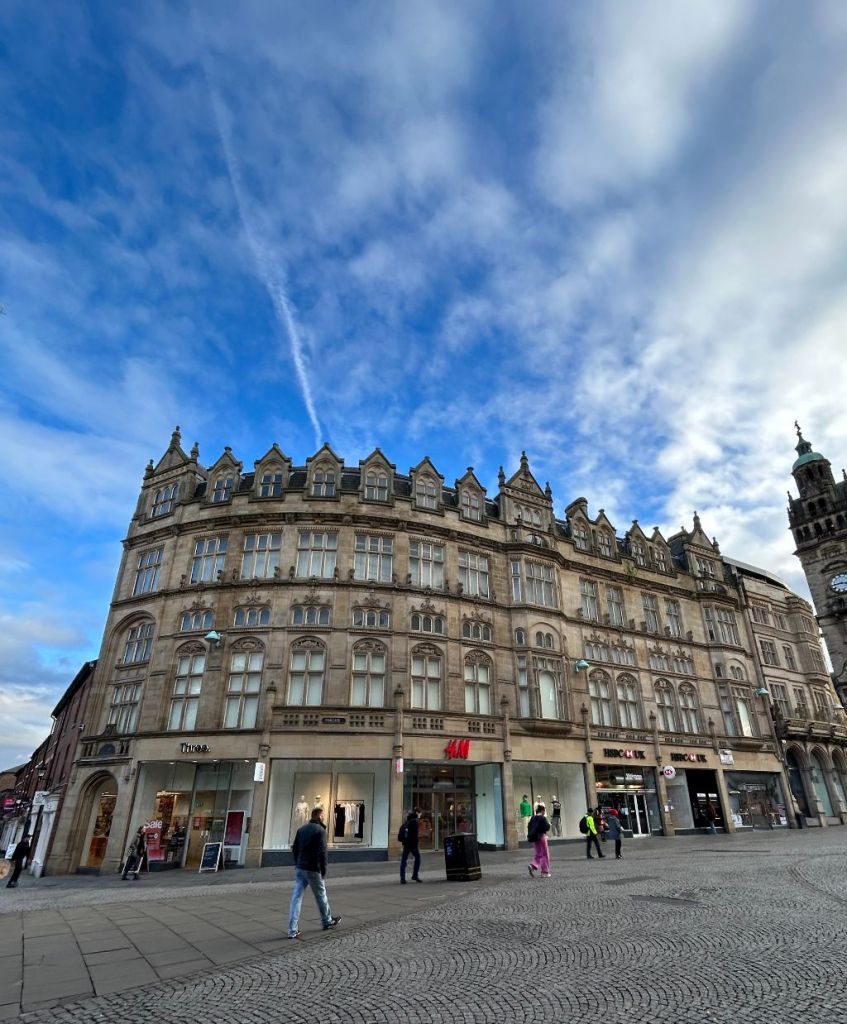
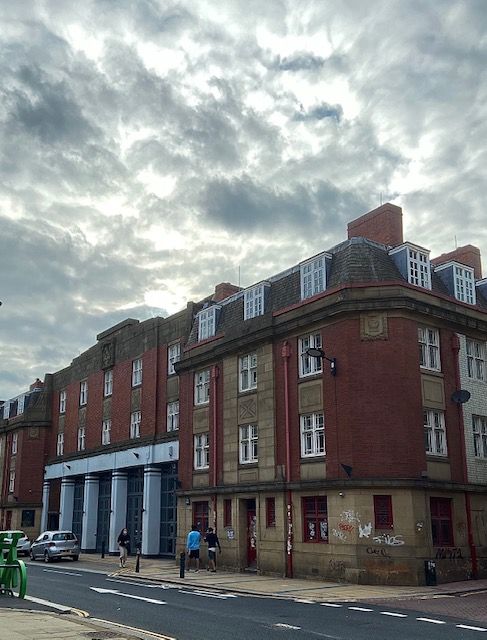
Carmel House. Fargate, Sheffield. Built for the Young Men’s Christian Association in 1891. Only the facade remains from Herbert Watson Lockwood’s original design. Image: DJP / 2022
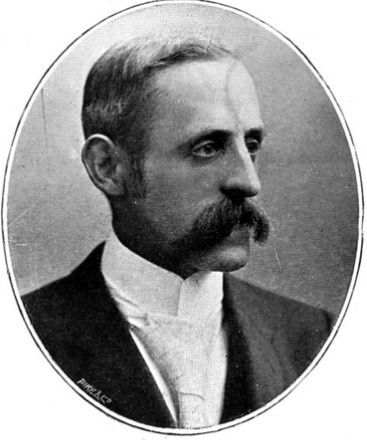
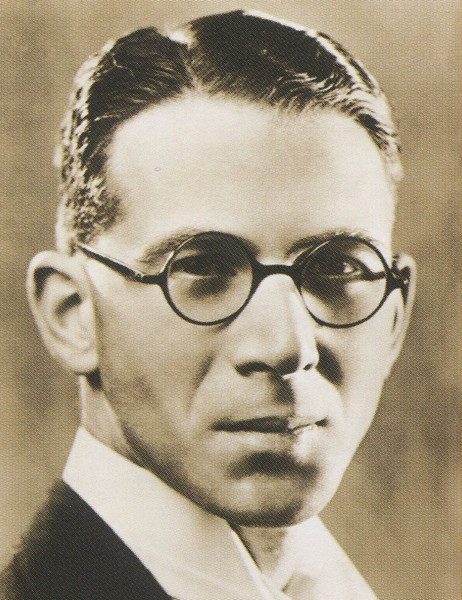
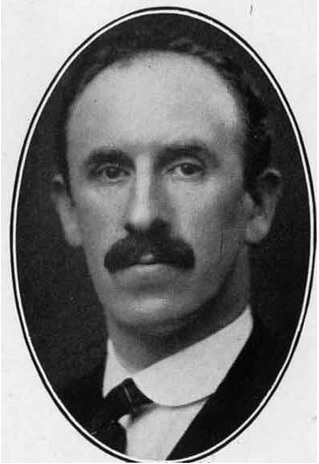
Sheffield had fine architects, and the name of Herbert Watson Lockwood should be amongst them. He was responsible for the Young Men’s Christian Association Buildings on Fargate (known to us as Carmel House), the Pupil Teachers’ Central Schools on Holly Street, Ruskin House Training Home for Girls at Walkley, as well as churches and school buildings.
Born at Derby in 1853, he was the son of Jonathan Lockwood, a staunch methodist, and educated at Sheffield Royal Grammar School before training as an architect and surveyor. He practised in Sheffield for twenty five years, first on York Street, then Church Street, and finally at Palatine Chambers on Pinstone Street. His reputation amongst his fellows was such that he became a fellow of the Sheffield Society of Architects.
In 1891, Lockwood submitted plans for the competition to build the new Town Hall but failed to make the shortlist. According to The Builder, his plans were superior to Edward William Mountford’s winning design. A couple of years later he was amongst a group from Sheffield which visited the Chicago World’s Fair.
Lockwood’s biography appeared in Sidney Oldall Addy’s Sheffield at the Opening of the Twentieth Century, published in 1901, and, aged forty-eight, he was at the top of his game.
In 1903, Lockwood became a director of Ellis and Webster Ltd, general merchants, with premises on St Paul’s Parade. The company had started in 1901 as a partnership between two jewellers, Evenio Ellis and Robert F. Webster, but Ellis left when it became a limited liability, leaving Lockwood to become its chairman.
The fortunes of Ellis and Webster make painful reading, and it was soon apparent that the company was struggling. Lockwood had agreed his fees at £90 per annum but received nothing. With property worth £4,000, he advanced a similar sum to the business and guaranteed, along with other directors, trade accounts and bank overdrafts amounting to £5,156.
In 1905, Lockwood raised securities to partially pay off his bank overdraft but a year later realised that he was insolvent. It didn’t stop him providing guarantees on debts contracted by Ellis and Webster amounting to a further £200.
Inexplicably, by the time he was declared bankrupt in 1908, it was apparent that Lockwood hadn’t paid any attention to his architectural practice for three years. His liabilities were £5,579, and assets of £96, with his own debts amounting to £4,598 (that’s about £693,000 today). The judge at his hearing said that it was, “The supreme folly of a gentleman in a good position as an architect financing a business of which he knew nothing and being led into bankruptcy.”
Lockwood lost everything, but what happened afterwards is subject to speculation. The official receiver had been negotiating with Lockwood’s relatives in America and his creditors settled by the end of the year.
It was almost certain that salvation came from his brother, Arthur James Lockwood, who, aged twenty-one, had travelled to Buffalo, New York, as an apprentice at Arthur Balfour, and had risen to become chairman of several steel concerns.
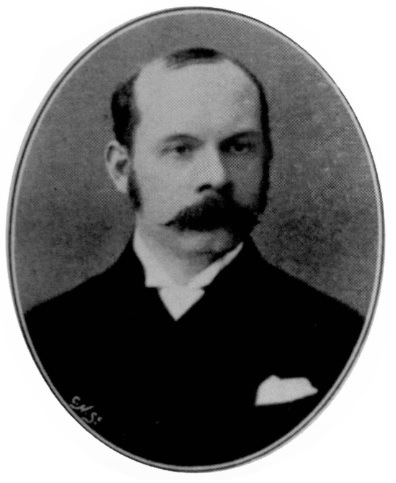
Herbert Watson Lockwood
As for Herbert Watson Lockwood himself, he disappeared from public view. The 1911 census records him as an architect and surveyor, working from the old family home at 17 Winter Street.
But his reputation was ruined, and four years later, we find that Lockwood had moved to the United States to be with his brother, living in Essex County, New Jersey. Alas, the date of his death remains a mystery, but I’m sure that somebody will be able to provide this missing detail.
Remember Herbert Watson Lockwood the next time you walk up Fargate, and see his surviving legacy to the city, from a man destined by circumstances not to succeed.
In a recent post I mentioned “The Twelve Capital Burgesses and Commonalty of the Town and Parish of Sheffield in the County of York”.
This historic, if not convoluted title, is a charity now known as the Church Burgesses Trust, serving Sheffield for over 450 years, and religion played a big part in it coming to being.
If we go back to 1297, Thomas De Furnival, as Lord of the Manor of Sheffield, granted lands to the town’s freeholders, and for an annual rent, the lands provided funds to support a parish church and its priests, maintain local roads and bridges and to support individuals and worthy causes. The freeholders who administered the land and donation became known as the Town Trustees.
After Henry VIII’s death in 1547, his son, Edward VI, wanted England to remain a Protestant country and set about removing all traces of the Catholic faith and improve Royal finances. He seized land and property across the country, including that belonging to Sheffield, to which the town protested but to no avail.
When his half-sister, Queen Mary Tudor succeeded him, a petition was presented by William Taylor and Robert Swyft asking for the return of the lands. This she granted on 8 June 1554 in a royal charter which gave the land and property in trust to a new corporate body: “The Twelve Capital Burgesses and Commonalty of the Town and Parish of Sheffield in the County of York”.
Rental income from the lands was used to pay the stipends of three assistant priests at the parish church together with the costs of worship. Whatever was left over was to be used towards the repair of the church; repair of highways and bridges in Sheffield; and the relief of the poor and needy of the parish. Down the years the charity carefully stewarded the resources entrusted to it so that it now has annual disposable income of more than £1 million.
In addition to supporting Sheffield Cathedral (the former parish church), it puts money towards the building of churches and payments towards Anglican clergy stipends throughout Sheffield.
All Burgesses meet four times a year to consider the work and the business of the Trust. In between times, sub-committees meet to review applications for grants and to oversee the assets of the Trust, which comprise both property in Sheffield and stocks and shares. The Trust is led by the Capital Burgess, who is one of the twelve Burgesses appointed to serve for one year in the role of Chairman.
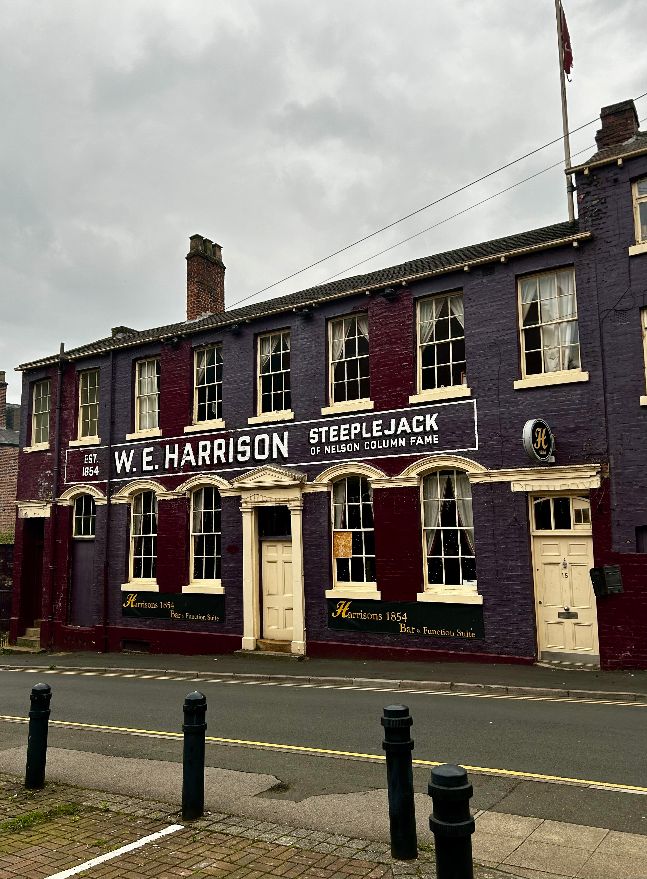
W.E. Harrison, Steeplejack, was situated on Regent Terrace, off Glossop Road, Sheffield. The Grade II listed building was recently home to a bar, appropriately called Harrison’s Bar. Image: DJP / 2024
What is the story behind the building on Regent Terrace, off Glossop Road, which tells us that it once belonged to W.E. Harrison, steeplejack, of Nelson Column fame?
I daresay that thousands of Sheffield University students have passed it and wondered about its connection to Nelson’s Column in London’s Trafalgar Square.
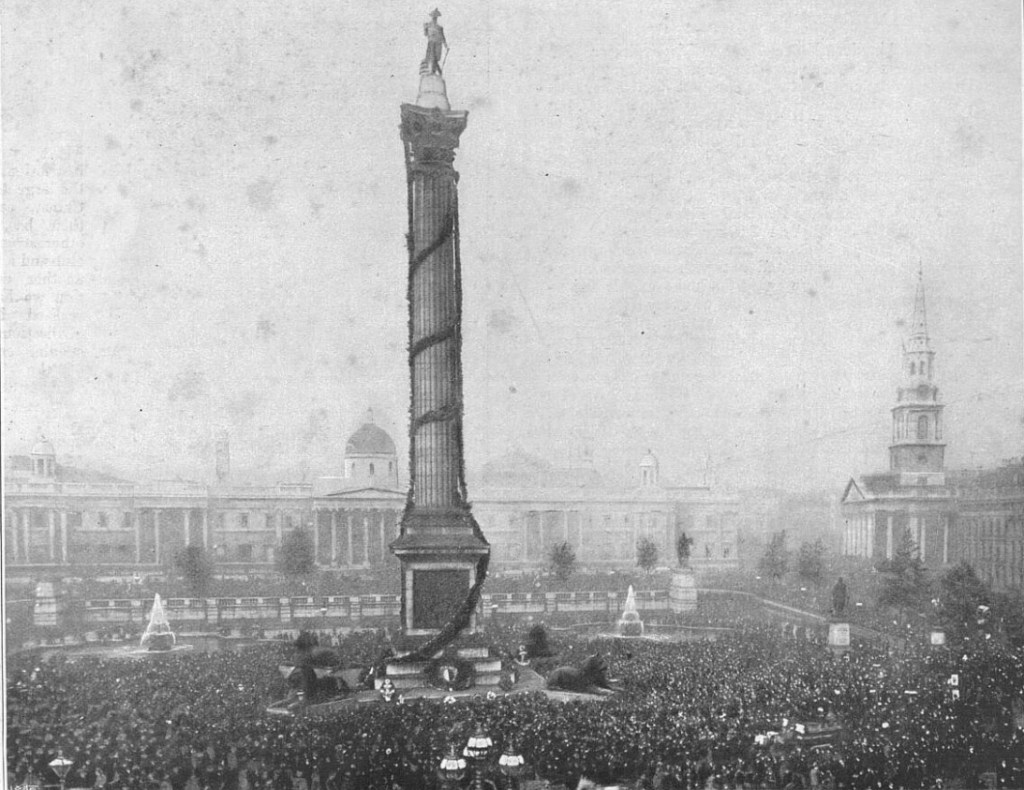
Willam Edward Harrison (1858 – 1911), known as Teddy, was well-known across the country as a steeplejack, and was in the public eye when in 1896 he climbed the Nelson Column – the first time any man had done so since it had been erected. The work was in connection with the Trafalgar Day celebrations, and Harrison had been employed to report on the condition of the monument, determine what repairs were necessary, and decorate it with floral arrangements.
Nelson’s Column had been built to commemorate Vice-Admiral Horatio Nelson’s decisive victory at the Battle of Trafalgar over the combined French and Spanish navies, during which he was killed by a French sniper. It was constructed between 1840 and 1843 in Dartmoor granite, to a design by William Railton.
Harrison decorated the monument with one long wreath of laurel, measuring one hundred yards, which encircled the column from top to bottom, and sloped gracefully on the head of one of the lions at the base.
In addition, there were four wreaths, 12 ft in diameter, one for each side of the base. One of the wreaths was worked in with a Maltese cross, which bore the colours and arms of the island.
The decorations had been supplied by William Whiteley, ‘Universal Provider,’ of Westbourne Grove, London, the eponymous department store, which had contemplated scaffolding to install the arrangements, but Harrison dispelled their idea, and assured them that his method could be used with a saving of time and a minimum of risk.
The work of W.E. Harrison, seen here for the Trafalgar Day celebrations in 1896. Image: The British Newspaper Archive
Huge crowds gathered to watch Harrison climb, much to his amusement.
“It was one of my easier jobs,” he’d said. “Of course, a different method has had to be adopted from that which is ordinarily taken; but with the exception of placing a ladder on each side of the column, and not driving in spikes, the work is similar to that of extending an ordinary factory chimney. The latter is far more dangerous, for the chimney oscillates sometimes to an alarming extent, but in the present case, with the exception of the wet, which made it imperative to use the utmost care to prevent slipping, the work was very easy.
“We worked it on the double ladder system. Starting from the bottom of the shaft, we hauled ladder after ladder up by means of a guy rope. Each ladder measured 18ft in length, and they were allowed to overlap each other to the extent of three or four rungs, so that they could be fastened to one another. The two sets of ladders were tightly fastened together round the shaft by a stout rope.”
While he was up there, Harrison was able to decode the legend of Nelson’s hat, which was rumoured to be hollow, and contain silver and pewter vessels, but he found this wasn’t the case.
Of course, Harrison was a familiar sight in Sheffield, and another feat which demanded his resource and skill was when he decorated the spire of the Parish Church (now Sheffield Cathedral) on the visit of Prince Albert Victor (Duke of Clarence) and later in connection with Queen Victoria’s jubilee in 1887.
His father, Samuel Harrison, had also been a steeplejack, and was the first to use a system of climbing ladders instead of the antiquated system of ropes that had formerly been used. By the time W.E. Harrison was thirteen, he had already ascended some of Sheffield’s biggest chimneys and at sixteen was a fully-fledged steeplejack.
Samuel Harrison retired in 1884, handing over his thirty year old business to his son who died in 1911. His death was thought to be related to an accident he’d had several years earlier when he suffered serious internal injuries and was unable to hold himself erect afterwards. Years later, when he was involved in a motor smash and thrown out of the car, the shock cured him, and he was able to walk upright again.
William Edward Harrison, Steeplejack. Image: The British Newspaper Archive
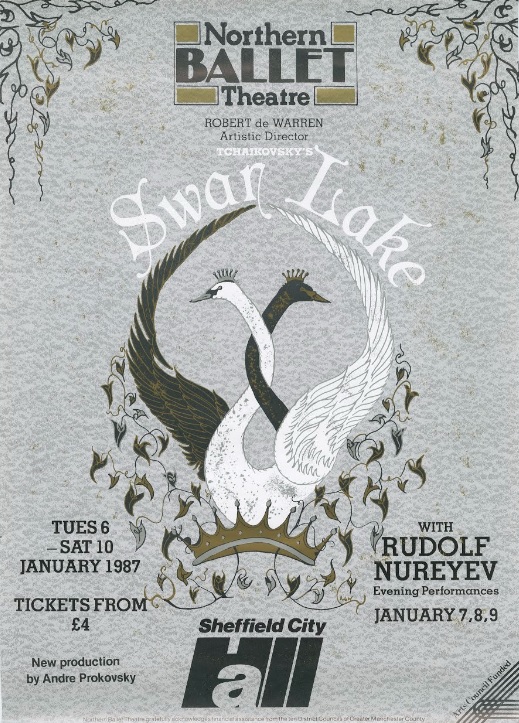
I’ve been emailed a poster for a Northern Ballet Theatre production of Swan Lake, starring Rudolf Nureyev, at the City Hall in January 1987. It came with a note saying that there used to be a photograph of Nureyev standing on the City Hall steps but had since disappeared.
It reminded me of a conversation I once had with someone who claimed to have drunk with Rudolf Nureyev in a Sheffield pub. I never believed the story, but there again, I was once having a wee in the toilet of a Sheffield pub and Johnny Depp came in and had a wee next to me, so anything is possible.
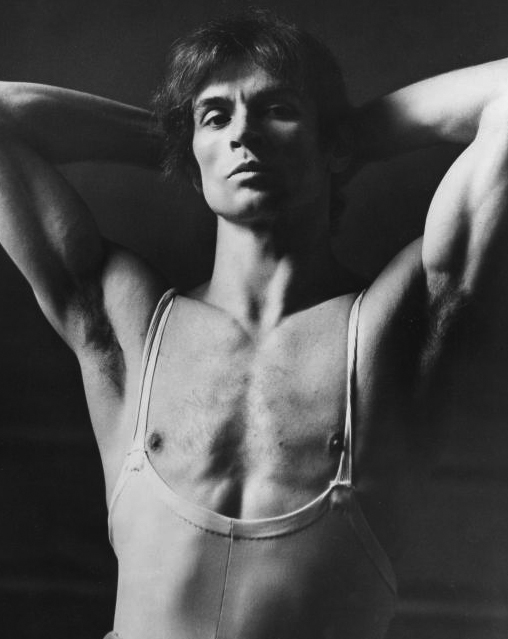
Soviet-born Nureyev (1938-1993) was one of ballet’s most flamboyant and charismatic performers who defected to the west while in Paris with the Kirov Ballet in 1961. He went on to perform with several world leading ballet companies, including the Royal Ballet, and was the preferred partner of Dame Margot Fonteyne. They called him an animal and he often behaved like one too.
According to Sarah Churchwell, writing for The Times in 2008: –
“There is the incident in which he defecated on the steps of Franco Zeffirelli’s villa, after he finished smashing up the interior. He broke the jaw of a teacher at the Paris Opera Ballet, who sued and was awarded 2,500 francs in compensation; the only remorse he expressed was for the missed opportunity: ‘If I’d known it would be that little, I’d have hit him a second time’. He let drop a ballerina who had gained weight; he dragged another by her hair across the floor. If he didn’t like a costume, he would shred it, or defenestrate it, or just refuse to go onstage, even if he kept the audience waiting.”
He also hated photographs being taken, so the one outside Sheffield City Hall might be a trick of the imagination.
Nureyev (aged 48) had become Artist Laureate for Northern Ballet in 1986 and joined Andre Prokovsky’s production to dance the leading role of Prince Siegfried opposite Elisabeth Maurin, one of the leading ballerinas in the Paris Opera Ballet, as Odette/Odile. While other principal dancers shared the roles in its touring run, Nureyev and Maurin, stepped onto the stage at Manchester’s Palace Theatre and Sheffield City Hall (and perhaps a handful of performances elsewhere).
Strangely, I cannot find any reviews of his Sheffield performances, and presuming that nobody upset him (and didn’t take a photo on the City Hall steps), that they went ahead. I’m hoping that somebody might be able to shed light on the experience.
Alas, I had to look to Manchester to find out how successful Nureyev had been.
“His performances were a mixed blessing for the company – he boosted the box office but left many ballet lovers wishing he would retire gracefully rather than continue to amble around as a pale shadow of the dancer he once was. It must be asked whether Nureyev is now an NBT liability rather than an asset.”
A long time ago, I read a book containing John Gielgud’s letters and I seemed to remember that he called the people of Sheffield ‘peasants’. After that, I didn’t fancy watching his films anymore. Gielgud (1904-2000) was born in South Kensington, and as an actor and theatre director, he looked down on us poor northerners.
I recently came across a copy of the book in a second-hand bookshop and couldn’t resist flicking through to find that discriminatory paragraph again. It turns out that I did him a disservice, because he didn’t call us peasants after all, but certainly didn’t like Sheffield.
“This is an appalling place and just as I remembered it before – awful slums and poverty everywhere and the audiences sparse and unresponsive.”
He wrote these brusque words in a letter to his mother in October 1927, and even though he was probably right, I’ve never liked John Gielgud since.
The same feeling came across me when I read ‘Skip All That’ – the memoirs of Robert Robinson that was published in 1996.
Robinson (1927-2011) was an English radio and television presenter, game show host, journalist and author. He presented Ask the Family for many years on the BBC. I was surprised to learn that in his younger days he worked as a journalist on the Weekly Telegraph, a satellite of the Sheffield Telegraph.
But his memoirs show that he regarded his stint on the Telegraph as a low point in his career. At that time, the Sheffield Telegraph was owned by Kemsley Newspapers, which also had The Sunday Times, The Daily Sketch and The Sunday Graphic amongst its titles.
“The Editorial Director explained the Weekly Telegraph was about to be relaunched as a big-time glossy and advertised on the eye-pieces of buses. I was to add my champagne to the editor’s brandy. A combination of which turned out to be more or less Tizer.
“The woebegone mag was printed on thin blotting paper and sold for threepence to readers I imagined to be comprehensively deprived. Nothing in the Kemsley’s frowzy empire looked capable of anything but lining a cat litter, and shortly after I started forging the (readers’) letters no more was heard about advertising or glossiness. And it wasn’t even Fleet Street, it was only Gray’s Inn Road. Kemsley House was a heap of red brick in the wastes between Clerkenwell and King’s Cross, and had the dejected air of a building site where the money had run out.
“I wondered why they didn’t invite me to write a column for the leader page of the Sunday Times, and what I hacked out on two fingers filled the Weekly Telegraph to overflowing.
“We published in London, but I was allowed an occasional jaunt to Sheffield to see how they printed the thing. Behold, on one such trip I saw a man on the platform who actually held a copy of the magazine in his hand. I approached him: was he, I importantly enquired, a regular subscriber? Not really, he replied. And why was that, I asked, giving him to understand that on matters of policy, a word from me and the thing was done. ‘It’s a bit too instrooctional;.’ he said. I simply thought he’d caught a whiff of the intellectual seasoning I was adding to the mix. ‘Listen,’ I said, ‘we’re trying to get intelligent people like you to come up-market with us.’ ‘Then where are the pictures of scantily-clad women in bathing costumes?’ he asked. ‘And the crossword’s got too many big words.’ It wasn’t the length of the words, it was the necessity of having second sight. The crossword prize was a guinea, and the puzzle was rigged.
“Provincial papers are second division, but the Kemsley lot were second rate as well, the issue on sale any day in Sheffield, Manchester or Newcastle as stale in spirit as if it had been pulled from the musty files in the cuttings library.
“The pilotless hulk went down stern first, and clinging to a spar I was hauled aboard a ghost ship called the Sunday Graphic.”
Founded in 1855 as the Sheffield Daily Telegraph, it became known as the Sheffield Telegraph in 1938, and its sister, The Star, continues as a poor ancestor.
I must admit that Robinson was an excellent writer, and he did get his wish to write the Atticus column in The Sunday Times, as well as becoming one of the presenters on Radio Four’s Today programme. But when you read his work now, there is that niggling belief that he looked down on those of us who lived and worked outside London, even though he was born in Liverpool.
And so, as far as I am concerned, Robinson is shunted into the same cupboard as John Gielgud, and his book is on its way to a charity shop.
What would Robinson think about provincial newspapers now?
Henry Hallperformed regularly on BBC Radio during the British dance band era of the 1920s and 1930s
If there had been radio DJs in the 1920s and 1930s, then Henry Hall would have been the equivalent of Terry Wogan, or Ken Bruce. But there were no such things as DJs, and the adoration that existed belonged to bandleaders like Henry Hall, who brought music to the BBC’s infant airwaves.
Henry Hall (1898 – 1989) was born in Peckham, South London, and had no connections with Sheffield. He played from the 1920s to the 1950s, and in 1932 recorded the song Teddy Bear’s Picnic which gained enormous popularity and sold over a million copies.
Hall became bandleader of the BBC Dance Orchestra, and from 5.15 each weekday he gathered a huge following with his signature tune ‘It’s Just the Time for Dancing’ and usually ended with ‘Here’s to the Next Time’.
In 1937, he left the BBC Dance Orchestra to tour with his band, and this brings us nicely to Thursday 12 December 1940.
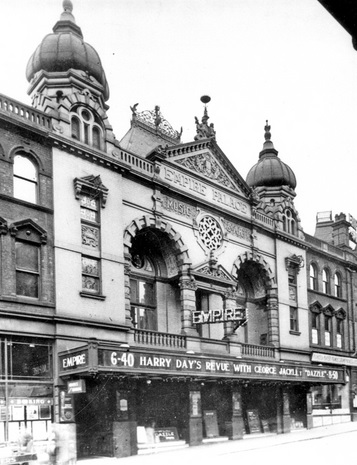
It was the Second World War, and Henry Hall and his Band were in Sheffield to play at the Empire Theatre on Charles Street at its corner with Union Street.
What follows next is an extraordinary account of wartime Sheffield that I stumbled upon while reading Hall’s autobiography – Here’s to the Next Time – that was published in 1955.
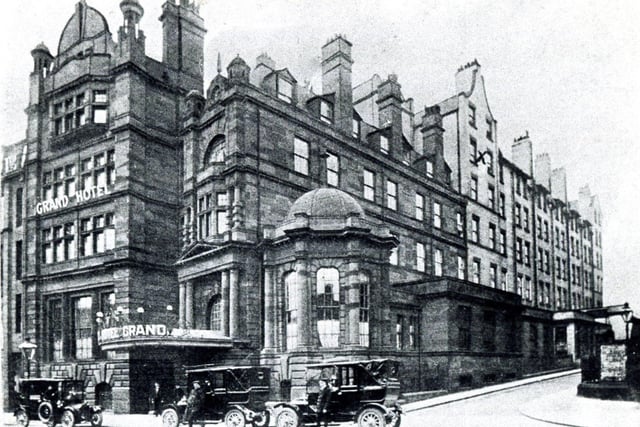
“On Wednesday evening I had supper after the show in the Grand Hotel (now the site of Fountain Precinct) with Jack Buchanan and Fred Emney, who were rehearsing for the forthcoming pantomime. We talked, I remember, of how Sheffield should be quite safe, as it was protected by having a decoy village built some distance outside the town.
“The following evening the warning went, and the German bombers missed the decoy completely and began to bomb the centre of Sheffield!
“One of the first incendiaries landed in front of the Empire just before we were due to appear. The manager, Fred Neate, dashed round and asked me to play one number, then announce that there was a fire and would the audience please leave as quietly as possible.
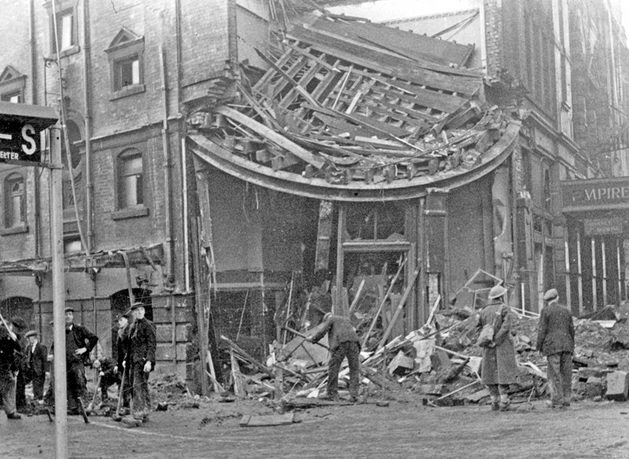
“I walked on to the stage and said, ‘We should like to play you the popular song, Six Lessons from Madame Lazongo,’ and almost before we began there was a tremendous explosion as a bomb landed outside the Stage Door, wrecking the side of the theatre.
“Luckily the stage itself stayed put, so we finished the number. I made the announcement as requested and we went into one of Freddie Mann’s comedy numbers, The Musical Typist, while the audience left in a hurry. It was a very fast number, but it had never been quite so fast as Freddie played it that night!
“We stood in the safest looking corridor for some three hours until there was a lull, and then I made a dash for the Grand where I was staying, only a few hundred yards away.
“Just before I reached the hotel the bombs began to fall again, and I was literally blown through the swing doors to land on the foyer carpet. When I had recovered sufficiently I joined the rest of the guests in the restaurant, which was thought to be directly under the main block of the hotel and consequently the safest place.
“As soon as the all clear sounded, about seven in the morning, I went to the theatre to try to make arrangements. It was out of commission, transport everywhere was disorganised and no trains were running. I left a notice asking all who could to meet outside The Sheffield Daily Telegraph Office at 10.30, when there would be transport to Chesterfield. Then I dashed back to the hotel to try to arrange it.
“Because of the dislocation of communication, I had to do it by six ‘phone calls. I rang the stage manager on one exchange, he rang a friend, and so on, until someone got through to Chesterfield and brought a coach over.
“With all my journeys between theatre and hotel, the orchestra had lost all trace of me, and were astounded when I arrived for the coach – my constant disappearances had led to me being ‘posted missing.’
“However, we got safely to Chesterfield, caught the midday train to Bristol and arrived at midnight just in time to hear their sirens beginning to blow!”
Empire Theatre, Charles Street. Opened 1895. Closed May 1959 and demolished the following year. Image: Picture Sheffield
How lucky most of us are to have never witnessed such scenes!
This story leads to one that my dad told me recently, and would have taken place at the same time that Hall was desperately arranging his transport away from Sheffield.
He was eleven, and the morning after, walked with his Aunty Vera from Milton Street to Grimesthorpe to make sure that her boyfriend Jim’s family had survived.
“At the top of The Moor, Woolworths was a sheet of fire, and there were bodies laying in the road, and that was a sobering sight. But I realised that they weren’t bodies after all, but were actually mannequins that had been blown out of the shop.
“Pinstone Street was closed for access, and so we diverted along Union Street but found it blocked by rubble from the Empire Theatre that had collapsed into the road. We climbed up and over the debris before continuing along Norfolk Street, into Fitzalan Square, then down Haymarket and on to the Wicker. Most buildings were ruined and ablaze.
“At Wicker Arches, a bomb had gone straight through the railway line and through the bridge without exploding (the repairs still visible today), but we still managed to get through, and there was a place on Spital Hill that had wooden chairs piled high and had caught fire and were well ablaze.
“We walked all the way to Grimesthorpe and after finding that the Wells family was safe, walked all the way back again.”
Alas, for the Empire Theatre, it lost one of its two turrets which capped the towers on either side of the facade, and buildings on either side of the theatre were destroyed. It closed in May 1959 after being sold to a developer and was demolished two months later.
The Grand Hotel, which fronted onto Balm Green in the city centre, is seen here in its early days from the Leopold Street side. Image: Charlie Smith
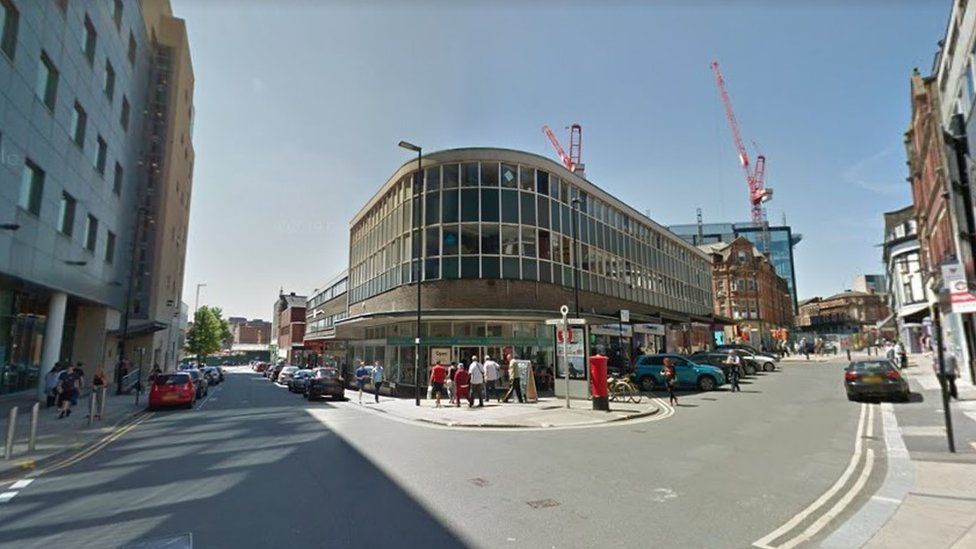
Former site of the Empire Theatre at corner of Union Street/Charles Street
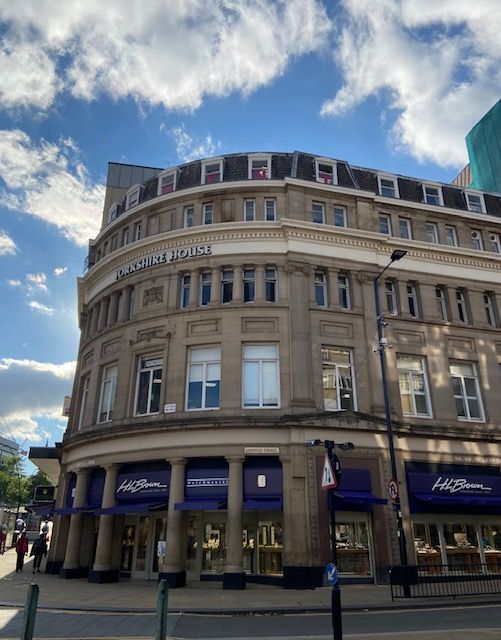
Yorkshire House, Leopold Street, Sheffield.The building has failed to get listing from Historic England. Much of the original interior has been lost in modern redevelopment.
This post is about Johnson and Appleyards, not many people will have heard of it, but that shouldn’t have been the case. Life is full of what ifs. What if things had been done differently? If they had been, then we might have been fondly remembering Johnson and Appleyards as we do Cole Brothers and Walsh’s.
Our story starts on 10 February 1909 when Councillor Walter Appleyard received a cable from Kobe in Japan. It was from his brother, Frank, and informed him that their older brother, Joseph, had died. The fact that it happened in a foreign country was no surprise because Joseph had travelled extensively to Australia, South Africa, and South America, and this latest excursion which started five months previous, had taken in Egypt, India, Burma , and China. The next stop would have been Canada before heading home.
The news might have suggested that this was the first stage of failure for Johnson and Appleyards, cabinet designers and manufacturers, upholsterers, decorators, undertakers, carpet warehousemen, colonial merchants, and exporters, but the decline had already begun, not that anybody had realised it.
Joseph Appleyard (1848-1909)
The three Appleyard brothers, Joseph, Walter, and Frank were the sons of Joseph Appleyard, a Conisborough cabinet maker, who had a business until 1872, when he established J. Appleyard and Sons at Westgate and Main Street in Rotherham which the brothers ran.
In 1879, the brothers took over the Sheffield furniture-making business of William Johnson & Sons, with premises on Fargate, and renamed it Johnson and Appleyards. It was a bold move, but within a few years the business needed bigger premises to display its furniture.
They chose a prime site at the corner of Fargate and Leopold Street and employed architects Flockton and Gibb to design an impressive showroom built in Huddersfield stone with a mixture of giant ionic and stubby doric pilasters on its first and second floors.
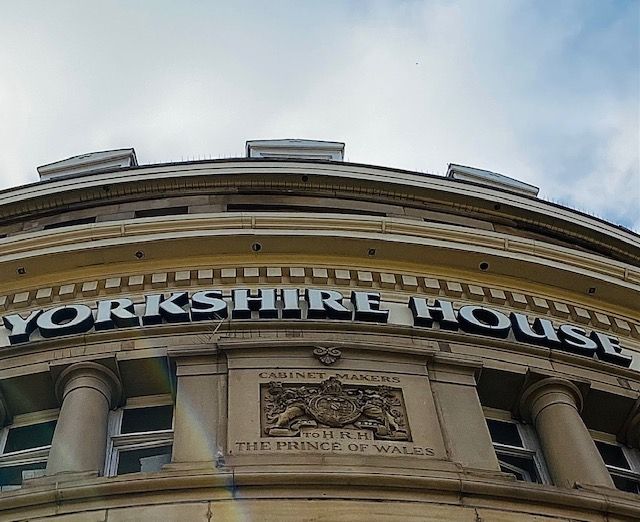
The building was completed in 1883 and survives as Yorkshire House, where Barker’s Pool (then an extension of Fargate) turns the corner into Leopold Street. The only remaining trace of Johnson and Appleyards is a stone plaque, high up, that states ‘Cabinet makers to HRH The Prince of Wales’. For some reason, the building has failed to get listing from Historic England, and we now know it as home to jewellers H.L. Brown.
The only remaining clue that the building was built for Johnson and Appleyards, cabinet makers, in 1883-84. Designed by Flockton & Gibb.
Johnson and Appleyards were the only firm to supply the complete range of domestic furnishings, selling their own furniture as well as famous names like Chippendale, Sheraton, Louis Quatorze, and Louis Quinze. In the basement, were showrooms for carpets, linoleum, bedlinen, and blankets. The ground floor held wallpapers together with general goods, along with the counting house, and stables and carriage/van sheds at the back. The first floor was dedicated to furniture with workshops behind, and on the second floor, further showrooms with draughtsmen’s offices and decorators’ shops to the rear. The third floor housed gilders’ workshops, polishers, upholsterers and bedding makers.
The purpose-built premises of Johnson & Appleyards, Sheffield, showing the additional story that was added in 1892
Johnson and Appleyards became a limited company in 1891, and the following year the building was extended, with an attic story and mansard roof built to create more retail and workshop space. At the same time, manufacturing was moved to a four-storey building on Sidney Street.
Johnson and Appleyards achieved national and international recognition with a ‘Prize medal awarded for Superiority of Design and Workmanship’ (York, 1879) and a gold medal award at the Paris Exhibition (1900).
There is a clue that business at Johnson and Appleyards had dwindled, because in 1906 the firm had moved to smaller premises next door on Leopold Street. While retaining ownership of the showcase corner property, it was leased at a handsome price to A. Wilson Peck & Co, wholesale and retail dealers of pianos, organs, and musical goods. (Wilson Peck – Beethoven House – another fascinating story for another day).
Joseph Appleyard (1848–1909), as senior partner, was the only brother to remain active in the firm, and although he remained a director, Walter had other business interests and would become Lord Mayor, while Frank had left by 1905.
Joseph’s marriage to Sarah Flint Stokes had given him eight children, none of whom had much interest in the business. Only two of his four sons, Joseph (1881-1902) and Harry (1876-1954) showed any enthusiasm. Joseph Jnr was employed by Wallis & Co, linen drapers, in Holborn, but drowned aged twenty-one in a boating accident on the Thames, while Harry, who had trained at Harrods in London and Maple & Co in Paris, joined the firm but left shortly after his father’s death. His other two sons joined the services, to avoid joining the firm and collaborating with their father.
A biography of Joseph Appleyard states that he was a strong conservative but had no desire to enter politics. He was a member of the King Street and Athenaeum Clubs, as well as being an affiliate at the Wentworth Lodge of Freemasons.
Julie Banham’s ‘Johnson & Appleyards Ltd of Sheffield: A Victorian family business’ (2001) hints that Joseph Appleyard was prone to violence and regularly beat his sons, while his wife turned to drink and became an alcoholic.
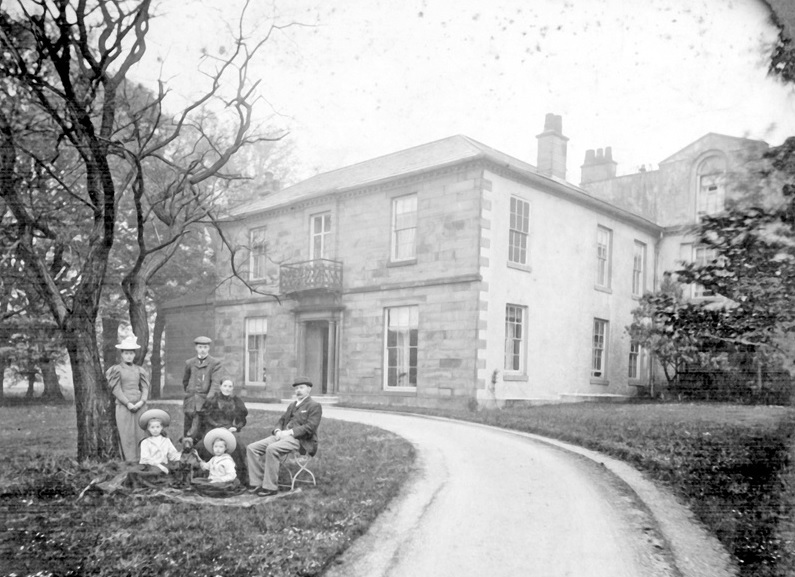
Mr and Mrs Joseph Appleyard (Managing Director of Johnson and Appleyards Ltd.) and children, in the grounds of The Beeches, Park Grange, off Park Grange Road, Norfolk Park (1899). Most historical records refer to the family living at Park Grange, a nearby house. Image: Picture Sheffield
The Drawing Room at The Beeches, home to Joseph Appleyard. Shortly before his death, the family moved to Broombank House, 7 Clarkehouse Road, Sheffield. Image: Picture Sheffield
All these years later, it is difficult to determine the type of person that Joseph might have been. At that time, newspapers filled columns with obituaries of local dignitaries, often shown in positive light, but Joseph’s death had little mention. Is this an indication that there weren’t any kind things to say about him? He was cremated in Japan and his ashes interned at Fulwood Church.
Johnson and Appleyards had built its reputation on Victorian tastes that lingered into the Edwardian period. But the new century meant styles had changed. On hindsight, the firm seemed reluctant to evolve with the times, and while sales dwindled, excessive capital was still taken out of the business to fund lavish lifestyles. After Joseph Appleyard’s death, the management team struggled to find a long-term strategy, and two world wars did nothing to improve its fortunes.
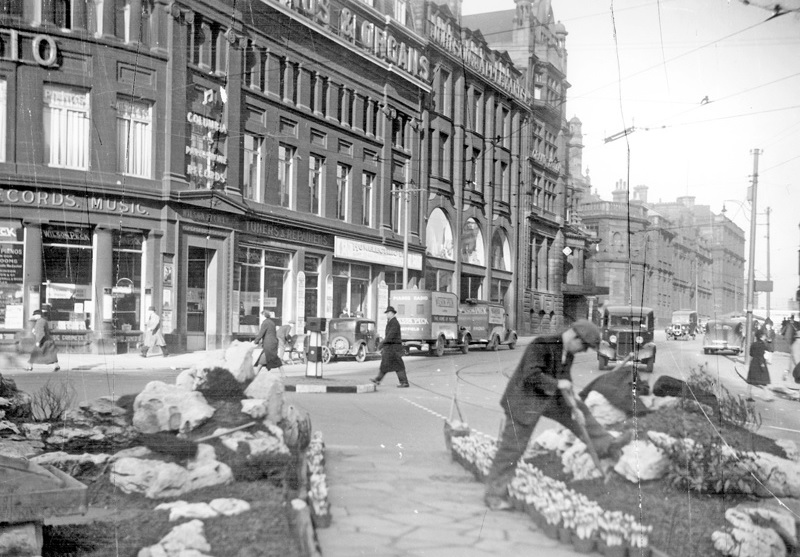
Town Hall Square Rockery and Leopold Street premises in 1938, including Grand Hotel, Johnson and Appleyards in their smaller premises, and Wilson Peck (left) that occupied the cabinet maker’s former premises. The building occupied by Johnson and Appleyards was later demolished and replaced with a new block. It stands approximately where the Bessemer bar is now. Image: Picture Sheffield
The end of Johnson and Appleyards was inadvertently caused by German bombs that rained on Sheffield during 1940. One of them destroyed John Atkinson’s store on The Moor and it was forced to seek alternative premises in the city centre. It bought all the shares in Johnson and Appleyards, if only to secure the Leopold Street building, and would remain until its replacement store was built on The Moor. The old Johnson and Appleyards shop would eventually be swept away, along with the Grand Hotel, to build Fountain Precinct in the 1970s.
Here’s the surprise. Did you know that Johnson and Appleyards still exists, if only in name? Its shares are registered to Atkinsons on The Moor.
First floor showroom at Johnson and Appleyards c.1900
Showroom of Drawing Room furniture c.1900
The Oak Showroom. Johnson and Appleyards c.1900. The company was responsible for furnishing many of Sheffield’s notable buildings, including the Town Hall and Cutlers’ Hall.
John Henry Andrew sat in the lounge of the steamship Montana feeling pleased with himself. He sipped his Old Forester bourbon and lit the cigar that he’d been given in New York. He was no stranger to travelling and calculated that this had been his thirtieth transatlantic trip.
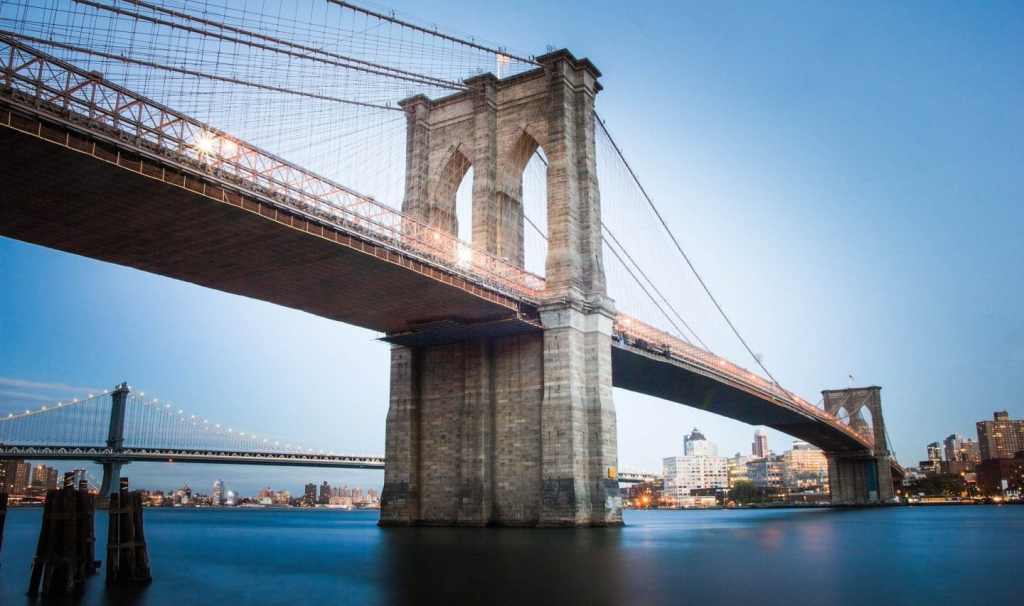
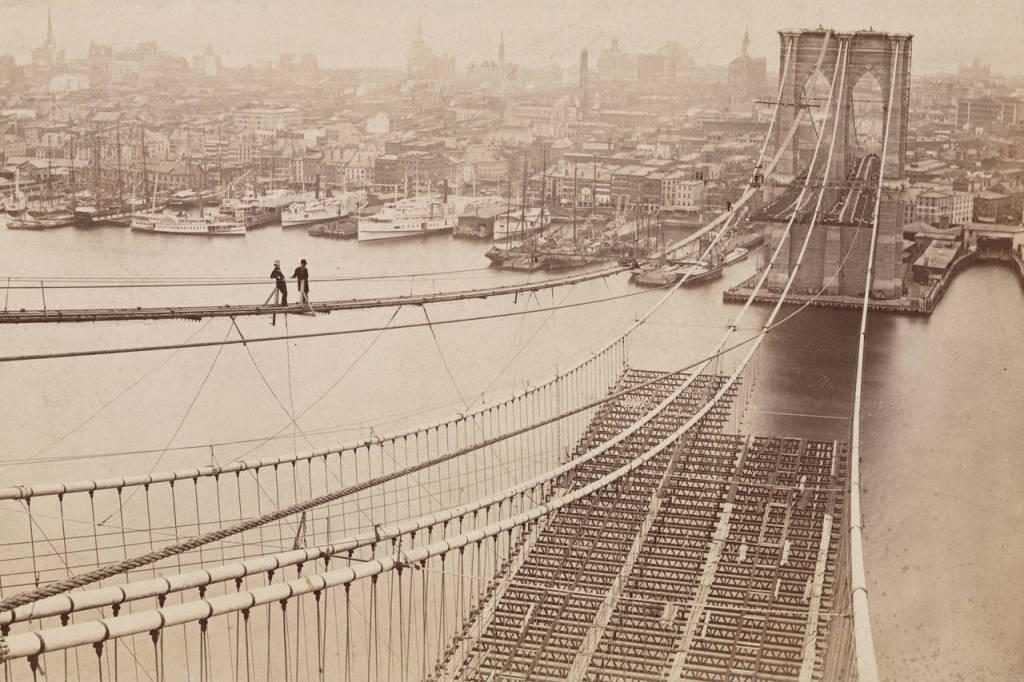
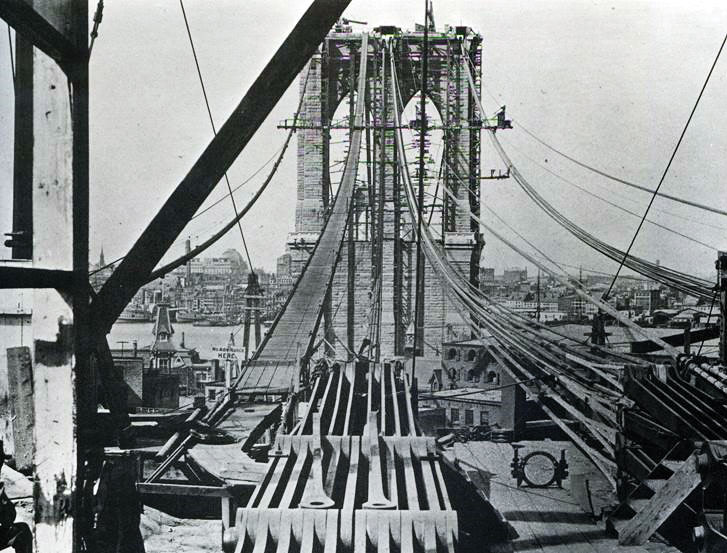
He’d soon be back in Sheffield and would be able to tell his directors at the Toledo Works that he’d secured an important contract. It was a lucrative deal, supplying steel to Joseph Lloyd Haigh, a New York importer, and wire rope manufacturer, based at Brooklyn Wire Mills. More importantly, the steel would be used in the construction of the new bridge that would span the East River from Brooklyn.
Haigh had already taken a sample of steel from J. H. Henry and Company, drawing the rolled crucible steel rods into wire, and had presented a sample of it to the Brooklyn Bridge Company in 1876.
The ropes would be used to support the 486metre bridge, making it the longest in the world, and the sample had been enough to sway the directors that the Brooklyn Wire Mills was the ideal company to manufacture it. Haigh had beaten seven other companies for the contract, including one owned by the bridge’s architect, John Augustus Roebling.
Had John Henry Andrew known what lay ahead, then he might not have felt so pleased on that Atlantic crossing.
This had meant to be a positive post about the Brooklyn Bridge and the myth that it was constructed between 1869-1883 using Sheffield steel. Instead, this turned out to be an intriguing story of deceit, forgery, and monetary loss for the city’s steel manufacturers.
It was anticipated that English steel would be used in the Brooklyn Bridge’s construction, and the submitted bids came in cheaper than their American counterparts. However, the American steel companies put pressure on the US Treasury to increase import tariffs, effectively shutting down foreign competition.
A New York representative from the Sheffield Independent visited the Brooklyn Wire Mills in 1877 and found that only a small portion of steel for the four main cables had been supplied by Sheffield firms.
Haigh had reneged on his promise to J.H. Andrew, as well as the Hallamshire Steel and File Company, and had turned to Anderson and Parsevant of Pittsburgh to supply it instead.
Worse was to come.
Haigh struggled to meet deadlines for the wire rope, and this may have been the reason why he turned to deception to fulfil the contract.
In 1878, the Brooklyn Bridge Company discovered that Haigh had been supplying defective wire. Out of eighty rings evaluated, only five met standards, and it was estimated that Haigh had pocketed $300,000 from his dishonesty.
John Augustus Roebling thought that as much as 221 tons of rejected wire had been spun into cables and used, and so he demanded that another 150 wires were added to each cable as an additional safety factor. Had this not been detected, the consequences might have been catastrophic, and the sub-standard wires remain in place even today.
The Brooklyn Bridge Company decided to keep its discovery a secret and demanded that Haigh supply the extra high quality wire free-of-charge, but this led to his financial ruin.
Two years later, Haigh’s business failed, still owing approximately $20,000 to Sheffield companies, part of this for the Brooklyn Bridge, a figure that was never recovered.
Months later, Haigh was discovered to be a forger and had contributed to the collapse of America’s Grocer’s Bank, an action that led to his imprisonment in Sing Sing.
And so, we find out that the Brooklyn Bridge only has a small amount of Sheffield steel in its structure.
There is also another myth to dispel.
There are suggestions that Brooklyn Works at Kelham Island, once occupied by Alfred Beckett, saw maker, was named after the Brooklyn Bridge because steel from here was used.
We find that Beckett’s home was at Brook Hill, and he acquired his works in 1859 calling them Brooklyn Works, way before work on the bridge had ever started.
NOTE:- J.H. Andrew and Company subsequently became Andrews Toledo, based at Toledo Works in Neepsend.
No matter where you look, there is evidence of William George Davies’ work in Sheffield. The Shropshire-born architect designed several landmark buildings, but his name remains unknown to most people. The few mentions he gets refer to him as W.G. Davies and it takes a bit of deep digging to discover his full name.
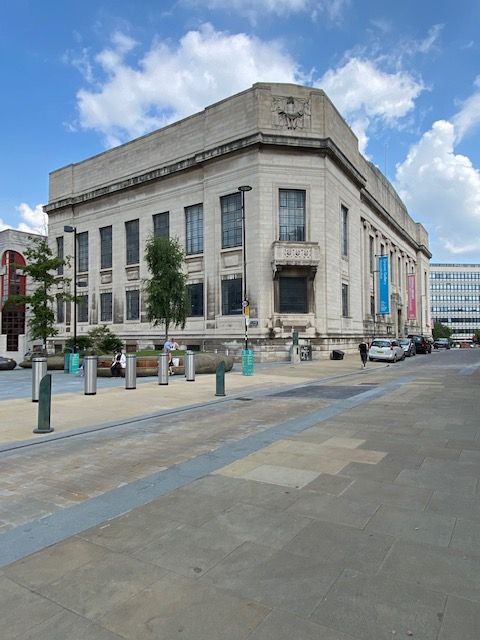
He’s best known for designing the Central Library and Graves Art Gallery on Surrey Street, built between 1929 and 1934, a building that is crumbling and currently languishing behind metal barriers to prevent injury to passers-by.
W.G. Davies was born in 1888, and educated at Wem Grammar School and Shrewsbury School, subsequently taking his degrees at the Liverpool University School of Architecture. After qualifying as an architect, he gained experience as the assistant architect at Bradford Corporation, before joining Essex County Council to design elementary and secondary schools, and oversee maintenance for about 474 schools, mainly within the London area.
In 1924, Davies became architect to Belfast Education Committee where he stayed for two years. When Frederick Ernest Pearce Edwards stepped down as Sheffield Corporation’s city architect in 1926, Davies beat seven applicants to the post, and remained until his retirement in 1950.
It was a lucrative role for Davies because Sheffield Corporation designed its own public buildings and had embarked on a massive housebuilding programme to replace its slums.
One of his first jobs was to inspect housing estate construction at Wybourn and Manor, and by 1938-1939 the total number of new flats and houses handed over by his department was 2,928, an average of 56 new properties a week.
War aside, Davies’ tenure resulted in dozens of new public buildings. Some remain but many have been lost: –
Division Street Fire Station, Edward Street Flats, Firth Park Library, Norfolk Secondary School, High Storrs School, annexe to Mappin Art Gallery, Prince Edward School, the Maternity and Child Welfare Centre in Orchard Place, Niagara Recreation Ground and Pavilion for the City Police, Lodge Moor Hospital extensions, Tenter Street Tram and Bus Depot, Sharrow Lane Blind School and Workshops, Wisewood School, King Edward VII Swimming Pool, Arbourthorne School, Woodthorpe Baths, Shirecliffe School, the City General Hospital extensions and the restoration of Beauchief Abbey.
Former Division Street Fire Station, Sheffield
Two of his last jobs before retirement were the construction of Manor Library and the conversion of Totley Hall.
We must also thank Davies for saving the remains of Sheffield Castle which will hopefully see the light of day again soon. In 1930, he designed the new market at Castle Hill, allowing walling and timber beams, relics from the castle, to be preserved in its basement.
Another of his projects, Graves Park Pavilion in 1927, gained recent notoriety after the Rose Garden Café was closed due to its unsafe condition. It mirrors the fortunes of his best work at the Central Library, and while Sheffield was good at constructing public buildings it struggled to maintain them.
W.G. Davies was replaced as city architect by J. Lewis Womersley in 1953.
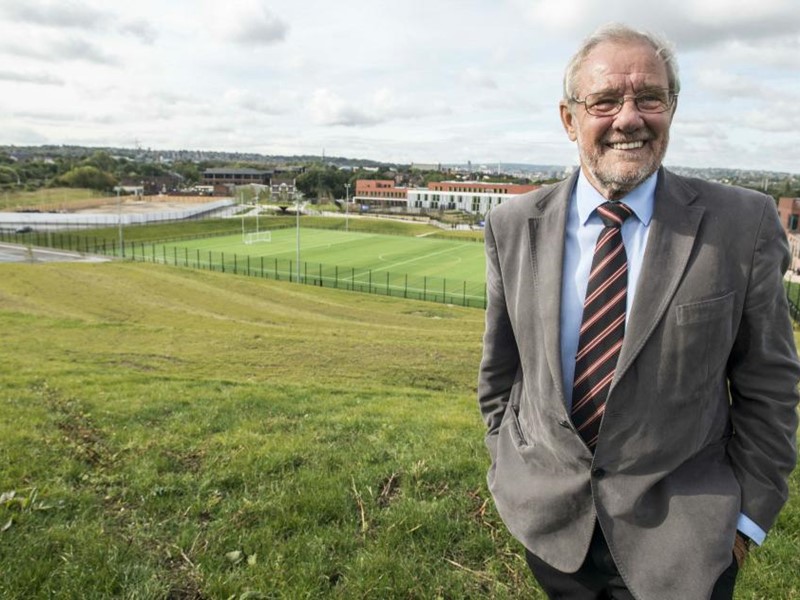
Richard Caborn is the latest person to be given Freedom of the City. Born in 1943, he became MEP for Sheffield, MP for Sheffield Central, and held three Ministerial portfolios. He is currently chair of Sheffield Olympic Legacy Park. Image/Sheffield City Council
It’s three years since the City of Sheffield last conferred the title of Freedom of the City. That was John Burkhill BEM, the man with the pram, for his tireless fundraising efforts, and probably the most popular choice.
But the city’s highest honour has now been awarded to Richard Caborn, former MP, and Minister, who joins his father, George, on a list of over seventy names.
He joins a selective group who have been given Freedom of the City, and includes the Duke of Norfolk, Viscount Kitchener, Field Marshall Douglas Haig, David Lloyd George, Ramsay MacDonald, Winston Churchill, Harold Wilson, and Nelson Mandella.
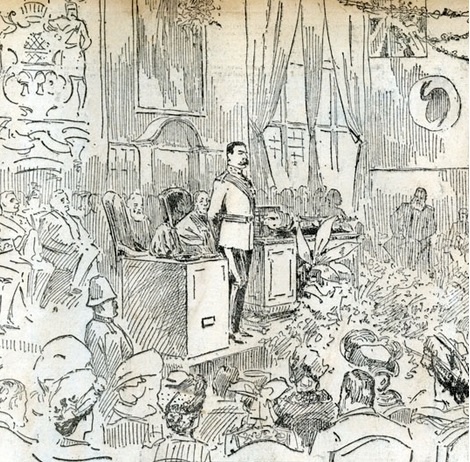
Lord Kitchener visited Sheffield and received the freedom of the city in September 1902. The drawing of the scene in the Town Hall was published in the Sheffield Telegraph. Image/PictureSheffield
And there have been Freedom of the City awards to local dignitaries such as Sir Frederick Mappin, Sir William Clegg, John George Graves, Harry Brearley, and Sir Stuart Goodwin.
More recently, the likes of Derek Dooley, Michael Vaughan, Lord Coe of Ranmore, and Jessica Ennis have also been granted the honour.
Freedom of the City isn’t confined to individuals and the armed services have received the title as well. These include HMS Sheffield; The Chestnut Troop, 1st Regiment Royal Horse Artillery; 38th Signal Regiment (Volunteers); 212 (Yorkshire) Field Hospital (Volunteers) and The Duke of Wellington’s Regiment (West Riding) – subsequently conferred to the Yorkshire Regiment.
But the Freedom of the City can be taken away as well, as was the case with Daw Aung San Suu Kyi (Leader of National League for Democracy in Burma) who had it removed in 2017.
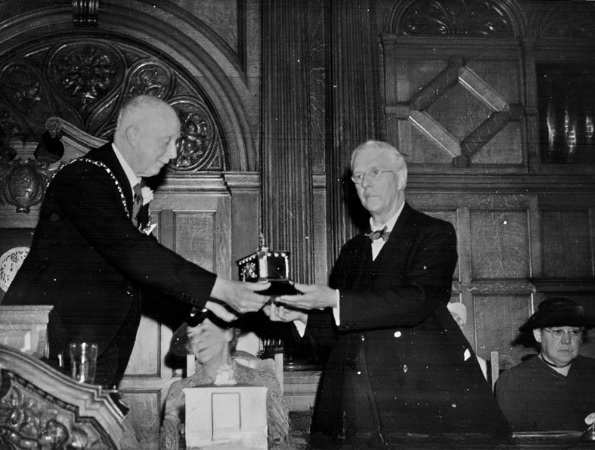
Harry Brearley being presented the Freedom of the City. While working in the Brown Firth Research Laboratories in 1913, Harry Brearley was testing low-carbon steels for gun barrels that contained only 12% chromium and found these steels had the abiliy to resist corrosion. He recognised the implication and suggested it could be used for cutlery. Image/PictureSheffield
The procedures for admitting Honorary Freemen originated in the Honorary Freedom of the Borough’s Act 1885 and were included in the Local Government Act 1972. Certain Local Authorities are empowered to admit as Honorary Freemen persons of distinction and persons who have, in the opinion of the Council, rendered eminent services to the Authority.
Honorary Freemen do not enjoy any constitutional privileges but admission as an Honorary Freeman has the deeper significance of receiving the highest honour the city can bestow, and it is conferred sparingly.
The Freedom of Entry accorded to Armed Services gives a right on all ceremonial occasions of exercising the privilege of marching through the City “with colours flying, drums beating, and bayonets fixed.”
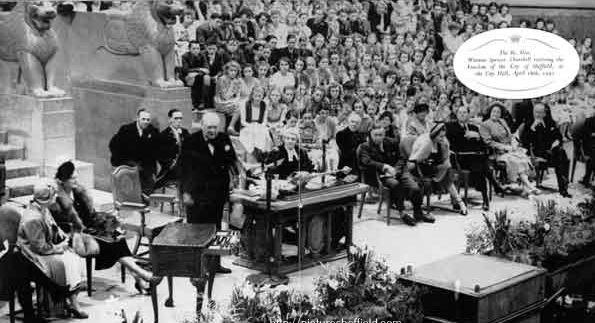
The Rt. Hon. Winston Spencer Churchill receiving the Freedom of the City of Sheffield. Image/PictureSheffield
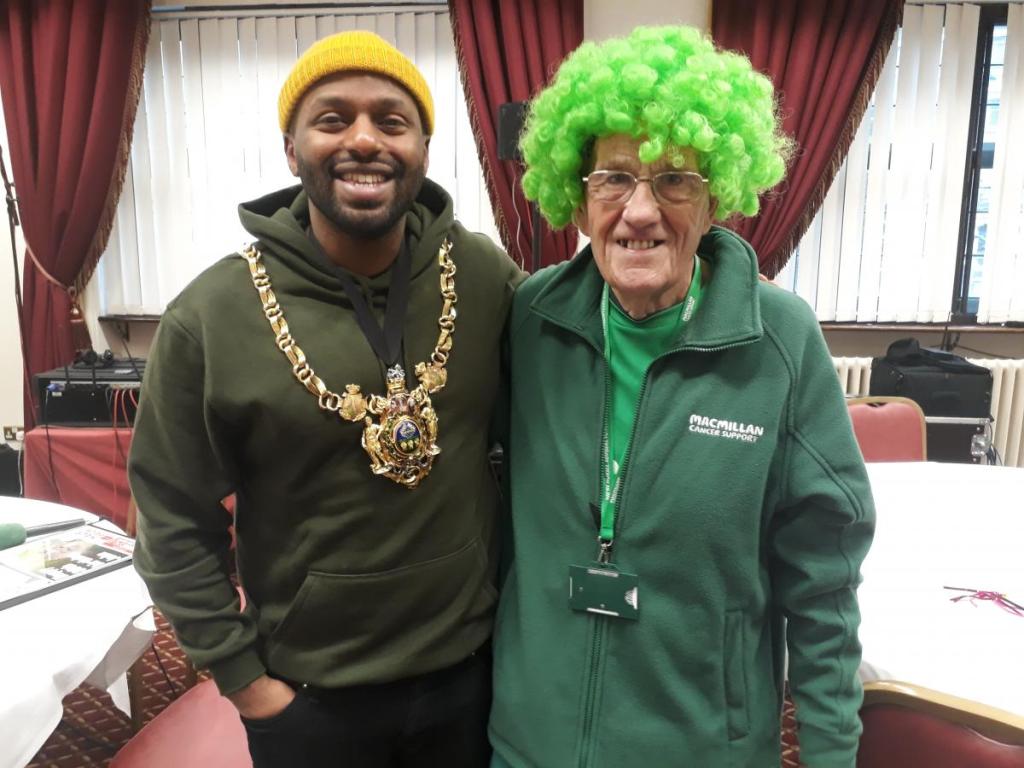
John Burkhill, Sheffield’s most famous fundraiser broke down in tears at being awarded the Freedom of the City in 2019. Image/Sheffield City Council
Full list of Honorary Freemen of Sheffield
Year
Name
Died
1899
His Grace The Duke of Norfolk, EM, KG
1917
1899
Sir Frederick Thorpe Mappin, Bart, MP
1910
1899
Sir Henry Stephenson, Kt
1904
1902
General Viscount Kitchener of Khartoum, GCB, GCMG, OM
1916
1903
The Rt. Hon. Sir Marcus Samuel (Lord Mayor of the City of London)
1927
1916
The Rt. Hon. William Morris Hughes, MP, LLD (Prime Minister of the Commonwealth of Australia )
1952
1917
Lt-Gen. The Rt. Hon. Jan Christian Smuts, KC (Prime Minister of South Africa)
1950
1917
Admiral Sir John Jellicoe, GCB, OM, GCVO
1935
1919
The Rt. Hon. David Lloyd George, OM, MP, DCL, PC (Prime Minister)
1945
1919
Field Marshal Sir Douglas Haig, KT, GCB, KCB, KCIE, GCVO, KCVO, CB, ADC
1928
1919
Admiral Sir David Beatty, GCB, GCVO, KCB, KCVO, DSO, MVO (Admiral of the Fleet)
1936
1921
The Rt. Hon. W F Massey, LLD (Prime Minister of New Zealand)
1925
1922
Alderman Sir William E Clegg, CBE, LLD
1932
1923
The Rt. Hon. W L MacKenzie King, CMG, MA, LLD (Prime Minister of Canada)
1950
1923
The Rt. Hon. S M Bruce, MC (Prime Minister of Australia)
1967
1924
The Rt. Hon. Sir Samuel Roberts, Bart, MA, JP, DL
1926
1924
Alderman Robert Styring, LLD, JP
1944
1924
Alderman William Farewell Wardley, JP
1941
1926
Doctor Henry Coward, Mus.Doc (Oxon), MA
1944
1926
The Hon. J G Coates, MC (Prime Minister of New Zealand)
1943
1929
The Rt. Hon. James Ramsay MacDonald, MP, LLD, JP (Prime Minister)
1937
1929
Alderman John George Graves, JP
1945
1929
Alderman Henry Kenyon Stephenson, DSO, VD, DL, JP, LLD
1947
1929
Mr Cecil Henry Wilson, MP, JP
1945
1930
The Rt. Hon. Richard Bedford Bennett, KC, MP, LLD, (Prime Minister of Canada)
1947
1930
The Rt. Hon. James Henry Scullin, MP (Prime Minister of Australia)
1952
1939
The Rt. Revd. Leonard Hedley Burrows, DD, D.Litt (First Bishop of the Diocese of Sheffield)
1940
1939
Sir Robert Abbott Hadfield, Bart, FRS, DSc, D.Met, JP
1940
1939
Mr Harry Brearley (the inventor of Stainless Steel)
1948
1943
The Rt. Hon. Winston Leonard Spencer Churchill, CH, FRS, MP (Prime Minister, First Lord of the Treasury and Minister of Defence)
1965
1945
Alderman Frank Thraves, JP
1952
1945
Alderman Harold Warters Jackson, LLB
1972
1945
Alderman Alfred James Bailey, JP
1948
1945
Alderman Arthur James Blanchard, JP
1957
1947
The Rt. Hon. Albert Victor Alexander, PC, CH, LLD, MP (Minister of Defence
1965
1949
Mr Charles William Beardsley, OBE, JP
1952
1949
Mrs Ann Eliza Longden, JP
1952
1959
Alderman Charles William Gascoigne, CBE, BEM
1967
1959
Alderman Mrs Grace Tebbutt, JP
1983
1959
Alderman Percival John Mann Turner, CBE, JP
1969
1962
The Rt. Revd. Leslie Stannard Hunter, MA, DD, DCL, LLD (Lord Bishop of Sheffield)
1983
1962
Alderman Albert Smith
1968
1965
The Rt. Hon. Harold Wilson, OBE, MP (Prime Minister and First Lord of the Treasury)
1995
1965
Alderman Herbert Keeble Hawson
1984
1965
Alderman Samuel Hartley Marshall, JP
1981
1965
Alderman James Wilfred Sterland, OBE, JP
1992
1965
Dr. John Macnaghten Whittaker, FRS, (Vice-Chancellor, University of Sheffield)
1984
1968
Dr. Albert Ballard, CBE, LLD
1968
1968
Sir Stuart Goodwin, DL, LLD, JP
1969
1970
Mr John Burns Hynd, MP (MP for Attercliffe Division of City from 1944 to 1970)
1971
1970
Sir Peter Geoffrey Roberts, Bart, MA, MP (MP for Ecclesall Division of City from 1945 to 1950 and for Heeley Division of City from 1950 to 1966)
1985
1978
The Rt. Hon. James Callaghan, MP (Prime Minister and First Lord of the Treasury)
2005
1978
County Councillor Sir Charles Ronald Ironmonger
1984
1978
Councillor Isidore Lewis, LLD, JP
1983
1978
Mr Stanley Lester Speight, OBE, MIEx(Grad), FIM
1998
1981
Mr George Caborn
1982
1981
Prof. Ronald Stanley Illingworth, MD (Leeds) Hon. MD (Sheffield) Hon.D.Sc (Baghdad) FRCP, DPH, DCH, FRPS
1990
1991
Ms Helen Sharman BSc C.Chem (the first Briton to journey into space)
1991
Councillor William Owen, JP
1992
1993
Mr Nelson Rolihlahla Mandela (President of the African National Congress)
2013
1993
Mr Derek Dooley (footballer)
2008
1998
The Rt. Hon. Dr. Marjorie (Mo) Mowlam, MP (Secretary of State for Northern Ireland)
2005
1998
Dr. Peter Horton, Hon.LittD. BSc
2005
1998
H.M.S. SHEFFIELD
2001
The Chestnut Troop, 1st Regiment Royal Horse Artillery
2001
38th Signal Regiment (Volunteers)
2001
212 (Yorkshire) Field Hospital (Volunteers)
2001
The Duke of Wellington’s Regiment (West Riding) – subsequently conferred to the Yorkshire Regiment
2002
106 (West Riding) Field Squadron (Air Support) (Volunteers)
2005
Michael Paul Vaughan (Captain of England Cricket Team)
2005
Daw Aung San Suu Kyi (Leader of National League for Democracy in Burma) – The Freedom of the City was removed on 1 November 2017
2005
Sebastian Newbold Coe OBE, The Right Honourable The Lord Coe of Ranmore
2006
The Yorkshire Regiment (formed by an amalgamation of three historic County Regiments including the Duke of Wellington’s Regiment)
2009
The Lindsays (Ronald Birks, Peter Cropper, Bernard Gregor-Smith and Robin Ireland)
2012
Mrs. Tawakel Karman (Yemeni Human Rights Activist and Nobel Peace Prize winner)
2012
Ms. Jessica Ennis MBE (Olympic, World and European Heptathlon Champion)
2014
64 Signal Squadron (transferring the Freedom from the 38 Signal Regiment owing to the 38 Regiment’s withdrawal from the Army’s Order of Battle.)







 sheffielder.net