Categories
Companies

Radio Hallam: It’s fifty years since the BBC rebels came to town

This afternoon (Sunday 29 September),  a group of people will meet in a Sheffield city centre bar. There will be reunions, memories shared, but the event will have an air of sadness.. Friends and former work colleagues will see each other for perhaps the last time.

If things go to plan, one of those attending will be 85-year-old Keith Skues, the man responsible for giving us Radio Hallam, one of the UK’s pioneer commercial radio stations. It started broadcasting on 1 October 1974, and this coming Tuesday will be the fiftieth anniversary of its launch.

The irony is that its present owners, Bauer Media, chose its Golden Anniversary year to kill the name off – it is now Hits Radio South Yorkshire – but the spirit of the radio station, and its ability to be local, had disappeared many years ago.

Until the early 1970s, the BBC had the legal monopoly on radio broadcasting in the UK. Except for Radio Luxembourg, and for a time in the 1960s, the offshore ‘pirate’ broadcasters, UK listeners had limited choice. Edward Heath’s Conservative government changed that and allowed the introduction of commercial radio to compete with BBC local radio services.

In October 1973, London Broadcasting Company (LBC) started broadcasting, closely followed by Capital Radio, and household names like Radio Clyde, BRMB, Piccadilly Radio, Metro Radio, and Swansea Sound. A year later came the launch of Radio Hallam from studios on the upper floors of the Sheffield Newspapers building at Hartshead with its strapline – ‘It’s nice to have a radio station as a friend.’

It beat off one other consortium for the franchise, but there was a merger after the licence had been issued. The Managing Director was Bill McDonald who at one time had worked for A.C. Nielsen rolling out overnight ratings for TV across the USA. He spent some years in New York in the early 1960s with a background in newspaper and commercial radio advertising but returned to England and the newspaper business and used his expertise to attract Radio Hallam shareholders including the S&E Co-op, B&C Co-op, Sheffield Newspapers, Trident Television (owners of Yorkshire Television),  the Automobile Association, Kenning Motor Group and trade unions – USDAW and GMWU. The start-up cost for the station was £300,000 (about £3.9M today).
From the start, Radio Hallam’s strength was the ‘rebel’ disc jockeys it took from the BBC – Keith Skues as Programme Controller, Roger Moffat, Bill Crozier, and Johnny Moran, briefly joined later by Bruce Wyndham – and the emphasis was on professionalism. There had been another BBC staffer, Peter Donaldson, who was to have presented the afternoon magazine programme ‘Roundabout’ but got cold feet and left before the station launched. (Yes, it was THE Peter Donaldson, who became a BBC Radio Four icon). 

“Whilst in London I formally approached Roger Moffat (returning a favour as it turns out), Johnny Moran, and Bill Crozier, and to my amazement they all agreed to leap into the unknown and come with me to Sheffield,” said Skues. “All the time I was holding auditions for local broadcasters. We received applications from over 700 hopeful Disc Jockeys, but I could only take three, all of whom had worked with BBC local radio.”

After only a few months, a dipstick survey suggested that Hallam had 25 percent of the audience, placing it second after Radio 2 with 26 percent and ahead of Radio 1 (24 percent) and BBC Radio Sheffield (19 percent).

“Ours is a complete mixture. We are going for anybody from 18 to 40 -olds, and we get lots of requests from 70 and 80-year-olds.”” said Keith Skues at the time.

The schedule was an easy listening mixture of hit 40 and middle-of-the-road pop during the day, heavier rock and jazz for students in the evening, with minority interest programmes slotted in at the weekend.

The Top 40 singles were based on local record shop returns (remember Bradleys?); another 40 LPs were chosen by seven disc jockeys and there were twenty new releases on the playlist. The first record after the news was always from the top ten; the second was between number 11 and 40; the third was a climber (new release); the fourth was an oldie (anything from five to fifteen years); the fifth was again between 11 and 40: and the sixth was an album track. The cycle was then repeated. And Skues said that it got very high ratings. “Where Hallam does seem to score is that we don’t do a lot of chat – there are no requests, no name checks even during the format hours.” Neither were there any phone-ins, although the idea had been considered.
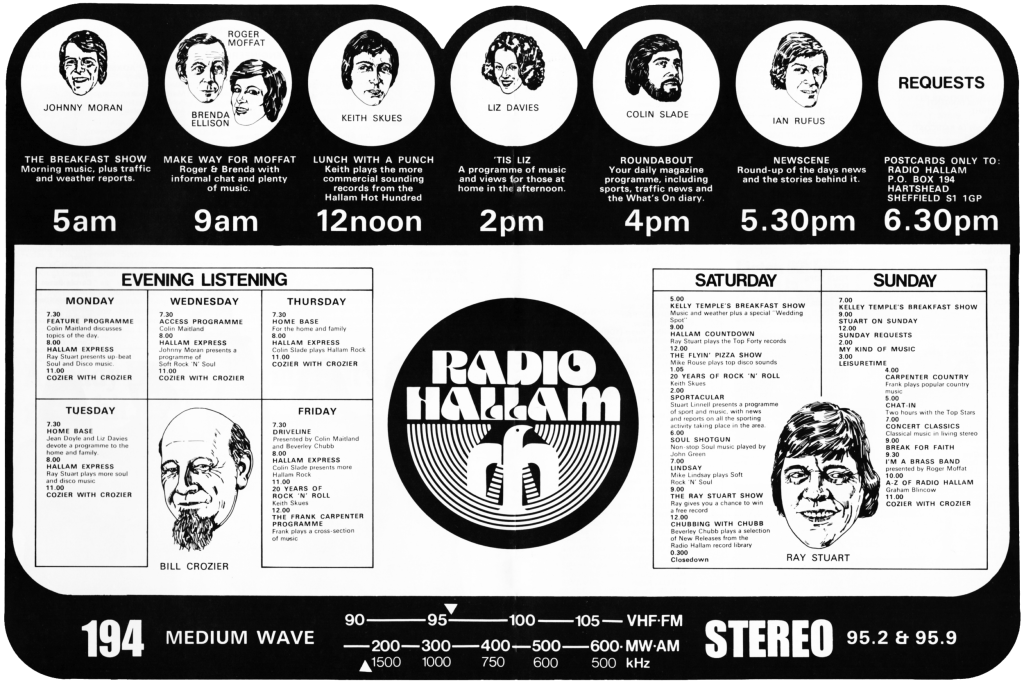
BBC Radio Sheffield nicknamed it as the ‘pop and prattle station,’ but the former BBC presenters impressed with their individual personalities.

Keith ‘Cardboard Shoes’ Skues (Lunch with a Punch) was determined to get into radio from a young age. Roger Moffat let him attend live broadcasts of Make Way for Music with the Northern Variety Orchestra in Manchester, and recommended the Forces Broadcasting Service as a possible route into the profession. Skues took that advice a few years later when he was called up for his National Service and posted to British Forces Network (BFN) in Cologne. He returned to the UK in 1964 to join pirate station Radio Atlanta which then merged with Radio Caroline. He joined Radio Luxembourg for the CBS Record Show and presented on Radio London until 1967 and the introduction of the Marine Broadcasting Offences Act. He was at the start of Radio 1 and remained with the BBC until leaving to set up Radio Hallam.
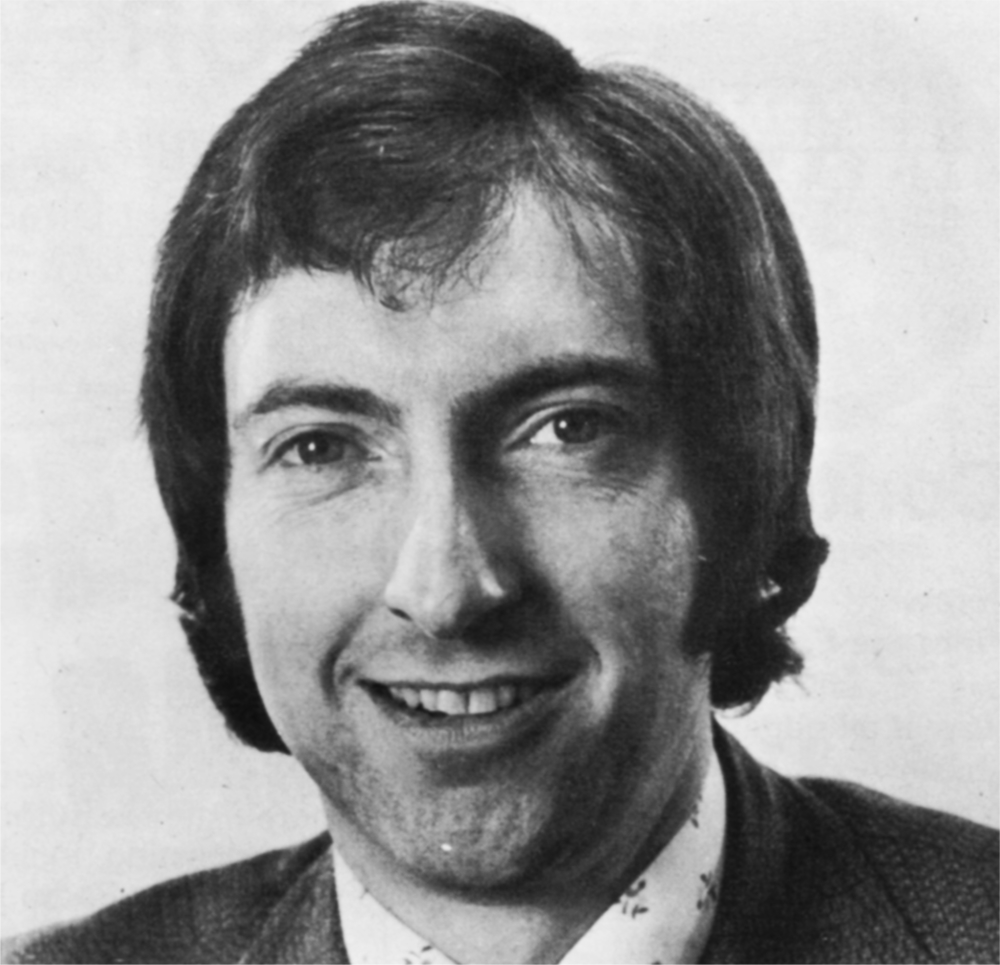
Keith Skues

Roger Moffat (what a bloody awful place Sheffield is) gave the station an air of irreverence: playing a blank tape after failing to interview a pop prima donna, telling the early morning disc jockey who phoned him with a live alarm call, ‘I don’t want a railway station as a friend’; deviating from the playlist, purporting to be the station’s Royal Correspondent, an obsession with ‘Royal Hackenthorpe’ and upsetting everyone whether they were a bus driver or Elvis Presley fan. He’d been sacked by the BBC three times, but was a storyteller, such a consummate one that while you never knew if it was true, it didn’t really matter.
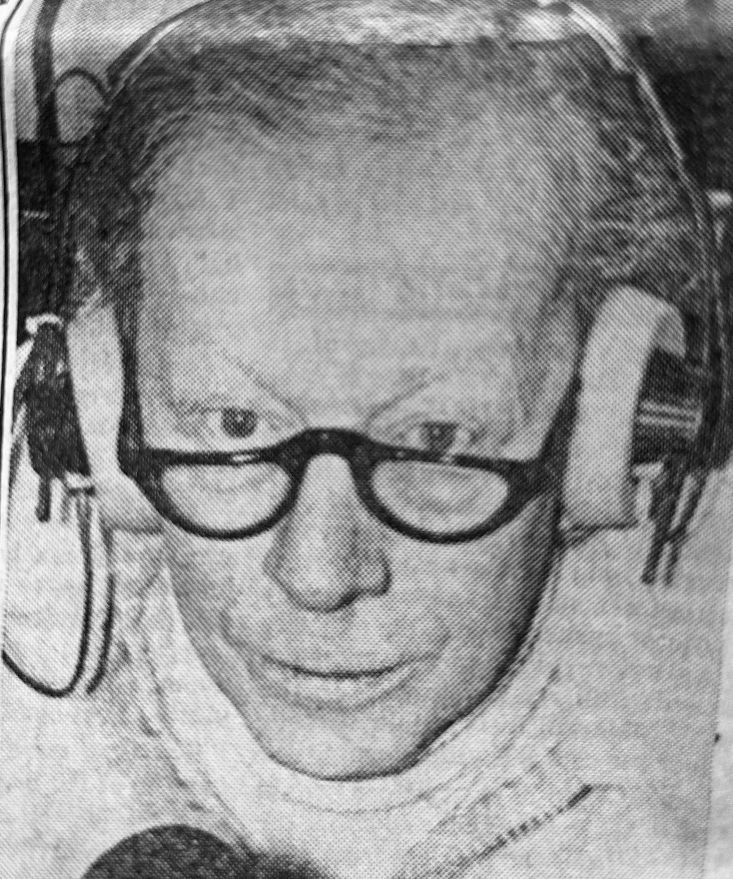
Roger Moffat

Bill Crozier started with a middle-of-the-road late night show, ‘Cozier with Crozier’ and catered “for the old and lonely.” A distinctive figure in his opera-style cloak and his goatee beard, one of his trademarks was a twittering bird, Florence the Nightingale in the background. He also presented the evening request programme as the friendly host uncle. It came naturally to him for he had been the popular Cologne end of the BFN/BBC Two-Way Family Favourites programme with Jean Metcalfe from 1958 to 1965. After BFN, Crozier switched to the BBC’s Light Programme and Radio 2 which best suited his choice of music from the forties and fifties. He was also a producer of the Jimmy Young Show.
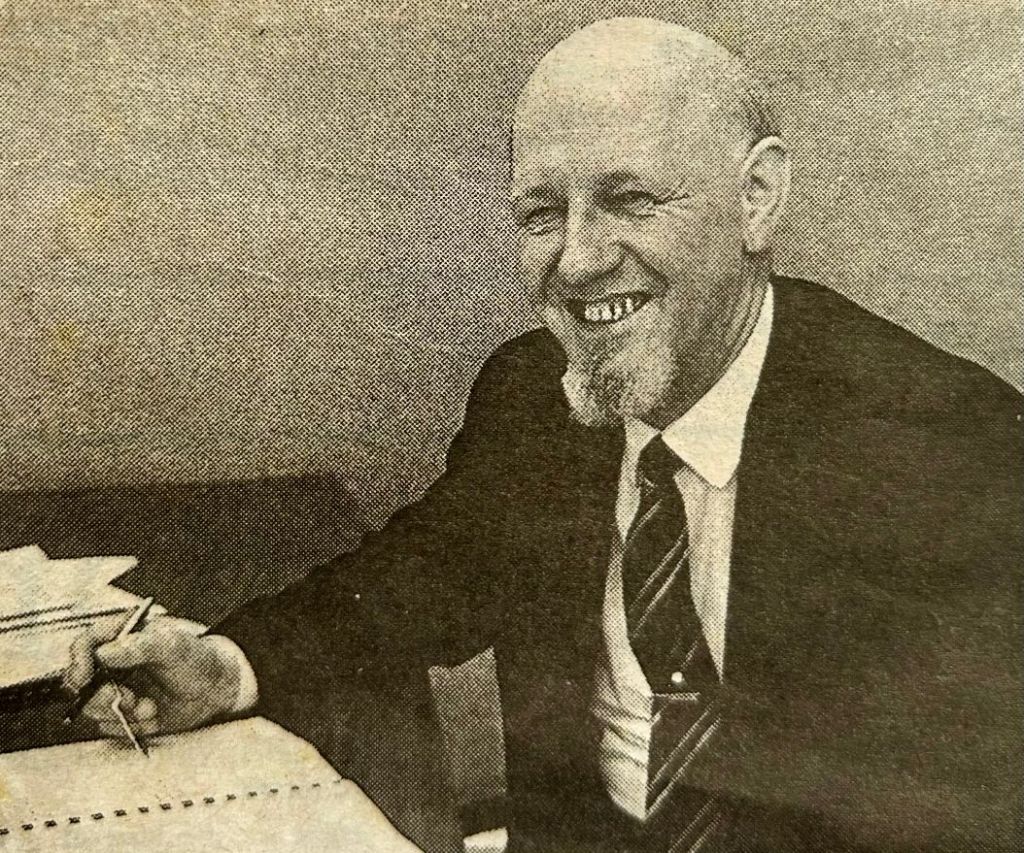
Bill Crozier

As breakfast show presenter, Johnny Moran was the first DJ heard on Hallam. His mother Phillis had emigrated from Sheffield, and now found himself in her home city via Radio Luxembourg and Radio One. Skues had re-established contact with Moran at a party given for the singer Barry White, and with his BBC career over, he’d been plying his trade for the British Forces Radio Network and was keen to make the switch. Famously, the first record he played on Hallam was Kiki Dee’s ‘I’ve Got the Music in Me’ that stuck after a couple of minutes.
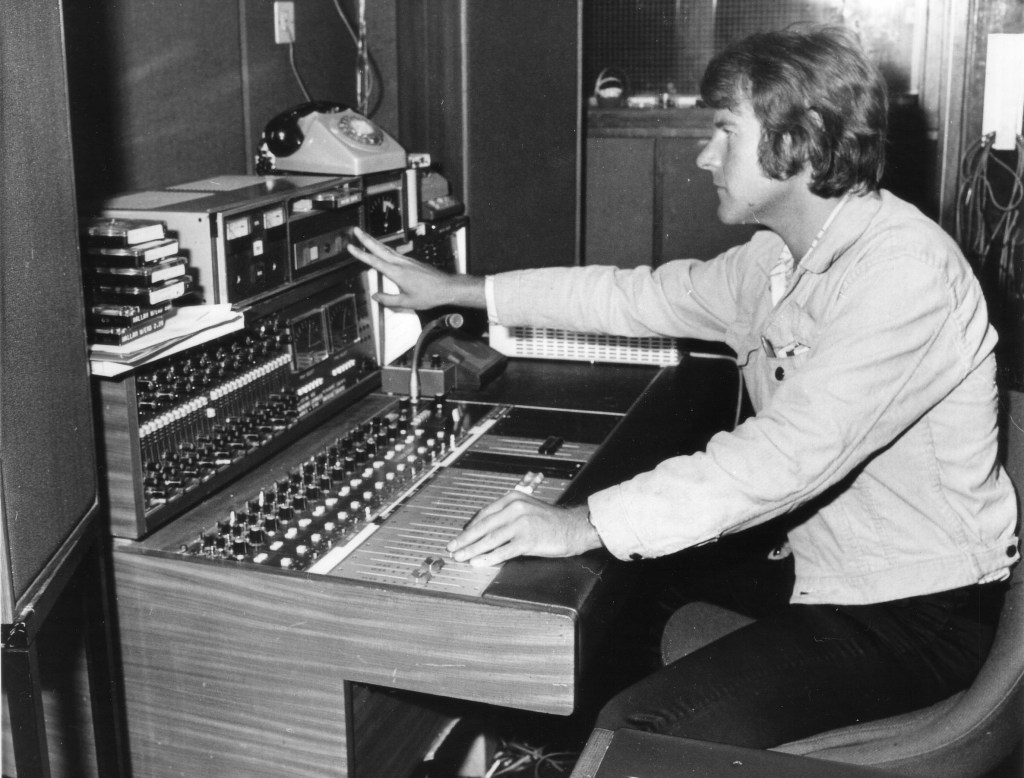
Johnny Moran in Studio B. Image: Hallam Memories

Let us not forget Bruce Wyndham (because we have), a man with a theatrical background whose family had connections with the Wyndham Theatre in London. He joined the BBC in 1948 and remained until 1976 before tasting commercial radio with Radio 210 in Reading and Radio Hallam in 1978. “A lovely cheerful character who would always crack a joke at his own expense,” said Alan Biggs who had to report the death of his colleague after he’d collapsed and died at the station while preparing for a late night programme.
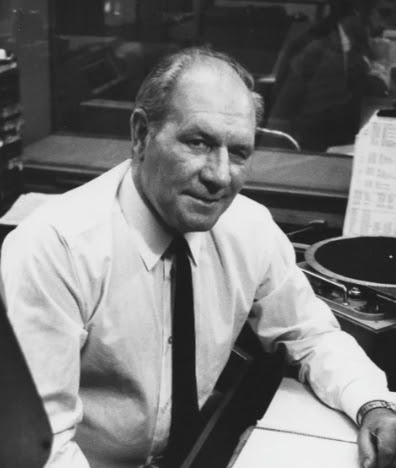
Bruce Wyndham

Aside from the BBC personalities, Radio Hallam would introduce other presenters during these golden years – Ray Stuart, Colin Slade, Kelly Temple, Brenda Ellison, Cindy Kent, Gerry Kersey, Dave Kilner, Dean Pepall, Howard Pressman and many more – and furthered the careers of future radio industry heavyweights like Ian Rufus, Stuart Linell, and Ralph Bernard.

Let’s not be mistaken for thinking that it was all about music because the early independent local radio stations had to be friends to everyone – including every music genre – and phonographic performance rules meant that they were restricted to the amount of needle time played on air. The gaps in-between were given over to talk  content. Radio Hallam’s news was local, operating throughout the day, and into the night. One of its quirks was that it was at five minutes to the hour – three minutes to at weekends – allowing the station to play music when other radio stations were breaking for news.

There were feature programmes (Grapevine/Hallam Forum) and there were home-produced dramas like the five episodes of Dying for a Drink (1978) and Down to Earth – a story of coal and colliers (1979).  
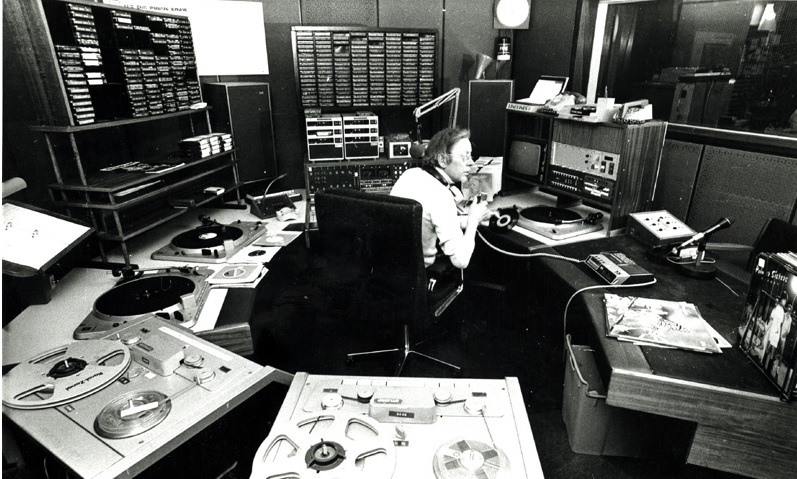
Roger Moffat at Radio Hallam. Photograph: Picture Sheffield

But things could not last.

“Roger Moffat had his ups and downs and in one of them he lost his temper with us and he went off,” said Bill McDonald.  He left Hallam in December 1981, resurfacing two years later with a Saturday morning show on BBC Radio Sheffield. “This is your last chance, Moffat. Your last ditch.” According to who you believe, the programme was phased out after a few weeks, or was it two years? Regardless, he gave up the job because of ill-health. He returned to Radio Hallam one more time, to record his obituary programme that was broadcast after his death (aged 59) in 1986. His unusual last wish was fulfilled a year later when his ashes were scattered over three far flung locations. His former colleague and friend Keith Skues helped pilot a Piper Seneca to scatter the ashes over Skye, the Channel Islands… and the Sheffield suburb of Hackenthorpe.

Bill Crozier left Hallam in 1980 and returned south where he did freelance work for the BBC, but came back to Sheffield and lived at Bradway. He died in 1994, aged 69. He was replaced on the request show by Gerry Kersey who said that “He was a very gentle broadcaster who knew the art of using silence, more than anybody I know.”

Johnny Moran switched to afternoons in the mid eighties before leaving Hallam and working briefly for Magic 828 in Leeds, and then for Classic Gold in Bradford, before disappearing completely from public view. Believed to have settled in Devon and France, he died, aged 78, in September 2022.

That leaves one survivor from those ‘rebel’ BBC DJs, and this afternoon he will take centre stage amongst former colleagues  

In 1986, Radio Hallam merged with two other radio stations – Viking Radio in Hull and Bradford’s Pennine Radio – to form Yorkshire and Humberside Independent Radio (later the Yorkshire Radio Network). The stations retained their local identity but shared programmes through the evening.

Keith Skues had reportedly become disillusioned after the merger and left to take up the role of programme controller for YRN’s Classic Gold service when it launched in May 1989. The takeover by Newcastle’s Metro Radio in October 1990 ended one of commercial radio’s longest partnerships, with Bill McDonald (in charge of YRN) retiring and Skues taking temporary leave as a reservist for the RAF in the Gulf War. When he returned in December he found that he had been sacked by the new owners. 

With a twist of fate, Skues presented BBC Radio Sheffield’s afternoon show in 1991, and had a brief spell back on BBC Radio 2. He moved to the BBC in the Eastern Counties in 1995 presenting a weekday late night show (loved by the late John Peel), and in semi-retirement presented the Sunday late show for fifteen years until 2020. 

“When I was 19 or 20 I was in the right place at the right time and, having reached 500 editions of the Sunday show, it’s perhaps the ideal opportunity to retire.”

He said recently that the proudest moment of his career had been the creation of Radio Hallam.

In 1991, the Metro Group retired Hallam’s Hartshead studios and moved everything to the unlikeliest of locations, former brewery offices at Herries Road. 

Sometime before his hasty departure, Roger Moffat had a war of words in Hallam’s offices. “Moffat, you are a has been” said a young DJ. “Yes,” he replied. “But at least I HAS been.” That conversation might now refer to Radio Hallam itself.
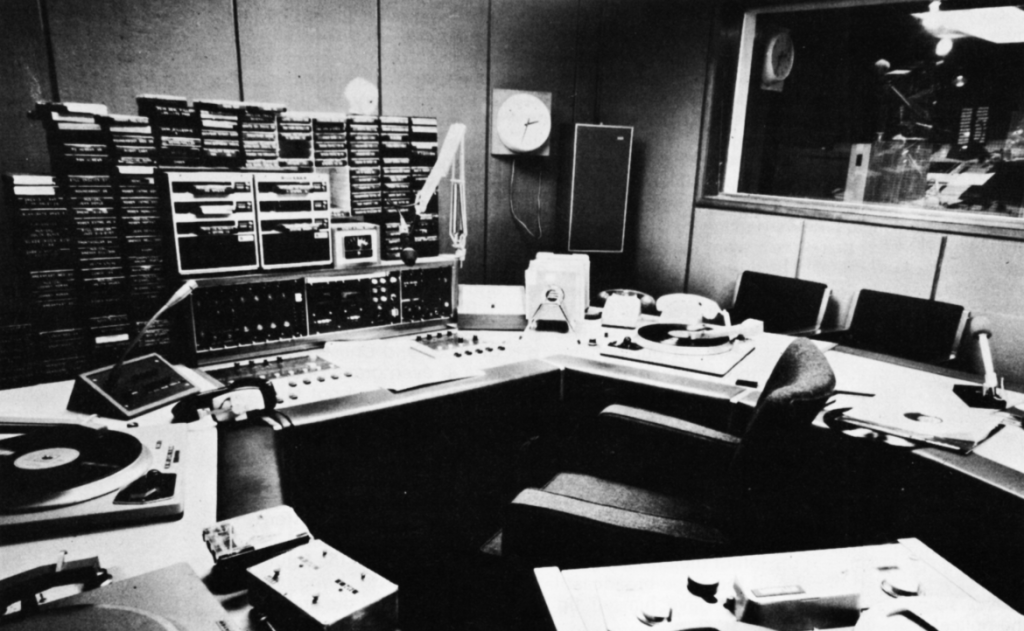
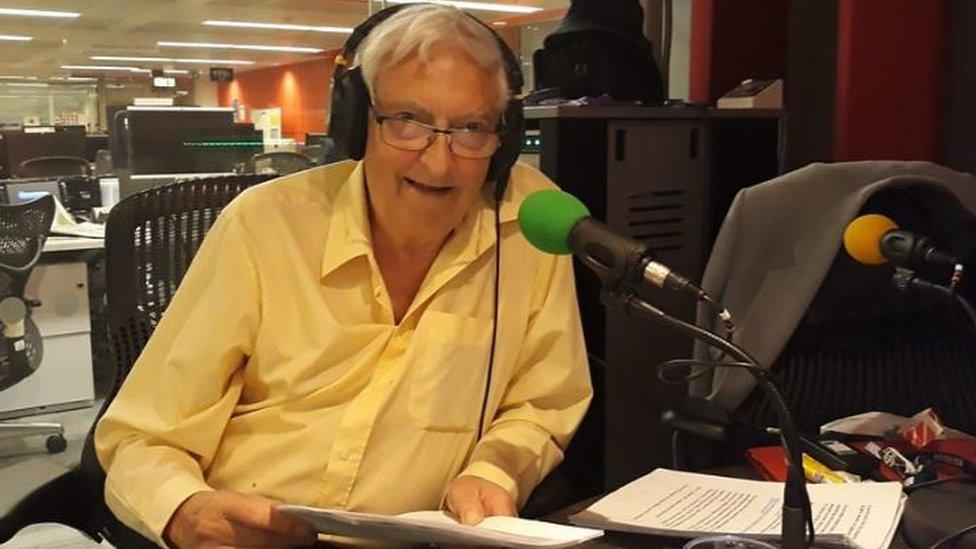
Radio Hallam studio in 1975
Keith Skues presented his last show for the BBC in 2020

© 2024 David Poole. All Rights Reserved
Categories
Buildings Companies

The long history of Eadon, Lockwood and Riddle

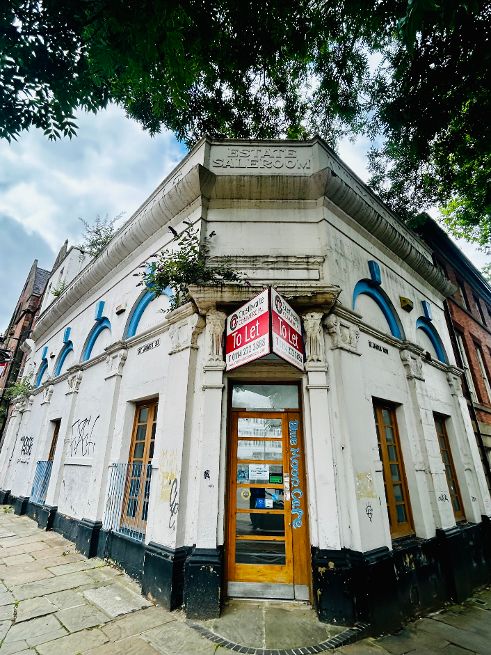
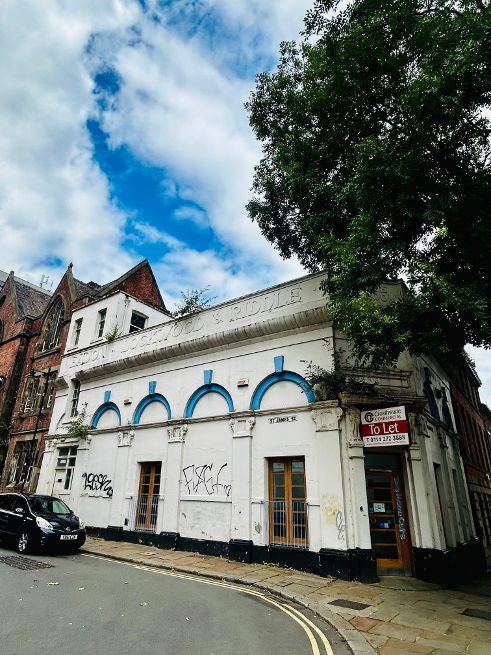
Former Estate Saleroom of Eadon, Lockwood and Riddle at 2 St James Street. More recently it was used by the Blue Moon Cafe. Image: DJP / 2024

I remember something somebody once said to me. “We have ELO (Electric Light Orchestra), ELP (Emerson Lake and Palmer), and ELR (Eadon Lockwood and Riddle).”

The last one was meant as a joke, but it showed the strength of a local business that was founded almost two centuries ago.

The firm of Eadon and Lockwood was founded in 1840 by William Henry and John Alfred Eadon, the second and third sons of George Eadon, a well known cabinet maker.

The business was carried on as W.H. and J.A. Eadon, auctioneers, valuers and share brokers for some years at Fargate in part of the premises that we refer to today as Coles Corner.

In 1855, they moved to new premises at No. 2 St James Street, which were built on the site of the old Sheffield Parish Church vicarage by George William Travis, known in his day as a builder and contractor, who subsequently sold it to tenants.

William Henry Eadon died in 1876, after being in failing health for five years, and his son, William Mitchell Eadon, who had joined the business in 1867, became a partner, and eventual head of the firm. Vincent Percy Eadon, the son of J.A. Eadon subsequently joined the business.

J.A. Eadon retired about 1880 and died shortly afterwards.

The business carried on under the same name until 1887, when, although the partnership continued, the stock-broking part of the business was separated, and attended to by Vincent Percy Eadon until his death in 1900, after which date William Mitchell Eadon carried on their auction and valuation business as sole partner until joined in 1917 by Joseph Cyril Lockwood, who married his daughter.  

He was the grandson of Joseph Lockwood, and second son of William Lockwood of Lockwood Brothers (another auctioneer and well-known amateur cricketer). William Mitchell Eadon had already been in business with Lockwood (and Ernest Dutchmann) as a stock and share broker but this had been dissolved in 1912.

Eadon and Lockwood covered a wide range, including many extensive sales of machinery, while, after the First World War, a succession of sales for the Disposals Board was entrusted to them, the amount of money raised reaching nearly half-a-million pounds.

Art sales also formed a part of the firm’s activities including collections by Richard Bayley, Henry Elliott Hoole, William Turner, W.H. Crowley, and the Craven collection. Among important sales of property were the estate of Robert Younge in the 1870s and the Duke of Norfolk estate.

Sales of antique furniture, silver plate, and other objects occupied a prominent place in the firm’s operations.

The Eadon and Lockwood partnership was dissolved in 1933, and a new company formed when John Tharratt Riddle, the younger son of J.C. Riddle of Grindleford, joined the firm. He had previously been articled to a firm of Sleaford auctioneers and the Sheffield connection probably came through his father who was head of silversmiths Walker and Hall Ltd.

Over the following years, ELR became one of the region’s biggest and most trusted estate agents, as well as operating the auction house business.

The St James Street building was sold in 2001 and obtained by the Blue Moon Cafe looking for somewhere larger after their initial Norfolk Row premises were proving too small. Refurbishment was by Burnell Briercliffe Architects. Blue Moon Cafe closed in January 2023.

ELR auctions continued at the Nichols Building at Shalesmoor and in 2010, now independent to the estate agent business, underwent a substantial programme of expansion, constructing a modern, purpose-built saleroom, re-branding, and becoming the Sheffield Auction Gallery at Windsor Road, Meersbrook.

The estate agency business was sold to Abaco for £4m in 1987 and would form the regional office of Lambert Smith Hampton in 1988, and was one of the few acquisitions that was allowed to trade under its own name.

It was forced to downsize either side of the millennium, and in 2006, a new independent company was created called Eadon Lockwood and Riddle Ltd, and still maintains its Sheffield connection as the city’s  longest established estate agent. 

Former Estate Saleroom of Eadon, Lockwood and Riddle at 2 St James Street. It has been empty since Blue Moon Cafe closed in January 2023. Image: DJP / 2024

© 2024 David Poole. All Rights Reserved
Categories
Companies

WH Smith got the business because they were better at it than their competitors

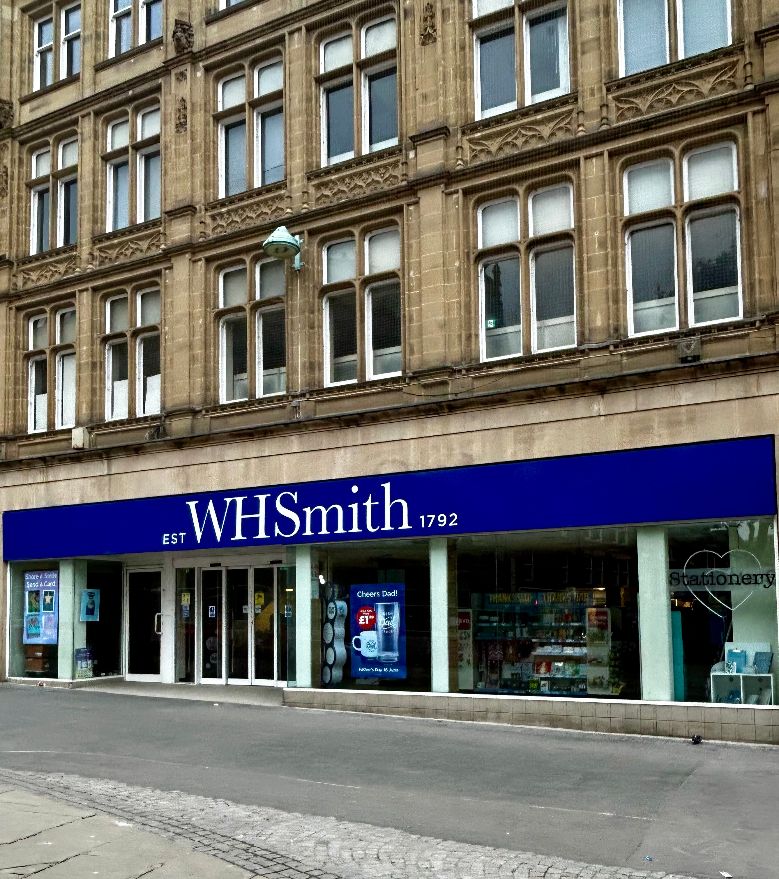
Fargate is in a bit of a mess as it moves away from traditional retail space towards a leisure and social hub. If we’re being honest, we all expect Marks & Spencer to announce the closure of its store at some stage, and what a devastating blow that will be. But there is another retailer that might have a wobbly time ahead. I’m referring to WH Smith whose city centre store opened in the 1970s and is only the second retailer to have occupied 38-40 Fargate. It was, of course, built for provisions merchant Alfred Davy in 1881-1882 by Sheffield architect John Dodsley Webster. Look closely at the exterior and you can still see the carved stone heads of a sheep, cow, pig, and ox.

All is not well at WH Smith, and its High Street stores are struggling to cope with life in the twenty first century. Last month, WH Smith reported another year-on-year dip in sales at its large stores. This contrasts with an eight per cent rise in revenue at its travel stores, those situated in airports and railway stations across the world. “The transformation of the business to a one-stop-shop for travel essentials is delivering strong results, increasing average transaction values and returns,” says the company.

It is a case of things going full circle as I shall explain in a moment, but the question remains. How long will it be before WH Smith calls time on its High Street operation? Sales of newspapers, magazines, books, and stationary, have been eroded by the internet, resulting in a watered-down offer. Instead, we’re left with too many phone chargers and fridges full of chilled drinks. The result is a store lacking atmosphere and too few staff to make the shops look as nice as they used to.

The WH Smith archive is held at the University of Reading but the exact date when it was founded is uncertain. The best guess is sometime between 1787 and 1792 but we do know that its roots were in the newspaper distribution business.

Records show that Henry Walton Smith (1738-1792) to be owner of a Mayfair ‘paper round’ in 1792, delivering expensive newspapers to rich London clients. This was also the year of his death, and the year of William Henry Smith’s birth. Anna Easthaugh, Henry Walton’s widow, ran the business until her death in 1816.

It was her second son, William Henry (1792-1865), who turned it into ‘a house… without its equal in the world’, as The Bookseller described it in its obituary. He had exploited the market for London papers that existed outside the capital, using the newly developed network of seven hundred daytime stagecoaches to get newspapers to the provinces  many hours before traditional carriers, the night-time mail coaches. There was little profit in the operation, and it took him thirty years to realise that he needed help, and a successor.

His son, William Henry II (1825-1891), had wanted to be a clergyman, but his father demanded that he join the business instead. It was a shrewd move, because William Henry II capitalised on the new railway network as a speedier alternative to the coach, and then he started bookstalls, and developed the more familiar role that the company became famous for. By the end of the century, there was a WHS bookstall on almost every station (in 1902, there were 1,242 of them).

Writing about the history of WH Smith in 1985, Michael Pountney said that “expansion seemed unstoppable. Extension of the railway network meant more stations. Elimination of stamp duty on newspapers meant lower prices and more sales. Better education meant more readers. Unstoppable, but not inevitable: Smith’s got the business because they were better at it than their competitors, more reliable, more efficient, better able than their less scrupulous rivals to do good business without offending against the stern moral values of the age.”

Things were about to change.

Before the end of the nineteenth century, railway expansion slowed almost to a halt, the Victorian boom slowed, and William Henry had become an MP that took him away from the business. He died in 1891, leaving the business floundering.

The merger of two of the biggest railway companies, GWR and the LNWR, in 1905, resulted in WHS losing 250 bookstalls at its stations, but it responded by opening 144 shops in towns where they had lost a stall. The man credited for this entrepreneurial genius was CH St J Hornby, friend of WHS’s new proprietor, William Frederick Danvers Smith (later second Viscount Hambleden).

Opening shops was a retaliatory measure against the loss of the bookstall contracts, but its move onto the High Street was a success, with rapid extension across most of the country in the twentieth century, matched by a reduction in the importance of bookstalls. Only with the full development of the shops did the stationary, book and record departments come to rival the supremacy of news and periodicals.

WH Smith went public in 1949 but continued to be run by the Smith family until 1972 when David Smith stepped down as chairman, and then Julian Smith’s retirement in 1992 marked the end of family involvement in executive management.

In 1966, WH Smith created a standard book number consisting of a nine-digit code, which was adopted in 1970 as the international standard number and finally became the International Book Number (ISBN) in 1974.

Let us not forget the other enterprises that WH Smith were once involved with. WH Smith Travel operated from 1973 to 1991, and in 1979 it acquired the Do It All chain of DIY stores, later merging with Payless DIY (owned by Boots). It went on to purchase 75 per cent of share in Our Price music stores and even held a minority stake in ITV. Between 1989 to 1998, the company was a major stakeholder in the Waterstones bookshops, resulting in WHS own bookshop brand Sherratt and Hughes (which had already subsumed Bowes & Bowes) being merged into Waterstones. WHS eventually pulled out of all its external interests.

And so, we come that full circle. The High Street shops are struggling, victim of changing shopping trends, and the future of the company appears most likely to be catering to the needs of travellers, over 640 stores in thirty countries outside the UK, much like those Victorian bookstalls did.

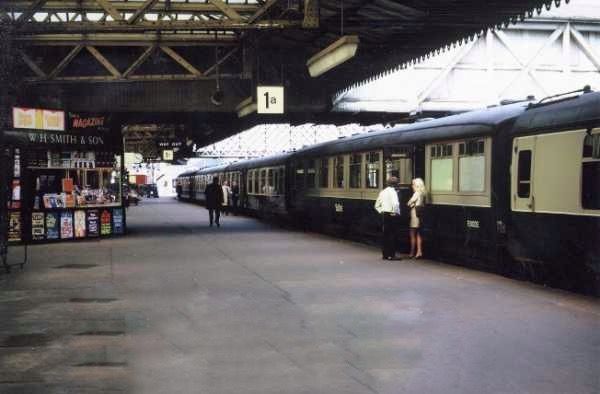
Platform 1, Sheffield Midland railway station showing (left) WH Smith and Son, newspaper stall. WH Smith also had a newspaper stall Sheffield’s Victoria Station. Image: Picture Sheffield

© 2024 David Poole. All Rights Reserved.

Categories
Buildings Companies

That ‘German’ company’: The rise and fall of Wilson Peck

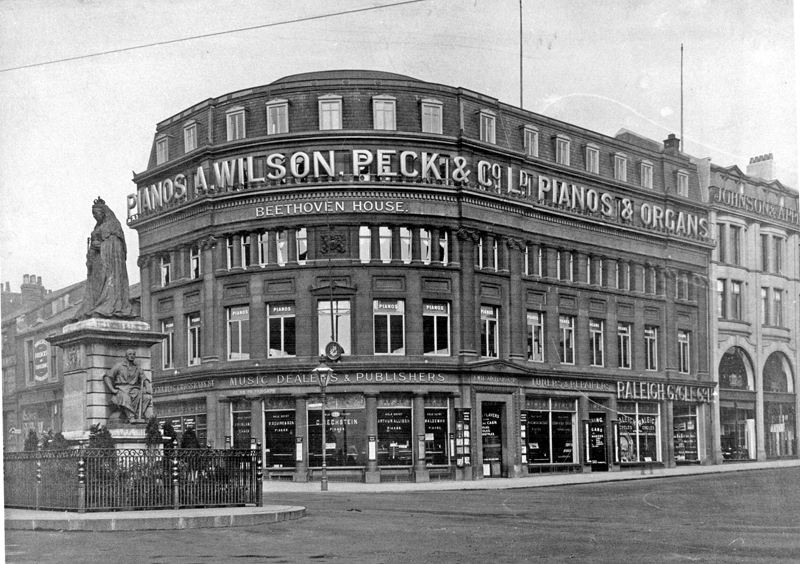
Wilson Peck Ltd., Beethoven House, Music Warehouse, Nos, 66, 68 and 70, Leopold Street, from Town Hall Square. Image: Picture Sheffield

The year is 1917 and Maximilian Lindlar is feeling annoyed. He had decided to sue Herbert Sinclair, editor of The Piano Maker, and its printers, King and Jarrott, for damages for an alleged libel contained in an issue of the paper.

Lindlar, born in Dusseldorf, left Germany at an early age, and had lived in Britain for forty years. A naturalised Englishman, denaturalised in Germany, he was a freeman of the City of London and between 1884 and 1912 he had been in the service of Edwin Bechstein, of Johanns Strasse, piano makers of Berlin.

The Bechstein business was founded in Berlin in 1853, developing a full range of pianos that met the requirements of professional pianists, musical institutions, and private music lovers alike. In London, its distribution was centred at Bechstein Hall in Wigmore Street, with upwards of one thousand grand and upright pianos displayed in different showrooms, with over one hundred musicians engaged for teaching purposes, and over four hundred concerts held every year.

While under the employment of Bechstein, Lindlar became involved with two British companies, Arthur Wilson and Peck Ltd of Sheffield, and Hopkinson Successors Ltd of Leeds, two retailers with monopolies for selling pianos in their respective cities.

In 1915, the total capital of Arthur Wilson and Peck was £20,000; Edwin Bechstein holding £10,250 of shares and Max Lindlar possessing £1,500. Lindlar’s brother, William Ludwig, a director, was the second highest shareholder with £2,562.

When war against Germany broke out in 1914, Bechstein’s holdings had allegedly been transferred to British shareholders, but this turned out not to be the case.

Lindlar had taken offence that Sinclair had published a scathing article and had dragged up comments made by him in preceding years.

“It is a national impossibility for an Englishman to produce a piano with each note perfectly balanced in tone. He has no true ear. His piano sounds all right to him, he does not know.”

Sinclair also published comments that Lindlar had made about the war.

“I do not think that England will be able to hold out financially to the end as Germany is very strong and well organised.”

What irked Lindlar most was a story in a newspaper that claimed he was attempting to drive British officers out of London’s German Athenaeum Club.

Such was the controversy over Arthur Wilson Peck and Co’s German influence that it was discussed in Parliament and subject to investigation by the Board of Trade in 1916.

Lindlar won his case and was awarded one farthing in damages, but Arthur Wilson Peck and Co suffered, its name  ‘MUD in large letters’ according to one journal while others continued to call it a ‘German’ company. Soon afterwards, Edwin Bechstein’s shares were sold to a British businessman and the Lindlar brothers held a dinner at Sheffield’s Grand Hotel to announce that their interests had also been sold and were retiring from the business.

Afterwards, it was business as usual for Arthur Wilson and Peck Ltd, a Sheffield company that grew out of Victorian enthusiasm for the piano.

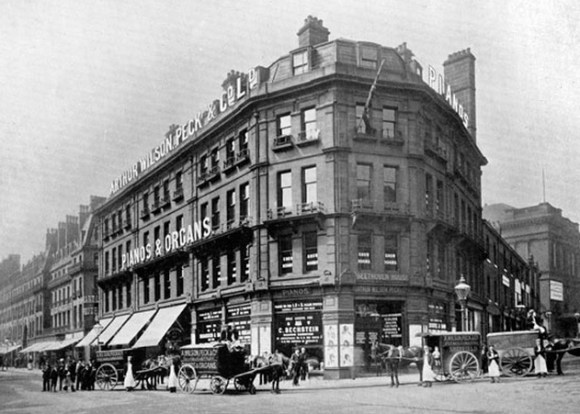
The first shop. Arthur Wilson, Peck and Co., Ltd., pianoforte, organ, and musical instrument dealers, Beethoven House, Pinstone Street. 1897. Image: Picture Sheffield

The company was created after Max Lindlar had masterminded the merger of two successful Sheffield piano sellers, Arthur Wilson, and John Peck, in 1892.

Arthur Wilson had started out as a piano shop at the corner of York Street before moving to Fargate and West Street, while John Peck, a piano tuner, had a business at the County Piano Saloon on Church Street (situated in the Gladstone Building).

The story behind Arthur Wilson is a strange one because the name was a pseudonym created to disguise the identity of the shop’s real owner.

He was Henry Charles Brooklyn Mushet (1845-1923) from Belgrove House, Cheltenham, the son of Robert Forester Mushet, the inventor of ‘Mushet’ steel, a self-hardening steel, who came to Sheffield with his brother Edward in 1871 to supervise the manufacture of ‘Mushet’ steel at Samuel Osborne and Co, Clyde Steel Works, on The Wicker. A music lover, he set up Arthur Wilson as a side line in 1878 and became an agency for Bechstein Pianos, where he met Max Lindlar.

John Peck (1841-1922) was born in Blyth, near Worksop, and was also regarded as the “father of the city’s fiddlers,’ his skills as a violinist surpassing those of the ‘stars’ who visited Sheffield and a man who went on to become a successful conductor.

With Max Lindlar’s connection to Bechstein Pianos it was decided to form Arthur Wilson, Peck and Co Ltd in 1892. With capital worth £20,000, Lindlar became chairman and John Peck joined as a director, but Mushet decided to step down from the business. Other notable appointments were William Cole, another piano dealer, who served as Managing Director for the first year and C.D. Leng, son of newspaper publisher William Christopher Leng, and a partner in the Sheffield Telegraph.
The first task for the new company was to close its three shops on West Street, Fargate, and Church Street, and consolidate its business in premises vacated by Hepworth Tailor’s at the corner of Pinstone Street and Barker’s Pool. It had cost £470 to set up the company and convert the building into ‘Beethoven House’.

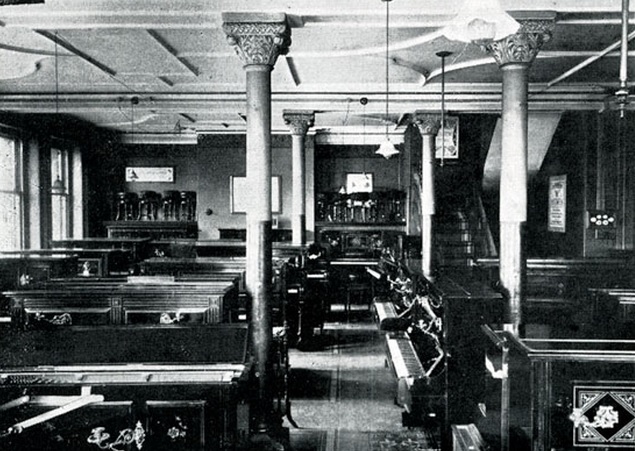
Arthur Wilson, Peck and Co., Ltd., pianoforte, organ and musical instrument dealers, Beethoven House, Pinstone Street – 1897. Portion of Show-Room for High-class Upright Grands. Image: Picture Sheffield
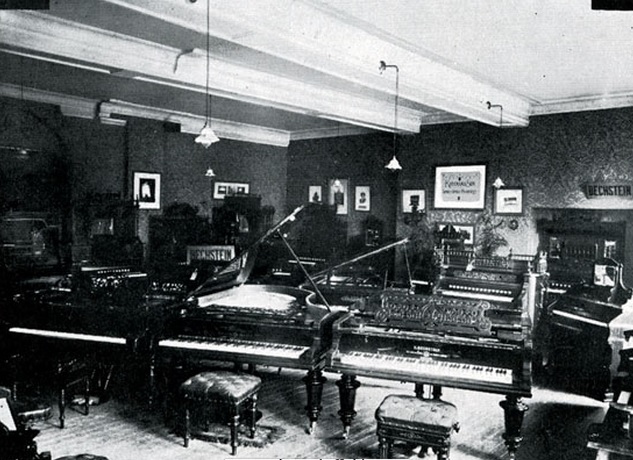
Arthur Wilson, Peck and Co., Ltd., pianoforte, organ and musical instrument dealers, Beethoven House, Pinstone Street – 1897. A Corner of the Show-Room for Grands. Image: Picture Sheffield
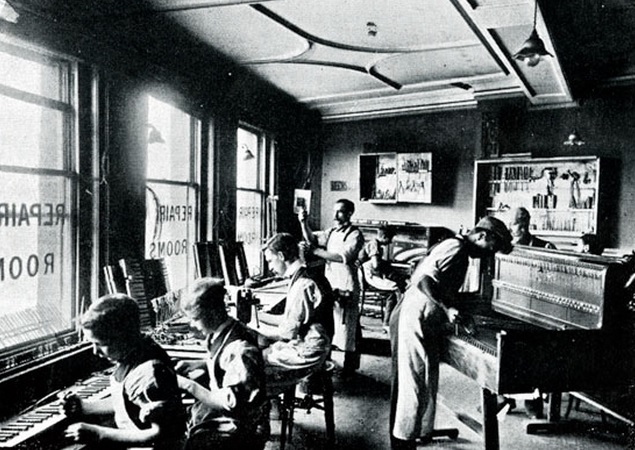
Arthur Wilson, Peck and Co., Ltd., pianoforte, organ and musical instrument dealers, Beethoven House, Pinstone Street – 1897. Repairing Room No.14. Image: Picture Sheffield
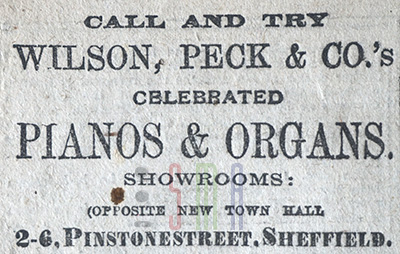
Newspaper advertisement. 1890s. Image: British Newspaper Archive

Within months, Max had been joined by his brother, William Ludwig Lindlar, who had intended to follow in the footsteps of their father, the landscape painter J.W. Lindlar. Instead, he assumed musical and commercial work, and would eventually become vice-president of the Music Trades Association of Great Britain. He became managing director in 1894 and was responsible for organising important concerts in Sheffield and Nottingham, where the company had established a second store.

They were described as pianoforte, harmonium and American organ merchants, tuners, and repairers, as well as sole agents for Bechstein pianos. Within the Pinstone Street building it also had a concert hall used for concerts and recitals.

In 1905, Wilson Peck moved to the opposite corner of Barker’s Pool in the former premises of Appleyards and Johnson, cabinet makers. It was described as ‘the best equipped premises outside London’ and the replacement Beethoven House is the building that most of us still remember.

Wilson Peck were famous for selling musical instruments, sheet music, hosting concerts, and selling ‘new’ phonographic records. On its upper floors it had rooms that could be used for tutors to teach music. In later years it developed a thriving business selling concert tickets for the City Hall and other venues across the country. Wilson Peck ended up with Sheffield’s oldest record department (memorable for its soundproofed listening booths) with sales of records accounting for a sizeable proportion of its business.

Shares in the business changed hands following the departure of the Lindlar brothers and at one stage its chairman was B. J. Readman, who also happened to be chairman of John Brinsmead & Sons, one of England’s premier piano makers. Additional branches soon followed on London Road and Ecclesall Road.

A 1956 advert claims the shop to be ‘the place to go for everything musical: Pianos, Television, Radio, Radiograms, Records, Concert Tickets, etc.’

Wilson Peck was held in high esteem, and it is hard to determine when its decline began. Two World Wars didn’t help a niche market, and the Victorian ideal of making music at home, when pianos were a common sight, had disappeared by the early twentieth century, having a devastating effect on sales of musical instruments and sheet music.

By the 1970s, the directors at Wilson Peck had diversified into property investment culminating in several subsidiary companies and ownership of buildings across the UK. Originally known as the Wilson Peck Group, it changed its name in the 1980s to Sheafbank Properrty Trust, subsequently becoming UK Estates.

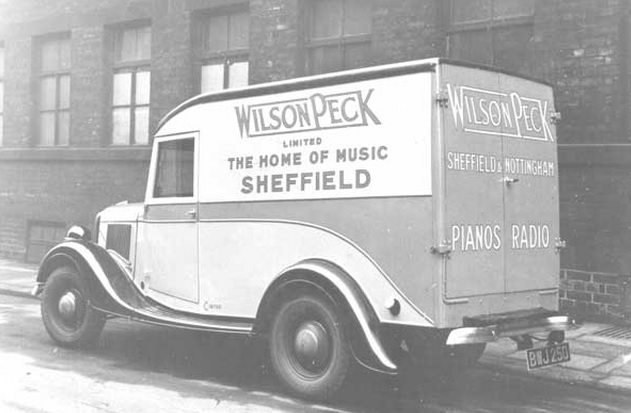
Delivery van, Wilson Peck Ltd. Image: Picture Sheffield

The retailing demise came in the 1980s when Sheffield City Hall decided to take its ticket sales in-house, and the emergence of national record chains (HMV, Virgin Records, Our Price etc.) eroded into Wilson Peck’s earnings.

In 1988, the company vacated Beethoven House, and H.L. Brown, jewellers, moved in. Wilson and Peck downsized to premises on Rockingham Gate but that proved short lived. I’m led to believe that Wilson Peck ended up in ‘an end-of-terrace’ corner shop on Abbeydale Road that closed in 2001.

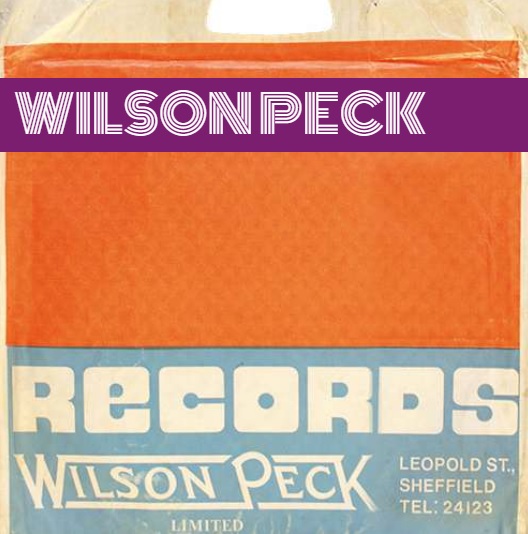
Retro bag for Wilson Peck. Image: British Record Shop Archive

NOTE: –
During the Parliamentary discussion about Arthur Wilson, Peck and Co in 1916, it was said that they also owned a business called Hilton and Company. There is no trace of this business, not helped because Wilson and Peck didn’t retain its archives.

However, there is a post from 2015 on the UK Piano Page whereby somebody said that they had bought an old upright piano: –

“The piano has ‘Hilton & Co’ written in gold writing in the centre of the key cover, also it has ‘Wilson Peck, Fargate, Sheffield’ written on it on the right hand side of the key cover.”

There was a Yorkshire piano company called Hilton and Hilton, but this piano appears not to have been manufactured by them.

Was Hilton and Co a brief attempt by Arthur Wilson, Peck and Co to sell its own manufactured pianos? Somebody, somewhere, might have the answer.

© 2024 David Poole. All Rights Reserved.

Categories
Companies People

Harris Leon Brown – a Polish refugee who made Sheffield his home

Harris Leon Brown came to England from Poland with an introduction to Alfred Beckett & Sons. He started by travelling around as a watch maker. Image: H.L. Brown

This is a story of an Eastern European fleeing from Russia, and the tale of a refugee who ended up in Sheffield.

Harris Leon Brown, jeweller, diamond merchant, and horologist, was born in Warsaw, Poland, in 1843, the son of a Russian government contractor, Baruch Brown.

He received his education at Warsaw Seminary Schools, and became an apprentice to Moses Neufeld, one of the largest firms in Warsaw engaged in the Sheffield trades.

When only 17, he was a revolutionary in Poland, one of the many who could not tolerate the oppression which Russia sought to impose upon his country. His part in the insurrection was of short duration, for he saw too many of his friends either shot by the military or hanged in the streets, so he determined to seek refuge in England. This was no easy task, for in those days the passage of Poles through Germany was fraught with the danger of being caught by the Germans with the inevitably painful process of being pushed back to Poland.

But sleeping during the day and the friendly conveyance of market carts during the night enabled him to make progress to Hamburg, then a ‘free’ port, where he took a boat to Hull.

Harris Leon Brown (1843-1917), diamond merchant, jeweller and horologist of Poland and Sheffield. Image: Picture Sheffield

Sheffield was his destination, and with no money to his name, and a ‘stranger in a strange city’ he was introduced to Alfred Beckett and Sons (with whom Moses Neufeld did extensive business) and Burys Ltd. These firms, especially the former, treated him in a paternal manner, and through their guidance he remained in Sheffield.

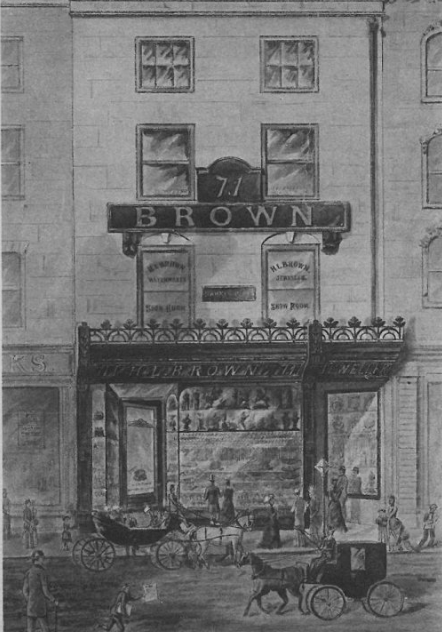
With his instinct for trading, and by strictly honourable dealing, he founded a lucrative business in 1861 as a watchmaker; he began trading from 29 Gower Street in 1867; by 1876 H.L. Brown was situated at 24 Angel Street and in 1877 connected directly to Greenwich, with the introduction of the 1.00pm clock time signal.

H.L. Brown, 71 Market Place, Sheffield. Image: H.L. Brown

Around 1888, the firm moved to 71 Market Place (where the earliest known image of the premises exists).

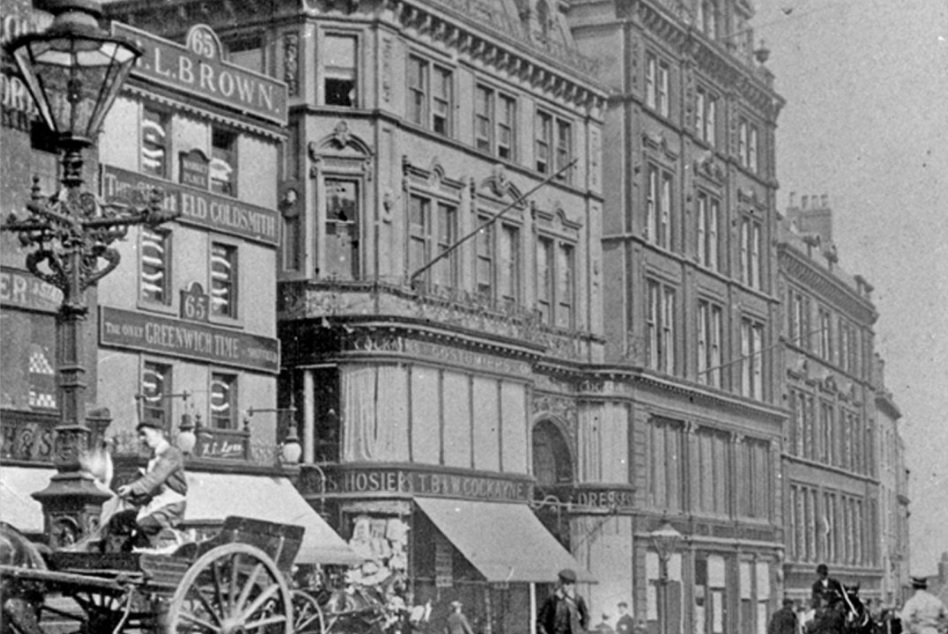
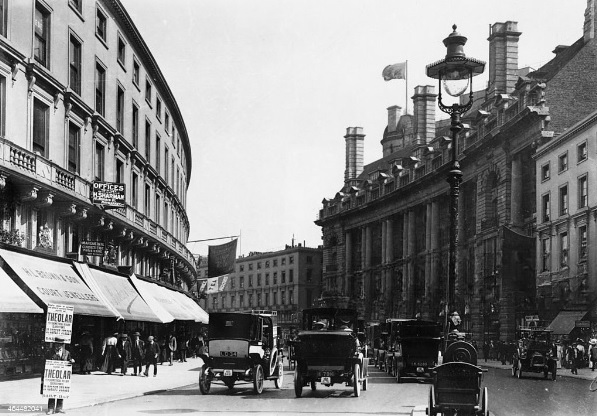
In 1896 the firm moved again to 65 Market Place and by 1906 he had opened a branch on Regent Street.

In 1896, H.L. Brown moved to 65 Market Place, Sheffield. Image: H.L. Brown
In the 1930s, H.L. Brown was modernised. Image: H.L. Brown
While searching for photographs of London’s Regent Street, this image from 1910 appeared and shows H.L. Brown at 90 and 90A. Image: Getty Images

Harris Brown married a Sheffield woman, Ann Kirby (daughter of Charles Kirby, Cutler) at St Mary’s Church, Bramall Lane, in 1865. Instead of giving a dinner for his golden wedding anniversary, he sent a cheque for £100 to the Lord Mayor to distribute among various war charities.

During his early years in Sheffield, unable to speak English, he saw a review of troops at Wardsend, and feeling grateful to his new homeland, joined the Hallamshire Rifles, and took pride in doing ambulance work with the local corps. It was characteristic of him that he presented to the St John Ambulance Association a silver shield for competition.

He became the oldest member of Sheffield’s Jewish community, and for many years was Chairman of the Sheffield Jewish Board of Guardians and served as President of the Sheffield Hebrew congregation. He was a prime mover in building a Synagogue in North Church Street, as well as a new place of worship at Lee Croft. He also helped secure a Hebrew burial ground at Ecclesfield. In 1910, he was elected a member of the Jewish Board of Deputies, the first occasion on which a Sheffield Jew had been so honoured.
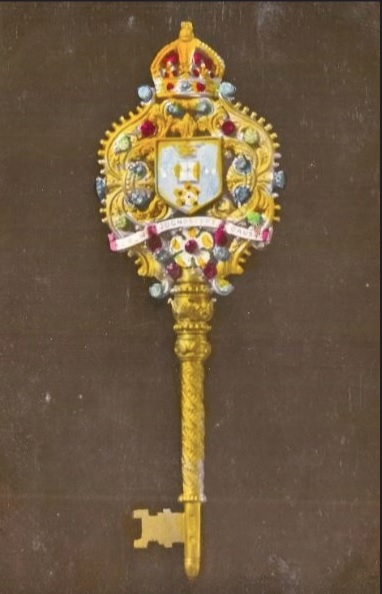
H.L. Brown and Son had contracts with the Government’s Admiralty and India offices  for their watches, and had obtained, for excellence in workmanship, several Kew (Class A) certificates. In their goldsmith’s workshops they manufactured the jewelled key which was presented to King Edward when he opened the University of Sheffield in 1905.

The jewelled key presented to King Edward VII at the opening of the University of Sheffield. Image: Picture Sheffield
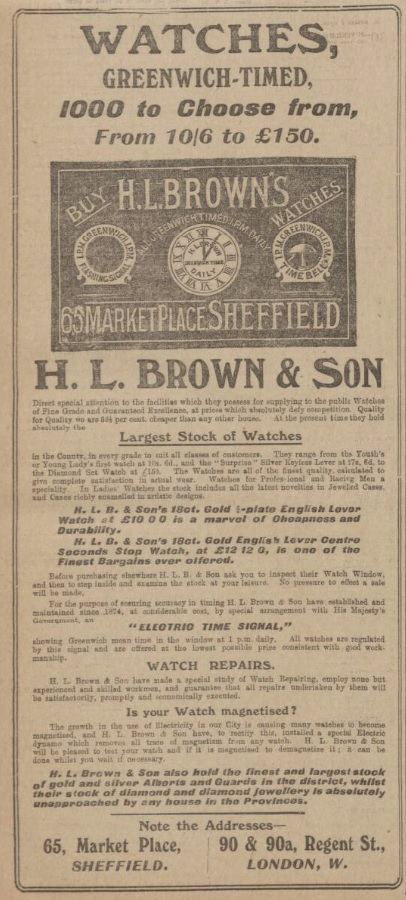
Newspaper advertisement from 1907. Image: British Newspaper Archive

In 1914, he was on holiday with his wife in Germany when war was declared. After eight nerve-racking days, they made their way home, avoiding the gauntlet of military patrols, before escaping back to England.

When in Sheffield, he resided at Kenyon House, 10 Brincliffe Crescent. He died, aged 74, following a seizure at his London residence, 23 Briardale Gardens, West Hampstead, in 1917.  He was survived by his wife, three sons, and four daughters. One of his sons, Bernard Brown, succeeded him in the business.

At the time of his death, it was said that “he took pride in recognising all the obligations which the adoption of English nationality should entail.”

His interment was at the Jewish Cemetery, Edmonton, London. He had great aversion to any kind of display, and by his own expressed wish, the funeral ceremony was simple. No flowers were sent, the coffin was covered in plain black, and the obsequies were conducted with the strictly simple solemnities of the Jewish ritual. In accordance with the custom of that ritual, no ladies were present.

He left property of the value of £29,785 and gave £100 each to the Jewish congregation in North Church Street, the Central Synagogue, and the Talmud Terah School, as well as donations to the Sheffield Royal Infirmary, Sheffield Royal Hospital, Jessop Hospital for Women, and the Sheffield Hospital for Sick Children.

In the 1920s and 1930s, H.L. Brown opened branches in Doncaster and Derby, with Bell brothers of Doncaster joining the family business.

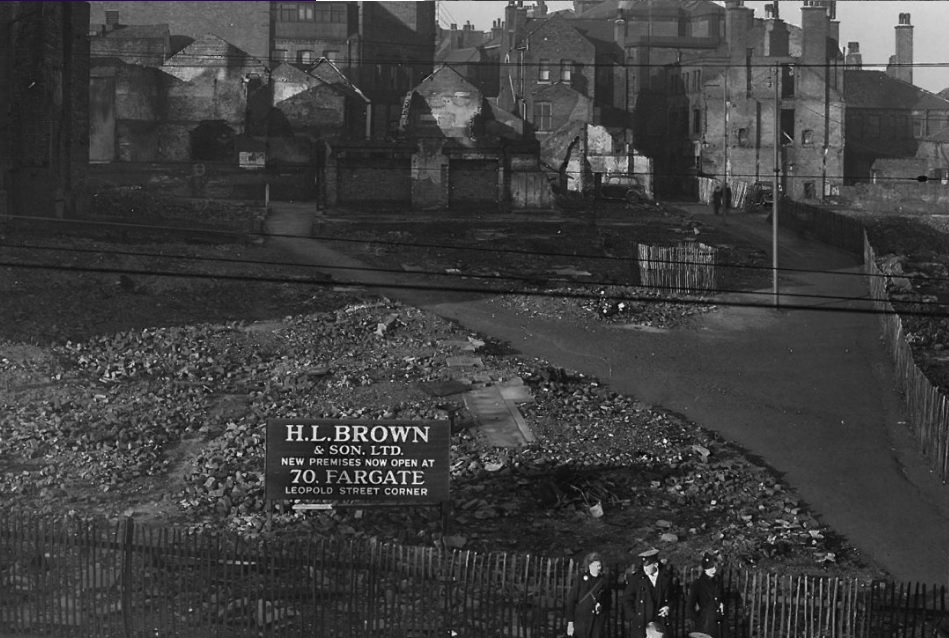
In 1940, the Sheffield shop was destroyed in the Blitz and business moved to 70 Fargate. Image: H.L. Brown

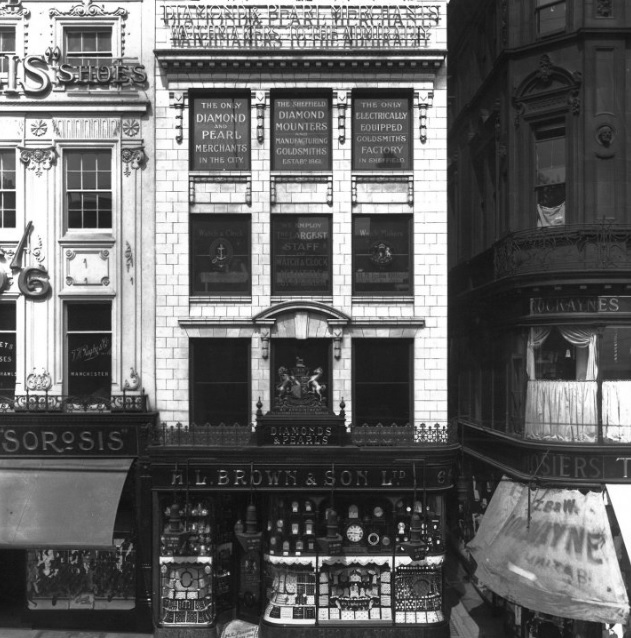
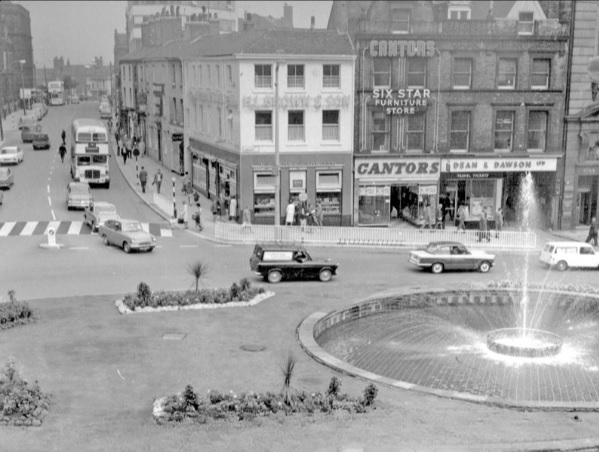
During the Sheffield Blitz (1940) H.L. Brown’s was bombed and business moved to 70 Fargate, at the corner with Leopold Street. The firm moved to its current location of 2 Barker’s Pool when Orchard Square was built in 1986. To this day, the 1,00pm time signal still sounds daily.

Town Hall Square in 1967 looking towards Fargate and Leopold Street, Goodwin Fountain, foreground, and No 70, H.L. Brown and Son Ltd. Image: Picture Sheffield

James Frampton (Harris Brown’s great great grandson) joined the business in 1989 after qualifying as a gemologist and training in the jewellery trade in Switzerland and London. He became MD from 2001 onwards.

In 2020, the store was modernised, and a Rolex showroom introduced.

Today,  H.L. Brown operates in Sheffield and Doncaster (still using the Bell Brothers name), as well as Barbara Cattle (York), James Usher (Lincoln) and Bright and Sons (Scarborough).

H.L. Brown at 2 Barker’s Pool, Sheffield, in 2022. Image: DJP/2022

©2022 David Poole. All Rights Reserved.

Categories
Buildings Companies

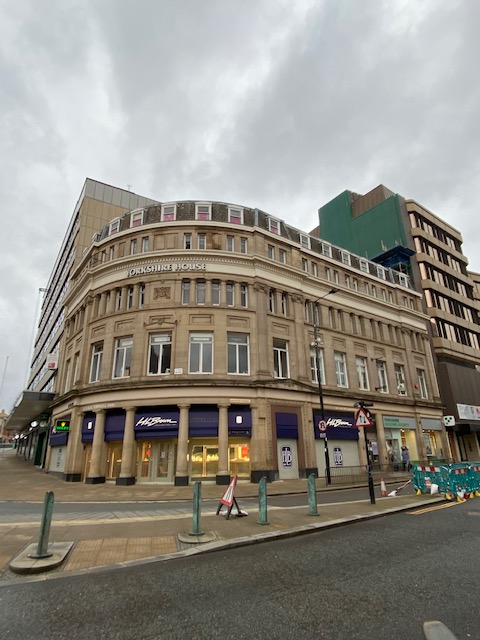
Bad businessmen, rogues, and criminals. The collapse of William Bissett and Sons

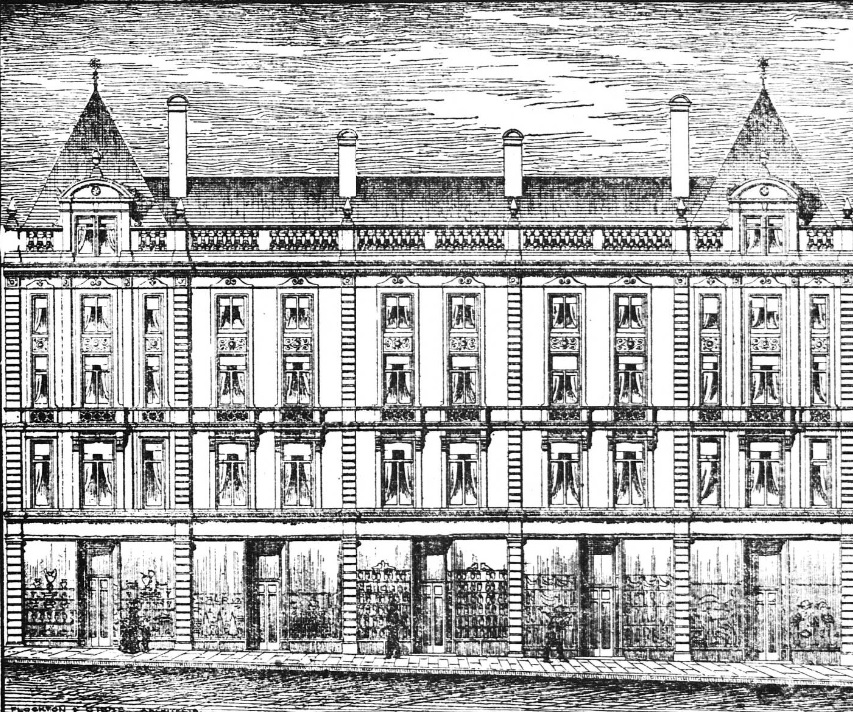
New shops erected in Fargate in 1884 for William Bissett. The architects were Flockton and Gibbs. The shops and offices still exist. See image at bottom of post. Image: British Newspaper Archive

When we look at Sheffield, the names of two construction firms – George Longden and Henry Boot – often appear. However, some of our well-known buildings were built by a company that has been erased from history. And perhaps for good reason.

William Bissett was a self-made man. Born in Pilsley, Derbyshire, he came to Sheffield and was apprenticed to Primrose and Company, where he acquired a practical knowledge of plumbing and glazing.

Afterwards, he set up on his own on West Street, adding further trades such as gas-fitting, painting, paperhanging, and general decorating. The success of the business allowed him to take on a partner, John Edwin Elliott, and move to more extensive premises on Devonshire Street, used as offices and showrooms, and workshops at Wilkinson Street, Pinfold Street, and Mary Street.

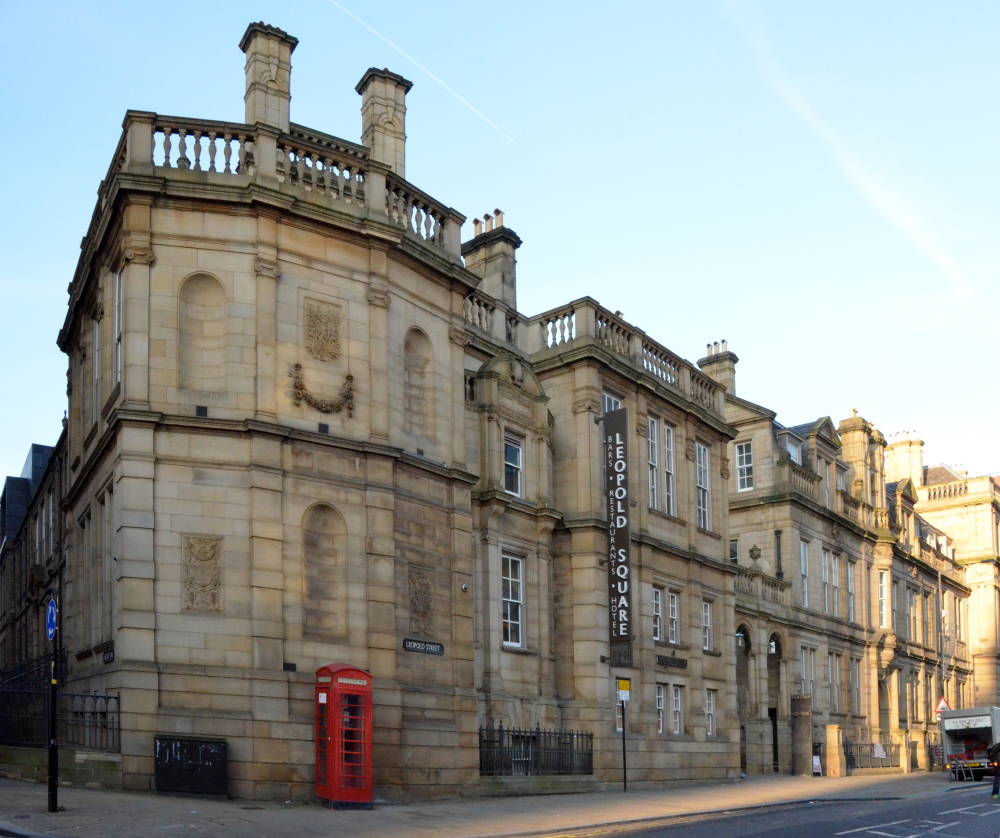
He launched as a general contractor and builder and managed to obtain important contracts in Sheffield and Birmingham. Amongst the earliest of his employers was Mark Firth, who entrusted him to enlarge his residence at Oakbrook, but this work was dwarfed by the magnitude of his public contracts, the most important of which was the Central Schools, School Board offices, and Firth College (now forming Leopold Square and Leopold Hotel).

Firth College. Now part of Leopold Hotel. Image: DJP/2022

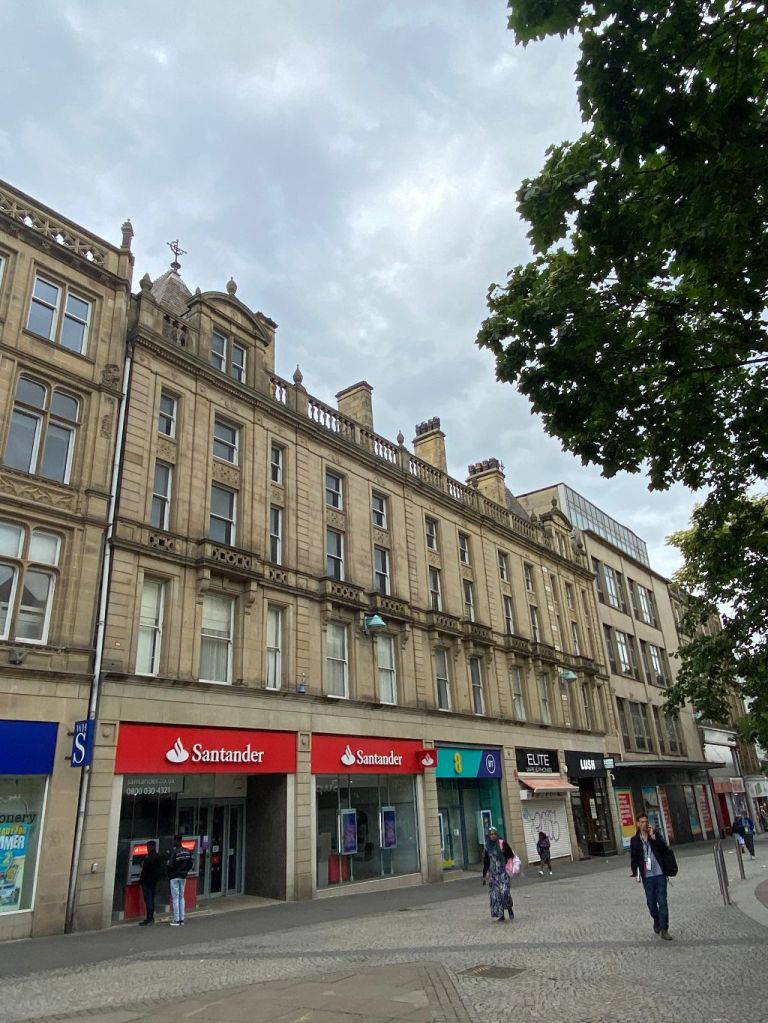
When Sheffield Corporation started its Street Improvement Scheme in the 1870s, Bissett was extensively engaged in the erection of palatial; new business premises on Fargate and Pinstone Street, and himself acquired several valuable sites.

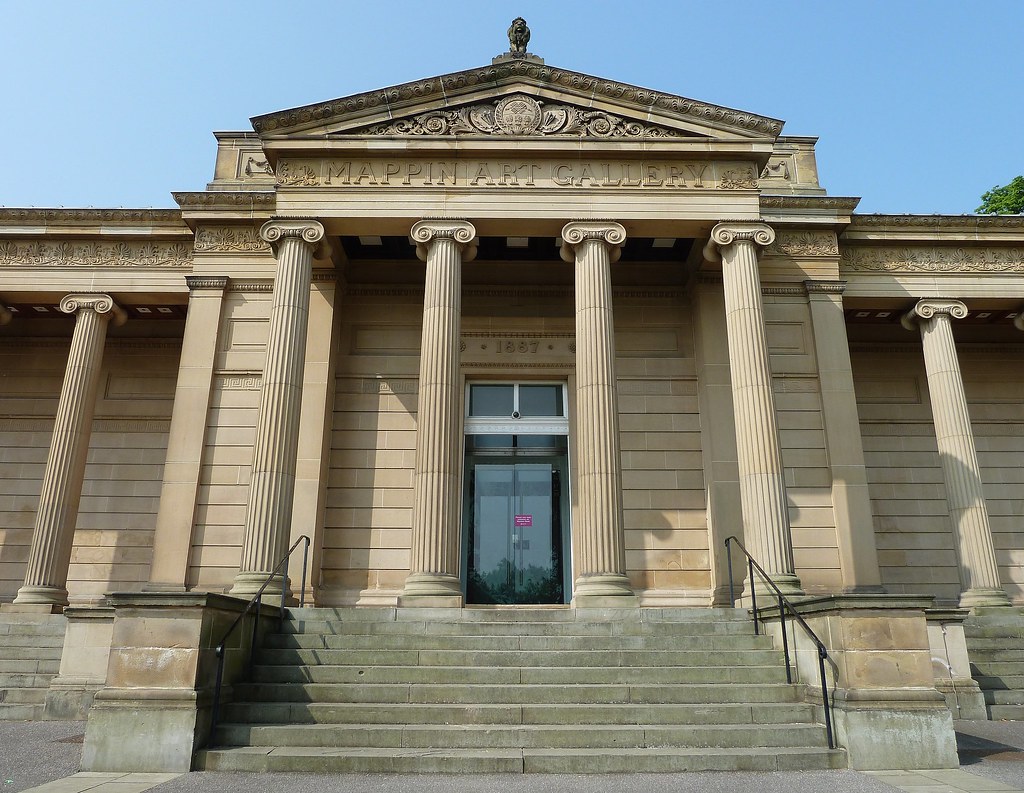
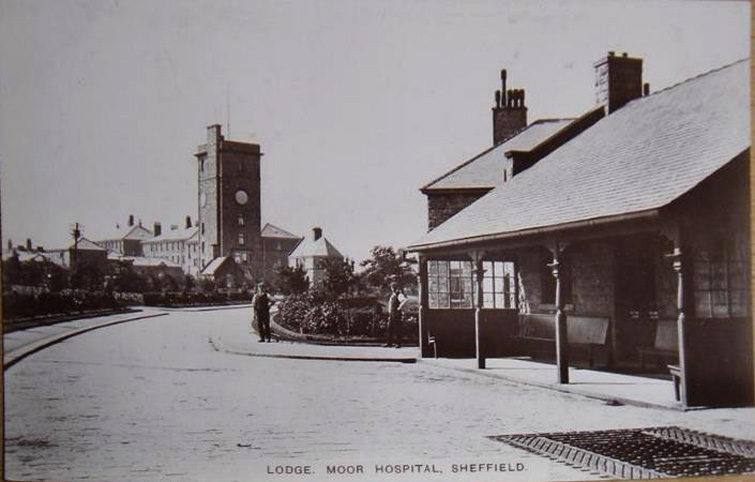
Other building work included Weston Park Museum, Mappin Art Gallery, Cockayne’s department store in Angel Street, and Lodge Moor Hospital.

Mappin Art Gallery

For some years, Bissett was a member of Sheffield Town Council for the Upper Hallam Ward, serving on the Buildings, General Purposes and Parks, and Highway Committees. Far from me to speculate that the success of his company might have been down to council connections, but these weren’t transparent days.  However, he resigned in 1884 to allow his firm to undertake the Sewage Works at Blackburn Meadows.

Unfortunately, Bissett suffered a stroke in 1886, and died at Rock Mount, Ranmoor, in 1888. His partnership long dissolved, the business was split amongst three sons, but hereon, the affairs of William Bissett and Sons unravelled.

In 1889, whilst work was underway to build buildings for the YMCA (Carmel House), on Fargate, a petition was served against his three sons.
“The acts of bankruptcy alleged against the debtors respectively are that William Crellin Bissett and Lawrence Colgrave Bissett, did, on or about the 28th of November, 1889, with intent to defeat or delay their creditors, depart from their dwellings or otherwise absent themselves; and that the said James Francis Bissett did, on the 4th day of December, file in the Sheffield Court a declaration admitting his inability to pay his debts.”

It appeared that some of the contracts did not turn out very successful and the firm had lost considerably by them. A year before, a destructive fire at the Wilkinson Street premises had also caused considerable loss. Stories about the firm’s financial position had circulated for months and everything that could be offered as security, even their interest under their father’s will, had been mortgaged.

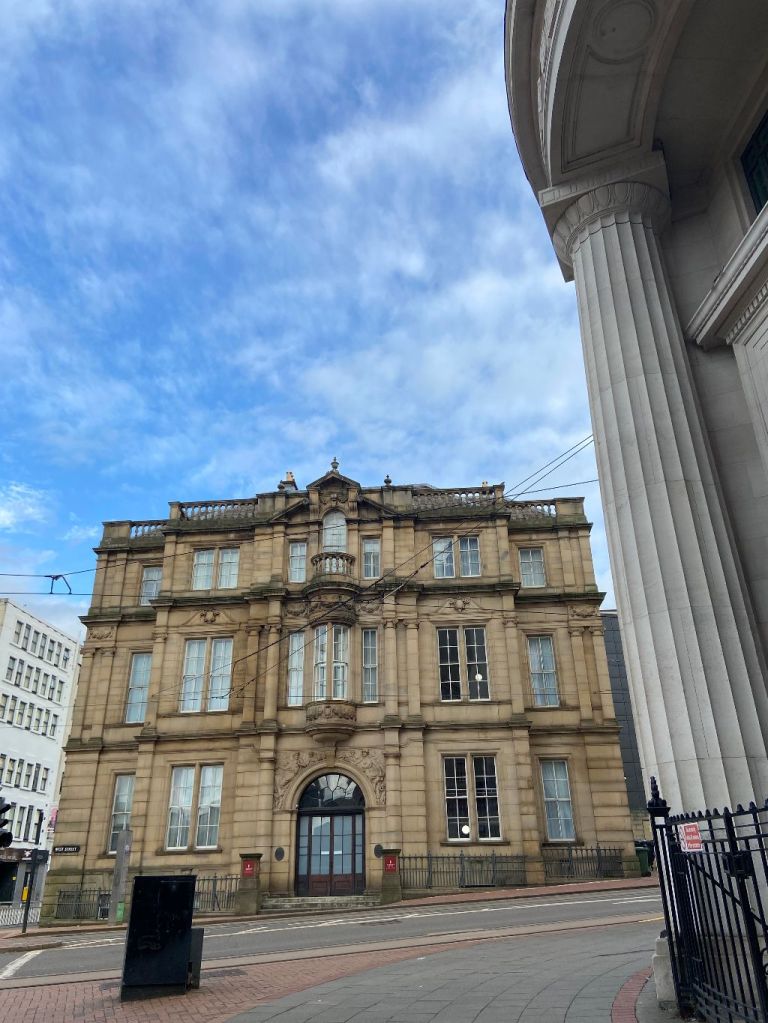
Former School Board Offices on Leopold Street.

But the situation took a grimmer turn.

Apparently, the state of affairs was only known to the brothers in Sheffield, William and Lawrence, while James, in Birmingham, had been kept ignorant. The first he knew about it was when he received a letter from them bearing a Paris postmark and informing him that they had absconded.
James immediately came to Sheffield and found that the firm was in a state of financial ruin. From inquiries he learned that both William and Lawrence had been about the business on the Thursday morning, and that early in the afternoon they had left for London. They travelled to either Dover of Folkstone the same evening and caught a boat to Paris. The assumption was that they had then gone to Spain.
Before they left, they had received a cheque for about £4,000 to which debt they obtained advances. They cashed the cheque, took the proceeds, and with them went the petty cash books and private ledgers. In the end, it was determined that the company owed creditors about £34,439 (about £4.7m today).  

James, left to deal with his brothers’ dirty work, and the discovery that they been living way beyond their means, was absolved, and eventually released from bankruptcy.

However, the whereabouts of William and Lawrence remained a mystery and by all accounts never returned to England.

Until that is, a notice headed ‘Bissett v Bissett’ appeared in The Times in 1897, whereby Agnes Amy Bissett filed for divorce against her husband Lawrence, by reason of his adultery and desertion.

Lodge Moor Hospital was built by Bissett in 1888 as an isolation hospital.

On November 28, 1889, Lawrence had told her that he was going to London to see his solicitors about business, but he never returned, and the next she heard from him was through a letter he sent to her father from Paris, in which he said: –

“Will you please, on receipt of this, go to Amy at once. Our affairs have gone wrong, the bank having turned on us, and to save a little money from the wreck, I have left England for a time. I may have done wrong, if I have, God forgive me. I have no time for more, as the train goes.”

In a subsequent letter he wrote:-

“We had a certain overdraft from the bank, and all went well. They have suddenly shown us that they will not continue it, and nothing but bankruptcy, without a chance of saving anything, stared me in the face, so I thought it best, rightly or wrongly, to leave England with what money I could and try my fortune in another land.”

It was subsequently found that he had gone to San Antonio, Texas, and as a bankrupt, the Official Receiver had instructed the Post Office to send all letters to them.

In this way, another letter came to light from a young lady called Amy Sebright. This letter announced to him that she had given birth to a boy called Cyril Laurence Bissett. It transpired that the young lady had been engaged at the Theatre Royal during the pantomime season of 1888-1889, and that she had met Lawrence, and afterwards lived with him ‘maritalement’ at Manchester, Brighton, and elsewhere. When he was leaving England, he had asked her to accompany him, but she had declined to do so

His wife received another letter from him at the end of 1890 asking for her forgiveness, and acknowledging his guilt, but said nothing about returning.

The divorce was granted.

“Here the husband had left his wife with a falsehood on his lips, and there could be no doubt of his intention to desert her after what had transpired as to his relations with the actress from Sheffield.”

We do not know the end outcome for William or Lawrence (investigations for another day). Bad businessmen, rogues, and criminals. Only James came out of the story with his reputation intact. Remember this story the next time you visit Leopold Square or Weston Park Museum.

Modern day view of the shops that William Bissett built on Fargate. Most of the offices above are now empty. Image: DJP/2022

©2022 David Poole. All Rights Reserved.

Categories
Companies

Ward’s Brewery – a business decision that might have had different consequences

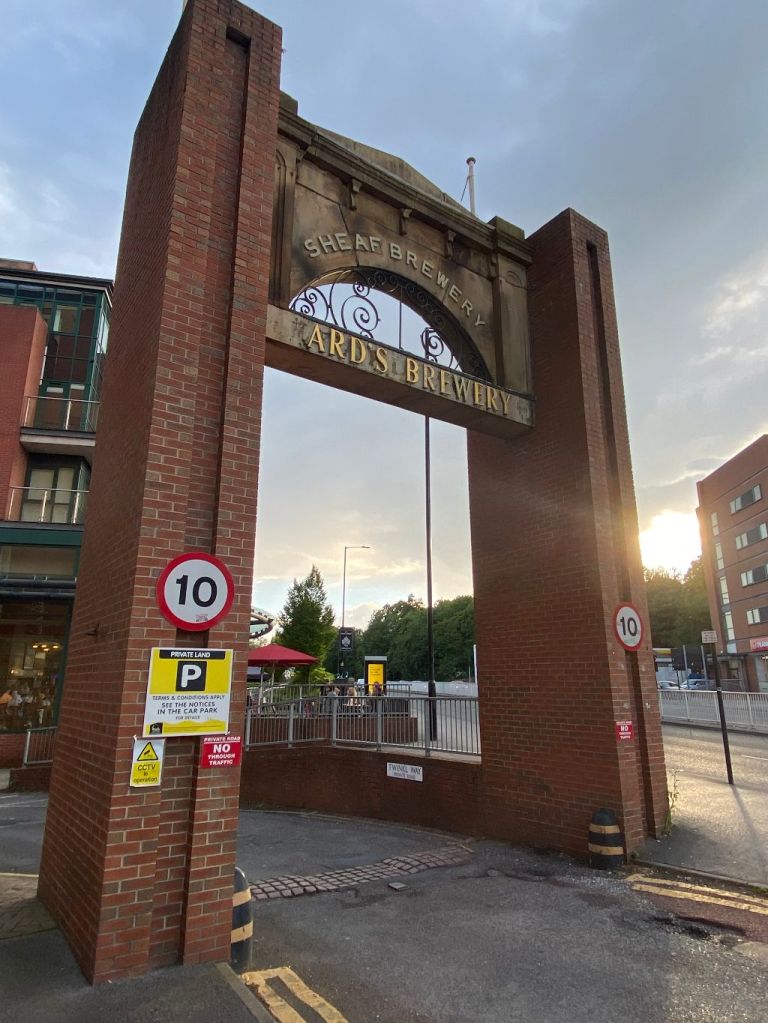
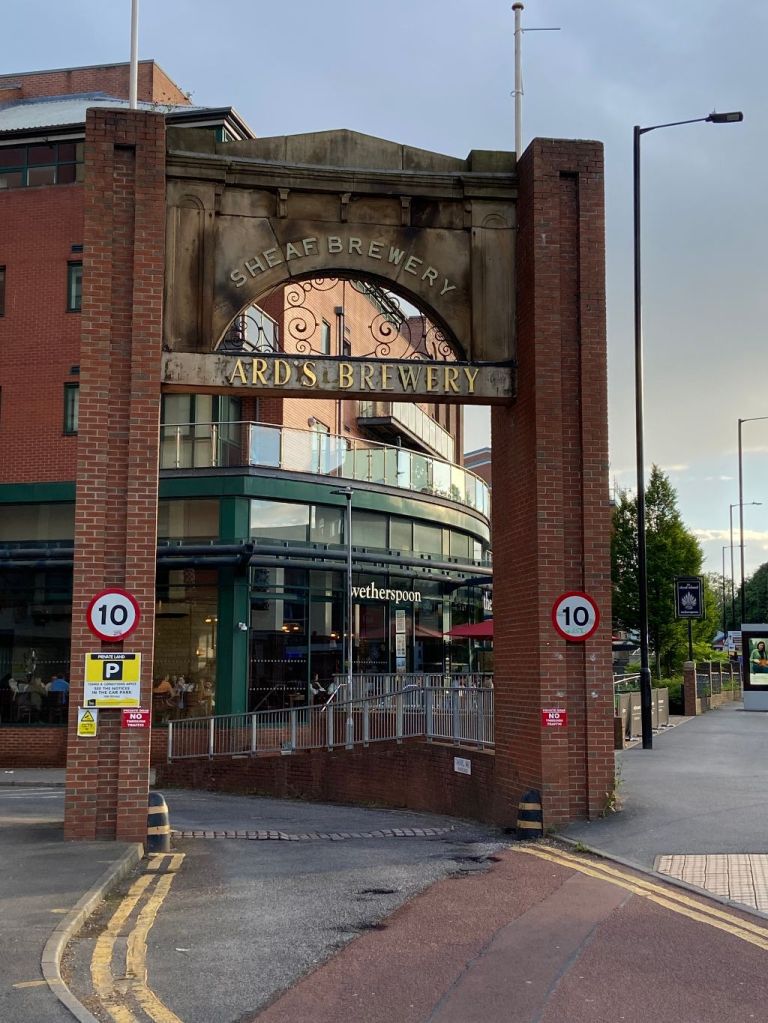
The iconic Ward’s gateway was relocated and rebuilt after the brewery was demolished. Note that one of the letters is missing. Image: DJP/2022

I know somebody who once went to Dublin and sat on the doorstep of a traditional Irish pub and drank four cans of Ward’s Best Bitter. Much has been written about the closure of S.H. Ward in 1999, but there is a little-known chapter in the brewery’s history that eventually led to its downfall.

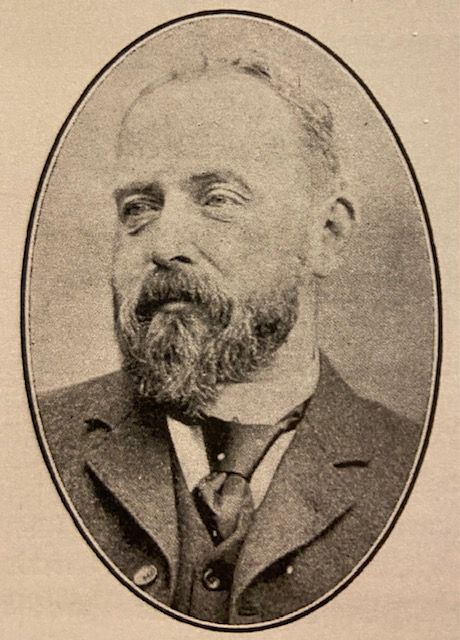
Septimus Henry Ward (1831-1905) was the seventh son of John Ward, a gentleman farmer of Pickering, North Yorkshire. He went to London, aged seventeen, and for twenty years was engaged in commercial pursuits.

He came to Sheffield in 1868 and bought a partnership in Kirby, Wright, and Co at the Sheaf Island Brewery on Effingham Road. This was later dissolved, and the company renamed S.H. Ward, although George Wright stayed on as a brewer.

In 1872, it amalgamated with the Old Albion Brewery of Lathom and Quihampton, in Ecclesall Road, and the new firm purchased the adjoining Soho Brewery from the executors of Thomas Bradley.

The site of the Sheaf Island brewery was sold, and Captain Weyland Mere Lathom, one of the former proprietors of the Old Albion Brewery, became Ward’s partner but took little active part in affairs.

The irony is that the Sheaf Island public house now stands on the former site. Image: DJP/2022

Under Septimus Ward, the business prospered and the Soho Brewery on Ecclesall Road was renamed the Sheaf Brewery, where brewing continued until its closure.

The partnership was dissolved in 1893, and the company converted into a limited company with Septimus becoming Managing Director. The Wright family still ran the day to day business, but ownership eventually reverted to the Ward family with a 51% share, and the Wright family owning the remaining 49%.

In later years, the Ward family reduced their brewing interests. The Wright family were given first option to buy and bought two shares to regain control of the business lost when George Wright had handed over ownership to Septimus due to bad investments in 1869.

Here’s where things get interesting.

Sometime during the 1970s, the Ward family was approached by Truman’s Brewery, East London, who were interested in expanding into the north. Truman bought approximately half the Ward’s interests then, and the remainder were bought after Grand Metropolitan acquired Truman in a marathon battle with Watney Mann in 1971.

Matters rested until 1974 when Grand Metropolitan made a bid for the 51% interest held by the Wright family.

Who were Grand Metropolitan?

This business began in 1934 and was a UK-based, international hotel and catering conglomerate that diversified into areas such as home milk and dairy deliveries (Express Dairies), steak restaurants (Berni Inns) and gambling (William Hill and Mecca Bingo Halls). It entered the beer, wine, and spirits markets through the purchase of two UK breweries including Watney Mann, which itself had recently taken over International Distillers and Vintners. In 1997, after more mergers and acquisitions, Grand Metropolitan finally merged with Guinness PLC to create the largest drinks company in the world, Diageo.

Subtle reminders of the site’s past. Image: DJP/2022

The Wright family had no wish to be absorbed into the Grand Met machine but reconciled themselves to the fact that they would probably sell it to someone sooner or later. It happened sooner, when the shares were sold to Vaux and Associated, a Sunderland-based brewer.

Vaux then tidied up matters and bought Grand Met’s 49% and Ward’s, with its brewery and 110 pubs, became a wholly owned subsidiary.

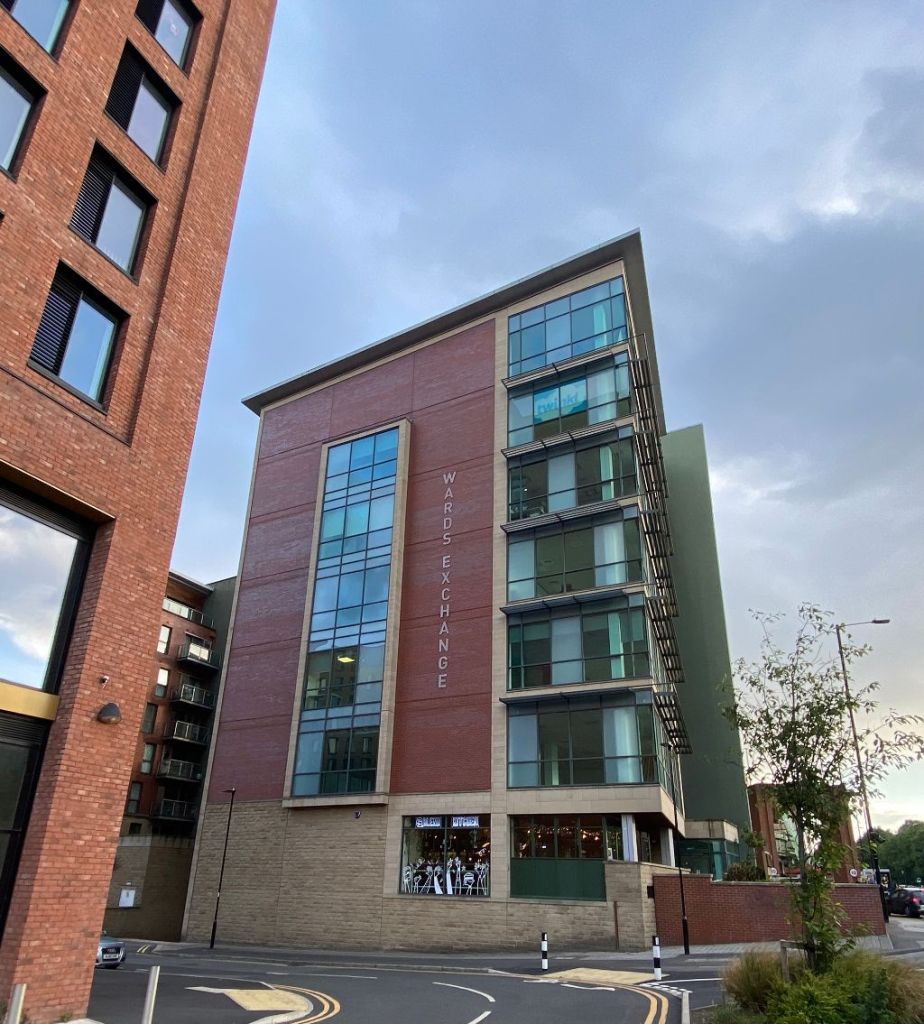
The former Ward’s site is now an apartment complex. Image: David Poole

S.H. Ward operated successfully until the 1990s, but events were taking place in Vaux Group’s boardroom that had devastating consequences. The business had diversified into Swallow Hotels and the board of directors accepted the advice of their corporate financier to close all their brewing concerns in 1999.

The Vaux Group was rebranded the Swallow Group and taken over by Whitbread a year later, and the pubs sold to Enterprise Inns.

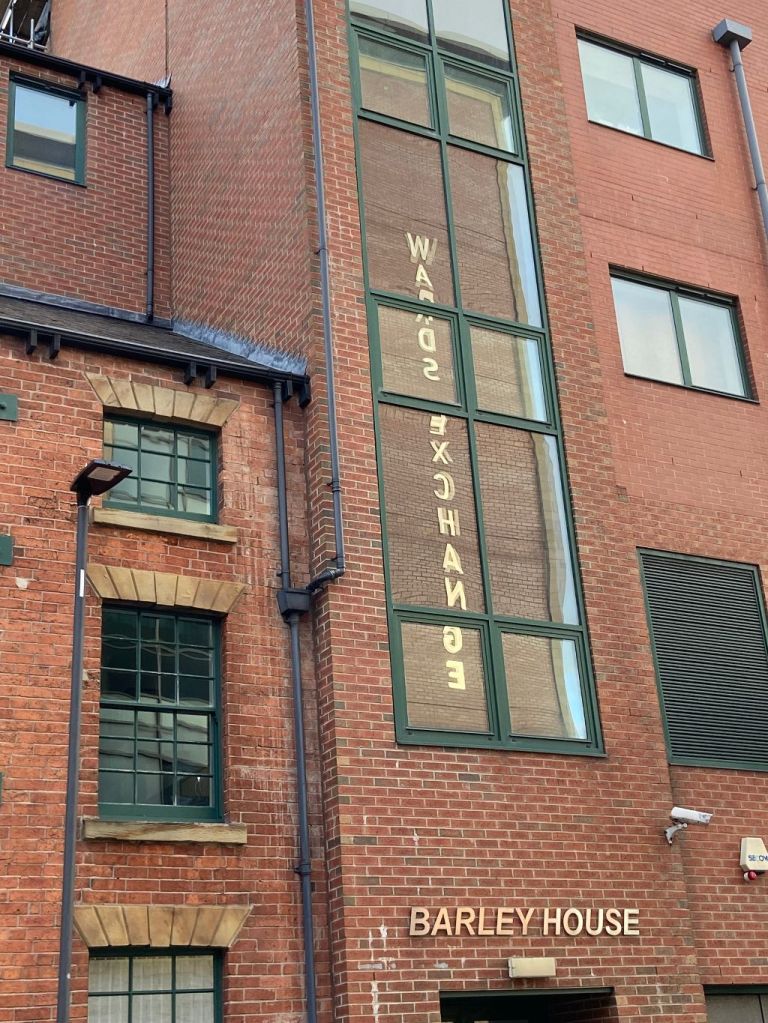
The last brew at Sheaf Brewery was in June 1999, and despite valiant efforts by former board members to save it, the site was shut down. It was subsequently flattened, apart from the brewing tower and a few adjacent buildings, that were absorbed into a new apartment complex.

All these years later, with the benefit of hindsight, what might have happened had S.H. Ward been sold to Grand Metropolitan? Still gone? Or, one of Britain’s leading beer brands?

©2022 David Poole. All Rights Reserved.

Categories
Buildings Companies

Kangaroo Works will honour the site it stands on

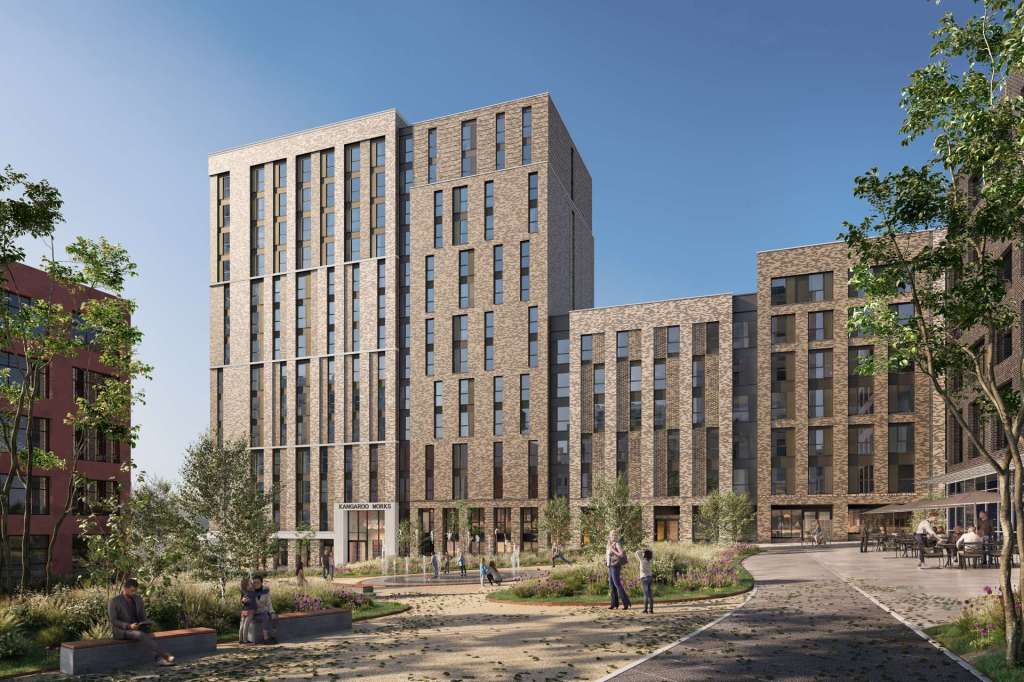
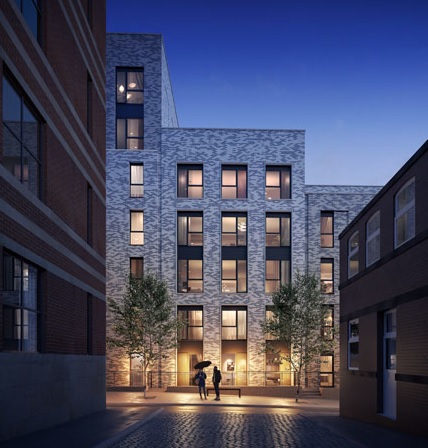
The scheme comprises 364 dwellings with a mix of 1, 2  and 3 bedroom apartments, which will be built and operated under the Build to Rent (BtR) Sector model.  Commercial space will be provided at ground floor levels, providing active frontages to Rockingham and Wellington Streets. Image: Whittam Cox Architects

Next year, people will start moving into a new residential complex in Sheffield City Centre. When they do, the occupants of Kangaroo Works, a 364 apartment development, will have one of the oddest postal addresses in the city.

Designed by Whittam Cox Architects, with construction underway by Henry Boot, Kangaroo Works is the latest building in Sheffield’s Heart of the City II development. The building, with frontages to Rockingham and Wellington Streets, is designed around the vernacular Sheffield courtyard plan, and provides a stepped roofscape, responding to the sloping typology of the site and forming a transition between the formal city centre and more historic Devonshire Quarter.

The block has a peak of 14 storeys whilst a unique brick façade, taking inspiration from Sheffield’s urban heritage, supports the Masterplan palette and industrial heritage of the original Kangaroo Works site, which the development now stands on.

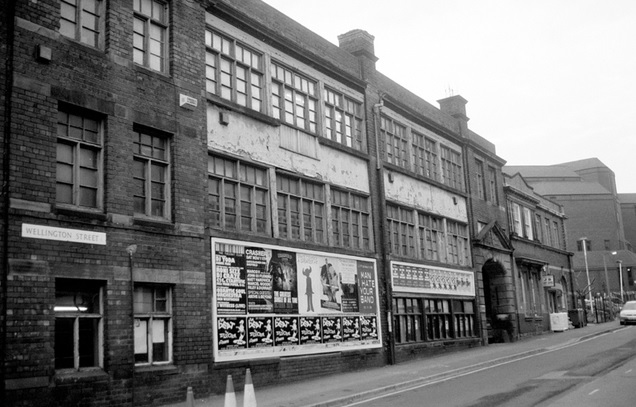
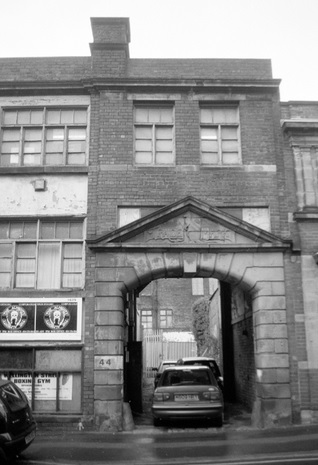
Kangaroo Works was home to Robert Sorby and Sons, makers of edge tools, later becoming a merchant and steel maker, that had set up on Union Street in 1828 and then moved to Carver Street in 1837.

About 1896 it moved a short distance to this site at the corner of Trafalgar and Wellington Streets.

Former premises of Robert Sorby and Son Ltd, edge tool manufacturer, No. 44 Wellington Street, (his trade mark was a kangaroo so was referred to as the Kangaroo Works) with the Fire Station, Wellington Street in the background. Image from 2006 by David Bocking/SLAI/Picture Sheffield

Their products included adzes, axes, augers, edge tools, joiners’ tools, saws, scythes, hooks, sheep shears and crucible steel. The company sought markets worldwide, and the Kangaroo brand, which was used until the 1980s, was adopted to emphasise the company’s interest in Australia.

Former premises of Robert Sorby and Sons, edge tool manufacturer, No. 44 Wellington Street. Image from 2006 by David Bocking/SLAI/Picture Sheffield

Robert Sorby and Sons was acquired by Hattersley and Davidson in 1923, and vacated Kangaroo Works in 1934 to share a site on Chesterfield Road. It still survives in premises on Athol Road at Woodseats.

The former Kangaroo Works became dilapidated and converted for multi-use, and remained so until demolition in 2008, after which it was used as a car-park.

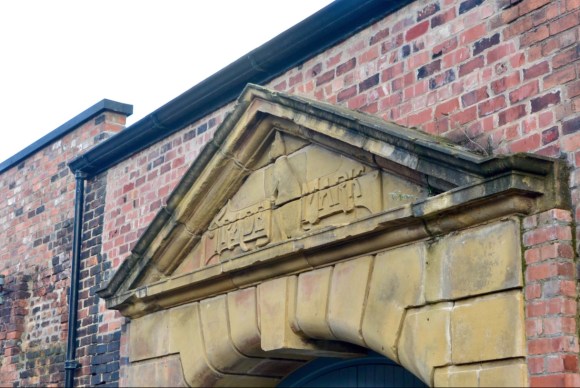
Former Kangaroo Works gateway. Image: The Glasgow Gallivanter

But what happened to the famous stone-carved Kangaroo trademark that once stood over the gateway on Wellington Street?

It was rescued and re-erected at Kelham Island Museum, slightly shorter in height so that it would fit into the restored Russell Works building that houses the Ken Hawley Collection of tools, cutlery and silversmithing made in Sheffield.

And so, the name lives on, and Kangaroo Works will occupy pride of place overlooking Pound’s Park, the new urban green space also under construction.

Located within close proximity to the Cambridge Street Collective and Elshaw House project, Kangaroo Works is a privately funded development forming part of the Heart of the City masterplan. Image: Whittam Cox Architects

© 2022 David Poole. All Rights Reserved.

Categories
Buildings Companies

John Atkinson – “The best services that can be provided by all who are responsible.”

“My great-grandfather used to go out and meet the carriages on The Moor when they arrived in the morning.” Nicholas Atkinson. Image: DJP/2022 

In March 1929, John Atkinson, aged 84, took to his bed at No. 86, The Moor, and remained there for a week. He had been in ill-health and died a week later.

His death meant that Sheffield had lost a veteran businessman, who not only had built up a great establishment, but was largely responsible for the development of the principal shopping thoroughfare in the city.

While John Atkinson lay on his death-bed, would he have ever contemplated that his business would still exist 150 years later?

John Atkinson (1845-1929). Image: Neil Anderson

The Atkinson family came from Low Dunsworth, near Boroughbridge, and John, one of a family of nine, was determined to try his fortune away from his home surroundings.

His first venture was at York, where he became an assistant in a leading establishment of that city. But he was stirred with ambition, and he fixed his eye on Sheffield, a growing centre of commerce.

He came in 1865 and became acquainted with the Sheffield public by working at Cole Brothers, at their premises at the corner of Church Street.

Once settled in Sheffield, he looked for an opportunity, and in 1872 secured premises in South Street, on Sheffield Moor. No. 90 was a two-windowed shop and was opened by 26-year-old John in March of that year.

In those days the Moor was not the shopping centre that we are familiar with. It was on the fringe of the country and people used to ‘go to Sheffield’ to do their shopping when they really meant going to Fargate and High Street.

It was his mission to see that his windows were sufficiently attractive to draw the attention of those on their way to ‘shop in town’ and was one of the pioneers of the ‘Shop on the Moor’ movement and had the pride of seeing the completion of his commodious emporium that became his life work.

Atkinson worked hard for seven years and established gradual growth of regular customers. His business required expansion, and in 1879, a piece of land known as Holy Green became available. It adjoined his premises and two additional shops, Nos 86 and 88 were erected, the former leased to a trader. But trade and custom grew, and in 1884, No 86 was taken over by Atkinson and became the millinery department.

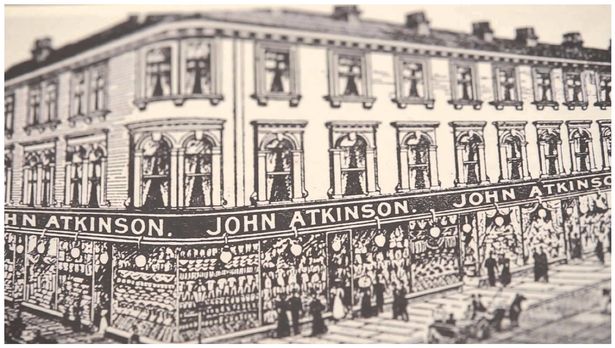
From 1900. John Atkinson, The Draper, 76, 80, 82, 86, 88 and 90, The Moor. Image: Picture Sheffield

Three years later, Nos. 2,4, and 6, Prince Street (a street that has disappeared) were added, and became the furniture department, and four years after that an extensive space at the back of the Prince Street premises was secured and covered for the development of the mantle and shawl trade of the day.

The business expanded, and a few years later brought another acquisition. In 1892, the shops, land, and works covering a large block of buildings as far back as Button Lane (another lost street), facing Eldon Street, were purchased, and in 1897 a new dress warehouse was built in another portion of Holy Green.

Atkinson’s love of beautiful architecture, and his ever expanding business, led him to demolish all his shops, ranging from Nos. 79 to 86, on the South Street site. The foundation stone was laid in 1901, and the new building was ready for occupation in 1902.

The store had a glass roof to let light down into the three floors which were decked with flowers and maintained by a gardener.

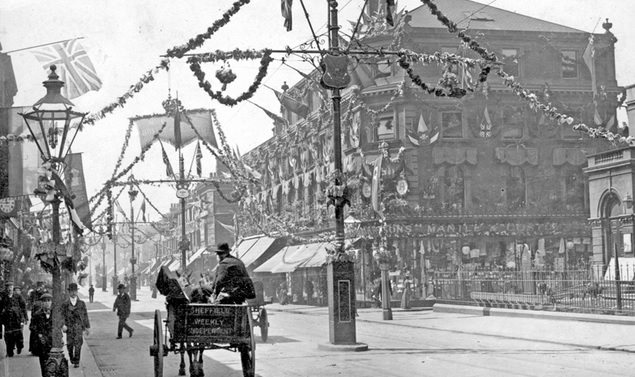
South Street, Moor, decorated for the Royal Visit of King Edward VII in 1905, Nos 76-90, John Atkinson, Draper. Image: Picture Sheffield

At the outbreak of World War One, the shop had empty warehouses, and these were utilised for war work, responsible for making hundreds of thousands of stamped parts for guns, shells, and tanks.

In 1918 two new wings were added, and in 1920 more of the Eldon Street block was brought into use.

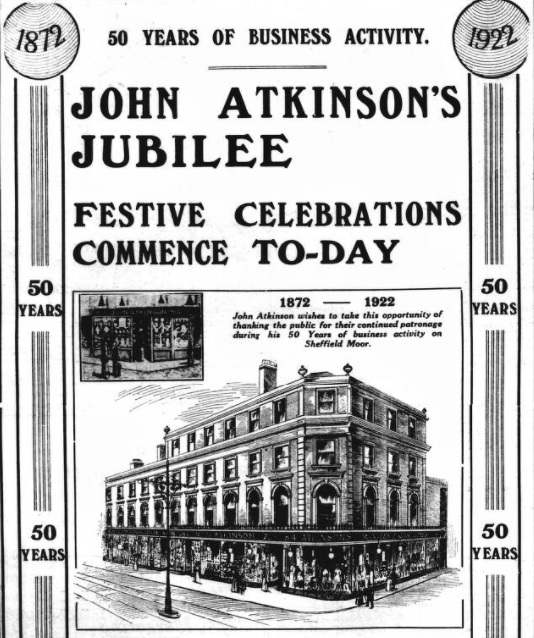
By the time of its fifty year centenary in 1922, Atkinson was assisted by his sons, Harold Thomas Atkinson, and John Walter Atkinson.

“There is an atmosphere of completeness about the store. It is not merely a draper’s store. It is a general outfitting establishment, with its well-cuisined restaurant, and its café; with its departments for gas-fitting, and electrical outfit; its men’s clothing department and its footgear stores; it has an ironmongery branch; as well as its branches for stationary, sweetmeats, and drugs and perfumes; for china and glass, as well as for bedding and bedsteads; while its fur department, its section for robes and gowns, costumes and skirts, wools, dress goods, piece silks, velveteens, Manchester goods, and millinery, gloves, and hosiery, and its cabinet and carpet and oilcloth departments, are just part of the wide-varied whole.”

Newspaper advertisement celebrating fifty years of John Atkinson in 1922. Image: British Newspaper Archive

A lot changed afterwards, the business flourished, but during the Second World War the store was destroyed in the Blitz of 1940, resulting in temporary shops for all its departments across the city.

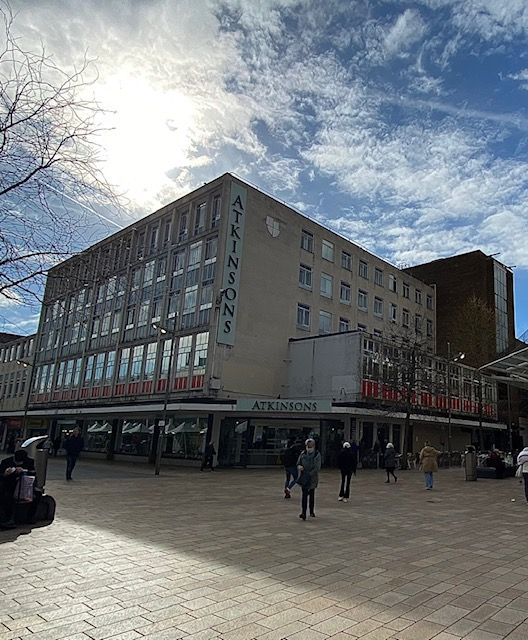
The business operated like this until 1960 when a new purpose built store opened on The Moor.

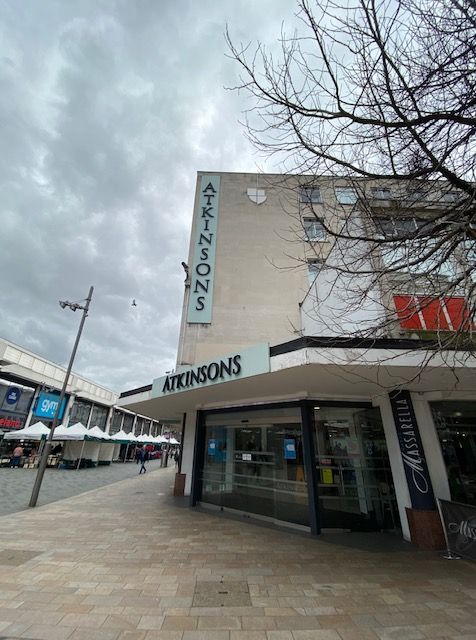
This year marks Atkinsons 150th anniversary and John Atkinson would have been  shocked to find that his family-owned store is now the only department store left in Sheffield.

Atkinsons. The family-run business has seen wars, new out-of-town shopping developments and the coronavirus pandemic. Image: DJP/2022

© 2022 David Poole. All Rights Reserved.

Categories
Companies

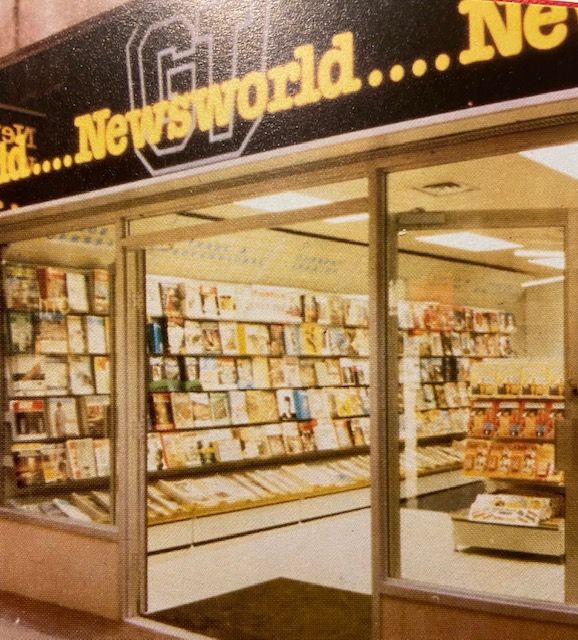
GT Newsworld – “It was the talk of the trade and attracted all the major publishers to look at ventures which broke new ground in its field.”

GT Newsworld, Chapel Walk, Sheffield. Image: Keith Farnsworth

They say that print has no future. This is the case with newspapers that are in terminal decline. These days, we choose to get our news from a mobile phone instead. Magazines have fared a little better, but even these will go the same way.

A few months ago, a mate of mine asked me where he could buy a copy of The Grocer, the long-time voice of the food industry. I couldn’t answer that one, but there was a solution. This turned out to be an expensive online subscription that quickly got the thumbs down.

And then, last week I was browsing the magazine section in WH Smith and there it was. A solitary copy of The Grocer sandwiched between The Oldie and The Week. “We shouldn’t have it,” said the shop assistant, “It came by mistake, and we certainly won’t be stocking it again.”

So, where do we buy magazines these days?

According to the Periodical Publishers Association there are about 8,000 titles published in the UK, with a quarter of this made up by consumer magazines, the ones that we might buy in a newsagent or supermarket.

The biggest retailer is still WH Smith, but the supermarkets took a big chunk of its market share. and now the choice of magazines has shrunk and take up less and less selling space.

It has become a subscription world, where material is available online, or a glossy copy of your favourite magazine arrives through your letter box.  

But it wasn’t always this way, and in 1984, long before a digital world existed, a shop opened on busy Chapel Walk that threatened the monopoly of WH Smith.

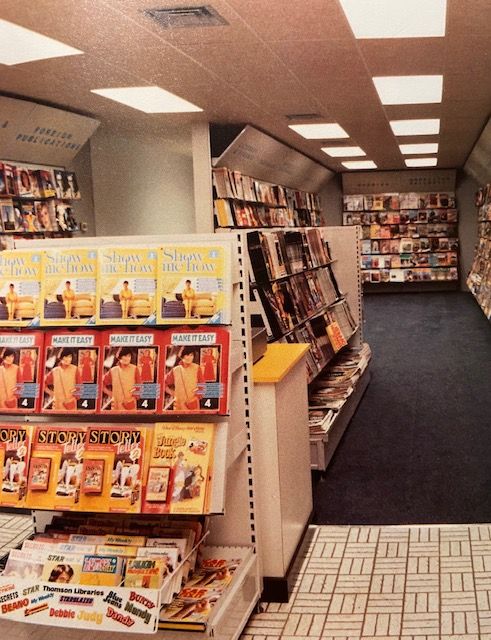
GT Newsworld opened on Friday 2 March and was distinctive in that it became the first outlet in the country to sell nothing but news, offering a range of nearly 2,000 titles, with 1,000 displayed full face.

It was part of the George Turner Group, established in 1891, and better known in Sheffield as GT News.

Keith Farnsworth, the local writer, wrote a marvellous book about the history of the company in 1991, and it probably contains the only account anywhere about this rebellious undertaking.

“It was the talk of the trade and attracted all the major publishers and others to look at ventures which broke new ground in its field.”

GT Newsworld. Image: Keith Farnsworth

No.20 Chapel Walk had been a jeweller and its 800 square foot selling space had become available. Initially, the company had thought of using it as a GT Sports outlet, but Ashley Turner, had reminded his fellow directors that it was the ideal spot for a specialist magazine shop.

And so, the shop was refitted at a cost of £25,000, incorporating a computer system in which every title was barcoded, to ensure that sales and stock were constantly updated to keep the full range of titles on view.

It appeared to be a success, with customers milling around all day choosing every type of magazine available, including those imported from the United States. And it was easy to part with a tidy sum of cash and leave with a stack of reading material that never got read. But was it just a reading room where people spent an hour or so browsing magazines before leaving empty-handed?

At any rate, it seems to have lasted until the 1990s before closing, and we haven’t seen anything like it since.

© 2022 David Poole. All Rights Reserved.