Categories
Buildings

Channing Hall – “The finest small auditorium in Yorkshire.”

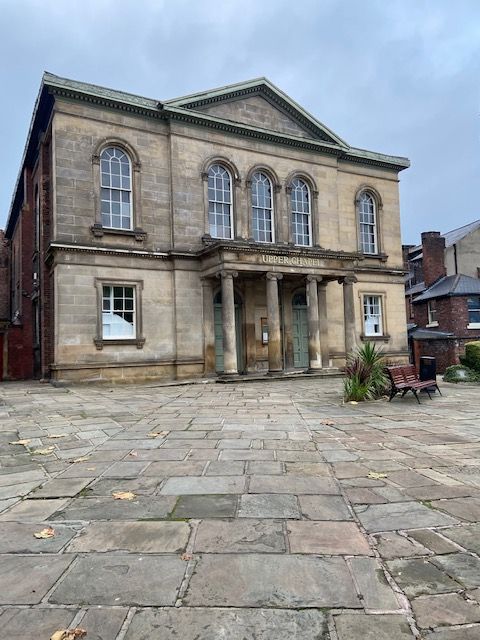
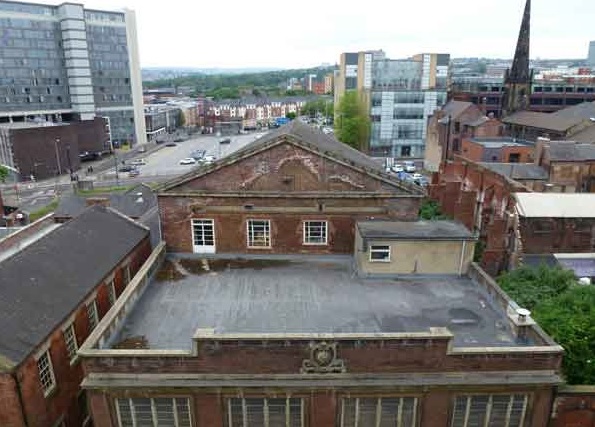
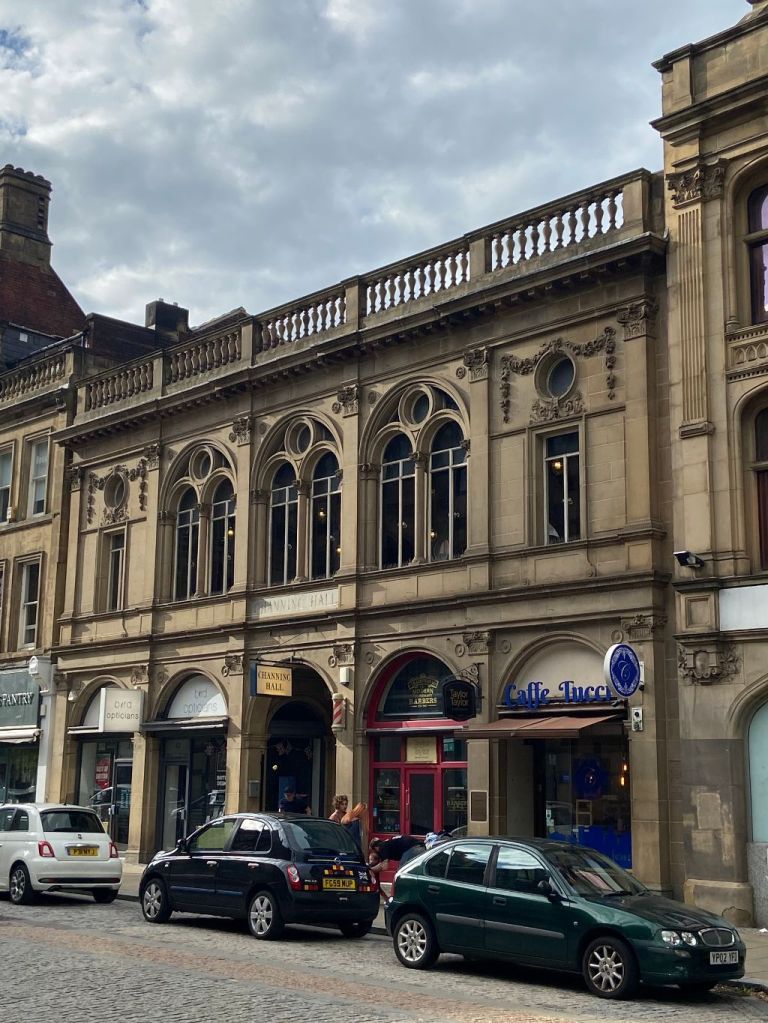
Channing Hall, Surrey Street, Sheffield. Image: DJP/2022

It was the summer of 1881, and there were a lot of people in Sheffield town centre. They had come to watch Miss Margaret Jessop, of Endcliffe Grange, lay the foundation stone of a new Unitarian Memorial Hall on newly constructed Surrey Street.

Margaret Jessop was the fourth daughter of Thomas Jessop (1804-1887), steelmaker, Mayor, and Master Cutler, and founder of the Jessop Hospital for Women.

She deputised for her sick father and laid the corner stone with a handsome silver trowel with ivory handle, upon which was the inscription – “Presented to Miss Jessop, of Endcliffe Grange, Sheffield, on the occasion of her laying the corner stone of a Congregational Hall in connection with the Upper Chapel, June 14, 1881.”

The stone also bore an inscription, and in the cavity underneath a bottle was deposited, which contained a parchment setting forth the purposes for which the hall was erected, and the names of the minister, trustees, secretary, architects, clerk of the works, and contractors. Having laid the mortar, she gave the stone a couple of taps with the mallet and declared it well and truly laid.

The hall was completed the following year and called Channing Hall, a name we are familiar with today.  
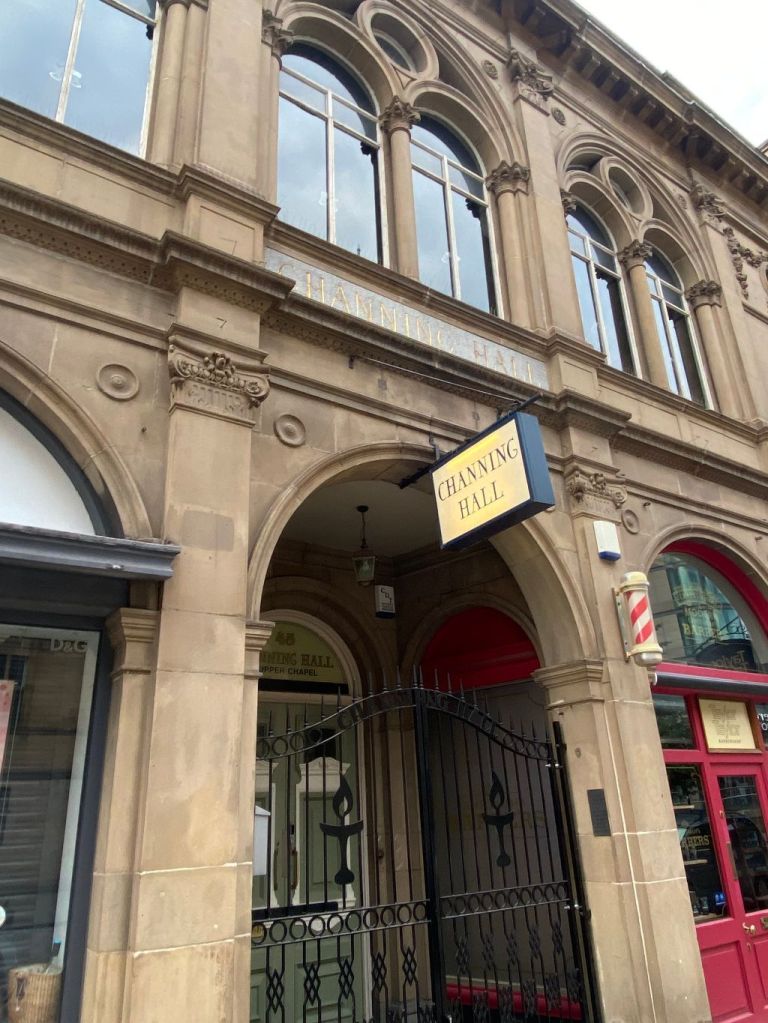
Channing Hall sits below a row of commercial properties owned and leased by the chapel. Image: DJP/2022
Upper Chapel, Norfolk Street, Sheffield. It is connected by a corridor to Channing Hall. Image: DJP/2022

Channing Hall had been commissioned by the Trustees of the Upper Chapel on Norfolk Street and was named after William Ellery Channing (1780-1842), the father of American Unitarianism.

At the time, Rev. Eli Fay said: –

“The trustees some years ago commenced to consider their need of a hall for the promotion of the social life of the congregation, and to enable the Sunday school to realise more fully its own ideals. They did not expect from the trustees anything poor and cheap, but he did not expect that they had given them what had been declared to be the finest small auditorium in Yorkshire, and probably the finest in the north of England.”

The building of Channing Hall and the four shops underneath cost £4200, a new caretaker’s house at the rear £460, the division of the old schoolrooms into classrooms £225, and the total cost, together with the site, was about £7000.

Years earlier, the Chapel had bought property on Pepper Alley (near Norfolk Row) as well as building a Minister’s house on land behind. In the 1880s, Sheffield Corporation had sights on the land these stood on, and gave the trustees £3,870 for it, as well as two pieces of land, one of which was used to build the new hall.

After great difficulty, the Chapel also obtained permission from the Court of Chancery to borrow £714 for themselves. But the rest of the money should have come from subscriptions but raised only £1280 from some 35 or 40 persons. It left the Trustees with a deficit and took years for the debt to be cleared.

The architects were Flockton and Gibbs, the style like that of the old chapel – Italian renaissance – only of a more ornate character.

It was 60ft in length, two storeys in height, with six pilasters on each story, the lower being of an Ionic and the upper an Italian treatment of the Corinthian order, surmounted with a bold cornice and balustrade. The space between the pilasters on the lower story was filled with five arches – the entrance being in the centre arch – and those on the upper story were filled with windows, three of which were arched, and sub-divided with more arches.

The walls of the interior, including entrance and staircase passage, were built of coloured glaze brick, the pilasters being of Indian red colour, the surbase of green and brown, panels of cream colour, and borders of white and French grey.

From the impressive winding staircase hall were doors giving access to the chapel, old schools, chapel-keeper’s house, committee room, and congregational hall. The latter, which was the chief part of the building, was considered a work of beauty.
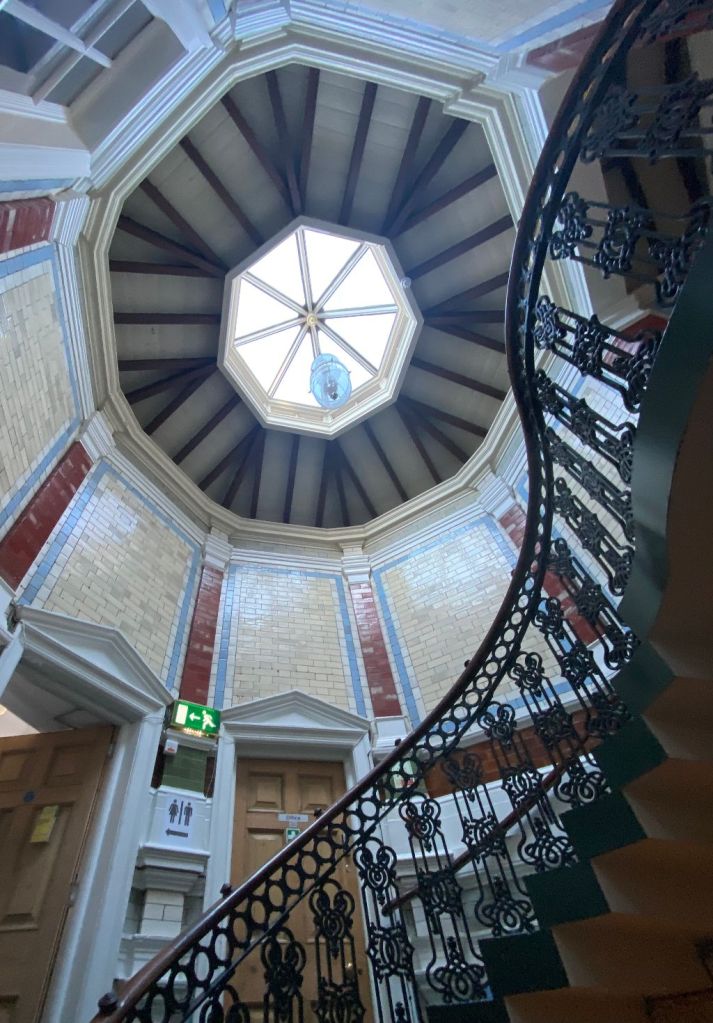
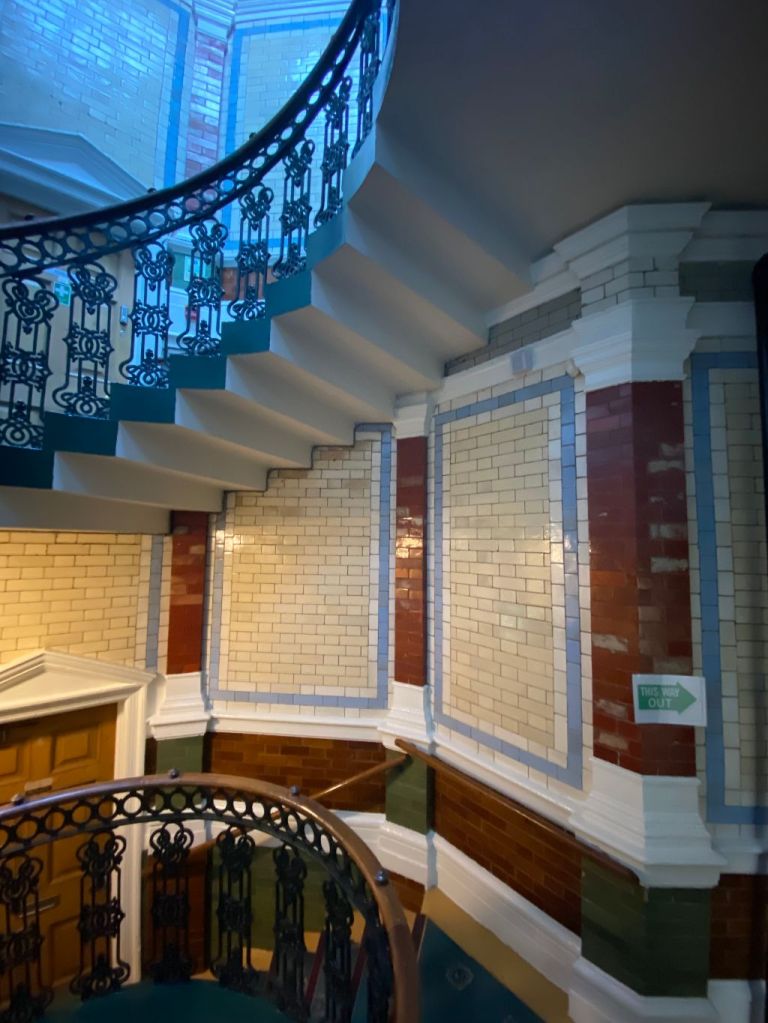
The congregational is approached by a winding staircase, at the top of which is an hexagonal stair hall, 16ft in diameter, and which is built with brick walls similar to those used in the construction of the entrance passage. Image: DJP/2022
The Victorian contractors were: – Chambers and Sons, masons and joiners; J.E. Elliott, plumber; Marshall Watson, and Moorwood, iron founders; A. Berrisford, plasterer; Staniforth and Lee, slaters; R.R. Gibbs, heating apparatus. Image: DJP/2022

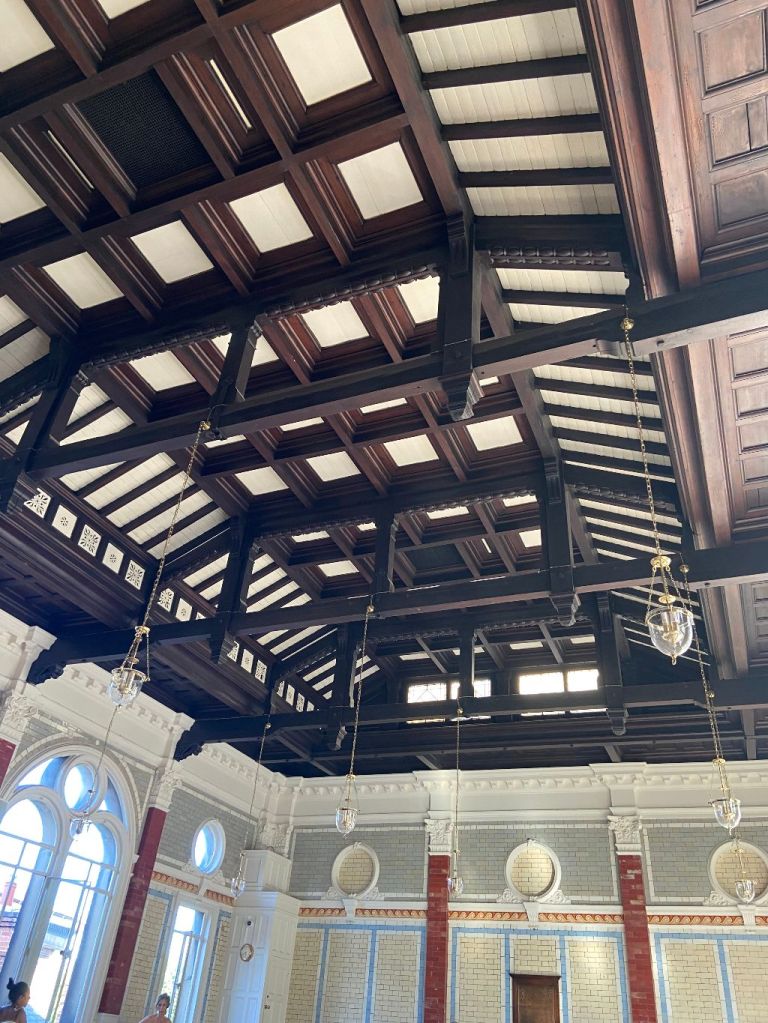
The roof had partly open timbers, and the caps and bases of the pilasters were of the Italian Corinthian order. This was used as a Sunday school as well as a congregational room, and the seating accommodation was for 350 to 400 persons.

The walls were glazed bricks, with surbase of browns and greens, pilasters of Indian red and cream-coloured panels, and with white and French grey. The caps and bases of the pilasters were cement, and of the Italian Corinthian design.
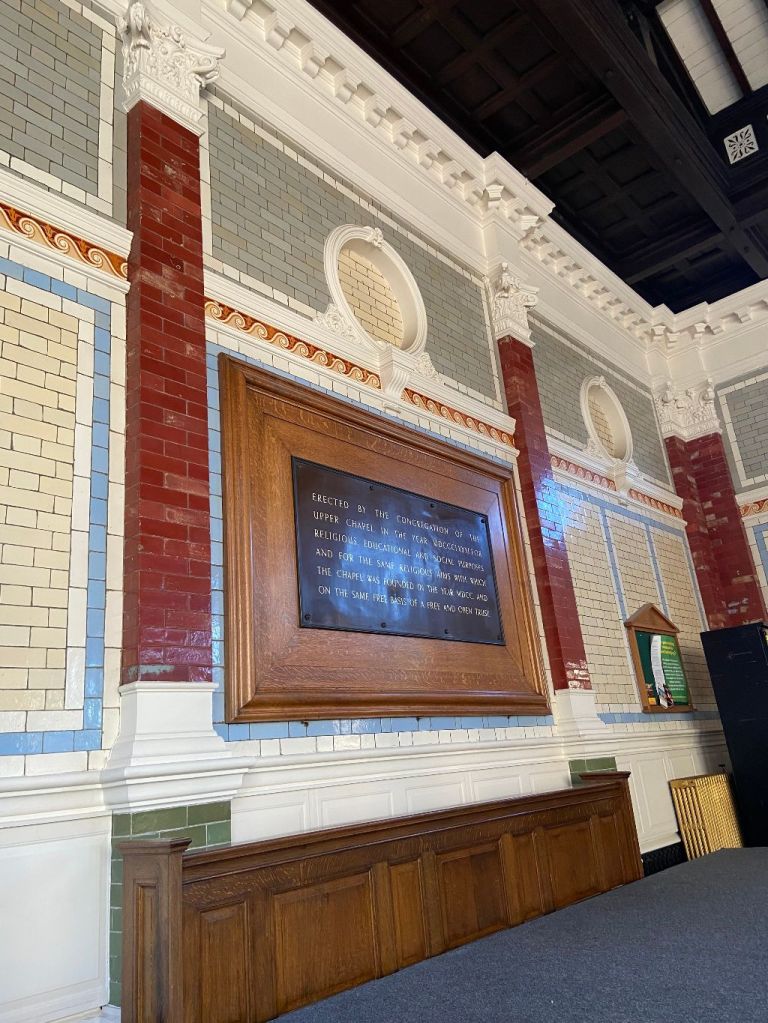
Hollis Hall, at Harvard University, is thought to contain a photograph of Channing Hall. Sent by Upper Chapel in 1936. Image: DJP/2022
The roof is partly open timbered, the ceiling being of panelled Memel wood, the panels coloured in a light blue and relieved with stencilled patterns in white. Image: DJP/2022

Around the room, at right angles with the beautiful caps surmounting the pilasters, was an inscription which stated that the hall had been erected “for educational and social purposes, and for the same religious aims with which the chapel was founded in the year 1700, and on the same broad basis of a free and open trust.”

The wooden floor was 4½ inches thick, laid on concrete, with the joints filled with white lead, with a slight fall to the sides; the object of this to enable the floor to be washed with a hose pipe.

All these years later, people tend to forget that Channing Hall and the Upper Chapel are tangibly connected. Both venues can be accessed by going through the other.

Little has changed since its construction, except the addition of a lift, and Channing Hall, now Grade II listed, is mainly used as a conference and banqueting suite.
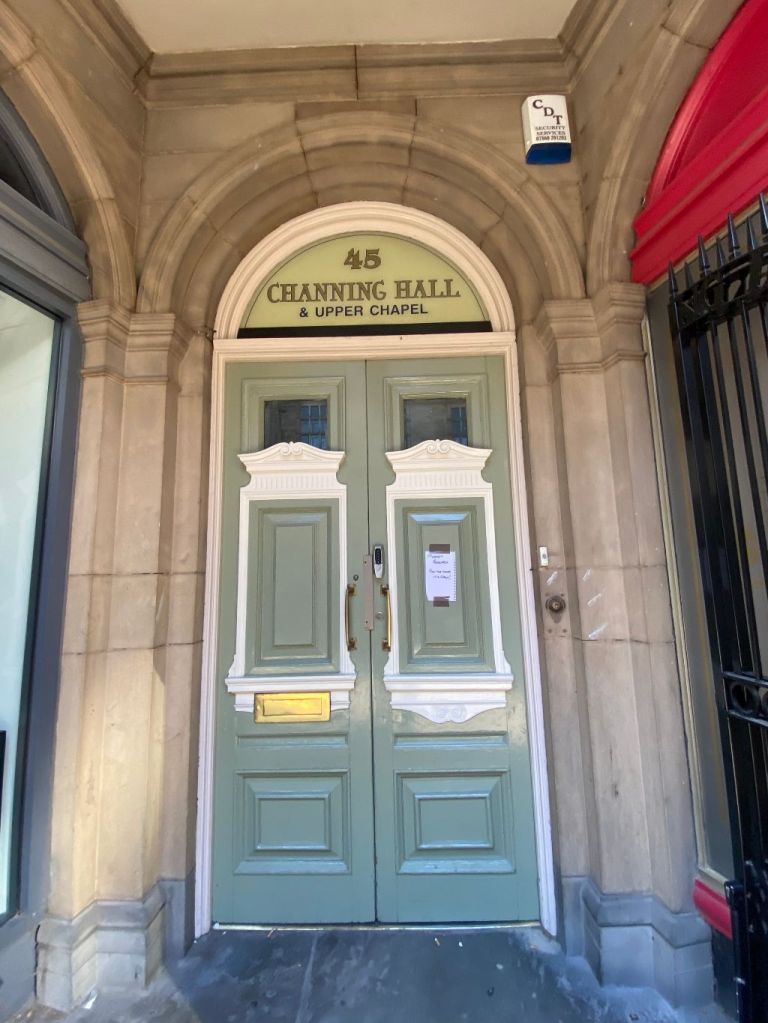
Built in 1881-1882, Channing Hall was designed by Flockton and Gibbs. Image: DJP/2022

©2022 David Poole. All Rights Reserved.
Categories
Buildings

John Lewis becomes a listed building

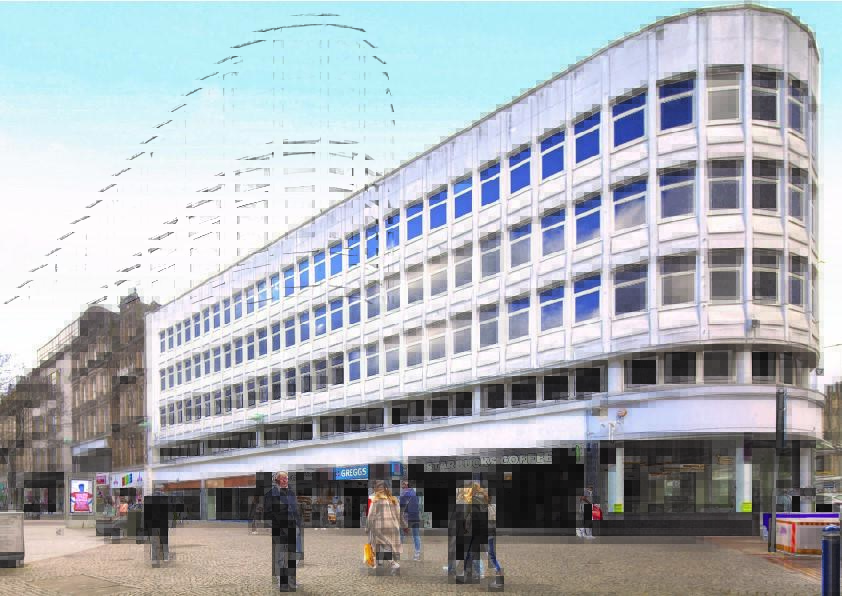
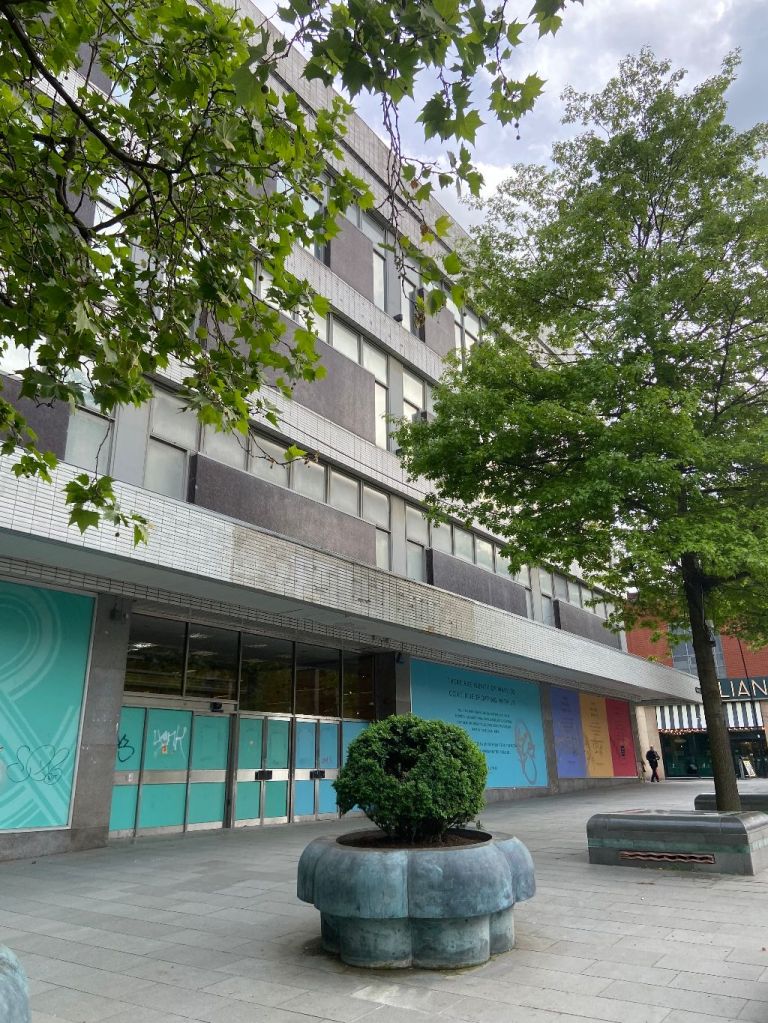
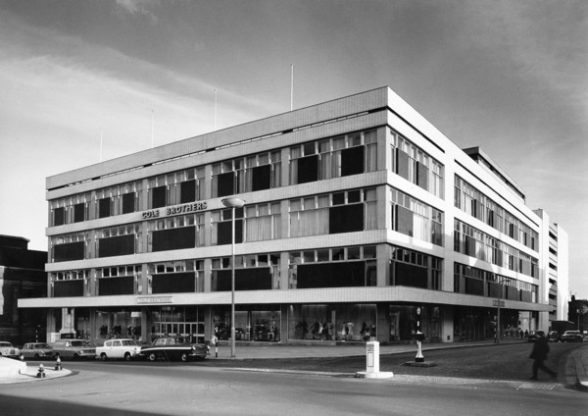
The former Cole Brothers/John Lewis store. Image: DJP/2022

Interest in the former Cole Brothers/John Lewis store in Barker’s Pool exceeded expectations, wrote David Walsh at the Sheffield Star.

There had been ‘fifteen or sixteen credible and exciting bids; according to Councillor Mazher Iqbal, Co-chair of the Transport, Regeneration and Climate Policy Committee at Sheffield City Council.

Such was the interest that any decision on the building would be delayed until November while applications were vetted.

The news almost certainly saved the building, and Councillor Iqbal said he favoured retaining or part-retaining the building, although demolition had not been ruled out. He added that the carpark would come down because it was ‘not safe and posed a safety risk.’

But I wonder how many of those applicants will still be interested today.

This morning, Historic England announced that the former Cole Brothers/John Lewis store had been granted a Grade II listing, meaning that it is of ‘special interest, warranting every effort to preserve it.’

“Historic England was asked to assess the former Cole Brothers’ (John Lewis) department store for Listing,” said a spokesperson. “After careful consideration, our recommendation to The Department for Digital, Culture, Media & Sport (DCMS) was that it should be listed at Grade II.

“It is a rare example of a post-war department store – designed by a leading mid-C20 firm of architects – with clean, crisp Modernist lines and a sophisticated layout for shoppers. It stood out from the crowd and contributed to the city of Sheffield’s vision for a vibrant new environment for its residents. The Department for Digital, Culture, Media & Sport agreed with our advice and has today granted the former Cole Brothers’ (John Lewis) Department Store listed status.”

Hallamshire Historic Buildings and the Twentieth Century Society had applied for the designation that also included the carpark.

As far as the C20 Society is concerned, it marks the culmination of a 20 year battle to get it listed.

The building was accepted by Historic England as ‘a good example of early Sixties architecture by an important firm of architects’ but initially turned down for listing in December 2001.

Although further acknowledging the store as an ‘important post-war building’, a Certificate of Immunity from listing (COI) was issued in September 2002, but this lapsed in 2007.

Upon consultation for its renewal in May 2022, C20 Society strongly objected and called for the building to be listed at Grade II. 

The change heralds a long-called for thematic investigation by Historic England into the department store as a unique building type, testament to C20’s ongoing Department Stores Campaign and the efforts of other heritage organisations in helping raise awareness of so many underappreciated examples. With the nature of retail and the character of our high streets changing so profoundly in the past two decades, the plight of former department stores has recently become a topic of national conversation.

Designed by prominent post-war modernists, Yorke, Rosenberg & Mardall (YRM) – also behind other big commissions like St Thomas’s Hospital in London, Gatwick Airport and Manchester Magistrates Court – the store was built in 1963.

As for the building’s future, it means that any decision must now be taken between Sheffield City Council, Historic England, and all other stakeholders, including the C20 Society, in helping to define potential use.

This might prove a stumbling block for some of the ’15 or 16’ applicants but will not deter serious bidders (look at Park Hill as an example).

Demolition isn’t ruled out, but it would be a long process, the final decision resting with the DCMS. But it has happened before. In 2013, after a long campaign to save it, the Grade II listed Jessops Edwardian building was flattened to make way for the University of Sheffield’s futuristic Diamond block.

Cole Brothers new store building in 1963. Image: RIBA Pix
Categories
Buildings

Replacement chimneys arrive at Pepper Pot building

A chimney stack is lowered into place. Image: Sheffield Star

The Sheffield Star has posted several photographs of ‘fake’ chimneys that are being installed on the Pepper Pot building.

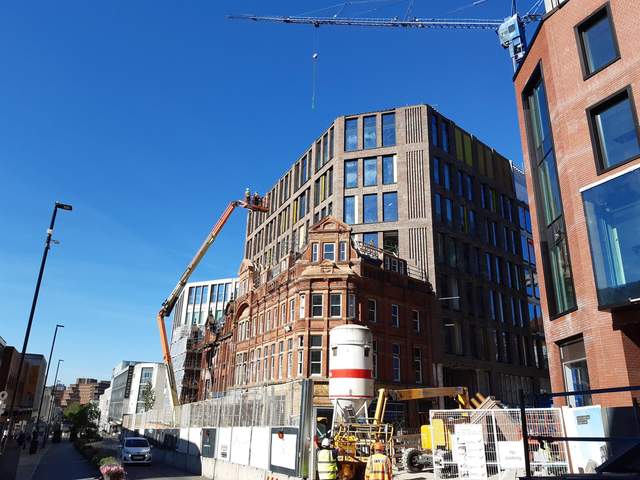
Six historic chimneys were removed as part of Heart of the City reconstruction, with only the façade remaining.

The Pepper Pot building is in Block C, bound by Pinstone Street, Cambridge Street and Charles Street.

Developers had asked for permission to change its original plans, by reducing the number of chimneys – designed by architects Flockton and Gibbs – and replicating only one.

Sheffield City Council’s planning committee overwhelmingly rejected the bid against the advice of officers who warned that refusal would put economic, social and environmental benefits of the scheme on hold and may lead to other cost cutting.

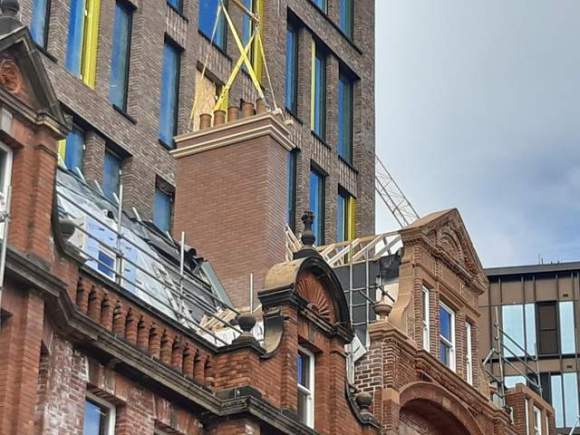
The replacement chimneys are two-tonne, 10ft ‘brick’ stacks, and thought to be made from glass reinforced concrete.

The pre-formed feature was seen on a lorry on PInstone Street ahead of being winched to the top of the Pepper Pot building. Image: Sheffield Star
A replacement a two-tonne, 10ft brick stack. A total of six were removed as part of a total revamp of the building. Image: Sheffield Star
Categories
Buildings

Welcome to the Tanya Moiseiwitsch Playhouse

The Crucible Studio theatre is no more. Sheffield Theatres have announced that its small space is being renamed as the Tanya Moiseiwitsch Playhouse in honour of the theatre designer who played an important part in the creation of the theatre complex.

“Tanya Moiseiwitsch was a pioneer. Innovative, imaginative and a ground breaker in her profession,” says Artistic Director Rob Hastie. “Tanya created radical theatre shapes now enshrined and cherished in theatre buildings all over the world. Without her vision, neither the Crucible nor the newly named Playhouse would exist in the forms they do. Hers is an incredible legacy.”

The new name also honours the original Sheffield Playhouse, that closed its doors in 1971 when the company moved to the new Crucible Theatre. “The Playhouse had a reputation for bold, adventurous, and revolutionary productions, under the leadership of inaugural Crucible Artistic Director, Colin George,” says Rob Hastie.

Over the 50-year history of the space, audiences have seen performances from hundreds of actors, from professional debuts to famous faces including Victoria Wood, Alan Rickman, Tracey Bennett, Shaun Parkes, Niamh Cusack, Richard Wilson, Stephanie Street, James Norton, Chetna Pandya and Rose Leslie.

The 400-seat Studio theatre (for drama and music). Image: BFF Architects
Tanya Moiseiwitsch by Francis Goodman. 1947. Image: NPG

Tanya Moiseiwitsch (1914-2003) was regarded as one of the foremost designers in twentieth-century theatre, an innovative designer of costumes, sets, and stages, responsible for over two hundred productions in England, Canada, and the United States. 

She enjoyed long collaborations with director Tyrone Guthrie, beginning in 1945 at London’s Old Vic. When Guthrie was invited to Canada to establish the Shakespeare Festival Theatre in Stratford, Ontario, he asked Moiseiwitsch to join him. The stage conceived by Guthrie and Moiseiwitsch was made of wood, thrusting out into the audience, and fostering a sense of intimacy between actors and audience.

In Minneapolis, where she was the principal designer at the Guthrie Theater from 1963–1966, she again designed a thrusting stage like the one she had designed in Stratford. 

Returning to England in the 1970s, she designed plays both for the National Theatre and the West End, as well as designing the stage for the Crucible Theatre. 

“The shape of the Crucible’s thrust stage was Tanya’s creation, and the studio is a smaller version of that unique performing space,” says Lucy George, daughter of the Crucible’s inaugural Artistic Director, Colin George,

“Tanya was a beloved member of the company and an inspiration for so many designers and women in the performing arts. The Sheffield Playhouse, the predecessor of the Crucible, is still remembered fondly by so many of us. The naming of the Tanya Moiseiwitsch Playhouse clarifies the connection between the Playhouse and the Crucible and ties together 100 years of Sheffield theatre history, recognising Tanya’s long-lasting impact on theatre design. Naming a theatre after Tanya would have pleased Dad enormously.”

Tanya Moiseiwitsch and Colin George. Image: George Family Archive
Categories
Buildings

Bethel Chapel – Operator sought for live entertainment venue

An operator is being sought for a new live entertainment venue as part of Sheffield’s Heart of the City scheme.

Sheffield City Council and its strategic development partner Queensberry are inviting interest from potential operators for Bethel Chapel.

Located on Cambridge Street, the Bethel Chapel building, which dates back to the 1830s, is currently being refurbished and will become the latest addition to the strong tradition of live music and performance spaces in Sheffield when it opens next year.

The venue represents a key component in Heart of the City’s ‘cultural and social’ focal point in the area, and is set to complement the Cambridge Street Collective food hall development, and the independent retail, studio and maker spaces in Leah’s Yard, which will also both open next in 2023.

The successful operator of Bethel Chapel will be responsible for curating all events and social activities – expected to be live music, comedy and other live arts.

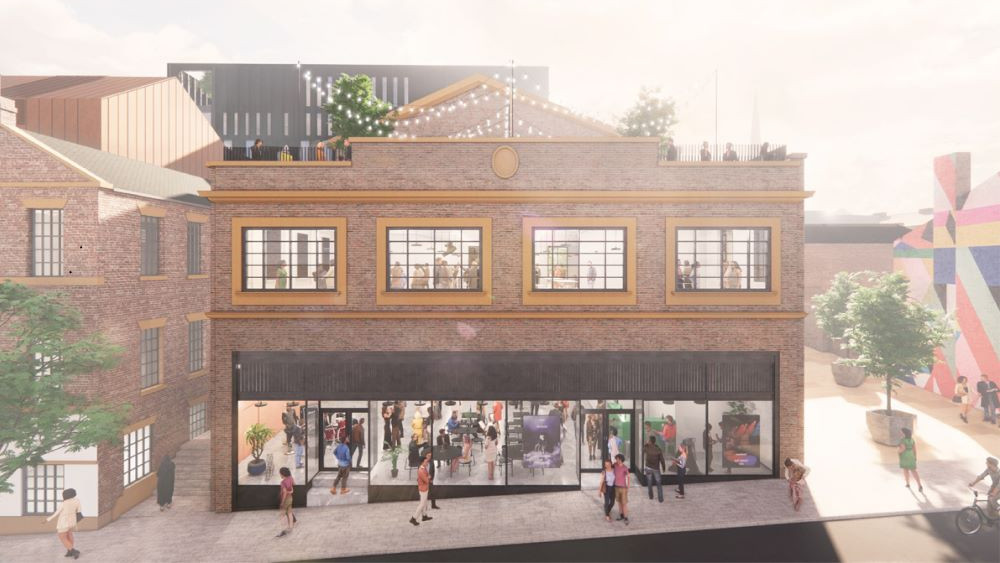
Alongside the live entertainment space on the ground floor, there will be a bar and café area on the first floor and the top floor will also have an external roof terrace and balcony. A new outside space at the rear will have seating areas for Bethel Chapel and the adjoining Cambridge Street Collective.

The foundation stone for Bethel Chapel was laid in July 1835 and opened for services in June 1836. The Primitive Methodist Bethel Chapel existed for just over a century and its final service was on Sunday 20th September 1936.

It was briefly empty before George Binns, an outfitter at Moorhead, bought the old chapel to relocate its business. The small churchyard at the front was swept away, including iron railings and stone pillars, and probably a few gravestones. In 1938 a two-storey extension was added to the front of the chapel, with stone initials on its parapet showing ‘GB’ and the date ‘1868’, the year the business was founded.

By the 1960s the shop had transferred to Lawsons Outfitters and in 1977 it was acquired by Cole Brothers (later John Lewis) to alleviate pressure on its store across the road.

Bethel Chapel. The original chapel can be seen behind the 1930s extension. Image: Picture Sheffield
Categories
Buildings

It’s time to wrap-up John Lewis

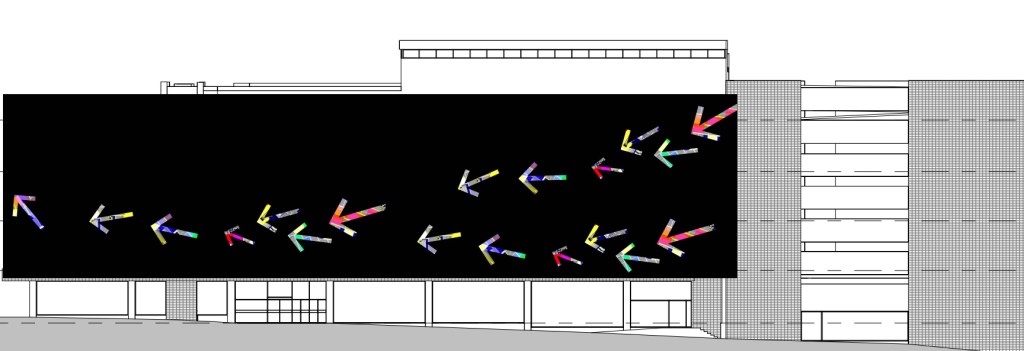
Proposed vinyl wrap for the front of the former John Lewis store. Image: Sheffield City Council

What do you do if a building is looking tired? As in the case of the former John Lewis store in Barker’s Pool. One solution is to cover it in vinyl wrap. And that is the proposal by Sheffield City Council which has submitted a planning application to shroud the 1960s building with a massive advertisement until its fate is decided.  

Side elevation on Cambridge Street. Image: Sheffield City Council
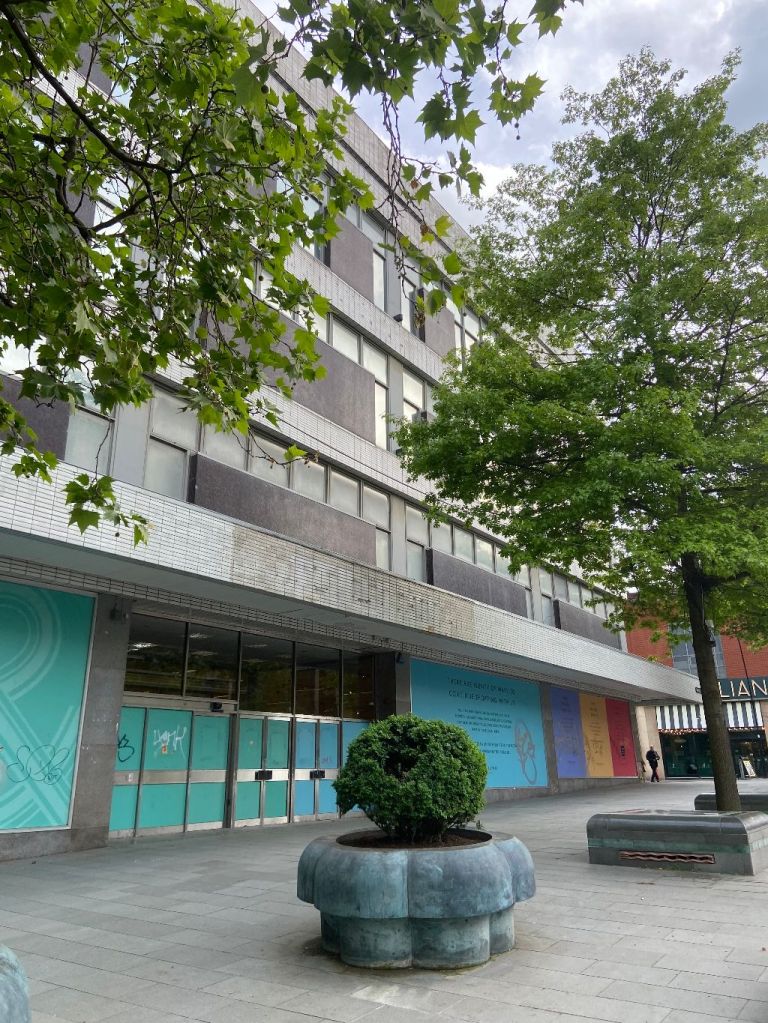
John Lewis closed permanently last year and is awaiting redevelopment. Image: DJP/2022
Categories
Buildings

Graves Park Pavilion – Blatant neglect, or is it time to rebuild?

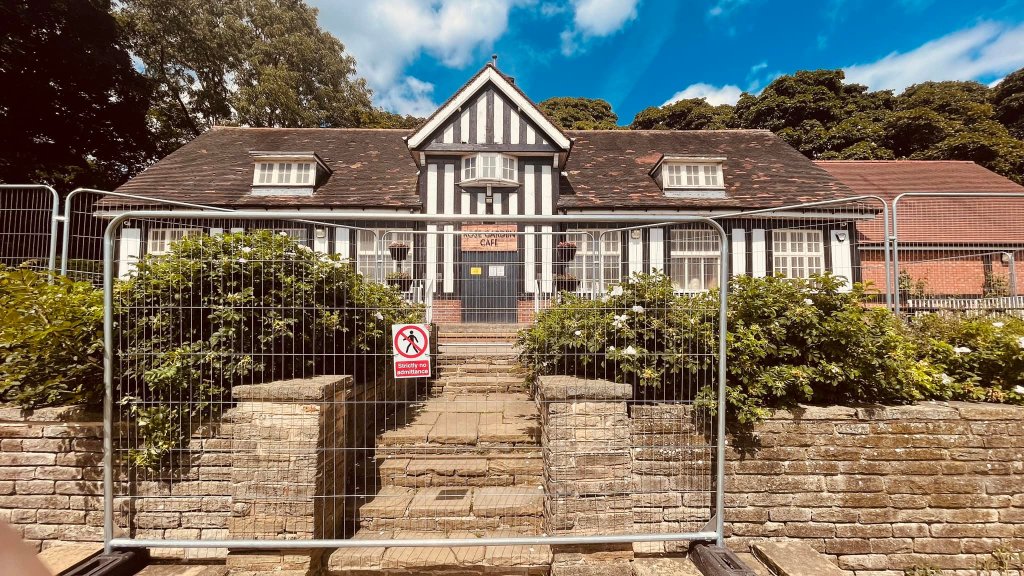
The current plight of the Rose garden Café, Graves Park. It was designed as a pavilion by W.G. Davies in 1927 and opened by the Lord Mayor, J.G. Graves. The building is considered structurally unsafe. Image: Andy Kershaw.

It seems incredible that a city that promotes itself as an ‘Outdoor City’ won’t have any refreshment facilities in its largest park. I refer to the sudden closure of the Rose Garden Café in Graves Park, a story breaking across the media.

The reason behind the closure, and its shielding behind metal railings, is the unsafe condition of the building.

The council estimates that it will cost at least £550k to repair the building and they only have £200k. A consultant report says that there is significant roof sag, dormer windows leaning inwards, leaking roof, blocked drains, bulging of the soffit beams both sides of the entrance, and a long list of other problems. According to the report, “It has reached the end of its design life.”

“It is not recommended to refurbish the Rose Garden Café,” says the report. “Unless it is considered to be of sufficient historic interest and additional funding is readily available.  Any building can be repaired but at a cost.  The café is not listed but the repair details involved would be as if it was listed. It is recommended that the café and rear kitchen/store extension be demolished and the newer toilet block retained. For comparison a new build modular of 500 square metres will be circa £425,000.”

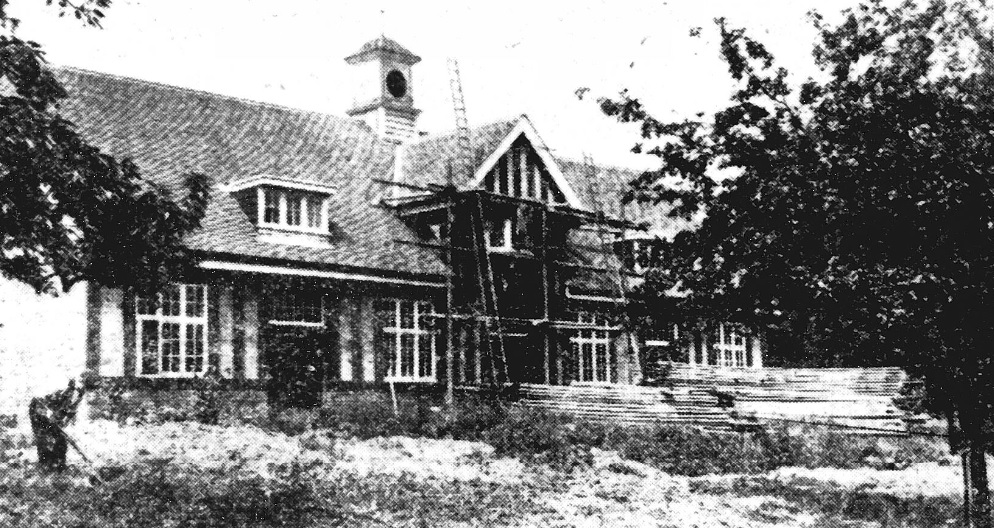
The Rose Garden Café was built as a pavilion and tearoom in 1927 by Sheffield Corporation’s Parks Committee to the designs of city architect W.G. Davies.

It was constructed by Reeves Charlesworth Ltd at a cost of £2,500.

The ‘new’ pavilion and tea house erected in the old orchard of the summer house at Graves Park. Construction in 1927. Image: British Newspaper Archive.

The pavilion was built close to Summerhouse Wood, in the old orchard of a summer house. It was here that park keepers used to toll the bell to warn users that the park was closing. After this the gates would be locked, and you were not allowed in.

According to Ian Rotherham, from Sheffield Hallam University, the summer house survived until demolition by Sheffield City Council in the early 1970s.

“We believe that this may have been a possible Tudor hunting tower for the old deer parks alongside the now Hemsworth Road.”

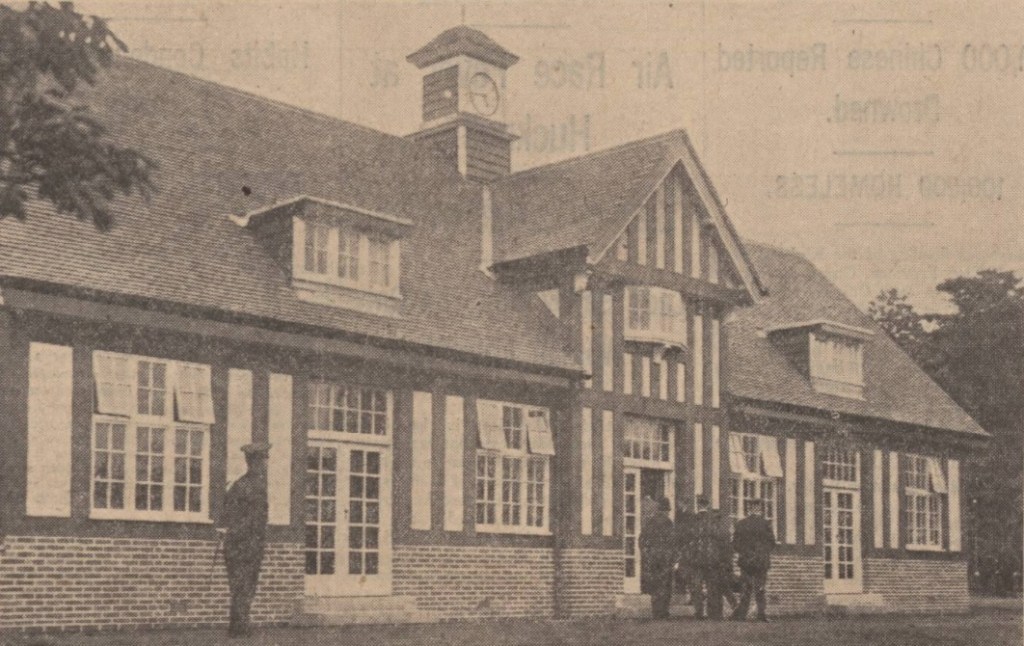
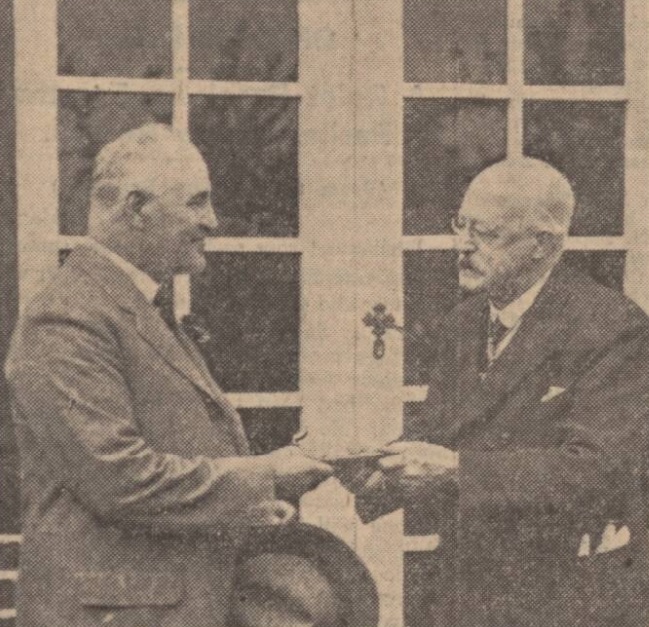
The opening ceremony for the pavilion was on July 29, 1927, when David Flather, Master Cutler, handed the Lord Mayor, Alderman J.G. Graves, a gold key, a gift from the building contractor. Flather said that the Cutlers’ Company had the greatest admiration for the work which the Lord Mayor was doing for the city. It was J.G. Graves who had gifted the park to Sheffield in 1925.

The Pavilion in Graves Park, which the Lord Mayor (Alderman J.G. Graves) opened in July 1927. Image: British Newspaper Archive

The Lord Mayor said he regarded the building of the pavilion as a remunerative undertaking and not as a luxury expenditure. If the Council continued to encourage the public to make use of the natural advantages of the city and to indulge in healthy recreation, then there would be less spent on hospital services, the drink and gambling evils would decrease and there would be less policemen needed.

“We have facilities for accommodating considerable numbers of our fellow citizens from the more distant parts of Sheffield. We could, with the help of the Tramways Committee, who will, I am sure, be reasonable, provide facilities for bringing parties of people from all parts of the city, particularly the East End. I refer to mothers’ unions, old folks’ treats, and others. I hope it will be possible to entertain 100 or 150 people at given dates in advance and that the facilities will be taken advantage of at ordinary times.”

The Master Cutler presenting the key to the Lord Mayor at the opening of the Pavilion in Graves Park. 1927. Image: British Newspaper Archive.

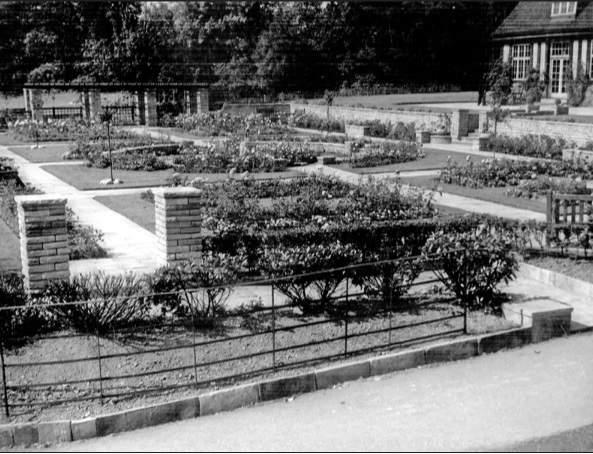
A year later, in 1928, the rose garden was laid out in front of the pavilion, prompting J.G. Graves to say that he hadn’t seen anything better outside Regent’s Park.

Happy times. But in the 95 years since, Sheffield City Council has woefully neglected Graves Park.

“Like the rest of Graves Park, the cafe building belongs to The Graves Park Charity,” says the Friends of Graves Park. “The problem has always been that the trustees of the charity are Sheffield councillors, and whilst they are required to make decisions in the best interests of the charity there have been many occasions where some might suggest they put the interest of the council first.”

J.G. Graves will rightly feel miffed in his grave (no pun intended), because the condition of the old pavilion is a shocking indictment.

Buildings should last longer than 100 years (although many don’t) and with careful maintenance will be structurally safe. On hindsight, the construction of the pavilion may have had design defects and the build quality may have been inadequate.

Allegedly, the current tenant has paid over £400K in rent and a share of his profits to Sheffield City Council over the past 14 years, but no maintenance on the building has been completed.

Gardens at front of the pavilion, Graves Park. Image: Picture Sheffield

I suspect the likely outcome will be demolition, and with inadequate funds in the budget for a replacement, the park might be left without any facilities.

It might be the case, as in some other cities around the world, that any development is handed to private enterprise, to build, and operate, a replacement facility. And might this create an opportunity to rebuild incorporating parts of the old pavilion?

A taste of things to come? Architects around the world are creating contemporary park pavilions. But would these last another 100 years? Image: Archello

©2022 David Poole. All Rights Reserved.
Categories
Buildings

Coles Corner – Plans for apartments and indie business

2-18 Fargate. “Given the huge housing shortage, plus the frequently reported difficulties faced by first-time buyers, the most obvious answer is to turn this unused office space into much-needed, quality apartments or student accommodation.” Arran Bailey. Image: GCW

It dates to 1965-1966, and stands at Coles Corner, the iconic site of the Cole Brothers department store.

2-18 Fargate, at the corner with Church Street, has been acquired for an undisclosed sum by Nottingham property company ALB Group.

It already has Starbucks, Greggs and Hotel Chocolat on the ground floor, and plans are underway to convert the four upper floors of vacant office space into apartments.

The move follows a similar refurbishment model employed by ALB Group in other UK centres, including Stoke-on-Trent, Ipswich, Birkenhead, and Derby, which are already experiencing a turnaround in fortunes.

Group managing director Arran Bailey has long been committed to finding ways to reverse the trend of decay in UK town centres, particularly by encouraging local, independent entrepreneurs to launch new high street businesses, by offering lower rents with more flexible terms.

ALB is seeking to do the same with its vacant retail units in the Fargate building.

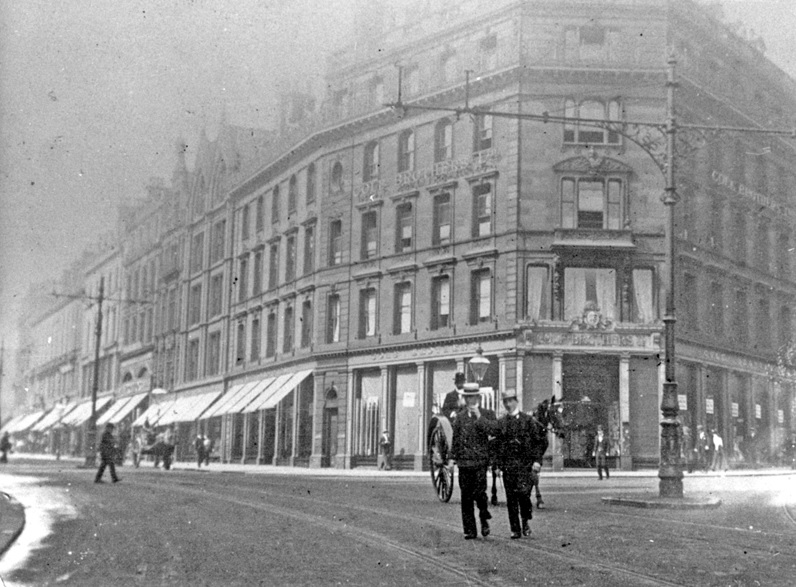
Cole Brothers, Fargate/Church Street. 1900-1919. Image: Picture Sheffield
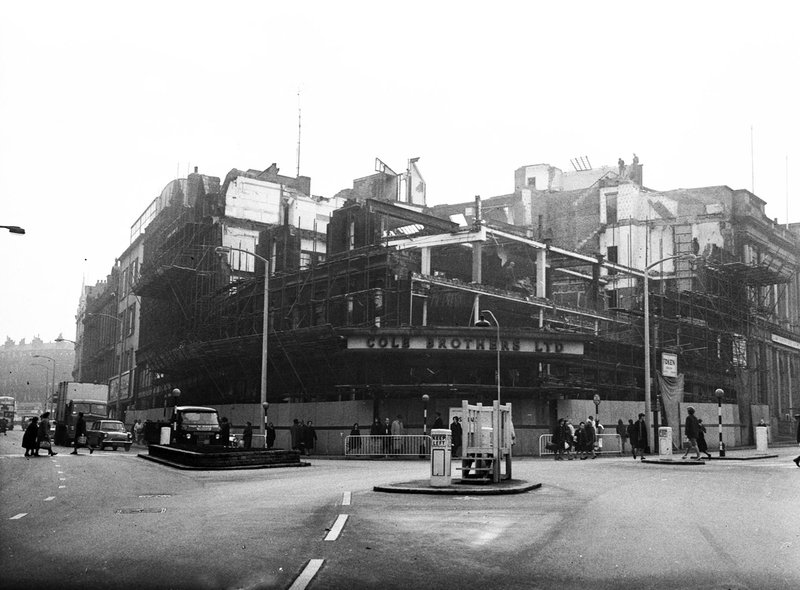
The demolition of the old Cole Brothers store in 1964. Photo: JPIMedia
Construction on the old Cole Brothers site (Coles Corner), junction of Church Street and Fargate in 1965. Image: SCC Engineers and Surveyors/Picture Sheffield

Categories
Buildings

Sheffield City Council targets developers for two new Heart of the City sites

Sheffield City Council has gone to market with two new development plots within its transformational £470m Heart of the City masterplan.

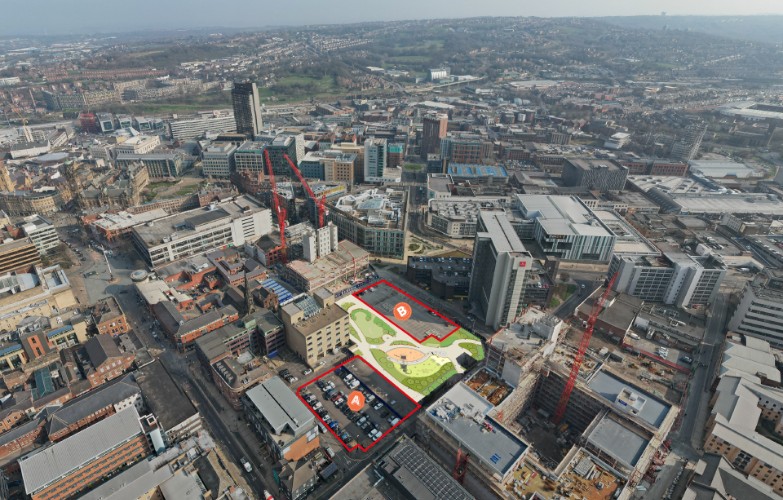
The Council and its appointed marketing agent, CBRE, are seeking buyers for two development sites located on the former car park between Rockingham Street, Wellington Street and Carver Street.

The new developments would further contribute to the rapidly growing mixed-use district that is being created through Heart of the City – this includes the already completed Grosvenor House, plus several under-construction office, leisure, and residential developments.

The two new plots are located at opposite corners of the evolving Pound’s Park, having been originally outlined during the Council’s public consultation for this landmark public space last year.

Construction of Pound’s Park is already well underway and is set to complete towards the end of this year. By prioritising the physical and mental wellbeing of its visitors – through a focus on pedestrians, cycling, active play, and relaxation – the new green space is seen as a big draw for potential developers.

The sites are expected to provide active ground floor uses such as cafes and restaurants onto this high-quality public realm with office, hotel and residential uses on the upper floors considered appropriate. Whilst both sites could be developed by a single purchaser, the Council will consider separate or combined offers for the sites.

The largest of the two new sites (Site B) sits on the southeastern side of the park on the corner of Carver Street and Wellington Street.

One of the requirements for this site is that it must incorporate and display the locally cherished William Mitchell Frieze artwork, which was carefully removed from Barker’s Pool House to make way for a new Radisson Blu hotel last year.

The second site (Site A) sits to the northeast of the park on the corner of Rockingham Street and Division Lane.

Categories
Buildings

Bar and events venue planned for Globe Steel Works

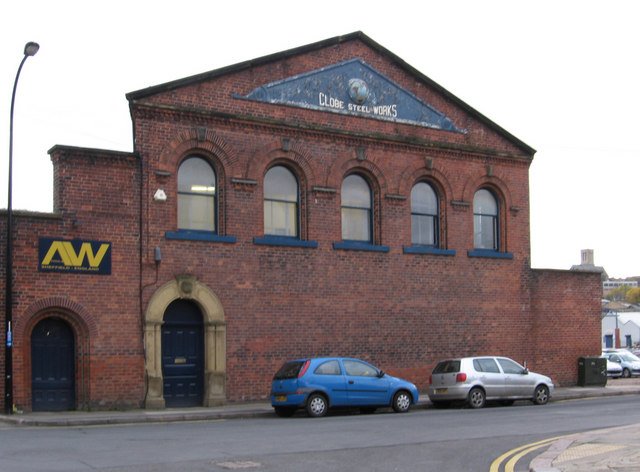
More development proposals at Kelham Island. This time it involves the former Globe Steel Works on Alma Street.

Plans have been lodged to convert it into a bar, café, multi-use events and music venue. The full planning application has been submitted by Citu, supported by Directions Planning Consultancy.

The traditional red brick building was built about 1845 and is one of the last standing remnants of the former Globe Steel Works, which once incorporated land to the east, south and west. The extended site was last occupied by Richardson’s Cutlery Works and, more recently, this building was used by AW Tools (Europe) Limited.

Under the plans, an existing single-storey enclosed yard area that is already partially covered along the western elevation would be fully utilised to provide further accommodation at ground floor and a terrace at the first floor level. A new lobby area would also be created in the north-east corner.

The existing Globe Steel Works sign would be retained.