Categories
Buildings

Isaacs Building

I hope I wasn’t the only one caught unaware when the Heart of the City II project announced that Block C was going to be called Isaacs House, named after Edwardian-era paper-hangings merchant David Isaacs.

The new block will sit on a triangular piece of land bordering Pinstone Street, Charles Street and Cambridge Street. The Victorian fronts on Pinstone Street – including the Pepper Pot façade – will be retained with new workspaces, prime retail and leisure space constructed behind.

David Isaacs (born 1873) was the son of Lewis Isaacs, a wallpaper merchant, and his wife Mary, both Russian-British subjects, and influential members of Sheffield’s Jewish community.

The family wallpaper business was established at 94 The Wicker, later opening a second shop at No. 4 St. Paul’s Parade, in the town centre.

In 1904, David Isaacs, now heading the business, commissioned a new building on a wedge-shaped plot cornering Charles Street and Cambridge Street. The Isaac’s Building contained new showroom premises for Isaacs – The Wallpaper People, on the corner, opposite The Hippodrome theatre on Cambridge Street.

Isaacs Building was an example of Edwardian entrepreneurship, the ground floor containing seven shop units with an assembly hall above, its entrance being from Charles Street. The top floor of the building contained offices and several workshops, mostly rented by enterprising tailoring businesses.

The wallpaper shop opened in 1905, a newspaper advertisement declaring that “Isaacs, The Great Wallpaper People, begs to announce that they have opened their new premises, Isaacs Building, Charles Street, with the cheapest, largest and best variety of paper hangings in the world.” The shop advertised a wide range of paper hangings – raised papers, engrain papers, plain papers, gilt papers, varnish papers, sanitary papers and pulp papers.

The Independent Labour Party quickly established a base within the assembly rooms and, along with the nearby Athol Hotel, the area became a hub of political activity. As well as offices for the ILP, the building was also home to the ILP club and the ILP-supporting Sheffield Guardian newspaper.

For the first few years Isaacs Building regularly advertised shops suitable for a hairdresser, milliner, chemist or sweet shop. The assembly hall, originally known as Stanton Hall, became regular home to the Sheffield Ethical Society, while other meeting rooms were known as the Central Rooms.

In 1911, the ILP rooms were taken over by Sheffield Trades Hall, a business that survived until 1930. It was regularly targeted by the police, believing that illegal drinking and gambling were taking place inside, and making several prosecutions.

It appears that Isaacs Wallpaper on Charles Street wasn’t the success it intended to be. Its proximity to St Paul’s Parade might have been the reason, and in 1908 the shop was closed, the business transferred to another new shop at 17 King Street… advertisements using the tagline “Waiting to be Hung.” In the shop’s place, Isaacs opened an auction mart “open to receive goods of every description.” By 1910, the shop at The Wicker had also closed.

In 1930, it was announced that Sheffield Trades Hall Ltd had gone into liquidation, a development that cost David Isaacs dearly. The following year he was declared bankrupt, the freeholds of Isaacs Building, approximately 346 yards long, being offered at auction. The properties were sold in lots – Nos. 2, 4, 6, 8 Upper Charles Street (No.6 being Sheffield Trades Hall), and Nos.35,37, 39 and 41 Cambridge Street – all fetching £8,350.

For the next 88 years the property, no longer referred to as Isaacs Building, was occupied by numerous businesses. In time, the old assembly hall was converted into a nightclub, its various incarnations being Faces, Raffles, Charlie Parkers and Freedom, and for a time part of the old basement being used as Charles Street Underground, a faithful reproduction of a London Underground station.

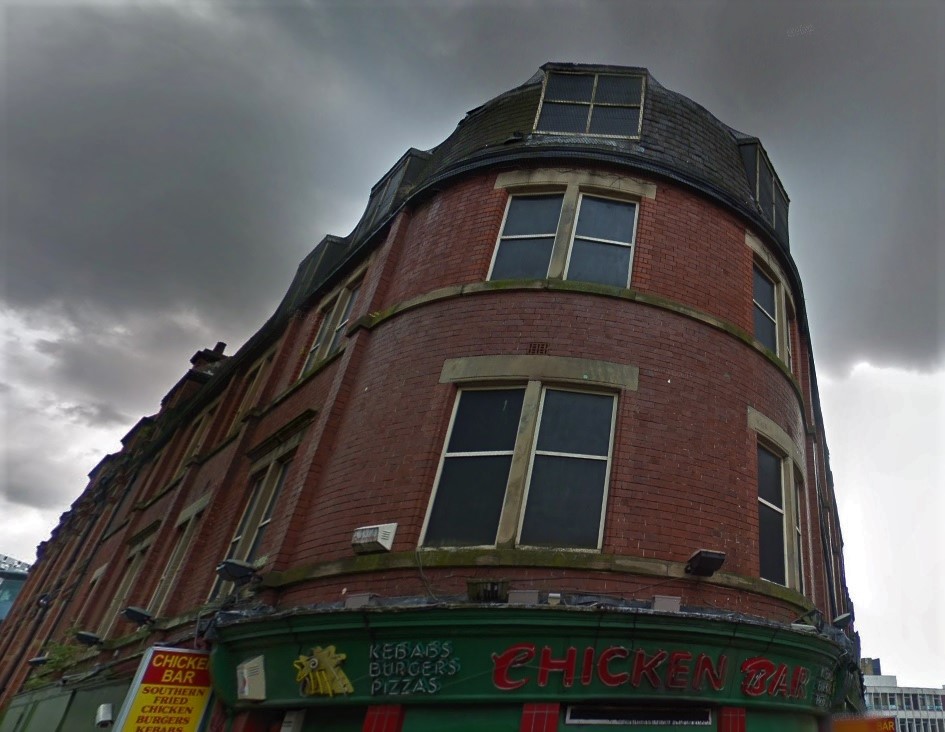
As I write, the building still stands, long boarded-up and the only evidence of recent occupancy being a chicken takeaway where Isaacs Wallpaper shop once stood. But not for much longer, with demolition scheduled in the next few weeks.

Categories
Buildings

Mirador

Developers are taking advantage of the resurgence in the Kelham Island area. Next to be granted planning permission is a £70million 24-storey private rented sector (PRS) development on a site at Hoyle Street, Shalesmoor.

This will stand in a prominent position beside the busy inner ring road.

The Mirador development will comprise a series of blocks, with the tallest standing at 24 storeys. In total, 500 PRS flats would be created, along with communal lounges, a residents’ gym and management suite. Two commercial units would be developed on the ground floor, with 78 car parking spaces and communal outside space also provided.

Urbana Town Planning submitted the application on behalf of the Scotfield Group. Adam Murray, managing director at Urbana Town Planning, said: “It will deliver a brilliant new development on a massively underperforming site at the gateway to the city centre from the north, and will contribute to the ongoing success of this part of the city centre.”

Categories
Buildings

Concept House

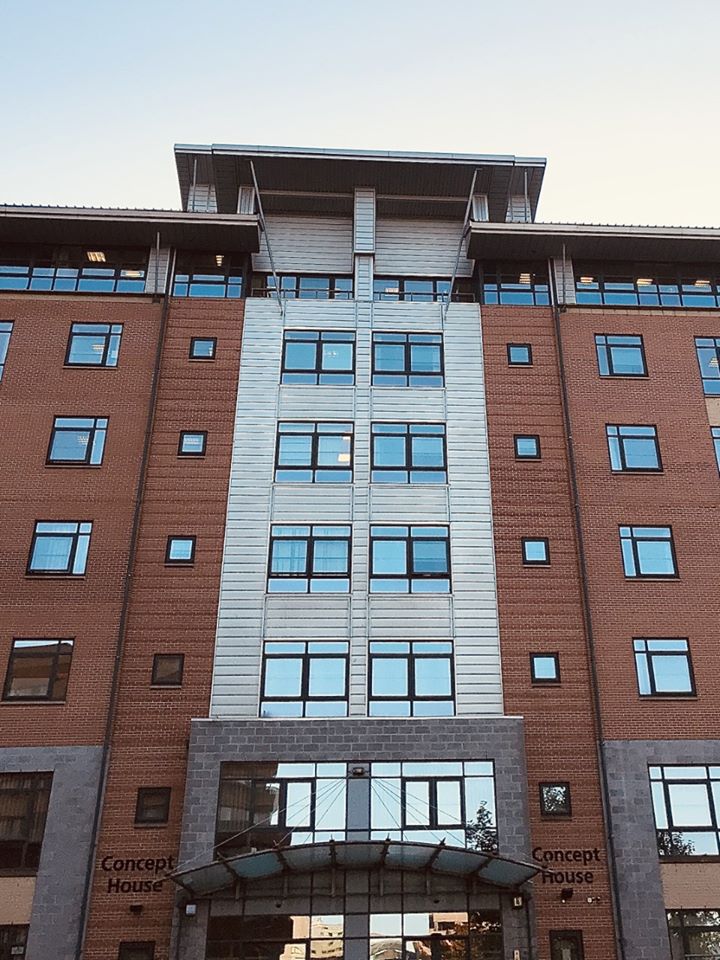
We’ve hated this building, but its owner is hoping we might forgive and forget. This is Concept House on Young Street, next to the Moorfoot Building, better known as HM Revenue & Customs, scheduled for closure in 2020-2021. The seven-storey office block was built in 1995 and now planning permission has been granted to Royal Sun Alliance Insurance allowing them to convert it for residential use, with plans for 83 flats.

An application has also been submitted to convert part of Concept House into a hotel and commercial units. Under these plans, a total of 161 bedrooms would be created across the upper floors. A bar/restaurant unit would be created on the ground floor and operate independently from the hotel. The basement, which is currently used as a car park, would operate as an independent gym.

UPDATE: Planning permission was granted, subject to conditions, by Sheffield City Council in November 2019.

Categories
Buildings

Davy’s Fargate

The next time you pop into WH Smith on Fargate, cast your eyes towards the third floor. High above you might just be able to make out the carved heads of a sheep, cow, pig and ox, all clues as to the former use for this building.

For generations, this has been WH Smith, but its history goes back to 1881-1882, designed by Sheffield architect John Dodsley Webster for Alfred Davy, provisions merchant. This was arguably the flagship store for Davy, renowned for his sausages, hams, potted meats and pork pies.

Alfred Davy (1838-1902) was the son of James Smith Davy, a well-known member of the Society of Friends, who had a shop in the fruit market, now Fitzalan Square. Educated at Ackworth, he opened a provisions shop on Castle Street about 1867, subsequently opening other shops at Broomhall and Rotherham High Street.

Davy was alert, enterprising and good-hearted. He was described as upright and straightforward in his trading, having a good word for everyone, and never taking advantage of humbler competitors.

Like many contemporaries, he was a Churchman, sometime warden of St. John’s Church at Ranmoor, and was largely responsible for the formation of the Sheffield branch for the Prevention of Cruelty to Children. His chief recreation was chess and became a prominent member of the Sheffield Athenaeum Club.

In the early 1880s, Davy found that the Castle Street branch had grown beyond all bounds, and there being no further room for expansion, found it necessary to secure additional accommodation.

His opportunity came when the west side of Fargate was being redeveloped as part of an improvement scheme. Alfred Davy bought Nos. 38 and 40, as well as premises at the rear, employing J.D. Webster to build his fourth shop.

We’ve seen before that the Victorians were shrewd businessmen when it came to property. Above the shop he asked Webster to create a suite of offices on the first and second floors, known as Exchange Chambers, suitable for renting, and accessed by a spacious Serpentine staircase. (In later years, the shop expanded upstairs, utilising the first floor as the Victoria Café).

When the store opened in December 1882 it was designated as one of the “ornaments of Fargate.” The business claimed to sell seven tons of sausages and poloney every week, inspiring Davy to place one of three Williams ‘Perfect Silent’ Meat Cutting Machines in the window. From here, customers were able to see the machine in action, capable of mincing and mixing 3cwt of meat each hour.

In the days before supermarkets, Davy’s was where all respectable citizens bought their food. He boasted selling 2-3 tons of Danish, Normandy and French butter every week, British and Continental cheeses, Wiltshire, Cumberland and Derbyshire bacon, as well as Irish, American and Canadian Hams. He was also a purveyor of tinned fish and meat, pure leaf lard and appears to have cornered the market with Scotch oatmeal.

A newspaper at the time raved that Davy had adopted electric lighting, then in its infancy, and installed by Tasker and Son. “The steadiness and brilliance of these little lamps in Mr Davy’s shop are like a new revelation, and show what rapid strides are being made in the application of electricity for illumination.”

In 1887, Alfred Davy opened a large factory in Paternoster Row, used to produce meat and baking products, and which later doubled-up as its Head Office.

Alfred Davy built a house called Hill Crest on Ranmoor Cliffe Road, originally called Upper Ranmoor Road, and it was here that he died of nerve paralysis in 1902.

His sons, Arthur Cedric Davy (died 1935) and Ernest Richard Davy (died 1951) took over running of the business and masterminded the company’s rapid expansion. By 1924, Davy’s had 16 shops and two cafes in Sheffield, but the business soon expanded across the north.

The Davy family sold the business to Associated British Foods in 1958, disposing of it completely in 1974, although some branches were retained as Sunblest shops.

Afterwards, the store was bought by WH Smith which has remained ever since. However, in recent years it temporarily relocated to allow for repairs on the old Victorian roof that had started to collapse. The store was refurbished and reopened earlier this year.

Categories
Buildings

Sheffield Citadel

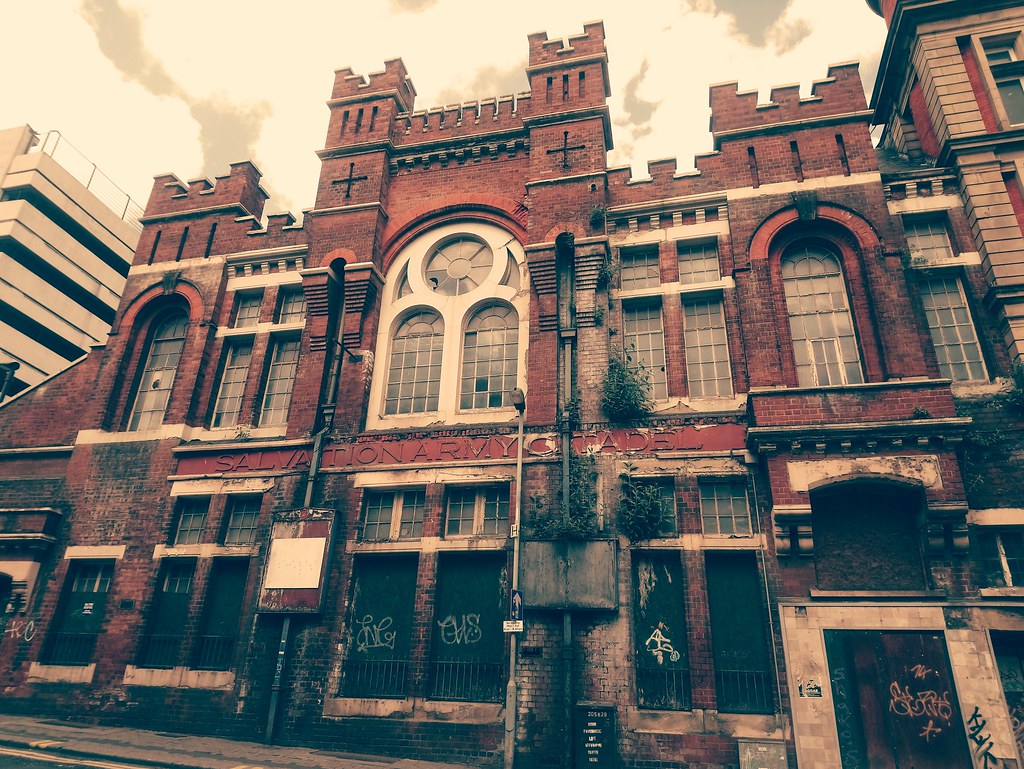
The latest on the decaying Sheffield Citadel building on Cross Burgess Street. WMA Architects, on behalf of Tandem Properties, County Durham, have submitted a revised planning application to Sheffield City Council. Designed by William Gillbee Scott and built by W.T. Fish and Son for £7,500 in 1892-1893, it has stood empty since the Salvation Army moved out in 1999.

The new application replaces a previous submission that asked for a second floor extension. The plans suggest alterations to the building and a change of use to form a restaurant/bar with the formation of a terrace to the first floor, removal of internal walls, adjustment of levels, and alterations to windows and doorways.

Categories
People

Helen Sharman

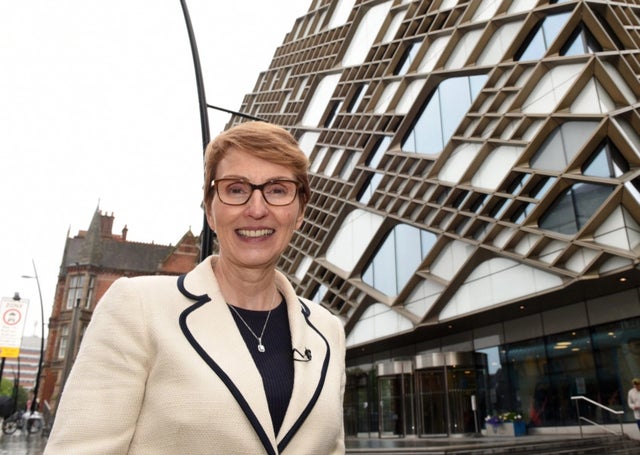
Helen Patricia Sharman CMG, OBE, HonFRSC. Born at Grenoside, Sheffield, in 1963. She later moved to Greenhill, attended Jordanthorpe Comprehensive, and later studied chemistry at the University of Sheffield and Birkbeck, University of London. Better known to us as plain old Helen Sharman, the UK’s first astronaut.

In 1989, she responded to a radio advert and was selected from more than 13,000 applicants to be part of Project Juno, an Anglo-Soviet space mission. In May 1991, she launched on a Soyuz spacecraft to spend eight days orbiting the earth, most of that time on the Mir space station.

She’s also famous for tripping and dropping the torch, extinguishing the flame, at the opening ceremony of Sheffield’s World Student Games in the same year. But she has other claims to fame as well, including an appearance in an episode of Hollyoaks, and having Sharman Court student flats on Broad Lane named after her.

These days she works full time at the Department of Chemistry, Imperial College, London.

Categories
Buildings

Montgomery Hall

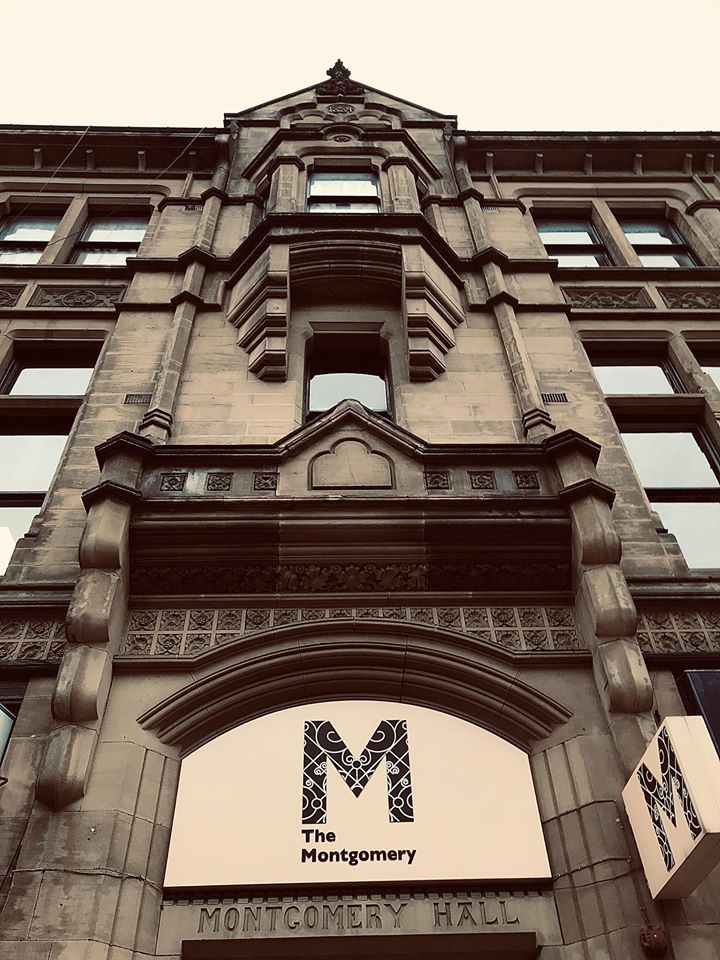
Here’s the Montgomery Hall on Surrey Street, known today as a theatre and arts centre, but its heritage tells a very different story. We must go back to the 1880s and the long running saga of the Sheffield Sunday School Union, which had been looking to build a new hall and rooms in the centre of town.

The union was founded in 1812, with the intention of educating working children on Sundays, especially in literacy, and fighting for child labour laws to keep children out of chimneys. By 1884 the union comprised 108 schools, 3,340 teachers and 27,751 scholars. One of its founders was James Montgomery (1771-1854), local poet, journalist and reformer, and the new hall was to be named in his memory.

After first obtaining a site at (New) Church Street in 1873, the land was sold to Sheffield Corporation. Another site was secured at the bottom of West Street, adjoining Holly Lane, but this was also sold on. In 1883, union trustees bought 892 square yards of land between Fargate and (New) Surrey Street from the Corporation at a cost of £4,700.

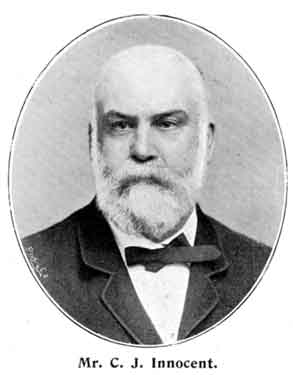
The foundation stone for the Montgomery Hall was laid in July 1884 by the Right Hon. Anthony John Mundella (1825-1897), MP for Sheffield and president of the Sunday School Union of England and Wales. No sooner had work started, and it was temporarily abandoned, the building not completed until 1886. Built in Domestic Gothic-style at a cost of £15,000, it was designed by Sheffield architect Charles John Innocent (1839-1901), the union’s honorary secretary, and constructed by George Longden and Son.

Once completed, the Montgomery Hall contained a large galleried hall seating 1,000 people and a smaller hall for 350. The front of the building contained several committee and classrooms, a library, reading rooms, a reception room, ante-rooms, cloakrooms, kitchens and caretaker’s accommodation.

A newspaper described the building at the time.

“The front will be a welcome addition to the street architecture of the town. Built entirely of stone, in the centre of the front is the principal entrance, on either side of which are two shops built as a source of maintenance income. At each end of the front is another entrance. Over the shops are large windows which light the committee rooms and classrooms, the hall is at the back. Over each of the entrances an oriel window, with a slight projection, relieves the front and helps make it more prominent, while immediately over the door is a medallion bust of Montgomery.”

And so, the Montgomery Hall thrived, a home to Sunday schools, rented by other religious institutions, later becoming home to community theatre groups, schools and dance classes.

The union later became the Sheffield Christian Education Council with the hall always being used as a theatre, except during World War Two when it was used by the Government.

It was remodelled as a 427-seat auditorium after a devastating fire in 1971 and continues with an art gallery on the first floor and the old library being used as a space for workshops and rehearsals.

There are now plans for a multi-million pound refurbishment to be completed by 2023, concentrating on front of house, a new main frontage, the main auditorium and backstage facilities. Included in the project is the installation of a lift, a concept unheard of when the building was originally designed.

Categories
Buildings

Montgomery Hall

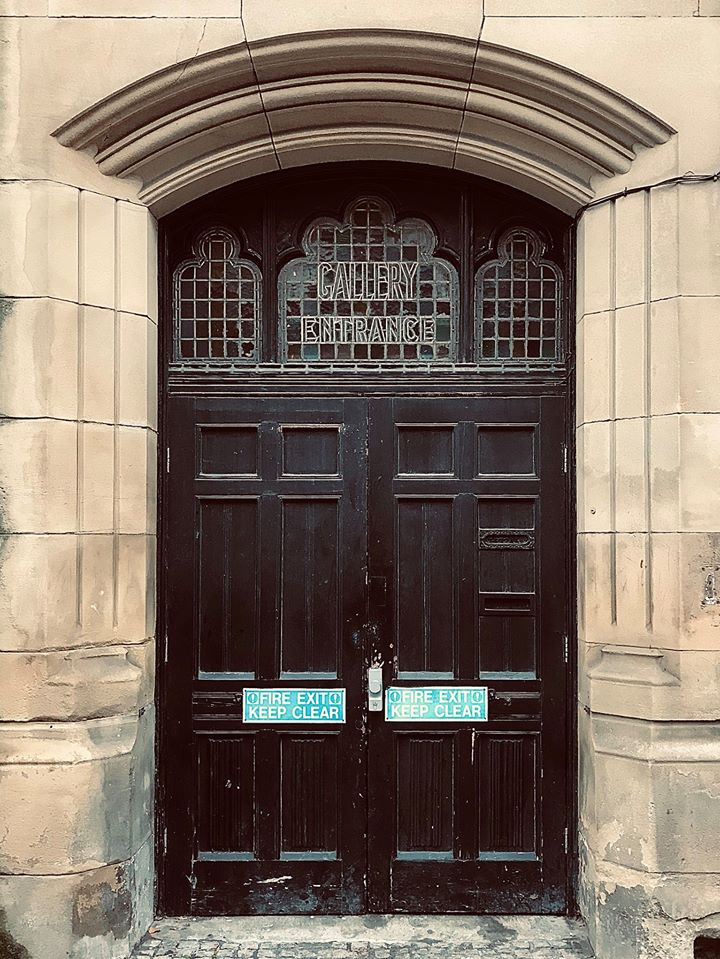
A door that goes unnoticed. This door is to the left of the Montgomery Hall on Surrey Street. The principal entrance is in the centre of the building, on either side of which are two shops, originally built to provide a source of income that could be used to cover maintenance costs for the building. At each end of the front are two doors, this one included, one of five doors leading to staircases to the main hall behind. When the Montgomery Hall was built in 1884-1886, designed by Charles John Innocent, the staircases and corridors were described as being “fireproof”. This is also the entrance to an art gallery on the first floor.

Categories
People

Charles John Innocent

Charles John Innocent (1839-1901), architect, was born in Sheffield, the son of John Innocent, a publisher. He was educated at Sheffield Commercial Academy and later articled to the architects Weightman, Hadfield and Goldie.

Innocent went into partnership with Thomas Brown in 1862 and the Education Act of 1870, and the immediate demand for school buildings, proved to be a triumph for them.

He was appointed architect for the Sheffield Schools Board in 1871 after which school after school went up using his designs, including amongst many, Attercliffe, Springfield, Carbrook, Abbeydale, Gleadless Road, Hunters Bar, Sharrow Lane and Duchess Road.

Innocent also did a considerable amount of work for the Sheffield Board of Guardians, providing the plans for the erection of the headquarters of the Children’s Homes and the Cottage Homes for aged people.

Charles Innocent designed Glossop Road Baptist Church, now the Sheffield University Drama Studio (1871), and St. John’s Chapel, Crookesmoor, but his greatest achievement was probably the Montgomery Hall (1884-1886) on Surrey Street for the Sheffield Sunday School Union.

He died in November 1901 at his home on Wellesley Road, Broomhill.

Categories
Buildings

Castle House

I don’t think many people will realise that this iconic Sheffield building was inspired by a Sears Roebuck department store in Chicago, as well as a nameless shop in Amsterdam. These were the motivation for George S. Hay, chief architect for the Co-operative Wholesale Society, who designed Castle House for the Brightside & Carbrook Co-operative Society in the 1950s.

It has positioned itself alongside Park Hill flats as not being particularly loved. A throwback to the sixties, but like many similar modernist buildings, has matured better with age.

Castle House was built between 1959-1964 for the good old B&C, formed in 1868, who wanted a flagship department store and combined head office in the centre of the city.

The Society’s previous tenure in the city centre had been disastrous. In 1914, it bought land in Exchange Street for a shop, central stores and offices. The First World War delayed work and construction wasn’t started until 1927, at which point the remains of Sheffield Castle were found as the foundations were being laid. The bastion and moats were presented to the public before building recommenced. It was finally completed in 1938, quite a grand affair, only to be destroyed by German bombs in December 1940.

The site was taken over by Sheffield Corporation which had plans for Castle Market (whose construction revealed the remains of Sheffield Castle once again).

In 1950, the B&C Co-op purchased land at the junction of Castle Street and Angel Street and built a temporary one-storey shop, named Castle House, a nod to its former City Stores premises. Accordingly, the one tower heraldic symbol became the familiar logo for the Society.

Castle House was replaced by the five-storey building we know today. It was built of reinforced concrete with Blue Pearl and grey granite tiles and veneers, buff granite blocks, glass and brick. George S. Hay designed it with a blind wall to the first and second sales floors, taking encouragement from the Chicago building.

The interiors were designed by Stanley Layland, the interior designer for the CWS, the crowning glory being a cantilevered spiral staircase linking all floors. The suspended restaurant ceiling was only the second such in Europe.

It opened on 13 May 1964, the total cost of build, including shop fittings, being £925,000.

The B&C planned to merge with the Sheffield & Ecclesall Co-operative Society in 1985, a move voted down by its members, although it changed its name to the Sheffield Co-operative. In 2007, it merged with United Co-operatives, which itself merged with the Co-operative Group shortly afterwards. In 2007, the group decided to close its department stores and Castle House suffered the humiliation of standing empty.

Some trading units remained including food, travel and pharmacy, and
also the Crown Post Office. The pharmacy was closed in 2011 followed by travel and the Post Office.

English Heritage (now Historic England) gave it Grade II listed status in 2009, and in July 2018 Kollider, the regeneration company, announced plans to take over the building, the result of a £3.5million funding deal with Sheffield City Council.

Kollider created a Scandi-style food court on the upper ground floor, Kommune, an all-day dining experience including independent kitchens, brewers, bakers, baristas, book sellers and artists.

The rest of the building has been turned into Ko:Host, an events space, and Kollider Incubator, a work space for innovative, digital and tech entrepreneurs.

Earlier this month, the US tech firm WANdisco, set up in California by Sheffield-born David Richards in 2005, announced plans to relocate sixty staff from its Sheffield head office to Castle House.

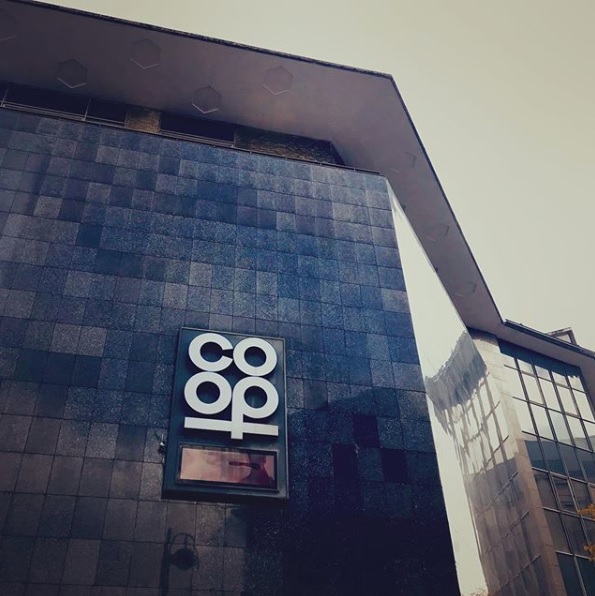
The Co-op sign remains, although this refers to the Co-op food store that still occupies part of the building on Castle Street.