Categories
Buildings

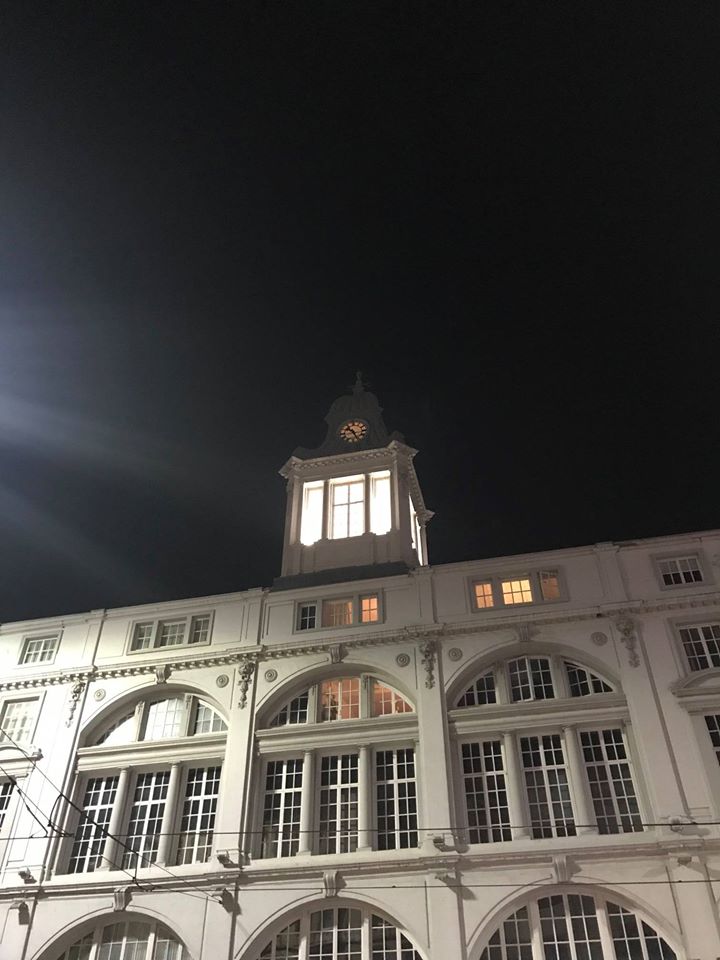
Telegraph & Star Building

Standing majestically on the High Street for over one hundred years, the history of this building is lost to many.

This is the former headquarters of the Sheffield Telegraph and Star, built between 1913 and 1916, as a new front to the extensive old buildings of the editorial and printing departments behind.

Built in English Renaissance-style, it was designed by Edward Mitchel Gibbs (1847-1935), of the Sheffield architects, Gibbs, Flockton & Teather, and was constructed by George Longden and Son.

During the demolition of old shops to make way for the building, a hoard of gold and silver coins, dating between 1547 and 1625, was found behind a cellar wall.

The offices had a faience front, now painted, with a high-tower and clockface on each side.

A lot of thought had to be given to the design.

The portico, sitting on the corner of High Street and York Street, is on the axial line of Fargate, with Sheffield Town Hall standing at the other end.

When built it had to conform to the control of heights to which buildings were permitted, and the ancient rights of light afforded to properties opposite. Hence the broken skyline, the setting back of the upper storeys and the pyramidal form of the building. Even the tower had to be kept with an angle of 45 degrees.

In 1943 it became Kemsley House, named after Gomer Berry, 1st Viscount Kemsley (1883-1968), owner of the newspaper until he sold it in 1959.

In later years it was abandoned when new offices were built on York Street. Restored in 1985 as offices and shops, it now contains apartments as well, seen here with the lights on.
Categories
Other

A century of rats

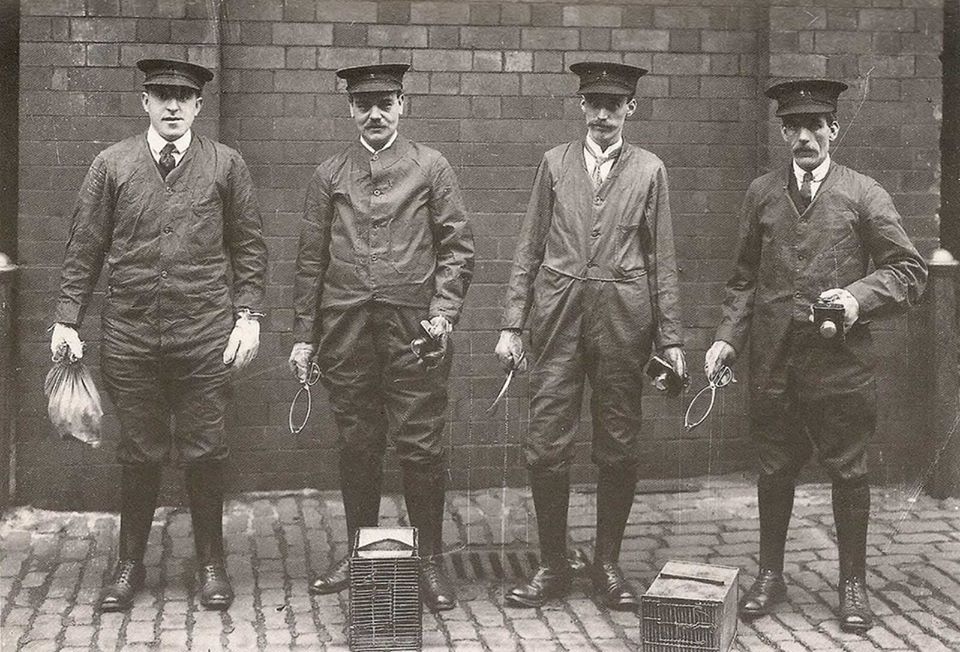
I’ve said it once, and I’ll say it again. Old news is today’s news. back in September 1919 the campaign against rats in Sheffield went on without interruption. Sheffield Corporation had employed a rat catcher and demand had risen so fast that the council was considering employing another one or two experts. The busy rat catcher had visited all kinds of premises – houses, works, shops – and the number of his victims had run into the thousands. However, the council were reluctant to promote National Rat Week, scheduled for October, because the rat-catcher “already had enough on hand.” One hundred years later, our progress has been abysmal, with rats threatening to outnumber people in the city centre… and we have to pay to get rid of them. Hate them, hate them, hate them!

Categories
People

James Longden

We owe a lot to James Longden (1847-1907), the Chesterfield-born son of George and Mary Ann Longden. His father trained as a stone mason in Uppermill, on Saddleworth Moor, and James would have been about six when the family moved to Sheffield.

His father founded a building and construction firm on St. Phillip’s Road, a modest success, but one which allowed James to become a partner in 1868.

George Longden and Son relocated to Park Wood Road at Neepsend and by the end of the nineteenth century had grown into one of the best known building firms in the country.

After George Longden retired in 1884, James took over the business, one which went on to build some of Sheffield’s most iconic buildings – reconstruction of the Old City Theatre to become the Lyceum, Montgomery Hall, Sheffield City Hall, Town Hall extensions, the Sheffield Telegraph and Star Building, alterations to Midland Station, the Prudential Assurance Building, extensions to Sheffield Cathedral, Victoria Hall as well as the old Royal Infirmary Hospital.

After World War Two, the company’s fortunes declined, eventually moving into house building, before being liquidated in 1978. The name lived on as Longden Doors, reduced to door-making, until it went into administration earlier this year.

Categories
Buildings

Grosvenor House

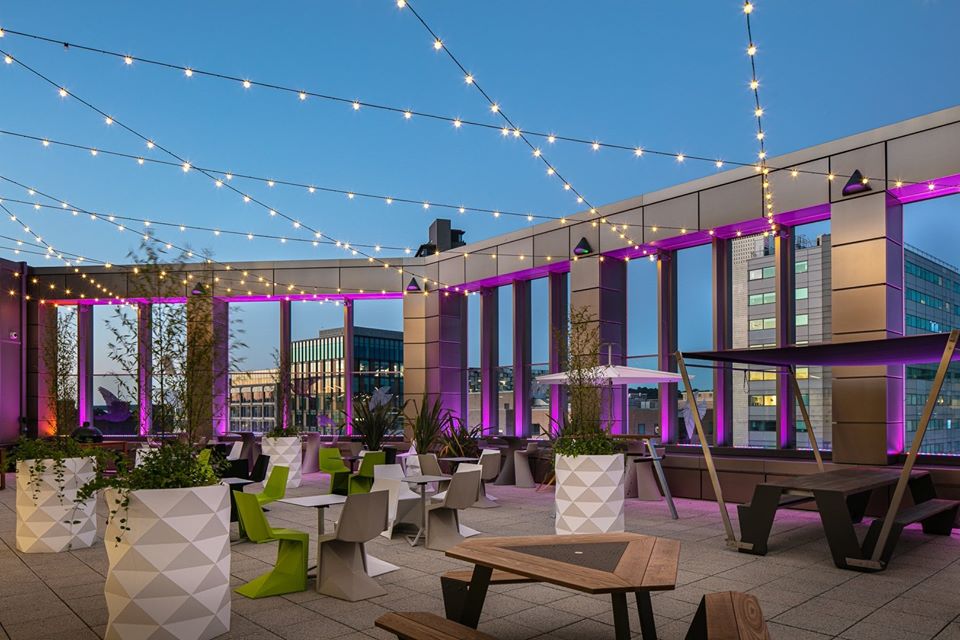
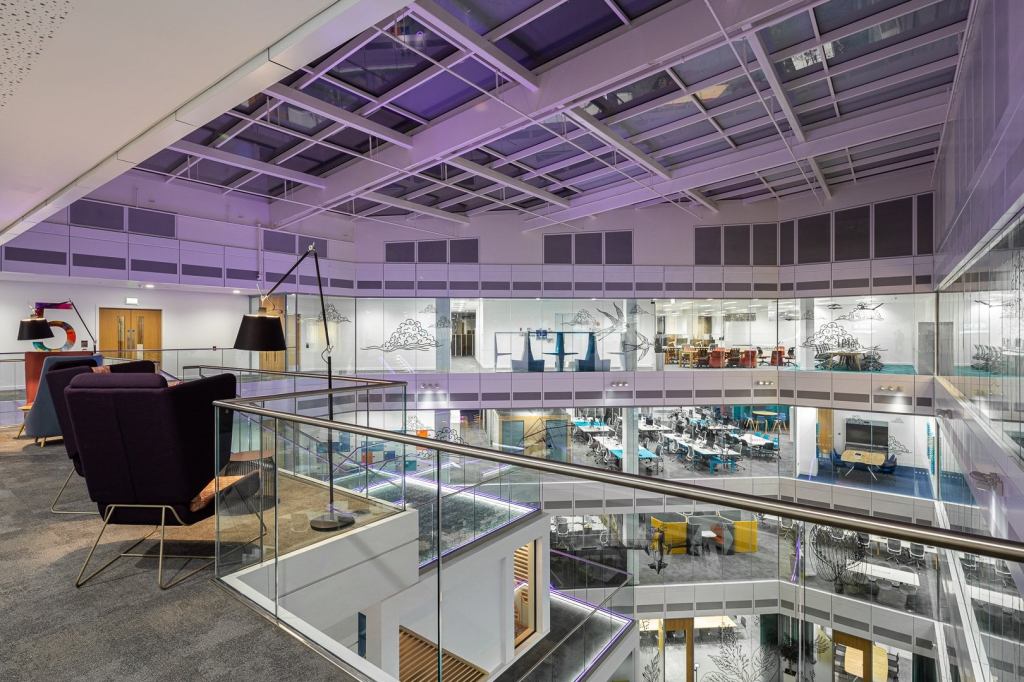
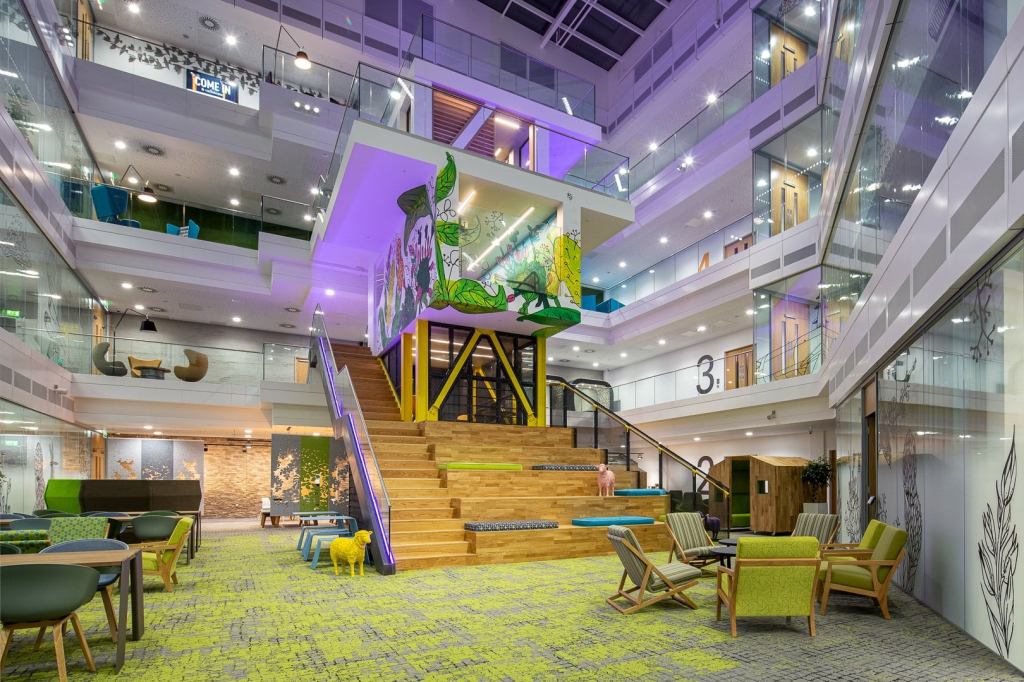
Making use of the rooftop terrace. Not bad at all. Grosvenor House, the name chosen by HSBC employees, and paying homage to the hotel that stood here before. The main office entrance is located on the corner of Wellington Street and Cambridge Street, and another entrance faces onto a new area of public realm at Charter Square. The building will also include retail space and shop fronts will be primarily located on Cambridge Street and also the important corner where Pinstone Street meets Furnival Gate. HSBC employees in Sheffield are being relocated from their current office space at Griffin House after the banking giant signed as the anchor tenant on a 15-year lease, committing them to Sheffield city centre.

Categories
Buildings

Curzon Cinema

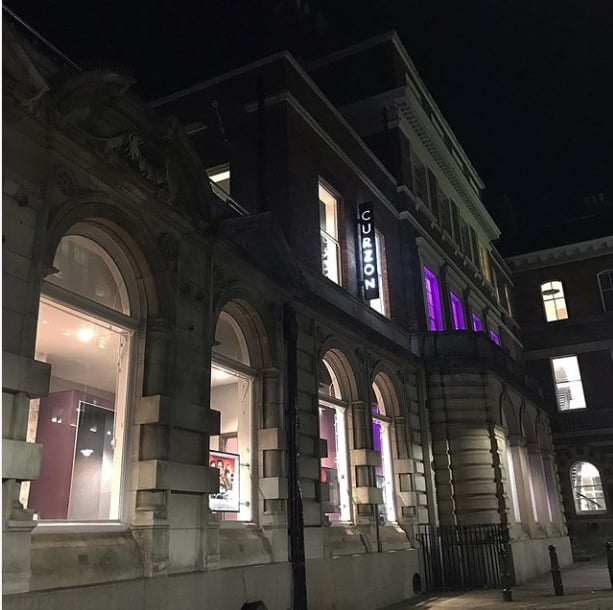
One of the newest additions to Sheffield’s cinema scene is Curzon on George Street, a quiet thoroughfare with several hidden secrets. The history of this building goes back to January 9, 1794, when John Hardcastle opened it as a ‘conservative’ coffeehouse. A large room on the ground floor was used for George’s Coffeehouse, and over the fireplace was the motto ‘King, Lords and Commons’ with the warning ‘No Jacobins Admitted’. Accommodation was available above for ‘a fine gentleman’. Three years later it was in the possession of James Healey, but evidence suggests the coffeehouse wasn’t the success it had set out to be. English coffeehouses had been public social places where men could meet for conversation and commerce, but towards the end of the 18th century had almost completely disappeared from the popular social scene.

By 1799, the Institution of the School of Industry, a Quaker driven girls’ school for reading, knitting and sewing, had taken a room here. In 1818, a portion of the old coffeehouse was taken by the fledgling Sheffield Library. ‘The library room is spacious and lofty and is well filled with a collection of the most popular works in the English language. Adjoining the library is a comfortable reading room, in which are deposited those publications which are not to be taken out.’ The library’s stay was brief, and soon removed to the Old Music Hall on Surrey Street, leaving the ground floor occupied by Harwood and Thomas, merchants, and the first floor being used as an auction room.

Most people are aware that this was once an old bank, but it wasn’t until 1831 that the Sheffield Banking Company moved in. The newly-formed bank had looked at five properties but settled on 13 George Street spending £2,200 for the whole property. As well as the old coffeehouse it included adjoining offices and three dwelling houses. Changes were made to the building by architects Woodhead & Hurst of Doncaster, turning it into ‘an exceedingly commodious place of business, as well as for the customers as for the directors and officers.’ The Directors occupied what had been the old library as the board room.

A left extension was built in 1906 by architects Matthew Ellison Hadfield and his son Charles and can be traced in the brickwork outside. The interior decorations, appropriately emblematic, were carried out by Hugh Hutton Stannus, a Sheffield-born architect who had originally trained in casting brass, copper and bronze. In 1919, the Sheffield Banking Company amalgamated with the National Provincial and Union Bank (later becoming the National Westminster). The George Street branch’s busiest time was in the 1960s with 120 staff based here. However, it later relocated to newer premises on High Street and the building remained empty for years.

The Curzon opened in January 2015, adapting the Grade II listed building for cinema use while taking into consideration the pilastered walls, Doric arcades and granite columns inside.

Categories
Buildings

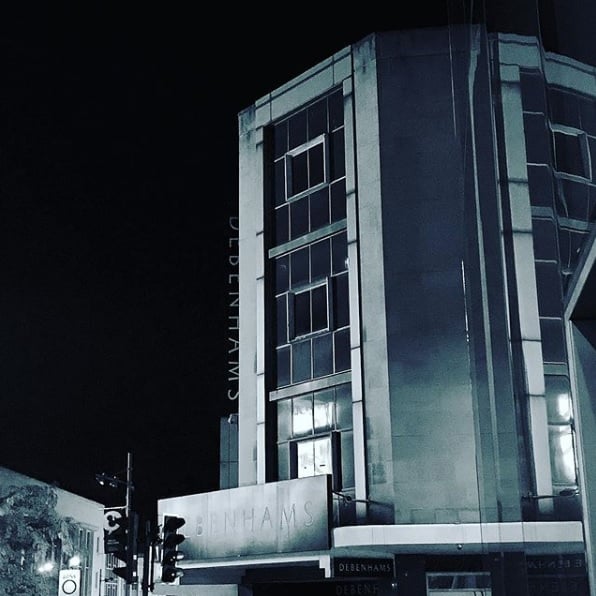
Debenhams

Times have been hard for Debenhams, not least for the one on The Moor which is beginning to look extremely shabby alongside modern new developments nearby.

However, it hasn’t always been this way.

This shop was once considered to be a flagship store, until eclipsed by a brand new Debenhams at Meadowhall in 1990.

It seems like the store has been here forever – fifty-four years to be precise. For a new generation, this branch wasn’t always called Debenhams, and can trace its origins to the other side of the Pennines.

In 1865, William Paulden, aged 24, opened a carpet and soft furnishings store in Stretford Road, Manchester. He was the son of a Cheshire farmer, educated at Knutsford Grammar School, and died at Green Hall, Wilmslow, Cheshire, in 1930.

The business expanded to become a department store and in 1928 was taken over by the Drapery Trust, a conglomerate of retailers, owned by London-based Debenhams.

The store continued to trade as Pauldens and added a second store at Newcastle-under-Lyme, Staffordshire, in 1946. A third store opened in Sheffield in 1965, a modern multi-level steel frame and concrete structure, bordering The Moor and Charter Row.

It traded as Pauldens of Sheffield, but in 1973, all the Drapery Trust businesses were either closed or rebranded as Debenhams, including the Sheffield store.

We now wait to see what will happen to this landmark as a result of the company’s turbulent restructuring.

Categories
Buildings

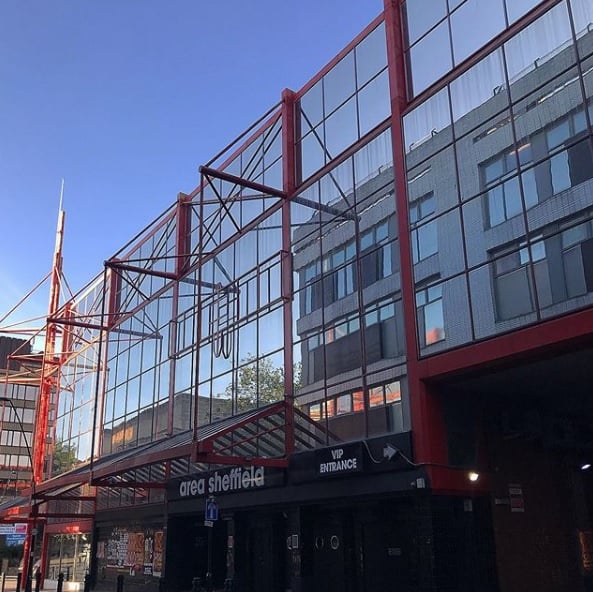
Area Sheffield

To our kids, this mirrored glass and garish red steelwork building on Burgess Street is just another nightclub. This is what it’s been on-and-off for twenty-five years, much longer than the function it was originally built for.

It was constructed by the Rank Organisation in 1986-1987 as a brand new Odeon Cinema, a replacement for the outdated, but much loved Gaumont Cinema (originally the Regent Theatre) demolished in 1985.

The Odeon opened in August 1987 with two auditoriums seating 500 and 324 people apiece.

Making use of the Gaumont’s footprint, the entrance on Burgess Street was approximately where the old Gaumont stage once stood, allowing the space in Barker’s Pool to be used for retail units.

The building itself was hated by locals, its only saving grace being a giant mural on the main staircase, painted by local artist Joe Scarborough depicting the history of Sheffield.

However, its days were numbered when a seven-screen Odeon opened at the redundant Fiesta nightclub on Arundel Gate in 1992. The bosses at Rank quickly realised it wasn’t cost effective to run two cinemas in the city centre, and one had to go.

The Burgess Street premises were closed in 1994.

But what happened to Joe Scarborough’s mural?

After standing empty, it was later converted into Kingdom nightclub, later known as Embrace, now Area. And locals still detest the building.

Categories
People

Brian Glover

We’ll never forget that classic scene in the film Kes, where the teacher organises a football match with his pupils, insists on taking part himself, and then fouls and flattens the kids while dashing at the goal and mouthing an imaginary commentary. Brian Glover (1934-1997), actor, writer, wrestler and teacher, born in Sheffield, but better associated with Barnsley, where he grew up. While teaching he met Barry Hines, author of A Kestrel for a Knave, turned into Kes, who introduced him to director Ken Loach. He got the part of Sugden, the PE teacher, his first acting role but which paved the way for over fifty TV and film appearances. “You play to your strengths in this game, and my strength is as a bald-headed, rough-looking Yorkshireman.” Sadly, he died of a brain tumour at the age of 63.

Categories
Buildings

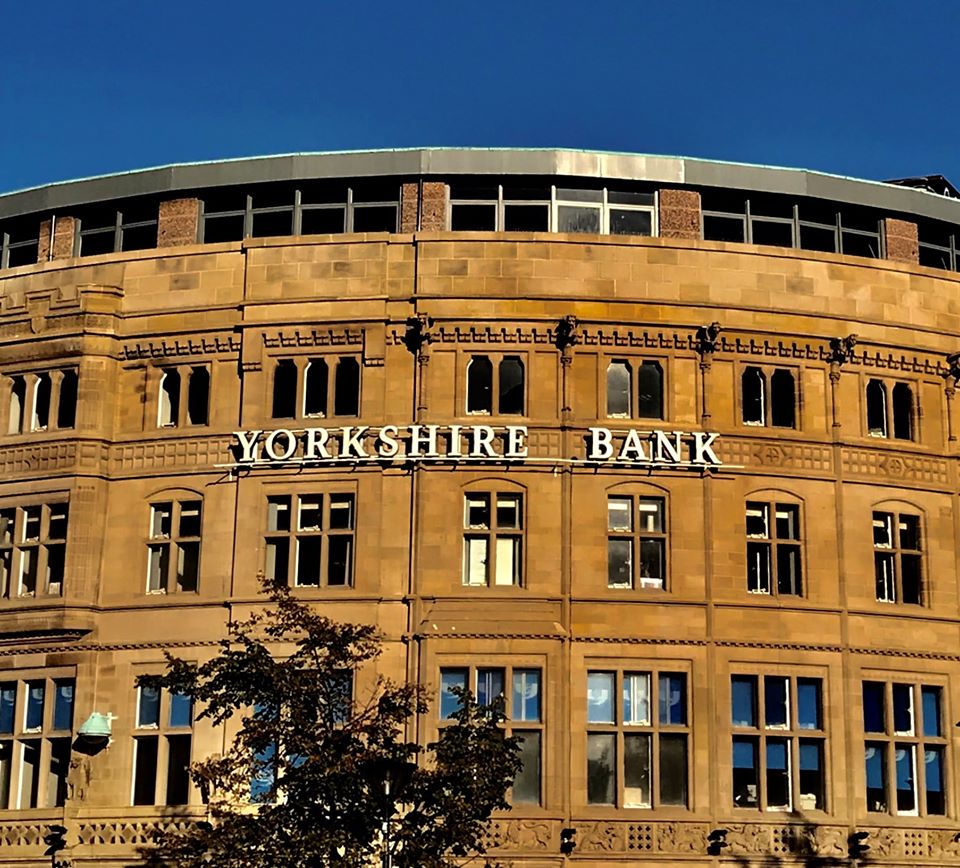
Yorkshire Bank

This is one of the most imposing buildings in Sheffield city centre. The Yorkshire Bank building, in late-Gothic design, with five-storeys and a long curved Holmfirth stone front, stands at the top of Fargate, nudging around the corner into Surrey Street.

With it comes a long history and a few surprises as to its former use.

In the 1880s, when a plot became available at the side of the Montgomery Hall on (New) Surrey Street, the directors of the Yorkshire Penny Savings Bank bought the land to erect a new bank.

It turned to Leeds-based architects Henry Perkin and George Bertram Bulmer who were asked to create a brilliant show of Victorian entrepreneurship.

The corner stones were laid on 18 January 1888 by builders Armitage and Hodgson of Leeds and was completed in the summer of 1889.

The Yorkshire Penny Savings Bank occupied two floors – at ground level was the large banking hall, fitted out in polished wainscot oak with a mosaic-tiled floor, the basement contained the strong-room.

Lord Lascelles, the president of the bank, officially opened it on 25 July 1889.

The remainder of the building was used as a restaurant and first-class hotel, leased by Sheffield Café Company, formed in 1877 as part of a growing movement of temperance houses throughout the country. No drink allowed here.

The Albany Hotel opened in September 1889 with electric light throughout, a restaurant, billiard room, coffee and smoking rooms, private dining rooms as well as 40 bedrooms above.

By the 1920s, the Sheffield Café Company, with multiple cafes and restaurants across the city, was struggling financially and ceased trading in 1922.

Their assets were bought by Sheffield Refreshment Houses, which operated the hotel until the 1950s.

With grander hotels nearby and with dated facilities the Albany Hotel closed in 1958.

The Yorkshire Penny Savings Bank became Yorkshire Bank in 1959 and the old hotel was converted into offices – known as Yorkshire Bank Chambers – after 1965.

The interiors have long altered but the external appearance remains much the same, with carved winged lions, medieval figures, shields and gargoyles on the outside of the building. Gabled dormers, lofty chimneys and a crenelated parapet were sacrificed during the 1960s.

Categories
Other

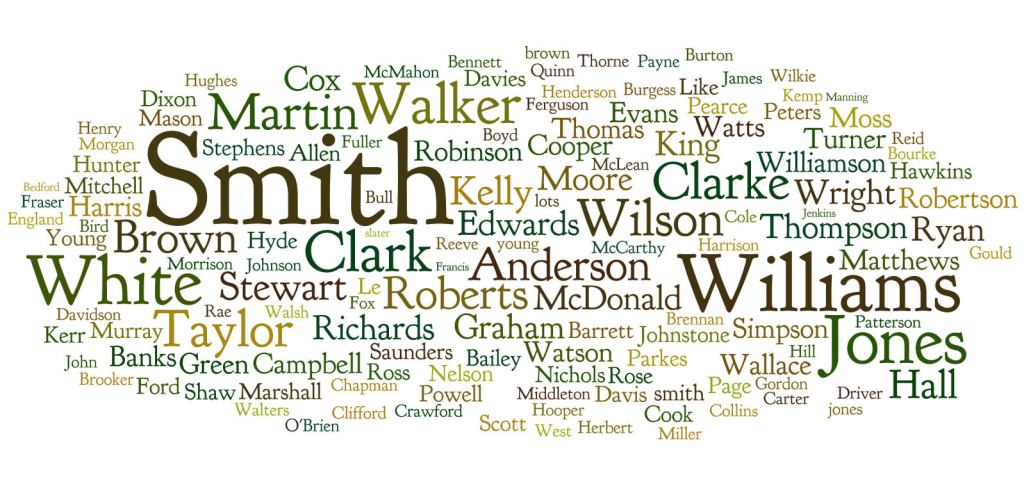
Sheffield surnames

From the Sheffield Independent, September 1929. The newspaper looked at the most popular surnames in a list of Sheffield citizens. “Many illustrious names have disappeared from the official list of Sheffield citizens during the passage of more than eight centuries since Sheffield first became a manor. Of these, the family name of Roger de Buslin, the first Lord of the Manor, is now entirely unknown – a fate that is also shared by that of his early successors, the Lovetots and, whilst the family names of the Furnivals, the Talbots and the Howards are still in existence, they are by no means popular. To the name Smith – which comes to us from the Dutch, meaning ‘worker with a hammer’ – goes the palm for numerical superiority, it appears no fewer than 740 times, which at a moderate estimate of three in a family, would bring the total number of Smiths in Sheffield to well over two thousand.” The other popular family surnames in ranked order were Brown, Robinson, Wood, Jones, Wragg and Cook. Amongst the most unusual names were Godbehere, Reckless, Love, Hater, Strike, Charity and even a Virgin. Of this last list, I know at least one in modern Sheffield, but sadly have never met a Virgin.