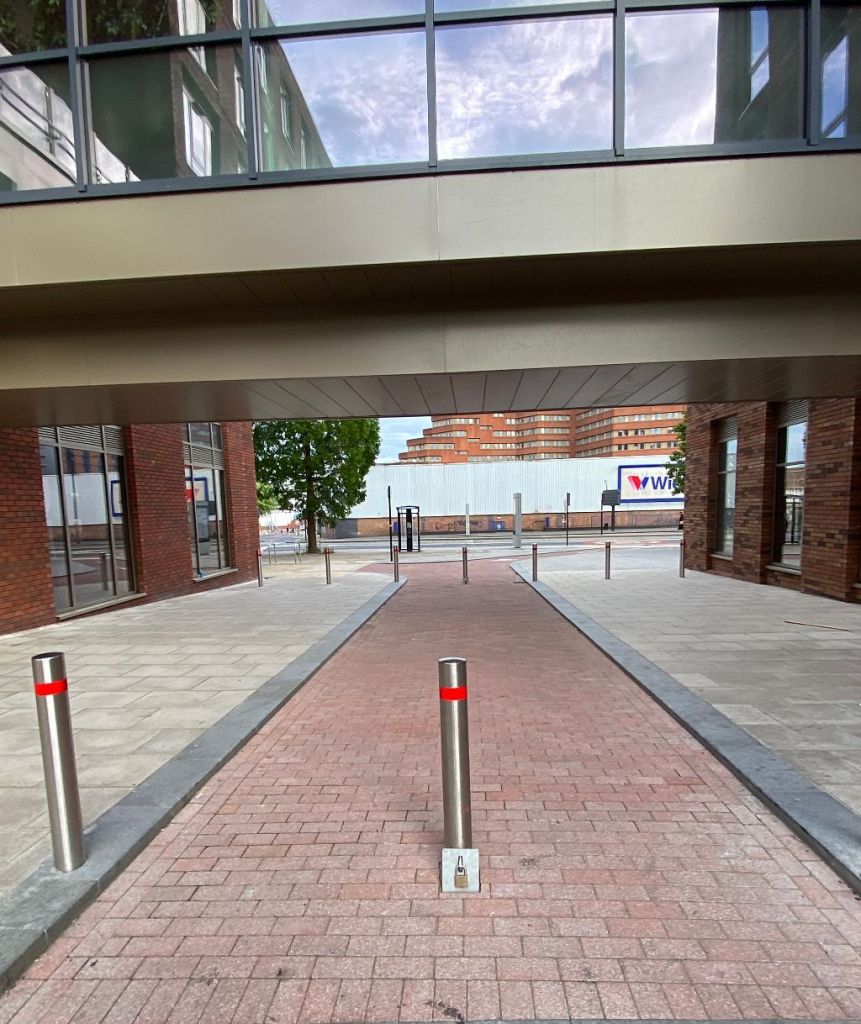
Thomas Street, looking towards Moore Street, with a covered walkway between Cosmos, recently constructed student accommodation.
This was formerly the site of Stokes Tiles, but back in 1892 we would have been looking at a much narrower Thomas Street, with the Noah’s Ark public house evident. The council paid £750 for 113 square yards of freehold land from Tennant Bros for the purpose of widening these streets.
Former back-to-back housing in the area was cleared and made way for industry, but times change, and the people are returning.
In the background is the Moorfoot Building, and Wickes, this land now under ownership of NewRiver, owners of The Moor, and I’m informed will be assigned for further residential development.
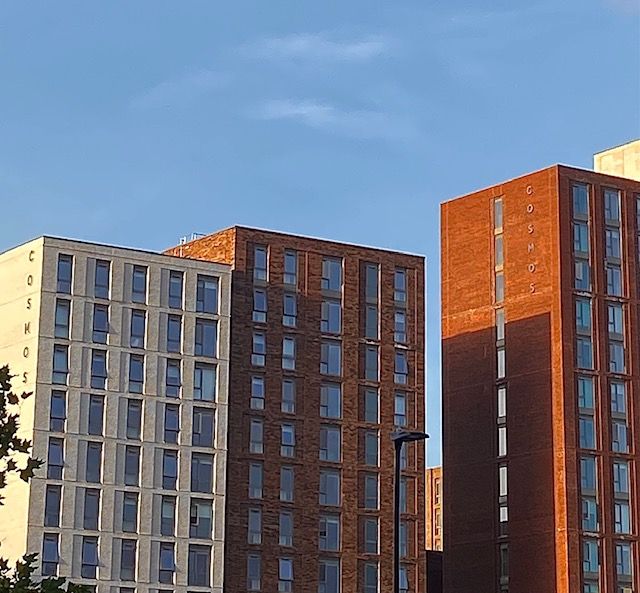
Cosmos. New student accommodation situated at the corner of Fitzwilliam Street and Moore Street. The people are returning to Sheffield city centre. Image: DJP/2021
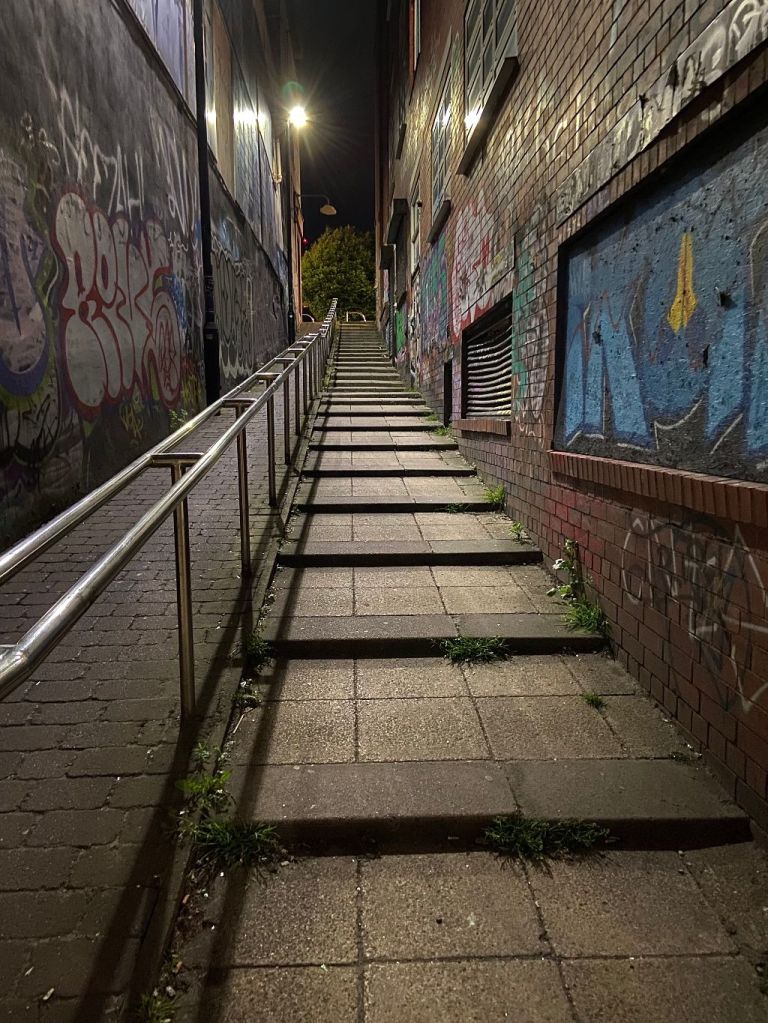
Grinders Hill. Lonely at 3am. A shortcut for our ancestors… a shortcut for us now.
But it nearly wasn’t.
November 1935. “The City of Sheffield. Notice is hereby given that a certain public highway to wit a footway known as ‘Grinders Hill’ situate in Sheffield and running in a south-westerly direction between certain other public highways known as Paternoster Row and Leadmill Road shall be entirely stopped up as being useless and unnecessary for the public.”
The motion failed, and Grinders Hill is still with us.
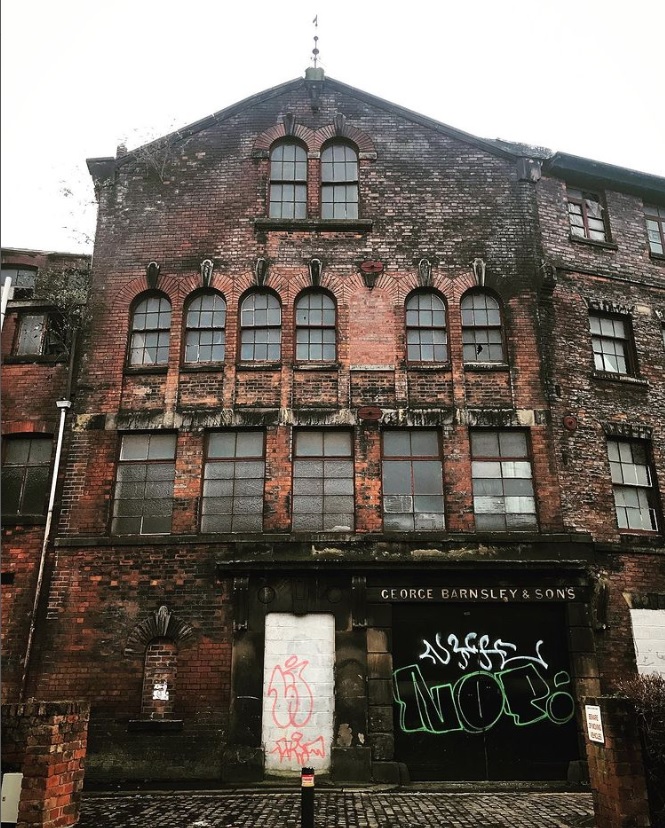
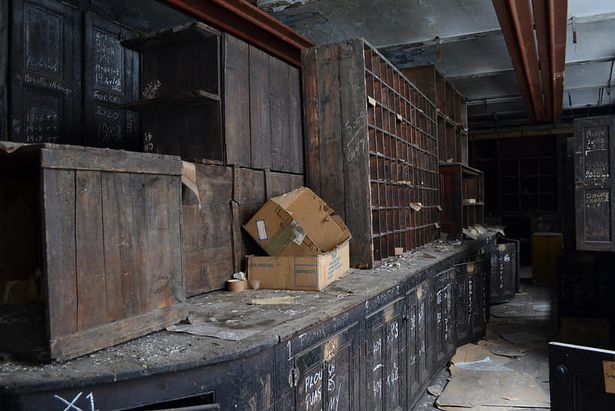
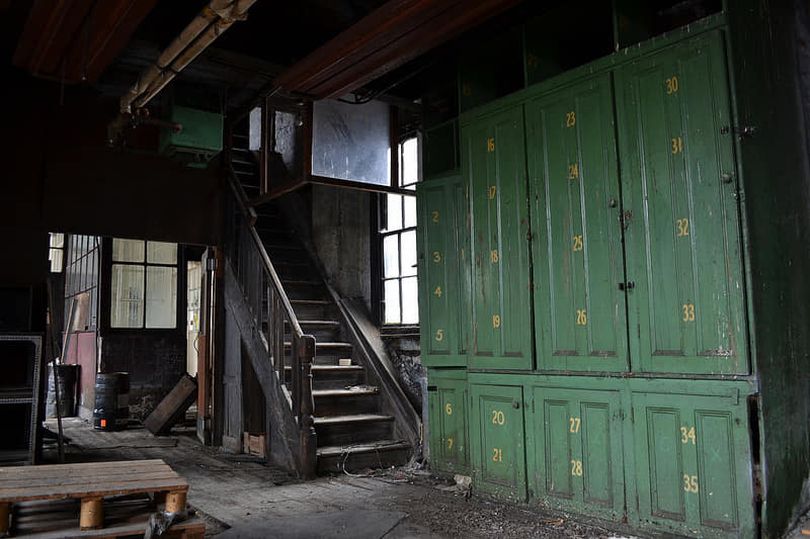
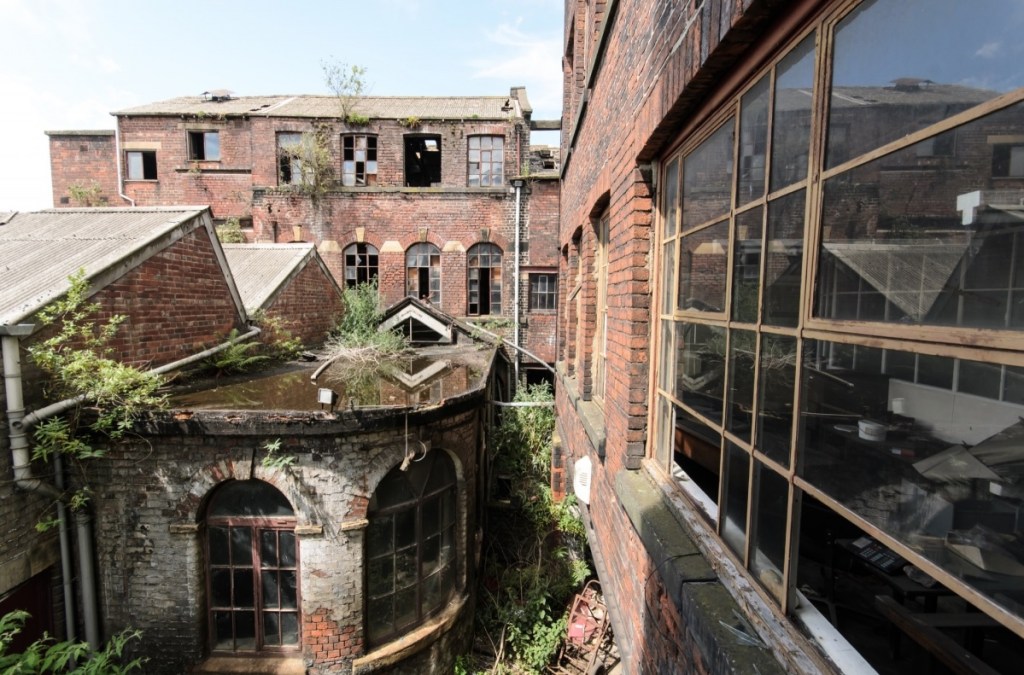
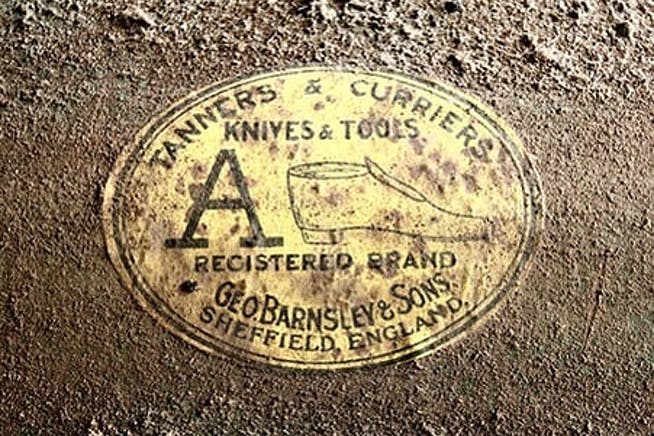
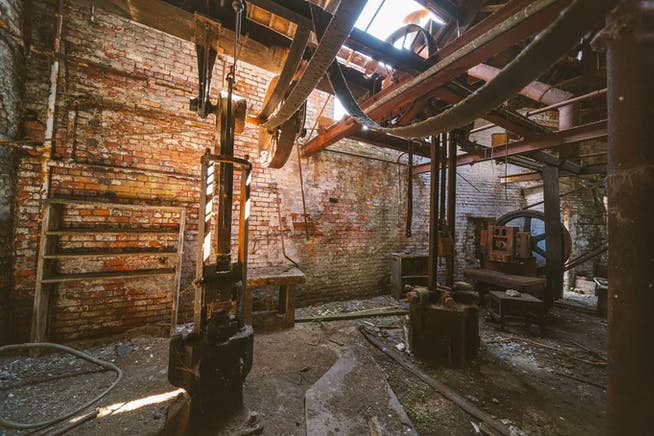
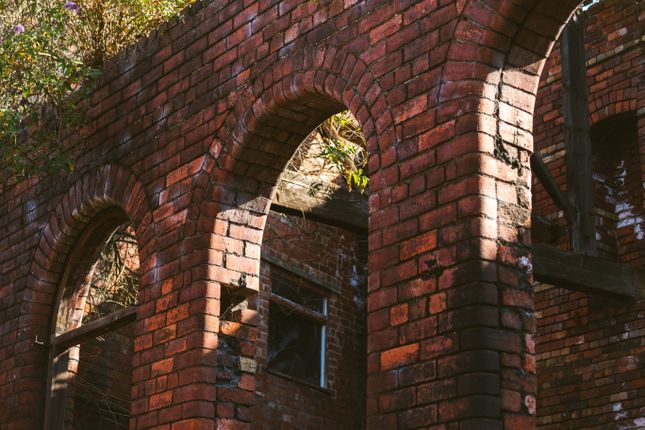
If I had a favourite building in Sheffield, this would be it. Cornish Works, abandoned, derelict, still charming, is one of the last substantial development opportunities at Kelham Island. This was once home to George Barnsley and Sons, specialists in files and cutting tools for leather workers and the shoe-making industry.
Unlike many famous Sheffield firms, its name lives on in premises at Mowbray Street. But for many years the business was located here, at Cornish Street, a narrow road, that is slowly readying itself for regeneration.
If I had made this year’s Sunday Times Rich List, then I might have considered paying the £1.65m being asked for it, and substantially more for it to be made good. Until somebody else does, the building falls into ruin.
“It is an amazing labyrinth,” said a friend of mine. “Obsolete machinery has become museum pieces, old offices have finely crafted woodwork, and everywhere you look there’s evidence of Victorian and Edwardian history. But nature is taking over, with greenery covering old courtyards, the sides of buildings, and encroaching inside. Roofs have collapsed and birds have made home. It is an urban explorer’s paradise, most of whom show the respect it deserves, but the big worry is that one day somebody will set it on fire.”
Image: Leeds Explorer
Image: Leeds Explorer
Cornish Works is a collection of listed buildings, including crucible furnaces and a dwelling house, constructed about 1850, and extended in the later nineteenth century.
Image: The Time Chamber
George Barnsley was a manufacturer of files and other tools. He was born into humble surroundings in 1810 and educated at the Boys’ Charity School,
However, aged 26, he was clever enough to start a file making firm on Wheeldon Street and moved into the new Cornish Works in 1850, improving his product range to include shoes and butchers’ knives. He was a member of the Town Council for the St Philip’s Ward, and a member of the Cutlers’ Company.
Image: Colloco
Image: Colloco
His son, George Jnr, joined the company as a travelling salesman at 14 and was made a partner when he reached twenty-one. He took over the company on the death of his father in 1874.
Like George Snr, he became a Town Councillor, as well as becoming an alderman, J.P., and Master Cutler.
George Jnr died at Oakvale, Collegiate Crescent, in 1895, and the business passed to his son, Henry, who steered the business through the difficult times of the twentieth century.
But when he died in 1958, the number of employees had dwindled to around one hundred, and by the time the works closed in 2004 only a handful remained in this cavernous and dilapidated workspace.
The name eventually passed to the Mowbray Manufacturing Company of which it is now a wholly owned subsidiary.
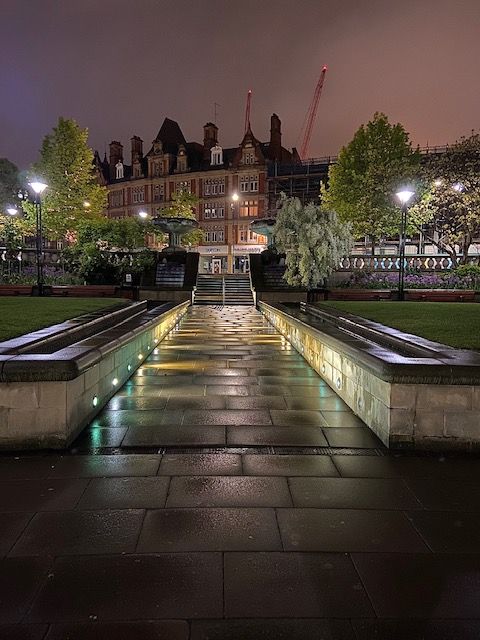
This photo reminds me of a story brought to my attention a few years ago by Michael Dolby. It is rather a sweet late night tale.
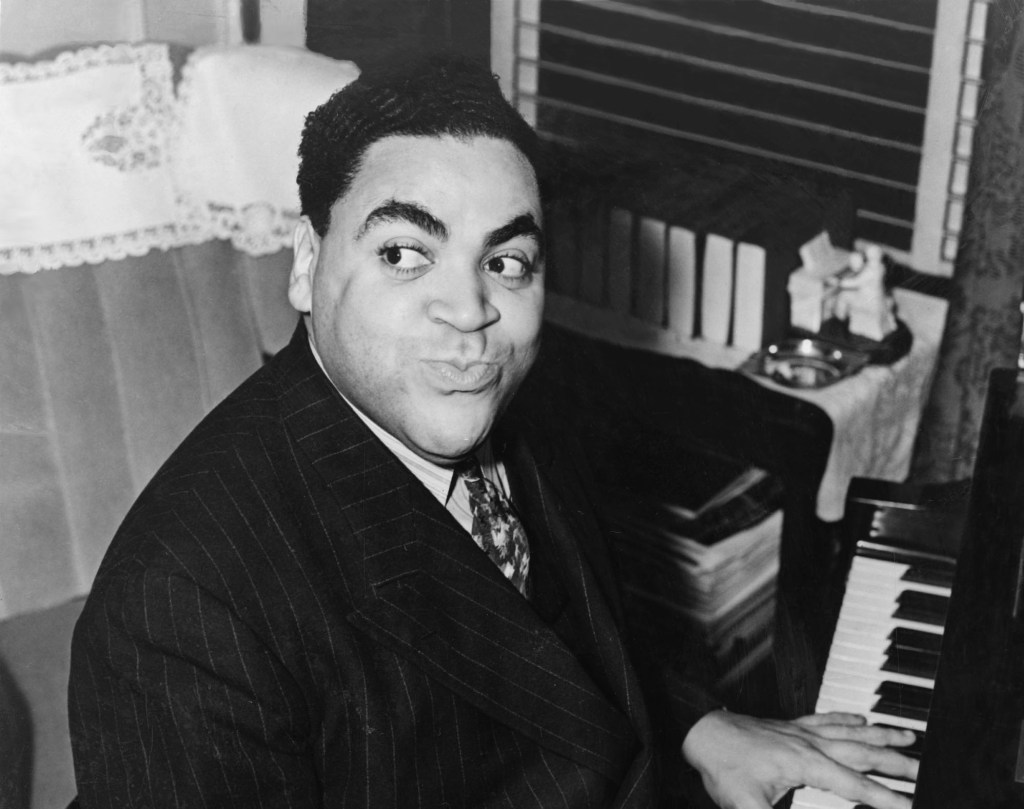
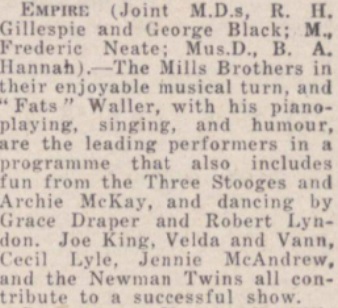
In 1939, the American jazz pianist and singer, Fats Waller, played his first European concerts with a tour of the Moss Empire’s theatre circuit. One of those dates included a performance at Sheffield’s Empire Theatre on Charles Street.
“I will never forget how on a tour of the English provinces we were playing the Empire Theatre, in Sheffield,” Fats once wrote. “After theatre is our usual time for relaxation and following dinner, I roamed restlessly through the beautiful park there. At dawn the birds awakened, and out of their lively chirpings one short strain stood out. I went back to the hotel, and by ten o’clock that morning, with the aid of some delicious Amontillado sherry, we had finished ‘Honey Hush.’ You see, it’s fifty percent inspiration and fifty percent perspiration.”
The song was co-written by Ed Kirkeby and recorded in New York later that year.
Fats Waller (1904-1943)
Legend says that the ‘beautiful’ park was the Peace Gardens, laid the year before, in 1938, but known then as St Paul’s Gardens, in recognition of St Paul’s Church that had been demolished.
But there are also suggestions that the park might have been the Botanical Gardens.
I can confirm that Waller played the Sheffield Empire that year, and that he stayed at the Grand Hotel on Leopold Street. Therefore, it seems more than likely that the park was indeed the Peace Gardens, at least that’s what I’d like to believe.
And so, in the middle of the night, when the Peace Gardens are deserted, sit down, listen carefully, and remember this story.
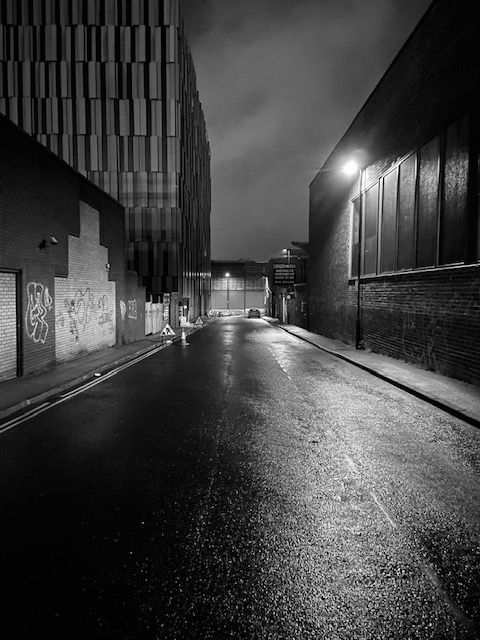
While you were sleeping last night. This is a wet and deserted Earl Way, which lies parallel between The Moor and Eyre Street.
If we go back to Norman times, and the time of Thomas de Furnival, this was thought to have been the site of a large ditch at the edge of Sheffield Deer Park, one of England’s largest deer parks, and spanning a circumference of eight miles in total.
Earl Way is modern compared to most Sheffield roads. It was created in the second half of the twentieth century when this part of the city centre was redeveloped. Prior to this, there were three significant roads in the vicinity.
These were Porter Street, that ran diagonally from Hereford Street, towards Moorhead, and Porter Lane, a narrow road that linked it with Union Lane.
Union Lane once ran from Charles Street, near to the Roebuck Tavern, across Furnival Road (now Furnival Gate) and ended at Jessop Street (where the Moor Market now stands). The only surviving section of Union Lane is behind Derwent House, near The Roebuck (think deer).
In this photograph, it would have run along the left hand side where the former Plug nightclub and Kit-Kat car-park stand. Porter Street would have been to the right.
If we could go back in time, right in the centre of the picture, and in the middle of the road, would have been Porter Street School.
There were two reasons why Earl Way came into being.
Up until the 1930s, this was an area of back-to-back housing and designated for slum clearance. Then came World War Two. German bombs caused extensive damage around The Moor, Porter Street, and Eyre Street, leaving the site to be redeveloped afterwards.
Union Lane disappeared, and Earl Way was built as a link road to Earl Street (seen running across the end of the road here).
And familiar landmarks appeared too, including the Pump Tavern, later demolished to make way for the Moor Market, and Violet May, a record shop, run by a pivotal figure in the development of the music scene in Sheffield.
Perhaps the most dramatic modern building is the Kit-Kat car-park, designed by Broadway Malyan in 2008, and sold for £9m last month by joint owners NewRiver and BRAVO Strategies.
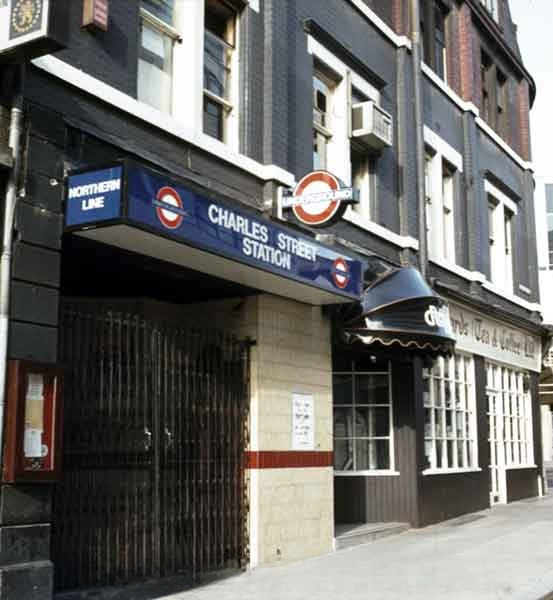
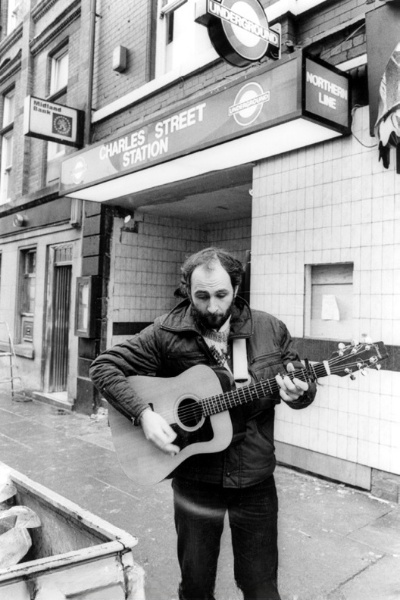
A photograph that will confuse younger generations. Doing an excellent job at imitating the London Underground, this was Charles Street Station, pictured in 1983. This was a theme bar, but such was the authenticity, that Omnia, the online cultural site, includes the image on its London Underground pages. It was incorporated within the Isaacs Building, built by David Isaacs, a wallpaper merchant, in 1905.
Isaacs Building was an example of Edwardian entrepreneurship, the ground floor containing seven shop units with an assembly hall above, its entrance being from Charles Street. The top floor of the building contained offices and several workshops, mostly rented by enterprising tailoring businesses.
The assembly hall was once the Sheffield Trades Club and in the 1970s was converted into a nightclub, its various incarnations being Faces, Raffles, Charlie Parker’s and Freedom. For a time, the old basement was used as Charles Street Station.
Stephen Shephard busking outside Charles Street Station in 1983. Image: Picture Sheffield/Sheffield Newspapers Ltd
The bar was short-lived, and the entire building was demolished in 2020 as part of the Heart of the City redevelopment. Its replacement, modern office-space, with ground-floor retail units, is nearing completion, and is also called Isaacs Building.
A few weeks ago, I was in a bit of a quagmire. I had pages and pages of research notes and needed something to piece them together. I spent hours cross-checking facts, but a vital link was missing. And then I found a letter in an old newspaper that proved to be my eureka moment.
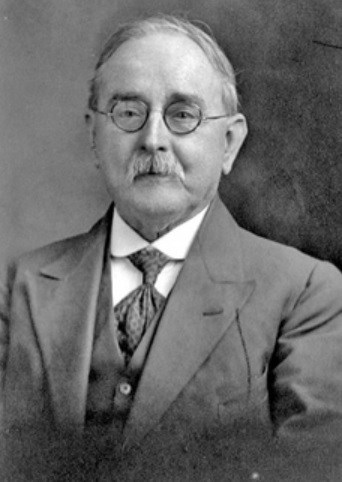
The letter was written in 1933 by Henry Tatton, who solved my mystery in five short paragraphs. I was ecstatic and thought it only right to thank him on my Facebook page.
Sadly, Henry will not have seen my appreciation because he is long-dead. But I could imagine an elderly gentleman, writing at his kitchen table, not knowing how important his words would prove to be almost ninety years later.
And then, I decided to find out a bit more about him. What I found was quite significant.
Sheffield has had fine historians – Robert Eadon Leader, Rev. William Odom, Edward Vickers, Peter Harvey, the list goes on – and the name of Henry Tatton should also be included. He turned out to be a prolific letter writer, each one providing insight into our history.
Sheffield Daily Telegraph. June 1927. A typical letter from Henry Tatton
Henry was born in Sheffield in 1864, the son of Adam and Mary Tatton, and lived at Sheaf Gardens. He was educated at Brunswick Wesleyan Day School and in 1878 was working as a pattern maker to Thomas Steade, iron founder, in Cemetery Road.
He married Susan in 1889 at Townhead Street Baptist Chapel and lived at Lancing Road, off Shoreham Street. In 1898, they had a shop in Matilda Street and, along with his father, an ironmonger’s stall in the Norfolk Market Hall.
Advertisement from 1929. Henry Tatton, Norfolk Market Hall
It is said that, after moving to 69 Ranby Road in 1919, Henry learnt to draw, and began recording his memories in a series of notebooks. However, I suspect that his talents went back much further when, as a young man, he appears to have studied drawing at the Sheffield Mechanics’ Institute.
His drawings were copied from old newspapers, but many were originals. The reason he gave for his work was his ‘love of his native Sheffield.’ He retired in 1929 and, despite failing eyesight, completed his third notebook in 1931. Six years later, in 1937, the three thick foolscap notebooks were presented to Sheffield City Libraries, where they remain.
One of the factors that makes the books even more interesting were the dated notes of the state of each building when he wrote. He paid particular attention to any prospect of demolition, and this was often the reason for choosing a building to sketch.
A sample of Henry Tatton’s work.
In 1939, Henry added to his reminiscences with thirty-six closely-written manuscript pages.
He recalled the time that he saw the last stagecoach come into Sheffield. It was from Chesterfield and stopped at the Travellers’ Rest on The Moor. Shops under the names of Roberts, Atkinsons, and Binns, were just being opened.
After giving close details of shops and other buildings in High Street, Church Street, Fargate, Angel Street – which were then only wide enough to allow the passage of two wagonettes – he told of the suburbs as they were in those days.
The outskirts of town were surrounded by natural beauty, and bounded by Sharrow Lane, Collegiate Crescent, Rock Street, Hyde Park, and Shrewsbury Road.
Ironically, Henry recalls that a fine row of trees was cut down at Highfield, and the resulting public outcry in newspapers against what was considered ‘destruction.’ Yes, history does repeat itself.
He also remembered the days when there was neither ‘telephones nor telegraph’ and ‘hot’ news was collected by hansom cab. Handicap races were run in Hyde Park, and he recalled thrilling races between cabs going to the newspaper offices with the results.
Henry died, almost blind, in 1947, aged eighty-six, and was buried at Norton Cemetery.
There is a rare book, ‘Fine Old Sheffield – An historical walk with Henry Tatton’, edited by Sylvia Anginotti, with meticulous research by Sylvia Jackson, which shaped this article, and the time is right for his notebooks to be reproduced in a book.
All these years later, it seems strange that this post is cheaply imitating what Henry did best. He saw significant changes, but it might be one he could never have imagined – the internet – that reawakens our interest in one of Sheffield’s forgotten men.
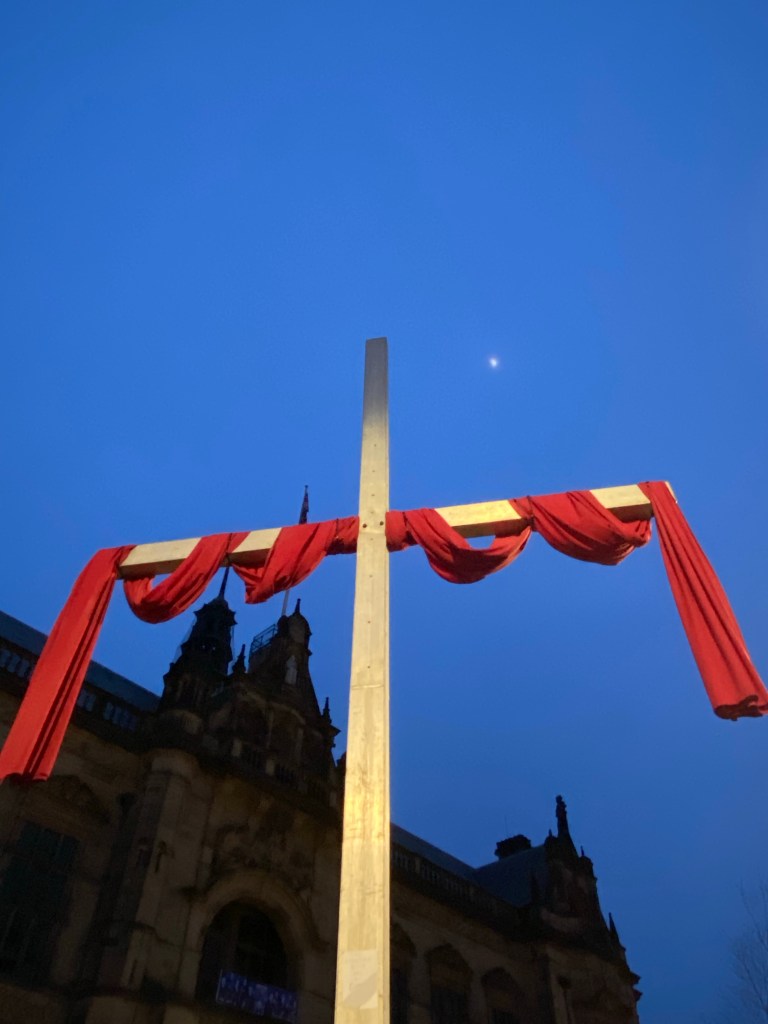
The old man with the pipe made another impromptu appearance. This time, outside the Town Hall. He looked sad as he rested underneath a lamppost. Good evening, I said. He didn’t answer straightaway. “Aye lad, it is a good evening.” He looked towards the Peace Gardens and sighed. “I must take leave of you lad. Tonight I’m meeting up with my family in the churchyard..” He walked away and I was distracted by the chimes of the Town Hall clock. When I looked back, the old man with the pipe faded in a light mist and was gone. Happy Easter everyone.
I’ve always said that what interests me most about old buildings is not what you get to see, but what you don’t. It’s about those hidden rooms, above and below, that get forgotten over time.
The next time you walk down Fargate, look up, and wonder what happened in those rooms above shops. What secrets do they hold?
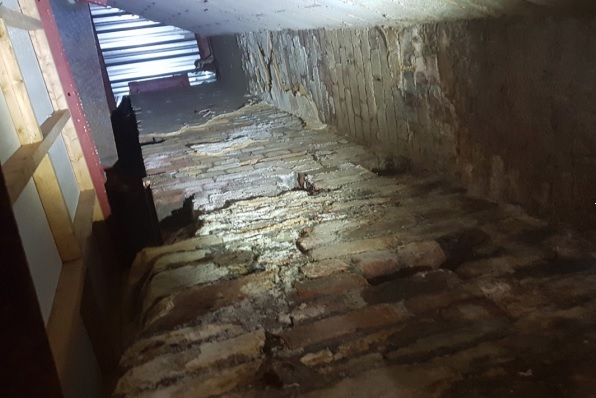
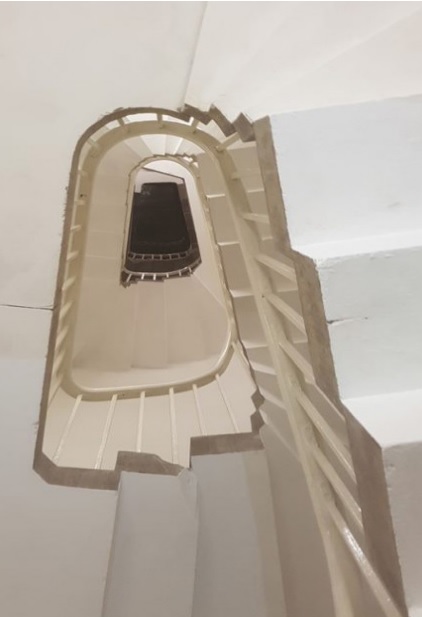
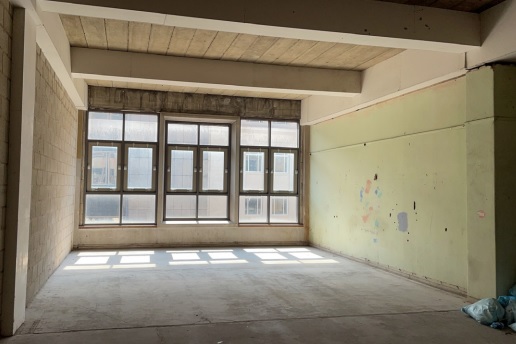
And so, I’m delighted that 20-26 Fargate, subject of an earlier post, has thrown up interesting photographs, including a disused lift shaft, going back to the Victorian times of Robert Foster and Sons, milliners and furniture sellers, and a quite unexpected staircase.
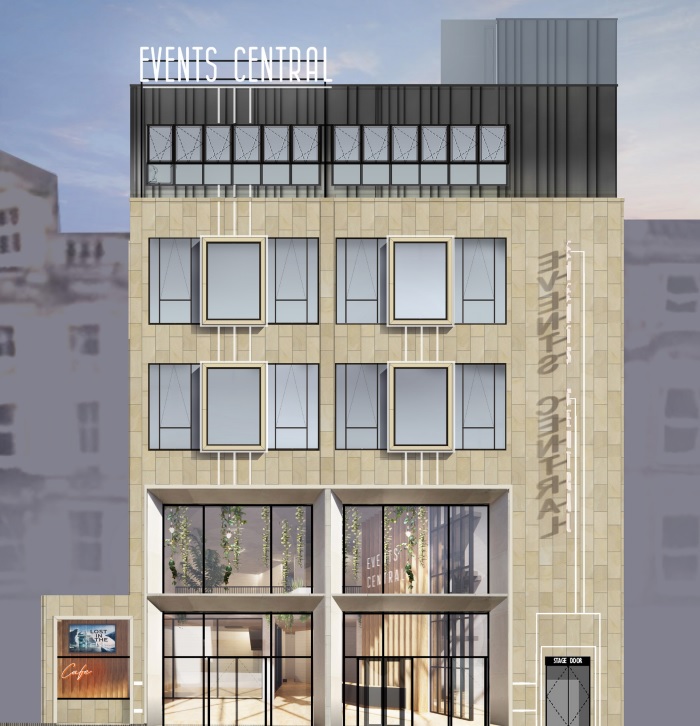
The proposed material palette has been developed to reflect the historical and cultural values of Fargate and the City Centre Conservation Area. The existing stonework will be retained where possible, with new stonework added at ground floor level adjacent to the new stage door entrance. A new stone surround is proposed to wrap around the new entrance and has been developed to respond to the Pre-Application feedback received. At fourth floor level it is proposed to re-clad the existing curtain walling in an anthracite coloured aluminium cladding system with vertical articulation to reflect the architectural language found in the existing building. Image: HLM Architects
Sheffield City Council has submitted a planning application for proposed alterations to 20-26 Fargate. The council bought the building in 2021with the intention of turning it into a cultural hub which supports and offers additional opportunities to use external events space.
The intention is to provide a part community, part commercial offering, which will function as a blueprint and catalyst for further regeneration of Fargate.
The council intends to repair, refurbish, and re-clad the existing building, retaining the existing structure where possible, and ensuring that alterations are kept to a minimum.
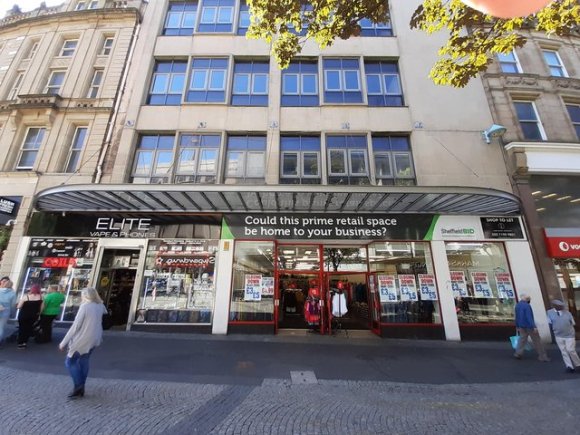
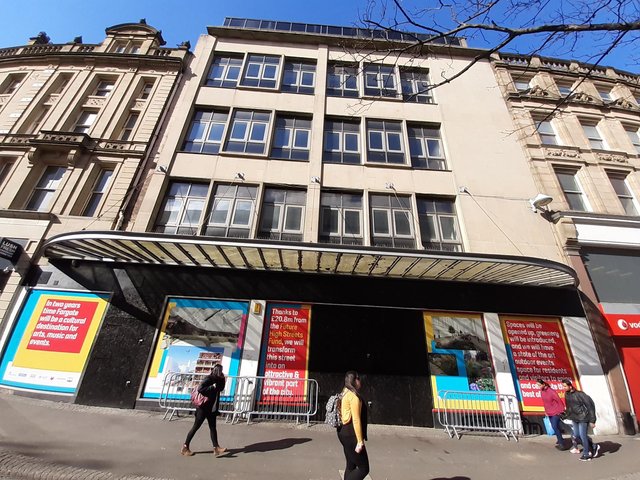
20-26 Fargate is located on Fargate in Sheffield’s city centre and forms part of the City Centre Conservation Area. Image: Sheffield Star
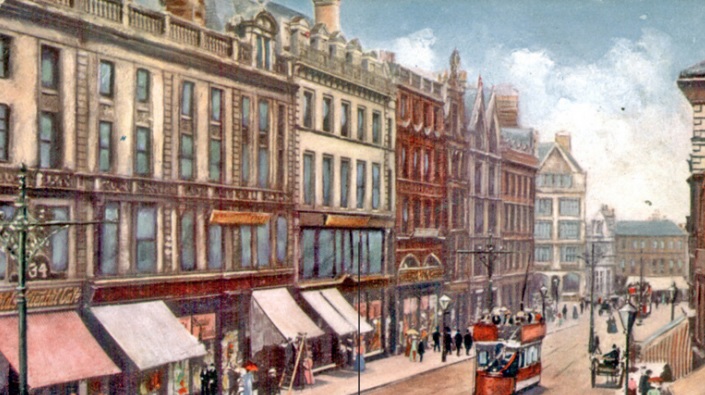
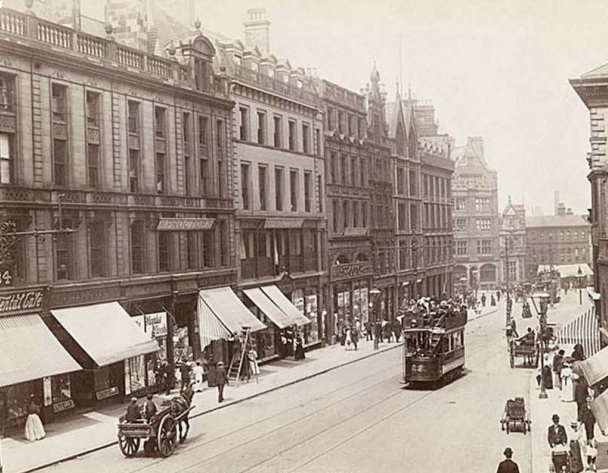
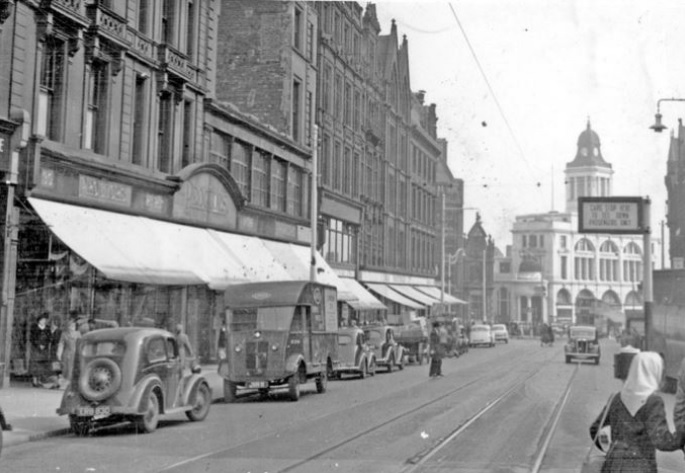
It was constructed in the late 1800s as Robert Proctor & Sons, a large drapery and furniture store running from 16-30 Fargate, adjacent to Coles Corner. It survived the 1940 Blitz, although suffered fire damage, and as a result was altered by the 1950s.
After Proctors left, the shop was used by various retailers including Chelsea Girl in the 1970s, and more recently Clinton Cards and KIKO (later Elite Vapes & Phones).
However, by the time the COVID pandemic hit in 2020 the building was standing empty.
Fargate in 1905 looking towards premises including No. 34 Richard Field and Son Ltd., tea merchants and Fields Continental Cafe, Nos. 16-30 Robert Proctor and Son, drapers. Image: Picture Sheffield
Fargate including No 34, Richard Field and Son Ltd., Tea Merchants and Fields Continental Cafe and No 16-30, Robert Proctor and Son, Drapers. Image: Picture Sheffield
Fargate in 1953, Nos 16-30, Robert Proctor and Son, Drapers and Cole Brothers Department Store. Image: Picture Sheffield
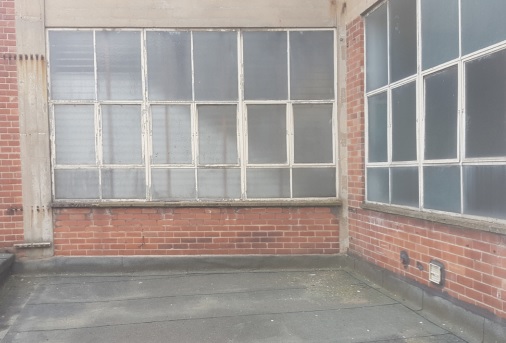
20-26 Fargate is a five storey building (6 including the basement level) with a deep footprint that extends back towards Cutlers Hall. It sits mid-way along Fargate and stands taller than its immediate neighbours and benefits from glazing to the rear (north) facade, providing additional daylighting to the floor plates on levels 3 and 4, as well as views across to the cathedral.
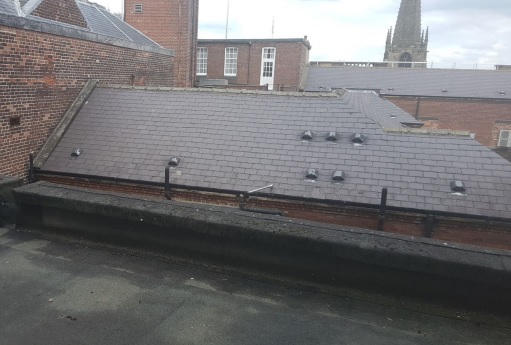
A flat roof area presents the potential to bring daylight to the rear of the second floor also using roof lights. The architecture is of a mid-19th century construction with a stone tiled facade above. The fourth storey is set back from the main facade and was constructed later. The building is currently in need of significant refurbishment, to meet current building regulation requirements.
The main architectural intervention has been to introduce a double height glass entrance to provide active frontage along Fargate and to increase visibility into the building.
A new stone feature surround is proposed at ground and first floor level to retain the impression of a single feature entrance and to acknowledge the original historic façade that was later damaged and subsequently remodelled.
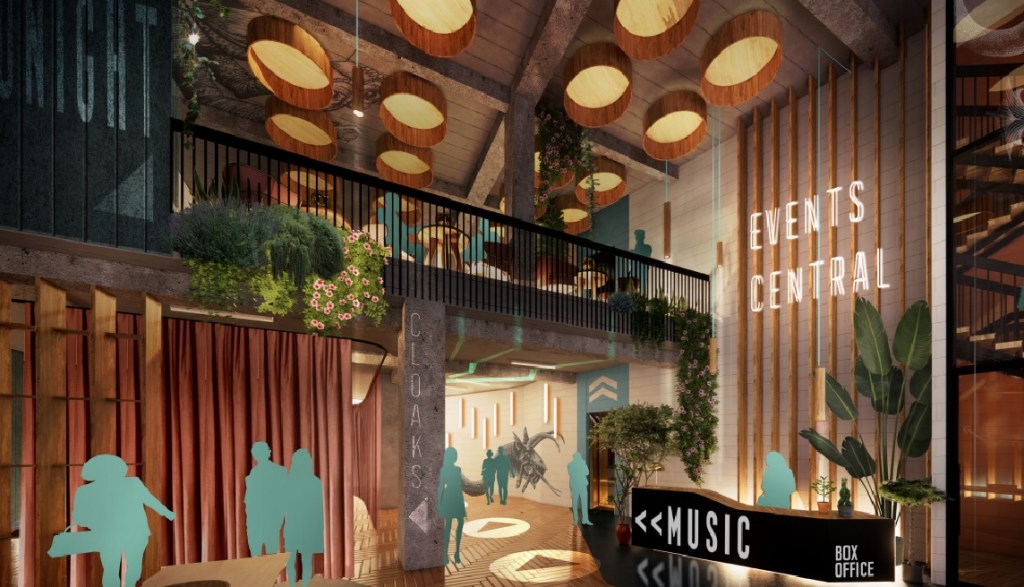
Proposed entrance space. Thin lines of LED lights offer a sustainable way to breathe new life into the existing building with minimal environmental impact. Image: HLM Architects
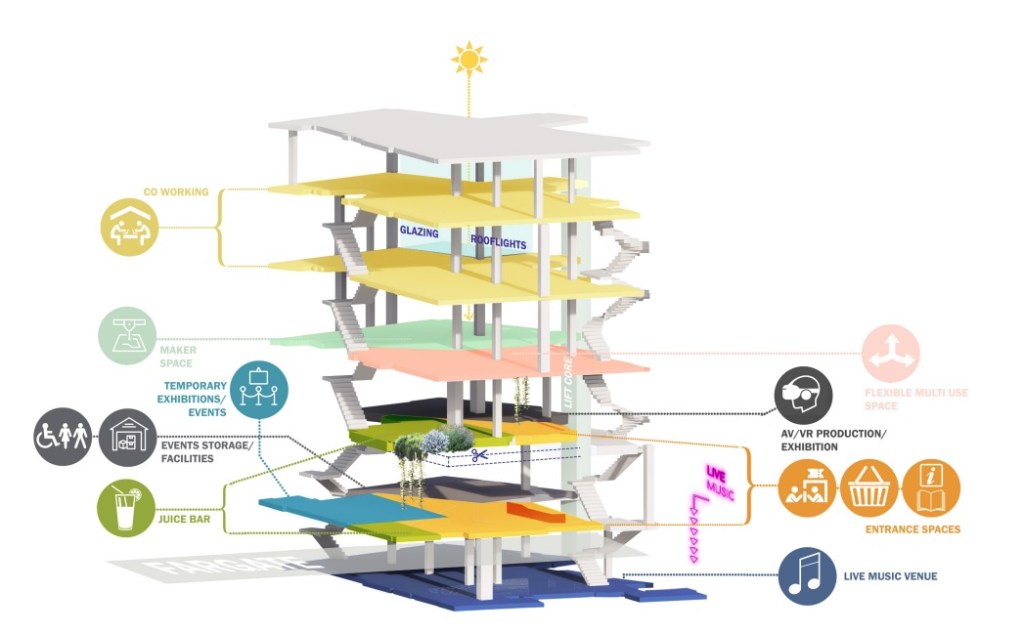
The proposal will include the renovation of the existing building with a glazed double height entrance space at the heart of the building that is formed of the reception area, temporary exhibition, bookshop and juice bar at ground floor level. The upper floor levels will house a makers space, flexible multi-use space and co-working space, while a new high-quality music venue is proposed at basement level. Image: HLM Architects


 sheffielder.net