Categories
Buildings

Grosvenor House

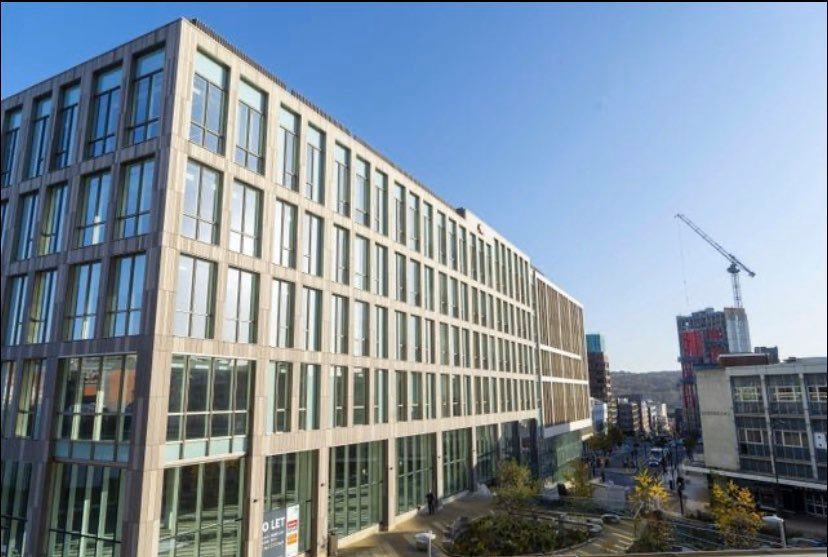
Top 10 global law firm, CMS, is set to become the second anchor tenant in Grosvenor House, the new HSBC building. It is relocating from its current base at Victoria Quays and preserves the firm’s presence as a major employer in the city.

The new office will be entirely self-contained and separate to HSBC, with a bespoke entrance, reception and signage facing onto Wellington Street and connecting to the impressive public realm of Charter Square.

Staff are expected to relocate from offices near Park Square this autumn, coinciding with the firm’s 30-year anniversary in Sheffield.

It means the building, officially called Grosvenor House after the hotel that stood on the site, will be full, delighting council chiefs who are bankrolling the £480million Heart of the City II scheme with taxpayers’ cash.

Categories
Companies

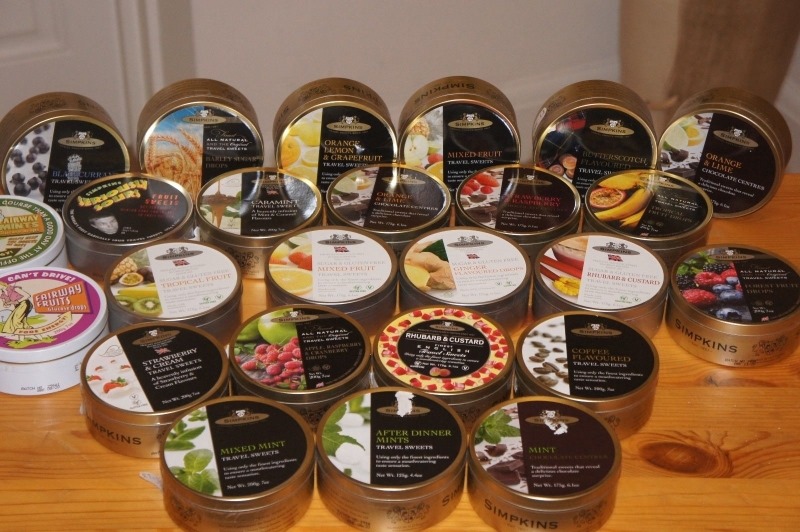
Simpkins Sweets

During World War One, Albert Leslie Simpkin was wounded twice. Afterwards, he was offered liquid glucose after an operation for shrapnel wounds, perhaps the moment he thought it should be offered in sweet form.

Returning to Sheffield, Simpkin opened a grocery shop in 1921, on Sedan Street at Pitsmoor, and devised a machine to produce glucose drops.

This was the start of a business that is still going strong today, exporting sweets to over forty countries.

After deciding to close his shop, Albert bought a burnt-out refrigeration factory at Hillsborough, replacing it with a purpose-built plant producing bulk barley sugar sweets, later converting to powdered sweets in small tins.

The company turned out to be pioneers in glucose medicated confectionery, choosing to sell through chemists to avoid competition from bigger manufacturers. “Simpkins Glucose Products for Health and Vitality,” was a slogan soon to be seen throughout the UK.

Its biggest seller was barley sugar drops, “to alleviate the symptoms of travel sickness,” leading to a range of other products, ‘Travel Tins’, that are still the backbone of the company’s product range today.

However, after visiting the Leipzig Show in 1939, Simpkins picked up the recipe for a glucose tablet, containing dextrose monohydrate, creating Vita Glucose Tablets, compressed under 15 tons of pressure. These were used by leading athletes, high-altitude flyers and mountaineers, including the first ascent of Mount Everest in 1953.

The range soon extended to other medicated pastilles and tablets, including Glucose Blackcurrant Pastilles, Dilly Duckling Children’s Cough Pastilles, which had a cherry flavour, and even orange-flavoured Halibut Liver Oil Hexagons.

Speaking in 1939, Albert said, “The modern idea of presenting medicine in sweet form might have been gained from a fourteenth century painting in which an apothecary is seen making up a prescription for his royal patron in the form of a confection.”

A.L. Simpkin & Co Ltd, still manufacture on Hunter Road, although its main entrance is on Roselle Street, off Middlewood Road.

These days, the company is run by Albert’s grandchildren, Adrian and Karen Simpkin, producing the ‘Travel Tins’, Juicees Chews, Nipits (said to be a favourite of Margaret Thatcher), ‘Frog in your Throat’ lozenges and pure liquorice sweets. It is also a leading supplier of corporate branded and private label tinned confectionery.

Don’t expect to find Simpkins Sweets in the supermarkets, they’re still to be found in chemists, as well as garage forecourts and high-end sweet shops.

Categories
Companies People Sculpture

Frank Tory and Sons

As we discover the historic buildings of Sheffield, and the intricate sculptors that adorn many, the name of Frank Tory frequently appears.

Frank Tory and Sons were a firm of sculptors that worked on many of the city’s buildings from the early 1880s until the 1950s. Apart from stone, the family also worked in wood, marble, bronze and fibrous plaster.

Frank Tory (1848-1938) was a Londoner who trained at the Lambeth School of Art. He came to Sheffield in 1880 after accepting a commission from the 15th Duke of Norfolk to work on the new Corn Exchange.

The contract brought him into contact with architect Matthew Ellison Hadfield and his son, Charles, who encouraged him to stay in Sheffield and offered him several commissions.

Tory set up a studio amongst terraced houses, and was joined in 1901 by his twin sons Alfred Herbert Tory (1881-1971) and William Frank Tory (1881-1968).

The Corn Exchange was destroyed by fire in 1947 and demolished in 1964. However, some of his finest work can still be found at Parade Chambers (High Street), St. John’s Church (Ranmoor), Cairns Chambers (Church Street), Carmel House (Fargate) and the Cathedral of St. Marie.

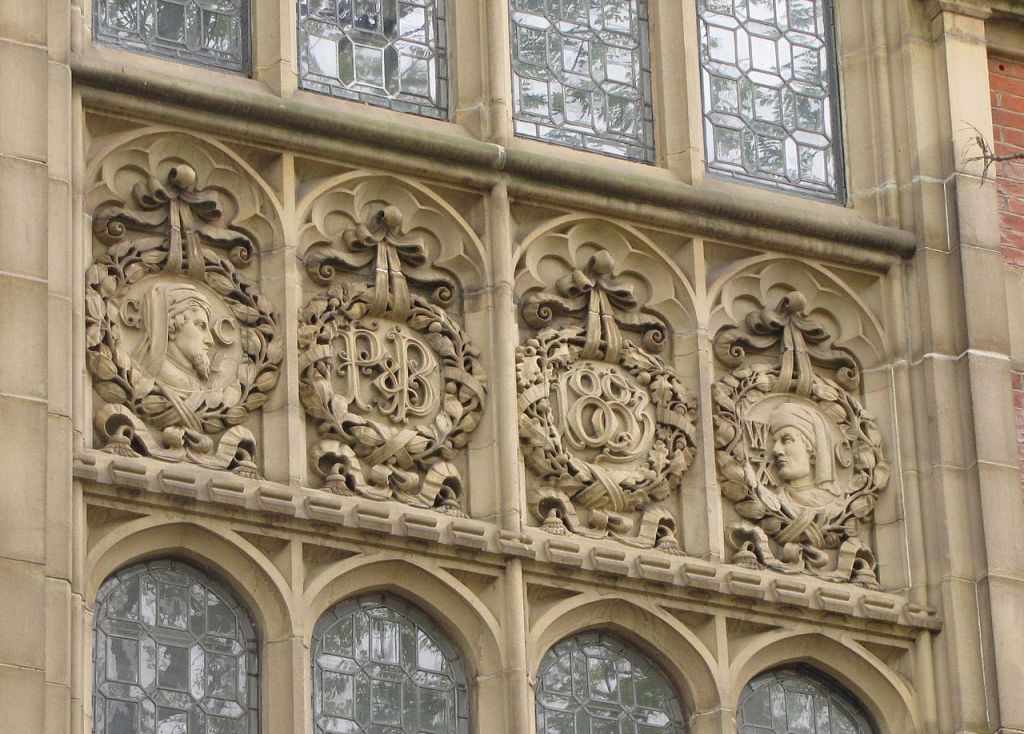
Perhaps Frank Tory’s greatest work is on Parade Chambers, with decorative sculptures of Geoffrey Chaucer and William Caxton, created in 1883 for Pawson and Brailsford, printers and stationers (pictured).

Alfred and William were born on Winter Street and attended the Broomhill County School and the Weston Academy for Sons of Gentlemen. They learned their trade from their father, who also taught at the Sheffield School of Art.

While Frank Tory worked on some of the city’s finest Victorian structures, his sons were responsible for sculptures on twentieth century buildings, including Sheffield City Hall, the Central Library, the White Building (Fitzalan Square), Victoria Hall (Norfolk Street) as well as Leeds Civic Hall and Chesterfield Town Hall.

After their father’s death, the firm moved to Ecclesall Road, at a site that is now the Porter Brook pub, eventually retiring in the 1950s after which the firm was wound up. 

Categories
Buildings

Abacus House

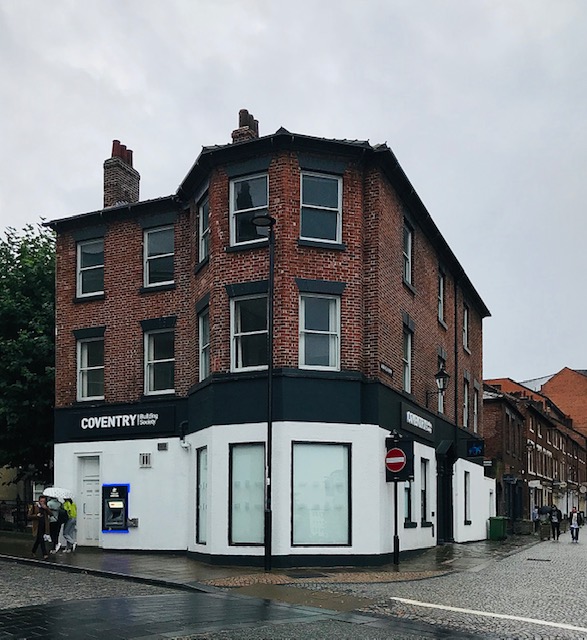
At first glance, this plain looking building, on the corner of Norfolk Street and Norfolk Row, looked to be a bit of a lightweight in terms of its history.

Oh, my goodness, what a challenge it has turned out to be instead.

According to Historic England, Grade II-listed Abacus House, home to the Coventry Building Society, was built about 1791 as three houses. And here lies the mystery. No manner of archive digging can reveal the builder and for whom it was built for.

We do know that Norfolk Row was built about 1780, running alongside the gardens of the Lord’s House in Fargate, to Norfolk Street. The Lord’s House was built in 1707 for Henry Howard, the Duke of Norfolk, and at the back of the house was a chapel where a Catholic congregation worshipped.

This was dismantled and sold in 1814, replaced with a new chapel two years later, itself demolished to make way for a new church in 1850, better known today as St. Marie’s Cathedral.

I have a suspicion that Abacus House may have been built by the Duke of Norfolk as the presbytery to the original chapel, and a day in the archives will have to resolve this mystery.

It was certainly used as the presbytery at one time but in the early 1800s it was being occupied by Sir Arnold Knight, a Catholic physician, appointed to the Royal Infirmary in 1852, founder of the Sheffield Medical Institution in 1829, and later establishing the public dispensary on West Street (later the Royal Hospital). Next door was Thomas Raynor, one of Sheffield’s first Chief Constables.

In the mid-19th century the houses were altered with additions, quite possibly around the time that a new presbytery was built on the opposite corner. It paved the way for a long line of occupants, some with quite fascinating stories, and its future use as office accommodation.

It was here that John Hyde – proprietor of private estate sales rooms, estate and commission agent, accountant, auditor and collector of rents and debts – had his business during the 1840s. He was charged with embezzlement and obtaining money by false pretences in 1851, subsequently absconding and arrested in Glasgow.

There was also Dr Alonzo Durant, a man of dubious character, who established the Medical and Surgical Philanthropic Institution in 1851. He was described as “a trifle extravagant, and not free from eccentricity,” and worthy of a separate post.

George Nichols was a military tailor, who established a business here during the 1850s and 1860s, later becoming insolvent and emigrating to Ontario, Canada, where he became Captain Nichols of the Alexandrian Company (No.3) of the 59th Regiment.

We should also mention Henri LeClere, a Parisian, who arrived in Sheffield in 1861 to set up a silver engraving company on High Street before taking rooms here. His son built up the LeClere family business and successive generations were in demand with aristocratic families and embassies across Europe. The company later moved to their most famous premises on Howard Street.

Add to the mix – J.F. Anderson, Chiropodist Surgeon, Madame Malbet, Stanfield and Hirst, law and general stationers, A. Thornley Walker, architect, and William Edwards, freight, passage and emigration officer, to name but a few.

At the start of the twentieth century the building had been renamed Rectory Chambers, now solely used as offices, and attracted a new generation of tenants.

Robert F. Drury was the first patent agent in Sheffield, his company surviving until the 1930s, Walter Harry Best was a stocks and shares broker, Frank Bibbings represented the Free Trade Union and this was also the office for The Expert Advertising Company, whose advertising appeared on theatre screens across the country.

And we mustn’t forget Madame Lille, whose maid recruiting agency was the “oldest and best known in the Midlands, and the only one in Sheffield to be on the ‘recommended’ list.”

There also appears to be Eliza F. Jones, tobacconist, who occupied part of the ground floor until the 1920s.

The Leeds Permanent Building Society moved in during 1931, a foretaste of a later occupant, the Coventry Economic Building Society, taking most of the building, and operating still as the Coventry Building Society.

And so, this brick building, with rendered and colour-washed walls, does have a lot of stories to tell after all. But can anyone explain the meaning behind Abacus House?

Categories
People

The strange tale of Dr Alonzo Durant

The strange tale of Dr Alonzo Durant, one of Sheffield’s forgotten eccentrics.

Abacus House, at the corner of Norfolk Street and Norfolk Row, is now home to the Coventry Building Society. According to Historic England it was built about 1791, originally as three houses, later converted into offices.

During the 1850s, one of the properties was tenanted by Mr May Osmond Alonzo Durant, operating as the Medical and Surgical Philanthropic Institution.

Amidst dozens of people who lived or worked here, the story of Alonzo Durant is one of the most unusual and tragic.

He was born in 1816, the eighth son of Colonel George Durant of Tong Castle, between Wolverhampton and Telford, in Shropshire. At the age of 21, he married Catherine Galley much to the disapproval of her father, in Prestwich, Lancashire.

Durant qualified as a surgeon, and by 1839 was a member of the Royal College of Surgeons.

Somewhere along the line Durant settled at Burbage, Leicestershire, living at Tong Lodge, honouring his pedigree, and appears to have lived beyond his means, declaring bankruptcy in 1847.

By 1851, Durant was practising in Ashton, Manchester, before turning up in Sheffield, opening a practice at Bank Street.

As well as offering his services as a surgeon, he claimed to be writing a refutation of a book called The Vestiges of Creation and preparing a book on heraldry “illustrated by engravings of baronial remains in Shropshire, where my ancestors flourished.”

Relocating to the corner house on Norfolk Street, he regularly appeared in newspapers, being described as “a trifle extravagant and not free from eccentricity.”

It appears that Dr Durant travelled the streets of Sheffield in a gig with two ponies tandem and a smart boy in buttons at his side. The boy “Joe” carried a horn with which he gave people warning of their approach but had to wait for his master to cry out, “Blow, Joe, Blow.”

Such was the spectacle that a Sheffield theatre mimicked the ritual in a Christmas pantomime, prompting Dr Durant and Joe to take along their horn and join in with proceedings.

Eccentric as this may seem, it didn’t stop Durant preferring charges against William Smith, of Crookes, a musician, for having “used a certain noisy instrument in South Street (now The Moor), for the purpose of announcing a certain entertainment.”

It appears that as Durant and Joe had approached a band playing on top of a large omnibus, by which a large crowd had gathered, the boy had blown his horn to prevent them from being run over, but the louder he blew the louder the band blew their own instruments.

It caused Dr Durant’s horses to bolt, eventually turning into Fitzwilliam Street, throwing the two of them into the air.

Notwithstanding, the band continued playing, and the horses flew up Fitzwilliam Street with the empty gig behind them, running over a man at the corner of Milton Street, and eventually smashing it into pieces against a post.

As one correspondent writes, Durant’s best form of defence was to attack, often pressing charges against individuals, representing himself in court, and causing great confusion with long incoherent speeches.

In 1857, Dr Durant relocated to Crimea House, opposite the Crimean Monument, before inexplicably closing his practice the following year. He sold all his possessions at auction, including “a white Orinoco cockatoo which danced the polka and said anything.”

Dr Durant next turns up at Ramsgate in Kent where, once again, he is recorded as driving through the crowded streets of the town at 17mph, his horn blowing loudly, and even driving on pavements to the danger of pedestrians and perils of shop windows.

By now, he was calling himself Captain Durant, referring to exploits in the East India Service, a fanciful claim, because although he applied for a post in Bengal he never joined.

Whilst in Kent, Dr Durant still took pleasure in appearing in court as plaintiff. On one occasion, after winning a case against a carter accused of damaging his 11 shilling hat, the magistrate remarked:

“Captain Durant [sic] . . . allow me to say a few words about the rapid speed at which you drive through the town. . . It is but a short time since that I myself saw two ladies nearly knocked down by your servant, who was riding, and who apparently had not got his horse under control.”

The ‘Captain’ retorted: “I have driven through the most crowded places and never yet knocked anyone down.”

In 1859, Dr Durant appeared at Ramsgate County Court where Judge Charles Harwood heard that the defendant, “a gentleman of great notoriety, recognised as the ‘Jehu’ constantly driving his tandem through the labyrinths of the place, and keeping the quiet inhabitants in perpetual fear and jeopardy by the peculiar speed of his eccentric performances.”

However, the charge wasn’t about his driving exploits but the mistreatment of a boy, George Ashby, from Ramsgate, whom he took from his father in 1855, promising to pay the boy £5 per annum in wages, but failing to pay up.

George Ashby was the boy “Joe”, forced to blow the trumpet in the streets of Sheffield. Dr Durant never paid him any wages, apart from the odd sixpence now and then for pocket money.

The jury returned with a verdict for the plaintiff and awarded Ashby £15 in damages.

Durant died in strange circumstances in 1861, overtaken by mental illness and probably drinking to excess.

He was seen wearing full military livery on Ramsgate Sands, worse the wear for liquor, walking up to his knees in water with his boots on. He later turned up at the Roman Catholic Chapel where his conduct forced him to be ejected. Durant claimed to be Jesus Christ and the Count de Chambord, and that he expected the King of France to dine with him shortly.

Durant hired a boy and pony chaise to take him for a drive, later abandoning him and jumping over a dyke to chase bullocks. He was next seen setting off for a ramble in the dikes around the River Stour where he was later found drowned.

The boy who had taken him for a drive said he had been with Captain Durant for a year and that he had been locked up in France on account of his madness, that it took several men to take him to prison, and that he had been much worse since he came out.

So ends the strange story of Dr Alonzo Durant, a true Sheffield eccentric, whose exploits could fill a book.
Categories
Streets

Paradise Square

On a cold rainy night, it’s hard to believe that Paradise Square was once a cornfield called Hick Stile Field.

About 1736, Nicholas Broadbent, a successful merchant of Old Bank House, Hartshead, built a row of five houses on the Shrewsbury Hospital estate, along the east side of the field and called it, for some reason only known to himself, Paradise Row.

In 1771, his grandson, Thomas, a banker, obtained a lease of the cornfield, which he offered for subleases in building lots, designed by William Fairbank.

The square was to be called after the row of houses already built, and between 1771 and 1790 he laid out the other three sides of the square with a variety of houses.

It was this same Thomas who was responsible for building Page Hall, constructed for his own use, but unable to be completed due to the collapse of his bank in 1782.

The square and its occupants have played an important part in Sheffield history.

The painter and sculptor Francis Chantry had rooms at No.24 in 1802, and Dr David Daniel Davis, the physician who attended the birth of Queen Victoria, lived at No.12 from 1803 to 1812.

No.18 was the Freemasons Lodge in the early 19th century, and the House of Help for Women and Girls was set up at No.1 in 1885 to rescue those “in moral danger and miserable surroundings.”

Paradise Square was used for a time as a market-place and its size and slope made it an ideal meeting venue. In 1779, John Wesley preached to a vast crowd from the balcony of No.18, and to the alarm of authorities thousands gathered here to support the Chartists’ cause in the 1830s and 1840s.

The square was also home to Mr Edward Hebblethwaite’s academy, one of the leading schools in the town, and from which ladies and gentlemen went on to command high positions in society, both at home and abroad.

He started as a schoolmaster, aged 21, at the Lancastrian School, later having his employment terminated. “He was passing through the streets of Sheffield very much depressed, with his eyes cast down and wondering what he should do, when he walked into the well-known square and saw premises to let, which he took to carry on a mixed school.”

The school opened in 1829 and lasted until about 1865.

It was notable through its connection with political history. The broad flight of stone steps leading to its entrance were often used by political candidates to address electors, and it was from here that the likes of J.A. Stuart Wortley, Lord Brougham, Earl Fitzwilliam, Ebenezer Elliott and James Montgomery tried to improve the townsfolk.

When middle-class residents started to move out the square slipped into dereliction and decay, resulting in a comprehensive restoration scheme of 1963-1966 directed by Hadfield Cawkwell Davidson and Partners.

Categories
Streets

Pepper Alley

I bet most of you have never heard of the delightfully named Pepper Alley. This was once a thoroughfare passing from Fargate to Norfolk Street, quite close to the surviving Upper Chapel.

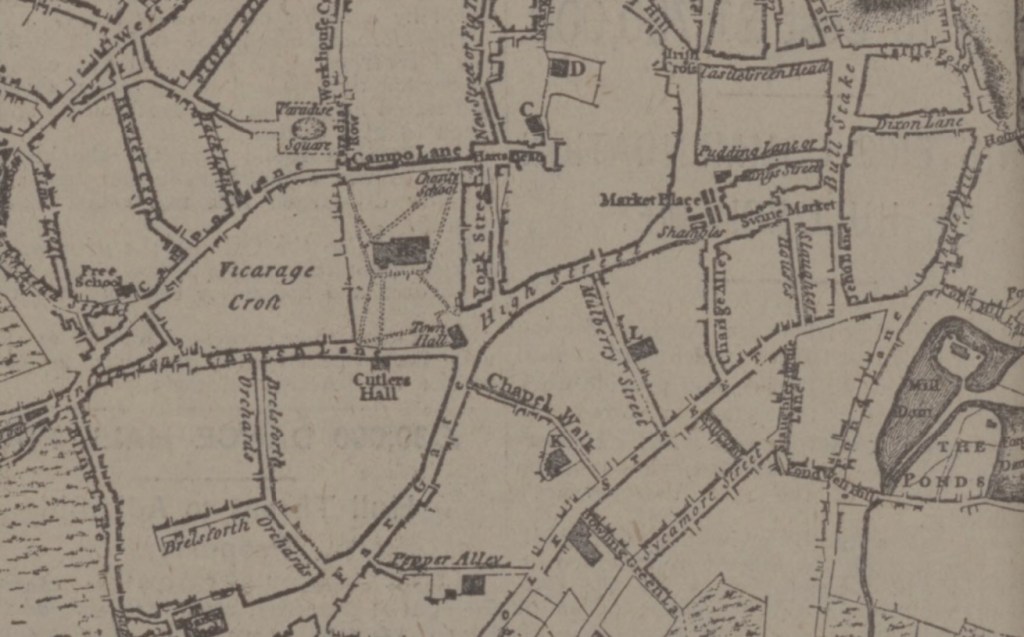
Its existence is shown on this map, taken from “A Correct Plan of the Town of Sheffield, in the County of York, drawn by William Fairbanks, 1771.”

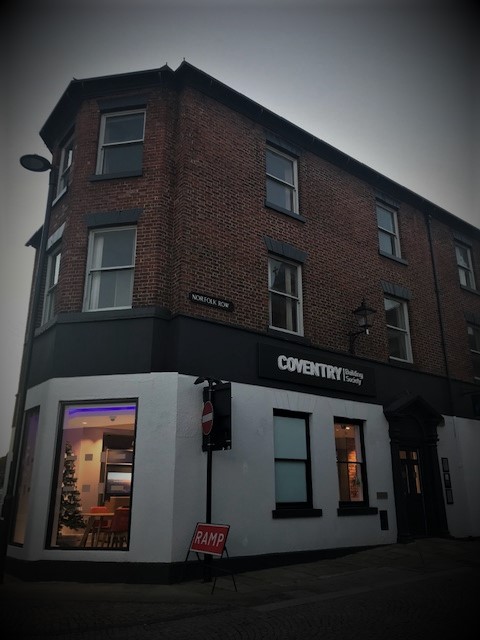
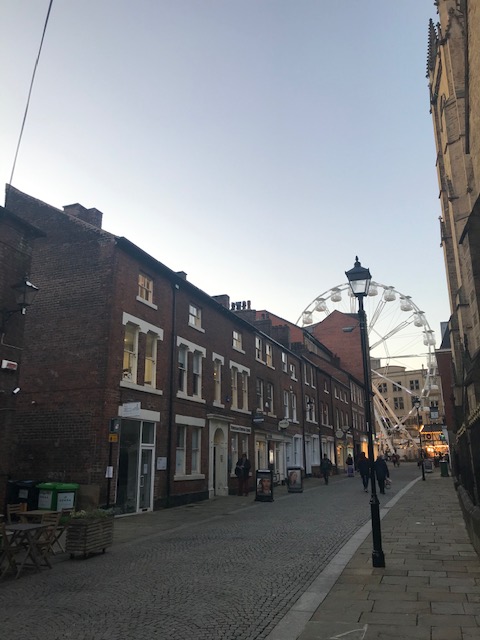
You’ll notice that Norfolk Row, pictured, doesn’t appear on the map at all, only coming into existence about nine years later. However, Chapel Walk is shown.

A little bit of Pepper Alley (Pepper is a local surname) can still be seen today, leading into Upper Chapel Yard, behind the shops which form part of the former YMCA property, now named Carmel House, at the corner with Fargate.

If you study the map you’ll see that the Town Hall stood by the Church Gates (now the Cathedral), at the junction of High Street and Church Lane (now Church Street).

Other names to look for are Bullstake (now Haymarket), Pudding Lane (King Street), Castle Green Head (Castle Street), Irish Cross (Queen Street), and Pinstone Croft Lane (Pinstone Street)

Categories
Buildings

The brick houses of Sheffield

When was the first brick house built in Sheffield?

In the book, “Reminiscences of Sheffield,” it states that the first brick house was built at the end of Pepper Alley about the year 1696.

Pepper Alley was superseded by the grander title of Norfolk Row, created nearby in 1780.

This long-lost house was leased at an annual rent of 24 peppercorns, quite high for the time because a rent of “one peppercorn if demanded” was a common nominal rent. But why should rents in Pepper Alley have been nominal? After all, one would have thought that land was rather valuable in this neighbourhood.

The statement that the house in Pepper Alley (was it so called after the peppercorn rents?) was the first brick house in Sheffield rests upon the authority of the Rev. Edward Goodwin, a clergyman of antiquarian tastes, who lived in the town at the end of the eighteenth century.

However, we can perhaps refute his claim, and will probably never know.

About the fourteenth century the houses in Sheffield were of wood, or partly of wood and stone, and in some of these houses brick must have been used in combination with wood.

Brick was little used in northern towns, where stone was plentiful, but it is likely that some old builder or architect used brick instead of stone, merely by way of change.

Sheffield was a stone-built town for the most part, but when the Duke of Norfolk began to lay out new streets between Pond Lane and Norfolk Street, and in the neighbourhood of Scotland Street and West Bar, a great deal of brick was used.

When street improvements were made, a few old brick houses were pulled down, and, plain as their exteriors probably were, some of them contained beautifully carved chimney-pieces and panelled walls, showing that these houses had once been occupied by people of wealth and consequence.

It’s very improbable to say the least, that no brick house was built in Sheffield before 1696. After all, the great tower at Sheffield Manor was of brick in Cardinal Wolsey’s time, and we know how old it was even then.

Categories
Buildings

Brown Bear

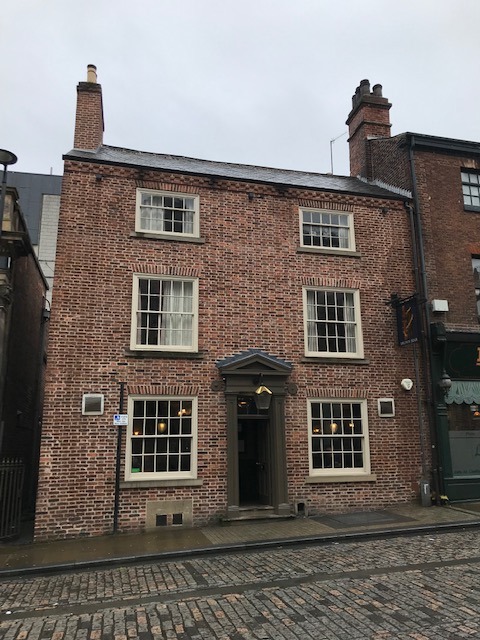
The Brown Bear is referred to as one of the oldest pubs in Sheffield, believed to have been built about 1745, although whether it was originally a pub is open to debate.

The square-set Georgian pub is one of the earliest surviving brick buildings in the area, once referred to as being the last house in Norfolk Street.

The Sign of the Brown Bear, the Brown Bear Inn, or the Old Brown Bear, as it was once known, probably refers to bear-baiting, popular in Europe until the 19th century. Any claims that it was named after the bear pit at the Botanical Gardens are unlikely as this wasn’t created until 1836, and was home to Bruin, a black bear.

We can trace its origins as a pub to at least 1790, home to John Crookes, regularly frequented by townsfolk, and where beer was brewed at the back of the house.

As well as an ale house it was also home to several groups, including the Fitzalan Sick Society and the Old Brown Bear Sick and Funeral Society.
In 1896, The Brown Bear was taken by John Smith’s Tadcaster Brewery on a 21-year lease which maintained ties up until the beginning of this century.

In the 1920s, it was used to play the game of Bumble Puppy, a version of True Madame, a game still played in Belgium and France. It was played on a raised board, balls rolled down a sloping top towards nine numbered arches.

It was bought by Sheffield Corporation in the 1930s, and in 1981, when the lease was up for renewal, a stipulation was included that the character of the pub could not be altered. The winning bidder turned out to be John Smiths, which held it until 2005 when it was taken over by Samuel Smiths.

Categories
Other

Looks and Smiles

The 1980s might seem a long time ago now. This was the decade when Sheffield probably reached rock bottom, our historic industries on their knees, and prospects seemingly bleak . Unemployment was a selective virus, attacking some people more than others, and it wasn’t a good time to be a school leaver.

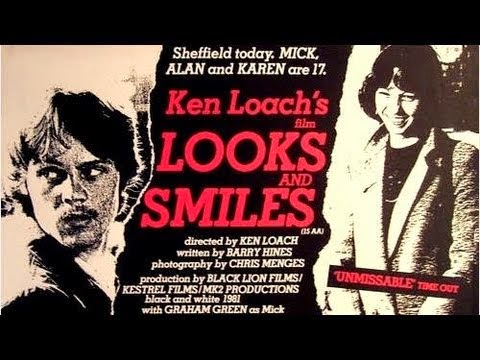
If ever there is a reminder of those depressing times then Ken Loach’s film Looks and Smiles, made in 1981, is the one to dig out.

It showed the effects on two Sheffield teenagers who leave school and cannot get a job. Loach, together with writer Barry Hines and cameraman Chris Menges (the same team who made Kes and The Gamekeeper) told a human story that added up to a very political film, immediately relevant to Britain of the eighties.

Looks and Smiles was made by Black Lion Films, in association with Kestrel Films, backed by the old ITV Midlands company ATV, using its ITC subsidiary (famous for The Champions, The Persuaders, Randall and Hopkirk Deceased, etc).

Shot in black-and-white during early 1981, it appeared at the Cannes Film Festival the same year. However, it was only ever intended as a deep-seated TV drama, airing on the ITV network in May 1982.

“When I started writing the story, it was going to be about courting, having your first girlfriend. But the issue of unemployment became more and more important like a storm cloud gathering,” said Barry Hines at the time.

Ken Loach pointed to the fact that one of Sheffield’s employment offices, which used to advertise “Jobs of the Week” in its window was then offering “The Job of the Week.”

The resulting two-hour film was still the love story of Mick and Karen, but against the depressing background of Mick’s struggle to find work, and whether the Army was for some of them the only alternative to a lifetime in the dole queue.

Available on DVD, Looks and Smiles now provides a fascinating view of Sheffield in desperate times, and evokes memories of an industrial scene and a city centre lost forever, including the Hole-in-the-Road.

None of the lead characters were professional actors. Graham Green (Mick), aged 17, was from Doncaster, and 16-year-old Carolyn Nicholson (Karen) was from Newcastle-on-Tyne. The third acting newcomer was played by a 17-year-old trainee mechanic, Tony Pitts (Alan) from Sheffield.

After making the film the boys went back to their trades and Carolyn back to her studies.

However, for one of them the film did have a deep impact.

Tony Pitts turned his back on being a mechanic, landing the role of loveable young rogue Archie Brooks in Emmerdale between 1983 and 1993. He’s since played key roles in Dead Man Weds, The Gemma Factor, Scott & Bailey, Peaky Blinders, Line of Duty and Wild Bill.