Categories
Other

The sanitary state of Sheffield

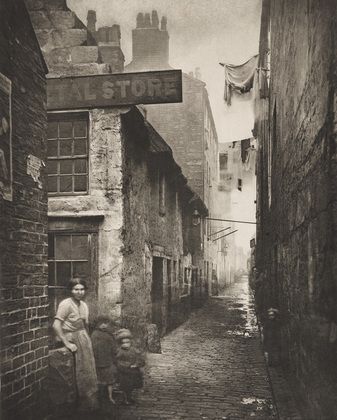
In 1861, The Builder, a journal of architecture, paid a visit to Sheffield to discover the appeal of the town, with its swiftly growing population, and one commended worldwide for industry and enterprise.

High-ranking officers at the Town Hall welcomed the magazine, expecting a fair and favourable travelogue, but when the article appeared on 5 October, it was titled ‘The Sanitary State of Sheffield’.

The observations were undoubtedly honest, the consequences lasting for the next hundred years, and indication that living in those long-ago simple days was bleak.

Brace yourselves, the “best bits” make awkward reading.

“Street scavenging appears to be but imperfectly applied at Sheffield. The streets are partially swept before the shops are open in the morning; consequently, when these are to be cleaned out, the sweepings which are thrown upon the streets remain all day long, to be trodden into a thick greasy crust.

“Proceeding down Victoria Station Road, past the cattle market, we arrive at an area of nearly two acres in extent, completely covered by huge hillocks of filth.

“A special heap in one corner belongs to the Duke of Norfolk, as the sweepings of his Grace’s markets and properties are brought here, and upon which children, not pigs, are grovelling, whilst one infant sits, playing with offal, and gnawing a decayed leek.

“Leaving the neighbourhood, we skirt the canal basin, picking our way between mounds of sifted coal ash, mill and engine coal, iron bars, and steel bars – a rusty, dusty, gritty place to remember, passing the Corn Exchange and presently come into High Street.

“This is the centre of retail commerce, and like all Sheffield streets is inconveniently narrow, its shops poor and dingy, improving but little in this respect when it takes the name of Fargate.

“The same blotchy encrustations on the roads, and the same channels running across the footpaths, with liquid manure from houses and stables, are too frequent.

“The water provided for general use being of a colour we do not esteem nor envy, we are bent on visiting the sources of supply.

“Through a suburban district of small villas and large houses, climbing up a further ascent, we make our observations upon the first great dam (now Crookes Valley Park). Dead leaves are floating upon the surface, and in one bend, the corner nearest the Dam House, a thick slime was upon the waters. Moreover, ducks were swimming in it.

“The next dam, communicated by an open channel, had horses and cattle drinking from it in the corner of a field.

“Higher up, from dam to dam, and up to the great Hadfield reservoir, the same imperfections present themselves: banks that should be lined with sloping stones, and not an atom of decayed vegetation allowed to mix with the water, are planted to the water’s brink with overhanging trees and rank grass and weeds growing apace upon the shallow muddy shores, the water highly-discoloured and slimy.

“Considering the pulmonary diseases to which Sheffield workmen are especially liable, it is a miracle that they do not insist upon the removal of every other exciting cause of ill-health.

“The workman breathes an atmosphere impregnated with excremental and putrefactive smells and charged with dust. This immense concourse of people live, eat, drink, and sleep in a space crammed with cesspits full of their own ordure, and where the contents of their heaped-up ash and offal middens are retained within sight and scent of their dwellings.”

If bilious readers of The Builder were still unsure about visiting, then the last line was probably meant for them. “There is much to interest in Sheffield, much to praise.” And that was it.
Categories
People Sculpture

Athens – the Sheffield connection

Photograph by Patrick Comerford (2017)

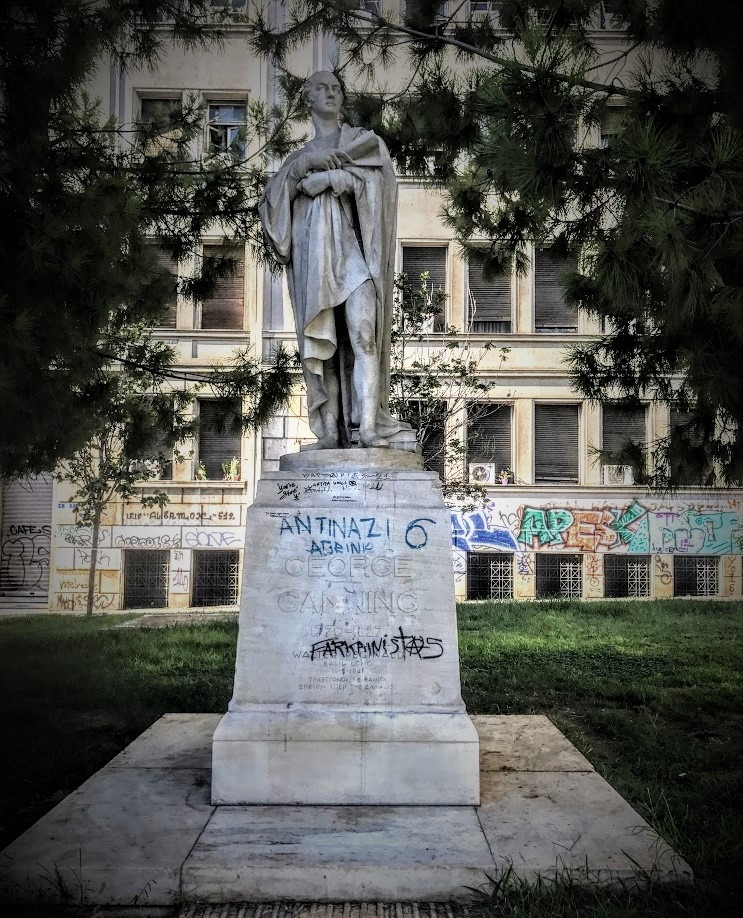
This sorry-looking statue of George Canning, the British Prime Minister who from 1825 to 1827 saved Greece from conquest by the Turks, stands in the George Canning Square in Athens.

But what is its connection to Sheffield?

George Canning, who was Britain’s shortest-serving prime minister, gave diplomatic support to the Greeks in the struggle against the Turks for freedom and ensured the eventual creation of an independent Greek state. In 1827, he signed the Treaty of London with Russia and France, with the object of securing Greek independence.

Canning’s successor as Prime Minister, the Duke of Wellington, tried to undo his work by making a truce with Turkey, but the Treaty of London had secured Greek independence.

The statue of George Canning from 1834 has a simple inscription: ‘George Canning 1770-1827’.

It was unveiled, wrapped in British and Greek flags, by the Greek Prime Minister, Eleftherios Venizelos, on 6 April 1931, at a ceremony attended by Sir Patrick Ramsay, the British ambassador, and the English builder and developer Charles Boot (1874-1945), who donated the statue to the Greek nation.

And here are the Sheffield connections.

Charles Boot was the Sheffield-born son of Henry Boot, the builder, and became a successful businessman and creator of Pinewood Studios.

He acquired the 10ft-high statue when he bought Thornbridge Hall, Great Longstone, near Bakewell, in 1929.

The statue, the work of famous Jordanthorpe-born sculptor, Sir Francis Chantrey (1781-1841), had originally been at Trentham Hall, Staffordshire, the last work commissioned by the Duke of Sutherland.

It was transferred to Thornbridge Hall, and after the death of the Liberal statesman, Chantrey made a replica which was erected at Westminster Abbey.

As a result of big business dealings between his firm, Henry Boot and Sons, with the Greek Government, it occurred to Charles Boot to present the statue to the Greek nation, and has remained here ever since.

Sadly, if you think that Sheffield has a graffiti problem, then I suggest you look at Athens.

Categories
Streets

The Moor

I don’t know about you, but I never look in shop windows anymore. Frankly, there’s not much to look at, with only a handful of department stores making the effort, if at all.

We must thank Harry Gordon Selfridge for being one of the first to create window dressing displays to attract customers.

The American millionaire’s aim was to “make an art of window display” and resulted in copycat spectacles across Britain.

Nowadays, the skill of window dressing has been replaced with visual digital technology, and this hasn’t exactly helped our struggling shops.

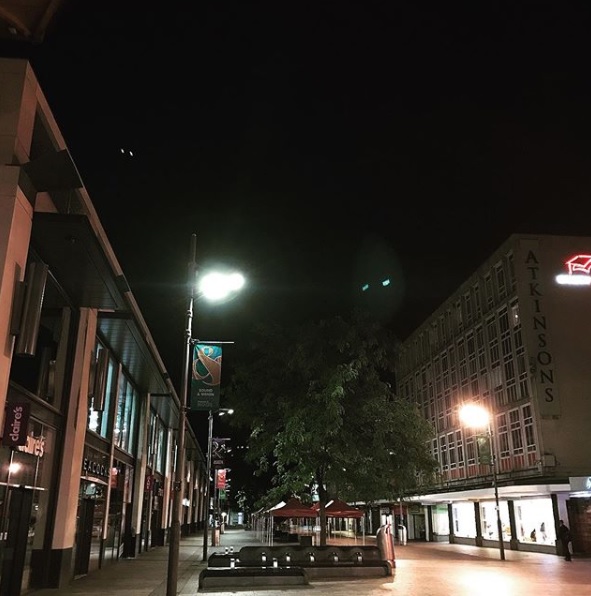
The Moor at night can be a particularly gloomy place when shops have closed, and despite the best efforts of ‘arty’ street lighting, its attempts to attract a night-time audience are pretty much nil.

It makes this newspaper article from March 1931 about “the attractive thoroughfare” even more interesting.

“On leaving cinemas and theatres in the centre of the city last night, hundreds of people were attracted to the Moor, by the special lighting display arranged in connection with the ‘Display Week’.

“They discovered undreamed beauty at Moorhead. The Crimea monument has not been regarded with admiration by many modern citizens, but under the floodlighting this week it takes on special graces.

“The whole result is a credit to those who have contributed to the scheme, to the Electric Supply Department of the Sheffield Corporation, the Edison Swan Electric Company, and the proprietors of the various businesses on the Moor.

“Standing at Moorhead one has an uninterrupted view of the straight thoroughfare down a slight gradient, and the effect of the special lighting is most striking.

“After ordinary business hours the shops are keeping their well-dressed windows lighted. During the whole of last evening the Moor was thronged with citizens attracted by the more than usually bright appearance of the various establishments.

“Although the shops were closed and the interior premises were in darkness, the brilliant windows in which the best efforts of a peculiarly modern art were displayed, attracted many appreciative visitors.

“Until 10 o’clock the whole of the Moor was a blaze of light, and provided ample proof of the efficiency of the arrangements, as well as the business acumen of tenants and proprietors of premises along the thoroughfare which is regarded by many as the most attractive business centre in the city.”

Today, the Moor Management team can only dream at such high visitor numbers after-dark, but we should remember that this was the major road linking Pinstone Street with Ecclesall Road, and with a plentiful supply of cars, buses and trams going up and down.

And while we’re at it, the Crimea monument, seemingly lost for years by Sheffield City Council, before being found again, once earmarked for the Botanical Gardens, is still languishing in some dark corner.

Categories
Buildings

Telegraph & Star Building

Standing majestically on the High Street for over one hundred years, the history of this building is lost to many.

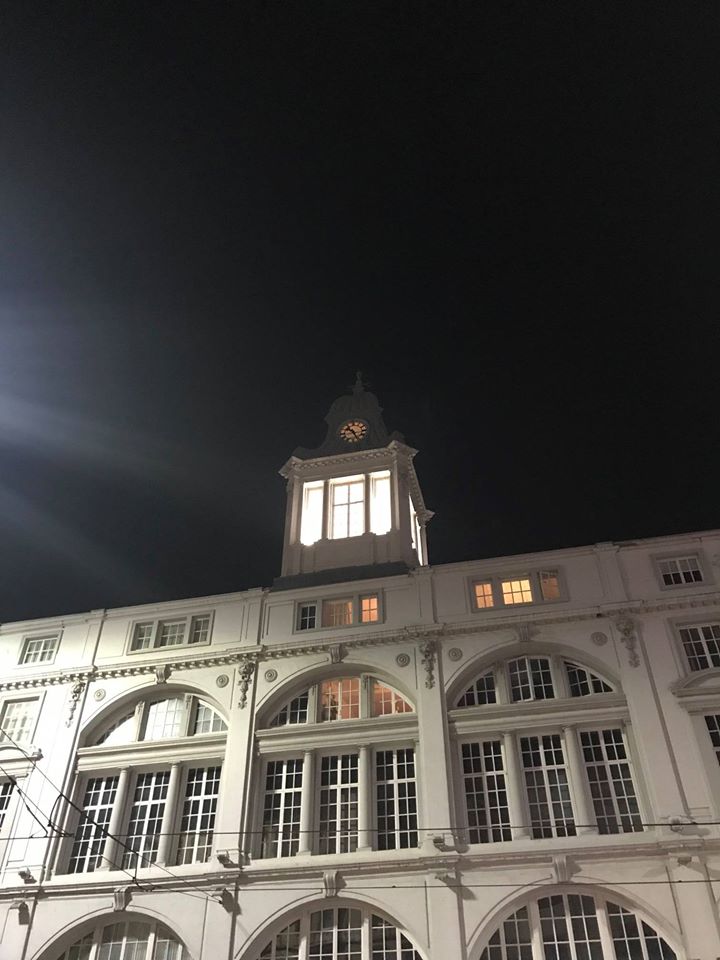
This is the former headquarters of the Sheffield Telegraph and Star, built between 1913 and 1916, as a new front to the extensive old buildings of the editorial and printing departments behind.

Built in English Renaissance-style, it was designed by Edward Mitchel Gibbs (1847-1935), of the Sheffield architects, Gibbs, Flockton & Teather, and was constructed by George Longden and Son.

During the demolition of old shops to make way for the building, a hoard of gold and silver coins, dating between 1547 and 1625, was found behind a cellar wall.

The offices had a faience front, now painted, with a high-tower and clockface on each side.

A lot of thought had to be given to the design.

The portico, sitting on the corner of High Street and York Street, is on the axial line of Fargate, with Sheffield Town Hall standing at the other end.

When built it had to conform to the control of heights to which buildings were permitted, and the ancient rights of light afforded to properties opposite. Hence the broken skyline, the setting back of the upper storeys and the pyramidal form of the building. Even the tower had to be kept with an angle of 45 degrees.

In 1943 it became Kemsley House, named after Gomer Berry, 1st Viscount Kemsley (1883-1968), owner of the newspaper until he sold it in 1959.

In later years it was abandoned when new offices were built on York Street. Restored in 1985 as offices and shops, it now contains apartments as well, seen here with the lights on.

Categories
Other

A century of rats

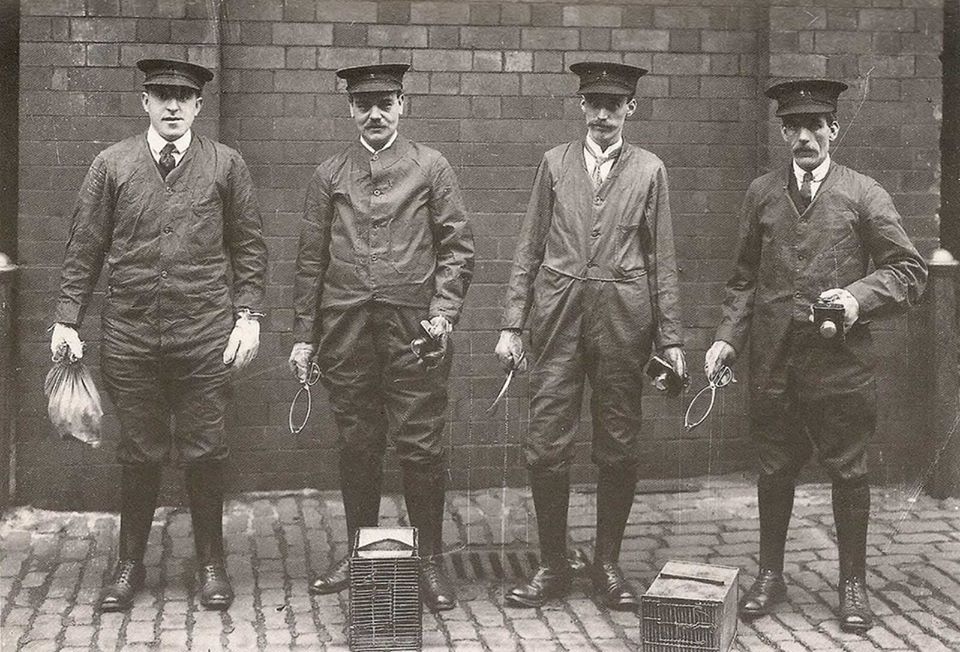
I’ve said it once, and I’ll say it again. Old news is today’s news. back in September 1919 the campaign against rats in Sheffield went on without interruption. Sheffield Corporation had employed a rat catcher and demand had risen so fast that the council was considering employing another one or two experts. The busy rat catcher had visited all kinds of premises – houses, works, shops – and the number of his victims had run into the thousands. However, the council were reluctant to promote National Rat Week, scheduled for October, because the rat-catcher “already had enough on hand.” One hundred years later, our progress has been abysmal, with rats threatening to outnumber people in the city centre… and we have to pay to get rid of them. Hate them, hate them, hate them!

Categories
People

James Longden

We owe a lot to James Longden (1847-1907), the Chesterfield-born son of George and Mary Ann Longden. His father trained as a stone mason in Uppermill, on Saddleworth Moor, and James would have been about six when the family moved to Sheffield.

His father founded a building and construction firm on St. Phillip’s Road, a modest success, but one which allowed James to become a partner in 1868.

George Longden and Son relocated to Park Wood Road at Neepsend and by the end of the nineteenth century had grown into one of the best known building firms in the country.

After George Longden retired in 1884, James took over the business, one which went on to build some of Sheffield’s most iconic buildings – reconstruction of the Old City Theatre to become the Lyceum, Montgomery Hall, Sheffield City Hall, Town Hall extensions, the Sheffield Telegraph and Star Building, alterations to Midland Station, the Prudential Assurance Building, extensions to Sheffield Cathedral, Victoria Hall as well as the old Royal Infirmary Hospital.

After World War Two, the company’s fortunes declined, eventually moving into house building, before being liquidated in 1978. The name lived on as Longden Doors, reduced to door-making, until it went into administration earlier this year.

Categories
Buildings

Grosvenor House

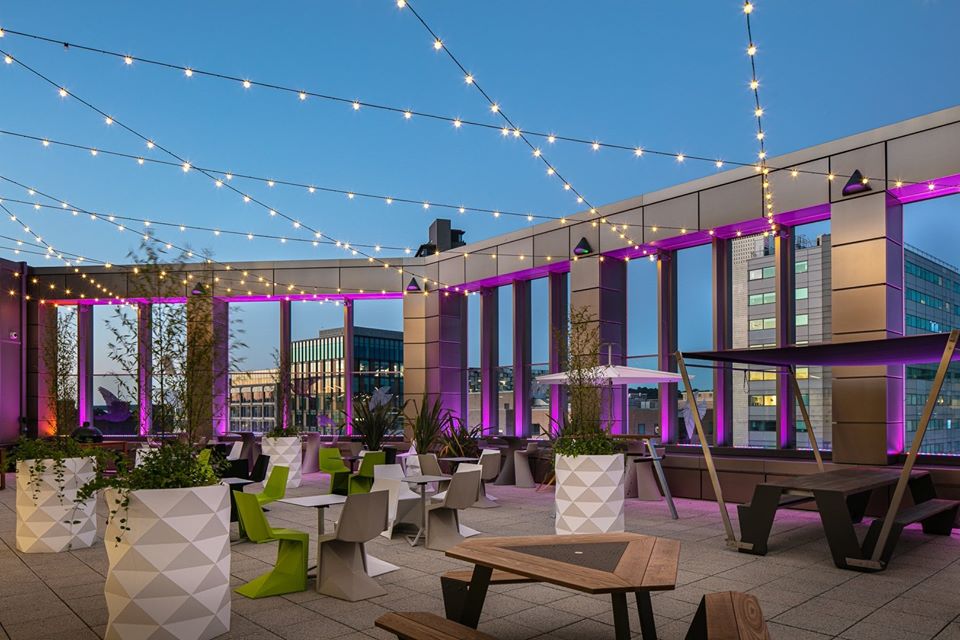
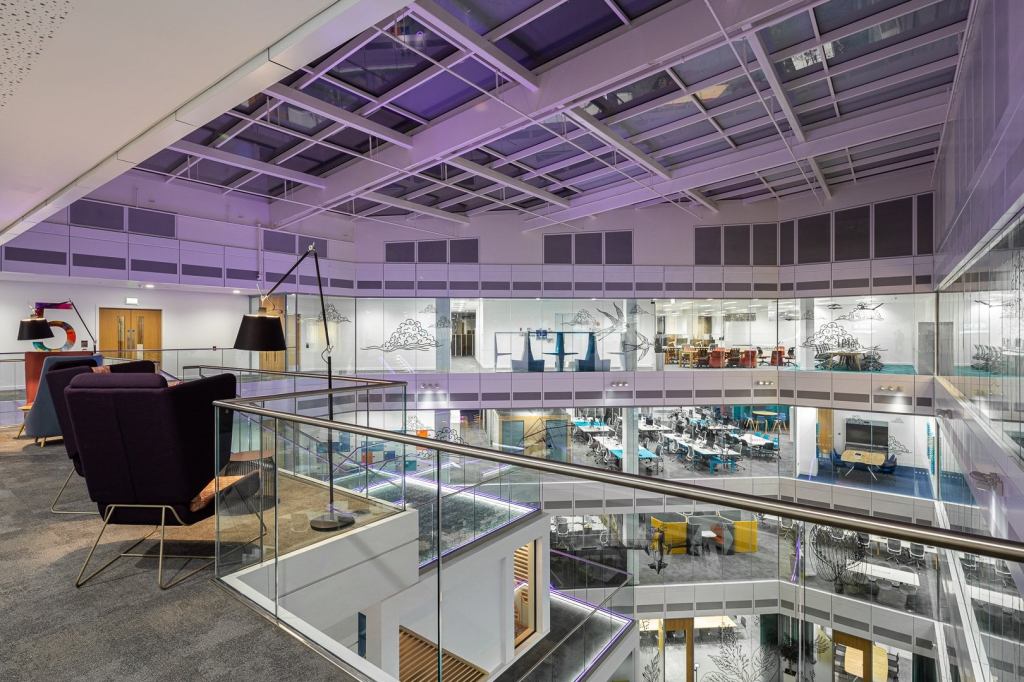
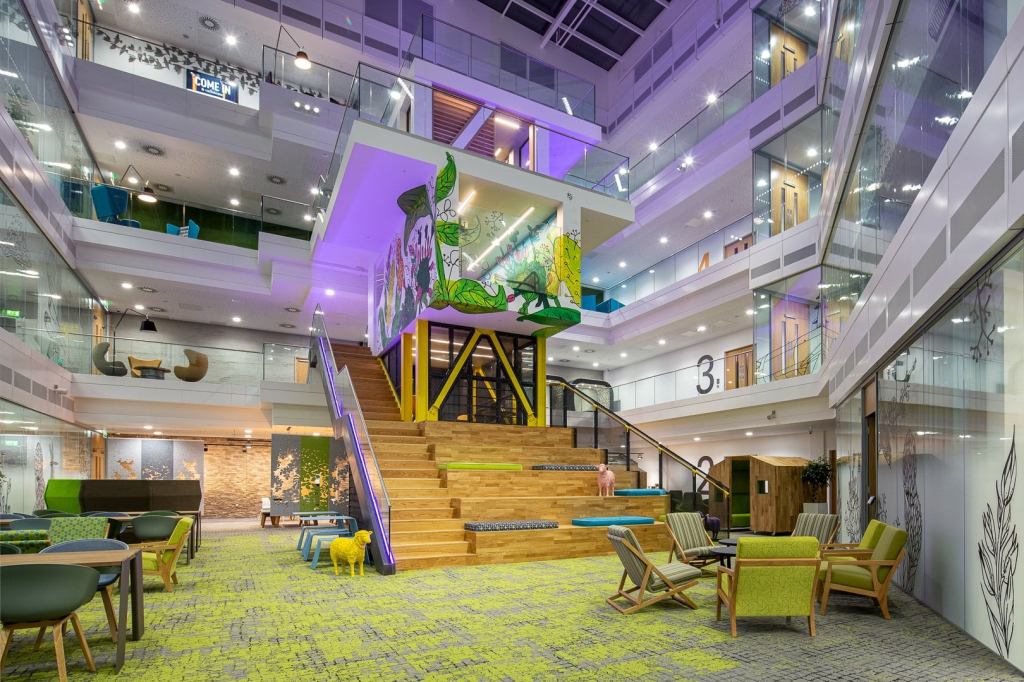
Making use of the rooftop terrace. Not bad at all. Grosvenor House, the name chosen by HSBC employees, and paying homage to the hotel that stood here before. The main office entrance is located on the corner of Wellington Street and Cambridge Street, and another entrance faces onto a new area of public realm at Charter Square. The building will also include retail space and shop fronts will be primarily located on Cambridge Street and also the important corner where Pinstone Street meets Furnival Gate. HSBC employees in Sheffield are being relocated from their current office space at Griffin House after the banking giant signed as the anchor tenant on a 15-year lease, committing them to Sheffield city centre.

Categories
Buildings

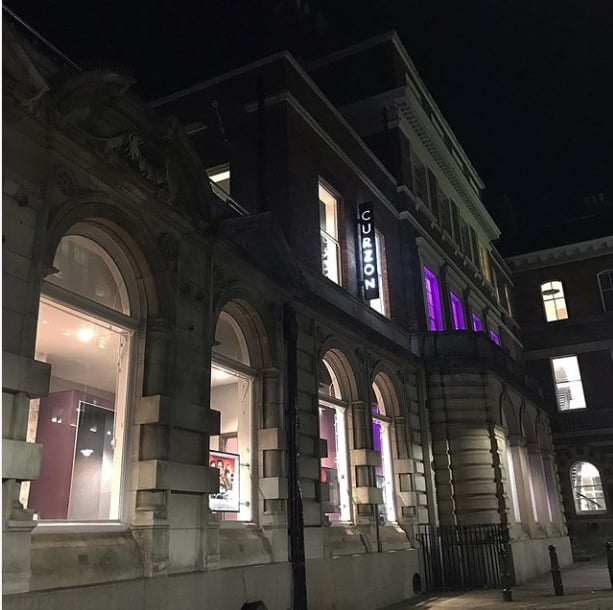
Curzon Cinema

One of the newest additions to Sheffield’s cinema scene is Curzon on George Street, a quiet thoroughfare with several hidden secrets. The history of this building goes back to January 9, 1794, when John Hardcastle opened it as a ‘conservative’ coffeehouse. A large room on the ground floor was used for George’s Coffeehouse, and over the fireplace was the motto ‘King, Lords and Commons’ with the warning ‘No Jacobins Admitted’. Accommodation was available above for ‘a fine gentleman’. Three years later it was in the possession of James Healey, but evidence suggests the coffeehouse wasn’t the success it had set out to be. English coffeehouses had been public social places where men could meet for conversation and commerce, but towards the end of the 18th century had almost completely disappeared from the popular social scene.

By 1799, the Institution of the School of Industry, a Quaker driven girls’ school for reading, knitting and sewing, had taken a room here. In 1818, a portion of the old coffeehouse was taken by the fledgling Sheffield Library. ‘The library room is spacious and lofty and is well filled with a collection of the most popular works in the English language. Adjoining the library is a comfortable reading room, in which are deposited those publications which are not to be taken out.’ The library’s stay was brief, and soon removed to the Old Music Hall on Surrey Street, leaving the ground floor occupied by Harwood and Thomas, merchants, and the first floor being used as an auction room.

Most people are aware that this was once an old bank, but it wasn’t until 1831 that the Sheffield Banking Company moved in. The newly-formed bank had looked at five properties but settled on 13 George Street spending £2,200 for the whole property. As well as the old coffeehouse it included adjoining offices and three dwelling houses. Changes were made to the building by architects Woodhead & Hurst of Doncaster, turning it into ‘an exceedingly commodious place of business, as well as for the customers as for the directors and officers.’ The Directors occupied what had been the old library as the board room.

A left extension was built in 1906 by architects Matthew Ellison Hadfield and his son Charles and can be traced in the brickwork outside. The interior decorations, appropriately emblematic, were carried out by Hugh Hutton Stannus, a Sheffield-born architect who had originally trained in casting brass, copper and bronze. In 1919, the Sheffield Banking Company amalgamated with the National Provincial and Union Bank (later becoming the National Westminster). The George Street branch’s busiest time was in the 1960s with 120 staff based here. However, it later relocated to newer premises on High Street and the building remained empty for years.

The Curzon opened in January 2015, adapting the Grade II listed building for cinema use while taking into consideration the pilastered walls, Doric arcades and granite columns inside.

Categories
Buildings

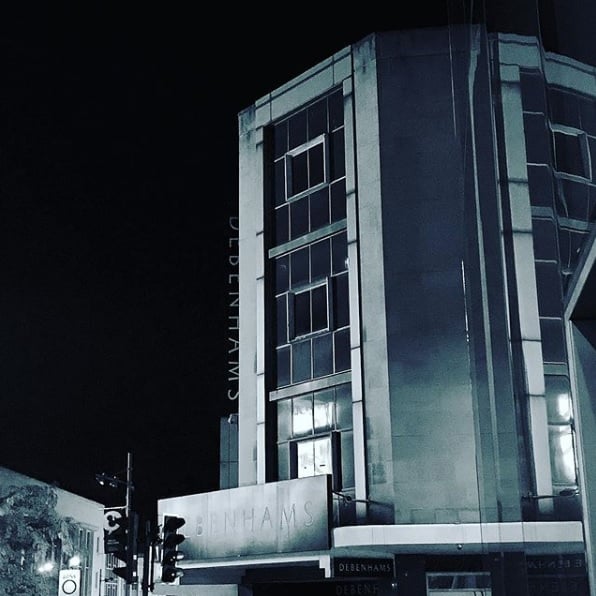
Debenhams

Times have been hard for Debenhams, not least for the one on The Moor which is beginning to look extremely shabby alongside modern new developments nearby.

However, it hasn’t always been this way.

This shop was once considered to be a flagship store, until eclipsed by a brand new Debenhams at Meadowhall in 1990.

It seems like the store has been here forever – fifty-four years to be precise. For a new generation, this branch wasn’t always called Debenhams, and can trace its origins to the other side of the Pennines.

In 1865, William Paulden, aged 24, opened a carpet and soft furnishings store in Stretford Road, Manchester. He was the son of a Cheshire farmer, educated at Knutsford Grammar School, and died at Green Hall, Wilmslow, Cheshire, in 1930.

The business expanded to become a department store and in 1928 was taken over by the Drapery Trust, a conglomerate of retailers, owned by London-based Debenhams.

The store continued to trade as Pauldens and added a second store at Newcastle-under-Lyme, Staffordshire, in 1946. A third store opened in Sheffield in 1965, a modern multi-level steel frame and concrete structure, bordering The Moor and Charter Row.

It traded as Pauldens of Sheffield, but in 1973, all the Drapery Trust businesses were either closed or rebranded as Debenhams, including the Sheffield store.

We now wait to see what will happen to this landmark as a result of the company’s turbulent restructuring.

Categories
Buildings

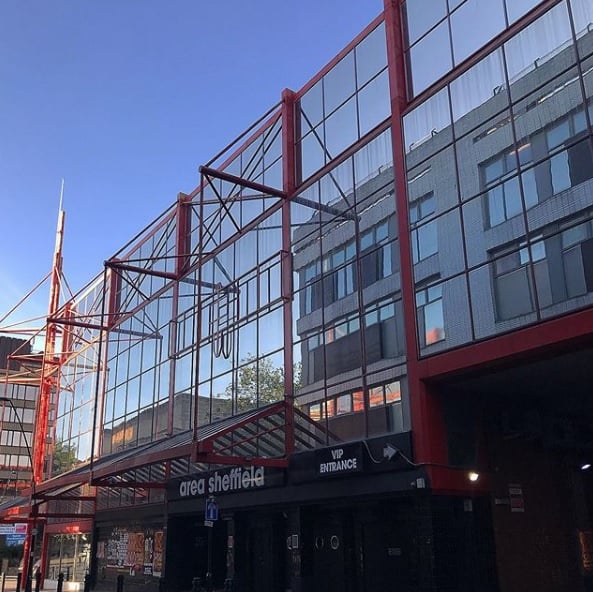
Area Sheffield

To our kids, this mirrored glass and garish red steelwork building on Burgess Street is just another nightclub. This is what it’s been on-and-off for twenty-five years, much longer than the function it was originally built for.

It was constructed by the Rank Organisation in 1986-1987 as a brand new Odeon Cinema, a replacement for the outdated, but much loved Gaumont Cinema (originally the Regent Theatre) demolished in 1985.

The Odeon opened in August 1987 with two auditoriums seating 500 and 324 people apiece.

Making use of the Gaumont’s footprint, the entrance on Burgess Street was approximately where the old Gaumont stage once stood, allowing the space in Barker’s Pool to be used for retail units.

The building itself was hated by locals, its only saving grace being a giant mural on the main staircase, painted by local artist Joe Scarborough depicting the history of Sheffield.

However, its days were numbered when a seven-screen Odeon opened at the redundant Fiesta nightclub on Arundel Gate in 1992. The bosses at Rank quickly realised it wasn’t cost effective to run two cinemas in the city centre, and one had to go.

The Burgess Street premises were closed in 1994.

But what happened to Joe Scarborough’s mural?

After standing empty, it was later converted into Kingdom nightclub, later known as Embrace, now Area. And locals still detest the building.