There was a time when Sheffield became a trendsetter in public transport.
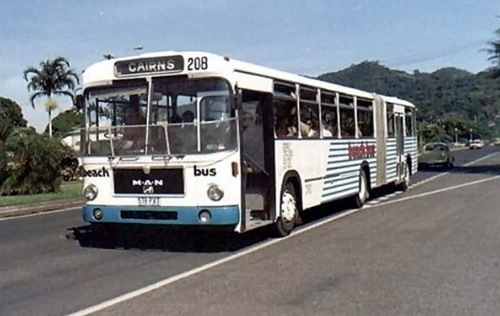
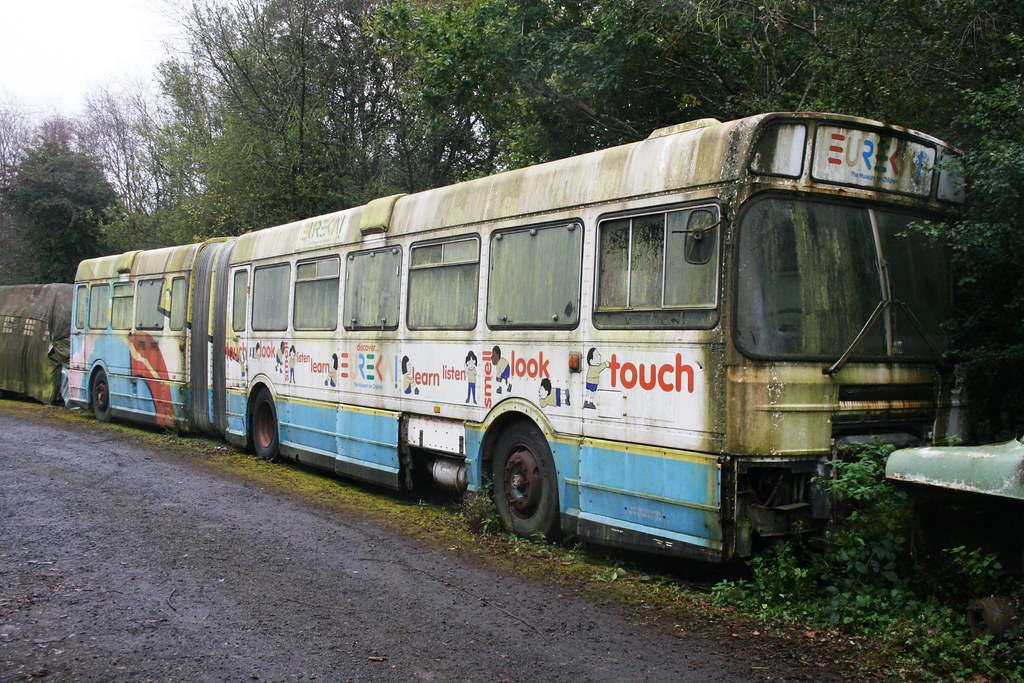
Back in 1979, South Yorkshire Passenger Transport Executive (SYPTE) took delivery of five MAN bendy-buses, to be used on trial. This was a time when it was illegal to operate articulated buses on British roads, and SYPTE manoeuvred around this by carrying passengers around the city centre for free on the City Clipper route.
For younger readers, think of the Sheffield Supertram on wheels, basically two rigid sections of bus, linked by a pivoting joint, enclosed by protective bellows inside and out, allowing a longer length of bus and higher passenger capacity.
Photograph by Travel South Yorkshire
In 1980, the MAN bendy-buses were joined by four Leyland-DAB models, manufactured as a British-Danish joint venture.
The success of the bendy-bus trial led to a change in the law, and the introduction of them to other cities, but the Sheffield buses didn’t last much longer.
After being replaced by the Leyland DABS, the five MANs were loaned to the National Bus Company, originally used in Oxford, then to Midland Red at Redditch, and finally to Midland Red North, based at Cannock. Four of these were later sold and exported, used by Martin Coast Tours at Cairns in Queensland, Australia.
Photograph by Travel South Yorkshire
By 1983, the Leylands had been withdrawn and sold to McGill of Barrhead, which used them in service on its route to Glasgow. Subsequently, they saw further life with Hampshire Bus in Winchester.
Ironically, SYPTE bought fourteen brand new Leyland DAB bendy-buses in 1985, pressed into service with the newly formed South Yorkshire Transport (later Mainline) on the City Clipper route, and later as the Fastline route to Meadowhall.
Photograph by Travel South Yorkshire
The bendy-buses lasted until 1999, not replaced by First Bus which had taken over Mainline in 1998, although it did consider reintroducing them at one stage.
While bendy-buses have seen the light of day across the country (Leeds, Manchester, York, Southampton and Nottingham included) they have never been popular with the public.
A significant number were used in London, blighted by newly delivered Mercedes-Benz Citaros in 2003-2004 that tended to catch fire, and were nicknamed ‘chariots of fire’, later withdrawn in 2011.
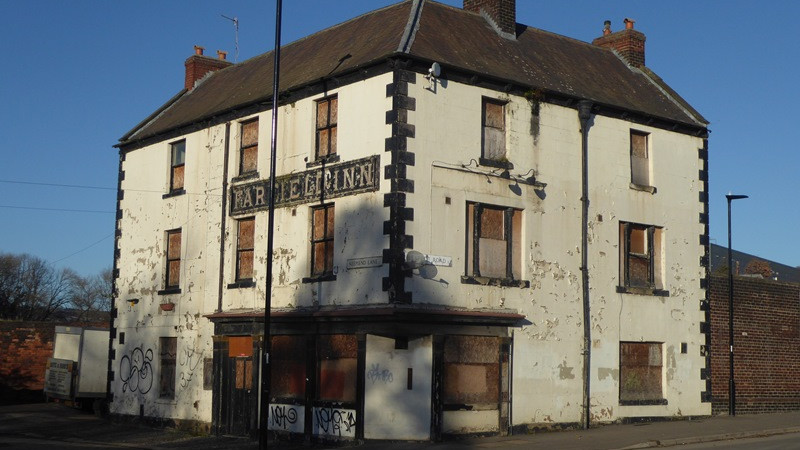
A Grade II-listed Sheffield pub dating back to 1752, which was damaged in the 2007 flood, is set to be refurbished, and new workshops created, under new plans.
ABA Architecture & Interiors, on behalf of TOC Holdings, has submitted full planning and listed building applications to Sheffield City Council for work on the Farfield Inn, Neepsend.
The Farfield Inn survived the Great Flood of 1864 but was gutted by the city’s 2007 flood and has been disused for years. In 2018, it was sold at auction for £250,000, two-and-a-half times its guide price.
Planning permission is sought for the refurbishment of the ground trading area and the creation of six flats on the first and second floors. The building’s period features are set to be retained.
The plans also include the construction of a new two-storey building that will house a pair of workshops for artisan craftsmen. The existing outbuilding on the site will also be refurbished to provide workshop space.
Here’s news of an important development in Sheffield’s Heart of the City II programme.
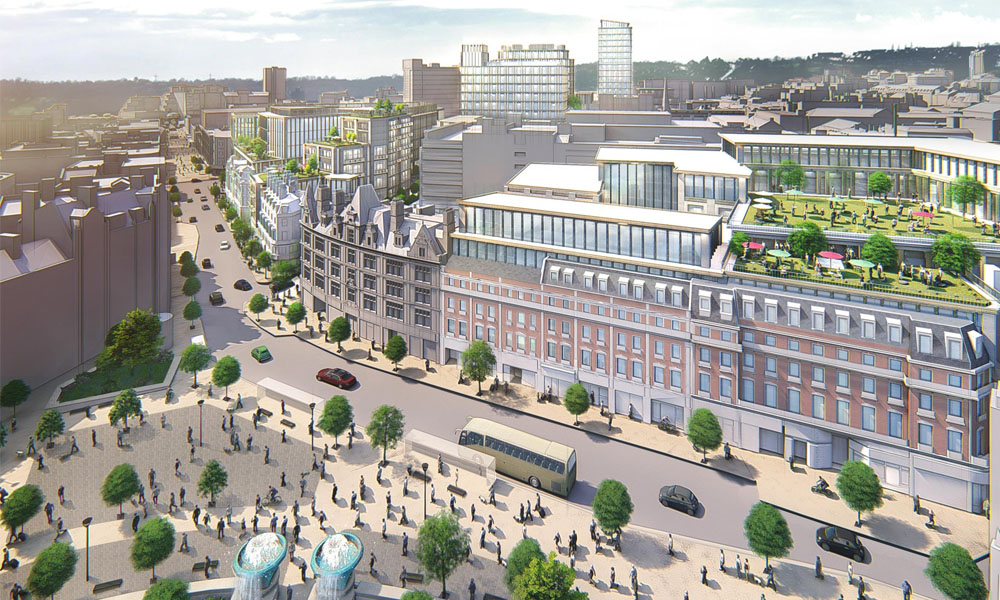
Radisson Blu has been selected by Sheffield City Council as the preferred hotel brand for its flagship Heart of the City II hotel on Pinstone Street, overlooking the Peace Gardens.
The hotel will anchor the new Heart of the City II scheme which is already home to global bank HSBC, and which will shortly welcome prominent international law firm, CMS, who are occupying 45,000 sq. ft of office space later in the year.
Part of Block A in Heart of the City II, the hotel will be housed in the striking Victorian architecture towards the top end of Pinstone Street, adjacent to the Barclays building on the corner. It is expected to feature over 150 rooms and will have a prominent location with views of the Peace Gardens.
Developed by Sheffield City Council and its strategic delivery partner, Queensberry, Block A sits between Pinstone Street, Burgess Street and Barker’s Pool. Providing a key gateway to the Heart of the City II district from the east, Block A will also feature premium retail units at street level and 45,000 sq. ft of office or residential space.
Radisson Blu is an international chain of 328 ‘upper upscale’ hotels operated by the Radisson Hotel Group. Its origins go back to 1960, with the opening of the SAS Royal Denmark Hotel in Copenhagen, the group rebranded from Radisson SAS in 2009.
At present, the nearest Radisson Blu hotels are in Derby, Leeds, Manchester, Nottingham and York.
This influential character is relatively unknown in Sheffield’s history. A modest person, he was responsible for one of the city’s iconic landmarks.
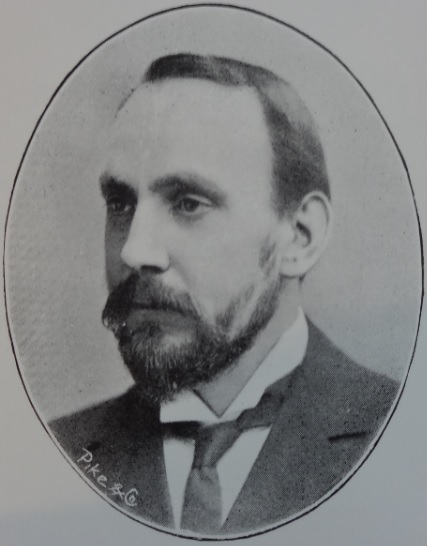
Walter Gerard Buck (1863-1934) was born in Beccles, Suffolk, the youngest son of Edward Buck. He was educated at the Albert Memorial College in Framlingham, and acquired an interest in architecture, joining the practice of Arthur Pells, a reputable Suffolk architect and surveyor, where he learned the techniques to design and build.
Walter Gerard Buck, architect and surveyor (1863-1934)
Walter, aged 21, realised there were limitations to this rural outpost and would need to improve his talent elsewhere. This opportunity arose in Manchester, the seat of the industrial revolution, where demand for new commercial buildings was great. It was here where he gained several years’ experience in large civil engineering and architectural works, including the building of the Exchange Station, Manchester, as well as the Exchange Station and Hotel in Liverpool.
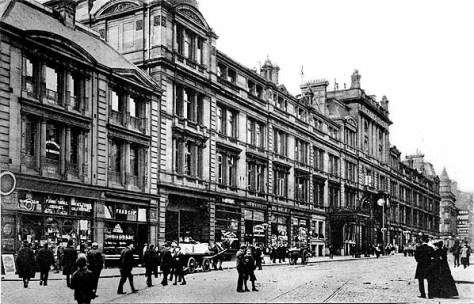
Liverpool Exchange Street Station and Hotel. The frontage remains and in the 1980s was incorporated into the Mercury Court office development. It has recently been converted into 21st century office space called ‘Exchange Station’. (Image: Alan Young)
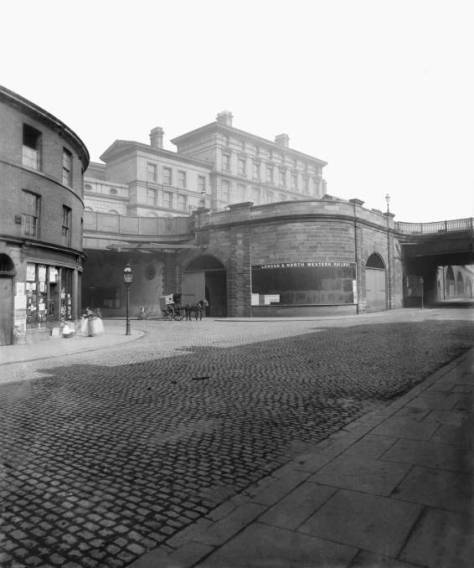
Manchester Exchange Station was a railway station located in Salford, immediately to the north of Manchester city centre. It served the city between 1884 and 1969. The station was closed on 5 May 1969. (Image: National Railway Museum)
In 1890, his reputation growing, Walter made the move over the Pennines and into the practice of Mr Thomas Henry Jenkinson at 4 East Parade.
Jenkinson had been an architect in Sheffield for over forty years. He had been responsible for several buildings built in the city centre, taking advantage that Sheffield had been one of the last among the big towns to take in hand the improvement of its streets and their architecture.
Buck’s move to Sheffield proved advantageous. Jenkinson had become a partner at Frith Brothers and Jenkinson in 1862, which he continued until 1898, when he retired. He made Walter his chief assistant and allowed him to reorganise the business and control affairs for several years. During this period Walter carried out work on many commercial buildings and factories in Sheffield.
Initially, Walter boarded in lodgings at 307 Shoreham Street, close to the city centre. He married Louisa Moore Kittle in 1892 and, once his reputation had been established, was able to purchase his own house at 4 Ventnor Place in Nether Edge.
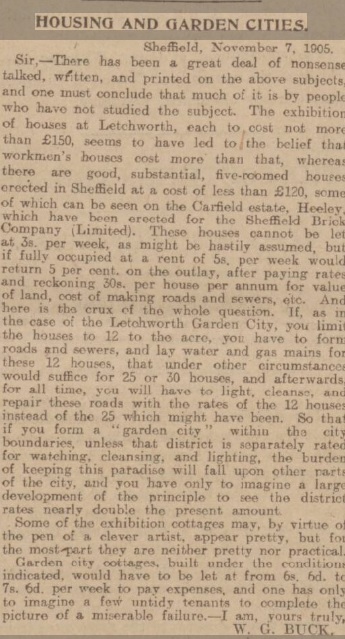
A letter from Walter to the Sheffield Daily Telegraph (8 Nov 1905)
Perhaps Walter Buck’s greatest work also proved to be his most short-lived.
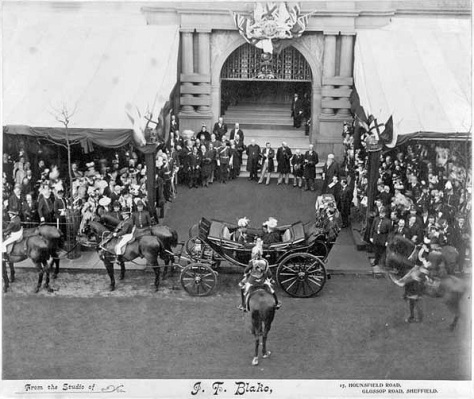
In May 1897, Queen Victoria made her last visit to Sheffield for the official opening of the Town Hall. It also coincided with the 60th year of her reign – Queen Victoria’s Diamond Jubilee Year.
The visit caused considerable excitement in Sheffield and preparations lasted for weeks. Shops and offices advertised rooms that commanded the best positions to see the Queen. Not surprisingly, these views were quickly occupied, but the closest view was promised in the Imperial Grandstand, specially designed for the occasion by Walter Gerard Buck.
Queen Victoria’s Diamond Jubilee visit to Sheffield in May 1897. The central interest was the newly-built Town Hall where ‘the gilded gates stood closed until her majesty touched the golden key and they flew open’.
This spectacle was built next to the newly-erected Town Hall, opposite Mappin and Webb, on Norfolk Street (in modern terms this would be where the Peace Gardens start at the bottom-end of Cheney Walk across towards Browns brasserie and bar). It was advertised as ‘absolutely the best and most convenient in the city’, with a frontage of nearly 200 feet and ‘beautifully roofed in’. The stand, decorated in an artistic manner by Piggott Brothers and Co, provided hundreds of seats, the first three rows being carpeted with back rests attached to the back. In addition, the stand provided a lavatory, refreshment stalls and even a left luggage office. It was from here that the people of Sheffield saw Queen Victoria as the Royal procession passed within a few feet of the stand along Norfolk Street to Charles Street.
The next day the Imperial Grandstand was dismantled.
The professional relationship between Walter Buck and Thomas Jenkinson matured into a close friendship.
When Jenkinson died in 1900, he left the business to Walter and made him one of his executors. His son, Edward Gerard Buck, eventually joined the business which became known as Buck, Lusby and Buck, moving to larger premises at 34 Campo Lane.
In 1906, Walter was elected to the Council of the Sheffield, South Yorkshire and District Society of Architects and Surveyors and was elected President in 1930. He was also a Fellow of the Royal Institute of British Architects (RIBA) and a member of the council of that body.
Walter also became a member of the council of the Sheffield Chamber of Commerce, a member of the Court of Governors of Sheffield University, a member and director of the Sheffield Athenaeum Club, a member of the Nether Edge Proprietary Bowling Club and vice-president of the Sheffield Rifle Club. It was this last role that he enjoyed best. Walter was a keen swimmer but his passion for rifle shooting kept him busy outside of work.
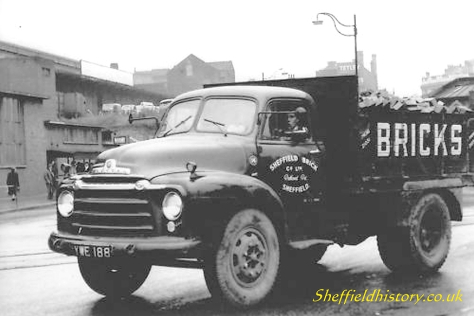
Apart from architectural work Walter held directorships with the Hepworth Iron Company and the Sheffield Brick Company. These astute positions allowed him to negotiate the best prices for the building materials needed to complete his projects.
A familiar site on Sheffield’s streets. The Sheffield Brick Company had brickyards situated at Neepsend, Grimesthorpe, Wincobank and Wadsley Bridge. Materials were used in many of the city’s buildings including Sheffield University, the Grand Hotel and the Town Hall. (Image: Sheffield History)
However, as the new century dawned, it was a role outside of architecture that occupied Walter’s time.
In 1892 the French Lumière brothers had devised an early motion-picture camera and projector called the Cinématographe. Their first show came to London in 1896 but the first moving pictures developed on celluloid film were made in Hyde Park in 1889 by William Friese Greene. The ‘new’ technology of silent movies exploded over the next few years and by 1906 the first ‘electric theatres’ had started to open. In London, there were six new cinemas, increasing to 133 by 1909.
Not surprisingly, this new sensation rippled across Britain and Sheffield was no exception. This had been pioneered by the Sheffield Photo Company, run by the Mottershaw family, who displayed films in local halls. They also pioneered the popular ‘chase’ genre in 1903 which proved significant for the British film industry. The Central Hall, in Norfolk Street, was effectively Sheffield’s first cinema opening in 1905, but the films were always supported with ‘tried and tested’ music hall acts. Several theatres started experimenting with silent movies, but it was the opening of the Sheffield Picture Palace in 1910, on Union Street, that caused the most excitement. This was the first purpose built cinema and others were looking on with interest.
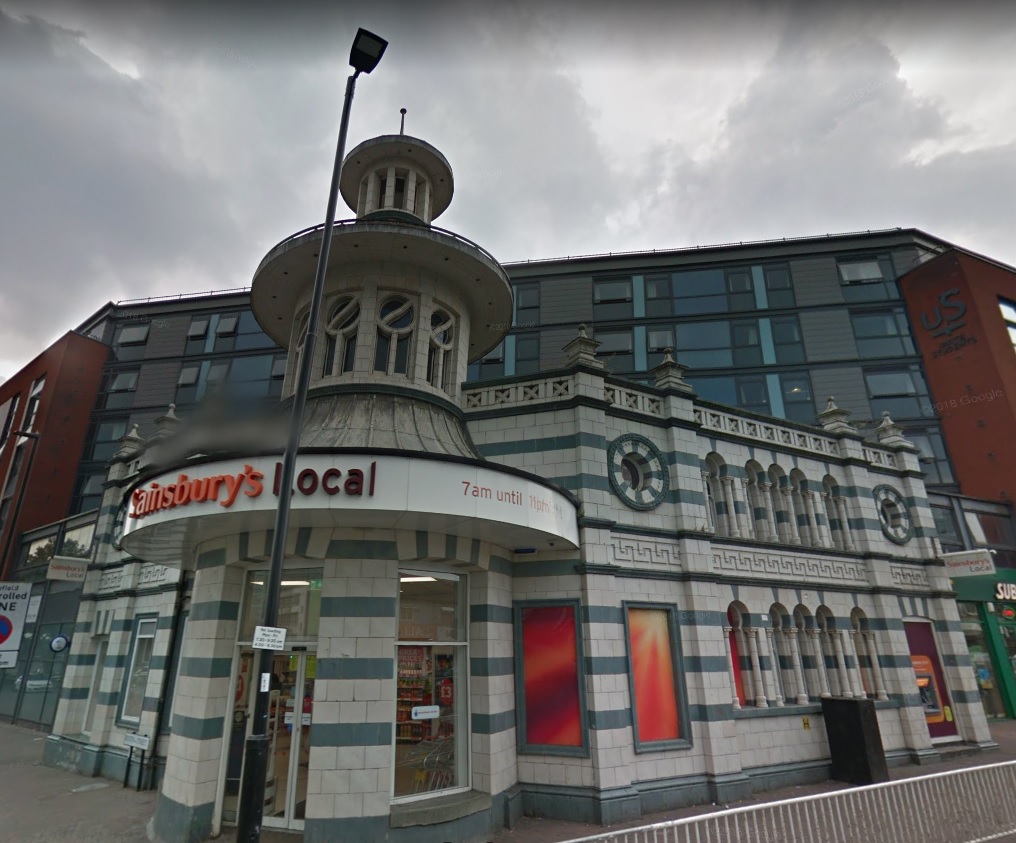
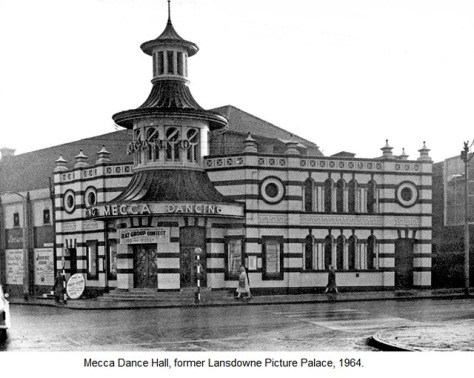
Walter Buck was one such person and saw the opportunity to increase business by designing these new purpose-built cinemas. One of his first commissions was for Lansdowne Pictures Ltd who had secured land on the corner of London Road and Boston Street. The Lansdowne Picture Palace opened in December 1914, built of brick with a marble terracotta façade in white and green, with a Chinese pagoda style entrance. It was a vast building seating 1,250 people. In the same year he designed the Western Picture Palace at Upperthorpe for the Western Picture Palace Ltd.
The Lansdowne Picture Palace was designed by architect Walter Gerard Buck of Campo Lane, Sheffield. It stands at the junction of London Road and Boston Street and opened on 18th December 1914. In 1947 the cinema became a temporary store for Marks & Spencers. In the 1950’s it became a Mecca Dance Hall called the ‘Locarno’ later changing into ‘Tiffany’s Night Club’. It had several more reincarnations as a night club with different names and the frontage was painted black, its last name being ‘Bed’. (Image: Cinema Treasures)
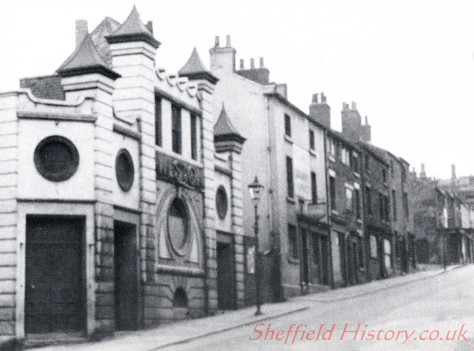
The Weston Picture Palace, designed by Walter Gerard Buck in 1913-14. The cinema was on St Phillip’s Road and Mitchell Street and was demolished. (Image: Sheffield History)
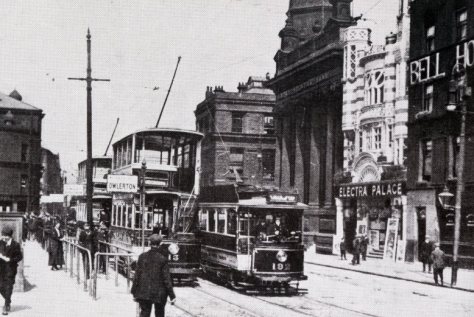
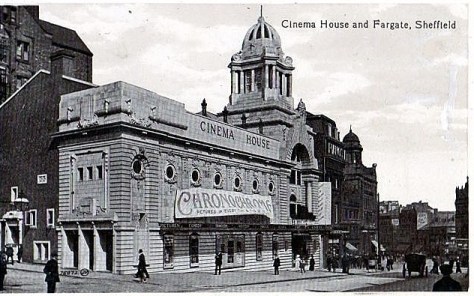
With the knowledge required to build cinemas it was unsurprising that Walter Buck was asked to join several companies as a director. One of these was Sheffield and District Cinematograph Theatres Ltd which was formed in 1910 for ‘the purpose of erecting and equipping in the busiest and most thickly populated parts of the City of Sheffield and district picture theatres on up-to-date lines’. Its first cinema was the Electra Palace Theatre in Fitzalan Square with a seating capacity upwards of 700 with daily continuous shows. Their second cinema was the Cinema House built adjoining the Grand Hotel and adjacent to Beethoven House (belonging to A Wilson & Peck and Co) on Fargate, this part later becoming Barker’s Pool. This was a much grander cinema with a seating capacity of 1,000 together with luxuriously furnished lounge and refreshment, writing and club rooms.
Ironically, Walter Buck did not design either of these picture houses. Instead, they were conceived by John Harry Hickton and Harry E. Farmer from Birmingham and Walsall, but the bricks were supplied by the Sheffield Brick Company, that lucrative business where Walter was a director. It should not go unnoticed that this highly profitable company probably made Walter a wealthy man. It had already supplied bricks for the Grand Hotel, Sheffield University and the Town Hall.
Opened as the Electra Palace on 10th February 1911. It was designed by J.H. Hickton & Harry E. Farmer of Birmingham & Walsall. Constructed by George Longden & Son Ltd. (who built several Sheffield cinemas), the proprietors being Sheffield & District Cinematograph Theatres Ltd. (Image: Sheffield History)
Opened in 1913, the Cinema House seated 800 and was one of the smaller city centre cinemas. Boasting a tea room, it had a narrow auditorium and patrons entered from the screen end of the hall. Being narrow, it’s Cinemascope image size was severely restricted. It closed in 1961 and was subsequently demolished. (Image: Cinema Treasures)
The cinema undertaking was not without risk and Cinema House, which opened six months before the start of World War One, always struggled to break even.
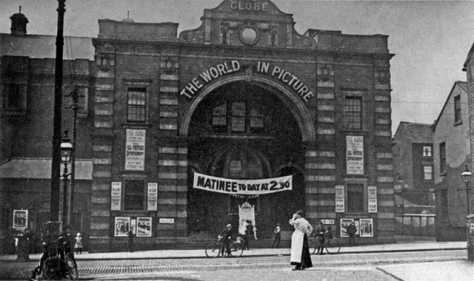
In 1920, far from building new cinemas right across the city, the company bought the Globe Picture House at Attercliffe. The following year they reported losses of £7,000 with Cinema House blamed for the poor performance.
At this stage, it is unclear as to what involvement Walter Buck had with Sheffield and District Cinematograph Theatres. He was also a director of Sunbeam Pictures Ltd, designing the Sunbeam Picture House at Fir Vale in 1922, and the Don Picture Palace at West Bar. He was most certainly a director of the Sheffield and District Cinematograph Company by the late 1920s, and eventually became its chairman. In 1930, absurdly on hindsight, he was faced with a public backlash as the company made the transfer over to ‘talkie’ pictures.
“It was true that some people preferred the silent pictures, but the difficulty was that the Americans were producing very few silent films, or the directors might probably have kept some of the houses on silent films to see if they could hold their own with the talkie halls.”
Located on Attercliffe Common at the junction with Fell Road. The Globe Picture Hall was a venture of the Sheffield Picture Palace Co. Ltd. It opened on 10th February 1913 and was, at that time, one of the largest cinemas in Sheffield. The architects were Benton & Roberts. The owning company reformed on 21st March 1914 as the Sheffield & District Cinematograph Theatres Ltd. and remained owners until closure on 29th June 1959. (Image: Cinema Treasures)
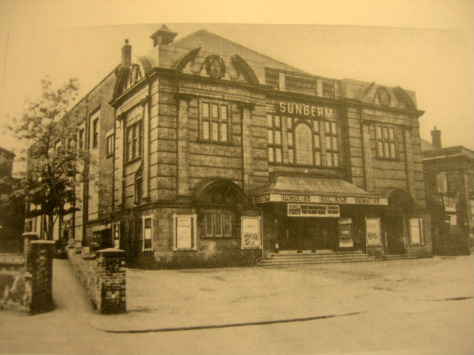
The Sunbeam Picture House was built on Barnsley Road at the junction of Skinnerthorpe Road in the Fir Vale district of Sheffield. The Sunbeam Picture House opened on Saturday 23rd December 1922. It was built set back from the road and was an imposing brick and stucco building, with a large embossed rising sun motif on the facade, set inside an ornamental parapet. A central entrance to the cinema was covered with a canopy. (Image: Sheffield History)
The Don Picture Palace opened on Monday 18th November 1912 with the films “Captain Starlight” and “Monarchs Of The Prairie”. The architect was Henry Patterson and it was situated in what was then one of the main entertainment areas of Sheffield with the old Grand Theatre of Varieties being close by. (Image: Sheffield History)
Walter Buck never retired but died at his home at 19, Montgomery Road, Nether Edge, aged 70, in September 1934. He left a widow, his second wife, Fanny Buck, and three sons – Edward Gerard Buck, William Gerard Buck, a poultry farmer, and Charles Gerard Buck, chartered accountant. Walter Gerard Buck was buried at Ecclesall Church.
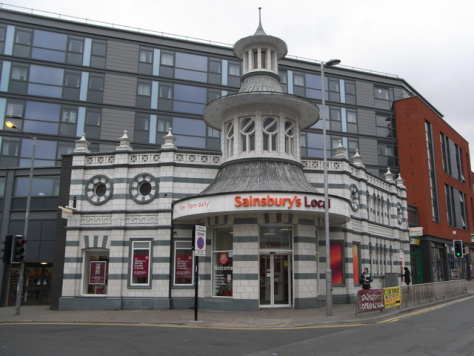
It seems the only epitaph to Walter Buck is the Chinese pagoda style entrance of the Lansdowne Picture Palace. The auditorium was demolished to make way for student accommodation, but the frontage was retained for use as a Sainsbury’s ‘Local’ supermarket. Very little information exists about his other work in the city and further research is needed to determine which buildings he designed, and which remain. Any information would be most welcome.
All that remains of the former Lansdowne Picture Palace. The frontage and Chinese-style pagoda were retained for this Sainsbury’s Local supermarket, soon to become Budgens. (Image: Cinema Treasures)
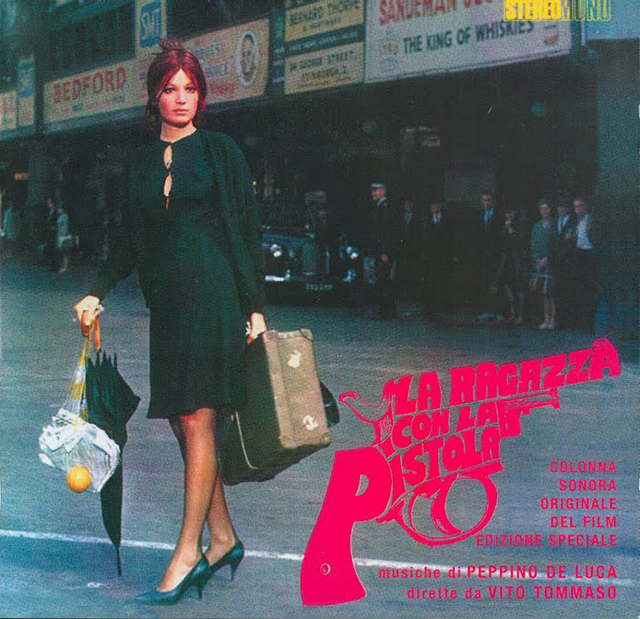
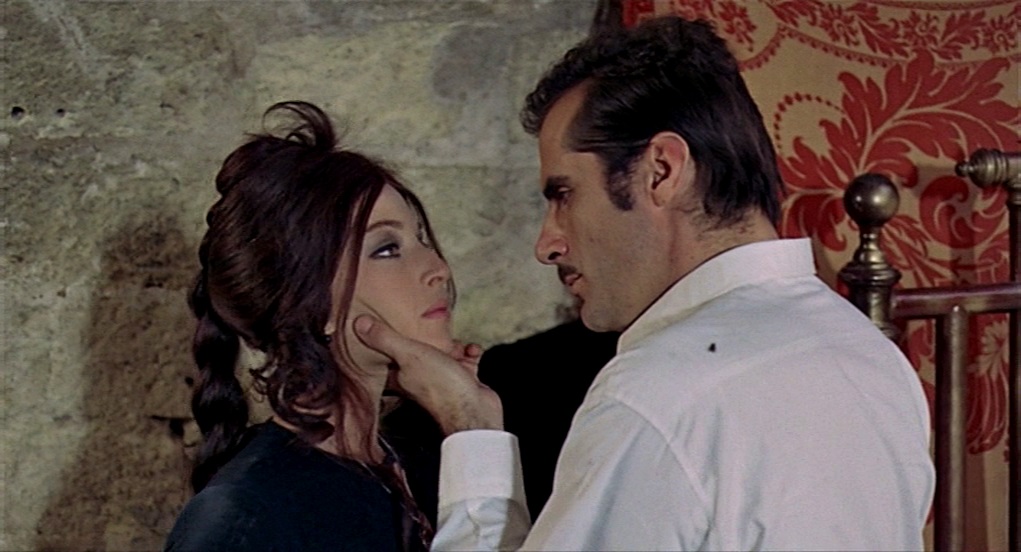
It’s remarkable that this 1968 Italian comedy, directed by Mario Monicelli, was partly filmed in Sheffield. The Girl with the Pistol, or La Ragazza Con La Pistola, received an Oscar nomination for best foreign film as well as receiving critical praise.
It starred Monica Viti, Carlo Giuffre, Stanley Baker, Corin Redgrave and Anthony Booth (Tony Blair’s father-in-law).
Photograph by Rare Film
The wry comedy finds the beautiful Assunta (Monica Vitti) being kidnapped by Vincento (Carlo Giuffre) and taken to his remote home in the country. He plans to “dishonour her” and by doing so, win her hand in marriage.
In a twist of events, she becomes too domineering and Vincenzo flees, but she resolutely travels to Edinburgh, Sheffield, Bath, and London seeking revenge, but finds an Englishman more to her liking.
Photograph by AvaxHome
According to British Women’s Cinema (by Melanie Bell and Melanie Williams), “Assunta continues her journey of revenge to Sheffield. A bus ride, highlighting the English landscape takes her there. On a street, she encounters a young man, John (Anthony Booth) who, she notices ‘has Italian shoes’, and she enlists him in her quest for vengeance.”
Scenes in Sheffield were shot at Granville Street, one scene overlooking Sheaf Street and Ponds Forge Works, Park Hill, Neepsend, Manor Lane, Attercliffe and at Steel, Peach & Tozer’s factory, Templeborough, in Rotherham.
According to one fanzine, “La Ragazza con la Pistola may have been nominated for an Academy Award, but is mainly interesting for Monica Vitti prancing around Edinburgh and Sheffield.”
The film was supported by a slightly psychedelic soundtrack by Peppino de Luca.
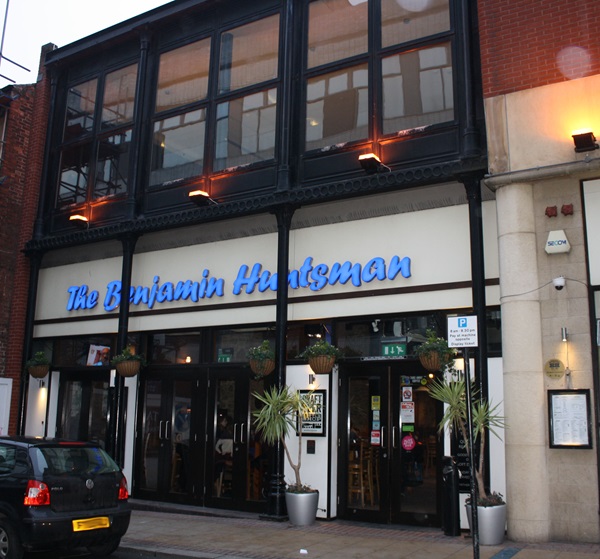
It’s hard to believe that the oldest part of The Benjamin Huntsman, on Cambridge Street, dates to 1879. Look closely, and you’ll notice that this is built with a cast iron frame, quite unique for its day, but responsible for saving the structure of the building on more than one occasion.
The Benjamin Huntsman has a lot of history, and had J.D. Wetherspoon not chosen to name it after one of Sheffield’s famous steel sons, there were plenty of other options available.
Strange as it might seem, very little has been written about the building, its past seemingly ignored.
It was originally built for William Wilson and Son, coachbuilders and harness makers, forced to move from its old premises at Moorhead due to road improvements. The golden age of the horse and carriage came to an end at the beginning of the twentieth century, and it was no surprise that the company soon turned its attention towards the motor car.
Image by The British Newspaper Archive
By the time it went into voluntary liquidation in 1924 the company was well-known in Sheffield as a car dealer and motor engineer.
It was next occupied by Quinton, Arthur and Co, ironmongers, trading from the ground floor with the Cambridge Billiard Club (proprietor Ernest Leonard Searle) opening on the floor above in 1925.
Image by The British Newspaper Archive
Quinton Arthur’s tenure was short-lived due to a serious fire in 1926, an event that caused its demise a few months later.
In 1927, the premises were rebuilt around the iron framework, advertised as a large sales shop and basement, including Cambridge Chambers, a suite of offices alongside the Cambridge Billiard Hall.
Image by The British Newspaper Archive
By 1929, the ground floor was occupied by R. Bamber and Company, a Southport-based firm of coachbuilders established in 1893, which had also started selling motor cars. Along with premises in Leeds, it moved into Cambridge Street selling “shop-soiled used cars,” and was soon advertising itself as the “Northern Motor Olympia.”
R. Bamber remained here until 1929 until handing over the premises to the Handsworth Motor Company, with a garage at the rear for forty cars.
Photograph by Picture Sheffield
It was a brief existence and very soon the building was purchased by J. Gilder, a company that came to prominence in Sheffield.
Jack Gilder’s grandfather began selling and servicing cars as far back as 1912, his grandson setting up a new company in 1938. Jack went off to fight in World War Two and it was while in Belgium that he came across a car which changed the company’s fortunes.
The business was relaunched with a Rootes franchise in 1946, but it was Jack’s obsession with the design and engineering of the Volkswagen Beetle that made him approach the German manufacturer with a view to selling them.
It was a courageous move for Jack to sell a German product so soon after the war, and it was from this building that J. Gilder sold the first ever Volkswagen Beetle in Britain and became VW’s first UK dealership.
Gilder’s remained on Cambridge Street before moving to Banner Cross in the 1960s, and is now part of JCT600, a West Yorkshire-based motor group.
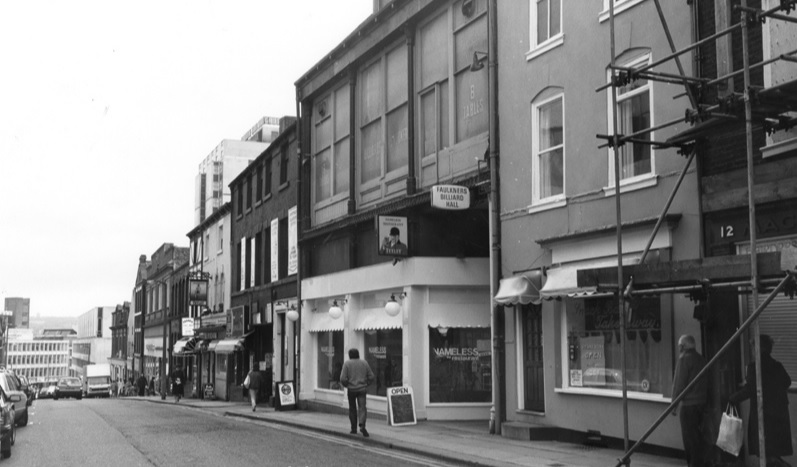
While changes went on below, it’s worth mentioning the Cambridge Billiard Hall that subsequently became Faulkeners and remained until the 1980s. By this time, it was long past its best, fondly remembered for its “bad flooring, rubbish on the floor, poor lighting, cigarette smoke and freezing cold temperatures.”
Photograph by Picture Sheffield
The former car showroom became the Nameless Restaurant between 1979-1985, before becoming a takeaway. In 1987, a fire in the restaurant destroyed the whole of the building, including the old billiard hall, paving the way for J.D. Wetherspoon to rebuild it, once again using the iron frame, incorporating The Benjamin Huntsman (opened 1999) with an adjacent new build.
Looking through dusty old archives can sometimes divulge the most unexpected stories. Take this account from July 1950, in which a newspaper revealed that a new Sheffield-made car was being built specifically for export to America.
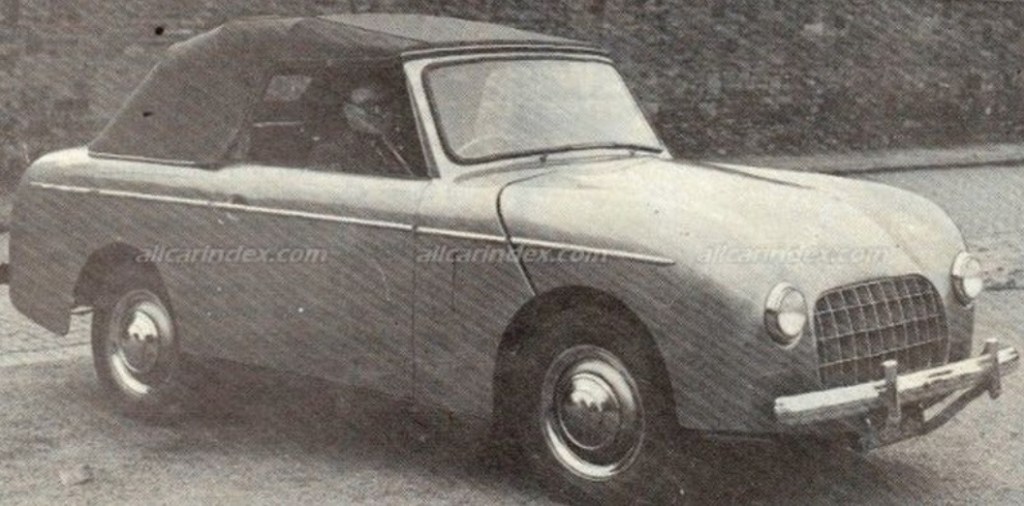
The car was the Fairley Convertible, a five-seater family car, made by James Fairley and Sons, one of Sheffield’s oldest steel firms, on Bramall Lane.
It was designed by R.W. Phillips, known to everyone as Reg, a Monte Carlo rally driver, the firm’s general manager, and built by only five people aiming to construct one car a week.
The car was based on the Austin Seven and powered by a Jowett-Javelin engine. With a chassis made of tubular Sheffield steel, and with an aluminium body, the car weighed only 18½ cwt, made to provide a good power-weight ratio for economy and high performance.
Carrying five people, it had a top speed of 80 m.p.h. and did more than 32 miles per gallon.
“We have aimed at a high performance, small horse-power car, which can be easily handled in busy streets and parked quickly,” said Reg Phillips.
A motoring correspondent was able to give the prototype of the Fairley Convertible a test drive around Sheffield.
“At the rush hour period between five and six p.m. it slipped easily through traffic between The Moor and Abbeydale Road to Dore, and only rarely was it necessary to use third gear.
“It has four gears, with steering column change lever, which are expected to give speeds of: Second, 40 m.p.h.; third, 60 m.p.h.; top, 80 m.p.h.
“Pale blue, it has a Continental-style radiator grill and, in latest fashion, a chromium plated rubbing strip on each side of the body.
“For easy access to the flat-four engine, the whole bonnet can be lifted from the front by one hand.”
Unfortunately, despite the fanfare, the odds were stacked against the car. Priced at £850 (about £26,875 now), the Fairley Convertible was displayed for the first time at Aston’s of Coventry in January 1951.
In fact, the project never materialised and only one prototype was built, but it did get the steel industry concerned as to whether aluminium might take over from steel for car bodywork
Reg Phillips fared better. Born in 1915, he was passionate about cars and earned a reputation as a rally driver, often co-driving with Raymond Baxter (better known as a presenter on Tomorrow’s World) after they’d met at Silverstone in the late fifties. Phillips went on to become chairman of James Fairley and Sons, whose head office was in Birmingham.
It’s sad, that in the 21st century, we refer to Benjamin Huntsman as the purveyor of cheap beer and a night out in Sheffield city centre. It’s equally sad that our only lasting memorial to Benjamin Huntsman is this J.D. Wetherspoon pub on Cambridge Street (aside from the sculpture in Meadowhall, and a block named after him at the Northern General Hospital).
However, Benjamin Huntsman invented a process that gave Sheffield pre-eminence in the production of finished steel and led to the growth of an industry that the city will always be famous for.
Benjamin Huntsman was born in Lincolnshire in 1704. His parents were of German extraction, settling in this country a few years before he was born.
His ingenious mind allowed him to become an expert at repairing clocks, and eventually set up business in Doncaster as a clock maker and mender. Described as being “shrewd, observant, thoughtful and practical,” he was regarded as the “wise man” of the neighbourhood.
His work, however, was hindered by inferior metal supplied from common German steel, material supplied for the springs and pendulums of his clocks.
These circumstances made him turn his attention to making a better kind of steel, his first experiments conducted at Doncaster, but as fuel was difficult to be had, he removed to Sheffield in 1740.
Huntsman settled at Handsworth, then a few miles south of the town, and he pursued his investigations in secret. The task was massive, not only to discover the fuel and flux suitable for the purpose, but to create a furnace that could sustain a heat more intense than had ever been known.
Huntsman’s cottage at Handsworth. Image by The British Newspaper Archive
His experiments lasted years, and it was only after his death that the numerous failures were brought to light, in the shape of many hundredweights of steel, found buried in the earth around his factory.
Benjamin Huntsman sculpture at Meadowhall. Photograph by Budby
At last his perseverance was rewarded, and his invention perfected. The melting was conducted in fire-clay pots, or crucibles, placed in a coke melting-furnace (at temperatures of 1,600°c/2,900°f), high enough to permit the melting of steel for the first time.
After he had perfected the process, Huntsman realised that the new metal might be used for other purposes, other than clock springs and pendulums. He canvased Sheffield’s tools and cutlery trade, but they obstinately refused to work a material much harder than that which they had been accustomed to use.
Foiled in his endeavours to sell steel at home, Huntsman turned his attention to foreign markets, and soon found he could readily sell abroad.
The honour of employing cast-steel for general purposes, belonged to the French, who quickly appreciated the advantages, and for a time the whole of Huntsman’s production was exported to France.
It was only after that Sheffield’s cutlers became alarmed at the reputation cast-steel was acquiring abroad, and formed a deputation to wait upon Sir George Savile, one of the members for the county of York, to use his influence with the Government and prohibit the export of cast-steel.
When Savile found out that Sheffield manufacturers wouldn’t make use of the new steel he positively declined to comply with their request.
Looking back, it was fortunate for Sheffield that he didn’t.
Huntsman had already received favourable offers from Birmingham to relocate his furnaces there, and had he done so, the Sheffield steel industry might never have grown as it did.
Benjamin Huntsman sculpture at Meadowhall. Photograph by Farzeed Rehman
The Sheffield makers eventually realised that they would have to use cast-steel if they were to compete with cutlery from France. And then began the efforts of the Sheffield men to wrest his secret from him.
Because Huntsman hadn’t taken a patent out on the process, his only protection was secrecy.
All his workmen were pledged to silence, strangers carefully excluded from the works, and the whole of the steel melted in the night.
However, it is said that the person who first succeeded in copying Huntsman’s process was an iron founder named Walker who carried on business at Grenoside.
Walker adopted the “ruse” of disguising himself as a tramp, feigned great distress and abject poverty, and appeared shivering at the door of Huntsman’s foundry late one night, asking for admission to warm himself by the furnace fire.
The workmen took pity on him, and they permitted him to enter.
Within months, Walker was also making cast-steel, and others quickly followed, but the demand for Huntsman’s steel steadily increased, and in 1770, he moved to a large factory at Worksop Road, Attercliiffe.
He died in 1776, aged 72, and was buried in the churchyard at Attercliffe. His son, William Huntsman (1733-1809) took over the business and it grew into one of Sheffield’s biggest steel firms, before being swallowed up by larger competitors in the mid-20th century.
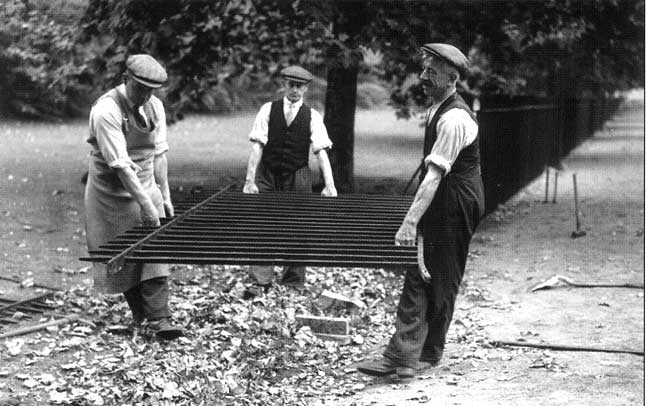
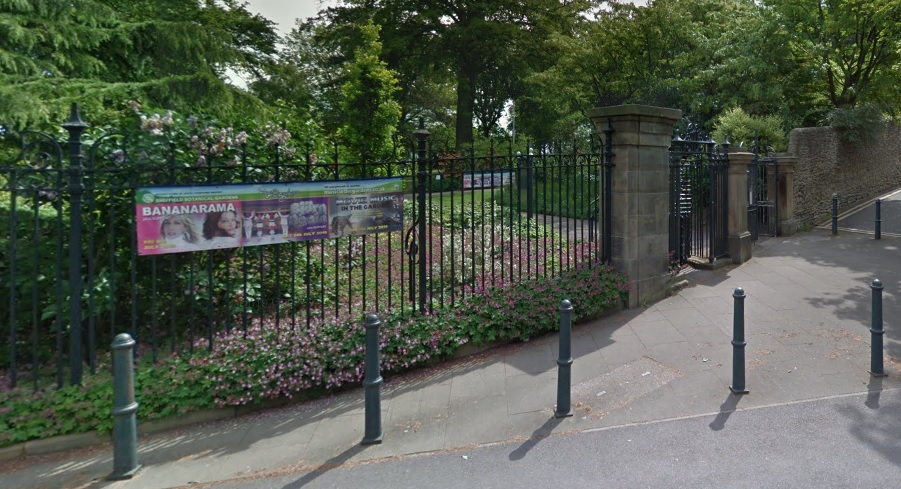
In May 1942, the minutes of the Sheffield Town Trust recorded the following: – “Railings around the Botanical Gardens have been requisitioned by the Ministry of Works and Buildings – approximately 300 yards – bought originally at a cost of £877.”
Considering that £877 is worth about £41,600 today, and that the railings had probably been erected during Victorian times, it was an inconvenience that the Town Trust fought and lost.
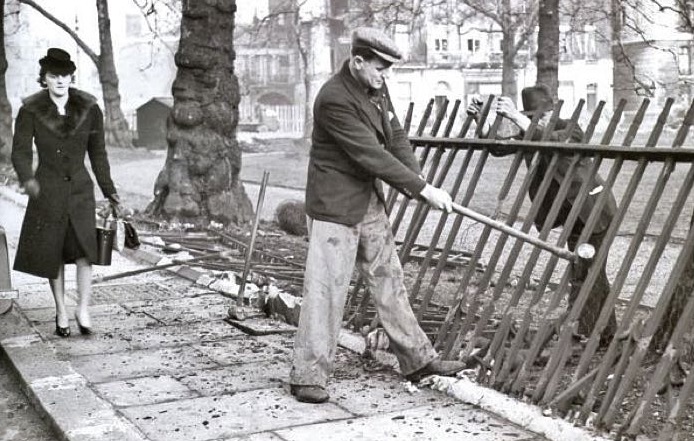
This occurrence happened all over the country during World War Two, suggested by Lord Beaverbrook (in charge of aircraft production) to Winston Churchill, intended to make people think they were contributing to the defence of Britain following the catastrophe at Dunkirk.
“They took away our railings. Men came and cut the ornamental railings from the copings on the little walls outside of the houses, along the whole length of the road, they were taken away to be melted down to make weapons.”
Photograph by London Parks and Gardens Trust
The action, ordered as part of Regulation 50 of the Defence (General) Regulations 1939, left stumps of old railings in our walls, and if you look carefully around Sheffield, evidence can still be seen outside many private houses.
In 1950, the Sheffield Daily Telegraph said that “a generation is growing up which does not remember the iron fences and gates which adorned, in some instances, and gave a prison appearance in others, to our homes and public buildings.”
During the war, the willing public went along with the scheme, taking solace that old iron railings would be put to good use. However, if the truth had been known, their enthusiasm to co-operate might have been less agreeable.
In recent times, John Farr, a correspondent, reckons that only 26 per cent of ironwork was used for munitions, and that by 1944 much of it was rusting in council depots, quarries or railway sidings, with some filtering through to the post-war metal industry.
It started out as a conspiracy theory and turned out to be true.
By September 1944, over one million tons of ironwork had been collected, far more than was needed. Faced with an oversupply, the Government allowed the programme to continue, if only to save face.
Ironwork was stockpiled away and even after the war, when raw materials were in short supply, the widely held view was that the Government quietly disposed of it and even buried it in landfill or at sea.
Photograph by Garton & King Ltd
Of course, any evidence conveniently disappeared, with records of this wartime effort destroyed, and leaving some unlikely explanations as to what happened to this iron hoard.
Towards the end of the war, when munitions were running out, it is suggested that bombers flying over France were loaded with pieces of cut-down railings which were dropped on the enemy.
Another rumour suggests that ironwork was used as ballast for ships in West Africa, and that today houses in ports across Ghana and Nigeria can be found with smart Victorian railings.
In London, there are eye-witness accounts of barges dumping ironwork into the Thames Estuary, to which it remains, but we do know for certain that up until the 1980s there were scrapyards around Britain still piled high with the stuff.
And so, it makes you wonder what happened to those expensive iron railings from outside the Botanical Gardens. Perhaps they adorn the outside of a respectable house in Lagos.
Botanical Gardens. Photograph by Google Street View
“I have been with Maxons since the 1950s, when I was taken on to be the face of Maxons, and except for a brief kidnapping in the 1980s, I have been at the factory on Bradbury Street with my friends the Pitchforks, and all those who look after me at Maxons.”
These words taken from the Mint Rock King’s facebook page, a clever marketing ploy by Maxons, the Sheffield sweet firm, manufacturers of Dixons famous Mint Rock.
Photograph by Maxons
The story of Maxons is a steady if not low-key account.
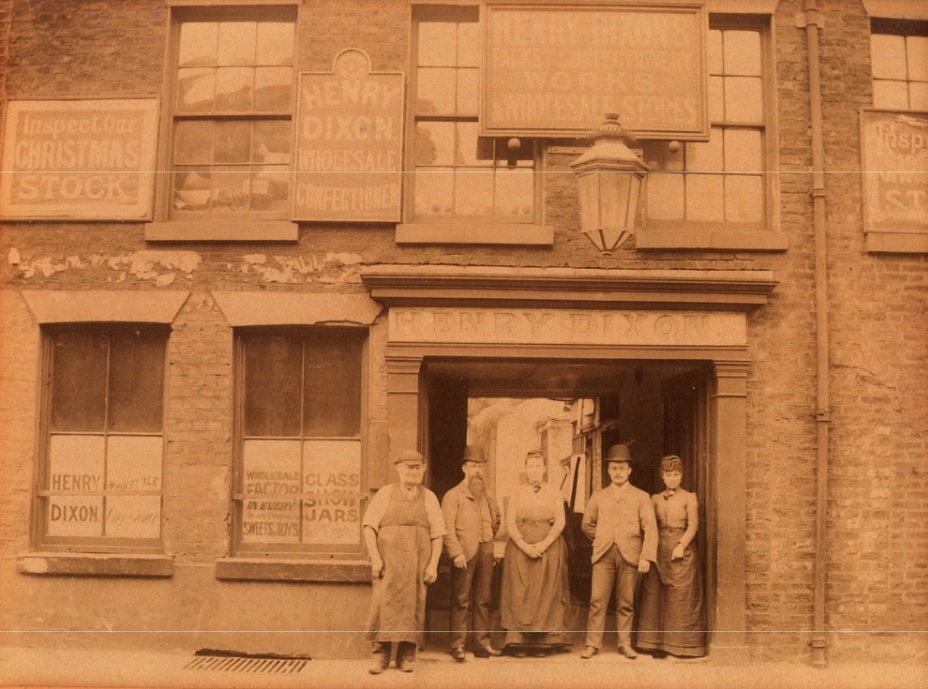
We must go back to 1885 when Henry Dixon (1861-1949) started making sweets and toffees. His father was Fanshaw Dixon, a silversmith by trade and a mover in the cause for Liberalism in Sheffield. Henry started as a wholesale manufacturing confectioner, establishing the business at Britannia Confectionery Works on Love Street.
Photograph of Britannia Confectionery Works by Maxons
Henry was one of the founders and twice president of the Sheffield Confectioners’ Association, as well as being involved with the British Federation of Wholesale Confectioners, of which he was twice president also.
Like many Victorians, he was a man of religious means, being a member of Queen Street Congregational Church, a Sunday School worker, and lay preacher. He was also an ardent Band of Hope and temperance worker and became president of the Sheffield Congregational Association.
Photograph of Henry Dixon by Maxons
In 1896, Henry created Dixon’s Superior Mint Rock sold in tins, later adding Butter Scotch and Walnut Toffee. The business passed to his son, Henry Dixon Jr, who continued production at Love Street, and while their advertising was always low key, Dixon’s Mint Rock became a favourite with Sheffielders.
Photograph by The British Newspaper Archive
In 1927, W.E. and L. MacDonald, also started in the confectionery business, calling themselves Maxons (Mac and Son). The manufacture of their products, predominantly toffee, gave way to boiled sweets including Yorkshire Mixture, Pear Drops and Winter Mixture.
Production took place in the high altitude of Bents Green, at “Glengarry” (No. 52) on Muskoka Drive, the building standing in a garden, with products sold across the city as well as in its own shop, at 24 Ecclesall Road.
Photograph of Maxons ‘garden’ factory by The British Newspaper Archive
Ralph Pitchfork was born in 1913, the son of a Sheffield newsagent, who, on leaving school in 1931, when employment was scarce following the great depression, managed to gain employment with one of his father’s suppliers – Maxons.
He remained with them until 1950, when he purchased another local wholesale and manufacturing confectioner in Sheffield, trading as Ralph Pitchfork Ltd. with the manufacturing arm trading as Maxons Ltd.
Photograph by The British Newspaper Archive
Following the end of sweet rationing in 1953, both the wholesale and manufacturing companies began to expand and, in 1958, Ralph Pitchfork merged his two companies with those of Henry Dixon Ltd, after Henry Dixon Jr chose to sell because he had no male heir to take over from him.
The merger created a substantial wholesale company that traded under the name of Dixon Pitchfork Ltd. The enlarged Maxons included not only the Maxons branded range, but also added the Dixon’s range to its portfolio of products – these included the regional favourites; Mint Rock, Cherry Balsams and Buttermints.
Photograph by Picture Sheffield
In the 1960s the registered name of Jesmona Black Bullets was acquired from John W. Welch of Whitley Bay, and production moved to Sheffield.
Jesmona Old Fashioned Black Bullets, its name coming from the Jesmond district of Newcastle, were reputed to have originally been made using moulds for musket-balls. This dark-brown peppermint-flavoured sweet (made with sugar, glucose and peppermint oil), was as popular in the north-east, well-liked by miners and shipyard workers, as Dixon’s Mint Rock was to the steelworkers in Sheffield.
Interestingly, John Welch’s grand-daughter is Denise Welch, the actress, who says she was nicknamed Truly Scrumptious at school because of her sweet-making family.
Photograph by Maxons
The wholesale company of Dixon Pitchfork Ltd. was sold in the late 1960s and eventually, like many privately owned wholesale confectioners lost its identity to one of the national groups.
Maxons continued as a privately owned, independent, manufacturing company under the direction of Ralph’s son – Roger Pitchfork, and now by his grandsons – Chris and Richard Pitchfork.
Maxons is the main brand used to produce old fashioned sweet jars, retail bags, Sherpots, Headsplitters (responsible for a 20 per cent leap in turnover in 2018), Stupidly Sours and bulk products. All Dixons-branded sweets are traditionally made by hand using recipes handed down from 1885, its Mint Rock still made from cream of tartare rather than glucose.
The company has also re-introduced the Charles Butler brand, using recipes dating back to 1848, to create a hand crafted Victorian-style boiled sweet.
Photograph by Maxons
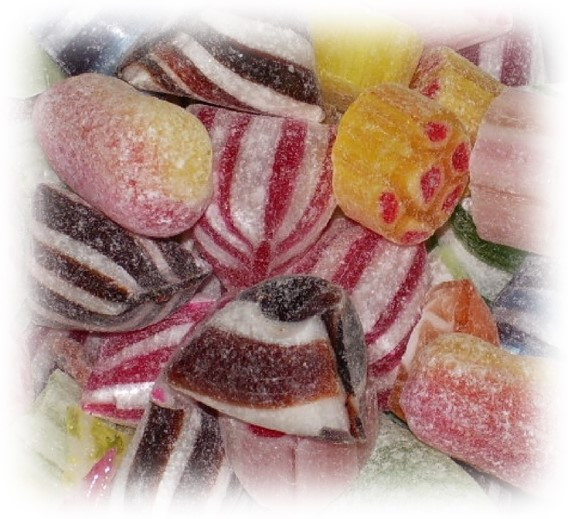
As well as Jesmona Black Bullets, the company is well-known for its traditional Yorkshire Mixture, consisting of fruit and mint flavoured sweets, thought to originate from the early 1800s in industrial cities. Sweet vendors went from factory to factory selling a small mixture of the sweet factory’s production from the previous day, whatever was left.
In 2017, Yorkshire Mixture was the subject of a fascinating court case, when Maxons and West Yorkshire based Joseph Dobson went head to head for the rights to the Yorkshire Mixture name. In a case costing £15,000 over eighteen months, eventually going to the European Intellectual Property Office, Maxons was given the go-ahead to continue producing the sweets under the Yorkshire Mixture brand – after Dobson’s tried to claim exclusive rights to use the name.
















 sheffielder.net