Categories
Buildings

Reuben Thompson’s City Mews

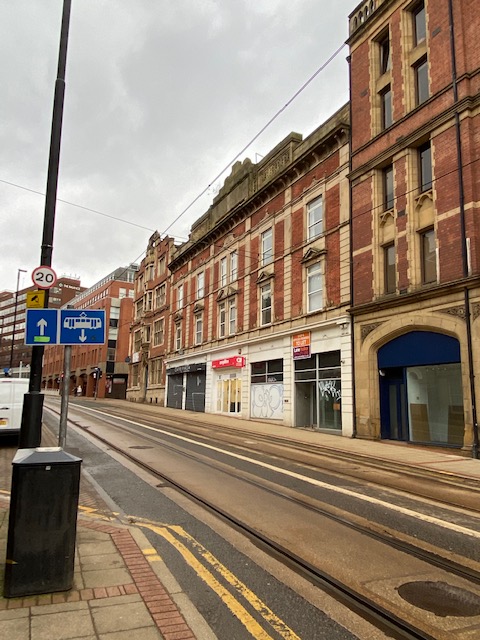
Work is in progress to demolish the interiors of 30-42 Pinstone Street (as well as the adjacent Palatine Chambers) to create a new hotel. (DJP/2021)

The hoardings are up, contractors are in, and Nos. 30-42 Pinstone Street (as well as Palatine Chambers), are about to be resurrected as part of a Victorian frontage to a brand-new Radisson Blu Hotel. The old facades will remain, but everything behind it, including Barker’s Pool House, on Burgess Street, will be demolished and rebuilt.

Until the 18th century, Pinstone Lane (as it was called) crossed fields and rough grazing land. As Sheffield grew, it became a twisting, close, and sinister-looking passage. In 1875, Sheffield started a street widening programme, and Pinstone Lane was transformed into a 60ft wide thoroughfare to match the magnificence of the proposed new Town Hall.

In 1892, Reuben Thompson, of Glossop Road, an established operator of horse-drawn omnibuses, cabs, and funeral director, gave up his lease on premises at Union Street, and purchased a plot of vacant land opposite St. Paul’s Church (now Peace Gardens) from the Improvement Committee, along with adjoining property at the back towards Burgess Street.

The Salvation Army had already started building its Citadel on Cross Burgess Street as well as three large business premises at its corner with Pinstone Street. Thompson bought the land alongside this, and employed Flockton, Gibbs, and Flockton to design a red brick building, with handsome stone dressings, comprising ground floor shops, and offices and flats above.
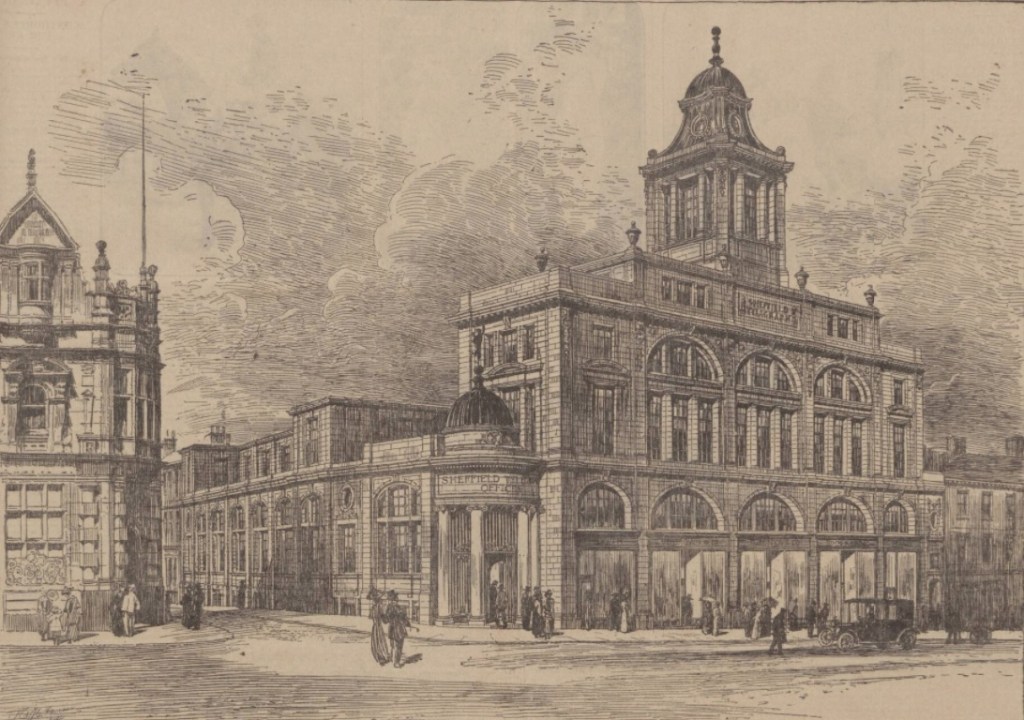
An old sketch that shows Reuben Thompson’s City Mews to the left. The sign is visible on top of the building. (PIcture Sheffield)

In 1895, he purchased an additional plot of land to build three additional shops. This extended the length of the original building and incorporated an entrance tunnel from Pinstone Street through to stabling and carriage sheds behind, the carriages lifted from floor to floor by a hoist.

It extended the range to fifteen bays, and across the top of the building ran an enormous sign – ‘Reuben Thompson’s City Mews – and was completed in time for the opening of the new Town Hall.

This is the building we still see, although the advent of the motor car, and high petrol prices during the 1930s, saw Reuben Thompson Ltd vacate a property that had become far too big. It consolidated on Glossop Road and Queen’s Road and focused on its funeral business.
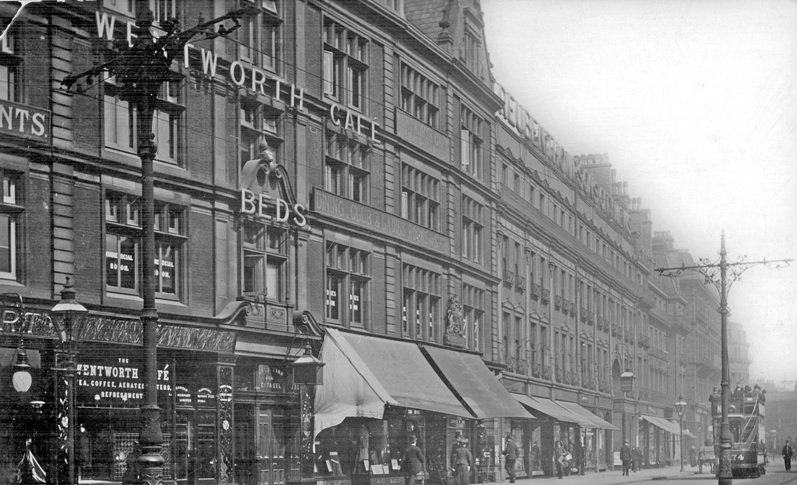
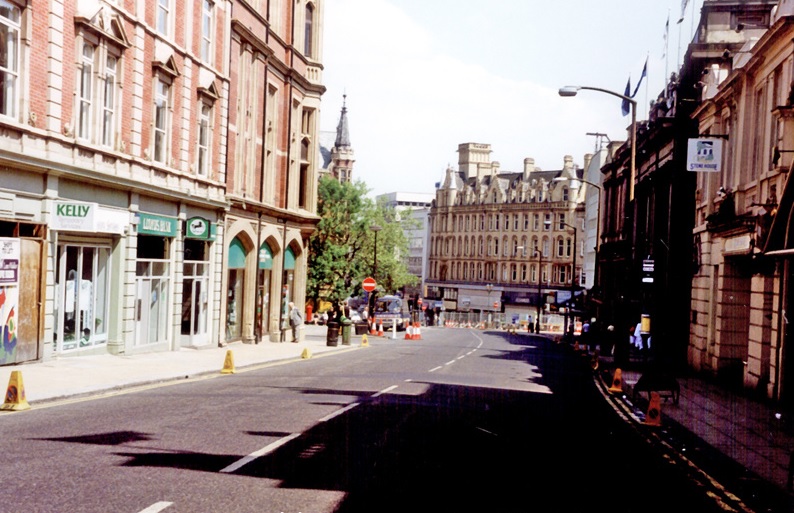
Looking up Pinstone Street. Reuben Thompson’s City Mews are on the right of this old photograph. Once again, the large sign is visible across the top of the building. (Picture Sheffield)

Those of a certain age will be familiar with the shops that have occupied this prime location on one of Sheffield’s most prestigious streets.

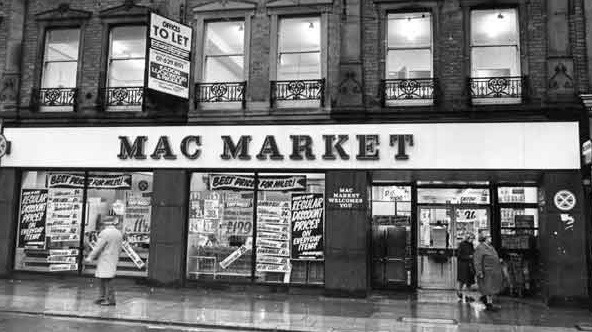
The Pinstone Street entrance to City Mews, where horses and carriages once passed, was filled-in, and later lost in the frontage of Mac Market (later to become International, Gateway, Somerfield, Co-op, Budgens, and finally, as a temporary home for WH Smiths).

The construction of Barker’s Pool House on Burgess Street in 1969-1970 (on the site of the former stabling and carriage-houses) linked both properties and altered much of the original Pinstone Street interiors. These too will be lost in the latest stage of the Heart of the City II redevelopment.
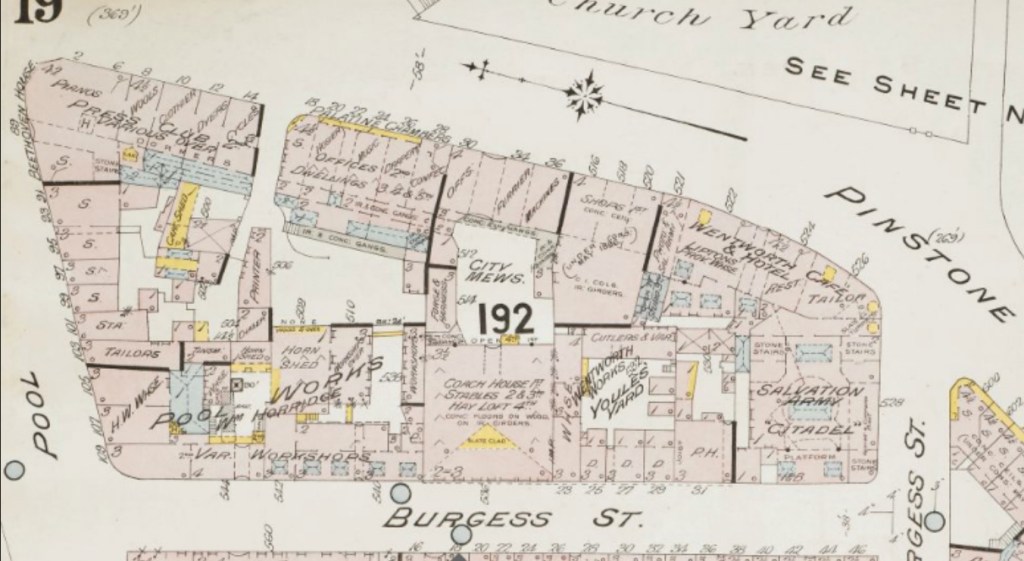
An old building plan shows Reuben Thompson’s City Mews, with stabling and carriage sheds located at the back of the Pinstone Street premises and stretching through to Burgess Street. This would later become the site of Barker’s Pool House, soon to be demolished. (Goad Insurance Plan 1896/British Library))
In the 1970s, Mac Market occupied three of the old shop units on Pinstone Street. The original carriage entrance passed underneath the offices above and was located where the central window is here. It remained a supermarket until fairly recently. (Picture Sheffield)
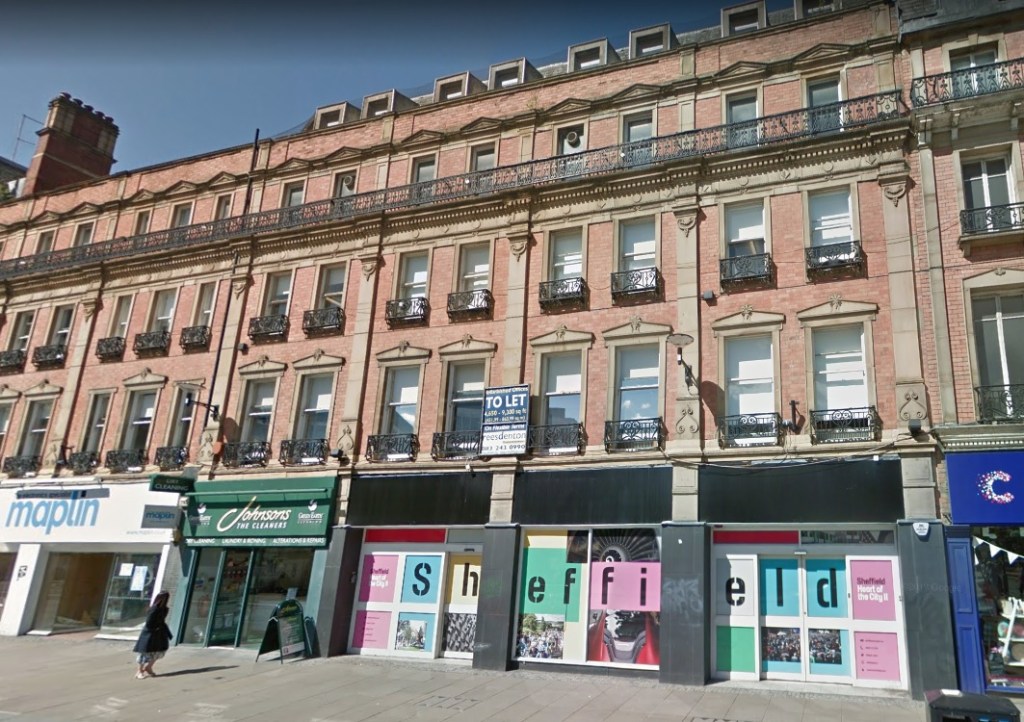
A recent image of 30-42 Pinstone Street. All the shops frequently changed hands. The former Mac Market was most recently used as a temporary shop for WH Smith. In 1970, Barker’s Pool House was built behind, and shoppers were able to use an alternative entrance on Burgess Street. Useful for Cole Brothers staff before and after work. (Google)
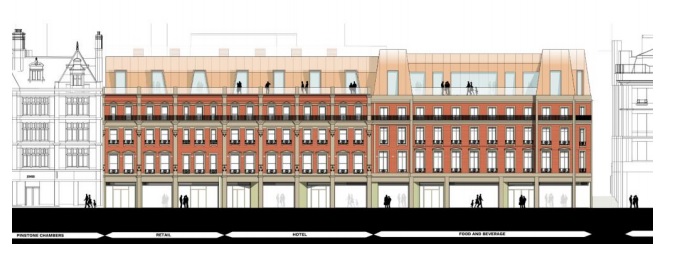
Proposed principal east elevation (Pinstone Street) for the Radisson Blu Hotel. Fifteen bays once formed Reuben Thompson’s City Mews. Palatine Chambers occupies twelve bays to the right. (Montagu-Evans)

© 2021 David Poole. All Rights Reserved.
Categories
Buildings

Nichols Building

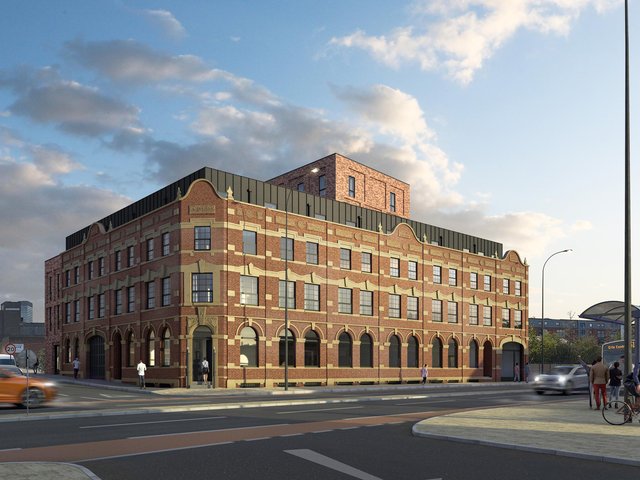
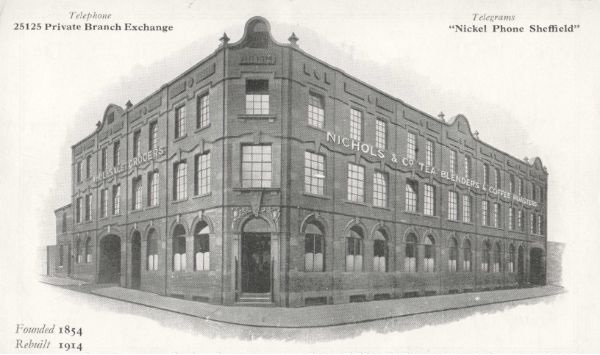
Nichols Building. An artist impression of how the old building might look after conversion into flats and commercial space. (Ashgate)

A £3.25m funding package from Lloyds Bank has been secured to support the redevelopment of a former grocer’s warehouse and coffee roastery in Sheffield’s Kelham Island district into apartments. Developer Ashgate is redeveloping the currently disused Nichols Building, Shalesmoor, to a mixed-use scheme with private residential units and commercial space.

Work is to start this summer, and retain many of the building’s original features, including mosaic tiling, stone, and brickwork.

The Nichols Building is an elegant three-storey range built with iron-hard engineering red bricks, such as Accrington or Noris type, laid in English Garden Wall bond.

Leather’s Plan of Sheffield (1823) shows the site (once known as Moor Fields) to have two buildings. The adjacent road had also been renamed ‘Shalesmoor’ although the smaller streets around it remained unnamed.

The 1853 Ordnance Survey map shows the site to comprise back-to-back housing, and likely small workshops, concentrated around two courtyards.

The Nichols Building appears to have been built in 1914 as indicated by a date sign located within the front gable at the corner between Shalesmoor and Shepherd Street. Cartographic records confirm such a date for the construction of the building as the site was formerly occupied by several terraced buildings with internal courts.

The building includes two signs stating, ‘FOUNDED AD 1854’, referring to the establishment of the company; and an additional one to the north-western end along Shalesmoor which reads ‘REBUILT AD 1914’, which refers to the ‘rebuilding’ of the company on the site.

An advertising postcard for Nichols and Co. (Sheffield) Ltd., Shalesmoor (dated between 1900-1919). The back of the postcard reads: “Wholesale grocers. Tea blenders and coffee roasters. Baking powder and self raising flour manufacturers. Dried fruit specialists. Tea packers to the trade. Colonial and foreign produce delivered or sold export. Only goods of reputed quality and of the leading manufacturers sold. Write for quotations.” (Picture Sheffield)

The business Nichols & Co., wholesale grocer, tea merchant and dealer, was established in 1854 by Charles Nichols which originally occupied premises at 231 Gibraltar Street. In 1868, the business held an additional property in Meadow Street and in 1877 in Langsett Road. The 1900 Kelly’s Directory also lists a property in Trinity Street. Once the company moved to the present Nichols Building, no other associated premises are listed, suggesting that the aim of the Nichols Building was to bring the different properties of the company together within a single and purposely-built warehouse.

Nichols and Co. are listed on the site until 1965 when the company is renamed ‘Nichols, Johnson and Bingham’. Following liquidation, various parts of the buildings were sold off with the final reference in the 1973 directory showing ‘Richardson, Arthurs and Son Ltd’ which had purchased part of the former Nichols and Co. business.

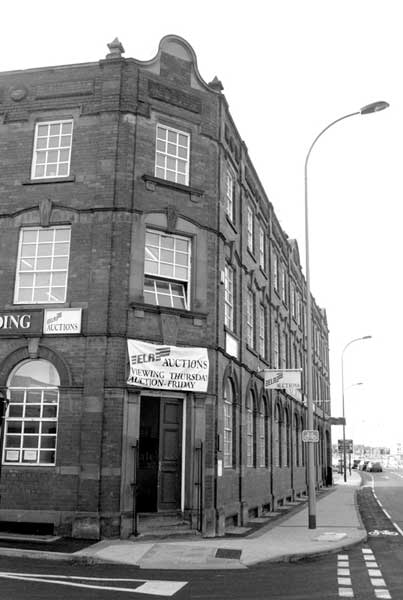
It subsequently became auction rooms for Eadon Lockwood & Riddle, and more recently functioned as an antique centre that closed in 2018.

ELR Auctions Ltd., The Nichols Building, at the junction of Shepherd Street and Shalesmoor in 2006. (Picture Sheffield)

© 2021 David Poole. All Rights Reserved.
Categories
Buildings

Leopold Chambers

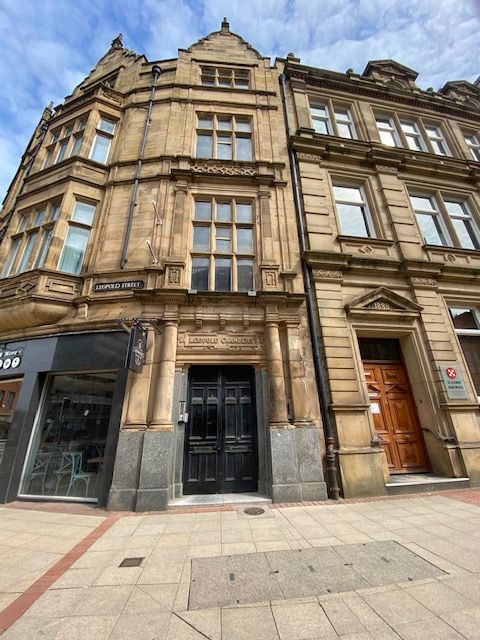
Leopold Chambers. An important, but forgotten, part of Sheffield’s Victorian architecture. (DJP/2021)

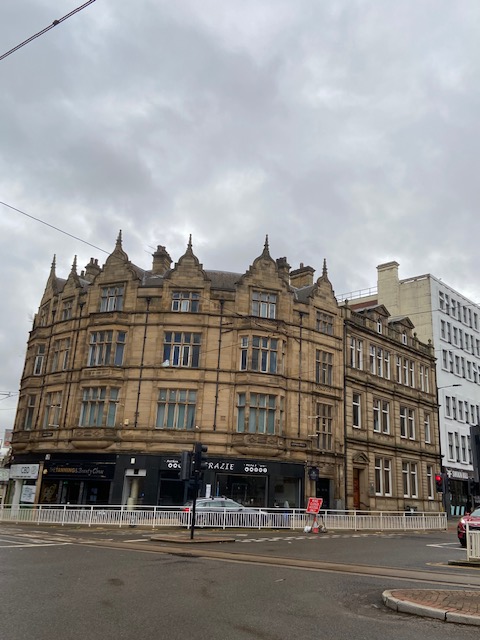
At the corner of Church Street and Leopold Street is a building typical of Sheffield’s Victorian architecture.

Leopold Chambers was built in 1893-1894 as new offices for Webster and Styring, an established firm of solicitors set up by George Edward Webster and Dr Robert Styring. The imposing four-storey Renaissance building, in mellow golden sandstone, provided a handsome rounding to the corner, with four shops built beneath the offices.

The building neatly rounds-off the corner of Church Street and Leopold Street. The latter street had only been constructed a few years before. (DJP/2021)

The architect was Andrew Francis Watson (1856-1932), designer of many well-known buildings in Sheffield, including the Norfolk Market Hall, the old Fitzwilliam Market, Westminster bank, High Street, showrooms for Mappin and Webb, and the offices of Messrs Vickers and William Jessops on Brightside Lane. He was also the architect for the London and Midland Bank in the Sheffield District and responsible for 1-9 High Street that survives as an extension of Lloyds Bank.

A native of Lamport, Northamptonshire, he came to Sheffield in his twenties and eventually went into partnership with Edward Holmes (creating Holmes and Watson, and no apology to Arthur Conan Doyle).

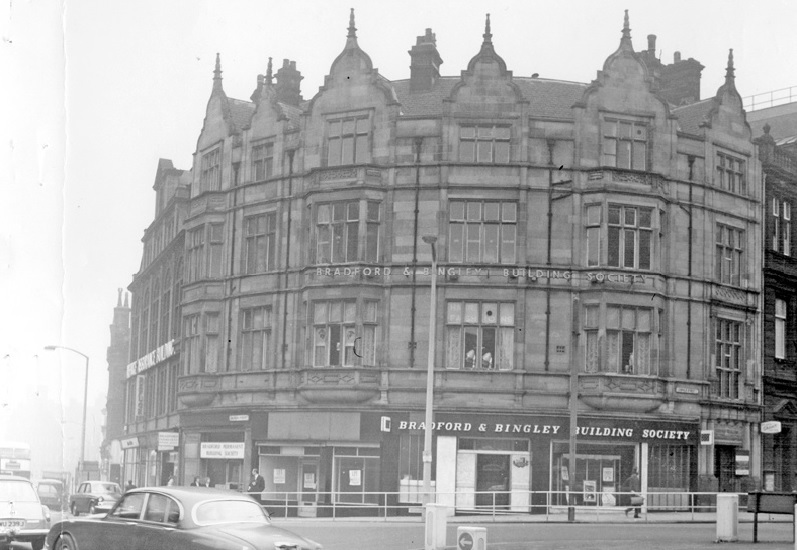
The partnership between Webster and Styring was dissolved after George Webster’s retirement in 1908, and Leopold Chambers (typically blackened by Sheffield’s sooty air) was later taken over by the Bradford Equitable Building Society (later to become Bradford & Bingley).

Following their departure, the offices were sub-divided and more recently converted into student accommodation, with shops at ground level.

Leopold Chambers subsequently became home to the Bradford & Bingley Building Society. Seen here in the 1970s. (Picture Sheffield)

© 2021 David Poole. All Rights Reserved.
Categories
Buildings

19 Shrewsbury Road: the Old Sweet Factory

A building familiar to those driving along Shrewsbury Road. It is the only surviving property in what was once a slum area above the Midland Station. (Image: Google)

Some buildings are built to endure. Others are less fortunate.

By rights, No. 19 Shrewsbury Road should not be here… but it is, the sole survivor of what became a 19th century terraced street. It is bordered by Turner Hill, a throwback to sloping cobblestone streets, and Granville Lane running behind.

The latter were probably laid out during the industrial expansion of Sheffield, and only 19 Shrewsbury Road, or the Old Sweet Factory as it became known, still stands.

To most people travelling up and down Shrewsbury Road it looks like a single storey building. However, a walk around the back shows it is two storeys high with a 4.4metre difference between the upper level entrance on Shrewsbury Road and the lower level yard entrance serving the rear of the property.

The area between Pond Hill and Shrewsbury Road had once been a wood, and when this building was erected as a Sunday school for a non-conformist chapel in 1836, it probably stood in semi-rural surroundings overlooking the Sheaf Valley.

Industrialisation changed the area, as did the construction of Midland Station down the slope in 1870, and the building was used as a brush factory.

By the mid-1890s the property was occupied by Charles Green, the considerably underrated sculptor and modeller, and subject of a separate post.

It caught fire in 1911 and most of the interior was destroyed, as were priceless works of art, including those by Francis Chantrey, that Green had collected.

Charles Green died in 1916 and it subsequently passed to Alfred Grindrod and Company, heating and ventilation engineers, a firm established in 1899, and which consolidated at its other premises on Charles Street in 1924.

The rear of the property seen from Granville Lane, a street of terraced housing until the late 1930s. These days it is a wide footpath known as Granville Walk with views towards the city centre. (Image: War of Dreams)

By 1940, Samuel H. Walker had set up his sweet manufacturing business here. When he died, the business passed to his son and daughter, Harold, and Gladys. It was worked by Harold and Gladys’ husband, George Frederick Kay, while Gladys sold the sweets from a stall in the Norfolk Market Hall.

Many people will remember it was also a sweet shop, popular with students from nearby Granville College.

The business closed due to a compulsory purchase order in 1984, its fate unknown, but the building probably survived due to its Grade II listing two years later.

Sadly, the abandoned building fell into poor state of repair and a haunt for drug addicts.

In 1998 it was acquired by South Yorkshire Buildings Preservation Trust which embarked on a three year programme to restore the property.

It was let to Manchester Methodists Housing Association and Sheffield City Council before being sold in 2005.

Five years later it sold for £150,000 and was converted to residential use in 2012.

The Old Sweet Factory was Grade II listed in 1986 and converted for residential use in 2012. (Image: Picture Sheffield)

© 2021 David Poole. All Rights Reserved.
Categories
Buildings

William Bush and Sons

Hard times. Built for William Bush and Sons, auctioneers, in 1895. At some point in time a pediment was added to the roofline. (Image: David Poole)

What would our Victorian ancestors think of Sheffield now?

A tree grows out of the roof of this building on Church Street, a sad reminder that over a century since it was built, we’re guilty of turning our backs on impressive architecture.

Times change, and Church Street with its impressive collection of beautiful buildings, has suffered more than most.

In fact, Church Street possesses the finest empty buildings anywhere.

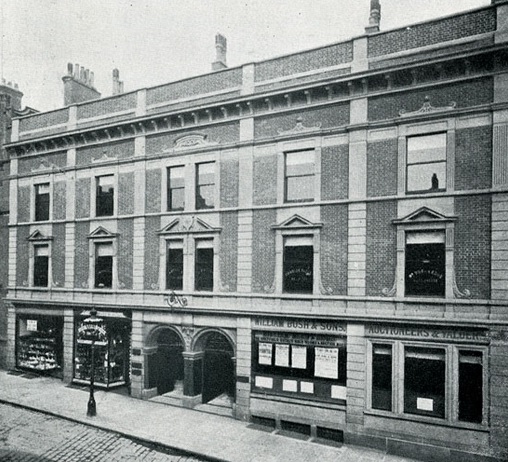
Barely a glance is given to the Sheffield Estate Salesrooms and Auction Mart, built in 1896 for William Bush and Sons.

An artist’s impression of the new William Bush and Sons salesrooms appeared in a Sheffield newspaper in 1895. The Gladstone Building is to the right and Cairn’s Chambers on the left. (Image: British Newspaper Archive)

William Bush was an enterprising individual who started his working life with Schofield and Son, a firm of auctioneers, and subsequently bought the company. He later entered partnership with Charles Dixon (Dixon and Bush) and when this dissolved in 1867 he practised alone.

William Bush traded on East Parade and was joined by his eldest son, George Frederick Bush, in 1884, and by another son, Frank Sleigh Bush, in 1895. Never a public figure, he became Sheffield’s oldest auctioneer, as well as a director of William Stones, the Cannon Brewery.

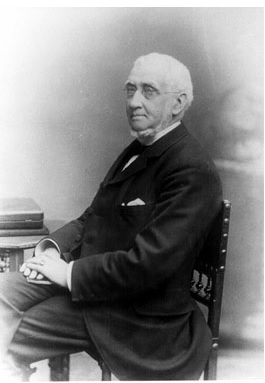
William Bush, auctioneer (1827-1903). (Image: Picture Sheffield)

Such was the success of William Bush and Sons that in 1895 he commissioned the architect Thomas Henry Jenkinson to build a new salesroom on Church Street.

Built in Italian style of the 16th century period, the outside walls had a surface of red brick pleasantly relieved with Yorkshire stone dressings.

It was constructed by Ash, Son, and Biggin, a large building, covering 6,400 square ft with a frontage of 80ft on Church Street.

A photograph from 1897. The entrance to the salesrooms was alongside access to offices above. Two shops are shown at ground level. (Image: Picture Sheffield)

When completed in 1896, it was an inspiring if not different approach to Victorian architecture, sandwiched between the more imposing Gladstone Building and Cairn’s Chambers (built at almost the same time). However, the auction house interior was typical of the day.

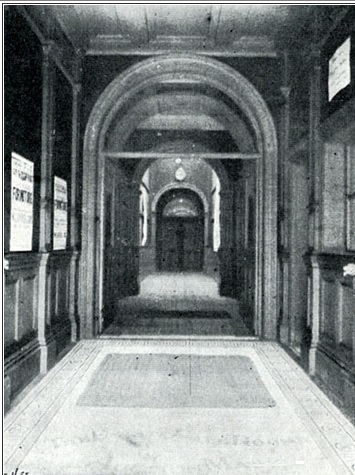
Entering from Church Street through folding oak doors, the visitor found themselves in a bright vestibule with mosaic floor. To the right was the cashier’s office and to the left a telephone room. Through a passage past the cashier’s office were the private rooms of the principals of the firm.

The vestibule reached a well-lit, lofty corridor, constructed to double as a picture gallery, its walls, as in other parts, lined with Austrian wainscot oak installed by Johnson and Appleyard.

A mosaic floor and Austrian wainscot oak panelling lined the main corridor. The main salesrooms were to the left and right. (Image: Picture Sheffield)

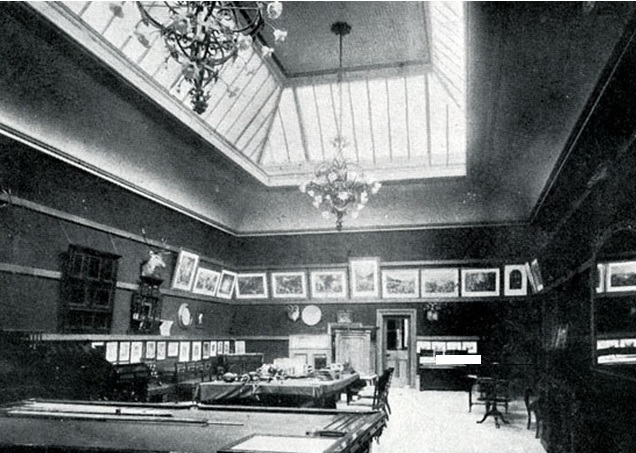
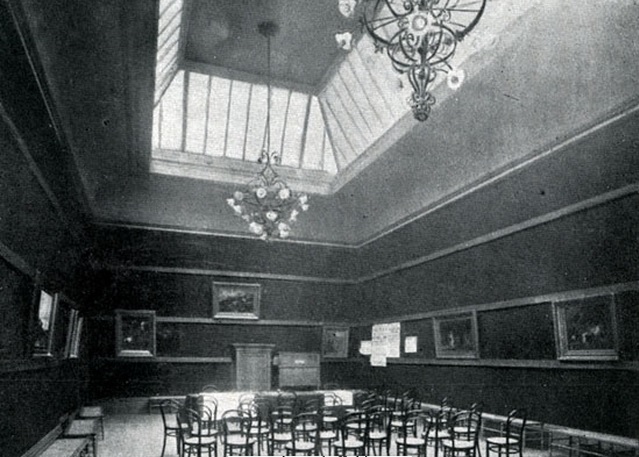
Leading off the corridor on either side were two large salesrooms. The right one was the general salesroom and on the left the estate mart. Both rooms took advantage of the best lighting and acoustics under dome-shaped roofs.

The handles on the doors were Italian bronze, representing a dragon’s head, by Charles Green, the artist and modeller.

At the end of the corridor, running at right angles with it, was another salesroom used for the sale of shrubs, trees, and plants, and used as a warehouse for the reception of goods.

A hydraulic lift took goods from the basement, where there were large storerooms fitted out to be salesrooms if required, and a fireproof strong room.

The sales rooms had natural light from above. At some point the building was redeveloped and the glass atriums replaced. An aerial view of the building today shows a plain flat roof. (Images: Picture Sheffield)

William Bush died in 1903, the business continued by both sons, but the popularity of salesrooms had started to wane in the new century.

George Frederick Bush left the business, and it became Frank Bush and Company, subsequently Bush and Company.   

It might be that overheads connected with the building’s construction obliged Frank to look for tenants.

In December 1913, Lloyd’s Bank opened its Church Street branch here, the Bush auctions functioning in the remainder of the building. However, by the 1920s it had been renamed Lloyd’s Bank Chambers, and Bush and Company had relocated to Orchard Place.

Sadly, Frank Sleigh Bush was declared bankrupt in 1927, his reasons being “a change of business premises, slump in trade, illness, and lack of capital.”

The old salesrooms faded into memory, the ground floor sub-divided into shops, but Lloyd’s Bank remained until its recent departure to Parade Chambers on High Street.

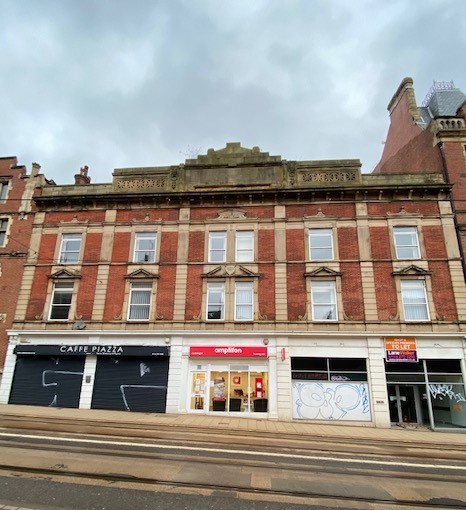
Today, the ground floor units are empty, only Amplifon occupies what was the old vestibule, with little sign of life in the offices above, and with post-pandemic uncertainty, it looks like a long road back to glory.

There is a question that intrigues me more than anything.

How much, if anything at all, remains of the old auction house interiors?

Church Street possesses the finest empty buildings anywhere. (Image: David Poole)
The old auction rooms are to the left of the photograph from 1993. Lloyds Bank was still evident. (Image: Picture Sheffield)

© 2021 David Poole. All Rights Reserved.
Categories
Buildings Sculpture

The mystery of Mercury

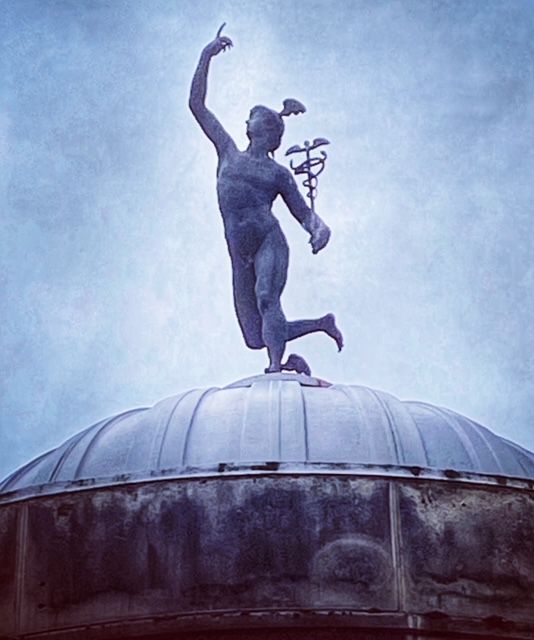
The sculpture of Mercury stands proudly above the portico of the Sheffield Telegraph Building on High Street. It is one of two statues of Mercury in the city centre, the other being on top of the Lyceum Theatre. (Image: David Poole)

Here is a mystery.

This bronze statue of Mercury has stood on top of the portico of the Telegraph Building on High Street since about 1915.

Mercury, Roman god of financial gain, commerce, eloquence, messages, communication (including divination), travellers, boundaries, luck, trickery and thieves, is shown as a nude male figure with wings both side on his hat, and on the outside of his ankles. He carries in his left hand a caduceus, an elaborate winged staff. The statue appears to be about to take off, his toes barely touching the base and his right arm extended with fingers pointing skyward.

But where did the statue come from?

An artist impression from 1913 of the Sheffield Telegraph Building at High Street. The sculpture of Mercury sits above the portico at the corner with York Street. The portico was the entrance to the offices and counting-house which occupied the whole of the ground floor. Most recently occupied by a building society, the corner unit has planning permission to become a restaurant. (Image: British Newspaper Archive)

The bronze statue is said to be much earlier, re-sited here when the Sheffield Telegraph built new offices on High Street between 1913-1915.

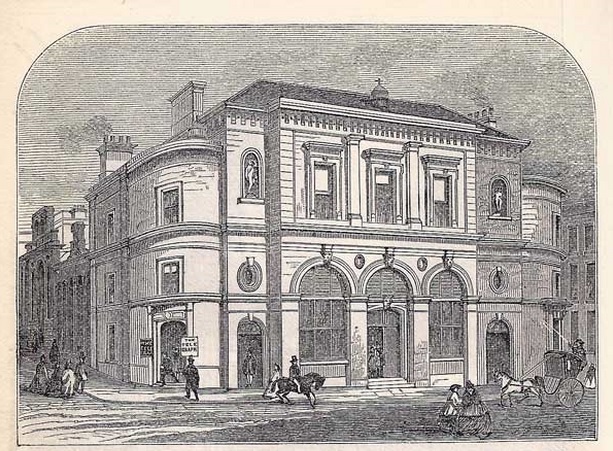
A few searches are quite specific that the statue was acquired by the Electric Telegraph Company in 1856 to decorate new premises for the Sheffield Daily Telegraph at the opening to The Shambles. (This is now the site of KFC at the junction of High Street and Haymarket).

The Electric Telegraph Company office seen about 1856. The statues of Mercury (left) and Vulcan (right) can be seen in the niches at the upper level. (Image: Picture Sheffield)

Furthermore, it is suggested that the bronze sculpture occupied one of two niches, one on either side of the front elevation of the upper story, the figure of Mercury to the left and Vulcan to the right.

It is said that the Mercury sculpture was moved to the Telegraph Building in 1915, while the Vulcan statue was lost.

Old illustrations of the Electric Telegraph Building clearly show the statues, but at this point the authenticity of the sculpture on the 1915 building comes into question.

The Sheffield Daily Telegraph may or may not have had offices at the Shambles, and it is well documented that its early offices were on the site of High Street and Aldine Court, long since vacated by the newspaper.

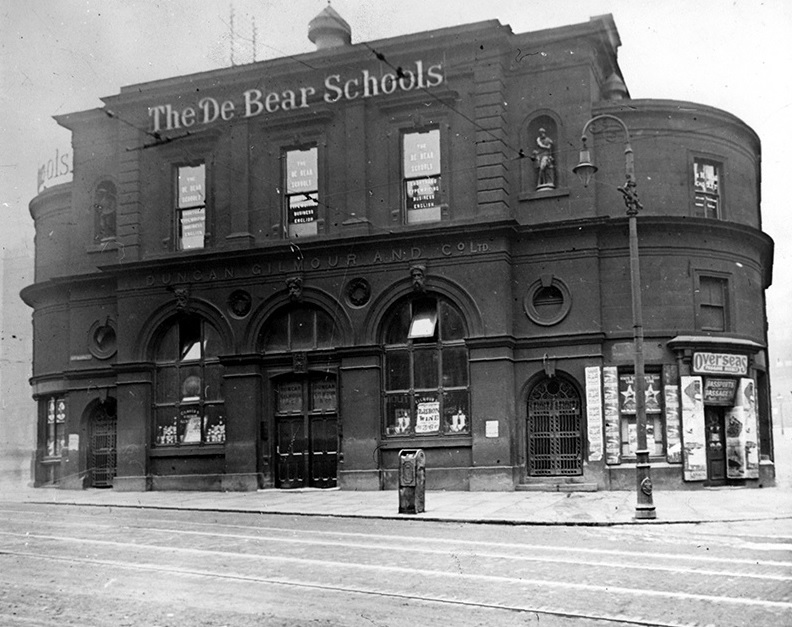
Further inspection identifies the Electric Telegraph Building on The Shambles as being the Fitzalan Market Hall, that looked up the slopes of High Street and King Street.

Fitzalan Chambers in 1918. Blackened by Sheffield’s smoky atmosphere, the Mercury and Vulcan statues are clearly evident three years after the construction of the Telegraph Building on High Street. The De Bears Schools specialised in shorthand, typewriting, correspondence, and business training. (Image: Picture Sheffield)

In 1856, an account of the opening of the Exchange, News Room, and Telegraph Office was published in the Sheffield Independent:

“This building which has been erected from the designs of Messrs Weightman, Hadfield, and Goldie, by the Duke of Norfolk, terminate the pile of buildings occupying the façade towards the Old Haymarket. On the ground floor it was necessary to retain the old-established wine vaults of Samuel Younge and Co, and to provide shops for fish salesmen in the lower part of the market. The Exchange Room occupies the first floor. The room is entered by folding doors. At the end of the room opposite the entrance is a small apartment fitted up by the Telegraph Company in which the subscribers may write and dispatch their messages to all parts of the globe accessible to this rapid mode of communication.”

There were lengthy descriptions of the interior and finally “Over the market entrances are two niches with figures carved in stone by Messrs Lane and Lewis of Birmingham representing Mercury and Vulcan – typical at once of the wonder-working telegraph and the staple trade of Sheffield.”

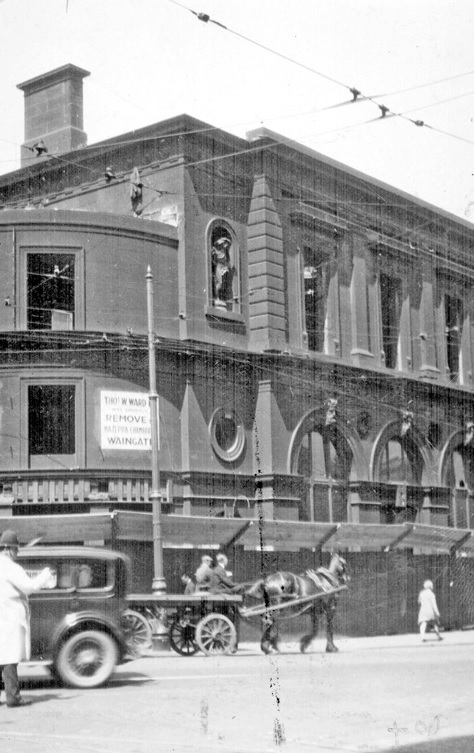
From this account we can identify that both sculptures were made of stone and still present when the Fitzalan Market Hall (or Fitzwilliam Chambers as the offices became known) was demolished in the 1930s.

Fitzalan Chambers prior to demolition in the 1930s. The whereabouts of the statues of Mercury and Vulcan is unknown. (Image: Picture Sheffield)

This makes the Mercury atop the Telegraph Building a bit of an unknown.

The design is based on the work of Giovanni da Bologna (1529-1608), better known as Giambologna, noted for his command of sculptural composition, producing figures that were pleasing to view from all positions.

The bronze figure is identical to one on top of the dome above HSBC in Doncaster’s High Street, built in 1896-1897 for the York and County Bank (and according to historians, the sculpture also dating to 1856).

I suspect the origin of the Mercury sculpture on the Telegraph Building lies closer to home and is later in design.

The building was designed by Gibbs, Flockton & Teather and constructed by George Longden and Son in 1915. Both Sheffield firms worked with Frank Tory, responsible for much of the city’s fine stone artwork, but also known to have worked in bronze.

Is it possible that Frank Tory was the man behind the sculpture we see today?

It also leaves another question unanswered.

What happened to the two stone Lane and Lewis statues?

Maybe someone, somewhere, has two fine statues of Mercury and Vulcan in their garden.

© 2021 David Poole. All Rights Reserved.
Categories
Buildings

1-9 York Street

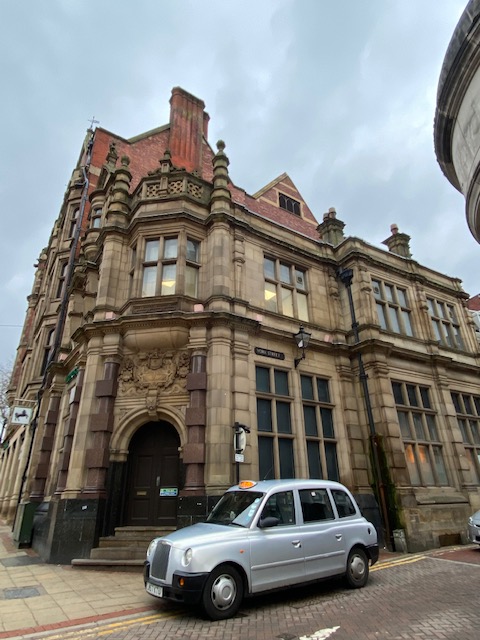
Impressive by design. Former premises of the London and Midland Bank. Designed by Andrew Francis Watson and opened in 1895. (Image: David Poole)

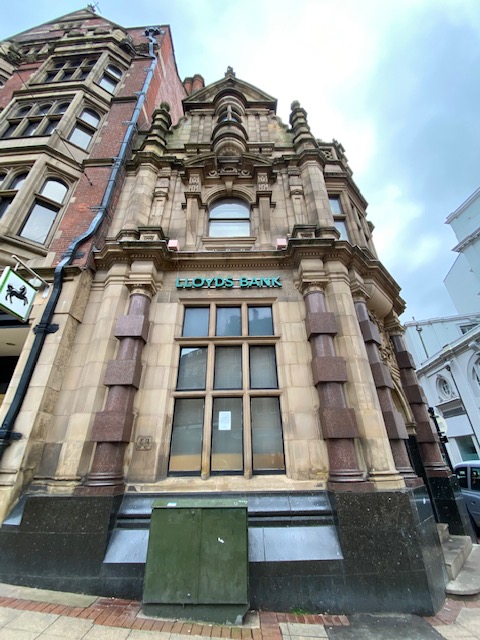
The next time you walk up High Street, look at this English Renaissance-style building at its corner with York Street. The official address is 1-9 York Street and causes confusion because it is an extension of Lloyd’s Bank, occupying the ground floor of Parade Chambers, next door.

It is dwarfed by its neighbour, a  five-storey Tudor-Gothic block, built by Pawson and Brailsford in 1885, and looks out of proportion, but, as we shall see, there is a reason why it looks this way.

In 1892, Pawson and Brailsford snapped up a large area of land around Parade Chambers, including the corner plot that had once been a music shop for Alderman William Stacey and as a draper, for Edward Butcher, whose family had lived and traded here for generations.

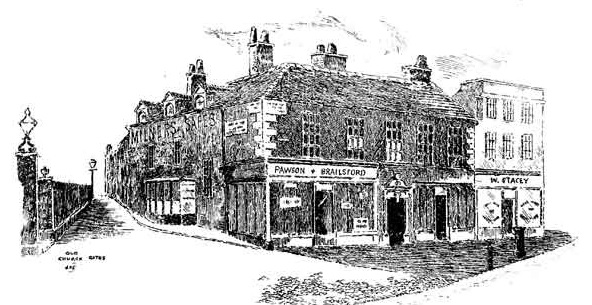
Looking onto East Parade in the early nineteenth century. Pawson and Brailsford was replaced by Parade Chambers and W. Stacey became the site of the London and Midland Bank. (Image: Picture Sheffield)

At the close of the 19th century the building was long-neglected, but the land it stood on, fronting High Street, was extremely valuable. The plot went to auction and was bought for £12,000 by the directors of London and Midland Bank.

It commissioned Sheffield architect Andrew Francis Watson, of Holmes and Watson, to build a new and commodious bank to replace its Fargate branch, opened in 1889, but three years later, deemed inadequate for its growing business.

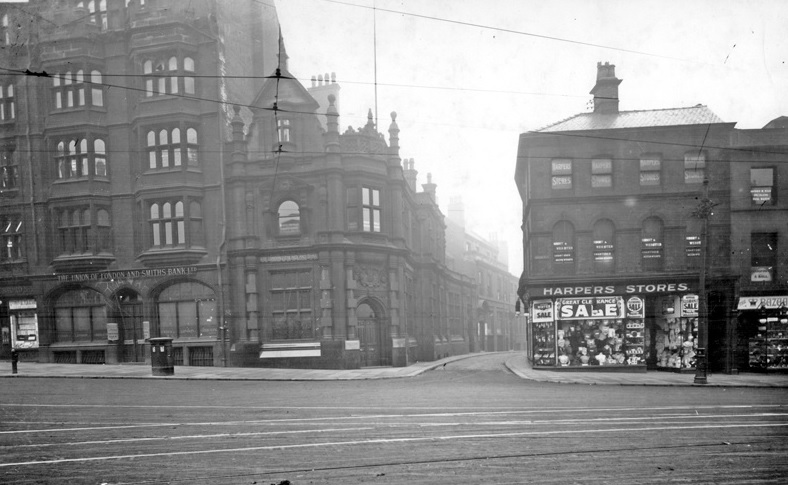
However, there was a delay in construction because of unsuccessful consultation with the bank’s neighbour on the opposite corner of York Street. This was due to the privileges of ‘ancient lights.’

It was an old restriction that said that A, an owner of property on one side of a narrow central street, was refused permission to raise his building by B, the owner of the property opposite. As was often the case, no amount of money would tempt him to give up his rights to the lights.

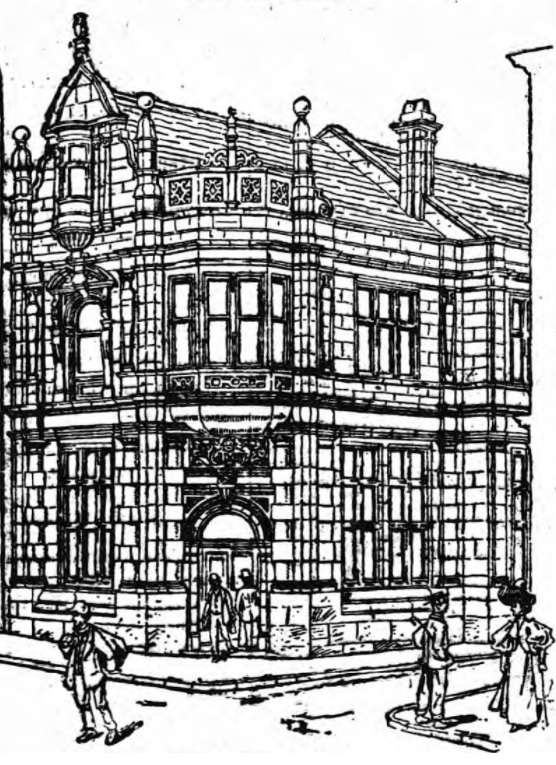
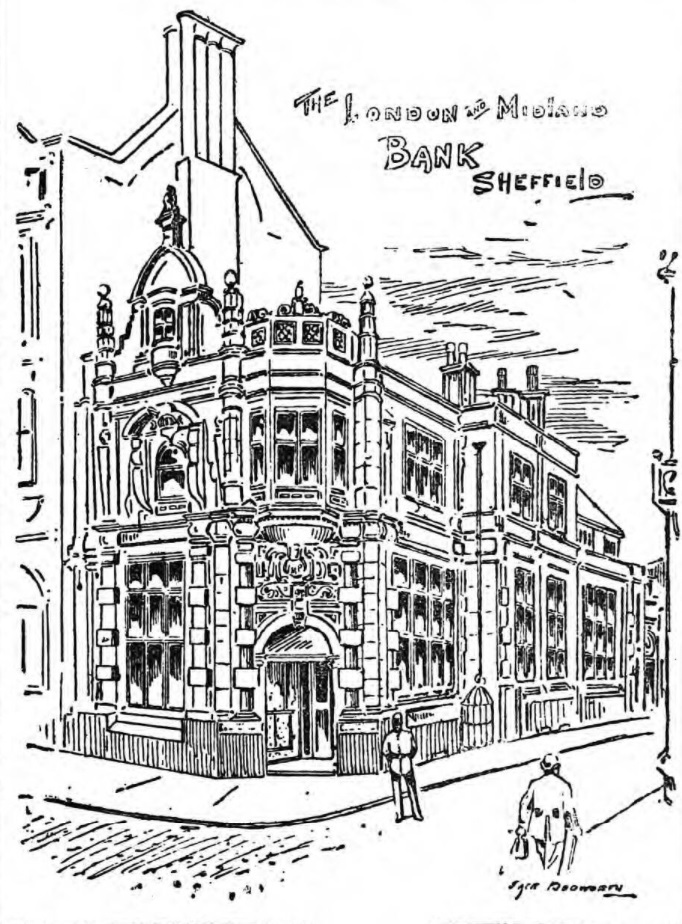
Artist impression of the London and Midland Bank in 1895, making it larger than it actually was. (Image: British Newspaper Archive)
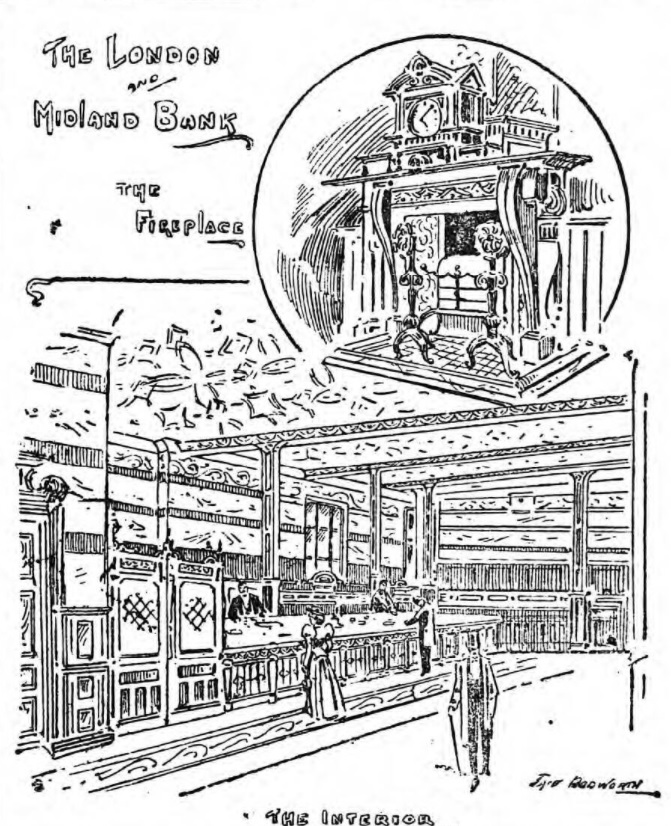
Local newspapers sketched the completed building shortly after opening. (Image: British Newspaper Archive)

Watson made clever use of the site, but the best that could be done, according to the Sheffield Independent, was a “disfigurement, through want of height, to what ought to have been a very fine street.”

Construction began in 1894, built by Fred Ives of Shipley, the materials on the façade being polished black Labrador granite for the base, and red Swedish granite for the pilasters. The stone in the upper part of the building was from Varley’s Huddersfield quarries, thought to be the best to cope with Sheffield’s acidic atmosphere.

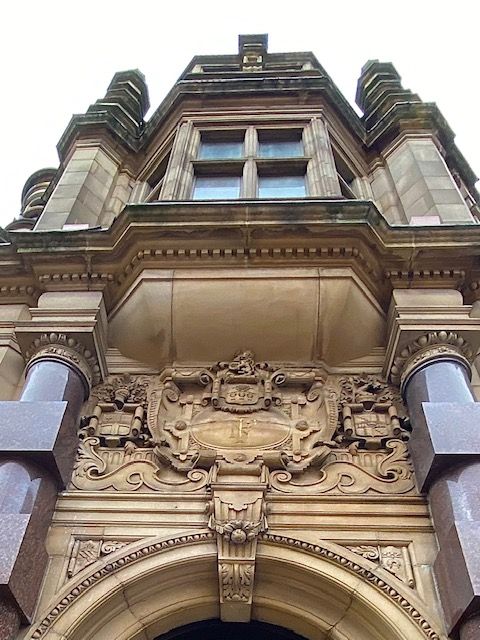
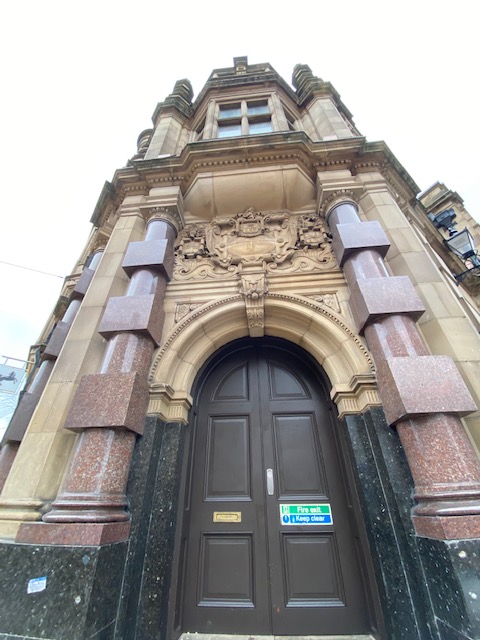
The entrance to the bank had a carved panel over the doorway, with heraldic shields representing the arms of some of the towns and cities where the company had offices and banks. A lobby, lined with modelled tiled faience, led to folding walnut doors.

The intricate sculptors that adorn many Sheffield buildings were the work of Frank Tory. This old bank reveals another of his treasures above the old front entrance. Tory was also responsible for woodwork carvings within the building. (Image: David Poole)

The banking house, about 56ft by 28ft, and 18ft high, was lined with polished walnut dido, and above that with Pavanazza and Sienna marbles (supplied by Pattinson of Manchester), with a richly modelled frieze, panelled ceilings, and cornice, with local traditional work of the Jacobean period put into the design.

The fixtures, fittings, counters, and screens were made of elaborately carved American walnut, by Johnson and Appleyard, while the public floor was of marble mosaic, the rest being in red wooden blocks.

Particularly impressive was a fireplace and chimneypiece with carved walnut overmantel and clock case.

Victorian banking made a statement at the London and Midland Bank. (Image: British Newspaper Archive)

The bank occupied the ground floor and basement (with strong rooms), books and cash conveyed from the counters using a tramway system to a lift. The basement bullion room was designed with a passage all around it to avoid mining from surrounding property or the street.

The manager’s office, occupied by Mr H.M. Elliott, looked out onto High Street, was lined with Tynecastle tapestry, and approached through a private inquiry box.

On the first floor were eight offices to let, accessed from York Street by a staircase, while the second floor, still visible from the street, contained the caretaker’s residence.

The London and Midland Bank cost £9,000 to build and opened in September 1895.

Eight years after construction, the London and Midland Bank had succumbed to Sheffield’s sooty atmosphere. The owners of the property where Harpers Stores stands had objected to building the bank any higher because of ‘ancient lights.’ (Image: Picture Sheffield)
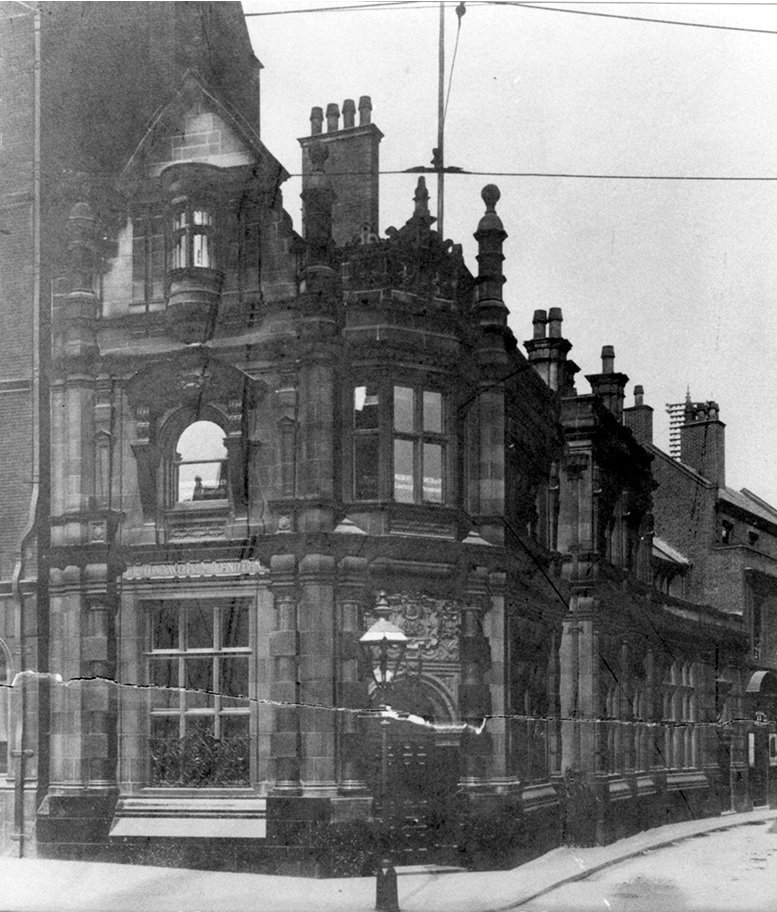
The bank seen in 1895, the year it opened. The manager’s office looked out onto High Street. The small dormer window at the top was the caretaker’s residence. (Image: Picture Sheffield)

In 1913, the London, City and Midland Bank (as it had become) amalgamated with the Sheffield and Hallamshire Bank on Church Street and rebranded as Midland Bank in 1923 (now HSBC).

In 1931, Midland Bank transferred its business from High Street to Market Place (now Banker’s Draft), and with the old Sheffield and Hallamshire Bank on Church Street, the presence of three banks close to one other was considered unnecessary.

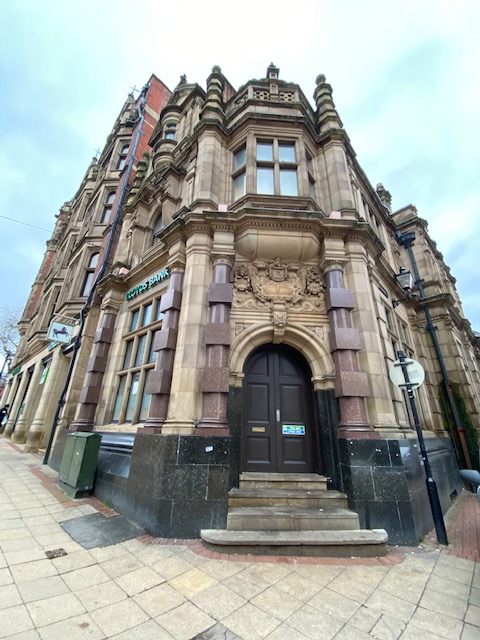
The building was immediately bought by the adjoining National Provincial Bank as an extension, later becoming NatWest, and is now occupied by Lloyd’s Bank. Its interior became one, with only the exterior providing any clues to its history.

The former grand entrance is now a fire exit to Lloyd’s Bank. (Image: David Poole)
The old bank was Grade II-listed in 1995. (Image: David Poole)
The building only lasted 36 years as a standalone property. It was absorbed into the bank next door in 1931 but remains one of Sheffield’s few original banks. (Image: David Poole)

© 2021 David Poole. All Rights Reserved.
Categories
Buildings

No.2 High Street

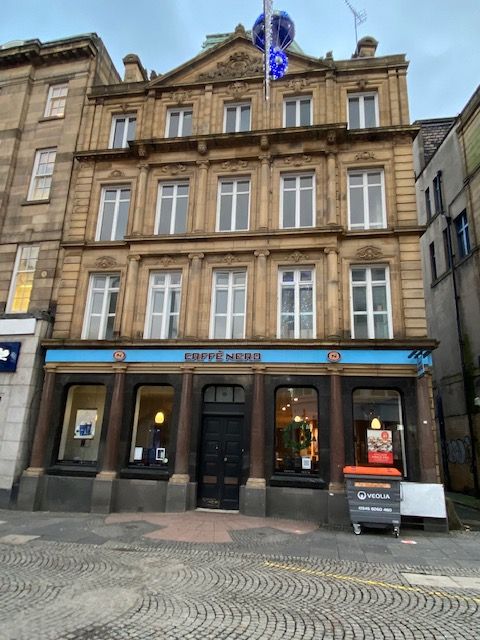
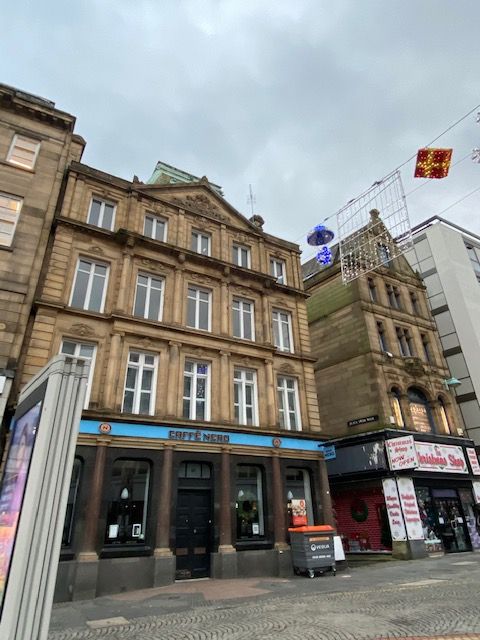
No.2 High Street. One of Sheffield’s few city centre listed buildings. (Image: David Poole)

The pandemic has claimed another victim. Caffé Nero, a familiar sight at No.2 High Street, won’t be reopening when lockdown restrictions are eased, the retail unit now up to let.

 Our thirst for coffee and cakes might not have diminished, but poor trading conditions have forced the London-based chain to rethink its future.

While it maintains a presence in Sheffield, the outlook for one of the city’s Grade II-listed buildings is less certain.

No.2 High Street was the result of High Street widening during the 1890s, one of several Victorian buildings built by esteemed architects Flockton, Gibbs & Flockton.

Described in Pevsner as “one of their more exuberant ‘fin de siècle’ essays,” it is characteristic for its high mansard roof.

Many people think it was built as a bank, and Barclays did occupy it from the early 20th century until recent times, but its history is more elaborate.

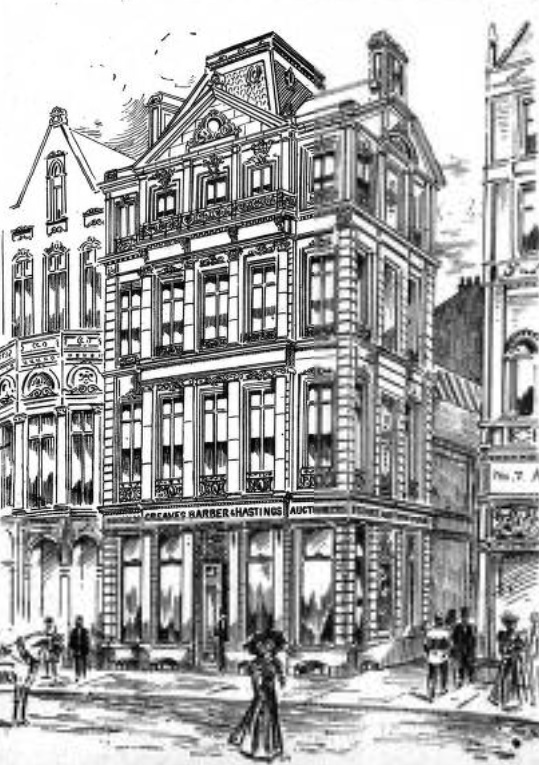
The building featured in an 1896 edition of British Architect with a double-plate spread.

“A massive and imposing appearance, with an elaborate scheme of stone carvings and mouldings. There is a suggestion of the easy and graceful style of French architecture.”

It was built for Nicholson, Greaves, Barber and Hastings, established in 1775, auctioneers, which had conducted property sales at older premises on High Street, as well as holding horse sales at the Horse Repository on Castle Hill.

In August 1896, No.2 High Street was in the process of construction, farther back from the original street line, the auctioneers temporarily transferring business to the Cutlers’ Hall and premises on Fargate.

The firm was Sheffield’s premier auction house, responsible for the sale of important buildings and used by the Duke of Norfolk to dispose of land and property.

It was completed in 1897, a date stone still evident at the side of the building on Black Swan Walk.

An artist drawing of No.2 High Street from the Sheffield Indpenedent in 1896. (Image: British Newspaper Archive)

There were two large auction rooms and offices on the ground floor, with a large basement for storage, a strong-room for jewellery and plate, and two separate store-rooms for furniture.

The façade was enriched with four stories of superimposed columns, the lower ones of red Labrador granite, standing upon a grey granite base.

The base supported a handsome cornice with a broad frieze of black granite, on which the name of the firm appeared in raised gilt letters.

The upper pillars were of stone with carved and decorated capitals, and a considerable amount of carving. The external effect was enhanced by a balcony of ornamental ironwork.

The upper portion of the block was let as offices, with special care given to effective ventilation and warming of the auction room with a Blackburn heater and fan, driven by an electric motor.

Available to let and empty again. No.2 High Street is awaiting a new tenant. (Image: David Poole)

Nicholson, Greaves, Barber and Hastings was made up of four partners, each with interests elsewhere. In 1917, J.J. Greaves and Sons left the partnership and the firm continued trading as Nicholson, Barber and Hastings until the 1950s.

However, Barclays Bank opened a branch here in 1920 and the Estate Mart became a secondary part of the building before closing altogether.

Not much has changed since construction, except for the removal of the balcony railings and the interior completely refurbished for bank use.

After a period as Caffé Nero it now joins a long list of vacant properties in and around High Street and Fargate.

A side view of the building on Black Swan Walk with a date stone. (Image: David Poole)

© 2021 David Poole. All Rights Reserved.

Categories
Buildings

Redvers Tower

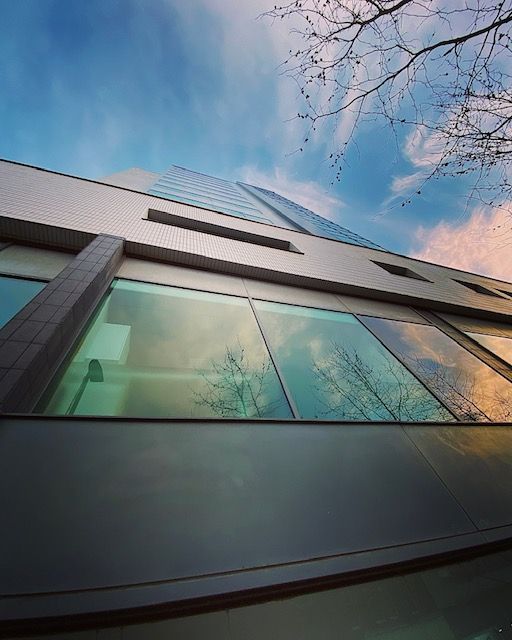
Redvers Tower. (Image: David Poole)

We are coming up to the time when some of Sheffield’s modernist buildings are commemorating fiftieth birthdays. One such is Redvers House, recently renamed Redvers Tower, built in 1971 on Union Street, by Newman Doncaster Associates.

The 11-storey tower, built on a 3-storey podium, is almost invisible to locals, yet has seemingly dominated the skyline forever.

It is doubtless unloved, notwithstanding its long association as offices for Sheffield City Council’s Social Services departments, perhaps harbouring unpleasant memories within its walls.

Redvers Tower. (Image: David Poole)

Redvers House was opened in 1972 by Keith Joseph, Secretary of State for Social Services, a man who served under four Conservative Prime Ministers – Harold Macmillan, Sir Alec Douglas-Home, Edward Heath, and Margaret Thatcher.

At ground level, we are more familiar with its retail space fronting Furnival Gate, one-time showroom for Allied Carpets, later as a Curry’s electrical store, and now for Nisbets, Europe’s largest catering equipment supplier.

The older of us might remember its copper-tinted glass, set within bright white tiles that blinded under the light of a summer sun. The windows were lost during a £7 million major refurbishment in 2005.

Keith Joseph was met with a picket line when he officially opened Redvers House in 1972. (Image: Picture Sheffield)

According to reliable sources, Redvers House was owned by the council which put it up for sale for nearly £7 million in October 2014, when staff relocated offices to the Moorfoot Building.

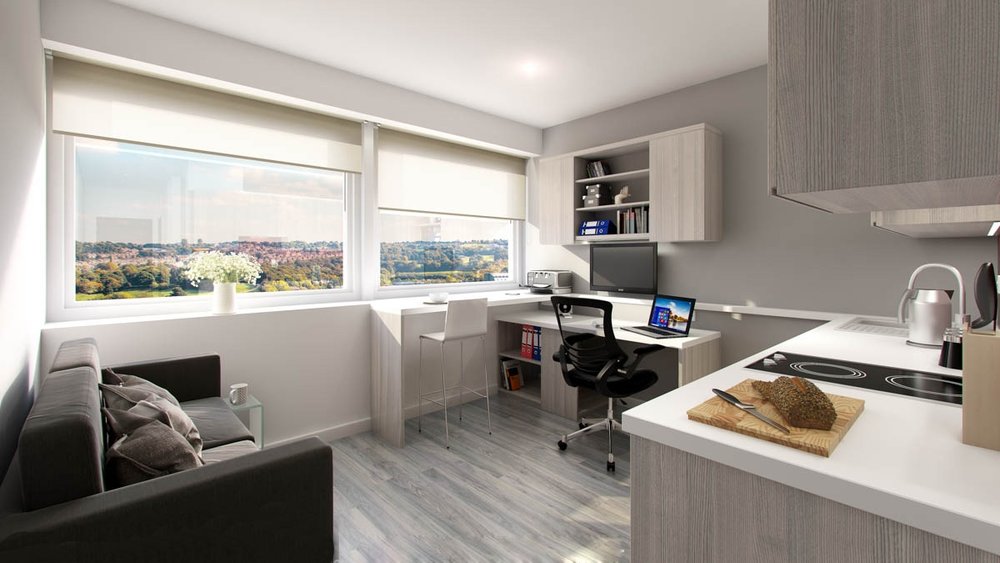
It was bought by private rental specialist Make Space, part of the Minton Group, in June 2015, and reconfigured at a cost of £6.2 million to become high-end student accommodation with studio apartments and communal areas.

In 2019, the newly-relaunched Redvers Tower attracted widespread publicity when it was named in the Top Ten Most Instagrammable Student Accommodation properties in the UK, the plush interiors perfecting fine city views.

Alas, the budget did not stretch to cleaning those problematic white tiles, echoing a similar quandary facing John Lewis in Barker’s Pool.

Just one question remains. Does anybody know how it came to be called Redvers House?

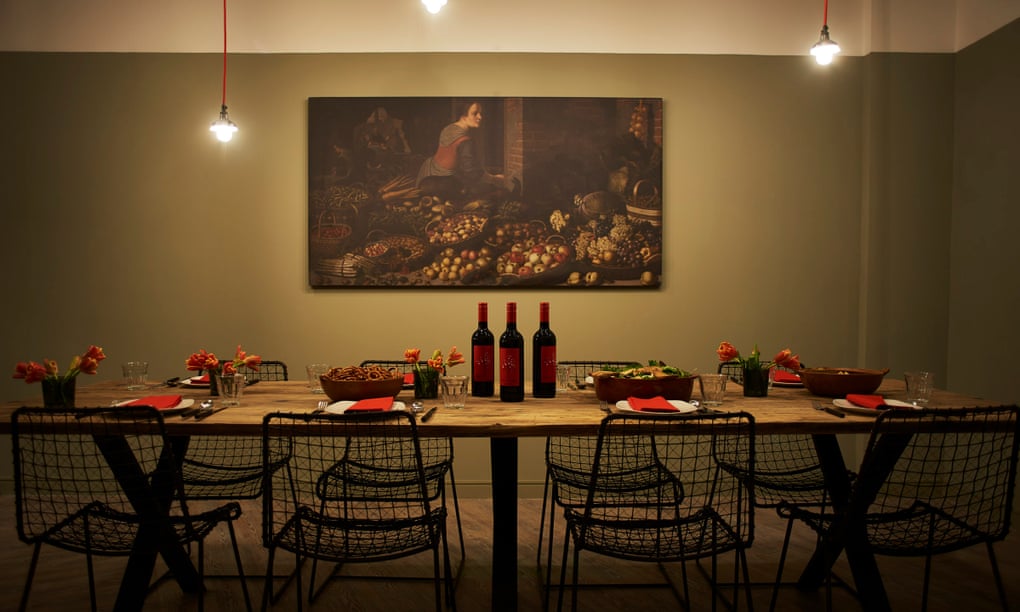
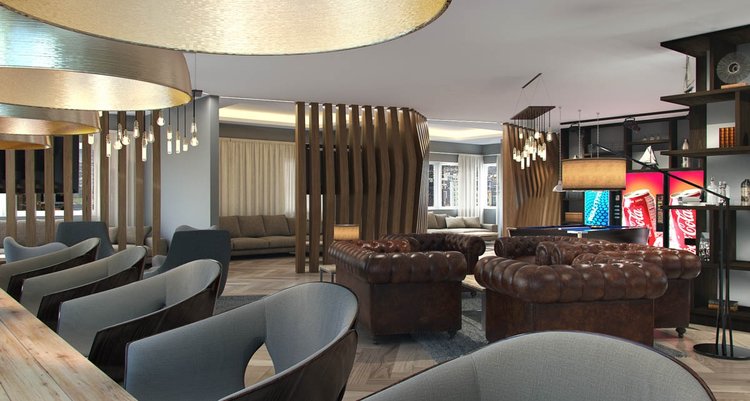
Private dinner party room at Redvers Tower. (Image: Leo William)
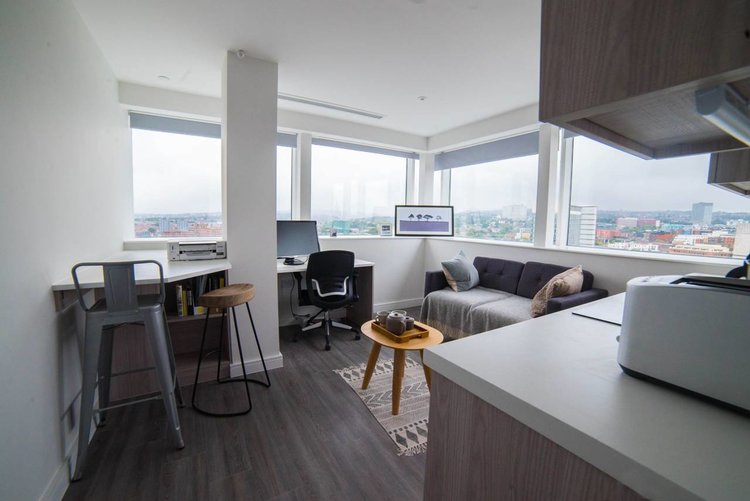
Redvers Tower. Studio apartment. (Image: Zebra Architects)
City view from Redvers Tower. (Image: Zebra Architects)
Redvers Tower. Communal area. (Image: Zebra Architects)

© 2021 David Poole. All Rights Reserved.
Categories
Buildings

Livesey-Clegg House

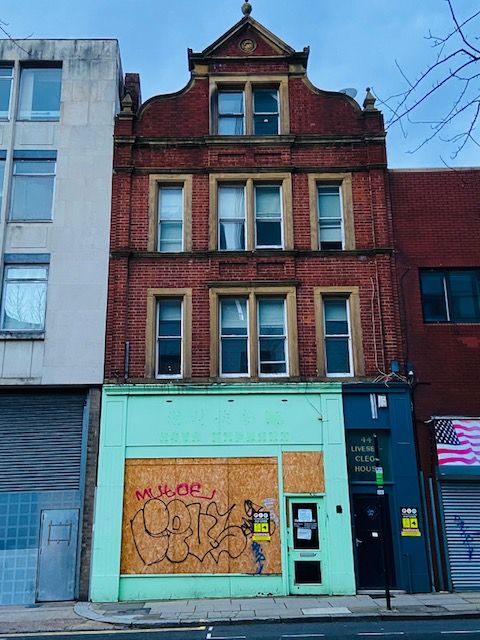
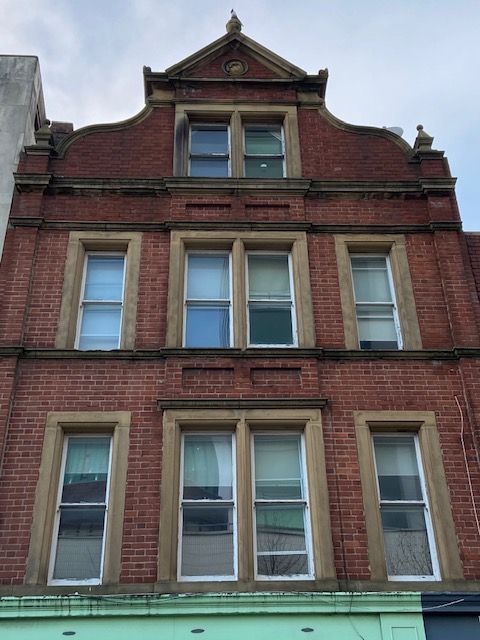
The last remaining Victorian building on Union Street is due to be demolished. (Image: David Poole)
Union Street is not a fashionable road, its role as one of Sheffield’s important thoroughfares, and its ancient connection with Norfolk Street, long diminished.
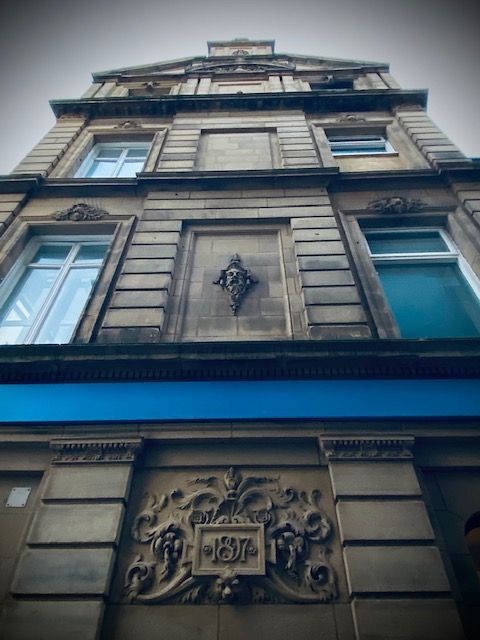
Post-war redevelopment deprived Union Street of its character, and one of its most important buildings, the shops and offices that made up Cambridge Arcade (with its covered walkway into Pinstone Street) disappeared in the 1970s.
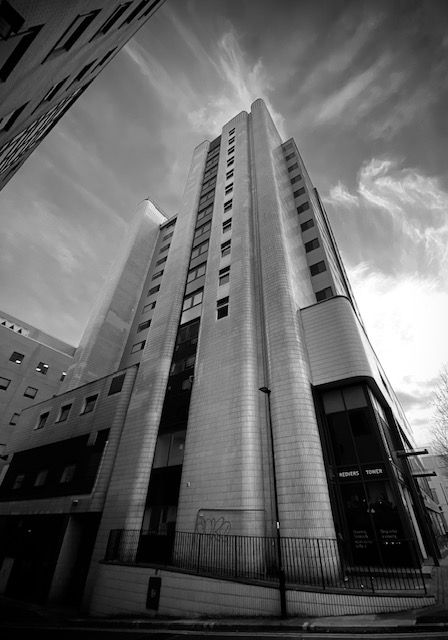
A walk along Union Street today shows that almost all its architecture is from the sixties onwards. All except for one narrow building, a survivor of Sheffield’s Victorian past, sandwiched between unsightly 20th century structures.

However, Livesey-Clegg House, at 44 Union Street, is expected to go the same way as its long-lost neighbours soon.

If plans to create Midcity House, three new tower blocks, up to 25-storeys high, are given the go ahead, then this old building will be demolished.

The last Victorian building to survive on Union Street was built for Thomas Henry Vernon, cork manufacturer, in 1881. His father’s business had originally existed at 2 Union Street at the junction with the old line of Pinstone Street.

Street improvements in 1875 resulted in the creation of Moorhead and comprehensive redevelopment in the area. As part of this, Vernon’s old premises were demolished, with Thomas Henry Vernon succeeding to the business and relocating to Milk Street. When his new premises were built in 1881, he moved to 44 Union Street, and employed about a dozen people.

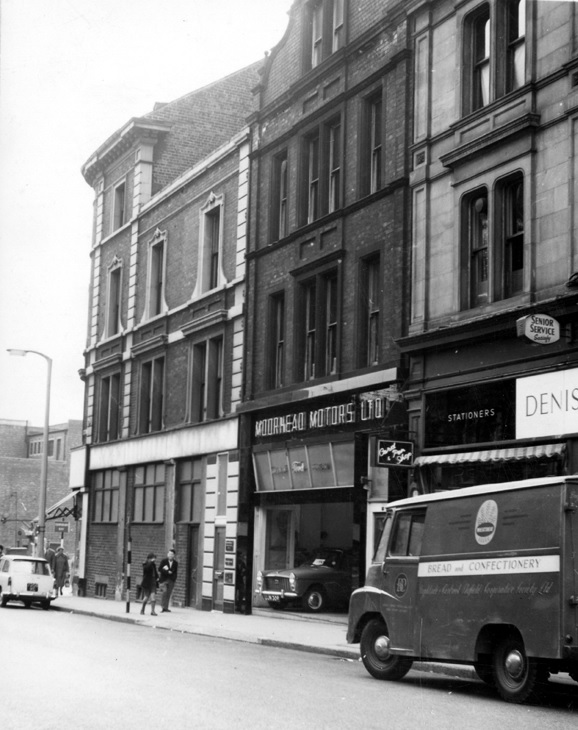
Vernon died in 1919, the ground floor becoming a small car showroom for Midland Motors, later Moorhead Motors, and the upper floors converted into offices.

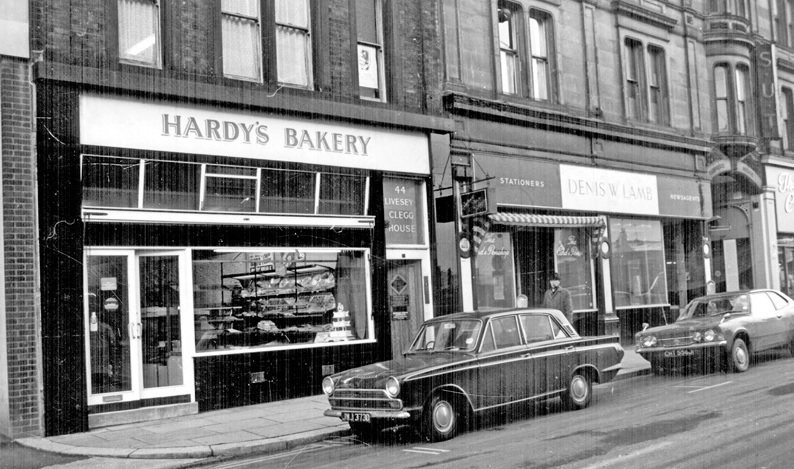
The ground floor was taken over by Hardy’s Bakery in the 1970s, and frequently changed hands afterwards, used as a shop and several food takeaways, and is now empty and boarded-up.

Livesey-Clegg House. The ground floor was occupied by Moorhead Motors in 1961. (Image: Picture Sheffield)

While most Sheffield folk were interested in what went on at street level, it is the floors above that provide the real sense of history.

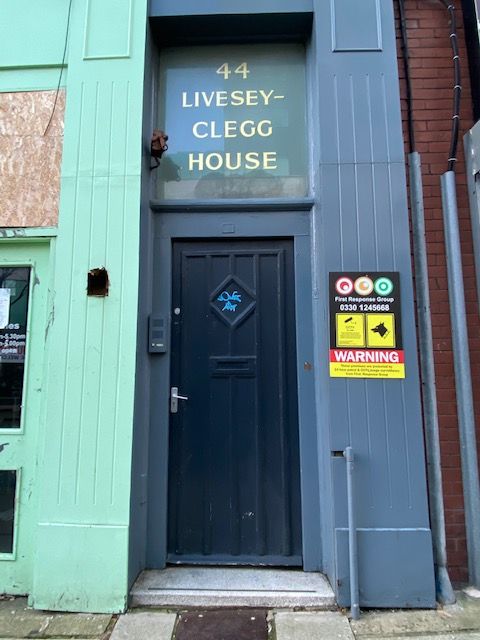
The name above an adjacent door – Livesey-Clegg House – indicates that this was once home to the British Temperance League.

(Image: David Poole)

In Victorian times, high levels of alcohol consumption and drunkenness were seen by some as a danger to society’s well-being, leading to poverty, child neglect, immorality, and economic decline. As a result, temperance societies began to be formed in the 1830s to campaign against alcohol.

The British Temperance League, a predominantly northern teetotal and Christian society, was the new name in 1854 for the British Association for the Promotion of Temperance. In 1880 it moved its headquarters from Preston to Union Street in Sheffield, largely due to the influence of the Clegg family.

Successive members of the Clegg family served as chairman of the executive committee: William Johnson Clegg (1826-1895), sometime alderman of Sheffield, and his son Sir (John) Charles Clegg, best known as chairman and president of the Football Association. His brother, Sir William Edwin Clegg, sometime Mayor of Sheffield, was a vice-president.

By the 1890s its finances and prestige were in decline, but the society persevered and by 1938 was looking for new premises.

“Street widening and re-planning will shortly make it necessary for us to vacate the offices in Union Street, of which we have been tenants for more than 50 years,” said Herbert Jones, the secretary. “We have long felt the need of a permanent home for books, pictures, and other treasures of the movement.”

The ground floor was occupied by Hardy’s Bakery in the 1970s. The sign above the doorway to the right of the shop still exists. (Image: Picture Sheffield)

In 1940, the society moved into 44 Union Street and called it Livesey-Clegg House – named after Joseph William Livesey (1794-1884), a temperance campaigner, politician, and social reformer, and Sir John Charles Clegg (1850-1937), chairman and president of Sheffield Wednesday and founder of Sheffield United.

As well as the headquarters of the British Temperance League, its collection of journals, monographs, bound collections of pamphlets and non-textual items, including lantern slides, posters, banners, textiles, and crockery, were housed in Victorian bookcases in a large old-fashioned room that was used as a library.

The BTL merged with the London-based National Temperance League in 1952 to become the British National Temperance League, with the HQ in Sheffield. It remained until 1987 when the historically valuable library was transferred to the University of Central Lancashire in Preston (now known as the Livesey Library after teetotal pioneer Joseph Livesey).

The old offices and library at Livesey-Clegg House were eventually turned into student accommodation.

Alas, the building is not considered to be of architectural importance and will most likely be demolished soon.

(Image: David Poole)

© 2021 David Poole. All Rights Reserved.