Categories
Buildings Sculpture

Bainbridge Building

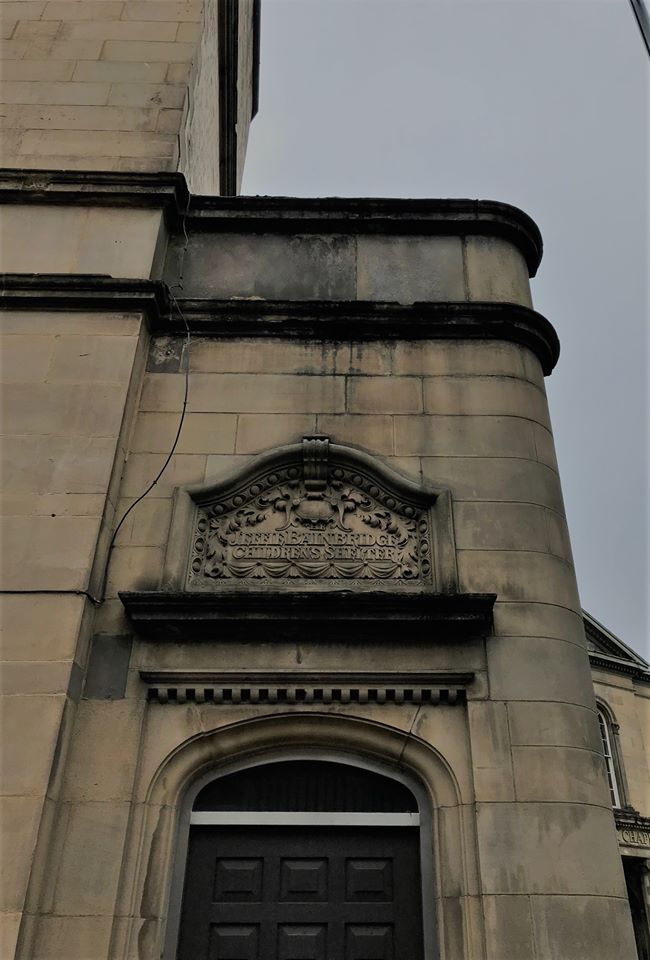
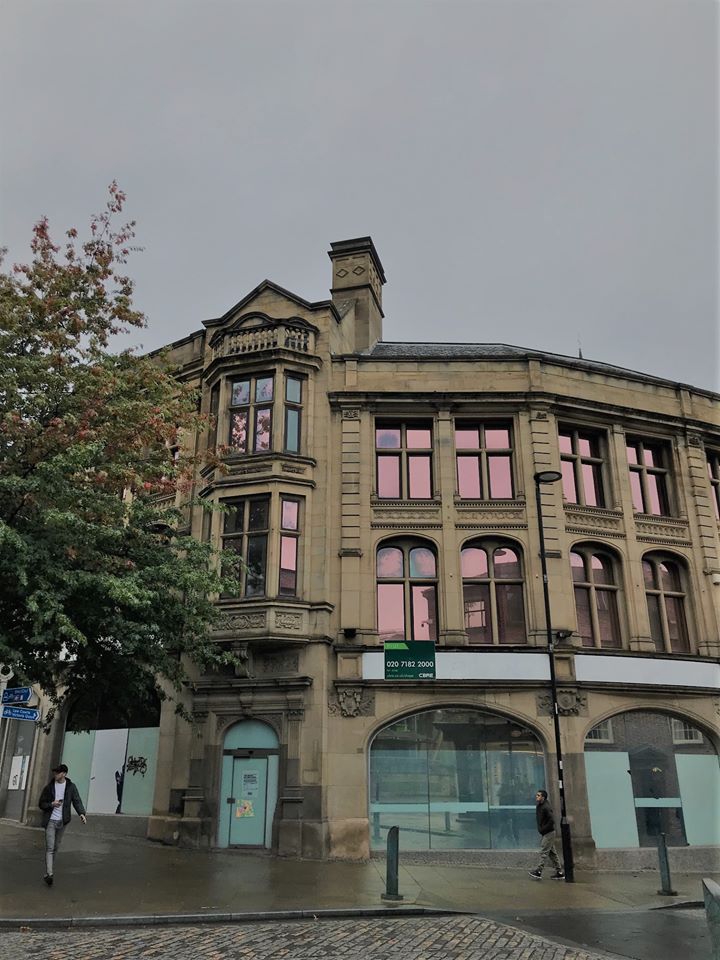
I bet most of you have never noticed this above a door at the top of Norfolk Street. This carved panel is on the old Halifax Bank at the corner of Surrey Street. The building was commissioned by Emerson Bainbridge, a mining engineer consultant and philanthropist, following the death of his wife, Jeffie.

It was erected as a memorial to her and opened by the Duke and Duchess of Portland in 1894.

The first floor formed a shelter for waifs and strays, and a large suite of offices on the second floor were given to the local branch of The Society for the Prevention of Cruelty to Children, of which Bainbridge was a committee member.

The ground floor consisted of shops that were let out to tenants in order to raise revenue to support the rent-free premises above.

The sculptor is unknown, but the architect was John Dodsley Webster, who also designed the Gladstone Buildings next to the Cathedral.

Categories
Buildings

Bainbridge Building

In 1924, the author J.H. Stainton wrote in The Making of Sheffield, “It is fairly safe to say that practically half the citizens of Sheffield at the present time know nothing of Mr Emerson Bainbridge, yet in his day he was assuredly one of Sheffield’s big men.”

Now, it is probably a fair bet that nobody in the city has ever heard of him.
Yet, at the time of his death in 1911, he was called “a striking personality,” and responsible for Bainbridge Building, the resplendent Victorian building that stands on the corner of Surrey Street and Norfolk Street.

Emerson Muschamp Bainbridge (1845-1911) was born at Newcastle-on-Tyne and studied at Edenfield House, Doncaster. Afterwards, he attended Durham University and served time in nearby collieries belonging to the Marquis of Londonderry.

In 1870, Bainbridge became manager of the Sheffield and Tinsley Collieries, later taking charge at Nunnery Colliery on behalf of the Duke of Norfolk, subsequently becoming Managing Director and setting up his own firm of mining consulting engineers.

In 1889, Bainbridge obtained a lease from the Duke of Portland for the “Top Hard”, or “Barnsley Coal”, under land in Derbyshire and Nottinghamshire. He then founded the Bolsover Colliery Company to take the lease and mine the coal, being the man responsible for developing the town that exists today.

Bainbridge also became Liberal MP for Gainsborough between 1895 and 1900, as well as being a JP for Derbyshire and Ross-shire, where he owned a deer forest at Auchnashellach.

Bainbridge provided money to build the YMCA at the junction of Fargate with Norfolk Row, and in the early 1890s spoke of his ambitions to honour his wife, Eliza Jefferson Armstrong Bainbridge, known as Jeffie, who died in 1882.

“I have for some time been struck with the large number of ill-cared for boys and girls in the streets of Sheffield, who, doubtless only represent a small proportion of the large number who are constantly neglected.

“Beyond this, of course, is the great question of neglected training, in consequence of which many of these children are destined to lives of poverty and crime.

“I propose to erect and establish, at some suitable point in the town of Sheffield, a Children’s Refuge, which I would erect in memory of my late wife, and it might be possible to have her name connected to it.”
Bainbridge was a man of his word.

He purchased a plot of land from Sheffield Corporation at the corner of Norfolk Street and Surrey Street, then employed architect John Dodsley Webster to create a spectacular new building that would contain the Jeffie Bainbridge Children’s Shelter.

Construction started in 1893 and was completed in 1894, the total cost being almost £10,000.

The ground floor was utilised for shops and part of the first floor for offices, the rents funding the children’s shelter. The rest of the first floor consisted of a large room capable of accommodating 150 children. Here, ill-clad children suffering from cold and hunger were welcome, and be certain of shelter, warmth and cheap food.

The second floor had been placed, rent free, at the disposal of the local Society for the Prevention of Cruelty to Children. There were dormitories for more than twenty juveniles, also rooms for committee meetings and for caretakers and porters.

The Jeffie Bainbridge Children’s Shelter was officially opened by the Duke and Duchess of Portland on Friday 28 December 1894.

There were five shops underneath, numbered 49-55 Surrey Street, and 104 Norfolk Street. Birds Restaurant, opened by William Bird on a ten-year lease, occupied No.53, although the business collapsed several years later, probably the result of being refused an alcohol licence, something that rankled with the professional men who visited. Next door, Jasper Redfern had a photography shop while William Cole had a piano business at 104 Norfolk Street.

The NSPCC moved upstairs in 1895, but in 1899 Emerson Bainbridge gave them £200 as consideration for removing their shelter to Glossop Road.

The Jeffie Bainbridge Children’s Shelter served over a thousand meals every month to destitute children and appears to have survived until at least 1907. Afterwards, it became a Maternity and Welfare Centre, instigated by the Sheffield Infantile Mortality Committee, where women went for advice and consultations, and to buy dried milk at cost price for bottle-fed babies.

However, the biggest change occurred in 1914, when a portion of the Bainbridge Building was converted into the Halifax Building Society. Most of the shops were taken, with plans created by W.H. Lancashire, Sheffield architects, who clad the exterior in blue and red Aberdeen polished granite, and the interiors with Austrian oak.

In time, the Halifax took the whole building, renting out upper floor offices, culminating in the interior being reconfigured in 1977-1978, when most of Webster’s original features were lost.

The Halifax Bank finally closed in 2017 and the Bainbridge Building has been vacant since.

But let us remember Birds Restaurant, which was unable to serve alcohol to its Victorian customers.

It was recently announced that the pub chain Mitchells & Butlers is opening a branch of its Miller and Carter restaurants, specialising in steaks, in the Bainbridge Building.

There are already Miller and Carter restaurants in the city, off Ecclesall Road South and at Valley Centertainment, the latter of which opened in the summer.
Categories
Buildings

Abacus House

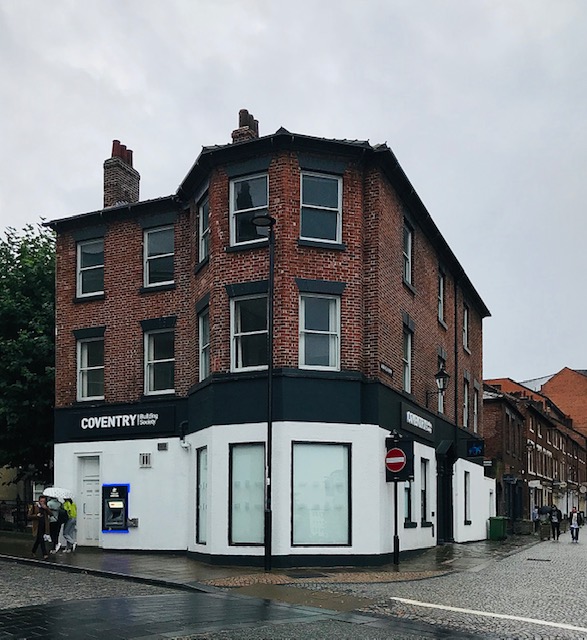
At first glance, this plain looking building, on the corner of Norfolk Street and Norfolk Row, looked to be a bit of a lightweight in terms of its history.

Oh, my goodness, what a challenge it has turned out to be instead.

According to Historic England, Grade II-listed Abacus House, home to the Coventry Building Society, was built about 1791 as three houses. And here lies the mystery. No manner of archive digging can reveal the builder and for whom it was built for.

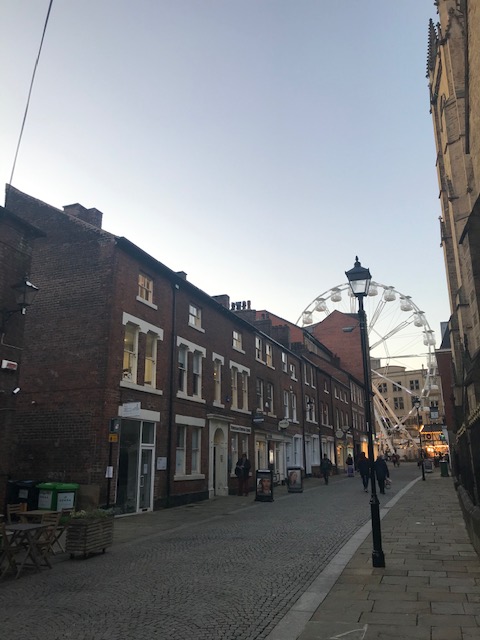
We do know that Norfolk Row was built about 1780, running alongside the gardens of the Lord’s House in Fargate, to Norfolk Street. The Lord’s House was built in 1707 for Henry Howard, the Duke of Norfolk, and at the back of the house was a chapel where a Catholic congregation worshipped.

This was dismantled and sold in 1814, replaced with a new chapel two years later, itself demolished to make way for a new church in 1850, better known today as St. Marie’s Cathedral.

I have a suspicion that Abacus House may have been built by the Duke of Norfolk as the presbytery to the original chapel, and a day in the archives will have to resolve this mystery.

It was certainly used as the presbytery at one time but in the early 1800s it was being occupied by Sir Arnold Knight, a Catholic physician, appointed to the Royal Infirmary in 1852, founder of the Sheffield Medical Institution in 1829, and later establishing the public dispensary on West Street (later the Royal Hospital). Next door was Thomas Raynor, one of Sheffield’s first Chief Constables.

In the mid-19th century the houses were altered with additions, quite possibly around the time that a new presbytery was built on the opposite corner. It paved the way for a long line of occupants, some with quite fascinating stories, and its future use as office accommodation.

It was here that John Hyde – proprietor of private estate sales rooms, estate and commission agent, accountant, auditor and collector of rents and debts – had his business during the 1840s. He was charged with embezzlement and obtaining money by false pretences in 1851, subsequently absconding and arrested in Glasgow.

There was also Dr Alonzo Durant, a man of dubious character, who established the Medical and Surgical Philanthropic Institution in 1851. He was described as “a trifle extravagant, and not free from eccentricity,” and worthy of a separate post.

George Nichols was a military tailor, who established a business here during the 1850s and 1860s, later becoming insolvent and emigrating to Ontario, Canada, where he became Captain Nichols of the Alexandrian Company (No.3) of the 59th Regiment.

We should also mention Henri LeClere, a Parisian, who arrived in Sheffield in 1861 to set up a silver engraving company on High Street before taking rooms here. His son built up the LeClere family business and successive generations were in demand with aristocratic families and embassies across Europe. The company later moved to their most famous premises on Howard Street.

Add to the mix – J.F. Anderson, Chiropodist Surgeon, Madame Malbet, Stanfield and Hirst, law and general stationers, A. Thornley Walker, architect, and William Edwards, freight, passage and emigration officer, to name but a few.

At the start of the twentieth century the building had been renamed Rectory Chambers, now solely used as offices, and attracted a new generation of tenants.

Robert F. Drury was the first patent agent in Sheffield, his company surviving until the 1930s, Walter Harry Best was a stocks and shares broker, Frank Bibbings represented the Free Trade Union and this was also the office for The Expert Advertising Company, whose advertising appeared on theatre screens across the country.

And we mustn’t forget Madame Lille, whose maid recruiting agency was the “oldest and best known in the Midlands, and the only one in Sheffield to be on the ‘recommended’ list.”

There also appears to be Eliza F. Jones, tobacconist, who occupied part of the ground floor until the 1920s.

The Leeds Permanent Building Society moved in during 1931, a foretaste of a later occupant, the Coventry Economic Building Society, taking most of the building, and operating still as the Coventry Building Society.

And so, this brick building, with rendered and colour-washed walls, does have a lot of stories to tell after all. But can anyone explain the meaning behind Abacus House?

Categories
Streets

Pepper Alley

I bet most of you have never heard of the delightfully named Pepper Alley. This was once a thoroughfare passing from Fargate to Norfolk Street, quite close to the surviving Upper Chapel.

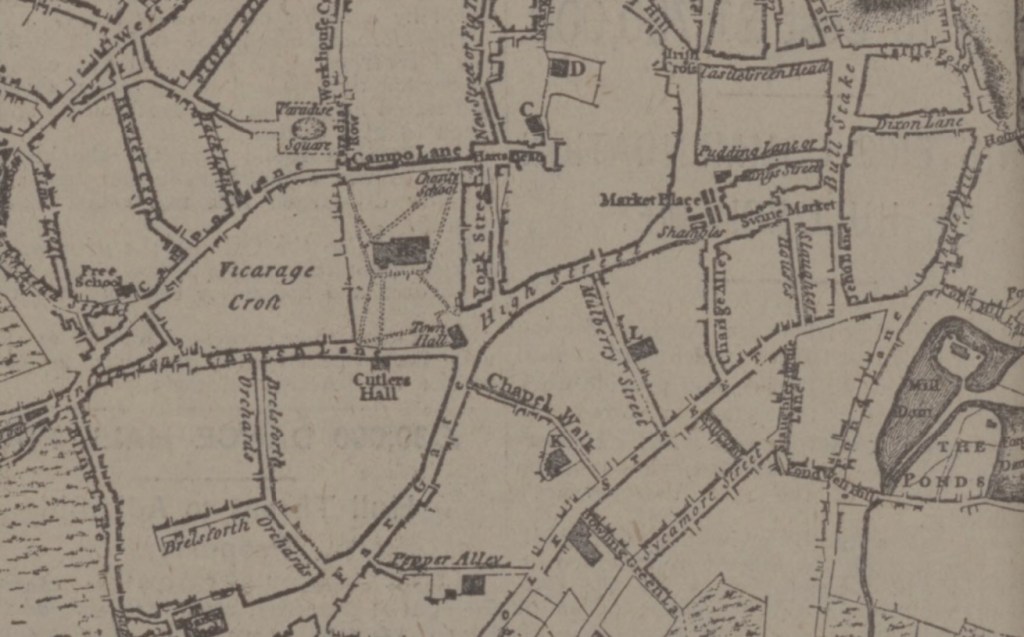
Its existence is shown on this map, taken from “A Correct Plan of the Town of Sheffield, in the County of York, drawn by William Fairbanks, 1771.”

You’ll notice that Norfolk Row, pictured, doesn’t appear on the map at all, only coming into existence about nine years later. However, Chapel Walk is shown.

A little bit of Pepper Alley (Pepper is a local surname) can still be seen today, leading into Upper Chapel Yard, behind the shops which form part of the former YMCA property, now named Carmel House, at the corner with Fargate.

If you study the map you’ll see that the Town Hall stood by the Church Gates (now the Cathedral), at the junction of High Street and Church Lane (now Church Street).

Other names to look for are Bullstake (now Haymarket), Pudding Lane (King Street), Castle Green Head (Castle Street), Irish Cross (Queen Street), and Pinstone Croft Lane (Pinstone Street)

Categories
Buildings

The brick houses of Sheffield

When was the first brick house built in Sheffield?

In the book, “Reminiscences of Sheffield,” it states that the first brick house was built at the end of Pepper Alley about the year 1696.

Pepper Alley was superseded by the grander title of Norfolk Row, created nearby in 1780.

This long-lost house was leased at an annual rent of 24 peppercorns, quite high for the time because a rent of “one peppercorn if demanded” was a common nominal rent. But why should rents in Pepper Alley have been nominal? After all, one would have thought that land was rather valuable in this neighbourhood.

The statement that the house in Pepper Alley (was it so called after the peppercorn rents?) was the first brick house in Sheffield rests upon the authority of the Rev. Edward Goodwin, a clergyman of antiquarian tastes, who lived in the town at the end of the eighteenth century.

However, we can perhaps refute his claim, and will probably never know.

About the fourteenth century the houses in Sheffield were of wood, or partly of wood and stone, and in some of these houses brick must have been used in combination with wood.

Brick was little used in northern towns, where stone was plentiful, but it is likely that some old builder or architect used brick instead of stone, merely by way of change.

Sheffield was a stone-built town for the most part, but when the Duke of Norfolk began to lay out new streets between Pond Lane and Norfolk Street, and in the neighbourhood of Scotland Street and West Bar, a great deal of brick was used.

When street improvements were made, a few old brick houses were pulled down, and, plain as their exteriors probably were, some of them contained beautifully carved chimney-pieces and panelled walls, showing that these houses had once been occupied by people of wealth and consequence.

It’s very improbable to say the least, that no brick house was built in Sheffield before 1696. After all, the great tower at Sheffield Manor was of brick in Cardinal Wolsey’s time, and we know how old it was even then.

Categories
Buildings

Brown Bear

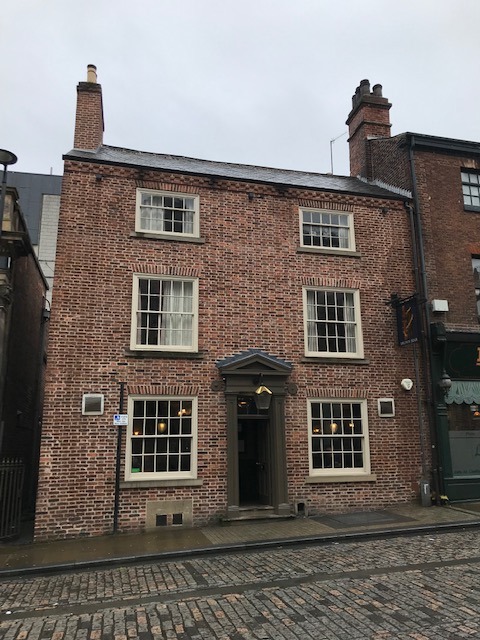
The Brown Bear is referred to as one of the oldest pubs in Sheffield, believed to have been built about 1745, although whether it was originally a pub is open to debate.

The square-set Georgian pub is one of the earliest surviving brick buildings in the area, once referred to as being the last house in Norfolk Street.

The Sign of the Brown Bear, the Brown Bear Inn, or the Old Brown Bear, as it was once known, probably refers to bear-baiting, popular in Europe until the 19th century. Any claims that it was named after the bear pit at the Botanical Gardens are unlikely as this wasn’t created until 1836, and was home to Bruin, a black bear.

We can trace its origins as a pub to at least 1790, home to John Crookes, regularly frequented by townsfolk, and where beer was brewed at the back of the house.

As well as an ale house it was also home to several groups, including the Fitzalan Sick Society and the Old Brown Bear Sick and Funeral Society.
In 1896, The Brown Bear was taken by John Smith’s Tadcaster Brewery on a 21-year lease which maintained ties up until the beginning of this century.

In the 1920s, it was used to play the game of Bumble Puppy, a version of True Madame, a game still played in Belgium and France. It was played on a raised board, balls rolled down a sloping top towards nine numbered arches.

It was bought by Sheffield Corporation in the 1930s, and in 1981, when the lease was up for renewal, a stipulation was included that the character of the pub could not be altered. The winning bidder turned out to be John Smiths, which held it until 2005 when it was taken over by Samuel Smiths.

Categories
Buildings

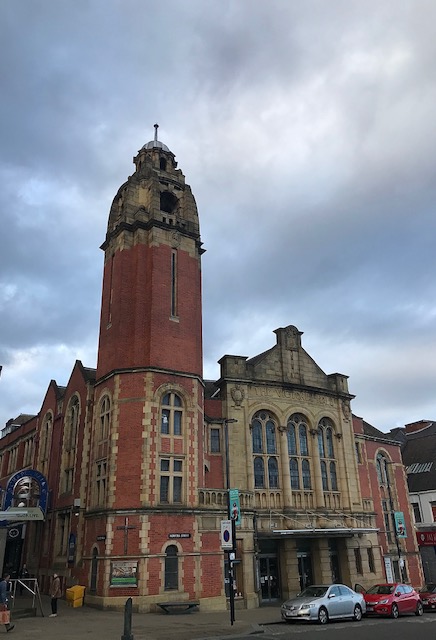
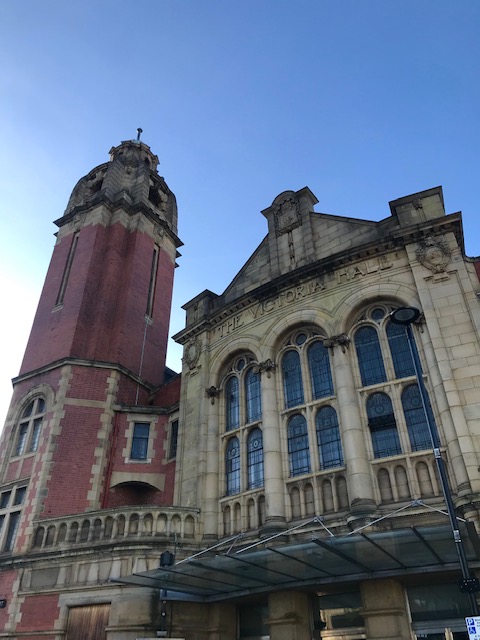
The Victoria Hall

Within the Victoria Hall, on Norfolk Street, is a time capsule that was buried within one of fifteen foundation stones in September 1906.

The ceremony was attended by 3,000 people, celebrating the construction of the new building for the Sheffield Wesleyan Mission, designed as a place of worship, as well as for institutional and religious work.

The Victoria Hall stood on the site of the old Norfolk Street Wesleyan Chapel, the site extended to include land gifted by Thomas Skelton Cole, a devout Methodist, and the chairman of Cole Brothers.

Inside the foundation stone laid by Mrs Thomas Cole was placed a casket, hermetically sealed. It contained an old bottle which was taken out of the stone at the entrance of the old Norfolk Street Chapel, and placed there no doubt when the foundation stone of that building was laid in 1780.

The bottle contained a circuit plan of that day and the day’s programme. Also placed in the casket was the circuit plan for September 1906, a list of the trustees of the new Victoria Hall, the last annual report of the Mission, copies of the Sheffield daily newspapers, a civic directory of the city, and some coins of the realm.

Two years in the building, the Victoria Hall was opened on September 24, 1908, by three ladies, representative of the oldest and most esteemed Wesleyan families in Sheffield – Mrs Samuel Osborn, Mrs Samuel Meggitt Johnson and Mrs Cole. Called to the front, William John Hale, the architect, presented to each of the ladies a gold key with which were opened the three large main doors.

Over a hundred years later, the Victoria Hall is now used by voluntary organisations, including meals for the homeless, and as a popular music and events venue. However, church services are still held every Sunday evening.

Categories
Buildings

The Victoria Hall

When it opened in 1908, the Victoria Hall was a bit of an eye-opener for Methodist church-goers. At the start of a new century, the Wesleyans wanted to attract a new crowd, so the words ‘church’ and ‘chapel’ were omitted from its name.

This was a replacement for the Norfolk Street Wesleyan Chapel, built in 1780 and demolished in 1906, and didn’t want to draw its strength from existing churches. Instead, it wanted to catch those people who spent their spare time in the streets.

The Sheffield Wesleyan Mission had considered calling it the Central Mission Hall, but realised that there was already a Central Hall on Norfolk Street, one that was devoted to public entertainment.

This meant that the Victoria Hall, as it was christened, looked nothing like conventional Methodist buildings, the design chosen in a competition, won by  Waddington, Son and Dunkerley of Manchester.

However, when the architect, William Angelo Waddington, died in 1907, a year after the foundation stones had been laid, it was left to Sheffield-based William John Hale (1862-1929), second in the competition, to finish the design.

The extent of Hale’s alterations to the original plans is unclear, but the tower and its uppermost elevations were considerably changed.

The result was a mix of Gothic and Arts and Crafts styles, red brick and stone, with a massive neo-Baroque top to the tower, and carved decorations by Alfred and William Tory. The total cost was £41,000, of which £25,000 had already been paid or promised.

As usual for this time period, construction was by the inexhaustible Sheffield builders, George Longden and Son.

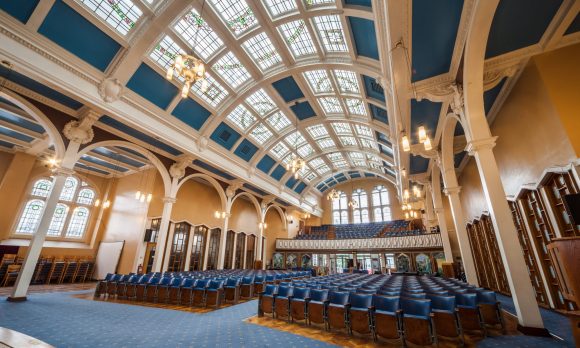
The Main Hall, with its tip-up seats and wooden flooring, was designed for 2,000 people, while the Lecture Hall accommodated up to 400. The rest of the Victoria Hall was made up of smaller suites, halls, class and club rooms, as well as an innovative cinematographic box.

The total number of rooms amounted to seventy, suitable for institutional and religious work.

Said one commentator at the time:

“One finds a pleasure to traverse the cement-stepped stairs, with their bright walls, and beautifully designed stained glass windows, and at every turn, vistas of long corridors, where monotony of vision is eased by the insertion of arches on the ceiling.”

Pleasant to the eye also was the artistic brightness, without a suggestion of garishness, of the white and pale green walls and the well-lighted roof.

A ventilation system of powerful exhaust fans drove impure air through a series of tubes and emitted it by way of the tower.

In World War One, the Victoria Hall opened its doors to the Armed Forces and was visited, in 1919, by King George V and Queen Mary, who presented medals to returning soldiers. It also served free breakfasts during the Great Depression to needy children, as well as distributing food parcels to the unemployed.

Prior to the opening of the City Hall in 1932, this was also Sheffield’s leading concert venue, a role it still fulfils as a popular classical music venue.

During World War Two, the Victoria Hall was partly converted into an Armed Forces rest hostel with 20 beds, increased to 35 at the height of hostilities.

The building underwent an extensive restoration in 1930, and has subsequently been remodelled to create an events venue, although church services still take place every Sunday evening.

If ever you get chance to call in, take a good look at the splendid glass roof in the Main Hall.