Categories
Buildings Companies

That ‘German’ company’: The rise and fall of Wilson Peck

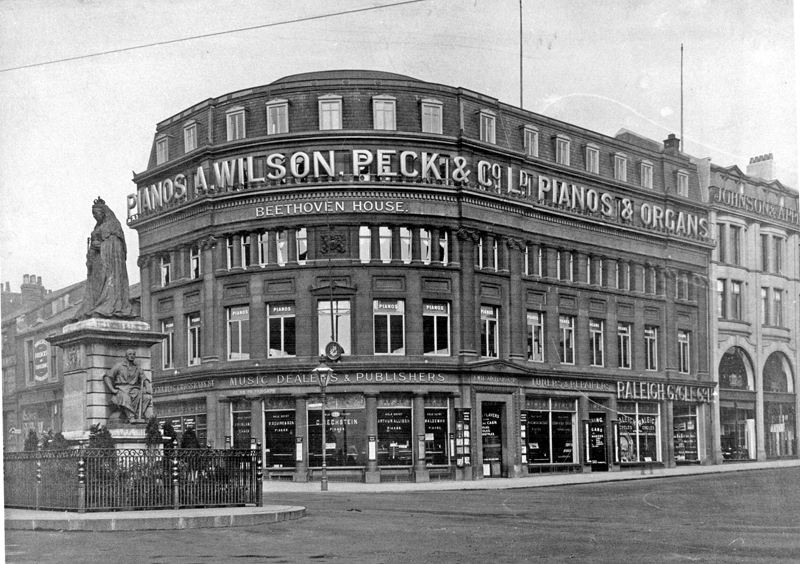
Wilson Peck Ltd., Beethoven House, Music Warehouse, Nos, 66, 68 and 70, Leopold Street, from Town Hall Square. Image: Picture Sheffield

The year is 1917 and Maximilian Lindlar is feeling annoyed. He had decided to sue Herbert Sinclair, editor of The Piano Maker, and its printers, King and Jarrott, for damages for an alleged libel contained in an issue of the paper.

Lindlar, born in Dusseldorf, left Germany at an early age, and had lived in Britain for forty years. A naturalised Englishman, denaturalised in Germany, he was a freeman of the City of London and between 1884 and 1912 he had been in the service of Edwin Bechstein, of Johanns Strasse, piano makers of Berlin.

The Bechstein business was founded in Berlin in 1853, developing a full range of pianos that met the requirements of professional pianists, musical institutions, and private music lovers alike. In London, its distribution was centred at Bechstein Hall in Wigmore Street, with upwards of one thousand grand and upright pianos displayed in different showrooms, with over one hundred musicians engaged for teaching purposes, and over four hundred concerts held every year.

While under the employment of Bechstein, Lindlar became involved with two British companies, Arthur Wilson and Peck Ltd of Sheffield, and Hopkinson Successors Ltd of Leeds, two retailers with monopolies for selling pianos in their respective cities.

In 1915, the total capital of Arthur Wilson and Peck was £20,000; Edwin Bechstein holding £10,250 of shares and Max Lindlar possessing £1,500. Lindlar’s brother, William Ludwig, a director, was the second highest shareholder with £2,562.

When war against Germany broke out in 1914, Bechstein’s holdings had allegedly been transferred to British shareholders, but this turned out not to be the case.

Lindlar had taken offence that Sinclair had published a scathing article and had dragged up comments made by him in preceding years.

“It is a national impossibility for an Englishman to produce a piano with each note perfectly balanced in tone. He has no true ear. His piano sounds all right to him, he does not know.”

Sinclair also published comments that Lindlar had made about the war.

“I do not think that England will be able to hold out financially to the end as Germany is very strong and well organised.”

What irked Lindlar most was a story in a newspaper that claimed he was attempting to drive British officers out of London’s German Athenaeum Club.

Such was the controversy over Arthur Wilson Peck and Co’s German influence that it was discussed in Parliament and subject to investigation by the Board of Trade in 1916.

Lindlar won his case and was awarded one farthing in damages, but Arthur Wilson Peck and Co suffered, its name  ‘MUD in large letters’ according to one journal while others continued to call it a ‘German’ company. Soon afterwards, Edwin Bechstein’s shares were sold to a British businessman and the Lindlar brothers held a dinner at Sheffield’s Grand Hotel to announce that their interests had also been sold and were retiring from the business.

Afterwards, it was business as usual for Arthur Wilson and Peck Ltd, a Sheffield company that grew out of Victorian enthusiasm for the piano.
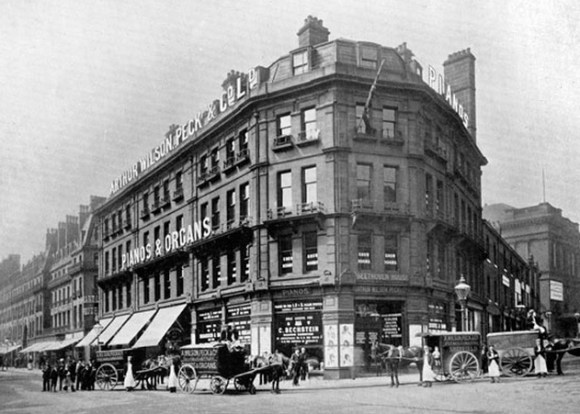
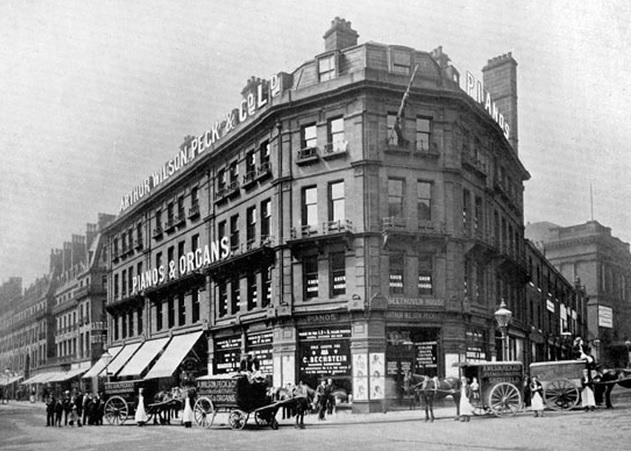
The first shop. Arthur Wilson, Peck and Co., Ltd., pianoforte, organ, and musical instrument dealers, Beethoven House, Pinstone Street. 1897. Image: Picture Sheffield

The company was created after Max Lindlar had masterminded the merger of two successful Sheffield piano sellers, Arthur Wilson, and John Peck, in 1892.

Arthur Wilson had started out as a piano shop at the corner of York Street before moving to Fargate and West Street, while John Peck, a piano tuner, had a business at the County Piano Saloon on Church Street (situated in the Gladstone Building).

The story behind Arthur Wilson is a strange one because the name was a pseudonym created to disguise the identity of the shop’s real owner.

He was Henry Charles Brooklyn Mushet (1845-1923) from Belgrove House, Cheltenham, the son of Robert Forester Mushet, the inventor of ‘Mushet’ steel, a self-hardening steel, who came to Sheffield with his brother Edward in 1871 to supervise the manufacture of ‘Mushet’ steel at Samuel Osborne and Co, Clyde Steel Works, on The Wicker. A music lover, he set up Arthur Wilson as a side line in 1878 and became an agency for Bechstein Pianos, where he met Max Lindlar.

John Peck (1841-1922) was born in Blyth, near Worksop, and was also regarded as the “father of the city’s fiddlers,’ his skills as a violinist surpassing those of the ‘stars’ who visited Sheffield and a man who went on to become a successful conductor.

With Max Lindlar’s connection to Bechstein Pianos it was decided to form Arthur Wilson, Peck and Co Ltd in 1892. With capital worth £20,000, Lindlar became chairman and John Peck joined as a director, but Mushet decided to step down from the business. Other notable appointments were William Cole, another piano dealer, who served as Managing Director for the first year and C.D. Leng, son of newspaper publisher William Christopher Leng, and a partner in the Sheffield Telegraph.

The first task for the new company was to close its three shops on West Street, Fargate, and Church Street, and consolidate its business in premises vacated by Hepworth Tailor’s at the corner of Pinstone Street and Barker’s Pool. It had cost £470 to set up the company and convert the building into ‘Beethoven House’.
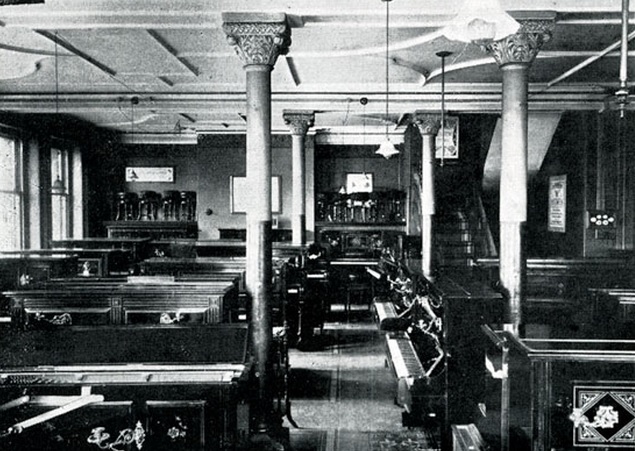
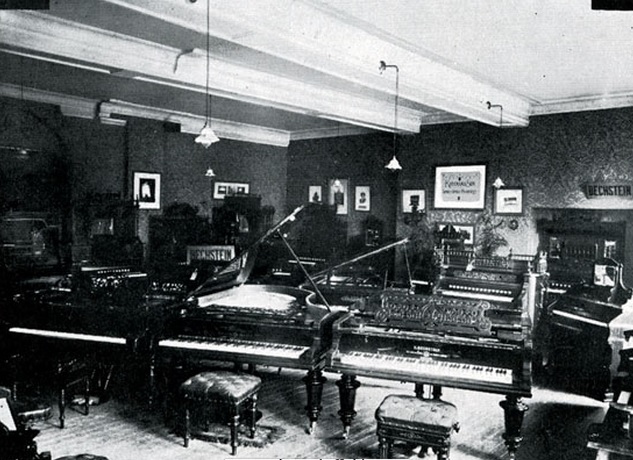
Arthur Wilson, Peck and Co., Ltd., pianoforte, organ and musical instrument dealers, Beethoven House, Pinstone Street – 1897. Portion of Show-Room for High-class Upright Grands. Image: Picture Sheffield
Arthur Wilson, Peck and Co., Ltd., pianoforte, organ and musical instrument dealers, Beethoven House, Pinstone Street – 1897. A Corner of the Show-Room for Grands. Image: Picture Sheffield
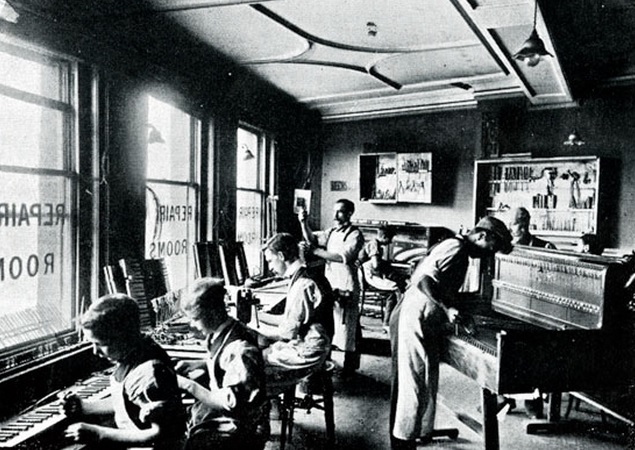
Arthur Wilson, Peck and Co., Ltd., pianoforte, organ and musical instrument dealers, Beethoven House, Pinstone Street – 1897. Repairing Room No.14. Image: Picture Sheffield
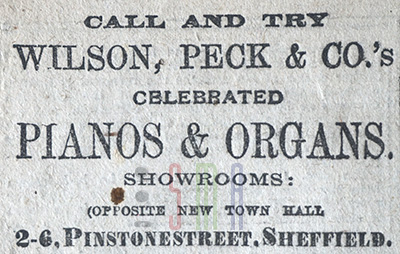
Newspaper advertisement. 1890s. Image: British Newspaper Archive

Within months, Max had been joined by his brother, William Ludwig Lindlar, who had intended to follow in the footsteps of their father, the landscape painter J.W. Lindlar. Instead, he assumed musical and commercial work, and would eventually become vice-president of the Music Trades Association of Great Britain. He became managing director in 1894 and was responsible for organising important concerts in Sheffield and Nottingham, where the company had established a second store.

They were described as pianoforte, harmonium and American organ merchants, tuners, and repairers, as well as sole agents for Bechstein pianos. Within the Pinstone Street building it also had a concert hall used for concerts and recitals.

In 1905, Wilson Peck moved to the opposite corner of Barker’s Pool in the former premises of Appleyards and Johnson, cabinet makers. It was described as ‘the best equipped premises outside London’ and the replacement Beethoven House is the building that most of us still remember.

Wilson Peck were famous for selling musical instruments, sheet music, hosting concerts, and selling ‘new’ phonographic records. On its upper floors it had rooms that could be used for tutors to teach music. In later years it developed a thriving business selling concert tickets for the City Hall and other venues across the country. Wilson Peck ended up with Sheffield’s oldest record department (memorable for its soundproofed listening booths) with sales of records accounting for a sizeable proportion of its business.

Shares in the business changed hands following the departure of the Lindlar brothers and at one stage its chairman was B. J. Readman, who also happened to be chairman of John Brinsmead & Sons, one of England’s premier piano makers. Additional branches soon followed on London Road and Ecclesall Road.

A 1956 advert claims the shop to be ‘the place to go for everything musical: Pianos, Television, Radio, Radiograms, Records, Concert Tickets, etc.’

Wilson Peck was held in high esteem, and it is hard to determine when its decline began. Two World Wars didn’t help a niche market, and the Victorian ideal of making music at home, when pianos were a common sight, had disappeared by the early twentieth century, having a devastating effect on sales of musical instruments and sheet music.

By the 1970s, the directors at Wilson Peck had diversified into property investment culminating in several subsidiary companies and ownership of buildings across the UK. Originally known as the Wilson Peck Group, it changed its name in the 1980s to Sheafbank Properrty Trust, subsequently becoming UK Estates.
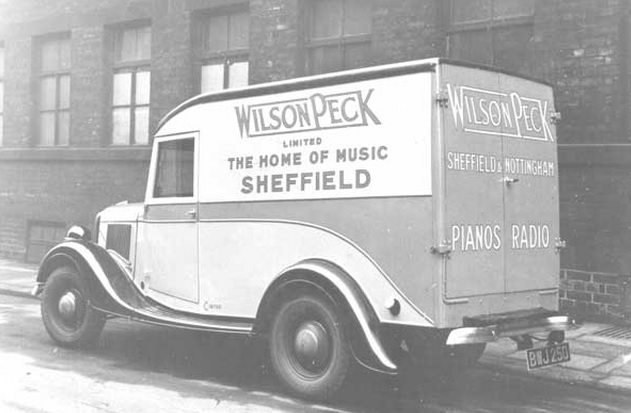
Delivery van, Wilson Peck Ltd. Image: Picture Sheffield

The retailing demise came in the 1980s when Sheffield City Hall decided to take its ticket sales in-house, and the emergence of national record chains (HMV, Virgin Records, Our Price etc.) eroded into Wilson Peck’s earnings.

In 1988, the company vacated Beethoven House, and H.L. Brown, jewellers, moved in. Wilson and Peck downsized to premises on Rockingham Gate but that proved short lived. I’m led to believe that Wilson Peck ended up in ‘an end-of-terrace’ corner shop on Abbeydale Road that closed in 2001.
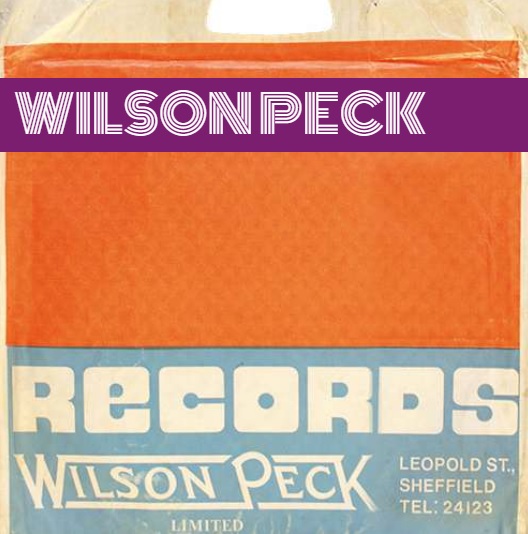
Retro bag for Wilson Peck. Image: British Record Shop Archive

NOTE: –
During the Parliamentary discussion about Arthur Wilson, Peck and Co in 1916, it was said that they also owned a business called Hilton and Company. There is no trace of this business, not helped because Wilson and Peck didn’t retain its archives.

However, there is a post from 2015 on the UK Piano Page whereby somebody said that they had bought an old upright piano: –

“The piano has ‘Hilton & Co’ written in gold writing in the centre of the key cover, also it has ‘Wilson Peck, Fargate, Sheffield’ written on it on the right hand side of the key cover.”

There was a Yorkshire piano company called Hilton and Hilton, but this piano appears not to have been manufactured by them.

Was Hilton and Co a brief attempt by Arthur Wilson, Peck and Co to sell its own manufactured pianos? Somebody, somewhere, might have the answer.

© 2024 David Poole. All Rights Reserved.
Categories
Buildings

Town Hall Chambers: I bet you didn’t know what it was intended to be

This post was planned as a tribute to one of Sheffield’s most famous shops, Wilson Peck, but research into its origins have proved to be rather complex. That post is imminent, but during the investigation some fascinating facts emerged about one of the buildings that it once occupied.

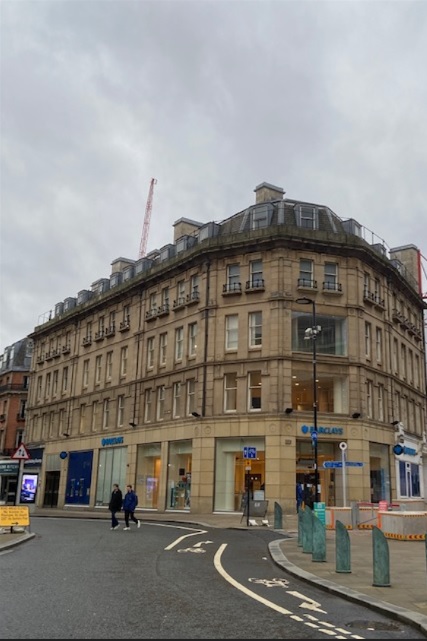
I’m talking about Town Hall Chambers that sits at the corner of Pinstone Street and Barker’s Pool, and now home to the city centre’s last surviving Barclays Bank.

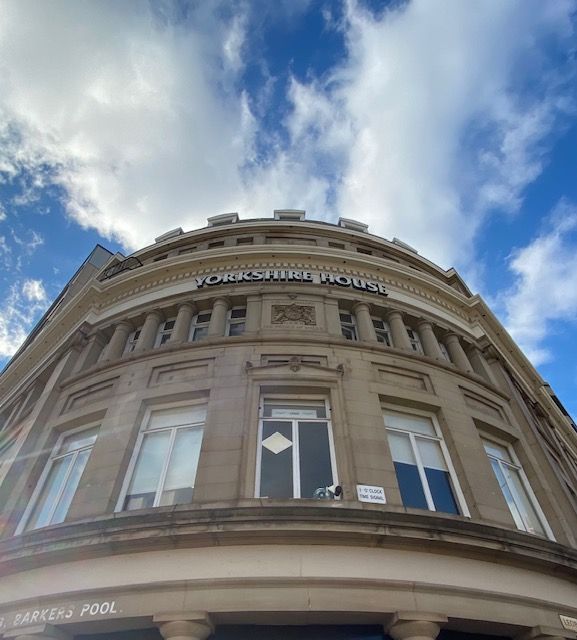
According to Pevsner, it is a ‘worthy, but slightly dull five-storey block of shops and offices’, and like nearby Yorkshire House (another home of Wilson Peck), it has never been listed by Historic England.

The building was designed by Sheffield architect John Brightmore Mitchell-Withers in 1882-85 as part of the street improvement scheme that reinvented Pinstone Lane, a salubrious and narrow thoroughfare, into Pinstone Street, long recognised as one of the city’s most prominent streets.

The site had been an old hostelry called the Norfolk Hotel that was demolished in 1881 as part of the street widening programme. Evidence suggests that J.B. Mitchell-Withers bought the plot of land to build upon, and now I’ve discovered that it was built as a hotel.

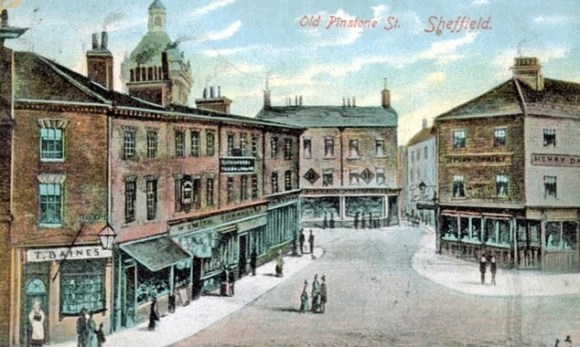
Pinstone Street from Orchard Street, No. 73 Fargate, T. Baines, hairdresser, left, No. 79 Barker’s Pool, Norfolk Hotel (landlord-Henry Darley), right, premises on Pinstone Street include No. 3 Wm Smith, hatter, Nos. 5 – 7 John Richardson, tailor. 1879. Image: Picture Sheffield

In 1884, newspapers advertised that the New Scarborough Hotel was available to let, containing a dining room, commercial room, smoke room, billiard room, refreshments bar and forty bedrooms. It also boasted the best modern appliances for cooking, hydraulic and other lifts, and electric bells.

The following year, it was announced that Lewis’s had ‘acquired the important block of buildings at the corner of Pinstone Street and Barker’s Pool, known as the Scarborough Hotel, and shops below,’ suggesting that the hotel never opened after failing to attract any interested parties.

The name of Lewis’s is famous in the history of UK department stores and the fact that it once had a branch in Sheffield comes as a bit of a surprise.

The first Lewis’s store was opened in 1856 in Liverpool by entrepreneur David Lewis, as a men’s and boys’ clothing store, mostly manufacturing his own stock. In 1864, Lewis’s branched out into women’s clothing, later expanding all its departments, and his motto was ‘Friends of the People’.

The first Lewis’s outside Liverpool opened in Manchester in 1877 followed by Birmingham in 1885. However, it was the Manchester store that it was best known for and later included a full scale ballroom on the fifth floor, which was also used for exhibitions. Its fourth store was in Sheffield, but with stiff local competition from John Atkinson and Cole Brothers, it proved unprofitable, and closed in 1888.

Negotiations quickly took place between the trustees of David Lewis and Joseph Hepworth and Son, a suit manufacturer that had rapidly expanded with over sixty shops across the country.

The premises underwent extensive alterations to accommodate its ready-made clothing, hats, and outfitting departments. The entire building was redecorated and lit with electric lamps, and when plans were submitted for Sheffield Town Hall in 1890, it was proudly referenced as the Hepworth’s Building.

Hepworth’s stay lasted four years, and in 1892 Arthur Wilson, Peck and Co, announced that they were vacating their three premises in Church Street, West Street, and Fargate, and consolidating business in the Hepworth’s Building.

It became known as Beethoven House and lasted until 1905 when it moved to the opposite corner in premises vacated by cabinet makers Appleyards and Johnson, and now known as Yorkshire House.

Arthur Wilson, Peck and Co., Ltd., pianoforte, organ, and musical instrument dealers, Beethoven House, Pinstone Street. 1897. Image: Picture Sheffield

At which point the building became known as Town Hall Chambers is uncertain, but by the 1930s, the ground floor had been subdivided into smaller shops, and the floors above converted into offices for numerous insurance companies.

Our generations will remember it as a centrepiece shoe shop for Timpson’s and as a short-lived branch of Gap, before being reinvented as a futuristic Barclays Bank. I’d be grateful if anyone can name any other businesses that might have been located here.

And so, we’ve discovered that Town Hall Chambers started as an ill-fated hotel. The building itself survived two World Wars and managed to escape Heart of the City redevelopment, but the irony is that neighbouring Victorian buildings further along Pinstone Street, also built as part of the 1880s street widening scheme, will soon become the Radisson Blu Hotel.

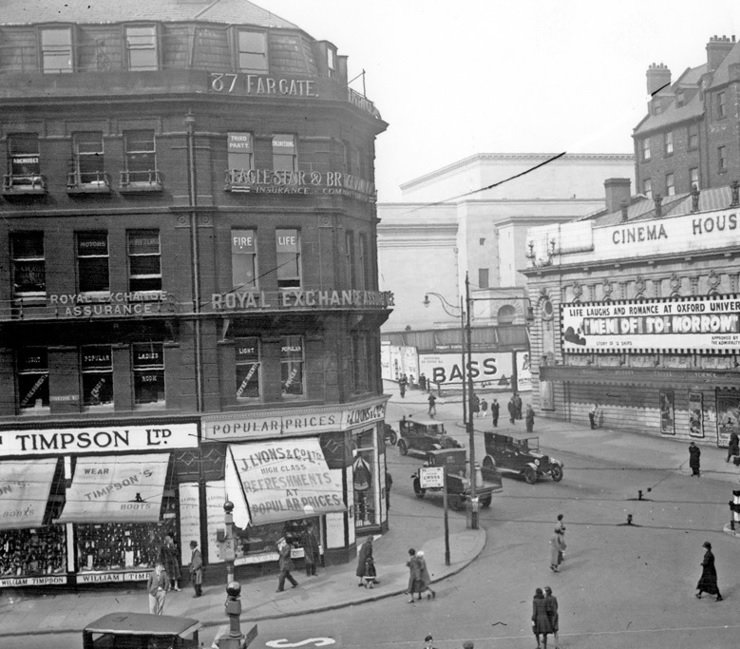
Town Hall Square and Barkers Pool, Town Hall Chambers, William Timpson Ltd., Shoe Shop and J. Lyons and Co. Ltd., Dining and Tea Rooms on left, Cinema House on right. 1935. Image: Picture Sheffield

© 2024 David Poole. All Rights Reserved.
Categories
Sculpture

Balm Green Gardens: “We shall always be proud of this garden, because it is not only a gift for all time.”

Design of Covid Memorial willow tree sculpture. Image/Sheffield City Council

If all goes to plan, Sheffield will reveal its official Covid memorial in the spring.

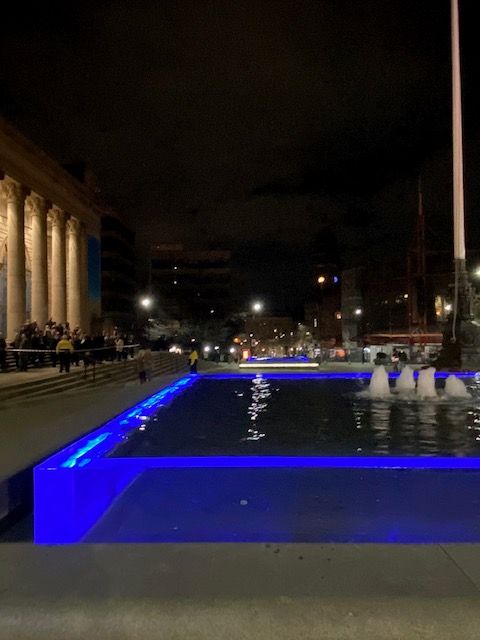
The sculpture will sit within the planted garden at Balm Green Gardens, on Barker’s Pool, and provide a focal point to the space for people to pay their respects and place tributes and memories and be a symbol that people from all cultures can understand and relate to and be accessible to everyone.

The existing Balm Green Gardens will be upgraded alongside this project, including creating better accessibility for anyone with a disability.

The winning commission, chosen out of 14 entries, is by George King, an architect and sculptor, of George King Architects, who submitted a positive and confident application. He will use stainless steel to create a design based on a willow tree and has already begun work on creating the sculpture.

The unique memorial will be a meaningful, long-lasting, and creative tribute to those who have lost their lives, those who have worked above and beyond to keep people as safe as possible and those who have been affected by Covid.

“When we thought about Covid and how the pandemic affected so many people, the willow tree idea was powerful to us,” says George.

“A willow has a strong trunk which symbolises how people worked together to create the strength that was needed at such a difficult time. It is also a flexible and resilient tree, whilst also being delicate.

“When a storm hits, the tree bends with it. Its long branches sweep all the way to the ground and when it rains the droplets fall all the way down the branches like tears to the ground.

“When you stand underneath a willow tree you feel embraced and protected.”

The memorial will be constructed using cast or fabricated metal to reflect the city’s heritage and will include other durable materials. Its design will allow people to connect with it either by reading the stories and messages it holds or by attaching temporary messages or ribbons.

George King. Image/George King Architects

George King is an award winning chartered architect who has worked on projects in Europe, US, Australia, the Middle East, and Russia.

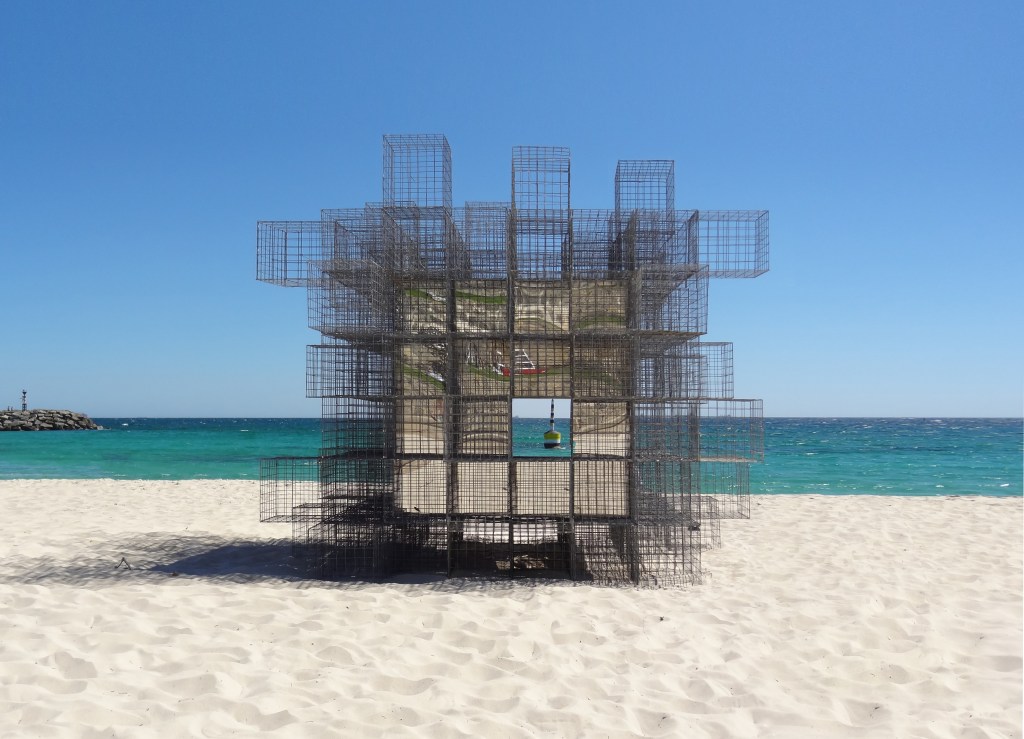
Prior to forming GKA, George was senior architect at Zaha Hadid and has exhibited at the Royal Academy of Arts in London, Detroit Design Festival, London Festival of Architecture and Sculpture by Sea where his design, House of Mirrors, won the Andrea Stretton Memorial Invitation.

George has taught extensively, both at Undergraduate and Master’s level, leading programs at Lund University in Sweden, The Bartlett School of Architecture in London and Monash University in Australia. He currently runs an undergraduate studio at The University of Greenwich.

Following the House of Mirrors’ successful first showing in Bondi, George King’s sculpture won the Andrea Stretton Memorial Invitation which included an opportunity to create a piece for Sculpture by the Sea in Cottesloe 2015. Image/George King Architects

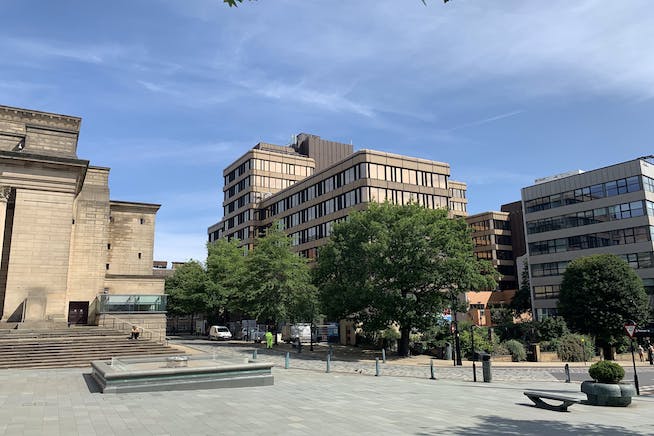
Balm Green Gardens, also known as Barker’s Pool Garden and Fountain Square, is 400 square yards in size, and would never have been created had it not been for the opening of the City Hall in 1932.

The land was owned by the adjacent Grand Hotel, the plot used as a carpark enclosed with advertising hoardings. But J.G. Graves, that famous city benefactor, thought it was an “eyesore”, obstructing the view of the splendid new City Hall from the Town Hall and the top of Fargate.

His solution was to negotiate the purchase of the land from the hotel and gift it to Sheffield.

“It will, I hope, provide a note of quiet sympathy which will be in harmony with the feelings of those who visit the War Memorial in the spirit of a visit to a sacred place.” – J.G. Graves (1937). The gardens will now provide a sympathetic space of a different kind. Image/Colloco

©2022 David Poole. All Rights Reserved.

Categories
Streets

Is there anything to discover underneath the streets beside the City Hall?

Sheffield City Hall, Barker’s Pool, with Holly Street (left), and Balm Green (right). Image: GoogleEarth

I have an intriguing question. If we were to dig beneath the roads flanking the City Hall, what would we find?

Holly Street and Balm Green, both 60ft wide, were created in 1932 to service the newly constructed building.

“The importance of a big space is emphasised when it is realised that between 3,000 and 4,000 people will frequently leave the City Hall within a few minutes and many of them will have motor-cars,” said M. J. Hadfield, the City Engineer, at the time.

It turned out to be a massive undertaking because the roads were built over old cellars and three deep wells and required a bed of 12 inch concrete with double reinforcements, triangulated to provide the greatest possible strength at the least expense. Masses of iron rods were intertwined in the form of triangles, allowing the roads to carry weights more than 100 tons.

The cellars had belonged to shops between Pool Square and Holly Street and had been erected well over a hundred years before. In the first instance they were private dwellings, but in the course of time were reconstructed and remodelled as shops and demolished to make way for the City Hall.

What undiscovered treasures lay beneath these roads?

In the Burgery of 1609 Holly Street is referred to as Blynde Lane, and in 1700 is called Blind Lane or Hollin Lane, while the records of 1823 show it as Hollin Street. The corruption of Hollin Street to Holly Street is simple because ‘hollin’ or ‘hollen’ was an ancient name for holly.

In Fairbank’s survey, what is now Barker’s Pool appears as Balm Green, while the lane now known as Balm Green was called Flint Well. In Taylor’s survey of 1832, Balm Green had been renamed Barker’s Pool, while Flint Well was known as Flint Well Lane. With the building of the City Hall, Flint Well Lane became Balm Green.

The origin of Balm Green is one that has puzzled historians, but there is a likely explanation.

Joseph Woolhouse wrote in 1832, that a Mr Barker was living at Balm House, a large farmhouse supposed to be situated in Coal Pit Lane (now Cambridge Street). Behind the house were orchards where now Back Fields is. It is possible that Balm Green was the herb garden attached to the orchards.

But we should also consider that Orchard Street, between Church Street and Leopold Street, was once the site of an extensive fruit garden known as Brelsforth’s Orchard, and Balm Green might have been the herb garden attached to this property instead.

A less likely theory suggests that the open space between the former John Lewis department store and the City Hall was once called Le Baine, with an early reference in a deed of 1333. Because the area was rich in springs and wells, it has been suggested that Le Baine evolved from the Latin word ‘balneum’, a warm bath, or a place for swimming, and eventually into ‘balm’.

Mr Barker established our first waterworks at Balm Green in 1434. The area subsequently became Barker’s Pool and two centuries later, it was cleaned and repaired by a public benefactor, Robert Rollinson, and for upwards of three centuries was in daily use. The pool in its latter days became defiled; the rubbish of the town, and dead animals, were thrown in, and it was subsequently filled up in 1793.

©2022 David Poole. All Rights Reserved.
Categories
Buildings

Harris Leon Brown and the one o’clock time signal

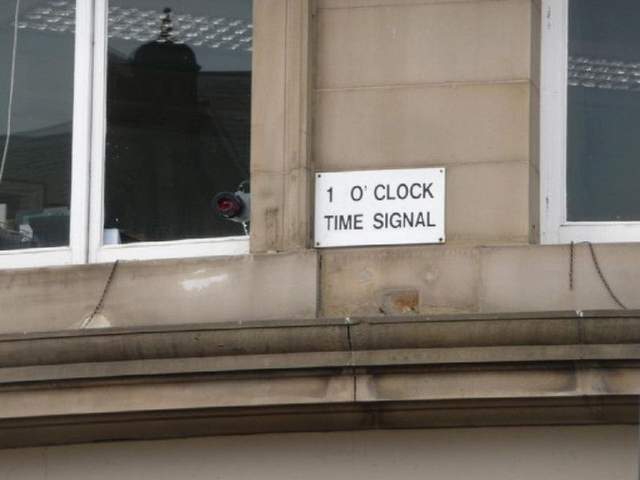
H.L. Brown is situated in Yorkshire House at 2 Barker’s Pool. Sheffield. The time signal can be seen in the first floor central window. Image: DJP/2022

It confuses many people but is a reliable reminder to others. I’m referring to the one o’clock time signal that blasts out daily from above H.L. Brown at Barker’s Pool.

Today it’s a quirky tradition, and a reminder of a time when the concept of time was a bit fuzzier.

The origin of the time signal goes back to 1874, when in Angel Street, Harris Leon Brown fixed and maintained a ‘Greenwich time ball’ – that was placed on a flagstaff outside his premises, and which by an electric current fell at exactly 1p.m., Greenwich mean-time.

Back then, – different towns tended to keep different times, and thus Greenwich Mean Time was established.

Back in Sheffield, the 1 o’clock Time Signal became a handy way for city workers to mark the end of their lunch breaks, though its position above the watchmaker was used to ensure that his timepieces were accurate.

The equipment was admired for two years, but electric signals in the open air were affected by the weather and its failure to ‘drop’ on several occasions caused it to be removed.

In 1876, he entered into an agreement with the Government to supply him daily for three years with the correct time. A wire connected his shop in Angel Street with the Royal Observatory at Greenwich, and at one o’clock every day the ball dropped with remarkable precision as the sixtieth part of a second.

In his window, Harris Brown displayed several English keyless chronometer watches, especially adapted for pocket timekeepers. All of these were regulated by the time ball placed outside his shop door.

In 1891, a ‘Greenwich mean time flashing signal and time bell’ was installed in the window of H.L. Brown at new premises at 71 Market Place. It was a synchronised clock with flashing signal and bell, showing mean time daily at 1p.m. and was unaffected by rain or snow.

The clock was 14 inches in diameter, and on either side were two open circles, about half the size of the clock dial.

The one on the left contained a ‘flashing signal’ – a disc of metal painted red, and finely balanced on a pivot. Throughout the day this disc remained with its edge towards the front and was almost invisible. But precisely at one o’clock in the afternoon (GMT) the electric current arrived, giving the disc a quarter revolution, and causing it to reveal its full face, and fill up the open circle, remaining in that position for two seconds.

Simultaneously, the time bell fixed in the open dial to the right of the large clock was struck, so that the electric current made its arrival known both to sight and sound.

To obtain this equipment, H.L. Brown had to enter a five year agreement with the Post Office and pay a large yearly subscription. They were the only watch manufacturer to receive this direct signal. He stated that one of the reasons for installing the equipment was because he had sold many watches from the Government observatory at Kew, and which were guaranteed to keep exact time.

By visiting the Market Place any day at one o’clock, he said that users could ascertain if their watch was ‘on time’ as accurately as by a visit to London.

H.L. Brown later moved to 65 Market Place, and along with it went his equipment. It was bombed in 1940 and the shop moved to 70 Fargate at the corner with Leopold Street.

The time signal was subsequently replaced with a siren, and this was relocated to its current position at Barker’s Pool when H.L. Brown’s Fargate shop was demolished in 1986 for the construction of Orchard Square.

Above the entrance, there’s a small black and white sign proclaiming “1 o’clock time signal” and alongside it, the siren that you hear each and every day. Image: Sheffield Star

©2022 David Poole. All Rights Reserved.
Categories
Buildings

John Lewis becomes a listed building

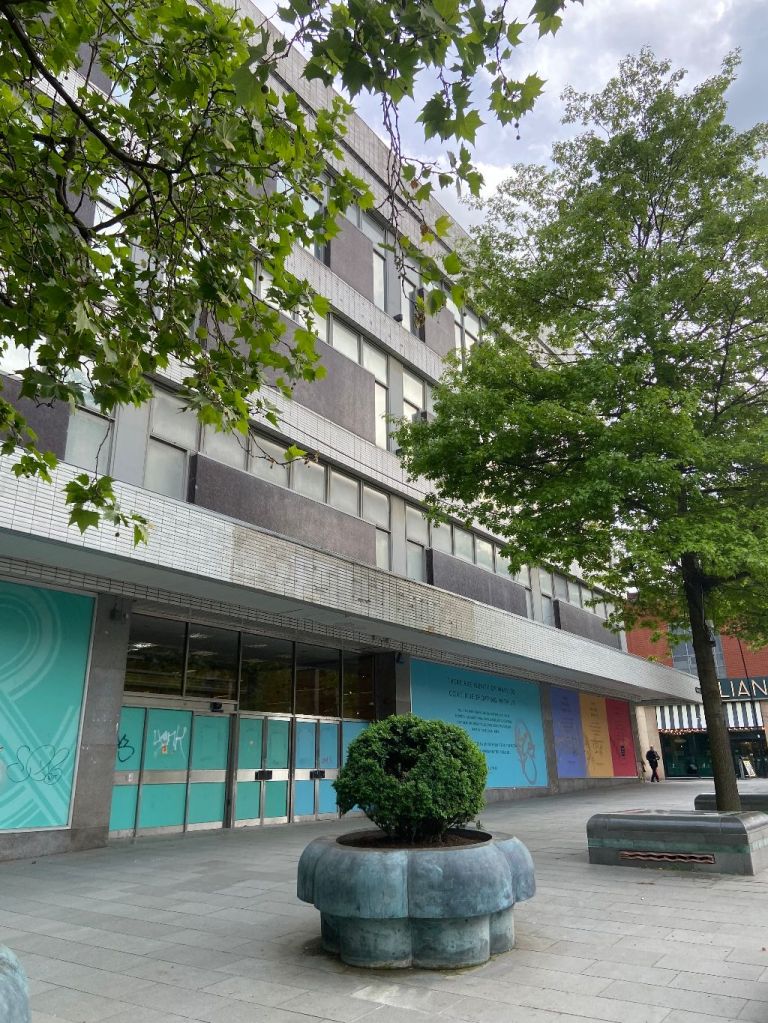
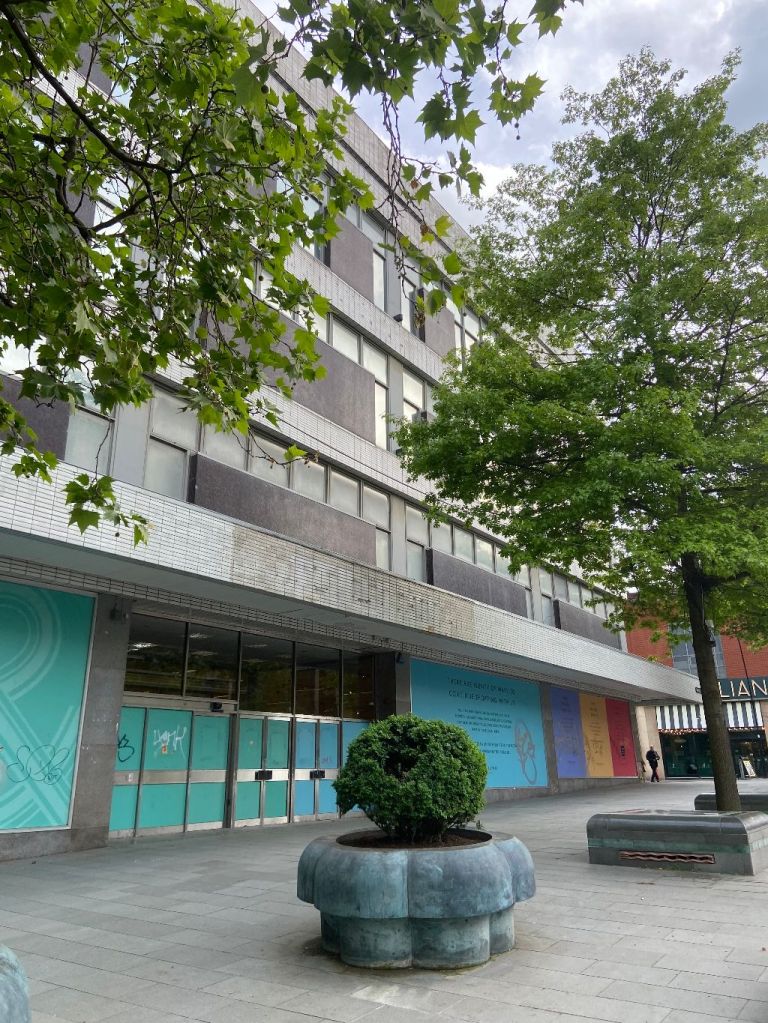
The former Cole Brothers/John Lewis store. Image: DJP/2022

Interest in the former Cole Brothers/John Lewis store in Barker’s Pool exceeded expectations, wrote David Walsh at the Sheffield Star.

There had been ‘fifteen or sixteen credible and exciting bids; according to Councillor Mazher Iqbal, Co-chair of the Transport, Regeneration and Climate Policy Committee at Sheffield City Council.

Such was the interest that any decision on the building would be delayed until November while applications were vetted.

The news almost certainly saved the building, and Councillor Iqbal said he favoured retaining or part-retaining the building, although demolition had not been ruled out. He added that the carpark would come down because it was ‘not safe and posed a safety risk.’

But I wonder how many of those applicants will still be interested today.

This morning, Historic England announced that the former Cole Brothers/John Lewis store had been granted a Grade II listing, meaning that it is of ‘special interest, warranting every effort to preserve it.’

“Historic England was asked to assess the former Cole Brothers’ (John Lewis) department store for Listing,” said a spokesperson. “After careful consideration, our recommendation to The Department for Digital, Culture, Media & Sport (DCMS) was that it should be listed at Grade II.

“It is a rare example of a post-war department store – designed by a leading mid-C20 firm of architects – with clean, crisp Modernist lines and a sophisticated layout for shoppers. It stood out from the crowd and contributed to the city of Sheffield’s vision for a vibrant new environment for its residents. The Department for Digital, Culture, Media & Sport agreed with our advice and has today granted the former Cole Brothers’ (John Lewis) Department Store listed status.”

Hallamshire Historic Buildings and the Twentieth Century Society had applied for the designation that also included the carpark.

As far as the C20 Society is concerned, it marks the culmination of a 20 year battle to get it listed.

The building was accepted by Historic England as ‘a good example of early Sixties architecture by an important firm of architects’ but initially turned down for listing in December 2001.

Although further acknowledging the store as an ‘important post-war building’, a Certificate of Immunity from listing (COI) was issued in September 2002, but this lapsed in 2007.

Upon consultation for its renewal in May 2022, C20 Society strongly objected and called for the building to be listed at Grade II. 

The change heralds a long-called for thematic investigation by Historic England into the department store as a unique building type, testament to C20’s ongoing Department Stores Campaign and the efforts of other heritage organisations in helping raise awareness of so many underappreciated examples. With the nature of retail and the character of our high streets changing so profoundly in the past two decades, the plight of former department stores has recently become a topic of national conversation.

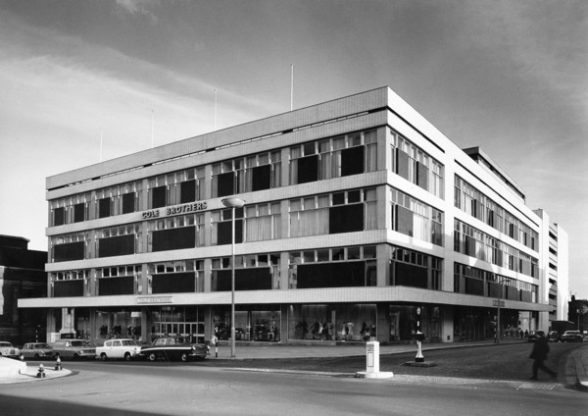
Designed by prominent post-war modernists, Yorke, Rosenberg & Mardall (YRM) – also behind other big commissions like St Thomas’s Hospital in London, Gatwick Airport and Manchester Magistrates Court – the store was built in 1963.

As for the building’s future, it means that any decision must now be taken between Sheffield City Council, Historic England, and all other stakeholders, including the C20 Society, in helping to define potential use.

This might prove a stumbling block for some of the ’15 or 16’ applicants but will not deter serious bidders (look at Park Hill as an example).

Demolition isn’t ruled out, but it would be a long process, the final decision resting with the DCMS. But it has happened before. In 2013, after a long campaign to save it, the Grade II listed Jessops Edwardian building was flattened to make way for the University of Sheffield’s futuristic Diamond block.

Cole Brothers new store building in 1963. Image: RIBA Pix
Categories
Buildings

It’s time to wrap-up John Lewis

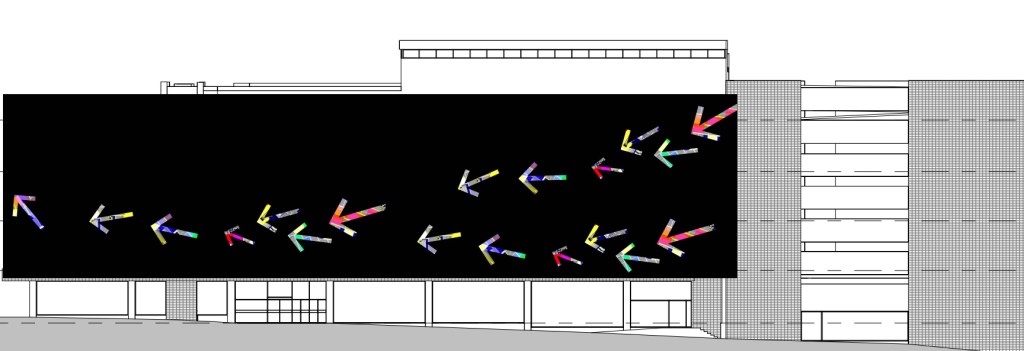
Proposed vinyl wrap for the front of the former John Lewis store. Image: Sheffield City Council

What do you do if a building is looking tired? As in the case of the former John Lewis store in Barker’s Pool. One solution is to cover it in vinyl wrap. And that is the proposal by Sheffield City Council which has submitted a planning application to shroud the 1960s building with a massive advertisement until its fate is decided.  

Side elevation on Cambridge Street. Image: Sheffield City Council
John Lewis closed permanently last year and is awaiting redevelopment. Image: DJP/2022
Categories
Late Night Tales

Late Night Tales #7

Late Night Tales. In the 1600s, Barker’s Pool was sometimes used for ducking harsh-tempered or overbearing women. For this, the ‘cuck stool’ was brought up from Lady’s bridge. The chair was attached to a long wooden beam and was lowered into the water. Repeated ducking routinely proved fatal, the victim dying of shock or drowning. The reservoir went out of use and filled up with rubbish, and in 1793 it was done away with.

© 2022 David Poole. All Rights Reserved.
Categories
Buildings

The John Lewis building prepares itself for a new green space

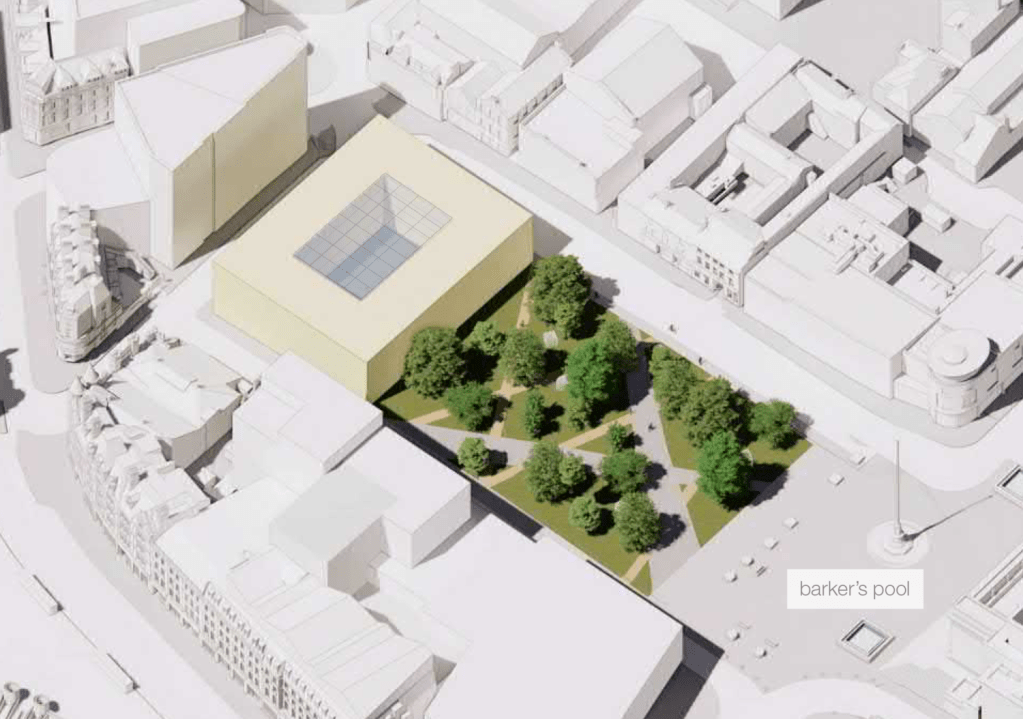
Any new building can be smaller, and more in tune with what current retail, leisure, food and drink or residential developers are looking for. The building would also be designed specifically for its future use. This option can still leave room for new landscaping and public space, plus improves pedestrian and cycling accessibility around the area. Image: Sheffield City Council

Sheffield City Council has full control of the John Lewis building, and this presents the ideal opportunity to create something special on one of the most prominent sites in the city centre.

In summer 2021, the council appointed experts Arup, Fourth Street and Queensberry to look at the condition of the existing building, the carbon impact and how any options would integrate within the Heart of the City and wider city centre.

There are three broad options: Retention and re-use of the building (and a plan for Sheffield Rules, the football museum, falls into this category), or complete removal of the building, creating a large public space, with the third option being complete removal, with public space and a smaller new building developed on the site.

The plans were put out to public consultation, with 1500 respondents, and according to the council,  most favoured replacing John Lewis with a smaller building and outside space at a cost of about £40m.

We won’t know the outcome until the end of the summer, and in the meantime, the scruffy old department store should be clad in full building wrap with printed hoardings around the site.

Considering the implications and cost  of reusing the building, I suspect that this option will be the eventual outcome.

Categories
Buildings

The signs come down and John Lewis disappears

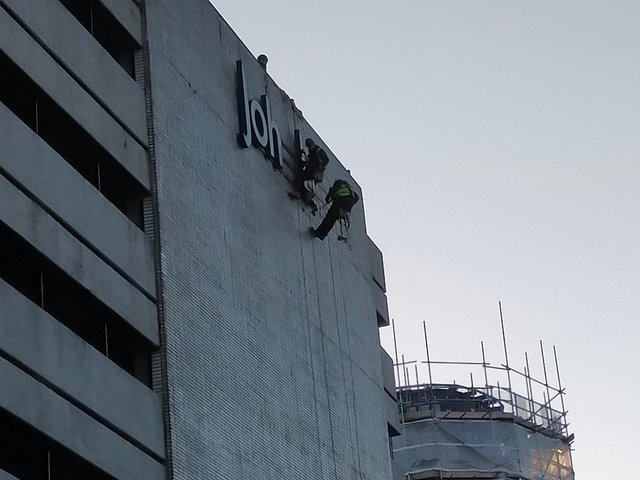
Workcrews abseiled off of the roof of the store in Barkers Pool to remove the last letters of the John Lewis sign from Sheffield’s skyline. Photograph: Sheffield Star

The last call for John Lewis in Sheffield. The signs are down and its association with the city since the 1940s has been obliterated. It was one of eight stores axed nationally and brought to an end the history of Cole Brothers, the beginning of which went back to 1847, when John Cole, silk mercer and hosier, opened a shop at No.4 Fargate. He was later joined by his brothers, Thomas and Skelton Cole. Their Fargate store was taken over by Selfridge Provincial Stores in 1919, before being sold to the John Lewis Partnership. Cole Brothers moved to its purpose-built department store in 1963, and was renamed John Lewis in 2002. It never reopened after the lockdown and confirmation of its closure came in June.

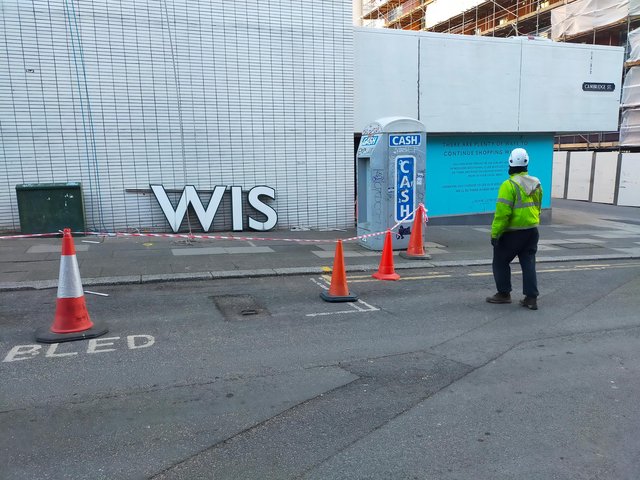
The signs were lowered to ground level before carried away by work crews. Photograph: Sheffield Star
The John Lewis store by Barkers Pool closed down permanently in August after the decision was reportedly taken at the start of the third national lockdown. Photograph: Sheffield Star