Categories
Places

Secret tunnels of Sheffield (3)

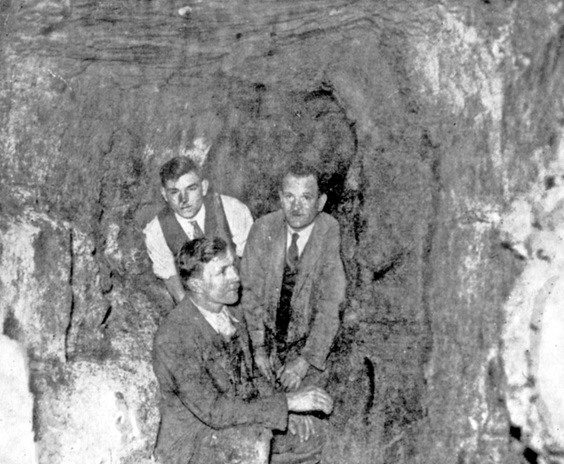
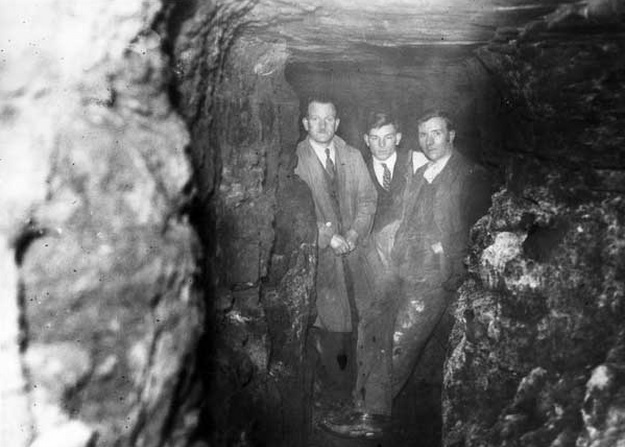
Our final instalment about hidden tunnels underneath Sheffield takes us to 1936, when Frank H. Brindley investigated a tunnel found by workmen underneath the offices of the Telegraph and Star newspaper at Hartshead.

Brindley explored the opening using two skilled masons. The floor was described as well-worn as from long usage, and bone dry, without any trace of rubbish.

“The tunnel was cut from solid rock, about six foot in height and five to six feet wide. Its first direction was east, taking a line towards Castle Hill.
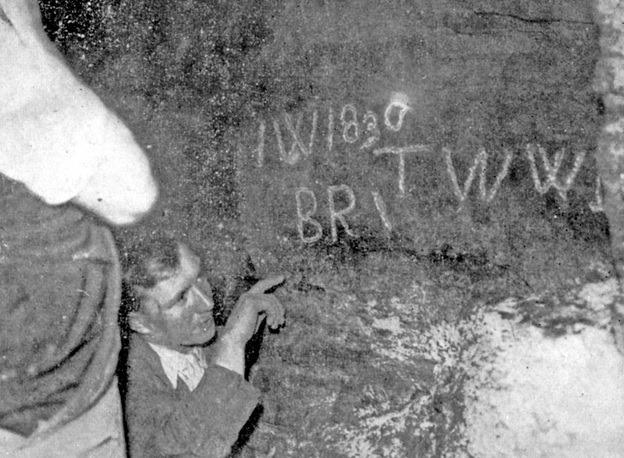
“It turned slightly south and then resumed its eastern direction, and when 50 foot from the entrance hall, we found the first trace of others having found this mystery tunnel before.

“On one of the rock walls were the following letters ‘I.W. 1830’ then just below ‘B.R.’, a dash and then ‘T.W.W.B.'”

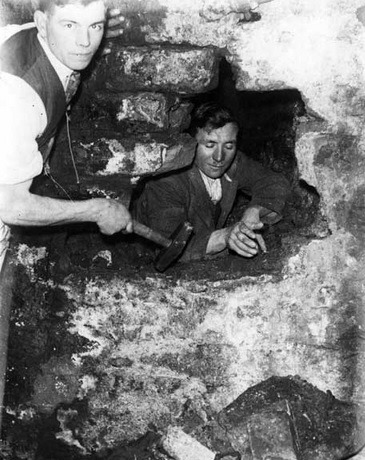
Exploring further, they passed beyond High Street and after rounding several bends found the tunnel ended abruptly at a brick wall, probably the foundations of a building in King Street.
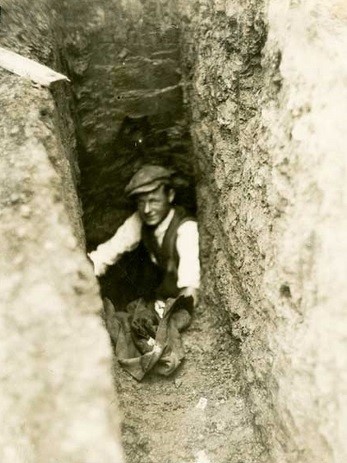
If the wall hadn’t been built, they would have been able to walk underneath the buildings of King Street and entered what was once Sheffield Castle at a point where the markets were then situated.

Pictures and an interview were published in the Yorkshire Telegraph and Star in 1936, providing clear proof of their existence.

Brindley concluded that this was the missing tunnel from Sheffield Castle to the Parish Church (now Sheffield Cathedral), and was undoubtedly the one that had been uncovered in 1896, when Cockayne’s were excavating for a new store on Angel Street, which had then been dismissed as a sewer.
Mr Brindley was in the headlines again at the start of World War Two, when he placed details of underground passageways at the disposal of Sheffield’s Air Raid Precautions (ARP) authorities.

He explained that over the years, tunnels had repeatedly been found cut in the sandstone. Some appeared to have been old colliery workings, but many couldn’t be explained, while many appeared to radiate from the site of Sheffield Castle and were probably connected to mansions in the neighbourhood.

Brindley also shed further light on the 80ft shaft he’d found at Hartshead, that headed towards High Street.

The shaft had led to another tunnel running under Fargate, towards Norfolk Row. Unfortunately, explorations had come to an end when one of the investigating party was overcome by fumes only 50ft from the bottom of the shaft.

This time, Mr Brindley elaborated that the tunnel was part of a network that also connected Sheffield Castle with Manor Lodge.
It’s hard to believe now, but the hillside in Pond Street was said to be honeycombed with coal workings, but Brindley claimed that there were two other “mystery” tunnels found.

One section running from a cellar at the Old Queen’s Head Hotel, he said, was found when Pond Street Bus Station was being built during the 1930s, and the other was found near the top of Seymour Street (wherever that might have been). Beginning in an old cellar it ran beneath the site of the Royal Theatre, towards the Town Hall, where it was lost.

As far as I am aware, this was the last occasion that these tunnels were explored, probably sealed up but still hidden underneath the city centre.

We’ll end these posts as we began by saying that – “One day soon, Sheffield Castle might give up some of its secrets.”
Categories
Places

A deer city

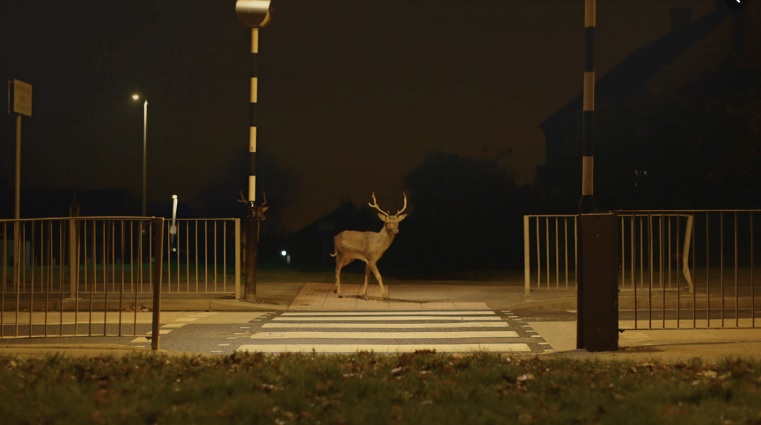
We’re used to seeing foxes and badgers in Sheffield, but sightings of deer in the city are becoming increasingly common.

And we’re not just talking about in the outer suburbs, where the boundary between the countryside and housing has become blurred.

According to Ian Rotherham, Professor of Environmental Geography at Sheffield Hallam University, who has studied populations of deer in the UK since the 1980s, deer are now regular visitors.

“Red deer are established to the west and south-west of Sheffield with a population centred on Big Moor, but now ranging in all directions from there. In the west and north-west, the populations are joining long-standing feral herds around Wharncliffe and Bitholmes with individuals now recorded from Rivelin and Strines.

“Roe deer colonised Sheffield originally from the east and north-east, but now also from the south-west. The population is now well-established in the heart of the urban catchment, with regular sightings, for example, in Crookes, Nether Edge and Sharrow.”

Visitors to the Sheffield General Cemetery, a stones-throw from busy Ecclesall Road, have also reported roe deer, and last August one was found dead in Endcliffe Park.

Muntjac was first recorded in Sheffield during the early 1990s with individual sightings in the Moss Valley.

“Since then there has been progressive movement into the city with recorded sightings in Woodseats, Heeley, Gleadless, Norton, Nether Edge, Sharrow, Parkwood Springs and Queen’s Road.”

The deer population in the UK is at the highest it has been for at least 1,000 years, at around two million.

There are many reasons for this: since wolves, lynx and bears became extinct hundreds of years ago, deer have had no predators to contend with.

They, along with other wildlife, have also benefited from other factors including milder winters, increased woodland cover in some areas and changes in farming such as the planting of winter crops.

“The urban area offers huge possibilities in terms of food,” says Ian Rotherham.

“If you’re a muntjac getting into an allotment or garden, who knows what’s on offer for you? It’s easy pickings.”

Deer are now making their homes in urban woodlands and near rivers, which provide habitats, cover and safe corridors to allow them to find food and breeding opportunities, making Sheffield, with its five rivers, the perfect place.

Categories
Places

History repeating itself

I write this not to spark argument, because I know that a lot of derogatory comments, about tree-felling and Sheffield City Council, will follow. This post is merely to show that history has a nasty habit of repeating itself.

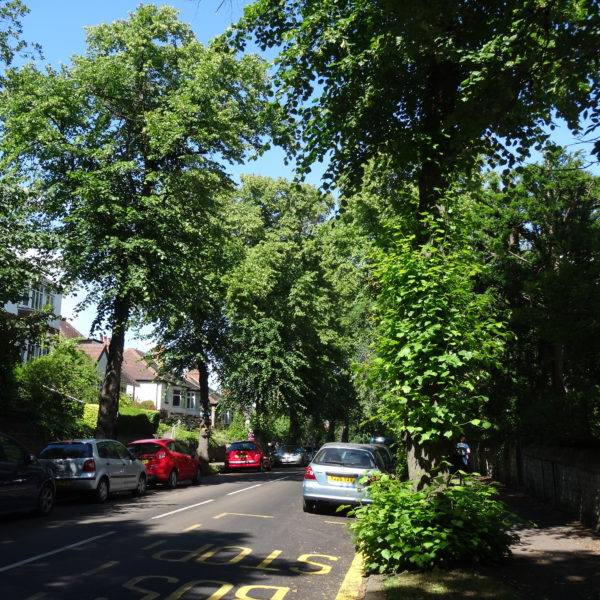
First and foremost, Sheffield has long boasted of being “Europe’s greenest city” – in part because a third of it sits in the Peak District. But it is also due to the sheer number of trees that line the roads.

Some 30,000 of them still arch over highways and footpaths, but according to a correspondent here, nearly six thousand have been felled between 2012-2018.

But let’s go back to 1939, when this letter appeared in the Sheffield Daily Telegraph: –

“A very destructive hand has been at work among Sheffield’s trees. In the Fulwood district, trees apparently have been wantonly mutilated, reduced in some cases to barren stumps as though the ebullience of nature were being regimented to conform with nearby tram standards.

“It is obvious that the authority responsible for this butchering of trees do not understand that trees have a special beauty which depends upon their form and that each tree has its characteristic form which can be eternally ruined by unskilled pruning.

“I should like to recommend anyone who in future may cause a tree to be pruned, to employ a skilled woodsman and not a carpenter, and to arm the Woodsman with the Roads Beautifying Association’s leaflet called ‘Advice on the Pruning of Roadside Trees’.”

As might have been expected, a spokesman for Sheffield Corporation defended the actions.

“The trees were dealt with at the urgent request of the frontagers. Branches of the trees were right over their lawns, and in some cases the roofs, and the nuisance was aggravated by the fact that there were many crows’ nests in the trees.

“In some cases, trees are unsuitable for the street. They were far too big, and residents had neither light nor air.

“Actually, we are contemplating in cases like this removal of the trees altogether, and the planting of really suitable trees.”

But the matter didn’t stop there.

Complaints about unsightly, and in some cases unnecessary, lopping of trees in Sheffield, particularly in the older western suburbs, flared up again in 1945.

A 1946 Annual Report from the Sheffield, Peak District and South Yorkshire Branch of the Council for the Protection of Rural England referred to a “holocaust, when graceful forest trees – perhaps Sheffield’s only remaining beauty – were reduced to mutilated stumps, regardless of their natural history or shape.”

The Branch commissioned a report by Mr A.D.C. La Sueur, consultant forester to the City of London, to inspect the trees and prepare a report. He concluded that in some cases trees had been lopped for no apparent reason and suggested that Sheffield employ a full-time arboriculturist.

A leaflet, “Town Trees,” was published in 1947 emphasising the need for progressive pruning over several years, rather than the Sheffield practice of heavy pruning at long intervals. The leaflet was reviewed in the press, including the Manchester Guardian and The Observer, the resulting backlash encouraging “constructive meetings” with the council about the treatment of the city’s trees.

And then it all died down… until a bigger battle began this century: one which spread across the city, saw mass protests and riot police on suburban streets, and ultimately revealed an astonishing secret plan – hidden within a £2.2billion contract – to cut down almost 20,000 street trees.

Categories
Places

The Green City

Despite Sheffield’s past reputation as a gloomy, dirty industrial city, mercifully no more, it has always enjoyed close proximity to open countryside.

I surprise people in the rest of the country when I tell them that a large proportion of the city lies within the Peak District, designated Britain’s first national park in 1951.

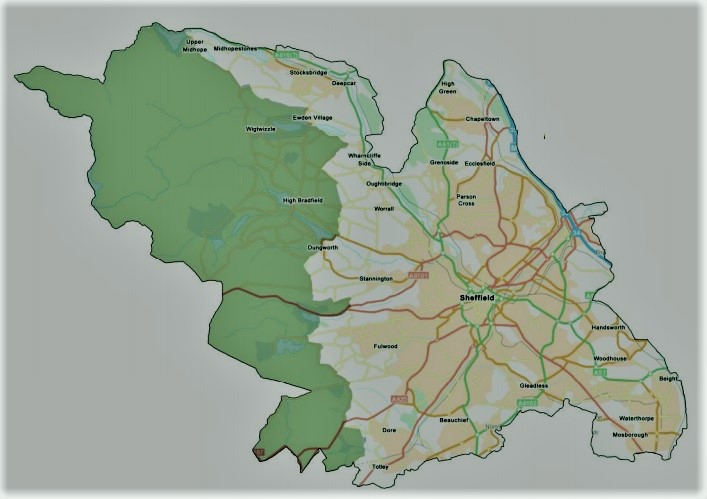
Look at this map, and you’ll see, with the green-shaded area, that a third of the city lies within the park, divided between two planning authorities, Sheffield City Council and the Peak District National Park Authority which covers the western area.

As well as Yorkshire, the park also reaches into four other counties: Derbyshire, Cheshire, Staffordshire, and Greater Manchester.

The park’s name derives from peac, an Old English word meaning hill. The Peak District’s high point is on Kinder Scout, a Derbyshire moorland plateau some 2,088 feet above sea level.

The Peak District is traditionally split into two contrasting areas, essentially defined by their geology.

The White Peak (Derbyshire Dales) is a limestone plateau of green fields with rolling hills and many incised dales (areas around Ashbourne, Dovedale, Matlock, Bakewell, Longnor).

The Dark Peak (or High Peak) is a series of higher, wilder and boggier gritstone plateaux (moorlands) and edges (areas north of Castleton and Hathersage), and in which land in Sheffield falls.

Over 90 percent of Peak District is privately owned land. The National Trust owns 12 percent, and three water companies own another 11 percent. The Peak District National Park Authority owns only 5 percent. About 86 percent of the total is farmland, which is used mostly for grazing sheep or cattle.

The National Parks and Access to the Countryside Act received Royal Assent in December 1949 and received a designation order in December 1950.

After years of debate and argument , the Peak District National Park became a reality in April 1951, announced by Hugh Dalton, Minister of Local Government.

He specified that a Joint Board of 27 members, including people nominated by Sheffield City Council, should be responsible for its management.

Interestingly, Derbyshire County Council had opposed the idea of a joint board and persuaded the County Councils of Staffordshire, Cheshire and the West Riding to join them in opposition. But Sheffield City Council supported the idea of a single planning board.

All these years later, Sheffield City Council is currently represented on the Peak District National Park Authority by Mike Chaplin, Labour Councillor for Southey.

Categories
Places

Into the Megatron (1)

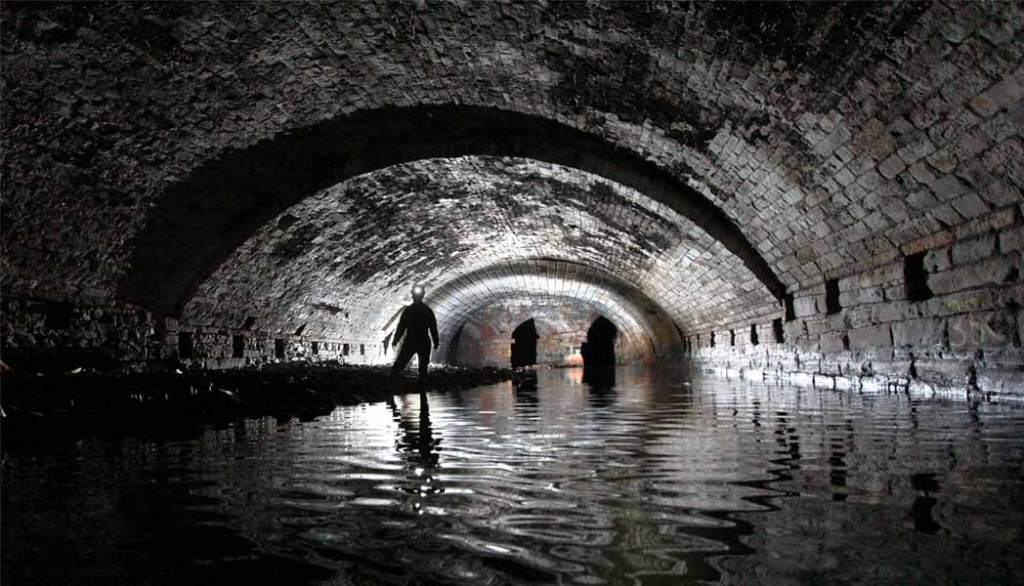
Most of us known about Megatron, a Victorian-engineered labyrinth of storm drains with cathedral-like brick archways and interconnected dark tunnels to contain the overflow of water. (Although officially, the Megatron is one huge chamber further up the network).

Seemingly forgotten for years, this complex system of underground waterways, gained worldwide attention when it was “rediscovered,” becoming a favourite for urban explorers, and even attracting guided tours.

The misconception is that these subterranean drainage channels were built in the mid-1800s, an effort to channel the huge flow of water from Sheffield’s three main rivers – the Don, Sheaf and Porter, but the real story is very different.

Let’s start with the Porter Brook, with its source on Burbage Moor, descending into Sheffield before disappearing into culverts in the city centre. During the late 19th century, sections of the Porter were covered over, partly because the water supply was so poor and had become a sewer, but also to allow for the construction of factories above.

The Porter Brook joins the River Sheaf, the river that gave Sheffield its name, in the Sheaf Valley at a location that becomes evident later.

The Sheaf Valley had historically been prone to severe flooding, the areas around Pond Street and Ponds Forge, particularly susceptible when the River Sheaf burst its banks, and rendering much of the land unusable.

The River Sheaf flows through Sheffield, joining the mighty River Don at Blonk Street Bridge, near to where old Castle Markets stood, and the site of long-lost Sheffield Castle.

Our story really begins with the arrival of the Midland Railway Company, connecting Sheffield with London, which had blundered on its original route, inconveniencing passengers to change at Rotherham Masborough Station and take a branch line to The Wicker.

By the late 1850s, the company made proposals to rectify the matter, bringing the direct line into Sheffield. The site chosen for the new railway station caused disbelief as it was in the valley through which the River Sheaf flowed.

In the 1860s, after gaining Parliamentary consent, land was cleared on a site that was bounded east by Granville Street, on the west by Pond Lane, at north by Harmer Lane, and south by Turner Street.

The platforms were to be built where the River Sheaf flowed, and so the whole distance of the river between Harmer Lane and Turner Street was spanned by three arches and then covered over. The Porter Brook was spanned with two arches, also enclosed, and a portion of the nearby Bamforth Dam (now Sheaf Square) was filled in.

“For months and months past, seeming chaos has reigned in Granville Street and the region adjoining. Thick-booted, muddy-smocked navvies have laboured along in dust and mud, fine weather and wet, pulling down houses and the foundations on which they stood, tearing up banks, blasting rocks, making huge caverns which they said were to serve for tunnels, heaping up and then carting away great mounds of earth. The lines of the rails will run over the bed of the River Sheaf, which is degraded to the condition of a sewer. The work is being undertaken by Messrs. Chadwick and Thurwall for £20,000.”

The Midland Station, now Sheffield Station, opened in 1870, its passengers forgetting that the River Sheaf flowed under their feet (now Platforms 5-8), before emerging again after Harmer Lane.

It was a huge success and by the late 1890s the Midland Railway Company was planning the expansion of the station, and the widening of the tracks.

In 1899, the land in front of the station was cleared and between 1900-1903 its facade was built further forward and surrounding land used for railway business.

The River Sheaf, between Suffolk Road and the Midland Station was arched over and covered, as was a section running underneath Sheaf Street towards Commercial Street. A little-known stream, Pond Brook, between Station Road and Harmer Lane was also diverted through another large culvert.

More importantly, the confluence of the Porter Brook and Sheaf was also covered and is now underneath the south end of Platform 5, close to where Platform 2A is. Thank you to Phil Jones, who volunteers for the Sheaf and Porter Rivers Trust, for explaining that today there is a large square wooden access cover, exactly over the confluence.

As to who funded what, is a matter of debate, but it is likely that the “sewer” system, as the River Sheaf was ingloriously relegated to, was funded and built by Sheffield Corporation.

And so, the first parts of the underground maze were completed, and hereon becomes something of mystery.

Categories
Places

Into the Megatron (2)

We’ve already looked at the building of Sheffield’s underground tunnel system around Sheffield Station and the ingenious method of “hiding” the Porter Brook and River Sheaf. (Available to read on a separate post).

In this post, we move on from Sheffield Station (formerly Midland Station), which had doubled in size in the first few years of the twentieth century, and resulted in long stretches of the River Sheaf bidding farewell to the light of day.

After the Midland Station, the River Sheaf emerged briefly at a weir, as it does now, close to what is now the Digital Campus.

It then flowed through further culverts under the Electric Light Works (now the front of Ponds Forge International Sports Centre). The river then streamed under Commercial Street and beneath what was once the site of Sheaf Market (now the Travelodge).

Onwards it flowed under Castlefolds Markets, until being freed at Exchange Street and flowing open-air until meeting the River Don at its confluence near Blonk Street. (Remember that the River Sheaf once ran alongside Sheffield Castle).

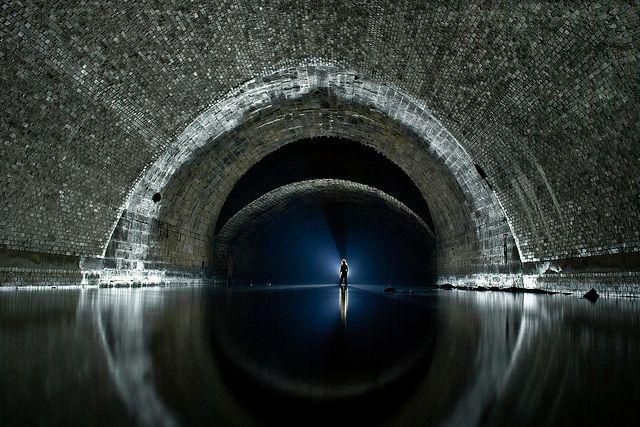
As elaborate as the underground tunnels were underneath Sheaf Valley , the most spectacular part of the network lay underneath Exchange Street, now known as the “Megatron Chamber” – “something excellent and impressive” – a massive arched brick-lined cathedral that dwarfed any man who stood inside.

The reason for the Megatron has been provided by Heather Smith and Phil Jones from the Sheaf and Porter Rivers Trust. It seems that the giant Megatron arch was built for a very specific purpose, to carry heavy old trams across the river on Exchange Street, which rises slowly up the hill, and get them into the city.”

From the Megatron, the River Sheaf flowed out into the open-air, past the old Alexandria Theatre. This last section was culverted over in 1916 after the demolition of the theatre, another massive scheme that allowed the eventual construction of Castle Market above, the rebuilding of Blonk Street and a tunnel entrance that allowed the Sheaf to flow straight into the Don.

The underground system of tunnels is Victorian engineering at its best.

The arched roofs were built with three layers of brick, strong enough to resist the huge torrents of water that the Porter Brook and River Sheaf threw at them during times of high flood.

Alas, as good as the system is, it has failed on occasions, with stories of the old Sheaf Markets flooding at high water, and then there was the memorable Sheffield flood of 2007 when Sheffield Station found its tracks underwater for several days.

A poignant reminder from the River Sheaf that it is still around.

Mostly, the tunnels are accessible to walk through, but should never be entered without permission and expert supervision.

Underneath Sheffield Station the sound of trains can be heard rumbling overhead, and in the lower reaches, bats skim the surface of the Sheaf with fish evident.

As part of the Returning Rivers to the City Scheme, Sheffield City Council is considering reopening the last few yards of the River Sheaf from the Megatron to the River Don, in a park to be called Sheaf Field.

Categories
Places

Sheaf Field Park

We’ve already had a look at the series of culverts and tunnels that hide the River Sheaf underneath Sheffield city centre.

The last part of the river to be covered was the stretch from the Megatron, underneath Exchange Street, towards the confluence of the River Don at Blonk Street Bridge.

This was covered in 1916 after the demolition of the Alexandria Theatre, another massive scheme that allowed the eventual construction of Castle Market above, the rebuilding of Blonk Street and a tunnel entrance that allowed the Sheaf to flow straight into the Don.

Following the demolition of Castle Market in 2015, Sheffield City Council announced that a park would be created between Castlegate and Exchange Street.

Alas, four years down the line, the plans are still on the table, but the council is committed to delivering the project.

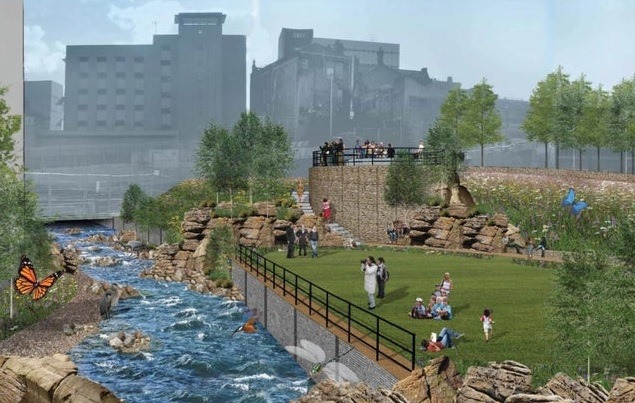
Sheffield Council wants to take the roof off the underground culvert, which the river currently runs through and is in a poor state of repair, and bring the waterway back into the open, surrounded by grass, flowers, trees, seating and other landscaping. The aim is to make the area more attractive to visitors, bring in new investment and reduce the risk of flooding.

The scheme would also complement the proposed Castlegate development on the site of the former market, which the council and its partners are still pursuing, and which will feature the exposed ruins of Sheffield Castle.

The park has the working title of Sheaf Field.

A waterside meadow and an elevated viewpoint would be created at the waterside and low stone walls built overlooking the river. The weir within the Sheaf culvert will be lowered, and the river channel remodelled, to improve natural habitats.

The plans also involve using way markers or pavement art to follow the River Sheaf’s course where it remains in a tunnel under Castle Square, Sheaf Street, the railway station and through Granville Square. Also, temporary art installations and ‘interactive sound experiences’ could be set up in the Megatron.

In 2019, the Sheaf and Porter Rivers Trust was set up to promote and support the deculverting and improve the environment of the River Sheaf and Porter Brook. The group’s founders aim to open the waterways and are trying to recruit as many members as possible to help make that happen. One of their hopes is to make sure that Sheaf Field comes to fruition.

Categories
Places

Concord Park

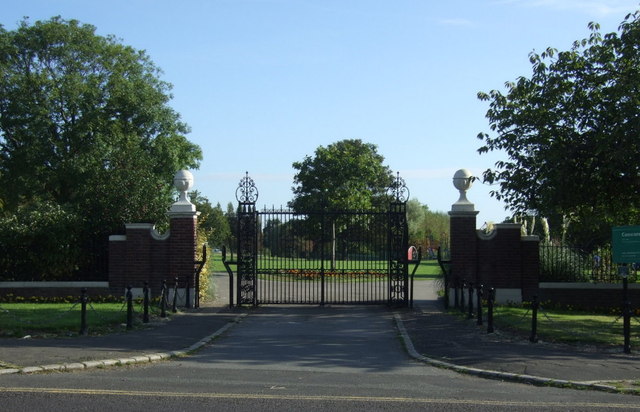
A set of wrought-iron gates which are associated with some of the greatest figures in English history can be found in Sheffield.

The gates are at the main entrance of Concord Park, on Shiregreen Lane, and were gifted to the city in 1932 through the generosity of Charles Boot, of Henry Boot and Sons, building contractors.

The elaborate gates had been at Hayes Park Place, Kent, a former residence of Sir Everard Hambro, the house built by William Pitt, the 1st Earl of Chatham, who was one of the greatest English statesmen and Parliamentary orators.

Henry Boot and Sons had bought the estate to demolish the stately home and build a new housing estate in its place.

Charles Boot confirmed his gift in a letter addressed to the Town Clerk.

“Mr W.G. Davies, City Architect, has inspected the gates, and I understand that he considers them to be quite suitable for the purpose. Will you, therefore, kindly convey my formal offer of this gift to the appropriate Committee, and, if acceptable, I will have them delivered immediately the site is ready for them.

“In pulling down this old place we are compelled to disperse any interesting relics, and I am pleased that Sheffield will have this memento.”

William Pitt was the grandson of Thomas Pitt, the Governor of Madras, known as “Diamond Pitt” due to having sold a diamond of extraordinary size to the Regent Orleans for £135,000. Through this fortunate transaction he raised his family to a position of wealth and political influence.

Many great personages had passed through the gates at Hayes Park Place – Lord Nelson, who planted a tree in the park, the Duke of Cumberland, uncle of George III, who went there in 1765, to persuade Chatham to resume office in Government, as well as numerous politicians.

The 1st Earl Chatham died at Hayes Park Place in May 1778.

William Pitt, his second son, was born here in 1759, going on to be Prime Minister in 1765-1766, leading the country through one of its most eventful periods, and dying shortly after the Battle of Trafalgar.

Forty-eight hours after that glorious victory had been announced, Pitt passed through these gates to deliver a message, which was to be his last:

“Let us hope that England, having saved herself by her energy, may save Europe by example.”

Categories
Places

Crookes Valley Park

Crookes Valley Park has long been a favourite for residents, workers and students, one of three Crookesmoor Parks, the others being Weston Park and the Ponderosa.

I doubt that many people will realise that this is one of Sheffield’s newest parks, named Crookes Valley Park in 1951 as part of the city’s Festival of Britain programme.

Before this, the piece of land beneath Crookes Valley Road had been called the Recreation Ground, and the lake was referred to as the Old Great Dam.

However, the story of this park is fascinating and one that has probably been lost over time.

Our tale starts in 1782, when Joseph Matthewman, together with Messrs. Wheat, Lee and Gunning, of the Sheffield Reservoirs Company, were granted a 99-year lease by the Earl of Surrey to build a new reservoir in the Crookesmoor Valley.

They believed the supply of water to the town was inadequate and turned their attention to the deep valley at Crookesmoor which separated the townships of Sheffield and Nether Hallam, and where the sides of the hillside were abundant with fresh springs. The topography of the land allowed them to pin-up the water at little cost.

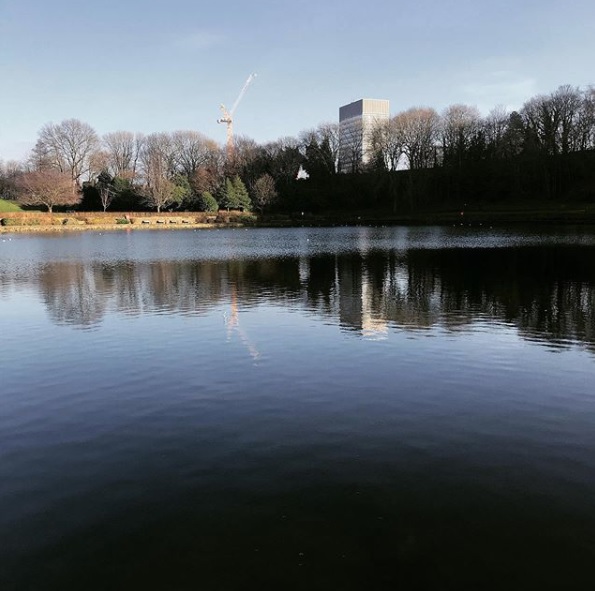
The Old Great Dam was completed in February 1785, spread over four acres and contained 21million gallons of water, fed by a small stream in its western corner.

It was later joined by the New Dam, Godfrey Dam, and the Ralph and Misfortune Dams, together with four smaller dams in the Crookesmoor Valley. They were later accompanied by the Hadfield Reservoir at Crookes, built at a height of 600ft above sea level.

Water was conveyed into Sheffield by wooden pipes, 1,100 yards to a working dam at Portobello, and then to a stone cistern at Division Street, then distributed through the streets in the upper part of town. The lower Crookesmoor reservoirs supplied the lower parts via Watery Lane.

The Old Great Dam was thought big enough to supply the town for years, but when the Sheffield Waterworks Company assumed responsibility in 1830, the population had grown from under 10,000 to nearly 50,000, doubling between 1780 to 1810.

The Crookesmoor Dams were no longer able to cope with demand and larger reservoirs were built farther out of town. All the dams, except Old Great Dam, were filled in, with the Town Trustees offering to buy part of its land in 1874 to create a public park or recreation ground.

The scheme failed and it wasn’t until the completion of Crookes Valley Road in 1893 that the idea was resurrected.

Before this time, the valley had been crossed using the Great Dam Road, roughly following the edge of the reservoir, but involved a steep descent.

A new road was required to link Winter Street with the other side of the valley, and a massive embankment was built between the two. The project needed 450,000 loads of material, and to assist, Sheffield Corporation offered a “free tip” whereby “good, hard, dry rubbish” could be taken for the formation of the road. For years afterwards, the area at the end of Winter Street was still referred to as “The Tip.”

In 1905, Sheffield Corporation created the Recreation Ground next to Crookes Valley Road with a shelter, the city’s first municipal bowling green, and tennis courts. However, the Old Great Dam, as well as the privately-owned Dam House beside it, remained untouched.

It wasn’t until 1951 that the Old Great Dam was turned into a boating lake, with thirty rowing boats, and the Dam House converted into the Festival Restaurant, offering “first class meals of a continental standard.” The whole area was renamed Crookes Valley Park.

Nowadays, the lake (as it has become known) is used for fishing, and don’t let anyone fool you that it isn’t deep.

Over the past 235 years, it has claimed hundreds of lives, most unaware of its chilly depths, estimated at between 45 and 60ft.

Categories
Buildings Places

Orchard Square

Orchard Square was one of the first new-style retail developments that considered the existing urban landscape.

This was once the site of steelmaker John Brown & Co, who later merged with Thomas Firth & Sons to become Firth Brown.

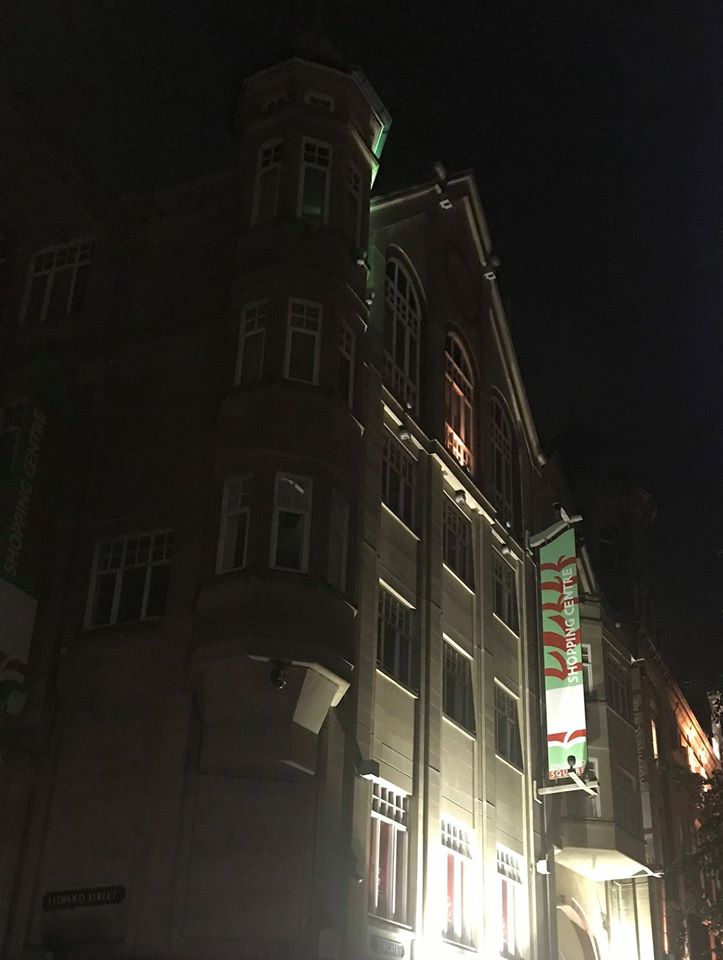
The shopping centre was designed by Chapman Taylor Partners and completed in 1987, all-but obliterating properties that stood behind the Victorian façade bordering Fargate, Leopold Street and Orchard Street.

It was suggested, but extremely unlikely, that once former England football Emlyn Hughes had cut the ribbon, it was the most expensive retail area per square foot in Britain.

Impressive it was, an open rectangular courtyard, surrounded by new and old buildings, faced in red or yellow bricks with traditional building features like pitched roofs, casements and weather-boarded oriels. Its centrepiece was a square clock tower with chimes and moving figures that attracted hourly crowds.

But Orchard Square never lived up to expectations. Meadowhall sucked the life out of the city centre in 1990 and those shoppers that remained seemed reluctant to wander through the covered arcade linking it from Fargate.

Shops have come and gone, and a 2008 re-development removed the food court and the Stonehouse pub to facilitate a three-level TK Maxx.

The famous clock no longer chimes, and the twirling figures are locked behind closed doors.

As someone commented on social media, “the only thing that performs in this area now is the idiot coming out of The Bessemer across the road.” Quite sad really.