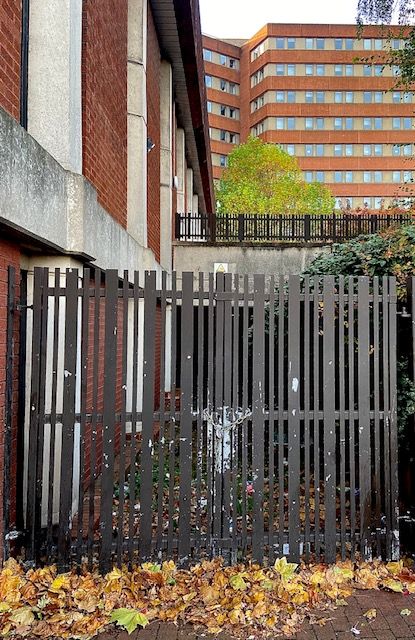
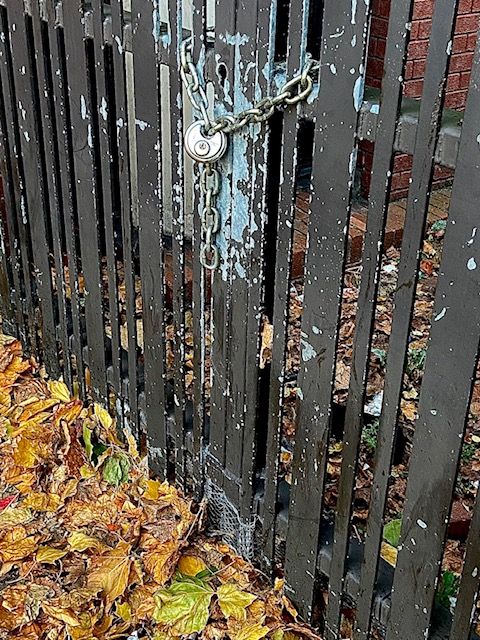
“I am a pair of gates. I’ve been padlocked for 40 years. I am the victim of abuse.
“People have climbed on me. People have thrown things over me. People have been sick on me. People have urinated on me… and sometimes much worse. People have fought against me and got hurt, and then I have seen them arrested. People have laughed with me, and there have been people who’ve cried. People make love against me, and there are those that have slept by my side all night. Sometimes, bad people have hid in the shadows and I have been unable to do anything.
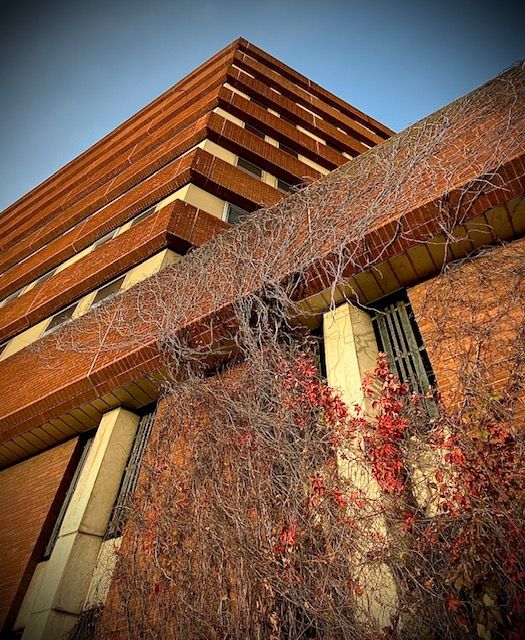
“I am at my best in autumn, when I’m able to catch fallen leaves, and then they rest at my feet until they’ve become a rotting mess. But I guess I’m only a pair of gates, and people pass me every-day without giving me a second glance.”
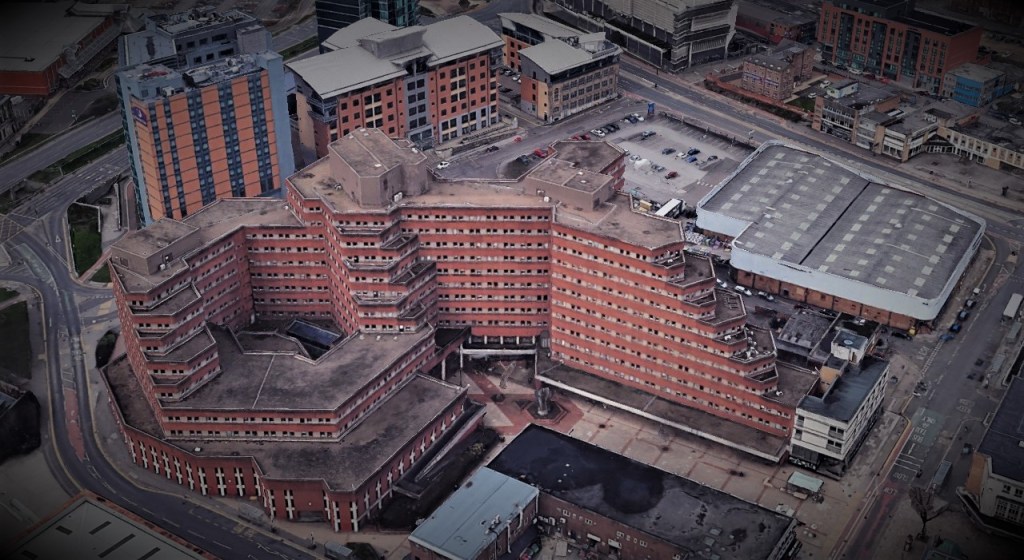
Moorfoot. A late seventies Government-built office complex that opened in 1981. Now home to Sheffield City Council. Photograph: Google
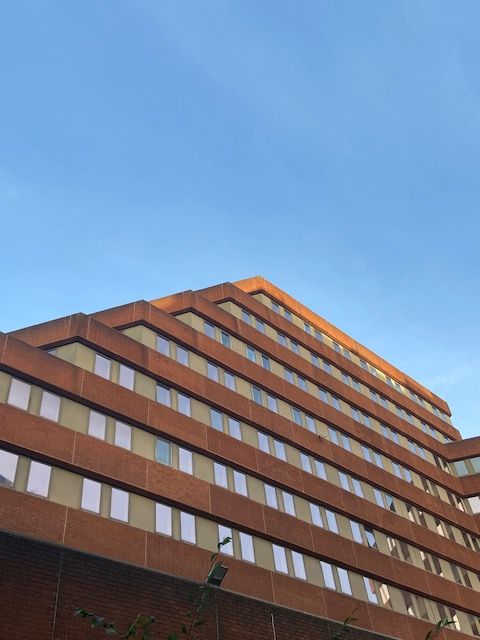
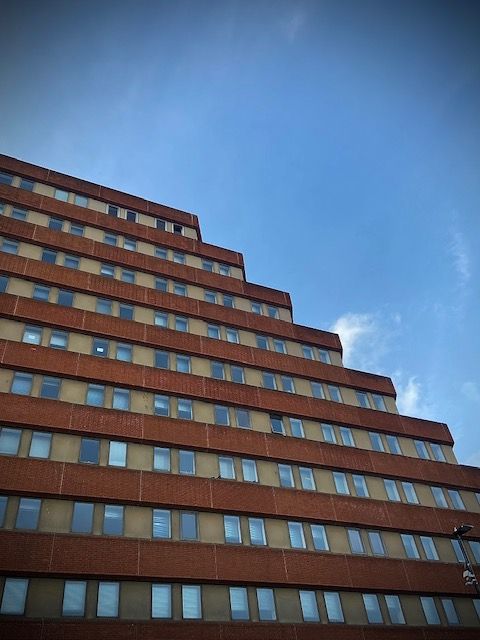
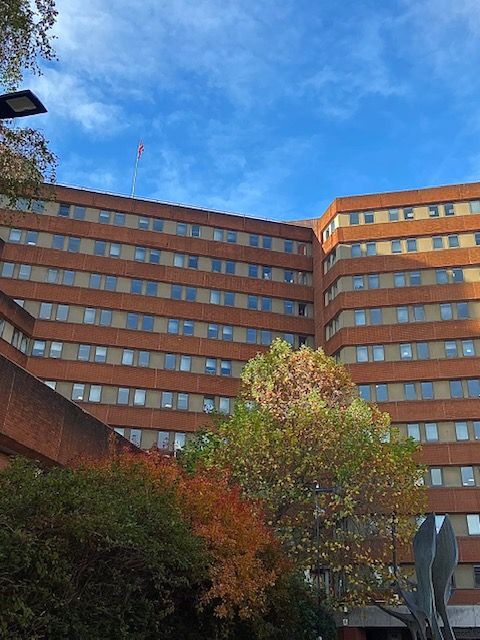
Moorfoot is a brute of a building, dominating the Sheffield skyline, and 40 years after it opened, remains one of the city’s most controversial structures.
Its origins are in 1973 when Edward Heath’s Conservative Government created the Manpower Services Commission (MSC), to co-ordinate employment and training services in the UK through a ten-member commission drawn from industry, trade unions, local authorities and education interests.
Pat Duffy, the Labour MP for Attercliffe, excited by the prospect of 2,000 jobs, campaigned for the new headquarters to be built in Sheffield. Two years later, Harold Walker, Under Secretary at the Employment Department, told the House of Commons, “The decision has been made to locate the headquarters in Sheffield.”
It was an accomplishment for a down-at-heel northern city, but the citizens of Sheffield weren’t prepared for what came next.
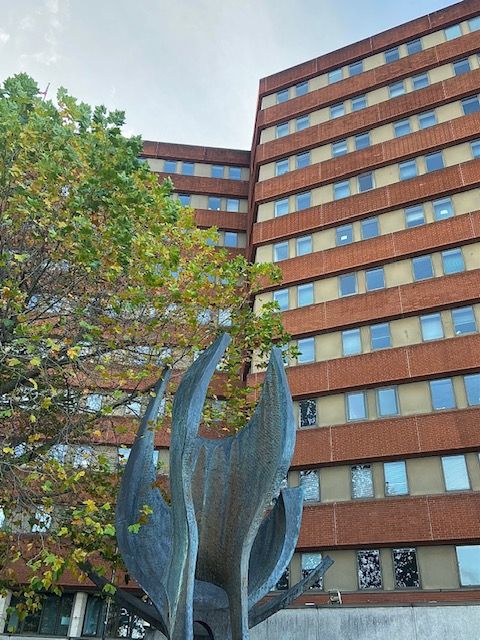
The futuristic new headquarters was designed by the Government’s Property Services Agency – “A truly monolithic brutalistic office building. Red brick bands between rows of windows separated by concrete panels.” – eleven storeys high, with stepped levels across east, west, and north wings. Something of a pyramid, it earned nicknames like the ‘Aztec Temple’ and ‘Dalek City.’
Photograph: DJP/2021
That it would be built on land at the bottom of The Moor was even more controversial, cutting off Sheffield’s main shopping street from busy London Road, and depriving road and pedestrian traffic of a popular and historic route.
To compensate, it was designed to allow pedestrian access through the building, starting with an elevated ramp near the corner of Young Street and South Lane, before proceeding via a tunnel through the building, exiting above the car park, and using ramps to ground level on The Moor.
The route never opened, allegedly because IRA activity posed a threat to a government building, and the upper parts of the elevated walkway were left suspended mid-air before eventual removal.
The MSC opened in 1981, and for such a high-profile building, it was shrouded in mystery. Apart from the cavernous office-space, restaurant, bar, and basement squash court, were there really underground nuclear bunkers and a luxury apartment for Government hierarchy? Even today, the amount of information available about the building is incomplete – no floor plans, no design architect, no history forthcoming.
If ever a building divides opinion. The Moorfoot Building will probably escape demolition, unlike many other Sheffield buildings built in the 1970s. Photographs: DJP/2021
The MSC building was famous for its management of the Youth Training Scheme and various other training programmes intended to help alleviate the high levels of unemployment in the 1980s, but after 1987 the MSC lost functions and was briefly re-branded the Training Agency (TA), before being replaced by a network of 72 training and enterprise councils.
The MSC Building gave way to other Government agencies, including the Department for Work and Pensions (DWP) and the Home Office. However, it was too big and expensive to maintain, with departments vacating over a twenty year period.
In the late 2000s, the MSC Building was bought by Sheffield City Council, and with demolition in mind, wanted to create a new financial services district in its place.
The timing could not have been worse, and the monetary crisis of 2007-2008 prompted a rethink, and the building was overhauled, renamed Moorfoot, with potential office space for 2,600 council employees, and consolidation of various departments from around the city centre.
As for the Moorfoot’s future, it is likely to stay, worthy of a facelift and a bit of greenery might not go amiss. The iron gates at ground level could be opened to allow public access between The Moor and London Road. And, as the aerial photograph shows, there is a chance to create a green square in front of its main entrance (demolition required).
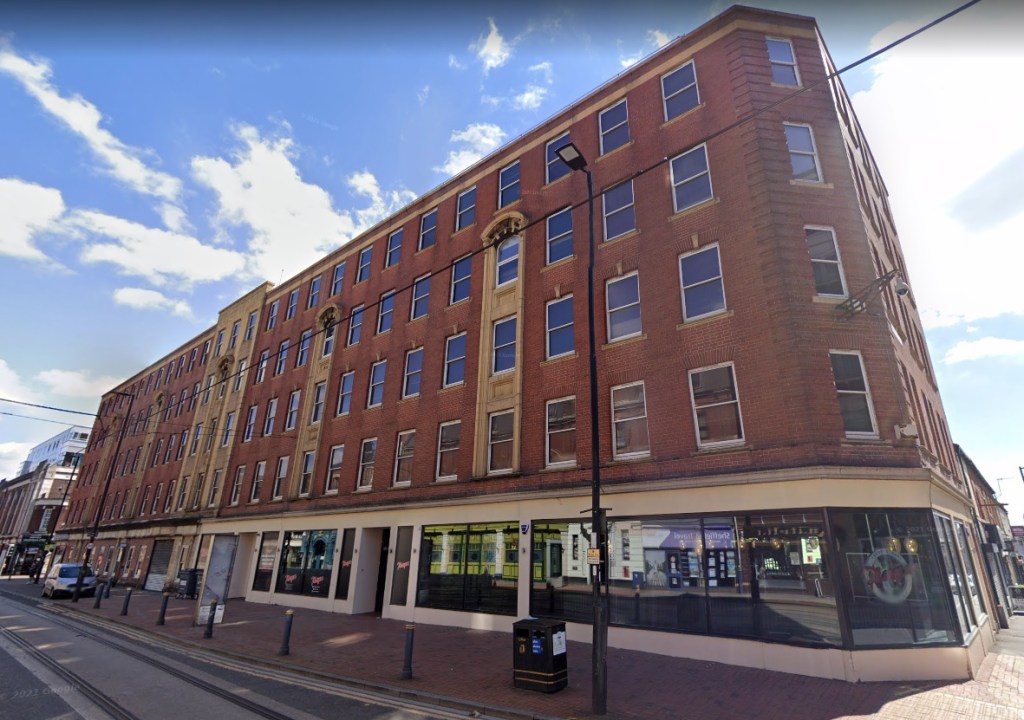
Rockingham House. Despite the modest 1930s design the building has aged well. The former Inland Revenue office is fronted by West Street and bordered either side by Rockingham Street and Westfield Terrace. Photograph: Google
This building on West Street is typical of inter-war buildings. Plain and simple. The excessive cost of construction materials during the 1930s meant structures had to be functional rather than decorative. The substantial use of red-brick was symbolic, and certainly conceived in the architects’ department at the Government’s Office of Works.
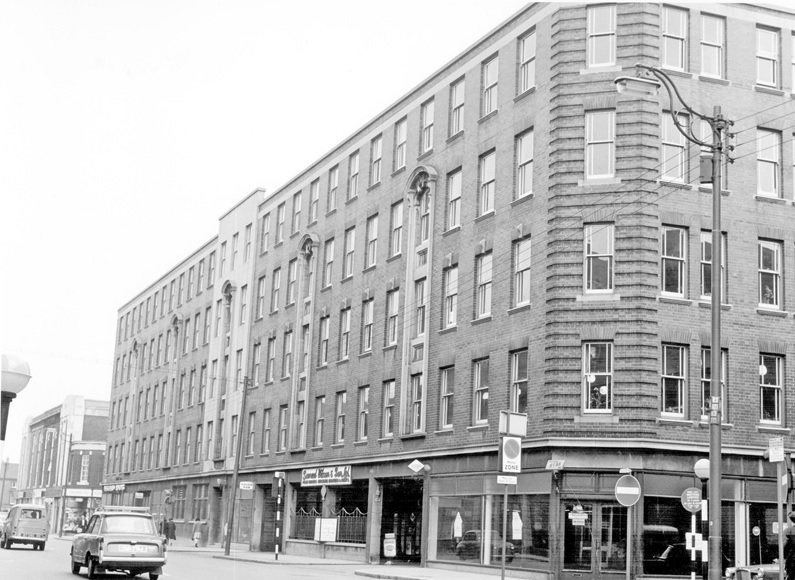
Revenue Buildings was built in 1937 for the Inland Revenue to replace nine district offices. In June of that year over 300,000 files of the District Valuer were moved here, as were something like 100,000 files of the Inland Revenue. Once completed, it housed all departments of the Board of Inland Revenue in Sheffield, including Tax Inspectors, Collectors, and Valuation.
It occupied the four upper floors, and the west part of the ground floor was used as motor vehicle and tractor showrooms for Samuel Wilson & Son. Motor vehicle retail appears to have continued until recent times, although this part is now occupied by Players Bar.
Revenue Buildings. In 1964, part of the ground floor was still occupied by Samuel Wilson & Son. Photograph: Picture Sheffield
The Inland Revenue merged with HM Customs & Excise in 2005 and the site handed over to the Department for Work and Pensions. It later vacated the site (now known as Rockingham House) and most office space became vacant.
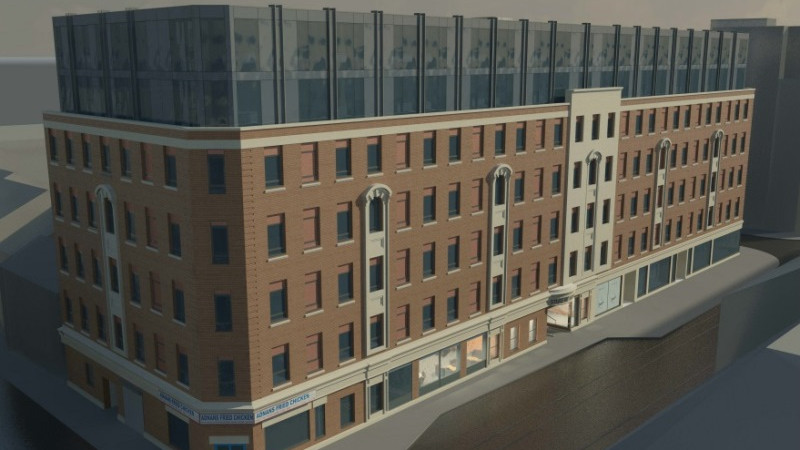
The block was sold in 2011 and the new owner granted planning permission in 2019 for conversion and extension of the building for student accommodation. This has been replaced with a new application to convert and extend the property into 162 build-to-rent studio apartments with a modern two-storey roof extension.
Oakstore, supported by Bond Bryan and Urbana Town Planning, has submitted an application to Sheffield City Council for the redevelopment of Rockingham House. Approval is sought for the reconfiguration of the existing buildings and a two-storey roof top extension to provide 162 build-to-rent studio apartments.Photograph: Insider Media
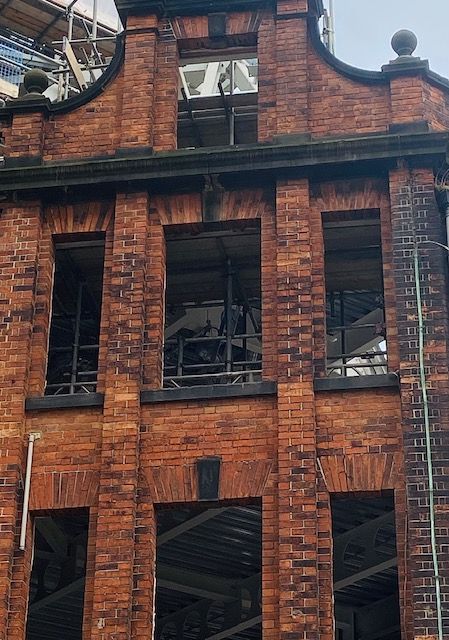
Whenever you see an old facade with a new structure behind it, this tells you that a building of distinction once stood there that simply could not be demolished, and the compromise which arose was to keep the front wall. The rise of facadism shows how far the power balance has shifted away from conservation towards redevelopment. Retaining the facade is an unwelcome condition of planning permission when their preference would probably have been complete demolition.
This building, at the bottom of Cambridge Street, Sheffield, shows that the facade is retained while its interior will be replaced with modern concrete and steel. This will apply to almost all the Victorian buildings being redeveloped on Pinstone Street, and planning permission has been granted to do the same to Chubby’s and the Tap and Tankard further up Cambridge Street.
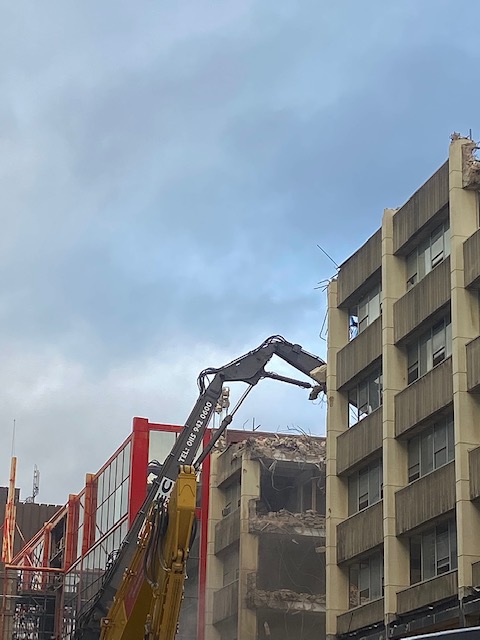
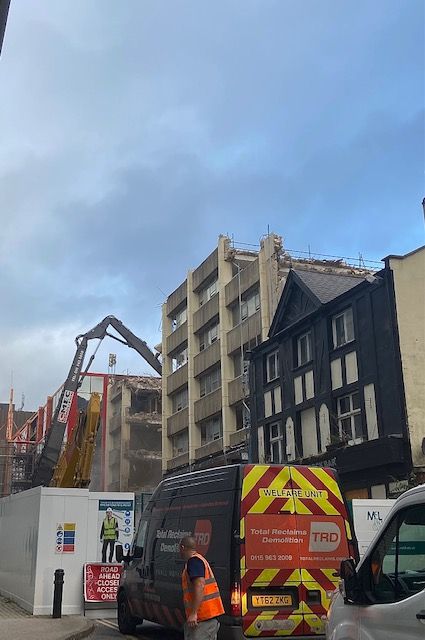
Demolition underway at Barker’s Pool House on Burgess Street. Photograph: DJP/2021
Sheffield city centre has never seen so much demolition and construction. The latest to fall is 1970s Barker’s Pool House, on Burgess Street, once linked to John Lewis by its high covered footbridge. The bridge has already gone, and now the bricks and mortar of the former office block will soon be no more. As part of the Heart of the City II development, it will be replaced by a stylish new Radisson Blu hotel, with its retained Victorian entrance on Pinstone Street. The William Mitchell ten-panel abstract reliefs, commissioned in 1972, were removed last year and will be resited in nearby Pound’s Park once completed.
The former Yorkshireman public house stands adjacent to Barker’s Pool House. Its own fate is uncertain. Photograph: DJP/2021
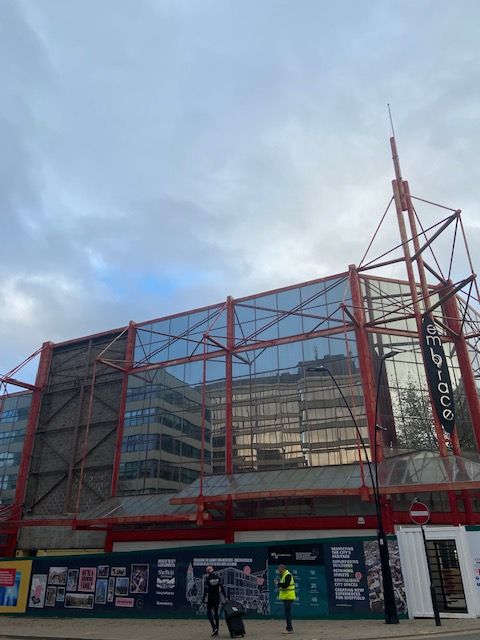
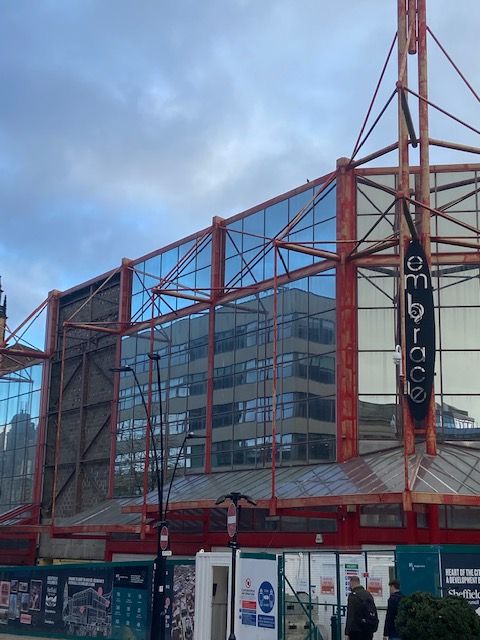
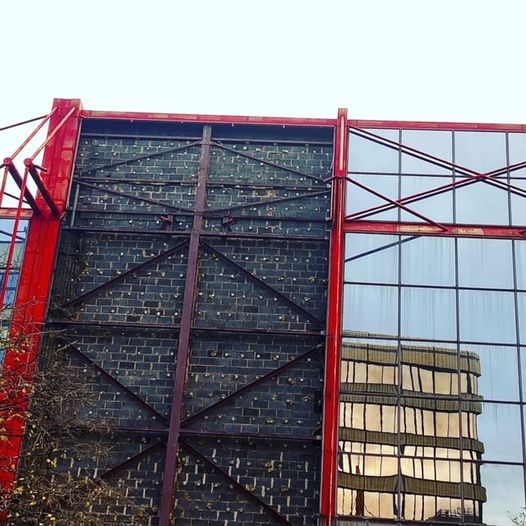
It seems that nobody liked the former Odeon in Barker’s Pool. The red steel and glass facade never caught the imagination of Sheffielders. If we hated the exterior, we won’t like what was behind – plain boring brickwork – revealed in latest Heart of the City II works.
Photograph: DJP/2021
The whole exterior will be refaced to become the Gaumont Building, supposedly taking inspiration from the previous building’s origins as the Regent Theatre, later the Gaumont Cinema. The new design is by Sheffield-based HLM Architects.
Built by the Rank Organisation in 1986-1987 as a replacement, bosses realised it wasn’t cost effective to run two Odeons in the city centre, and one had to go, closing in 1994, and later becoming a nightclub.
The final use for the building has yet to be confirmed.
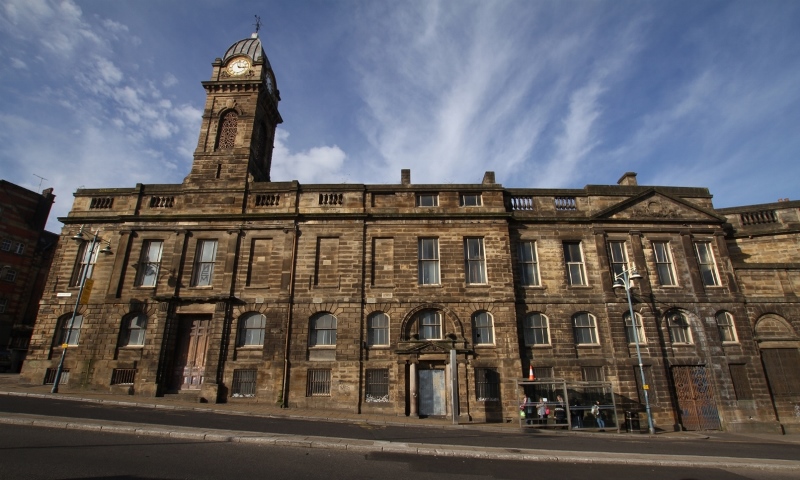
Sheffield’s former Town Hall and Crown Court on Waingate and Castle Street. Its condition is a cause for concern. Photograph: Insider Media
The Old Town Hall remains in predicament after failing to sell at auction. It was to be sold by Allsop auctioneers but attracted no bids – despite a sale figure of £750K, a big drop on the original asking price of £1.35m.
The Grade II listed building was put up for sale by receivers appointed after the collapse of Aestrom OTH Ltd, the company set up to restore the building.
The Old Town Hall was commissioned to replace the original one next to the Parish Church and designed by Charles Watson in 1807-1808. As well as housing the Town Trustees it also accommodated Petty and Quarter Sessions.
The building was extended in 1833 and again in 1866 to designs by William Flockton and his partner George Abbott, linking the courtrooms to the neighbouring Sheffield police offices by underground tunnels. When the current Town Hall was built in 1891-1897 it was extended by Flockton, Gibbs & Flockton to become Sheffield Crown and High Courts. New court buildings were built during the 1990s and the Old Town Hall has stood empty ever since.
The Old Town Hall is significant to Sheffield’s history and its demise has been shocking. The fabric of the building has rapidly worsened and water damage has caused considerable damage to its interiors. Restoration costs are likely to cost millions of pounds.
Its location next to the Castlegate development, recently awarded Government funding, might have made it an attractive acquisition, but developers are at a loss as to what function it might be used for. Until the Castlegate project gets underway the Old Town Hall will stand shrouded in misery.
There are now calls from heritage groups for Sheffield City Council to step in and make good the building, as well as seeking out partners to develop a practical and feasible solution.
Today, the Crucible Theatre celebrates its fiftieth birthday.
The Crucible was designed by Renton Howard Wood Associates, the project architects being Nicholas Thompson and Robin Beynon. Construction started in October 1969, the work undertaken by Gleesons, and was completed in November 1971 at a cost of £1m.
It is perhaps Sheffield’s most famous concrete building.The Crucible Theatre opened on November 9, 1971, with Fanfare, a production devised in three parts. The first was ‘Children’s Theatre’ in which 34 children were involved. The centre piece was Ian McKellen playing the Old Actor in Chekhov’s Swan Song and the last part was rumbustious Music Hall.
And so, the futuristic theatre with its twinkly ceiling lights, orange auditorium seats and gaudy foyer carpets, started its journey.
We all have memories of the Crucible – plays, musicals, concerts, pantomimes, and, of course, the snooker. The list of famous people who have graced the thrust stage is impressive and the envy of other theatres.
My favourite must be the British premiere of The Wiz, the all-black Broadway musical adaptation of The Wizard of Oz, performed in 1980. It pushed all technical boundaries, including a house blown away in a whirlwind and a flying helicopter.
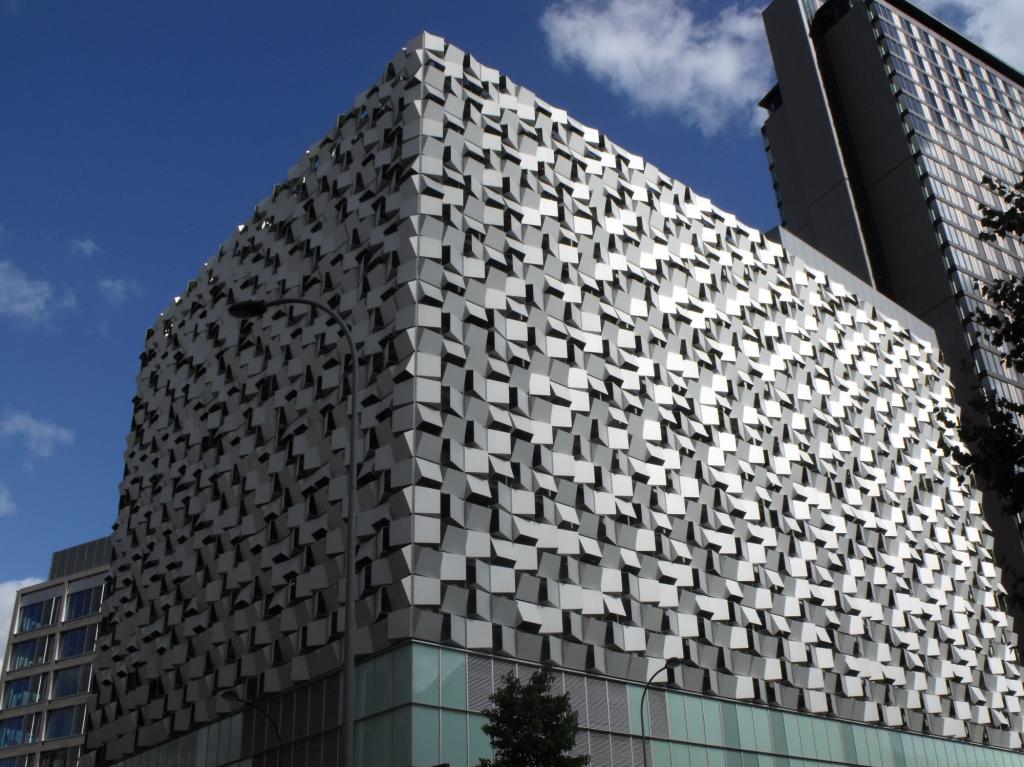
Q-Park Charles Street, with aluminium solar shading, was designed by Allies and Morrison, also responsible for building Nunnery Square – Phase 1. Photograph: mcmedia
It is one of Sheffield’s oddest buildings, and probably one of the most photographed. Liked by many. Hated by many. The Q-Park, Charles Street, opened in 2008, and the extraordinary steel cladding merited the ‘Cheesegrater’ name.
The ten-storey car park was designed by architects Allies and Morrison, and constructed by Sheffield-based J.F. Finnegan as part of the Heart of the City project, which also included the Peace Gardens, Winter Garden and Millennium Gallery.
The small parcel of land it sits on was once the site of the Yorkshire Grey, a public house dating to 1833, once known as the Minerva Tavern and later Bar Rio, and so there was understandable anger when it was demolished.
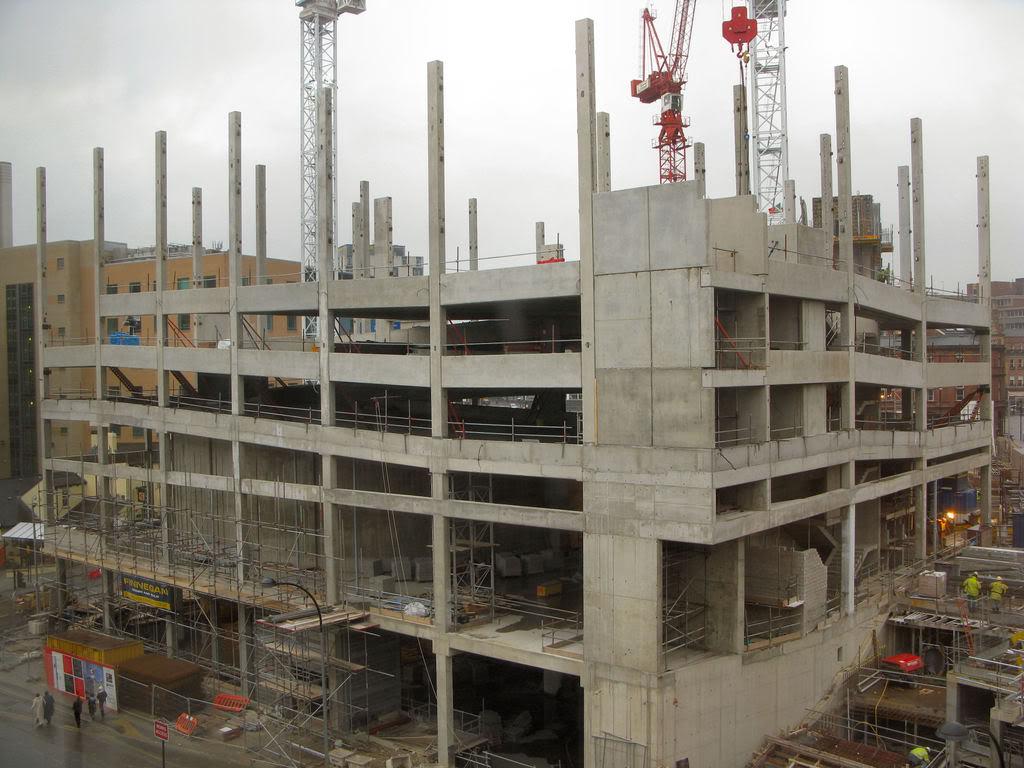
The frame is a precast concrete column and beam construction used to form the main car park deck. Photograph: SRC Ltd.
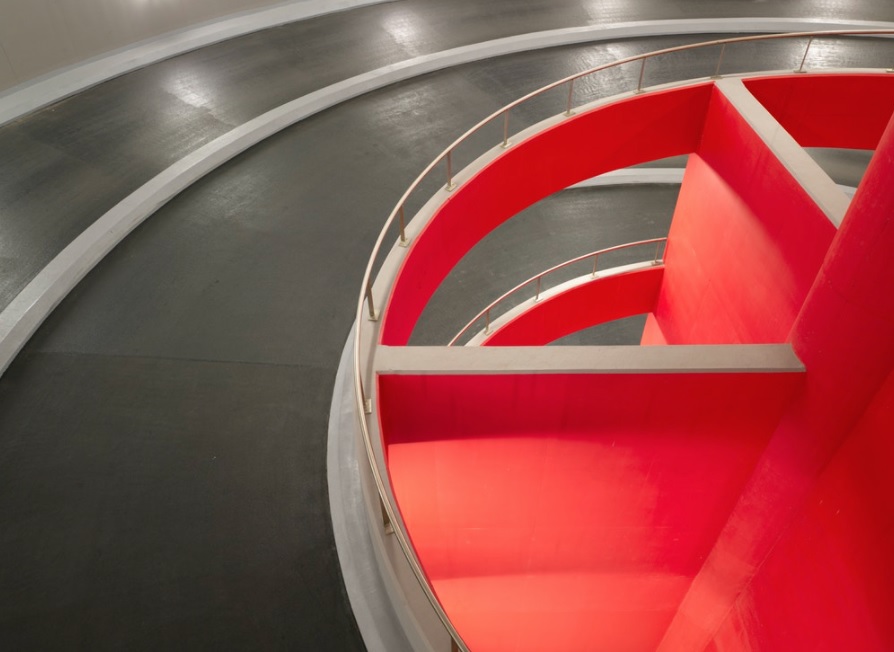
In its place rose this ultramodern structure with its nerve-jangling circular ramp leading to 520 parking spaces above. Car parks can be unattractive, and the precast concrete columns, walls, and floors, were hidden behind a screen of folded, anodised aluminium panels.
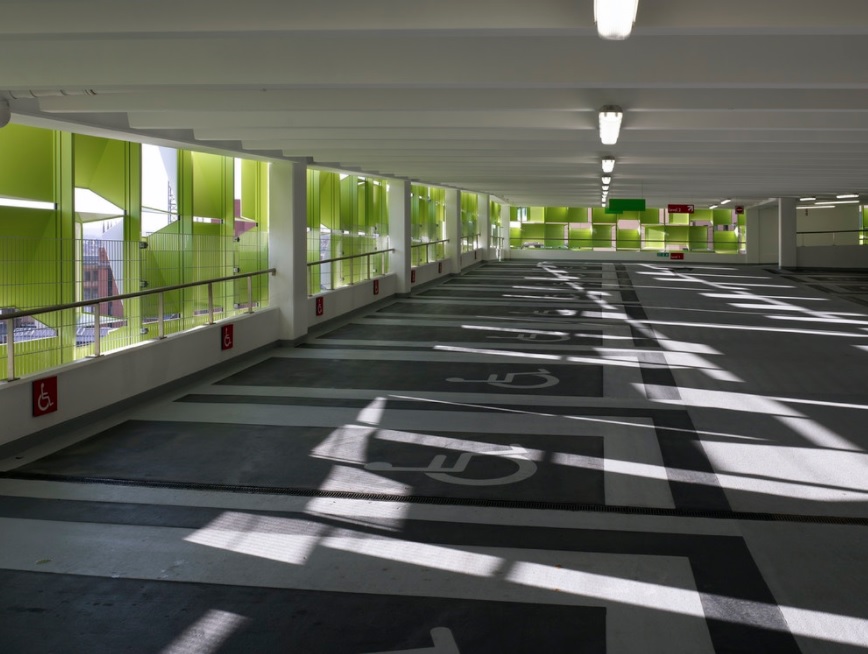
The external envelope, painted green on the inside, was each manufactured from a single sheet of folded aluminium, cut to an angle on two sides, and hung in four different orientations, providing natural ventilation.
“By day, a varied monochromatic pattern of light and dark is achieved over each of the elevations, with each panel giving a different light reflectance from its surface. The variety of open ends and tilted faces transform the surface as daylight fades. By night, the interior lighting bleeds between each panel and creates a non-uniform composition of light and dark across the surface.”
Photographs: Dennis Gilbert/VIEW
Photograph: mcmedia
Love it, loathe it, the car park has put Sheffield on the world map. A year after completion, it was named the ‘third coolest in the world’ by a car parking company and a design magazine. In 2019, it was voted the world’s most unusual quirky car park – beating off competition from Tokyo, Miami, and Australia, and was voted the most unusual car park in the UK in 2020.
There are even claims that Harvard University, in Cambridge, Massachusetts, built its new Science and Engineering Complex following the cheesegrater style.
Maintenance work to repair push fit friction fittings on the exterior cladding. Photograph: CAN Ltd UK
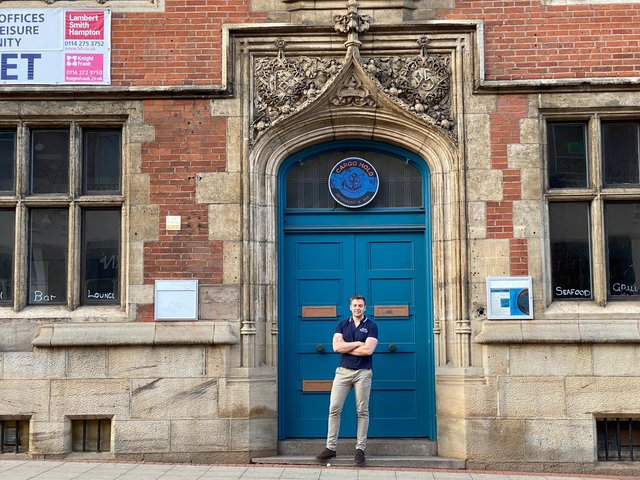
Damon Wiseman pictured outside Cairn’s Chambers on Church Street in Sheffield city centre, which he is planning to turn into luxury apartments with a new restaurant on the ground floor. Photograph: Sheffield Star
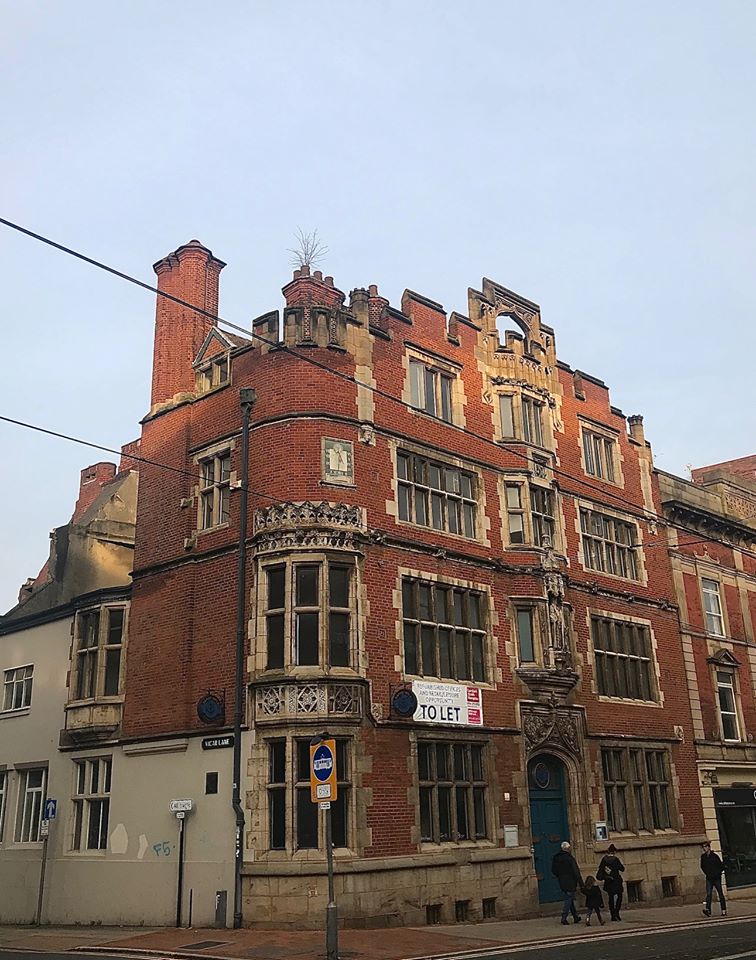
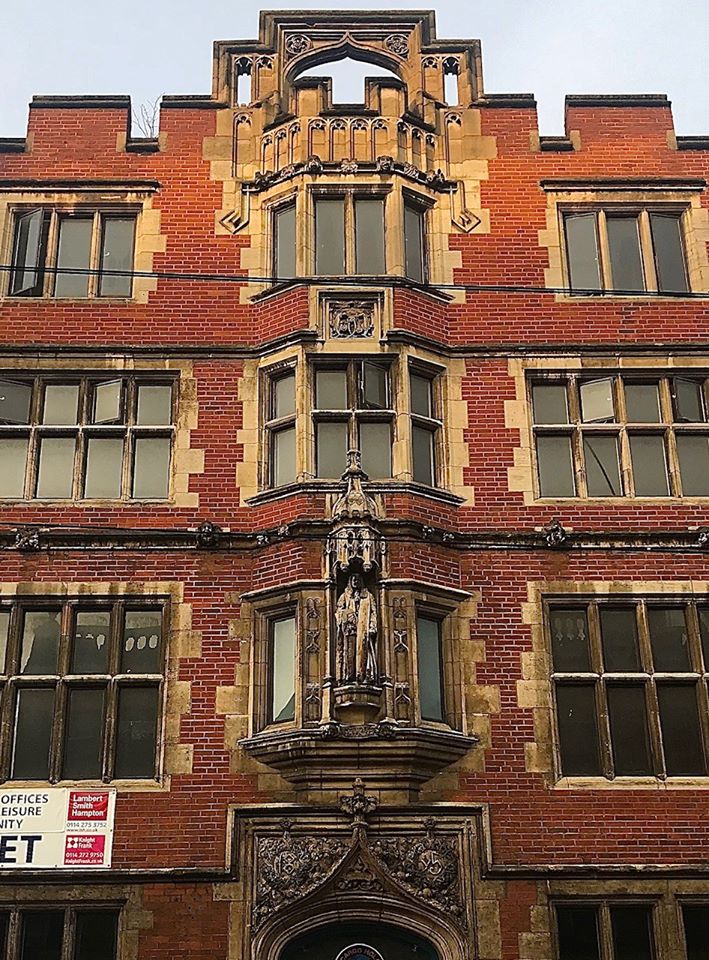
Cairn’s Chambers on Church Street, a building slowly deteriorating these past twenty years or so, has had an offer accepted, and subject to planning permission, will turn it into a restaurant, with up to a dozen luxury apartments on the first, second, and third floor which will be available to rent.
The man behind the scheme is Damon Wiseman who came to the UK in 2016 from Zimbabwe to study real estate and later ended up working for a Russian goldmine company. He lives in Sheffield and has successfully invested in rental properties in Burnley and Manchester.
Wiseman’s offer of £800,000 has been accepted and is understood to have the backing of wealthy overseas investors. He estimates that once completed, the scheme will have cost a total of £1.5m.
Grade II listed Cairn’s Chambers was built between 1894-1896 by Charles Hadfield, of M.E. Hadfield, Son and Garland, for Henry and Alfred Maxfield, solicitors. It was built in scholarly Tudor-style, a favourite of Hadfield’s, featuring decorative stonework by Frank Tory Sr.
The sad decline of Cairn’s Chambers is highlighted by the small tree growing out of a chimney-pot. Image DJP/2020
Henry and Alfred Maxfield occupied a large suite of offices, but it was also built to accommodate other businesses, a common trait of Victorian entrepreneurship.
The offices were used for almost 40 years by Charles Hadfield’s own company, C & C.M. Hadfield, architects, and later by Hadfield and Cawkwell. It was also where John Dodsley Webster, another Sheffield architect, had his office with an entrance at the back, on St James’s Street.
The Hadfield company remained until World War Two, leaving after the building was damaged by a German bomb in 1940. The rear of the property was almost destroyed, but the decorative front survived.
Afterwards, Cairn’s Chambers became a branch of the District Bank, subsequently becoming NatWest until its closure.
Most recently, the ground floor was occupied by Cargo Hold, a seafood restaurant.
The crowning glory of Cairn’s Chambers was the statue of Hugh McCalmont Cairns (1819-1885), 1st Earl Cairns, an Irish statesman, and Lord Chancellor of Great Britain. Photograph: DJP/2021



 sheffielder.net