Categories
Places

The fig trees of the River Don

When our industrial ancestors enjoyed eating fig biscuits, they didn’t realise that they would leave a legacy for us.

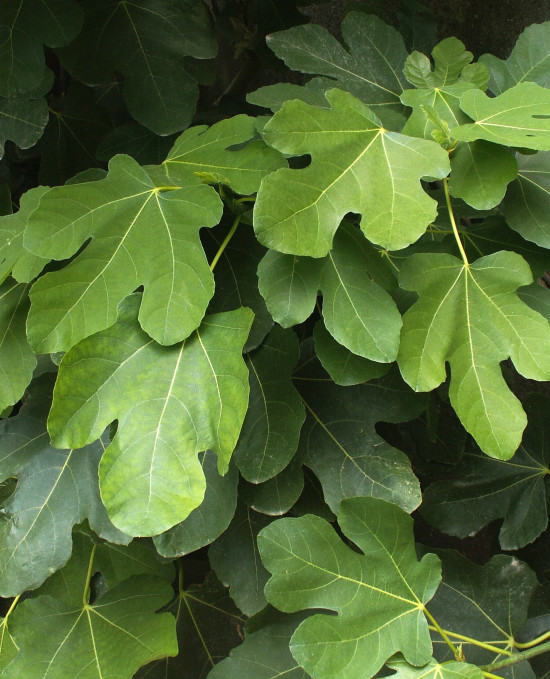
Alongside the banks of Sheffield’s River Don, towards Meadowhall, are about 30 mature fig trees, some about 70-years-old, which owe their existence to a combination of human appetite, imperfect sewage and the steel industry.

Fig biscuits were popular amongst steel workers. The fig seeds passed through their digestive system, and each time there was a heavy storm a proportion of sewage overflowed into the river.

At the turn of the 20th century, because of industry alongside the River Don, the waters of the east end were at a constant twenty degrees creating perfect conditions for the fig seeds to germinate and grow.

And they’re not just confined to the Don, with fig trees also found on Porter Brook and the River Sheaf.

Categories
People

James Montgomery

The memory of James Montgomery plays a prominent part in the public life of Sheffield during his sixty year’s residence here.

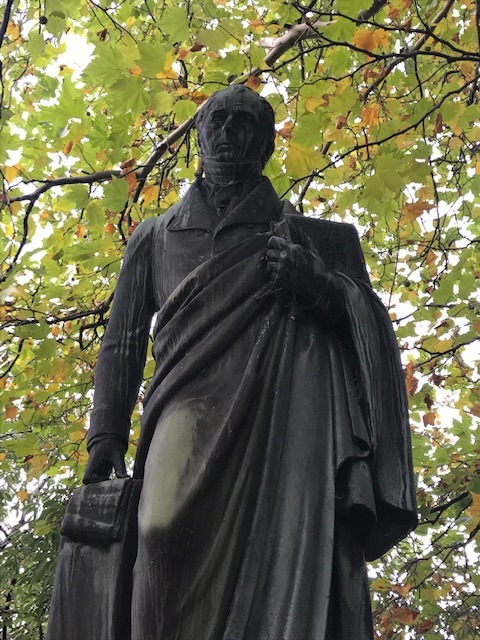
If you’ve never heard of him, take a walk to Sheffield Cathedral and look at his granite monument, with bronze statue by John Bell, moved from the overgrown General Cemetery in 1971.

Between 1792, when James Montgomery first set foot in Sheffield, becoming the assistant to Joseph Gales, of the Sheffield Register, and 1854, the year in which he died, vast changes took place.

Montgomery’s youth was a troubled and stormy period. His mature age was active, useful, benevolent, and made glorious by the development of his poetic genius. His old age had been still useful; beneficent on a large scale; honoured by all; and shedding a lustre on Sheffield, by investing it with popular hymns.

James Montgomery was the eldest son of the Rev. John Montgomery. He was born in 1771, the eldest of three sons. His father was a Moravian minister; at the time of his birth stationed at Irvine, in Ayrshire.

When he was five, his parents moved to Gracehill, Co. Antrim, and in his sixth year was placed in the Moravian School at Fulbeck, near Leeds, his family becoming missionaries to slaves in Barbados and Tobago.

Montgomery started writing poetry when he was ten-years-old and was destined for the church. However, after leaving Fulbeck Seminary in 1787, he ended up working in shops at Mirfield, near Wakefield, and later at Wath upon Dearne, near Rotherham.

A journey to London, with a hope of finding a publisher for his youthful poems, ended in failure; and in 1792, he was glad to leave Wath for Sheffield to join Mr. Gales, an auctioneer, bookseller and printer of the Sheffield Register newspaper, as his assistant.

In 1794, Mr. Gales left England or Germany to avoid a political prosecution. Montgomery took the Sheffield Register in hand, changed its name to the Sheffield Iris, and continued to edit it for 31 years. He was imprisoned twice; first for reprinting therein a song in commemoration of the Fall of the Bastille, and secondly for giving an account of a riot in Sheffield.

The editing of his paper, the composition and publication of his poems and hymns, the delivery of lectures on poetry in Sheffield and at the Royal Institute, London, and the earnest advocacy of Foreign Missions and the Bible Society in many parts of the country, gave great variety.

Montgomery was particularly associated with humanitarian causes such as the campaigns to abolish slavery and to end the exploitation of child chimney sweeps. He died in his sleep at the Mount, Sheffield, in 1854, and was honoured with a public funeral.

As a poet, Montgomery stands well to the front; and as a writer of 400 hymns, many still in use, he ranks in popularity with Wesley, Watts, Doddridge, Newton and Cowper.

As well as the monument carrying his name, there are various streets named after Montgomery and a Grade II-listed drinking fountain on Broad Lane. The meeting hall of the Sunday Schools Union (now known as The Montgomery), situated in Surrey Street, was named in his honour in 1886.

Categories
Other

City of Sheffield Lifeboat

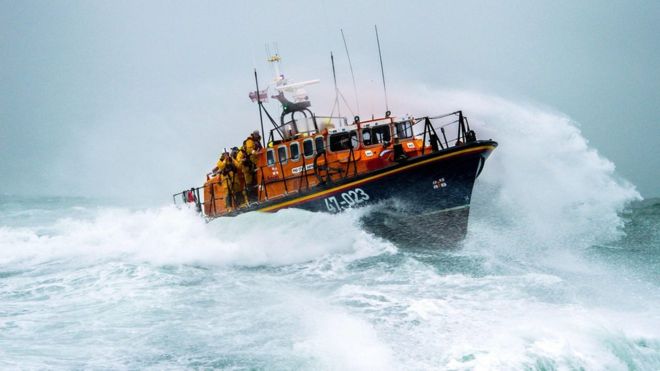
he story of a boat called City of Sheffield. This is the Royal National Lifeboat Institution’s Tyne-class all-weather lifeboat, No. 47-023, built in 1988, that is currently landlocked at the National Emergency Services Museum at West Bar.

The vessel was originally fundraised by the people of Sheffield, with the cost being met by Mrs Mary Mabel Walker. It was named City of Sheffield by HRH, the Duchess of Kent in July 1989 at Whitby Lifeboat Station.

It later served at Ramsgate, Hartlepool and Sennen Cove, Cornwall, before finding a permanent home in 2001 at Poole, in Dorset.

The “Big Orange Boat,” as it was affectionately nicknamed by locals, served Poole Harbour and coastline until being decommissioned in November 2016.

During its operational lifetime, the City of Sheffield was launched 557 times, saving 650 people, with RNLI volunteer crews onboard for 752 hours.

After being put in storage at Poole, it was moved to the National Emergency Services Museum on a five-year loan in 2017.

Categories
Buildings

Midcity House

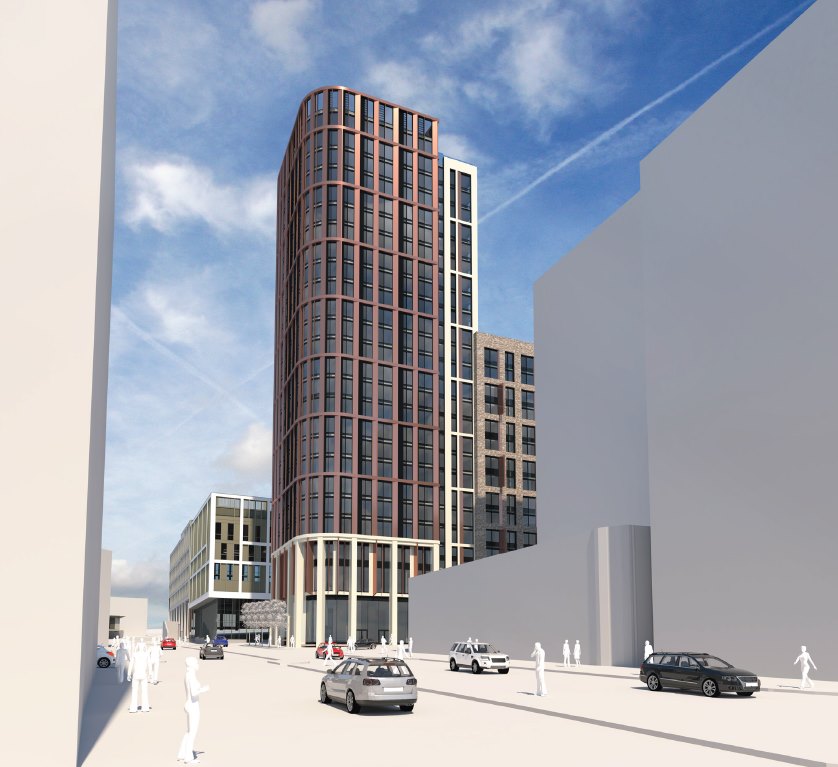
Union Street Limited, a Gibraltar-based developer, has submitted plans to Sheffield City Council for the redevelopment of Midcity House, on a site between Pinstone Street, Furnival Gate and Union Street.

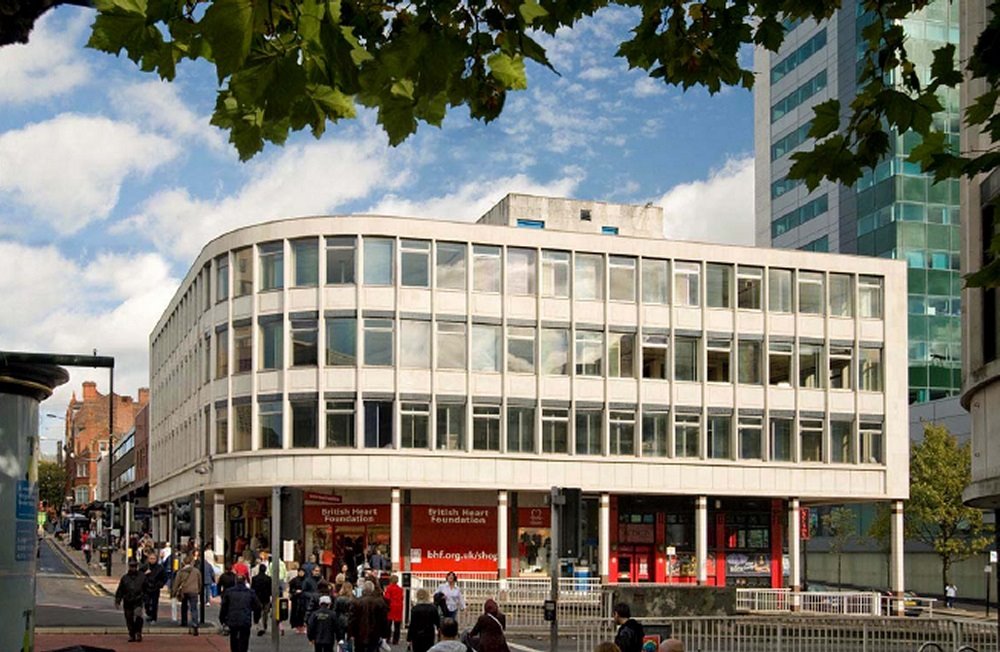
The proposal includes the demolition of the existing four-storey concrete-clad building consisting of ground-floor retail, bar, offices and limited student accommodation above.

In its place would be three blocks, up to 25-storeys high, with four ground-floor retail units and 271 dwellings above for the build-to-rent market.

The site once stood on the boundary of old Sheffield Moor, part of a field in 1736, and occupied by houses, shops, workshops and yards by 1771.

Most of the properties survived until 1853 but had been demolished by the late nineteenth-century.

In later times it was occupied by the Nelson Public House, Cambridge Arcade and a series of shops, with most buildings replaced in the 1960s with the present structure.

Categories
Buildings

No. 35 George Street

No. 35 George Street, located between High Street and Norfolk Street, isn’t that old compared to some of our buildings. Built in 1913-1914, this Grade II-listed structure might look a little lost these days.

It was built as the Yorkshire and Derbyshire office for the Alliance Insurance Company, established by Nathan Meyer Rothschild and Moses Montefiore in 1824, to rival Lloyds of London.

The George Street site had originally been the workplace of the Sheffield Fire Insurance Company, with offices on the upper floors and the town fire engine, small enough to be drawn up narrow passages, housed below.

The business transferred to the Alliance Insurance Company in 1864, but by the start of the twentieth century the offices were too small.

The insurance company moved into an adjoining building that once formed part of the Athenaeum Club, and the old building was demolished.

Its demise wasn’t without controversy. Then, like now, there were those who mourned the loss of an old building. However, the company offered to keep the whole of the top balustrade, comprising pillars with urns bearing the Sheffield coat-of-arms.

During construction, there were those that criticised the plan.

“Most of the property at the High Street and Norfolk Street ends of George Street is old, and if it had been made into a good wide street, its rateable value would also have increased. The ‘dog’s hind leg’, half-way along, is still to be perpetrated – a danger to traffic, and a perpetual monument to our Corporation’s ineptitude.”

That ‘dog’s hind leg’ still exists, but the finished offices, designed by Goddard & Co, were well-received.

“It is one of the most elegant, though, unfortunately one of the least prominently situated of Sheffield’s new buildings. Romanesque in design, and built of white stone, it is one of those buildings which are completely deceptive as to size. It gives the impression of consisting merely of one large hall, instead of which one finds on entering not only a main hall (56ft x 26ft), without counting a large annexe, but an extensive suite of offices in three floors. One reason for the deception is that the site extends through into Mulberry Street, where there is considerable frontage.”

And this deception still exists. Take a walk under the adjacent covered roadway into Mulberry Street, and you can see that there is a lot more to the building than meets the eye. It was clever use of fitting a prestigious building into a tiny site.

“Artistically designed as is the exterior of the building, the interior is even more so. The large hall is elegantly panelled in oak up to the ceiling, which is richly ornamented, and the annexe is lighted by a glass dome. The appointments of the board room are in keeping with those of the large hall, and all the offices are handsomely fitted and furnished, while the walls of the stairways and corridors are lined with tiles of a pretty design.”

How much of the original interior survives is uncertain, the Portland stone exterior has weathered, but the building retains its dignity.

The Alliance Insurance Company remained here until the second part of the twentieth century, merging with the Sun Insurance Company in 1959, and finally amalgamating with the Royal Insurance Company to form Royal Sun Alliance in 1996.

No. 35 George Street was later used by Midland Bank as an administrative facility, and is today occupied by the NSPCC as its Sheffield Service Centre.

Before you go, look closely at this photograph, taking note of the two stone urns, as well as the well-worn Sheffield coat-of-arms within the pediment. These are the only survivors from the long-demolished Sheffield Fire Insurance Company building… and I bet you never knew that!

Categories
Streets

George Street

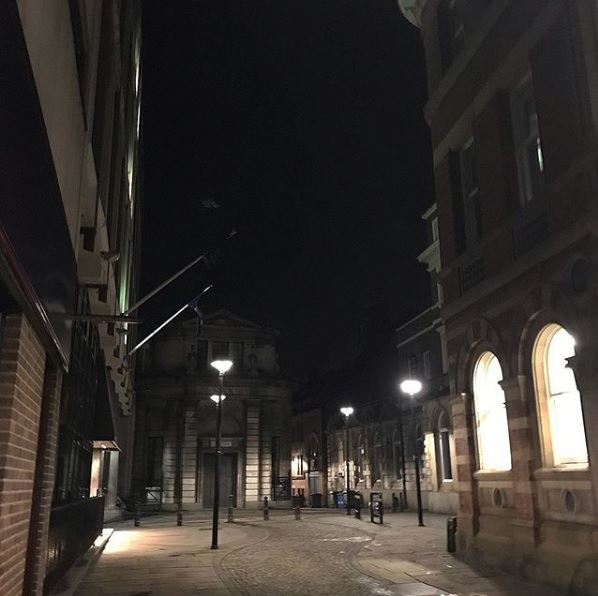
It is one of Sheffield’s oldest streets and contains some of our most significant buildings, including the former premises of the Sheffield Banking Company, now reborn as the Curzon Cinema (middle right), the old offices of the Alliance Insurance Company (centre) and the 1960s-built Cutler’s Hotel (left, originally the Sheffield Club).

The greatest mystery with George Street is the “dog’s hind leg” half-way along, a cause of traffic congestion in Victorian and Edwardian times, as it was a thoroughfare between High Street and Norfolk Street.

While many roads were widened, George Street was mercifully spared, despite our ancestors wanting the road to be straightened. This would have necessitated wholesale demolition of buildings.

The street’s historic layout was secured when the offices of the Alliance Insurance Company were built in 1913-1914, replacing the old Sheffield Fire Insurance Company building where the town fire engine was once housed.

It is now the NSPCC, Sheffield Service Centre.

Categories
Buildings

No. 35 George Street

While researching the history of No. 35, George Street, Sheffield, this remarkable old print came to light.

The site of what is now the NSPCC, Sheffield Service Centre, opposite the Curzon Cinema, used to be the office of the Sheffield Fire Insurance Company.

The Sheffield Fire Brigade used to practice in the space in front of what became Alliance Chambers, following the acquisition of the company in 1864 by the Alliance Insurance Company (now Royal Sun Alliance).

The small horse-drawn fire engine, small enough to get up alleyways, was housed on the ground floor.

The building was demolished in 1912 and replaced with new offices for the Alliance Insurance Company in 1913-1914.

However, two stone urns and the Sheffield coat-of-arms, seen here in this sketch, were transferred to the replacement building and can still be seen today. (The coat-of-arms built into the stone pediment).

Categories
Buildings

St. George’s Church

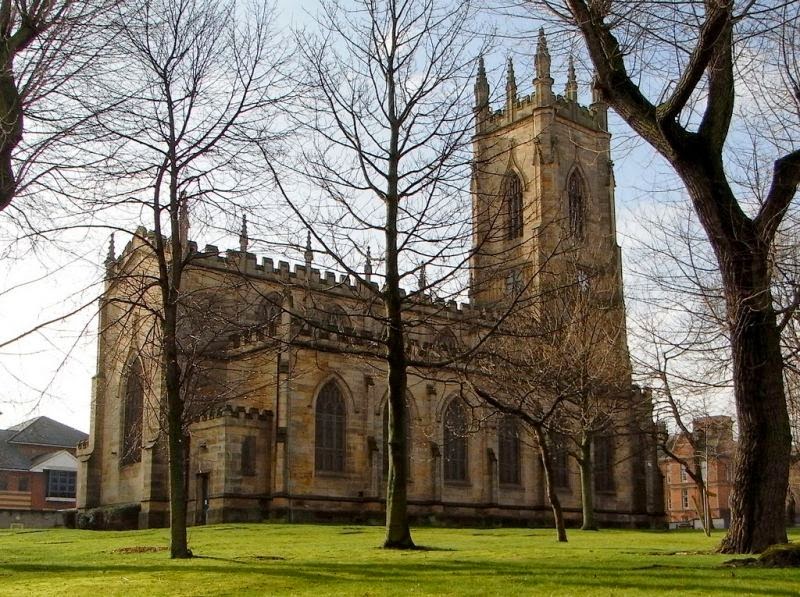
It stands rather grandiose, next to Broad Lane, on the way to Brook Hill roundabout. St. George’s Church, aside from Sheffield’s two cathedrals, is one of two magnificent churches around the city centre.

St. George’s was built for the Church Building Commission between 1821-1825, one of three churches to have been built in Sheffield under the Church Building Act of 1818. (The others were St. Mary’s, Bramall Lane, still standing, and St. Phillip’s at Netherthorpe, demolished in 1951).

A Commissioner’s Church was an Anglican church built with money voted by Parliament, aiming to increase the number of church places for parishioners.

By the start of the Industrial Revolution, people had moved from rural areas into towns and cities, putting unprecedented demand on places of worship. Before these three new churches, Sheffield had just 6,280 seats for a population of 55,000 people.

The foundation stone for St. George’s, built on a piece of spare land, was laid by Thomas Sutton, Vicar of Sheffield, on 19 July 1821, the Coronation day of King George IV, hence the name.

The church was designed by Woodhead and Hurst, in Perpendicular Gothic style, at a cost of £15,181 (about £1.2million today) and was planned to have been completed by October 1824.

It was an ambitious building scheme, overseen by John Smith, Superintendent of Works for Thomas Flockton, builder and contractor for many of Sheffield’s churches.

The construction was carefully planned with master craftsmen brought him from various Yorkshire companies.

Ironwork was provided by Raynor and Company, of St. James’s Street, while Nowell’s of Dewsbury afforded masons and bricklayers, the slate roof completed by Brown’s of Division Street, Sheffield, and plumbing and glazing carried out by Smith and Binks of Rotherham.

William Nicholson, of St.James’s Street, provided plasterers, and Robert Drury, from Eyre Street, supplied a team of painters and decorators. Carpentry and joinery were completed by a team from Thomas Flockton, based on Rockingham Street.

St. George’s was finally completed in 1825, the consecration ceremony held by Edward Venables-Vernon-Harcourt, Archbishop of York, on 29th June 1825.

A procession formed in the chancel of the Parish Church (now Sheffield Cathedral) and proceeded to St. George’s, the parade made up from members of the clergy, charity girls and boys, the Town Collector and Trustees as well as the Master Cutler and members of the Cutlers’ Company.

Such was the demand to view the ceremony that members of the public were only admitted by ticket.

The finished church was 122ft long and 67ft wide, with a flat-ceilinged nave of six bays, a single-bay chancel and a 140ft high tower. Galleries extended the length of the north and south walls, and there was a two-tiered gallery on the west wall, providing total seating for 380 worshippers.

It was soon apparent that St. George’s was going to be a success, attracting a congregation from nearby high-density housing. However, the Archbishop considered it unfit for the internment of the dead, due to the churchyard not being properly fenced off, and burials only commenced from 1830.

St. George’s prospered, but declining attendances during the 1970s resulted in its closure in 1981. It stood unused for many years until the University of Sheffield bought it in 1994, its presence slowly extending towards the city centre.

The church was converted by Peter Wright and Martin Phelps, with a lecture theatre sited in the nave, seating provided in the west gallery, a dais set in the chancel, and three floors of student accommodation built in the aisles.

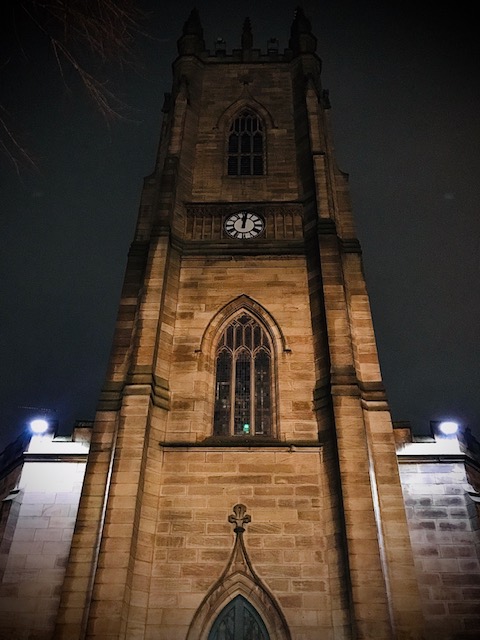
Standing at the centre of St. George’s Square, the former church is best seen at night when it is floodlit.
Categories
Buildings

St. George’s Church

The tower of St. George’s Church, Portobello, now owned by the University of Sheffield and used as a lecture hall and three floors of student accommodation.

The church was built between 1821-1825 using money provided by the Church Building Commission, the result of the Church Building Act of 1815.

Designed by Woodhead and Hurst, the church was built by Thomas Flockton of Rockingham Street, Sheffield. The foundation stone was laid by Thomas Sutton, Vicar of Sheffield, and consecrated in 1825 by Edward Venables-Vernon-Harcourt, Archbishop of York.

During the construction of the 140ft high tower, St. George’s claimed the lives of two workmen.

In 1823, apparatus used to draw stones up to the tower was being dismantled, when part of the machinery gave way, precipitating three workmen onto rafters of the floor below. James Bower was dreadfully crushed and dead within minutes, his two colleagues being seriously injured.

Further tragedy occurred a year later, in 1824, when a plank on which Charles Lee, a labourer, gave way, causing him to fall to the bottom of the tower. He pitched onto beams and died a few minutes later, after being removed to a nearby public house, and before medical help could arrive.

St. George’s closed in 1981 and stood empty for thirteen years, its condition deteriorating, until bought by the University of Sheffield in 1994, and restored.

Categories
Companies

Sheffield Simplex

In the early part of the twentieth century, the World’s best car was unquestionably the Rolls-Royce Silver Ghost.

But a legion of fresh luxury cars soon appeared, and the Rolls-Royce revolution was challenged by Lanchester, Leyland Eight, Hispano-Suiza, Ensign, Farman… and the Sheffield-Simplex.

And yes, for loyal younger readers… Sheffield could and should have been a centre for car production.

The Sheffield-Simplex owed its success to Earl Fitzwilliam, from Wentworth Woodhouse, whose attempt at the Templeborough works to make the finest motor car in the world very nearly succeeded.

The company received financial backing from the Earl, the first few cars called Brotherhoods, and were a continuation of the Brotherhood-Crocker cars made in London in which he had been an investor.

Brotherhood sold the London site in 1905 and moved to Peterborough but could not get permission to build a car factory, so the Earl suggested a move to Sheffield where he built a new factory in Tinsley.

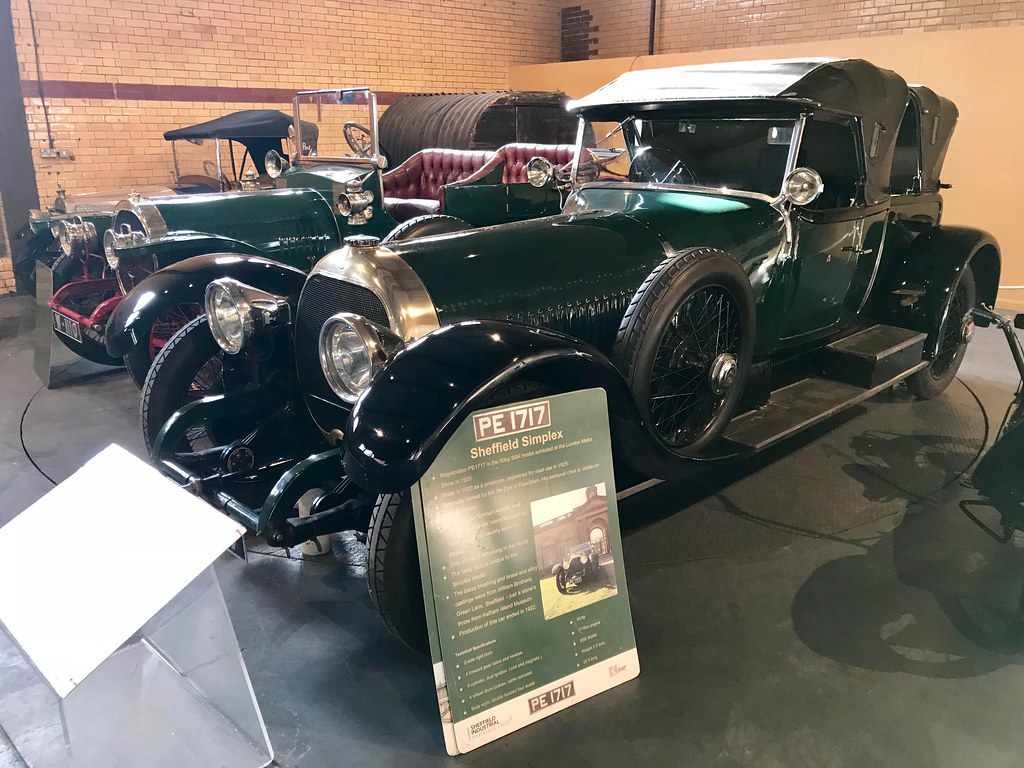
In 1908, the first cars to bear the Sheffield-Simplex name appeared designed by Percy Richardson, ex Daimler and Brotherhood. The LA1 had a six cylinder 6,978 cc engine and three speed gearbox.

It was joined in 1908 by the LA2, intended for lighter open bodies which did without a conventional gear system.

Four smaller cars joined the line-up in 1910 but lasted only one year, and in 1911 were replaced by the LA7 with a six cylinder 4,740 cc engine.

Sheffield-Simplex considered their only rival to be Rolls-Royce and even opened a London showroom in Conduit Street very close to theirs.

During World War One, the company made armoured cars which were supplied to the Belgian and Russian armies, as well as making ABC Wasp and Dragonfly aircraft engines and munitions.

Car production resumed in 1919, and judged by pre-war standards, the Simplex was a very fine car indeed. But it was also very costly, and it never again captured the exclusive market.

Sheffield-Simplex went into steep decline, building a few Shefflex trucks and the Ner-a-Car fully enclosed motorcycle to the designs of the American, Carl A. Neracher. When the doors finally closed, around 1500 cars had been made during the company’s history… and it seems that only three survive, two of which are at Kelham Island Museum.