Categories
Buildings

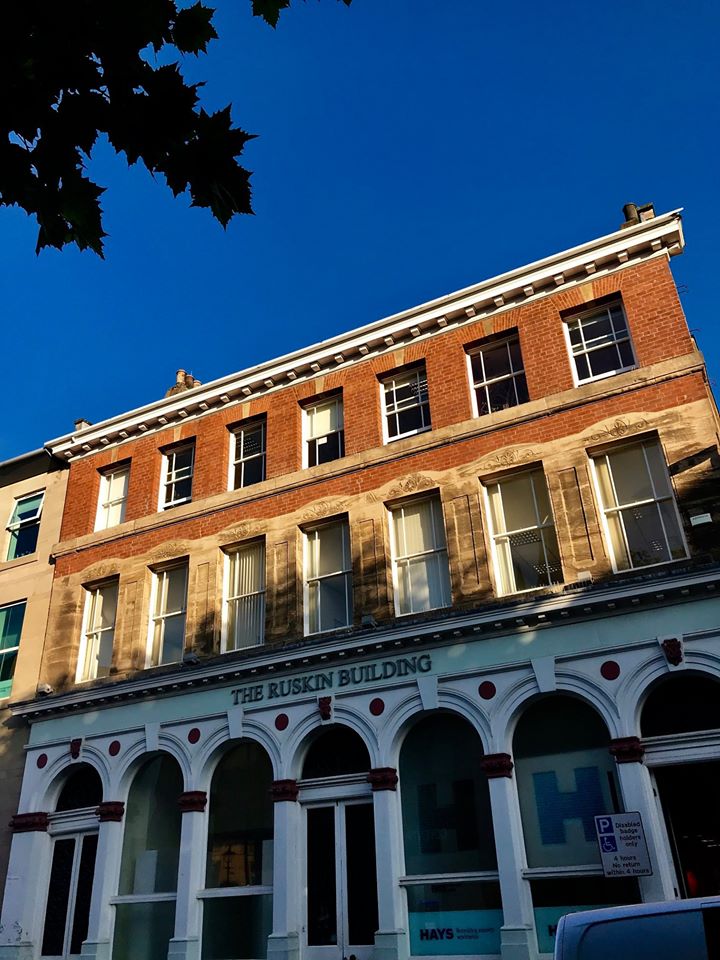
The Ruskin Building

This attractive building at 97-101 Norfolk Street is known as the Ruskin Building. However, this was once the premises of one of the country’s leading wine merchants. Mr J.T. Gunn, a Sheffield merchant, originally opened a store at 47 Norfolk Street for the sale of Sicilian produce. Wines and fruits from Sicily were attracting considerable attention in Georgian times so Gunn went directly to producers in Italy for supplies, and early in 1829 shipped his first cargo of produce from Palermo to Goole onboard a freight ship called the Cythia. His relation,

Alexander Hay, entered into the partnership in 1849 , and in 1871, his son, Captain Charles H. Gilbert Hay (1850-1925), took over the management and expanded the firm’s connections abroad in America, West Africa, Russia and the Far East. In 1876, Hay and Son, wine merchants, commissioned Sheffield architects Flockton & Abbott to construct new premises, the building we see today.

Captain Hay regularly visited wine-producing districts and carefully selected the best vintages, imported back home and distributed throughout the country. As well as being present on Norfolk Street, Hay and Son also opened premises on London Road, Deepcar, Eckington and Tinsley, as well as opening an office at Glasgow in 1905.

The Sheffield Daily Telegraph visited Norfolk Street in 1925 and reported that there were “thousands and thousands of bottles stowed away, three rows deep in some places, and leaving but a narrow pathway.”

Hay and Son continued until 1970 after which the building was vacant for a time. It was restored in 1985 when it became home to the Ruskin Gallery, displaying minerals, paintings, ornithological prints, drawings, manuscripts and architectural plaster casts, assembled by John Ruskin (1819-1900), the Victorian art critic, draughtsman, watercolourist, social thinker and philanthropist. The museum closed in 2002 and is now located at the Millennium Gallery.

These days the building survives as offices, ironically its biggest tenant being Hays Recruitment, with no connection to the wine merchant.
Categories
Companies

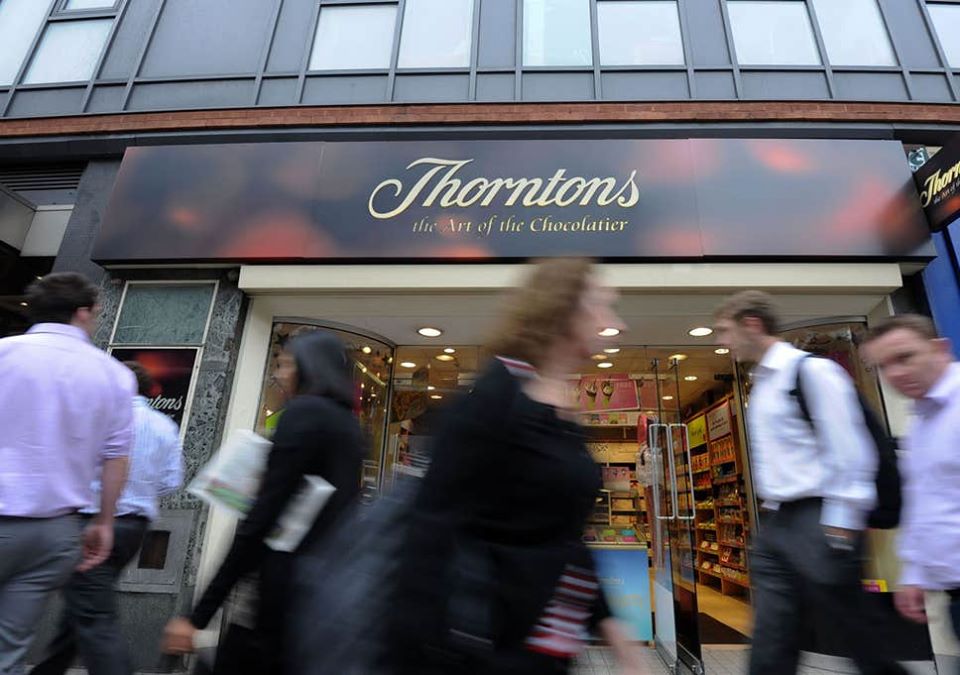
Thorntons

We’ve now lost sight that Thorntons, the British chocolate brand, was established in Sheffield. Now airbrushed from our history, its link with the city disappeared when the company moved its headquarters to Derbyshire in the 1980s.

Joseph William Thornton was a commercial traveller for the Don Confectionery Company in the early years of the twentieth century. With ambitions to set up on his own, he opened a small sweet shop at 159 Norfolk Street, in the centre of Sheffield, in October 1911.

It was run by his fourteen-year-old son, Norman, with intentions of becoming the ‘nicest’ sweet shop in the city. It was an attractive affair, with cream-coloured walls and mirrors from floor to ceiling, the shelves in front packed with ‘knob-stoppered’ jars full of sweets made by Joseph’s friends in Norwich.

Although he continued as a commercial traveller, he opened a second shop on The Moor where the family lived above. Although most of the stock was bought in, the family experimented by manufacturing hard-boiled sweets, but it was the production of violet creams that shaped its future.

Joseph William Thornton died in 1919, but Norman opened two more shops, later joined by his brother Stanley, and together formed J.W. Thornton Ltd.

During the 1920s, the brothers opened shops outside Sheffield, with boiled sweets made on The Moor and chocolate in nearby London Road premises.

With lots of quirky sweet treats like ‘Violet Cachous’, ‘Sweet Lips’ and ‘Phul-Nanas’, they sold the best confectionery around. But it wasn’t until now that the brothers were making their hand‐made chocolate truffles, crystallised fondants and, of course, their famous Thorntons special toffee. Production was later amalgamated in a small factory on Penistone Road where its first chocolate enrobing machine was introduced to boost chocolate sales even further.

In 1931, the company moved to Stalker Lees Road, paving the way to build a purpose-built factory on Archer Road in 1935, a facility that soon became too small for production.

By 1937, it had been extended, doubled in size, and would service 35 shops across the north and midlands.

During World War Two, Thorntons bought a smaller plant in Bury, to be used if the Archer Road factory was bombed. It never was, and production continued in Sheffield while Special Toffee was made in Lancashire.

Afterwards, the company was refused permission to expand its factory further and so the company bought Castle Factory, a former mill, at Belper in Derbyshire, where boiled sweets were produced.

By the 1970s, the company had more than 150 shops and expanded into the United States during the 1980s, opening shops in Chicago, Boston and Washington.

A brand new multi-million pound factory was built on a greenfield site at Swanwick, Derbyshire, in 1983, with the eventual closure of the Archer Road factory.

Rapid expansion at the start of this century, combined with an economic downturn, hit Thorntons’ profits hard and in 2011 it announced that it would close between 120 and 180 of its stores.

Four years later, in 2015, the business was sold to Italian chocolate maker Ferrero for £112 million, thus ending a long family connection.

Categories
Buildings

Sheffield Citadel

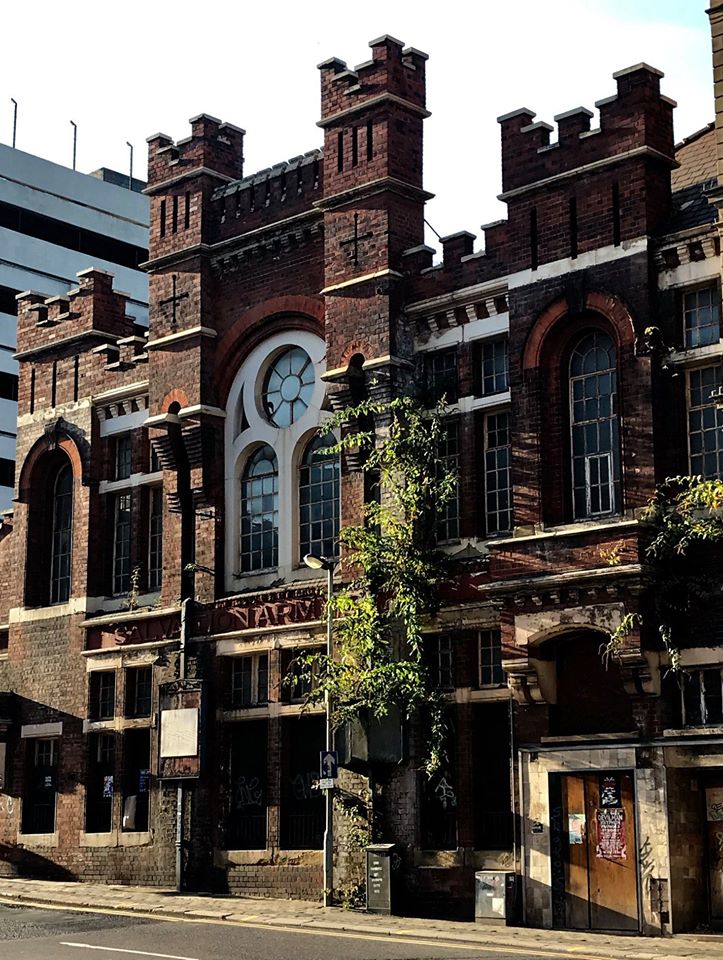
This photograph says it all. Trees and bushes growing out of the brickwork of the Grade II-listed Salvation Army Citadel on Cross Burgess Street, Sheffield. A favourite of urban explorers, this remarkable looking building has stood empty since the Salvation Army moved to Psalter Lane in 1999. The building’s future looks a little brighter, with Tandem Properties currently awaiting a planning decision to turn it into a bar and restaurant, the development forming part of the Heart of the City 2 project.

The Salvation Army arrived in Sheffield during 1878 and within three years had four halls attracting attendances of over 4,000 people. It was obvious that a bigger venue was needed for the No. 1 Corps which had previously met in a small building on Thomas Street. The London headquarters of the Army promised to fund the construction of a new meeting hall on the understanding that there would be a local contribution of £2,000. A piece of land on the junction of Pinstone Street and Cross Burgess Street was bought from Sheffield Corporation at a cost of £7,812.

The architect William Gillbee Scott (1857-1930), who had conceived the Gower Street Memorial Chapel in London, was asked to design the new Citadel along with shops and offices alongside. The foundation stones were laid in September 1892 with construction completed by the end of 1893. Its fortress-like appearance, with battlements and towers, lived up to the Citadel’s name. Completed at a cost of £25,000, the building consisted of a large hall, various rooms and apartments, with three large business premises on Pinstone Street, which were let almost immediately.

The main hall in the Citadel had seating for 2,000 people. At one end was a theatre-like platform with an orchestra behind. A main gallery occupied three sides of the hall with boxes sited at each end. An upper gallery was also situated at the back. In addition, there were ante-rooms, a band room for use of the brass band, and a large room under the orchestra accommodating another 300 people.

The Salvation Army Citadel opened in January 1894, spoilt by heavy rain, forcing the planned outdoor event to be adjourned inside. The ceremony started when the order was given to fire a volley, followed by a rousing rendition of Hallelujah.

The Citadel survived for 105 years, its popularity waning in time, resulting in its final departure to smaller premises at the end of last century. Admired by many, but seemingly unable to attract the right kind of developer, the building has been subject to several unsuccessful redevelopment plans.

Categories
People

Patrick McGoohan

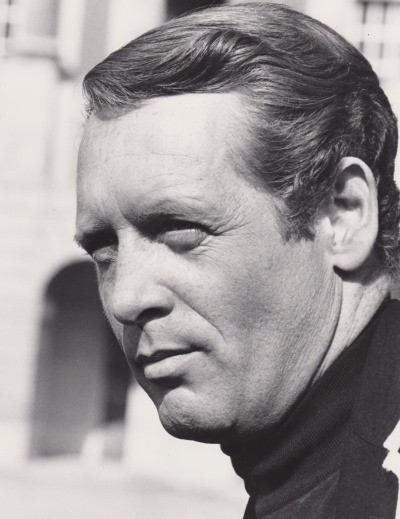
He became a film and TV star, but Patrick McGoohan (1928-2009) always owed his success to Sheffield. The man known to millions as Number Six in the cult TV series The Prisoner (1967-1968) was born in New York, moving months later to his parents’ farm in Ireland. Seven years later the family relocated to Sheffield, living at Clarkehouse Road, on the edge of Broomhill, attending St. Vincent’s School in Solly Street. He was evacuated to Loughborough during World War Two, and later educated at Ratcliff College.

McGoohan left school at 16, returned to Sheffield, and became a stage manager at Sheffield Repertory theatre on Townhead Street in 1947. When an actor fell ill, McGoohan got his chance at acting. In 1955, he signed a contract with the Rank Organisation, but shot to fame in his role as NATO trouble-shooter John Drake in the sixty’s television series Danger Man. Until the end of his days, McGoohan would be best known for his role in The Prisoner – “I am not a number, I am a free man.” – about a former agent trapped inside a mysterious village, a role he reprised in a 2000 episode of The Simpsons.

In the seventies, he settled in the Pacific Palisades district of Los Angeles, and in an interview in 1983 remembered his days on stage at Sheffield Rep.

“It was the happiest time of my life. I met my wife in Sheffield and life was simpler then. I didn’t need a lawyer, an agent and business manager. I just went on stage and played big roles as well as small ones. The last time I was filming in England, which was The Man in the Iron Mask, we had a free day, so I hired a car and didn’t tell Joan where we were going. I parked the car and took her into the city centre and made for Wilson Peck’s music shop. When we were outside the shop, I made her close her eyes, turned her around and asked her to open her eyes again. I then told her we were standing on the very same manhole cover where I proposed to her all those years ago.”

McGoohan died in 2009 at Saint John’s Health Centre in Santa Monica, California, after a brief illness.

Categories
Buildings

Bethel Sunday School

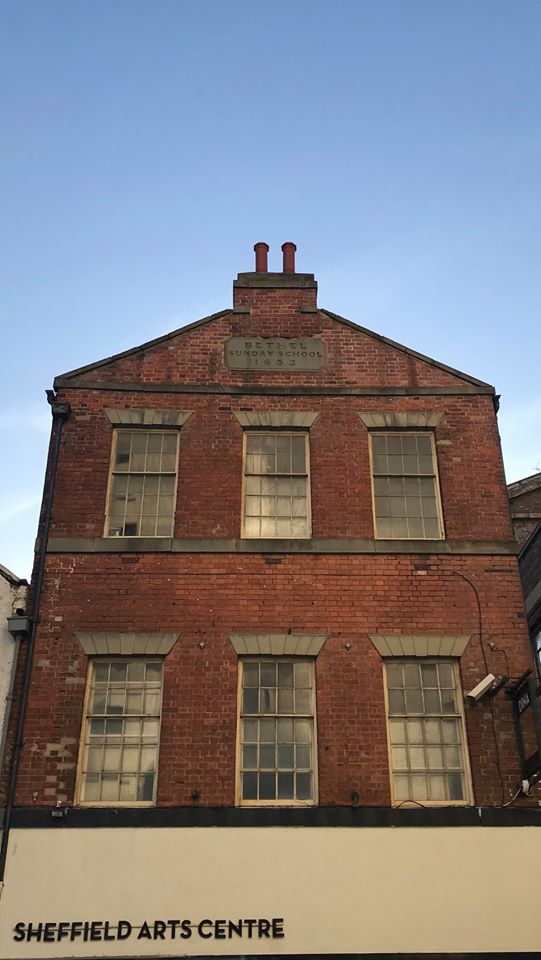
The origin of this building at 32 Cambridge Street can be seen on a stone plaque near the roof-line. It shows ‘Bethel Sunday School – 1852’. Presumably this was the date it was built and differs from its Historic England listing that claims it was built twenty years earlier.

To understand its existence, we must go back to the eighteenth century when Edward Bennet, a sugar-baker, funded a Methodist chapel to be built on Coal Pit Lane, which led to a pit towards the West Fields, abandoned because of the dangers of subsidence. In 1790, the church built a larger chapel on Howard Street and Coal Pit Lane was occupied by different Independent societies before standing empty.

Primitive Methodism was introduced into Sheffield at the end of the 18th century and made use of the redundant Coal Pit Lane chapel until 1835, when they built a new chapel (part of which still survives) on the other side of Bethel Walk. The old chapel was demolished, and the Bethel Sunday School was built in its place, accommodating over 500 scholars and were the means of educating and influencing thousands of children.

Coal Pit Lane, by the way, was renamed Cambridge Street when the Duke of Cambridge laid the foundation stone of the Crimean monument in 1857.

It is difficult to determine when the Methodists vacated the building, but by the 1920s it was being used as factory premises for Killeen, Rothwell and Company, men’s and boys’ cap manufacturers. Of course, later generations know it better as being part of Bar Centro, later The Cutler/Stardust Bar, opened next door in a former spoon factory.

At present it is occupied by DINA Venue, a hub for creative and digital space, with the former school known as Sheffield Arts Centre. It is astonishing that the building survived at all , but its Grade II-listing allows it to be retained in a future phase of the Heart of the City 2 masterplan.

Categories
Buildings

Queens Road

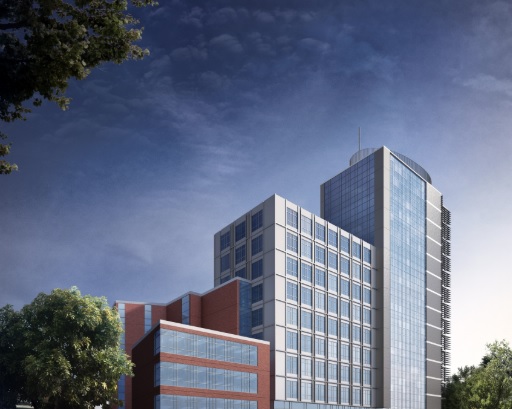
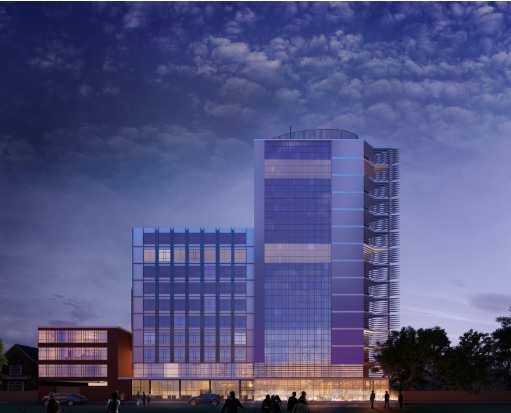
A new 15-storey building providing almost 250 student beds could be constructed in Sheffield if newly submitted plans get the go-ahead. DLP Planning, on behalf of Hermes Great Estate, has applied to Sheffield City Council for a development on Queens Road on the outskirts of the city centre. The applicant’s proposal is for a luxury development of studio and en-suite student apartments, to be known as Queens Court.

Approval is sought for the construction of three blocks, the tallest standing at 15 storeys. In total, 245 student bed spaces would be provided, with 37 six-bed cluster flats and 23 studios. A common room, gym, laundry room, reception space and office unit would be created on the ground floor, with a car park also provided for use by management staff and disabled students.

The site is currently occupied by Whitehall Financial Independent (WFI House), which would be demolished under the plans, and is opposite the Grosvenor Casino.

Categories
People

Charles Boot

Ask anybody in the street who Charles Boot was, and you’d probably meet with a blank response. But you might be surprised to find that one of his legacies is now world famous.

Born in Sheffield in 1874, Charles joined his father, Henry Boot, as a builder and eventually took over the business in 1919. He married Bertha Andrews in 1897 and lived at Sugworth Hall in Bradfield Dale. She died in 1926 and Charles married a second time, to Kate Hebb, and later bought Thornbridge Hall in Derbyshire.

Charles made Henry Boot and Son one of the largest contracting and housebuilding firms of the time. In 1931, he was credited as having built more houses than any other man or firm (21,644 in total, one thousand of these on Sheffield’s Manor estate), a figure surpassed in the inter-war years by a staggering 80,000 properties.

The company also built airfields for the Government during both World Wars and opened offices in Belfast, Glasgow, London, Athens and Barcelona. In 1927, the Athens office secured a massive £10million contract for land protection and reclamation across Greece, a project finally completed in 1952.

However, Charles Boot should be remembered for another quite remarkable undertaking. In 1934, he bought the Heatherden Hall estate, amongst pine trees at Iver Heath, Buckinghamshire, and embarked on the design and construction of a British film studio. Using techniques from house-building and copying the unit system adopted by Hollywood, he managed to complete construction within twelve months.

The rest, as they say, is history. The site subsequently became part of the J. Arthur Rank Organisation and Pinewood Studios went on to become home to some of the biggest film franchises – James Bond, Carry On, Harry Potter, Star Wars, the Marvel Universe – as well as producing hundreds of other TV series and films. Next year, Walt Disney Studios will move in, taking a ten-year lease.

Charles Boot died at a Sheffield nursing home in 1945, and Henry Boot PLC survives as one of Britain’s biggest land, property, development and construction companies.

Categories
Streets

Exchange Gateway

This is not the kind of street you might wander up after dark. Exchange Gateway, at the top of Fargate, is one of those forgotten parts of the city centre. Thousands pass its arched entrance every day, many of whom have never braved it up here. These days it acts as a service lane and fire escapes for properties backing onto Orchard Square and Fargate. Apart from its covered entrance there is little for the pedestrian to see. It is a dead end, and seemingly always has been, but its function has changed over the centuries.

At one time, this was a narrow street of multi-occupancy shops, houses, workshops and offices. A glance at an old directory shows that Exchange Gateway was home to small-scale tool manufacturers, cutlery producers, picture-framers and cabinet makers. This was also where the Sheffield Free Press newspaper was located, founded in 1850 – “a new impartial unsectarian journal” – but ending publication seven years later.

An 1867 newspaper tells us that “the buildings are old, four-storeys high of long range, and a considerable quantity of wood in their completion.” A fire had consumed the premises of Hobson and Wilson, brass-casters, and threatened to destroy the whole block. This was just one of many serious fires that occurred here, and no doubt contributed to its altered appearance.

For years, the street was unadopted by the council, its road surface out of character with the nearby thoroughfares. Its secluded location meant it was a haven for thieves, robbing people as they walked at night, and regularly breaking into properties. Its usefulness increased in the 1860s when the Cutler’s Hall, on Church Street, built a large extension at the rear, its approach being from Exchange Gateway.

The footprint of the street is virtually unaltered, but the greatest makeover was in the 1980s when Orchard Square shopping precinct was built, clearing old properties and replacing them with shops whose service doors lead out into Exchange Gateway. Nowadays the street is still out of sorts with its surroundings, a favourite for the homeless, drug-users and a sleeping place for the odd drunk.

Categories
People

Margaret Drabble

Dame Margaret Drabble, Lady Holroyd, was born at Sheffield in 1939. She is, of course, better known as the novelist, Margaret Drabble, author of twenty novels and several biographies. The daughter of novelist John F. Drabble and teacher Kathleen Marie, she is also the sister of novelist A.S. Byatt.

She was educated at Mount School, a Quaker boarding school in York, and read English at Newnham College, Cambridge. Drabble started out as an actress working at the Royal Shakespeare Company and was understudy to both Vanessa Redgrave and Judi Dench.

Her first novel, A Summer Birdcage, the story of a relationship between two sisters, was published in 1963.

She married, firstly, the actor Clive Swift, better known as hen-pecked Richard in Keeping Up Appearances, and had three children, including Joe Swift, the TV gardener. Her second marriage is with the writer Sir Michael Holroyd with whom she lives in Somerset and London.

“When I go back to Sheffield, I feel very close to it – although the whole family has moved away, there’s something about the people, about the manners that I recognise.”

Categories
Buildings

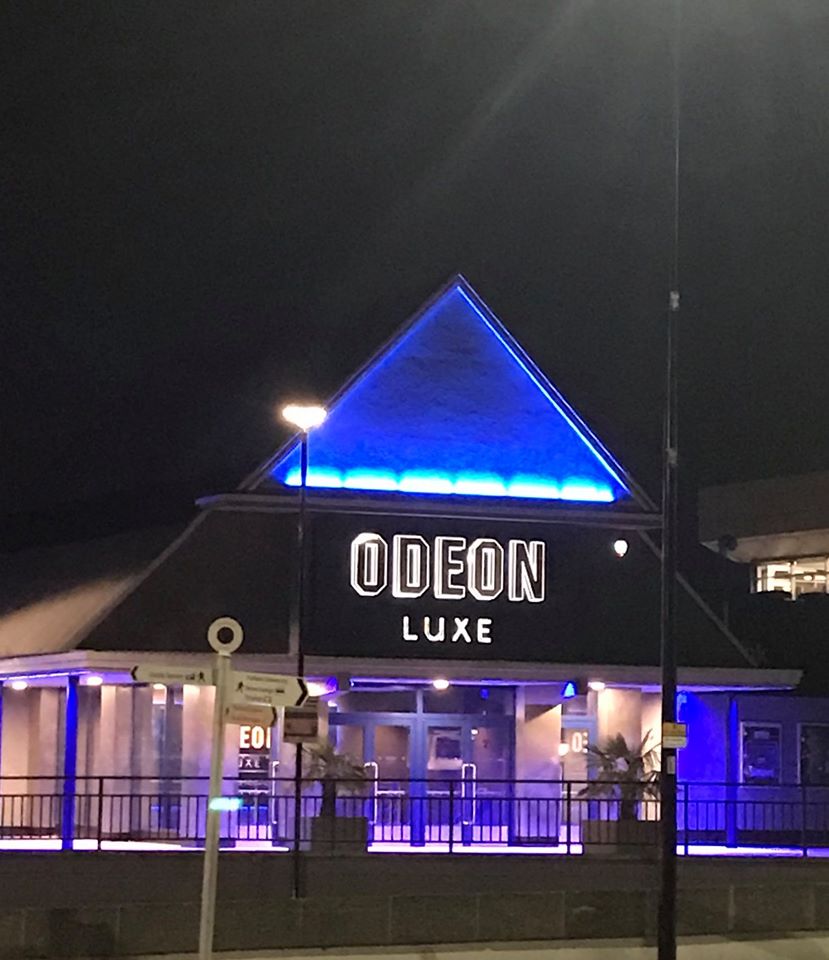
Odeon Luxe

The cinema experience in Sheffield is reaching new heights with the opening of The Light and the recent makeover of the Odeon on Arundel Gate. Now rebranded as Odeon Luxe – “cinema like you’ve never experienced before” – it’s hard to believe this building was constructed in the sixties.

The history will be lost to a younger generation, familiar with the cinema and Tank nightclub alongside, but its beginnings go back to the Epic Development of 1968-1969, a massive £1million project to provide an entertainment complex for the city.

The scheme exploited the steeply sloping ground above Pond Street, rising to the newly-constructed inner ring road (Arundel Gate). With shops and car-parking below, it linked Pond Street bus station to the city centre by means of walkways, escalators and subways. The key features were two large windowless blocks, clad entirely in panels of white tiles, designed by Jefferson Sheard & Partners, responsible for the brutalist Moore Street Substation.

One of the buildings was taken by the Rank Organisation as a 2,500 capacity nightclub and conference centre, known to generations as Top Rank (later the Roxy, now the O2 Academy), while the other unit was proposed as another nightclub with twin cinemas underneath.

The Cinecenta cinemas opened in January 1969, but it wasn’t until the summer of 1970 that a cabaret club opened above. This was the Fiesta Club, operated by two brothers, Keith and Jim Lipthorpe, who had managed the Club Fiesta at Stockton-on-Tees since 1965. The cost of fitting out the building was said to be £500,000, a huge undertaking, and provided 1,300 seats in the auditorium.

It was reputed to be the largest cabaret club in Europe, building a reputation in attracting big names to the city. The Jackson Five, The Beach Boys, Roy Orbison, Stevie Wonder, Ella Fitzgerald and The Four Tops all played here.

And there were many famous homegrown names too – Cilla Black, Bruce Forsyth, Les Dawson, Tommy Cooper and Sheffield’s own Tony Christie – to name but a few. Legend suggests that Elvis Presley nearly appeared here, but alas it never happened.

For a time, the Fiesta Club was legendary, but the ever-increasing demands of artists and agents had taken its toll. In 1976, following a 17-day strike by staff wanting to join a union, the Fiesta Club closed with debts of £300,000.

After a spell in darkness, it reopened under the management of a Scarborough-based company, but when this also failed it passed into the hands of the Rank Organisation. Uncomfortable with such a large venue, it leased the Fiesta Club to a businessman who later disappeared.

The Epic Development never reached the heights it intended. Far from providing a link to the city centre, Arundel Gate was the problem, wider then, and only crossed by pedestrians via a series of subways. By the end of the seventies the area was already down-at-heel, the underpasses were dangerous places at night, the escalators had stopped working, and the shops were only attracting low-end retailers.

The lights finally went out at the Fiesta Club in 1980, standing empty until the Rank Organisation converted it into the Odeon multiplex cinema in 1992. Five of the seven screens were fitted into the shell of the Fiesta, two screens were taken in the former Cinecenta auditoriums, and extra screens added later.