Categories
Buildings

Millennium Gallery

I wonder if the Millennium Gallery will become one of Sheffield’s iconic buildings.

Considering this is a modern-build, the white concrete construction appears to have settled comfortably into the hillside around Arundel Gate.

To understand the origins of the Millennium Gallery, we must go back to 1994 when the Heart of the City redevelopment scheme was initiated. Part of the masterplan involved building a new gallery, part of the new century celebrations, linked to a Winter Garden and the Peace Gardens above.

In 1995, a competition was held inviting architects to submit proposals, subsequently won by London-based Pringle Richards Sharratt. Although the Winter Garden might be easily recognisable, public response to the Millennium Gallery has remained positive.

When it was completed in 2001, the Millennium Gallery provided 1,800 square metres of exhibition space, including permanent displays of the Ruskin Collection and the city’s metalwork and silver collections.

The architects had to overcome the sloping topography of the site, creating galleries on the upper level over a service undercroft. Escalators lead to a first floor avenue, used as an indoor street to the Winter Garden, and access to five galleries on the left side.

Look up and you’ll see the barrel vaults of fine white pre-cast concrete, complete with columns and beams of the same material. Glass blocks in the avenue’s roof vaults and north wall provide diffused natural light.

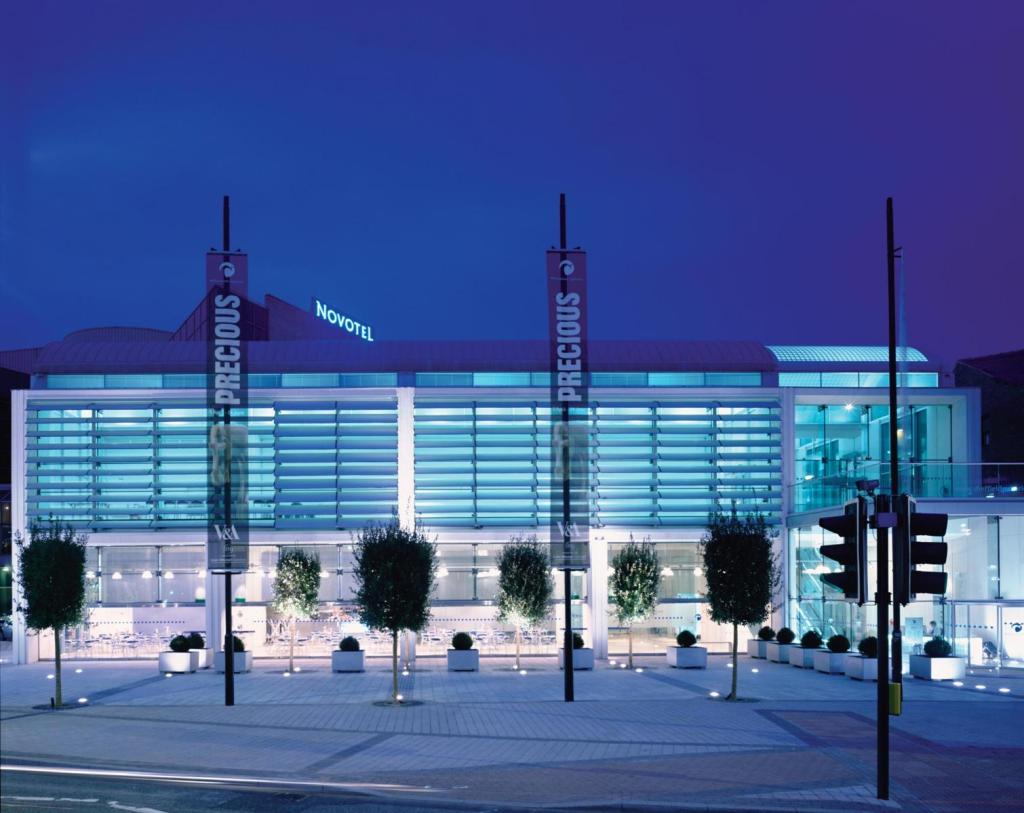
The largest gallery, Sheffield’s largest exhibition space, is flexibly planned with moveable full-height screens that run parallel with the vaults. It is here that the Millennium Gallery has staged major touring exhibitions, such as those from the Victoria & Albert Museum and Tate Gallery.

The last of the galleries contains the Ruskin Collection, separated from the Winter Garden by a glazed wall, with glass panels by Keiko Mukaide, symbolising water and clouds.

John Ruskin established a collection of material he hoped would inspire Sheffield’s workforce at the St. George’s Museum, Walkley, in 1875. The collection of watercolours, drawings, prints, plaster casts, minerals, illustrated books, manuscripts and coins is owned by the Guild of St. George (and managed by Museums Sheffield) and has had several homes in the city.

Categories
Streets

Barker’s Pool

A prominent street with a name that has been familiar for centuries. In Barker Pool, or Barker’s Pool as we now know it, we have the first attempt to give the inhabitants of Sheffield a constant supply of pure water.

The tradition is that one Mr Barker, of Balm Green, in 1434, took steps to make some sort of reservoir for the storage of water supplied by springs.

All we know for certain, is that in this year, there had been a “Barker of Balm”, and that there had been a William Barkar in 1379.

“Barker Powle” is mentioned in a deed of 1567, and in 1570 the Burgery was ‘amerced’ in the sum of 3s. 3d., paid as a fine, or rent, to the Lord of the Manor, for the pool.

From this date until 1786, the cleansing and keeping of the pool was acknowledged as one of the specific charges upon the town property.

Indeed, we can bring it to a later date than this, for after the pool, superseded by a more efficient water supply, had been removed as a nuisance in 1793, the Town Trustees put up a pump nearby which remained, although unused in later years, until 1876.

The pool was an oblong, walled space, about 36 yards by 20, not quite right-angled, for it was slightly wider at its upper than at its lower end, and ran across what eventually became the entrance to Division Street.

It appears that Barker Pool was, on occasion, used for ducking undesirable characters, for in the constables’ accounts for 1654, there is a charge for bringing the cucking stool (from Lady’s Bridge) up to Barker Pool. (Cucking stools or ducking stools, were chairs used for punishment of disorderly women, scolds (troublesome and angry people who habitually chastised, argued and quarrelled with their neighbours) and dishonest tradesmen.

We get our best description of the part the pool played in the local economy from the autobiography of Samuel Roberts in 1849.

In it, he gives a vivid account of the excitement caused amongst residents in the streets down which the channels passed, when periodical flushings afforded a general clean-up of the town: –

“All the channels were then in the middle of the streets which were generally in a very disorderly state, manure heaps often lying in them for a week together. About once every quarter the water was let out of Barker Pool, to run into all these streets into which it could be turned, for the purpose of cleansing them. The bellman gave notice of the exact time, and the favoured streets were all bustle, with a row of men, women and children on each side of the channel, anxiously and joyfully awaiting, with mops, brooms, and pails, the arrival of the cleansing flood, whose first appearance was announced by a long, continuous shout. Some people were throwing the water up against their houses and windows; some raking the garbage into the kennel; some washing their pigs; some sweeping the pavement; youngsters throwing water on their companions or pushing them into the widespread torrent. Meanwhile a constant, Babel-like uproar, mixed with the barking of dogs, and the grunting of pigs, was heard both above and below, till the waters, after about half an hour, had become exhausted.”

Barker Pool was also used when fires broke out in the town, water being let out of the reservoir, and leather buckets hung in the Church and Town Hall for residents to use. By 1703, the Town Trustees had improved on this by providing a fire engine.

And that, as they say, is the history of why we call it Barker’s Pool all these years later.

Categories
Companies

Bassetts

When George Bassett died in May 1886, his death merited an obituary in local newspapers, largely because he was an ex-alderman and former Mayor of Sheffield.

In the last years of his life a stroke had partly paralysed him, providing plenty of time for him to reflect on his life and achievements.

However, when he finally passed away at his Endcliffe home, the result of a fourth stroke, he died not knowing his legacy would one day become world famous.

George Bassett was born at Ashover, Derbyshire, in 1818, where his father was a small farmer and landowner, and his ancestors had lived for generations.

As a young man, he was apprenticed to William Haslam, a Chesterfield confectioner in Low Pavement, and afterwards moved to Sheffield where he started his own confectionery business in Broad Street, Park, in 1842.

Described as a “Wholesale Confectioner, Lozenge Manufacturer and British Wine Merchant,” Bassett started selling to druggists and shopkeepers elsewhere, boasting that he was always “in stock of lozenges, comfits, pipes, acid drops, jams, juice, candied lemon, Carr’s Fancy Biscuits, American soda biscuits, nuts, pickles, fish sauces, Firkin Butter and lard.”

On reflection, it appears that although confectionery was a large part of George Bassett’s business, he was better known as a wholesale merchant, selling tea, coffee, sugar and general provisions to shops around the town.

He subsequently opened another shop in the New Market Hall, another in West Bar and additional premises at Snig Hill.

Although considered to be a retailer, Bassett ultimately became a manufacturing confectioner, and in 1859 opened a steam-powered factory in Portland Street, by the Royal Infirmary, considered to be the largest and most complete in the country. To achieve this, he had gone into partnership with William Lodge, renaming the company as Bassett and Lodge, and choosing to dispose of the retail business.

The partnership was dissolved in 1861 and a few years later, Bassett entered business with Samuel Meggitt Johnson (1837-1925), one of his former apprentices, a liaison that lasted until George Bassett’s death, after which Johnson assumed sole control of the firm.

By 1871, Bassett employed 150 people, and at the time of his death, the company was the largest confectionery manufacturer in the country.

Nevertheless, George Bassett was more famous locally as a public servant. He became a member of the Council in 1851, when elected as one of the representatives of the Park Ward. In 1873, Bassett was raised to the aldermanic bench, and in 1876, just twenty-five years after first entering the council, he was unanimously elected as the Mayor.

During his mayoralty, the former United States president General Ulysses S. Grant, paid a visit to Sheffield, and was a guest at both Bassett’s Endcliffe Crescent home and at a banquet given in his honour at the Cutler’s Hall.

Like many Victorians, Bassett was a religious man, a Wesleyan Methodist, fulfilling many roles for the church, and generously contributing to its funds.

As well as his own confectionery business, Bassett also took up directorship roles at the Union Banking Company as well as at Earle’s Shipbuilding Company.

He married twice, his first wife was Sarah Hodgson, daughter of Joseph Hodgson, iron merchant, who died in 1861, and with which he had six daughters. His second wife was Sarah Ann Hague, daughter of Mr Hague of Broad Street, who survived him and provided two sons.

The grave of George Bassett can still be seen today, amidst dense vegetation, at the Sheffield General Cemetery.

But what became of the business after his death?

Under Samuel Meggitt Johnson the company flourished, concentrating on lozenges, candied peel, and liquorice confectionery, enjoying nationwide distribution and developing a considerable export trade.

The birth of liquorice allsorts took place in 1899, and will always be associated with Charlie Thompson, of York, a representative of the firm for nearly 60 years. The various units which make up the selection known as liquorice allsorts had been sold separately for many years.

One day, Mr Thompson, when calling on a customer in Leicester, tripped over the doormat and spilled his tray of samples of these units on the floor. As he was gathering the sweets together into a heap with his foot, the customer was struck by the attractiveness of the resultant assortment, and forthwith placed an order – “for all sorts.”

The new line met with instant success and was eventually imitated by manufacturers throughout the world.

The rapid expansion of sales which followed the introduction of liquorice allsorts taxed the firm’s productive capacity, despite having opened the Don Works, on Bridge Street, in 1899. Accordingly, a new factory was built at Owlerton in 1900 to take over the manufacture of candied peel and glace cherries under the subsidiary company of Samuel M. Johnson & Sons.

Sales of confectionery continued to grow at such a rate, however, that soon the new Owlerton factory had to help the Portland Street factory by producing confectionery as well.

Samuel Meggitt Johnson died in 1925, and subsequently George Bassett was incorporated in 1926 with a capital of £350,000.

The Don Works closed in 1927, but manufacturing continued at Portland Street and Owlerton. In 1933, the directors gave up production of peel and cherries and concentrated on confectionery, at the same time centralising all manufacturing activities at the Owlerton premises.

Accordingly, a new four-storey factory was built to take over the whole of liquorice allsorts production and was in operation by 1934.

Business boomed, hindered only by the Second World War, producing liquorice allsorts, a wide range of gums, pastilles, jellies, mixtures, pan lines, mints, lozenges, and medicated confectionery.

In 1961, George Bassett acquired W.R. Wilkinson of Pontefract, followed by Barratt’s, a leading children’s confectionery manufacturer, in 1966.

However, by the 1980s Bassett’s had fallen to third place in the British sugar confectionery market, behind Trebor and Rowntrees, and was acquired by Cadbury for £91million in 1989, merging the businesses of Pascall-Murray and Lion into the larger Bassett concern.

Later that year, Cadbury-Schweppes bought Trebor for £110million, renaming its sugar confectionery subsidiary Trebor Bassett.

These days the company is a brand of Cadbury, owned by Mondelez International, the Owlerton factory making iconic brands like Liquorice Allsorts, Jelly Babies and Trebor Extra Strong Mints. In addition to this, the Sheffield site also produces Ritz Crisp & Thins, and has also been used to produce the company’s Oreo and Belvita biscuit lines.

Look in shops today and you’ll see a wide range of products under the Maynards Bassetts branding.
Categories
Companies

Bassetts

We’ve already looked at the life of George Bassett, a man who died before his most famous product, Liquorice Allsorts, was created.

Bassett’s Liquorice Allsorts came about by accident in 1899, when Charlie Thompson, a salesman for Bassett’s visited a wholesaler with a sample of liquorice and cream paste specialities – chips, rocks, buttons, nuggets, plugs and twists.

Each item was offered to the wholesaler and in turn was refused. The salesman clumsily gathered his samples boxes together, knocking them over and spilling the colourful sweets on the floor.

The wholesaler saw more attraction in the ‘mixed’ sweets and placed an order. The salesman named them Liquorice Allsorts.

Made of liquorice, sugar, coconut, aniseed jelly, fruit flavourings, and gelatine, allsorts are now produced by many companies around the world, but are most popular in Britain and continental Europe (especially the Netherlands where they are called Engelse drop, meaning English liquorice). They are also common in Scandinavia, where they are called Engelsk onfekt or Lakridskonfekt.

In 1929, the George Bassett company created Bertie Bassett, a mascot for Liquorice Allsorts, designed to appeal to young and old, and he’s been going strong for 90 years.

In the 1950s, visitors to the factory at Owlerton were confronted on the main staircase by the friendly figure of Bertie Bassett, serving as a reminder that “the important and unchanging things in life are the human things, and as a challenge to any who would subjugate those human things to the changing dictates of expediency.”

Such waffle plays a secondary role now.

Indeed, Bertie Bassett is under threat, reeling from the double blow of declining sales and the war on sugar.

Last month, it was reported that sales of Liquorice Allsorts had shrunk by nearly 8 per cent to £23.5million in the past year, the only type of confectionery to see a downturn in demand.

And new rules that sweets contain less than 50 per cent sugar could spell the end of Bertie Bassett.

According to The Grocer: “That’s bad news for liquorice allsorts, which are made almost entirely of sugar.”

Categories
Companies

Bassetts

A final burst of Bassett’s for today.

A look at Jelly Babies, the soft sugar jelly sweet, dusted in starch, and shaped as plump babies in a variety of colours, made in Sheffield.

The sweets were invented in 1864 by an Austrian immigrant working at Fryers of Lancashire. It is thought that he was asked to make a mould for jelly bears, but the resulting sweets looked more like new-born infants and were subsequently given the ghoulish name, Unclaimed Babies.

Tim Richardson, author of Sweets: A History of Temptation, said although the name might sound ghastly to modern ears, sweet-eaters in the Victorian era would barely have batted an eyelid.

Their popularity waned, but in 1918, they were produced by George Bassett in Sheffield as “Peace Babies” to mark the end of World War I.

Production was suspended during World War II, due to wartime shortages, but the product was relaunched in 1953 as Jelly Babies.

The sweet is famous for being Doctor Who’s favourite sweet, often carried around in a white paper bag. However, they are specifically associated with Tom Baker’s fourth Doctor, who had a predilection for offering them to strangers in order to defuse tense situations (and in one episode bluffing another alien into thinking them a weapon).

In the 1990s, Jelly Babies ditched their nappies in favour of baseball boots and bumbags and given names: Brilliant (red; strawberry), Bubbles (yellow; lemon), Baby Bonny (pink; raspberry), Boofuls (green; lime), Bigheart (purple; blackcurrant) and Bumper (orange).

At the time, a company spokesman said that, “We wanted to increase their street cred.”

Still going strong today.

Categories
Buildings

Pennine Centre

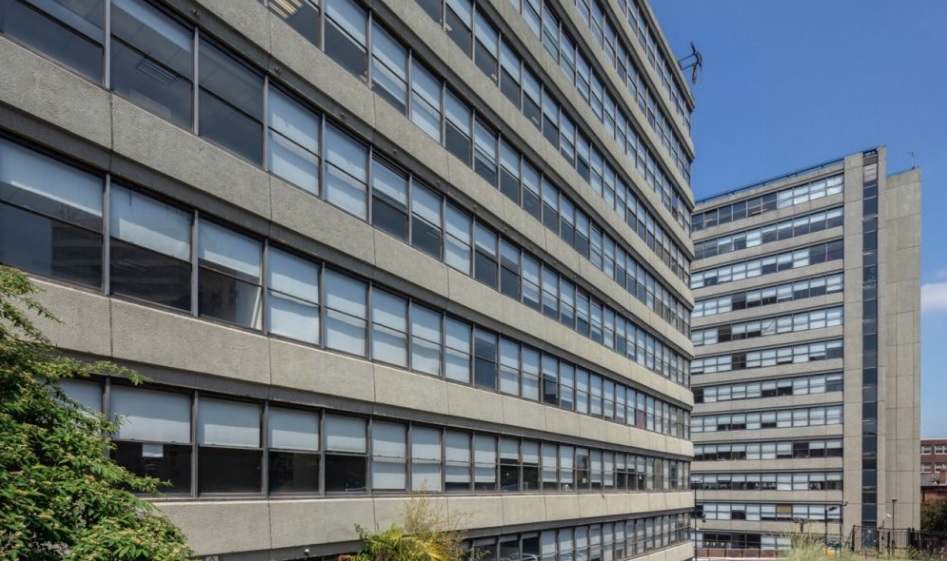
We’re now at that stage when those 1970s modernist office blocks need to start reinventing themselves. This is the case with the Pennine Centre between Tenter Street and Silver Street Head, Sheffield, built between 1973 and 1975, for the Midland Bank (now HSBC), and formerly known as Griffin House.

Opened to great fanfare in October 1976, the five blocks accommodated over a thousand workers, but changing market conditions eventually resulted in a reduction in staff numbers. When HSBC’s lease ended, it had already made plans to move to the smaller Grosvenor House, part of the Heart of the City II development, at Charter Square.

The tallest block at the Pennine Centre is 13-storeys (50 metres high).

The building, previously owned by US-based Kennedy Wilson, was sold for £18million to RBH Properties in the spring, which announced plans for flats and shops.

However, high conversion costs prompted the Portsmouth-based developer to rethink, the result being Pennine Five, the new name for the site.

The company plans to revamp all five blocks and let them to businesses, with potential to accommodate 2,500 people.

Within the development will be offices, co-working spaces, meeting rooms, cafes and restaurants, and by removing the ground and first floors of Block 4, will create a new public square. The site already has a four-storey underground car-park with 457 spaces.

Work on the five inter-connected blocks is scheduled to start in January 2020.

Categories
Buildings

Central Hall

The next time you settle into a seat at one of our multiplex cinemas, take a moment to consider that there are still traces of Sheffield’s original cinema.

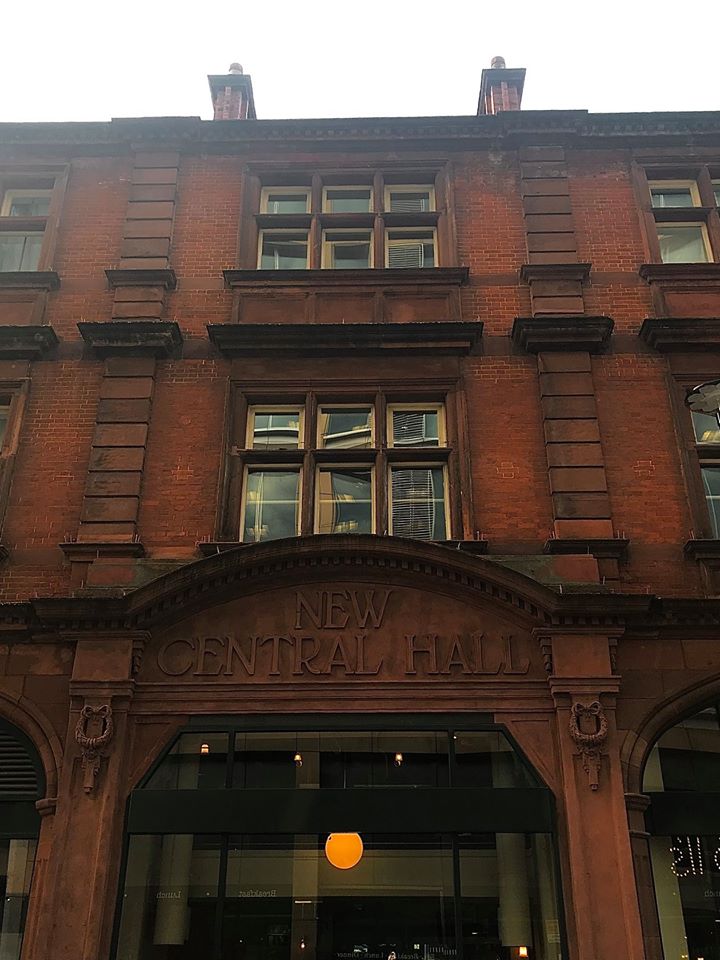
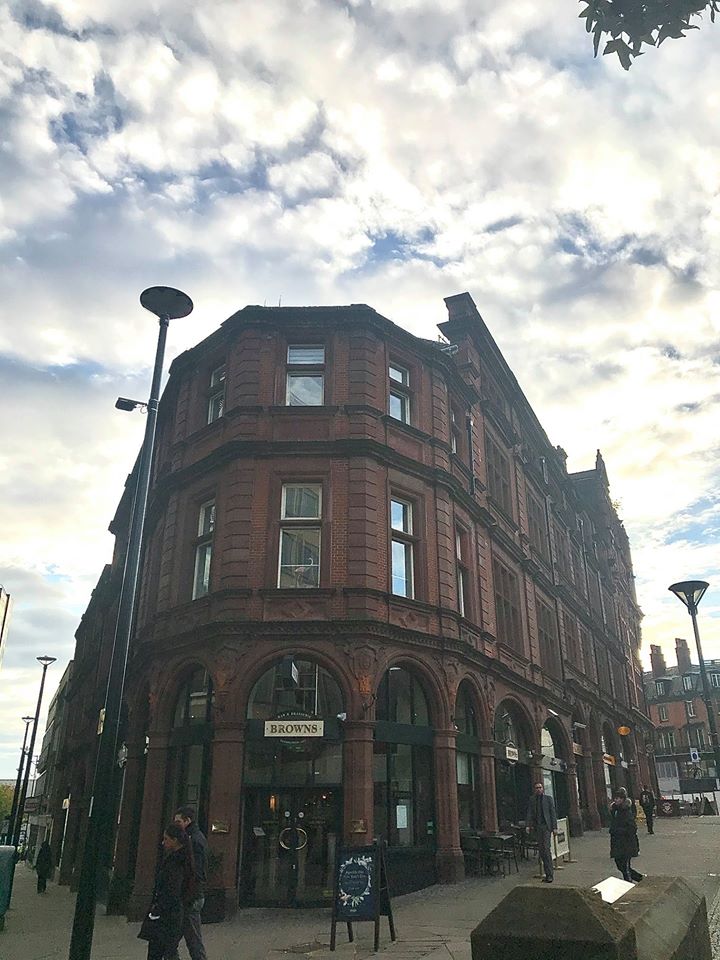
Head down to Norfolk Street, and look at part of Brown’s Brasserie and Bar. Above one of the plate glass windows is the name New Central Hall, the remains of a former decorative arched entrance.

This part of the building, just around the corner from St. Paul’s Parade, was built in 1899 by architect John Dodsley Webster as the Central Hall for the Sheffield Workmen’s Mission, established by Pastor A.S.O. Birch in 1880 at the old Circus on Tudor Street. (The building was constructed by James Fidler, contractor, of Savile Street).

The cost, exclusive of land, was about £4,000, made possible by a £3,500 loan from Mr F.E. Smith, “trusting those who will attend the hall to repay him when they can.”

The Central Hall had a frontage of 46 feet, the ground and first floors devoted to the main hall, which contained a gallery, and seating accommodation for 500 people. The second floor was occupied by five classrooms and an office, while the basement was taken up by a large kitchen and store-rooms.

It had been designed as a place of public worship; the Mission having previously held services at the Montgomery Hall on Surrey Street and opened in December 1899.

However, no sooner had it opened when, somewhat unexplainable, the Workmen’s Mission left and taken up residence at the Albert Hall in Barker’s Pool.

It was left to John Dodsley Webster to advertise the Central Hall as being available to buy or let on lease, “suitable for conversion to offices, flats or business premises.”

It wasn’t until November 1904 that we find evidence that the building was in use again.

Nelsons Ltd, “The Pensions Tea Men,” advertised that it was opening its drapery, ready made clothing and boot and shoe departments at Central Hall. It was another short-lived scheme, because in March 1905, the shop had gone into liquidation.

Nonetheless, there was somebody waiting in the wings who saw Central Hall as a long-term answer to a conundrum.

Henry Jasper Redfern (1871-1928) is almost forgotten now, but he packed a lot into a relatively short life. Here was a man who had made a fortune with a long list of business successes – “optician, refractionist, manufacturer of optical, photographic and scientific instruments, photographer, expert in animated photography and Rontgen rays, electrician and public entertainment.”

Born in Sheffield, Redfern trained as an optician, opened a business on Surrey Street, and later added a photography shop nearby.

However, he was more famous in the realms of cinematography, a subject he studied in its early stages, and became a pioneer in exhibiting moving pictures.

Alongside his daily routine, he toured the country with “Jasper Redfern’s world-renowned animated pictures and grand vaudeville entertainment” show.

Redfern decided that a permanent venue was required, and Central Hall provided a convenient solution.

In July 1905, New Central Hall opened to great flourish with the showing of the “Royal visit to Sheffield in its entirety,” shown twice nightly, along with a complete programme of live variety entertainment.

In the following months, there were screenings of more moving pictures, with titles like “Winter Pastimes in Norway” and “North Sea Fishing”, as well as resident acts, such as the two French conjuring midgets and songs by Madame McMullen and Lawrence Sidney.

New Central Hall attracted big houses twice a night, much to the dismay of Smith and Sievewright, clothiers, which occupied the shop next door, and took Redfern to court complaining that the queue of waiting patrons was detrimental to their business.

But, by 1912, the cinema was in financial difficulties, although its company secretary, Norris H. Deakin, found backing to improve amenities, increasing the size of the stage and adding a proscenium arch, and increasing seating capacity to 700.

Jasper Redfern & Company Ltd was wound up and replaced with the New Central Hall Company in early 1913, with Deakin as managing director. At what stage Jasper Redfern left is uncertain, but he emerged elsewhere in the country, his life story worthy of a separate post.

The tenancy of New Central Hall quickly passed to yet another company, Tivoli (Sheffield) Ltd, and the cinema reopened in January 1914 as the Tivoli, newly decorated and improved, with variety acts stopped a year later.

The Tivoli was a success but suffered a disastrous fire during the night in November 1927. Four fire engines raced to the scene, one using a new £3,000 ladder, and attempted to put out flames coming from the roof. However, parts of the roof were destroyed, the balcony was a charred mass, and the ground floor was a mass of burning woodwork.

The cinema was rebuilt and opened in July 1928 as the New Tivoli, completely refurbished with carpets by T. & J. Roberts of Moorhead, theatre furnishings by L.B. Lockwood & Co, Bradford, and lighting effects provided by J. Brown & Company, of Fulwood Road.

In the following decade, a Western Electric sound system was installed and because of a penchant for screening cowboy films, the New Tivoli was popularly known as “The Ranch.”

The curtain finally fell on the cinema on 12 December 1940, the result of Blitz fire damage. It was never rebuilt, the cinema area adapted for offices, restaurant and shop.

All that remains of the original Central Hall is its frontage, and the only nostalgic reminder of its cinema days being the stone-carved sign.

Categories
People

John Dodsley Webster

Here’s a name that keeps appearing on Sheffielder.

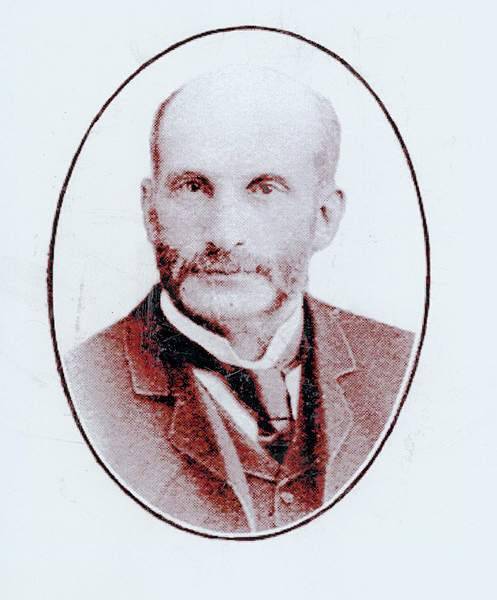
John Dodsley Webster (1840-1913), might not have been our best-known architect, neither was he responsible for Sheffield’s finest buildings, but his legacy was probably the most important.

J.D. Webster was born in Sheffield, received private tuition from Rev. H.D. Jones, Vicar of Heeley, and was later educated at Mansfield Grammar School.

Afterwards, taking up a career in architecture, he was articled to M.R. Mallinson, the Burnley ecclesiastical architect, later managing the Halifax office of Mallinson & Healey, after which he returned to Sheffield and spent time with Worth & Campbell.

Webster set up on his own soon after 1865 and along with his son, John Douglas Webster, who became his partner, practiced in Sheffield for nearly 50 years.

He became Diocesan Surveyor for the Diocese of Sheffield, and before that for the Archdeaconry of Sheffield when in the Diocese of York.

Unsurprisingly, with clerical interests, he was a prominent churchman, and for several years was warden at St. Mark’s Church at Broomhill.

Webster was the architect of St. Matthias’, Emmanuel Church (Attercliffe), St. Bartholomew’s (Burgoyne Road), Carbrook Church, St. Cuthbert’s (Fir Vale), St. Paul’s (Norton Lees), St Anne’s (Netherthorpe) and prepared the designs of extensions to Heeley Church.

Other works included Grenoside Church, the “Fox” Memorial Church (Stocksbridge) and the Trinity Church at Highfields (the last regarded as one of the best examples of its class).

With his son, he also designed St. Augustine’s Church (Brocco Bank), St. Oswald’s (Millhouses), St. Timothy’s (Crookes) and St. Clement’s (Newhall).

In addition, his name can be ascribed to Gleadless School, now vacant on Hollinsend Road, Woodhouse East, on Station Road, and Woodhouse West, at Sheffield Road.

A fellow of Royal Institute of British Architects (RIBA), his best-known works were the former Jessop’s Hospital, Sheffield Children’s Hospital, and extensions to the Royal Infirmary and Ecclesall Union.

In Clarkson Street, at the corner with Western Bank, is the oldest surviving part of the Children’s Hospital which moved here in 1878. J.D. Webster was one of the hospital founders and chairman of its management committee.

The Jessop’s Hospital for Women, on the north side of Leavygreave Road, opened in 1878, a rather forbidding building in late Gothic style, that lost the top stage of its central tower during the Second World War, but survives as the University of Sheffield’s Department of Music.

Unfortunately, Webster’s Edwardian wing of 1902 was demolished, despite Grade II-listing, in 2013. The site is now occupied by The Diamond, the university’s futuristic home to the Faculty of Engineering.

There are few examples of Webster’s work in the city centre, but those that survive are passed on a regular basis by locals.

The Davy’s Shop in Fargate (1882) is now home to W.H. Smith, the Bainbridge Building on Surrey Street (1894) was most recently occupied by Halifax Bank, and the attractive St. Paul’s Parade building at the side of the Peace Gardens was completed in 1901.

Around the corner, in Norfolk Street, is the original frontage to the Central Hall for Sheffield Workmen’s Mission (1899), later becoming New Central Hall, the city’s first cinema, and now occupied by Brown’s Bar and Brasserie.

J.D. Webster practised at 19 St. James’s Street and lived at Sunbury, on Westbourne Road, at Broomhill.

He died in October 1913, aged 74, and was succeeded by his son, John Douglas Webster

Categories
Buildings

St Paul’s 4

I’m sure a few people will remember the demolition of the Empire Theatre, on Charles Street, back in 1959.

The grand old theatre was replaced by shops and offices, bridging the gap between Union Street and Pinstone Street, the most beloved tenant being Sugg Sport that closed in 2000.

They say that today’s buildings are tomorrow’s history.

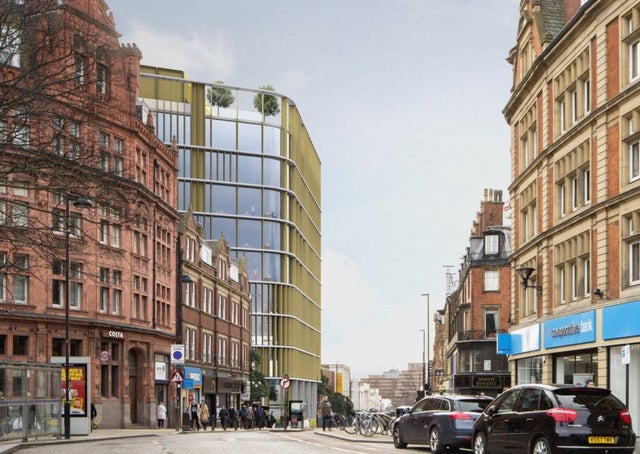
This will be the case if Manchester-based developer CTP eventually gets the go-ahead for St. Paul’s 4, a 10-storey office block, planned in place of this 1960s building.

The £35million scheme was proposed in June last year, when CTP wanted half of the building pre-let before launching the project. A pre-let – signing a tenant while a building is still on the drawing board – would then trigger a bank or financial institution.

Initial talks had taken place with Sheffield City Council, thought to be supportive of the development, and CTP stated that “demand for the project was so high that they were happy to forge ahead.”

A pre-planning application had been expected last autumn, but has yet to materialise.

The optimism for St. Paul’s 4 was based on Sheffield’s office take-up reaching a ten year high in 2017, when prime office space availability fell to its lowest level on record.

However, the update from CTP is perhaps less optimistic.

With several new office blocks completed in the city centre, the developer has now downgraded its status to “serious tenant enquiries.”

CTP has an excellent track record in Sheffield, being responsible for St. Paul’s 1,2 and 3, as well as the Mercure Hotel, Cheesegrater car-park and St. Paul’s Tower.

It promises that St. Paul’s 4 would “respect the heritage” of historic buildings in the area, and complement an adjacent 32-storey tower block, proposed for the site of Midcity House, at the junction of Furnival Gate, Pinstone Street and Union Street.

CTP has a ‘quasi joint venture’ with Schroders, an asset management company, that owns the land and building on the site.

If St. Paul’s 4 gets off the ground, then it will be one of the most significant changes to Pinstone Street in modern times.

Categories
Buildings

St Paul’s Building

Completing this week’s look around the Peace Gardens, we look at the elaborate building on St. Paul’s Parade, which runs between Pinstone Street and Norfolk Street.

This walkway once ran alongside St. Paul’s Church, demolished in 1938 and replaced with St. Paul’s Gardens, later Peace Gardens, and known as South Parade.

It was renamed St. Paul’s Parade in 1901, largely because of John Dodsley Webster’s new building that had just been completed, the second stage of a development that ran around the corner into Norfolk Street, started by the construction of the Central Hall for the Sheffield Workmen’s Mission in 1899.

Ruth Harman and John Minnis in Pevsner’s Architectural Guide to Sheffield (2004), suggest that the warm-coloured brick with red sandstone dressings, was an unusual combination for Sheffield, where the buff Yorkshire and Derbyshire sandstones were much more common.

The St. Paul’s Building comprised shops, offices and residential flats, along with a gallery and studio, although only the original facades remain following redevelopment behind.

It retains the arcaded shopfronts with carved stone piers and arches, with the faces of lions and rose, shamrock and thistle emblems still decorating the spandrels.

When it was completed, the building was home to James Moore’s Art Classes, which took place in a “beautifully lighted” new studio, its customers promised painting and drawing from live models, portrait and figure compositions, as well as flower and still-life subjects.

Over one hundred years later, the St. Paul’s Building, still retains pretty much the same use, although there have been unsuccessful attempts to have it demolished.

Had it been, the redevelopment of the Peace Gardens as part of the Heart of the City project, might have been very different.

Shops aplenty have occupied the ground floor, the most famous being the Army and General Store, famously sited at its rounded corner with Norfolk Street, later occupied by the Ha Ha Bar, and now Brown’s Bar and Brasserie.

There can be no denying that this area is one of the city centre’s most attractive, St. Paul’s Building sitting comfortably alongside the Prudential Assurance Building, built in 1895 on Pinstone Street.

NOTE: St. Paul’s Building is now referred to as St. Paul’s Chambers. However, when the building was constructed in 1901, St. Paul’s Chambers would have been associated with a completely different building, one that had been demolished to make way for the Town Hall between 1890 and 1897.