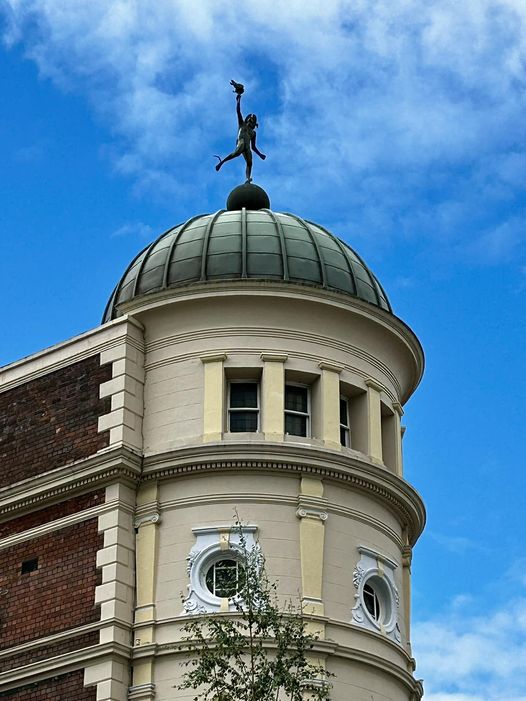
The statue of Mercury, by Wendy Wallin, is back on top of the Lyceum Theatre after restoration. Image: DJP / 2024
Read on for some good news.
A thought occurred to me. That somewhere, in an abandoned shed, a barn, or maybe in somebody’s back garden, is the missing statue of Mercury that once stood proudly on Sheffield Lyceum Theatre’s dome. It was thought to have been removed in the 1930s and disappeared.
In 1990, a replica was made, and erected as part of the Lyceum’s restoration. This was made by Wendy Wallin, around 12-foot-tall, and was made using fibreglass with a layer of paint on the outside containing copper flakes.
Alas, its inner steel framework had started to corrode, and last year was also removed.
After carefully crafted repairs, Mercury has been hauled back into place, and as this new photo shows, ‘Freddie’ as he is nicknamed, is back at his vantage point overlooking Tudor Square and the city.
By the way, Mercury is the Roman God of financial gain, commerce, eloquence, messages, communication (including divination), travellers, boundaries, luck, trickery and thieves; he also served as the guide of the underworld and the ‘messenger of the gods’.
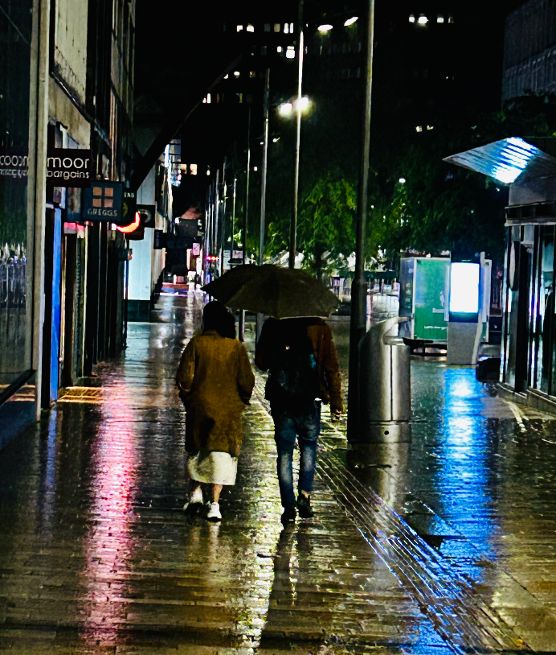
With apologies to the unknown couple who walked down The Moor late at night. Same place. Different times.
*****
It was dark and raining, and Benjamin and Mary tramped across bleak Sheffield Moor. “I said it was a bad idea,” cried Mary. “My brother Thomas offered to take us if we slipped him a few coins. He would have brought his gun along.”
“Stop worrying,” Benjamin told her. He held her arm to stop her falling. “Stick to the track, that way we know we’re heading in the right direction.”
“It’s muddy, and I can’t see anything in front of me.”
“We must travel by night so that nobody sees us. Rest assured, Mary, there won’t be many robbers out tonight.”
A cold wind blew across the scrub and rattled the branches of the trees. She was wet through, and she pulled the shawl around her to keep warm. “I feel like a thousand eyes are watching us.”
“Keep walking and don’t think about what might be in the shadows.” Benjamin patted the knife that he’d stolen from the slaughterhouse. Mary didn’t know that he had it, but he was prepared if there was anybody who might be a threat.
“I’m frightened. How far is it,” Mary asked.
“I’m not sure,” he said, “but we have to cross the Porter first.”
“Oh Benjamin. That makes it sound even more dangerous.” She wished she was at home in the bed that she knew she would never see again.
“There is a plank across it, and then we head towards Little Sheffield.” He put his arm around her hoping that it might reassure her. “We’ll catch a horse and cart in the morning.”
“Do you think that we’re doing the right thing?”
“We’ve no choice, Mary. If the constable catches me, I’ll be put in the stocks like last time.”
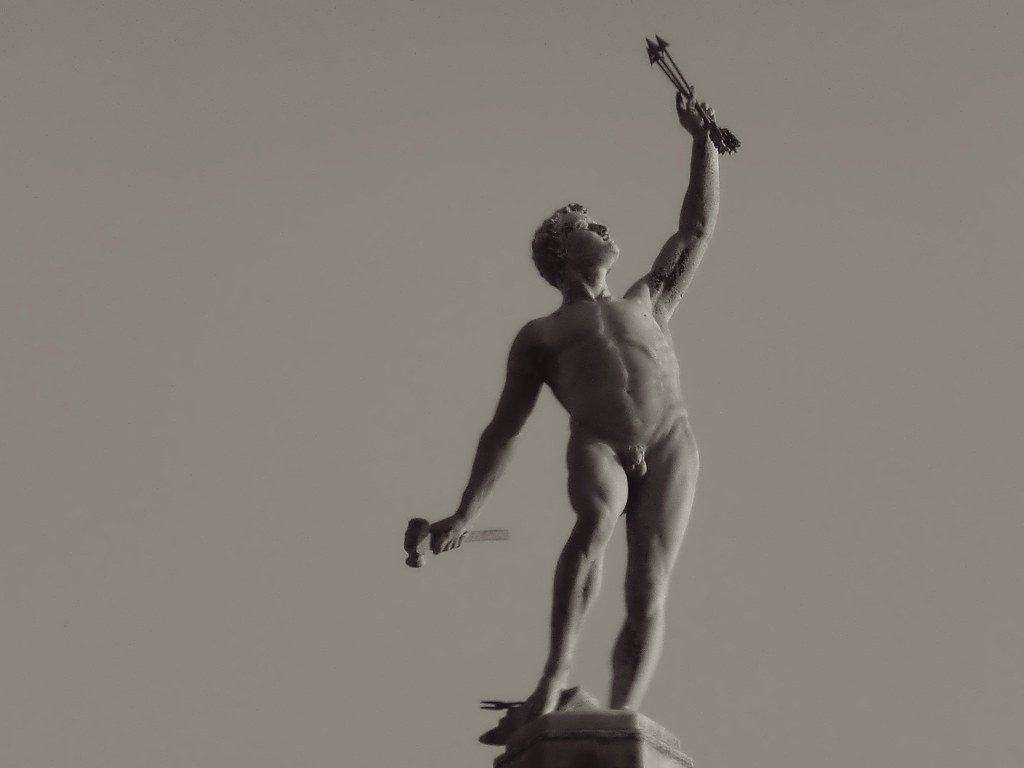
Vulcan stands on top of Sheffield Town Hall. Image: Thawantsshooitin
There is a statue of Vulcan on top of the Town Hall, and the more I look at it, the more I see him as the protector of Sheffield. And he’s been doing this for 128 years, and when bombs destroyed the city centre in December 1940, one of the local newspapers put a drawing of Vulcan on its front page and the words DEFIANT!
The Town Hall was built in Renaissance Revival style by Edward William Mountford, a London architect, who also designed Town Halls at Battersea and Lancaster, as well as the Old Bailey.
Work began in 1890 and finished by September 1896, but it wasn’t until 1897 that Queen Victoria officially opened it.
Mountford had wanted something special to stand on top of the one hundred feet clock tower and chose an Italian, Mario Raggi, to create the Vulcan statue.
Vulcan, the Roman God of the furnace, the patron of all smiths and other craftsmen who depend on fire, was adopted as a symbol of Sheffield in 1843.
Mario Raggi was born in Carrara, in Tuscany, in 1821, notable for marble used since the time of Ancient Rome, and it was no surprise that Raggi became interested in sculpture.
He trained at the local academy, and then studied in Rome under Pietro Tenerani before moving to London in 1850 where he first worked for Raffaelle Monti, and then under Matthew Noble.
Raggi exhibited at the Royal Academy and was famous for memorials to Benjamin Disraeli at Parliament Square and Gladstone at Albert Square, Manchester. He also completed three monumental statues of Queen Victoria in Hong Kong, Toronto, and Kimberley in South Africa.
In 1875, he set up his own workshop at Cumberland market, between London’s Regent’s Park and Euston Railway Station, at 44 Osnaburgh Street.
I have the first possible reference to our Vulcan… and that is in 1892 when Signor Raggi had almost completed a standing statue of Vulcan, ‘with a hammer in his right hand, his right foot resting on an anvil and in his left hand, held aloft, three arrows, and intended for Sheffield Town Hall.’
Vulcan is seven feet in height (although other measurements of nine and eleven feet have been given)… and modelled from a Life-Guardsman. It was cast in bronze at the foundry of Henry Young and Co, Eccleston Works, Pimlico.
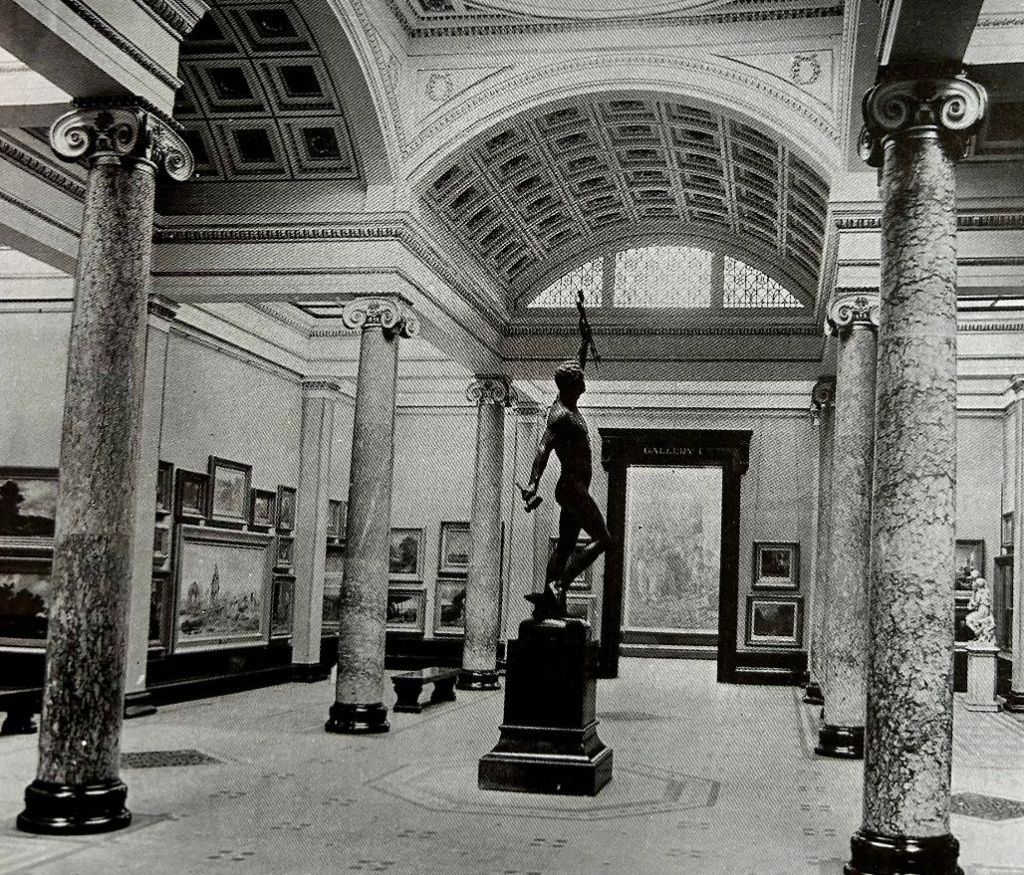
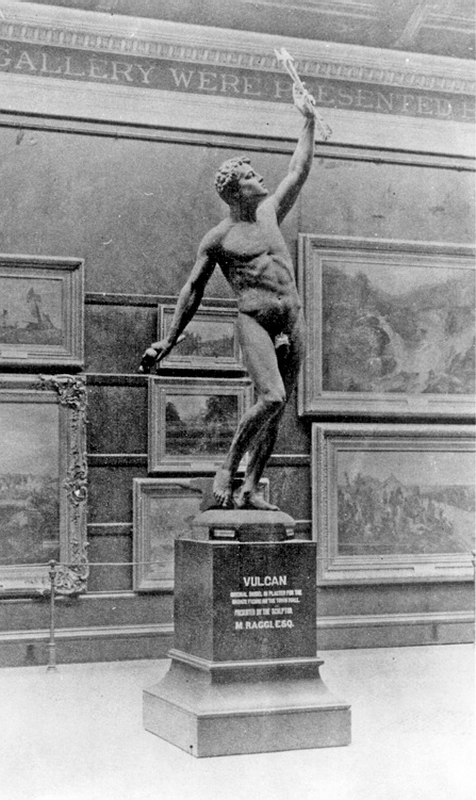
For a long time, the original plaster cast version was on show at the Mappin Art Gallery until it became irreparably damaged, due to frequent moving to avoid air raids during World War Two and was broken up and discarded.
The Special Gallery at Mappin Art Gallery in 1937. In the centre, the ‘lost’ plastercast version of Vulcan by Mario Raggi. Image: Sheffield City Council
The plastercast version of Vulcan seen in 1897
The bronze statue was erected in 1896 by Cromwell Wiley Hartley, a daring Sheffield steeplejack who completed the task in fierce winds that threatened to dislodge him, but he managed to securely bolt Vulcan to its foundation.
The following year, Hartley climbed the tower again, and fixed an electric light in Vulcan’s extended hand to celebrate the visit of Queen Victoria, then stood on the head of the statue earning him the title as the ‘man with the iron nerve.’ A photograph was taken at the time, by Mr Taylor of Norfolk Street showing him in this risky position but appears to be lost.
In 1926, Reginald T Rea, the manager of the Albert Hall, which stood on the site of the former John Lewis building, erected a telescope in Barker’s Pool which focused on the statue of Vulcan. It was intended as a publicity stunt and the one penny proceeds from looking through the telescope went to Sheffield hospitals.
It was an enormous success, with an average 2,500 views a day, and the suggestion is that it became a permanent attraction. There is reference to a telescope in World War Two, and through this a story emerged that Vulcan had lost his delicate parts during an air raid. (He appears to be intact now).
While Vulcan is made of bronze, he now has a green patina, the result of a slow corrosion process, which I’m told should not affect his future.
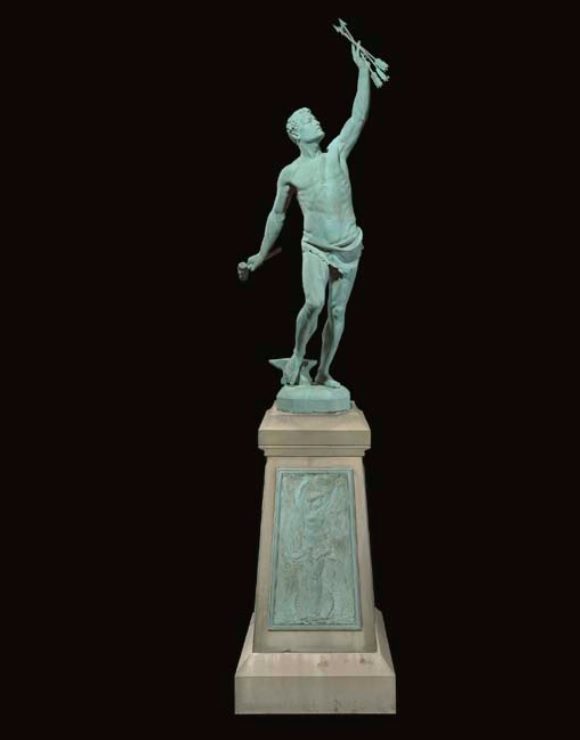
Another model of Vulcan was made at the same time, based on Raggi’s Sheffield original, cast by the Gorham Manufacturing Company, Providence, Rhode Island, and placed outside its headquarters in 1894. It differed slightly because while ours was nude, the American version wore a loin cloth. Alas, its whereabouts is unknown.
Vulcan. Cast by Gorham, Providence, after the model by Mario Raggi, dated 1893 on a spreading bronze-mounted granite plinth base
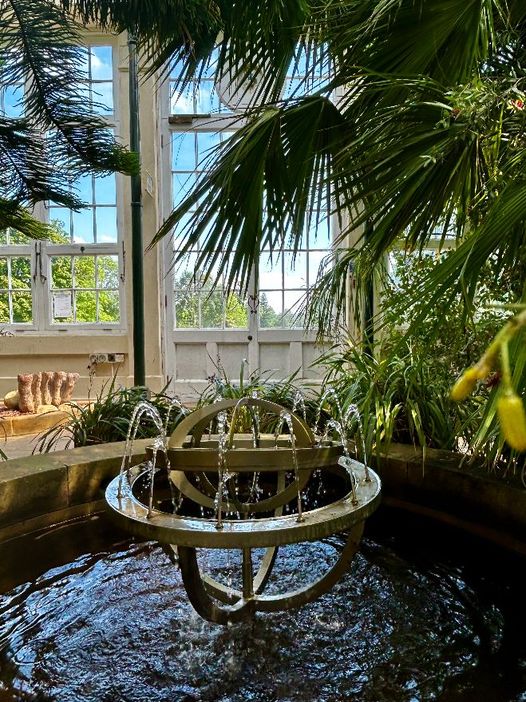
July 2024. The Pavilions. Botanical Gardens, Sheffield.
Inside, it is hotter than the rest of Europe. Tall Australian plants shade a small fountain and water plays, calming the souls of those who want to escape the sunshine.
A boy and girl wander in, survivors from the south, who talk about things that I don’t understand, and I know that they are students who have adopted the city for better or worse. He wears a tee-shirt with ‘Henley Rowing Club’ across the front.
“They should get exotic birds in here,” he says, and I almost reply, “It’s funny you should say that.” (This used to be an aviary, with a popular pair of macaws).
She examines a plant and announces that it is a Callistemon, and the boy looks over her shoulder and tells her that it is a Bottlebrush, which turns out to be the same thing.
I’m impressed with their knowledge, but such is my ignorance, they could have called them anything, and I console myself that in a few hours time, they’ll probably be behaving badly in city centre bars.
Nothing is more beautiful, but it hasn’t always been this way.
Designed by Benjamin Broomhead Taylor, who came second (to Robert Marnock) in the competition to design the Botanical Gardens in the 1830s, they have a troubled history.
Two freak hailstorms in 1843 and 1858 damaged thousands of panes of glass. In December 1941, WWII bombers damaged the pavilions, and by the 1990s, they were derelict and boarded up.
But the boy and girl are oblivious to all this, they are living for now, with eyes fixed only on the future.
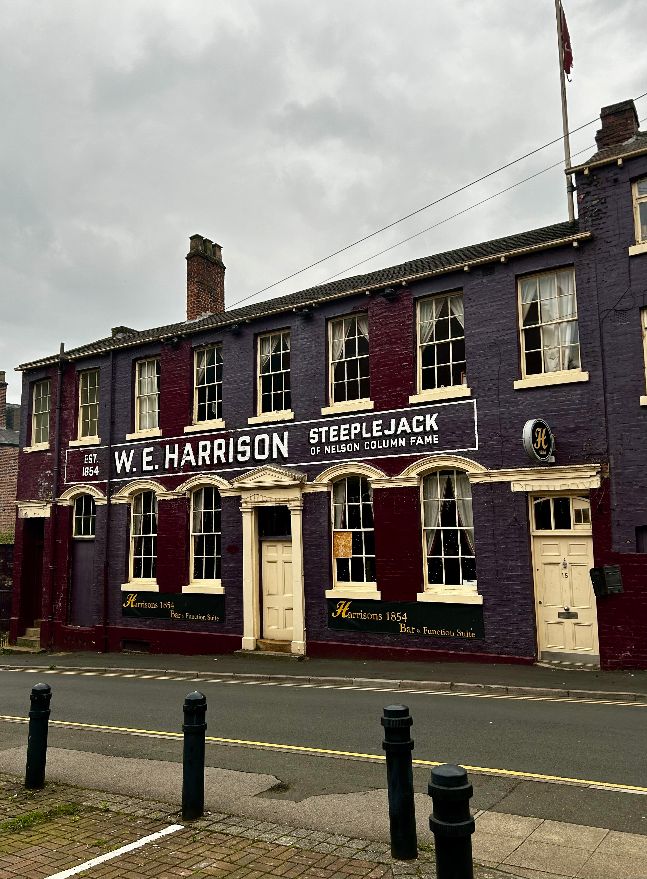
W.E. Harrison, Steeplejack, was situated on Regent Terrace, off Glossop Road, Sheffield. The Grade II listed building was recently home to a bar, appropriately called Harrison’s Bar. Image: DJP / 2024
What is the story behind the building on Regent Terrace, off Glossop Road, which tells us that it once belonged to W.E. Harrison, steeplejack, of Nelson Column fame?
I daresay that thousands of Sheffield University students have passed it and wondered about its connection to Nelson’s Column in London’s Trafalgar Square.
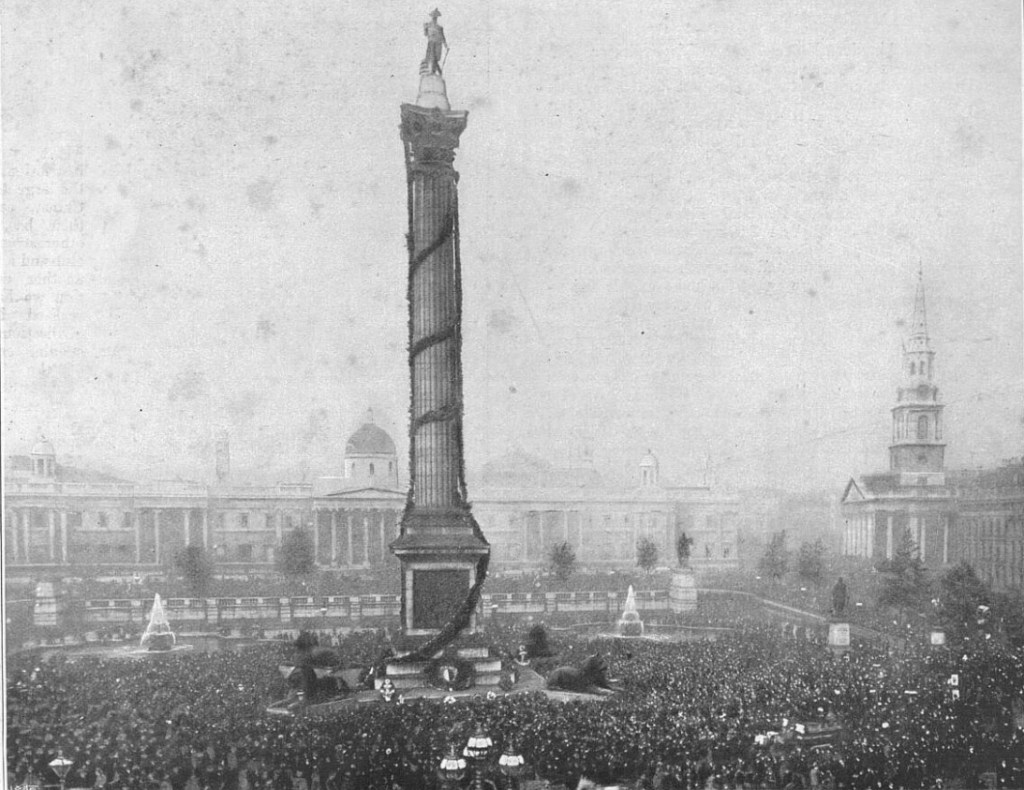
Willam Edward Harrison (1858 – 1911), known as Teddy, was well-known across the country as a steeplejack, and was in the public eye when in 1896 he climbed the Nelson Column – the first time any man had done so since it had been erected. The work was in connection with the Trafalgar Day celebrations, and Harrison had been employed to report on the condition of the monument, determine what repairs were necessary, and decorate it with floral arrangements.
Nelson’s Column had been built to commemorate Vice-Admiral Horatio Nelson’s decisive victory at the Battle of Trafalgar over the combined French and Spanish navies, during which he was killed by a French sniper. It was constructed between 1840 and 1843 in Dartmoor granite, to a design by William Railton.
Harrison decorated the monument with one long wreath of laurel, measuring one hundred yards, which encircled the column from top to bottom, and sloped gracefully on the head of one of the lions at the base.
In addition, there were four wreaths, 12 ft in diameter, one for each side of the base. One of the wreaths was worked in with a Maltese cross, which bore the colours and arms of the island.
The decorations had been supplied by William Whiteley, ‘Universal Provider,’ of Westbourne Grove, London, the eponymous department store, which had contemplated scaffolding to install the arrangements, but Harrison dispelled their idea, and assured them that his method could be used with a saving of time and a minimum of risk.
The work of W.E. Harrison, seen here for the Trafalgar Day celebrations in 1896. Image: The British Newspaper Archive
Huge crowds gathered to watch Harrison climb, much to his amusement.
“It was one of my easier jobs,” he’d said. “Of course, a different method has had to be adopted from that which is ordinarily taken; but with the exception of placing a ladder on each side of the column, and not driving in spikes, the work is similar to that of extending an ordinary factory chimney. The latter is far more dangerous, for the chimney oscillates sometimes to an alarming extent, but in the present case, with the exception of the wet, which made it imperative to use the utmost care to prevent slipping, the work was very easy.
“We worked it on the double ladder system. Starting from the bottom of the shaft, we hauled ladder after ladder up by means of a guy rope. Each ladder measured 18ft in length, and they were allowed to overlap each other to the extent of three or four rungs, so that they could be fastened to one another. The two sets of ladders were tightly fastened together round the shaft by a stout rope.”
While he was up there, Harrison was able to decode the legend of Nelson’s hat, which was rumoured to be hollow, and contain silver and pewter vessels, but he found this wasn’t the case.
Of course, Harrison was a familiar sight in Sheffield, and another feat which demanded his resource and skill was when he decorated the spire of the Parish Church (now Sheffield Cathedral) on the visit of Prince Albert Victor (Duke of Clarence) and later in connection with Queen Victoria’s jubilee in 1887.
His father, Samuel Harrison, had also been a steeplejack, and was the first to use a system of climbing ladders instead of the antiquated system of ropes that had formerly been used. By the time W.E. Harrison was thirteen, he had already ascended some of Sheffield’s biggest chimneys and at sixteen was a fully-fledged steeplejack.
Samuel Harrison retired in 1884, handing over his thirty year old business to his son who died in 1911. His death was thought to be related to an accident he’d had several years earlier when he suffered serious internal injuries and was unable to hold himself erect afterwards. Years later, when he was involved in a motor smash and thrown out of the car, the shock cured him, and he was able to walk upright again.
William Edward Harrison, Steeplejack. Image: The British Newspaper Archive
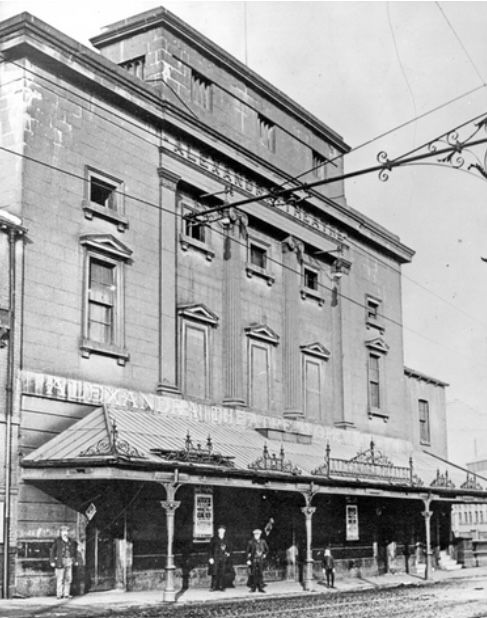
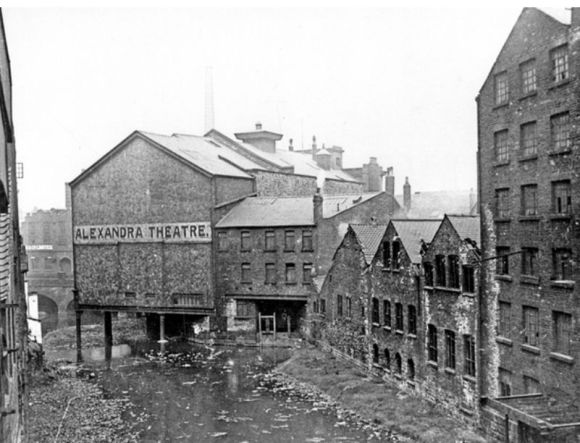
Alexandra Theatre, Blonk Street. Demolished 1914. Image: Picture Sheffield
I recently posted about Alexandra House at Castlegate, which was erected on part of the site of the Alexandra Theatre that was demolished in 1914. Before then, Castlegate didn’t exist, and the theatre would have stretched right across the present road towards Blonk Street.
None of us can remember the Alexandra Theatre and it’s hard to imagine what it must have looked like in its heyday. It lasted only seventy-eight years but played an important part in Sheffield’s cultural history.
It didn’t start out as a theatre at all, but as a circus. The Victorian circus ring was different to today, providing a showcase for equestrian battle scenes, jugglers, clowns, female acrobats, and child performers.
The first record we have of a circus near the New Cattle Market at the confluence of the River Sheaf and River Don was in 1836 when John Brown laid the first stone. The building was designed by the architect James Harrison, Norfolk Row, and opened as the Royal Circus with ‘Tourniare’s Splendid Equestrian Establishment consisting of forty-two horses belonging to French, German, and Italian Equestrians.’
History books mention that it was built by Mr Egan, but this person has eluded me to the point that I’m beginning to doubt he ever existed. I can confirm that it was built for a company called Sheffield New Circus and Theatre and its interior was a copy of the famous Astley’s Amphitheatre in Westminster Bridge Road, London.
The shareholders were Mr Ryan (proprietor, a well-established equestrian, and circus owner), Mr Usher (manager, and former clown at the Theatre Royal, Drury Lane), Mr Sambourne (solicitor), and Mr Harrison, the architect. By the following year, the shareholders were ready to let the circus on generous terms.
When Queen Victoria was proclaimed in 1837, there is reference to the spectacle seen at the circus: –
“The gay trappings of the soldiers on their richly caparisoned horses; the flags waving gently, the sound of music almost lost in the distance, and the dense crowd around the circle, made the view from that point very imposing.”
In April 1838, Mr Ryan announced the opening of a new season at the New Theatre Circus with upward of one hundred horses and a company of dramatic, pantomime and operatic performers.
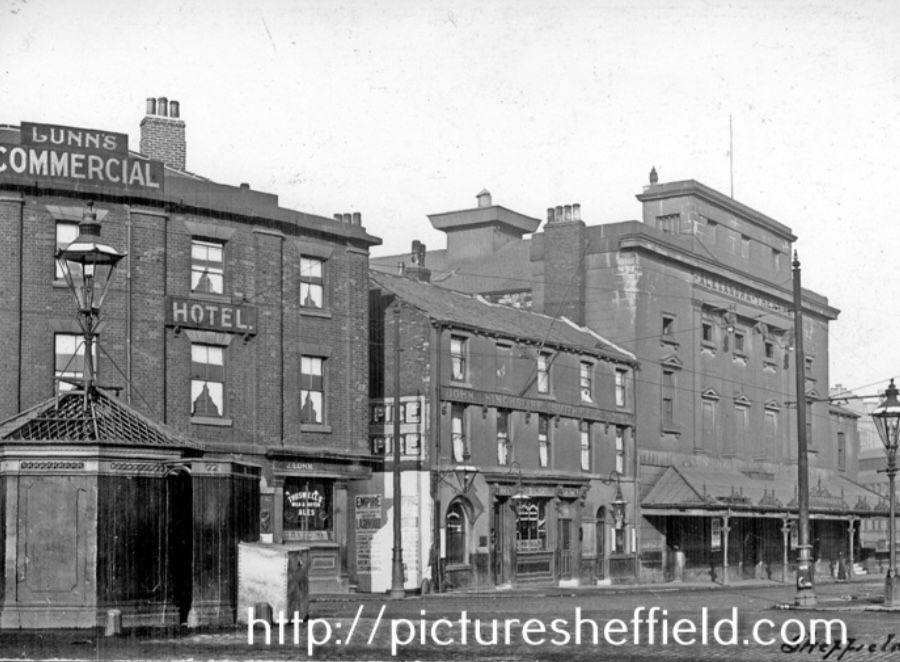
Victoria Hotel, Smithfield Hotel and Alexandra Theatre, Blonk Street from Furnival Road. Image: Picture Sheffield
While most Sheffielders referred to it as The Circus, it appears to have been known by several names. In those days, circuses were taken on seasonal leases by touring companies, and by 1839 it was advertised as Mr Batty’s Circus at the Royal Amphitheatre. A few years later it was the Royal Circus and by 1848 was called the Royal Adelphi Theatre under Mr Sloan who made significant changes.
“Considerable alterations have been made in the pit, and the middle of that hitherto dreary space is now fitted up with seats and protected from the cold by a close screen. By an admirable contrivance, the pit may be enlarged at pleasure. In its contracted state, a considerable number of persons may be comfortably seated; and if thrown open to the full size, hundreds more might find good accommodation. A new orchestra has also been constructed, and the whole house seems to wear a clean and lively, though yet unfinished, appearance. There is nothing striking or novel in the way of decoration; but in other respects, considerable efforts have been made to render the place more worthy of public patronage.”
Once again, the architect was James Harrison, and the building work was completed by Thomas Staniforth. “New Theatre! New Scenery! New Pit!”
The changes were made so that the Adelphi could show plays and compete with the only theatre in Sheffield, the Theatre Royal, but by 1849, it had proved unsuccessful, and the drama company dispersed.
Briefly known as the Theatre Royal Adelphi under Mr Cockrill, the lease passed to John Woodward who engaged Pablo Fanque’s Talented Troupe of Equestrians.
Pablo was a fascinating character, a Black man who started his own circus that toured across Yorkshire. In 1839, Pablo had spent the summer season with Andrew Ducrow’s troupe at Astley’s Amphitheatre and later toured with him.
In 1849, Pablo Fanque took on the lease for a year (not a season) at £200. He applied to magistrates for a theatre licence to perform stage plays but it was opposed by the owners of the Theatre Royal who claimed that one theatre in the town was sufficient (for a population of 130,000). To allow another theatre would have been to the detriment of both.
Fanque got his licence on the condition that he didn’t show serious drama but showed ‘spectacles’ that featured horses. The promise was kept for a brief time but soon there were performances of Othello, Julius Caesar, Richard the Third, The Merchant of Venice, and The Flowers of the Forest.
In 1850, a character called James Scott, a commercial traveller for a Leeds firm, bought the lease of the Adelphi from Pablo Fanque and managed to obtain a theatre licence.
By now, the Adelphi was owned by a consortium of eighteen people, headed by Dr John Carr, who was the Mayor of Sheffield in 1851.
Scott claimed that the owners had never drawn a shilling rent and that he had managed to turn a profit. When he left for another theatre at Derby, he stated that it was because the owners had demanded a greater share of the takings, but in truth, it was more likely because he’d been declared bankrupt in 1853.
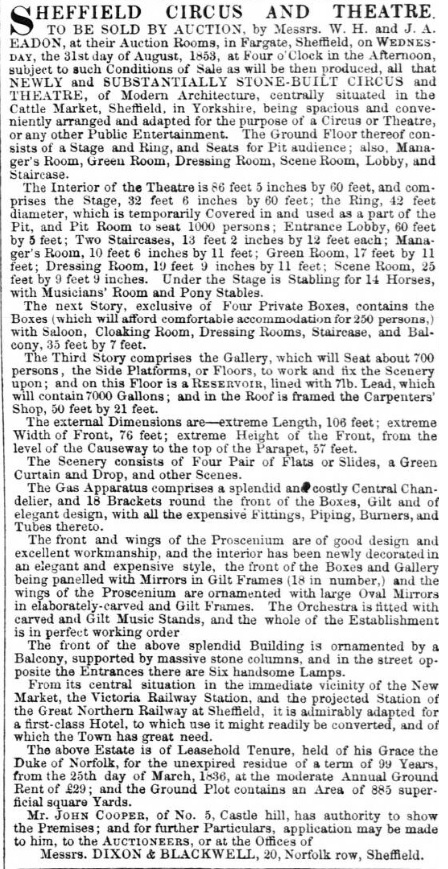
This was also the year that the theatre was put up for sale because it had never made a profit for its owners.
When it was rumoured, that Scott was returning to the Adelphi in 1859, the lease was quickly acquired by Thomas Youdan, the proprietor of the Surrey Theatre, in West Bar, who used it for storage of scenery and lumber.
Auction notice from August 1853
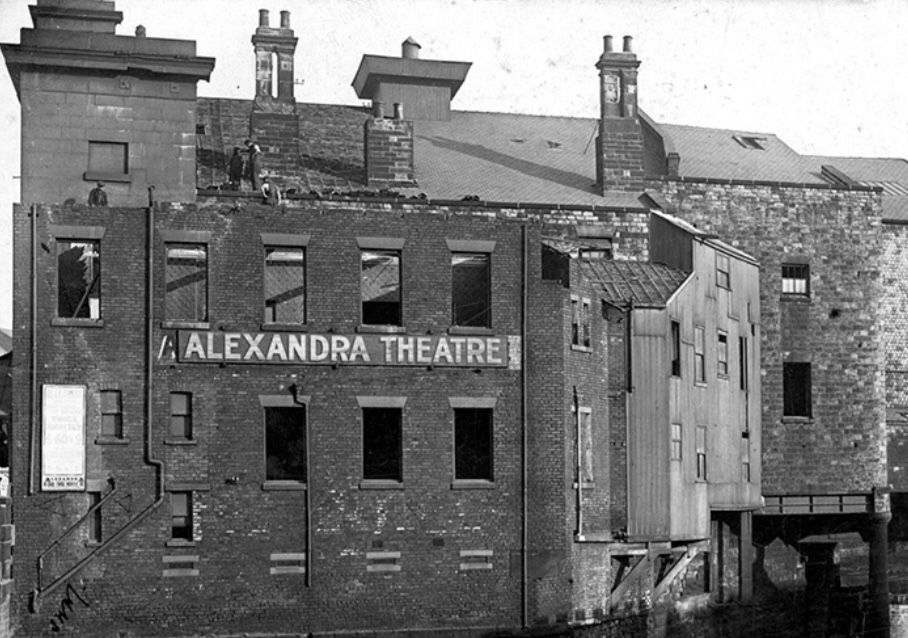
Alexandra Theatre, Rear view, showing stilts over the combined flow of the rivers Don and Sheaf, from Exchange Street Bridge. Image: Picture Sheffield
Youdan made several unsuccessful attempts to obtain a theatre licence and contemplated turning it into a first-class concert hall, but for three years it remained dark and in a poor state of repair.
Youdan was born at Streetthorpe, near Doncaster, and had started as an agricultural labourer, before coming to Sheffield aged eighteen to work as a silver stamper for James Dixon and Sons. Abandoning the trade, he became the keeper of a beer house at Park, and then moved to an inn at West Bar called Spink’s Nest. He added music and singing to the public house and eventually became its owner, creating the Surrey Theatre with ballroom, theatre, concert hall, museum of curiosities, and a menagerie of animals from George Hunloke’s Wingerworth Hall.
When the Surrey Theatre burnt down on 25 March 1865, Youdan sustained a £30,000 loss, but was able to switch his business to the Adelphi Theatre.
He had it improved, cleaned its ‘black’ exterior, replaced all its fittings, and extended it with a stage house that was built on girders over the River Sheaf behind, and reopened it as the Alexandra Music Hall with accommodation for 3,000 to 4,000 people.
‘Tommy’ Youdan was a well-known figure and had a clever idea of what would please the Sheffield worker. He secured the most popular and exciting dramas and the cutlers and grinders, and steelworkers, thoroughly enjoyed a night at ‘Tommy’s.’
He was joined by William Brittlebank as manager and the two increased the prestige of the house of which they obtained a lengthy lease.
That was the commencement of more prosperous days with ballet and varieties, and on its boards appeared the stars of the day, including George Leybourne, prince of comedians; Sam Cowell, Arthur Lloyd, J.H. Milburn, and other celebrities. Sim Reeves also sang there and cursed the draughts from the river which flowed beneath the stage.
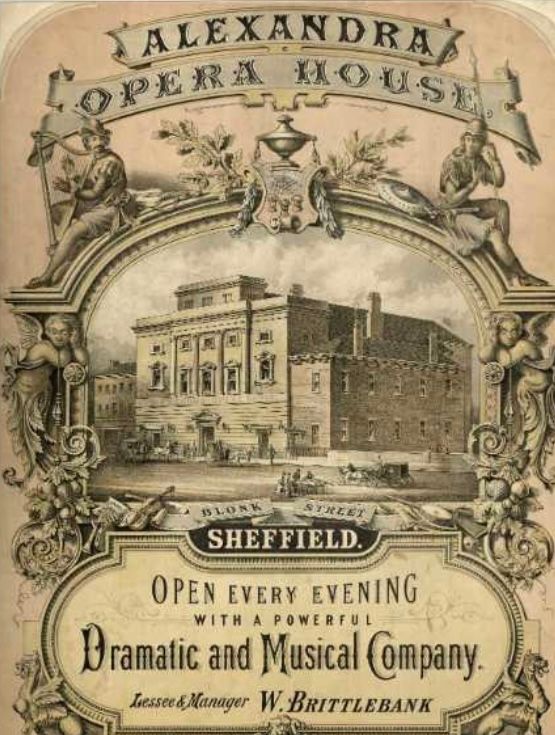
Youdan later renamed the theatre as the Alexandra Opera House, before retiring in 1874, and passing the lease to William Brittlebank.
During Brittlebank’s 20 years’ connection, such famous artists as J.L. Toole, Barry Sullivan, Charles Dillon, Marie Roze, Mrs Langtry, Charles Wyndham, E.S. Willard, Lewis Waller, Nelly Farren, Kate Vaughan, G.H. Harkins, and Henry Neville appeared in turn. The latter appeared in the best of the sporting dramas of Sir Augustus Harris from Drury Lane, and the pantomimes, too, were second to none.
Poster for the Alexandra Opera House, Blonk Street. Image: Picture Sheffield
Brittlebank retired in 1895, and the theatre was taken over by a private company, with William David Forsdyke as managing director, who increased the seating capacity of the auditorium, and with a careful eye, watched the trend of public taste and catered accordingly.
He boldly advertised the Alexandra as the ‘People’s Theatre,’ and staged stirring domestic dramas and popular pantomimes that were originally produced in-house but were later sourced from London.
In this he was well aided by his acting managers, of whom none was more popular than C.W. Ramsey who managed it for the last ten years of its existence.
Ramsey had come to Sheffield as assistant to F.W. Purcell, then sole owner, and manager at the Theatre Royal. In 1904, on the death of the manager of the Alexandra Theatre, Ramsey was offered the job by W.D. Forsdyke, who was a well-known building contractor.
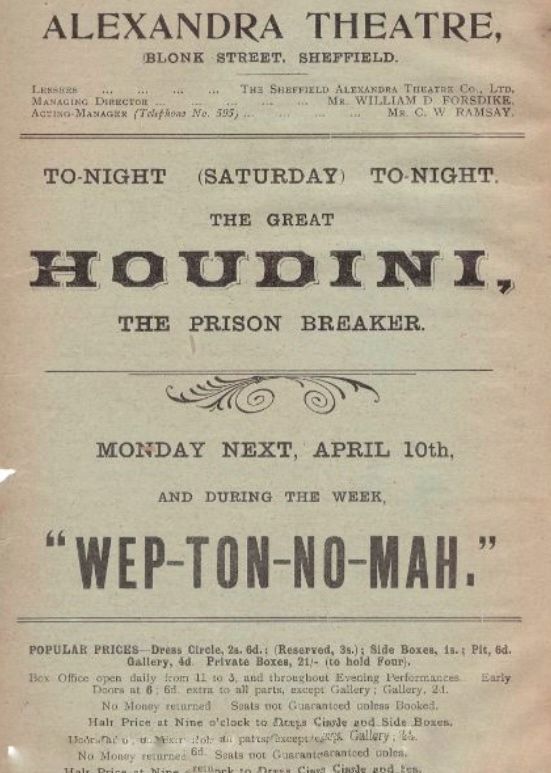
Advertisement for the Great Houdini, The Prison Breaker, Alexandra Theatre, Blonk Street. Image: Picture Sheffield
Pantomimes at the Alex usually ran from Christmas to just before Easter, and every Shrove Tuesday old folk were entertained and given gifts of tea, sweets, and tobacco. Ramsey also arranged nine benefits, usually under the patronage of the Lord Mayor and Lady Mayoress, Earl and Countess Fitzwilliam and other notables, and the programme was contributed by artists from all the other theatres in the city.
The ‘Alex’ closed on Saturday 28 March 1914, its fixtures and fittings auctioned, and afterwards demolished as part of Sheffield Corporation’s scheme for making a better approach from the centre of the city to the Victoria Station.
Demolition of Alexandra Theatre, Blonk Street, showing the combined flow of rivers Don and Sheaf flowing underneath. Image: Picture Sheffield
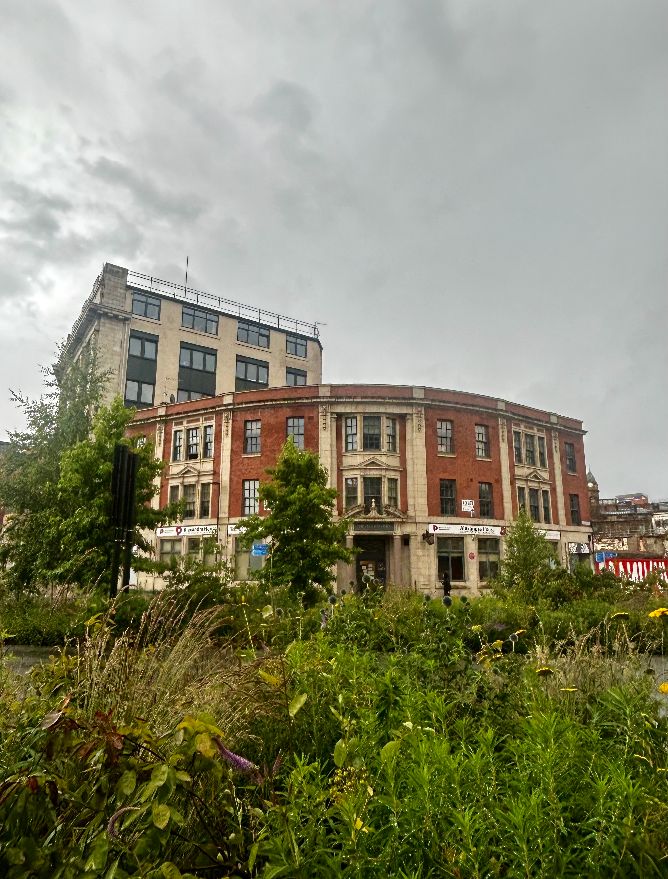
These days it is boutique student accommodation, but it was built in 1923 as the Alexandra Hotel, and public house, alongside Hambleden House, W.H. Smith’s wholesale distribution centre (seen behind, now Exchange Place Studios), that had opened a year before.
It replaced an older Alexandra Hotel that would have stood to the left and out of shot in this photo, and demolished as part of street improvements that realigned Exchange Street with the approach to the old Victoria Station (nowadays, think of the sloping approach to the Crowne Plaza Royal Victoria Hotel).
Much of the site of Alexandra House would once have been the courtyard behind the Smithfield Hotel. Prior to the street improvements, the street line was much further forward and Castlegate did not exist until afterwards.
The right hand side of Alexandra House stands in what would have been the auditorium of the Alexandra Theatre whose frontage stretched from the Smithfield Hotel, along Blonk Street, and ended where public toilets were later built (now an empty cafe/bar) above the confluence of the River Sheaf and River Don (Castlegate/Blonk Street).
Both the Smithfield Hotel and Alexandra Theatre were demolished in 1914 to make way for the Exchange Street realignment and the creation of Castlegate.
Alexandra House, if only in name, still provides us with a glimpse of the past.
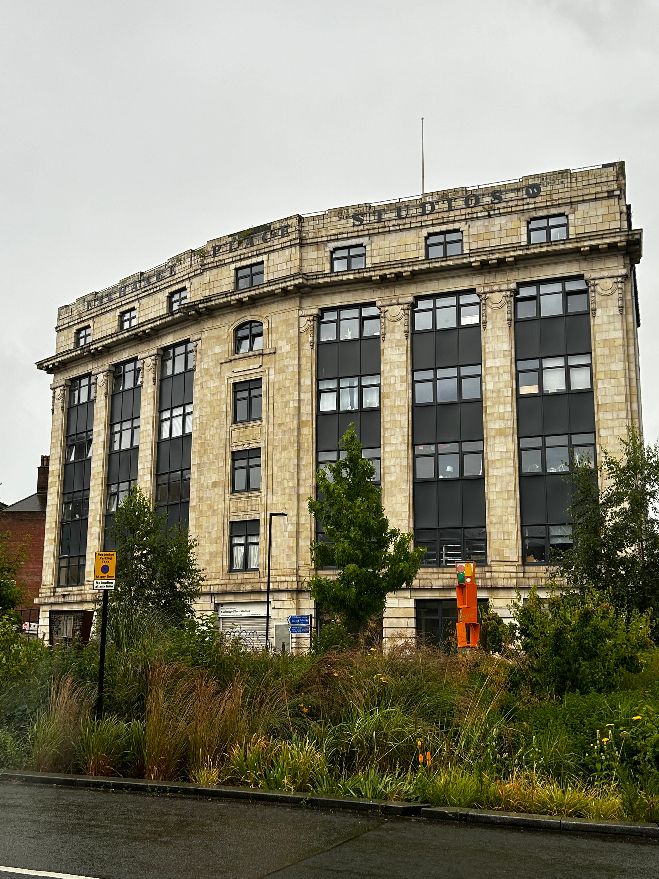
Exchange Place Studios, Sheffield. Image: DJP/2024
The recent post about WH Smith created a lot of interest, and this got me thinking about another Sheffield building associated with the company. Not as a shop, but as wholesale premises.
I’m referring to Hambleden House, at Exchange Place, often ignored by historians, that was built 102 years ago, and a fine example of an Art Deco building. These days it goes by the name of Exchange Place Studios, run by Yorkshire Artspace, and provides workspace for more than eighty artists and makers in 60 studio spaces.
In 1922, W.H. Smith erected this building on part of the site of the old Alexandra Theatre and was seen as an extension to the street improvement scheme around Exchange Street.
Since 1902, W.H. Smith had operated its wholesale business from York Street, but the growth of the business meant larger premises were required. The chosen site was ideal because of its proximity to the Victoria and Midland railway stations.
“The building itself fulfils the great essentials of good architecture and practical application, and undoubtedly declares its purpose in the scheme of things. The Doultonware facings are particularly suitable for a manufacturing city like Sheffield, and the general quality of the design of the front is most pleasing. With the iron panels in between, the whole effect strikes a modern note in construction.”
The Sheffield Daily telegraph described it as ‘simple and well-proportioned, bearing the distinctive characteristics of other W.H. Smith buildings which were to be found all over the country.’
This wasn’t surprising because the man who had the greatest influence over its design was F.C. Bayliss, superintending architect at W.H. Smith, and Marshall and Tweedy, all fellows of the Society of Architects. Its construction was completed by D. O’Neill and Son of Solly Street, which had been responsible for many large and important buildings in Sheffield.
The transfer between York Street and Exchange Place had to be executed so as not to disrupt the distribution of newspapers. It required careful planning, and with the help of A.B. Beckett, of Broomhall Street, it concluded business at York Street at one o’clock on the afternoon of Saturday 30 September 1922 and was installed in the new building by 6.15 the same day.
The News Despatch Department was in the basement with each district provided for. Every customer was given a numbered box and labelled with the customer’s name. As the papers arrived in the early morning, they were dropped down a chute, counted, and the customer’s orders were made up and boxed. To minimise labour, an electric lift went from the basement to the entrance door where parcels were loaded onto drays and conveyed to customers.
The ground floor acted as a shop where newsagents were able to buy back numbers at a moment’s notice. It seems strange now that the public often went into a newsagent’s and asked for out-of-date newspapers. The Book department was also here with large stocks of literature available for shopkeepers to buy.
On the first floor was a choice collection of stationary, fancy goods, leather articles, and china, that were set out in glass cabinets provided by A. Edmonds of Birmingham for the perusal of customers. Alongside it was the sweet store.
This was a good introduction to the second floor, that housed a vast collection of British and foreign toys, all imported by W.H. Smith itself. They sourced toy makers abroad and the goods went directly to the retailer without going through a middleman and allowing them to be sold cheaper.
The various representatives were housed on the third floor with special rooms arranged so that the firm’s buyers could meet with people and deal with their samples.
On the floors above were stockrooms from where the whole despatch of stock, apart from newspapers and books, were dealt with. On arrival, goods were checked, invoiced, and packed ready for delivery by rail or road. Part of the accommodation was set aside with a comfortable tea-room where customers could buy refreshments at nominal charges.
An innovation at the time was the use of pre-cast hollow concrete floors in its construction, a saving in dead-weight of 900 tons. This was brought to the site ready cast by the Leeds firm of Concrete Ltd and presumably remain.
Much was made about the amount of light that flooded the rooms through ‘modern and efficient’ windows. Mellowes and Co, a Sheffield firm, supplied the steel sashes and casements, and the special design allowed adequate strength to provide ‘walls of daylight’ and fulfilling the requirements of ventilation and safety.
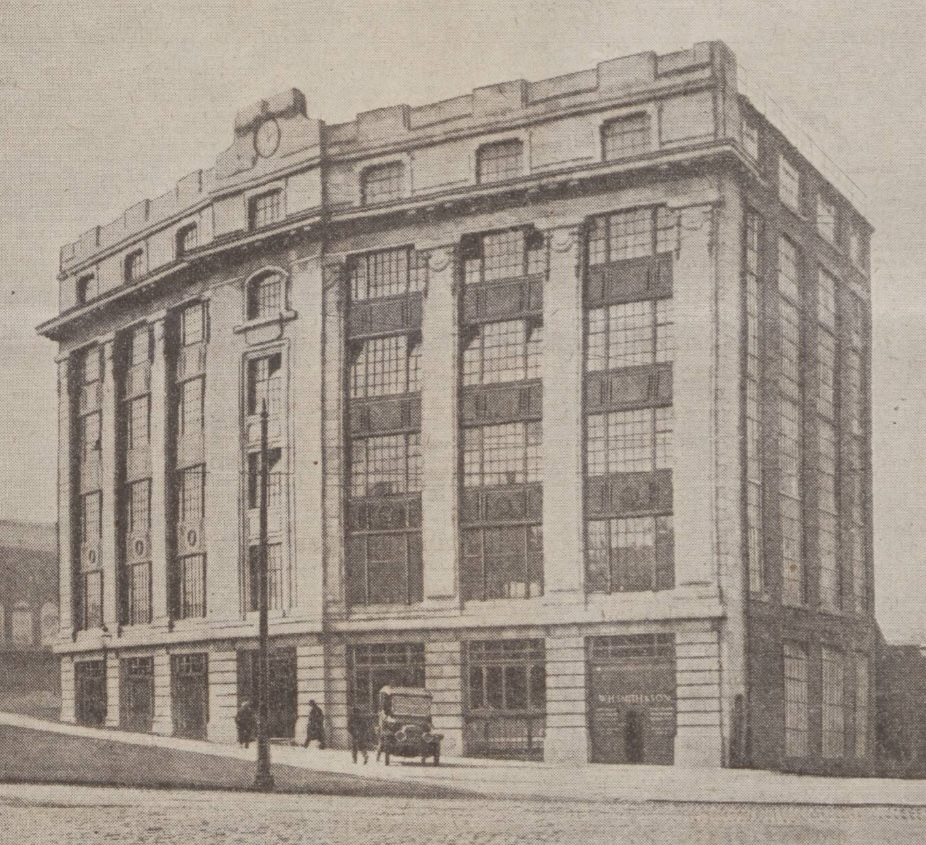
Hambleden House, pictured here in 1922. Image: British Newspaper Archive
Why was it called Hambleden House?
It was named after William Frederick Danvers Smith, 2nd Viscount Hambleden (1868-1928), who had inherited the business in 1891.
W.H. Smith remained here until 1965 when it moved into part of Sheaf House, built for British Rail, next to Midland Station, where almost all its newsprint business had consolidated. Hambleden House had become too large and would subsequently be taken over by South Yorkshire Passenger Transport Executive from 1974.
Now thoroughly modernised, the exterior of the building looks much the same as it always did, except for the absence of a large clock that had originally been installed by A.G. Burrell and Co, of Change Alley, and once provided a service to railway passengers hurrying to catch their train.
NOTE: In September 2006, a new company, Smiths News, was created, the result of a demerger of W.H. Smith’s newpapers, magazines, books, and consumables, distribution business.
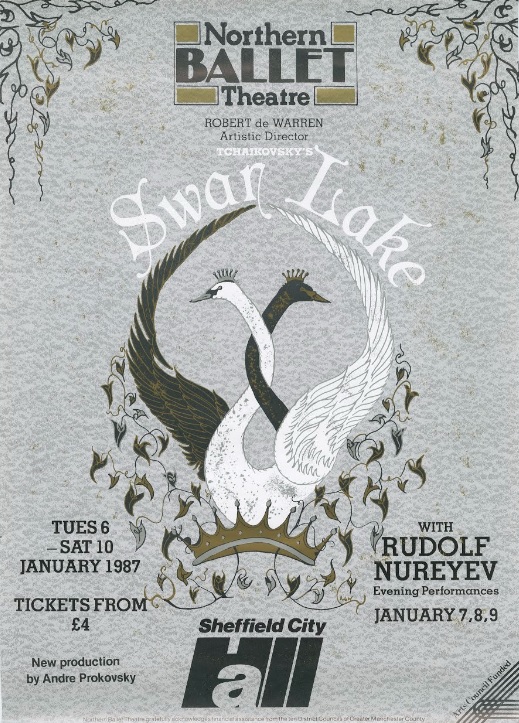
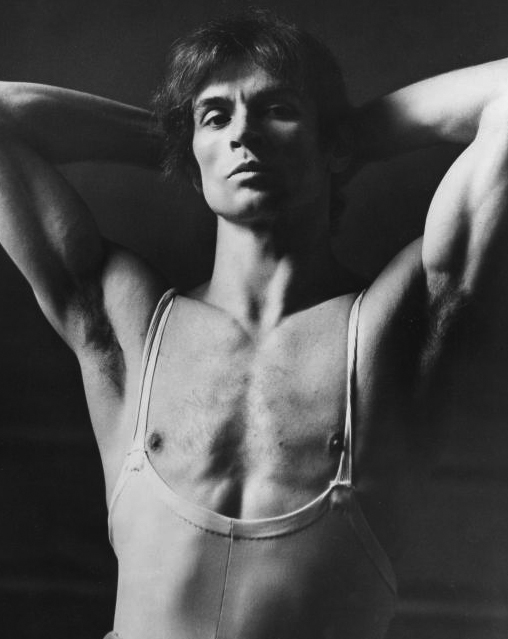
I’ve been emailed a poster for a Northern Ballet Theatre production of Swan Lake, starring Rudolf Nureyev, at the City Hall in January 1987. It came with a note saying that there used to be a photograph of Nureyev standing on the City Hall steps but had since disappeared.
It reminded me of a conversation I once had with someone who claimed to have drunk with Rudolf Nureyev in a Sheffield pub. I never believed the story, but there again, I was once having a wee in the toilet of a Sheffield pub and Johnny Depp came in and had a wee next to me, so anything is possible.
Soviet-born Nureyev (1938-1993) was one of ballet’s most flamboyant and charismatic performers who defected to the west while in Paris with the Kirov Ballet in 1961. He went on to perform with several world leading ballet companies, including the Royal Ballet, and was the preferred partner of Dame Margot Fonteyne. They called him an animal and he often behaved like one too.
According to Sarah Churchwell, writing for The Times in 2008: –
“There is the incident in which he defecated on the steps of Franco Zeffirelli’s villa, after he finished smashing up the interior. He broke the jaw of a teacher at the Paris Opera Ballet, who sued and was awarded 2,500 francs in compensation; the only remorse he expressed was for the missed opportunity: ‘If I’d known it would be that little, I’d have hit him a second time’. He let drop a ballerina who had gained weight; he dragged another by her hair across the floor. If he didn’t like a costume, he would shred it, or defenestrate it, or just refuse to go onstage, even if he kept the audience waiting.”
He also hated photographs being taken, so the one outside Sheffield City Hall might be a trick of the imagination.
Nureyev (aged 48) had become Artist Laureate for Northern Ballet in 1986 and joined Andre Prokovsky’s production to dance the leading role of Prince Siegfried opposite Elisabeth Maurin, one of the leading ballerinas in the Paris Opera Ballet, as Odette/Odile. While other principal dancers shared the roles in its touring run, Nureyev and Maurin, stepped onto the stage at Manchester’s Palace Theatre and Sheffield City Hall (and perhaps a handful of performances elsewhere).
Strangely, I cannot find any reviews of his Sheffield performances, and presuming that nobody upset him (and didn’t take a photo on the City Hall steps), that they went ahead. I’m hoping that somebody might be able to shed light on the experience.
Alas, I had to look to Manchester to find out how successful Nureyev had been.
“His performances were a mixed blessing for the company – he boosted the box office but left many ballet lovers wishing he would retire gracefully rather than continue to amble around as a pale shadow of the dancer he once was. It must be asked whether Nureyev is now an NBT liability rather than an asset.”
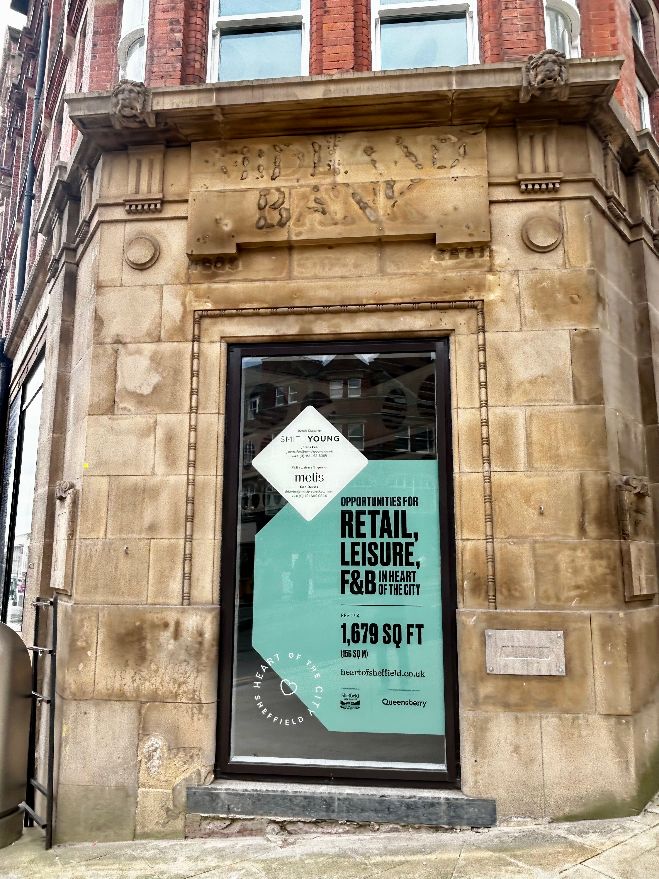
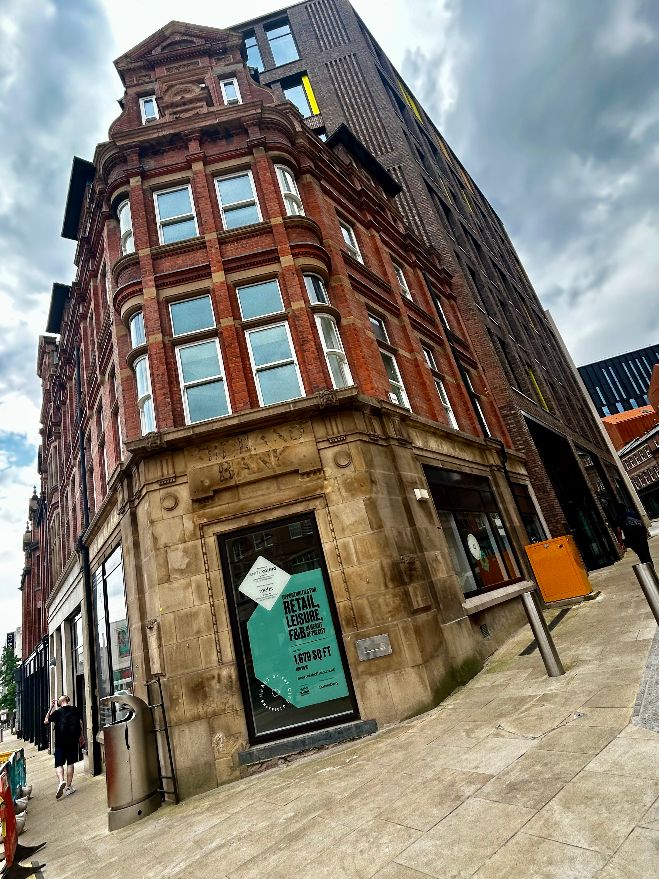
Former Midland Bank building at the corner of Pinstone Street and Charles Street. Now refurbished as part of the Isaacs Building. Image: DJP
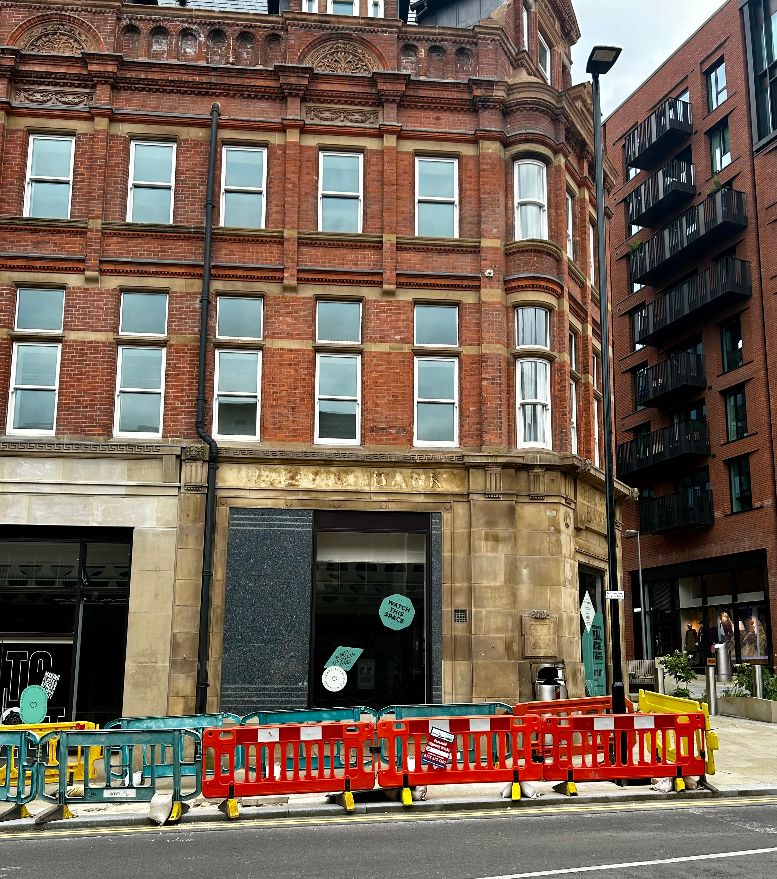
It’s not often that developers leave ghost signs behind, but that is the case with the Isaacs Building at the corner of Pinstone Street and Charles Street. The old Midland Bank signs can be seen, a nod to its past, while much behind the facade is brand new. Midland Bank became part of HSBC in 1992 and this branch closed afterwards.
Pevsner seems to ignore this part of Sheffield city centre, so a bit of detective work was needed to find out about the building’s past. I can trace its construction back to 1888-89 when New Pinstone Street was created. I cannot find the name of the architect, but it was built by William Bissett and Sons, responsible for many important city buildings. Alas, the contract didn’t prove to be very numerative and whilst the company was halfway through work on Carmel House at Fargate, the company failed in dubious circumstances.
Typical of Victorian entrepreneurship, the building was designed as shops at ground level with offices above. The speculative owners of the property were Charles Henry Maleham, a gunsmith of West Bar and Regent Street, London, and Joseph Hardy, stockbroker.
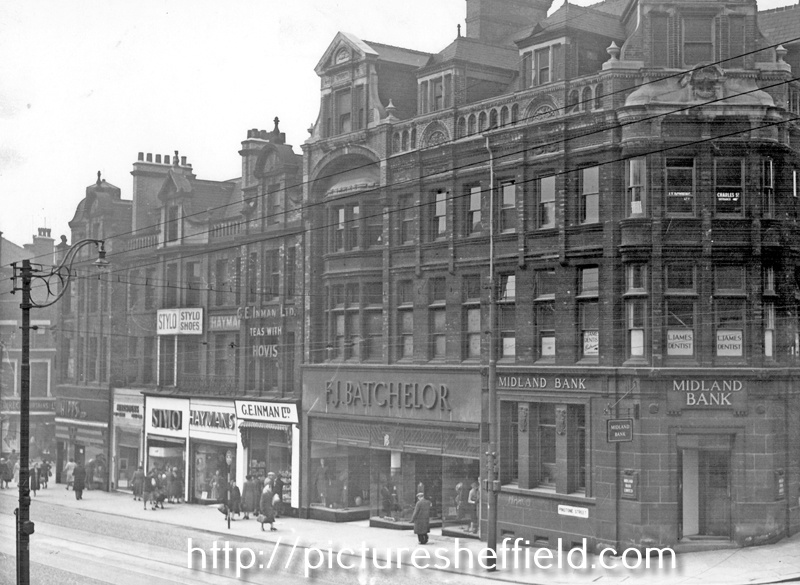
Midland Bank, Pinstone Street, seen here in 1952. Image: Picture Sheffield
The first shop here was the Public Benefit Furnishing Company that lasted until 1908 when it was taken over by the T & T Tate Furnishing Company which operated until 1925 when Midland Bank moved in and converted it.
I suspect that this was the building that Charles Maleham left to the Town Trustees on his death in 1934. The condition being that income from the property be used to purchase paintings which were to be put on public exhibition. At least twenty-six paintings were purchased including two by J M W Turner and one each by Thomas Gainsborough, Sir Peter Lely and Augustus John.
The building survives as part of the Heart of the City redevelopment and, by coincidence, a nearby building, Grosvenor House on Cambridge Street, part of the same scheme, is now offices for HSBC.
ADDITION – I have added information provided by Robin Hughes who very kindly filled in the blanks.
“The building dates from 1884 – there’s a datestone, and it’s also in the planning register for the time – the same year as the Pepperpot on the downhill side, Pinstone Street having been cut through to Moorhead c1880. This was indeed the building that Maleham left his share of (Nos. 90-92). Although the plans are missing from the archives, the planning register mentions a Mr. Lockwood, who could be the architect H. W. Lockwood, who was also responsible for the spectacular Carmel House (former YMCA) on the corner of Fargate and Norfolk Row.”
Former Midland Bank building at the corner of Pinstone Street and Charles Street. Now refurbished as part of the Isaacs Building. Image: DJP

 sheffielder.net