Categories
Other People

Marconiphone

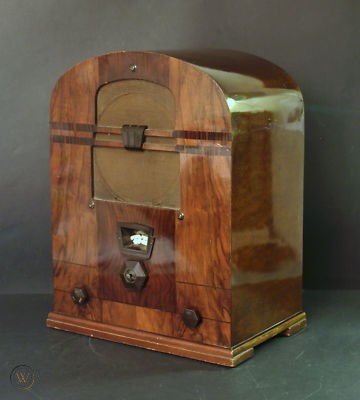
Photograph by WorthPoint.

In February 1932, the advances made in wireless radio reception was demonstrated, when Stainless Stephen, a well-known Sheffield comedian and broadcast artist, opened at the Imperial Rooms, on Pinstone Street, an exhibition of Marconiphone Magic Radio Stagecraft.

Marconiphone was an English manufacturer of domestic receiving equipment, notably radio receivers and later reel-to-reel tape machines. In 1922, Marconi had set up the Marconiphone department to design, manufacture and sell domestic receiving equipment. It complied with Post Office specifications and tests, and was therefore awarded the BBC authorisation stamp.

The company was sold to the Gramophone Company in 1931, which became Electric and Musical Industries (EMI) and produced domestic radio receivers using the Marconiphone trademark until 1956.

At the event, Stainless Stephen said that in the early days of broadcasting, reception was so poor that it was difficult for listeners to tell the difference between his voice and that of a famous tenor.

A demonstration of effective radio magic followed, and similar performances were given five times daily.

The audience was introduced to the performers – standard Marconiphone models – by a young lady who apparently was able to carry on conversation with the individual models. Indeed, the models sang together the well-known chorus of Uncle Tom Cobley, chiming in with precision and great effect.

Then they combined to present various items in an amusing village concert, and there was an admirable climax introducing a soldier on sentry duty, the ghosts of his former comrades, and a swinging marching song.

Another instance of radio magic was the introduction of the various sections of an orchestra, music being played by the strings, the bass instruments, the drums etc., apparently from different parts of a stage, and precisely when requested by the main receiving set visible to the audience.

Categories
Buildings

Radisson Blu

Photograph by Sheffield City Council

Here’s news of an important development in Sheffield’s Heart of the City II programme.

Radisson Blu has been selected by Sheffield City Council as the preferred hotel brand for its flagship Heart of the City II hotel on Pinstone Street, overlooking the Peace Gardens.

The hotel will anchor the new Heart of the City II scheme which is already home to global bank HSBC, and which will shortly welcome prominent international law firm, CMS, who are occupying 45,000 sq. ft of office space later in the year.

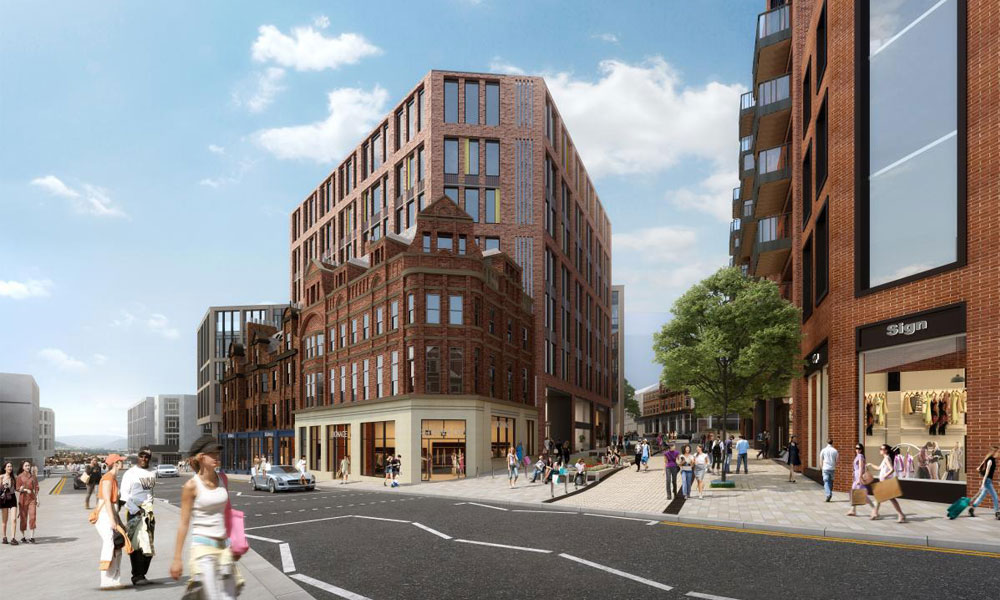
Part of Block A in Heart of the City II, the hotel will be housed in the striking Victorian architecture towards the top end of Pinstone Street, adjacent to the Barclays building on the corner. It is expected to feature over 150 rooms and will have a prominent location with views of the Peace Gardens.

Developed by Sheffield City Council and its strategic delivery partner, Queensberry, Block A sits between Pinstone Street, Burgess Street and Barker’s Pool. Providing a key gateway to the Heart of the City II district from the east, Block A will also feature premium retail units at street level and 45,000 sq. ft of office or residential space.

Radisson Blu is an international chain of 328 ‘upper upscale’ hotels operated by the Radisson Hotel Group. Its origins go back to 1960, with the opening of the SAS Royal Denmark Hotel in Copenhagen, the group rebranded from Radisson SAS in 2009.

At present, the nearest Radisson Blu hotels are in Derby, Leeds, Manchester, Nottingham and York.

Categories
Buildings

Grosvenor House

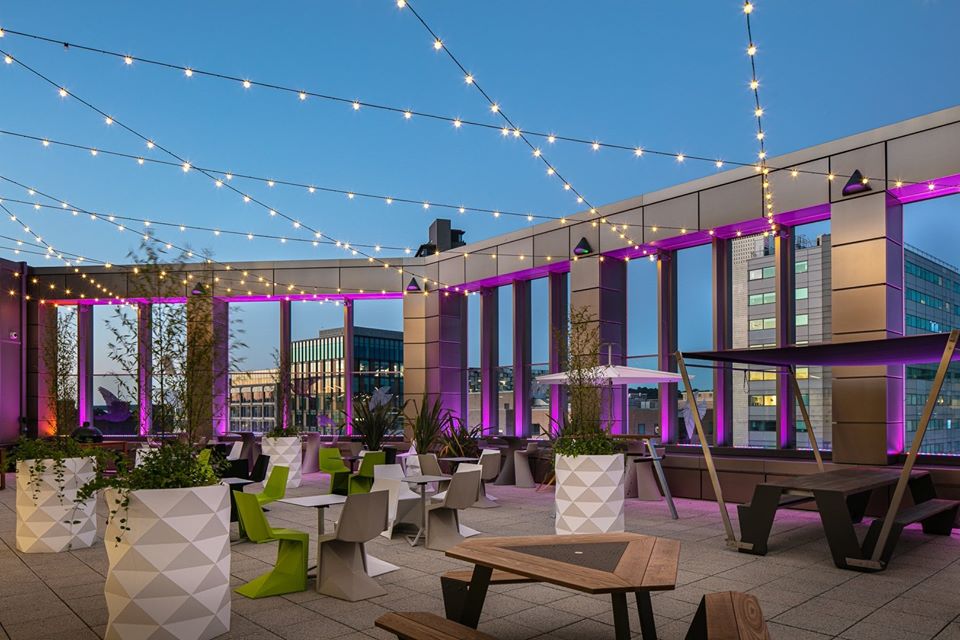
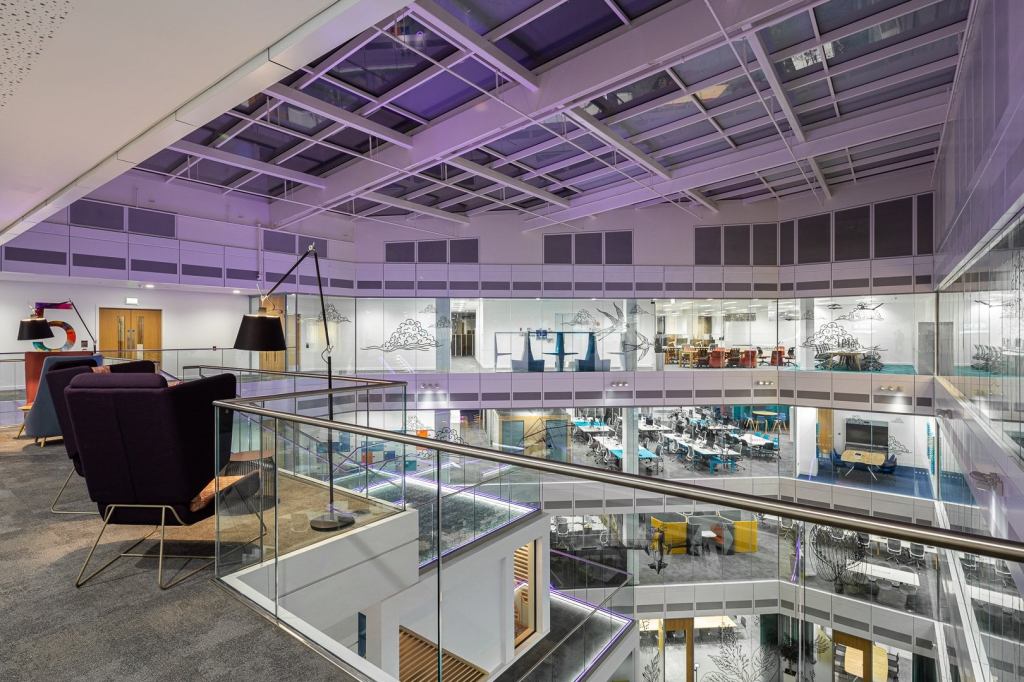
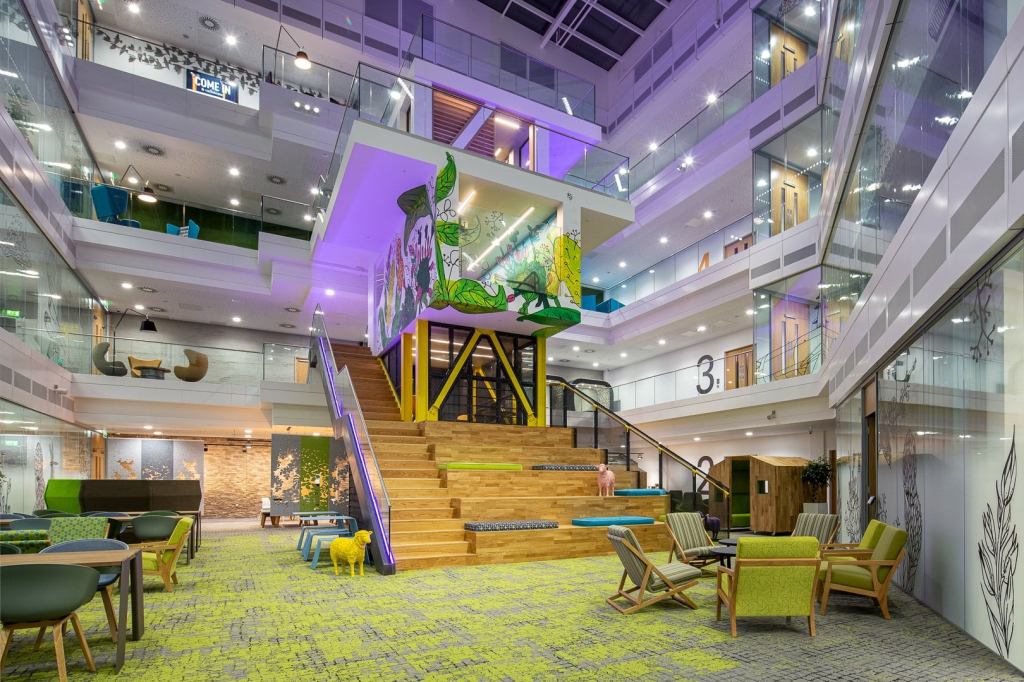
Making use of the rooftop terrace. Not bad at all. Grosvenor House, the name chosen by HSBC employees, and paying homage to the hotel that stood here before. The main office entrance is located on the corner of Wellington Street and Cambridge Street, and another entrance faces onto a new area of public realm at Charter Square. The building will also include retail space and shop fronts will be primarily located on Cambridge Street and also the important corner where Pinstone Street meets Furnival Gate. HSBC employees in Sheffield are being relocated from their current office space at Griffin House after the banking giant signed as the anchor tenant on a 15-year lease, committing them to Sheffield city centre.

Categories
Buildings

Sheffield Citadel

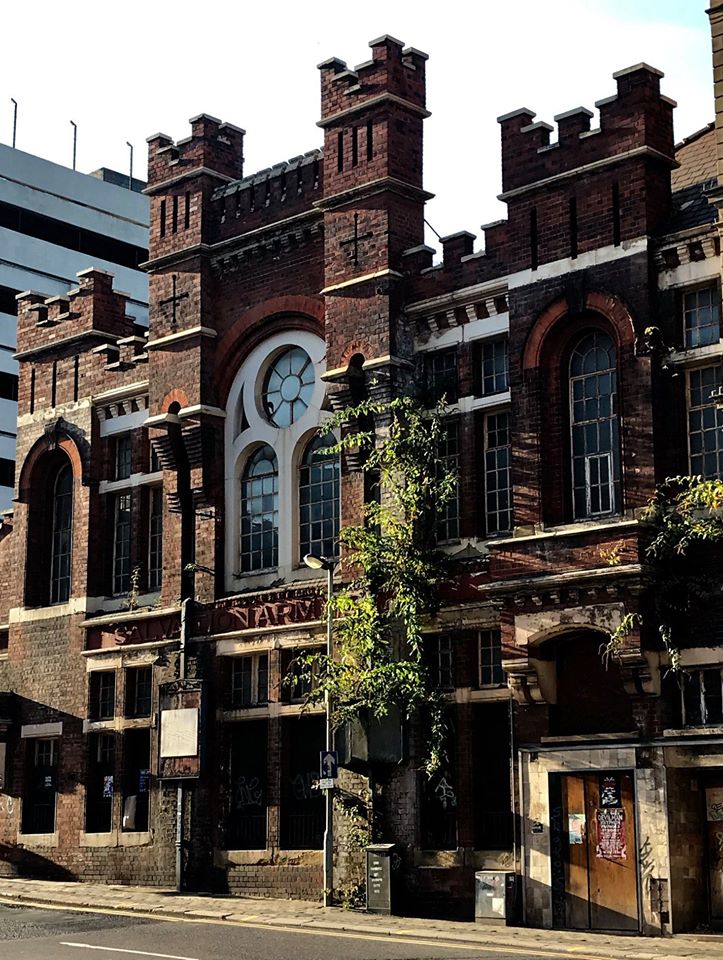
This photograph says it all. Trees and bushes growing out of the brickwork of the Grade II-listed Salvation Army Citadel on Cross Burgess Street, Sheffield. A favourite of urban explorers, this remarkable looking building has stood empty since the Salvation Army moved to Psalter Lane in 1999. The building’s future looks a little brighter, with Tandem Properties currently awaiting a planning decision to turn it into a bar and restaurant, the development forming part of the Heart of the City 2 project.

The Salvation Army arrived in Sheffield during 1878 and within three years had four halls attracting attendances of over 4,000 people. It was obvious that a bigger venue was needed for the No. 1 Corps which had previously met in a small building on Thomas Street. The London headquarters of the Army promised to fund the construction of a new meeting hall on the understanding that there would be a local contribution of £2,000. A piece of land on the junction of Pinstone Street and Cross Burgess Street was bought from Sheffield Corporation at a cost of £7,812.

The architect William Gillbee Scott (1857-1930), who had conceived the Gower Street Memorial Chapel in London, was asked to design the new Citadel along with shops and offices alongside. The foundation stones were laid in September 1892 with construction completed by the end of 1893. Its fortress-like appearance, with battlements and towers, lived up to the Citadel’s name. Completed at a cost of £25,000, the building consisted of a large hall, various rooms and apartments, with three large business premises on Pinstone Street, which were let almost immediately.

The main hall in the Citadel had seating for 2,000 people. At one end was a theatre-like platform with an orchestra behind. A main gallery occupied three sides of the hall with boxes sited at each end. An upper gallery was also situated at the back. In addition, there were ante-rooms, a band room for use of the brass band, and a large room under the orchestra accommodating another 300 people.

The Salvation Army Citadel opened in January 1894, spoilt by heavy rain, forcing the planned outdoor event to be adjourned inside. The ceremony started when the order was given to fire a volley, followed by a rousing rendition of Hallelujah.

The Citadel survived for 105 years, its popularity waning in time, resulting in its final departure to smaller premises at the end of last century. Admired by many, but seemingly unable to attract the right kind of developer, the building has been subject to several unsuccessful redevelopment plans.

Categories
Buildings

Prudential Assurance Building

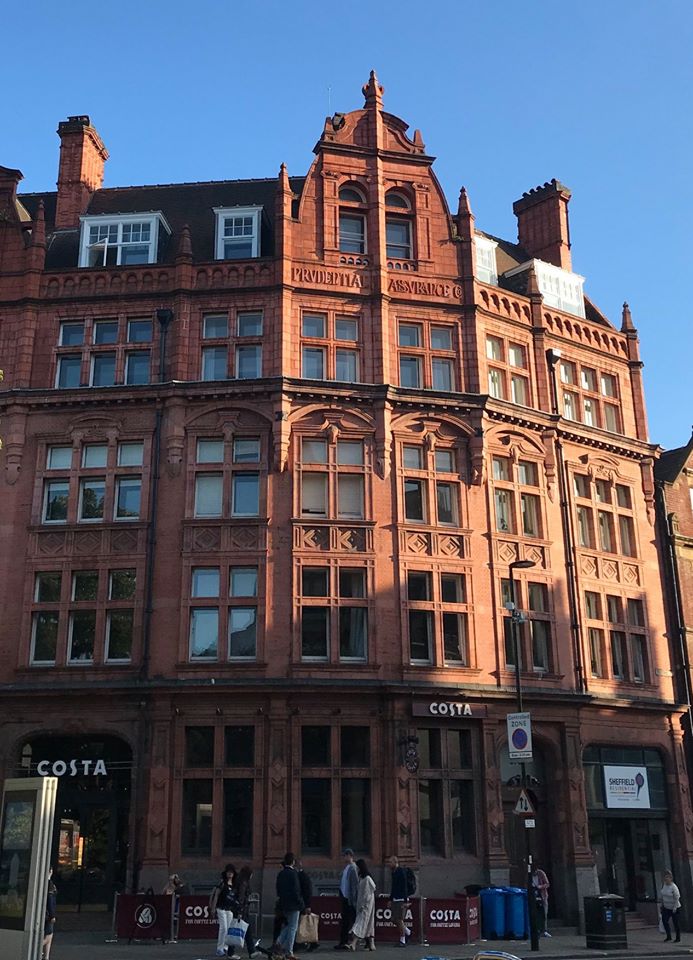
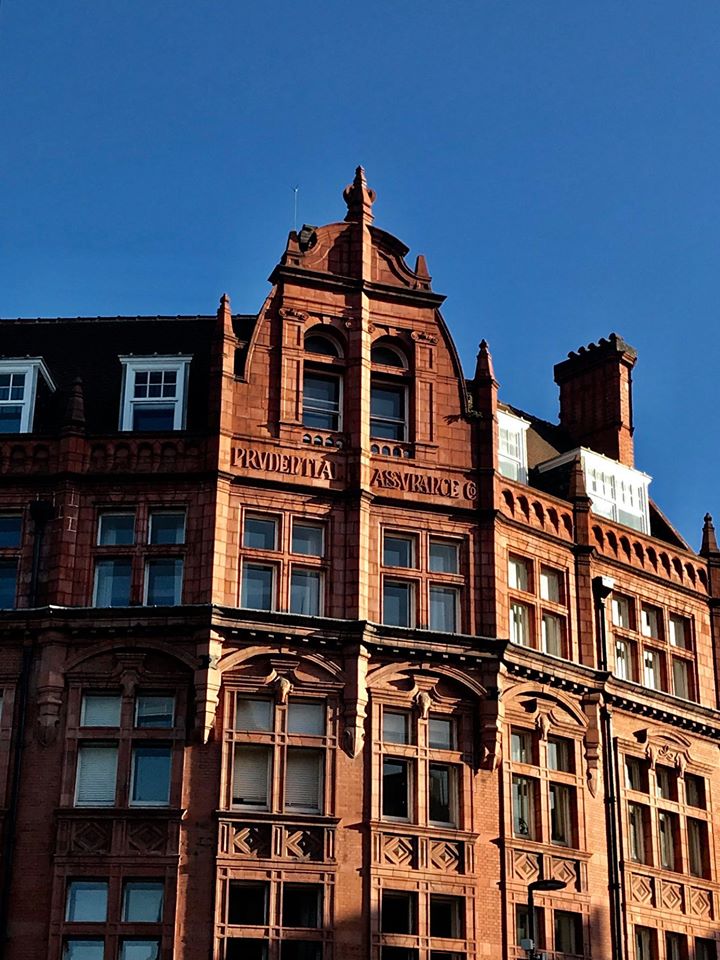
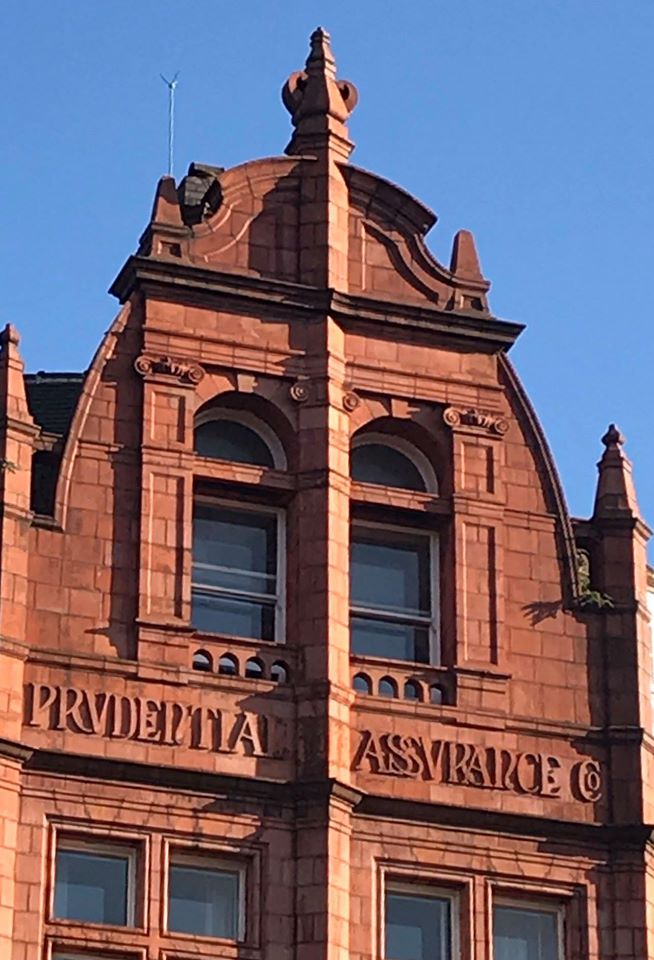
I think this is one of the finest looking buildings in Sheffield. Also, special because it was designed by Alfred Waterhouse, responsible for Manchester Town Hall and the Natural History Museum in South Kensington.

Looking into the history of the Prudential Assurance Building also reveals one of those ‘I never knew that’ moments – the fact that for twelve months, at least, part of it was used as a hotel.

The Prudential Assurance Building is an imposing Grade II-listed property built in 1896 on Pinstone Street adjoining what was then St Paul’s churchyard (now the Peace Gardens). It was the latest in a series of constructions that appeared around the country, designed by Alfred Waterhouse and Son, London, for Prudential Assurance.

Often built in red brick with a granite plinth and the company’s favoured terracotta dressings from J.C. Edwards of Ruabon, these handsome Renaissance-Revival buildings were to be seen in London, Liverpool, Manchester, Leeds, Bradford, Glasgow, Birmingham, Newcastle, Portsmouth, Leicester, Dundee and Nottingham. The exception was Edinburgh, where the authorities objected to the use of terracotta and insisted on stone instead.

This was boom-time for the insurance industry. At the end of 1896, Prudential Assurance had twelve million policies in force within its industrial division – one third of the population of Great Britain – with a further 500,000 policies taken out at its ‘ordinary’ division. These generated a combined income of £7million and assets worth £27million.

The cost of the building and land in Sheffield was £25,000, a large sum but easily affordable for the company. The shape of the land also posed a problem resulting in the absence of corridors throughout.

The building contract was given to the Sheffield firm of George Longden and Son, work starting in 1896 and completed the following year.

There were two entrances.

On the left, a door led into the main offices, designed to impress the visitor, elegantly fitted and decorated. There was a glaced faciene from the Bormantoft Works and the fittings were Spanish mahogany and American walnut.

To the right, there was a staircase and lift leading downwards to a spacious restaurant tenanted by Mr William Bird, and upwards to offices (subsequently let off) and to a billiard and other rooms connected with the restaurant. A shop to the right of the door (still there) also formed part of Mr Bird’s tenancy.

William Bird, caterer and refreshment house-keeper had opened Bird’s Restaurant on (New) Surrey Street in 1895 (in part of the building most recently used by Halifax Bank). He took out a lease in the Prudential Assurance Building and, as well as opening another restaurant, created thirty bedrooms above, as well as coffee, billiard, sitting and commercial rooms – all under the guise of Bird’s Hotel.

The hotel lasted just twelve months, and in 1898 William Bird executed a deed of assignment, meaning he had to give up the property and contents for non-payment of rent to the Prudential company.

His restaurant on Surrey Street also collapsed in 1901 when receivers were called in.

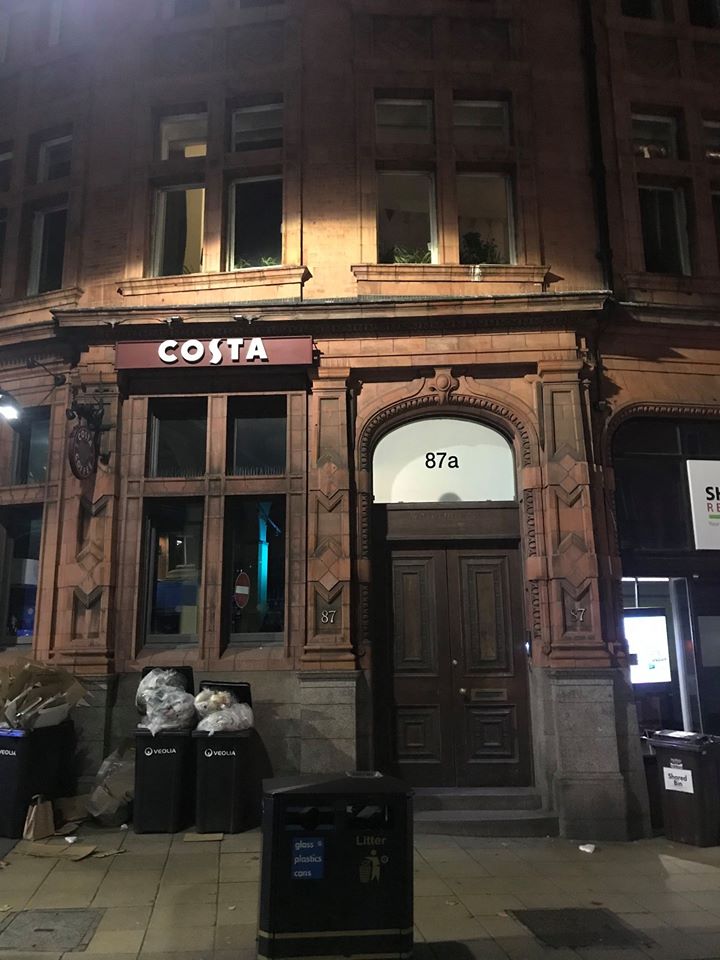
In modern times, Prudential Assurance vacated the building, its ground floor converted into a shop for Laura Ashley, and latterly turned into Costa Coffee.

Categories
Buildings

Sheffield Town Hall

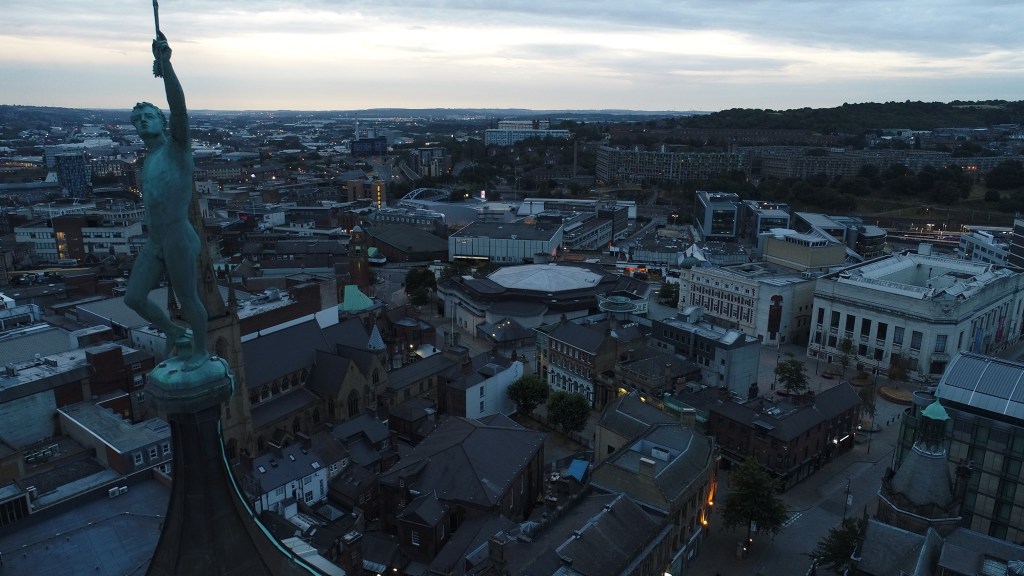
This extraordinary photograph was taken by Paul Stinson of Hovaloft Drone Aerographics. It shows the bronze statue of Vulcan on top of Sheffield Town Hall, created in 1896 by artist Mario Raggi.

This muscular male nude has protected the city for 123 years, seeing us through two World Wars, but almost forgotten by people below.

Darcy White and Elizabeth Norman in Public Sculpture of Sheffield and South Yorkshire provide the life story of this undoubtedly cold naked character.

Vulcan, the symbol of Sheffield, has a hammer in his right hand (not seen here), his right foot rests on an anvil and in his left hand, held aloft, he carries three arrows.

The Roman God of the furnace is the patron of all smiths and other craftsmen who depend on fire. He was adopted as a symbol of the city in 1843 and the idea of including a figure as part of the Town Hall design came from the architect, Edward William Mountford.

The figure was modelled from a Life-guardsman and for a long time the original plaster was on show at the Mappin Gallery until it became too badly damaged, due to frequent moving to avoid air raids during World War Two and was broken up and discarded.

Mario Raggi (1821-1907) was born at Carrara, Italy where he learnt to sculpt, although much of his reputation was made in England, where he first exhibited busts at the Royal Academy in 1878 and continued to do so until 1895. Settling in England in 1880, he set up a workshop at Cumberland Market in north London. He was given some major commissions; memorials to Benjamin Disraeli at Parliament Square and Gladstone at Albert Square, Manchester.

Categories
Buildings

Prudential Assurance Building

Not the best image of Costa Coffee at the Prudential Assurance Building on Pinstone Street, Sheffield. However, late night is the best time to explore the city. Behind the rubbish lies a story. When this was built in 1896 the doorway was the entrance to Birds Hotel, the shop front on its right forming part of the restaurant. It lasted about twelve months before Prudential Assurance booted William Bird out for not paying his rent. Here is the interesting part. The window to the left is actually the original entrance to the ground floor Prudential Assurance office, as architect Alfred Waterhouse designed it, later reconfigured and moved around the corner.

Categories
Buildings

Heart of the City II

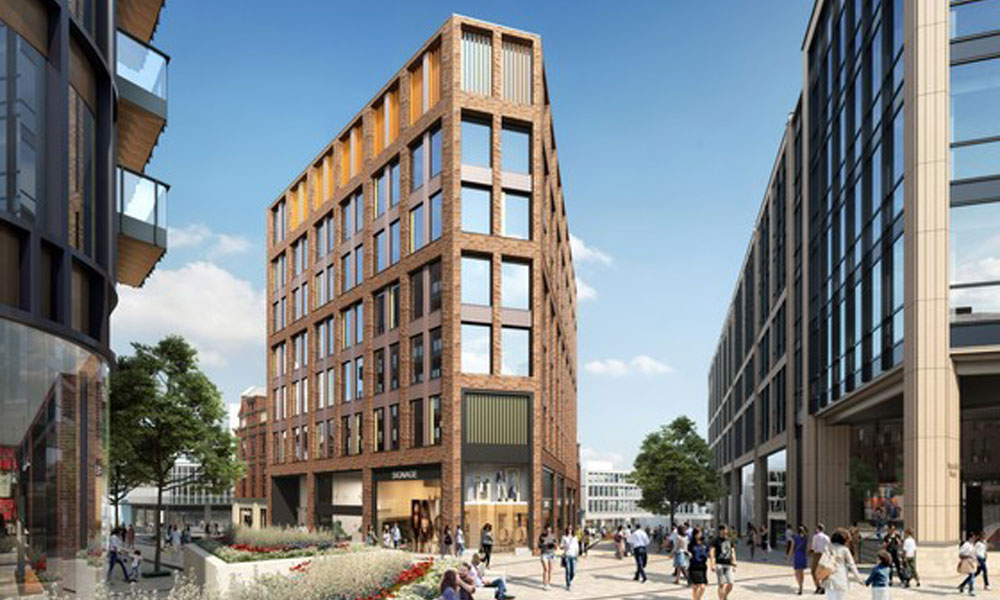
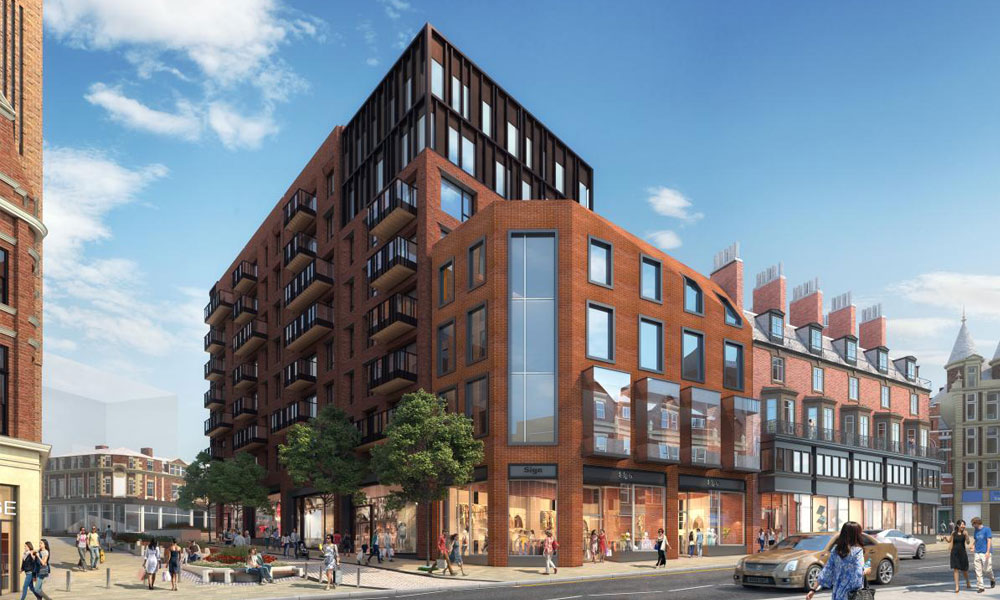
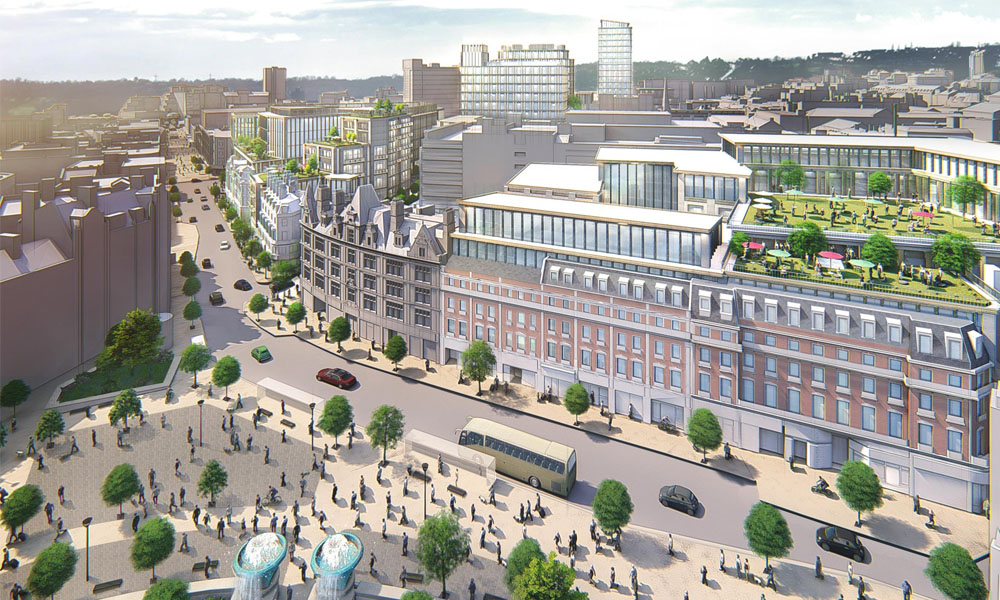
New images have been released of Sheffield’s Heart of the City II scheme. The £500million development is being built on land between Pinstone Street. Barker’s Pool and The Moor, including shops, two four or five-star hotels, offices, apartments leisure venues and a high-end food hall, all set around tree-lined streets and public spaces overlooked by rooftop bars and cafes.

The CGI images show the Victorian facades on Pinstone Street being retained. They also show the Five Ways area – the name being given to the pedestrianised interchange where Cross Burgess Street, Charles Street, Cambridge Street and Wellington Street meet.

There is also work to restore Laycock House, a late Victorian building that survives almost completely intact, as part of the Block B element of the scheme. Known as Athol House, it will provide space for restaurants or cafes on the ground floor, while the floors above will include office space.

Block C will be known as Isaacs House after Victorian-era paper-hangings merchant David Isaacs. Behind the Pinstone Street frontage the re-imagined building will contain workspaces, prime retail and leisure space.

Heart of the City II is one of Sheffield’s key economic projects. Backed by Sheffield City Council, with Queensberry as its Strategic Development Partner, it is not just a retail scheme, but mixed-use development.

The scheme builds on the hugely successful original Heart of the City project that kick started the regeneration of Sheffield city centre at the start of the Millennium.

Categories
Buildings

Isaacs Building

I hope I wasn’t the only one caught unaware when the Heart of the City II project announced that Block C was going to be called Isaacs House, named after Edwardian-era paper-hangings merchant David Isaacs.

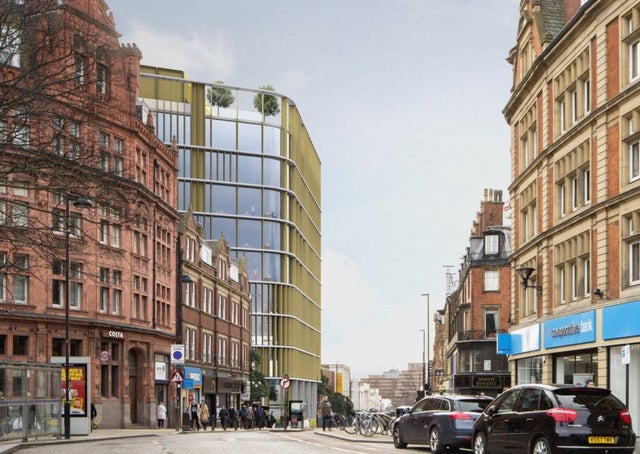
The new block will sit on a triangular piece of land bordering Pinstone Street, Charles Street and Cambridge Street. The Victorian fronts on Pinstone Street – including the Pepper Pot façade – will be retained with new workspaces, prime retail and leisure space constructed behind.

David Isaacs (born 1873) was the son of Lewis Isaacs, a wallpaper merchant, and his wife Mary, both Russian-British subjects, and influential members of Sheffield’s Jewish community.

The family wallpaper business was established at 94 The Wicker, later opening a second shop at No. 4 St. Paul’s Parade, in the town centre.

In 1904, David Isaacs, now heading the business, commissioned a new building on a wedge-shaped plot cornering Charles Street and Cambridge Street. The Isaac’s Building contained new showroom premises for Isaacs – The Wallpaper People, on the corner, opposite The Hippodrome theatre on Cambridge Street.

Isaacs Building was an example of Edwardian entrepreneurship, the ground floor containing seven shop units with an assembly hall above, its entrance being from Charles Street. The top floor of the building contained offices and several workshops, mostly rented by enterprising tailoring businesses.

The wallpaper shop opened in 1905, a newspaper advertisement declaring that “Isaacs, The Great Wallpaper People, begs to announce that they have opened their new premises, Isaacs Building, Charles Street, with the cheapest, largest and best variety of paper hangings in the world.” The shop advertised a wide range of paper hangings – raised papers, engrain papers, plain papers, gilt papers, varnish papers, sanitary papers and pulp papers.

The Independent Labour Party quickly established a base within the assembly rooms and, along with the nearby Athol Hotel, the area became a hub of political activity. As well as offices for the ILP, the building was also home to the ILP club and the ILP-supporting Sheffield Guardian newspaper.

For the first few years Isaacs Building regularly advertised shops suitable for a hairdresser, milliner, chemist or sweet shop. The assembly hall, originally known as Stanton Hall, became regular home to the Sheffield Ethical Society, while other meeting rooms were known as the Central Rooms.

In 1911, the ILP rooms were taken over by Sheffield Trades Hall, a business that survived until 1930. It was regularly targeted by the police, believing that illegal drinking and gambling were taking place inside, and making several prosecutions.

It appears that Isaacs Wallpaper on Charles Street wasn’t the success it intended to be. Its proximity to St Paul’s Parade might have been the reason, and in 1908 the shop was closed, the business transferred to another new shop at 17 King Street… advertisements using the tagline “Waiting to be Hung.” In the shop’s place, Isaacs opened an auction mart “open to receive goods of every description.” By 1910, the shop at The Wicker had also closed.

In 1930, it was announced that Sheffield Trades Hall Ltd had gone into liquidation, a development that cost David Isaacs dearly. The following year he was declared bankrupt, the freeholds of Isaacs Building, approximately 346 yards long, being offered at auction. The properties were sold in lots – Nos. 2, 4, 6, 8 Upper Charles Street (No.6 being Sheffield Trades Hall), and Nos.35,37, 39 and 41 Cambridge Street – all fetching £8,350.

For the next 88 years the property, no longer referred to as Isaacs Building, was occupied by numerous businesses. In time, the old assembly hall was converted into a nightclub, its various incarnations being Faces, Raffles, Charlie Parkers and Freedom, and for a time part of the old basement being used as Charles Street Underground, a faithful reproduction of a London Underground station.

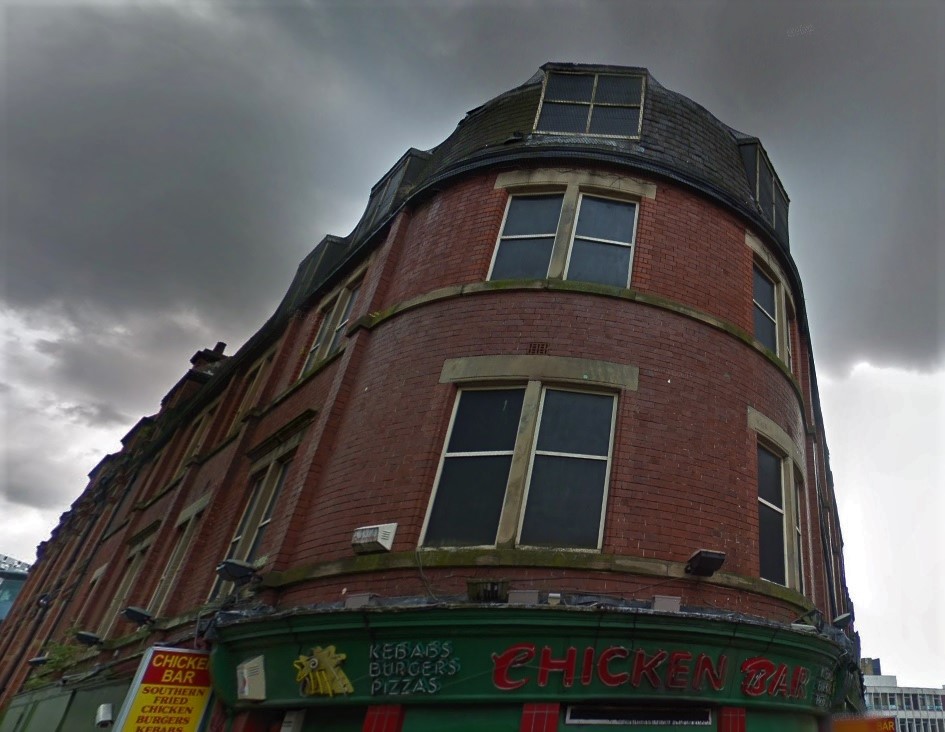
As I write, the building still stands, long boarded-up and the only evidence of recent occupancy being a chicken takeaway where Isaacs Wallpaper shop once stood. But not for much longer, with demolition scheduled in the next few weeks.
Categories
Buildings

St Paul’s 4

I’m sure a few people will remember the demolition of the Empire Theatre, on Charles Street, back in 1959.

The grand old theatre was replaced by shops and offices, bridging the gap between Union Street and Pinstone Street, the most beloved tenant being Sugg Sport that closed in 2000.

They say that today’s buildings are tomorrow’s history.

This will be the case if Manchester-based developer CTP eventually gets the go-ahead for St. Paul’s 4, a 10-storey office block, planned in place of this 1960s building.

The £35million scheme was proposed in June last year, when CTP wanted half of the building pre-let before launching the project. A pre-let – signing a tenant while a building is still on the drawing board – would then trigger a bank or financial institution.

Initial talks had taken place with Sheffield City Council, thought to be supportive of the development, and CTP stated that “demand for the project was so high that they were happy to forge ahead.”

A pre-planning application had been expected last autumn, but has yet to materialise.

The optimism for St. Paul’s 4 was based on Sheffield’s office take-up reaching a ten year high in 2017, when prime office space availability fell to its lowest level on record.

However, the update from CTP is perhaps less optimistic.

With several new office blocks completed in the city centre, the developer has now downgraded its status to “serious tenant enquiries.”

CTP has an excellent track record in Sheffield, being responsible for St. Paul’s 1,2 and 3, as well as the Mercure Hotel, Cheesegrater car-park and St. Paul’s Tower.

It promises that St. Paul’s 4 would “respect the heritage” of historic buildings in the area, and complement an adjacent 32-storey tower block, proposed for the site of Midcity House, at the junction of Furnival Gate, Pinstone Street and Union Street.

CTP has a ‘quasi joint venture’ with Schroders, an asset management company, that owns the land and building on the site.

If St. Paul’s 4 gets off the ground, then it will be one of the most significant changes to Pinstone Street in modern times.