Categories
Buildings People

Foster’s Building

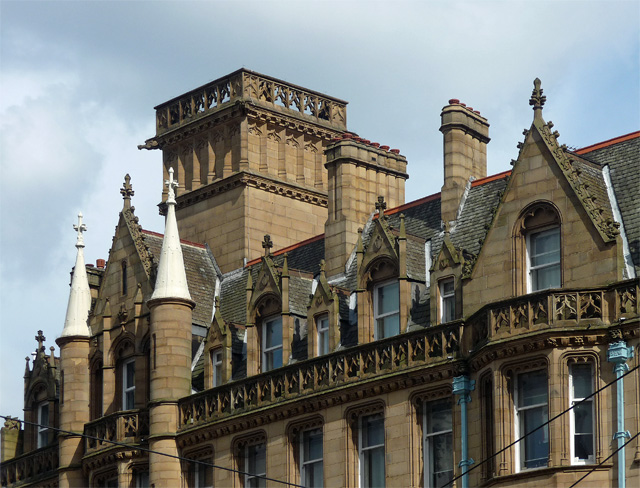
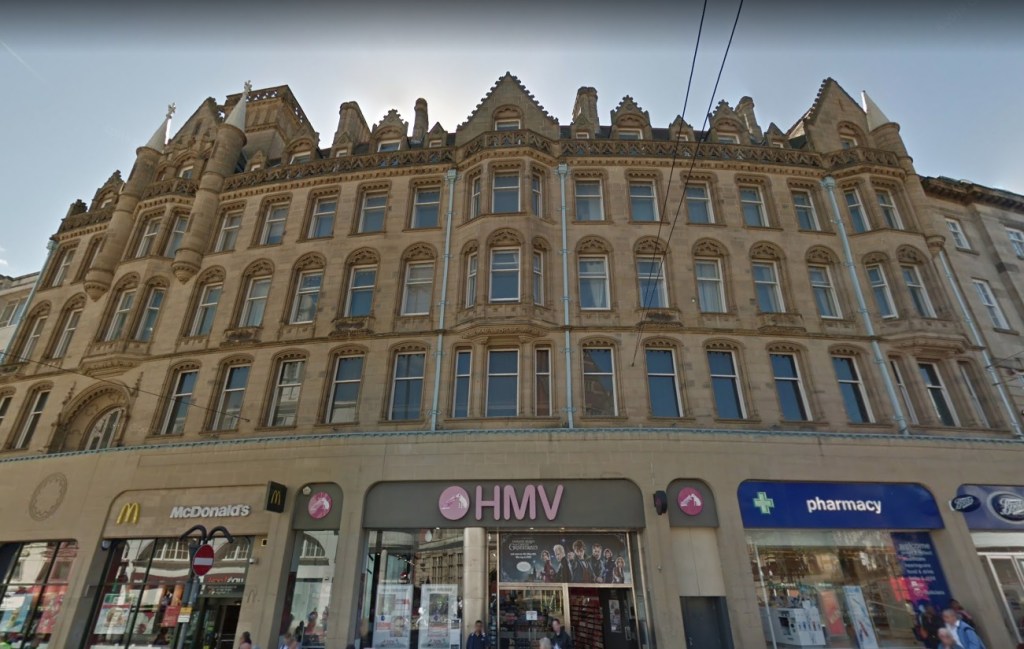
The next time you are able walk into McDonalds or HMV, on High Street, be aware that you are walking into history. Before you go inside, take a moment and look above, and you will find that these popular ground floor premises are part of an elaborate building.

This is the Foster’s Building, built in French domestic Gothic style by Sheffield architects Flockton and Gibbs in 1896.

The origin of the Foster’s Building goes back to the Anglo-French Wars of the sixteenth century, and the entrepreneurship of William Foster, draper, tailor and outfitter, who opened a shop on High Street in 1769.

At the time that William Foster opened his business, High Street was a narrow thoroughfare, described by some as resembling a village street.

When peace was concluded with France, the British Government advertised for sale a vast stock of old uniforms and equipment, which had been given up by troops on disbandment.

William Foster took a coach to London and bought up large quantities of soldiers’ jackets and belts. These were brought to Sheffield and stacked in large crates and baskets outside his shop.

It was said that there was hardly a grinder or cabman in Sheffield who did not buy one of the jackets, not particularly concerned about appearance, but appreciating something cheap.

Being extremely durable they were suited to both trades, and a credible record suggests that the old workshops looked as though a regiment of soldiers was at work, for every grinding wheel had a red-jacketed attendant.

The army belts were of excellent leather, so the record runs, and were largely used by craftsmen for buffing and similar purposes.

Foster was afflicted with an obscure disease, the chief symptom of which was that he frequently fell asleep.

“Mr Foster fell asleep while seated on the hampers of soldiers’ clothes. These used to stand on the edge of the pavement, and there Mr Foster sold the contents, so long as he could keep awake,” said an old humourist.

According to George Leighton in Reminiscences of Old Sheffield (1876) there were other amusing consequences of Foster’s illness.

“I went once to him, as a boy, to be measured for a jacket. Standing behind him, he made me hold my arm horizontally, with the elbow bent, and I thought he seemed a very long time in measuring it. A person on the other side of the street, at York Street corner, was watching the operation, and, seeing him laughing, I looked round, and found that the old man had fallen fast asleep.”

William Foster made a huge sum of money from the transaction and left his family very wealthy.

He was succeeded by his son, also William, who subsequently went into partnership with his own son, George Harvey Foster, in 1860, and renamed the business William Foster and Son, operating at 12-14 High Street.

It soon became necessary to enlarge the premises, and for this purpose, they acquired an adjoining public house, the Spread Eagle, and incorporated it into the original building.

And so, we come to the building that we see today.

When Sheffield grew in prosperity during the late 1800s, the council considered various schemes to improve the condition of its streets. The High Street improvement scheme finally concluded in 1895, resulting in one of the city’s biggest redevelopment projects, and doubling the width of the street.

However, to allow the road widening it meant the demolition of the old properties on the south side of High Street, including buildings owned by William Foster and Son.

George Harvey Foster sold 400 yards of freehold land in High Street for £34,000 in 1893. He took £24,000 in cash for the site of the tailor’s shop, and £10,000 for adjoining land that he owned, and needed by Sheffield Corporation.

Foster died in 1894, his will confirming that he had sold the frontage of the High Street property to Sheffield Corporation for road widening, and empowering his trustees to rebuild and rearrange replacement premises.

In 1895, the first plans for the new building were issued by the architects, Flockton and Gibbs, and convinced the public that this was an “ornament to the widened street.”

The chief architect for the building was Edward Mitchel Gibbs with construction work starting in 1895, undertaken by George Longden and Son, with ironwork supplied by Carter Brothers (surprisingly based in Rochdale).

The building stood on a new street line, set back about forty feet, that allowed existing shops to continue trading during construction, and be demolished afterwards.

When the Foster’s Building was completed in late 1896, it accommodated previous tenants from the old site , Foster and Son being the principal tenant, with other shops for J. Harrison, hosier, C. Tinker, boot and shoe manufacturer, E. Brown, goldsmith and Mr W. Lewis, tobacconist.

Foster and Son had two entrances, with four large windows. Their frontage was 86 feet long and 100 feet in depth and came with a large back yard, and within, contained all three of their departments – ready-made clothes, children’s and bespoke tailoring.

A balcony extended across the top of the building, while Gibbs set back the main wall of the frontage about two feet, so that the supports would not interfere with ground floor window space, and was described as being a “huge showcase”.

The Foster’s Building, on a slightly sloping site, was built in a curved line, leading towards the bottom of Fargate.

The front of the showrooms, above the shops, was ornamented with light wooden tracery, and the upper parts of the building (four floors) was of Huddersfield sandstone, richly moulded, and with a steep-pitched slate roof. It was relieved by oriel windows, ornamental gables and turrets, and dormer windows.

The whole of the upper floors was utilised as rented offices, varying in size, approached by a staircase, ten feet wide, leading from High Street, and by a passenger elevator (see note at end). Each office was fitted with “electric wiring, gas tubing and all modern conveniences.”

The corridors on each floor were eight feet wide, with mosaic-tiled floors and tiled walls up to the height of the door heads,  These were well lit by windows placed at the end of each corridor, and also borrowed light from the offices.

The office entrance was marked by a lofty arch, with oriel windows over it, surmounted by a gable, with turrets, and crowned with an ornamental tower, which was to have been the water tank for the elevator, had not “technology” quickly intervened.

Foster and Son remained in the High Street until 1931, by which time they had been here for over 160 years. It was the oldest tailoring firm in the city, with other premises at Waingate and Castle Hill, and had been run by the widow of William Joseph Foster, great-grandson of its founder, since 1905.

Foster and Son consolidated trade at its other shops, and while war had been instrumental in its initial success, it effectively led to its demise after the Waingate branch was destroyed during the Sheffield Blitz.

The Foster’s Building eventually succumbed to other retailers at street level and, for a time, was known as Norwich Union Buildings. It was refurbished during the late twentieth century, presumably with much period detail lost, and before it was Grade II-listed by English Heritage (now Historic England) in 1989.

NOTE: –
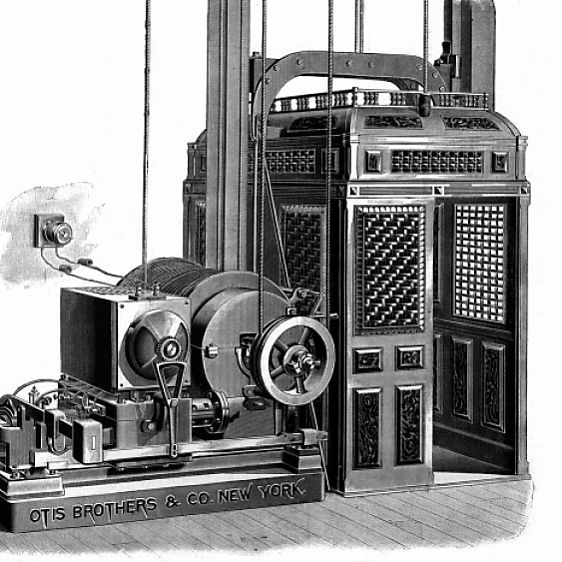
The Foster’s Building had the first American Elevator in Sheffield, built by the Otis Elevator Company, founded in Yonkers, New York in 1853 by Elisha Otis.

In 1890, Otis had entered the British market under the name of the American Elevator Company. Between 1870 and 1900, there had been a transition between hydraulic lifts to electric-powered elevators.

The Otis company advertised its new generation of elevators with the consideration that such an installation was no longer a complicated matter, and well-suited to places which could not have had one before.

The Foster’s Building had intended to have a hydraulic lift and Gibbs’ design included a small water tower on the roof for its elevator. After it was decided to install an electric-powered lift the tower remained, but instead used as a motor room for the American Elevator.

In 1897, a newspaper advertisement for potential occupiers of its offices described the lift as being able to “accomplish the journey from ground floor to fourth floor in THREE seconds.” Unlikely, even today.
Categories
Buildings

Crucible Theatre

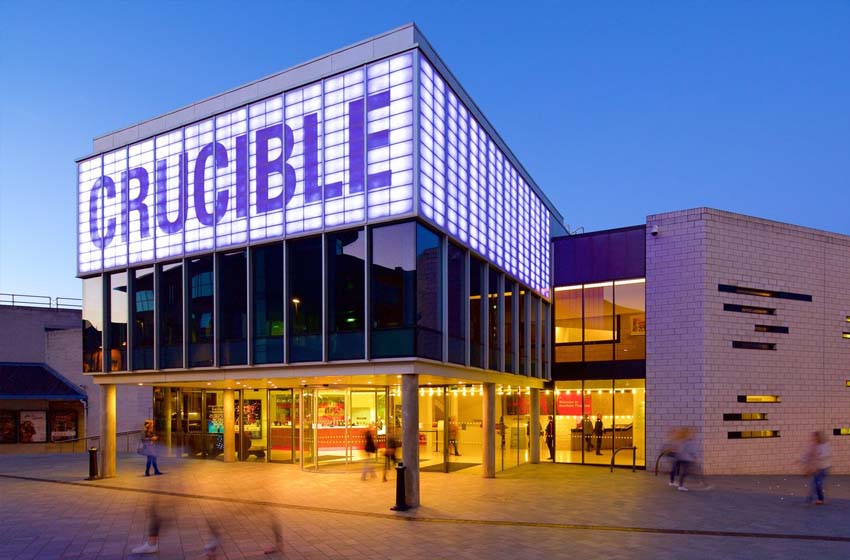
Photograph by Sportsmatik

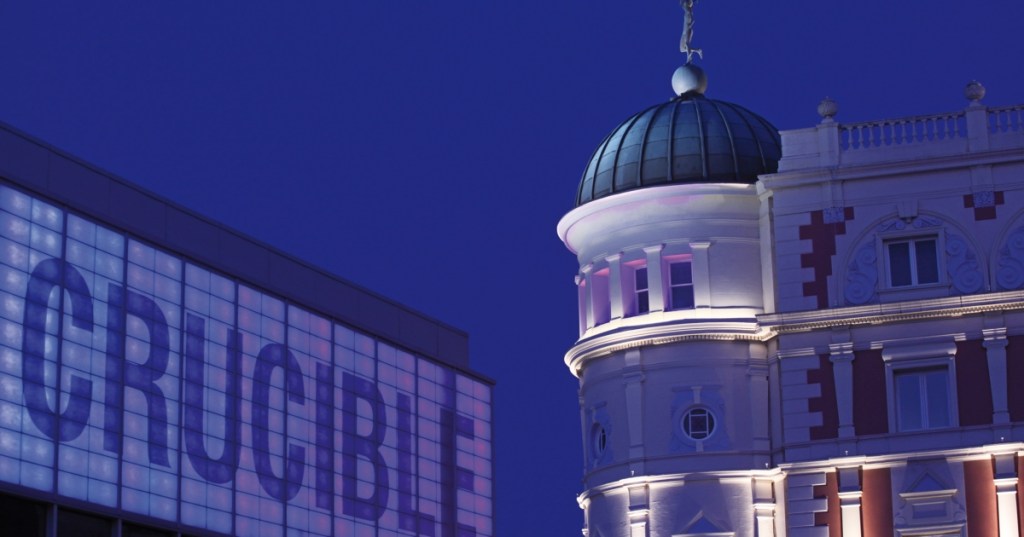
It is hard to believe that next year, the Crucible Theatre, Sheffield’s architectural upstart, will be fifty-years-old. It has been a long journey, with plenty of ups and downs, but survives with its reputation intact.

The Crucible Theatre was built as a replacement for the Sheffield Playhouse on Townhead Street, home to the Sheffield Repertory Company, whose origins went back to 1919.

Photograph of Sheffield Playhouse by Flying Pig

Colin George was appointed Artistic Director of Sheffield Playhouse in 1965, and did not grasp that its hand-to-mouth existence was going to be turned upside down.

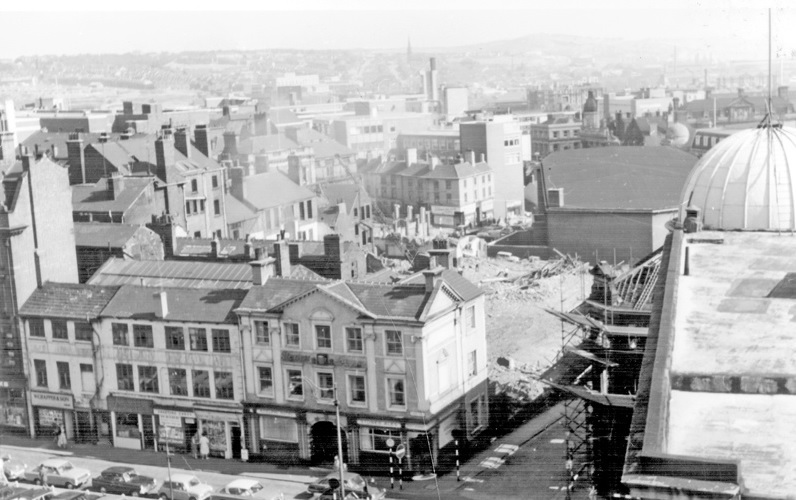
“One sunny spring day in 1966, I was one of a deputation from the Playhouse Theatre who went to the Town Hall to ask the Council for a subsidy to run the theatre. We were ushered into the main Council Chamber, empty but for a formidable northern lady seated at one end, on her Lord Mayor’s throne – Alderman Grace Tebbutt. We sat in front of her, naughty schoolchildren in front of the headmistress. She looked at us for a minute and then dropped her thunderbolt. ‘Nah then. Where do you want your new theatre?’ To those of us working at the Playhouse it was quite unexpected. ‘You probably want an island site,’ she continued forcefully, and with a wave of her hand effortlessly destroyed Norfolk Street.”

A new Sheffield Theatre Trust and Building Committee was created, an architect was appointed, and plans were made to create a new conventional theatre with its proscenium arch and using a large forestage.

Had these plans progressed, the history of Sheffield theatre would have been quite different. The cat-amongst-the-pigeons was Sir  William Tyrone Guthrie (1900-1971), an English director instrumental in founding the Stratford Festival theatre in Ontario and the Guthrie Theater in Minneapolis, Minnesota.

In October 1967, Guthrie arrived in Sheffield to talk about theatre. Hearing of plans, he spoke to the Trust and excited them enough to send Colin George and David Brayshaw, a local solicitor appointed as administrative director, to visit America to see and report on thrust or promontory stages.

They spent ten days in Minneapolis, Stratford, Ontario, and New York, and reported back that Sheffield should have a thrust stage. The Trust agreed, and the cries of derision began.

Guthrie Theater, Minneapolis (top) and Stratford Festival, Ontario (below)

Denounced by theatrical knight Bernard Miles (“The theatre is a freak. It will be blacklisted by all reputable dramatists”), by councillors at public meetings (“I’m not going to pay to see Hamlet’s backside”), and in the media, the modernists won the day.

There was also the problem of  giving the new theatre a name. The Star ran a competition and ‘The Adelphi’ won, named after the famous hotel and public house that had stood on the site, but in the end, Hilary Young, who worked at the Playhouse, suggested the Crucible, a nod to Sheffield’s industrial past.

Photograph of Colin George by The Guardian

The Crucible was designed by Renton Howard Wood Associates, the project architects being Nicholas Thompson and Robin Beynon.

However, we must not forget the part played by Tanya Moiseiwitsch (1914-2003), regarded as one of the foremost British designers in twentieth century theatre, an innovative designer of costumes, sets and stages, and responsible for the look of over two hundred productions in Britain, Canada and the United States.

Moiseiwitsch had worked closely with Sir Tyrone Guthrie and was the principal designer at the Guthrie Theater in Minneapolis from 1963–1966, and again designed a thrust stage like that she had designed (and in 1962 modified) in Stratford, Ontario.

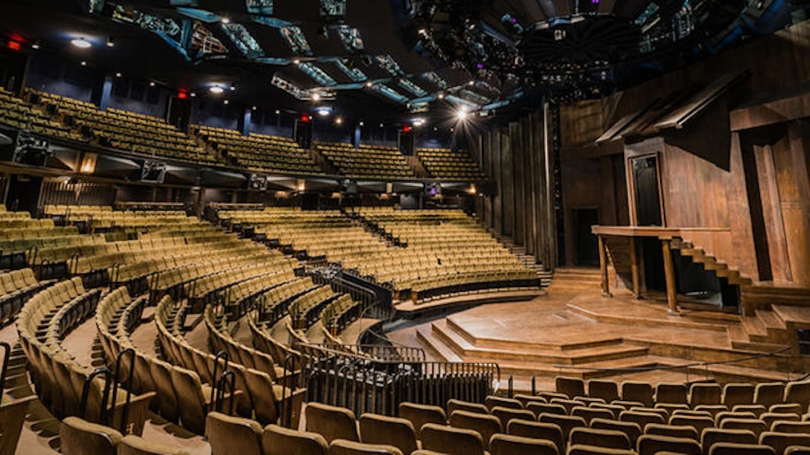
Returning to England in the 1970s, she designed plays both for the National Theatre and the West End, but her last legacy was designing the stage for the Crucible Theatre. The whole of the stage (18ft wide-28ft deep) was mounted on steel stanchions and beams provided flexibility to adapt it for different productions.

Photograph by Sheffield Theatres
Photograph by Sheffield Star
Photograph by Sheffield Theatres

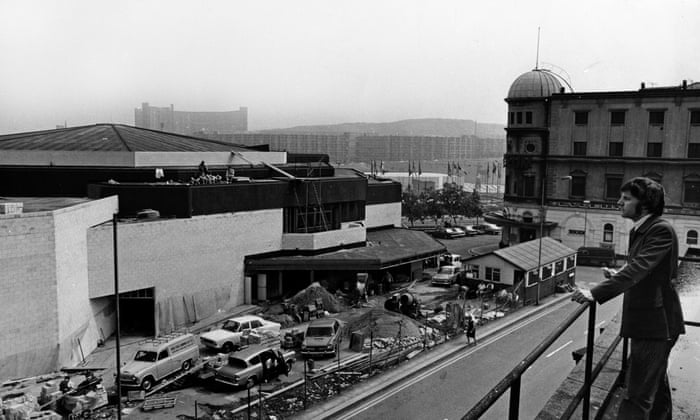
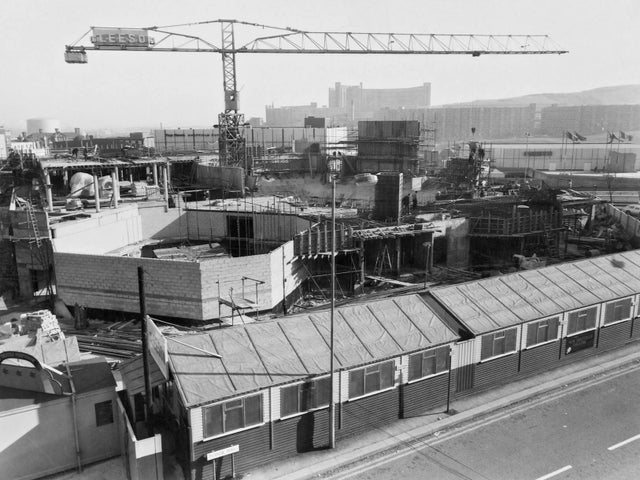
Construction started in October 1969, the work undertaken by Gleesons, and was completed in November 1971. It cost almost £1 million to build, £650,000 contributed by Sheffield City Council and the Arts Council, and £260,000 raised by the New Sheffield Theatre Trust as the public contribution to the theatre.

In Spring 1971, it was decided that Colin George would direct Peer Gynt to open the Crucible, followed by Sir Tyrone Guthrie’s Aeschylus Trilogy, The House of Atreus. However, in July news came through that Guthrie had died, and the opening schedule was hastily rearranged.

Photograph by Building Design
Photograph by Picture Sheffield

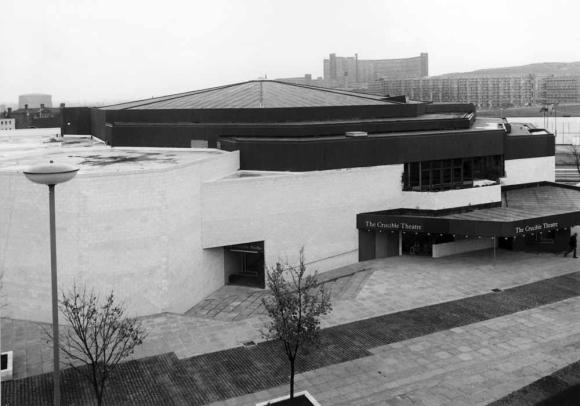
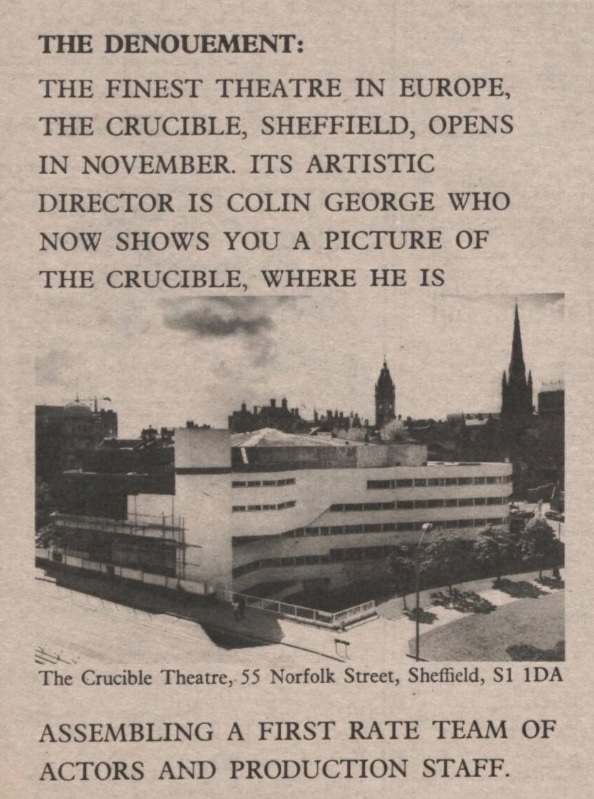
The Crucible Theatre, principally made of reinforced concrete, opened on November 9, 1971, with Fanfare, a production devised in three parts. The first was ‘Children’s Theatre’ in which 34 children were involved. The centre piece was Ian McKellen playing the Old Actor in Chekhov’s Swan Song and the last part was rumbustious Music Hall.

And so, the futuristic theatre with its twinkly ceiling lights, orange auditorium seats (provided by Race Furniture of London), and gaudy foyer carpets, started its journey.

Photograph by The British Newspaper Archive

Once deemed a ‘white elephant’ due to low audiences, it steadily gained a reputation, along with the Lyceum Theatre, as the best production theatre outside London. With far more full houses than not, the long list of success is remarkable – The Stirrings in Sheffield on a Saturday Night, Chicago (the European premiere, no less), The Wiz (British premiere), Funny Girl, Brassed Off, Fiddler on the Roof, Hamlet, Othello, Everybody’s Talking About Jamie… the list goes on, and it was once called the ‘National Theatre of the North’. And, of course, there is the snooker.

The Crucible Theatre was Grade II listed in 2007, considered of national importance in the history of theatre design, ahead of a £15 million refurbishment that included a new roof and the Adelphi Room extension to the front. Ironically, during the construction of the extension the cellars to the old Adelphi Hotel were discovered and some of its foundations used to support the new build.

Colin George left the Crucible Theatre in 1974, but returned to appear in a production of Othello with Dominic West and Clarke Peters in 2011. His ambition to write the history of the theatre was never fulfilled, but as one newspaper reported on his death in 2016, his legacy stands in Tudor Square.

Photograph by Hire Space
The Adelphi Hotel. Photograph by Picture Sheffield
Photograph by FDA Design
Photograph by Our Favourite Places
Categories
Buildings Sculpture

The lions which finally came home

Photograph by RIBA

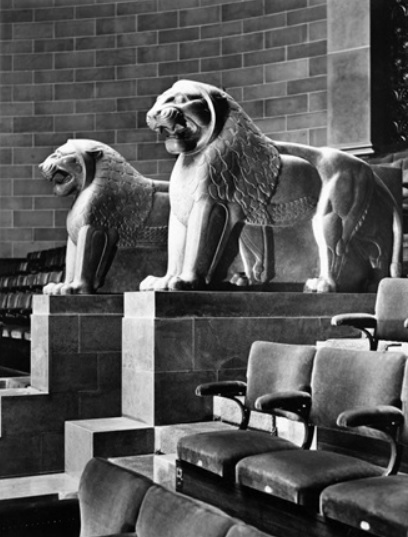
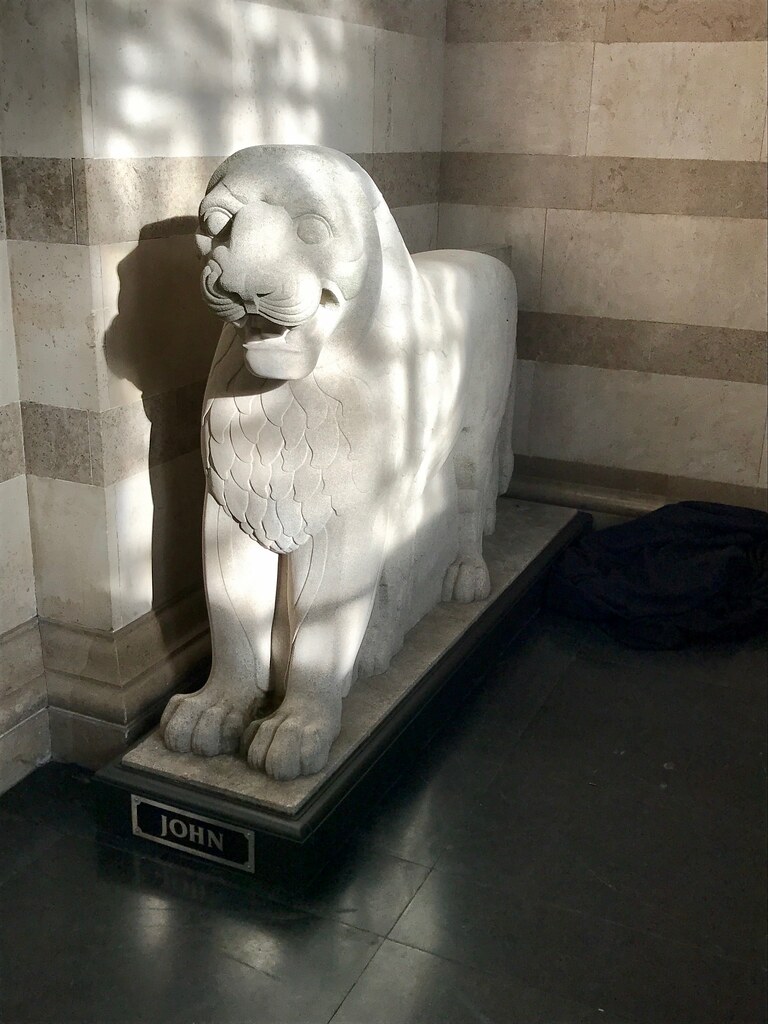
The next time you visit Sheffield City Hall, look out for John and Samuel. These two old fellows are a pair of stone Assyrian lions who have quite a story to tell.

Their tale begins in the early 1930s at Middleton-by-Wirksworth, a small village the other side of Matlock.

Made of Hopton Wood stone, the two lions were created by Sheffield sculptor John Hodge, a man with an elusive history, “a tall mysterious figure,” seen regularly wearing a large-brimmed black hat and matching cape, and causing fright amongst children at night as he walked to and from his project at Derbyshire Stone’s works.

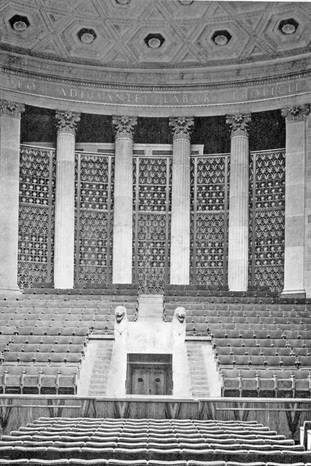
The two lions, each four-feet-high and weighing 2.5 tonnes, were predestined to be night cats, commissioned by architect Emanuel Vincent Harris to sit either side of the “Entrance of Honour” to the stage of the newly-built Sheffield City Hall.

Photograph by Picture Sheffield
Photograph by BBC News

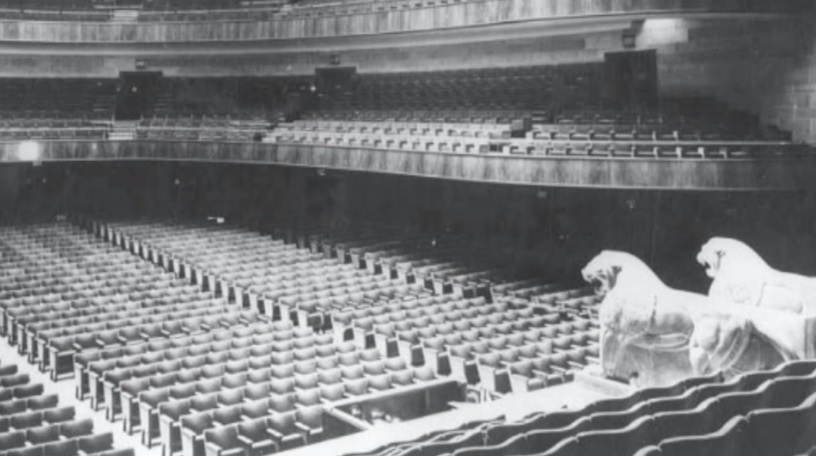
When the City Hall opened in 1932 the two lions could be seen by everyone in the Oval Hall, admired at first, but soon subject of ridicule and anger.

The trouble, apparently, was that the lions split up a choir or orchestra, so that there was a lack of cohesion between artists on two sides of the platform.

The lions became subject of letters to local newspapers: –

“The proper place for the City Hall lions is outside, on the pedestals flanking the columns.”

“These ridiculous stone lions block up valuable space in the centre of the orchestra.”

“Admittedly they are a fine piece of work, but they ought not be there. They obtrude themselves on one’s vision, and hardly seem to fit in with the otherwise pleasing artistry of the interior.”

The most damning criticism came from Sir Thomas Beecham, conductor, and impresario, best known for his association with the London Philharmonic and Royal Philharmonic orchestras. Addressing an audience of musicians on stage at the City Hall in 1935, he reckoned that the platform had been expressively designed for “clock golf.”

“AND THESE,” he shouted pointing at the two big cats,” “THESE MUST GO. I don’t know who devised them, but it looks like Epstein. I suppose they are works of art, but why can’t they be placed at the other end of the hall?”

In 1936, the Sheffield Hall Committee, perhaps influenced by Beecham’s description of them as “horrors” and “huge brown beasts,” recommended to the City Council that the lions be removed. The council, not be bullied, refused to do so, and the two lions remained on stage for thirty years.

It wasn’t until 1962, a year after Beecham’s death, that the lions were banished when the auditorium was refurbished.

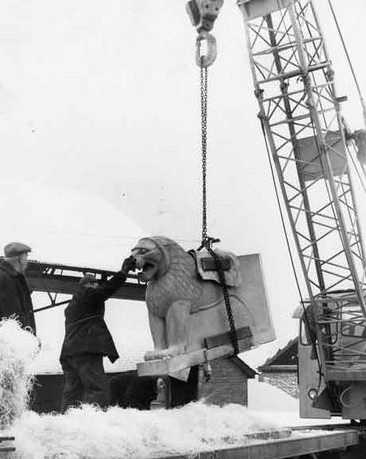
The two lions were bought for £600 by John Hadfield, the sympathetic chairman of Derbyshire Stone Ltd. They were hoisted out of the hall, put on the back of a lorry, and reunited back in Derbyshire.

Photograph by Picture Sheffield

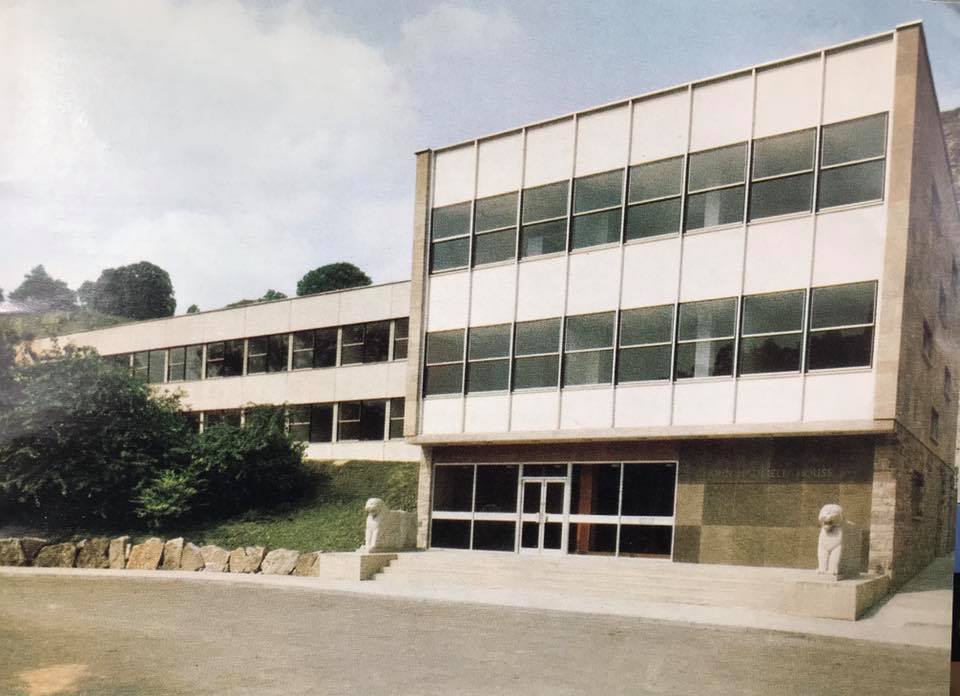
They were eventually built into the steps of John Hadfield House at Matlock, constructed in 1968 by Tarmac Construction, for Derbyshire Stone, and later becoming Tarmac Eastern’s regional office for over 30 years.

Photograph by Tarmac Roadstone

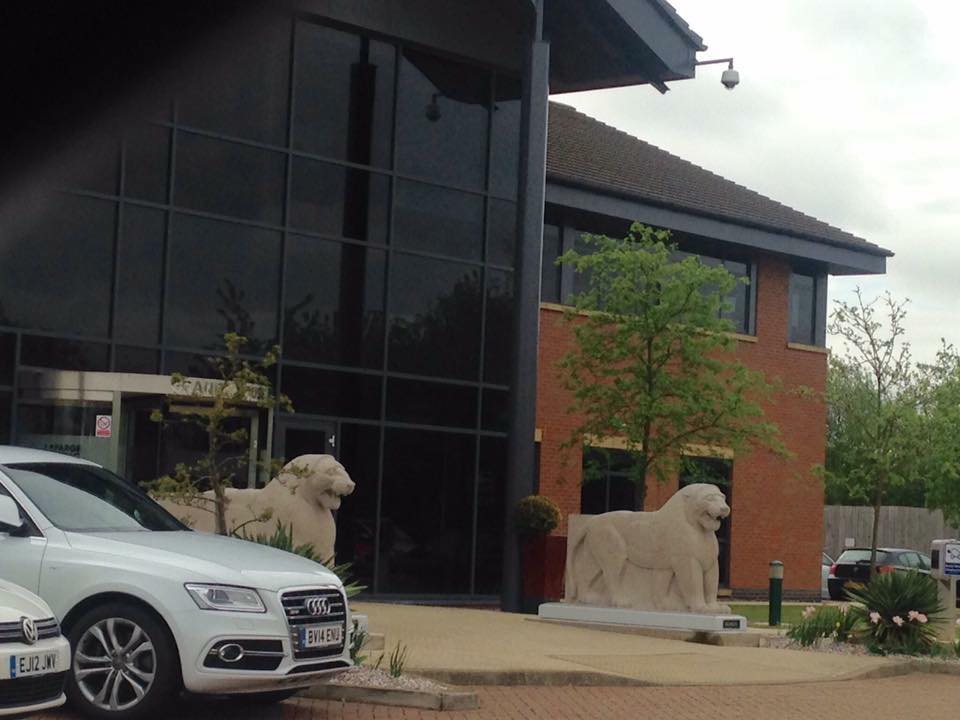
When the company vacated the building, the lions were moved to Tarmac’s Ettingshall office, Wolverhampton, and when that closed, the poor lions ended up at their regional office near Leicester.

Photograph by Tarmac Roadstone

After nearly fifty years living outside, the fate of the Assyrian lions took a remarkable twist in 2017.

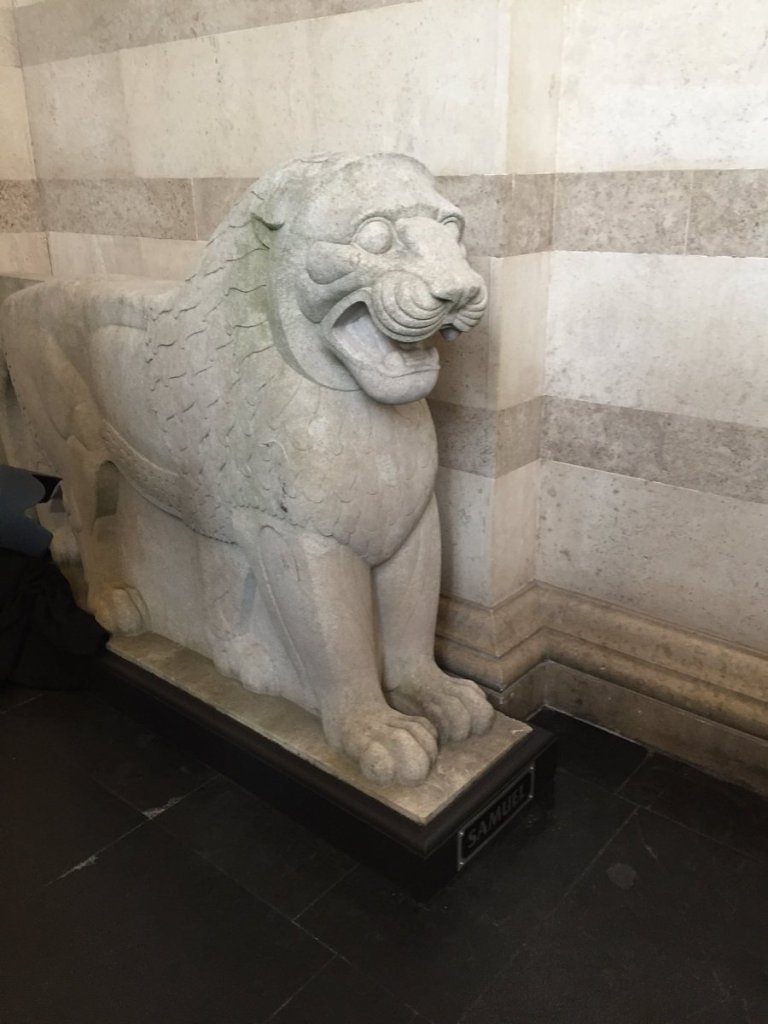
As part of Sheffield City Hall’s 85th birthday celebrations, John, and Samuel, as they were now called, were cleaned up, returned to the City Hall, and given ‘pride’ of place in the foyer.

Photograph by Abi Jaiyola on Twitter
Photograph by David Johnson on Flickr
Categories
Buildings

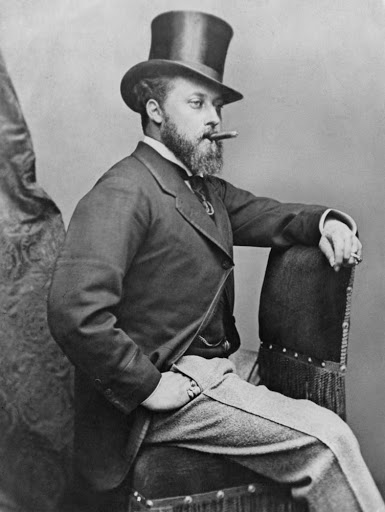
When King Edward visited an old pub

Queen Victoria reckoned that Edward, the playboy Prince of Wales, would not make a good King. She frowned upon his antics – drinking, gambling, horse-racing, shooting and passionate attachments – but she was quite wrong.

However, she might have been forgiven for believing this. On more than one occasion Edward proved an embarrassment, something not known to common folk, but whispered about in higher circles.

In a separate post, we discovered that Edward, as Prince of Wales, paid a discreet visit to Tapton Court, at Ranmoor, to meet his old friend, Henry Steel, a man who made his fortune as a bookmaker. Now, we have another story where Edward made a clandestine journey into Sheffield.

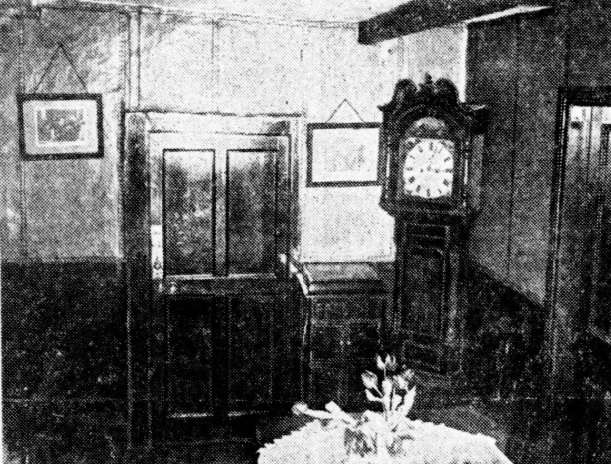
“In a little oak room reached by a winding staircase in an old Sheffield inn there used to sit a caped and overcoated figure playing cards or talking to two or three friends.

“The story goes that this striking figure was King Edward VII, then Prince of Wales, and the inn was the Shades Vaults in Hartshead.

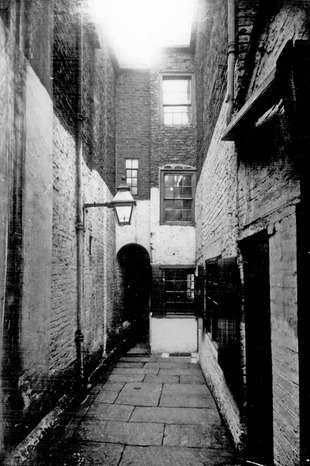
“People well remembered His Majesty walking up the narrow passage along Hartshead and going straight into the Shades Vaults and up to a little oak room.”

Photograph by Picture Sheffield

The story goes that King Edward was dressed in an old ulster overcoat, an old hat, and old boots. In the little room, it is said, he used to meet his good friend Henry Steel, of Tapton Court, former bookmaker and one of the founders of Steel, Peech and Tozer, steel manufacturers.

The place was romantic enough. The room in which he was supposed to have sat with Henry Steel, a man of his day, was a small and secluded old-world corner in which anyone travelling incognito could sit quietly and enjoy a rest far away from the worries and cares of the outer world.

The little room at Shades Vaults by The British Newspaper Archive

The story emerged in 1932, long after the deaths of those involved – Edward died in 1910, and Henry passed away five years later – but it was a tale passed down by generations.

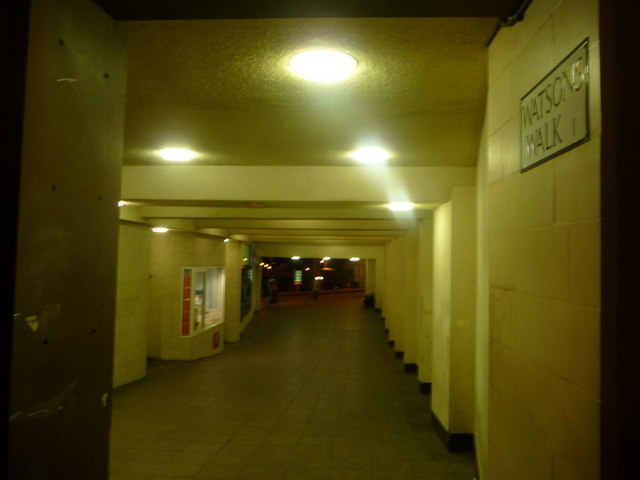
Shades Vaults has long gone, destroyed by German bombers during World War Two, and the narrow passage was Watson’s Walk that ran from Angel Street into Hartshead. It was named after a well-known local family that kept several public houses in the town centre and, despite being flattened during the Blitz, is still the name attached to the covered walkway that goes underneath Argos into Hartshead Square.

The Shades dated to the late 1790s, was kept in 1805 by Sam Turner, known as ‘Gin Sam’, and was commonly known as T’oil in T’wall.

Categories
Buildings

Sheffield City Hall

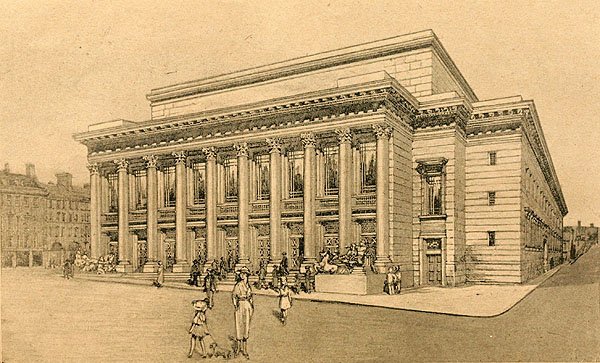
The winning entry for the Sheffield Memorial Hall. Photograph by Archiseek

A building familiar to us all, the Sheffield City Hall, on Barker’s Pool, but take a closer look at these  images.

The first is the winning entry by architect Emanuel Vincent Harris in a competition held in 1920, to design a new memorial hall, in recognition of those that lost their lives during World War One.

Sheffield had long recognised the need for a large hall for concerts, meetings, and lectures, and considered buying the Albert Hall on the site of what is now John Lewis. The proposal was rejected in favour of a new building.

The competition was judged by Sir Aston Webb (who designed the principal façade of Buckingham Palace and the main building of the Victoria and Albert Museum) and Frederick Ernest Pearce Edwards, city architect.

“An austere appearance well suited for a memorial hall with the best modern thought in architecture expressed in its compact yet comprehensive outlines.”

The original design of the memorial hall tried to avoid flights of steps, but the fall of the land in Barker’s Pool prevented it. It was designed to seat 3,500 with a smaller hall at the back to be added later if desired.

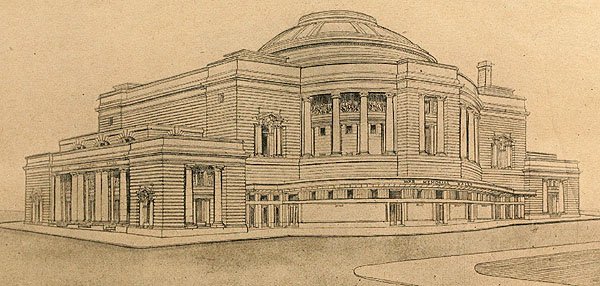
The second image is the runner-up in the competition, designed by James Black Fulton, a circular-shaped big hall with external dome and glazed shelters to the side doorways and vestibule.

James Black Fulton’s runner-up design. Photograph by Archiseek

Although the winner of the competition was announced in 1920 construction was repeatedly delayed by the fragile state of public finances during the Depression.

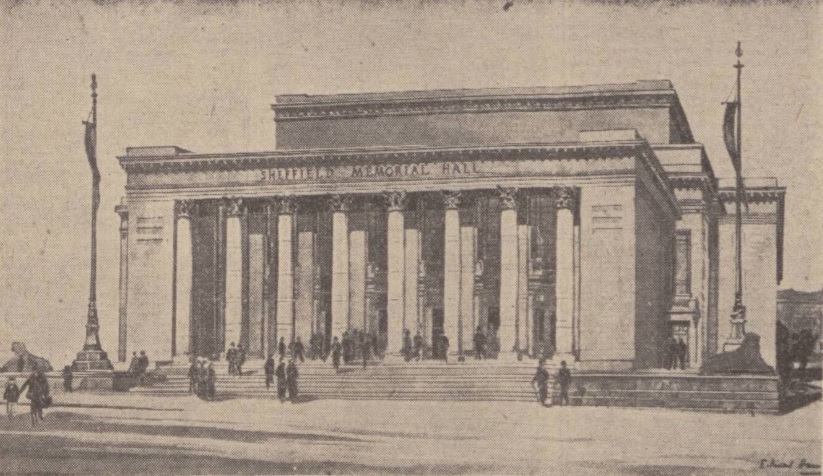
The interruption resulted in modifications to Harris’s original design, including a revision from 1924 that made greater use of steps outside, the addition of decorative flagpoles either side of the frontage, as well as long-running arguments as to what the building should be called.

You will see from the 1924 drawing, below, that ‘Sheffield Memorial Hall’ is engraved above the colonnade, but they were still squabbling by the time the foundation stone was eventually laid in 1929.

Photograph by The British Newspaper Archive

When it opened in September 1932, with a reduced capacity of 2,300, Harris’s building was called Sheffield City Hall, the smaller hall at the back recognised as the Memorial Hall.

The original budget was fixed at £200,000 in 1920. However, by the time it opened the final cost was £443,300… about £31.1 million today.

Photograph by ComedyGigs
Categories
Buildings People

Tapton Court: When the nurses moved in

Photograph by Picture Sheffield

In the first part of our story about Tapton Court, we looked at its role as a family home for John Henry Andrew, Henry Steel and Albert Victor Derry.

Derry moved to Bristol in 1931 and died in Cairo the following year. Tapton Court had been put up for sale, and it was left to his widow, Olga, to find a suitable buyer.

In the summer of 1933, the first indication of Tapton Court’s future use was found in the legal sections of newspapers.

Olga sought to alter covenants on the house and land, put in place by Henry Spooner in 1865, that forbid change of use to non-residential. Her application being successful, Olga then negotiated the sale of empty Tapton Court to the J.G. Graves Charitable Trust, which presented the house to the Royal Hospital as a nurses’ home.

Photograph by Picture Sheffield

The Charitable Trust, created by Sheffield’s ‘Fairy Prince’, J. G. Graves, was set up in 1932 with capital of over £400,000.

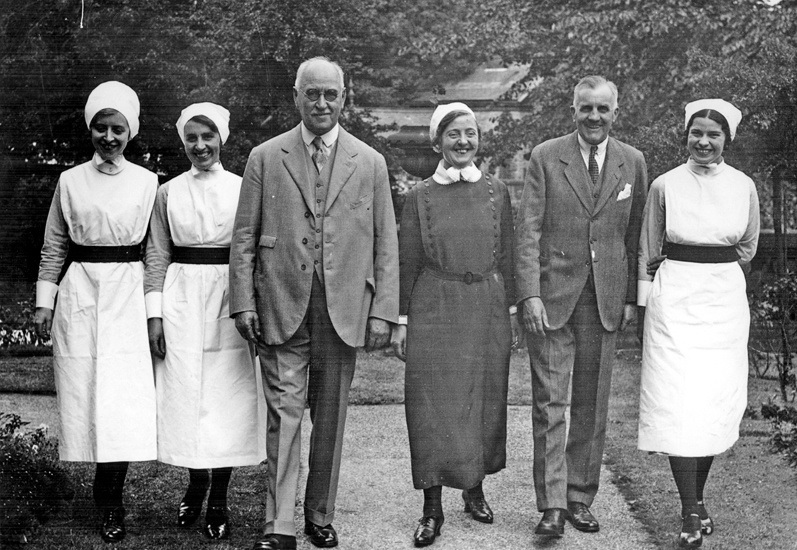
The nurses’ home was intended to replace existing accommodation in three different places – at the Royal Hospital, where nurses were removed from Eldon Street to make way for an x-ray extension, Ranmoor, and later Crookes.

The new nurses’ home, also with a Nurses’ Preliminary Training School, was opened on 20 July 1934 by Alderman J.G. Graves, the event reported in the Sheffield Independent: –

“A few months ago, it was a sorry reminder of Sheffield’s spacious days of entertaining. Dust clung to the walls, rust coated the iron of immense stoves and cupboards gaped, empty and desolate.

“A tiled entrance leads into a large nurses’ lounge, furnished in rose and green. Settees, easy chairs, carpets, a grand piano and all the furnishings have been provided through gifts. A grandfather clock is the contribution of the nurses and sisters.

“The beautiful ceiling, which was painted for the visit of King Edward, has been restored in its original colours.

“The old kitchen has been converted into a delightful dining room. Stone flags have been replaced by wooden flooring. Eight old stoves have ended their days on the scrap heap.

“The room is decorated in a soft green with rich flame-coloured curtains. Green rubber-topped tables are matched by bronze tubular steel chairs upholstered in green leather.

Each bedroom is curtained and partitioned in a different sunshine shade, and each nurse has her own small suite of furniture in limed oak.

“Jacobean curtains give a rich note of colouring to the sisters’ lounge, and the settees and chairs are covered in bronze.

“Old fashioned covered baths have been replaced by modern ones in the three bathrooms. In the kitchen, a gas stove with two ovens has been fitted into a white tiled alcove, and a teak sink has taken the place of the stone one.

“Two lawns, large enough for a hockey field, skirt the house and the gardens are shaded by beautiful trees. Raspberries, loganberries and blackcurrants grow in the kitchen gardens and in a large vinery clusters of grapes are ripening.”

Photograph by Picture Sheffield

The opening was performed by John George Graves, the man responsible for buying Tapton Court and handing it over to the hospital:-

“Some thanks are due to those who have gone before and spent their money so lavishly in providing this wonderful house. I sometimes hear lamentations about the uses to which fine houses in the West End of Sheffield are being put. I do not share those feelings.

“Such houses as Tapton Court were provided for purposes which are perhaps not well appreciated today. They were built for entertaining, for people indulged in very elaborate dinners in those days, and the more successful of the people had ‘rich man’s gout’ which gave them an exclusive touch.

“Tapton Court is a historic house. It once belonged to Henry Steel, who was a friend of King Edward, and King Edward visited and probably stayed here.”

Photograph of J.G. Graves at the opening by Picture Sheffield

The cost of the scheme had been £25,000, but plans were already in place to add two new extensions to the old house.

By 1936, two new wings had been built, at a cost of £28,000, on the site of an old peach orchard, and included contributions from a fundraising campaign. A floor was named after each donor of £5,000, while bedrooms were named after each donor of £100 (in all, 20 people had rooms named after them).

The east wing was occupied by nurses on 20 March, and the west wing on 10 July.

“The re-adaptation of the old house is also in progress, and by removing the dome on the tower, the cost of maintenance will be reduced, and the structure more substantial. The supply of electricity has been improved by the building of a sub-station with transformers. It has also been decided, that as the electrical wiring in parts is no longer efficient, to re-wire throughout.”

The Duke of Kent officially opened the new extensions in October 1936. A canopied entrance from Tapton Court to a large marquee, where the ceremony was held, was lined by a guard of honour from the sisters.

“It houses the whole of the nursing staff in the pleasantest possible conditions, in five-acres of wooded grounds,” reported the Sheffield Daily Telegraph.

“In the west wing is a light and spacious dining hall, opening out onto a paved terrace and loggia. Above the hall are 20 bedrooms for sisters with its own wash basin and oak furniture. The east wing is entirely devoted to nurses’ bedrooms and bathrooms. Each of the 100 bedrooms has a fitted wardrobe, and the colour scheme is bright and cheerful. Shampoo rooms and shower baths are among the amenities, and there are ironing rooms for home laundry work.

“The old house has been adapted for recreation and sitting-room purposes.”

There was a touch of nostalgia in the Royal proceedings, said the Sheffield Independent. “A little grey-haired woman, who left Tapton Court as a bride fifty years ago, saw the Duke of Kent open her old home as a home for nurses. She was Mrs E.W. Turner, formerly Miss Andrew, wife of the Rev. George W. Turner, Vicar of St. Judes’s Church, and daughter of the late John Henry Andrew.”

Photograph by picture Sheffield

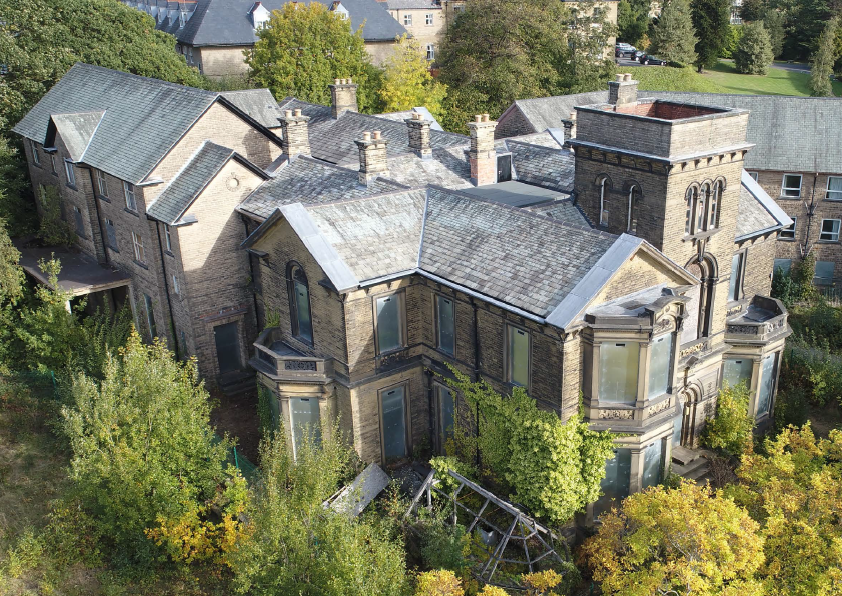
And so, the nurses lived in relative harmony until, that is, the Royal Hospital closed in 1978, by which time Tapton Court had fallen into the hands of the University of Sheffield and used as halls of residence. A three-storey north wing, bridging the east and west wings, had been added, as well as  the modern-looking Ranmoor Annexe (120 bedrooms over three floors), all of which are empty today.

Up for sale, the interiors of Tapton Court remain a secret, hidden behind steel-gated windows to deter urban explorers, but the sales brief provides us with a final insight: –

“The original house comprises two floors centred on a top-lit hall surrounded by a gallery at first floor level on three sides. The central court (surrounded by the 20th century wing extensions) is approached from the external portico on the eastern façade, through the entrance hall and with a major room opening off the opposite side of the court. The southern side of the court is flanked by corner rooms separated by a central hallway which gives access to the garden and houses the main staircase. Sections of the original service wing to the north still survive.”

Photograph by BNP Paribas Real Estate
Photographs by HughieDW on Flickr

NOTE: A planning application was submitted in December 2020 to convert Tapton Court into apartments.

Categories
Buildings People

Tapton Court: A ‘brass castle’ above the fog of the town

Photograph by BNP Paribas Real Estate

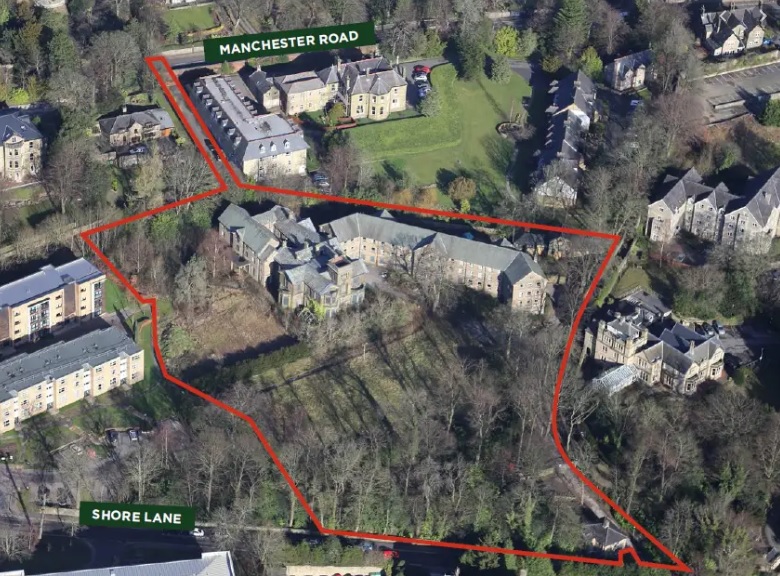
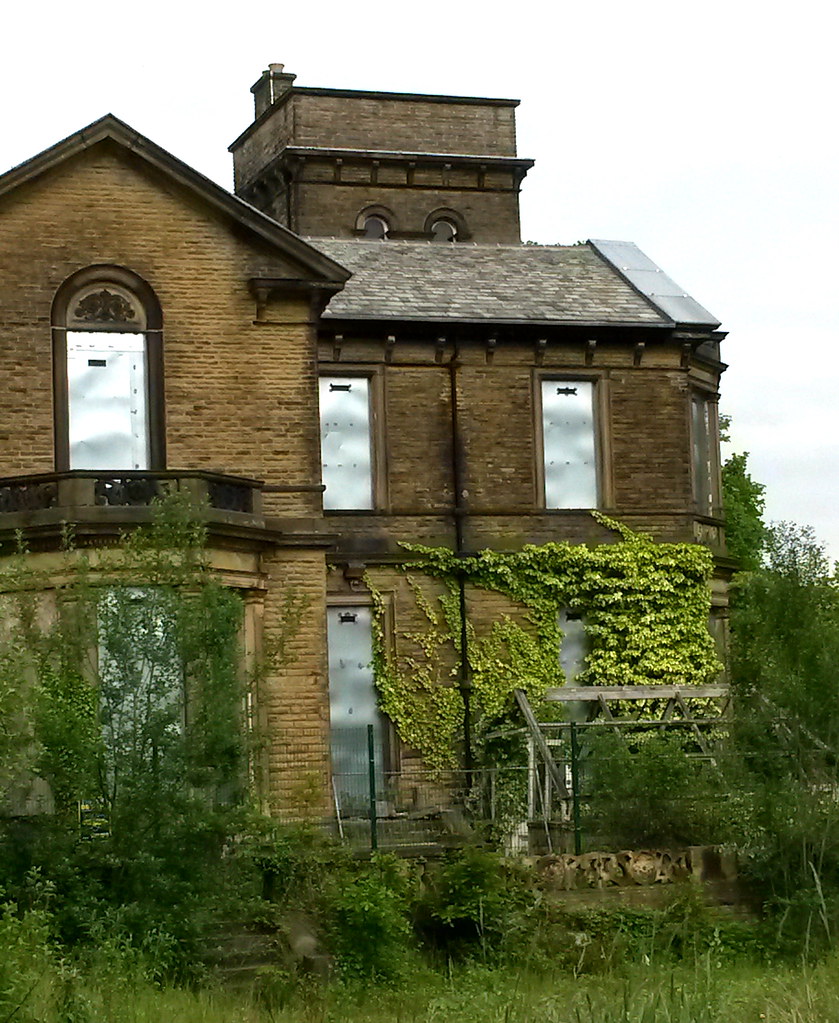
There is an old house at Ranmoor that is looking distinctly down-at-heel these days. Tapton Court, on Shore Lane, is shuttered-up and anticipating its reawakening. It is owned by the University of Sheffield, most recently used as student accommodation but now, along with adjacent Ranmoor Annexe, it awaits a buyer.

Fortunately, the university has been good to Tapton Court, given Grade II listing in 1995, and following a fire in 2010, made sure essential primary repairs and rebuilding brought the building back to shell condition in accordance with Listed Building Consent.

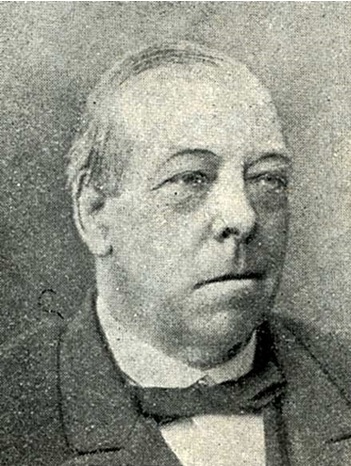
Tapton Court came to light after a recent post about Henry Steel (1832-1915), a ‘leviathan’ of the racecourse and one of the founders of Steel, Peech and Tozer, once a well-known steel firm in Rotherham. He lived here from 1879 until his death in 1915, but further research throws up an exciting past, and reveals that this house was visited by Royalty, possibly on more than one occasion.

Photograph by Picture Sheffield

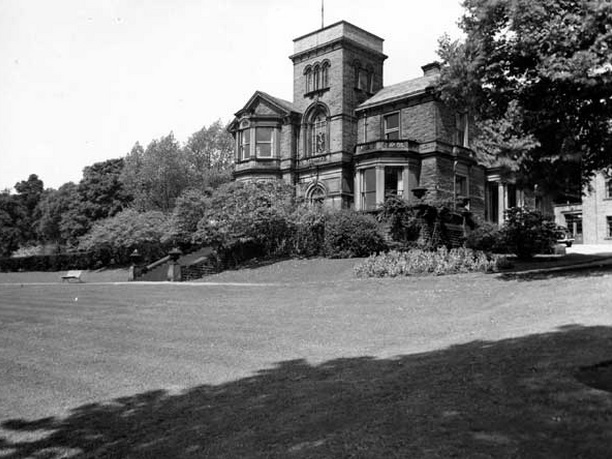
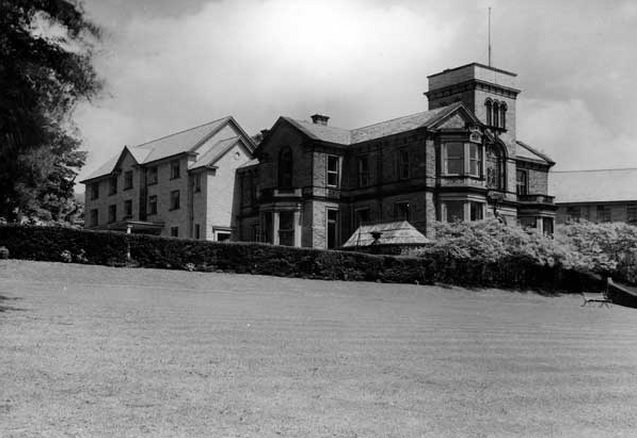
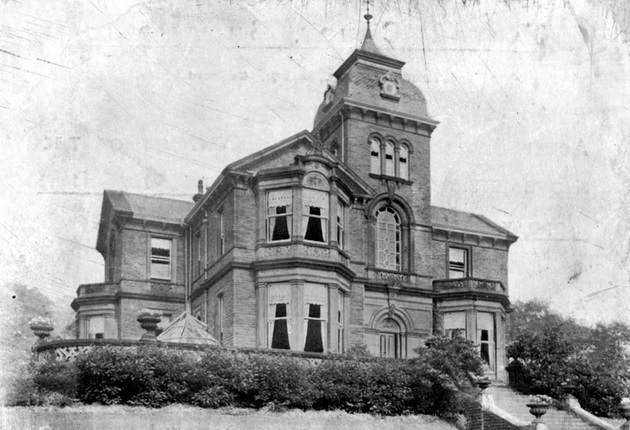
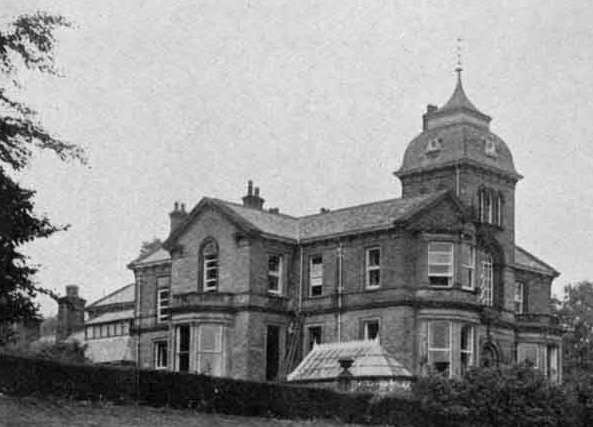
The house was built on land sold by William Spooner, a member of a farming and landowning family with large holdings in Ecclesall, Crookes, Nether Hallam and Bradfield, in 1865. Three years later, John Henry Andrew (1824-1884), steel manufacturer, built an Italianate mansion here, one of many ‘brass castles’ that sprung up in this pleasant part of town.

Photograph by HughieDW on Flickr

He was one of Sheffield’s self-made men, head of the Toledo Works (J.H. Andrew and Co), and rose from the ranks of labour. Early in life he was apprenticed to Wilson & Sothern, in Doncaster Street, and when he was 22, became a partner in Richard Graves & Son, in Snow Lane, remaining there for fifteen years. For the next ten years, up to 1870, he carried on his steel works in Malinda Street, then removing to Toledo Works which he had built at Neepsend.

A former member of the Town Council and Cutlers’ Company, he declined the office of Master Cutler on account of ill-health, that also forced him to relinquish duties to his three sons. He died very suddenly from asthma on his return from Bridlington in 1884, by which time, he’d already sold Tapton Court and was living at Oak Lawn, on Oakholme Road.

Photograph by Picture Sheffield

John Henry Andrew sold Tapton Court to Henry Steel in 1879. He was a man who had made his fortune as a bookmaker on the racecourses of England, a close friend of Lord Rosebery and King Edward VII, then Prince of Wales.

This larger-than-life character made a huge success of Steel, Peech & Tozer, subsequently merged with other steel firms to become United Steel Companies of which he became chairman.

In later years, J.G. Graves, that great Sheffield entrepreneur and benefactor, revealed that the Prince of Wales often visited Tapton Court, perhaps secretly, to see his friend. His ascendency to King curtailed their friendship and they next met in 1905 when Edward opened the University of Sheffield. “He recognised Henry, left the procession, and shook him heartily by the hand.”

Henry Steel

After Henry Steel died in 1916, a newspaper advertisement spelled out the magnificence of the Victorian house.

“A well-appointed stone-built residence of attractive appearance surrounded by full-grown forest trees. The property is situated at an elevation of about 600 feet and is clear of the low-lying fogs which so often envelop the city.

“The contents of the property comprise lounge hall, three large reception rooms, smoke room, billiard room, nine principal bedrooms, three attics, two bathrooms and excellent offices, with servants’ hall.

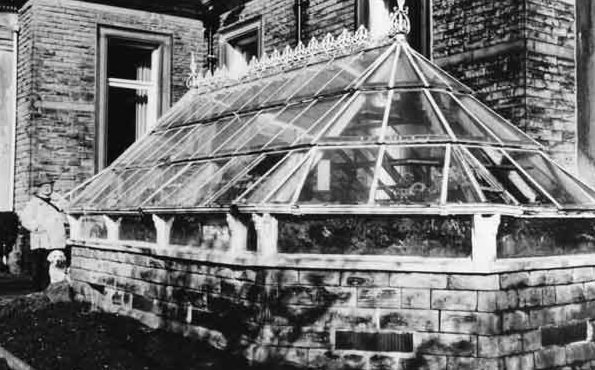
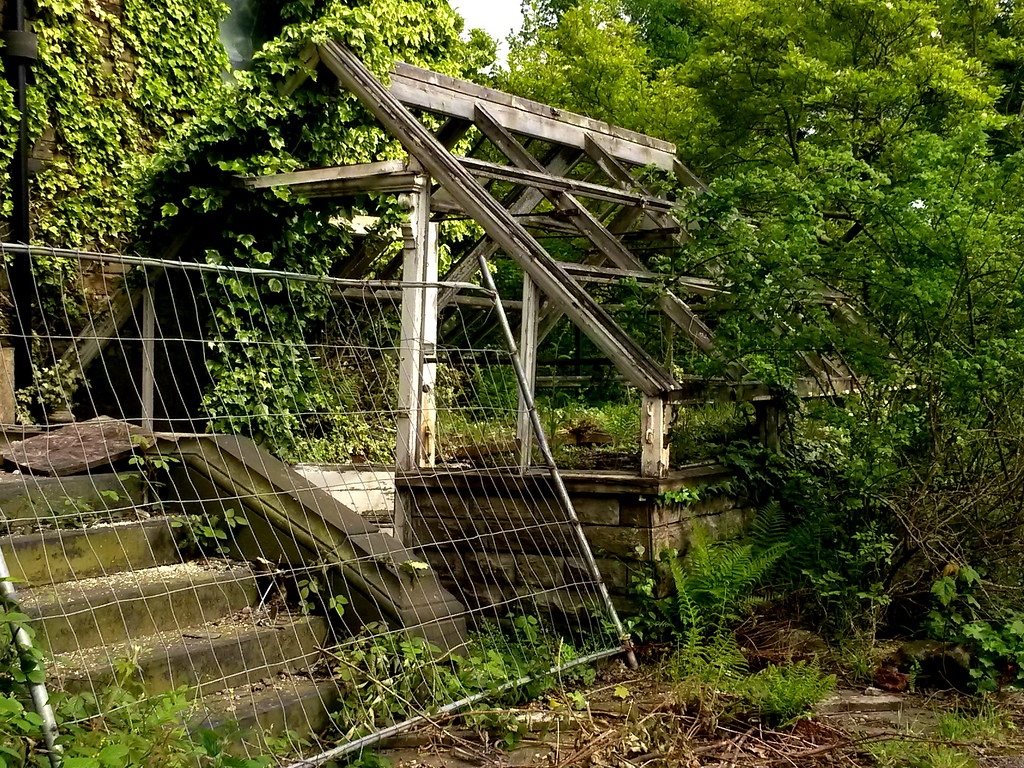
“Well laid-out grounds, with entrance lodge, tennis court, fishpond, large sloping lawn, kitchen garden, paddock, stables, garage for two cars, and extensive glass-houses replete with full bearing vines and peach trees.”

Amongst the first items to be sold were the contents of the greenhouses: carnations, cypripediums, heliotropes, and maidenhair ferns.

Photograph by HughieDW on Flickr

The house contents were sold from a marquee in the grounds, the four-day sale including cabinet furniture, principally made by Manuel and Son, silver and electro-plate, books, linen, glass and china. The item that attracted most interest was a trophy, the Brighton Cup 1874, staged with figures, stags and hounds and sold to a Sheffield gentleman for 72 guineas.

Tapton Court  wasn’t sold until 1918 and fell into the hands of Albert Victor Derry (1872-1932), another man airbrushed from Sheffield history.

Albert Kochs, as he was known, was born in Manchester, the son of William Edward Kochs, of German extract. He was educated at Cardiff and South Wales University, and then articled to his father and for a time was placed at the works of the Humboldt Engineering Company of Cologne, Germany.

Later becoming a partner in W. Edward Kochs & Company, consulting engineers, of Foster’s Building, Sheffield, he set up in 1901, along with Charles Rudolph Altenhein and Dr Heinrich Koppers, a company to build coke oven plants across Britain and overseas.

Photograph by HughieDW on Flickr

During World War One, Koppers Coke Oven By-Products was taken over by the Government (Altenhein was detained during the war), and afterwards Derry bought the company back and called it Koppers Coke Oven Company, its biggest order being for the Gas Light and Coke Company, London.

Unsurprisingly, the war had seen Albert adopt his mother’s maiden name and was hereafter known as Albert Derry.

In 1917, Derry started British Tar Products, at Irlam, Manchester, with offices on Glossop Road, and shortly afterwards started the Coal Products and Derivates Company, as well as Senrac, for the purpose of making concrete blocks for houses, several examples of houses built from these were found on the Manor estate. Along with Koppers, Derry also formed the Building Engineers’ and Contractors’ Company, which erected several  buildings, including Rawmarsh Public Baths.

In 1931, Albert, and his wife, Olga, extremely rich by now, and with another house in Italy, left Tapton Court and moved to Wick House, Bristol. However, within twelve months Albert collapsed and died in Cairo while visiting his wife’s birthplace.

In part two of the story of Tapton Court, we’ll look at the next stage of the house’s history, and its role looking after nurses from the Royal Hospital.

Photograph by HughieDW on Flickr

NOTE: A planning application was submitted in December 2020 to convert Tapton Court into apartments.

Categories
Buildings People

Sugworth Hall and Boot’s Folly

Photograph by Blenheim Park Estates

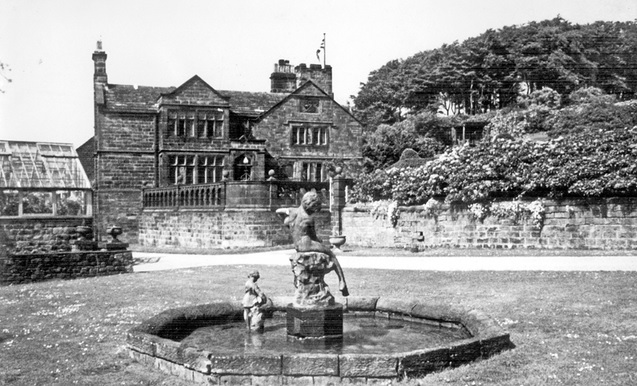
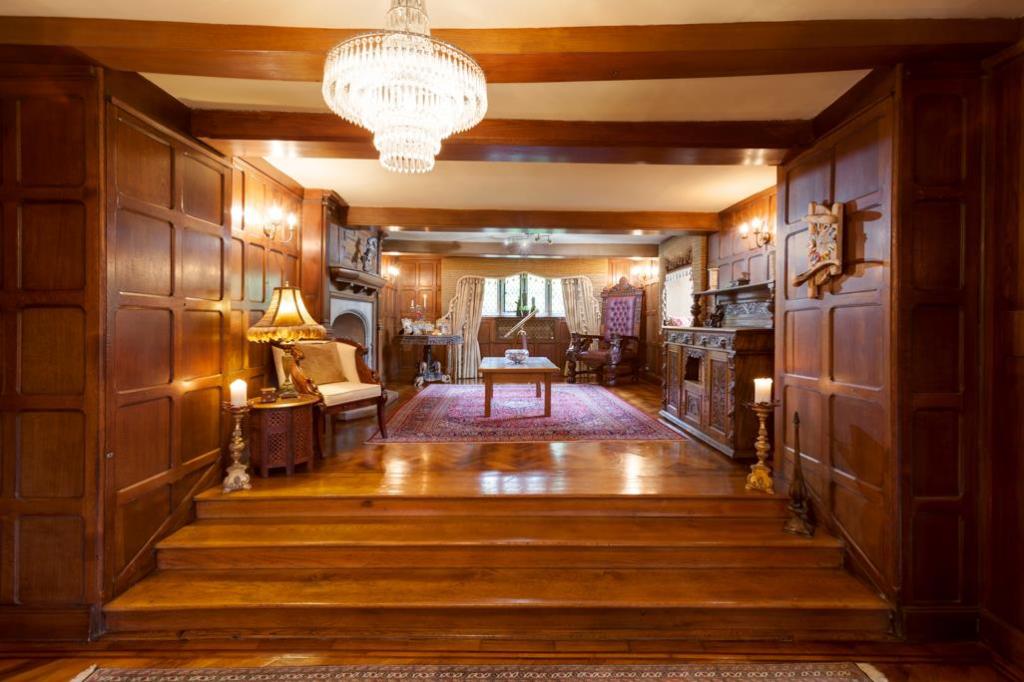
When Sugworth Hall, at Bradfield Dale, was on the market last year, it was offered in the region of £1.5million. Not a bad price considering the Grade II listed country house is in beautiful Sheffield countryside, and it has a long history.

According to experts, this was once a farmhouse dating to about 1535, later listed in the will and testament of Robert Hawksworth in the 1560s. Passing down the family it eventually belonged to the Gould family and was extended in the late 19th century.

By this time, Sugworth Hall was in the possession of Charles Henry Firth, also of Riverdale House at Ranmoor, son of Thomas Firth, a steel manufacturer, whose company would eventually become Firth Brown. After he died in 1892, the house passed to his widow and eventually put up to let as a substantial family residence or shooting box.

Photograph by Picture Sheffield

It was subsequently bought by Philip Henry Ashbury of Mushroom Lane, managing director of Philip Ashbury and Sons, Bowling Green Street, silver and electro-platers, who used it as a “delightful summer residence” until his death in 1909.

It was inherited by his son George W. Ashbury, a man who soon made headlines by accusing two of his servants of stealing beds, bedding and towels and was promptly sued for libel, his accusations costing him £15 in damages.

Photograph by Picture Sheffield

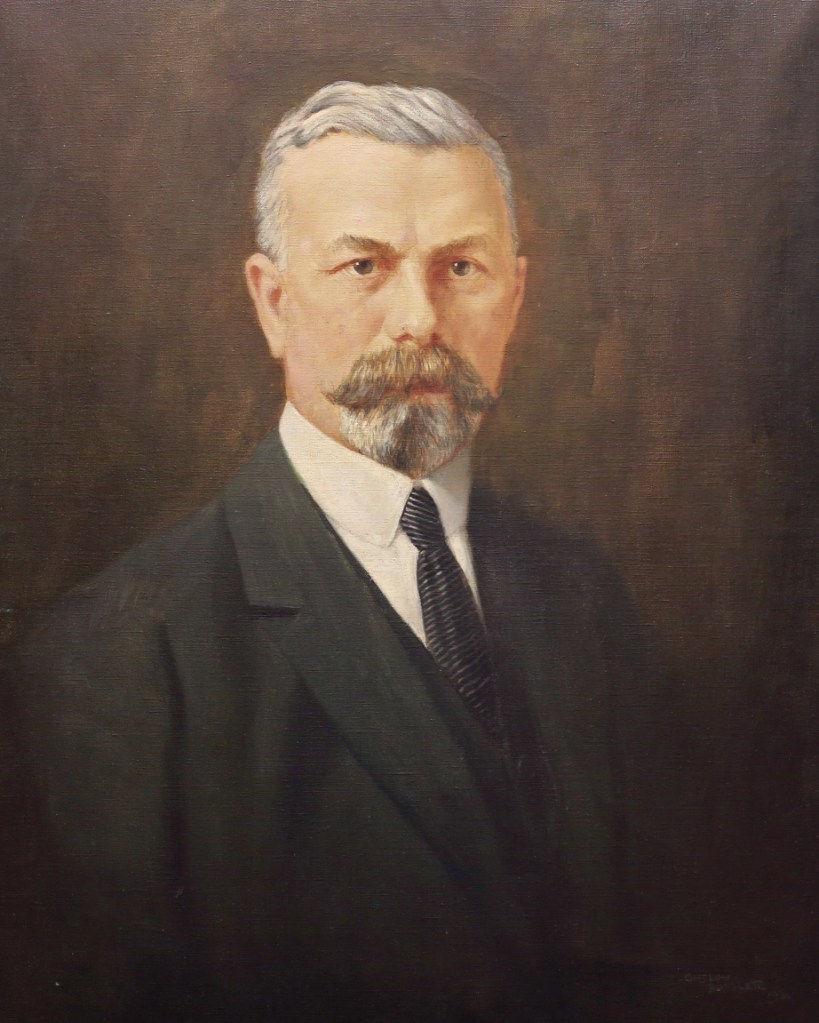
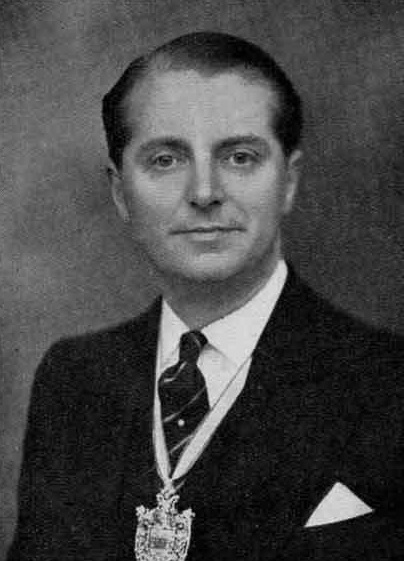
The house was briefly occupied by Alfred Percy Hill, of the firm of J and P Hill, engineers, and later Russian Consul for Sheffield, and by the early 1920s it was owned by Charles Boot (1874-1945), son of Henry Boot, founder of the famous Sheffield construction firm, and notable for creating Pinewood Studios.

Charles Boot

It was Charles Boot who made significant alterations and extensions to the house, with a tower and battlements, probably the work of architect Emmanuel Vincent Harris, the man who designed Sheffield City Hall.

The work is said to have taken place around 1930, about the time Vincent Harris was working on Sheffield’s new civic building, but based on the architect’s workload, it seems more likely the alterations were made between 1926-1927.

Photograph by Blenheim Park Estates

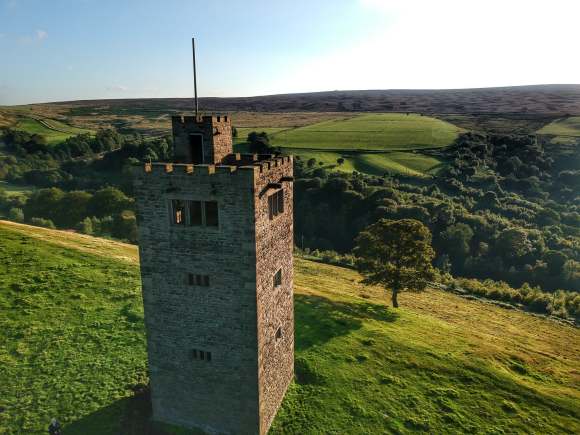
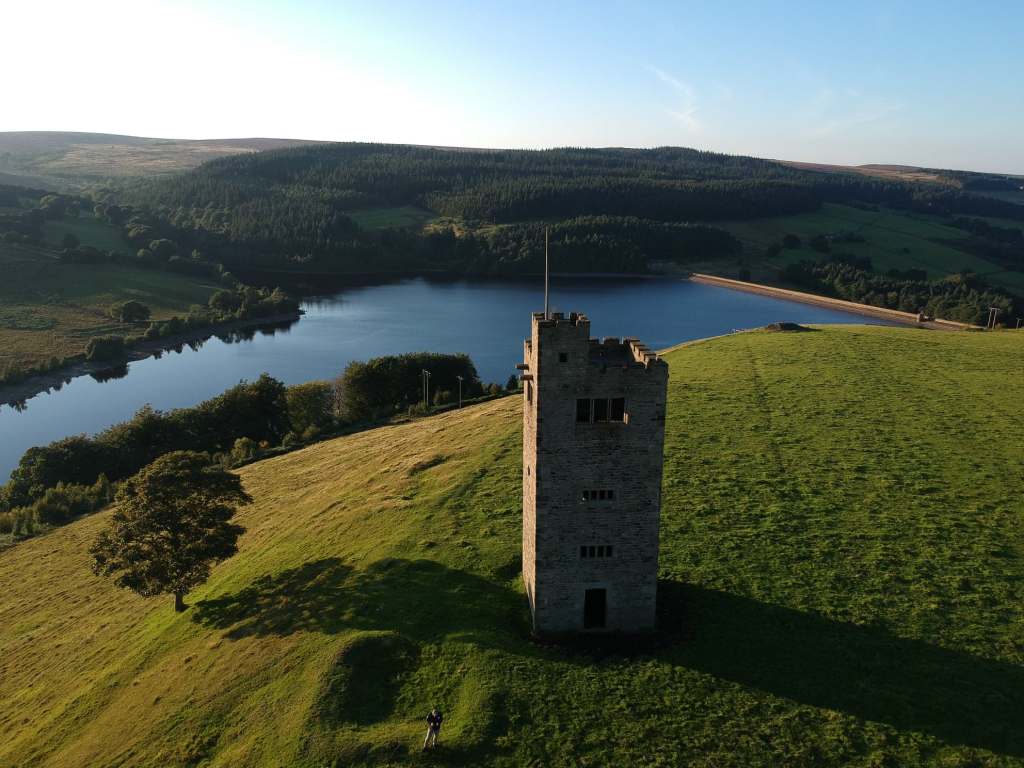
Boot’s wife, the splendidly named Bertha Boot, died at Sugworth Hall after a long illness in 1926, giving rise to speculation that an isolated tower, Boot’s Folly, built in 1927, about 330 yards to the north, was constructed so that he could see the graveyard at High Bradfield where she was buried.

Another story suggests that Boot’s Folly was built to provide work for Sugworth Hall’s workmen during the Depression, but more likely it was built as an observation tower for Boot and his guests to view surrounding countryside.

Whatever the reason, Charles Boot remarried five months later, to Kate Hebb, at St Peter’s Church in London.

Photograph by Brian Mosley

Charles Boot bought Thornbridge Hall, near Bakewell, in 1930, declaring that this would be his main residence, and that Sugworth Hall would be maintained as a shooting box instead.

By 1934, Boot had sold Sugworth Hall to Brevet-Colonel William Tozer, of the Hallamshire Battalion of the York and Lancaster Regiment, the grandson of Edward Tozer, one of the founders of Steel, Peech and Tozer, steel manufacturers.

Photograph of William Tozer by Picture Sheffield

Having lived for fifteen years at Grange Cliff, Ecclesall, Tozer became Master Cutler in 1936, the ceremony highlighted by Anthony Eden, Secretary of State for Foreign Affairs, and later Prime Minister, coming to stay at Sugworth Hall.

The Tozer’s left Sheffield for Buckinghamshire in 1939 and since then Sugworth Hall has survived quietly in Bradfield Dale.

Boot’s Folly has fared less well. The 45 feet high tower, 20 feet square, once had a furnished wooden panelled room at the top, connected by a spiral staircase, but has sadly become ruinous over time. (The staircase allegedly removed after a cow ascended the steps and became stuck).

Photograph by Brian Mosley

Categories
Buildings Companies People

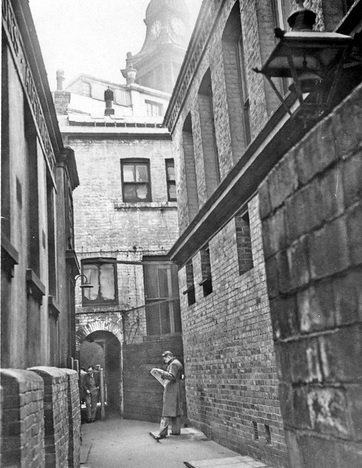
Sheffield Telegraph

Photograph by Picture Sheffield

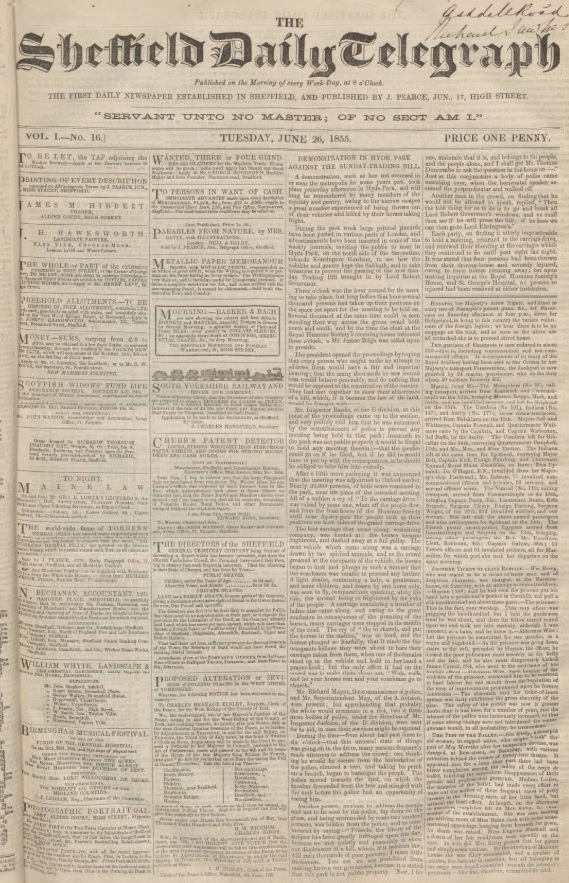
In 1855, soon after the abolition of newspaper stamp duty, that had set newspaper prices at 5d to 7d, a dour down-at-heel Scotsman called Mr Benson turned up in Sheffield. After looking the town over, he called at the offices of Joseph Pearce Jnr, a printer and bookseller on High Street, and told him that he had people in London and Manchester who proposed starting a newspaper in Sheffield.

Joseph Pearce was convinced, and Benson recruited shop canvassers from street corners to obtain subscribers at 1s 6d for a month’s issues. The campaign netted a small fortune, and the next day Mr Benson arrived at the office wearing a brand new hat a new pair of wellingtons.

Photograph by The British Newspaper Archive

The first issue of the four-page Sheffield Daily Telegraph appeared on June 8, 1855, distributed by Benson’s messengers on the back of a wheelbarrow.

Ten days later, Mr Benson, the comic-faced Scot disappeared and was never heard of again. His promised capital was so far behind him that it never caught up.

A man sent to London to telegraph back news milked from the national papers found himself out of pocket, and unable to ask for help, because Benson had failed to mention his colleague back in Sheffield. On his last night in London, the representative of the ‘country’s first great provincial daily’ had to split his journey home.

Joseph Pearce, left with the fallout, met his obligations to initial subscribers and decided to carry on. He arranged to take Reuter dispatches from the Crimean War, a story that was filling everybody’s minds, and sales started to grow.

There were already several weekly newspapers in Sheffield, all of which ignored this ‘upstart’, but when Sheffield writers gathered around the Sheffield Daily Telegraph, it burst this bubble of complacency, and one of them, the Sheffield Independent, was forced to publish daily as well.

Despite the rising popularity of the paper, published at 8am every day, it was a financial struggle for Joseph Pearce, and after nine years he decided to make way for younger blood.

Photograph of Editor’s office by Picture Sheffield

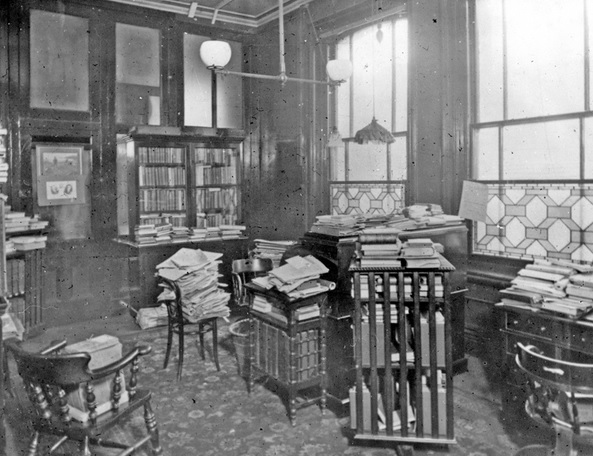
In 1864, Frederick Clifford and William Christopher Leng arrived, the latter becoming editor, and relocating to Aldine Court, off High Street.

Under these two, the Sheffield Daily Telegraph aimed to popularise the Conservative Party cause amongst the working class, and Leng’s trenchancy and personal courage during the trade union outrages in the 1860s enhanced the newspaper’s prestige.
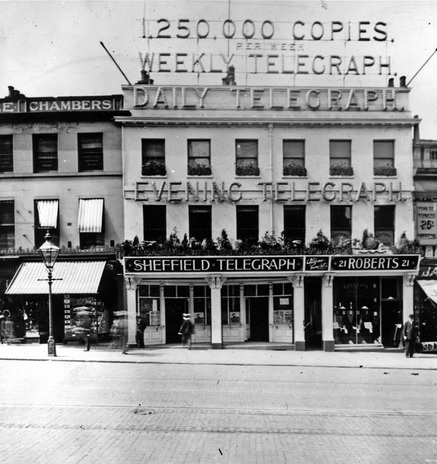
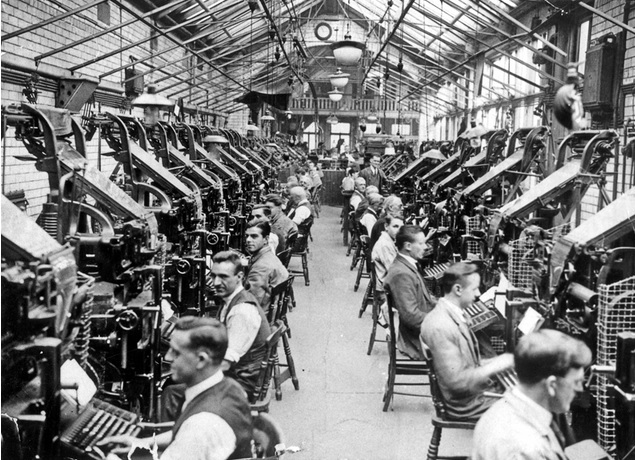
By 1898 it was selling 1.25 million copies a week, along with its sister publications, the Sheffield Weekly Telegraph, with articles and serialised fiction, and the Sheffield Evening Telegraph.
In 1900, Winston Churchill became South African war correspondent for the Sheffield Daily Telegraph, as well as the Morning Post, and the January issue carried his story in four columns of his capture by the Boers.

Photograph by Prime Location

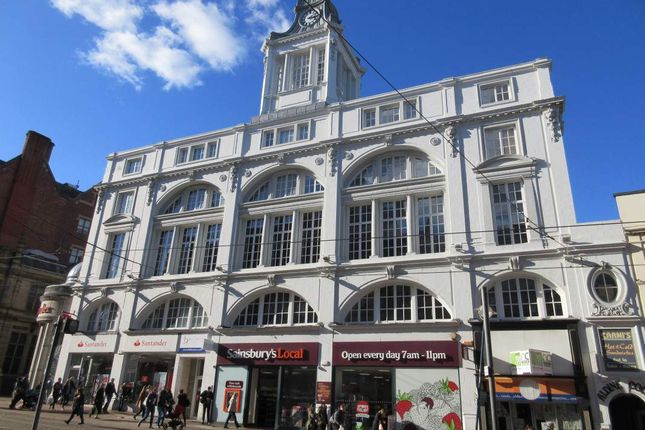
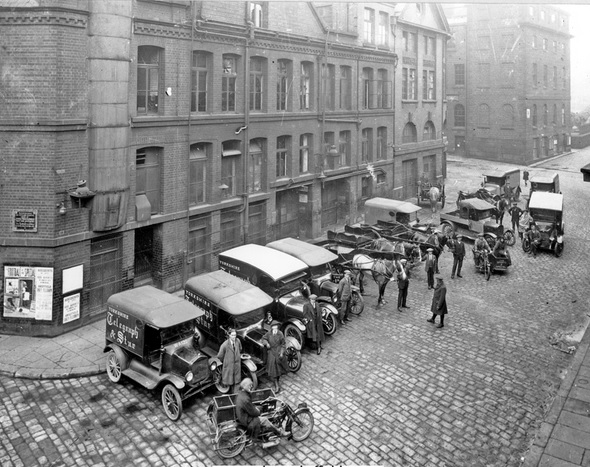
Between 1913 and 1916, a new front to the extensive old buildings of the editorial and printing departments at Aldine Court, was built. Constructed in English Renaissance-style, it was designed by Edward Mitchel Gibbs, and still dominates High Street today. (It was eventually replaced with modern buildings on York Street).

Photograph by Picture Sheffield

The Clifford-Leng ownership ended in 1925, bought by Allied Newspapers, controlled by William Ewart Berry, Gomer Berry and Sir Edward Mauger Iliffe, which had been systematically buying up provincial newspapers, though chairmanship was retained by Frederick Clifford’s son, Charles, who actively shared management of the paper until his death in 1936.

Sir Charles Clifford had arrived in 1878 and ten years later was instrumental in the purchase of the Sheffield Evening Telegraph’s rival, the Evening Star, a name familiar to us now as the Sheffield Star.

Photograph by Picture Sheffield

In 1931, Allied Newspapers bought the rival Sheffield Independent, printing both separately, but both papers started losing ground to the national press and at one time the loss of both seemed possible.

The Allied Newspapers partnership was dissolved in 1937, each partner needing a raft of holdings to pass onto their heirs, with James Gomer Berry, 1st Viscount Kemsley, taking control of the Sheffield operation, briefly dropping the word ‘Daily’ from Sheffield Telegraph, and amalgamating it with the Sheffield Independent in 1938 to become the Sheffield Telegraph and Daily Independent, with a broader policy embracing the fundamental principles of both newspapers.

During the first years of World War Two, Kemsley Newspapers, as it had been renamed by Lord Kemsley, became the Telegraph and Independent, commanding world correspondents of Kemsley newspapers, and across the British Isles.

The newspaper eventually became the Sheffield Telegraph and Independent, subsequently the Sheffield Telegraph, and was bought by Roy Herbert Thompson, 1st Baron Thomson of Fleet, in 1959.

Photograph by Picture Sheffield

In 1965, it was briefly renamed the Sheffield Morning Telegraph, then the Morning Telegraph, continuing a long tradition of producing excellent news correspondents .

Notable staff across its history have included Sir Harold Evans, who was later Public Relations Officer to Prime Minister Harold Macmillan, and head of ITV News; author Peter Tinniswood; novelists John Harris and J.L. Hodson; cartoonists Ralph Whitworth and J. F. Horrabin; critics George Linstead and E. F. Watling; sports writers John Motson, the BBC football commentator, Lawrence Hunter, Peter Keeling, Peter Cooper, Frank Taylor (who later survived the Munich Air crash of 1958), and Keith Farnsworth.

Other editorial staff members have included Keith Graves, who was later with the BBC and Sky TV as a much-travelled reporter; Peter Harvey, a long-serving feature writer who was awarded the MBE in 2002; Geoffrey L. Baylis, who in later years was honoured for services to journalism in New Zealand; Barry Lloyd-Jones, Brian Stevenson and Clive Jones, who were news editors; Leslie F. Daniells and Frazer Wright were long serving industrial reporters; Alf Dow, a news editor who was later the company’s first training officer, and ended his career in public relations at Newton Chambers; Richard Gregory, who became a leading figure at Yorkshire Television and was later chairman of the Yorkshire Bank; George Hopkinson; Jean Rook, who was later a women’s writer with the Daily Express; and Will Wyatt.

Photograph by Hold the Front Page

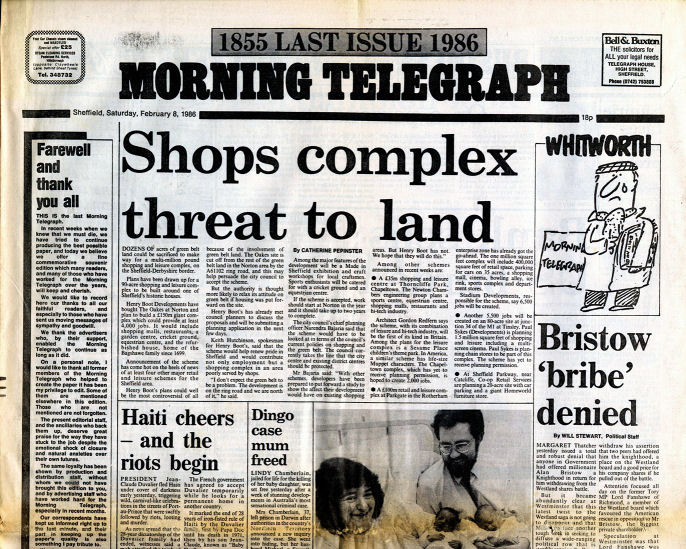
The Morning Telegraph was sold (along with The Star) to United Newspapers in the 1970s, ceasing production in 1986.

The collapse of the newspaper was attributed to moves by estate agents to move advertising away from the highly-popular Saturday edition, and set up what turned out to be an unsuccessful rival property guide.

In 1989, the Sheffield Telegraph was relaunched as a weekly and continues to this day, although now under ownership of JPI Media, formerly the ill-fated Johnston Press.

Categories
Buildings

Clifford House

Photograph by St Luke’s Clifford House

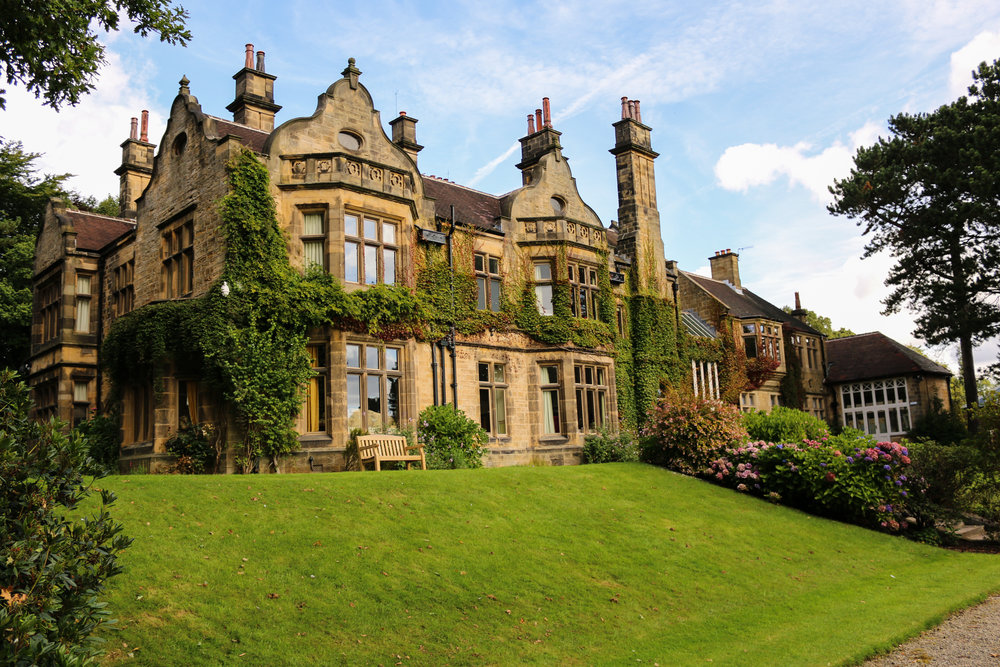
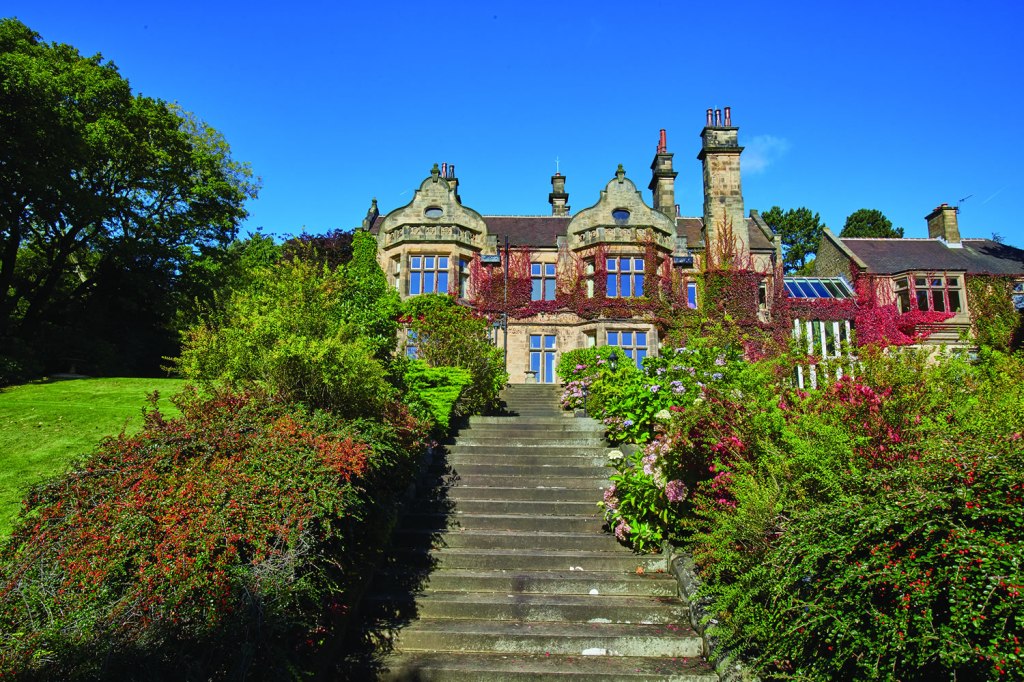
Clifford House is a former mansion on Ecclesall Road South, once the home of Sir Charles Clifford, proprietor of the Sheffield Telegraph and Star, and these days owned by St Luke’s Hospice.

However, it is only in modern times that it has been called Clifford House.

When the house was built for Denys Hague in 1896 it was called Whirlow, named after the well-appointed district in which it stands.

The house was well-equipped with a large hall, drawing-room, dining and morning rooms, kitchen, butler’s pantry, nine bedrooms, bathroom, WC, and four cellars, all illuminated with electric light. Outside was a four-stall stable, harness room and four acres of grounds.

Photograph by Welcome to Yorkshire

Denys Hague was a leading figure in the South Yorkshire coalfields and member of a well-known family. He was the second son of Charles Hague, of The Broom and Ferham House, in Rotherham, and a prominent coal-owner.

Celebrated in industrial circles, Denys was a director of the Hickleton Main Colliery Company and Manvers Main Colliery Ltd at the time of his death in 1929, and for a long time had been a director of the Midland Iron Company in Rotherham.

His brother, Ernest Hague, another coal-owner, had lived at Castle Dyke at Ringinglow, and died a few years before.

Denys was a keen fisherman, a member of the River Noe Fishing Club, and was a lover of art, with a fine collection hanging at Whirlow.

The value of the collection was only realised when 52 oil paintings – including works by Daubigny, Corot, Boudin, Le Sidaner, Lépine, Harpignies, Maris, Constable, Jacques, Ter Meulen, Collier, Monticelli, Landseer, Van Marcke and Cossaar – went on display at the Mappin Art Gallery in 1907, and at Liverpool’s Walker Gallery in 1913. Most of these works were auctioned at Christies in 1923.

Denys married Frances Davy, third daughter of David Davy, founder of Davy Bros, a famous Sheffield engineering company.

In 1907, the Hague’s decided to leave Sheffield and move to London. Frances Hague died in 1923 and Denys died at the Hotel Russell in Russell Square in 1929. (It is now known as the Kimpton Fitzroy London Hotel).

Photograph by Picture Sheffield

Whirlow was put up for sale, probably rented for a while, and eventually sold to Charles Clifford in 1915.

The vast grounds were regularly used for entertaining, his newspaper staff invited to summer garden parties, as were members of Clifford’s Conservative Association. He also built a full-size cricket pitch where matches were held between local clubs. As well as the house, Charles Clifford also owned a farm on Little Common Lane.

Charles Clifford died in 1936, his widow, Lady Alice Clifford staying on until her own death in 1941, at which time Whirlow was requisitioned by the Government for the remainder of the Second World War.

Afterwards, it was acquired by a private steel company which became part of British Steel Corporation (BSC) on nationalisation.

In 1968, BSC donated some of the land behind Clifford House (as it was now known) to St Luke’s Hospice which built a new facility on Little Common Lane and opened in October 1971.

In 2000, BSC sold the house and land to Hugh Facey, founder of Gripple, for £1.05million, who later built a new home next door, selling the mansion to St Luke’s in 2016, and reuniting the house and land for the first time in 48 years.

The house was altered and refurbished by D&P Construction of Wath-upon-Dearne to plans by the Hooley Tratt Partnership.

Clifford House is now used for patient drop-ins, activities, practical support and advice, relaxation and well-being, as well as available to hire for events and conferences.

Photograph by St Luke’s Clifford House