Sheffield is a neighbourhood in Lynchburg, Virginia.
Continuing our look at places called Sheffield around the world.
In the United States there are fourteen locations named Sheffield. One of the smallest is a neighbourhood of Lynchburg, an independent city in the Commonwealth of Virginia. Located in the foothills of the Blue Ridge Mountains along the banks of the James River, there doesn’t appear to be any connection with our steel city, but Lynchburg is known as the “City of Seven Hills” or the “Hill City.” Sound familiar? Unfortunately, the Sheffield district looks incredibly flat.
Lynchburg was named for its founder, John Lynch, who at the age of 17 started a ferry service across the James River in 1757. Tobacco and iron were the chief products of early Lynchburg and extensive use of Lynch’s ferry system on the James River resulted in it becoming one of the largest tobacco markets in the US. In the 1860s, Lynchburg was the only city in Virginia that was not recaptured by the Union before the end of the American Civil War.
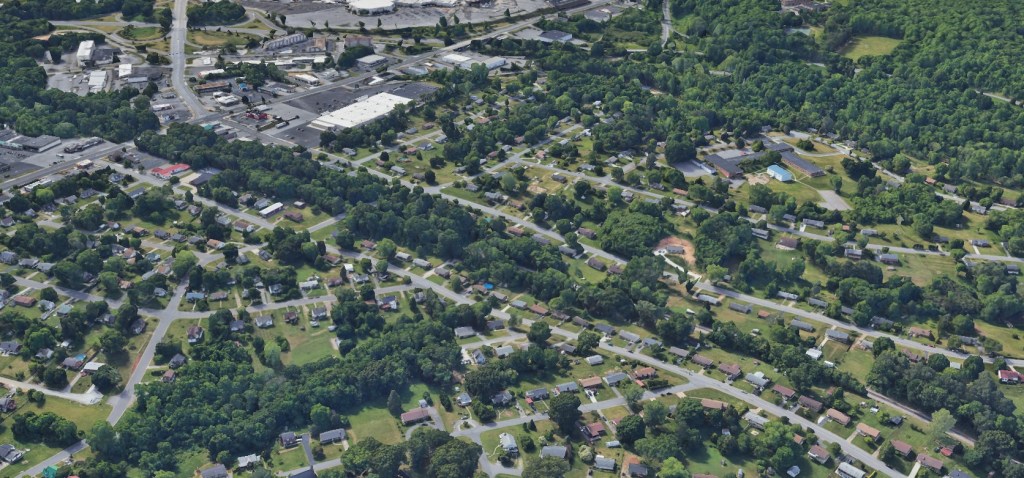
Houses, shops, and eating-houses line the roads of modern Sheffield and perhaps its most famous building is Sheffield Elementary School.
Photograph: Sheffield Elementary School, Lynchburg, Virginia
I know somebody who once walked into the Cannon public house on Castle Street and was smashed in the face with a baseball bat. It was a case of mistaken identity, but he never went back.
When the police shut it down in the mid-2000s it said: “The Cannon pub has for many years now attracted shoplifters, people who take drugs and drug dealers. It smells of cannabis as you walk past. In short, it is a den of iniquity.”
Sadly, this was the end of a drinking establishment that could be traced back to 1774, when Castle Street was called Truelove’s Gutter (more about in a future post).
It eventually became Castle Street and the Castle Wine Vaults survived until the early 1900s when Sheffield Corporation decided to widen the narrow street. It purchased ninety-three square yards of freehold land from William Stones, the brewer, and the old drinking house was demolished.
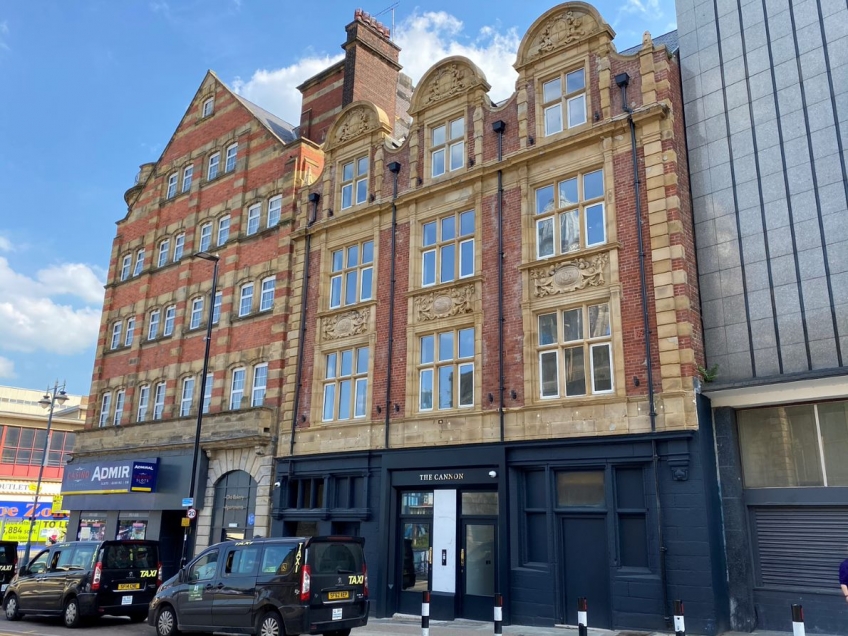
Permission was granted for the building of a new hotel to replace the one which had come down, and construction started in 1902-1903. It was designed by James Ragg Wigfull (1864-1936), once articled to Flockton and Gibbs, who had set up his own architectural practise in 1892.
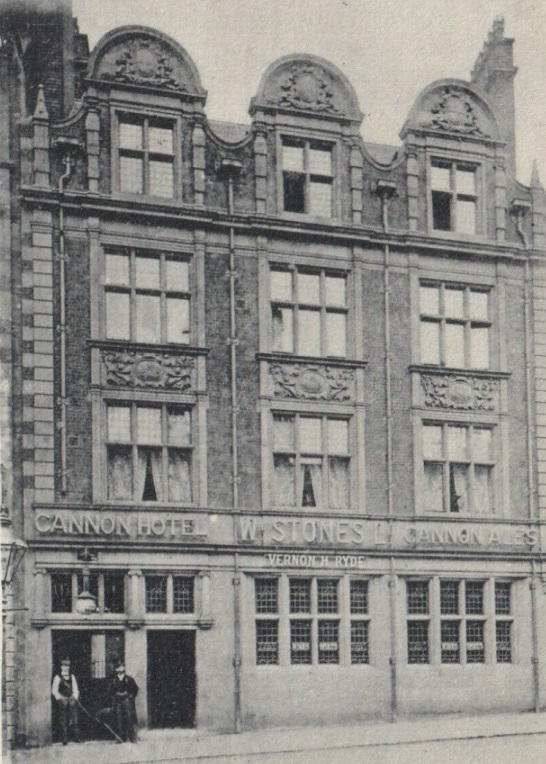
Built in Tudor Renaissance style, with three big dormers, the windows were flanked by tapered pilasters and topped by segmental pediments. There were also ornate stone panels including one of the brewery’s cannon emblems, and the company initials.
The ‘up-to-date popular professional lounge’ had two bars, one on the ground floor and another upstairs, as well as hotel accommodation above.
The Cannon Hotel did not get off to the best start.
On Christmas Eve, 1903, days before it was due to open, it suffered a gas explosion. A barman, plumber and painter entered a small store room with a light. Gas ignited and there was a flash accompanied by a loud bang. The barman, Ernest Emmerton, received the full force of the flame and severely burnt his face, head, arms, and neck. Fortunately, there was no damage to the building.
The likelihood is that the top-hatted gentleman is Vernon H. Ryde, the first landlord of the Cannon Hotel on Castle Street.
The first landlord was Vernon H. Ryde, a theatrical man, who had managed the Empire Theatre, Oldham, and Empire Palace, Holloway, and had arrived in Sheffield to manage the Theatre Royal in 1899.
In December 1903, Ryde ended his forty year association with the stage and accepted managership at the Cannon Hotel.
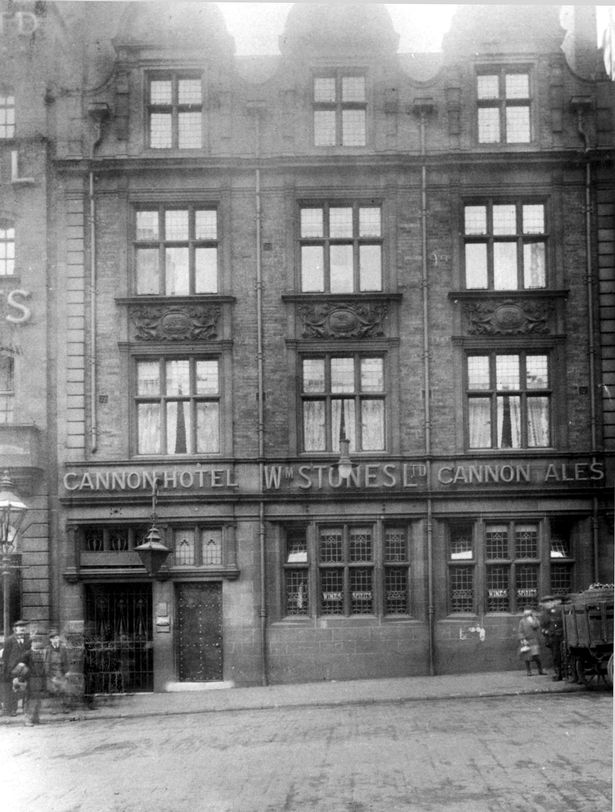
From heights of respectability, the Cannon Hotel’s fortunes steadily declined, and despite its proximity to the police station and law courts it was the domain for villains and thieves.
Stones Brewery (William Stones Ltd) was founded in Sheffield in 1868. Photograph: Picture Sheffield
When the closed pub changed hands a ‘restrictive covenant’ was placed on it. The restriction stated that the owner was: “Not to use the property, or any part of the property, as a public house, or bar, or off-licence, or for the manufacture of alcoholic beverages or for the sale of alcoholic beverages.”
It was bought for £245,000 in 2018 by a company called Aestrom Limited (the same developer that bought the Old Town Hall) but it collapsed because of the pandemic.
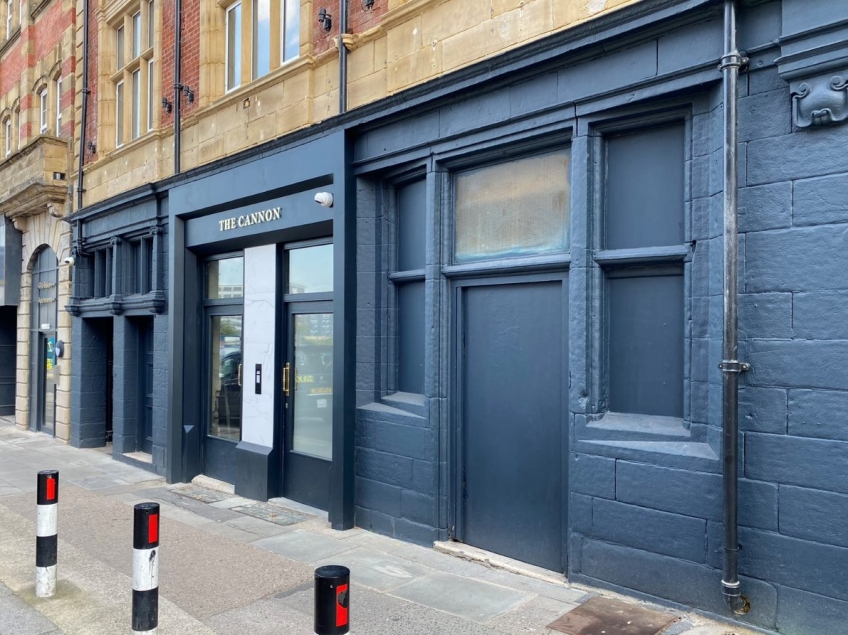
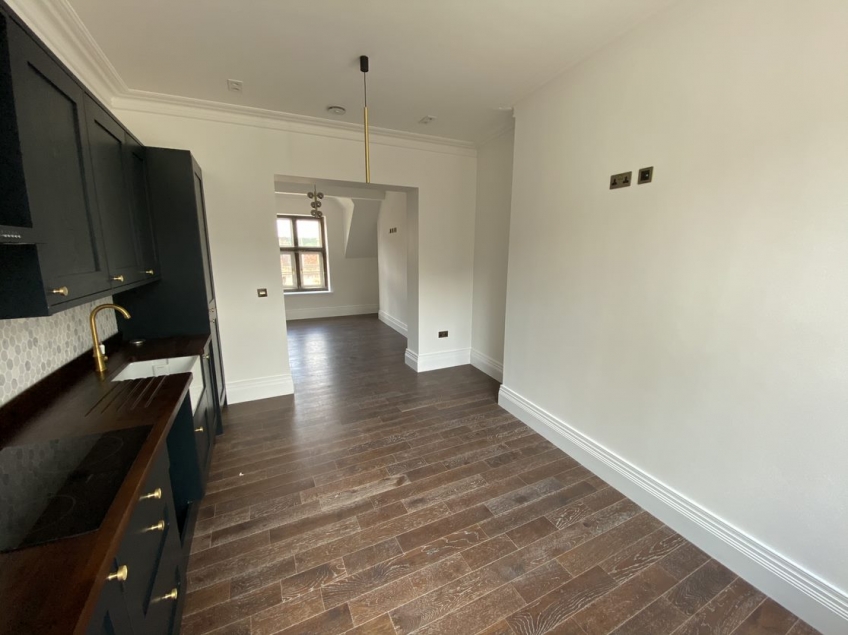
It has now been converted into luxury flats upstairs with space for two shops on the ground floor. The building, renamed The Cannon, will go to auction next month with a guide price of £575,000.
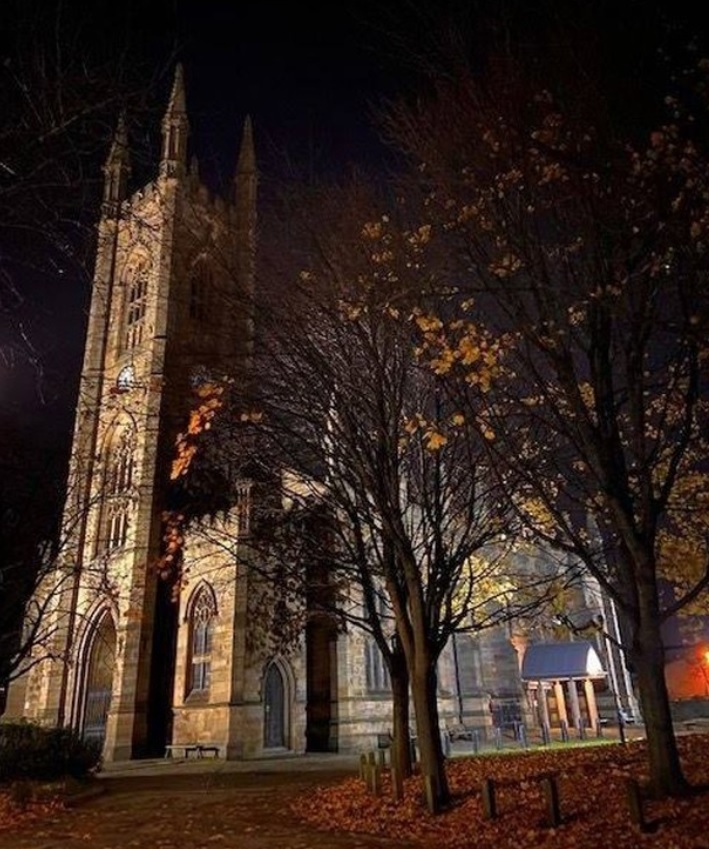
Autumn leaves are beautiful! God’s blessings are breath-taking! In the shadow of Bramall Lane.
It has seen joy, laughter, sadness, and tears. Life and death. And has witnessed murder more than once. There were those who tried to set it on fire, and German bombs virtually blew off its roof.
St Mary’s Church is one of three churches built in Sheffield under the Church Building Act 1818 (the other two being St George’s Church, Portobello and St Philip’s Church, Netherthorpe), and the only one still to be used as a church.
Built between 1826-1830 by Joseph Potter of Lichfield with the foundation stone laid by the Countess of Surrey. The construction was supervised by Robert Potter, his son, who resided in Sheffield during progress, and afterwards practised here as an architect for the rest of his days. It was consecrated on 21 July 1830 by the Archbishop of York.
Philip Hensher. Photograph: Roberto Ricciuti/Getty
If you want to read a novel about Sheffield, then a good place to start is Philip Hensher’s The Northern Clemency, an epic chronicle published in 2008.
It charts the relationship between two families, who live on opposite sides of a street in Sheffield in the 1970s – Malcolm and Katherine Glover and their three children; and their neighbours the Sellers family, newly arrived from London. It ends in the mid-nineties with one of the children running a trendy restaurant.
Philip Hensher (born 1965), is a novelist, critic, journalist and Professor of Creative Writing at Bath Spa University. Born in South London, he spent most of his childhood in Sheffield and attended Tapton School. Now he’s the author of several novels including The Mulberry Empire, Scenes from an Early Life, and A Small Revolution in Germany.
He says that The Northern Clemency came after years of thinking about school and childhood, and it brought forth details that he put into the book.
“I made a practice of getting up early, and thinking hard about long-lost places – a school, our house then, a favourite shop, a library. All sorts of details would emerge, even phantom smells. Then I started to write. I knew who the characters were, but not at first who they grew into.
“It took about three years to write. I wrote best when I was away from the novel’s sites. The most productive period was three weeks in Khartoum, Sudan. There was not a great deal to do in that great but strange city. In the mornings I got out one of the 10 school exercise books and one of the 20 blue Biros I had bought from a stationer in the Omdurman market, and wrote solidly, 2,000 or even 3,000 words.”
The novel contains one of the most unusual lines about Sheffield. “Dense Victorian villas dispersed through a verdant forest, breaking out like the frilled edges of amateur maternal pancakes into lavender moorland”
The book was short-listed for the Man Booker Prize in 2008.
Wiping his hands on his faded overalls, Joe loftily informed East Midlands Gas Board that he was tired of being a pipe fitter and would prefer to be a rock star. They handed him his cards with knowing northern smiles which said: ‘All right, lad – but you’ll be back.”
But John Robert ‘Joe’ Cocker, late of Sheffield Central Technical School (plumbing, bricklaying, and carpentry) never came back.
He became the biggest pop sensation in the United States. The Yorkshire lad who once connected gas stoves packed them in coast to coast with his gutsy, gravel voice.
“The force that flows from him so openly, places him as one of the top white blues singers around,” was how one critic put it in 1970.
He shuffled on stage in a scruffy pair of bleached jeans topped by a ragged grey sweatshirt. Hands contorting, eyes rolling, body jerking, he put on a fascinating display of frenzied agony.
By this time, it had been eight years since he had left the gas board and singing in Sheffield pubs. “The audiences were a young crowd, heavy drinkers and good scrappers. We didn’t make much money, but that didn’t matter. We only spent it on beer anyway,” he recalled.
In 1968, when Joe and his newly-formed ‘Grease Band’, were playing in London they were spotted by American promoter Dee Anthony who took them to the States.
A string of concert dates and TV appearances climaxed with his appearance at the Woodstock festival in August 1969, where his extraordinary performance of With a Little Help from My Friends became one of the unforgettable sequences from the ensuing movie of the event. It became number one in the UK and would later be used as the theme song in the US TV series The Wonder Years.
But he was impatient with the trappings of stardom.
“Sometimes I think I would like to go back to things just as they were, like in the old days in the Sheffield pubs with people enjoying themselves.”
Cocker’s musical career lasted more than 50 years with over 21 studio albums as well as a multitude of live ones, and in 1982 released Sheffield Steel, a nod to his home city. His hit singles included You Are So Beautiful, Woman to Woman, Unchain My Heart and the most successful of his career, Up Where We Belong, his duet with Jennifer Warnes (and the theme song to 1982’s An Officer and a Gentleman).
An American resident, Cocker bounced chart-topping success with drug and alcohol abuse. He died in Colorado from lung cancer, aged 70, in 2014.
Remember the furthest point (i.e. the antipode) is likely to be in the ocean somewhere, so when considering which point is the farthest away, you need to really look at cities.
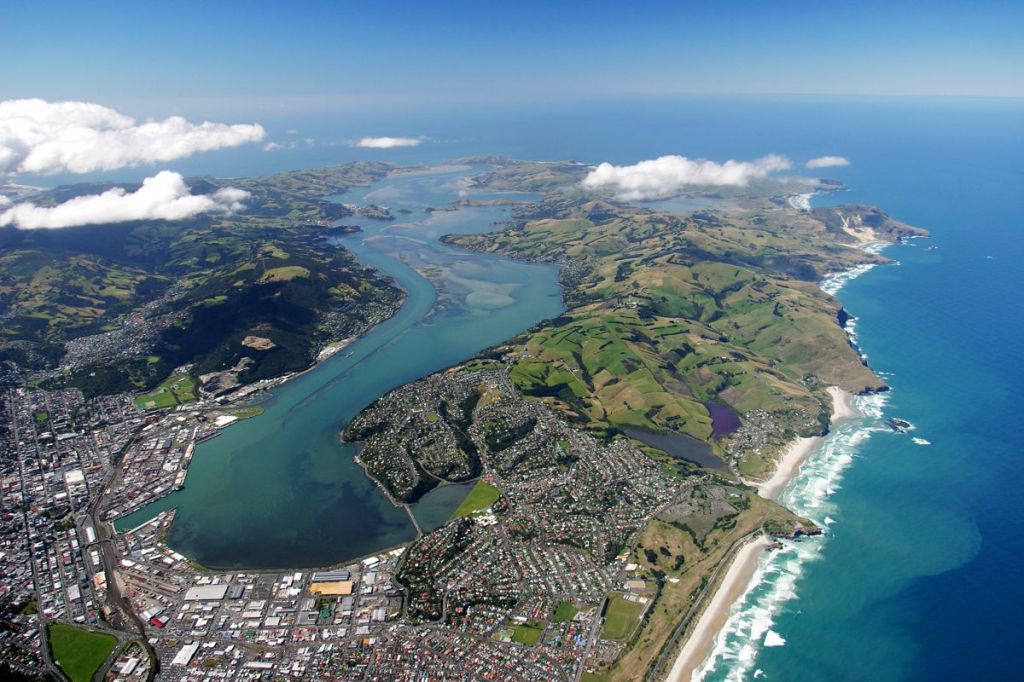
And so, the furthest city away from Sheffield appears to be Dunedin, the second-largest city in the South Island of New Zealand (after Christchurch), and the principal city of the Otago region, and is 18,994km away.
Known as the Edinburgh of New Zealand, Dunedin wears its Scottish heritage with pride. Surrounded by dramatic hills and at the foot of a long, picturesque harbour, Dunedin is one of the best-preserved Victorian and Edwardian cities in the Southern Hemisphere.
Sir Maurice Fiennes. A leader of British industry during the 1960s. His long association with Sheffield ended in 1969 but his family legacy is quite remarkable. Photograph: British Newspaper Archive
Sir Maurice Alberic Twisleton-Wykeham-Fiennes, (1907-1994), played an important part in Sheffield’s industrial history. He is forgotten, but his grandchildren are most certainly not.
Fiennes was the son of Alberic Arthur Twisleton-Wykeham-Fiennes, and great-grandson of Frederick Benjamin Twisleton-Wykeham-Fiennes, 16th Baron Saye and Sele.
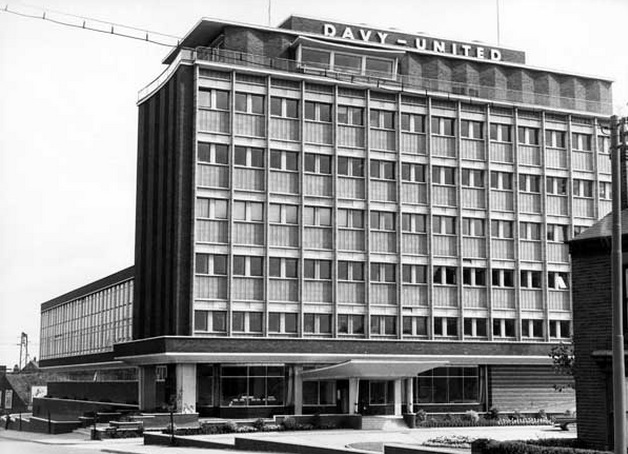
He was born at Brentford, educated at Repton, Derbyshire, and Newcastle-upon-Tyne, and in 1937 joined the United Steel Companies of Sheffield, taking charge of the forging and gun departments at Steel, Peech and Tozer. After a spell in Loughborough, Fiennes became Managing Director of Davy United Engineering at Darnall in 1945. He became Chairman of Davy-Ashmore, was knighted in 1965, and achieved success as a producer of high quality British steel until 1969.
Davy and United Engineering Company Ltd, Darnall Works, Prince of Wales Road, seen here in 1960. Photograph: Picture Sheffield
Amongst his other roles, Fiennes was a President of the Iron and Steel Institute, Chairman of the Steel Works Plant Association, was on the Committee on Overseas Credit of the Federation of British Industries, and a member of the Engineering Advisory Council of the Board of Trade. Locally, he was President of the Sheffield and District Engineering Trades Employers Association, an Assistant on the Cutlers’ Company, and Chairman of the Committee of the Sheffield Philharmonic Society.
He married Sylvia Finlay in 1932 and had five children – three girls and two boys – the oldest of which was Mark Twisleton-Wykeham-Fiennes (1933-2004), a photographer and illustrator, chiefly known for his architectural photographs, which appeared in Country Life.
Mark Fiennes. “The breadth of his work reflected his alertness to the eccentricities of mankind, his keen eye, his mischievous humour and his deep sensitivity.” – Ralph Fiennes. Photograph: HowOld
Mark Fiennes (third cousin to explorer Sir Ranulph Fiennes) married novelist Jennifer Lash in 1962 and had six children: Ralph, Martha, Magnus, Sophie, Jacob, and Joseph. They also fostered the 11-year-old Mike Emery.
Martha and Sophie are both film producers and directors, with Martha winning awards for her film Onegin and Sophie being director of arts documentaries. Magnus is a film and television composer whose work includes his sister’s Onegin and Chromophobia as well as television programmes like Hustle, Murphy’s Law, and Death in Paradise, and has also worked with Shakira, Pulp, Tom Jones and Morcheeba.
The two most famous of Mark and Jennifer’s children are Ralph and Joseph, acclaimed movie actors.
Ralph’s breakout role occurred in Schindler’s List, when he played Nazi concentration camp commandant Amon Göth. He’s since been in The Avengers, The English Patient, Red Dragon, and Voldemort in the Harry Potter series.
Joseph is no pale shadow, known best as William Shakespeare in Shakespeare in Love, as well as Elizabeth, Enemy at the Gates, Luther, The Merchant of Venice, and most recently in The Handmaid’s Tale. He also starred as Edward II at the Crucible Theatre in 2001.
Joseph’s twin brother, Jacob, is Director of Conservation at the Holkham estate in Norfolk, and foster brother Michael Emery is an acclaimed archaeologist.
Ralph Nathaniel Twisleton-Wykeham-Fiennes was born at Ipswich in 1962.
Joseph Alberic Twisleton-Wykeham-Fiennes was born at Salisbury in 1970.
Last week, a top Sheffield businessman urged Sheffield City Council to work fast to secure a £100m proposal to convert the vacant John Lewis department store into ‘Sheffield Rules’ – a museum celebrating the city’s roles in the origin of the game, have-a-go football experiences with celebrities, community pitches on the roof, and bars and restaurants on the ground floor opening onto Barker’s Pool.
The building would be revamped with ‘football architecture’ including a central column to represent a halfway line and a tunnel leading to the roof. The proposal could also see the John Lewis car park replaced by a residential tower.
Patrick Abel, corporate finance partner, at Hart Shaw Chartered Accountants and Business Advisers, compared delaying the potential deal with failed plans by developer Hammerson to build Sevenstone shopping centre.
Unfortunately, there may be more questions to be asked rather than the simple decision-making process.
John Lewis announced it would not be reopening its Sheffield store in June, and with the lease due to revert to the council, it quickly appointed Fourth Street, a placemaking company which provides strategic and commercial advice to unique destinations and unusual property developments. The result of its work won’t be released until early next year, and the public will be consulted on plans.
The ‘Sheffield Rules’ plans, complete with artistic impressions of the development, have appeared barely five months after the announced closure and states that the company behind the scheme is a global sports brand. This might suggest that the idea was in place long before John Lewis announced it wouldn’t be opening its doors again.
Is the ‘Sheffield Rules’ proposal part of Fourth Street’s work to recreate the former department store? I think not. “The response (to Sheffield City Council) has been positive,” says the developer, “But they can’t commit because they are going through their own processes.”
Why hasn’t the global sports brand been named? The involvement of a credible sponsor would surely add weight to any development. Remember, there is already the National Football Museum in Manchester, and might we seriously expect tourists to choose between the two?
And, of course, there are problems that surround the empty shop. Rumours abound of its poor condition – lack of investment by John Lewis and the presence of asbestos – and without compensation agreed, any plans might be a while away yet.
Call me sceptical, but I think the announcement came too soon, and we need to know more about its integrity before we get too excited. The ‘Sheffield Rules’ idea is brilliant, I hope it comes to culmination, but we’ll have to wait until next year to find out.
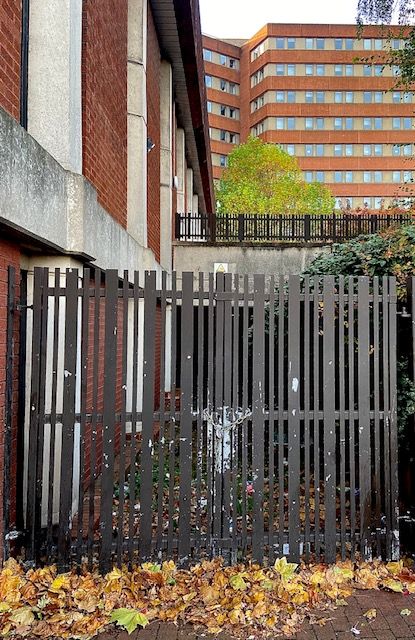
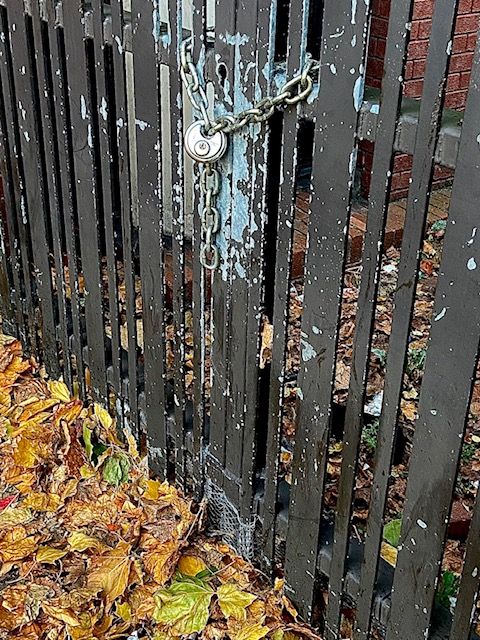
“I am a pair of gates. I’ve been padlocked for 40 years. I am the victim of abuse.
“People have climbed on me. People have thrown things over me. People have been sick on me. People have urinated on me… and sometimes much worse. People have fought against me and got hurt, and then I have seen them arrested. People have laughed with me, and there have been people who’ve cried. People make love against me, and there are those that have slept by my side all night. Sometimes, bad people have hid in the shadows and I have been unable to do anything.
“I am at my best in autumn, when I’m able to catch fallen leaves, and then they rest at my feet until they’ve become a rotting mess. But I guess I’m only a pair of gates, and people pass me every-day without giving me a second glance.”
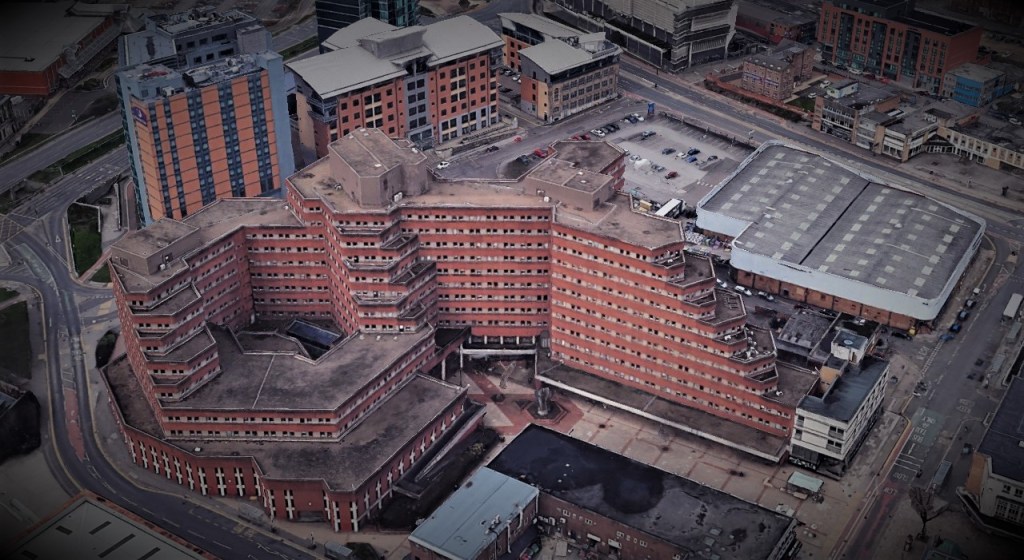
Moorfoot. A late seventies Government-built office complex that opened in 1981. Now home to Sheffield City Council. Photograph: Google
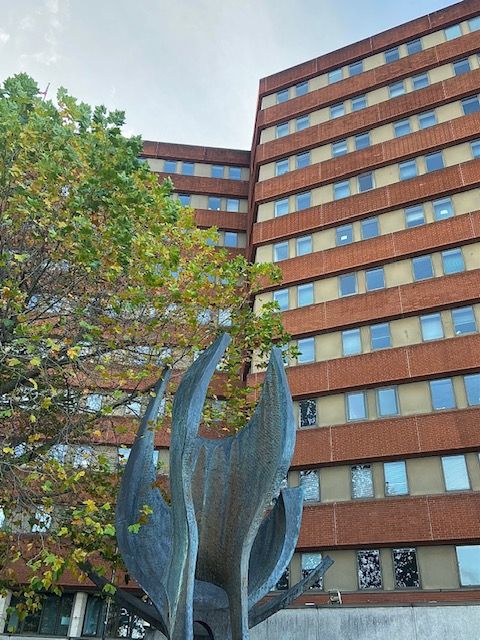
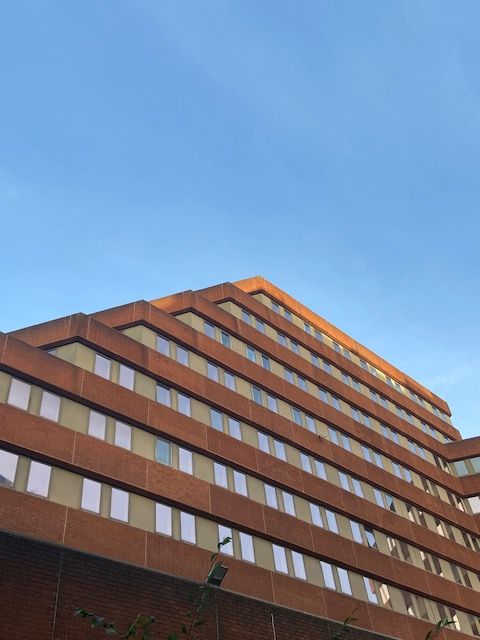
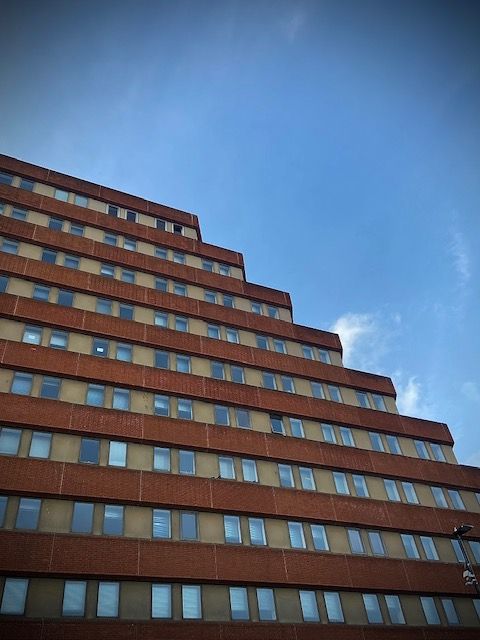
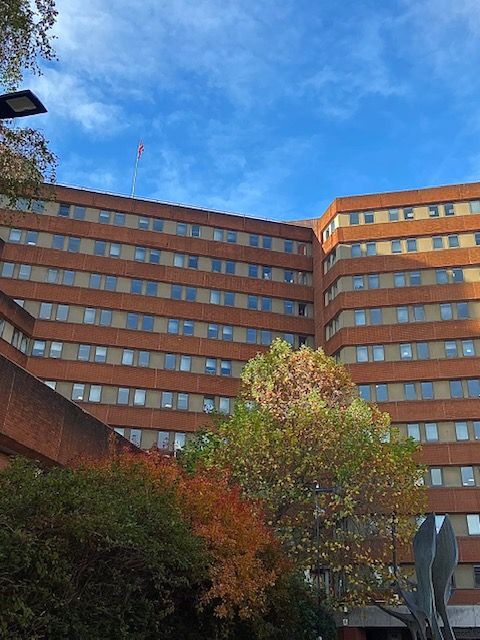
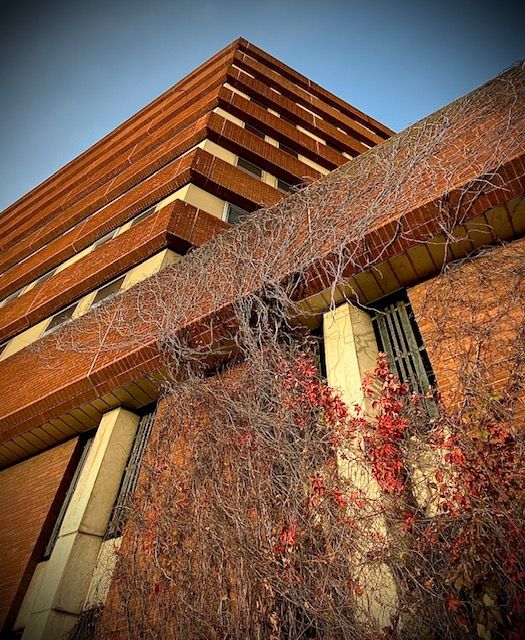
Moorfoot is a brute of a building, dominating the Sheffield skyline, and 40 years after it opened, remains one of the city’s most controversial structures.
Its origins are in 1973 when Edward Heath’s Conservative Government created the Manpower Services Commission (MSC), to co-ordinate employment and training services in the UK through a ten-member commission drawn from industry, trade unions, local authorities and education interests.
Pat Duffy, the Labour MP for Attercliffe, excited by the prospect of 2,000 jobs, campaigned for the new headquarters to be built in Sheffield. Two years later, Harold Walker, Under Secretary at the Employment Department, told the House of Commons, “The decision has been made to locate the headquarters in Sheffield.”
It was an accomplishment for a down-at-heel northern city, but the citizens of Sheffield weren’t prepared for what came next.
The futuristic new headquarters was designed by the Government’s Property Services Agency – “A truly monolithic brutalistic office building. Red brick bands between rows of windows separated by concrete panels.” – eleven storeys high, with stepped levels across east, west, and north wings. Something of a pyramid, it earned nicknames like the ‘Aztec Temple’ and ‘Dalek City.’
Photograph: DJP/2021
That it would be built on land at the bottom of The Moor was even more controversial, cutting off Sheffield’s main shopping street from busy London Road, and depriving road and pedestrian traffic of a popular and historic route.
To compensate, it was designed to allow pedestrian access through the building, starting with an elevated ramp near the corner of Young Street and South Lane, before proceeding via a tunnel through the building, exiting above the car park, and using ramps to ground level on The Moor.
The route never opened, allegedly because IRA activity posed a threat to a government building, and the upper parts of the elevated walkway were left suspended mid-air before eventual removal.
The MSC opened in 1981, and for such a high-profile building, it was shrouded in mystery. Apart from the cavernous office-space, restaurant, bar, and basement squash court, were there really underground nuclear bunkers and a luxury apartment for Government hierarchy? Even today, the amount of information available about the building is incomplete – no floor plans, no design architect, no history forthcoming.
If ever a building divides opinion. The Moorfoot Building will probably escape demolition, unlike many other Sheffield buildings built in the 1970s. Photographs: DJP/2021
The MSC building was famous for its management of the Youth Training Scheme and various other training programmes intended to help alleviate the high levels of unemployment in the 1980s, but after 1987 the MSC lost functions and was briefly re-branded the Training Agency (TA), before being replaced by a network of 72 training and enterprise councils.
The MSC Building gave way to other Government agencies, including the Department for Work and Pensions (DWP) and the Home Office. However, it was too big and expensive to maintain, with departments vacating over a twenty year period.
In the late 2000s, the MSC Building was bought by Sheffield City Council, and with demolition in mind, wanted to create a new financial services district in its place.
The timing could not have been worse, and the monetary crisis of 2007-2008 prompted a rethink, and the building was overhauled, renamed Moorfoot, with potential office space for 2,600 council employees, and consolidation of various departments from around the city centre.
As for the Moorfoot’s future, it is likely to stay, worthy of a facelift and a bit of greenery might not go amiss. The iron gates at ground level could be opened to allow public access between The Moor and London Road. And, as the aerial photograph shows, there is a chance to create a green square in front of its main entrance (demolition required).















 sheffielder.net