Categories
People Streets

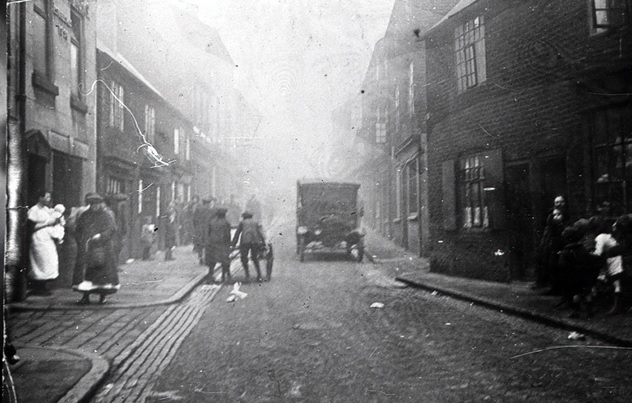
The strange tale of Willie Robshaw

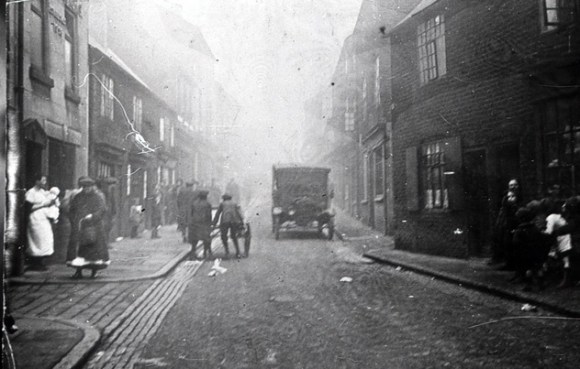
The mysterious disappearance of a sixteen-year-old boy from the slums of Sheffield got the tongues wagging back in July 1925, and it revealed a story that might take some believing today.

Photograph by Picture Sheffield

Our story begins in February 1911 when a poor woman, called Mrs Minnie Robshaw, kept a little general store at 111 Scotland Street and answered an advertisement asking for a home for a two-year-old child, and, on a payment  of £5, a boy was surrendered to her by a woman named Mrs Weatherburn, who kept a boarding house at 22 Catherine Street, Liverpool.

Mrs Weatherburn brought the baby, called William Paley Weatherburn, and handed over the child at Midland Station. Before going away she told Mrs Robshaw that when the baby was twenty-one, he would come into a lot of money.

Shortly after, the baby became ill, and Mrs Robshaw wrote to the mother, but her letter was returned, as the address was unknown.

Thirteen years went by and nothing was heard of the mother.

The first intimation that he was not their legal son came to Willie in a curious way.

A young girl appeared in Sheffield and persuaded the boy to go away with her. She said he was his half-sister. Mrs Robshaw didn’t know where the lad had gone, but after a two-month absence she received a letter from a place unknown: –

Willie had had a nice holiday now, and we have to get him a new suit and boots, and he has been on a farm at Spotforth and had plenty of good support.”

The boy came back, and the only thing that Mrs Robshaw could learn from him was that he had been on a farm and had been well treated.

He told his foster-mother that he had been to Liverpool and had been across to New Brighton. They had put him on the train for Sheffield without any money and without a ticket.

It appears that Willie was quite happy with Mr and Mrs Robshaw and was said to be the life and soul of the house.

Willie had attended a council school until he was 14, and had then been apprenticed as a painter and decorator.

In July 1925, a friend of Willie’s went into the shop for a penny bar of chocolate. “Where is Willie?” he asked. “What do you want him for?” asked Mrs Robshaw. “A lady at the bottom of the street in a motor-car wants him and has offered me sixpence if I return with him,” answered the boy.

Mrs Robshaw became suspicious, and saying nothing to Willie, went out herself. She noticed that in the car was a well-dressed woman accompanied by a man in a smart brown suit. As she approached, the woman noticed her and immediately drove away. Mrs Robshaw, however, had the presence to take a note of the number plate – KC 8209 – the registration mark for Liverpool.
Photograph by Picture Sheffield

Mrs Robshaw returned to the shop, and a little later a man came in. She was positive that the man was the same one that was in the car. He asked for Willie, saying that he wanted to take him for a drive. Willie was not in the house and she did not consent to the request, finding out later that Willie had been seen to enter a car a few streets away.

According to neighbours, an expensive limousine car was seen in the vicinity shortly before Willie had gone missing, and a stylish young woman in a black silk cape had visited premises close to where Willie lived, and had exchanged her fashionable hat for one less likely to excite comment, and her smart cloak for an old shawl.

A neighbour also spoke of a pretty golden-haired girl, who had been at the wheel of the motor car, and a well-dressed man who had made certain inquiries about the boy.

After his disappearance, Mrs Robshaw received a letter from Willie which read: –

“Dear Mum and Dad, – I have gone away on my own account. It is for my own good. I will write to you from time to time, but will not come to live with you anymore. Don’t trouble about me, as I shall be brought up as a gentleman, and not have to work for my living. With love, Willie. xxx.”

The address of the letter was in Manchester, but it appeared that the street did not exist.

Now there was a silence and each day his foster-mother wondered if he would ever return.

 “I am convinced that it was Mrs Weatherburn who was in the car,” said Mrs Robshaw. “When she brought the baby to me fourteen years ago she told me that many years ago her husband (Percy Weatherburn) went to America, where he had since died. Shortly after he went she took a position with an invalid lady, and it was shortly after this that the child was born.

“After her husband’s death she met a man in Liverpool who said he would marry her if she got rid of the baby. So she advertised for a home for it, and it was her advertisement that I answered.

“So Willie came to us, and we looked upon him as a son, and did everything we could for him. Then he was taken away from us by these fashionable people, and we have heard nothing from him since. I have learned that Mrs Weatherburn had married the man she met in Liverpool. He is, I believe on the Stock exchange there.

“The letter we had from him bore a Manchester address, but the postmark was Portsmouth.”

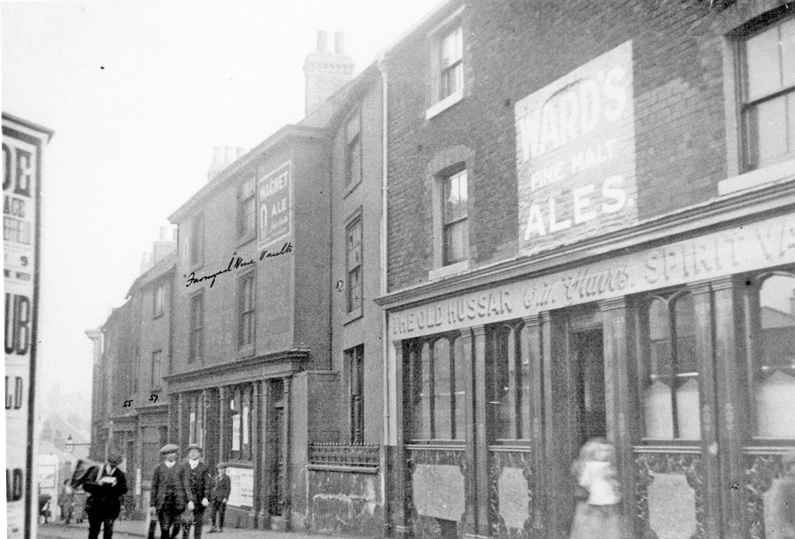
No time was spared involving the police, and a search was made for Willie which extended to Liverpool, Cleethorpes and Ormskirk, and only ended when the lad was discovered at Formby, the house of his real mother.
Photograph by Picture Sheffield

The head of the family said in an interview with a Liverpool newspaper, that he was the step-father of the boy. It was stated that the boy had been a long lost son – a statement which Mrs Robshaw flatly contradicted, in as much that the mother knew where the boy was all the time.

“There is no real mystery about this so-called kidnapping,” said his real mother. “We simply decided to have him at home. When I found him, I said, ‘Willie?’ He said, ‘Yes,’ and I then said, ‘I am your mother. Would you like to come home?’ And that is all.”

By now, the story of Willie Robshaw was attracting the attention of newspapers across the nation.

“A story which, were it to be filmed by a cinema producer, would probably establish his reputation as a master of melodrama. It shows how the long-lost son of a wealthy family was discovered, after a 14 year search, living in one of the poorest districts of Sheffield. Now he is home again, with money and everything he could wish for at his command,” reported the Belfast Telegraph.

In August, the story took another twist when Willie returned to Sheffield. He arrived quite unexpectedly late on a Monday night, his dark hair now dyed a golden colour, and was warmly welcomed back by Mr and Mrs Robshaw.

Willie refused to give an account of his exploits, or to discuss the manner of his leaving, other than he had been riding about West Coast places in a motor car, but told his foster parents that he had come back to them of his own free will.

This decision, he said, was reached when, in company with the people from Formby, he visited Manchester. Whilst they were in a hotel, he stated he had slipped away from them and came to Sheffield, where he had been busy attending to his pigeons.

Some corroboration to the story was afforded by Mrs Robshaw receiving a telegram from Formby inquiring if Willie was in Sheffield.

The boy’s mother, at her home in Formby, said the family were proceeding no further in the matter for recovering the boy.

“Apparently he prefers to live his life in Sheffield rather than to accept our offer of being a gentleman and living a gentleman’s life, and he has gone back to it,” she said. “We are not going to trouble anymore.”

Mr R.F. Payne, a well-known Sheffield solicitor, addressed a letter on behalf of Mr and Mrs Ernest Robshaw to the Formby people claiming from them £377 for his maintenance at the rate of ten shillings a week from February 1911, when the Robshaw’s adopted the lad, to July, when he had left to go to Formby. No reply was received.

The Liverpool Echo had also discovered the mystery behind the Liverpool connection.

Willie’s real mother was Lilly Weatherburn, who had married Mr Clement Waring and lived at Rowan Lea, Liverpool Road, at Formby. The “charming, fair-haired” girl who drove the car had been Willie’s sister, Lily Paylor Brown, who had married a well-to-do widower, Walter Brown, a tailor, in November 1924 – he was 64, she was 22 – but he had died in August 1925.

Willie had been home for a week when he left Sheffield for Liverpool again. Mr Robshaw visited the city to determine what was happening and he was told by the boy that he was perfectly happy and promised to write home in about a week.

Photograph by Picture Sheffield

His foster parents heard nothing from him and at Christmas 1925 Mr Robshaw returned to Liverpool and visited the house where he was told not to make anymore inquiries about his adopted son.

Hearing nothing from Willie, Mr Robshaw made another visit to Liverpool in March 1926 and was told that Willie had returned to Sheffield, and although extensive inquiries were made the lad wasn’t discovered.

And that is where the trail went cold. Whatever happened to Willie?

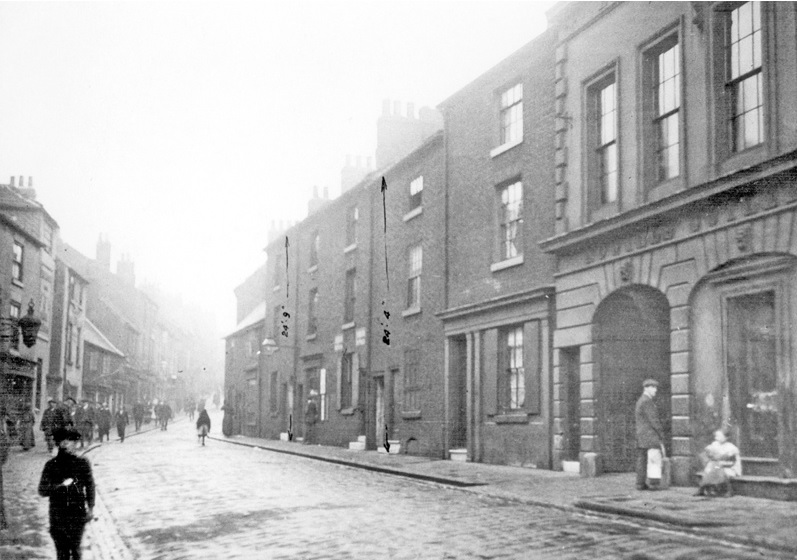
I suspect that somebody in Sheffield will know how this strange story ended.
Photograph by Picture Sheffield
Categories
Buildings Streets

Queen’s Hotel

Photograph by Stephen Richards

The Queen’s Hotel, on Scotland Street, is one of those public houses that has seen a lot of changes over the years.

Scotland Street itself dates from the eighteenth and nineteenth centuries, built along a former boundary of an open field system. In the late 1700s and early 1800s, small factories, workshops and housing were built in the area, encouraged by an influx of Irish immigrants during the 1840s.

A public house stood here before. Built in 1791, known as the Queen’s Inn, later the Queen’s Hotel, and under the ownership of William Bradley & Co, and subsequently S.H. Wards, which bought it in 1876.

By the 1920s, the Scotland Street area contained some of the city’s worst slum housing, described as “hovels of the aristocracy” and “mansions of the poor.” It prompted Sheffield Corporation to demolish large swathes of terraced houses.

Photograph by Picture Sheffield

Sheffield Corporation set about widening Scotland Street, and in the process purchased land from S.H. Ward & Co, including the site of the nearby Old Hussar public house, and part of the site of the Queen’s Hotel, on condition that they paid the brewery £2,875 towards the cost of rebuilding the Queen’s Hotel.

The new pub, built with stark, simple, exterior lines, opened in December 1928 with guest rooms on the upper floors, a large function room on the first floor and two ground floor bars.

Photograph by Picture Sheffield

It could be said that the new Queen’s Head opened at the wrong time and experienced highs and lows ever since.

In 1934, over 50 shopkeepers from the Scotland Street, Meadow Street and surrounding area congregated inside the Queen’s Hotel, demanding that Sheffield Corporation reduce their rent and rates.

They argued that while a great many of their customers had been removed to new housing estates, their rent and rates had remained the same.

The shopkeepers had suffered bad trade for years because at least eighty per cent of the inhabitants had been either unemployed or on short time, and now they were losing their custom altogether. Now they had been left on the edge of a “desert.”

A long-term lack of investment, and a general state of decline, resulted in the area becoming down-at-heel by the middle of the twentieth century.

Many local factories closed, and the decline accelerated in the 1970s, as did the fortunes of the Queen’s Hotel, not helped by S.H. Wards being taken over by Sunderland-based Vaux Breweries in 1972. The brewery closed in 1999, two years after the Queen’s Hotel had closed its doors for good in April 1997.

Photograph by Sheffielder

As reported a few months ago, plans have been floating around to demolish the Queen’s Head and construct a new residential development comprising more than 220 apartments.

That day has now come, with Rise Homes, supported by DLP Planning and Hadfield Cawkwell Davidson, submitting an application to Sheffield City Council for the new development.

The derelict public house would be demolished as would the former Robert Neil & Co (Sheffield) Ltd building next door.

Photograph by Yorbex/Derelict Places

The new residential development would comprise three blocks of up to ten storeys, with a total of 229 apartments, with 145 one-bedroom and 84 two-bedroom units.

Visitors to the area will agree that this part of Scotland Street is now down-at-heel, within an area of transition, which is becoming characterised by more city centre living.

Planning applications were previously approved in 2005 and 2007 for residential developments that would have retained the pub. However, it has now been determined it is not viable to retain any element of the building.

With the demolition of the Queen’s Head likely to be granted it will be a sad end for the public house, especially when people are now heading back to live here once again.

Photograph by Hadfield Cawkwell Davidson

Categories
People

Dan Walker

Back to our famous Sheffield people. Daniel Meirion Walker, born 1977, at Crawley in Sussex. Better known to us as Dan Walker, TV presenter and an honorary Sheffielder.

At the age of 18 he attended the University of Sheffield where he gained a BA (Hons) degree in history and an MA degree in journalism studies. He did work experience at Hallam FM, later joining Key 103 in Manchester as a sports reporter.

Dan joined Granada TV for six months before joining BBC TV’s North West Tonight. After moving to London, he presented Football Focus and replaced Bill Turnbull as presenter of BBC Breakfast in 2016.

Married with three children, he moved back to Sheffield in 2012 and is a patron of Sheffield Children’s Hospital Charity.

“It’s a big city, but it doesn’t feel like it. I know it’s a cliché, but the people are lovely. They care about Sheffield and are very proud of it.”

Lasagne is his signature dish and swears the secret is a splash of ketchup and Henderson’s Relish.

“It’s a Sheffield thing. You can have it on anything. It smells a bit like pickled onion Monster Munch. I have it on everything: fried eggs, toast, pie and anything with meat in it.”

Categories
Buildings Streets

Stepney Street

Photograph by Cadenza VM

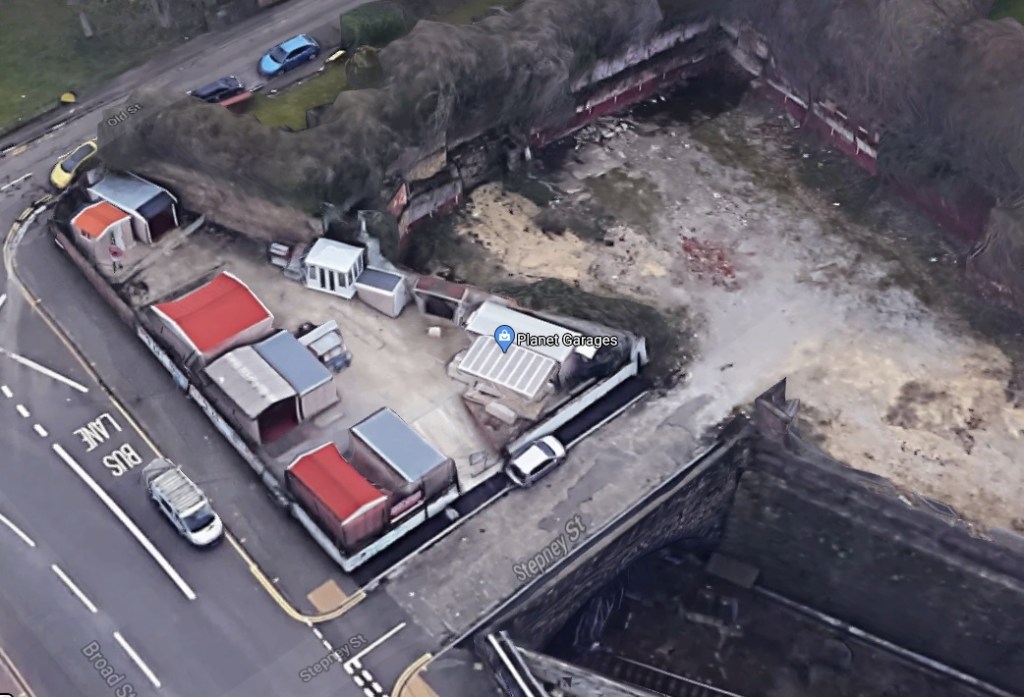
Stepney Street is a small road leading off Broad Street in the Park area of Sheffield.

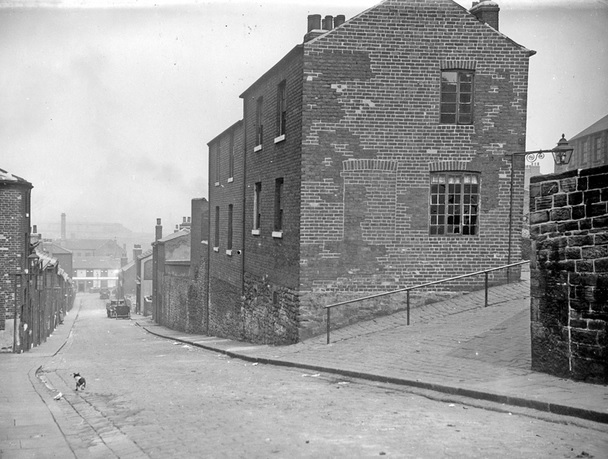
Originally land owned by the Duke of Norfolk, it succumbed to cobbled-street slum housing, was shortened in length after redevelopment in the 1930s, and modern-day access restricted to a private car park and a garage business. Significantly, the railway line runs directly beneath it.

Housing on the street, along with those at Old Street, Bard Street, School Lane, Duke Street, Crown Alley, Crown Alley Lane, Bernard Street, Weigh Lane and Broad Street, were compulsorily purchased in 1934, demolished and redeveloped.

Photograph of Stepney Street, looking towards Broad Street, by Picture Sheffield

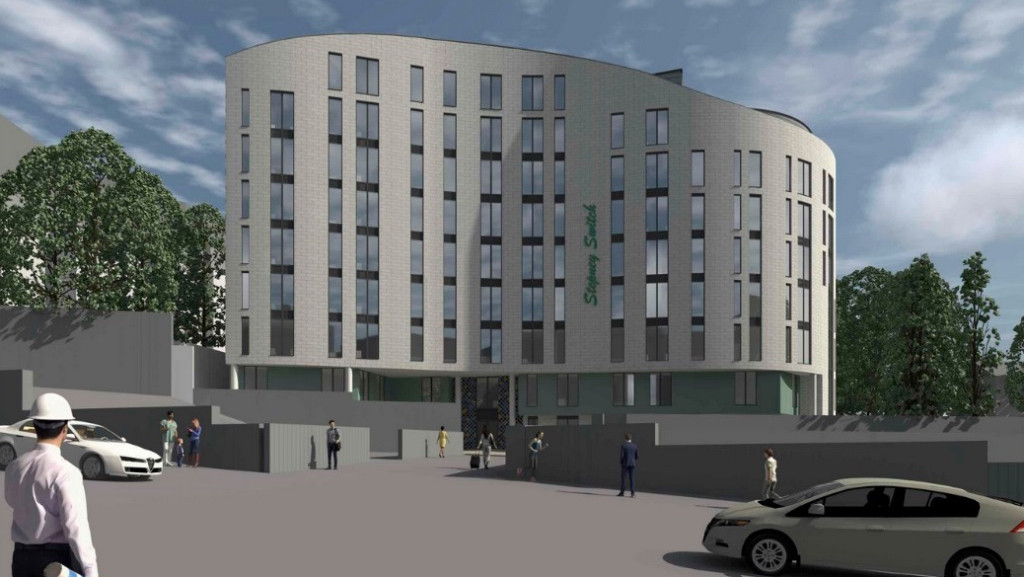
The surviving part of Stepney Street, with its cobbles, might become a residential area again, with a proposed new development of 100 apartments, a planning application submitted to Sheffield City Council by Six Developments, supported by architects’ practice Cadenza.

The gated building would be eight-storeys high featuring 100 private rental sector (PRS) apartments. A total of 95 one-bed flats would be provided, together with four studios and a single two-bedroom unit.

Watkin Jones previously secured planning permission for a development of 62-bed apartment building in December 2017, but this scheme was not brought forward. The developer had originally acquired the site to provide car parking for its Pinnacles Development.

Photograph by Google

Categories
Buildings Places

Beauchief Abbey

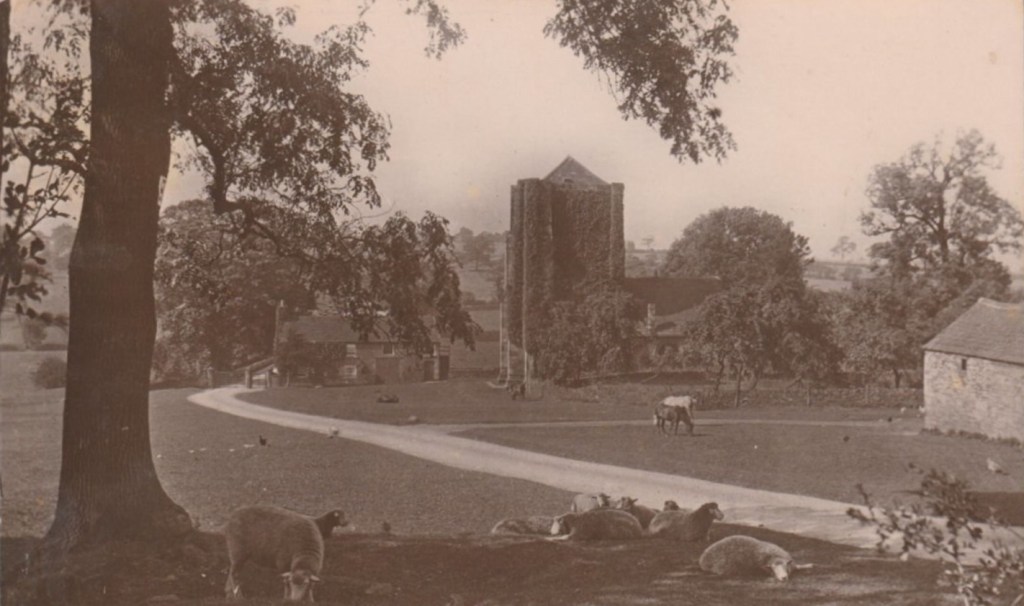
The painting of Beauchief Abbey was by Reuben Bower (1828-1912) and is the property of Museums Sheffield.

In another post, we looked at the history of Beauchief Abbey and now we look at some of its romantic legends and secret tunnels.

It is said that an underground passage runs between Beauchief Abbey and Norton Church. About halfway between the two buildings is an iron box full of treasure which can be removed only by a white horse with his feet shod the wrong way; furthermore, he must approach the box with its tail foremost.

Then there is a supposed passage between the mill house at Millhouses and the Abbey, where gold plate belonging to the Abbey is reputed to have been hidden at the time of the dissolution of the monasteries in 1537.

Finally, there is another legend attached to Lees Hall, a mansion that once adjoined Lees Hall Golf Course and dated to 1626. Before that the site was thought to have been occupied by the White Canons from Beauchief Abbey, and that an underground passage went from one of the cellars in the house to the Abbey.

Local legend said that Lees Hall was used as a place of refuge for Mary Queen of Scots in her flight from Elizabeth I, and that there was also another secret passage leading to Manor Castle.

The mansion was demolished in 1957, described as “one of the tragedies of urban development in Sheffield,” and all traces of it reclaimed by nature.

Unfortunately, excavations at Beauchief Abbey during the 1920s didn’t reveal any evidence of the tunnels, but stories persist that the secret passages are still waiting to be discovered.

Categories
Buildings Places

Beauchief Abbey

Photograph by Rachel Marsden

Until Beauchief Abbey, together with the surrounding estate, was purchased by Frank Crawshaw in 1922, little beyond the name and a private chapel with a western tower, remained to remind anyone of the former magnificence of this house of Premonstratensian Canons.

At this time, Beauchief Abbey (comically mispronounced outside Sheffield, it should be spoken as Beechiff), was set in a beautiful rich valley, through which the Abbey Brook meandered, bounded by well-wooded hills and by the distant Derbyshire Moors.

Sheffield has swallowed it up now, but Beauchief Abbey remains in a tranquil location and its history remains a mystery to many.

The suburb of Beauchief takes its name from the small abbey, founded on the southern border of Hallamshire over eight hundred years ago.

Beauchief is a Norman French name for the ‘beautiful headland’ above the River Sheaf.

The abbey was dedicated to St. Mary and St. Thomas the Martyr, otherwise known as Thomas Becket and now more commonly known as St. Thomas of Canterbury.

It was founded somewhere between 1173 and 1176 by Robert FitzRanulph, former Sheriff of both Derbyshire and Nottinghamshire and Lord of Alfreton and Norton in Derbyshire, Edwalton in Nottinghamshire and Wymeswold in Leicestershire.

The Beauchief estate was created in a remote part of FitzRanulph’s manor of Norton, right on the border with Yorkshire.

Photograph by Delcampe.net

The White Canons (or Premonstratensian Canons) came from Welbeck Abbey which had been founded in 1153. The White Canons lived under a rule less strict than that of the monks, and attended regular services at the abbey church, ate a vegetarian diet in the refectory, and slept in the common dormitory.

The abbey land amounted to about 800 acres with the abbey set in a park of about 200 acres with several fishponds fed by the small stream.

The White Canons also owned a corn mill at Bradway, a fulfilling mill on what is now the site of Dore Station, a corn mill to which Millhouses was named after, and a smithy – Smithy Wood.

Beauchief was surrendered ‘without any trouble or giving opposition’, as part of the dissolution of monasteries, and in April 1537 was granted by Henry VIII to Sir Nicholas Strelley , Lord of Ecclesall, on the opposite bank of the River Sheaf. The description of the property granted was of ` the house and site of the abbey or monastery De Bello Capite’ and included gardens, orchards, ponds and parks plus a further 259 acres.

In 1648, it passed through the marriage of Gertrude Strelley to Edward Pegge of Ashbourne, who used much of the stone from the abbey to build a suitable country house called Beauchief Hall.

Seven bays wide and three storeys high, it was built on a site to the south-west of the abbey described as `a gentle descent on the brow of the hanging wood, the bellum caput or Beau Chef’. The house is thought to have been the site of the Grange where the monks formerly made their butter and cheese.

Photograph of Beauchief Hall by Neal Theasby.

Pegge adapted the ruins of the abbey church into a private chapel and by the 1660s this was the only part of the old abbey remaining.

The present appearance of the abbey grounds owes itself to excavations carried out between 1923 and 1926 by William Henry Elgar, an Art Master at King Edward VII Grammar School.

Frank Crawshaw, a businessman and local councillor, as owner of the estate, encouraged the excavations and on the very first afternoon a wall to the west of the cloister was discovered, and during the next two months they succeeded in tracing this southward to the refectory doorway.

Search was then made for the opposite wall, and when it was found attention was drawn to the eastern end of the abbey and defining the site for excavation. When the sanctuary was laid bare the base of the high alter and two broad steps were uncovered in which several fourteenth century tiles bearing arms were found.

A recess was also found in the north wall which had held a coffin of a full grown man, believed to have been the founder, Robert FitzRanulph. Several bones and portions of the lead coffin were found.

“The buildings included an aisleless cruciform church about 150ft long, each transept having two almost square chapels, and a great western tower. Abutting against the tower was the western range of the cloister, and against the south transept came the eastern range: the south side of the cloister was formed by a long refectory with a kitchen adjoining it.”

Sketch by William Henry Elgar, 1926. The British Newspaper Archive.

In March 1931, Frank Crawshaw gifted Beauchief Abbey to Sheffield Corporation, which agreed to buy the nearby golf course, the adjoining Abbey Farm, land, and woods, comprising about 166 acres, and extending from near Woodseats to Twentywell Lane, for £30,000. Parts of the old estate have now been built on – Greenhill and Bradway – and the areas around Abbey Lane and Hutcliffe Wood.

Today, only the western tower of the Abbey remains, together with some ruins (including a wall) to the immediate south-east. The tower is attached to the chapel (now a church). The foundations of other buildings are visible, and the medieval fishponds still exist.

Much of the old estate is now occupied by two golf courses (Abbeydale Golf Club and Beauchief Golf Club), but several areas of ancient woodland remain: Parkbank Wood to the east of the Abbey, Old Park Wood and Little Wood Bank to the south, Gulleys Wood in the centre of the park and Ladies Spring Wood to the west.

W.H. Elgar explaining some of the arch stones of Beauchief Abbey to members of the Derbyshire and Hunter Archaeological Societies in 1925. Photograph by The British Newspaper Archive.

Categories
Places

Hallamshire

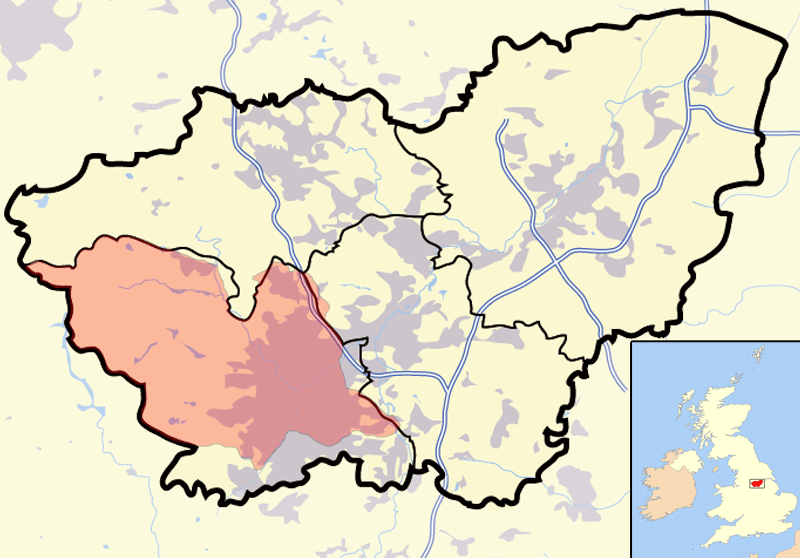
The map shows the approximate area of Hallamshire as described in the 14th century (red shaded area) overlaid on a map of the modern ceremonial county of South Yorkshire.

Hallamshire is an ancient name for Sheffield and the villages, hamlets and farmsteads in the surrounding countryside. It is a name that everyone knows, but very few know what it means, and where it was.

Let’s go back to the days before the County of York existed.

Hallamshire is first recorded by its full name in a charter of 1161, although it is thought to be much older. The Domesday Book of 1086 used the shortened version, though it was transcribed as Hallun.

The name Hallam is peculiar; it looks to have had a Frisian origin; and probably was derived from the great tribe of the Halling or Halsing. The lordship belonged to the Waltheof family for a considerable time before the Norman conquest; passed to a female heiress of that family in 1075; passed afterwards to the Earls of Northampton; had a seneschal in the time of Edward I; and then parts of it belonged to the Duke of Norfolk.

The English Place-Name Society describe Hallam originating from a formation meaning “on the rocks”.

Alternative theories are that it is derived from halgh meaning an area of land at a border, Old Norse hallr meaning a slope or hill, or Old English heall meaning a hall or mansion.

Hallamshire was the most southerly of the Northumbrian shires, for it shared a border with the kingdom of Mercia.

The extent of its boundary is unclear, but it would seem to have constituted the Saxon manor of Hallam, included the parish of Sheffield, together with the parish of Bradfield and the smaller Saxon manor of Attercliffe.

In later chronicles, Sheffield, Bradfield, Ecclesfield and Handsworth are included under the term.

In broader terms, Hallamshire probably covered much of the same area as does present day Sheffield.

Its legacy is still with us, with various uses of the name evident – Royal Hallamshire Hospital, Sheffield Hallam University, Hallam FM, Diocese of Hallam, Company of Cutlers in Hallamshire, Hallam F.C., Hallamshire Golf Club and Hallamshire Harriers, to name just a few.

Categories
Buildings

Sheffield Citadel

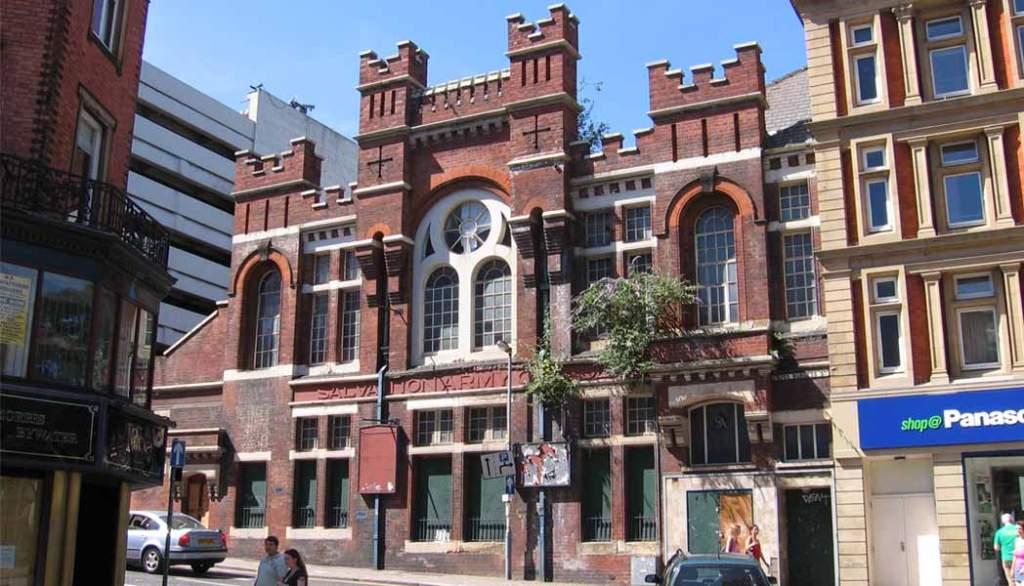
Photograph by Exposed Magazine

The Citadel, a prominent Sheffield building that has remained vacant since 1999, could finally be brought back into use after planning consent was granted for its redevelopment by Sheffield City Council.

WMA Architects, on behalf of Tandem Properties, submitted full planning and listed building applications in October 2019 for work on The Citadel on Cross Burgess Street.

The Grade II-listed building was constructed in 1894 as the Sheffield headquarters of the Salvation Army. It was designed by William Gillbee Scott (1857-1930), who had conceived the Gower Street Memorial Chapel in London.

The foundation stones were laid in September 1892 with construction completed by the end of 1893. Completed at a cost of £25,000, the building consisted of a large hall, various rooms and apartments, with three large business premises on Pinstone Street.

It has remained vacant following the charity’s relocation to new premises in 1999.

The interior of the four-storey building is set to be modernised to make it suitable for use as a food and drink establishment, while retaining its historic features.

Work will include increasing the amount of glazing on the Cross Burgess Street frontage with the existing auditorium expected to form part of the restaurant or bar area.

The applications have now been approved, subject to conditions, by Sheffield City Council under delegated powers.

Categories
People

Gerry Kersey: “It’s goodbye for now.”

Photograph by Sheffield Star

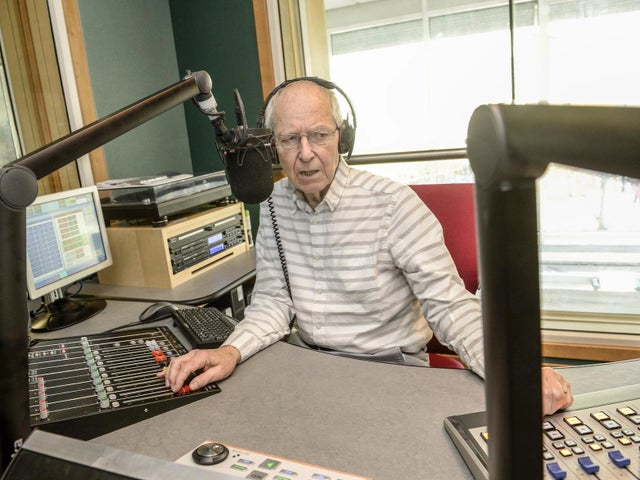
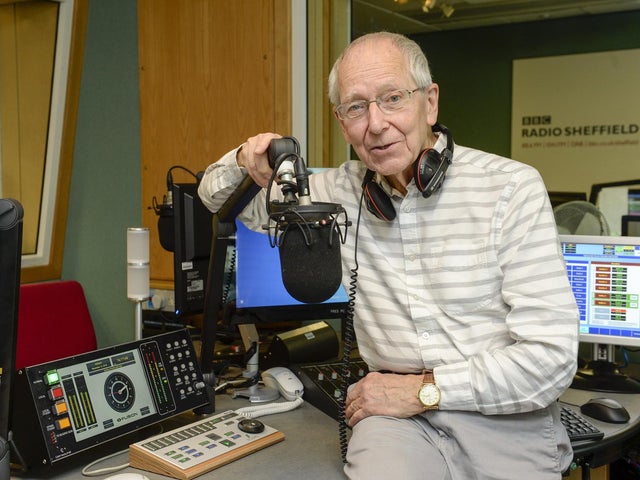
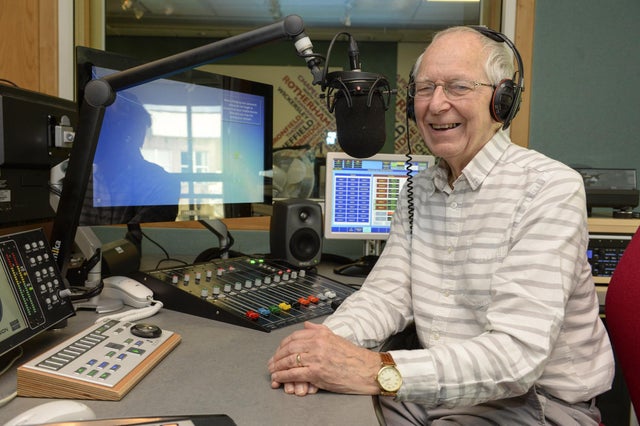
Today, we lose a genuine Sheffielder and a ‘survivor’ on the city’s radio airwaves. I’m referring to Gerry Kersey, the BBC Radio Sheffield presenter, who presents his last show today (at least for the time being that is).

For a generation, here’s a guy whose voice has been with us since childhood.

Born and brought up on Bellhouse Road, Shiregreen, his first job was at Hadfields, working in the wages department. By his own admission, going around the various departments collecting clock cards helped him develop communication skills. At 18, he was called up for National Service and recruited into the RAF as a telephonist.

He later handled advertising for Stanley Tools, and used amateur dramatics as a side-line, first playing with Shiregreen and District Community Players, followed by Sheffield Playgoers and finally South Yorkshire Operatic Society.

From 1968 he was called in by Radio Sheffield to read stories which led to him getting his own show in the early 1970s.

In 1980, Gerry made the switch to Radio Hallam, taking over Bill Crozier’s request programme, and a year later was the obvious replacement for broadcasting legend Roger Moffat on the weekday mid-morning show.

We should also remember his Sunday offering of Music of the Masters, a weekly classical music programme, a far cry from today’s output at Hallam FM, which the station morphed into.

With split frequencies between AM and FM, Gerry presented Classic Gold’s breakfast show from Sheffield, switching to other slots as it underwent a series of name changes – Great Yorkshire Gold, Great Yorkshire Radio – and finally Magic AM.

Like many ‘old timers,’ Gerry’s time in commercial radio was at an end, and in 1997 he switched back to Radio Sheffield, latterly presenting the Sunday afternoon nostalgia programme, with a generous response from listeners. Indeed, he is of the old school, choosing to acknowledge everybody who writes in.

Photograph by Sheffield Star

Gerry is also a talented painter and veteran member of Hallam Art Group and for years has combined stories of his long radio career and artwork with talks to community groups across the city.

This afternoon Gerry, now into his eighties, signs off while BBC local radio stations switches to standardised schedules, making it easier to share output if necessary, during the Covid-19 outbreak.

“It’s not been said to me that it’s my last show,” Gerry told the Sheffield Star. “As far as I’m aware it’s a temporary arrangement. They’ve got to cut down, inevitably brought about by the coronavirus. They’ve changed the system just for now.”

And finally, as somebody who once worked alongside him, I can confirm that off-air he is the same person that we have heard on the radio for the past 52 years. Nice guy, charming, friendly and incredibly humble.

Come back soon.

Photograph by Sheffield Star
Categories
Buildings People

Wentworth Woodhouse

Photograph by Sheffielder

“If you lay out your money in improving your seat, lands, gardens, etc., you beautify the country and do the work ordered by God himself.” These were the words of the 1st Marquess of Rockingham in the letter of advice he left for his son, the future Prime Minister, shortly before his death in 1750.

He had been good as his word, by his own reckoning he had spent £82,500 improving his house and grounds at Wentworth, providing it with one of the longest fronts of any English country house.

We are talking about Wentworth Woodhouse, situated within Rotherham borough, but within a stone throw of the Sheffield border, up the road from Chapeltown.

This remains one of South Yorkshire’s hidden secrets, only emerging from years of obscurity within the past few years.

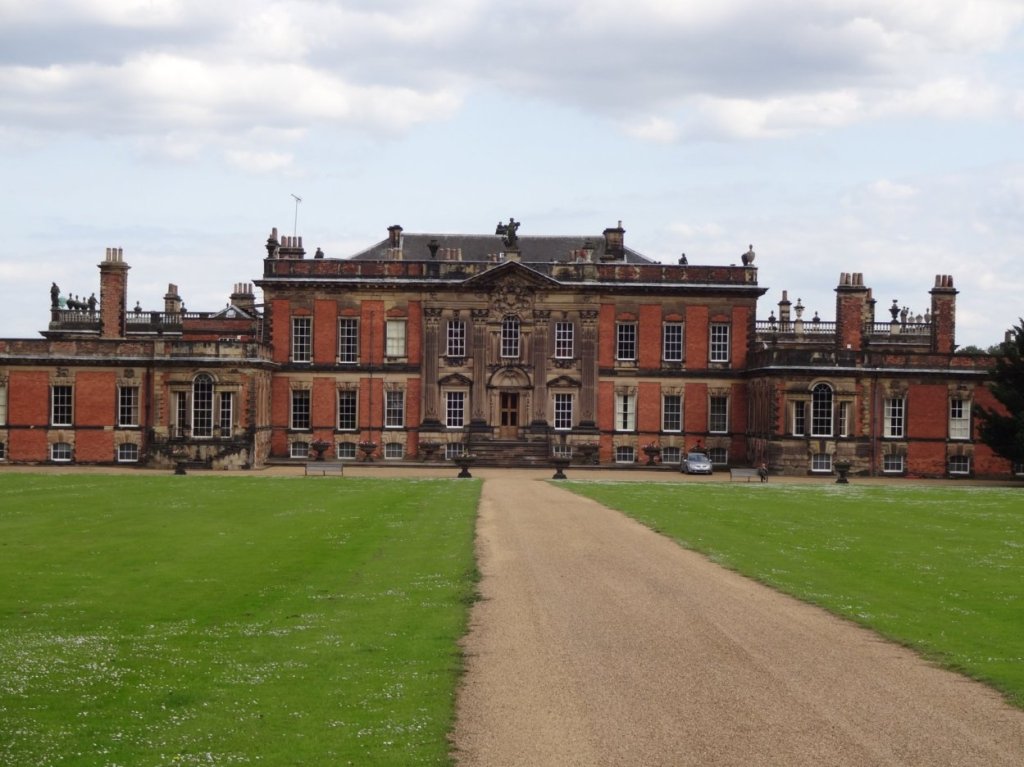
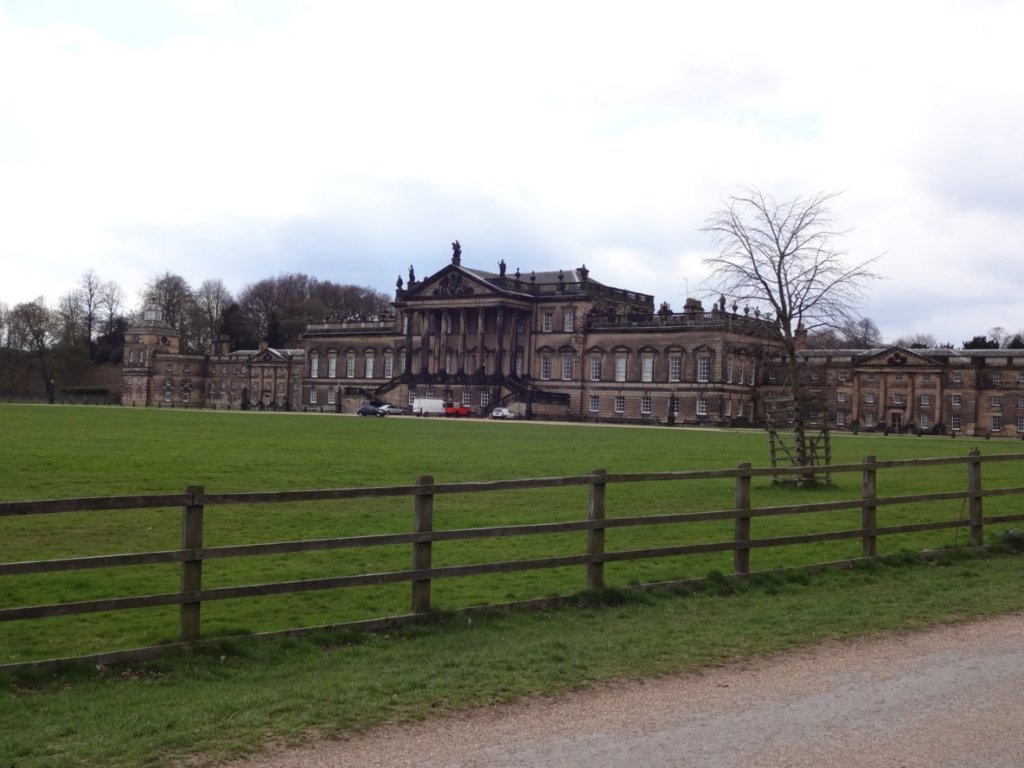
Few people realise that behind the 600ft Palladian front is a second house with a grand baroque front. The difference between the two houses is blatant, but they formed a single building programme between 1724 to 1749.

Photograph by Sheffielder

The family made their fortune from coal mining, and the Fitzwilliams, descended from the Rockinghams, became well-known in Sheffield circles.

However, the 20th century wasn’t kind to the family and certainly not to Wentworth Woodhouse.

After World War Two, Manny Shimwell, Minister of Fuel and Power, told Peter Fitzwilliam, “I am going to mine right up to your bloody front door.” And he did.

Years of open-cast mining devastated the gardens and parkland and did lasting damage to the old house itself.

Unable to be maintained properly, Wentworth Woodhouse survived due to the efforts of Lady Mabel Fitzwilliam, sister of the 7th Earl, who negotiated a deal with West Riding County Council in 1949 to use it as a training college for physical education teachers. The family retained the Baroque wing.

Lady Mabel College later merged with Sheffield Polytechnic (now Sheffield Hallam University) and remained at Wentworth Woodhouse until 1988.

The house was put up for sale and bought by Wensley Haydon-Baillie, a millionaire, who, after a bad business investment in 1998, admitted debts of £13million, and the property was repossessed by the bank.

Its saviour was Clifford Newbold, a London architect, who, far from being the recluse he was originally made out to be, did what he could to save Wentworth Woodhouse.

After his death in 2015, Wentworth Woodhouse was put on the market and eventually sold to Wentworth Woodhouse Preservation Trust for £7million in 2017.

This is undoubtedly the renaissance for Wentworth Woodhouse, with £7.2million of repairs to the roof almost complete.

Photograph by Sheffielder

In normal circumstances, the state rooms are open to the public, with plans to use parts of the house as a hotel and business centre.

Subsidence and age have contributed to its unstable condition, underlined by the recent discovery that Georgian cornices, 18 metres above the ground, were crumbling away.

The good news is that Historic England has stepped in with a grant of £224,000 to replace more than 90metres of the ornate sandstone and limestone cornice, which runs around the roofline of the mansion’s Palladian East front.

Photograph by Sheffielder