Categories
Buildings

John Banner: the building might be considered a memorial to two men

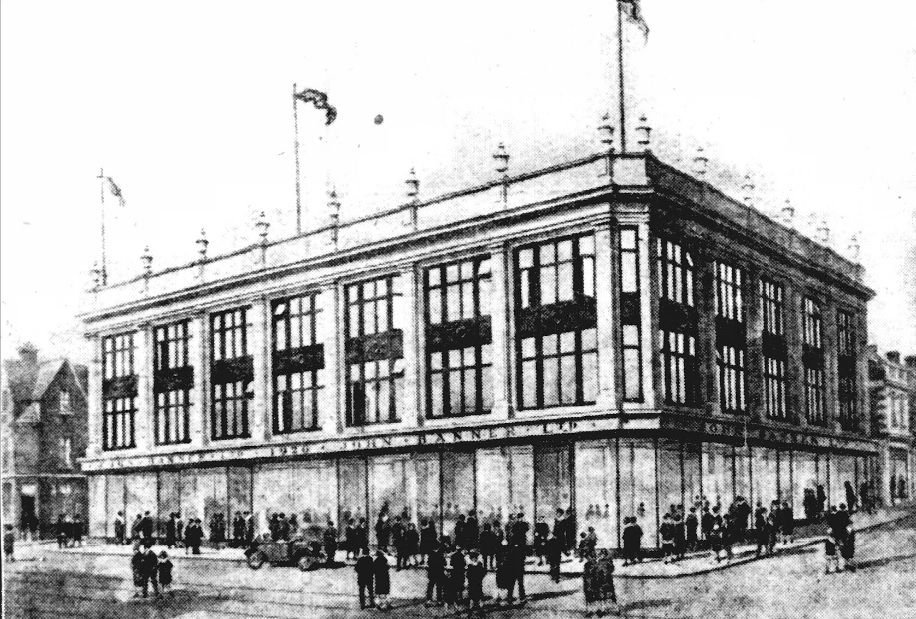
John Banner Ltd. Designed by Frank W. Chapman of Chapman and Jenkinson, Norfolk Row. Following his death, the scheme was finished under the supervision of Mansell Jenkinson and Eric Chapman. Image: British Newspaper Archive

The news that Leeds-based developer Citu has bought the John Banner building at Attercliffe is a major boost for the area. The regeneration of Attercliffe has been a long time coming, and with Kelham Island quickly filling up, developers are finally looking at this neglected part of Sheffield.

The developer already has plans for a nearby 23-acre urban regeneration scheme known as Attercliffe Waterside that will transform brownfield land either side of the Sheffield and Tinsley Canal into more than 1,000 homes.

Citu has suggested that there will be ‘significant investment’ to restore the John Banner building, including the preservation of its façade to retain many of its original features. It is currently a mix of shops and offices with 25 occupiers including Co-op Legal Services, Sheffield Chamber of Commerce, Wosskow Brown Solicitors and EE.

More than once, it has been described as Attercliffe’s flagship building, but most of our younger generation will fail to see its significance.

It is named after John Banner (1851–1930) from Kimberley, in Nottinghamshire, who was eleven when his parents moved to Attercliffe. His first venture was a little shop which opened in October 1873, the same week that horse-drawn trams started to run between Attercliffe and Sheffield.

The millinery and drapery business were in what was known as Carlton Road, which together with the adjoining High Street, became Attercliffe Road. It was almost opposite what became Staniforth Road but was then known as Pinfold Lane reflecting the area’s rural aspect.

On the other side of the road were two houses, one with a large orchard attached, and fields stretched from the Zion Congregational Church. The pastor of that church was the Rev. John Calvert who occupied one of the two houses while a doctor lived in the other.

To get the business on its feet, John Banner worked elsewhere for five years while his wife, Sarah, looked after the shop. He eventually gave up his other job and came up with the slogan for his business, ‘The House for Value’.

Seven years after starting, larger premises were needed, and a move was made further up the street almost opposite what became the present building.

Fourteen years later, further development was necessary, and he crossed the road to the present site, building shops in the gardens of the two houses mentioned above that took up the corner at Shortridge Street.

Banner was joined by his four sons – Harold, Ernest, John and Cyril – each becoming co-directors after gaining experience, and two of his three daughters worked in the Attercliffe business, as well as at a new shop on Barnsley Road at Fir Vale.

When the opportunity arose, the intervening property between Shortridge Street and Baltic Road was purchased, including a shop which had once been Attercliffe sub-post office. These properties were pulled down and the building of a new shop commenced in 1928 that would fill the space between the two streets.
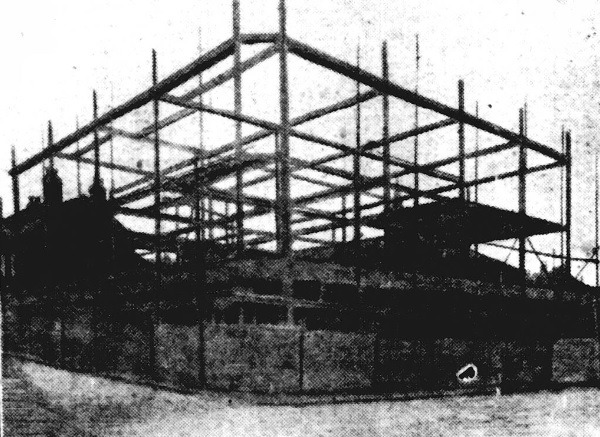
This photograph was taken by Robinson & Kershaw in 1928 and shows the steel framework looking from Attercliffe Road. Shortridge Street is to the left. It provides an important clue as to how construction was completed in two phases. The final addition, completed by 1934, would have been to the right looking towards Baltic Road. Image: British Newspaper Archive

By this time, the range at John Banner had been developed to include ladies’, men’s, and children’s wear, boots and shoes, and kitchen and household utensils, china, pictures, prams, and fire screens.

It is worth mentioning that the new John Banner department store took six years to complete. It was built in stages and by the time it was finished in 1934 both its founder, John Banner, and its architect, Frank W. Chapman, were dead.

John Banner died at his home on Beech Hill Road in 1930 and was buried at Crookes Cemetery.

The design of the building was a modern phase of Renaissance, the elevations having pronounced pilasters which ran the height of the two upper storeys, carrying well-proportioned entablature with a parapet surmounted by handsome vases. The pilasters were sub-divided by similar pilasters and the breastwork between the floor filled with effective panelling.

The style of architecture lent itself to the clothing of the steel construction both in pillars and beams which supported the building, and the whole of the casing was finished in dull glazed grey terracotta.

It was built by T. Wilkinson and Sons of Midhill Road, and the steel frame was made by Robinson and Kershaw of Temple Ironworks, Manchester, who had been responsible for other Sheffield buildings including Glossop Road Baths, the Baptist Church at Hillsborough, and extensions to the University of Sheffield and the Royal Infirmary.

The entire frontage of the ground floor was devoted to window display, and a spacious arcade stretched over the whole of the Attercliffe Road frontage on which there were three main entrances. The shop windows were supplied by H.N. Barnes of Fulham with the floor of the arcade covered with marble terrazzo laid by Italian workmen.

The interior lights on all four floors were installed by H.J. Couzens of The Moor, and a novelty was the 300 shop window reflectors and on top of the building, ten attractive Flambean fittings, The first and second floor windows had handsome leaded lights supplied by T. Foster of Norfolk Street who were artists in stained glass and leaded lights.

John Banner Ltd. This photograph was taken shortly after completion in 1934. The project had taken six years and provided Attercliffe with one of its flagship buildings. Image: British Newspaper Archive

The last stage of construction, extending the building to the corner of Baltic Road, was built by John Middleton of Hoyle Street with steel skeleton frame manufactured by Thomas W. Ward.

The internal decoration was undertaken by William Chatfield, and it was complemented with wooden counters, shelving, and fittings, that were supplied by Rothervale Manufacturing Company of Woodhouse Mill.

The floors were served by a passenger lift and staircase at the rear of the store in a central position while the first and second floors could be accessed by wooden escalators, the first to be installed in Sheffield.

Shoppers were also fascinated by a system of pneumatic cash delivery tubes, installed by the Sturtevant Engineering Company, that ran from 75 cash stations to a double-sided desk in the offices.  
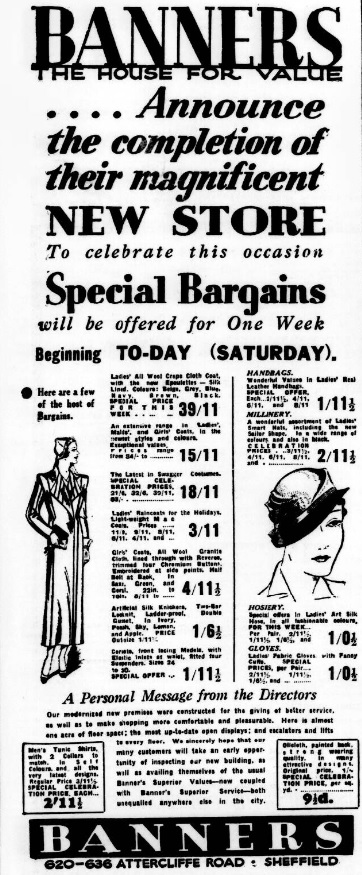
One of John Banner’s sons, Ernest, died in 1931, and by the time the building was completed in 1934, the business was in the hands of Harold, John, and Cyril Banner.

John Banner Ltd survived the Second World War but a decision was made afterwards to sell the business to United Drapery Stores.

As people moved away from the area, the store’s fortunes went the same way as Attercliffe. It suffered a decline in sales, and for a time the basement area was leased to Grandways Supermarket.  Along with the ailing fortunes of UDS , the decision was made to close John Banner in 1980.

John Banner shortly before closing in 1980. Image: Picture Sheffield

The building was subsequently divided into offices with retail space on the ground floor. It goes without saying that most of its rich interiors were lost in the transition.

Until this year it was owned by the John Banner Centre which went into administration in May. It has been acquired by Citu which is dedicated to preserving its historical significance.
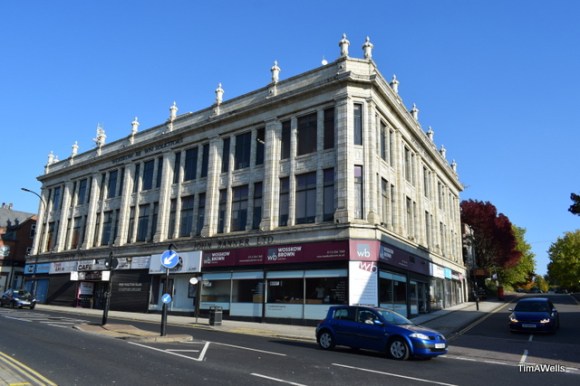
The John Banner Building on Attercliffe Road today, withoffice space above and retail space at ground level. Image: Tim A. Wells

John Banner Biography

“There was a kindly smile to John Banner and rare civic spirit, devoid of self-seeking, and a sincere desire to express a Christian spirit in service. He had a great sense of loyalty and executive ability in getting things done, and never tired of a good cause.”

These words appeared in the Sheffield Independent following his death in 1930.

John Banner was born at Kimberley in 1851, the son of a carrier, and began work at the age of seven. His parents moved to Attercliffe when he was eleven, and John never forgot the hard struggles of his early life, and of the parents who, if they could not give him wealth, gave him character and good example.

Despite the growth of his millinery and drapery business he was never spoilt by success but looked at life and the struggles of others as he knew them.

“I can never forget those days, and knowing the hard lot that most folks have, it is my bounden duty to try to make things better for them.”

He was a keen Liberal, working in Attercliffe, but refused to seek election for the city council, and was instrumental in the formation of the Attercliffe Liberal Club where he was treasurer for more than quarter of a century. He was on the Sheffield Board of Guardians for 21 years, losing his seat in April 1922, and represented the Guardians on the Attercliffe Nursing Association. He was also on the South Yorkshire Joint Poor Law Committee.

His religious activities were at Shortridge Street Methodist New Connexion Chapel for 36 years. He was treasurer of the Sunday School and the church, a teacher at the Men’s Bible Class, and helped reduce the debt on the church from £1,950 to £250. When he moved to Oakledge at 16 Beech Hill Road, he worked with Broomhill United Methodist Church, and represented it on the Sheffield circuit conference.

John Banner married Sarah Ann Higgett in 1873 and had four sons and three daughters. Sarah died at the age of 81 in 1927.

John Banner died at Oakledge in 1930 and his funeral was at Crooke’s Cemetery after a service at Broomhill United Methodist Church. His shop on Attercliffe Road closed for the day as a mark of respect for its founder.

©2023 David Poole. All Rights Reserved.
Categories
Buildings

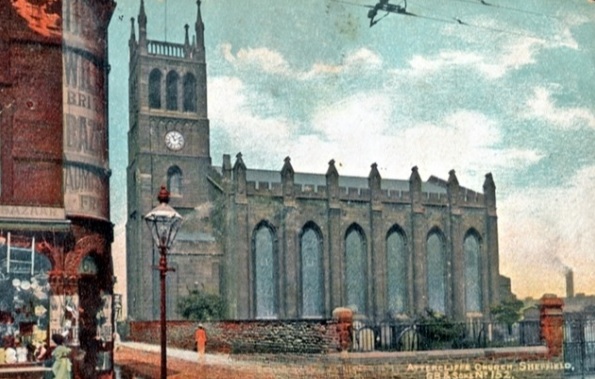
Attercliffe Parish Church – “Standing on a bold cliff which overhangs the Don.”

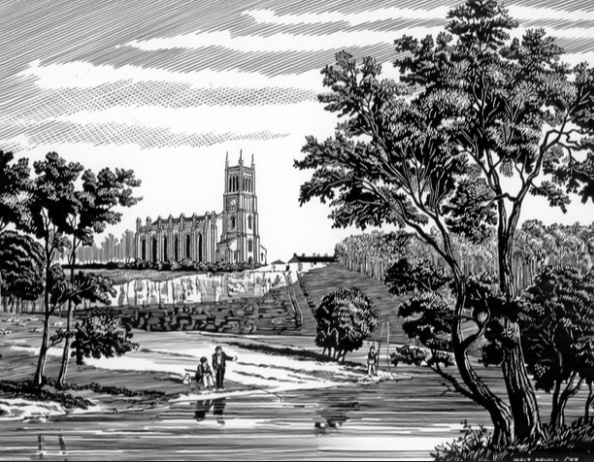
Christ Church, Attercliffe Road, from the River Don by Walter Revill. Described in early directories as standing near the bold cliff which overhangs the Don. Image: Picture Sheffield

We forget about Attercliffe, and so it is inevitable that we forget its lost buildings.

One example is Attercliffe Parish Church, also known as Christ Church Attercliffe, once a grand place of worship, badly damaged in the Sheffield Blitz of 1940 and later demolished.

And we might be forgiven for not knowing where it stood, but its site is plain to see.

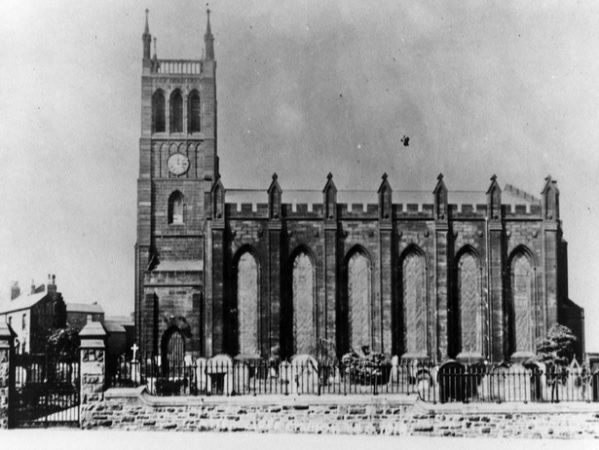
Christ Church, Attercliffe Road. Image: Picture Sheffield/G. Bagshaw and Sons

We can turn to Pawson and Brailsford’s Illustrated Guide to Sheffield (1868) for details: –

“There is a handsome church at Attercliffe, which is about two miles from the centre of town, on the Doncaster Road. Formerly Attercliffe was a detached village, but now it is practically a busy manufacturing suburb of Sheffield. It was opened in 1826, having been built by means of a Parliamentary grant, at the cost of £14,000. It is a Gothic building, with lancet windows and a handsome groined roof. It will accommodate from 1,100 to 1,200 persons.”

The old chapel-of-ease of the Township of Attercliffe-cum-Darnall, dating from the 17th century, had been replaced by the new church.

Attercliffe, at that time, was a comparatively small place, and largely consisted of lanes and fields, and the new church was one of four churches built in Sheffield out of what was known as the ‘Million Fund.’

The nucleus of the building fund consisted of a grant from an indemnity paid to England by Austria after the Battle of Waterloo.

Christ Church, Attercliffe Road. Built at a cost of £14,000. Image: Picture Sheffield
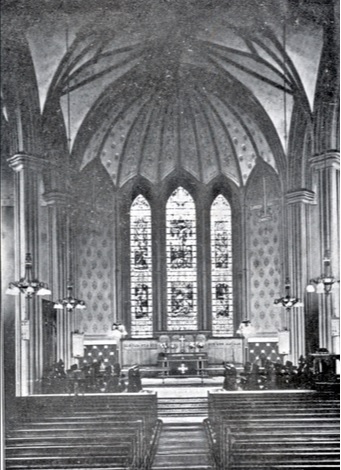
Interior of Christ Church, Attercliffe Road. In 1867 the galleries were removed, and the interior reseated with open benches. Image: Picture Sheffield

The first stone was laid by the 12th Duke of Norfolk assisted by the 4th Earl Fitzwilliam in October 1822 and took four years to build. It was consecrated by the Archbishop Vernon Harcourt of York in 1826.

Early directories referred to the church as standing near the bold cliff which overhangs the Don.

“Time was when Attercliffe was a place of sylvan beauty and picturesque repose, of pleasant pastures and stately houses on the banks of a River Don whose waters were clear and transparent.”

“In the church, there are galleries on the sides and at the west end; which, with the pews in the body of the church, contain two thousand sittings. Some of the windows of the church are ornamented with painted glass, containing the arms of Fitzwilliam and Surrey, Gell, Milner, Staniforth, and Blackburn.”

The churchyard closed for burials in 1856 and a cemetery leading down to the Don was opened in 1859.

In 1876, the church was closed for cleaning and redecoration.

“Below the windows the walls are tinted puce, but above they are straw-coloured, with ornamental work above the windows. The groins are picked out in stone and the roof is coloured buff. White is the groundwork of the chancel roof, but other tints are introduced.”

The church didn’t forget the men who served in World War One, and at a cost of £300 a memorial was erected in the form of oak reredos and panelling together with remembrance panels framed in oak, bearing the names of all those who answered the call of their country.

By the time of its centenary in 1926, the parish embraced around 33,000 souls, but it was a different place.

“The mere mention of Attercliffe to those who are closely acquainted with it is scarcely calculated to send them into ecstasies of delight, for the very sound reason that Attercliffe has precious little that appeals to the aesthetic sense. Attercliffe and throbbing, thriving industry are – in normal times – synonymous terms, and when the clang and clatter, the smoke and grime of heavy trades fill the air, Attercliffe, from the casual visitor’s point of view, is a place to get away from rather than to remain at.

“Looking back upon a picture of a rural landscape, with its common (now filled with shops), its thatched cottages, and its sheep grazing on the riverbanks, the individual might well exclaim: ‘All this has changed.’”

The church was in debt for years, especially after the installation of electricity, and following the departure of Rev. A. Robinson in 1930, the church revealed that its finances were “vague and confused,” and that he had left a debt of £550-£600.

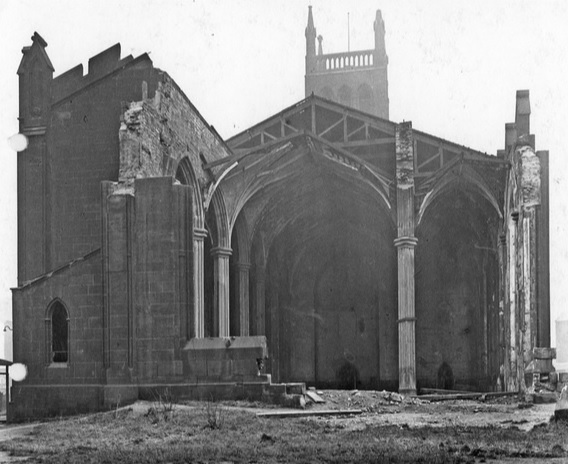
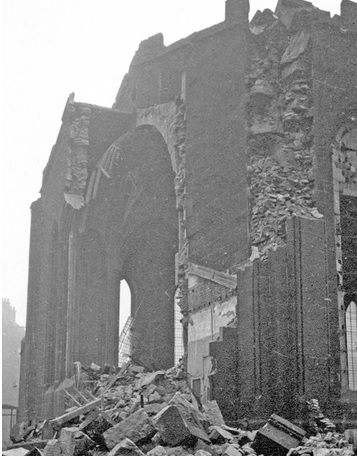
Unfortunately, the church was closed after bomb damage in 1940. Most of its contents were destroyed and Sheffield lost one of its finest churches.

Christ Church, Attercliffe, after bomb damage. Image: Picture Sheffield
Attercliffe Road – Christ Church after air raids. Image: Picture Sheffield
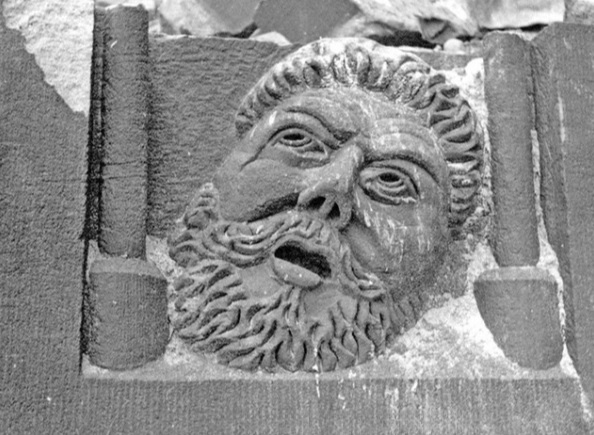
Carved detail from Christ Church, Attercliffe after air raid. Image: Picture Sheffield

The organ from the blitzed church was rebuilt and taken to St Andrew’s Presbyterian Church on Hanover Street.

The adjacent church hall became the parish church until 1950, and then functioned as a chapel in the parish of Attercliffe-cum-Carbrook until it was closed in April 1981. The new church of St Alban (Darnall) is now the parish church of Attercliffe.

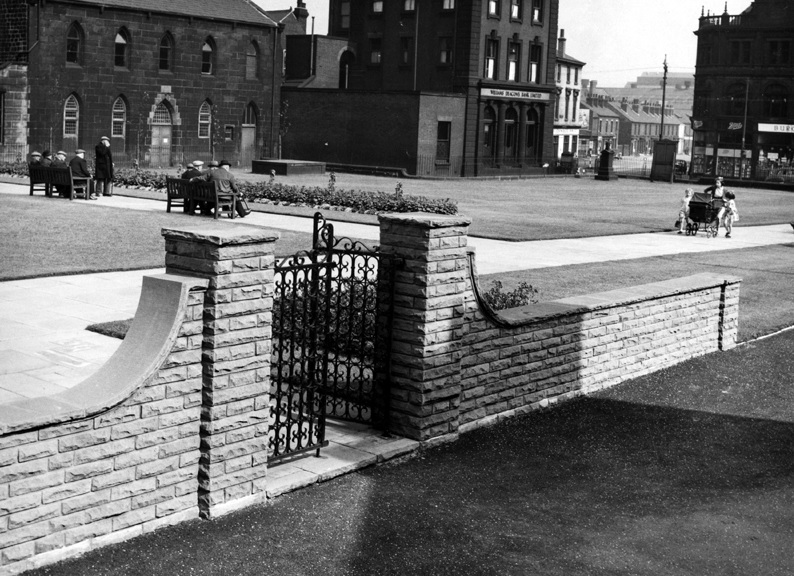
In 1953, the site of the old church and its graveyard was turned into a garden, an area of pleasant green turf bordered by paths. It was opened by the Lord Mayor, Coun. Oliver S. Holmes, who said, “it was inspiration to the whole city that good will make beauty rise from the rubble of war.”

Attercliffe Garden of Rest (in the grounds of former Christ Church), Attercliffe Road from Church Lane with Christ Church Sunday School and No. 747, William Deacons Bank in the background. 1959. Image: Picture Sheffield

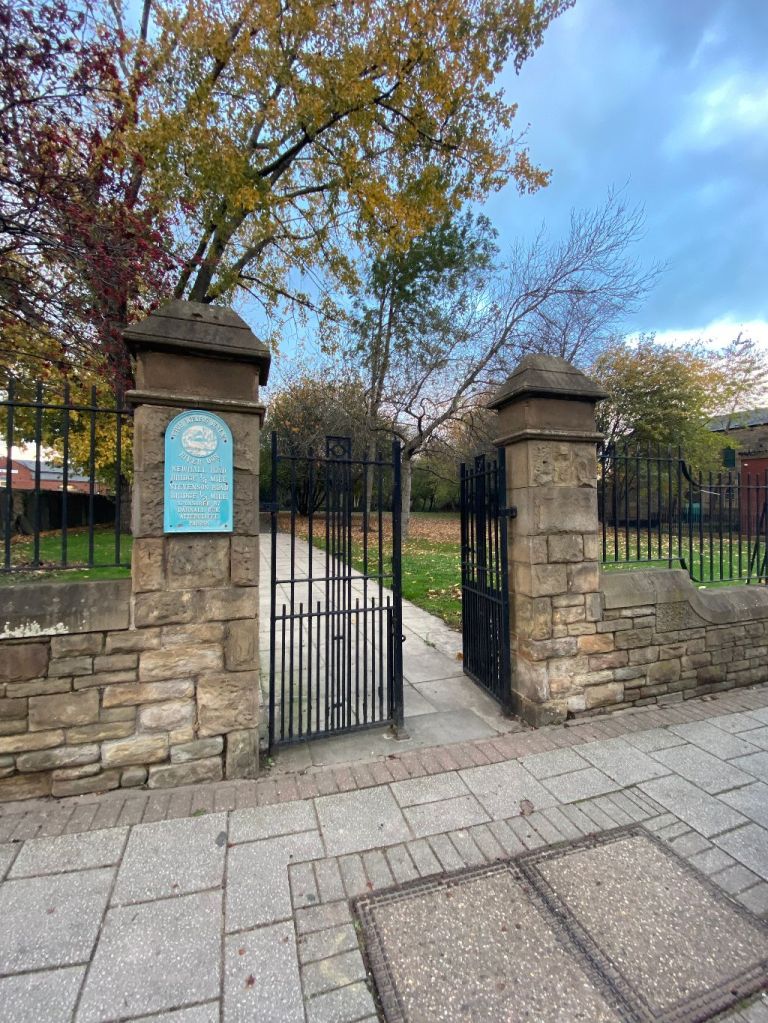
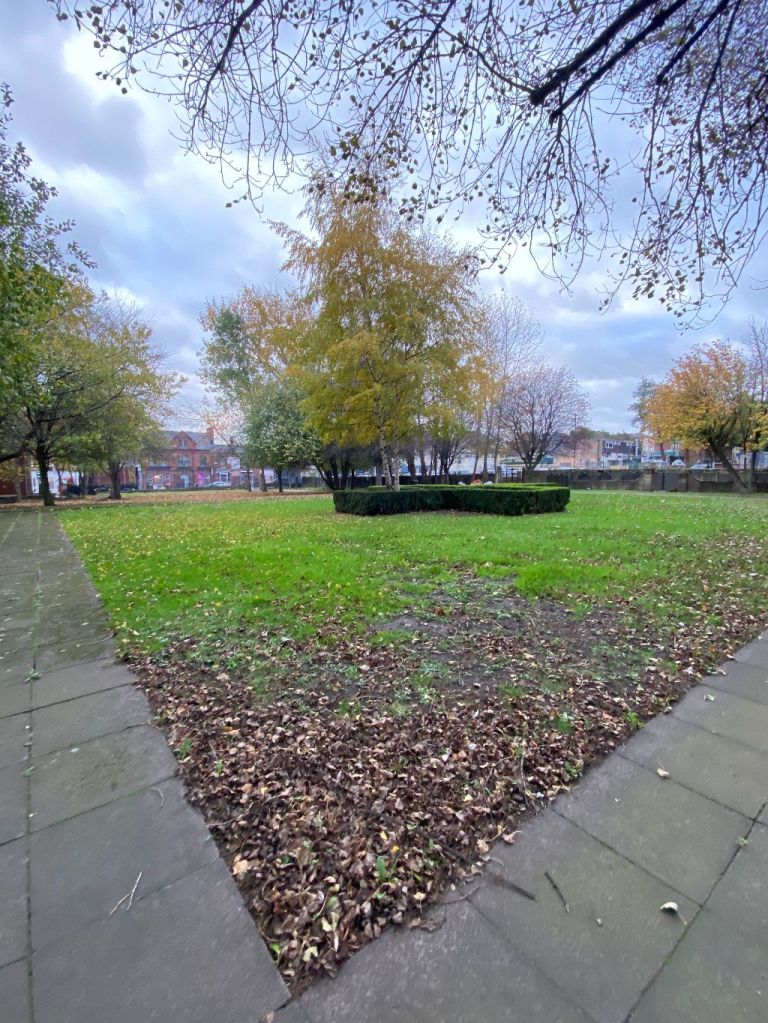
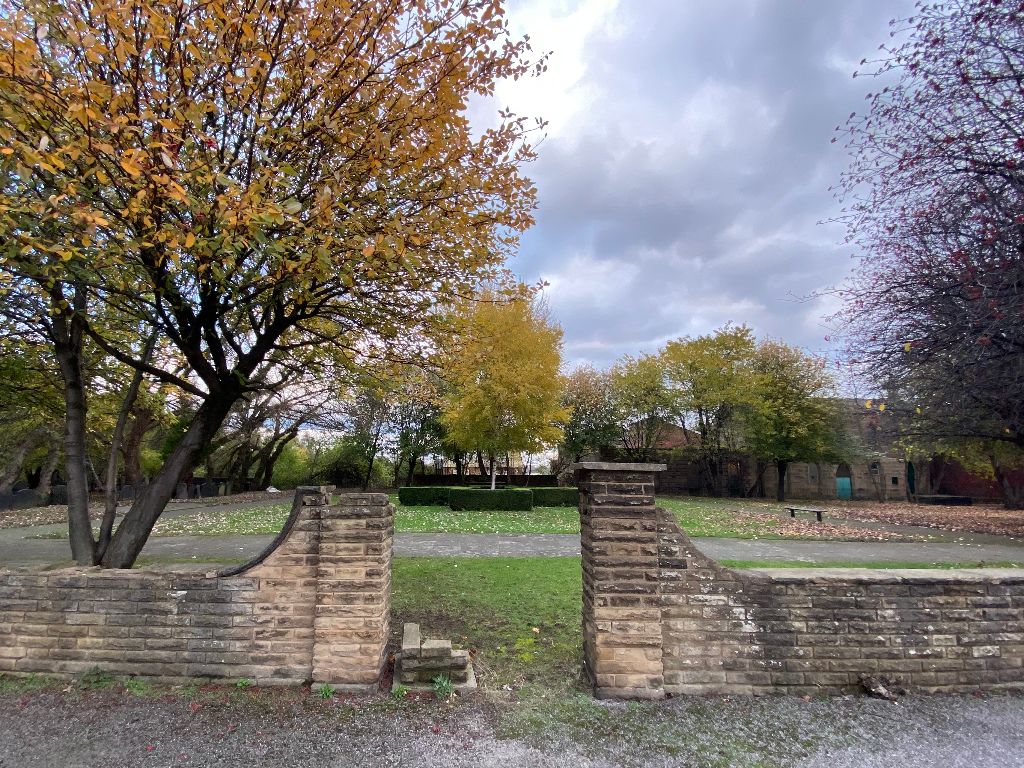
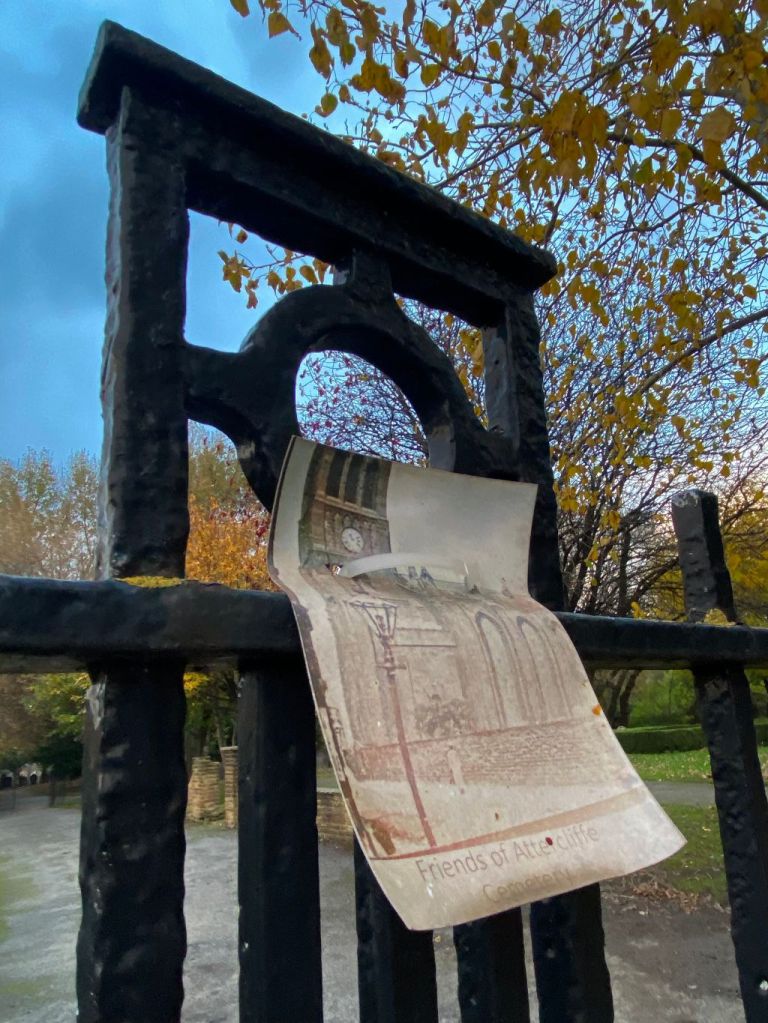
The church site and the garden of remembrance can be seen on Attercliffe Road, opposite the Don Valley Hotel. Access is available into old Attercliffe Cemetery behind and the Five Weirs Walk.

NOTE
A rare book, ‘The Church in Attercliffe,’ by Rev. Arthur Robinson, was published to celebrate the church’s centenary in 1926.

The site of Attercliffe Parish Church. Images: DJP/2022

©2022 David Poole. All Rights Reserved.
Categories
Buildings People

Walter Gerard Buck

This influential character is relatively unknown in Sheffield’s history. A modest person, he was responsible for one of the city’s iconic landmarks.

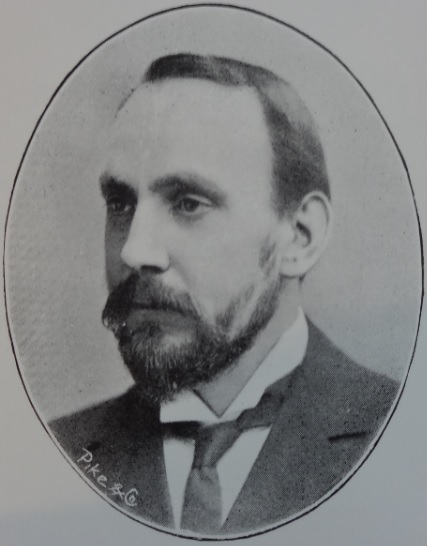
Walter Gerard Buck (1863-1934) was born in Beccles, Suffolk, the youngest son of Edward Buck. He was educated at the Albert Memorial College in Framlingham, and acquired an interest in architecture, joining the practice of Arthur Pells, a reputable Suffolk architect and surveyor, where he learned the techniques to design and build.

Walter Gerard Buck, architect and surveyor (1863-1934)

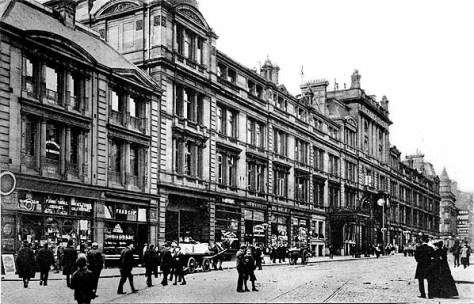
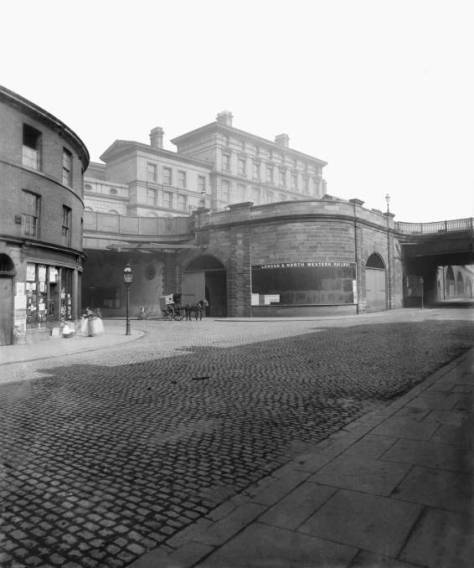
Walter, aged 21, realised there were limitations to this rural outpost and would need to improve his talent elsewhere. This opportunity arose in Manchester, the seat of the industrial revolution, where demand for new commercial buildings was great. It was here where he gained several years’ experience in large civil engineering and architectural works, including the building of the Exchange Station, Manchester, as well as the Exchange Station and Hotel in Liverpool.

Liverpool Exchange Street Station and Hotel. The frontage remains and in the 1980s was incorporated into the Mercury Court office development. It has recently been converted into 21st century office space called ‘Exchange Station’. (Image: Alan Young)
Manchester Exchange Station was a railway station located in Salford, immediately to the north of Manchester city centre. It served the city between 1884 and 1969. The station was closed on 5 May 1969. (Image: National Railway Museum)

In 1890, his reputation growing, Walter made the move over the Pennines and into the practice of Mr Thomas Henry Jenkinson at 4 East Parade.

Jenkinson had been an architect in Sheffield for over forty years. He had been responsible for several buildings built in the city centre, taking advantage that Sheffield had been one of the last among the big towns to take in hand the improvement of its streets and their architecture.

Buck’s move to Sheffield proved advantageous. Jenkinson had become a partner at Frith Brothers and Jenkinson in 1862, which he continued until 1898, when he retired. He made Walter his chief assistant and allowed him to reorganise the business and control affairs for several years. During this period Walter carried out work on many commercial buildings and factories in Sheffield.

Initially, Walter boarded in lodgings at 307 Shoreham Street, close to the city centre. He married Louisa Moore Kittle in 1892 and, once his reputation had been established, was able to purchase his own house at 4 Ventnor Place in Nether Edge.

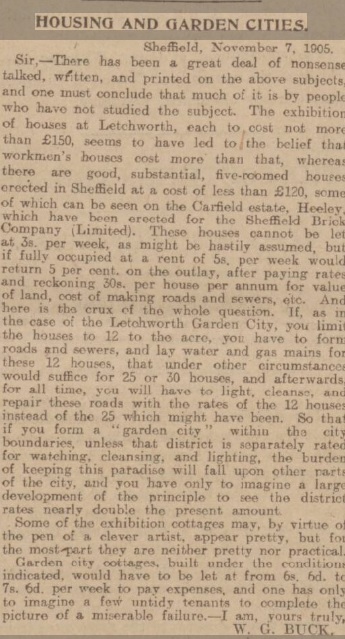
A letter from Walter to the Sheffield Daily Telegraph (8 Nov 1905)

Perhaps Walter Buck’s greatest work also proved to be his most short-lived.

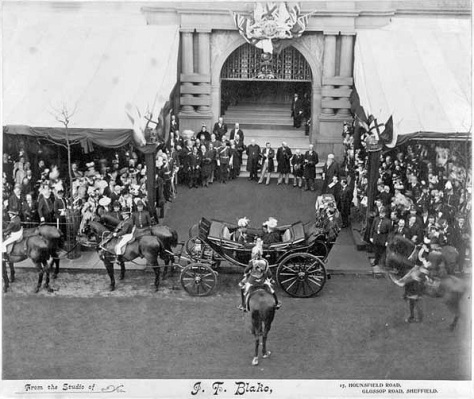
In May 1897, Queen Victoria made her last visit to Sheffield for the official opening of the Town Hall. It also coincided with the 60th year of her reign – Queen Victoria’s Diamond Jubilee Year.

The visit caused considerable excitement in Sheffield and preparations lasted for weeks. Shops and offices advertised rooms that commanded the best positions to see the Queen. Not surprisingly, these views were quickly occupied, but the closest view was promised in the Imperial Grandstand, specially designed for the occasion by Walter Gerard Buck.

Queen Victoria’s Diamond Jubilee visit to Sheffield in May 1897. The central interest was the newly-built Town Hall where ‘the gilded gates stood closed until her majesty touched the golden key and they flew open’.

This spectacle was built next to the newly-erected Town Hall, opposite Mappin and Webb, on Norfolk Street (in modern terms this would be where the Peace Gardens start at the bottom-end of Cheney Walk across towards Browns brasserie and bar). It was advertised as ‘absolutely the best and most convenient in the city’, with a frontage of nearly 200 feet and ‘beautifully roofed in’. The stand, decorated in an artistic manner by Piggott Brothers and Co, provided hundreds of seats, the first three rows being carpeted with back rests attached to the back. In addition, the stand provided a lavatory, refreshment stalls and even a left luggage office. It was from here that the people of Sheffield saw Queen Victoria as the Royal procession passed within a few feet of the stand along Norfolk Street to Charles Street.

The next day the Imperial Grandstand was dismantled.

The professional relationship between Walter Buck and Thomas Jenkinson matured into a close friendship.

When Jenkinson died in 1900, he left the business to Walter and made him one of his executors. His son, Edward Gerard Buck, eventually joined the business which became known as Buck, Lusby and Buck, moving to larger premises at 34 Campo Lane.

In 1906, Walter was elected to the Council of the Sheffield, South Yorkshire and District Society of Architects and Surveyors and was elected President in 1930. He was also a Fellow of the Royal Institute of British Architects (RIBA) and a member of the council of that body.

Walter also became a member of the council of the Sheffield Chamber of Commerce, a member of the Court of Governors of Sheffield University, a member and director of the Sheffield Athenaeum Club, a member of the Nether Edge Proprietary Bowling Club and vice-president of the Sheffield Rifle Club. It was this last role that he enjoyed best. Walter was a keen swimmer but his passion for rifle shooting kept him busy outside of work.

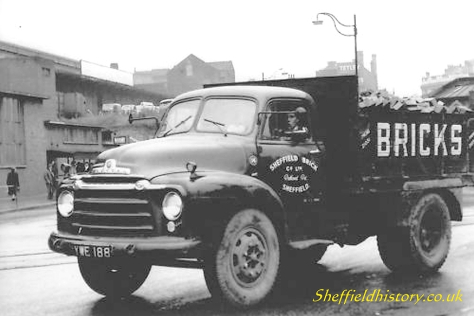
Apart from architectural work Walter held directorships with the Hepworth Iron Company and the Sheffield Brick Company. These astute positions allowed him to negotiate the best prices for the building materials needed to complete his projects.

A familiar site on Sheffield’s streets. The Sheffield Brick Company had brickyards situated at Neepsend, Grimesthorpe, Wincobank and Wadsley Bridge. Materials were used in many of the city’s buildings including Sheffield University, the Grand Hotel and the Town Hall. (Image: Sheffield History)

However, as the new century dawned, it was a role outside of architecture that occupied Walter’s time.

In 1892 the French Lumière brothers had devised an early motion-picture camera and projector called the Cinématographe. Their first show came to London in 1896 but the first moving pictures developed on celluloid film were made in Hyde Park in 1889 by William Friese Greene. The ‘new’ technology of silent movies exploded over the next few years and by 1906 the first ‘electric theatres’ had started to open. In London, there were six new cinemas, increasing to 133 by 1909.

Not surprisingly, this new sensation rippled across Britain and Sheffield was no exception. This had been pioneered by the Sheffield Photo Company, run by the Mottershaw family, who displayed films in local halls. They also pioneered the popular ‘chase’ genre in 1903 which proved significant for the British film industry. The Central Hall, in Norfolk Street, was effectively Sheffield’s first cinema opening in 1905, but the films were always supported with ‘tried and tested’ music hall acts. Several theatres started experimenting with silent movies, but it was the opening of the Sheffield Picture Palace in 1910, on Union Street, that caused the most excitement. This was the first purpose built cinema and others were looking on with interest.

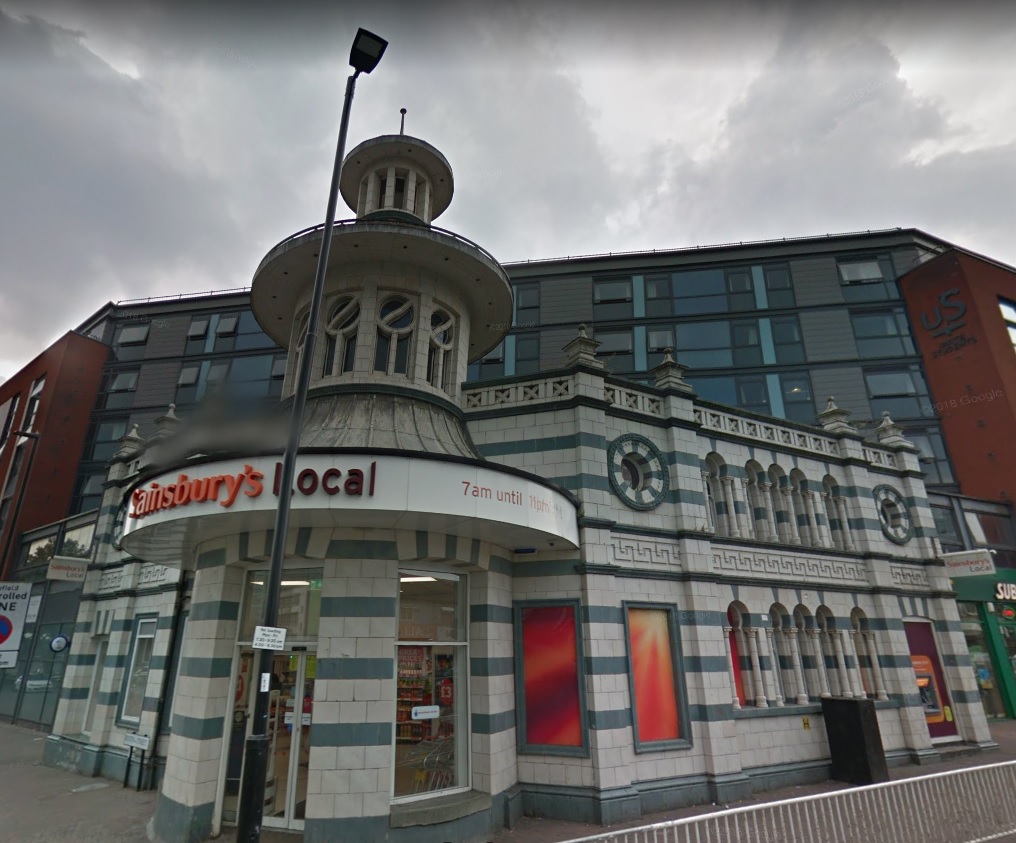
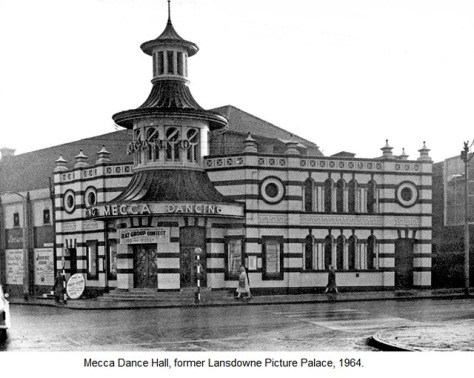
Walter Buck was one such person and saw the opportunity to increase business by designing these new purpose-built cinemas. One of his first commissions was for Lansdowne Pictures Ltd who had secured land on the corner of London Road and Boston Street. The Lansdowne Picture Palace opened in December 1914, built of brick with a marble terracotta façade in white and green, with a Chinese pagoda style entrance. It was a vast building seating 1,250 people. In the same year he designed the Western Picture Palace at Upperthorpe for the Western Picture Palace Ltd.

The Lansdowne Picture Palace was designed by architect Walter Gerard Buck of Campo Lane, Sheffield. It stands at the junction of London Road and Boston Street and opened on 18th December 1914.  In 1947 the cinema became a temporary store for Marks & Spencers. In the 1950’s it became a Mecca Dance Hall called the ‘Locarno’ later changing into ‘Tiffany’s Night Club’. It had several more reincarnations as a night club with different names and the frontage was painted black, its last name being ‘Bed’. (Image: Cinema Treasures)
The Weston Picture Palace, designed by Walter Gerard Buck in 1913-14. The cinema was on St Phillip’s Road and Mitchell Street and was demolished. (Image: Sheffield History)

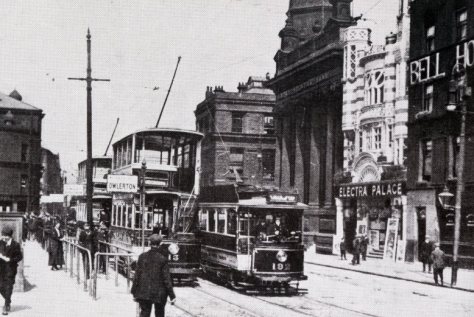
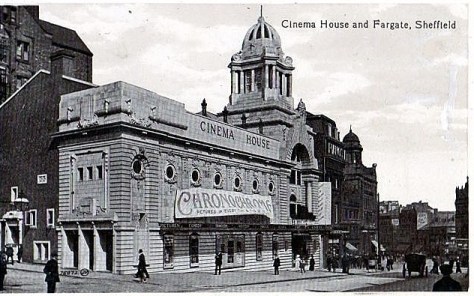
With the knowledge required to build cinemas it was unsurprising that Walter Buck was asked to join several companies as a director. One of these was Sheffield and District Cinematograph Theatres Ltd which was formed in 1910 for ‘the purpose of erecting and equipping in the busiest and most thickly populated parts of the City of Sheffield and district picture theatres on up-to-date lines’. Its first cinema was the Electra Palace Theatre in Fitzalan Square with a seating capacity upwards of 700 with daily continuous shows. Their second cinema was the Cinema House built adjoining the Grand Hotel and adjacent to Beethoven House (belonging to A Wilson & Peck and Co) on Fargate, this part later becoming Barker’s Pool. This was a much grander cinema with a seating capacity of 1,000 together with luxuriously furnished lounge and refreshment, writing and club rooms.

Ironically, Walter Buck did not design either of these picture houses. Instead, they were conceived by John Harry Hickton and Harry E. Farmer from Birmingham and Walsall, but the bricks were supplied by the Sheffield Brick Company, that lucrative business where Walter was a director. It should not go unnoticed that this highly profitable company probably made Walter a wealthy man. It had already supplied bricks for the Grand Hotel, Sheffield University and the Town Hall.

Opened as the Electra Palace on 10th February 1911. It was designed by J.H. Hickton & Harry E. Farmer of Birmingham & Walsall. Constructed by George Longden & Son Ltd. (who built several Sheffield cinemas), the proprietors being Sheffield & District Cinematograph Theatres Ltd. (Image: Sheffield History)
Opened in 1913, the Cinema House seated 800 and was one of the smaller city centre cinemas. Boasting a tea room, it had a narrow auditorium and patrons entered from the screen end of the hall. Being narrow, it’s Cinemascope image size was severely restricted. It closed in 1961 and was subsequently demolished. (Image: Cinema Treasures)

The cinema undertaking was not without risk and Cinema House, which opened six months before the start of World War One, always struggled to break even.

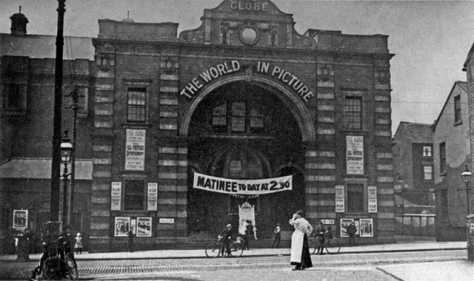
In 1920, far from building new cinemas right across the city, the company bought the Globe Picture House at Attercliffe. The following year they reported losses of £7,000 with Cinema House blamed for the poor performance.

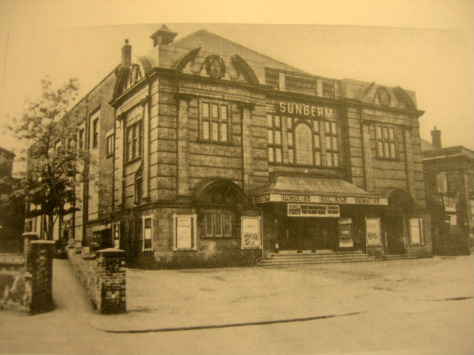
At this stage, it is unclear as to what involvement Walter Buck had with Sheffield and District Cinematograph Theatres. He was also a director of Sunbeam Pictures Ltd, designing the Sunbeam Picture House at Fir Vale in 1922, and the Don Picture Palace at West Bar. He was most certainly a director of the Sheffield and District Cinematograph Company  by the late 1920s, and eventually became its chairman. In 1930, absurdly on hindsight, he was faced with a public backlash as the company made the transfer over to ‘talkie’ pictures.

“It was true that some people preferred the silent pictures, but the difficulty was that the Americans were producing very few silent films, or the directors might probably have kept some of the houses on silent films to see if they could hold their own with the talkie halls.”

Located on Attercliffe Common at the junction with Fell Road. The Globe Picture Hall was a venture of the Sheffield Picture Palace Co. Ltd. It opened on 10th February 1913 and was, at that time, one of the largest cinemas in Sheffield. The architects were Benton & Roberts. The owning company reformed on 21st March 1914 as the Sheffield & District Cinematograph Theatres Ltd. and remained owners until closure on 29th June 1959. (Image: Cinema Treasures)
The Sunbeam Picture House was built on Barnsley Road at the junction of Skinnerthorpe Road in the Fir Vale district of Sheffield. The Sunbeam Picture House opened on Saturday 23rd December 1922. It was built set back from the road and was an imposing brick and stucco building, with a large embossed rising sun motif on the facade, set inside an ornamental parapet. A central entrance to the cinema was covered with a canopy. (Image: Sheffield History)
The Don Picture Palace opened on Monday 18th November 1912 with the films “Captain Starlight” and “Monarchs Of The Prairie”. The architect was Henry Patterson and it was situated in what was then one of the main entertainment areas of Sheffield with the old Grand Theatre of Varieties being close by. (Image: Sheffield History)

Walter Buck never retired but died at his home at 19, Montgomery Road, Nether Edge, aged 70, in September 1934. He left a widow, his second wife, Fanny Buck, and three sons – Edward Gerard Buck, William Gerard Buck, a poultry farmer, and Charles Gerard Buck, chartered accountant. Walter Gerard Buck was buried at Ecclesall Church.

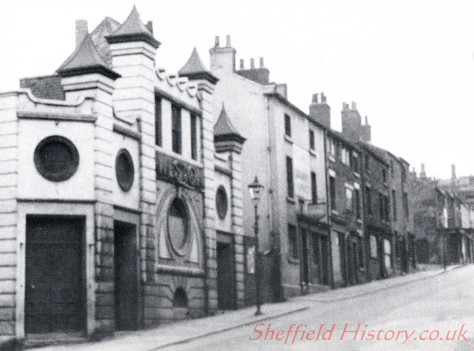
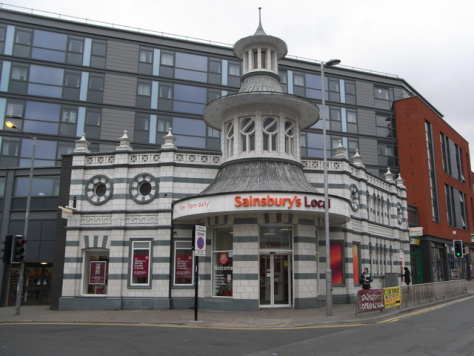
It seems the only epitaph to Walter Buck is the Chinese pagoda style entrance of the Lansdowne Picture Palace. The auditorium was demolished to make way for student accommodation, but the frontage was retained for use as a Sainsbury’s ‘Local’ supermarket. Very little information exists about his other work in the city and further research is needed to determine which buildings he designed, and which remain. Any information would be most welcome.

All that remains of the former Lansdowne Picture Palace. The frontage and Chinese-style pagoda were retained for this Sainsbury’s Local supermarket, soon to become Budgens. (Image: Cinema Treasures)