Categories
Companies

Binghams

It’s been a long battle, but one seemingly won by a name famous in Sheffield. The potted meat wars dates to the time when every small butcher in the city produced its own version of this very Yorkshire delicacy.

As trends changed, and pre-packaging came to the fore, a handful of Sheffield-based companies survived, though most fell by the wayside, to leave us with Binghams and Sutherlands.

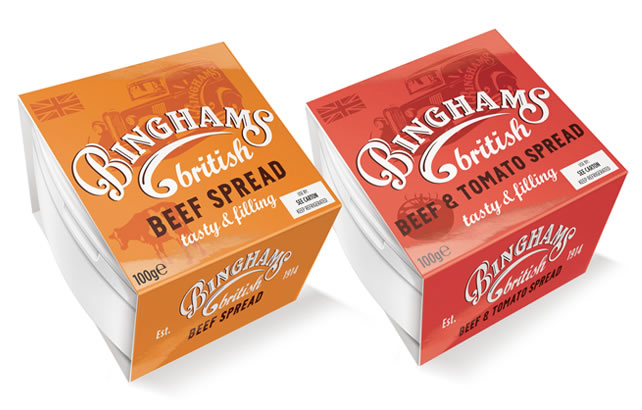
While Sutherlands takes a large chunk of the market, the undoubted winner turned out to be Binghams, producing about 15,000 individual cartons everyday that go out to most of the major supermarkets.

The company’s history starts with the birth of Charles Bingham in 1893, who along with his brother Walter, started trading in yeast and meat, selling products from push bikes during the early 1900s.

In 1914, despite going to fight for the Yorkshire Regiment in World War One, Charles started producing and selling Binghams Beef Spread from his Sheffield home, a recipe still used today.

By 1934, the business had become so successful that Charles built a purpose built factory in Western Road, Crookes, which is still home of the Binghams brand.

Having seen off competitors and fighting for his country again during World War Two, Charles guided the business up until 1969, when he sold the business to Samworth Brothers.

Under the Samworth Brothers wing, Binghams Food became a subsidiary of Pork Farms, although the business maintained its own identity and brand. In the early 1970s, Pork Farms was sold to Northern Dairies, which was to become Northern Foods.

In February 2007, venture capitalist company Vision Capital bought out a significant share of Northern Foods’ business, which included Pork Farms and Binghams Food, and not long after, businessman Peter Moon received a call asking if he would be interested in purchasing the business.

Moon had worked for Binghams Food as general manager in the 1980s, and with his wife Stella, jumped at the opportunity to reacquaint himself with the business.

Despite employing about twenty people, the manufacturing process is geared up for mass production.

The different areas of the factory are dotted around the courtyard where Charles Bingham used to house his stable of cars – the old garage since converted into packaging operations.

The butcher works alone, slicing and cutting the beef according to the production schedule. While there may be a common misconception that potted beef is made from any cut of beef, Binghams Food favours beef flank to ensure quality in their product.

The beef is cooked overnight before it’s removed and sieved into separate pans for stock and meat. Then the meat is transferred to the mincer, along with seasoning, before it’s put through a hydrogenator. The temperature is checked to ensure it is still above 85°C before the product is deposited into pots. The retail cartons then go into the pasteurising oven before moving into the blast chiller to bring the temperature of the cartons down as quickly as possible.

An operator checks every single pot by hand for a correct seal before it is passed on to be sleeved by hand. Due to the space within the factory, a packing machine cannot be installed so all the cartons are sleeved by hand.

These days it’s not just about potted beef spread. Along with the familiar beef and beef and tomato spreads, there are now modern-day favourites like potted pulled pork, BBQ pork spread, and fajita beef spread.

Categories
Companies

Top Shop

It appears that Topshop in Sheffield has come the full circle.

The news that Topshop and Topman is closing on Fargate could end a long-time association with Sheffield city centre. According to a recently submitted planning application, Nos. 33-35 Fargate, look to be falling into Superdrug hands.

The irony is that Topshop was founded in Sheffield in 1964, a brand extension of the Peter Robinson department store, then situated at the corner of Castle Square (now occupied by easyHotel).

Peter Robinson was a women’s fashion chain, founded in 1873, that had become part of Burton’s in 1946.

It opened as Peter Robinson’s Top Shop, a youth brand, selling fashion by young British designers such as Polly Peck, Mary Quant, Gerald McCann, Mark Russell and Stirling Cooper.

The Top Shop name was later used for a large standalone store on Oxford Street, London, and expanded into further Peter Robinson branches at Ealing, Norwich and Bristol.

It wasn’t until 1973 that Top Shop was split from Peter Robinson, focusing on the 13-24 age groups, leaving the department store to concentrate on the over 25s.

The Top Shop (later Topshop) brand flourished, subsequently becoming part of Phillip Green’s Arcadia Group, with 500 shops worldwide, of which 300 were in the UK.

Alas, by the end of the 1970s, the Peter Robinson name had all but disappeared.

In Sheffield, C&A had absorbed the former Peter Robinson shop, and when it pulled out of the UK, the unit transferred to Primark.

However, as we well know, times have been difficult for Phillip Green. Last year, the Arcadia Group went through a Company Voluntary Arrangement (CVA) with a significant number of stores closing.

Categories
Buildings Companies

Banner Cross Hall

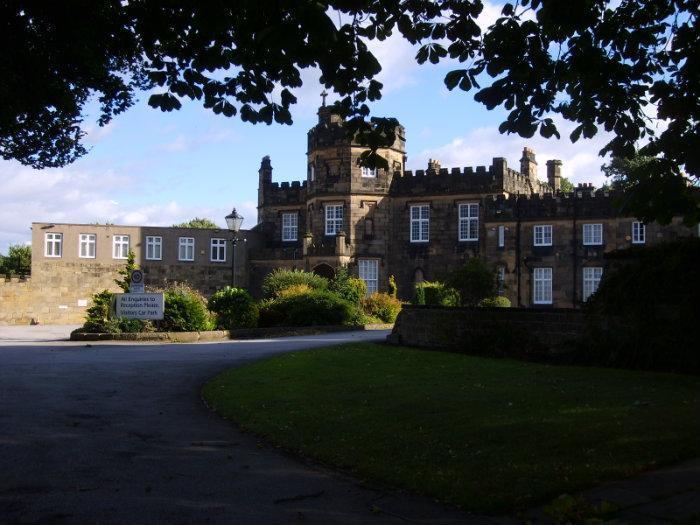
In July 1932, the fate of Banner Cross Hall, on Ecclesall Road South, had been in the balance.

The old house had been on the market, subject of many rumours, and people in Sheffield feared that it would be demolished.

However, the announcement that Charles Boot, of Henry Boots and Sons, the famous firm of builders, had purchased the hall, did much to alleviate concerns.

The area of the land was just under four acres, and it was intended to accommodate all the firm’s staff from its original Moore Street premises.

In an interview with the Sheffield Daily Telegraph at his home, Thornbridge Hall, near Bakewell, Charles Boot (1874-1945) said that certain structural alterations for office purposes had already started.

“The front of the hall will be somewhat altered, but it is not my intention to do anything to destroy the amenities of the district,” he said.

Banner Cross Hall was begun in 1817 for Lieutenant-General William Murray by architect Jeffry Wyatt (afterwards Sir Jeffry Wyatville), who claimed it to be his finest work, and stood on the site of an ancient mansion.

It appears to have got its name from an ancient cross which stood near to the house, and in the time of Queen Elizabeth I (1558) was known as Bannerfield, referred to as Banner Cross in the time of James I (1603).

General Murray had purchased the interests of the Athol family, and after building the hall, retired here with the intention of “spending within its tranquil shades, the evening of an active and honourable life.”

However, he died a year later and General Murray, by his will, gave Banner Cross Hall to his sister, Anne, the wife of the Rev. William Bagshawe.

The Bagshawe’s were a prominent family within Derbyshire and Yorkshire, with estates in Castleton, Chapel-en-le-Frith, Ford, Hope, Norton and Wormhill; and in Ecclesall Bierlow, Fulwood and Sheffield.

Banner Cross Hall had remained with the Bagshawe family until going to market.

Tenants of the hall included Douglas Vickers, industrialist and politician, Colonel Henry Kenyon Stephenson, MP and businessman, and David Flather, an engineering firm owner, the hall’s last occupant from 1922 to 1932.

The history of Banner Cross Hall and the names of the distinguished families who occupied it are maintained in the naming of roads in the vicinity, the likes of Tullibardine, Murray, Glenalmond, Blair Athol, and Ford roads.

Eighty-eight years later, Banner Cross Hall is still the headquarters of Henry Boot.

Categories
Companies People

Henry Boot

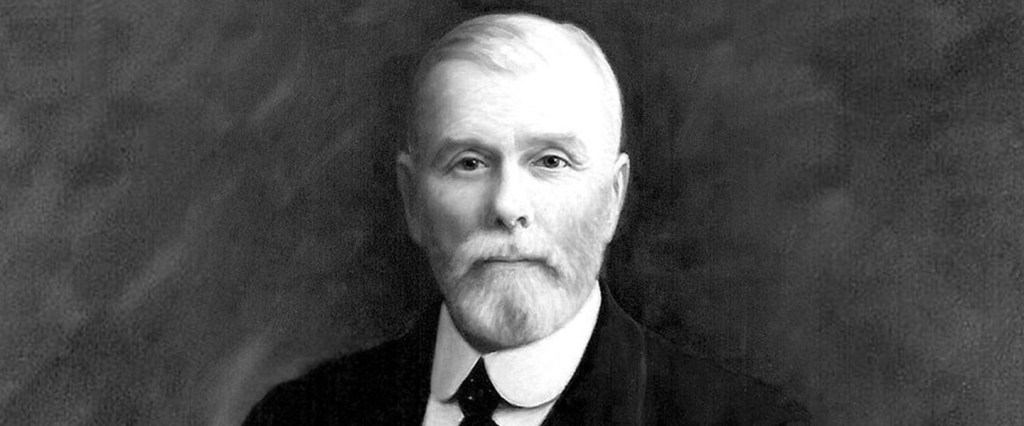
When Henry Boot died in 1931, he was described as the founder of a world-famous Sheffield firm. The company was only 45-years-old at the time, and surprisingly Henry Boot is going strong, still a respected construction and property development business.

Henry Boot was born in 1851 at Heeley, his father being a landowner and farmer, and was apprenticed as a joiner with a builder on Division Street. He spent thirty-three years learning his trade before launching out on his own in 1886.

Henry Boot was based on Moore Street, and moved into large scale public works and housing projects, and the growth of the firm makes romantic history.

During World War One, the firm carried out enormous Government contracts at a time of great difficulty.

The firm built a major part of Catterick Camp, in North Yorkshire, with accommodation for an Army Corps, and so substantial was the work that it was retained as a permanent training centre.

An urgent demand for an aerodrome at Manston, on the Isle of Thanet, also resulted in the firm getting the contract, construction completed in record time.

Other important war work included the Tees naval base, the famous Calshot seaplane station, Chepstow Military Hospital and the American Army Rest Camp and Hospital at Southampton.

Afterwards, the company set up an office in Paris and, in conjunction with the French Government, administered contracts for the reconstruction of devastated towns and villages.

Its Athens office also secured a £10million contract for irrigation work with the Greek Government (a project that lasted until 1952).

Henry Boot was also a prolific house builder, constructing over 80,000 homes in the inter-war period, over 50,000 of these for local authorities, and about 1,000 on the Manor estate in Sheffield.

Henry retired before the war, succeeded as chairman by his eldest son, Charles Boot, of Thornbridge Hall, at Great Longstone. Although Henry retained an active part, it was Charles that built the business into one of Britain’s major construction companies.

Henry Boot had two other sons, William and Edward, and seven daughters, two of whom had married and lived in British Columbia.