Categories
Companies

Batchelor’s

Batchelor’s Cup a Soup, Super Noodles, Garden Peas, Mushy Peas – all recognisable products on supermarket shelves – but how many of you realise that their origins were in Sheffield?

In 1895, William Batchelor, a young tea salesman, set up a small shop and started selling tea in packets, as well as other sundry grocery items.

In an extract from his diary the same year, Batchelor said that he needed £4 by the end of the week to meet his debts, but four years later he was able to write, “What a change in life there has been. What confidence people display in me, both creditors and customers.”

In 1912, he came up with the idea of packing and selling dried peas, which he did in the cellar of a disused Methodist Chapel in Stanley Street, off The Wicker, later moving to an old building in Stanley Lane nearby.

Unfortunately, William Batchelor died on holiday at Bridlington in 1913, leaving a daughter and two sons.

Ella Batchelor, the daughter, aged 22, took over the running of the business, soon joined by her younger brothers, Maurice and Fred.

From being a small family business, Batchelor’s soon grew to national fame, acquiring some of its competitors – Chef Peas, Dinna Peas, and Paull’s of Penrith.

There was rapid progress in the ‘dried pea’ trade with Batchelor’s selling them in 2d and 3d packs, but to the housewife, the preparation of the peas was a lengthy process.

Peas had to be soaked overnight, so when the company devised a ground-breaking new process in 1928, it was an instant success.

Batchelor’s came up with the idea of soaking and canning peas in a factory, henceforth ‘processed peas’ appeared in shops for the first time. Taking a plant near Lady’s Bridge, the company were only able to use small peas in the process, selling them under the Dwarf brand label.

However, in 1932, advances allowed them to use mature peas, extending canning to include Bigga Marrowfat Peas.

In 1935, Batchelor’s needed to increase production and made plans to build a new factory at Wadsley Bridge. In order to finance this the company turned public with an issue of 250,000 one-pound preference shares and 800,000 five-shilling ordinary shares.

The factory was built at a cost of over £100,000 on green-belt land in 1937, opened by the Marquis of Hartington, later to become the Duke of Devonshire. The new works, the largest canning plant in Britain, allowed production to be extended to include canned beans, soups and canned fruits.

At the beginning of World War Two, Batchelor’s was one of the largest suppliers of canned goods to the armed forces – and because there was an embargo on imports of foreign peas, the company set up an agricultural service in the East of England, stretching from the East Riding down to the Weald of Kent, providing about 200,00-acres of land for growing peas. Once cultivated, the peas were sent to new factories in Worksop, Newark or East Bridgford, in Nottinghamshire.

But staff shortages and rationing during the war put a strain on finances, and Batchelor’s was bought by James Van den Bergh of Unilever in 1943, becoming part of Van den Bergh Foods.

Ella Gasking, as she became, retired in 1948 – the same year that Batchelor’s bought Poulton and Noel, a soup manufacturer – and her brother, Maurice, took over the running. A year later, the first dried instant soup was created, chicken noodle flavour, the forerunner to perhaps its biggest success, Batchelor’s Cup a Soup, launched in 1972.

The Sheffield site continued to be Batchelor’s head office, the factory in Worksop was extended, and a plant at Ashford, Kent, was where Vesta dried meals were manufactured.

In 1982, Batchelor’s closed the Wadsley Bridge site, with the loss of 650 jobs, reputedly because the narrow lane and low bridge on its approach restricted heavy goods vehicles going to and from the factory.

Since then, production has remained in Worksop and Ashford, although ownership of the company has changed.

In 2001, Unilever sold Batchelor’s to Campbell’s Soups, with Premier Foods acquiring the UK operations five years later.

Alas, another old Sheffield name that is no longer connected to the city.
Categories
Companies

Simpkins Sweets

During World War One, Albert Leslie Simpkin was wounded twice. Afterwards, he was offered liquid glucose after an operation for shrapnel wounds, perhaps the moment he thought it should be offered in sweet form.

Returning to Sheffield, Simpkin opened a grocery shop in 1921, on Sedan Street at Pitsmoor, and devised a machine to produce glucose drops.

This was the start of a business that is still going strong today, exporting sweets to over forty countries.

After deciding to close his shop, Albert bought a burnt-out refrigeration factory at Hillsborough, replacing it with a purpose-built plant producing bulk barley sugar sweets, later converting to powdered sweets in small tins.

The company turned out to be pioneers in glucose medicated confectionery, choosing to sell through chemists to avoid competition from bigger manufacturers. “Simpkins Glucose Products for Health and Vitality,” was a slogan soon to be seen throughout the UK.

Its biggest seller was barley sugar drops, “to alleviate the symptoms of travel sickness,” leading to a range of other products, ‘Travel Tins’, that are still the backbone of the company’s product range today.

However, after visiting the Leipzig Show in 1939, Simpkins picked up the recipe for a glucose tablet, containing dextrose monohydrate, creating Vita Glucose Tablets, compressed under 15 tons of pressure. These were used by leading athletes, high-altitude flyers and mountaineers, including the first ascent of Mount Everest in 1953.

The range soon extended to other medicated pastilles and tablets, including Glucose Blackcurrant Pastilles, Dilly Duckling Children’s Cough Pastilles, which had a cherry flavour, and even orange-flavoured Halibut Liver Oil Hexagons.

Speaking in 1939, Albert said, “The modern idea of presenting medicine in sweet form might have been gained from a fourteenth century painting in which an apothecary is seen making up a prescription for his royal patron in the form of a confection.”

A.L. Simpkin & Co Ltd, still manufacture on Hunter Road, although its main entrance is on Roselle Street, off Middlewood Road.

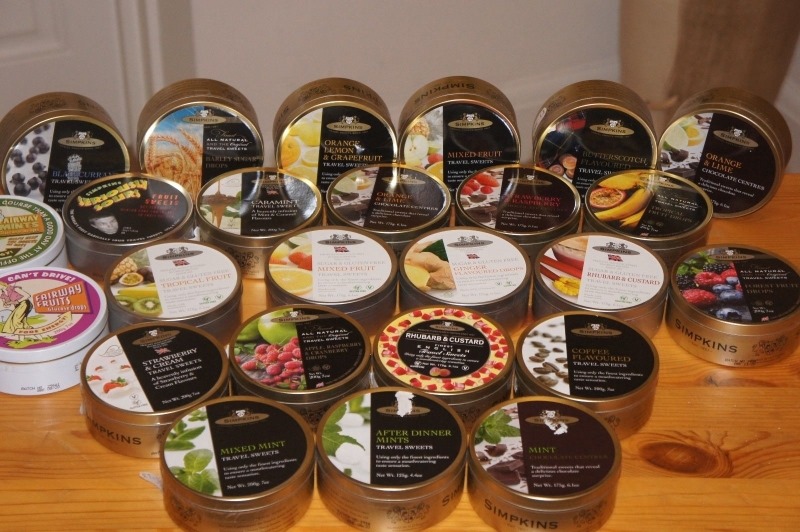
These days, the company is run by Albert’s grandchildren, Adrian and Karen Simpkin, producing the ‘Travel Tins’, Juicees Chews, Nipits (said to be a favourite of Margaret Thatcher), ‘Frog in your Throat’ lozenges and pure liquorice sweets. It is also a leading supplier of corporate branded and private label tinned confectionery.

Don’t expect to find Simpkins Sweets in the supermarkets, they’re still to be found in chemists, as well as garage forecourts and high-end sweet shops.

Categories
Companies People Sculpture

Frank Tory and Sons

As we discover the historic buildings of Sheffield, and the intricate sculptors that adorn many, the name of Frank Tory frequently appears.

Frank Tory and Sons were a firm of sculptors that worked on many of the city’s buildings from the early 1880s until the 1950s. Apart from stone, the family also worked in wood, marble, bronze and fibrous plaster.

Frank Tory (1848-1938) was a Londoner who trained at the Lambeth School of Art. He came to Sheffield in 1880 after accepting a commission from the 15th Duke of Norfolk to work on the new Corn Exchange.

The contract brought him into contact with architect Matthew Ellison Hadfield and his son, Charles, who encouraged him to stay in Sheffield and offered him several commissions.

Tory set up a studio amongst terraced houses, and was joined in 1901 by his twin sons Alfred Herbert Tory (1881-1971) and William Frank Tory (1881-1968).

The Corn Exchange was destroyed by fire in 1947 and demolished in 1964. However, some of his finest work can still be found at Parade Chambers (High Street), St. John’s Church (Ranmoor), Cairns Chambers (Church Street), Carmel House (Fargate) and the Cathedral of St. Marie.

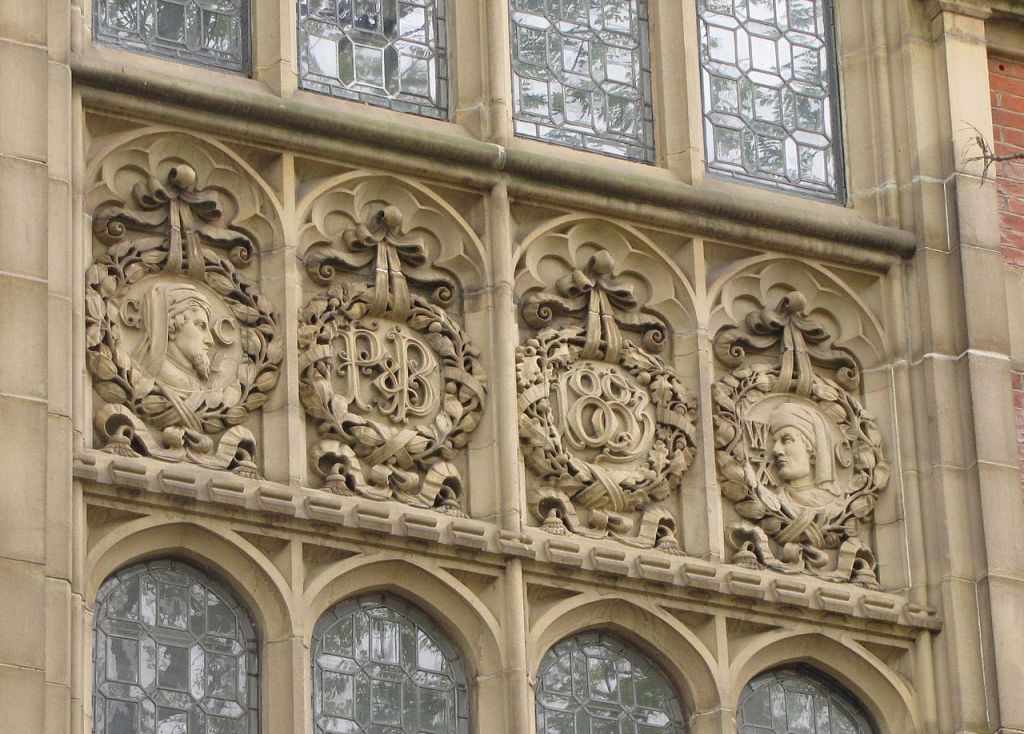
Perhaps Frank Tory’s greatest work is on Parade Chambers, with decorative sculptures of Geoffrey Chaucer and William Caxton, created in 1883 for Pawson and Brailsford, printers and stationers (pictured).

Alfred and William were born on Winter Street and attended the Broomhill County School and the Weston Academy for Sons of Gentlemen. They learned their trade from their father, who also taught at the Sheffield School of Art.

While Frank Tory worked on some of the city’s finest Victorian structures, his sons were responsible for sculptures on twentieth century buildings, including Sheffield City Hall, the Central Library, the White Building (Fitzalan Square), Victoria Hall (Norfolk Street) as well as Leeds Civic Hall and Chesterfield Town Hall.

After their father’s death, the firm moved to Ecclesall Road, at a site that is now the Porter Brook pub, eventually retiring in the 1950s after which the firm was wound up. 

Categories
Companies

Sheffield Simplex

In the early part of the twentieth century, the World’s best car was unquestionably the Rolls-Royce Silver Ghost.

But a legion of fresh luxury cars soon appeared, and the Rolls-Royce revolution was challenged by Lanchester, Leyland Eight, Hispano-Suiza, Ensign, Farman… and the Sheffield-Simplex.

And yes, for loyal younger readers… Sheffield could and should have been a centre for car production.

The Sheffield-Simplex owed its success to Earl Fitzwilliam, from Wentworth Woodhouse, whose attempt at the Templeborough works to make the finest motor car in the world very nearly succeeded.

The company received financial backing from the Earl, the first few cars called Brotherhoods, and were a continuation of the Brotherhood-Crocker cars made in London in which he had been an investor.

Brotherhood sold the London site in 1905 and moved to Peterborough but could not get permission to build a car factory, so the Earl suggested a move to Sheffield where he built a new factory in Tinsley.

In 1908, the first cars to bear the Sheffield-Simplex name appeared designed by Percy Richardson, ex Daimler and Brotherhood. The LA1 had a six cylinder 6,978 cc engine and three speed gearbox.

It was joined in 1908 by the LA2, intended for lighter open bodies which did without a conventional gear system.

Four smaller cars joined the line-up in 1910 but lasted only one year, and in 1911 were replaced by the LA7 with a six cylinder 4,740 cc engine.

Sheffield-Simplex considered their only rival to be Rolls-Royce and even opened a London showroom in Conduit Street very close to theirs.

During World War One, the company made armoured cars which were supplied to the Belgian and Russian armies, as well as making ABC Wasp and Dragonfly aircraft engines and munitions.

Car production resumed in 1919, and judged by pre-war standards, the Simplex was a very fine car indeed. But it was also very costly, and it never again captured the exclusive market.

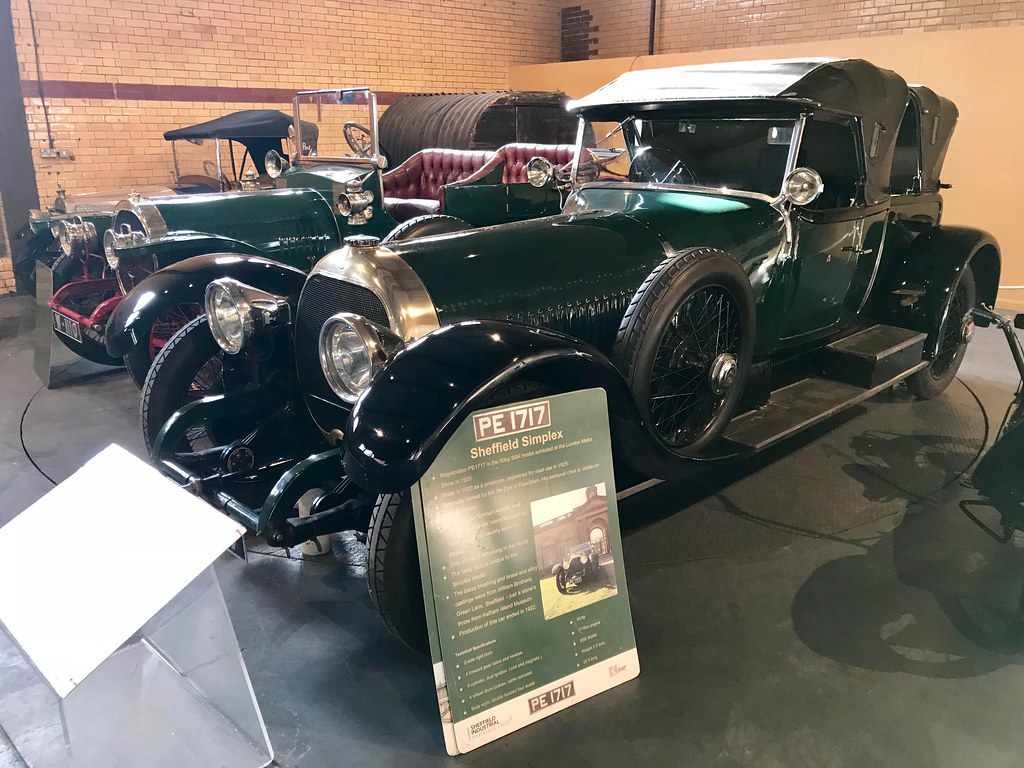
Sheffield-Simplex went into steep decline, building a few Shefflex trucks and the Ner-a-Car fully enclosed motorcycle to the designs of the American, Carl A. Neracher. When the doors finally closed, around 1500 cars had been made during the company’s history… and it seems that only three survive, two of which are at Kelham Island Museum.

Categories
Companies

Sheffield Simplex

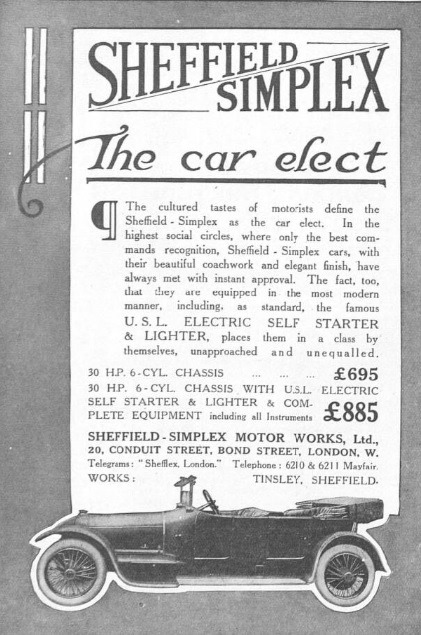
In 1911, Sheffield Simplex Motor Works opened commodious London showrooms at 20, Conduit Street, off Bond Street, where its models were displayed.

“Now that its many attractive features are made easy to view in London all the year round, instead of necessitating correspondence with Tinsley, we may expect the Sheffield-Simplex to secure a larger vogue among those to whom the best only appeals.”

Wilfred G. Aston, a motoring correspondent for The Tatler, was a big fan.

“The Sheffield-Simplex is a car with a very pronounced personality, and you must be a very pachydermatous lump if you don’t appreciate that fact after about five minutes’ running in one.”

Production of the Sheffield-Simplex car ended about 1920. Too expensive and perhaps a little old-fashioned after the First World War.

Categories
Companies

Cole Brothers

Our younger readers might not be acquainted with Cole Brothers, but for generations this name was recognisable across Sheffield.

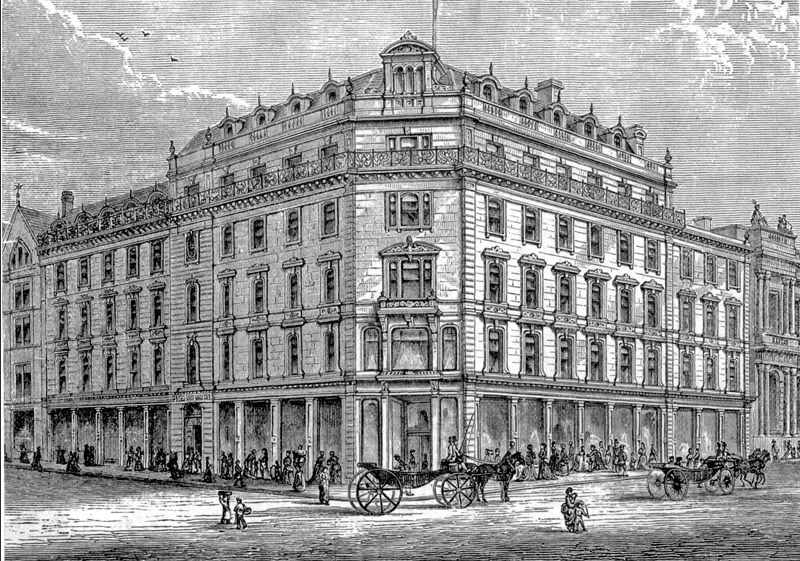
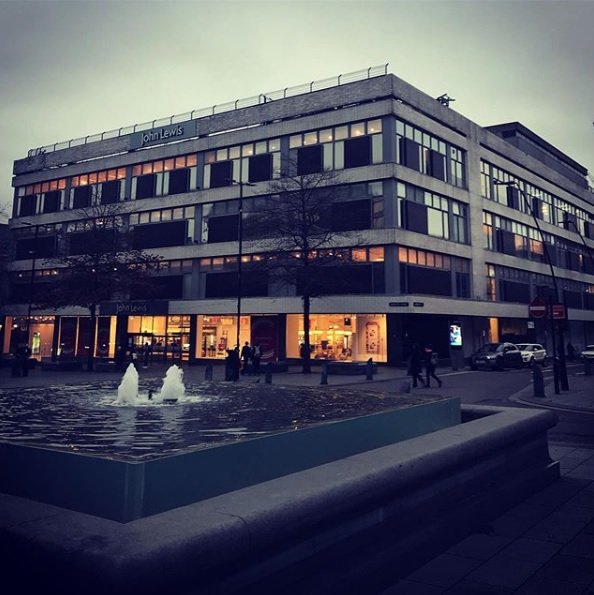
Better known now as John Lewis, the beginning of this department store goes back to 1847, when John Cole, silk mercer and hosier, opened a shop at No.4 Fargate. He was later joined by his brothers, Thomas and Skelton Cole.

The shop expanded along Fargate and around the corner into Church Street, the main block rebuilt in 1869 with two extra storeys added. Later, the premises of Thomas Watson and Sons, grocers, were procured, and the bookshop occupied by Thomas Widdison was added in 1892.

To accommodate its growing business, works and stables were acquired at Pinfold Street in 1861, later enlarged by the addition of the old Canterbury Music Hall in 1889.

Skelton Cole died in 1896, John Cole two years after in 1898, the same year that Cole Brothers became a limited company.

The Pinfold Street works were soon inadequate and subsequently sold, with new premises on Norfolk Street bought from Harrison Brothers and Howson in 1901.

At the beginning of the twentieth century, two Cole sons – Thomas and Thomas Skelton – were in charge, leading the store through a period of change.

In 1909, the first women were employed in the shop and offices, its first motor delivery van was obtained in 1911, and the first cash registers were installed during 1916.

The Cole family were fervent Methodists and instilled disciplines within the business. Up to World War One, it was daily practice for staff to say prayers before trading began, but change was about to come.

‘The London shop invasion begins,’ said one Sheffield newspaper when it was announced that Cole Brothers had been sold to Harry Gordon Selfridge, the exalted storeowner, in October 1919.

The glitzy American, immortalised recently by ITV’s Mr Selfridge, had already acquired a dozen department stores across Britain, including shops in Liverpool, Leeds, Watford, St. Albans, Peterborough and Windsor.

The addition of Cole Brothers to Selfridge Provincial Stores was a surprise, and one that promised to bring the department store new riches. The London house had been modelled on American lines and was described as supplying anything, from a needle to a haystack.

Thomas Cole and Thomas Skelton Cole retired from the business, but the family retained an interest with the appointment of Arthur U. Cole and Maurice Cole as directors.

Almost immediately, the shop premises were extended and restructured, Harry Gordon Selfridge’s drama and flair embraced by his son, Harry Gordon Selfridge Jr, the man tasked to manage the provincial stores.

Newspaper advertisements were lavish, publicising Cole Brothers as ‘One of the Selfridge stores,’ and consequently increasing sales.

The golden age of Cole Brothers lasted until 1940, when war and loss of family control over Selfridges, caused Harry Gordon Selfridge Jr, to return to the United States. The Selfridge Provincial Stores were sold to the John Lewis Partnership, which rather abruptly found itself 15 stores better off overnight.

While many Sheffield department stores suffered during the Sheffield Blitz, Cole Brothers survived unscathed, remaining at Fargate and Church Street until the 1960s when it was announced that it was moving to a new shop as its old premises were outdated.

A site was bought from Sheffield Corporation at Barker’s Pool, once occupied by the Albert Hall until destroyed by fire in 1937, and at one time earmarked as new law courts.

Designed by Yorke, Rosenberg and Mardall, the white-tiled building was opened on 17 December 1963. Spread across five floors, the new Cole Brothers store contained sixty departments, with access to each level from a multi-ramp carpark, accommodating 400 cars.

In 1974, offices were moved into Barker’s Pool House, later connected by a landmark bridge, and a warehouse was opened at Tinsley. The store also moved its sport and toy departments to a site in Cambridge Street in 1977-1978.

The 1980s and 1990s saw a decline in Cole Brothers fortunes, not helped by the opening of Meadowhall, but a refurbishment and ensuing rebrand to John Lewis reversed its fortunes.

Alas, retail is suffering now, with department stores particularly hurting, and despite reassurances there is an air of uncertainty over John Lewis’ future in Sheffield city centre.

Categories
Buildings Companies

Cole Brothers

There was a time, not that long ago, when this department store at Barker’s Pool was scheduled for demolition.

The ill-fated Sevenstone retail project earmarked shiny new premises for John Lewis on the site of the old fire station on Wellington Street. When that scheme stumbled, replaced with the more sympathetic Heart of the City II development, John Lewis said they were staying put.

For the modernists amongst us, it was a welcome reprieve for a building that was constructed between 1961-1965 for Cole Brothers, renamed John Lewis in 2002.

The land on which it stands was once site of the Albert Hall, destroyed by fire in 1937. There was talk of a new Gaumont Cinema in its place, but it never materialised. After World War Two, Sheffield Corporation bought the plot for proposed new law courts, but again these never happened, the land subsequently acquired by Cole Brothers.

The design was conceived by Yorke, Rosenberg & Mardall, an architectural company set up in 1944 by Francis Reginald Stevens Yorke (1906-1962), an Englishman, Eugene Rosenberg (1907-1990), born in Slovakia, practising in Prague before World War Two, and Finnish-born Cyril Mardall (1909-1994).

The practice attracted talent from around the world, including David Allford (1927-1997), Sheffield-born, a graduate of the University of Sheffield and lifelong Sheffield Wednesday supporter.

Allford, who went on to become chairman, had a hand in Gatwick Airport, several large hospitals including St. Thomas’ in London and Hull Royal Infirmary, numerous comprehensive schools and offices, Warwick University, and Cole Brothers department store in his home city.

Built by Trollope & Colls (later Trafalgar House Construction), the store is clad in the architects’ hallmark white tiles with panels of brown mosaic to the window bays. The surface was inspired by Le Corbusier’s use of tiles on the entrance drum of the Armée de Salut (1929) in Paris, and the General Pensions Institute (1929-1934) in Prague, designed by Havlicek and Karel Honzik, and worked on by Eugene Rosenberg.

Rectangular in design, it was the replacement for Cole Brothers’ old premises on the corner of Fargate and Church Street (celebrated in Richard Hawley’s song ‘Coles Corner’), outdated and sold for £1million in 1962.

Spread across five floors, the new Cole Brothers store contained sixty departments, with access to each level from a multi-ramp carpark, accommodating 400 cars.

Innovative as the design may have been, the carpark became notorious for suicides, many people jumping from the building’s top deck, up until the time wire fencing was erected.

These days, the department store is looking rather tired, the white tiles in need of a deep-clean and counting the days to its restoration.

Categories
Companies People

Cole Brothers

It was August 1930, Cole Brothers at the corner of Fargate and Church Street, had been part of Selfridge Provincial Stores (owned by Harry Gordon Selfridge) for ten years.

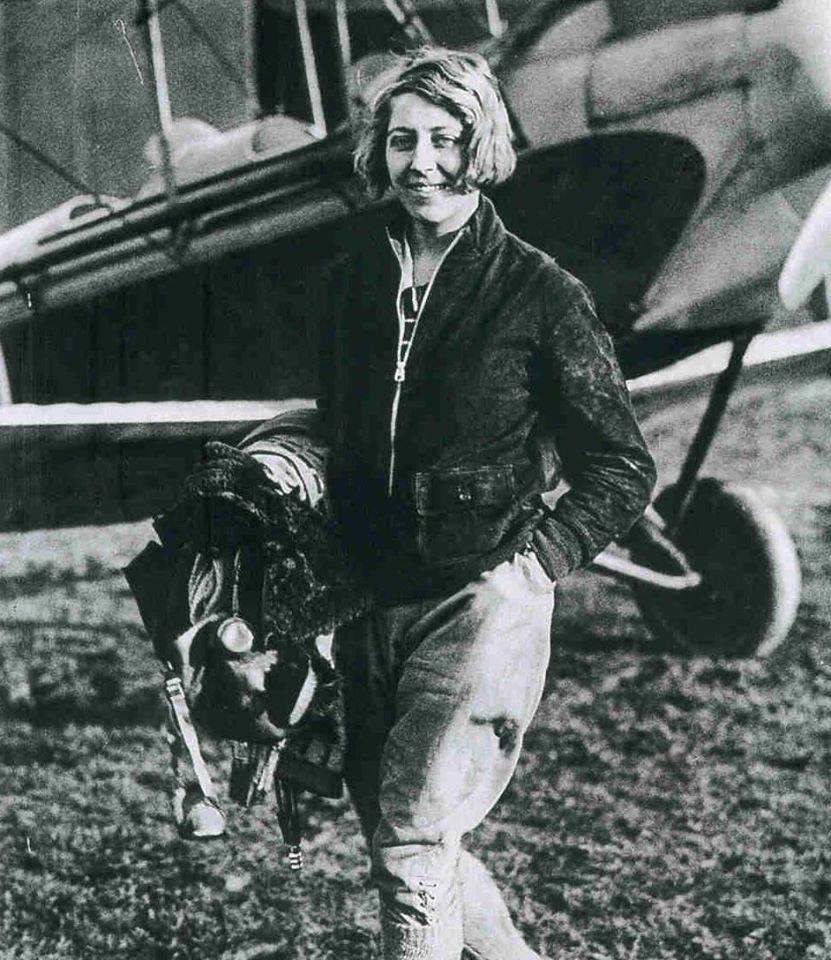
There was excitement with news that Miss Amy Johnson’s aeroplane, a Gypsy Moth called ‘Johnnie’, was travelling overnight by lorry to go on display in Cole Brothers shop window.

The plane had been presented to her in Hyde Park, London, by Air Vice-Marshal Sir Sefton Brancker, Director of Civil Aviation, and was a replica of the ‘Jason’ machine in which Amy Johnson had made her epoch-making flight to Australia. She intended to use the aeroplane for pleasure flying.

It had been funded by the Daily Sketch, with the help of readers of the Sheffield Daily Telegraph and Yorkshire Telegraph and Star, and had been on view at Selfridges in London.

‘Johnnie’ was displayed at Cole Brothers for one week, creating enjoyment for the huge crowds that gathered in front of the store.

But there had already been an Amy Johnson connection with Sheffield.

She graduated from Sheffield University in 1925 having studied Latin, French and Economics. She then became the first woman to fly solo from Britain to Australia after buying a single engine De Havilland Gypsy Moth aircraft naming it ‘Jason’.

Amy Johnson died in 1941 after a plane she was flying crashed into the Thames Estuary.

Categories
Companies

Westfield Health

A flashback to July 1921, and plentiful support had been given to the “Penny in the Pound” scheme for aiding Sheffield voluntary hospitals.

The Sheffield Hospitals Council had launched the scheme to support the city’s four hospitals: The Royal, The Royal Infirmary, The Children’s and Jessop Hospital for Women during the aftermath of World War One, when accommodation was short and no means to modernise or re-equip wards.

Whereby for every pound of an employee’s pay, a penny would contribute to the hospital’s finances in return for free hospital treatment, and employers would contribute a third of any money raised.

There were few who were not willing to recognise their responsibility to the hospitals.

Merchants, tailors, painters, brewers, wheelwrights, printers and many other trades had heard about the scheme.

The Sheffield Law Society had recommended the scheme to its members, and 96 per cent of staff of the Sheffield and Ecclesall Co-operative Society had agreed to pay contributions.

The Tramways and Motor committee, the Electric Supply committee, and the Sheffield Water committee, had each agreed to pay the employers’ portion of the scheme and the Parks men had shown sympathetic interest.

“Penny in the Pound” was dropped when the NHS came into being in 1948, but the Sheffield Hospitals Council survived by introducing innovative new schemes.

And what became of the Sheffield Hospitals Council?

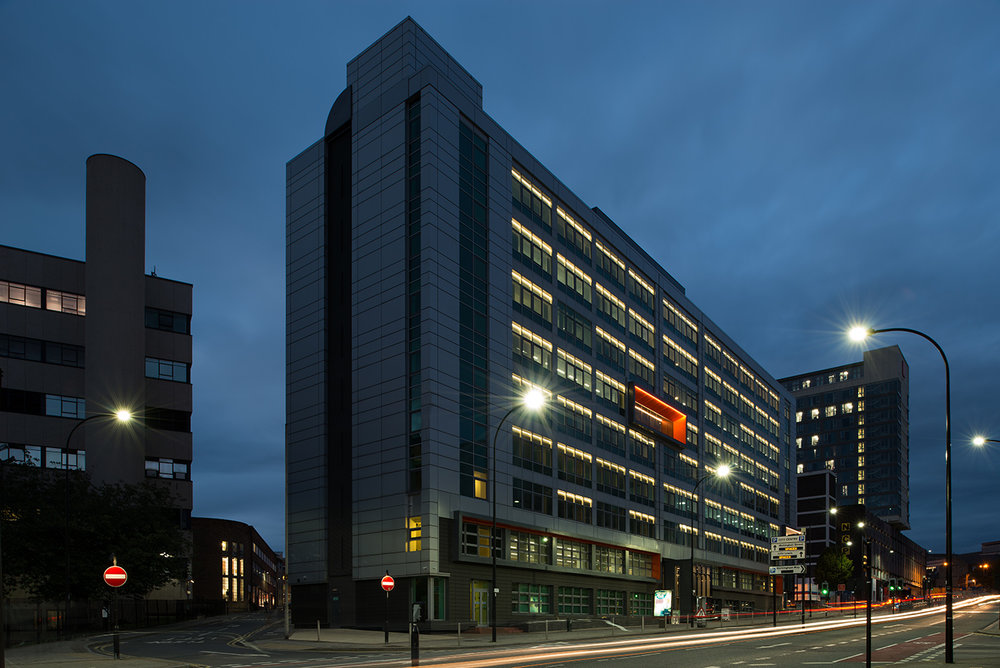
It was renamed the Westfield Contributory Health Scheme in 1974, and as Westfield Health, has become one of Britain’s biggest Health Cash Plan providers. It moved to bigger premises at Charter Row in 2016.

Categories
Companies

Westfield Health

“Are you in the Westfield?” A question often asked at our Sheffield hospitals. But what do you know about the history of the Westfield Contributory Health Scheme?

It’s an institution, now nationwide, and its origins can be traced to July 1919, founded as the Sheffield Consultative and Advisory Hospitals Council, later shortened to The Sheffield Hospitals Council.

Its formation was to support Sheffield’s four hospitals: The Royal, The Royal Infirmary, The Children’s and Jessop Hospital for Women during the aftermath of World War One.

The war had crippled finances at Sheffield’s hospitals, with accommodation short and no means to modernise or re-equip wards.

The honorary medical staff at the hospitals suggested that a Joint Council should be formed, principally to tackle the financial difficulties after the war. They put their views into writing, produced a document to present to members of the Board and asked that a Joint Council should be set up to put the finances of the hospitals on a sound basis and to make the people of Sheffield, hospital health conscious.

The Sheffield Hospitals Council stepped in with the “Penny in the Pound” scheme, devised by businessman Fred Osborn, whereby for every pound of an employee’s pay, a penny would contribute to the hospital’s finances in return for free hospital treatment, and employers would contribute a third of any money raised.

The scheme was launched in April 1921, raising almost a million pounds for hospitals in the first six years, proving to be one of the largest and most successful in the country.

It quickly caught the imagination of the city’s biggest firms, trade unions and principal employers’ associations.

For 25 years it raised nearly five million pounds, surviving the Great Depression of the 1930s, when local people still contributed to the scheme from their wages.

During World War Two the scheme continued to support the hospitals, funding a new maternity unit at Jessop’s Hospital for Women after it suffered during a heavy air raid.

It also provided two ambulances in 1942 which transported patients to the city’s hospitals, and to and from nursing homes, travelling a total of 191,788 miles.

As well as delivering 9,000 Christmas Gifts each year, it also donated Easter eggs to patients in the Sheffield Voluntary Hospitals.

On 5th July 1948, the NHS was born with the aspiration to make healthcare available to all, regardless of a person’s wealth.

The NHS threatened the viability of the Sheffield Hospital’s Council, and although contributions fell, it closed the “Penny in the Pound” scheme and launched a “Special Purposes Fund,” providing amenities that weren’t covered by the NHS to patients and hospital staff.

In 1951, the NHS was struggling and introduced charges for prescriptions, dental services, and glasses, with the Sheffield Hospital’s Council creating an extended scheme of general benefits, becoming the innovator of the Health Cash Plan.

It was also the same year that the “Hospital Cinema Service” was launched, providing patients at the city’s hospitals with a cinema, showing full-length feature films, newsreels and shorts to help raise spirits for patients.

On 14th October 1965, the organisation established the Sheffield and District Hospitals Services Charitable Fund, donating annual funds for the purchase and repairs of equipment in hospitals, since donating over £15million to local and national hospitals and charities supporting people’s health and wellbeing.

More change was on the horizon. Due to the rapid expansion of the contributory scheme, it moved into a purpose-built office called Westfield House in 1973, followed by a change of name in 1974 to become the Westfield Contributory Health Scheme.

In 1999, Westfield became pioneers of the corporate paid Health Cash Plan, whereby employers rewarded employees with cashback on essential healthcare and access to health and wellbeing services.

The scheme launched in 2000 and has since become one of Britain’s biggest providers.

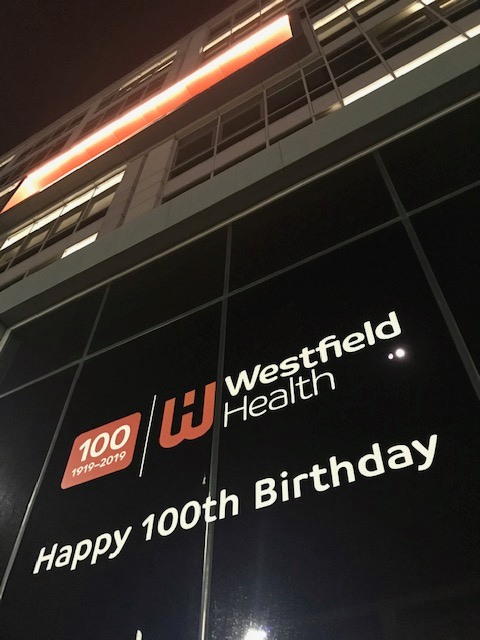
Westfield Health moved to bigger offices on Charter Row in August 2016, and celebrated its centenary last year.