Categories
Buildings

Castle House

I don’t think many people will realise that this iconic Sheffield building was inspired by a Sears Roebuck department store in Chicago, as well as a nameless shop in Amsterdam. These were the motivation for George S. Hay, chief architect for the Co-operative Wholesale Society, who designed Castle House for the Brightside & Carbrook Co-operative Society in the 1950s.

It has positioned itself alongside Park Hill flats as not being particularly loved. A throwback to the sixties, but like many similar modernist buildings, has matured better with age.

Castle House was built between 1959-1964 for the good old B&C, formed in 1868, who wanted a flagship department store and combined head office in the centre of the city.

The Society’s previous tenure in the city centre had been disastrous. In 1914, it bought land in Exchange Street for a shop, central stores and offices. The First World War delayed work and construction wasn’t started until 1927, at which point the remains of Sheffield Castle were found as the foundations were being laid. The bastion and moats were presented to the public before building recommenced. It was finally completed in 1938, quite a grand affair, only to be destroyed by German bombs in December 1940.

The site was taken over by Sheffield Corporation which had plans for Castle Market (whose construction revealed the remains of Sheffield Castle once again).

In 1950, the B&C Co-op purchased land at the junction of Castle Street and Angel Street and built a temporary one-storey shop, named Castle House, a nod to its former City Stores premises. Accordingly, the one tower heraldic symbol became the familiar logo for the Society.

Castle House was replaced by the five-storey building we know today. It was built of reinforced concrete with Blue Pearl and grey granite tiles and veneers, buff granite blocks, glass and brick. George S. Hay designed it with a blind wall to the first and second sales floors, taking encouragement from the Chicago building.

The interiors were designed by Stanley Layland, the interior designer for the CWS, the crowning glory being a cantilevered spiral staircase linking all floors. The suspended restaurant ceiling was only the second such in Europe.

It opened on 13 May 1964, the total cost of build, including shop fittings, being £925,000.

The B&C planned to merge with the Sheffield & Ecclesall Co-operative Society in 1985, a move voted down by its members, although it changed its name to the Sheffield Co-operative. In 2007, it merged with United Co-operatives, which itself merged with the Co-operative Group shortly afterwards. In 2007, the group decided to close its department stores and Castle House suffered the humiliation of standing empty.

Some trading units remained including food, travel and pharmacy, and
also the Crown Post Office. The pharmacy was closed in 2011 followed by travel and the Post Office.

English Heritage (now Historic England) gave it Grade II listed status in 2009, and in July 2018 Kollider, the regeneration company, announced plans to take over the building, the result of a £3.5million funding deal with Sheffield City Council.

Kollider created a Scandi-style food court on the upper ground floor, Kommune, an all-day dining experience including independent kitchens, brewers, bakers, baristas, book sellers and artists.

The rest of the building has been turned into Ko:Host, an events space, and Kollider Incubator, a work space for innovative, digital and tech entrepreneurs.

Earlier this month, the US tech firm WANdisco, set up in California by Sheffield-born David Richards in 2005, announced plans to relocate sixty staff from its Sheffield head office to Castle House.

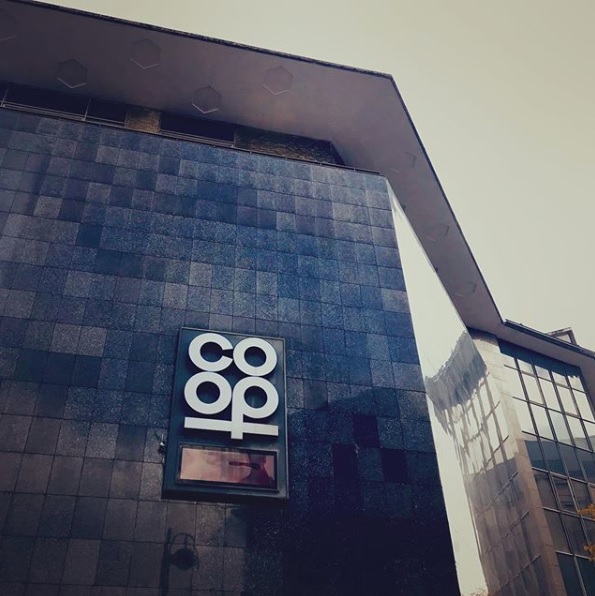
The Co-op sign remains, although this refers to the Co-op food store that still occupies part of the building on Castle Street.
Categories
Buildings

Castle House

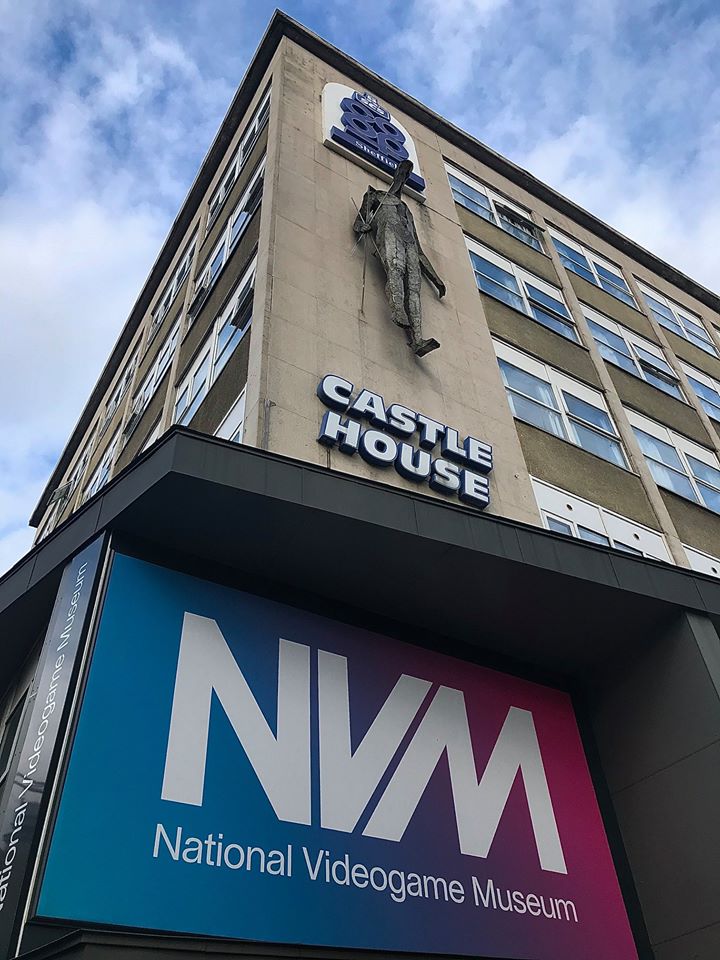
The sign on this building shows Castle House with a defunct Sheffield Co-op logo high above. It was designed by Hadfield Hawkwell & Davidson in 1962, constructed alongside the Brightside & Carbrook Co-operative Society’s new department store alongside.

It was occupied by Horne Brothers, men’s outfitters, who commissioned this glass fibre and metal sculpture, eight feet in height, in 1961.

The withered male figure represents Vulcan, patron of smiths and other craftsmen who use fire, and carries a bundle of metal rods in his right hand.

It was Boris Tietze’s second commission after leaving the sculpture department of the Slade School of Fine Art, metallic in appearance and supported on a ‘light and stable’ metal armature.

Tietze ‘decided to use the god of fire – Vulcan – as being representative of Sheffield.’ Although we know that Raggio’s conventional statue of Vulcan has stood on top of Sheffield Town Hall since Victorian times.

According to Sheffield City Council, Vulcan was removed in the 1980s, but was rescued by the Council’s Public Art Officer and subsequently restored to its rightful position.

The Co-op occupied a large part of the building, later using the ground floor as a Post Office, but it was closed in 2011. (The bulk of Castle House had been shuttered up four years earlier). The block is now part occupied by the The National Videogame Museum.

Categories
Buildings

The Farm

From generation to generation, Sheffield has had an annoying habit of destroying some of its most notable buildings and features.

Take, for example, The Farm, a country house long gone, and replaced with a building you’ll be very familiar with.

Once upon a time, The Farm was in idyllic countryside, but the growth of Sheffield as an industrial town quickly devoured it. Its name would turn out to be a contradiction, considering the surroundings it eventually found itself in.

Nowadays, it is hard to believe that The Farm ever existed at all, its close proximity to the city centre obliterating every trace of it.

Sheffield once had a dual history, for it was at the same time a town and (eventually) city, and also a great landed estate belonging to the Duke of Norfolk.

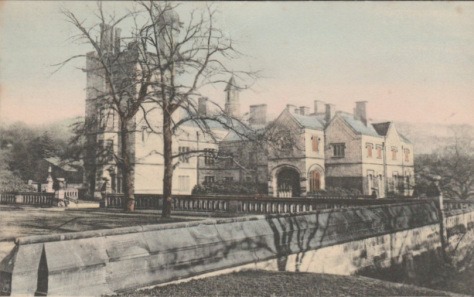
Dating back to the 18th century, The Farm was rebuilt on an even grander scale in 1824 to provide accommodation for Michael Ellison, local agent for the 12th Duke.

Henry Granville Fitzalan Howard (1850-1860), the 14th Duke of Norfolk himself moved to The Farm three decades later, but not before it had been rebuilt once again to the designs of Matthew Ellison Hadfield (nephew of Michael Ellison).

It marked a new beginning in the ducal attitude towards Sheffield. As a major landowner he took a close interest in local affairs and was to be in residence for part of every year. A new wing was built, containing the offices.

The Farm contained a square, lead-covered tower ‘with oriel turret stair, surmounted by a lofty vane, and flanked by a grand stack of chimneys’. There was a domestic chapel over the gateway, and the kitchen offices ‘very capacious and complete’. The tower was adorned with figures carved in stone, representing the four rivers – Don, Sheaf, Loxley and Rivelin – which flowed through his estate.

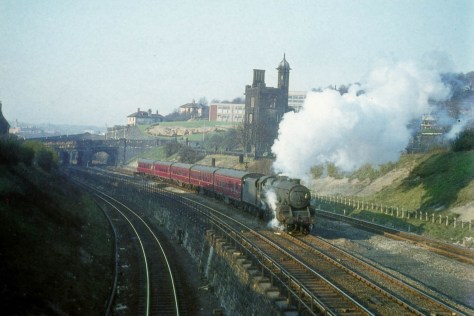
By this time, the tunnel of the Sheffield-Chesterfield railway passed beneath the grounds.

When his son, Henry Fitzalan-Howard (1847-1917), 15th Duke of Norfolk, inherited in the 1870s his estates produced over £100,000 gross per annum and his income increased throughout his life.

Over half came from Sheffield, not just from rents but also from mineral rights and the markets, which he owned as lord of the manor until 1899 when he sold them to Sheffield Corporation.

He was a British Unionist politician and philanthropist. He served as Postmaster General between 1895 and 1900, but is best remembered for his philanthropic work, which concentrated on Roman Catholic causes and the City of Sheffield. (He was the first Lord Mayor of Sheffield).

The Duke of Norfolk’s estates in Sheffield survived until the 1950s, before gradually reverting to the council.

After the Duke of Norfolk, the mansion became offices for British Rail Eastern Division, before being demolished in 1967, when the area was used for the building of Granville College.

Today the site is occupied by the futuristic City Campus of The Sheffield College, but former parkland once adjacent to The Farm, is now known as Norfolk Heritage Park, enjoyed by the public for generations.

The next time you drive up Farm Road, past Farm Road Club, remember where they got their names from.

Categories
Buildings

Great Central

It’s encouraging news when a Sheffield construction project pays tribute to the past. This is the case with Great Central, a development from CODA Studios, now underway at Neepsend, close to the flourishing Kelham Island district.

The £22million residential development takes its name from the former Great Central Main Line, once known as the London extension of the Manchester, Sheffield and Lincolnshire Railway. Opened in 1899, trains stopped at nearby Victoria Station until Dr Beeching axed most of the route between 1966 and 1969.

Passenger services ended at Victoria Station in January 1970 with most of the buildings long demolished.

Terraced houses once occupied the sloping site between Mowbray Street, Chatham Street, Swinton Street and Pitsmoor Road. These were demolished in the 1950s, the land left vacant, apart from a filling station at the bottom end of the plot.

Of course, generations will know the area as being the late-night location for Greasy Vera’s snack bar – a Sheffield institution – now long gone.

Once completed, Great Central will be a series of red brick blocks, with zinc panels, ranging from four to nine storeys in height. The development will provide 131 flats, with one, two or three bedrooms, clustered around a courtyard, with retail units at ground floor level.

Prices will range between £115,000 and £230,000.

Categories
Buildings

Sheffield and Hallamshire Bank

It’s hard to believe that in 1913, this Grade II-listed building, opposite the cathedral, was “considered to be one of the finest banking halls in the country.”

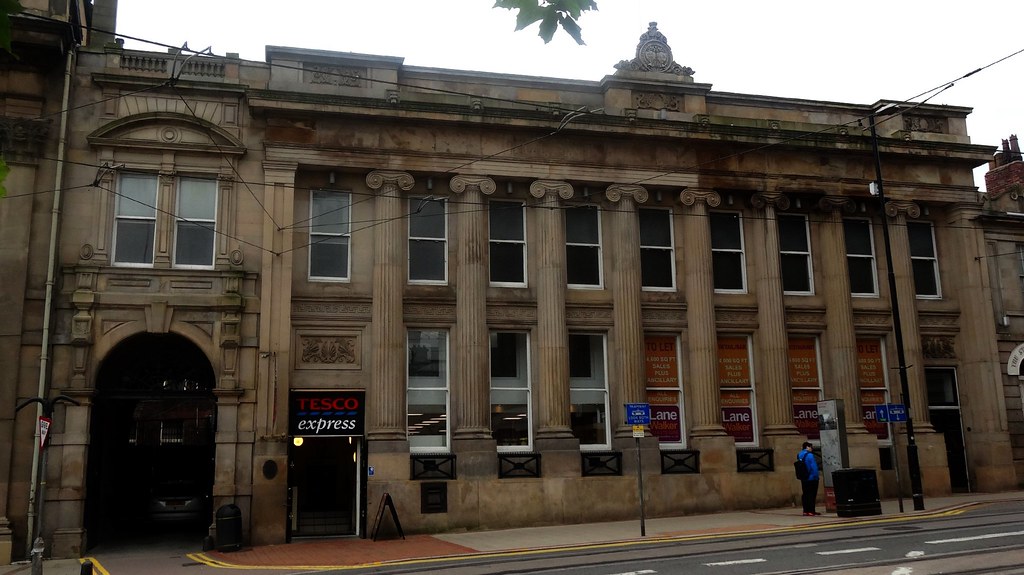
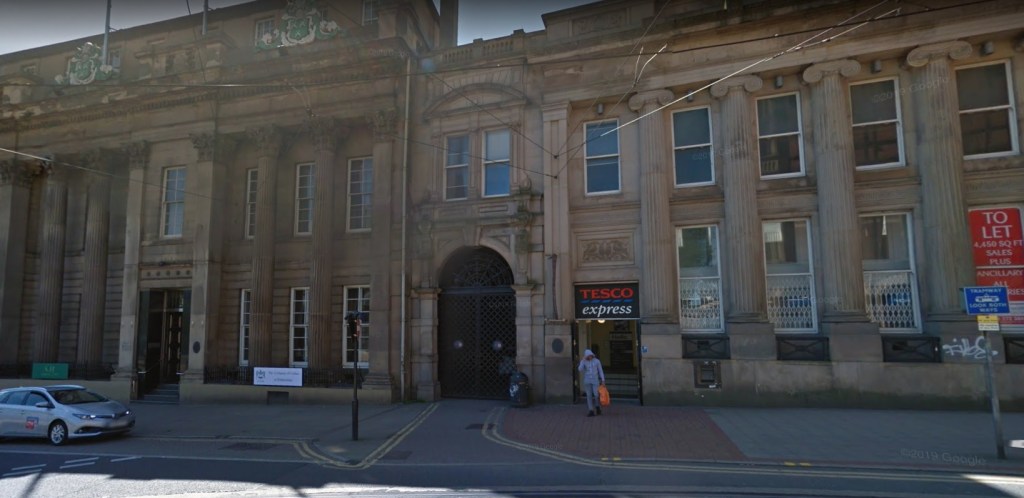
Over a century later, banking has gone down the pan, and No. 17 Church Street has been an empty shell since 2007. The only sign of life these days is a Tesco Express that occupies part of it.

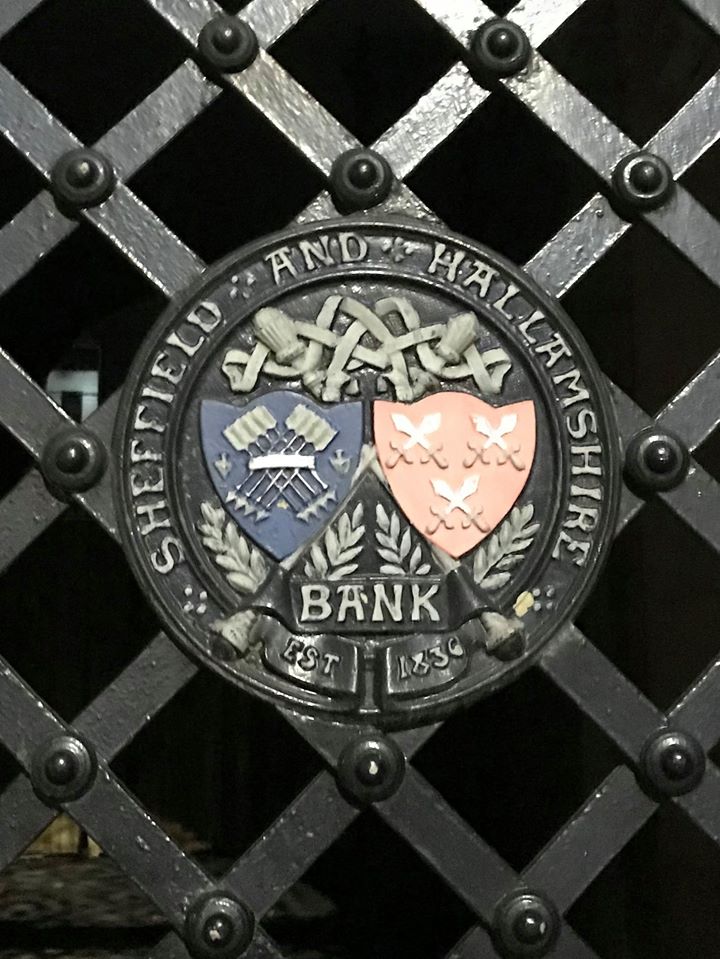
The Sheffield and Hallamshire Bank was founded in 1836 with small premises at Hartshead. Two years later, the bank moved to this brand new building, designed by Samuel Worth. It originally had five bays with four giant Ionic columns between plain pilasters and was half the size of the structure we see today.

By 1878, the premises were inadequate to meet the needs of the business. The banking hall was considered too narrow, lacking in height, and the clerks obliged to work in a narrow passageway.

The Sheffield and Hallamshire Bank turned to Henry Dent Lomas (1818-1901), an architect on Norfolk Row, to add an extension to its left-hand-side, land previously occupied by an old rope works and wire shop.

Lomas’ task was easy, duplicating the original building, creating an imposing façade of eight giant Ionic columns on a plinth, with plain frieze and cornice, anthemion panels over the doors at either end and Greek Key above the lower windows. He also added the Renaissance gateway to the left, a different design, as an entrance to buildings behind.

However, the interiors proved much more exciting for the architect.

The banking room was doubled in size, the walls decorated with pilasters and an entablature of the Corinthian order. The ceiling was formed into coffers by beams enriched with mouldings.

In the centre was a dome, 19 feet in diameter, rising to a height of 10 feet, the upper part of which contained the principal outlet for foul air, the bank receiving ample light from eleven large and eleven smaller windows.

The ceilings and walls were painted in simple harmonious colourings and the pilasters in an imitation of marble. The floor was laid in Maw’s tessellated tiles, reviving a tradition that had gone out of fashion a hundred years or more before.

The banking hall was kitted out with fittings made of Spanish mahogany and included two managers’ rooms in which to receive customers.

A staircase was built leading to a new boardroom, complete with Corinthian pilasters between the windows, retiring rooms, lavatories and offices.

In the basement, vaults were created for storing old books, along with a refreshment room and toilets for the clerks.

The Sheffield and Hallamshire Bank, the last bank in Sheffield to issue bank notes, was absorbed by the London City and Midland Bank in 1913. It subsequently became Midland Bank in 1923, eventually becoming part of HSBC in 1999.

As banks reduced the number of branches, the Church Street bank closed twelve years ago, with Tesco taking part of Lomas’ late Victorian extension.

Looking in a sorry state, the former banking hall is currently being advertised as suitable to let as a bar, restaurant or retail opportunity.

Unfortunately, city centre demographics have changed, leisure and retail have long abandoned the Cathedral Quarter, making it hard to see how this grand old building will be developed.

Categories
Buildings Streets

Church Street

Look carefully at this photograph. Two Sheffield landmarks we are familiar with today. To the left, the Cutlers Hall, built in 1832 by Samuel Worth and Benjamin Broomhead Taylor, and on the right of the gateway, the former Sheffield and Hallamshire Bank, most recently known as the Church Street branch of HSBC (now closed). Together they provide an imposing façade facing Sheffield Cathedral.

However, if we go back to 1878, things didn’t look quite as straightforward.

In October 1878, the Sheffield and Hallamshire Bank had just opened a new extension, built on the site of an old rope works and wire shop. Designed by Henry Dent Lomas, the four Ionic columns and the Renaissance gateway seen here, mirrored the building’s original design (not seen in the picture), created by Samuel Worth in 1838.

Most people think the iron gate as being part of the Cutler’s Hall, but it was built as access to bank buildings behind.

Back in 1878, the Cutler’s Hall was also much smaller.

The frontage we see today was created in 1888 by J.B Mitchel-Withers, once again the result of an extension. The two Ionic columns to the right of the doorway mirrored the 1832 construction on the other side, cleverly placing the Cutler’s Hall entrance (once to the right) at the centre of the masterpiece.

Together, these buildings provide an insight into Victorian ingenuity, where two buildings were cleverly transformed by adding identical extensions.

But, the period between 1878, when the Sheffield and Hallamshire Bank extension was built, and 1888, when the Cutler’s Hall was extended, meant there was an unsightly presence between the two buildings. A blot on the landscape.

Said the Sheffield Independent in 1878: –

“Few persons can have passed down Church Street since the extensions of the Sheffield and Hallamshire Bank took definite shape, without wondering how the paltry brick shop wedged in between that and the Cutler’s Hall, has managed to hold its own, to the disfigurement of the handsome buildings on either side.

“It has not even the respectable appearance of a ham sandwich; it reminds us of nothing so much as a parched bit of unappetising Chicago beef spoiling two pieces of good bread.

“When things looked as if the Cutler’s Company meant neither themselves to swallow this up in some credible fashion, nor let the Hallamshire Bank have the chance of engulfing it, the public were inclined to be a little indignant at seeing a good street spoiled.

“For this relic of the middle-period Church Street, is not old enough to be picturesque and not substantial enough to be handsome.

“It is a specimen of domestic architecture at its worst period – if an erection of bricks, with holes left to do duty as windows, be worthy to be called architecture at all – and it breaks with unsightly violence, the most imposing row of buildings of which this not very beautiful town can boast.”

The Cutler’s Company did eventually purchase the shop and premises next door, demolishing it, and replacing it with the extension of 1888.

Categories
Buildings

Sheffield and Hallamshire Bank

A reminder of our past. The Sheffield and Hallamshire Bank was founded in 1836 with small premises at Hartshead. Two years later, the bank moved to new premises on Church Street, designed by Samuel Worth. By 1878, the premises were inadequate to meet the needs of the business. The bank turned to Henry Dent Lomas (1818-1901), an architect on Norfolk Row, to add an extension to its left-hand-side. Later to become the Midland Bank and subsequently HSBC. It has been empty for twelve years, except for Tesco Express that occupies part of the building.

Categories
Buildings

Queen’s Hotel

The grand old lady of Scotland Street is likely to be demolished soon.

The Queen’s Hotel, a relic of defunct Sheffield brewer, S.H. Wards, has been closed since 1997, boarded-up and decaying to the point of no return.

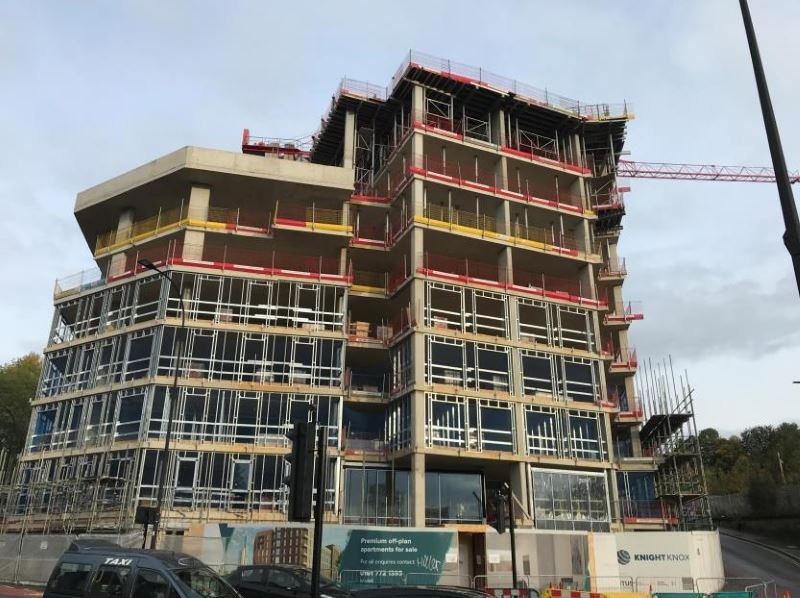
A planning application is expected to be submitted to Sheffield City Council, requesting the demolition of the inter-war pub, and replacing it with an eleven-storey apartment block.

There have been false dawns since the Queen’s Hotel’s closure. In 1999, plans were submitted, later withdrawn, to turn it into a massage parlour, sauna and health suite. Eight years later there were proposals to refurbish the old pub and create 126 apartments behind, but the scheme never got off the drawing board.

When the inevitable happens, it will end 128 years of a public house being on the site.

Scotland Street itself dates from the eighteenth and nineteenth centuries, built along a former boundary of an open field system. In the late 1700s and early 1800s, small factories, workshops and housing were built in the area, encouraged by an influx of Irish immigrants during the 1840s.

The public house was built in 1791, known as the Queen’s Inn, later Queen’s Hotel, complete with Dram-Shop, and a “good quoits and marble alley, and a very superior organ.” It belonged to local brewer William Bradley & Co, and subsequently by S.H. Wards, which bought it in 1876.

One of its longest serving landlords was James Bower Wragg, a well-known local angler, who reigned for fifty years or so, falling foul of the law on many occasions for serving outside permitted licensing hours.

By the 1920s, the Scotland Street area contained some of the city’s worst slum housing, described as “hovels of the aristocracy” and “mansions of the poor.” It prompted Sheffield Corporation to demolish large swathes of terraced houses.

The last tenants on the street were Charles Booth, 72, his brother Walter, 69, and their sister Eliza, who moved out in 1929. Their parents had moved into the house in 1856, when “Scotland Street was an eminently respectable street and one which many gay scenes were witnessed.”

Sheffield Corporation set about widening Scotland Street, and in the process purchased land from S.H. Ward & Co, including the site of the nearby Old Hussar public house, and part of the site of the Queen’s Hotel, on condition that they paid the brewery £2,875 towards the cost of rebuilding the Queen’s Hotel.

The new pub, built with stark, simple, exterior lines, opened in December 1928 with guest rooms on the upper floors, a large function room on the first floor and two ground floor bars. It became a popular haunt for factory workers, replacing the gap left by former residents, and was one of the brewery’s flagship establishments.

Scotland Street became one of the city’s strongest manufacturing areas, but a long-term lack of investment and a general state of decline, resulted in the area becoming down-at-heel by the middle of the century.

Many local factories closed, and the decline accelerated in the 1970s, as did the fortunes of the Queen’s Hotel, not helped by S.H. Wards being taken over by Sunderland-based Vaux Breweries in 1972. The brewery closed in 1999, two years after the Queen’s Hotel had closed its doors for good in April 1997.

Remarkably, despite the onset of time, the building still shows old Wards branding outside… but probably not for much longer.

Categories
Buildings

The Ruskin Building

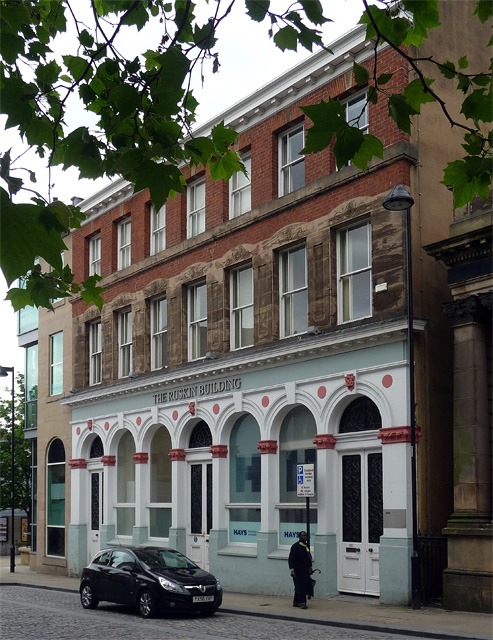
A few weeks back we looked at 95-101 Norfolk Street, constructed by Flockton & Abbot for Hay and Son, wine merchants, in 1876. The business lasted until 1970 and was restored to become the Ruskin Gallery in 1985. The museum closed in 2002 and the collection is now housed at the Millennium Gallery.

In recent times, it has been home to several businesses, the ground floor occupied by Handlesbanken, a Swedish commercial bank.

Now, the Ruskin Building is undergoing further renovation as The Bank, operated by Sheffield Theatres Trust.

The Bank is part of Sheffield Theatres’ The Making Room project, a network of local artists in collaboration with Theatre Deli, The Bare Project and Third Angel. The new venue will be used as a theatrical and reading space, a rehearsal area and basement storage. This is where the next generation of creative talent will be nurtured.

The project has been made possible after a financial gift from long-standing Sheffield Theatres supporters, Jo and Chris Hookway.

The former Handlesbanken bank was separate to the former Ruskin Gallery, divided by a partition wall. This will be reconfigured and allow the extension of The Crucible Corner, an adjacent bar and restaurant, providing room for 20 extra covers. The remaining part will be used for The Making Room venture.

The opening of The Bank, scheduled for late November, does not affect the historic fabric or architectural features of the Grade II-listed building.

Categories
Buildings

New Era Square

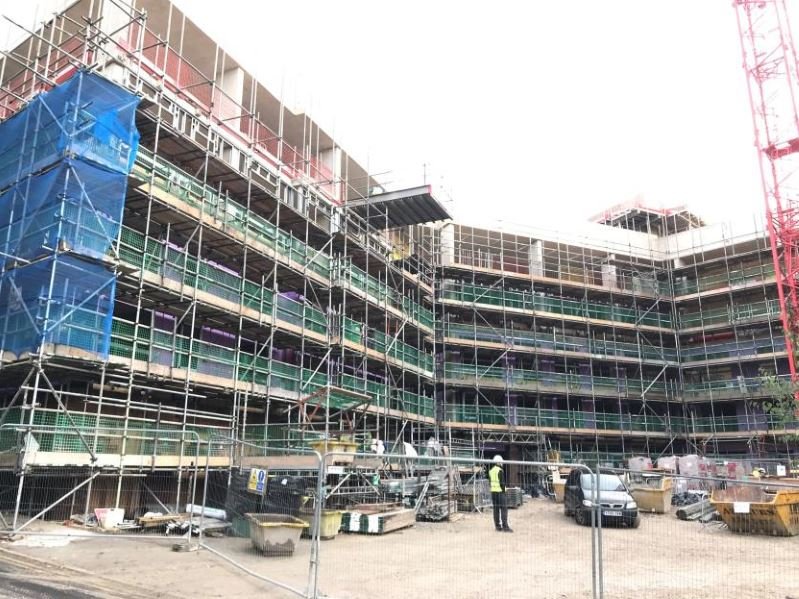
It is probably Sheffield’s longest-running construction project. New Era Square, at the corner of St. Mary’s Gate and Bramall Lane, seems to be taking an eternity to complete. Construction of the £66million project started in late 2015 with building work still ongoing four years later.

The residential and leisure development is the creation of Jerry Cheung, a UK-Chinese businessman, local property developer, restaurant owner, and chair of the Sheffield Chinese Community Centre.

Cheung is head of New Era Development (UK) Ltd, an international property development company based in Sheffield, founded in 2013 to develop large-scale Chinese-funded projects in the north of England.

Local media have dubbed their first project, New Era Square, designed by Hadfield Cawkwell Davidson Ltd, as “Chinatown” and “Sheffield’s very own version of New York’s Times Square.”

Building work is being undertaken by Derbyshire-based Bowmer & Kirkland with Phase 1 finished last year, consisting mainly of student living space.

Phase 2 is underway after £27million of funding from Barclays, and will include cluster student accommodation, restaurants, retail and office space, all built around a central plaza.

As construction moves towards completion, restaurants are already being lined up to move in.

This week, Oriental fine dining restaurant OISOI announced that it would be moving into New Era Square early next year.

The company is opening OISOI Gathering/The Party Room and The Artisan Patisserie and Bakery, providing a new concept in live music, in-house party bands and state-of-the-art holographic technology.