Categories
Buildings

Rockingham House: from tax offices to studio apartments

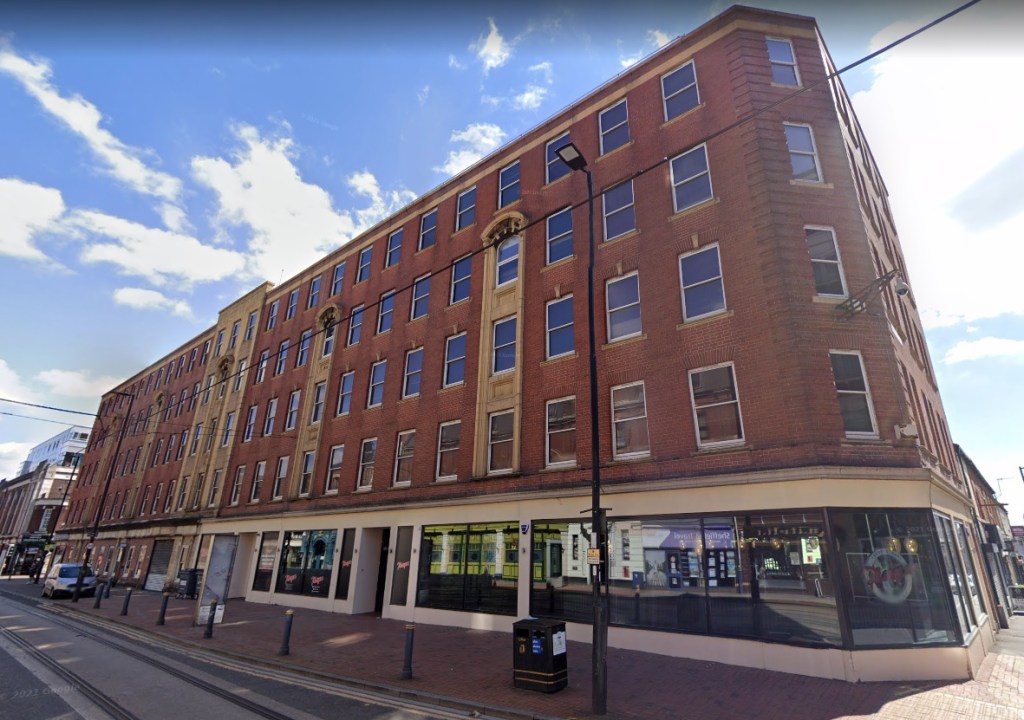
Rockingham House. Despite the modest 1930s design the building has aged well. The former Inland Revenue office is fronted by West Street and bordered either side by Rockingham Street and Westfield Terrace. Photograph: Google

This building on West Street is typical of inter-war buildings. Plain and simple. The excessive cost of construction materials during the 1930s meant structures had to be functional rather than decorative. The substantial use of red-brick was symbolic, and certainly conceived in the architects’ department at the Government’s Office of Works.

Revenue Buildings was built in 1937 for the Inland Revenue to replace nine district offices. In June of that year over 300,000 files of the District Valuer were moved here, as were something like 100,000 files of the Inland Revenue. Once completed, it housed all departments of the Board of Inland Revenue in Sheffield, including Tax Inspectors, Collectors, and Valuation.

It occupied the four upper floors, and the west part of the ground floor was used as motor vehicle and tractor showrooms for Samuel Wilson & Son. Motor vehicle retail appears to have continued until recent times, although this part is now occupied by Players Bar.
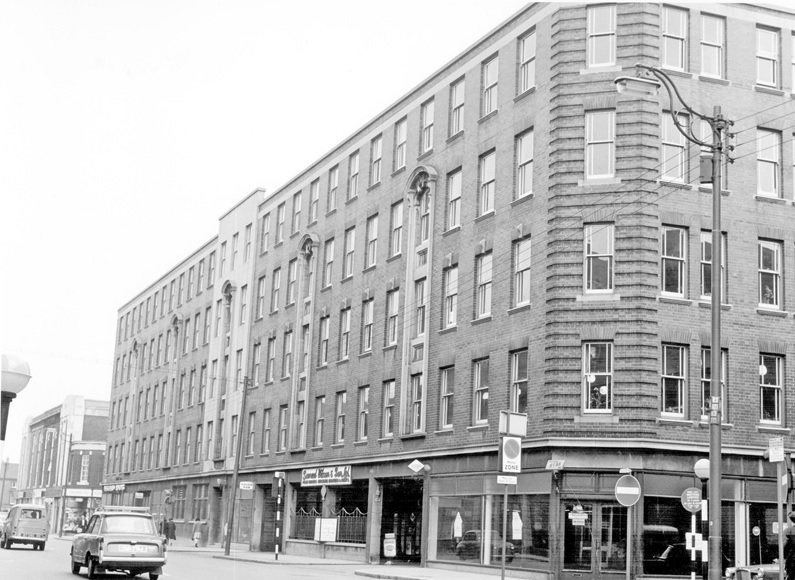
Revenue Buildings. In 1964, part of the ground floor was still occupied by Samuel Wilson & Son. Photograph: Picture Sheffield

The Inland Revenue merged with HM Customs & Excise in 2005 and the site handed over to the Department for Work and Pensions. It later vacated the site (now known as Rockingham House) and most office space became vacant.

The block was sold in 2011 and the new owner granted planning permission in 2019 for conversion and extension of the building for student accommodation. This has been replaced with a new application to convert and extend the property into 162 build-to-rent studio apartments with a modern two-storey roof extension.
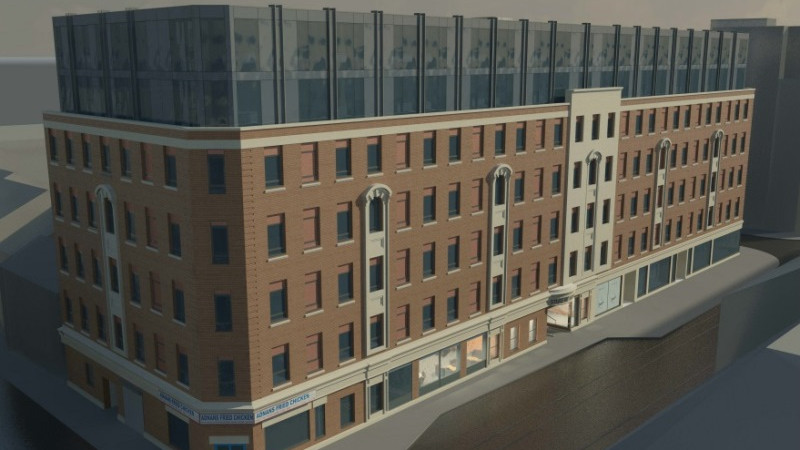
Oakstore, supported by Bond Bryan and Urbana Town Planning, has submitted an application to Sheffield City Council for the redevelopment of Rockingham House. Approval is sought for the reconfiguration of the existing buildings and a two-storey roof top extension to provide 162 build-to-rent studio apartments. Photograph: Insider Media

Ā© 2021 David Poole. All Rights Reserved.
Categories
Buildings

The rise of facadism – new buildings with old fronts

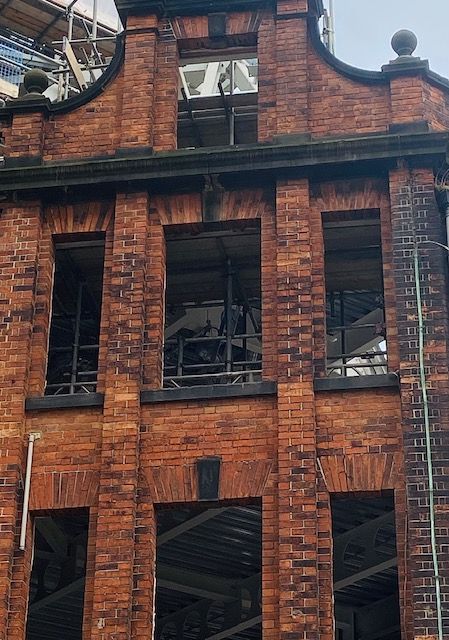
Cambridge Street, Sheffield. Photograph: DJP/2021

Whenever you see an old facade with a new structure behind it, this tells you that a building of distinction once stood there that simply could not be demolished, and the compromise which arose was to keep the front wall. The rise of facadism shows how far the power balance has shifted away from conservation towards redevelopment. Retaining the facade is an unwelcome condition of planning permission when their preference would probably have been complete demolition.

This building, at the bottom of Cambridge Street, Sheffield, shows that the facade is retained while its interior will be replaced with modern concrete and steel. This will apply to almost all the Victorian buildings being redeveloped on Pinstone Street, and planning permission has been granted to do the same to Chubby’s and the Tap and Tankard further up Cambridge Street.

Ā© 2021 David Poole. All Rights Reserved.
Categories
Buildings

Coming down: the last days of Barker’s Pool House

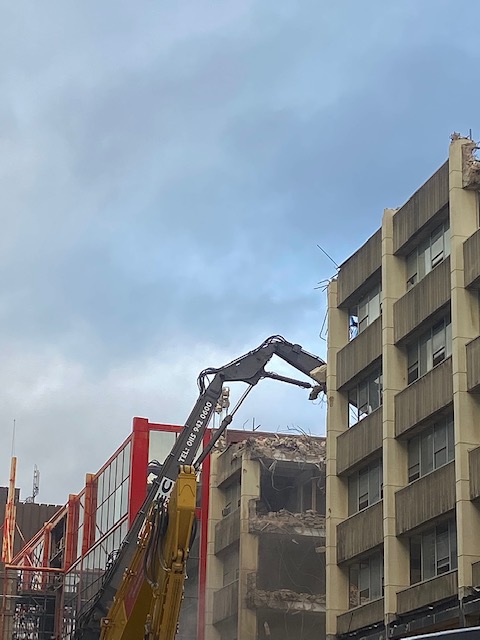
Demolition underway at Barker’s Pool House on Burgess Street. Photograph: DJP/2021

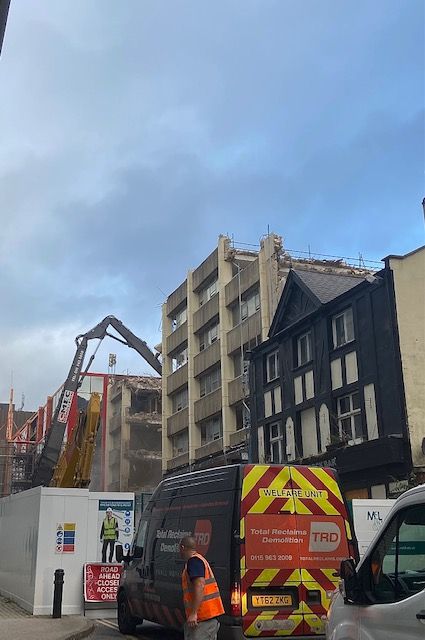
Sheffield city centre has never seen so much demolition and construction. The latest to fall is 1970s Barker’s Pool House, on Burgess Street, once linked to John Lewis by its high covered footbridge. The bridge has already gone, and now the bricks and mortar of the former office block will soon be no more. As part of the Heart of the City II development, it will be replaced by a stylish new Radisson Blu hotel, with its retained Victorian entrance on Pinstone Street. The William Mitchell ten-panel abstract reliefs, commissioned in 1972, were removed last year and will be resited in nearby Pound’s Park once completed.

The former Yorkshireman public house stands adjacent to Barker’s Pool House. Its own fate is uncertain. Photograph: DJP/2021

Ā© 2021 David Poole. All Rights Reserved.
Categories
Buildings

Revealing what’s hidden behind that glass facade

Photograph: DJP/2021

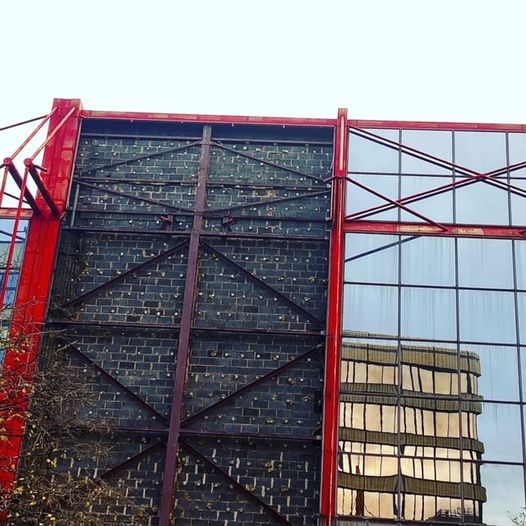
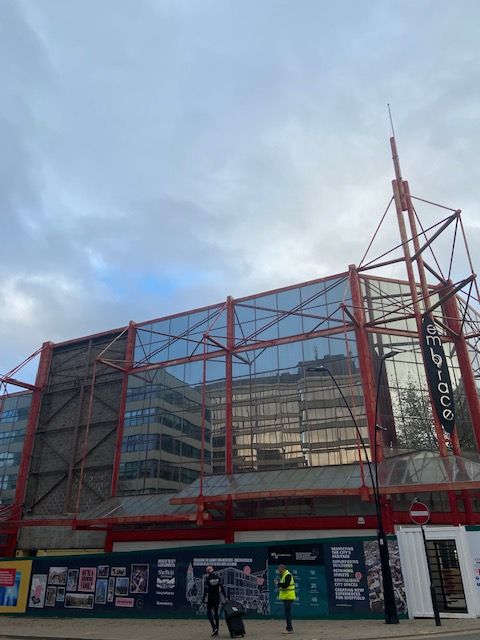
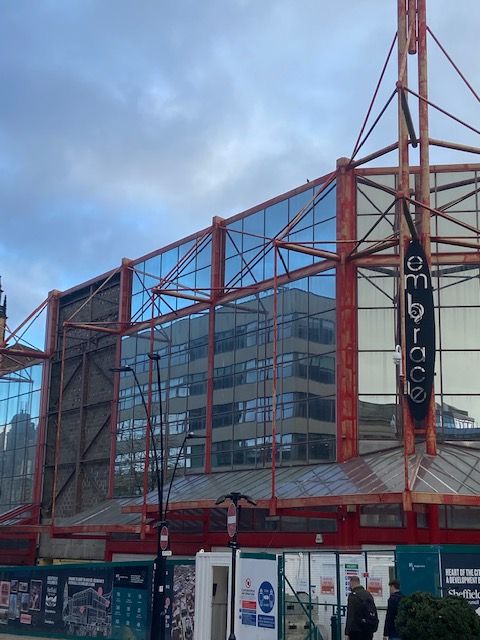
It seems that nobody liked the former Odeon in Barker’s Pool. The red steel and glass facade never caught the imagination of Sheffielders. If we hated the exterior, we won’t like what was behind – plain boring brickwork – revealed in latest Heart of the City II works.

Photograph: DJP/2021

The whole exterior will be refaced to become the Gaumont Building, supposedly taking inspiration from the previous building’s origins as the Regent Theatre, later the Gaumont Cinema. The new design is by Sheffield-based HLM Architects.

Built by the Rank Organisation in 1986-1987 as a replacement, bosses realised it wasn’t cost effective to run two Odeons in the city centre, and one had to go, closing in 1994, and later becoming a nightclub.

The final use for the building has yet to be confirmed.

Photograph: DJP/2021

Ā© 2021 David Poole. All Rights Reserved.
Categories
Buildings

No buyer for Sheffield’s Old Town Hall

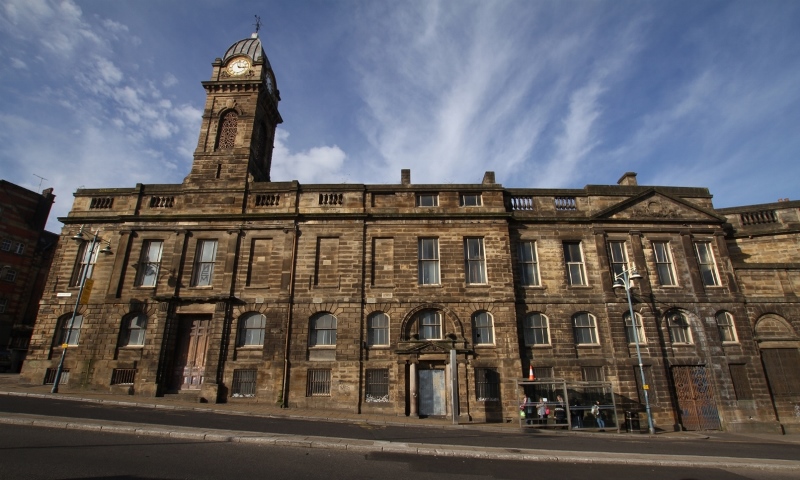
Sheffield’s former Town Hall and Crown Court on Waingate and Castle Street. Its condition is a cause for concern. Photograph: Insider Media

The Old Town Hall remains in predicament after failing to sell at auction. It was to be sold by Allsop auctioneers but attracted no bids – despite a sale figure of Ā£750K, a big drop on the original asking price of Ā£1.35m.

The Grade II listed building was put up for sale by receivers appointed after the collapse of Aestrom OTH Ltd, the company set up to restore the building.

The Old Town Hall was commissioned to replace the original one next to the Parish Church and designed by Charles Watson in 1807-1808. As well as housing the Town Trustees it also accommodated Petty and Quarter Sessions.

The building was extended in 1833 and again in 1866 to designs by William Flockton and his partner George Abbott, linking the courtrooms to the neighbouring Sheffield police offices by underground tunnels. When the current Town Hall was built in 1891-1897 it was extended by Flockton, Gibbs & Flockton to become Sheffield Crown and High Courts. New court buildings were built during the 1990s and the Old Town Hall has stood empty ever since.

The Old Town Hall is significant to Sheffield’s history and its demise has been shocking. The fabric of the building has rapidly worsened and water damage has caused considerable damage to its interiors. Restoration costs are likely to cost millions of pounds.

Its location next to the Castlegate development, recently awarded Government funding, might have made it an attractive acquisition, but developers are at a loss as to what function it might be used for. Until the Castlegate project gets underway the Old Town Hall will stand shrouded in misery.

There are now calls from heritage groups for Sheffield City Council to step in and make good the building, as well as seeking out partners to develop a practical and feasible solution.

Ā© 2021 David Poole. All Rights Reserved.
Categories
People

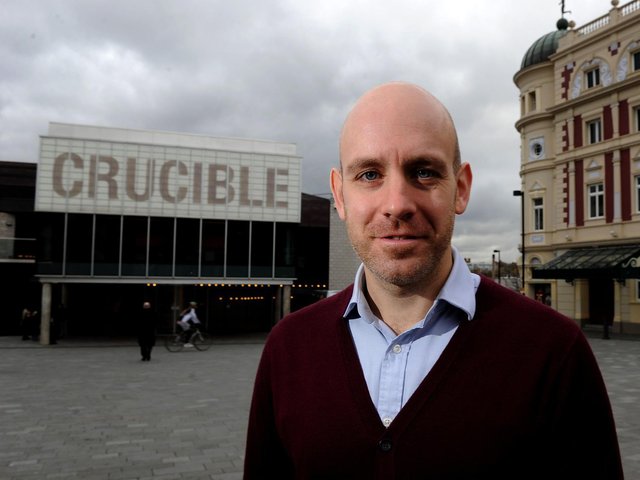
The Crucible Theatre at 50: Robert Hastie

It’s fifty years since Colin George fought and succeeded in opening the Crucible Theatre, and there have been many ups and downs along the way.

The current Artistic Director, Rob Hastie, had big shoes to fill when Daniel Evans left for the Chichester Festival in 2016, and an unforeseen challenge – the long-enforced closure of the Crucible Theatre during the pandemic.

Hastie’s connection with Sheffield Theatres has been a long one. As a child he travelled from Scarborough to see plays, and in 2005, fresh out of drama school, he appeared in Edward Bond’s Lear – his professional theatre debut.

ā€œMy grandfather was born near Sheffield, and my parents were at college here. So the city always meant something to me growing up. When we went to the theatre, one of the places we came to was The Crucible. So Yorkshire is home. More sentimentally for me, it’s where I started my stage career as an actor.ā€

Much has been made about Hastie’s meteoric rise as a director. His first taste of professional directing came as an associate on Josie Rourke’s West End production of Much Ado About Nothing, starring Catherine Tate and David Tennant. He followed this with acclaimed productions of Events While Guarding the Bofors Gun, Splendour and My Night with Reg, which landed him an Evening Standard Theatre Award nomination. He also became associate director of the Donmar Warehouse in London.

ā€œI was very happy at the Donmar, and I had some great experiences there. But there’s no way I could have refused the possibility of getting to work at the Sheffield Crucible which is, for my money, the most beautiful and welcoming theatre space in the country.ā€

At the Crucible, Hastie has directed Coriolanus with Tom Bateman and the musical Standing at the Sky’s Edge, which was created by Richard Hawley and Chris Bush, and which opened in March 2019 to outstanding reviews.

He’s also directed a critically acclaimed revival of The York Realist, co-produced with, and presented at the Donmar Warehouse in London. Other productions have included Guys and Dolls, Julius Caesar, Of Kith and Kin, A Midsummer Night’s Dream, and The Wizard of Oz.

Above all else, it will be Everybody’s Talking About Jamie that Hastie commissioned and premiered at the Crucible in 2017, going on to the West End, possibly Broadway, and now a movie.

Categories
People

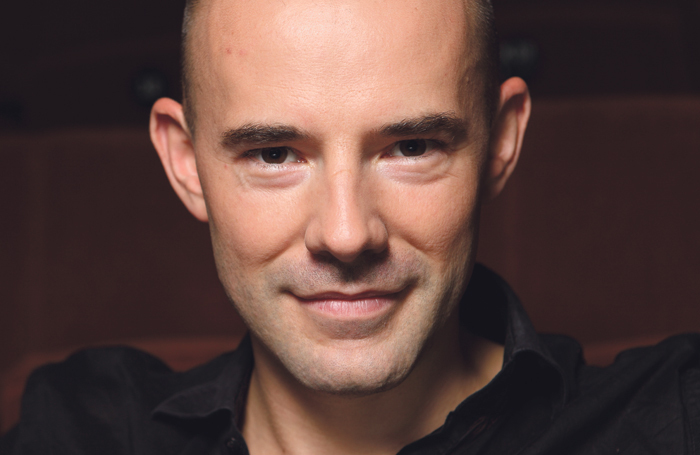
The Crucible Theatre at 50: Daniel Evans

There are those that thought Daniel Evans might have ended up at the National Theatre, and he might still do. When he left in 2016, he had led Sheffield Theatres to major award-winning success with nine UK Theatre Awards including Best Musical Production (This Is My Family), Best New Play (Bull) and Best Touring Production (The Full Monty 2013, Translations 2014, Twelfth Night 2015). Sheffield Theatres also won The Stage Regional Theatre of the Year Award for an unprecedented two consecutive years in 2013 and 2014, in recognition for its ambitious and exciting work.

Evans’ tenure was marked by a balance between popular and adventurous programming, including hugely successful musical productions of Me & My Girl, Company, My Fair Lady, Lionel Bart’s Oliver!, Anything Goes and Show Boat (which transferred to the West End) and four major writer’s seasons.

He also commissioned two new British musicals – This Is My Family, and Flowers for Mrs Harris, along with countless plays, including Queen Coal, set around the miners’ strike, Kes, a dance adaptation of the classic story and Richard Bean’s The Nap, a comedy-thriller about snooker.

Evans also established Sheffield People’s Theatre – a company of community actors aged from 12 – 90+ who staged several major productions featuring over 100 participants including The Sheffield Mysteries , Camelot: The Shining City and A Dream.

Evans had a successful career as an actor before being announced as something of a surprise choice to take over from Samuel West at Sheffield in 2009.

He was a memorable Peter Pan in the National Theatre’s 1997 production and won two best actor in a musical awards for Sondheim shows – Merrily We Roll Along in 2001 and Sunday in the Park With George in 2006.

Daniel Evans left to join the Chichester Festival Theatre in 2016 saying, ā€œI’ve definitely grown to love Sheffield, I’ll miss it very much. It’s a place where there’s a real independent spirit, they’re so proud that they’re not Leeds or Manchester. There’s a down-to-earthness and generosity here that reminds me of home.ā€

He is a Fellow of the Guildhall School and an Honorary Fellow of the Royal Welsh College of Music and Drama. He was awarded an Honorary Doctorate from Sheffield Hallam University in 2012 and is a trustee of Act for Change.

Categories
People

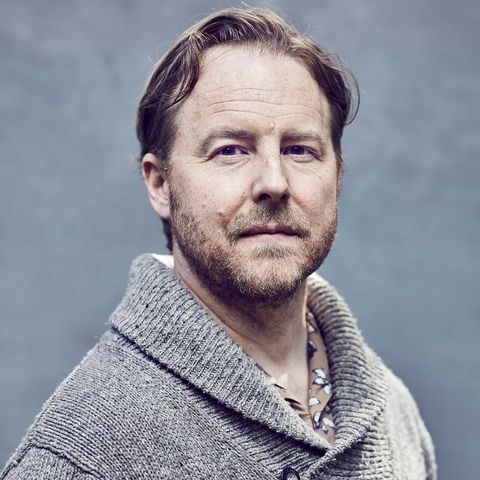
The Crucible Theatre at 50: Samuel West

Following Michael Grandage’s departure, the Artistic Director’s role at Sheffield Theatres was one of the most sought after jobs. The role went to Samuel West, son of Timothy West and Prunella Scales, and born into the acting business.

At prep school, the boy Samuel made his debut playing Claudius in Tom Stoppard’s Rosencrantz and Guildenstern Are Dead. It was seeing his dad play Shakespeare’s Claudius to Derek Jacobi’s Hamlet at the Old Vic a few years later that settled his choice of career.

“People clapped loudly,” he said recently, “and I thought ‘I’d like to do this’.”

He read English at Oxford and moved into a career that combined classical theatre with British movies (Howard’s End, Iris, Carrington, Reunion, Jane Eyre, Notting Hill, and Van Helsing), TV and radio. His London stage debut was in 1989 in Les Parents Terrible and was a success in Tom Stoppard’s Arcadia at the National Theatre in 1993. He later spent two years with the Royal Shakespeare Company.

West made his directorial debut with The Lady’s Not for Burning at the Minerva Theatre, Chichester in 2002 and succeeded Grandage at Sheffield Theatres in 2005, reviving the controversial The Romans In Britain and As You Like It as part of the RSC’s Complete Works Festival.

Several of his acclaimed productions perhaps proved a little too controversial for the people who held the financial purse strings, and there might have been conflict as he battled the dramatic ā€œpowers that be.ā€

When the Crucible closed for its massive refurbishment in 2007, he had hoped that the Crucible might continue with touring productions, but relinquished his role when the theatre fell silent.

ā€œTwo years is never long enough to spend at a great theatre like this and my plans being turned down was the only reason I decided to leave.

ā€œWhen the building is closed, I believed, and still believe, we should make attempts to produce outside the theatre, with co-productions, found spaces, bringing back old shows that had served us well and doing West End seasons – all those sort of things – partly because it’s important to keep audiences alive in a city where you’re the only theatre.ā€

West said he did not believe board members were against his aims but that their financial plans prevented them from making ā€œpromises which they couldn’t later fulfil.ā€

He rekindled his association with the Crucible in 2017 when he returned to play Brutus in Julius Caesar.

ā€œI’ve missed it. I think Sheffield is a great city and it’s really nice to see some friendly faces who seem quite pleased to see me.ā€

We know West for his TV roles – Midsomer Murders, Waking the Dead, Poirot, Any Human Heart – and big roles in Mr Selfridge and Jonathan Strange and Mr Norrell.

However, his biggest role is playing Siegfried Farnon in the two series of Channel Five’s recent revival of All Creatures Great and Small.

Categories
People

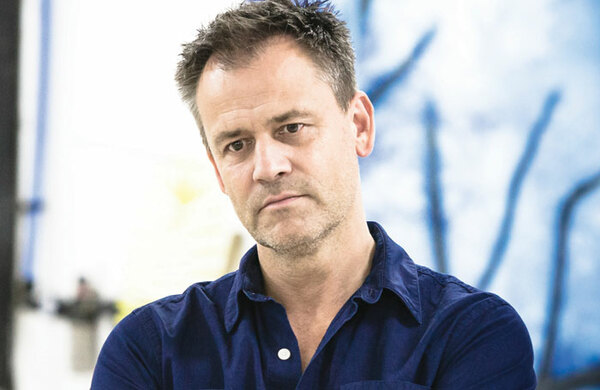
The Crucible Theatre at 50: Michael Grandage

In 2000, as Deborah Paige left, having directed fourteen productions in her five-year tenure, Michael Grandage took up the reigns as Artistic Director. His predecessor had laid the ā€œfoundations for the Crucible Theatre’s renaissanceā€ and with the securing of extra funding, he arrived at an opportune moment.

Grandage was no stranger to Sheffield, having worked at the Crucible Theatre several times and joining as Associate Director in 1999.

ā€œMy first show was in 1997. In 2000, when Deborah Paige left, Grahame Morris, who was the executive director, asked me to step up.

ā€œIt was a very bold thing of the board and him to do. Normally you require quite a lot more experience – I convinced them I was 100 per cent dedicated to the city and the productions. We put on two Joe Orton plays and two Shakespeares straightaway. I moved out of London, and I made a commitment to it.ā€

Yorkshire—born Grandage trained as an actor at the Royal Central School of Speech & Drama and spent twelve years working as an actor for companies such as the Royal Exchange and Royal Shakespeare Company before turning to directing. His directorial debut was in 1966 with a production of Arthur Miller’s The Last Yankee at the Mercury Theatre in Colchester while his first Shakespeare production was in 1998 in the Crucible’s production of Twelfth Night.

Within a few years of his stay, the Crucible had attracted a succession of stage and screen stars such as Derek Jacobi, Joseph Fiennes, Diana Rigg, Ian McDiarmid, Amanda Donahoe and Kenneth Branagh. Grandage produced over forty plays with predominantly young directors and designers. He is credited with delivering consistently high quality work as well as bringing in new audiences and in 2001, Sheffield Theatres won the Barclays TMA Theatre of the Year.

In 2003, Grandage unveiled a £15m expansion scheme for the Crucible.

ā€œWe are generously told by audiences, critics and awards juries that Sheffield is now at the forefront of British Theatre, but we want and need to go further.ā€

Grandage left in 2005, Sheffield Theatres hailed as ā€˜the National Theatre of the north,’ and concentrated on his other role as Artistic Director at the Donmar Warehouse, London, where he’d succeeded Sam Mendes three years earlier.

He left in 2012 and now heads the Michael Grandage Company producing theatre, film, and TV work, and recently returned to the Crucible to direct the world premiere of Ian McDiarmid’s one-man show, The Lemon Table, which was based on two Julian Barnes short stories.

Categories
People

The Crucible Theatre at 50: Deborah Paige

The mid-nineties brought change to Sheffield Theatres. Together with reductions in funding, this was a critical time for Deborah Paige, who succeeded Michael Rudman as Artistic Director in 1995. Critics pointed out that the Lyceum Theatre had fared much better with its touring productions and that the Crucible Theatre was the less commercial venue.

While previous directors like Colin George and Peter James fought to get the Crucible established, the tenure of Deborah Paige was more a battle of survival. However, she managed to turn its fortunes around with several successful shows, including My Fair Lady, The Little Mermaid in 1997, and Brassed Off in 1998.

At the end of the decade the Sheffield Telegraph remarked that it was ā€œa remarkable turnaround in fortunes… at the same time that it (had) been earning critical acclaim.ā€

Deborah Paige started her directing career at the Bristol Old Vic. She went on to work at Theatre Centre London, the Wolsey Theatre, Ipswich, and the Soho Theatre, and was then appointed Artistic Director of Salisbury Playhouse.

She left Sheffield Theatres in 2000 to pursue a freelance directing career in opera, theatre, TV, and radio. For her own company, Paigeworks, she produced and directed the premieres of Afterbirth by Dave Flores and Into the Blue by Beverley Hancock at The Arcola Theatre in London.

Paige’s television work includes EastEnders, Casualty, Judge John Deed and Holby City, and for radio she has directed several productions for BBC R4’s Woman’s Hour.

She regularly works in London drama schools and was Head of Recorded Drama at LAMDA between 2009-2011, and Interim Director of Performance at Mountview in 2012.

At RADA, where she is an Associate Teacher, Paige has taught and directed projects and productions for stage and screen.