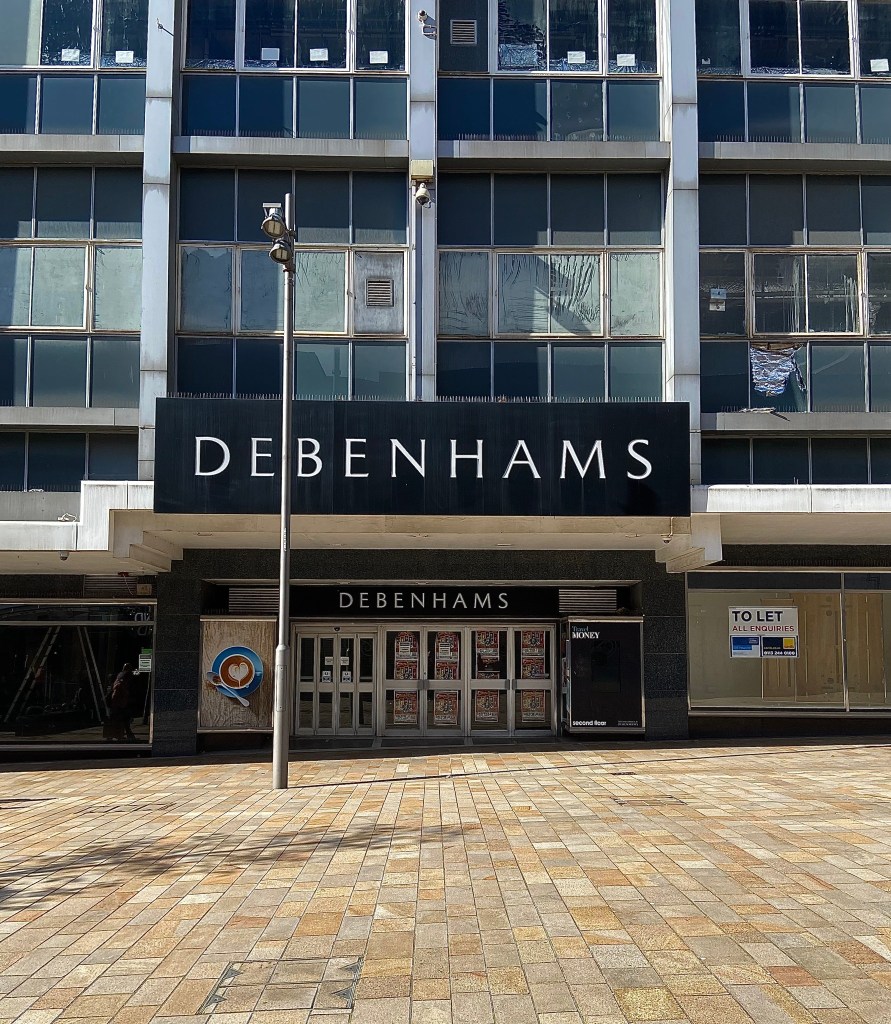
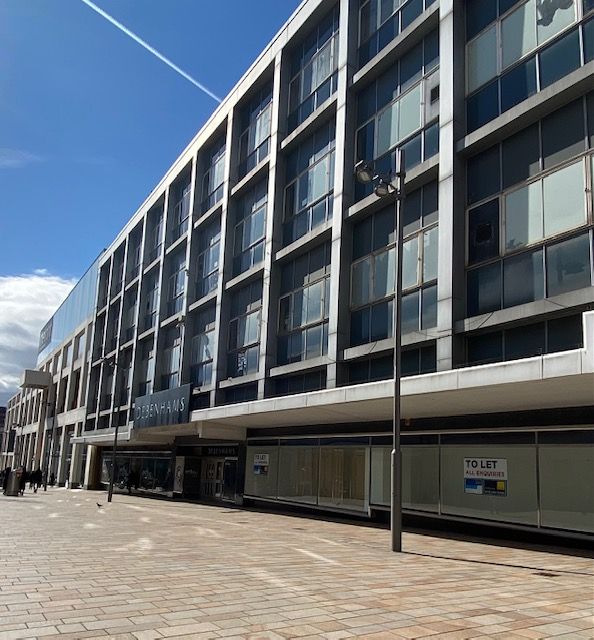
It opened as Pauldens of Sheffield, but was rebranded to Debenhams in 1973. It lasted over 50 years before closing in May 2021. Image: DJP/2022
According to new UK retail data, nearly 90 per cent of former Debenhams stores remain empty almost a year after the department store closed its doors for the last time, in a sign of the challenge to reinvent high streets across the country.
The figures include former Debenhams stores at Meadowhall and on The Moor.
Only last week, MHA London, which bought the city centre building for £1.5m in March 2021, said there was interest but “nothing substantial.”
Since then, property agent Colliers said it was talking to prospective occupiers, thought to be a discount department store company and a leisure operator, both interested in taking space.
Might the discount operator be B&M Retail?
It currently occupies space on Haymarket, also operating Heron Foods at nearby King Street, both in a part of the city centre suffering from declining footfall.
A move to the vibrant Moor shopping area might be considered a good move and could include a B&M and a Heron Foods offering as well.
According to reports, the former Debenhams building might become a discount store or a leisure facility. Image: DJP/2022
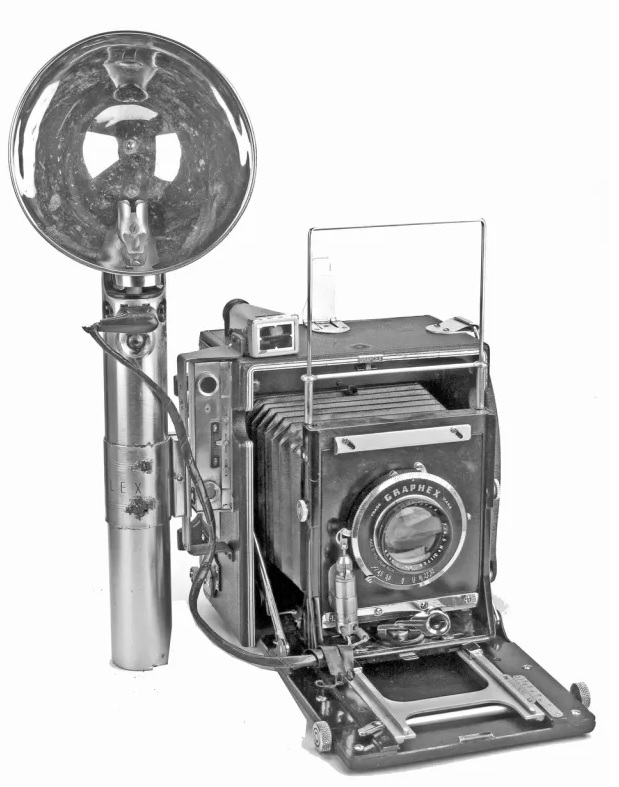
Occasionally, we stumble upon a Sheffield character who has been air-brushed by time. This can be said for William Henry Babington, a striking figure, who was easily identifiable as he moved about the city with his long grey hair, moustache, and an old-fashioned flowing cape. He was seldom seen out of doors without his camera.
William was a photographer, and it is quite sad that an article about someone who loved his craft cannot be supplied by a photograph of the person himself.
He was born in Leicester in 1856 and ran away to London at the age of 14, arriving penniless and with nowhere to sleep. His final choice of resting place was under a slab at Billingsgate Market, until he was ‘washed out’ the following morning. Two days of this life in London were enough, and he found his way back home by the same means as before.
Afterwards his father always derived pleasure from recounting how “that mad son of his had ‘done’ London and back on his own.”
It was after experiences in Manchester, Derby, and Normanton, during which time he spent some years on the railway, that he came to Sheffield.
William worked at Pawson and Brailsford as an account collector, and in 1895 joined the Sheffield Telegraph, acting as manager of the Zincographic department and as a staff photographer. (Zincography was a printing process that used zinc plates) As such, he was one of the original members of the Sheffield branch of the National Union of Journalists. He eventually devoted his time taking photographs and left in 1917 to set up as a freelancer.
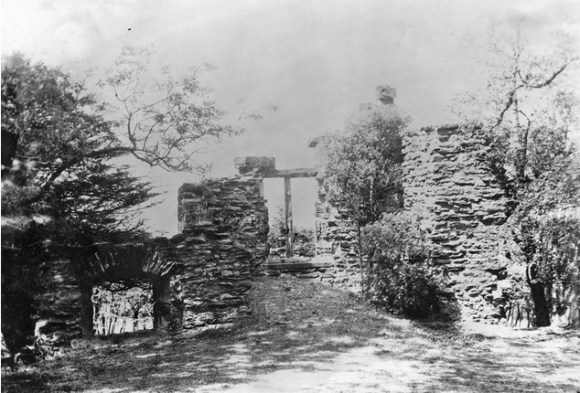
The ruins of Mary, Queen of Scots, window ‘rescued’ by Samuel Roberts and re-erected in grounds of Queen’s Tower, Norfolk Park. Samuel Roberts who built Queen’s Tower, was an admirer of Mary, Queen of Scots and believed she would have looked through this window. Photograph by W.H. Babington. Image: Picture Sheffield
He was an ardent collector of old Sheffield prints, and at the time of his death had accumulated a collection of about 300 valuable negatives. Historians often turned to him for old photographs to illustrate their work, and lantern slides from his archive were often used by lecturers.
This charismatic person liked to entertain people with reminiscences and wrote a series of articles for the Yorkshire Telegraph and Star in 1930 with memoirs drawing on more than half a century as a camera man.
“In the early Press days there were but few daily newspapers that either had their own photographer or zincograph staff and plant. It was my good fortune,” he stated, “to obtain a position on the staff of a leading provincial daily paper. The Sheffield Telegraph and the Leeds Mercury being the first newspapers to attach a photographer to their staff.”
As an example of the high speed at which the press photographer worked, William recalled a photograph he took of Mr J.F. Hope when he was standing for Parliament. He took only 25 minutes getting it to the Telegraph office, and within ninety minutes it was published in the paper and on sale.
“At races, photographs of the finish did not worry me. I preferred to hunt about the crowd for well-known personages, who sometimes objected to being photographed, as they were supposed to be at business.
“When only one goal was scored at a football match, the photographer was always at the other end. That was no excuse when I got back to the office. The editor wanted to know why. When a reporter was late for an event it did not matter much, he could always obtain the story, but the press photographer who arrived late was finished. He had no second chance.
“The Sheffield police have done all they can to help me, so long as I did not try to photograph things, they did not want photographing.”
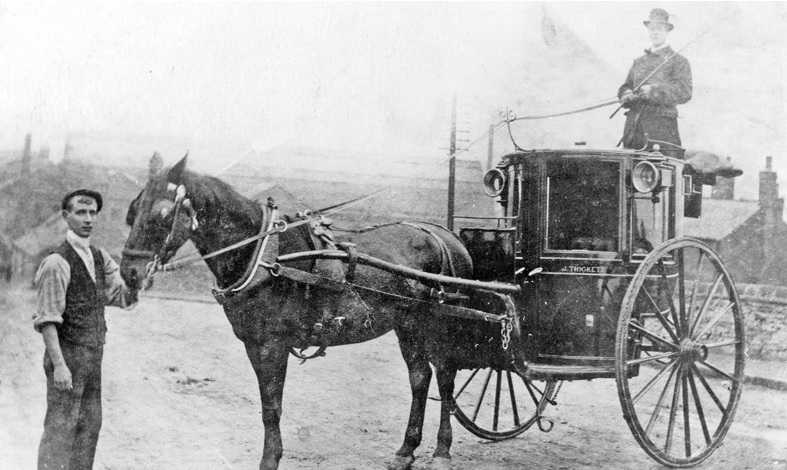
The last Hansom Cab in Sheffield. Photograph from 1912 by W.H. Babington. Image: Picture Sheffield
One of the more interesting of his recollections was an incident which occurred at the conclusion of a visit of a female member of the Royal family.
“I was the only camera man near,” he wrote, “when she was seated in her carriage, and I was offered without words the opportunity of a close snap. I don’t know what most people would have done. All my plates had been exposed but I took the opportunity given me on a plate already exposed. I could never disappoint a lady.” After that, whenever Royalty was in evidence, he always kept one plate unexposed until the departure.
“In my early days I had to rely upon the hire of any vehicle for transit. Eyam, historic for its plague epidemic, was holding a Sunday commemorative service, and a reporter and I were booked to attend. We hired an early edition of a motor-car, and, through some defect, had the pleasure of pushing it up most of the hills and running down to catch it when it descended on the other side.”
Such was William’s unique appearance in Sheffield that on one occasion a popular cartoonist, a friend of Babington, sent him a letter, the envelope of which bore a sketch of ‘Babs’, together with one word. ‘Sheffield.’ The letter was promptly delivered.
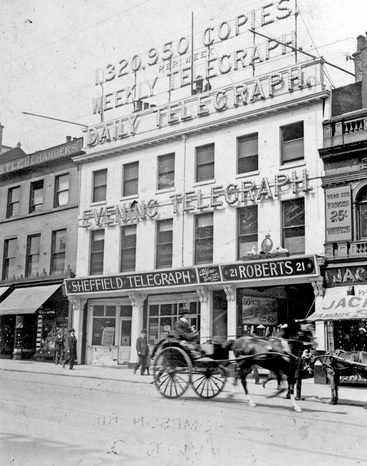
Old Sheffield Telegraph Offices, High Street, No 13, Castle Chambers, left, No 21, Roberts Robert, Tailors, right. Photograph by W.H. Babington. Image: Picture Sheffield
In his spare time, William was fond of the game of chess, and was a member of several old clubs, but as old age approached resorted to watching the game instead.
Today, we should be grateful for his work. Old images survive on Picture Sheffield, and books and magazines still use his black and white photographs. Many of the photographs taken of the Sheffield City Battalion while they trained at Redmires prior to World War One are attributed to him.
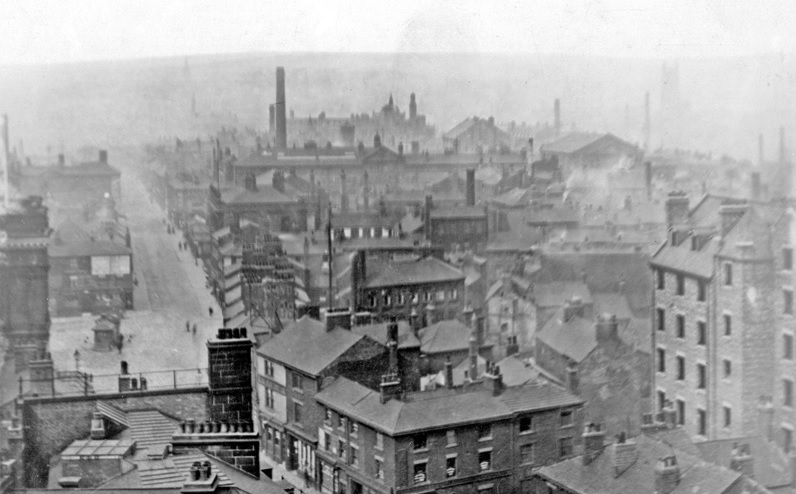
Barkers’s Pool, looking up Division Street (long before the City Hall was built). The building being constructed on the right is the Grand Hotel. Photograph by W.H. Babington. Image: Picture Sheffield
William lived at 59 Thompson Road, near the Botanical Gardens, and died, aged 76, in 1932. He was buried at Sheffield General Cemetery.
Finally, we have a mystery that somebody might be able to solve. Whatever happened to his extensive collection of old Sheffield prints and the vast library of photographs taken by him? Are they stored in an archive somewhere, or were they lost forever?
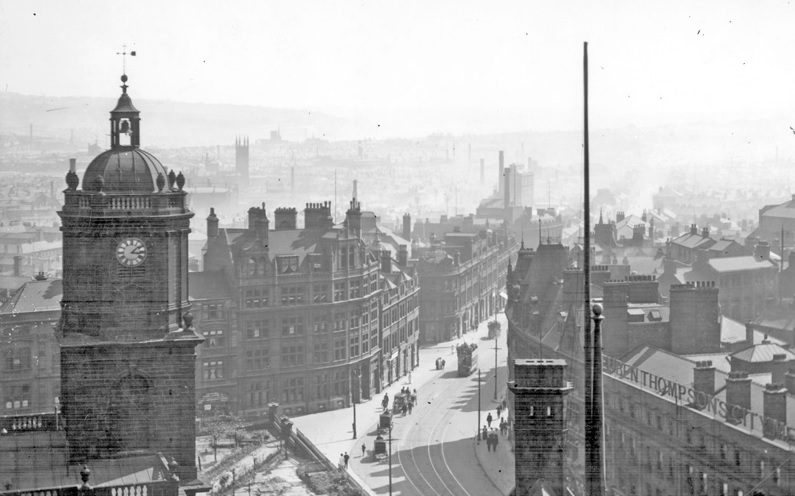
An elevated view of Pinstone Street, from the top of the Town Hall Tower, St. Paul’s Church (now Peace Gardens), left, Prudential Buildings, centre. Reuben Thompson’s City Mews (soon to be incorporated into the Radisson Blu Hotel), right. St. Mary’s Church can be seen in the background. Photograph from 1912 by W.H. Babington. Image: Picture Sheffield
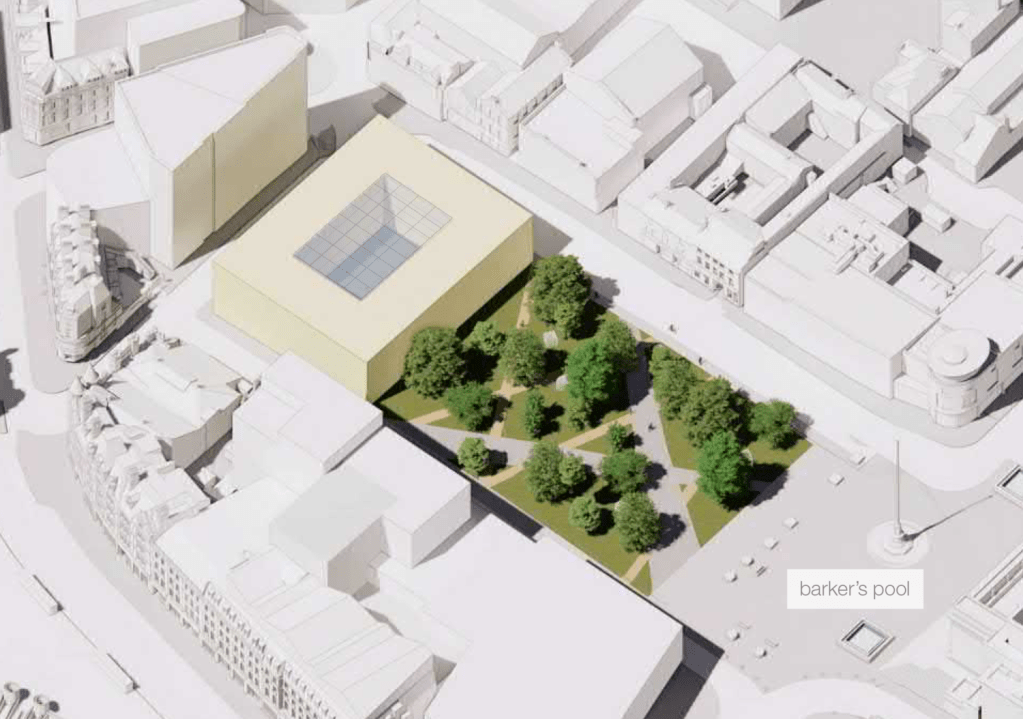
Any new building can be smaller, and more in tune with what current retail, leisure, food and drink or residential developers are looking for. The building would also be designed specifically for its future use. This option can still leave room for new landscaping and public space, plus improves pedestrian and cycling accessibility around the area. Image: Sheffield City Council
Sheffield City Council has full control of the John Lewis building, and this presents the ideal opportunity to create something special on one of the most prominent sites in the city centre.
In summer 2021, the council appointed experts Arup, Fourth Street and Queensberry to look at the condition of the existing building, the carbon impact and how any options would integrate within the Heart of the City and wider city centre.
There are three broad options: Retention and re-use of the building (and a plan for Sheffield Rules, the football museum, falls into this category), or complete removal of the building, creating a large public space, with the third option being complete removal, with public space and a smaller new building developed on the site.
The plans were put out to public consultation, with 1500 respondents, and according to the council, most favoured replacing John Lewis with a smaller building and outside space at a cost of about £40m.
We won’t know the outcome until the end of the summer, and in the meantime, the scruffy old department store should be clad in full building wrap with printed hoardings around the site.
Considering the implications and cost of reusing the building, I suspect that this option will be the eventual outcome.
Somewhere, displayed on a sideboard, or lost in a miserable attic, I would like to believe that an old model of Banner Cross Hall survives.
This was the creation of Jeffry Wyatt (1766-1840), architect of Banner Cross Hall, and used to highlight his magnificent new mansion in 1817-1821.
Shortly afterwards, in 1824, King George IV allowed him to change his surname to Wyatville and knighted him in 1828.
The existence of the model emerged in the 1930s when it was owned by Major Francis Ernest Gisborne Bagshawe, of Ford Hall, Chapel-en-le-Frith, a descendant of the family which once owned Banner Cross Hall.
In 1937, Bagshawe loaned the model to the Graves Art Gallery in Sheffield, which it displayed for three weeks, alongside valuable works of art that once adorned the walls of Banner Cross Hall. By this time, the old mansion was the company headquarters of builders Henry Boot and Son.
A portrait by George Romney was Mary Murray, grand-daughter and heiress of John Bright. Another portrait, of James II, had been painted by Peter Lely. Other paintings included Prince Charles Edward (Bonnie Prince Charlie), Prince Rupert, Queen Elizabeth of Bohemia and George III.
Amongst historic furniture loaned was a Sedan chair used to carry Mrs Murray to Ecclesall Church as late as the 19th century and a needlework picture showing the beauty of an Elizabethan Banner Cross Hall. Several Georgian silver exhibits had the Bagshawe and Murray Arms along with a pair of silver-mounted pistols containing the Murray Coat of Arms.
Major Bagshawe sold Ford Hall in 1957 and lived at Snitterton Hall (Matlock). He died in 1985 and the hall was sold the following year. Where did those cherished artworks go? The art detectives amongst you might have a better idea what happened to them!
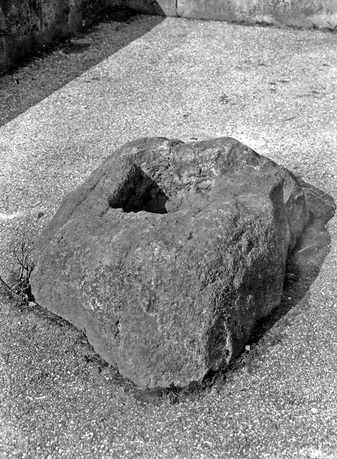
The base of the Banner Cross Stone was photographed in the early 20th century on the terrace of Banner Cross Hall. It had been removed from the gardens. Image: Picture Sheffield
Banner Cross is long associated with Ecclesall Road. It is infamous for being the scene of the murder committed by Charles Peace, the notorious criminal, in 1876.
In the time of Queen Elizabeth, nearby Banner Cross Hall was known as Bannerfield, but referred to as Banner Cross in the times of James I.
There appears to be no clear account of how Banner Cross got its distinctive name. ‘Banner Cross’ seems to suggest battles and campaigns, but the most likely explanation appeared in Hunter’s Hallamshire in 1819.
“This is one of the ancient esquires’ seats in the manor of Ecclesall. It stands near the chapel, and not far from the turnpike road to Manchester, from which however it is shut in by plantations, while its front presents a pleasing feature in the landscape to the traveller on the opposite hill along the road to Chesterfield. The name might tempt an antiquary to wild conjectures, especially when he stands on the base of an old stone cross still remaining, and looks along Salter (perhaps Psalter) Lane, towards Sheffield.”
It refers to an old stone cross that once stood near the previous hall, and quite possibly the ‘Banner Cross Stone.’
In the early part of the twentieth century, William Henry Babington, a Sheffield photographer, took images of a piece of stone, and labelled it as being the ‘Base of the Banner Cross Stone, now on terrace of Banner Cross Hall. Removed from Banner Cross Hall Gardens.’
If this was the original ‘Banner Cross,’ how likely is it that the base is still at Banner Cross Hall?
There was once an old mansion called Bannerfield that stood on a hill. It belonged to a branch of the Bright family, from superior yeomanry, who replaced it about 1616 and referred to it as Banner Cross.
The Bright family became extinct on the death of John Bright of Chesterfield and Banner Cross in 1748.
In 1758, his granddaughter and heiress, Mary Dalton, conveyed the estate to her husband, Lord John Murray, of the well-known Scottish house of Athol. He was Colonel of 42nd or Highland Regiment of Foot (the celebrated ‘Black Watch’) and spent much of his time here.
Lady John Murray died in 1765. Her only daughter married William Foxlowe, a Lieutenant-General, who obtained the Royal licence to use the Murray name. He purchased the Athol interest in the hall and retired here with the intention “of spending within its tranquil shades the evening of an active and honourable life.”
Banner Cross was not in the best condition, unoccupied for some years, and was later described in a poem by Mrs Hofland (Barbara Wreaks, of Sheffield): –
“A gloomy mansion, where in empty state And cob’web’d ruin hangs a goodly list Of pictur’d lords, and many a beauteous dame Of Athol’s princely race; for time has been They grac’d these gloomy walls and e’en of late Hath beauty’s queen here shown her peerless power, And given her mandate from a Murray’s eye, Bereft of these the mouldering mansion wears In every view the signal of decay; Slow whispering wind creeps through the chilling roof The tatter’d hangings shake with every breeze; Through the long passages, and cold dark hall, (So fame reports) the flimsy spirits glide In robes of white, or sweep the narrow stairs In all the shapes of fear-form’d misery.”
Like most shut-up properties, it had fallen into decay, the grounds choked with weeds, the drives, and pathways grass-grown, the ornamental shrubs ragged and broken from the weight of uncleared snow in wintertime. Gates yawned on their rusty hinges, while rotting woodwork and empty window frames marred the handsome façade of the building itself.
According to Rev. William Bagshawe, who spent a night here in 1818, “A side of the house gave way. I was in much danger”.
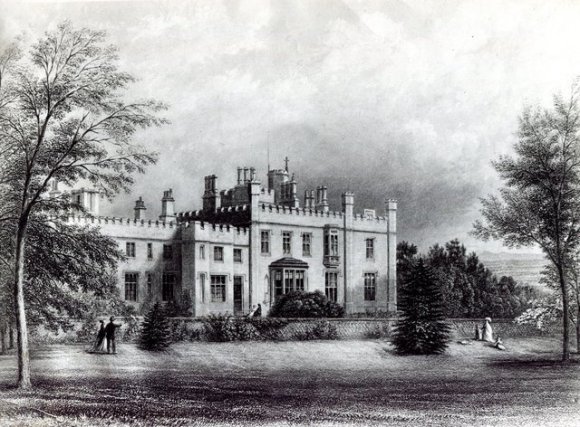
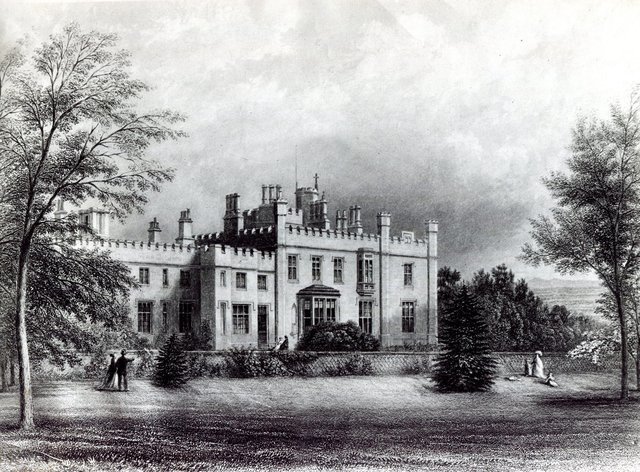
An early print of Banner Cross Hall, Ecclesall Road South, which dates from 1821. The house was in countryside outside Sheffield. Image: Sheffield Star
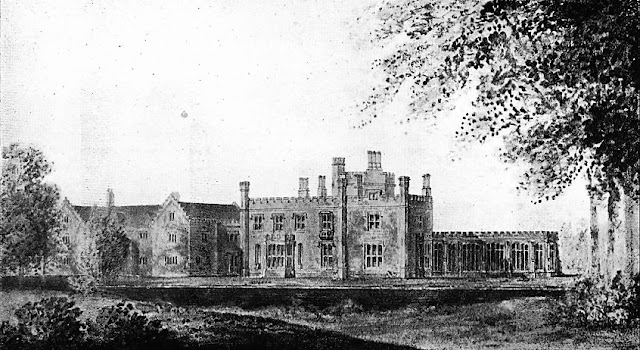
Banner Cross Hall: a perspective view by Jeffry Wyatt, 1817, showing the old house retained on the left, and an unbuilt conservatory on the right. Image: Landed Families
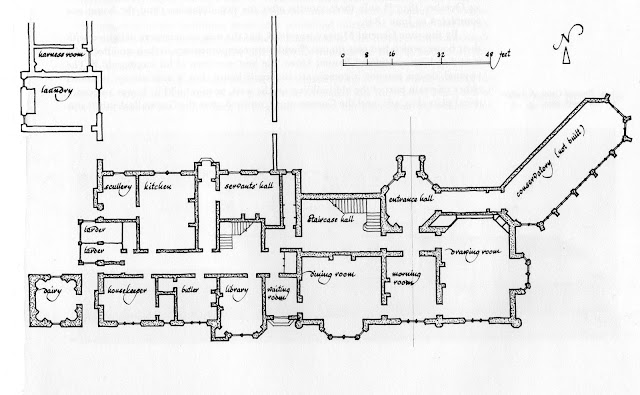
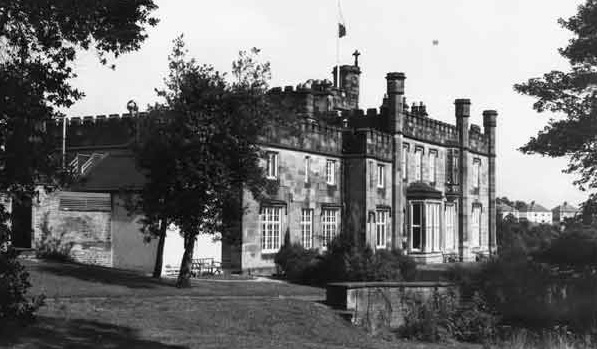
General Murray had already decided to rebuild Banner Cross and in 1817 had appointed Jeffry Wyatt, the distinguished architect of parts of Windsor Castle and the north wing of Chatsworth House. Within three months plans had been chosen and work commenced. The plan was for a Tudor Gothic house composed around a central octagonal porch-tower, with reception rooms along the south front, overlooking views over the grounds.
“And the work proceeded so rapidly under the eye of its master,” says historian Joseph Hunter, “that its pinnacles were seen rising above the woods around it in the summer of next year.”
Banner Cross Hall: plan of the house as rebuilt by Jeffry Wyatt in 1817-21 (main block) and later (service wing). Image: Landed Families
The work, supervised by William Dent, was well underway when General Murray died in 1818. Ownership passed to Rev. William Bagshawe, a younger son of Colonel Samuel Bagshawe of Ford Hall, Chapel-en-le-Frith, and his wife, Anne, who was the general’s sister. The main block was finished by 1821, and the intention had been to incorporate the old house as a service wing. However, the decrepit building was demolished and replaced by 1823 when the family moved in. A plan for a Gothic Conservatory was dropped, to offset the cost of replacing the old house.
Strangely enough, the estate went again with another daughter, Mary, and to her husband, Henry Marwood Greaves, of Hesley Hall, who died at Banner Cross in 1859. His son, William Henry Greaves-Bagshawe assumed the name of Bagshawe in addition to that of Greaves in 1853 and chose to let the property.
The Bagshawe’s never lived at Banner Cross again, although it passed to Henry’s daughter, Frances Alice Devereux, who married Edward Carter (later Bagshawe).
Notable tenants at Banner Cross Hall were Samuel Butcher (of W and S Butcher, Philadelphia Works), Douglas Vickers, also George Wilson, chairman and managing director of Charles Cammell and Co.
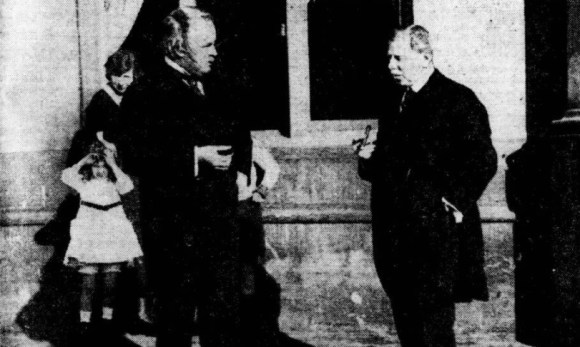
Colonel Henry Kenyon Stephenson, (later Sir Henry), also resided here. He was chairman and managing director of Stephenson, Blake & Co Ltd, later becoming chairman of the Sheffield Gas Company.He became treasurer of the University College of Sheffield, and later the first treasurer of its successor, the University of Sheffield. It was at Banner Cross Hall that Stephenson entertained Prime Minister, Lloyd George, in 1919.
This rather grainy photograph from 1919 shows Lloyd George outside the home of Henry Kenyon Stephenson, Master Cutler, where the Prime Minister had stayed overnight.
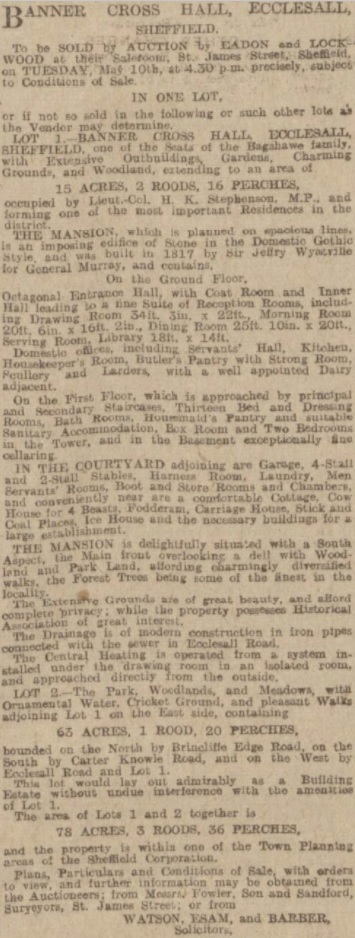
When Colonel Stephenson moved to Hassop Hall in 1921, the Bagshawes put the house and estate on the market. It failed to sell and three years later was tenanted by David Flather, of the firm of W.T. Flather, Standard Steel Works, Tinsley, who moved from Whiston Grange. During his tenure, another Prime Minister visited Banner Cross Hall, Stanley Baldwin in 1928. Flather remained until 1931 when he left for Hooton Levitt Hall, near Maltby.
A detailed sale notice from April 1921. The house failed to sell at auction. Image: British Newspaper Archive
Land immediately adjacent from Ecclesall Road South to Archer Lane was sold for development, and the property once again put on the market.
“The mansion is delightfully situated with a southern aspect, overlooking a dell with woodland and parkland. Included in the sale are the parks and meadows, with ornamental water, cricket ground, and pleasant walks. The total area is over seventy-eight acres.”
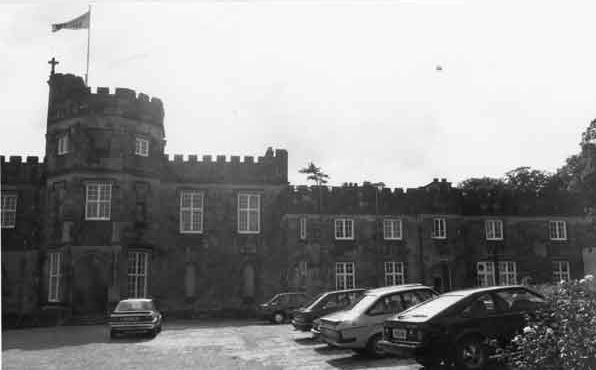
In 1932, the house and just over an acre of land was bought by Charles Boot to replace offices for Henry Boot and Son at Moore Street.
“Certain structural alterations to adapt it for office purposes have been started and would be completed within a month,” said Charles Boot. “The front of the Hall will be somewhat altered, but it is not my intention to do anything to destroy the amenities of the district.”
As might have been expected, the interiors were much altered. The Dining Room became the Board Room and was decorated with 17th century carved wood from demolished Hayes Place (Kent) and a fireplace and panelling from RMS Mauretania, scrapped in 1935.
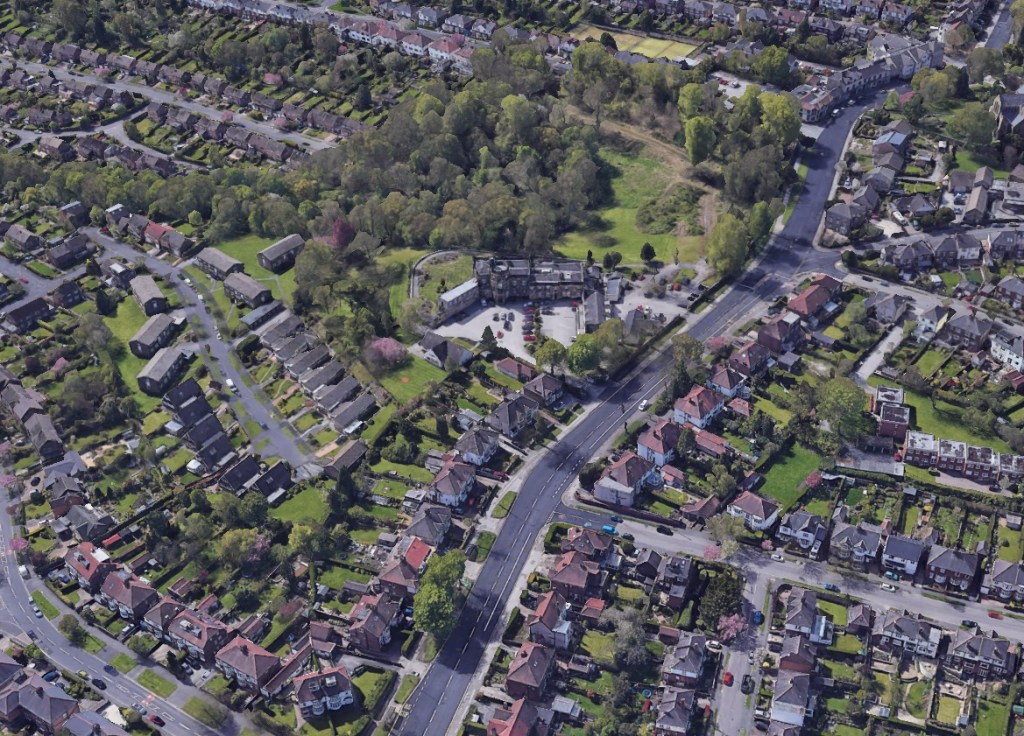
Most of the grounds were lost to development, and the history of Banner Cross Hall and the names of the distinguished families who occupied it are maintained in the naming of roads in the vicinity, including Tullibardine, Murray, Glenalmond, Gisborne, Blair Athol, and Ford roads.
Aerial view of Banner Cross Hall. The house originally stood in countryside but its former lands were sold off for housing. Image: Google
There will be angry cries. There will be tears. People will call out to protect the trees.
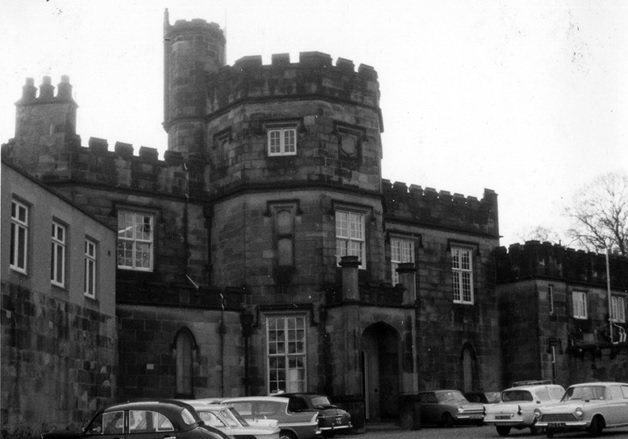
Banner Cross Hall once stood in rural idyll. Then Sheffield grew and surrounded it. In the 1930s, the fate of the old mansion was precarious. It was on the market and people feared that it would be demolished, and the beautiful trees would be lost. Many already had, but for 90 years since, it has been the company headquarters of Henry Boot and some of the surrounding habitat survived.
However, faced with enormous costs to modernise it, and make it environmentally friendly, Henry Boot is reconsidering its future at the Grade II listed mansion.
If it chooses to vacate, the likelihood is that Banner Cross Hall will be converted into luxury apartments with possible development in its grounds.
If this happens, prepare for objections, just like there were almost a century ago.
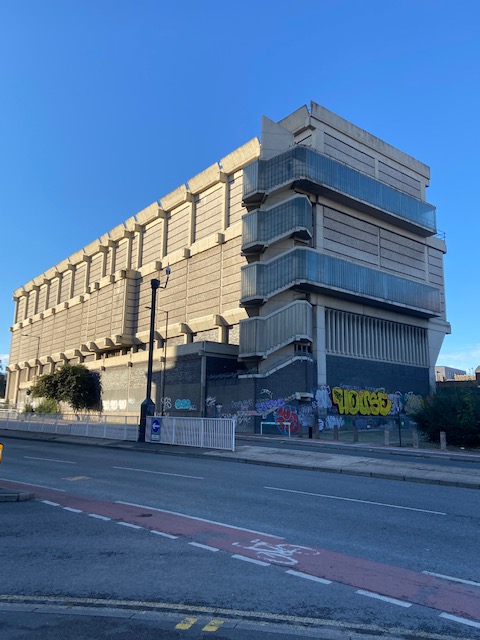
Electricity Substation, at the junction of Moore Street and Hanover Way. Built 1968. Photograph: DJP/2021
Here’s a building that attracts attention from all over the world. Strangely enough, it is a building that frightened me as a child. The cold, harsh, concrete structure overpowers one of the main gateways into Sheffield city centre.
Do we like it?
It seems that disapproval of Sheffield’s Brutalist architecture is reserved for Park Hill flats, and the Electricity Substation, on Moore Street and Hanover Way, seemingly escapes most criticism. And since October 2010, the building has been floodlit with coloured lighting at night-time creating a dramatic artistic focal point on Sheffield’s ring road.
Its history goes back to the early 1960s when electricity distribution in the city called for the use of a 275 kilovolt cable ring around the city centre with transformer and switching substations needed on the ring.
A substation was needed near the junction of The Moor and Ecclesall Road. Back then, this was an area largely occupied by substandard back-to-back housing and small cutlery works and was identified for redevelopment.
The original plan was square in detail, but this was rejected because it would have forced the closure of several small factories. Instead, an L-shaped plan, occupied by back-to-back properties, was devised by the Central Electricity Generating Board (CEGB) to be built in two phases.
The chosen site needed an architectural statement and the CEGB appointed Jefferson, Sheard and Partners of Sheffield and London, led by Bryan Jefferson, as architects to work with the board’s own civil engineer.
The result was this concrete building that housed transformers, switchgears, and busbars on separate floors. Phase 2, forming the other leg of the substation was never built because anticipated demand never materialised.
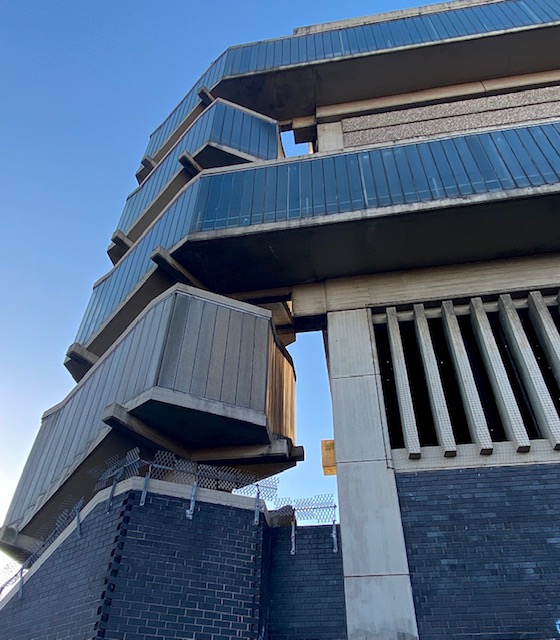
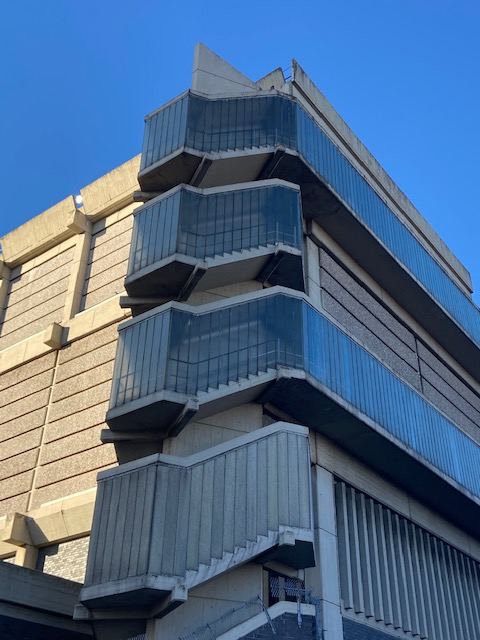
Vertical circulation is via an external staircase with covered walkway. Photograph: DJP/2021
The Electricity Substation was built by Longden & Sons and completed in 1968. In the same year, it was commended in the Financial Times Industrial Architecture Awards.
Constructed with a reinforced concrete frame with concrete floor slabs, blue engineering facing bricks, and cladding panels of Cornish granite aggregate, it was completed by Longden & Sons in 1968. In the same year, the building was commended in the Financial Times Industrial Architecture Awards.
The ground floor houses two transformers, with switch gear occupying the floor above. It was Grade II listed in 2013, considered to be of special interest, and is still in use, although advanced technology means the second floor is redundant.
Exposed concrete panels are on the upper levels and are illuminated at night.Photograph: DJP/2021
Note: – Bryan Jefferson founded his practice with Garry Sheard in 1958, and the architects were also responsible for the Cinema and Entertainment complex in Pond Street, now occupied by Odeon Luxe, Tank Nightclub, and the O2 Academy.
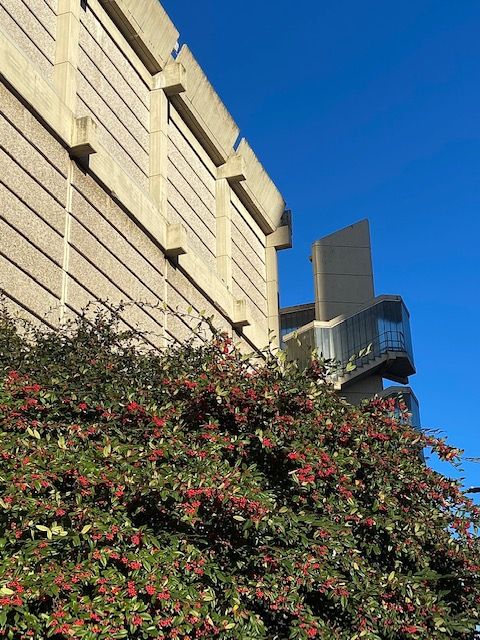
The substation is highly unusual for its date as due to its prominent urban position in a post-war redevelopment area the transformers and switchgear are enclosed within an architect-designed building, rather than being located in an open-air site surrounded by security fencing as was the usual form for substations of this period. Photograph: DJP/2021
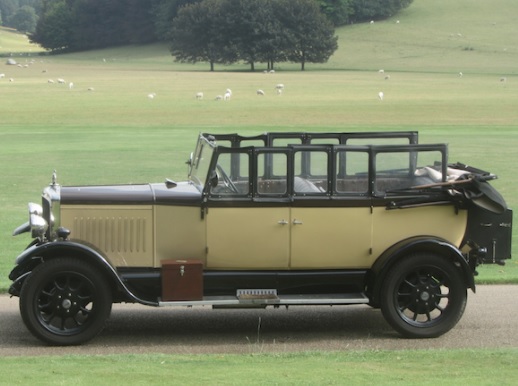
Hadfield Bean. The steel-maker Hadfields took it over in 1926 but by 1929 it ceased car production. In 1933 Hadfield re-launched the company as Beans Industries, making components for other motor vehicle manufacturers.Photograph: Fluxposure
Hadfields limited of Hecla and East Hecla, Sheffield, founded by Robert Hadfield in 1869, was an established manufacturer of special steels, in particular manganese alloys and steel castings. The company was taken over by his son, Sir Robert Abbott Hadfield (1858-1940) and by 1911 was believed to employ more workmen than any other business in the city. It specialised in the production of war materials but in 1926 agreed to rescue Harper Bean Ltd, manufacturer of Bean Cars, with factories in Dudley, Worcestershire and Coseley, Staffordshire.
The car company traced its origins to two auto component suppliers, A Harper and Sons and Bean Ltd. For a few years in the early 1920s Bean outsold Austin and Morris, the business model relying on high volumes, but its financial troubles resulted in its rescue by Sheffield-based Hadfields which supplied steel for the cars.
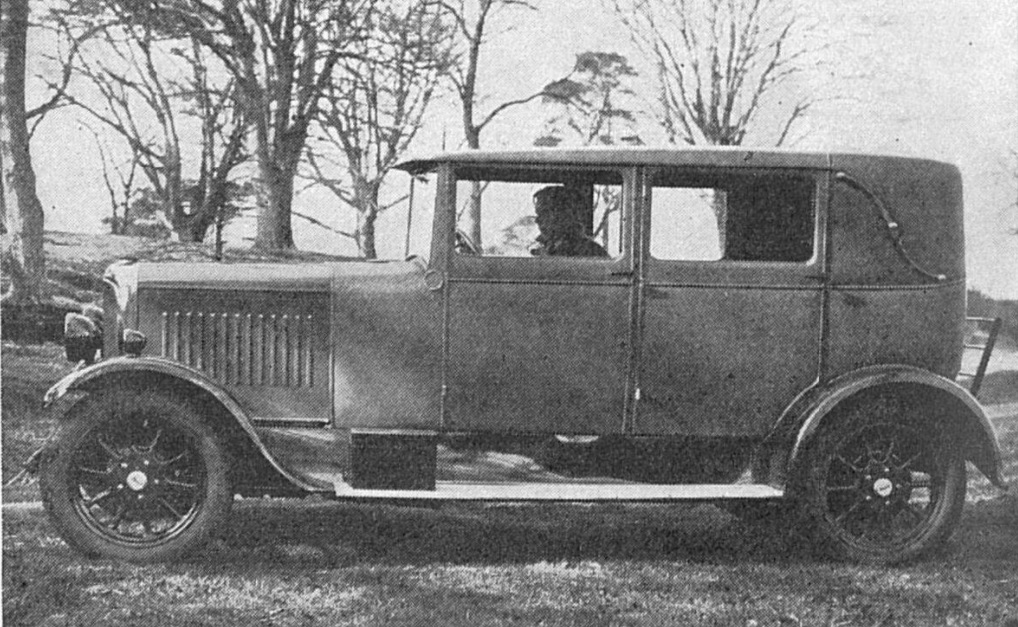
The 1928 14-45 H.P. Hadfield Bean with fabric body was featured in magazine articles of the day. Photograph: British Newspaper Archive
From 1927, all cars were known as Hadfield Beans, but the last model was launched in 1928 and by the following year production had ceased.
Hadfields eventually merged with Samuel Osborn and after various takeovers came to prominence in the steel strike of 1980 when ugly picket line scenes hit national headlines. It eventually suffered the same fate as much of the British steel industry and was closed in 1983. The East Hecla site is now mainly covered by Meadowhall Shopping Centre.
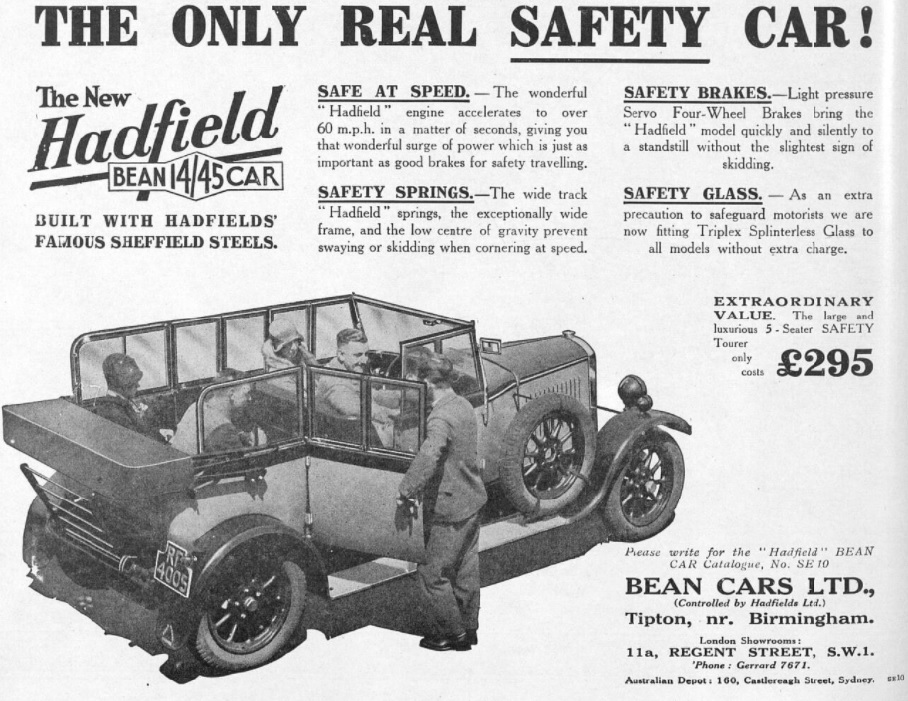
A1928 newspaper advert for the Hadfield Bean 14-45 car. Built with Hadfields’ famous Sheffield steels. Photograph: British Newspaper Archive
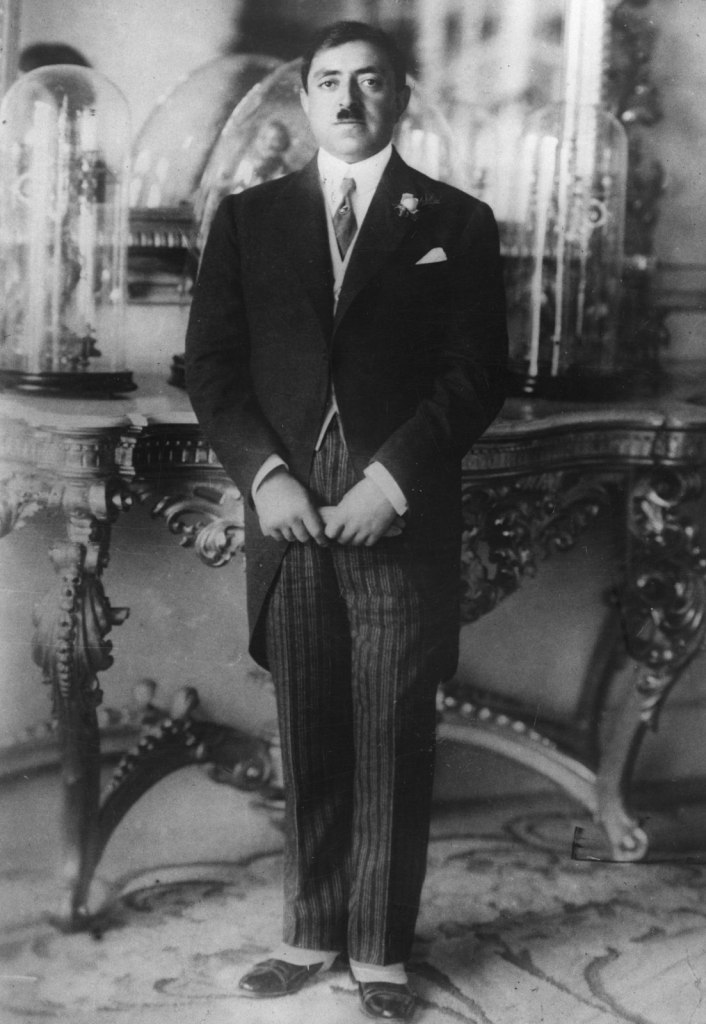
Amanullah Khan was crowned the Amir of Afghanistan after his father, AmirHabibullah was assassinated in February 1919. Amanullah Khan was fiercely anti-British and wanted to destroy an old agreement which gave the British control over Afghanistan’s foreign policy. The British resisted this move, and so began the Third Anglo-Afghan War (1919). After a brief struggle, the British were forced to negotiate and in the end surrendered their control over Afghanistan’s foreign policy. Afterwards, Amanullah became a national hero, and was given the tile Ghazi. He then turned his attention to modernising Afghanistan. Photograph: Britannica
Afghanistan is a country that seems to be in perpetual turmoil. There have been those that attempted to modernise it, thwarted at every turn, and there was a time when Sheffield was going to play its part.
In March 1928, Sheffield welcomed the King and Queen of Afghanistan. People crowded the streets to welcome King Amanullah and Queen Souriya who had travelled at high speed in Rolls-Royce cars from Derby.
The visit was part of a European tour that began in late 1927, taking in Italy, France, Belgium, Germany, Great Britain and finally Poland. Amidst the flag waving, it was clearly an attempt by western industries to gain a foothold in a new economy.
Ghazi Amanullah Khan (1892-1960) was the sovereign of Afghanistan from 1919, first as Emir and after 1926 as King. Having wrested control from colonial powers, King Amanullah had set about reforming Afghanistan along Western lines.
The King met the Lord Mayor at Sheffield Town Hall by taking off his hat, shaking hands, and saying “How do you do?” in English.
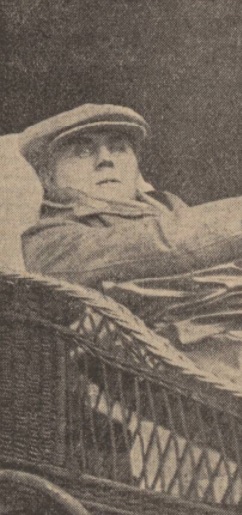
When King Amanullah entered the Town Hall he noticed Sergeant Harper, an ex-serviceman, in his invalid carriage. He was about to pass when the old soldier held out his autograph album and fountain pen. The King duly obliged by adding his name to the book.
After luncheon, the King and Queen went onto the balcony over the front entrance and waved to the cheering crowds outside.
When the royal party left the Town Hall, Sergeant Harper had hoped to get the Queen’s signature. He held out his autograph book, but she did not see him. However, King Amanullah did, and went over to him, shook his hand again, and placed what was thought to be a £1 note in his hand. Only afterwards did Sergeant Harper realise that it was a £100 note!
Sergeant Harper, the disabled ex-serviceman, to whom the King of Afghanistan gave a £100 note. Photograph: British Newspaper Archive
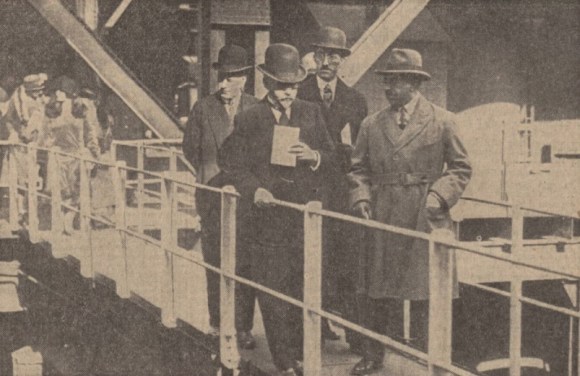
Afterwards, the King and Queen visited Vickers-Armstrong’s River Don Works where they witnessed steel production and visited the gun machine shops. They were shown a demonstration of caterpillar armoured cars, guns, and rifles.
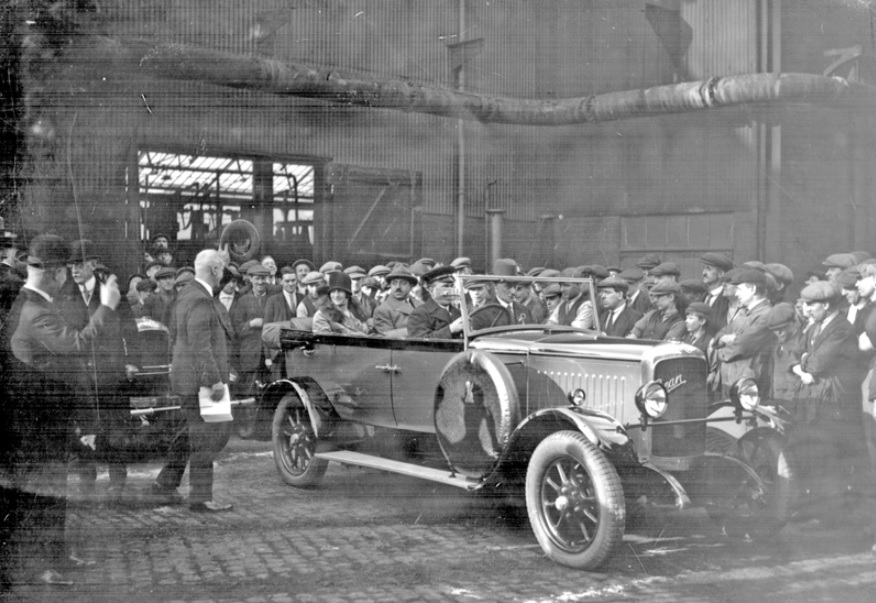
A Bean Motor Car at Hadfields Co. Ltd., East Hecla Works on the occasion of the Royal visit of King Amanullah and Queen Souriya of Afghanistan. Bean cars were manufactured by A. Harper Sons and Bean Ltd who were owned by Hadfields Ltd at the time. Photograph: Picture Sheffield
Next it was to Hadfields East Hecla works, where the strength of its steel helmets and armour was demonstrated by shooting at the figure of an infantryman. Queen Souriya proved to be an accurate shot, hitting the helmet, and was presented with the bullet as a souvenir. On their departure, the King was presented with a Sheffield knife with golden haft, in a Morocco case. In exchange, the King paid the customary halfpenny, and laughed heartily at a quaint old Sheffield custom.
The Royal party inspecting Vickers’ River Don Works. Photograph: British Newspaper Archive
The next stop was a tour of Mappin and Webb on Queen’s Road, where they witnessed the depositing of gold and silver, and the shaping of nickel silver sheet metal using power presses and drop stamps. Here he was presented with a silver-gilt casket, with his crest enamelled on the cover.
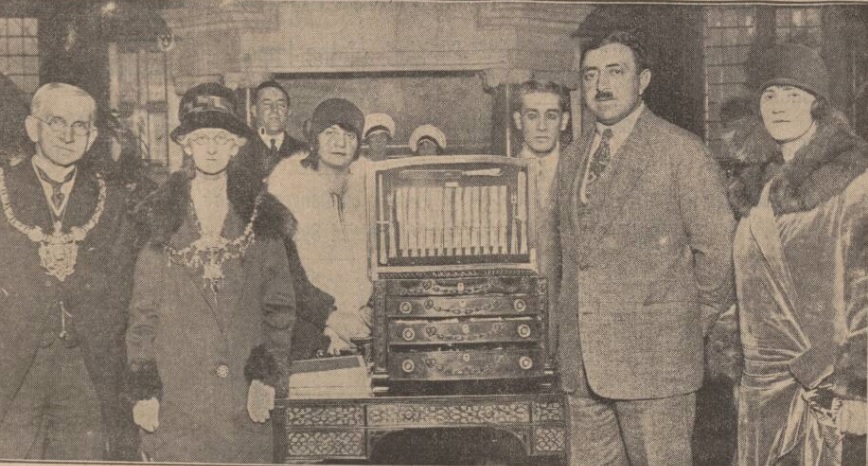
The Royal Party then returned to the Town Hall for tea and was presented with a canteen of cutlery and a case of scissors as gifts from the city. The King accepted this, and through his interpreter said he would always remember the warm welcome they had received in Sheffield.
King Amanullah and Queen Souriya of Afghanistan with the Lord Mayor and Lady Mayoress of Sheffield at the Town Hall. The cabinet of Sheffield cutlery presented to them by the Corporation is seen in the centre. Photograph: British Newspaper Archive
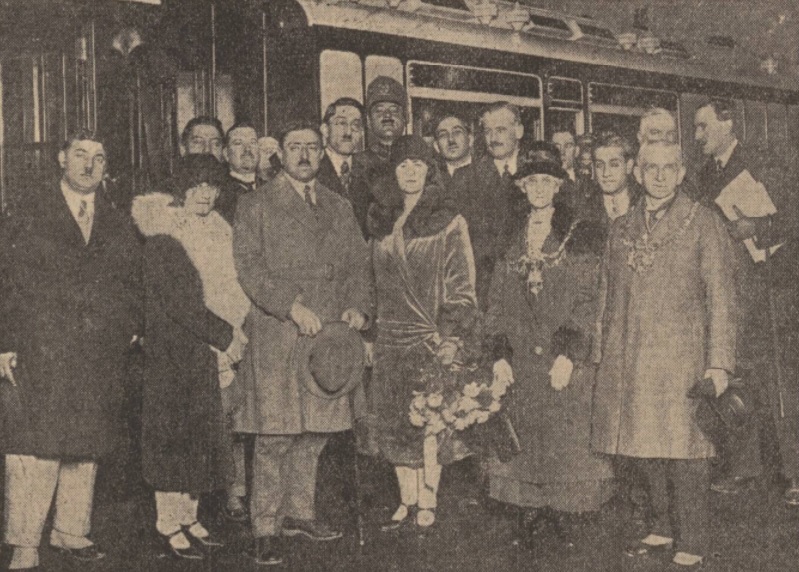
They left the city for Manchester by royal train, the King and Queen occupying the saloon used by British royalty.
Looking back, it was a day of celebration, and one that might have cemented a special relationship with Afghanistan. However, while the King toured Europe, opposition to his rule had increased back home culminating in a march on the capital where most of the army deserted rather than resist.
There were allegations of corruption, and within ten months of his visit to Sheffield, the King had abdicated and was forced into exile in India before seeking asylum in Italy. Many of the reforms were reversed and Afghanistan remained a troubled state.
The King and Queen of Afghanistan photographed with their suite at the Midland Station when they left for Manchester. Photograph: British Newspaper Archive
 sheffielder.net