Categories
Sculpture

The long lost story of Rebecca’s Well

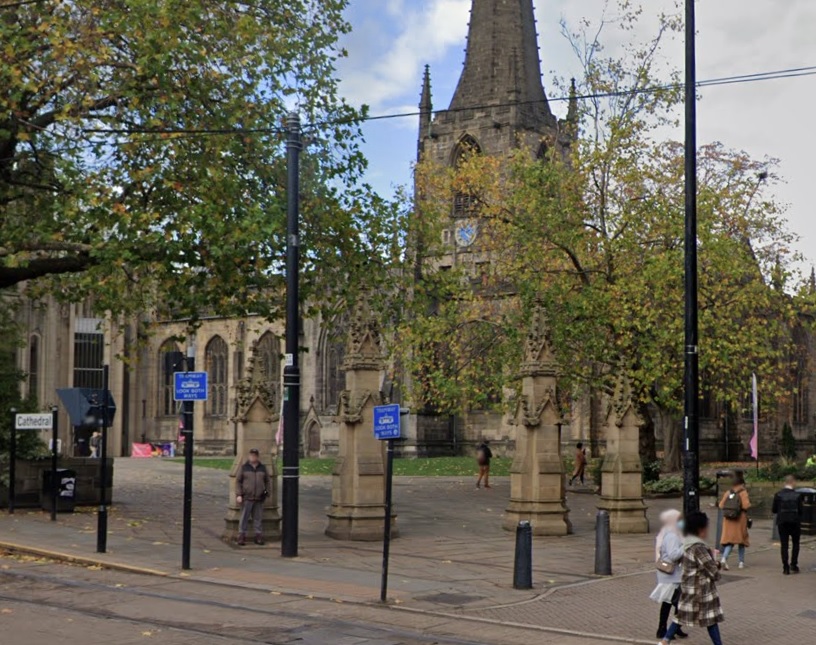
The stone gateposts to Sheffield Cathedral, formerly Sheffield Parish Church

A question posed to the readers of the Sheffield Daily Telegraph in October 1869.

“I wonder when ‘Rebecca’ and her well are to appear again, who occupied such a prominent position till taken down for Church Street improvements. Can anyone say?”

The question remains unanswered after 155 years.

To find out more about ‘Rebecca’ we must go back to 1859 when Henry Levy, clothier, of High Street, had given instructions to erect a public fountain at the corner of the Church Gates. Plans had been prepared by Thomas Frederick Cashin, an architect from Bank Street.

The fountain was in the Italian style, about 8ft 9inches in height, surmounted by a figure of Rebecca at the well, which was about 2 or 3 feet high. The completed fountain would have been 4ft 6 inches square.

“The soffit portion will be richly ornamented with water lilies, and the pillastres on each side will be surmounted by ornamental caps, introducing water lilies, and will contain on one side a barometer, and on the other a thermometer. In the front of the erection there will be a niche in which will be placed a shell, and from this shell the water will spring and fall into an ornamental basin. There will be two goblets provided for the use of persons desiring to quench their thirst, and when not in use, these will stand on a ledge.

The foundation stone was laid at a well-attended ceremony on September 15, 1859, by Horace Mayhew, of London, but the fountain was far from finished.

Weeks later, a letter appeared in the Sheffield Daily Telegraph.

“For weeks I have been wondering not only when it would be finished, but why it was ever begun. I cannot think that our worthy vicar knew what a piece of ugliness was about to be erected on the site he gave.”

Its problems were outlined by Mr Cashin, the architect, who claimed that he had been asked to provide a design for £10, and subsequently obtained permission to spend no more than twenty (about £3,200 today). Fifteen guineas was the amount of the contract for plastering and construction, and three pounds ten shillings for the plumbing. The balance was to be applied to the purchase of Rebecca by Henry Levy but was yet to appear (and didn’t until 1861). The barometer and thermometer, provided free of charge by Chadburn Brothers, had still to be fitted.

To make matters worse, Henry Levy was taken to court by the plumber for non-payment, and he also fell out with the architect.  

Although erected with the best of intentions, Rebecca didn’t impress Sheffield folk. “Rebecca is but a poor imitation of the Venus de Medici in Rome,” wrote a correspondent in 1861.

Another assumed to be the statue itself.

“Placed on top of a square fountain with an urn in my hand like a milk jug, and four vases at my feet like Egyptian flower pots, I never was anything to boast of, but now my dress is all in patches, my shoes are toeless, and I altogether look like the woman described by the Italian poet Rinaldo,

‘Non giunge io tu porio,
Fallario est mon gorio.’

Which means, as you doubtless well know, ‘She looks like one whose rags are proof of moral degradation’ – a fine sentiment.”

The structure was made of brick, covered with cement, and might explain why it wasn’t preserved when the fountain was removed for the widening of Church Street in 1866.

Alas, there are no surviving sketches or photographs of the water fountain. A small photograph of High Street by Theophilus Smith in Sheffield and its Neighbourhood by John Holland, 1865, gave an idea of its appearance from the back, and a small engraving of the Parish Church in Pawson and Brailsford’s Illustrated Guide to Sheffield (first edition) shows a front view of it.

The original church gates still stand at the corner of Sheffield Cathedral’s forecourt next to East Parade. Rebecca’s Fountain would have been to the left of them. In those days, a horse-drawn hansom cab rank would have been nearby.
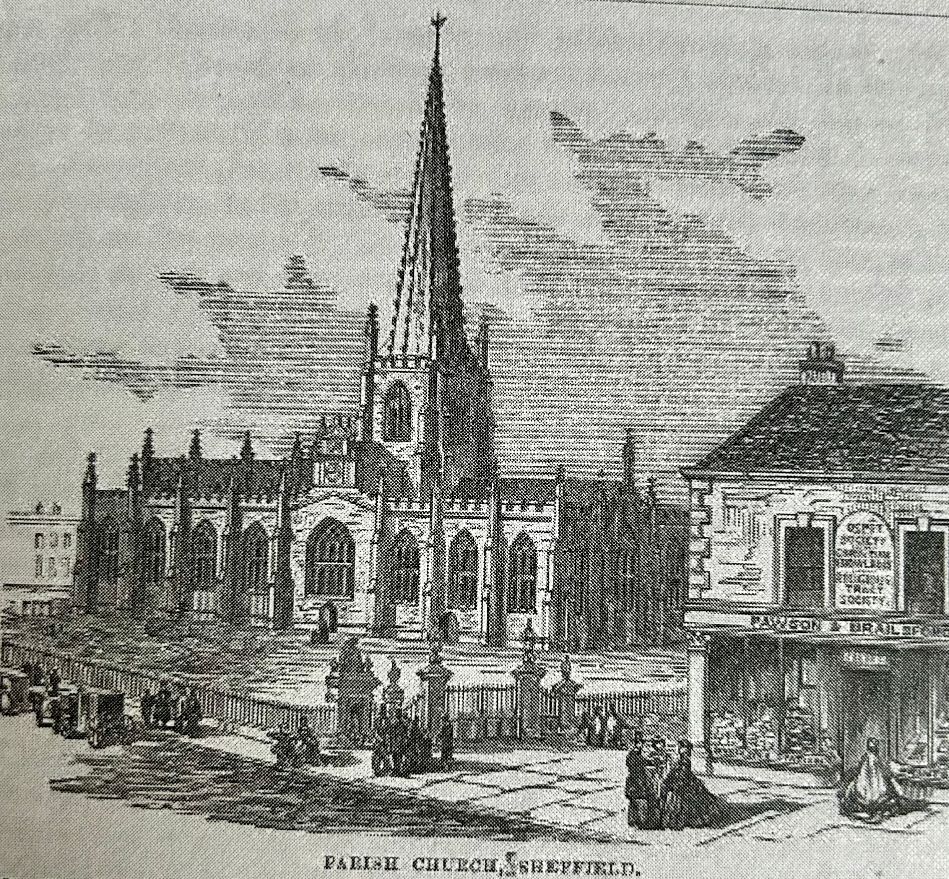
From Pawson and Brailsford’s Illustrated Guide to Sheffield (first edition – 1862). Rebecca’s Well is to the left of the church gates.

© 2024 David Poole. All Rights Reserved
Categories
Late Night Tales

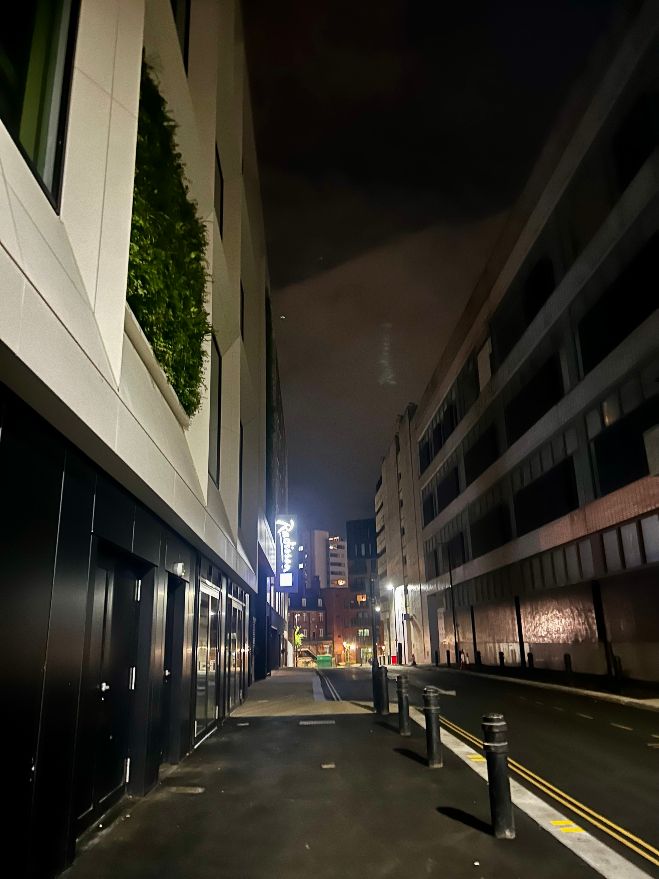
Burgess Street – Same place, different time

“In the old days, when Lady Halle and Sir Charles gave us such delightful recitals (at the Albert Hall), the idiotic jangling of the Parish Church discordant bells or the nearer and louder but more tuneful bells of St. Marie’s Catholic Church, used to spoil our enjoyment. When these were stopped we suffered from the megaphone voice of a police inspector in Burgess Street calling up the cars and carriages of Sheffield people who persistently, rudely, and selfishly leave the concert before the programme is completed.”

Christopher David Leng – 1921.

The Albert Hall would have been on the right of this photo, its frontage on Barker’s Pool. Built in 1873 and destroyed by fire in 1937. Later the site of Cole Brothers and subsequently John Lewis.

Categories
Buildings Companies

The long history of Eadon, Lockwood and Riddle

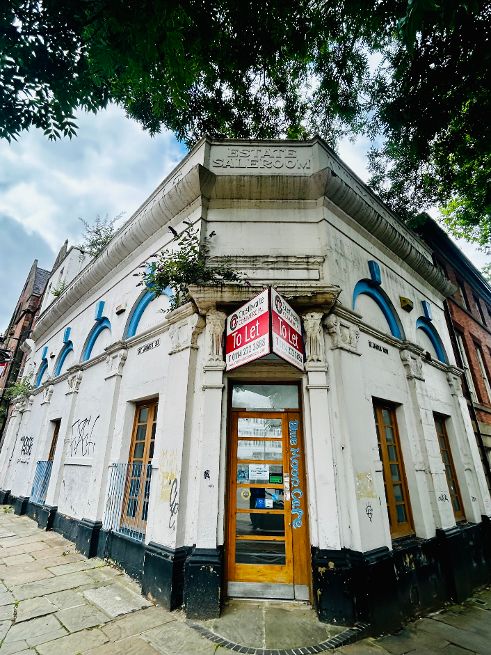
Former Estate Saleroom of Eadon, Lockwood and Riddle at 2 St James Street. More recently it was used by the Blue Moon Cafe. Image: DJP / 2024

I remember something somebody once said to me. “We have ELO (Electric Light Orchestra), ELP (Emerson Lake and Palmer), and ELR (Eadon Lockwood and Riddle).”

The last one was meant as a joke, but it showed the strength of a local business that was founded almost two centuries ago.

The firm of Eadon and Lockwood was founded in 1840 by William Henry and John Alfred Eadon, the second and third sons of George Eadon, a well known cabinet maker.

The business was carried on as W.H. and J.A. Eadon, auctioneers, valuers and share brokers for some years at Fargate in part of the premises that we refer to today as Coles Corner.

In 1855, they moved to new premises at No. 2 St James Street, which were built on the site of the old Sheffield Parish Church vicarage by George William Travis, known in his day as a builder and contractor, who subsequently sold it to tenants.

William Henry Eadon died in 1876, after being in failing health for five years, and his son, William Mitchell Eadon, who had joined the business in 1867, became a partner, and eventual head of the firm. Vincent Percy Eadon, the son of J.A. Eadon subsequently joined the business.

J.A. Eadon retired about 1880 and died shortly afterwards.

The business carried on under the same name until 1887, when, although the partnership continued, the stock-broking part of the business was separated, and attended to by Vincent Percy Eadon until his death in 1900, after which date William Mitchell Eadon carried on their auction and valuation business as sole partner until joined in 1917 by Joseph Cyril Lockwood, who married his daughter.  

He was the grandson of Joseph Lockwood, and second son of William Lockwood of Lockwood Brothers (another auctioneer and well-known amateur cricketer). William Mitchell Eadon had already been in business with Lockwood (and Ernest Dutchmann) as a stock and share broker but this had been dissolved in 1912.

Eadon and Lockwood covered a wide range, including many extensive sales of machinery, while, after the First World War, a succession of sales for the Disposals Board was entrusted to them, the amount of money raised reaching nearly half-a-million pounds.

Art sales also formed a part of the firm’s activities including collections by Richard Bayley, Henry Elliott Hoole, William Turner, W.H. Crowley, and the Craven collection. Among important sales of property were the estate of Robert Younge in the 1870s and the Duke of Norfolk estate.

Sales of antique furniture, silver plate, and other objects occupied a prominent place in the firm’s operations.

The Eadon and Lockwood partnership was dissolved in 1933, and a new company formed when John Tharratt Riddle, the younger son of J.C. Riddle of Grindleford, joined the firm. He had previously been articled to a firm of Sleaford auctioneers and the Sheffield connection probably came through his father who was head of silversmiths Walker and Hall Ltd.

Over the following years, ELR became one of the region’s biggest and most trusted estate agents, as well as operating the auction house business.

The St James Street building was sold in 2001 and obtained by the Blue Moon Cafe looking for somewhere larger after their initial Norfolk Row premises were proving too small. Refurbishment was by Burnell Briercliffe Architects. Blue Moon Cafe closed in January 2023.

ELR auctions continued at the Nichols Building at Shalesmoor and in 2010, now independent to the estate agent business, underwent a substantial programme of expansion, constructing a modern, purpose-built saleroom, re-branding, and becoming the Sheffield Auction Gallery at Windsor Road, Meersbrook.

The estate agency business was sold to Abaco for £4m in 1987 and would form the regional office of Lambert Smith Hampton in 1988, and was one of the few acquisitions that was allowed to trade under its own name.

It was forced to downsize either side of the millennium, and in 2006, a new independent company was created called Eadon Lockwood and Riddle Ltd, and still maintains its Sheffield connection as the city’s  longest established estate agent. 

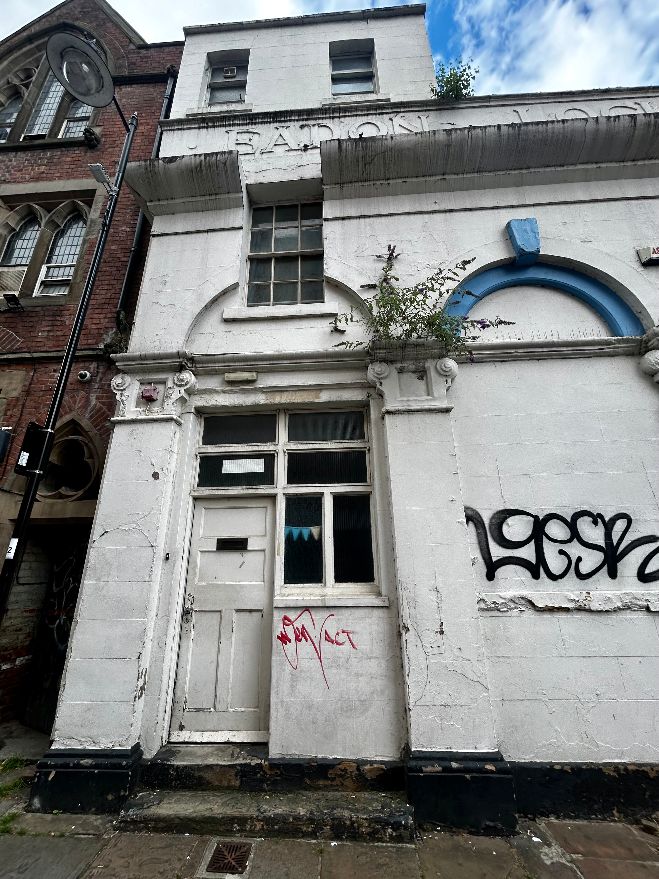
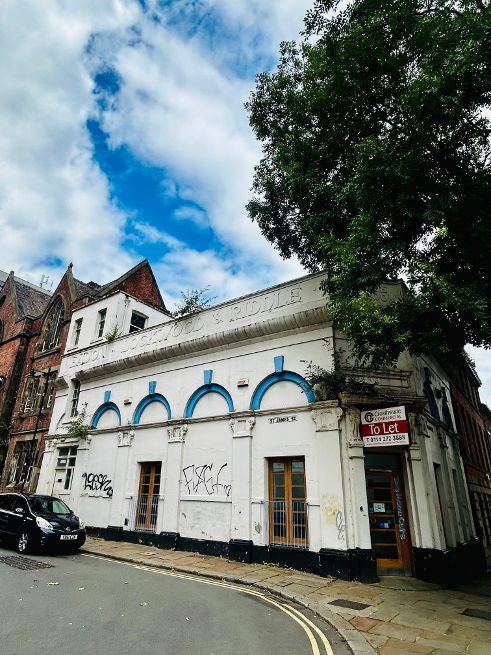
Former Estate Saleroom of Eadon, Lockwood and Riddle at 2 St James Street. It has been empty since Blue Moon Cafe closed in January 2023. Image: DJP / 2024

© 2024 David Poole. All Rights Reserved
Categories
People

The Twelve Capital Burgesses and Commonalty of the Town and Parish of Sheffield in the County of York

In a recent post I mentioned “The Twelve Capital Burgesses and Commonalty of the Town and Parish of Sheffield in the County of York”.

This historic, if not convoluted title, is a charity now known as the Church Burgesses Trust, serving Sheffield for over 450 years, and religion played a big part in it coming to being.

If we go back to 1297, Thomas De Furnival, as Lord of the Manor of Sheffield, granted lands to the town’s freeholders, and for an annual rent, the lands provided funds to support a parish church and its priests, maintain local roads and bridges and to support individuals and worthy causes. The freeholders who administered the land and donation became known as the Town Trustees.

After Henry VIII’s death in 1547, his son, Edward VI, wanted England to remain a Protestant country and set about removing all traces of the Catholic faith and improve Royal finances. He seized land and property across the country, including that belonging to Sheffield, to which the town protested but to no avail.

When his half-sister, Queen Mary Tudor succeeded him, a petition was presented by William Taylor and Robert Swyft asking for the return of the lands. This she granted on 8 June 1554 in a royal charter which gave the land and property in trust to a new corporate body: “The Twelve Capital Burgesses and Commonalty of the Town and Parish of Sheffield in the County of York”.

Rental income from the lands was used to pay the stipends of three assistant priests at the parish church together with the costs of worship. Whatever was left over was to be used towards the repair of the church; repair of highways and bridges in Sheffield; and the relief of the poor and needy of the parish. Down the years the charity carefully stewarded the resources entrusted to it so that it now has annual disposable income of more than £1 million.

In addition to supporting Sheffield Cathedral (the former parish church), it puts money towards the building of churches and payments towards Anglican clergy stipends throughout Sheffield.

All Burgesses meet four times a year to consider the work and the business of the Trust. In between times, sub-committees meet to review applications for grants and to oversee the assets of the Trust, which comprise both property in Sheffield and stocks and shares. The Trust is led by the Capital Burgess, who is one of the twelve Burgesses appointed to serve for one year in the role of Chairman.

Categories
Buildings Streets

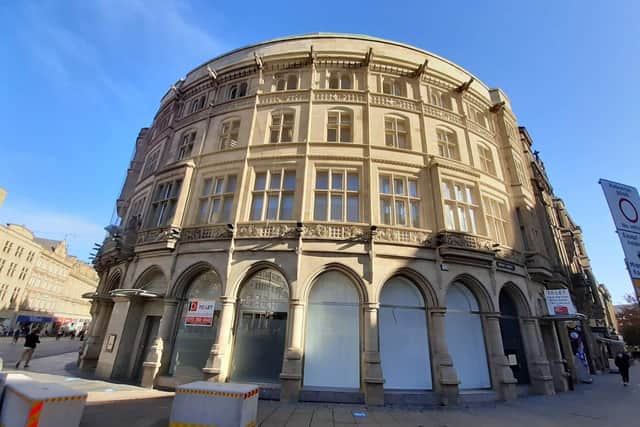
An important development for the future of Chapel Walk

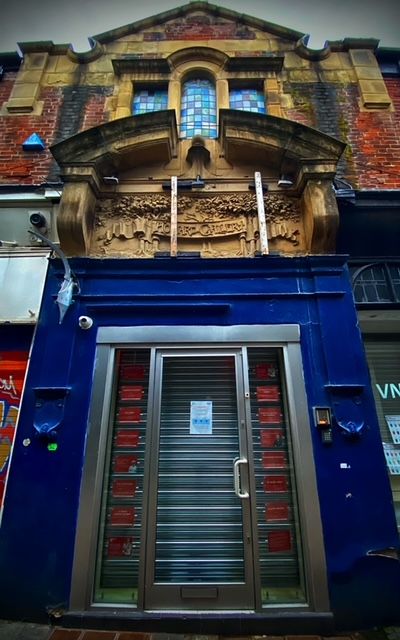
‘Howard Gallery’ carved relief above the now
shuttered entrance to the first floor staircase

Chapel Walk has gone through a tough time of late, but here’s positive news about one of its most interesting buildings.

Fowler Sandford on behalf of The Twelve Capital Burgesses and Commonalty of the Town and Parish of Sheffield in the County of York have submitted a planning application for The Howard Building, which incorporates retail units 15-31 Chapel Walk to the ground floor and first floor offices above. The building fronts Chapel Walk with the rear elevation facing Black Swan Walk.

The proposal relates to the refurbishment of the promenade of shopfronts to improve the street scene along Chapel Walk within the City Centre Conservation Area, alongside the refurbishment and replacement of first floor office windows to the front and rear elevations, and the repair and restoration of the original roof lights. These works will accompany the refurbishment of the vacant first floor offices along with their entrance leading onto Chapel Walk.

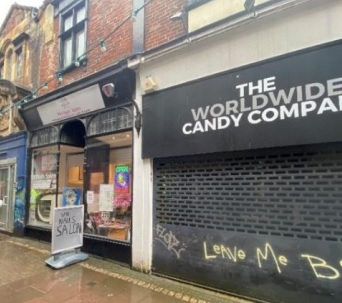
No. 25 Chapel Walk to the left adjoined by
modern shopfronts, shutters and the central entranceway to
The Howard Gallery. Image: Walker Wood

It is thought that this narrow strip of buildings may reflect the layout of medieval burbage plots, with No. 9 Fargate (formerly Austin Reed) effectively standing at its head.

The building was designed by Flockton Gibbs & Flockton alongside Alwyn Henry Holland whose provisions store was at No. 9 Fargate, with associated offices and Holland’s Café located in the Howard Building.

Alwyn Henry Holland also established The Howard Gallery in rooms above the shops in Chapel Walk, the gallery opening its doors to the public at the end of the nineteenth century. Consisting of eight ground floor shops, along with Howard’s Café and Howard Gallery, the business failed in 1909 and by 1919 it housed a billiards saloon and offices.

Few of the internal gallery features remain but there are partly exposed roof trusses, stained glass windows to the staircase, and areas of original roof lanterns, installed to allow natural light into the gallery beneath.

Original roof timbers and roof lantern within
the west wing of the former Howard Gallery. Image: Walker Wood
Original roof lantern where historically the
glazing has been removed and blocked up. It is the intention
to reinstate this
. Image: Walker Wood

Externally, above the central staircase entrance, a reminder of the origins of the building’s use is visible within a carved stone relief.

Named by Holland after the Duke of Norfolk, the relief incorporates the ‘Howard Gallery’ name set within a carved treescape, celebrating the duke’s contribution to the city by granting public access to his parkland at Norfolk Park in the mid-nineteenth century, which he would later go on to donate to the city.

The application states that all remaining historical features will be retained and restored.

Read more about Alwyn Henry Holland and the Howard Gallery here
Read more about No.9 Fargate here
Read more about Black Swan Walk here

© 2024 David Poole. All Rights Reserved
Categories
Short Stories

Nearly a century watching, not speaking, and not going away

Former Manor Cinema, Manor Top, Sheffield. Image: DJP / 2024

The ghosts are undisturbed in the cavernous void of a Saturday afternoon. They are trapped in the past, but familiar with the crumbling plaster, forgotten staircases, and rows of seats that are sometimes there, but mostly not.

And then light flickers above that hidden balcony, brighter and brighter, until those damp bricks are alive again. And from the dark, a thunderous roll of a piano makes them settle down and watch. Nelson fights his battles with the French fleet and canoodles with Lady Hamilton.

“What year are we now?” somebody asks. Nobody answers. But eventually a man replies from within. “Back where we started. It is 1927.”

© 2024 David Poole. All Rights Reserved.

Categories
Buildings

St George’s Hall: a war memorial you’ve probably never heard of

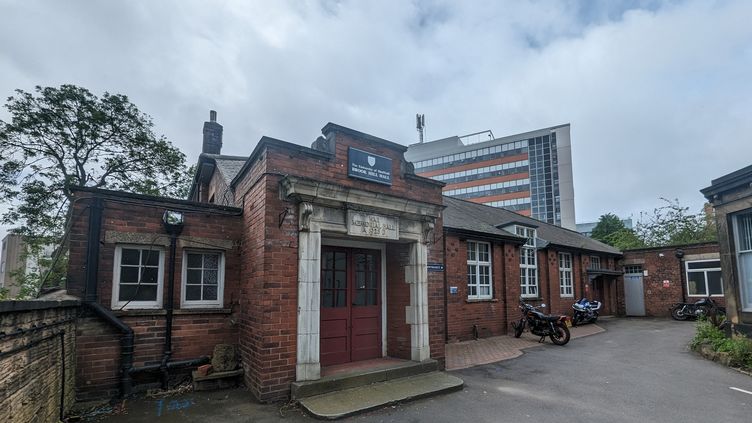
Brook Hill Hall, formerly St George’s Memorial Hall. Image: University of Sheffield

Brook Hill Hall, grand as it sounds, is a single storey red brick building located behind 205 Brook Hill, and like all properties here, belongs to the University of Sheffield.

It was bought in 1963 having been constructed in 1925 and previously known as St George’s Hall.

It was used for exams, student society activities and a small amount of teaching but as it fell into poor condition, was used for storage.

Had it not been for an application in June to demolish it, then we might not have heard about it. Sheffield City Council refused the application, because it is a war memorial registered on the Imperial War Museum’s War Memorials Register.

It was built as St George’s Memorial Hall, attached to St George’s Church at Portobello, lower down Brook Hill, to commemorate those lives lost in World War One.

The war memorial scheme had begun in 1918 and included the purchase of the freehold of St Anne’s Vicarage , Brook Hill, for £1,600. (St Anne’s Church was  at Netherthorpe). The house was adapted for social recreation for young people connected with the church, and the Memorial Hall was built in the grounds attached at a cost of £4,000.

It was built by B. Powell and Son, in red brick with an Empire stone entrance, measuring 60ft by 40ft, and a seating capacity for 500. It was fitted with electric lighting, heating, kitchen, and cloakrooms, with a stage at one end which was used for concerts.

Over the years, the hall was used for church meetings, Sunday School purposes, and social gatherings. 

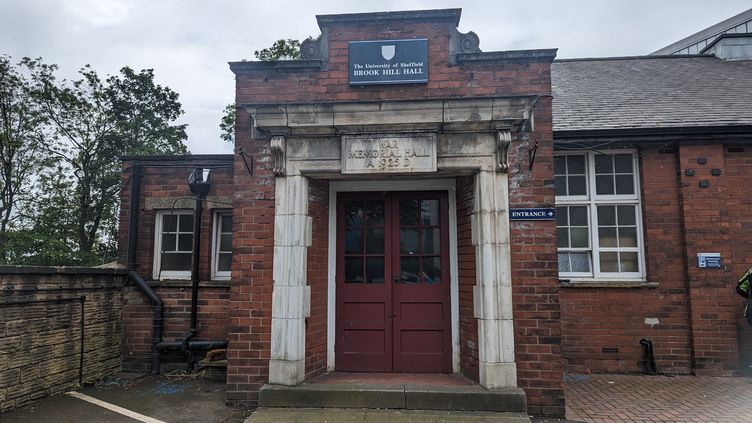
There is a memorial plaque above the door which the University of Sheffield had promised to carefully remove during demolition and relocate in a public location on campus. It also promised to salvage other materials from the building to be reused in future projects across the University estate.

For now, St George’s Memorial Hall lives to see another day.

A memorial plaque is sited above the door. Image: University of Sheffield


© 2024 David Poole. All Rights Reserved.


Categories
Buildings

Once upon a time in the Vicarage garden

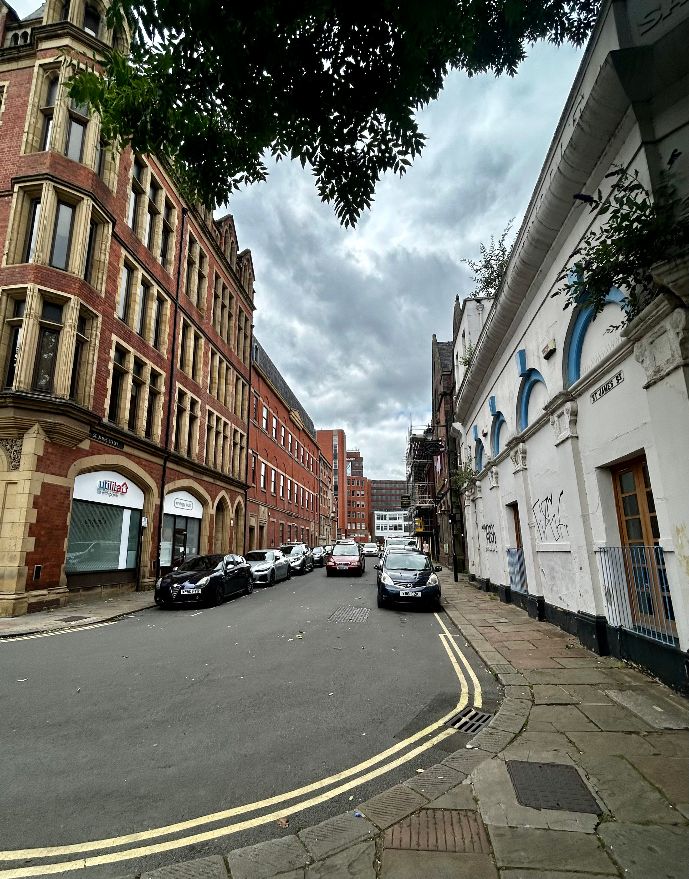
St James’s Street now called St James Street. Named after St James Church that stood at the end of the road. Image: DJP / 2024

It’s hard to imagine now, but long ago, a huge swathe of land in the city centre, belonged to the Vicarage of the Parish Church (now Sheffield Cathedral).

Up to 1787, the Vicarage stood in solitary dignity, which originally included the large triangle whose base was the western side of the churchyard (the whole length of what is now St James’s Row), and whose sides were Church Lane (now Church Street) and Campo Lane, with the apex at Townhead (Street).

There had been older vicarages, but the last structure was within high walls at what is now the corner of St James’s Row and St James’s Street (the site of the former Blue Moon Café), the entrance being from the latter, through double doors that led into a yard.

The centre of the house, low with no upper storey, was the older part, with a structure of lath, beams, and plaster. The higher wings flanking this on either side were later additions.

The windows were round headed, and according to Robert Leader, the vicarage had no architectural pretensions, with its yellow washed walls, and wasn’t a picturesque building.

A considerable piece of land, in a growing town, had become valuable, and in 1786, Vicar James Wilkinson had applied for and obtained from Parliament, power to set aside a portion of the Vicarage estate for the purpose of erecting another church, or chapel of ease, and for letting off land for building purposes.

As a result, the land was let on building leases, with houses built for surgeons and attorneys. St James Church was built (destroyed in WW2), and a Girl’s Charity School erected. Later additions included the Gladstone Building and Cairn’s Chambers.

In these new circumstances, the Vicarage was doomed and eventually demolished.

There is nothing that shows this was once Vicarage land, but there is a clue in the rising slope of Vicar Lane, and if you look closely, there is a part of the Vicarage that remains.

This is the large stone step of the former St James’s Street entrance to W.H. and J.H. Eadon’s auction room (former Blue Moon Café) and was the mantel shelf of the chief room in the oldest part.

The last surviving trace of the old Vicarage. Image: DJP / 2024

© 2024 David Poole. All Rights Reserved.

Categories
Buildings Streets

Delays for city centre regeneration, but good news for former Fargate bank

Virgin Money has a lease with building owner Fargate Properties until 2035

Good news for the former Yorkshire Bank building at the top of Fargate. York-based Pivovar which has venues including Sheffield Tap at Sheffield railway station, has applied to open it as Fargate Tap, serving ‘late night refreshments’ until 1am Monday to Saturday.

It was originally built as the Yorkshire Penny Bank, with the Albany Hotel above, in 1889.

It operated as Yorkshire Bank until closure in 2020 as a result of its takeover of Virgin Money that already had a branch on the other side of Fargate. The bank has been empty ever since.

At the same time, the BBC reports that Sheffield City Council is saying that rising costs and delays are hampering the regeneration of Fargate, High Street and Castle Square.

The council successfully bid for £15.8m from the government’s Future High Streets Fund in April 2021. The original costs of work on Fargate, High Street and Castle Square were estimated to be £8.8m based on tender prices, but following detailed design, these costs rose to nearly £18m.

The Fargate works are estimated to cost £14.4m, the increase primarily due to inflation, and there have been delays with paving supplies, issues with ground conditions and technical approval of underground bins. South Yorkshire Mayoral Combined Authority (SYMCA) has provided an additional £4.6m of funding to ensure the work is completed.

The council says Fargate should be substantially completed’ before Christmas but it was not expected to be fully finished until early in 2025.

Construction on the Event Central cultural hub on Fargate will now fall into the 2025/26 financial year, and work on High Street and Castle Square has been paused while the council concentrates its budget on Fargate.

Categories
Buildings

A railway hotel that lasted only twenty four years

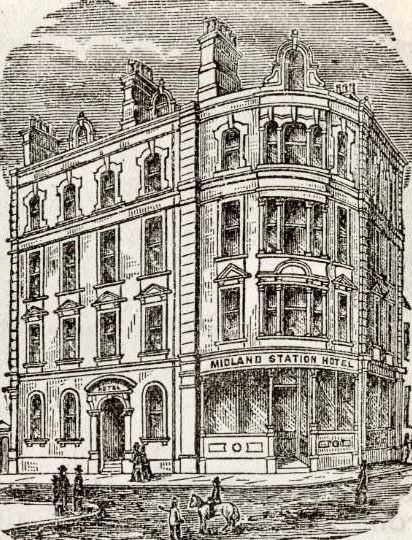
Midland Station Hotel. Image from Industries of Sheffield: Business Review British Industrial Publishing Company, [1888]. Courtesy of Picture Sheffield

A question that was asked of me recently. Why didn’t Sheffield Station have a hotel attached to it? Considering that the Victoria Station had the Victoria Hotel (now the Crowne Plaza Royal Victoria), why didn’t the old Midland Station have one too? Especially when most towns and cities benefited from a large hotel in proximity.

A bit of research suggests that the Midland Station did have a hotel, maybe not the grandest, and didn’t last long.

The Midland Station Hotel was built on Sheaf Street in 1879 and demolished in 1903.

It coincided with improvement works to the Midland Station that gained a handsome new facade, as well as an extra railway line. Sheaf Street was widened and diverted to improve the tramway network to the station.

The land that the Midland Station Hotel stood upon was used to make way for new railway sidings, and these would have been where the present day wasteland (formerly the site of Dyson House) stands today.

The hotel was owned by the Truswell’s Brewery Company, Eyre Street, and opened on Christmas Eve 1879 with George Wood being the first and only tenant, completing almost twenty-four years service, and becoming the oldest proprietor of a commercial and family hotel in Sheffield.

It was bought by the Midland Railway Company in anticipation of the redevelopment and subsequent demolition.

Where in this ever changing city would the Midland Station Hotel have stood?

It’s hard to imagine now, but it is possible to trace its exact location.

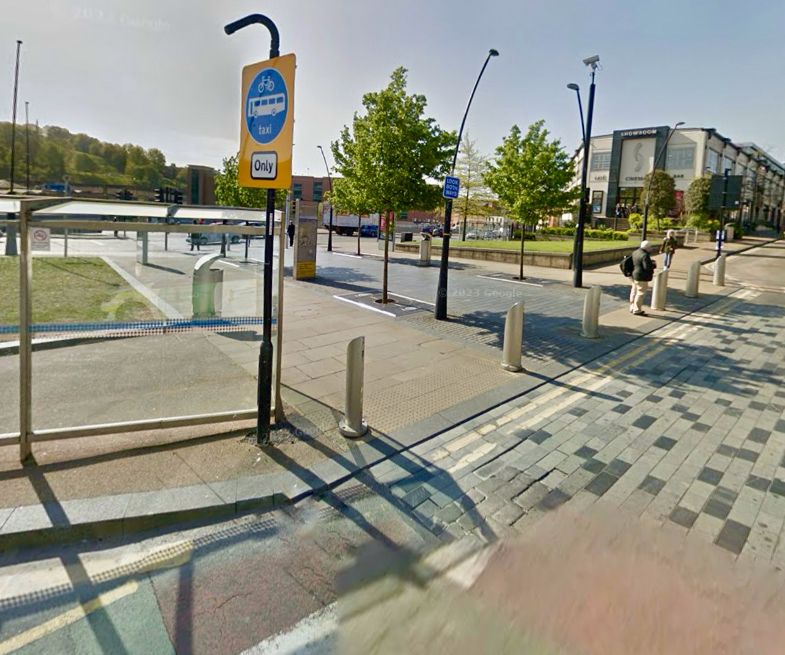
There is a large pelican crossing that crosses Sheaf Street from Sheffield Station to the bottom of Howard Street. It reaches a paved area before pedestrians must cross a narrow stretch of lower Pond Street before proceeding up Howard Street towards the city centre. This paved area is where the Midland Station Hotel once stood.

What I cannot answer is why another large hotel wasn’t built to replace it.

Sheaf Square, once the site of the Midland Station Hotel (1879-1903). Image: Google

© 2024 David Poole. All Rights Reserved.