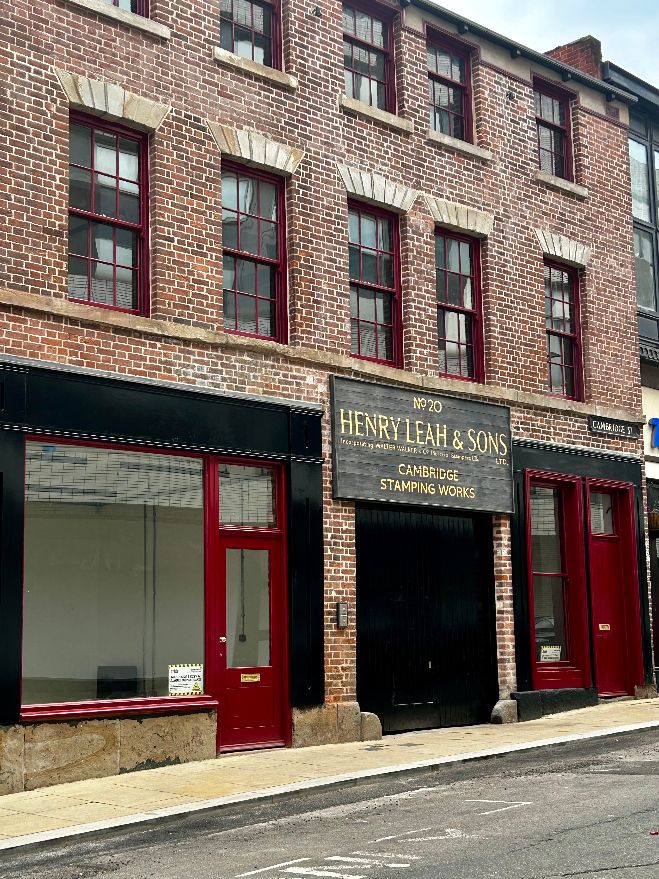
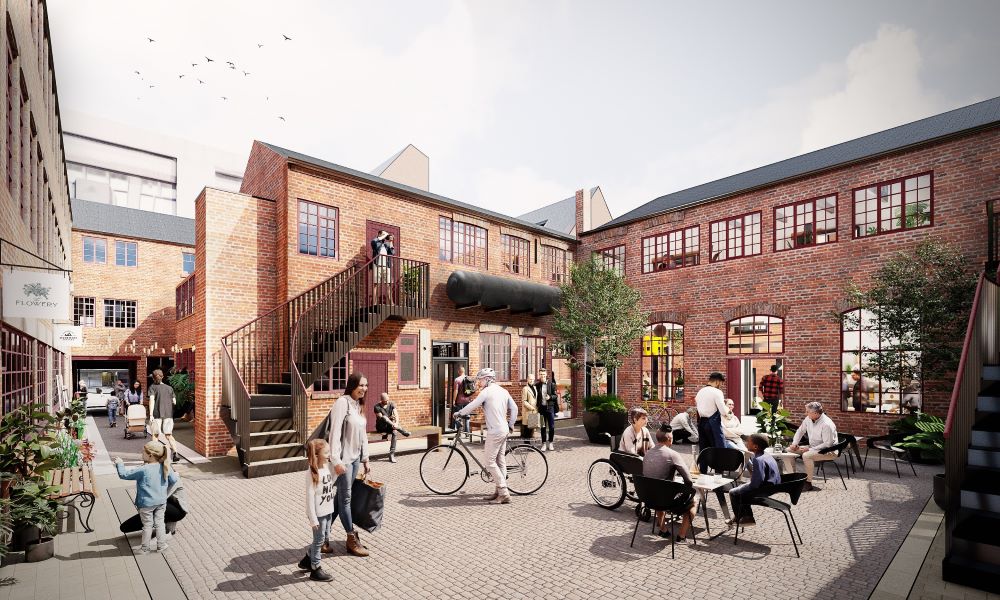
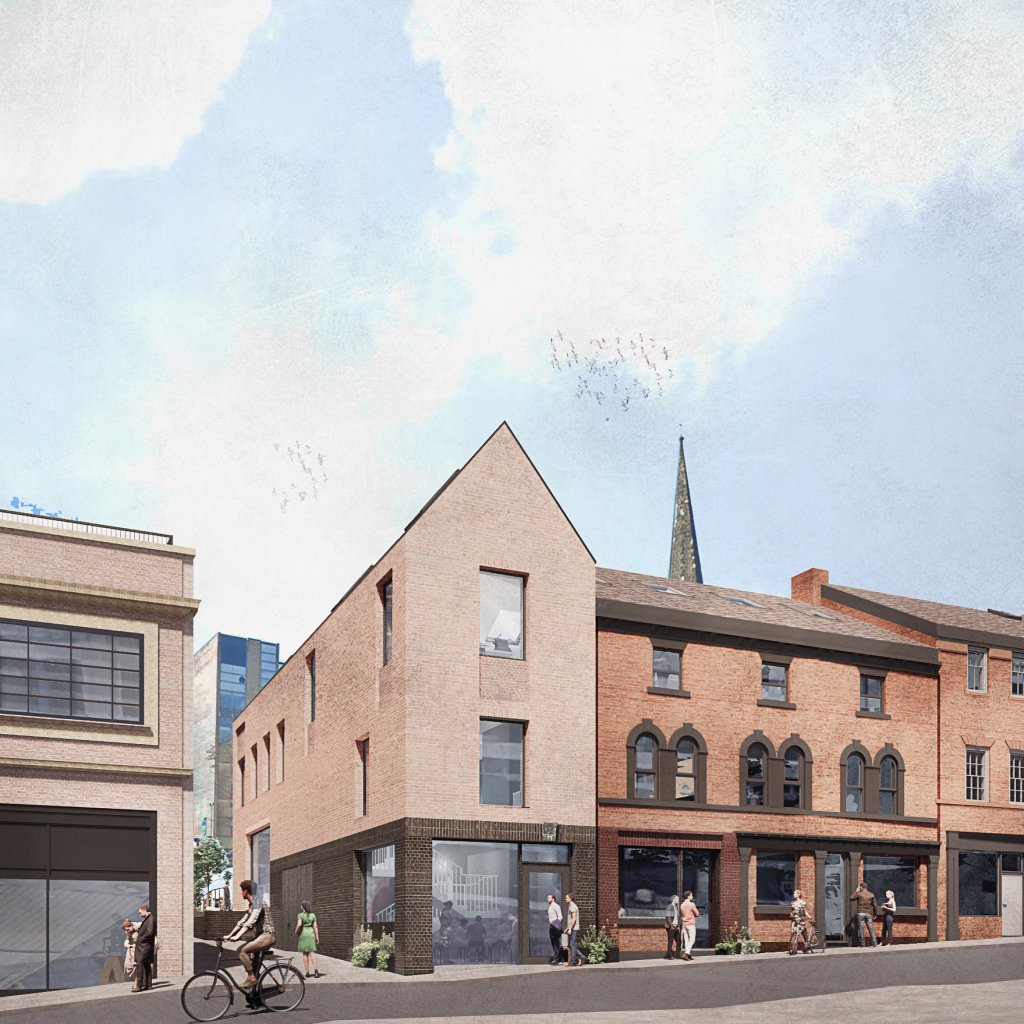
The ghosts of our ancestors, the ‘little mesters’ of yesteryear, are circling over Leah’s Yard, eager to see what has become of their old workshops. Soon, the gates be thrown open again, and, finally, this important part of Sheffield’s history, will have been reborn. The latest stage of the Heart of the City redevelopment is scheduled to open as a new creative and retail hub later this summer.
Gosling’s map of 1736 shows a rural scene, with Coalpit Lane, sometimes referred to as Cowpit Lane (later Cambridge Street), having views across open country to the east towards Alsop Fields and west over Sheffield Moor. Fifty years later, the land on the opposite side of the lane had been developed with the addition of Burgess Street and Cross Burgess Street.
Industrial development gathered pace in the middle of the nineteenth century and was known for its traditional fine metal and cutlery making. The oldest buildings in Leah’s Yard date from the early part of that century when George Linley created a small shear and tool manufacturing workshop in 1825. The houses in front were converted to offices and shops, and the complex grew with piecemeal additions.
James Morton, a horn dealer, became the sole occupier about 1842, and later maps identify the site as the Coalpit Lane Horn Works. By 1890, the site had extended into an L-shape behind the Sportsman Inn.
The arrangement of Leah’s Yard, with workshops around a central courtyard, was typical of the industry and in particular small craft workshops. The courtyard was accessed through a central cart entrance from the converted houses.
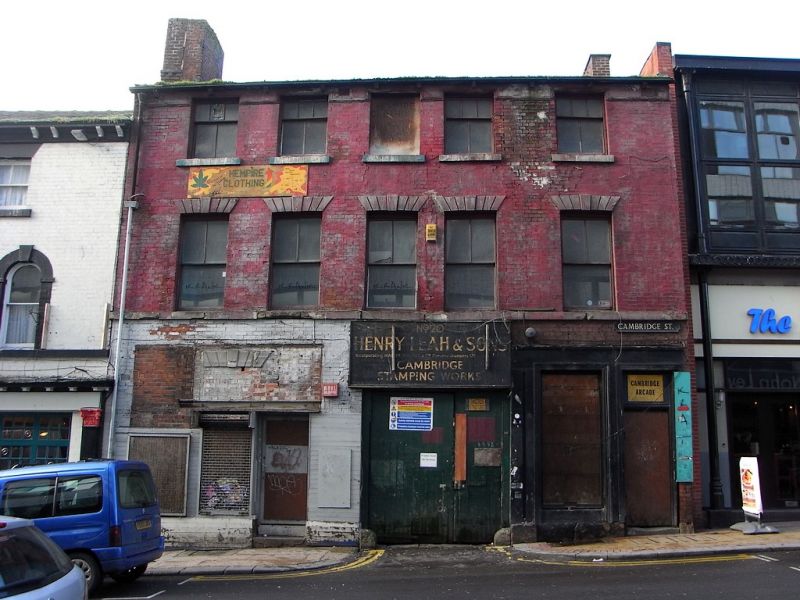
From the 1890s, the site was occupied by Henry Leah and Sons, a manufacturer of die stamps for silverware, later joined by other ‘little mesters’ all connected with the cutlery trade.
Henry Leah, originally from Chesterfield, died in April 1893, leaving the business to his two sons, Harry Wilson Leah (died 1939) and Louis Thomas Leah (died 1942). The Leah family remained in part of the complex until the 1970s when it was absorbed into Spear and Jackson and the site was sold in the 1990s.
Although the frontage was occupied for a time by small shops, Leah’s Yard was abandoned and fell into disrepair, the frontage subsequently propped up by scaffolding for years and obliterating much of Cambridge Street.
It has been completely restored and a source tells me that most units have been taken up. Already confirmed are the artist, Pete McKee; Hop Hideout beer and tasting room; Gravel Pit plant, art, and gift shop; the Chocolate Bar café; Mesters’ Market, selling locally produced food and drink; The Yard Gallery, highlighting the city’s artistic talent; La Biblioteka book shop; Ferrio automation; and Sheffield Hospitals Charity.
© 2024 David Poole. All Rights Reserved.
 sheffielder.net