In the shadow of Sheffield United’s Bramall Lane. Image: DJP/2023
Sometimes a building is more interesting for the land it stands on rather than what we see now. Anchor Point, built at the corner of Bramall Lane and Cherry Street in 2007, isn’t particularly attractive. It contains 188 residential apartments, twelve family houses, office accommodation and a convenience store.
The u-shaped complex gets its name from a long-forgotten brewery that once stood on Cherry Street.
Anchor Brewery was founded in 1889 by Henry Tomlinson and manufactured fifty barrels of beer a day using water sourced by the Aqua and Diamond Rock Boring Company.
However, the brewery seems to have been ill-fated. Not least because Henry Tomlinson committed suicide two years later. He wandered to the home of an employee called Arthur Podgson on nearby Shoreham Street, where he killed himself with a knife.
The brewery continued and became a limited company in 1894.
Its fate was sealed during the Blitz of 1940 which destroyed most of the operation, and forced it to merge with another local brewer, Carter, Milner, and Bird to become the Hope & Anchor Brewery in 1942 with an extensive estate of public houses.
The old brewery was used as a packing station for export beer to troops in 1945.
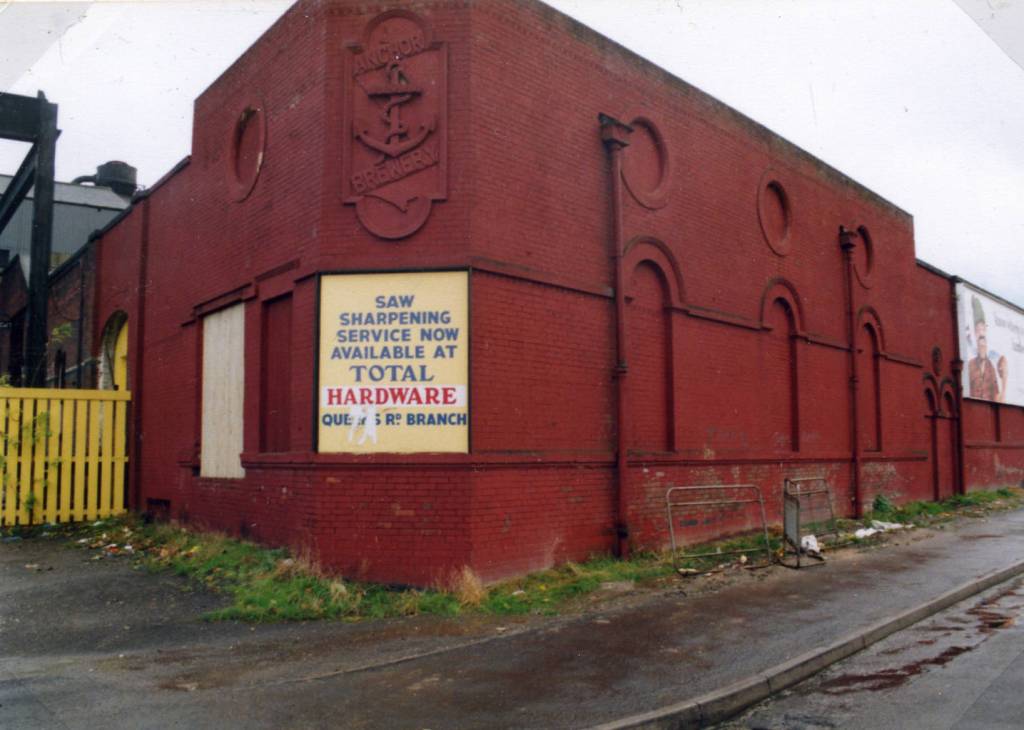
Afterwards, the site was occupied by Arnold Laver, timber merchants although its outer walls still retained the Anchor Brewery sign.
When Arnold Laver wanted to relocate to new premises at Halfway, it developed the site as Anchor Point, although it retained its head office in the new development.
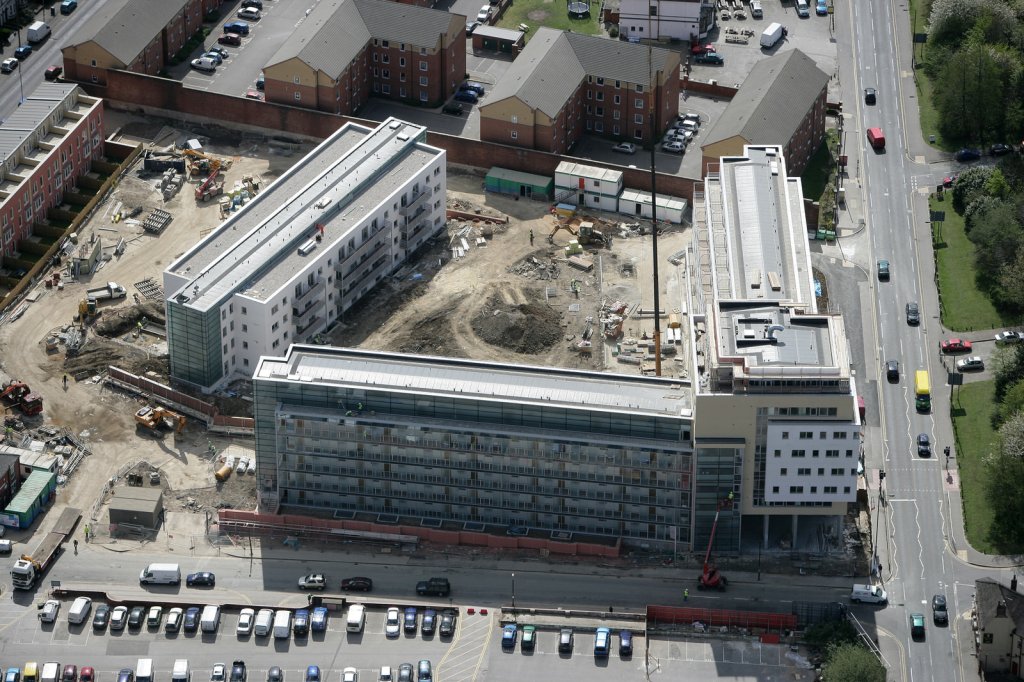
Aerial view of Anchor Point during construction in 2007
The outer walls of Anchor brewery remained for years
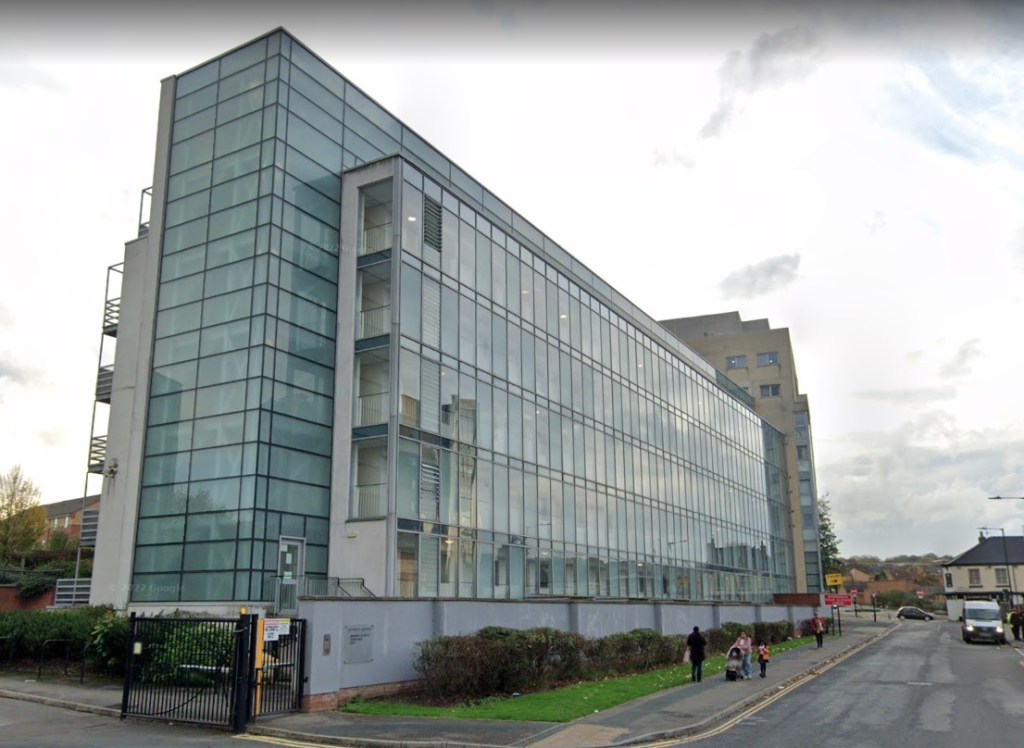
Anchor Point. Looking from Cherry Street towards Bramall Lane
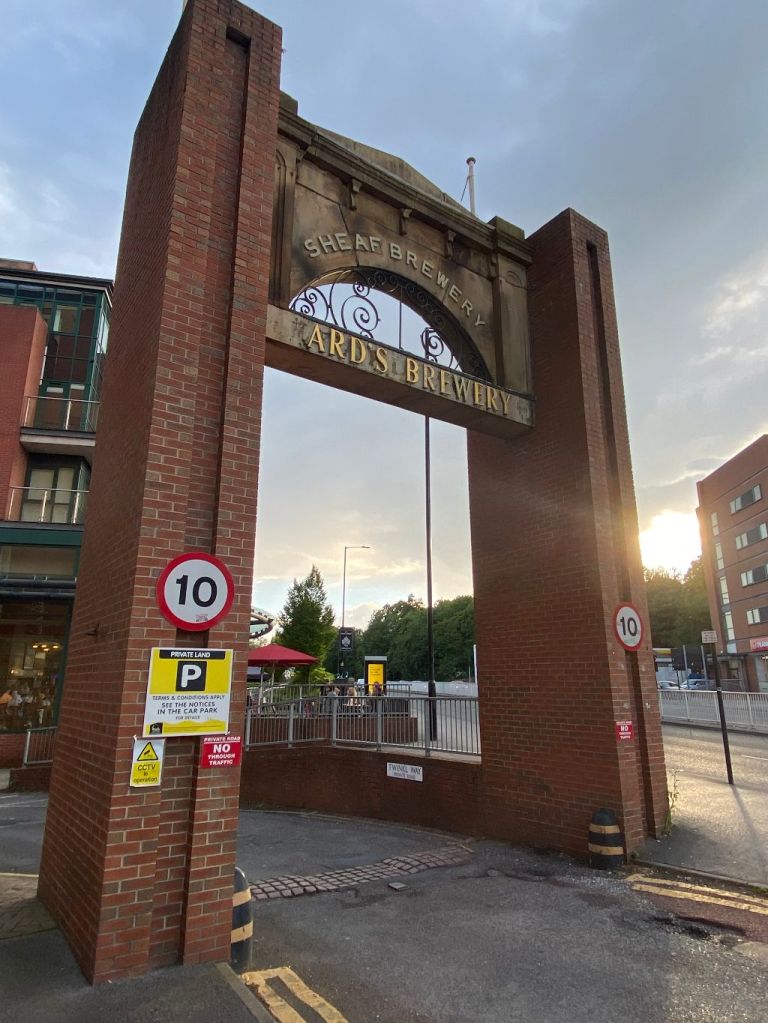
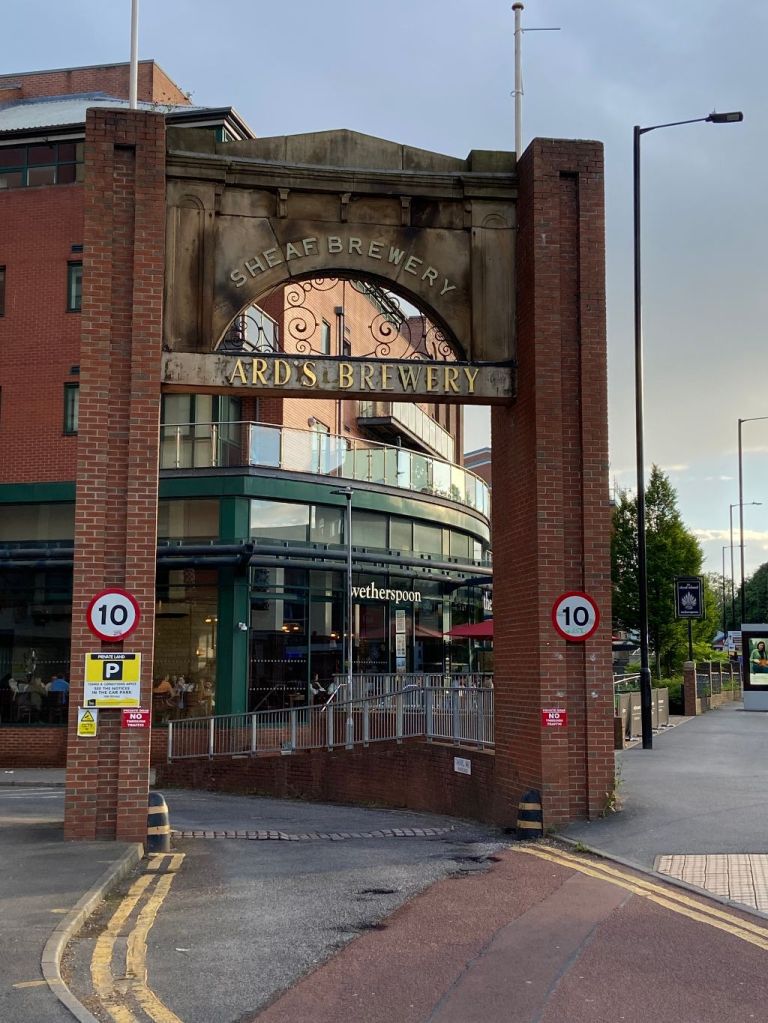
The iconic Ward’s gateway was relocated and rebuilt after the brewery was demolished. Note that one of the letters is missing. Image: DJP/2022
I know somebody who once went to Dublin and sat on the doorstep of a traditional Irish pub and drank four cans of Ward’s Best Bitter. Much has been written about the closure of S.H. Ward in 1999, but there is a little-known chapter in the brewery’s history that eventually led to its downfall.
Septimus Henry Ward (1831-1905) was the seventh son of John Ward, a gentleman farmer of Pickering, North Yorkshire. He went to London, aged seventeen, and for twenty years was engaged in commercial pursuits.
He came to Sheffield in 1868 and bought a partnership in Kirby, Wright, and Co at the Sheaf Island Brewery on Effingham Road. This was later dissolved, and the company renamed S.H. Ward, although George Wright stayed on as a brewer.
In 1872, it amalgamated with the Old Albion Brewery of Lathom and Quihampton, in Ecclesall Road, and the new firm purchased the adjoining Soho Brewery from the executors of Thomas Bradley.
The site of the Sheaf Island brewery was sold, and Captain Weyland Mere Lathom, one of the former proprietors of the Old Albion Brewery, became Ward’s partner but took little active part in affairs.
The irony is that the Sheaf Island public house now stands on the former site. Image: DJP/2022
Under Septimus Ward, the business prospered and the Soho Brewery on Ecclesall Road was renamed the Sheaf Brewery, where brewing continued until its closure.
The partnership was dissolved in 1893, and the company converted into a limited company with Septimus becoming Managing Director. The Wright family still ran the day to day business, but ownership eventually reverted to the Ward family with a 51% share, and the Wright family owning the remaining 49%.
In later years, the Ward family reduced their brewing interests. The Wright family were given first option to buy and bought two shares to regain control of the business lost when George Wright had handed over ownership to Septimus due to bad investments in 1869.
Here’s where things get interesting.
Sometime during the 1970s, the Ward family was approached by Truman’s Brewery, East London, who were interested in expanding into the north. Truman bought approximately half the Ward’s interests then, and the remainder were bought after Grand Metropolitan acquired Truman in a marathon battle with Watney Mann in 1971.
Matters rested until 1974 when Grand Metropolitan made a bid for the 51% interest held by the Wright family.
Who were Grand Metropolitan?
This business began in 1934 and was a UK-based, international hotel and catering conglomerate that diversified into areas such as home milk and dairy deliveries (Express Dairies), steak restaurants (Berni Inns) and gambling (William Hill and Mecca Bingo Halls). It entered the beer, wine, and spirits markets through the purchase of two UK breweries including Watney Mann, which itself had recently taken over International Distillers and Vintners. In 1997, after more mergers and acquisitions, Grand Metropolitan finally merged with Guinness PLC to create the largest drinks company in the world, Diageo.
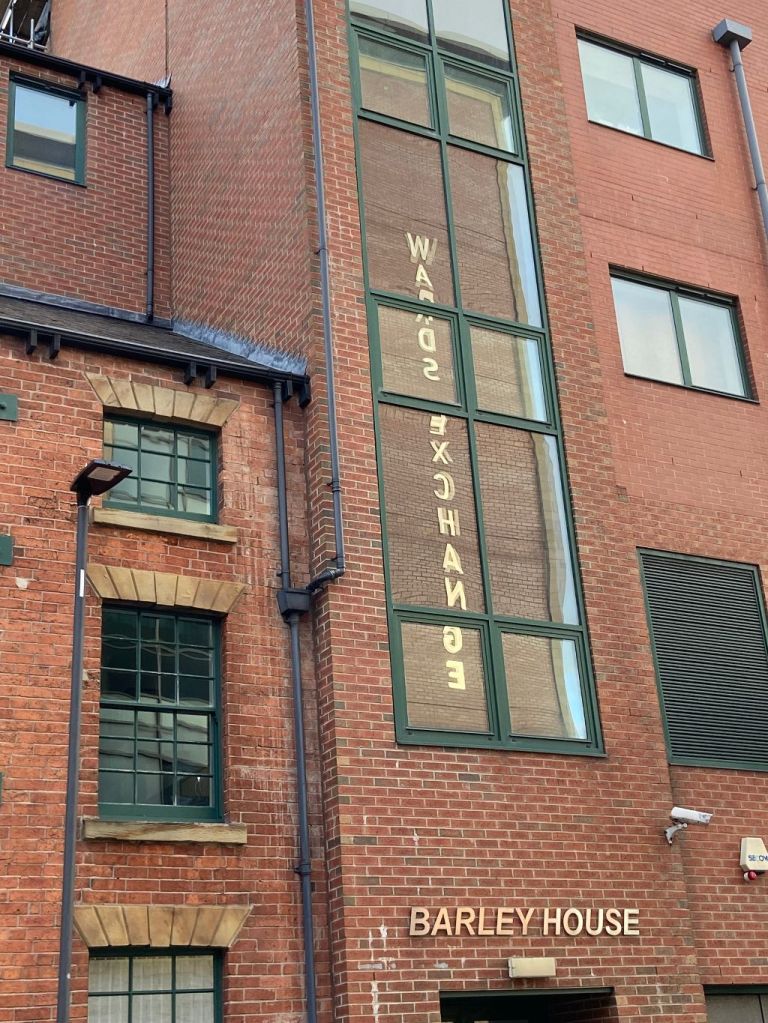
Subtle reminders of the site’s past. Image: DJP/2022
The Wright family had no wish to be absorbed into the Grand Met machine but reconciled themselves to the fact that they would probably sell it to someone sooner or later. It happened sooner, when the shares were sold to Vaux and Associated, a Sunderland-based brewer.
Vaux then tidied up matters and bought Grand Met’s 49% and Ward’s, with its brewery and 110 pubs, became a wholly owned subsidiary.
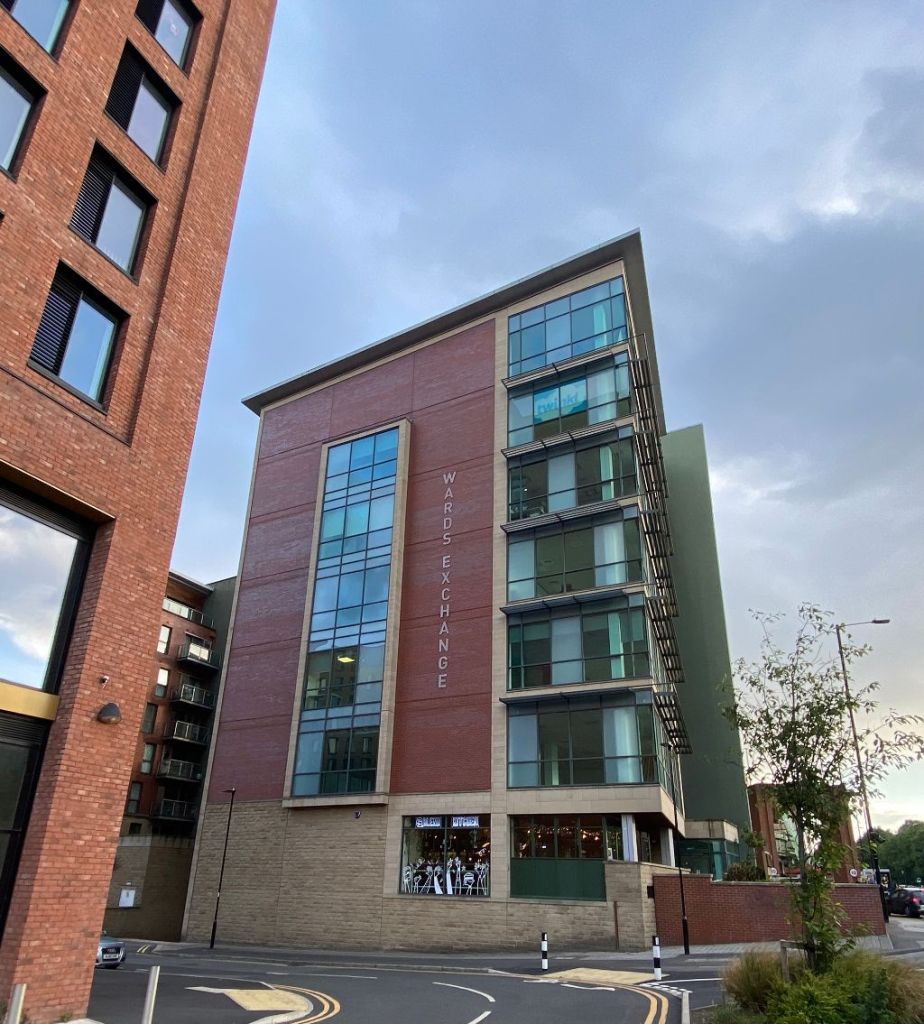
The former Ward’s site is now an apartment complex. Image: David Poole
S.H. Ward operated successfully until the 1990s, but events were taking place in Vaux Group’s boardroom that had devastating consequences. The business had diversified into Swallow Hotels and the board of directors accepted the advice of their corporate financier to close all their brewing concerns in 1999.
The Vaux Group was rebranded the Swallow Group and taken over by Whitbread a year later, and the pubs sold to Enterprise Inns.
The last brew at Sheaf Brewery was in June 1999, and despite valiant efforts by former board members to save it, the site was shut down. It was subsequently flattened, apart from the brewing tower and a few adjacent buildings, that were absorbed into a new apartment complex.
All these years later, with the benefit of hindsight, what might have happened had S.H. Ward been sold to Grand Metropolitan? Still gone? Or, one of Britain’s leading beer brands?

 sheffielder.net