Categories
Buildings

John Banner: the building might be considered a memorial to two men

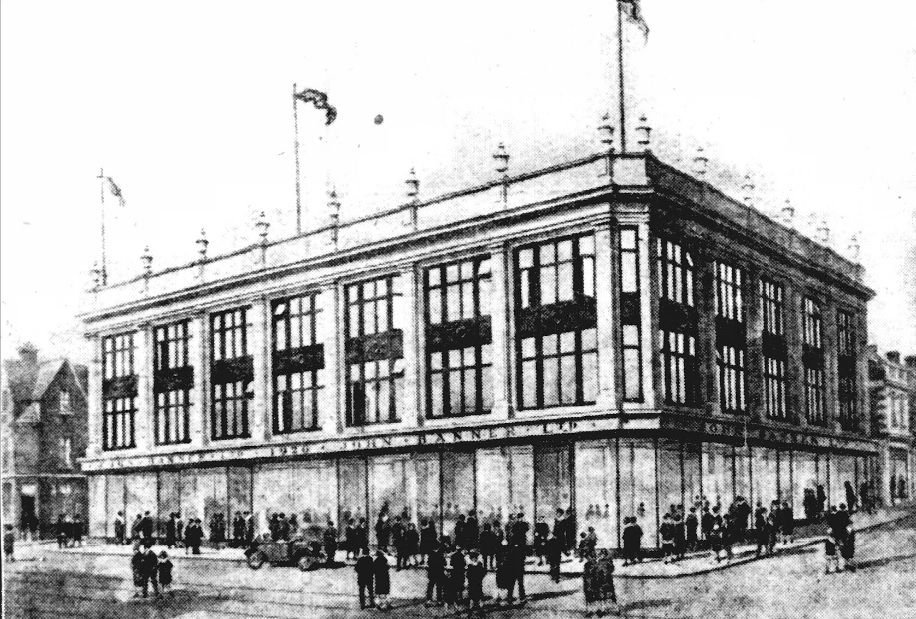
John Banner Ltd. Designed by Frank W. Chapman of Chapman and Jenkinson, Norfolk Row. Following his death, the scheme was finished under the supervision of Mansell Jenkinson and Eric Chapman. Image: British Newspaper Archive

The news that Leeds-based developer Citu has bought the John Banner building at Attercliffe is a major boost for the area. The regeneration of Attercliffe has been a long time coming, and with Kelham Island quickly filling up, developers are finally looking at this neglected part of Sheffield.

The developer already has plans for a nearby 23-acre urban regeneration scheme known as Attercliffe Waterside that will transform brownfield land either side of the Sheffield and Tinsley Canal into more than 1,000 homes.

Citu has suggested that there will be ‘significant investment’ to restore the John Banner building, including the preservation of its façade to retain many of its original features. It is currently a mix of shops and offices with 25 occupiers including Co-op Legal Services, Sheffield Chamber of Commerce, Wosskow Brown Solicitors and EE.

More than once, it has been described as Attercliffe’s flagship building, but most of our younger generation will fail to see its significance.

It is named after John Banner (1851–1930) from Kimberley, in Nottinghamshire, who was eleven when his parents moved to Attercliffe. His first venture was a little shop which opened in October 1873, the same week that horse-drawn trams started to run between Attercliffe and Sheffield.

The millinery and drapery business were in what was known as Carlton Road, which together with the adjoining High Street, became Attercliffe Road. It was almost opposite what became Staniforth Road but was then known as Pinfold Lane reflecting the area’s rural aspect.

On the other side of the road were two houses, one with a large orchard attached, and fields stretched from the Zion Congregational Church. The pastor of that church was the Rev. John Calvert who occupied one of the two houses while a doctor lived in the other.

To get the business on its feet, John Banner worked elsewhere for five years while his wife, Sarah, looked after the shop. He eventually gave up his other job and came up with the slogan for his business, ‘The House for Value’.

Seven years after starting, larger premises were needed, and a move was made further up the street almost opposite what became the present building.

Fourteen years later, further development was necessary, and he crossed the road to the present site, building shops in the gardens of the two houses mentioned above that took up the corner at Shortridge Street.

Banner was joined by his four sons – Harold, Ernest, John and Cyril – each becoming co-directors after gaining experience, and two of his three daughters worked in the Attercliffe business, as well as at a new shop on Barnsley Road at Fir Vale.

When the opportunity arose, the intervening property between Shortridge Street and Baltic Road was purchased, including a shop which had once been Attercliffe sub-post office. These properties were pulled down and the building of a new shop commenced in 1928 that would fill the space between the two streets.
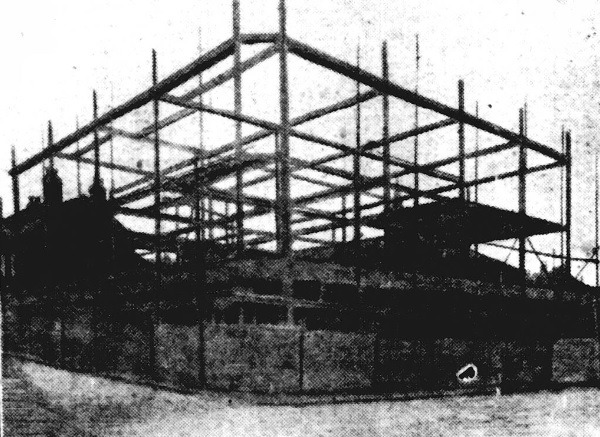
This photograph was taken by Robinson & Kershaw in 1928 and shows the steel framework looking from Attercliffe Road. Shortridge Street is to the left. It provides an important clue as to how construction was completed in two phases. The final addition, completed by 1934, would have been to the right looking towards Baltic Road. Image: British Newspaper Archive

By this time, the range at John Banner had been developed to include ladies’, men’s, and children’s wear, boots and shoes, and kitchen and household utensils, china, pictures, prams, and fire screens.

It is worth mentioning that the new John Banner department store took six years to complete. It was built in stages and by the time it was finished in 1934 both its founder, John Banner, and its architect, Frank W. Chapman, were dead.

John Banner died at his home on Beech Hill Road in 1930 and was buried at Crookes Cemetery.

The design of the building was a modern phase of Renaissance, the elevations having pronounced pilasters which ran the height of the two upper storeys, carrying well-proportioned entablature with a parapet surmounted by handsome vases. The pilasters were sub-divided by similar pilasters and the breastwork between the floor filled with effective panelling.

The style of architecture lent itself to the clothing of the steel construction both in pillars and beams which supported the building, and the whole of the casing was finished in dull glazed grey terracotta.

It was built by T. Wilkinson and Sons of Midhill Road, and the steel frame was made by Robinson and Kershaw of Temple Ironworks, Manchester, who had been responsible for other Sheffield buildings including Glossop Road Baths, the Baptist Church at Hillsborough, and extensions to the University of Sheffield and the Royal Infirmary.

The entire frontage of the ground floor was devoted to window display, and a spacious arcade stretched over the whole of the Attercliffe Road frontage on which there were three main entrances. The shop windows were supplied by H.N. Barnes of Fulham with the floor of the arcade covered with marble terrazzo laid by Italian workmen.

The interior lights on all four floors were installed by H.J. Couzens of The Moor, and a novelty was the 300 shop window reflectors and on top of the building, ten attractive Flambean fittings, The first and second floor windows had handsome leaded lights supplied by T. Foster of Norfolk Street who were artists in stained glass and leaded lights.

John Banner Ltd. This photograph was taken shortly after completion in 1934. The project had taken six years and provided Attercliffe with one of its flagship buildings. Image: British Newspaper Archive

The last stage of construction, extending the building to the corner of Baltic Road, was built by John Middleton of Hoyle Street with steel skeleton frame manufactured by Thomas W. Ward.

The internal decoration was undertaken by William Chatfield, and it was complemented with wooden counters, shelving, and fittings, that were supplied by Rothervale Manufacturing Company of Woodhouse Mill.

The floors were served by a passenger lift and staircase at the rear of the store in a central position while the first and second floors could be accessed by wooden escalators, the first to be installed in Sheffield.

Shoppers were also fascinated by a system of pneumatic cash delivery tubes, installed by the Sturtevant Engineering Company, that ran from 75 cash stations to a double-sided desk in the offices.  
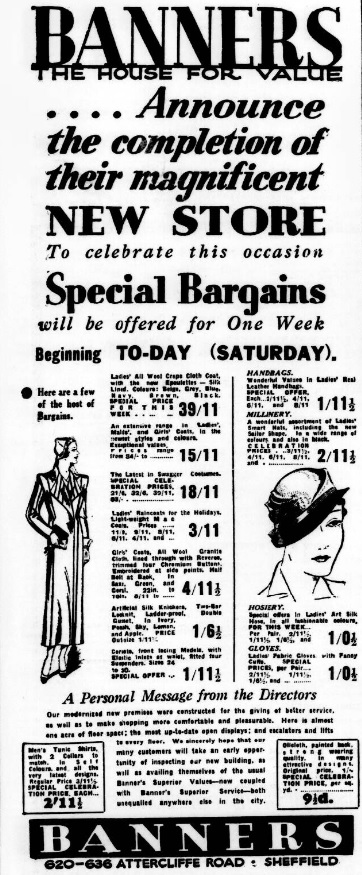
One of John Banner’s sons, Ernest, died in 1931, and by the time the building was completed in 1934, the business was in the hands of Harold, John, and Cyril Banner.

John Banner Ltd survived the Second World War but a decision was made afterwards to sell the business to United Drapery Stores.

As people moved away from the area, the store’s fortunes went the same way as Attercliffe. It suffered a decline in sales, and for a time the basement area was leased to Grandways Supermarket.  Along with the ailing fortunes of UDS , the decision was made to close John Banner in 1980.

John Banner shortly before closing in 1980. Image: Picture Sheffield

The building was subsequently divided into offices with retail space on the ground floor. It goes without saying that most of its rich interiors were lost in the transition.

Until this year it was owned by the John Banner Centre which went into administration in May. It has been acquired by Citu which is dedicated to preserving its historical significance.
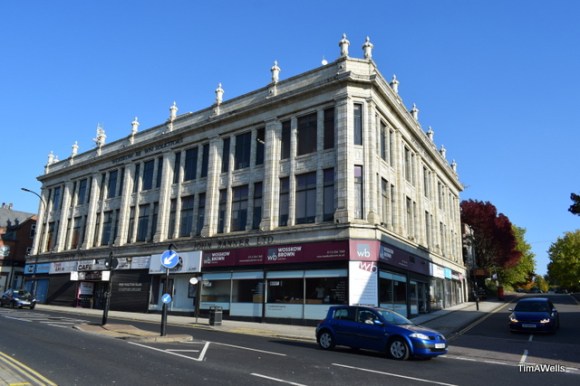
The John Banner Building on Attercliffe Road today, withoffice space above and retail space at ground level. Image: Tim A. Wells

John Banner Biography

“There was a kindly smile to John Banner and rare civic spirit, devoid of self-seeking, and a sincere desire to express a Christian spirit in service. He had a great sense of loyalty and executive ability in getting things done, and never tired of a good cause.”

These words appeared in the Sheffield Independent following his death in 1930.

John Banner was born at Kimberley in 1851, the son of a carrier, and began work at the age of seven. His parents moved to Attercliffe when he was eleven, and John never forgot the hard struggles of his early life, and of the parents who, if they could not give him wealth, gave him character and good example.

Despite the growth of his millinery and drapery business he was never spoilt by success but looked at life and the struggles of others as he knew them.

“I can never forget those days, and knowing the hard lot that most folks have, it is my bounden duty to try to make things better for them.”

He was a keen Liberal, working in Attercliffe, but refused to seek election for the city council, and was instrumental in the formation of the Attercliffe Liberal Club where he was treasurer for more than quarter of a century. He was on the Sheffield Board of Guardians for 21 years, losing his seat in April 1922, and represented the Guardians on the Attercliffe Nursing Association. He was also on the South Yorkshire Joint Poor Law Committee.

His religious activities were at Shortridge Street Methodist New Connexion Chapel for 36 years. He was treasurer of the Sunday School and the church, a teacher at the Men’s Bible Class, and helped reduce the debt on the church from £1,950 to £250. When he moved to Oakledge at 16 Beech Hill Road, he worked with Broomhill United Methodist Church, and represented it on the Sheffield circuit conference.

John Banner married Sarah Ann Higgett in 1873 and had four sons and three daughters. Sarah died at the age of 81 in 1927.

John Banner died at Oakledge in 1930 and his funeral was at Crooke’s Cemetery after a service at Broomhill United Methodist Church. His shop on Attercliffe Road closed for the day as a mark of respect for its founder.

©2023 David Poole. All Rights Reserved.
Categories
Buildings

Attercliffe Parish Church – “Standing on a bold cliff which overhangs the Don.”

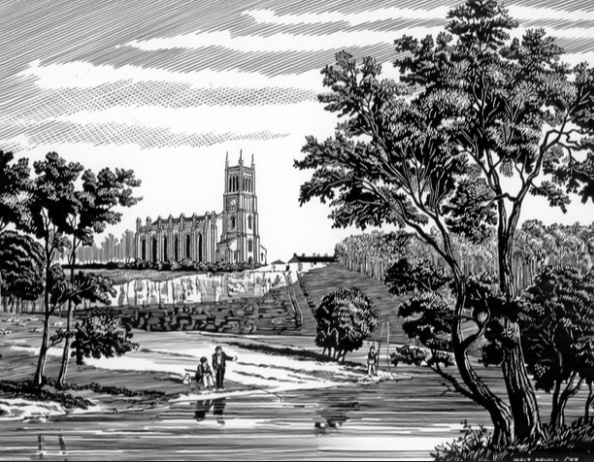
Christ Church, Attercliffe Road, from the River Don by Walter Revill. Described in early directories as standing near the bold cliff which overhangs the Don. Image: Picture Sheffield

We forget about Attercliffe, and so it is inevitable that we forget its lost buildings.

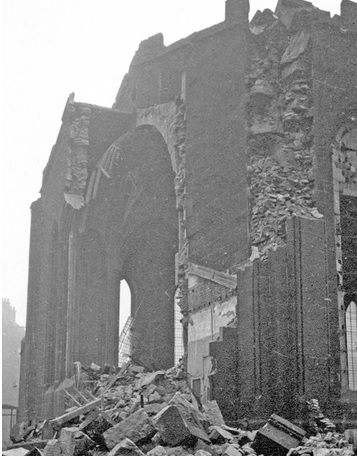
One example is Attercliffe Parish Church, also known as Christ Church Attercliffe, once a grand place of worship, badly damaged in the Sheffield Blitz of 1940 and later demolished.

And we might be forgiven for not knowing where it stood, but its site is plain to see.

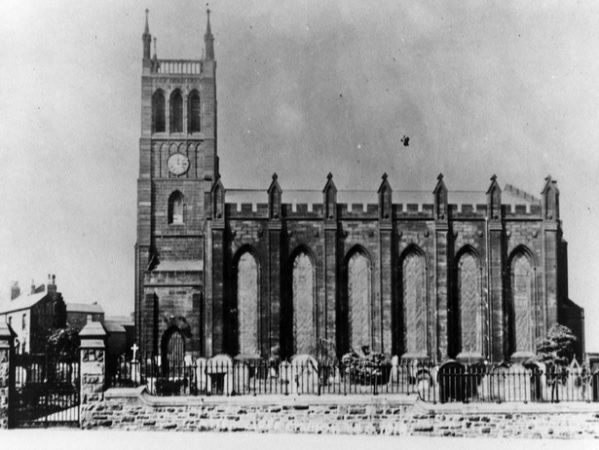
Christ Church, Attercliffe Road. Image: Picture Sheffield/G. Bagshaw and Sons

We can turn to Pawson and Brailsford’s Illustrated Guide to Sheffield (1868) for details: –

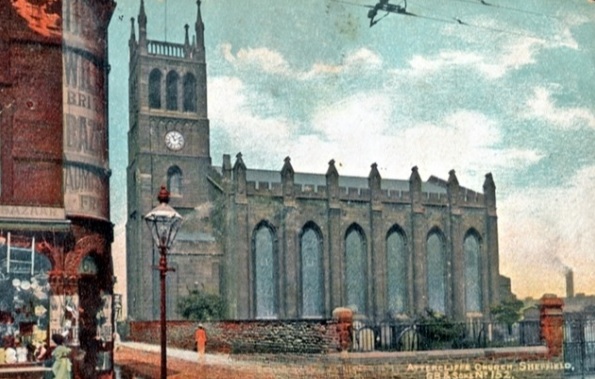
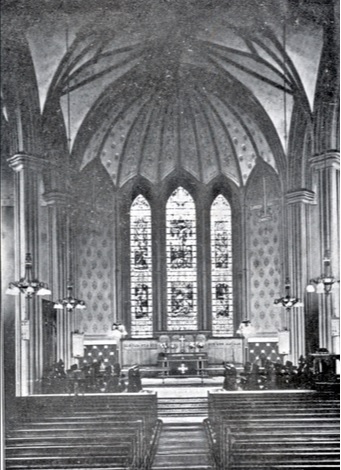
“There is a handsome church at Attercliffe, which is about two miles from the centre of town, on the Doncaster Road. Formerly Attercliffe was a detached village, but now it is practically a busy manufacturing suburb of Sheffield. It was opened in 1826, having been built by means of a Parliamentary grant, at the cost of £14,000. It is a Gothic building, with lancet windows and a handsome groined roof. It will accommodate from 1,100 to 1,200 persons.”

The old chapel-of-ease of the Township of Attercliffe-cum-Darnall, dating from the 17th century, had been replaced by the new church.

Attercliffe, at that time, was a comparatively small place, and largely consisted of lanes and fields, and the new church was one of four churches built in Sheffield out of what was known as the ‘Million Fund.’

The nucleus of the building fund consisted of a grant from an indemnity paid to England by Austria after the Battle of Waterloo.

Christ Church, Attercliffe Road. Built at a cost of £14,000. Image: Picture Sheffield
Interior of Christ Church, Attercliffe Road. In 1867 the galleries were removed, and the interior reseated with open benches. Image: Picture Sheffield

The first stone was laid by the 12th Duke of Norfolk assisted by the 4th Earl Fitzwilliam in October 1822 and took four years to build. It was consecrated by the Archbishop Vernon Harcourt of York in 1826.

Early directories referred to the church as standing near the bold cliff which overhangs the Don.

“Time was when Attercliffe was a place of sylvan beauty and picturesque repose, of pleasant pastures and stately houses on the banks of a River Don whose waters were clear and transparent.”

“In the church, there are galleries on the sides and at the west end; which, with the pews in the body of the church, contain two thousand sittings. Some of the windows of the church are ornamented with painted glass, containing the arms of Fitzwilliam and Surrey, Gell, Milner, Staniforth, and Blackburn.”

The churchyard closed for burials in 1856 and a cemetery leading down to the Don was opened in 1859.

In 1876, the church was closed for cleaning and redecoration.

“Below the windows the walls are tinted puce, but above they are straw-coloured, with ornamental work above the windows. The groins are picked out in stone and the roof is coloured buff. White is the groundwork of the chancel roof, but other tints are introduced.”

The church didn’t forget the men who served in World War One, and at a cost of £300 a memorial was erected in the form of oak reredos and panelling together with remembrance panels framed in oak, bearing the names of all those who answered the call of their country.

By the time of its centenary in 1926, the parish embraced around 33,000 souls, but it was a different place.

“The mere mention of Attercliffe to those who are closely acquainted with it is scarcely calculated to send them into ecstasies of delight, for the very sound reason that Attercliffe has precious little that appeals to the aesthetic sense. Attercliffe and throbbing, thriving industry are – in normal times – synonymous terms, and when the clang and clatter, the smoke and grime of heavy trades fill the air, Attercliffe, from the casual visitor’s point of view, is a place to get away from rather than to remain at.

“Looking back upon a picture of a rural landscape, with its common (now filled with shops), its thatched cottages, and its sheep grazing on the riverbanks, the individual might well exclaim: ‘All this has changed.’”

The church was in debt for years, especially after the installation of electricity, and following the departure of Rev. A. Robinson in 1930, the church revealed that its finances were “vague and confused,” and that he had left a debt of £550-£600.

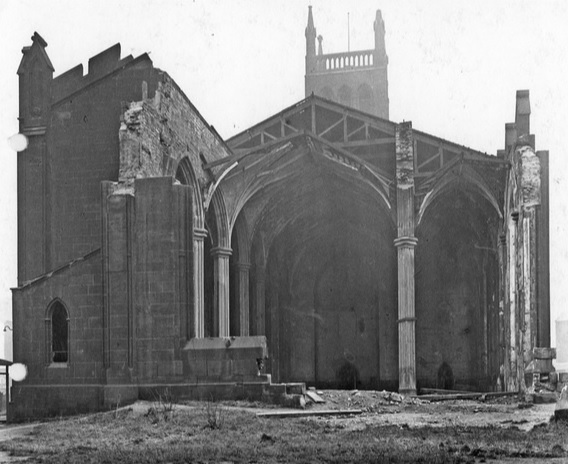
Unfortunately, the church was closed after bomb damage in 1940. Most of its contents were destroyed and Sheffield lost one of its finest churches.

Christ Church, Attercliffe, after bomb damage. Image: Picture Sheffield
Attercliffe Road – Christ Church after air raids. Image: Picture Sheffield
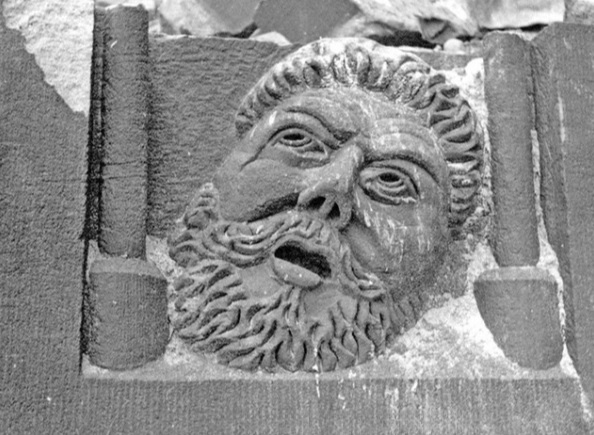
Carved detail from Christ Church, Attercliffe after air raid. Image: Picture Sheffield

The organ from the blitzed church was rebuilt and taken to St Andrew’s Presbyterian Church on Hanover Street.

The adjacent church hall became the parish church until 1950, and then functioned as a chapel in the parish of Attercliffe-cum-Carbrook until it was closed in April 1981. The new church of St Alban (Darnall) is now the parish church of Attercliffe.

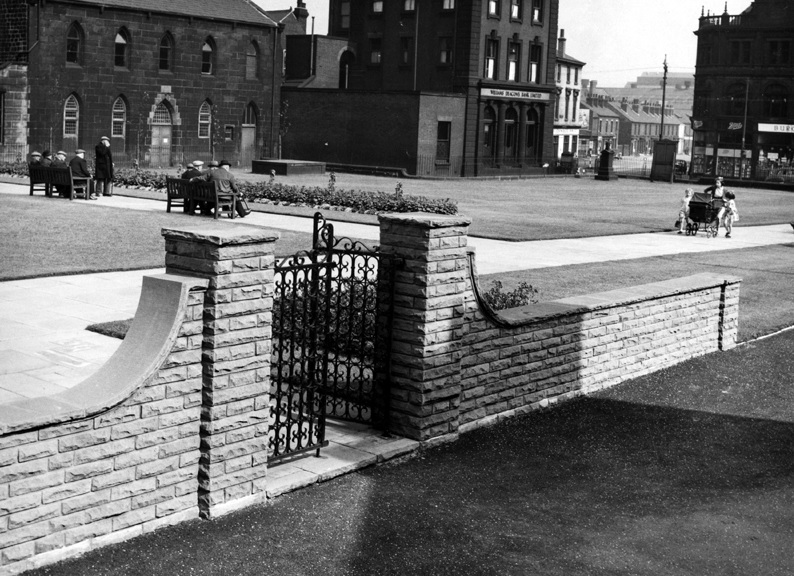
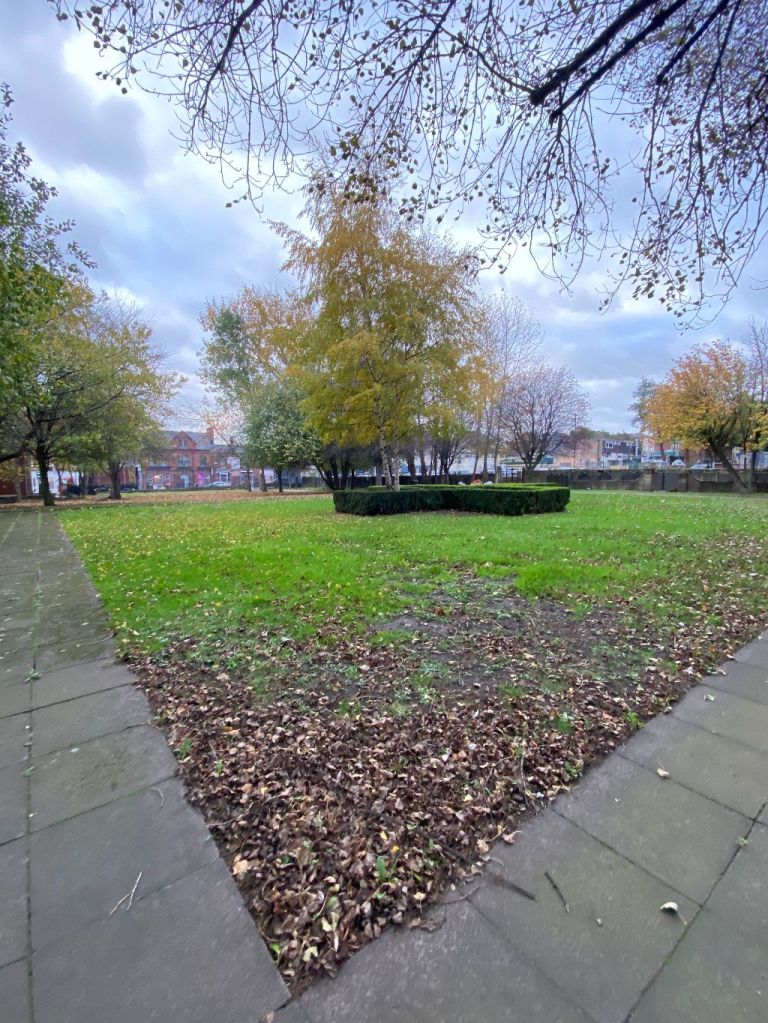
In 1953, the site of the old church and its graveyard was turned into a garden, an area of pleasant green turf bordered by paths. It was opened by the Lord Mayor, Coun. Oliver S. Holmes, who said, “it was inspiration to the whole city that good will make beauty rise from the rubble of war.”

Attercliffe Garden of Rest (in the grounds of former Christ Church), Attercliffe Road from Church Lane with Christ Church Sunday School and No. 747, William Deacons Bank in the background. 1959. Image: Picture Sheffield

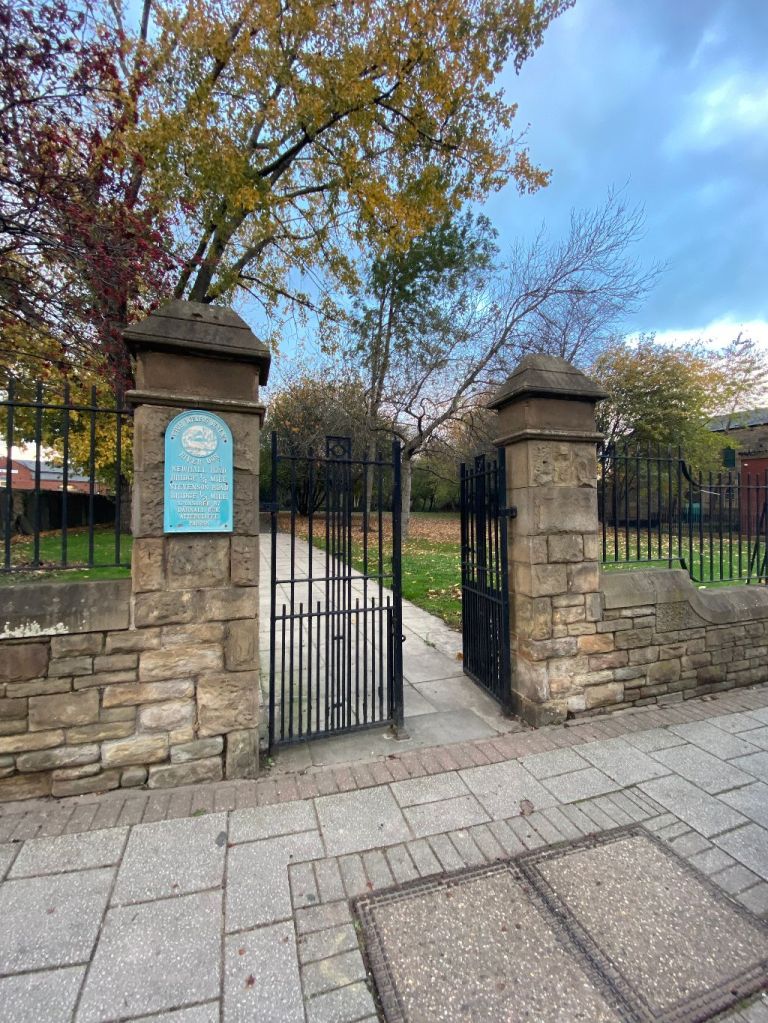
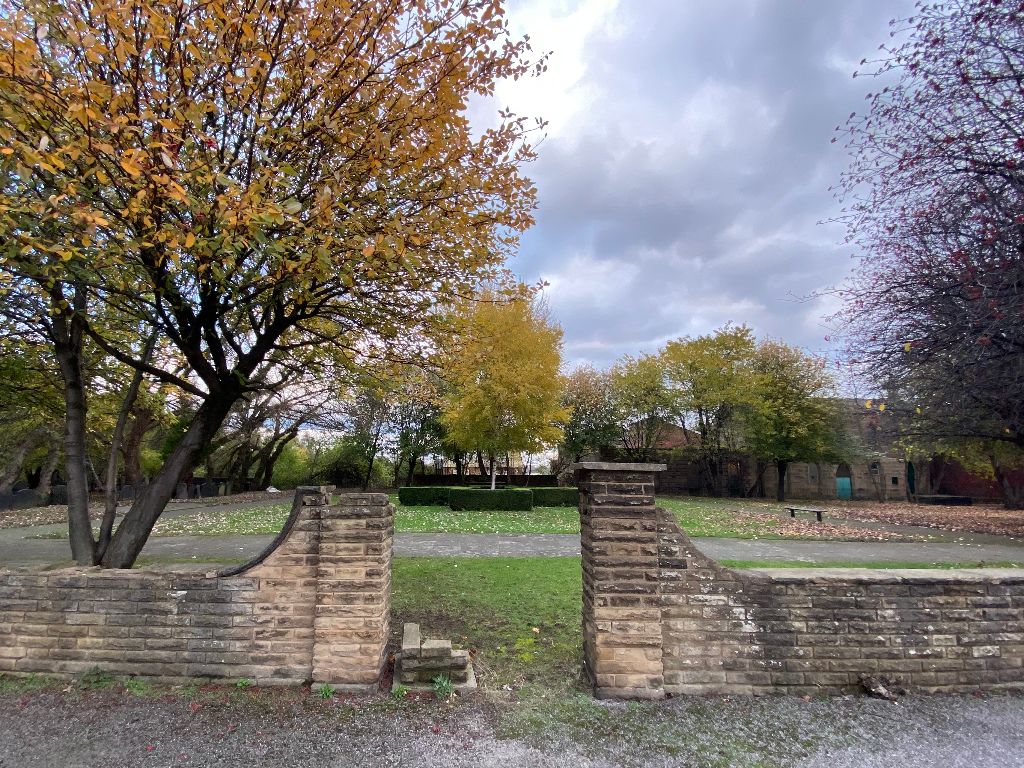
The church site and the garden of remembrance can be seen on Attercliffe Road, opposite the Don Valley Hotel. Access is available into old Attercliffe Cemetery behind and the Five Weirs Walk.

NOTE
A rare book, ‘The Church in Attercliffe,’ by Rev. Arthur Robinson, was published to celebrate the church’s centenary in 1926.

The site of Attercliffe Parish Church. Images: DJP/2022

©2022 David Poole. All Rights Reserved.
Categories
Buildings

The Adelphi really is at the heart of Attercliffe

It’s hard to imagine Attercliffe with green fields and a beautiful river. It became a village, and when Sheffield’s industry exploded, it turned into a busy suburb. It was almost a town, but when the downturn came, we ignored it, and look at its present sorry state.

This will change because Attercliffe is a development opportunity waiting to happen. It’s close to the city centre, motorway, and Meadowhall, and it’s mostly brownfield site.

Sheffield Council probably thinks the same.

It is buying the Grade II-listed Adelphi building, on Vicarage Road, using some of the £37m government levelling-up funds allocated to the city, to buy and refurbish the site and open it for community use.

And the council says there are other ‘important’ buildings on Attercliffe’s faded high street that it might consider buying.

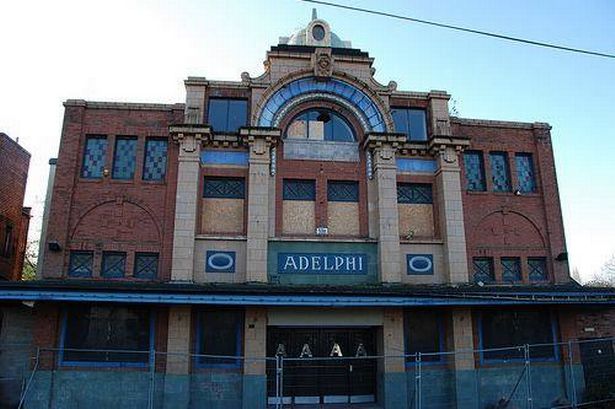
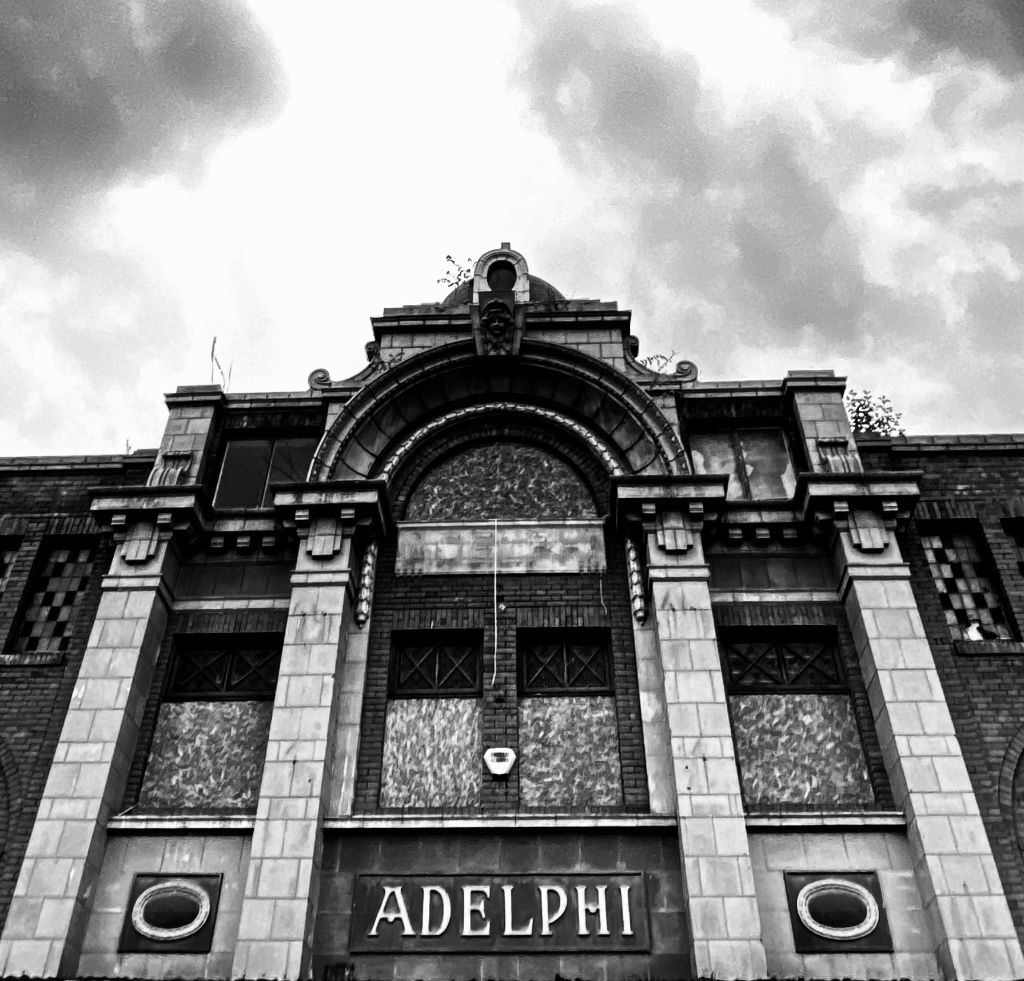
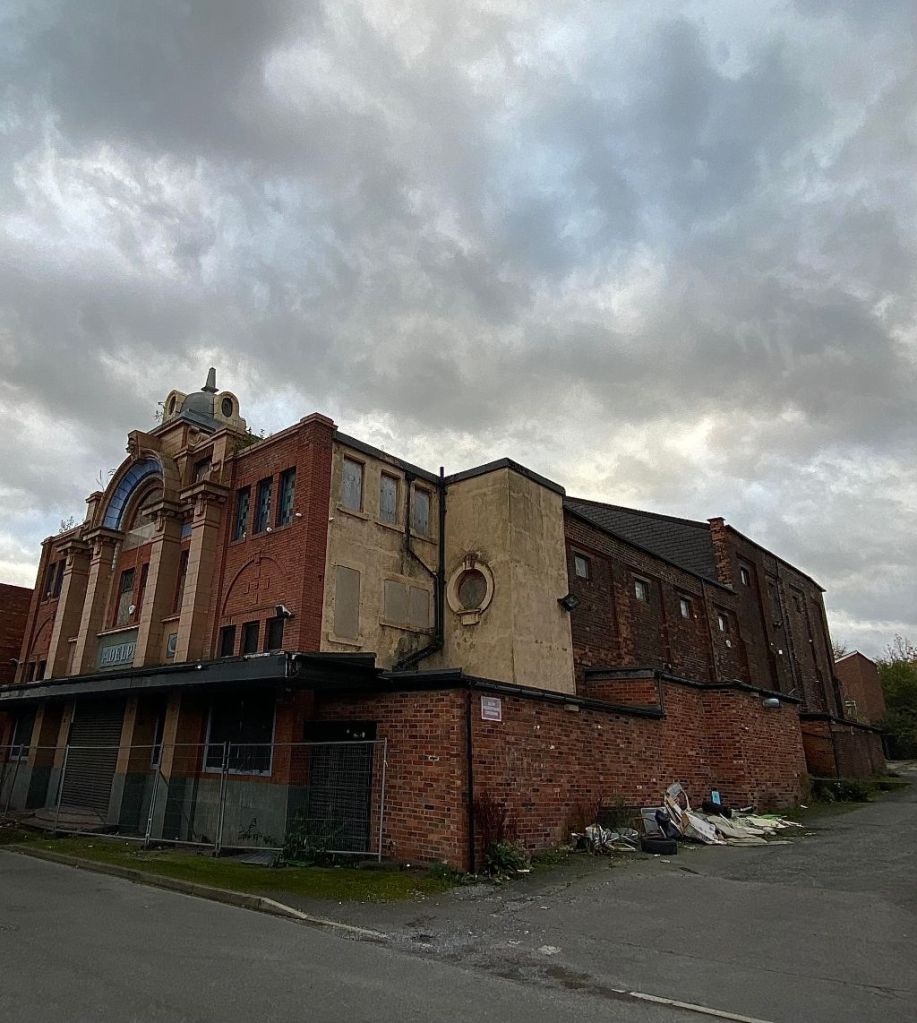
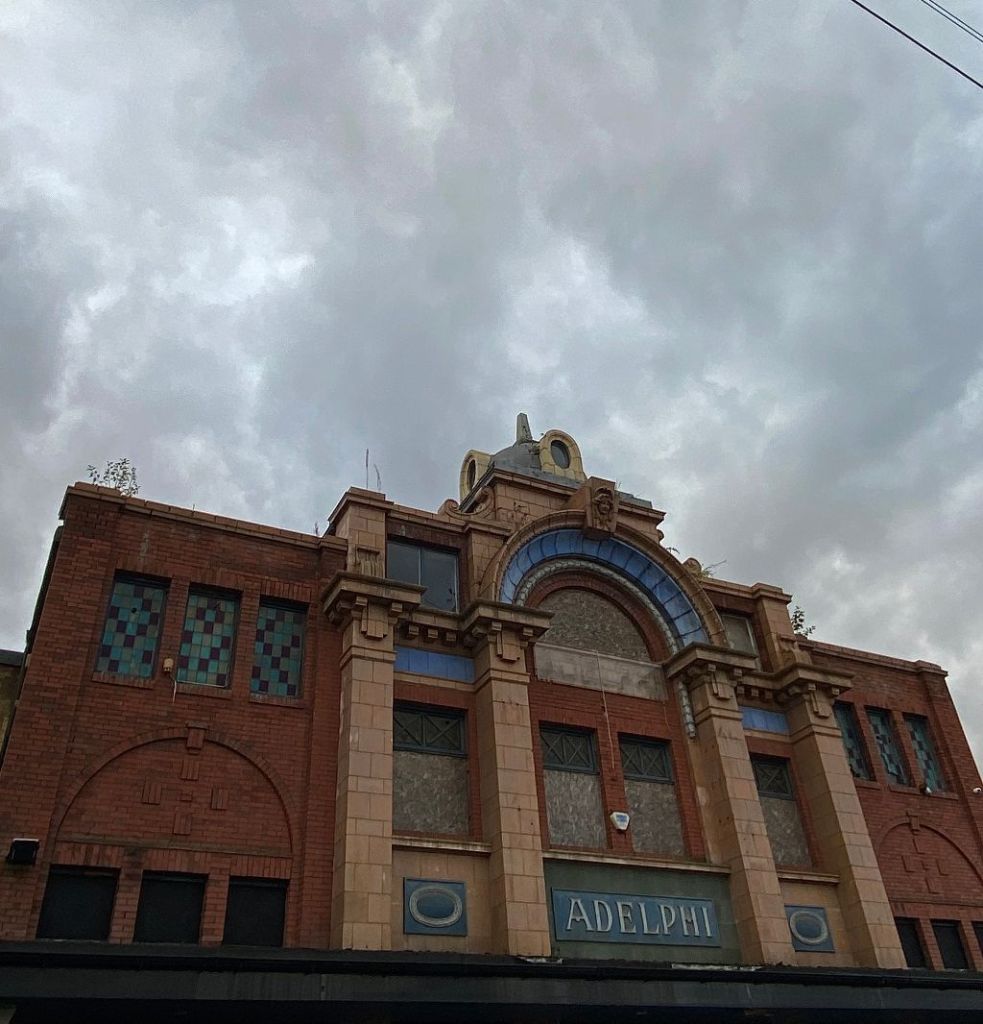
The former Adelphi Cinema with obligatory trees growing on the roof. Image: DJP/2022

The Adelphi opened as a cinema in October 1920, built on the site of former vicarage gardens.

It was designed by William Carter Fenton (1861-1959), alderman and subsequently Lord Mayor of Sheffield, and a former corporation surveyor who established the architectural practice of Hall and Fenton.

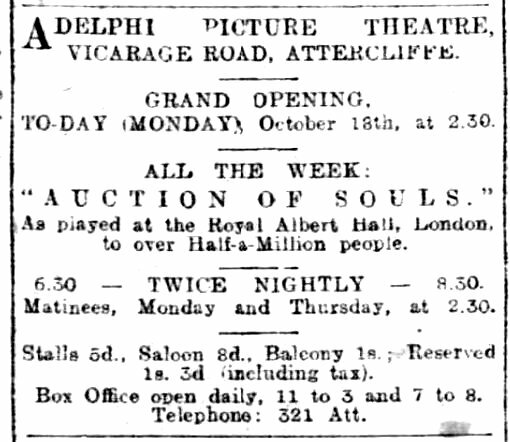
With a seating capacity of 1,350, it joined four other cinemas at Attercliffe, and it’s first showing was Irving Cummings in Auction of Souls.

Opening advertisement. Image: The British Newspaper Archive

According to Cinema Treasures, the red brick building has buff and blue coloured terracotta enrichments on the façade, especially on the small turret dome over the entrance, which also has stained glass windows.

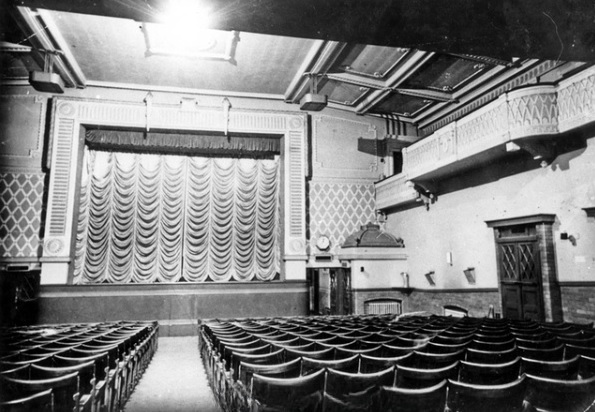
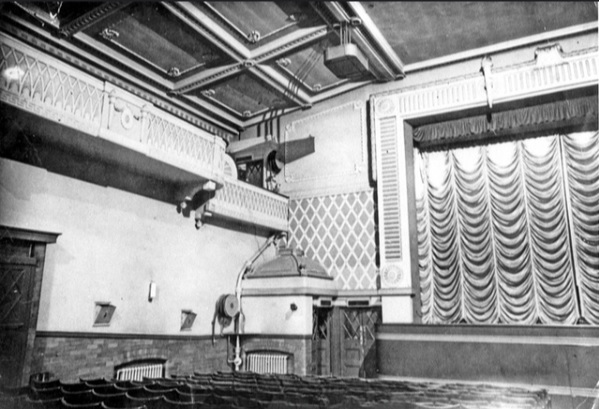
“Internally the features add to its grandeur with detailed ceilings, granite floors and wide staircases. Seating in the auditorium was provided in stalls and circle, and the projection box was in the rear stalls, underneath the circle.

“The cinema was in reverse, and patrons entered the auditorium from behind the screen. The decoration includes pilasters, a segment-arched panelled ceiling and a moulded proscenium arch with a central crest which is flanked by torches. The circle has a lattice-work plaster front.”

The familiar ‘soft carpets that harboured and carried disease’ were replaced with cork carpet and linoleum. But from the standpoint of health, it allowed fresh air and sunshine to be admitted. There were no fewer than 17 windows and between performances these were thrown wide open, and during showings they were covered with dark blinds.

Adelphi Picture Theatre opened Monday 18th October 1920 closed 28th October 1967. Image: Picture Sheffield
The Adelphi was later used as a Bingo Hall and more recently became a nightclub. Image: Picture Sheffield

It underwent some restoration in 1936 and a re-decoration in 1939. It received some bomb damage during the second week of the blitz and was closed for around a month. It received further renovation in 1946.

The Adelphi operated as a cinema until 1967 after which it became a bingo hall. The striking art deco building later hosted Sheffield’s famous Gatecrasher club nights, among other events, and was also used as a music teaching centre. It sat empty from 2006 until 2013 and has since been used only for storage.

Last year, CODA Bespoke on behalf of Olympia Wellbeing Academy, was granted permission to convert the building’s ground floor into an educational and sporting facility for children.

Since 1996, the Adelphi Picture Theatre was designated a Grade II Listed building by English Heritage (now Historic England). Image: DJP/2022
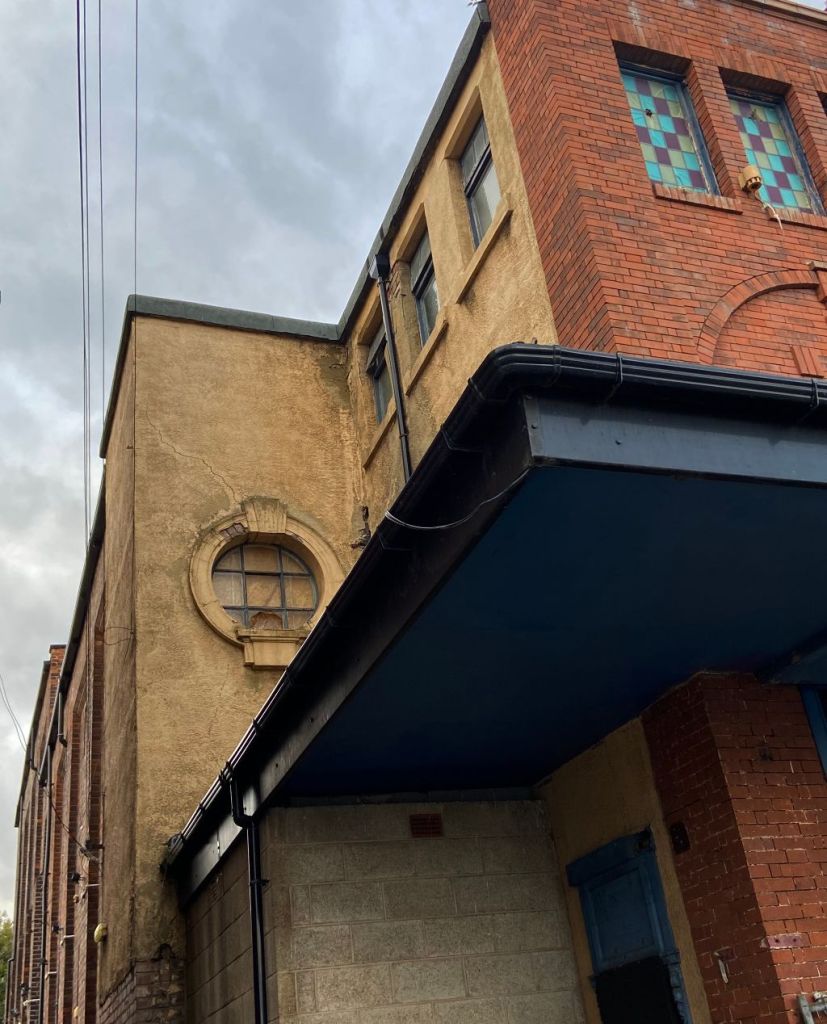
The Adelphi Picture Theatre is located in the Attercliffe district in the east of Sheffield. Image: DJP/2022
The Adelphi Picture Theatre closed on 28th October 1967 with Robert Vaughn in “The Karate Killers” and “Glenn Ford in “The Rounders”. Image: DJP/2022

©2022 David Poole. All Rights Reserved.